Volume 1 — CHAPTER XIII. NORTHERN RELICS—GROUND FINDS.
Reading edition
The custom of hiding objects—Discovery of numerous golden objects near the surface—Necklaces of gold—Golden horns discovered at Mögletönder—The Bangstrup find.
The objects found in the earth, and classified under the name of ground finds, are often not only very valuable but also very beautiful; in many instances they are of the same type and period as those of the bogs and graves. The custom of intentionally hiding objects which existed in the stone and bronze age lasted until the end of the Viking age, and one of the finest archæological fields in the whole of Scandinavia is that of Broholm, situated on the island of Fyen. These finds are divided into three principal groups, viz.:—Lundeborg, Gudme, and Elsehoved. Almost all the objects were so near the surface of the soil that they were discovered either when ploughing, or digging with a spade.
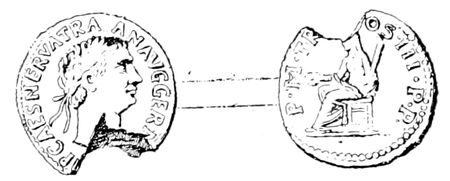
Fig. 491.—Denarius; Trajan (98–117). Broholm. Real size.
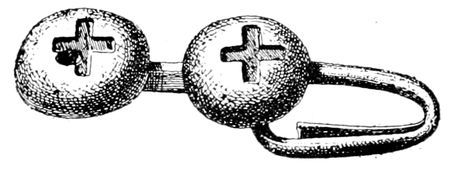
Fig. 492.—Fibula of bronze. Broholm. Real size.
236
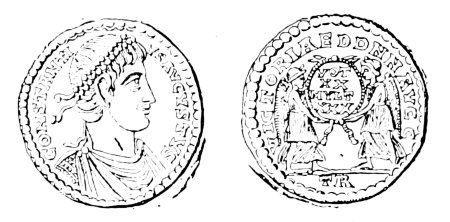
Fig. 493.—Solidus: temp. Constantine II. (337–61), found near Hesselagergaard, Broholm, 1875. Real size.
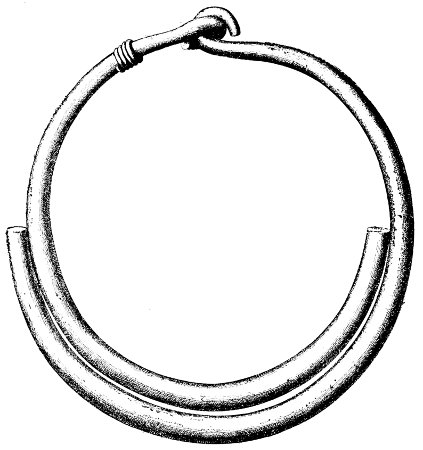
Fig. 494.—Largest Neck-ring, Broholm. Heaviest rings, weight 3 lbs., 1 lb. 14½ oz., 1 lb. 2½ oz.; ½ real size. Among other objects discovered with this neck-ring were three other neck-rings, one weighing about 2 lbs. 2 ozs., another 1½ lb.; six pieces of massive gold belonging to neck-rings; six spiral gold rings; a spiral finger-ring of gold; bent gold bars probably used as money; and bracteates.
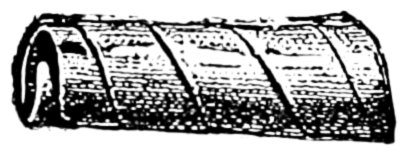
Fig. 495.—Roll of flat gold band.
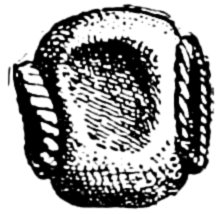
Fig. 496.—Gold bead. Real size. Broholm.
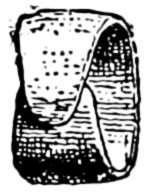
Fig. 497.—Gold band.
237
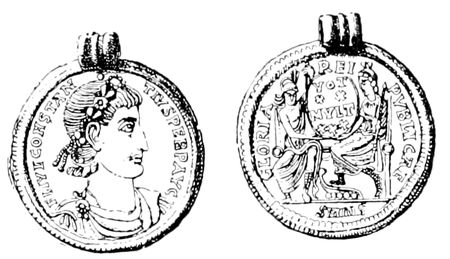
Fig. 498.—Solidus: temp. Constantine II. Broholm. Real size.
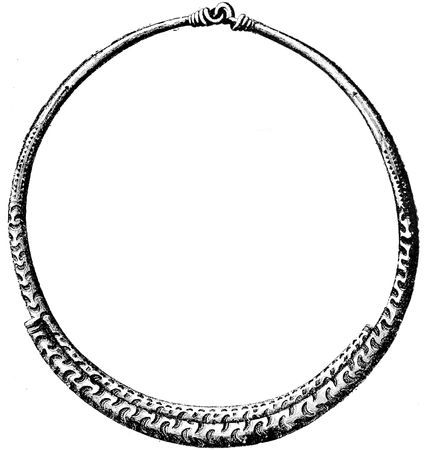
Fig. 499.—Gold Neck-ring, from Hesselagergaard, Broholm. ⅗ real size.
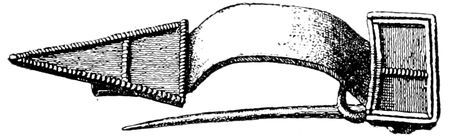
Fig. 500.—Fibula of gold. Broholm. Real size.
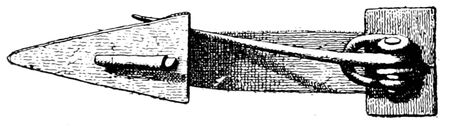
Reverse of Fig. 500.
238
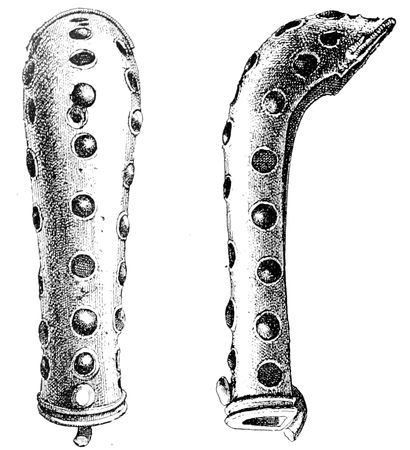
Fig. 501.—Hollow gold object, ornamented with cornelians, found at Lundeberg, Broholm. Real size.
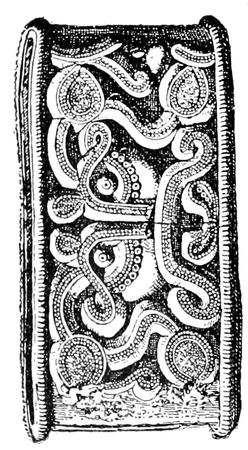
Fig. 502.—Gold Mounting for sword scabbard. Real size. Broholm.
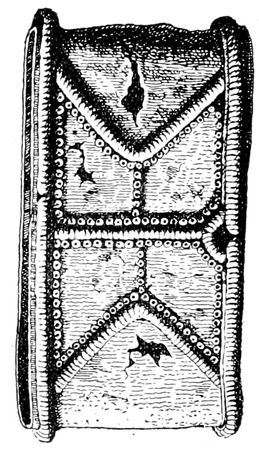
Reverse of Fig. 502.
239
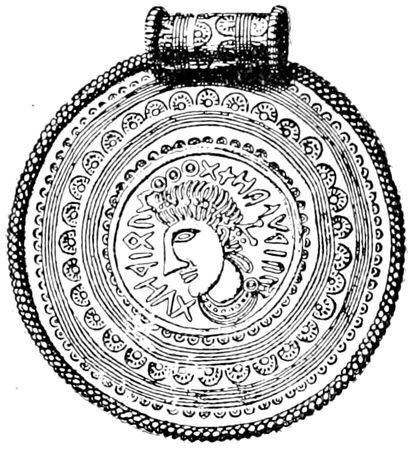
Fig. 503.
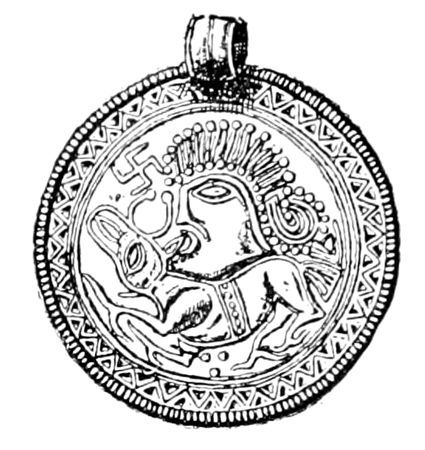
Fig. 504. Gold bracteates. Real size.
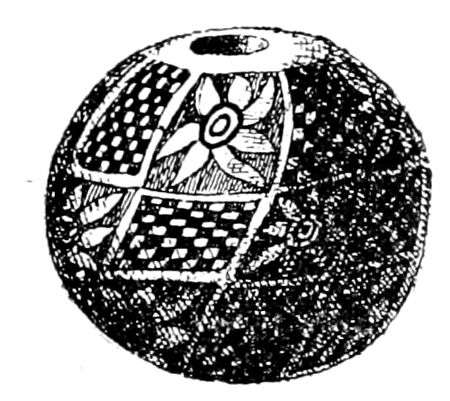
Fig. 505.—Mosaic bead. Real size.
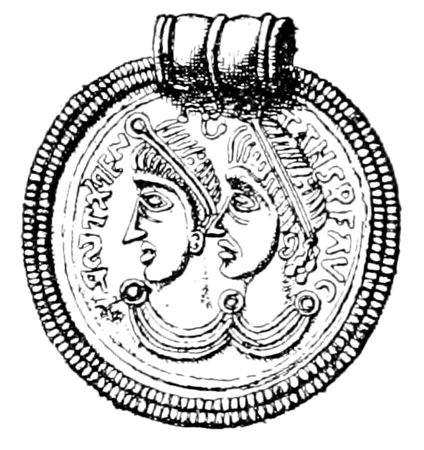
Fig. 506.—Gold bracteate, showing fibula on the neck. Real size.
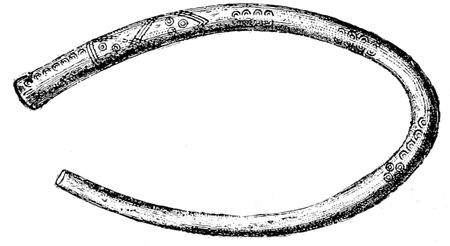
Fig. 507.—Gold ring used as money. Real size.
240
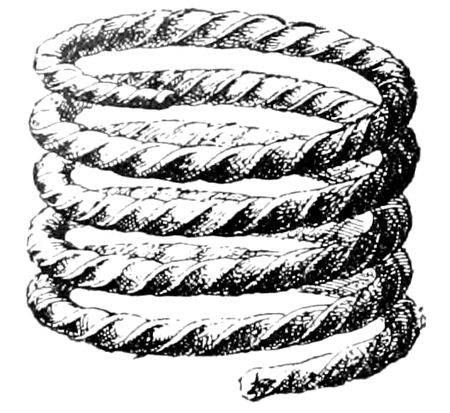
Fig. 508.—Gold spiral ring. Elsehoved, Broholm. Real size.
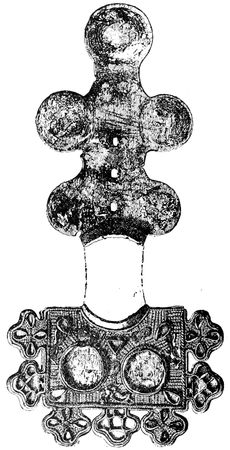
Fig. 509.—Fibula of copper covered with gold, and ornamented with garnets, one of which remains intact; a bird will be seen at the bottom. ½ real size.
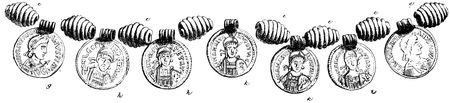
Fig. 510.—Roman coins of the 5th century, forming part of a necklace, with a string of gold beads (Valentinianus, 425–455; Julius Majorianus, 457–461; two Leo I., 457–474; Zeno, 474–491; two Anastasius, 491–515).
241
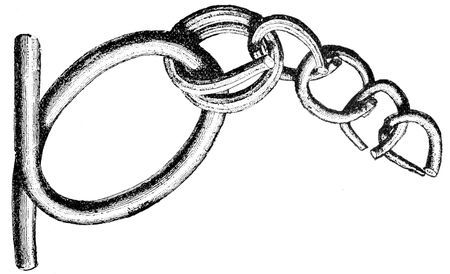
Fig. 511.—Gold rings used as money. Real size.
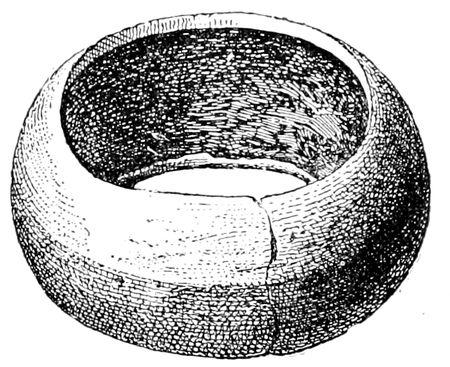
Fig. 512.—Ring of gold. Real size.
Among the finest and most valuable objects found in the North were the two superb golden horns discovered at Mögeltönder on the peninsula of Jutland, which were once the pride of the great Museum of Northern Antiquities in Copenhagen.
They were without equals in any part of the world; their exterior was made of different bands of gold, with figures in repoussé work, fastened to the harder gold of the body of the horn. Both were stolen from the old Danish Museum on the 4th of May, 1802, and the ignorant thief melted them; thus those two superb specimens were for ever lost to science, and with an unfortunate fatality the cast of each has also been lost; but luckily the drawings made can be relied on. The thief was captured a year after, and his punishment was not adequate to the crime he had committed.
The representations given upon them must have had a meaning; these were symbolical, and were probably very significant and not used for mere ornamentation; what the figures and symbolical signs meant is impossible for us to tell. Among the most remarkable of the former is the 242three-headed man, holding in one hand what appears to be an axe, while with the other he leads some kind of horned animal.
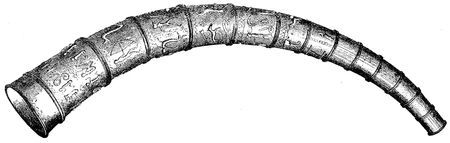
Fig. 513.—Golden horn discovered at Mögeltönder, 1639, with thirteen broad rings round it. Length, 2 feet 9 inches; weight over 7 lbs. ⅕ real size.
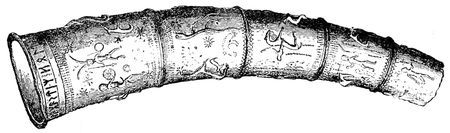
Fig. 514.—Golden horn discovered at Mögeltönder, 1734. The exact length of this horn, which had round its broadest end an inscription in earlier runes, has not been stated, but, judging from a facsimile in silver gilt made by command of Frederick VII. from the old drawing, and presented by him to the old Northern Museum, it must have been over 20 inches long. Though the lower part was broken off and lost, it still weighed more than 8 lbs. ⅕ real size.

Fig. 515.—Inscription in earlier runes on horn.
243
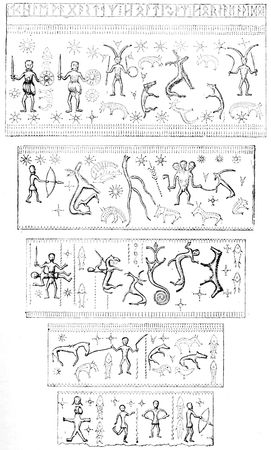
Fig. 516.—Facsimile of each ring of the damaged horn (Fig. 514).
244
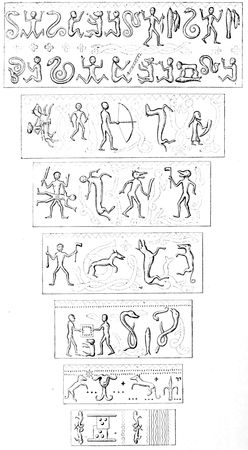
Fig. 517.—Facsimile of the rings of the perfect horn (Fig. 513).
245Bangstrup Find (Fyen).—Conspicuous among many remarkable finds is the Bangstrup find (Fyen, 1865), in which rings of gold used as money, ornaments of peculiar shape, and 46 gold Roman coins, which were pierced or had a loop attached to the top, were discovered. The coins, ranging from the time of Trajanus Decius (249–251) to that of Constantine II. (337–351), give an approximate idea of the time of the deposit of the find; for, while most of the earlier coins are well worn, the later ones are very well preserved and the coinage is very sharp and clear, thus indicating that they cannot have been long in circulation. As the dates of these later coins are about 340–350, the find cannot have been buried much later than that time.
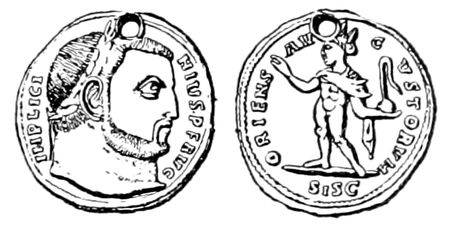
307–323. Fig. 518. IMP. LICINIVS. P. F. AVG. ORIENS AVGVSTORVM.
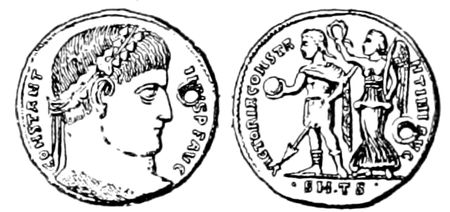
306–337. Fig. 519. CONSTANTINVS PFAVG. VICTORIA. CONSTANTINI. AVG.
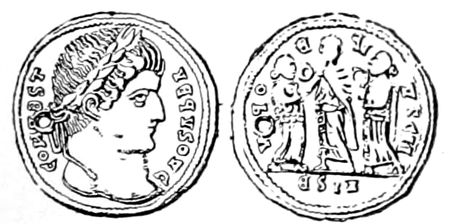
Fig. 520.—Gold coin.
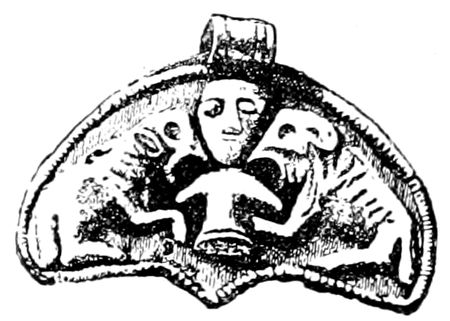
Fig. 521.—Crescent-shaped pendant of gold.
The crescent-shaped ornaments have, so far as is known, never been found elsewhere in the North; but in the Ukraine similar ones have been discovered, and are described in the work “Account of the Mounds, &c., of the Government of Kiew,” by Privy Councillor J. Foundoukleï, Kief, 1848.
246BANGSTRUP FIND.
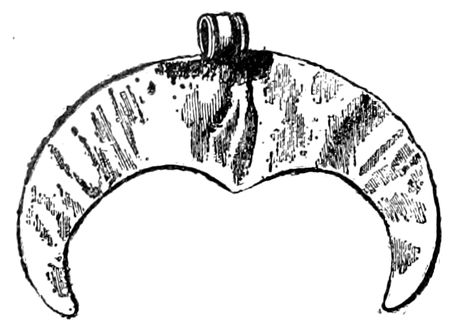
Fig. 522.—Crescent-shaped pendant of gold.
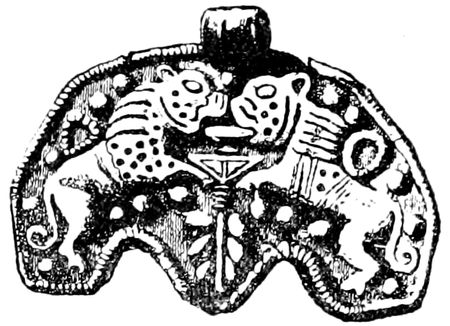
Fig. 523.—Crescent of gold pendant-shaped: representing two lions drinking out of a cup.
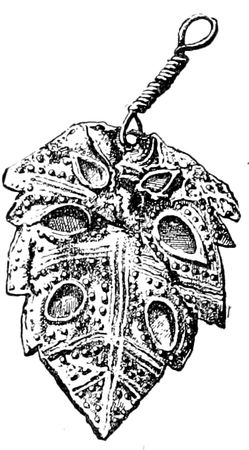
Fig. 524.—Leaf-shaped pendant of thin sheet gold.
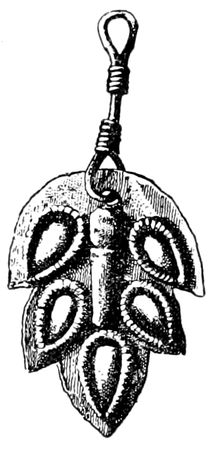
Fig. 525.—Leaf-shaped pendant, sheet gold.
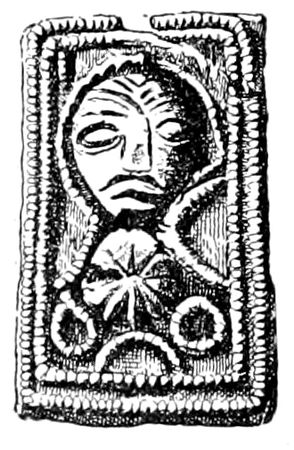
Fig. 526.—Rectangular pendant of sheet gold, with embossed human figure.
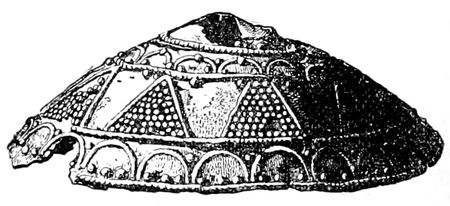
Fig. 527.—Semi-spherical gold ornamentation of unknown use.
247