THE LADY'S COUNTRY COMPANION;
Reading edition
OR, HOW TO ENJOY A COUNTRY LIFE RATIONALLY.
BY MRS. LOUDON,
AUTHOR OF "GARDENING FOR LADIES," ETC.
WITH An Engraving on Steel, and Illustrations on Wood.
FOURTH EDITION. LONDON: LONGMAN, BROWN, GREEN, AND LONGMANS. 1852.
PREFACE.
In the present edition of the "Lady's Country Companion," a reduction has been made in the price, to render the work still more generally useful than it has hitherto been; but in all other respects it is essentially the same.
The principal object of this work is to save young housekeepers the pain and trouble of buying their own experience; and though it is particularly addressed to those residing in the country, I have had the satisfaction of finding that it has been in many cases almost equally useful to those living in towns. It may, however, be interesting to my readers to know that it was originally written for the benefit of a young friend, who was precisely in the position I have represented Annie to be in, and who, knowing I had resided in the country in my youth, asked my advice. Of course, in preparing the work for publication, many things were added or enlarged on, particularly in the parts relating to cooking and gardening, and in the suggestions for altering and furnishing the house; but nearly all the housekeeping and farm-yard details were the result of my personal experience. It happened in my youth, that my father, who was in the law, was obliged, from ill health, to give up his profession, and to reside in the country; and as my mother was dead I kept his house. I had thus to practise what I have here attempted to teach; and I shall be only too happy if I am the means of sparing others the annoyances I suffered myself.
I have stated these facts now, as it is possible, from the gradually declining state of my health, I may not have another opportunity of mentioning them in their proper place, and as I think my readers will be likely to place more confidence in my counsels when they know they are founded on realities. I have always been anxious to make my books useful, but I am now still more so than ever I was before.
J. W. LOUDON.
Bayswater, Dec. 10, 1851.
CONTENTS.
Page
PREFACEiii
LIST OF ENGRAVINGSxi
LETTER I.
Introduction.1
BOOK I. THE HOUSE.
LETTER II.
First Impressions of the Country.—Making Fires.5
LETTER III.
Hall.—Morning Room.—Book-Cases.—Plants in
Pots.—Squirrels, Canary Birds, Parrots and Macaws, Monkeys,
Gold Fish, and Cut Flowers.—Drawing-room.—Dining-room.14
LETTER IV.
Flies.—Servants' Offices, including the Housekeeper's
Room and Store Closet, the Kitchen, and the
Scullery.—Brewing; making Home-made Wines, Cider, and
Perry; and making Bread, Rolls, Cakes, Rusks, Muffins
and Crumpets, and Biscuits.35
LETTER V.
Impromptu Cookery.—Soups.—Poultry.—Pigeons.—Game.—Salads
of Cold Meat and Potatoes.—Modes of
dressing Potatoes and Carrots.—Sauces.—Omelettes,
Creams, and Side Dishes.—Miscellaneous Cookery.—National
Cookery.—The French Pot-au-Feu.—Italian
Macaroni.—German Sauer Kraut—Polish Barsch.—Spanish
Olla Podrida and Puchero.—Scotch Haggis, Barley
Broth and Hotch-potch.—English Plum-pudding.
Puddings.—Potato Flour.—Pickles.—Pork Pies.70
LETTER VI.
The Larder.—Salting Meat, Bacon, and Hams.—The
Dairy.—Management of Milk.—Making and keeping
Butter.—Making Cheese of various Kinds.—Ice-House,
Ice-Cellar, and Ice-Cooler.—Ice-Creams.119
BOOK II. THE GARDEN.
LETTER VII.
Planting a regular Geometrical Flower-Garden.—List of
Plants.—Mode of laying out regular Figures on the
Ground.—Rules for arranging Colours.—Planting Side
Beds.—Plants with fragrant Flowers.—Culture of
Bulbs.—Reserve Ground.—Culture of Annuals, Perennials,
and Biennials.—Hotbeds and Frames for raising and
keeping Half-hardy Flowers.153
LETTER VIII.
Use of Plant-Houses.—Nature of Climates.—Different
Kinds of Hothouses.—The Dry Stove, the Bark Stove,
and the Orchideous House.—Culture of Plants in the
Bark Stove.—Aquarium and Water Plants.—Red
Spider.—Culture of Succulent Stove Plants.—Culture
of Orchideous Plants.—The Greenhouse.—The Australian
House, and Culture of its Plants.—The common
Greenhouse, the Heath House, the Conservatory, the
Orangery, and the Camellia House.—The Culture of
Plants in the common Greenhouse.—Potting
Plants.—Heaths.—Culture of Plants in the
Conservatory.—Culture of Orange Trees.—Aphides.186
LETTER IX.
The Park and Pleasure-Grounds.—Situation of old
Houses.—Water.—Forest Scenery.—Effect of a Shrubbery in
harmonising a Flower-Garden with a Park.—Opening
Vistas.—Scenes in a Park.—Fences against Cattle.—Styles
in Gardening.—Use of a Terrace.—Patte d'Oie.—Planting
an Architectural Garden.—Planting an
Arboretum.—Renovating Turf.210
LETTER X.
Laying out a Kitchen-Garden.—Making Gravel Walks.—Box
Edgings.—Crops of Culinary Vegetables.—Cucumbers,
Melons, and Mushrooms.226
LETTER XI.
The Management of Fruit Trees.—Planting.—Protecting
the Blossoms.—Stone Fruits.—Fig Trees.—Grapes.—Management
of a Vinery.—Growing Pine-apples.—Forcing
Peaches and Nectarines.—Standard Fruit Trees.—Kernel
Fruits.—Fruit Shrubs.—Strawberries.—Tart-Rhubarb.244
LETTER XII.
Operations of Gardening.—Digging, Forking,
and Hoeing.—Sowing Seeds.—Taking off Suckers.—Making Layers
and Cuttings.—Budding, Grafting, and Inarching.—Pruning
and Training.—Disbudding.—Manuring.—Keeping Fruit in a
Fruit-Room. 268
BOOK III. DOMESTIC ANIMALS.
LETTER XIII.
Quadrupeds kept for Amusement.—Horses for riding and
driving in Pony Carriages.—Mules, Zebras, Quaggas,
and Donkeys.—Dogs and Cats.284
LETTER XIV.
Quadrupeds kept for supplying Food.—Cows, Calves,
Goats, Pigs, Rabbits, and Deer.309
LETTER XV.
Inhabitants of the Poultry-Yard: Fowls, Turkeys, Guinea
Fowls, Geese, Ducks, and Pigeons.—Peacocks and
Hens.—Diseases of Poultry, and their Cure.330
LETTER XVI.
The Inhabitants of the Ponds: Fish and Aquatic Fowls,
including Swans, exotic Geese and Ducks.—Inhabitants
of the Woods: including Pheasants and Partridges,
Herons and Bitterns.—Aviary.—Apiary, and the
Management of Bees.—Silk-worms.359
BOOK IV. RURAL WALKS.
LETTER XVII.
Shoes and Apparatus for Walking.—Rural Seats.—Natural
Objects noted in a Country Walk; the Mole; the Shrike;
the Black Snail; the Siller Cups; the Woundwort.—Pleasures
of studying Botany.—Granite.—Appearance
of the Clouds.390
BOOK V. COUNTRY AMUSEMENTS.
LETTER XVIII.
Archery: Targets; Self Bows and Backed Bows; Bowstrings;
Arrows; Arm Bracer and Shooting-Glove; Belt and Tassel; and
Quiver.—Sketching in the open Air: Block-Book and Pencils;
Artist's Colours; Touch of the different
Trees.—Swinging.—Pleasure-Boats.—Skating.—Sporting Terms.403
BOOK VI. COUNTRY DUTIES.
LETTER XIX.
Relation between a Landed Proprietor and the Cottagers
on his Estate.—How to relieve the Poor.—Establishing
Schools.—Teaching the Daughters of the Poor to
make Clothes, and teaching them Cooking.—Employing
the Poor.—Assisting the Poor in Illness.—Making
Clothes for the Poor.417
INDEX.425
LIST OF ENGRAVINGS.
Fig. Page
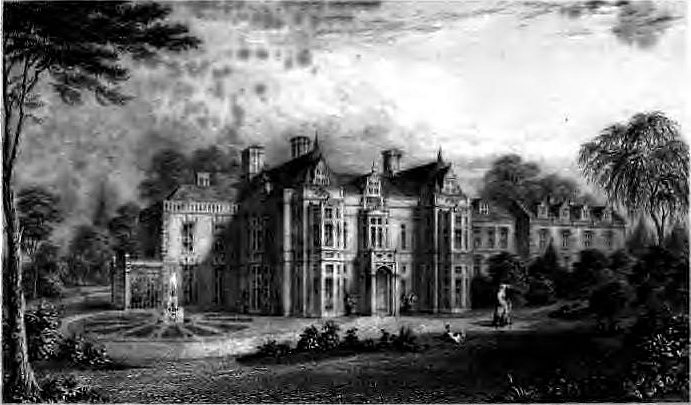
Frontispiece.
The Manor-House in its original State.4
1.Ground Plan of the Manor-House.16
2.Spigot and Faucet.46
3.Mash-stirrer.48
4.Mash-tub.48
5.Fruit-crusher.52
6.Cabbage-cutting Machine for preparing Sauer Kraut.99
Garden Front of the Manor-House in its improved State.152
7.Radiated Geometrical Flower-garden.157
8.Square Geometrical Flower-garden161
9.Diagram for forming the Beds of Flower-gardens.162
10.Diagram for forming the Beds of Flower-gardens.163
11.Diagram for forming the Beds of Flower-gardens.163
12.Compound Geometrical Flower-garden.164
13.Park Fence.219
14.Poultry-yard.333
15.Sitting-box for Hens.335
16.Hen-roost.336
17.Hen-coop.338
18.Nidulària campanulàta.395
LETTER I.
INTRODUCTION.
Your letter, my dear Annie, informing me that you are about to be married and to settle in the country, has interested me exceedingly, as it reminds me of my own youth, when my first essays in housekeeping were made under circumstances very similar to those in which you will be placed. It is true I was not then married, but, as my mother was dead, the care of the house devolved on me; and I knew even less about household affairs than most girls of my age and rank in life, as my mother had an old and favourite housekeeper, who managed every thing, and who would not suffer the slightest interference in her department. When my mother died, this person left us; and my father, with a shattered constitution and a greatly diminished fortune, retired to a small estate he had in the country. I was then young and thoughtless; I had no sisters; and having, like you, been brought up in a town, I had no ideas of the country but as a place where eggs, cream, and fruit were in abundance; where I might keep as much poultry as I liked; and where there were shady lanes, and green fields abounding with pretty flowers.
The place we went to live at had a good house, commanding a splendid view; an excellent garden; three fish-ponds, and about thirty acres of grass land, which enabled us to keep cows and horses, without troubling us with any of the laborious duties of cultivating arable land.
At first I was enchanted with the change. I was never tired of feeding my poultry, watching the dairy-maid, and managing the fruit and flowers; but, alas! I soon found that there are few roses without thorns. My first trouble was three gentlemen calling on us one day unexpectedly, and my father asking them to stay dinner. We were seven miles from the town where we had formerly lived; and, though there was a small town within two miles of us, the road was bad, and the miles very long ones; while the town itself, when we reached it, was one of those provoking places the shopkeepers of which never have what is wanted, though they always say they had abundance of the required article the week before, and believe they shall have it again the week after. I need not enter into the details of my troubles in preparing for this well-remembered dinner. Meat was out of the question; and though I was enabled, with infinite difficulty, to give my father's friends enough to eat, no one but a young housekeeper in a similar situation can have any idea of what I suffered. The lesson, however, was not lost upon me; and you may easily imagine that ever afterwards I took care to have a cooked piece of hung beef, or ham, or some similar substantial article of food in the house, that I might be provided for a similar occurrence.
The recollection of what I underwent while buying my experience makes me anxious to spare you, my dear Annie, the pain of a similar ordeal; particularly as it is more disagreeable for a young newly married woman to feel in housekeeping difficulties than a single one; as it makes you fear your husband had a higher opinion of you than you deserve. In your situation the difficulty is increased by your husband not having lived at the Manor-House since the death of his parents, when he was only ten years old; so that he can have no idea of the petty troubles you will be exposed to. Under these circumstances I will do my best to clear the path that lies before you, and to teach you how to enjoy rationally a country life.
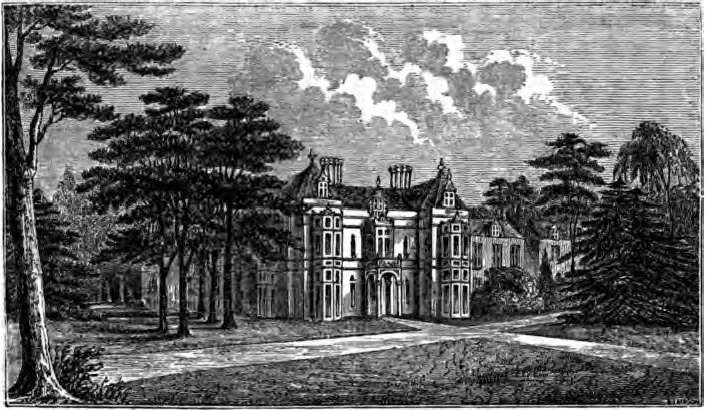
The Manor-House in its original State.