RECORDS OF THE ANNUAL MEETING AND BANQUET OF THE AMERICAN IRISH HISTORICAL SOCIETY AT WASHINGTON, D. C., JANUARY 16, 1909, AND OF THE RECEPTION TO THE SOCIETY BY THE PRESIDENT OF THE UNITED STATES.
Reading edition
It having been voted at the annual meeting at New York January 29, 1908, to hold the next annual meeting at Washington, D. C.; the Executive Council at a well-attended meeting thereof held at the residence of the President-General, December 5, 1908, considered the necessary arrangements, and resolved to make this event a notable one in the Society’s history. A committee previously appointed by the President-General to confer with Hon. Theodore Roosevelt, President of the United States, and ascertain his pleasure as to a reception to the Society and attendance later at the dinner, reported that owing to pressure of official business President Roosevelt would be unable to attend the Society’s dinner, but would be pleased to meet his fellow-members at the White House and there make a short address.
In accordance with the instruction of the Executive Council the Secretary-General opened correspondence with Mr. William Loeb, Jr., Secretary to President Roosevelt, and the details of the reception were promptly arranged.
President-General Quinlan thereupon appointed a Reception Committee to officiate at the White House and afterwards be on duty at the Society’s headquarters in Washington, and a Dinner Committee to arrange all the details of the annual banquet.
The appointees on these committees appear in the circular letter which follows.
The Dinner Committee carefully looked over the available places in Washington suitable for the annual banquet, and decided upon the Hotel Raleigh as most desirable, not only for this purpose but also for the headquarters of the Society.
Mr. Thomas J. Talty, the manager of the Hotel Raleigh, extended the Committee every courtesy and made their work in the Society’s behalf easy and pleasant.
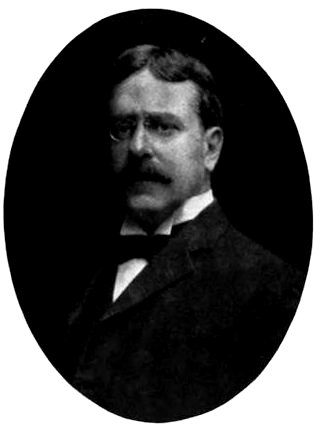
HON. EDWARD J. McGUIRE. LL. B., New York City. Member of the Executive Council.
63As soon as all necessary details were completed, the following circular letter to members was issued:
AMERICAN IRISH HISTORICAL SOCIETY.
Program for Annual Meeting, Reception to the Society by the President of the United States, and Annual Banquet at Washington, D. C., January 16, 1909.
Our fellow-member, Hon. Theodore Roosevelt, President of the United States, will receive the Society at the White House at 2.30 p. m. Secretary Loeb requests us to be on time and provide each member with a card of identification. Such a card is enclosed and must be presented to the doorkeeper at the White House. Ladies and guests may accompany members, and tickets for them can be obtained from the Acting Secretary-General upon application of any member by mail or on the day of the Reception.
Members whose convenience will permit will leave New York Saturday morning, January 16, 1909, from West 23d Street station at 7.50 a. m., or from Liberty Street station at 8 a. m., to take the Royal Blue Line train leaving Jersey City at 8.12 a. m., arriving in Washington at 1.12 p. m. Reduced round trip rates have been arranged for on this line, a dining-car will be attached for our comfort and convenience, and this is the only train landing us in Washington in time to get to our quarters at the hotel and be in season for the President’s Reception.
Immediately after the President’s Reception, the annual meeting of the Society will be held in the parlors of the Hotel Raleigh, where the Society’s headquarters will be established, for the election of officers for the ensuing year, the receiving and acting upon resolutions on the death of several prominent members of the Society, including our deeply-lamented Secretary-General, and the transaction of such other business as may come before the meeting. The resolutions and eulogies to be offered are of a high order.
At the termination of the business meeting, opportunity will be given to visit the capitol, Congressional Library, public buildings, historical societies, and other points of interest in Washington.
The tickets for the dinner are $5.00 each and may be obtained from the Acting Secretary-General, whose address is below. It is very important that we know exactly how many members are to be present, and you are earnestly requested to send your remittance for tickets promptly so that we may notify Mr. Talty of the Hotel Raleigh how many he may expect. Members may invite guests at the same price per ticket.
The Reception to the members of the Society by its officers will take place in the parlors of the Hotel Raleigh at 6.30 p. m., and this will be an excellent opportunity for exchange of good fellowship with the new members, nearly one hundred and fifty of whom have been elected during the past year. The Reception Committee, consisting of Michael W. Norton, Esq., of Rhode Island, 64Hon. John D. Crimmins of New York, Hon. Joseph Geoghegan of Utah, Patrick F. Magrath, Esq., of New York, Hon. John F. O’Connell of Rhode Island, Dr. M. F. Sullivan of Massachusetts, Bernard J. Joyce, Esq., of Massachusetts, Patrick Carter, Esq., of Rhode Island, T. Vincent Butler, Esq., of New York, John J. Daly, Esq., of New York, Gen. D. F. Collins of New Jersey, Francis I. McCanna, Esq., of Rhode Island, Hon. Alexander C. Eustace of New York, Hon. Thomas J. Lynch of Maine, Gen. John R. McGinness of Virginia, and Hon. Thomas M. Waller of Connecticut, will be in attendance during the day to do everything possible to make it a pleasant occasion for the members.
At seven o’clock the annual dinner will take place. It will be in charge of the Dinner Committee, consisting of Hon. Edward A. Moseley, chairman; Rear Admiral John McGowan, these two former Presidents-General of the Society; Michael F. Dooley, Esq., Treasurer-General; Hon. Lawrence O. Murray and Patrick J. Haltigan, Esq.
An elaborate menu, excellent music and extensive floral decorations have been provided, and the principal speakers at the post-prandial exercises and their toasts will be as follows:
“A Capitol Welcome,” Hon. Thomas H. Carter, U. S. Senator from Montana.
“Irish Pioneers of New York,” Hon. Victor J. Dowling, Justice of the Supreme Court of the State of New York.
“The Irish Pioneers of the West and Their Descendants,” Hon. Maurice T. Moloney, ex-Attorney General of Illinois.
“Advantages of Historical Research to Irish Americans,” Hon. Robert J. Gamble, United States Senator from South Dakota.
Other addresses will follow if time permits.
Our list of guests is headed by Hon. Edward D. White of Louisiana, Justice of the Supreme Court of the United States, and will include many notable men.
Please send in your replies as early as possible. The seats at the table will be allotted members and guests in the order in which the applications are received. The officers of the Society earnestly request the attendance of every member who can make it possible to come, because it is desired to make an excellent showing in Washington and thus bring the Society and its work more successfully to the attention of all the people in the country interested in making “better known the Irish Chapter in American history.”
Yours fraternally,
Francis J. Quinlan, M. D., LL. D.,
President-General,
33 W. 38th St., New York City.
Thomas Zanslaur Lee,
Acting Secretary-General,
49 Westminster Street, Providence, R. I.
65The following blank was enclosed with the circular, in order that we might have early information as to the number intending to be present:
(The prompt return of this notice is earnestly requested.)
AMERICAN IRISH HISTORICAL SOCIETY.
Annual Meeting and Dinner, and Reception to the Society by the President of the United States, Saturday, January 16, 1909.
Thomas Zanslaur Lee, Esq.,
Acting Secretary-General,
49 Westminster Street, Providence, R. I.
Dear Sir: It is my intention to be present at the annual banquet of the American Irish Historical Society, to be held at Hotel Raleigh, Washington, D. C., Saturday evening, January 16, 1909.
Yours fraternally,
.....................
I desire provision made for..........guests.
(Make checks payable to
Michael F. Dooley, Treasurer-General.)
The responses came in so well that the Society felt warranted in ordering a special train for the comfortable transportation of members and guests to Washington, and through our fellow-member, Mr. Henry L. Joyce, the Royal Blue Line provided a train of six Pullman parlor-cars, a dining-car and a baggage-car for our exclusive use, and so notified the Society.
Further notice was then sent to the members as follows:
AMERICAN IRISH HISTORICAL SOCIETY.
Annual Dinner and Reception by the President of the United States, Washington, D. C., January 16, 1909.
Royal Blue Line train with special cars attached leaves New York, 23d Street station, at 7.50 a. m. If 100 members are on hand, a special train will be put in commission and start ten minutes later from the same place. Fares reduced for us on this line.
We want at least 250 members at Washington. Ladies, accompanied by members, may attend reception and dinner. Tickets, $5 each. Headquarters, Hotel Raleigh. Reception at White House 2.30 p. m. Annual meeting at headquarters afterwards, and dinner at 7. Reception Committee at hotel all day.
Messrs. Henry L. Joyce and W. C. Hope, respectively General Manager Marine Department and General Passenger Agent of the Royal Blue Line, will be 66at the 23d Street station with the Secretary-General early Saturday morning and full information may be had.
This will be the best affair we have ever had. Excellent speakers, fine dinner, good music and floral decorations already provided for. Please be present.
Thomas Z. Lee,
Secretary-General.
Providence, R. I., Jan. 11, 1909.
A large party of members and guests availed themselves of the pleasure of the special train, and our comfort was well cared for by Mr. Joyce, ably assisted by Mr. P. Wilfred Heroy, Eastern Passenger Agent of the Central Railroad of New Jersey, and a picked train crew.
Owing to a severe snowstorm encountered en route, it became evident the special would not reach Washington on scheduled time, and a telegram to Secretary Loeb was sent from Baltimore as follows:
“Special train of American Irish Historical Society unavoidably delayed en route. Regret inability to reach White House before two forty-five.”
In order that no time should be lost, orders were given the train crew to take the baggage of each passenger to the Hotel Raleigh, there to be cared for until our return from the White House.
The following copy of the order given by C. H. English, Passenger Trainmaster of the Central Railroad Company of New Jersey, providing for the running of the special train, is interesting and gives us an idea of the amount of detail necessary to clear the way for the operation of a train on an up-to-date railroad, and the people to whom orders must go:
The Central Railroad Company of New Jersey.
Central Division.
Jersey City, N. J., January 13, 1909.
Mr. C. E. Chambers, Division Master Mechanic; Mr. A. E. Detro, General Foreman, Fiddlers; Mr. L. F. Duffy, Assistant Foreman, Fiddlers; Mr. C. L. Campbell, Chief Dispatcher, Jersey City; Mr. C. L. Hollis, Superintendent Marine Department, New York; Mr. W. Whittaker, Ferry Master, Jersey City; Mr. G. F. Wernert, Station Master, West 23d Street; Mr. C. H. Vanderveer, Station Master, Liberty Street.
Gentlemen: Please arrange for special train Saturday, January 16, to leave West 23d Street 8.05 a. m., Liberty Street 8.15 a. m., for Washington, consisting of baggage car, dining car and six Pullman cars, account of American Irish Historical Society.
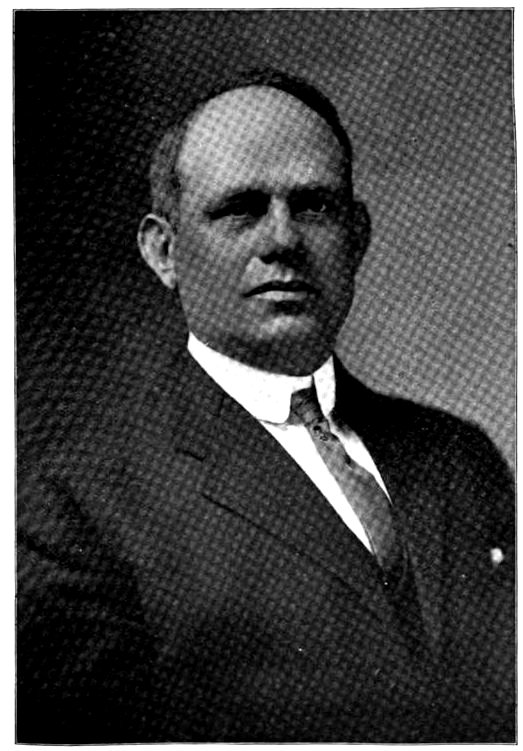
HON. LAWRENCE O. MURRAY, LL. D. Of Washington, D. C. Comptroller of the Currency.
67Will advise later regarding the return movement. Acknowledge receipt.
Yours truly,
C. H. English,
Passenger Trainmaster.
The Dinner Committee was on hand to meet the train and special street cars were in readiness to take us to the Reception.
Nearly 300 members and guests were in attendance at the White House when President Roosevelt made his appearance, accompanied by his military attendants. He was in excellent spirits and pleased to see so large a representation of the Society in Washington.
In introducing President Roosevelt to the assemblage, President-General Quinlan said:
“Ladies and Gentlemen, I am especially honored today in presenting to you the gifted ruler of our great nation, one who at all times has shown true sympathy with our cause and who has recorded his feeling by associating himself with our Society. It is with feelings of mingled pride and satisfaction that I introduce to you our fellow-member, Mr. Theodore Roosevelt, President of the United States.”
President Roosevelt replied as follows:
“It is a great pleasure to me to bid you welcome to Washington, and especially to have the chance of saying a word of greeting to you here in the White House. I am sorry we didn’t give you a little better weather, and I especially regret that, in view of the fact that so many of you have had the wisdom to bring your better halves with you; for I have always insisted that, while the average American citizen is a pretty good fellow, his wife is a still better fellow.
“I need scarcely say the great interest that I take in the work of this body. Here on this continent we are building up a great new nation, a nation akin to, but different from, each of the Old World nations of middle and western Europe. To this country have come men of many different origins, and here they are being fused together into a new type, and it is greatly to be desired that we should have historical associations like this which shall commemorate the different strains in the national blood.
“It is a mistake to suppose, as is so often assumed, that at the time of the Revolution our people were not of mixed blood. They were then, just as they are now. Many different strains from the 68beginning contributed to make up what is now American citizenship, and from the beginning in this country the men who themselves, or whose fathers, came from Ireland have played a great and leading part in the affairs of the nation. I myself have some of that blood in me, and doubtless this accounts for the difficulties with which I have found myself confronted at times. It may also account for my disposition after getting into a fight to let the other fellow know I was in it. I thank you, ladies and gentlemen, for coming here.”
There was great applause and much enthusiasm upon the well-chosen words, and afterwards the assemblage formed in line and each person was presented to President Roosevelt by President-General Quinlan and Hon. Edward A. Moseley, Michael F. Dooley, Esq., Hon. Lawrence O. Murray and Patrick J. Haltigan, Esq., of the Dinner Committee.
At the termination of the Reception the party went to the Hotel Raleigh for the annual meeting.
ANNUAL MEETING.
The annual meeting of the Society was held this 16th day of January, 1909, in the banquet hall of the Hotel Raleigh, and was called to order at 3.30 p. m. by President-General Quinlan, a large number of members being present.
Reading of records of the previous meeting was omitted.
The first business being the election of officers for the ensuing year, the Secretary-General read the following list of nominees selected by the Executive Council to be voted upon at this meeting. Each of the general officers were voted upon separately, and the members of the Executive Council and list of State Vice-Presidents as a whole, and all were unanimously elected to serve until the next annual meeting and until others are chosen in their stead.
President-General,
Francis J. Quinlan, M. D., LL. D.,
33 West 38th Street, New York City.
Vice-President-General,
Hon. Patrick T. Barry,
Chicago, Ill.
69Secretary-General,
Thomas Zanslaur Lee, Esq.,
49 Westminster Street, Providence, R. I.
Treasurer-General,
Michael F. Dooley, Esq.,
President National Exchange Bank, Providence, R. I.
Librarian and Archivist,
Thomas B. Lawler, Esq.,
New York City.
Historiographer,
Hon. James F. Brennan,
Peterborough, N. H.
EXECUTIVE COUNCIL.
The foregoing and
Hon. John D. Crimmins, New York City.
Hon. William McAdoo, New York City.
Hon. Thomas B. Fitzpatrick, Boston, Mass.
Patrick F. Magrath, Esq., Binghamton, N. Y.
Rev. John J. McCoy, LL. D., Worcester, Mass.
Thomas Addis Emmet, M. D., LL. D., New York City.
Edward J. McGuire, Esq., New York City.
Hon. John F. O’Connell, Providence, R. I.
James L. O’Neil, Esq., Elizabeth, N. J.
Stephen Farrelly, Esq., New York City.
Cyrus Townsend Brady, LL. D., Kansas City, Mo.
Hon. Thomas J. Lynch, Augusta, Me.
Gen. Phelps Montgomery, New Haven, Conn.
Patrick Carter, Esq., Providence, R. I.
Hon. Patrick Garvan, Hartford, Conn.
John J. Lenehan, Esq., New York City.
Col. John McManus, Providence, R. I.
Hon. William Gorman, Philadelphia, Pa.
J. Lawton Hiers, M. D., of Savannah.
John F. Doyle, Esq., New York City.
70STATE VICE-PRESIDENTS.
Maine—James Cunningham, Esq., Portland.
New Hampshire—Hon. James F. Brennan, Peterborough.
Vermont—John D. Hanrahan, M. D., Rutland.
Massachusetts—M. J. Jordan, Esq., Boston.
Rhode Island—Hon. Patrick J. McCarthy, Providence.
Connecticut—Dennis H. Tierney, Esq., Waterbury.
New York—Joseph I. C. Clarke, Esq., New York City.
New Jersey—John F. Kenah, Esq., Elizabeth, N. J.
Pennsylvania—Hugh McCaffrey, Esq., Philadelphia.
Delaware—John J. Cassidy, Esq., Wilmington.
Virginia—James W. McCarrick, Esq., Norfolk.
West Virginia—John F. Healy, Esq., Thomas, Tucker County.
North Carolina—Michael J. Corbett, Wilmington.
South Carolina—W. J. O’Hagan, Esq., Charleston.
Georgia—Capt. John Flannery, Savannah.
Ohio—John Lavelle, Esq., Cleveland.
Oklahoma—Joseph F. Swords, Esq., Sulphur.
Illinois—Hon. Maurice T. Moloney, Ottawa.
Indiana—Very Rev. Andrew Morrissey, C. S. C., Notre Dame.
Iowa—Rt. Rev. Philip J. Garrigan, D. D., Sioux City.
Mississippi—Dr. R. A. Quin, Vicksburg.
Montana—Rt. Rev. M. C. Lenihan, D. D., Great Falls.
Minnesota—Hon. C. D. O’Brien, St. Paul.
Kentucky—John J. Slattery, Esq., Louisville.
Kansas—Patrick H. Coney, Esq., Topeka.
Utah—Joseph Geoghegan, Esq., Salt Lake City.
Texas—Gen. A. G. Malloy, El Paso.
California—Capt. James Connolly, Esq., Coronado.
OTHER VICE-PRESIDENTS.
District of Columbia—Hon. Edward A. Moseley, Washington.
Ireland—Dr. Michael F. Cox, Dublin.
Germany—Hon. T. St. John Gaffney, Dresden.
Austria—Dr. Thomas F. Kenney, Vienna.
71After the election, the Secretary-General stated that several letters of regret had been received by the Society, and they were ordered read. They are as follows:
January 14, 1909.
My dear Doctor Quinlan:
Nothing could have given me greater pleasure than to be able to attend the annual meeting and reception to the American Irish Historical Society by President Roosevelt on Saturday evening, the 16th inst. Unfortunately, I am so tied up with engagements on that evening that it will be impossible for me to leave here, one being a dinner engagement of long standing, which, however, I might be able to break; but, in addition, I am scheduled to speak at the annual meeting and banquet of the field force of the Metropolitan Life Insurance Company, of which, as you know, I am a director, and which is to be held at Delmonico’s. This arrangement was made prior to the time when the date of the reception to your Society was fixed, and it is incumbent upon me to be present, and while I fully intended going to Washington and attending the reception, and so expressed myself to Judge Dowling, who, I understand, is to deliver an address, yet I now realize the impracticability of being in two places at the same time, and will therefore have to forego the pleasure of being there.
I trust you will appreciate my position, and I assure you that ordinarily I would be only too glad to break any engagement I might have and avail myself of the pleasure of being present on such an occasion, but in reaching a decision I could not do otherwise than give way in favor of the engagement which was prior in point of time.
I deeply appreciate your kind expressions, and the more than attractive manner in which you urge me to be present, all of which would be unnecessary in any matter in which you were concerned, because the mere expression of your wish that you desired my co-operation in any of the good works in which you are interested would always receive from me a prompt response.
With kind regards personally, believe me to be,
Sincerely yours,
Francis J. Quinlan, M. D., Morgan J. O’Brien.
33 West 38th Street, New York City.
Thomas Z. Lee, Esq., Augusta, Me., January 14, 1909.
Secretary-General American Irish Historical Society,
Providence, R. I.
My dear Mr. Lee: I have received your several communications in regard to the meeting and annual dinner on January 16 at Washington, and I planned to go, but things have so shaped themselves that I find it impossible to leave at this time. I certainly regret very much my inability to attend, but do wish you all possible success.
Believe me, Yours respectfully,
Thomas J. Lynch.
72Hon. Thomas Z. Lee, New York, January 14, 1909.
Acting Secretary-General,
Providence, R. I.
My dear Judge: I have to thank you for your letter of the 13th inst., but regret that I shall not be able to leave New York on Saturday to attend the meeting of our Society in Washington. Herewith I give you my check for $5 to cover the amount of my dues for the current year.
Wishing you a very delightful trip and a good time at the convention, I remain,
Yours very truly,
Willis B. Dowd.
Salem, Mass., January 14, 1909.
Hon. Thomas Z. Lee, Secretary-General of the American Irish Historical Society, Providence, R. I.
My dear Sir: The Mayor has been sick since Friday of last week, and although he is now out of bed the doctor positively forbids him to make a trip to Washington. He sent a message to me requesting me to notify you of this fact and to express to you his deep regret. I know he was looking forward with very pleasant anticipation to this trip and to his meeting with you again.
I find in the mail two tickets to the banquet and not appreciating the situation fully I am enclosing them to you, thinking that you may be able to make some use of them as long as the Mayor can not go, but if these are sent out and charged to the persons to whom they are sent, you will please advise the Mayor and he will send you the cost of the same.
Yours very respectfully,
Jos. B. Saunders,
Secretary to the Mayor.
House of Representatives,
Washington, January 8, 1909.
Hon. Thomas Z. Lee,
Providence, R. I.
My dear Sir: I have the honor to acknowledge receipt of a ticket to the annual banquet of the American Irish Historical Society, to be held at Hotel Raleigh January 16, 1909, at 7 p. m., and sincerely thank you for the favor.
Will endeavor to be present, but on account of business appointments that I have about that time that will take me away from Washington and probably will not allow my return in time, would suggest that you do not figure on my making any remarks at the meeting.
With best wishes for the Society’s success,
Very truly yours,
Bird S. McGuire.
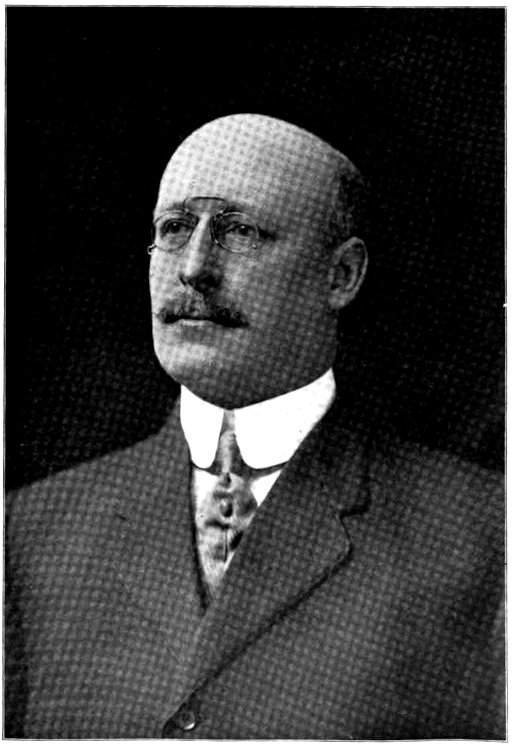
MR. BERNARD J. JOYCE. Of Boston, Mass. One of our most earnest and learned members.
73January 12, 1909.
Mr. Thomas Zanslaur Lee,
Acting Secretary-General,
49 Westminster Street, Providence, R. I.
My dear Judge Lee: I have deferred writing you on the subject of attending the forthcoming banquet of the American Irish Historical Society in the hope that I might find it possible to be present. However, I am doomed to disappointment. I cannot, much as I regret it, find a way to be with you and our friends to share in the festivities. That you will have an edifying and jolly good time goes without saying and I regret exceedingly my inability to share in it. With cordial best wishes,
Sincerely yours,
A. C. Eustace.
January 7, 1909.
Mr. Thomas Zanslaur Lee,
Providence, Rhode Island.
My dear Mr. Lee: It is with sincere regret that I am compelled to advise you of my inability to participate in the annual exercises of the American Irish Historical Society in Washington, D. C., January 16. I assure you it is a grievous disappointment to me, but conditions are such that it will be impossible for me to leave Utah at the present time.
Please convey to my fellow-members my very best wishes for the continued prosperity of the Society. With my best personal regards to yourself, I remain,
Yours very truly,
Joseph Geoghegan.
Washington, D. C., January 8, 1909.
Thomas Zanslaur Lee, Esq.,
Providence, R. I.
Dear Sir: I regret that an engagement to consecrate an altar at Columbia, S. C., on January the 17th will deprive me of the pleasure of joining you at the reception at the White House January 16.
With best wishes for the New Year, I remain
Very sincerely yours,
D. J. O’Connell.
Elmira, N. Y., January 7, 1909.
Hon. Thomas Z. Lee,
Secretary-General, etc.,
Providence, R. I.
My dear Judge Lee: I am just home from the Appellate Division of our Supreme Court at Albany, and have your kind invitation to attend the dinner of the American Irish Historical Society at Washington on the 16th inst. as the guest of the Society.
I very greatly appreciate the honor of this invitation and I have delayed answer for a day trying to arrange my engagements so that I could have the 74pleasure of meeting with the Society on that occasion, but I am very sorry to find that it will be impossible for me to reach Washington for the 16th. I cannot tell you how deeply I regret my enforced absence.
With kindest regards to yourself and the many members of the Society to whose hospitality I am so indebted, and with cordial thanks for the honor of the invitation believe me,
Faithfully yours,
D. C. Robinson.
New York, N. Y., January 4, 1909.
Thomas Z. Lee, Esq.,
Dear Sir: Justice Hendrick acknowledges notice of the general meeting at Washington and expresses regret that owing to the pressure of court duties it will be impossible for him to attend.
Very truly yours,
Edward T. McCrystal,
Secretary.
New York, December 31, 1908.
Mr. Thomas Zanslaur Lee,
Acting Secretary-General American Irish Historical Society,
49 Westminster Street, Providence, R. I.
My dear Sir: I regret exceedingly that I cannot go with you and be present at the reception to the American Irish Historical Society by His Excellency President Roosevelt, as I anticipate being away from New York about that time.
I believe you will have a very pleasant time and my best wishes go with you.
With all the compliments of the season, believe me,
Fraternally yours,
Richard Deeves.
New York, December 31, 1908.
Francis J. Quinlan, M. D., 33 W. 38th Street, City.
Dear Sir: Yours with enclosure received. Regret to say I will not have the pleasure of attending the annual meeting of the Historical Society at Washington, as I expect to be in the South at that time.
Trusting you will have the usual good time, I remain
Very respectfully,
John F. Kehoe.
Dubuque, Iowa, January 2, 1909.
Thomas Zanslaur Lee, Esq.,
Dear Sir: I beg to inform you that Archbishop Keane is not home, nor is his return expected for some months. It will therefore be impossible for him to accept the kind invitation of the American Irish Historical Society.
Sincerely yours,
M. Barry,
Secretary.
75Boston, January 5, 1909.
T. Z. Lee, Esq., Providence, R. I.
Dear Sir: I am sorry I will be unable to attend the meeting of the Society in Washington. Am very sorry I cannot be there.
Very truly,
F. L. Dunne.
Chicago, January 4, 1909.
Thomas Zanslaur Lee, Esq.,
Acting Secretary-General, American Irish Historical Society,
49 Westminster Street, Providence, R. I.
Dear Sir: Your esteemed favor announcing the forthcoming annual banquet of the Society at the Hotel Raleigh in Washington, and also the reception to be given to the Society by President Roosevelt on January the 16th is received, and for which accept thanks. I regret exceedingly that it will be impossible for me to be present on that occasion. I have been somewhat ailing for several weeks past and am recuperating so slowly that I fear I will be unable to get away from my home at the date of your banquet. Should I feel able to do so, however, it will afford me great pleasure to be present, as I always enjoy the annual dinner of the Society.
With best wishes, Very truly yours,
P. T. Barry.
29 Beacon Street, Boston, January 13, 1909.
Dear Judge Lee: The meeting in Washington comes at the time of our annual firm meeting and I regret exceedingly I shall not be able to be with you. I trust you will have an enthusiastic meeting.
Cordially yours,
Thomas B. Lawler.
Boston, Mass., January 15, 1909.
Mr. Thomas Z. Lee,
Acting Secretary-General, The American Irish Historical Society,
49 Westminster Street, Providence, R. I.
My dear Mr. Lee: Your esteemed favor of the 6th inst. reached me during a trip in the West and I appreciate very much indeed your remembrance of me by your kind invitation to be the guest of your Society at the annual banquet in Washington, D. C., on the evening of January 16, at the Hotel Raleigh, and also to attend with you a reception at the White House by President Roosevelt.
Although it will be impossible for me to accept these courtesies, I beg to express my great appreciation of the same and to assure you that it will always be my pleasure to at any time entertain the Society at my home in Lexington whenever it is their pleasure to visit our good old town.
Very sincerely yours,
Geo. W. Taylor.
76Elizabeth, N. J., January 15, 1909.
My dear Judge: My absence this evening I exceedingly regret. I trust the dinner and meeting will be pleasant and interesting. What heart does not dilate with feelings to this night’s occasion, and what a host of interesting recollections spring up in the mind when we reflect upon the time when Irishmen came to the shores of this country in the spirit of holy zeal, leaving the land of their birth, braving the winds of Heaven and the angry wrath of the mighty Atlantic, landing in the wilderness and planting the seeds of a holy religion as well as laying the foundation of the mighty and greatest of all republics.
I am with you in spirit this evening and I hope the effects of our good Society will establish its prestige in every city and town of this country of ours.
Yours fraternally,
James L. O’Neill.
Norfolk, Va., January 15, 1909.
To the American Irish Historical Society,
Hotel Raleigh, Washington, D. C.
Gentlemen: Until today it was my intention and hope to be with you in Washington tomorrow. Conditions beyond control will prevent, consequently my greetings must be conveyed by mail.
Fraternally yours,
James W. McCarrick,
Vice-President for Virginia.
Mr. T. Z. Lee,
Acting Secretary-General,
49 Westminster Street, Providence, R. I.
Mr. Patrick M. Keating presented and read the following memorial to the late Hon. Thomas J. Gargan, former President-General of the Society, which was adopted by unanimous vote:
Memorial of Thomas J. Gargan.
“The members of the American Irish Historical Society by this memorial desire to pay a tribute of love and respect to the memory of their late associate and President-General, Thomas J. Gargan, and to express their appreciation of his character and ability and their recognition of the great loss the Society has sustained in his death.
“His parents were among the pioneer Irish emigrants who came to this country in the early part of the nineteenth century and settled in Boston, where he was born about sixty-six years ago.
“In early life he was engaged in mercantile pursuits, but the 77practice of law strongly attracted him and he was admitted to the bar in the year 1875. As a lawyer he was not merely a successful practitioner, but an ornament to the profession, scorning to descend to dishonorable tactics or to adopt the acts of a pettifogger.
“He filled various positions of honor and responsibility, both public and private, faithfully and efficiently. He took an active part in causes that brought into requisition the zeal, sympathy and interest of worthy citizens and rendered valuable service to his city, state and country. Whether it was a call for patriotic service for the preservation of the republic or an invitation to join his fellow citizens in aiding a people struggling for liberty, or in providing relief for those who were afflicted by reason of some extraordinary catastrophe—on all such occasions he responded cheerfully and contributed his full share by word and by deed.
“While he rendered conspicuous public service as an American citizen he was ever mindful of the land of his forefathers, and of the race from which he sprung. In early manhood he became the president of the Charitable Irish Society of Boston, which is one of the oldest societies in this country, having been established in the year 1737, and from the time the American Irish Historical Society was organized he was interested in its welfare, and was honored about ten years ago by being elected to the highest office within the gift of its members.
“His eloquence, copiousness of ideas and fluency of speech made his orations edifying and instructive, and his voice, so rich and tender and with depth of feeling, made the public addresses delivered by him in memory of the late Mayor Collins and other distinguished men, models of eulogistic oratory.
“But he was esteemed most highly by the members of this Society as a true and kind friend, whose sunny temperament, sparkling wit, genial humor and upright character won their love and admiration and will long keep him alive in their memories.”
Resolved, That this memorial be entered upon the records of this Society and that a copy thereof be sent to the widow of our late fellow-member together with the assurance of the deep respect and affection in which he was held by us and the expression of our heartfelt sympathy in her sorrow and bereavement.
Mr. Keating’s eulogy followed the memorial and was an eloquent tribute to our late President-General.
78Mr. Gargan was born at Boston, Mass., October 27, 1844, and died at Berlin, Germany, July 31, 1908.
The following memorial to the late Mr. James J. Phelan was presented and read by Mr. Edward J. McGuire, and it was unanimously voted that the same be adopted and that a copy thereof be sent to the family of Mr. Phelan:
Memorial of James J. Phelan.
“James J. Phelan died at his country home at Allenhurst, New Jersey, on August 3, 1908, in the sixty-first year of his age. He was a native of the city of New York.
“His father was of Irish birth. His mother was a native of Maryland. His father, John Phelan, came to New York in his early youth with his father. They settled in Greenwich Village, afterwards known as the “Old Ninth Ward,” early in the nineteenth century, and established a successful business in the grocery trade. John Phelan was a man of shrewdness and commercial ability, which qualities he transmitted to his son. He was one of the Phelan family that distinguished itself in the commerce of San Francisco in the pioneer days and still maintains its high reputation there. John Phelan largely increased his fortune by his relations to the trade with California in the decade between 1850 and 1860.
“James J. Phelan attended first the public schools and then the commercial department of the College of St. Francis Xavier, of which famous institution he remained a steadfast friend ever afterwards.
“In 1867, his father, intending him for a business career, established him as the proprietor of a general store at Fordham, which was then a village in Westchester County but which now forms one of the important centers in the borough of the Bronx, New York City. He spent the formative years of his business life in the conduct of this venture.
“In 1870, at the age of twenty-five, he formed the firm of Phelan and Duval, which engaged in the wholesale wine and spirits trade and became one of the important houses in its department. He continued in active management of the affairs of this business until the year 1883, when he took charge of even larger interests.
“The American Contracting and Dredging Company was formed about that time among other things for construction work upon the Panama canal under the French concessionaries. It controlled 79valuable patent rights in dredging machinery. It secured several important contracts from Count Ferdinand de Lesseps as president of the French company and afterwards constructed fifteen miles of the Panama canal. It was most successful financially and its careful management avoided serious complications with the misfortunes of the Frenchmen. When its contracts were completed it withdrew from the field. Mr. Phelan was one of the master minds in this great work. Among his associates were Eugene Kelly, Charles N. Fry and George Bliss of distinguished and honorable memory in American finance, and Commander Gorringe of the United States Navy, who will be remembered for his engineering success in transporting the obelisk from Egypt to Central Park and setting it in its place without a single mishap.
“This, however, was but one of the important enterprises carried on by Mr. Phelan with success. His ability in commercial and corporate affairs was rare and as his remarkable grasp of great affairs and his skill in their administration became known he was invited into enterprises of the most important and lucrative character. He achieved from them a large fortune as well as a high reputation in finance. He died a member of the Chamber of Commerce of the City of New York.
“His active business life did not absorb all his energies. He was a man who from his youth took active part in the political life of the city. He joined also the societies working in the field of religion and morality. He was fond of his friends and of social life. He was always faithful to the traditions of the old Irish race from which he was descended and active in its cause.
“In 1890 he became a commissioner of the Dock Department of the City of New York on the appointment of Mayor Hugh J. Grant. He left upon that office the impress of his ability in one of the most important divisions of the affairs of the world’s greatest seaport, at a time when millions of dollars were available and were spent in providing for the oceanic trade of the port of New York. His service lasted four years, when he resigned with the praise and good wishes of the entire municipality.
“He was identified almost from his youth with the work of the Xavier Alumni Sodality, of the Catholic Club and of the St. Vincent de Paul Society. He rendered each of them great service, both as an officer and as a member. He was a trustee of the Roman Catholic Orphan Asylum, of the Catholic Benevolent Legion, 80of the Catholic Summer School and of many other philanthropic societies. He was a member of many of them in their struggling years and he gave his powers and his industry in full measure to their proper development.
“He was a member of the American Irish Historical Society from its establishment. He was always most interested in its work and devoted to the cause for which it stood. His pleasant face will be missed from its gatherings.
“He was married twice, the second time in 1881 to Marie Foran of New York. He had four sons and four daughters, who with his widow survive him.
“James J. Phelan was an example of the truth that in proper conditions the men of the Irish race surely rise to eminence in fields in which the current prejudice and error of the age deny that excellence is possible to them. From small beginnings and in conflict with adverse circumstances he rose to great fortune and conspicuous position in the metropolis by the exercise of thrift, temperance, honesty and intelligence. He met all sorts and conditions of men and asking no favor he conquered success, holding fast at the same time to the ideals of the race from which he sprung and the ancient faith to which he was ever loyal.”
The following memorial to the late Thomas Hamilton Murray, former Secretary-General of the Society, was presented and read by the present Secretary-General, Mr. Thomas Z. Lee, and it was unanimously voted that the same be adopted and that a copy thereof be sent to the widow of Mr. Murray:
Memorial of Thomas Hamilton Murray.
“On June 5, 1908, Thomas Hamilton Murray, editor, genealogist and historian, died at his home in Sea View in the town of Marshfield, Massachusetts, in the fifty-first year of his age.
“He was one of the founders of the American Irish Historical Society and its Secretary-General from the date of its organization until his death. During his administration the Society grew in numbers and influence, pursuing its good work and historical researches into most of the states of the Union, until he saw it occupying the foremost place in this country of any organization engaged in similar work. He was proud of the Society and gave it 81his best efforts. To him every individual member was personally known, and he took pride in stimulating each with a sense of the responsibility undertaken in making better known the Irish chapter in American history.
“Mr. Murray obtained his early education in the public schools of Newton, Cambridge and Boston, Mass., and, when he reached his majority, chose journalism as his profession. He was a close observer, a ready writer and possessed a style direct and attractive. The seven volumes of the Journal edited by him bear eloquent testimony to his literary ability. For a while he contributed educational, literary and historical articles to the Boston Pilot and enjoyed the coöperation and friendship of its then editor, John Boyle O’Reilly; later he became a member of the staff of the Boston Globe, where he remained several years. Ben Palmer was editor of the Globe at that time, and the Globe office was one of the best schools of journalism in the country. With a well-regulated mind and a strong constitution, Mr. Murray worked hard and the training there obtained well fitted him for the life work he had undertaken and the filling of important positions to which he was later called.
“After leaving the Globe, Mr. Murray became court reporter for the Boston Daily Star, then editor of the Roxbury Advocate, and afterwards editor of the Daily Advertiser, a morning paper at Shelton, Conn. He next became night editor of the Morning News, of Bridgeport, Conn., but soon returned to day work and became editor of the Daily Record at Meriden, Conn., where he remained until called to the editorial chair of the Evening and Sunday Telegram at Providence, R. I. After five years in this position, he became editor of the Lawrence Daily Sun, and four years later took charge of the Evening Call at Woonsocket.
“He had long taken a deep interest in historical studies, particularly in relation to the events and epochs of persons of Irish extraction, and his lectures and writings showed not only his devotion to his subjects, but a wide range of learning and research as well as a high order of literary ability. In addition to his invaluable work for this Society he was the author of many historical works, some of which are as follows:
“The Libraries of Boston: Public, Semi-Public and Probate. (Boston, 1882.)
“The Old Schoolmasters of Boston. (Boston, 1884.)
“The Mason Name in New England History. (Boston, 1884.)
82“The Thayer Name in America. (Boston, 1884.)
“The Irish Element in Connecticut. (Bridgeport, Ct., 1888.)
“From Dawn to Revolution. (Boston, 1889.)
“Thirty Historic American Families of Irish Extraction. (Boston, 1889.)
“Reminiscences of Life Along Narragansett’s Shores. (Providence, R. I., 1890.)
“Rambles in Rhode Island’s South County. (Providence, 1891.)
“Some Early Irish Members of the Society of Friends in Rhode Island. (Providence, 1894.)
“The Dorrance Purchase—An Irish Leaf from Rhode Island History. (Boston, 1895.)
“The Dunlevy Family in Irish History; Sketch of the Clan’s Patrimony in Ancient Ulidia. (Lawrence, Mass., 1895.)
“David O’Killia (O’Kelly), the Irishman; A Pioneer Settler at Yarmouth, Mass., as early as 1675. (Boston, 1895.)
“Concerning the McGuinness, McGinnis Name. (Providence, R. I., 1895.)
“The Irish Chapter in the History of Brown University. (Providence, 1896.)
“The Dempsey Name, Old and Puissant. (Denver, Col., 1898.)
“The Irish Soldiers in King Philip’s War—“Great Swamp” Fight. (New York City, 1896.)
“The First Regiment, Pennsylvania Line, In the Revolution. (Boston, 1896.)
“The Irish Morrisons; A Glance at the Origin of the Clan Name, Together with Reference to the Family’s Patrimony in the Ancient Kingdom of Connacht. (Lawrence, Mass., 1896.)
“Some Patricks of the Revolution. (New York City, 1896–’97.)
“Five Colonial Irish Rhode Islanders. (Providence, 1897.)
“Some Facts Concerning the Irish Washingtons. (Boston, 1898.)
“Early Irish Schoolmasters in Rhode Island. (Washington, D. C., 1898.)
“The French Chapter in American History. (Boston, 1899.)
“Matthew Watson, an Irish Settler of Barrington, R. I., 1723. (Boston, 1900.)
“The Irish Moss Gatherers of Scituate, Mass. (New York City, 1900.)
“The Irish at the Battle of Bunker Hill, 1775. (Boston, 1900.)
“A Point Made Clear—The Brecks of Dorchester, Mass. (Boston, 1901.)
“Irish Settlers, Previous to 1742, in Portsmouth, N. H. (Boston, 1901.)
“The Story of Miss Fitzgerald. (Boston, 1901.)
“The Romance of Sarah Alexander. (New York City, 1901.)
“Early Irish in the Plymouth Colony. (Boston, 1901.)
“Charles MacCarthy, a Rhode Island Pioneer, 1677. (Somerset, O., 1901.)
“Thomas Casey of Ireland and Rhode Island, 1636–1719. (Boston, 1901.)
“The Voyage of The Seaflower—from Ireland to Boston, 1741. (Boston, 1902.)
“Early Irish Educators of American Youth. (San Francisco, Cal., 1902.)
83“A Glance at the Vanguard—Irish Pioneers in Colonial Massachusetts. (Boston, 1902.)
“Richard Dexter, a Forgotten Irish Pioneer of Boston, Mass., 1641. (New York City, 1902.)
“Hugh Gaine, Irishman, New York Publisher, 1752–1809. (Boston, 1902.)
“Gen. John Sullivan and the Battle of Rhode Island. (Providence, 1902.)
“The American Not an ‘Anglo-Saxon’ People. (Boston, 1902.)
“To the American Irish Historical Society he was ever loyal and faithful. No call for service came to him in its behalf to which he did not respond. The highest office in the Society he might have had and political preferment could have been his from the appreciative citizens of Rhode Island and Massachusetts, but he turned from them lest his time and efforts might be diverted from that branch of history he loved so well. As long as his strength held out, he was in the harness serving the Society and, at our last annual meeting in New York, unable to walk, he was carried from the Grand Central Depot to the Manhattan Hotel, and there he conducted to the end the magnificent dinner and entertainment that followed the meeting. The effort was almost fatal, and during the night loving and tender friends watched over him but, by determined will, he rallied and reached his pretty villa at Sea View from which he never departed again in life. In all his work for the Society, he was ably assisted by his noble wife, Mary H. Sullivan Murray, a lady of great intelligence and refinement, who took up the work of the Secretary-General and faithfully maintained it until a member could be selected to relieve her. In paying our deep tribute to her husband, it would be amiss not to mention the faithful wife and assistant who now mourns with us his loss.
“We wish to record here the great benefits which we have received from the work and services of our first Secretary-General and pay tribute to his learning and ability; we further record the deep sorrow with which we look upon his vacant place, and, lastly, we record our loving tribute of affection for Thomas Hamilton Murray as a man, fearless, honest and faithful, an upright citizen and an earnest member of the Society.
“‘The soil out of which such men as he are made is good to be born on, good to live on, good to die for and be buried in.’”
Resolved, That the American Irish Historical Society, in appreciation of the services and efforts in its behalf by Thomas Hamilton 84Murray, late Secretary-General, unanimously adopts the minute prepared by Mr. Lee, orders that it be spread in full upon the records of the Society, and that a copy of the same under the seal of the Society be presented to the widow, Mrs. Mary H. Sullivan Murray.
The following are a few of the many letters received by Mrs. Murray immediately before and after the death of our late Secretary-General:
New York, May 9, 1908.
Dear Mrs. Murray: I am pained to learn of Mr. Murray’s low condition. You have my heartfelt sympathy. Mr. Magrath has just called, and spoke of his visit. I am still hoping that Mr. Murray will rally.
I am writing Mr. Lee of Providence to call, as I understand Mr. Murray wishes to see some member of the Society.
We have missed Mr. Murray greatly the last few months and will miss him always, for he may be considered as the founder of that honorable association of men, the American Irish Historical Society.
With the assurance of my esteem and regard together with my sincere sympathy, I am, dear madam.
Very truly yours,
John D. Crimmins.
Mrs. Thomas Hamilton Murray,
Humarock Beach, Sea View, Mass.
(Telegram.)
New York, June 5, 1908.
Mrs. T. H. Murray,
Sea View, Mass.
We tender you our deepest sympathy in this hour of your great bereavement. Will attend funeral.
Francis J. Quinlan.
(Telegram.)
New York, June 5, 1908.
Mrs. M. H. S. Murray,
Sea View, Mass.
Sincere and profound sympathy on the death of your husband.
John D. Crimmins.
New York, June 6, 1908.
Michael J. Jordan, Esq.,
3 DeWolfe Street, Dorchester, Mass.
Dear Mr. Jordan: I have received the news of Mr. Thomas Hamilton Murray’s death with profound regret, and am very sorry that an important engagement for Monday will prevent my going to Boston for the funeral.
I beg you will convey to Mr. Murray’s family my sincere sympathy and condolence in their sad bereavement.
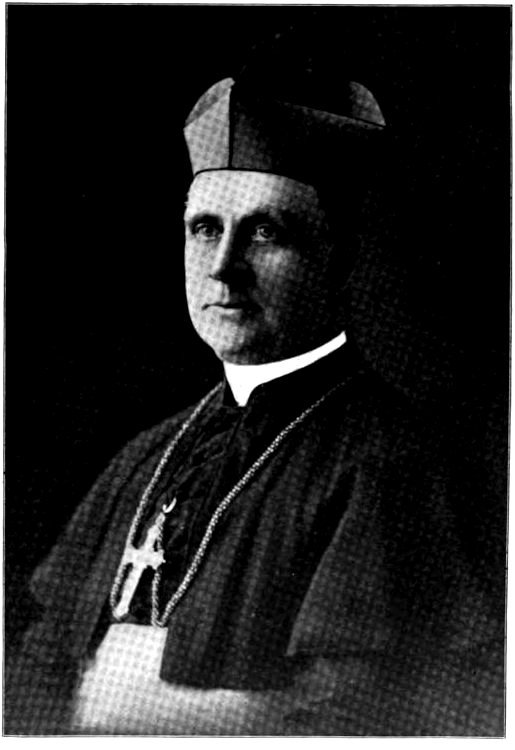
RIGHT REVEREND PHILIP J. GARRIGAN, D. D. Bishop of Sioux City, Ia. Vice-President of the Society for Iowa.
85We have all suffered a great loss in his death; and the noble work he carried forward so devotedly in developing the Irish chapter in American history will not readily find again as zealous or able an advocate. He had been the steady reliance of the Society. The patriotic work he did will long be a pride and glory to the race he loved and the cause so faithfully served.
With profound regret and sincerely sympathizing with all his friends and fellow members, I am,
Faithfully yours,
Jno. J. Lenehan.
Elizabeth, N. J., June 7, 1908.
Dear Mrs. Murray: Accept my sincere condolences on the death of your dear husband, which I read in the New York Herald this morning with profound sorrow.
We have lost a noble and a true friend to the American Irish Historical Society. In looking back over the past it is consoling to think his life has been a most exemplary one. How much better would our communities be, if we had more such men as your husband. His good and simple life was a model for all. He was a man whose character was the soul of buoyancy and kindness.
With deep grief,
I remain respectfully,
James L. O’Neill.
220 Franklin Street.
Hartford, Conn., June 8, 1908.
Mr. Michael J. Jordan,
3 DeWolfe Street, Dorchester, Mass.
Dear Sir: Your telegram received, and I regret exceedingly that I was unable to reach Boston in time for Secretary Murray’s funeral.
I was very, very sorry to hear of his death, and while it is a great loss to his family, our Society has lost a very valuable member. Please convey my sympathy to the family.
I do not know what the circumstances of the family are, but certainly the Society if necessary should do something to assist them at this time. I know that in his home loving hands did all they could for him and it is for the Society to assist financially if necessary.
Very truly yours,
Patrick Garvan.
New York, June 9, 1908.
Michael J. Jordan, Esq.,
3 DeWolfe Street, Dorchester, Mass.
My dear Mr. Jordan: Your telegram notifying me of the time of Mr. Murray’s funeral reached me yesterday morning on my return to the city. I regret exceedingly the untimely death of our friend. He was a devoted and whole-souled worker in the cause of historic truth. I have never met anyone who surpassed him in zeal and unselfishness. He leaves vacant a place in the 86ranks of the lovers of the Irish race and the adherents of the Catholic Church which it will be hard to fill.
I have not the address of his family. May I ask you kindly to extend to them my heartfelt sympathy?
Yours very truly,
Edward J. McGuire.
Providence, R. I., June 22, 1908.
Mrs. Thomas Hamilton Murray,
Carlton Road, Sea View, Mass.
Dear Mrs. Murray: I am very sorry to learn of the death of Mr. Murray. I did not hear of it till it was too late for me to attend the funeral to show the respect and esteem I have felt for him from the first time I met him, several years before the American Irish Historical Society was organized. From that time to this our relations were most cordial and my most sincere sympathy is extended to yourself and your family for the great loss you have sustained. It is a great loss. You and your family have not alone felt this loss, but everyone who had or has any interest in American Irish history must also recognize it. It will be hard to get a man to fill his place in this latter capacity. Again let me express my sincere sympathy with you in your bereavement.
Let me thank you for the return of the pictures that I received last Saturday. I was thinking, before their receipt, where I would send a letter addressed to you expressive of my sympathy at your loss but could not make up my mind where to send it. I saw the Sea View postmark on the envelope over the pictures and I send this to that address.
Yours very respectfully, and in sincere sympathy,
James Moran.
26 South Water Street.
Liverpool, England, July 9, 1908.
Dear Mrs. Murray: I have only now heard of dear Tom Murray’s death and I am so grieved over it that I can hardly contain myself to write you this letter.
While his demise was not entirely unexpected it is nevertheless a great shock, and I hasten to extend my deep and heartfelt sympathy in this your time of sorrow. You have lost a good and worthy husband and I a true friend, of whom I was very fond, and I’m sorry that I was far away from home when he was taken by loving and tender hands to his last resting place.
A clipping from a newspaper sent by my mother told the sad story. She sent it several days ago, but as I have been going about from place to place the news missed me till now.
May God bless and protect you is my humblest wish for you this night.
Yours with much sorrow,
Thomas Z. Lee.
87New York, July 11, 1908.
Mrs. Thomas Hamilton Murray,
48 Carlton Road, Sea View, Mass.
Dear Madam: I am just in receipt of a journal of the American Irish Historical Society with printed request that I acknowledge it to the Secretary-General. Would that I could, and that he were still with us! I learned some weeks ago of his death and I beg to offer you my sincere sympathy and pray Our Lady, the Consoler of the Afflicted, to comfort you and the Lord to grant him His reward, the reward of the faithful and just.
Respectfully yours,
D. P. Murphy, Jr.
New York, July 13, 1908.
Mrs. T. H. Murray,
Humarock Beach, Sea View, Mass.
Dear Madam: I received the Journal of the American Irish Historical Society, Volume VII, 1907, and beg leave to thank you for the same. It is admirably gotten up in Mr. Murray’s usual good style and nicely illustrated, and well bound.
It is like all the previous numbers, a monument to the great ability and devoted industry of your husband. His loss to the Society is indeed very great. His devotion to the work of this Society endeared him to all who knew of his earnest efforts, and his work in its behalf has made for him a most enduring monument.
Very truly yours,
Jno. J. Lenehan.
The following memorial to the late Major John Crane, prepared by Hon. Eugene A. Philbin, was also unanimously adopted, and it was voted to send a copy thereof to the family of Major Crane:
Memorial of John Crane.
“It very rarely happens that it is given to a man to be a source of inspiration to his fellowmen in more than one phase of human effort. A man may, during his life, have given evidence of exalted and self-denying patriotism, or have been conspicuous in the great field of charity, or an example of the highest type of the successful and upright business man, or a great leader in movements for the uplifting of mankind, but the average man cannot hope to establish a claim for recognition for more than one of these achievements. John Crane, however, was entitled to credit for a distinguished career in all. He was born in Morgan County, Ohio, on the 10th day of February, 1840. His mother died while he was quite young and his father took the family to the State of Wisconsin. 88War was declared between the North and South when he had hardly attained manhood, but, with two other young men, he organized a company of volunteers and was elected first lieutenant. This company offered its services to the governor of the State and was assigned to the Sixth Wisconsin Volunteer Infantry. The regiment was ordered to the Army of the Potomac, and was incorporated with other regiments which were known as the “Iron Brigade,” and as such attained great distinction for noteworthy services during the war. Mr. Crane served with the Sixth Wisconsin until the winter of 1862, when he resigned, but only for the purpose of aiding in the organization of the Seventeenth Wisconsin Volunteer Infantry, an Irish regiment which was being raised in that State. He was successful in organizing Company A, and became its first lieutenant. This regiment in March, 1862, was ordered South, and their first stop was at St. Louis, whence they went to Tennessee, arriving at Pittsburgh Landing, Tennessee, a couple of days after the Battle of Shiloh. The regiment was assigned to the division of General McArthur, with whom it served during the campaign, taking part in numerous skirmishes and the Battle of Corinth. About this time the Adjutant of the regiment resigned and Lieutenant Crane was appointed Adjutant, which position he held until the close of the war. Upon the organization of the Seventeenth Army Corps, Gen. J. B. McPherson commanding (afterwards killed before Atlanta), the regiment became one of the regiments of this Corps, taking part in the campaign before the Siege of Vicksburg. They participated in the siege, and the regiment, Lieut.-Col. Thomas MacMahon commanding, joined with others in making the first assault on the breastworks at Vicksburg, May 19, 1863. The regimental officers and men were most highly commended by their commanding officer. John Crane bore a distinguished part in this assault and was personally complimented by the general commanding. The Seventeenth Corps was part of the Army of the Tennessee under General Sherman and served in all its campaign before Atlanta and on the march to the sea. Notwithstanding the fact that John Crane was of a naturally impulsive nature, during the battle his ability to command and exercise a considerate supervision of his men was never affected. His bravery was characterized by unfaltering fearlessness, but never marred by recklessness. He remained in the service until the war was concluded.
89“In the year 1868 Mr. Crane engaged in business with Colonel MacMahon, to whom reference has been made. Later William A. MacMahon, who served in the same regiment, entered the business, which was conducted under the name of Crane & MacMahon at the time of Mr. Crane’s death, which occurred on April 8, 1908, in New York City. The tie that had been formed with the MacMahon brothers in the service was strengthened by Mr. Crane’s marriage to their sister in the year 1866. She still survives him.
“From the outset, even when his time was much taken in forming his business relations and organizing his affairs, he was deeply and practically interested in charity. He commenced then the practice which was continued to the end of his life, not only of giving most liberally, but also of devoting his time and personal attention to the relief of the poor. For many years he was chairman of the finance committee of the Society of St. Vincent de Paul and it was largely due to his gentle but firm persistency that persons able to do so were made to contribute. It was rarely that a meeting of the committee was held that there was not some practical suggestion by him towards procuring those already interested to take a still greater interest or to secure the sympathy of people who had not already contributed in the great work. His effort in this important field was never limited to satisfying the physical suffering of the moment, but included a practical and effective course, having for its end not only the provision for pecuniary resources, but the inspiration of new courage and hope. The battle always became easier and the prospect more hopeful after a visit from John Crane.
“Careless their merits or their faults to scan,
His pity gave ere charity began.”
“Since he carried into business the great elements of character that had made him a distinguished and able soldier and was constantly inspired by the broad spirit of charity which engendered the desire for fair dealing, it was only natural that his efforts should meet with success and that he and his associate should attain a position in the business world distinguished for an honorable policy and ability to produce effective results.
“The reward which attended his efforts in the great spheres of life, to which reference has already been made, caused a deeper appreciation of the value of spiritual inspiration. He realized that 90the battles that he had fought on the field of war and in civic life had been won because of his reliance not upon man or things, but upon the Supreme Being. He took advantage of every opportunity to convey this great lesson to his fellowmen. When about ten years before his death Governor Roosevelt appointed him a member of the board of trustees of the Soldiers’ Home in Steuben County, New York state, he was given an opportunity that probably brought him more real gratification than any other one thing in his philanthropic career. He organized at the Soldiers’ Home religious societies which furnished spiritual gratification to the veteran soldiers, and also gave them a new occupation that tended to relieve the monotony of institutional life. It seemed to him as if he were again, after the lapse of so many years, participating with pathetic care and solicitation in the careers and welfare of those who, under his guidance, were giving their lives to their country. It is not difficult to imagine what this opportunity meant to Major Crane. It is needless to say that the duty was discharged, not only in a manner that gave happiness to the inmates at the time, but also inaugurated methods that were so meritorious as to remain permanently to the advantage of the Home.
“Major Crane never entered actively into politics, although he was a man of clear and positive views as to public welfare. From time to time he freely lent his voice and aid to movements having for their object civic betterment.
“He was for many years the almoner of the Friendly Sons of St. Patrick, and gave the same intelligent and able consideration to the appeals made to the Society by the unfortunate as he had given to many other cases of distress. He was a most active and faithful member of the latter society, and, in fact, was deeply interested in anything that concerned the Irish race and furnished evidence of the great benefits it had conferred upon mankind.
“Major Crane was especially interested in American-Irish history because of its eloquent testimony in support of Irish virtue and ability. His own noble record will always be a bright page in the annals of the race in this country.
“Unbounded courage and compassion join’d,
Tempering each other in the victor’s mind,
Alternately proclaim him good and great,
And make the hero and the man complete.”
91
Memorial of Hon. Hugh Kelly.
In the death of Hugh Kelly, President of the corporation of Hugh Kelly & Co., 79 Wall Street, New York City, the downtown business community of New York lost a man of sound judgment of men and affairs, and a true friend.
Mr. Kelly was born in Chicago, September 24th, 1858, and when a year old came to New York, where he lived thereafter. He was graduated from the College of the City of New York with high honors and was later honored with the degrees of Master of Arts and Doctors of Laws by Fordham University. In 1871 he entered the West Indian trade and in 1884 established the house of Hugh Kelly & Co., which is well-known throughout the cane sugar world. He was very successful in designing and constructing several of the largest and most modern sugar cane factories in Cuba, Porto Rico and Santo Domingo, and was one of the best known merchants in that industry.
He was president of several sugar companies in the West Indies, but found time also to devote himself to maritime and municipal affairs, and was in the directorate of the United Fruit Company, The Emigrant Industrial Savings Bank, the Nipe Bay Company, and other industrial enterprises. He was also a Trustee of St. Patrick’s Cathedral, the Roman Catholic Orphan Asylum, Calvary Cemetery, the Sevilla Home for Children, and the Central Islip State Hospital.
Mr. Kelly served the city as a member of the Board of Education from 1895 to 1898, and was Treasurer of its Finance Committee.
He was Vice-President of the Maritime Exchange in 1894 and 1895, President in 1896 and 1897, and for seven years was on its directorate.
Mr. Kelly was made president of The Oriental Bank in an effort to save it shortly before it failed last Winter. He was a director in the bank at the time of the financial depression, and when the bank was threatened Mr. Kelly took up the task, two or three days after his return from Europe, of realizing on the bank’s assets and meeting the claims against it. He was going along very well when fresh bank failures caused a run on the Oriental, which led to its suspension. Attorney-General Jackson had receivers appointed but they were soon removed by the Court. Full payment to every depositor 92was eventually made through an arrangement with the Metropolitan Trust Company, which took over the Oriental Bank’s assets. Mr. Kelly in his desire to keep the bank on its feet when he accepted the presidency refused to accept a cent of remuneration, his sole desire being to keep the bank going. The strain under which he labored at that time, and the many false rumors which those antagonistic to the bank had issued, preyed upon him greatly, and an acute nervous ailment forced him to give up work three weeks before his death, which occurred October 30th, 1908, at 3 a. m.
The funeral was held at St. Patrick’s Cathedral on November 2d. Archbishop Farley celebrated solemn requiem mass. Some of the other church dignitaries who assisted in the service were Mgr. Lavelle, Mgr. Hayes, Father McCluskey and Father McQuade.
The pall bearers were Joseph Rigney, Michael E. Bannin, Thomas E. Murray, Col. John McAnerney, Richard S. Treacy, James H. Post, President of the National Sugar Refining Company, Joseph W. Foster, Frank Schaffer, Vice-President of Hugh Kelly & Co., Thomas Mulry, President Emigrant Industrial Savings Bank and Myles Tierney, President of the Hudson Trust Company. The interment was in Calvary Cemetery.
Mr. Kelly is survived by his widow, three sons and four daughters.
Personally, Mr. Kelly was a quiet, hearty, genial man, easily approachable and warm-hearted, seeming to have time for every demand upon him in spite of his numerous responsibilities, and a host of friends esteemed him most highly for his ability, integrity and sound judgment. In the business life of New York in which he moved, he will be deeply missed.
The following memorial to the late James Jeffrey Roche, Esq., was also unanimously adopted, and it was voted to send a copy thereof to his family:
Mr. Joseph Smith of the Boston Traveler, one of the founders of the Society, and at the invitation of its officers, presented the following memorial to the late Hon. James Jeffrey Roche, LL. D., which was ordered spread upon the records and a copy thereof sent to the family of Dr. Roche:
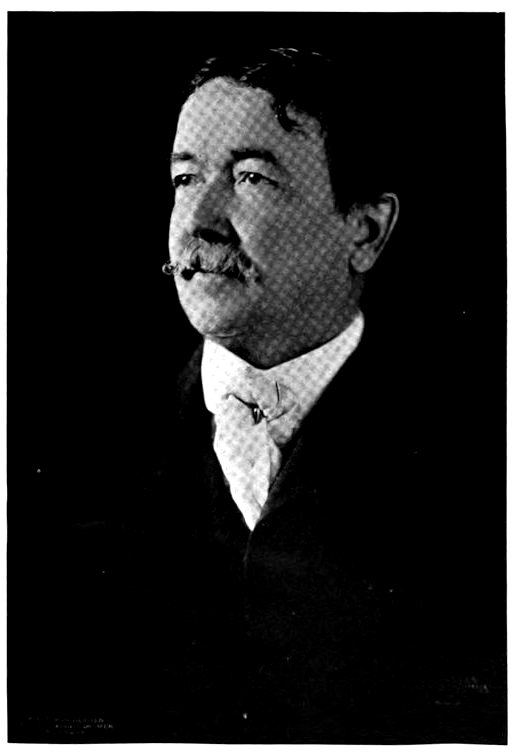
JAMES JEFFREY ROCHE, LL. D (Deceased). Patriot, Editor, Diplomat and Poet. One of the Founders of our Society.
93
Memorial of James Jeffrey Roche.
Under the skies of that brave mountain land,
Where Alpine shepherds feudal might defied,
Where struggling freedom warring cent’ries spanned,
There in the shadows of the hills he died.
He died as dies some long sweet summer day,
When fruits are golden on the burdened trees;
The sun’s pale glory on the sky’s blue gray,
And night comes fragrant on the cooling breeze.
They brought him home and laid him down to rest,
To sleep forever in his narrow bed,
Amid the scenes and friends that he loved best,
At rest forever with his sacred dead.
Joseph Smith, in the Boston Traveler.
James Jeffrey Roche was born in the little Quaker town of Mountmellick in Queen’s County, Ireland, the son of Edward and Mary (Doyle) Roche and was taken while yet an infant of a few weeks, to Prince Edward’s Island, whither his parents emigrated. He grew up in Charlottetown, where his father Edward Roche, an accomplished scholar, conducted a school; and he supplemented the training given him by his scholarly father by a course at the Jesuit College of St. Dunstan’s in Charlottetown, from which he was graduated. Among his college classmates were Chief Justice Sullivan of Prince Edward’s Island and Archbishop O’Brien of Halifax, N. S.
Mr. Roche settled in Boston in 1866 and was engaged in business there for some years; but his peculiar gifts and tastes drew him to journalism and letters; and in 1883 he became one of the staff of the Pilot, under his brilliant friend John Boyle O’Reilly; and after his death he succeeded to the post of editor-in-chief of the paper which he filled with vigor and brilliancy, in full keeping with the traditions of such predecessors as Thomas D’Arcy Magee, O’Reilly and others. The Pilot was the avowed champion not only of the Irish people and of their religion, but it stood ready to do battle with persecution, injustice, intolerance and wrong, no matter against what race or creed they were directed; and no individual paper in the world did better or more effective work for the men and cause of the Irish race; and under the management 94of James Jeffrey Roche, zeal and fidelity to all good causes were always fortified by sanity and justice and tempered by humor, good temper and a fine inhospitality to passion and demagoguery.
While devoting most of his time and talents to his editorial work and duty, he still found opportunities to turn to the field of letters of a more enduring character. A writer of virile and picturesque prose, James Jeffrey Roche will always be best known as a poet whose verse is marked by beauty, sweetness, lyrical quality and a belle esprit all his own, and ranging in scope from the light, brilliant and witty vers de société to such serious and compelling poems as his “Babylon.” His “Songs and Satires” is a volume that sparkles with wit and rapier-like touches. His “Ballads of Blue Water” is a book for American men and patriots, unique and stirring; the ballads will live while Americans look back with pride to the deeds of an heroic past; and no American singer has written any better ballads of action than “The Armstrong Privateer,” “The Constitution,” “The Alamo” and other stirring songs. His “Life of John Boyle O’Reilly” was the tribute of a devoted friend and admirer to a man and comrade he loved and labored with, and is a biography whose literary excellence is amazing when we consider the pressure under which it was written. His other prose work varied from the brilliant accuracy and gravity of “The Story of the Filibusters” (republished by the Harpers as “The Byways of War”) to those airy medleys of fun and philosophy “Her Majesty the King” and “The Sorrows of Sap’ed,” which have made the world laugh and think.
A close personal friend and admirer of President Theodore Roosevelt, he was appointed by him American Consul at Genoa, Italy, in 1904, when his health being precarious, a change of work and climate became necessary; and in 1907 the President transferred him to the capital of Switzerland, Berne, where he lived until the final call came to him.
When in 1896 I broached to a few interested friends the project of establishing an organization which would bring together men of the Irish race interested in gathering and perpetuating the record of the achievement of that race on this American continent, and preserving it in such form that historians could utilize it and thus ensure us our share of the honor and credit of upbuilding the American Republic, I found him sympathetic and enthusiastic in the matter; 95and out of those gatherings and discussions sprang the movement which resulted in the foundation of the American Irish Historical Society. James Jeffrey Roche, John Linehan, Hamilton Murray and I drew up the call, signed it, secured other signatures, called a meeting at the Revere House, Boston, Mass., 20th January, 1897, and the Society was born. He became one of the members of the Executive Council and for many years we attended its meetings and outings until conditions and circumstances stopped our attendance without attenuating our interest in its progress.
Personally, James Jeffrey Roche was one of the most lovable and charming of men, who carried under a surface of wit and joyous frivolity a nature whose depth, sincerity, devotion to ideals, capacity for friendship, passion for freedom, love of race and motherland, high-minded patriotism and loyalty to duty and honor, were understood only by those who knew him intimately. He hated all meanness and dishonor; friendship was a sacred thing to him; and he had that clairvoyant vision of the poet which saw the humbug and pharisee under the skin of the charlatan, when many a reputedly wiser and more sophisticated man accepted the demagogue and pretender at their own valuation.
I knew him for many years; to me he was as my own flesh and blood; I could not love a brother more; and his death was merely the final chapter in the grief I experienced when he went from Boston to represent the Republic abroad, in such physical condition that I knew I would never look upon his face again in life; and I know that in voicing my own sorrow I am but expressing the feelings of those who were comrades in the past and lovers of him always. He had reached the zenith of his literary powers before he left the land of his adoption and love forever; and he himself realized that his work was done, and that only the official duties of his consular position remained to preoccupy him until the final call.
Besides a host of friends, he left a wife, a son and a daughter to mourn his passing; and while the idle reader of contemporary literature may time and again derive pleasure and profit from his joyous wit, and gentle philosophy, his intimates and brothers in soul will seldom meet without recalling with a hush and a sigh the friend and comrade who has passed and who awaits them where work and worry, sweat and sorrow, are no more forever.
96He was buried in Holyhood Cemetery, Brookline, Mass., within a stone’s throw of the spot where sleep his comrades in the flesh, John Boyle O’Reilly, Thomas J. Gargan and Patrick A. Collins, his grave marked by a handsome granite column adorned with a bronze tablet, erected by a group of friends who loved him in life and mourn him in death. May he sleep in peace; for no gentler, sweeter spirit was ever added to the company of Heaven than James Jeffrey Roche.
The following list of applicants for membership in the Society was read by the secretary-general, and by unanimous vote they were duly elected members:
John J. Kenney, New Brighton, Staten Island, N. Y. (proposed by J. J. Lenehan).
William Gilbert Davies, 32 Nassau Street, New York City (proposed by J. J. Lenehan).
Martin Hughes, Hibbing, Minn, (proposed by Hon. C. D. O’Brien).
Patrick F. McBreen, 404 Munroe Street, Brooklyn, N. Y. (proposed by J. J. Lenehan).
Thomas Murphy, Irvington-on-Hudson, New York (proposed by Francis J. Quinlan, M. D.).
Dr. Thomas E. Dolan, 250 Elizabeth Avenue, Elizabeth, N. J. (proposed by James L. O’Neil).
Jeremiah D. Leary, 246 Clark Place, Elizabeth, N. J. (proposed by James L. O’Neil).
Rev. Cornelius F. O’Leary, Wellston, St. Louis, Mo. (proposed by Michael J. Jordan).
Frank L. Tooley, D. D. S., 157 East 79th Street, New York City (proposed by J. J. Lenehan).
Martin I. J. Griffin, 1935 North 11th Street, Philadelphia, Pa. (proposed by J. J. Lenehan).
John C. McGuire, Hotel St. George, Brooklyn, N. Y. (proposed by J. J. Lenehan).
Rev. Thomas J. McCarty, 1011 Douglas Street, Sioux City, Iowa (proposed by Bishop P. J. Garrigan).
William J. Delaney, Saratoga Springs, N. Y.
Patrick L. Hughes, 1 Blackstone Street, Boston, Mass.
97Edgar Stanton Maclay, Standard Union, Brooklyn, N. Y. (proposed by Thomas Z. Lee).
Michael W. Norton, Narragansett Hotel, Providence, R. I.
Dr. John P. Reilly, 215 Elizabeth Avenue, Elizabeth, N. J. (proposed by James L. O’Neil).
Joseph F. McLoughlin, attorney-at-law, 2 Rector Street, New York City (proposed by T. Vincent Butler).
Peter J. Dufficy, 120 West 59th Street, New York City (proposed by T. Vincent Butler).
Joseph Murray, 1245 Madison Avenue, New York City (proposed by Edmond J. Curry).
Rev. James J. Murphy, Ph. D., 1011 Douglas Street, Sioux City, Iowa (proposed by Bishop P. J. Garrigan).
J. C. Delaney, Department of Factory Inspection, Harrisburg, Pa. (proposed by Francis J. Quinlan, M. D.).
Peter J. Gibbons, M. D., 49 Park Avenue, New York City (proposed by Francis J. Quinlan, M. D.).
Charles J. Perry, World Building, Park Row, New York City (proposed by J. J. Lenehan).
William T. A. Fitzgerald, Court House, Boston, Mass. (proposed by James H. Devlin, Jr.; seconded by Michael J. Jordan).
Edward Hamilton Daly, 54 Wall Street, New York City (proposed by T. Vincent Butler).
John B. White, 121 East 86th Street, New York City (proposed by T. Vincent Butler).
Edward D. Farrell, 158 West 125th Street, New York City (proposed by T. Vincent Butler).
Col. P. J. Nevins, Haverhill, Mass, (proposed by J. J. Lenehan).
William F. Downey, 1622 L Street, Washington, D. C. (proposed by J. J. Lenehan).
Richard J. Donovan, 170 Broadway, New York City (proposed by Francis J. Quinlan, M. D.).
John E. McGuire, Haverhill, Mass, (proposed by Dr. M. F. Sullivan).
Constantine J. McGuire, 120 East 60th Street, New York City (proposed by Francis J. Quinlan, M. D.).
Jeremiah A. O’Leary, 38 Park Row, Manhattan, New York (proposed by John J. Daly).
98Gen. Michael Kerwin, Broadway Central Hotel, New York City (proposed by Francis J. Quinlan, M. D.).
Edward Tingent, 68 Broad Street, Elizabeth, N. J. (proposed by Francis J. Quinlan, M. D.).
James P. Conway, 296 East 3rd Street, Brooklyn, N. Y. (proposed by John J. Daly).
Leo F. Farrell, 171 Westminster Street, Providence, R. I. (proposed by Francis I. McCanna).
Dennis A. Spellissy, 302 Broadway, New York City (proposed by J. J. Lenehan).
Rev. John Brosnan, Cornwall-on-Hudson, New York (proposed by J. J. Lenehan).
Peter L. Keough, 41 Arch Street, Pawtucket, R. I. (proposed by John T. F. MacDonnell).
John E. Murphy, Bretton Hall Hotel, New York City (proposed by John E. O’Brien).
Rev. William A. Keefe, Norwich, Conn. (proposed by Edmond J. Curry).
Michael W. Sullivan, Century Building, Washington, D. C. (proposed by David Healy).
Joseph E. G. Ryan, Chicago Inter Ocean, Chicago, Ill. (proposed by Frank S. Colton).
William Gilshenan, New York City (proposed by T. P. Kelly).
Rev. M. A. McManus, Newark, N. J.
Thomas F. Kilkenny, Providence, R. I. (proposed by M. W. Norton; seconded by John F. O’Connell).
Thomas F. Mulry, president Immigrants’ Savings Bank, Brooklyn, N. Y. (proposed by M. E. Bannin).
Hon. Lawrence P. Lee, Ellis Island, N. Y. (proposed by Thomas Z. Lee).
John Woods, 297 Broadway, South Boston, Mass. (proposed by Michael Maynes; seconded by Michael J. Jordan).
John Howlett, 49 Portland Street, Boston, Mass. (proposed by Michael Maynes; seconded by Michael J. Jordan).
M. J. Sheehy, merchant, Foot 39th Street, New York City (proposed by Henry L. Joyce; seconded by John F. O’Connell).
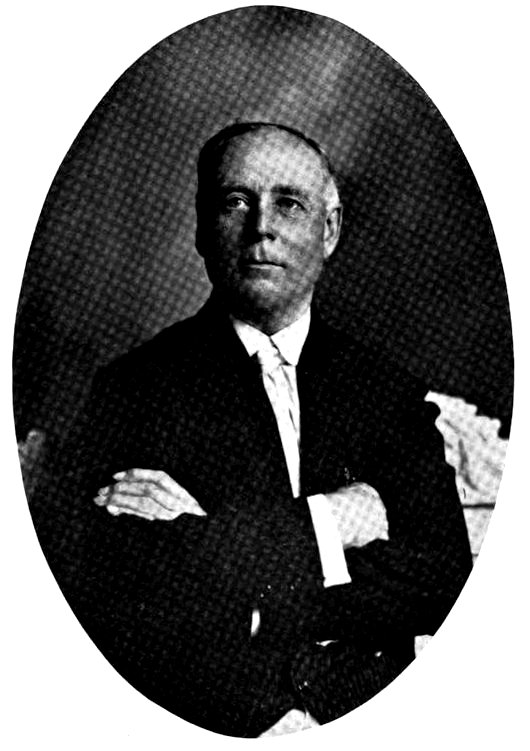
PETER FENELON COLLIER. Late Editor and Publisher of Collier’s Weekly. Deceased April, 1909.
99James C. Shannon, vice-president David Shannon Company, New York City (proposed by Henry L. Joyce; seconded by John F. O’Connell).
William C. Burke, contractor, 143 Liberty Street, New York City (proposed by Henry L. Joyce; seconded by John F. O’Connell).
James F. Mack, attorney-at-law, New York City (proposed by Henry L. Joyce; seconded by John F. O’Connell).
Joseph Rowan, attorney-at-law, New York City (proposed by Henry L. Joyce; seconded by John F. O’Connell).
John L. Murray, 223 West 42d Street, New York City (proposed by M. H. Cox; seconded by Bernard J. Joyce).
Major Thomas F. Lynch, United States Army Building, Whitehead Street, New York City (proposed by John J. Daly).
Daniel S. Mahoney, 131 Charles Street and 277 Broadway, New York City (proposed by John J. Daly).
Charles B. O’Connor, New York State Construction Company, Broad Street, New York City (proposed by John J. Daly).
Frank T. Molony, 70 Jane Street and 277 Broadway, New York City (proposed by John J. Daly).
Joseph T. Ryan, 149 Broadway, New York City (proposed by Henry L. Joyce).
Patrick J. Haltigan, editor Hibernian, Washington, D. C.
Stephen McFarland, 44 Morton Street, New York City (proposed by John Jay Joyce).
Stephen McPartland, 134 W. 92d Street, New York City (proposed by H. G. Bannon).
Stephen J. McPartland, 391 West End Ave., New York City (proposed by H. G. Bannon).
P. J. Nee, 1341 Girard Street, Washington, D. C.
John J. Buckley, 99 Nassau Street, New York City (proposed by John J. Daly).
In addition to the above, Ernest Van D. Murphy, first lieutenant, Twenty-Seventh Infantry, United States Army, Havana, Cuba, was elected a life member of the Society.
100Mr. Michael F. Dooley, Treasurer-General of the Society, presented the following report, covering the period from January 28, 1908, to January 15, 1909, and the same was adopted by unanimous vote:
Providence, R. I., January 15, 1909.
American Irish Historical Society.
Amount on hand at last report, January 28, 1908 $2,003.05
RECEIPTS.
1908.
Feb. Received on account of N. Y. dinner $297.00
Feb. Membership fees 105.00
March Membership fees 100.00
May Membership fees 180.00
June Membership fees 35.00
July Membership fees 280.00
Aug. Membership fees 285.00
Sept. Membership fees 280.00
Oct. Membership fees 520.00
Nov. Membership fees 500.00
Dec. Membership fees 520.00
Dec. From Western News Co., for one Journal 2.00
Dec. From Secretary-General, contribution for Sullivan Memorial Tablet dedication 112.00
1909.
Jan. Membership fees 230.00
Interest from bank 29.19
$3,475.19
Total receipts $5,478.24
DISBURSEMENTS.
1908.
Feb. 4. Jas. J. Armstrong, quartet at New York banquet $30.00
Feb. 7. T. P. Kelly, expenses at New York banquet 352.57
Feb. 17. T. H. Murray, salary and postage 55.00
Feb. 28. Rumford Printing Company 24.50
Feb. 29. Anna M. Burns, clerical work 8.00
Feb. 29. T. H. Murray, postage 5.00
March 16. T. H. Murray, salary and clerical assistance 60.00
March 25. T. H. Murray, postage 5.00
April 9. T. H. Murray, clerical assistance 16.00
April 29. T. H. Murray, salary and postage 55.00
May 16. T. H. Murray, salary and postage 62.00
101June 10. Mrs. T. H. Murray, expense for two years, messenger, telephone, telephone tolls and postoffice expenses in forwarding mail 168.00
June 17. Geo. H. Chandler, funeral expenses, Thos. H. Murray 307.15
June 17. Michael J. Jordan, expenses at funeral T. H. Murray 15.47
Nov. 6. Michael J. Jordan, carriage hire at funeral T. H. Murray 5.00
June 18. Mrs. Murray, salary 50.00
July 11. Mrs. Murray, salary 12.00
July 11. Gerry & Murray, supplies 4.00
July 11. Thos. Groom & Co., supplies 2.95
July 18. Livermore & Knight Co., stationery for Treasurer-General 3.50
July 18. Mrs. Murray, salary, postage and telephones 67.45
July 24. Postage, Treasurer-General 2.00
July 24. Rumford Printing Company, printing of year book 679.49
July 24. Rumford Printing Company, general printing 10.81
July 29. A. W. Lang, stationery for Treasurer-General 7.50
Aug. 13. Mrs. Murray, postage 10.00
Aug. 19. Mrs. Murray, salary and telephone 55.00
Sept. 1. Rhode Island Printing Company, circular letters 14.60
Sept. 10. Thos. Groom & Co., supplies .75
Sept. 10. Rumford Printing Company, general printing 6.32
Sept. 10. Postage, Treasurer-General 1.00
Sept. 17. Mrs. Murray, salary, postage, telephone and other expenses 64.80
Oct. 10. Express on box from Mrs. Murray .60
Oct. 17. Mrs. Murray, salary, postage and telephone 60.00
Oct. 23. Postage for Treasurer-General 1.00
Oct. 27. M. J. Jordan, expense incurred at Mr. Gargan’s funeral 46.75
Nov. 7. Snow & Farnham Company, printing, Secretary-General 9.98
Nov. 7. Snow & Farnham Company, postage stamps and envelopes 40.00
Nov. 13. John J. Lenehan, expenses incurred as chairman membership committee 28.78
Nov. 13. John J. Lenehan, printing bills for membership committee 100.90
102Nov. 13. Mrs. Murray, salary, postage, messenger and telephones 63.00
Nov. 21. Remington Printing Company, general printing for Secretary-General 4.75
Nov. 28. John J. Lenehan, expenses incurred by membership committee 74.10
Dec. 2. Thos. Z. Lee, expense incurred as Secretary-General 20.26
Dec. 15. Mrs. Murray, salary, postage and telephone, etc. 59.00
Dec. 18. Postage, Treasurer-General 1.00
Dec. 18. David B. Hall, lunch in connection with dedication of Sullivan Memorial Tablet 109.80
Jan. 8. John J. Lenehan, committee on new members, clerical help 28.00
Jan. 8. John J. Lenehan, committee on new members, postage 15.00
Jan. 8. Preston & Rounds Company, record book for members’ dues 1.00
Jan. 14. Thos. Z. Lee, typewriter and table for Secretary-General 99.50
Jan. 14. Snow & Farnham Company, general printing for Secretary-General 43.85
Jan. 14. Snow & Farnham Company, general printing Secretary-General 51.20
Jan. 14. Services of stenographer reporting in typewriting dedication exercises Sullivan Memorial Tablet 20.00
Exchange charges on checks .40
$3,309.73
Balance in National Exchange Bank 2,438.51
$5,478.34
Summary of Receipts and Disbursements.
From January 28, 1908, to January 15, 1909.
RECEIPTS.
Balance on hand January 28, 1908 $2,003.05
Received from membership fees, old members $2,220.00
Received from old member life membership fee 50.00
Received from new members annual fees 515.00
Received from new members, life membership fees 250.00
On account of New York dinner 297.00
For one Journal 2.00
103Special contributions for Sullivan Memorial Tablet dedication exercises $112.00
Interest from bank 29.19
$3,475.19
Total receipts $5,478.34
DISBURSEMENTS.
Salary secretary $550.00
Printing Year Book 679.49
Balance on New York dinner 382.57
Funeral expenses of Secretary Murray 327.62
Expenses incurred at Mr. Gargan’s funeral 46.75
Lunch on occasion of dedication of Sullivan Memorial Tablet 109.80
Expenses of Membership Committee 246.78
Expenses of Treasurer-General:
Stationery $11.00
Postage 5.00
Book 1.00
Exchange .40
17.40
Expenses of Secretary-General Thos. Z. Lee:
Typewriter and table $99.50
Printing 109.78
Postage 40.00
General expenses 20.26
269.54
Stenographer, special report Sullivan Tablet Dedication
Exercises 20.00
Expenses Secretary-General’s office, Mrs. Murray:
Boston postoffice forwarding mail $6.00
Express 2.40
Clerical help 34.00
Supplies 7.70
Printing 56.23
Postage 88.00
Telephone 67.45
Telephone tolls 60.00
Messenger 68.00
$389.78
Balance in National Exchange Bank, Providence, R. I., January 15, 1909 $2,438.51
$5,478.24
104
Permanent Fund American Irish Historical Society.
1909
Jan. 15. Amount of deposit with the National Exchange Bank, Providence, R. I. $127.56
A motion was made that the next annual meeting of the Society be held in New York City, at a time and place to be later appointed, and after some discussion the motion prevailed.
The meeting thereupon adjourned.
Attest:
Thomas Zanslaur Lee,
Secretary-General.
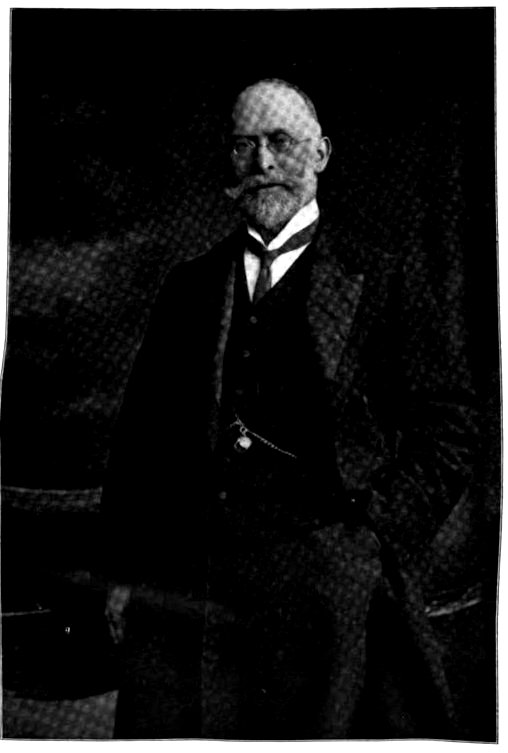
MICHAEL FRANCIS COX, M. D., F. R. C. P. I., M. R. I. A., 26 Merrion Square, Dublin. Vice-President for the Society for Ireland.
105