ELEVENTH ANNUAL BANQUET OF THE AMERICAN IRISH HISTORICAL ASSOCIATION.
Reading edition
Washington, D. C., January 16, 1909.
The Eleventh Annual Banquet of the American Irish Historical Society took place this evening at 7.30 in the magnificent banquet hall on the tenth floor of the Hotel Raleigh, and over two hundred members and guests were present. The arrangement of the tables, floral decorations and candelabra was commendable, and was a great credit to the efforts of the Dinner Committee.
President-General Quinlan presided and acted as toastmaster for the evening.
With him at the head table were seated: Hon. Edward D. White, Justice of the Supreme Court of the United States; Hon. Thomas H. Carter, United States Senator from Montana; Hon. Robert J. Gamble, United States Senator from South Dakota; Hon. Joseph A. O’Connell, Congressman from Massachusetts; Hon. William Sulzer, Congressman from New York; Hon. John J. Fitzgerald, Congressman from New York; Hon. Michael F. Dooley of Rhode Island, Treasurer-General; Rear Admiral John McGowan of Washington, former President-General; Mr. Francis I. McCanna of Rhode Island; Hon. John D. Crimmins of New York, former President-General; Hon. Patrick J. McCarthy, Vice-President for Rhode Island; Hon. Victor J. Dowling, Justice of the Supreme Court of New York; Mr. Patrick Carter of Rhode Island; Hon. Edward A. Moseley of Washington, former President-General; Mr. David S. Barry of Washington; Hon. Maurice T. Moloney of Illinois; Rev. M. A. Quirk of Illinois; Mr. Michael H. Cox of Massachusetts; Mr. W. J. O’Hagan, Vice-President for South Carolina; Hon. Thomas B. Fitzpatrick of Massachusetts; Hon. Lawrence O. Murray of Washington; Mr. Bernard J. Joyce of Massachusetts; Hon. John F. O’Connell of Rhode Island; Hon. John Hannan of New York; Mr. Humphrey O’Sullivan of Massachusetts; Rev. Michael A. 106McManus of New Jersey; General D. F. Collins of New Jersey; Mr. Michael J. Jordan, Vice-President for Massachusetts; Mr. John L. Murray of New York; Mr. Patrick J. Haltigan of Washington; and Mr. Thomas Zanslaur Lee, Secretary-General of the Society.
The press was represented by the following gentlemen: Jerome S. Fanciulli, Associated Press; John Monk, New York Sun; A. P. Arnold, United Press Association; David S. Barry, Providence Journal; J. W. Bathon, Washington Post; Archie Jamieson, Washington Herald; James R. Quirk, Washington Times; and W. H. Landvorgt, Washington Star.
Divine blessing was invoked by Rev. Dr. Joshua P. L. Bodfish of Canton, Mass., after which a flashlight picture of the assemblage was successfully taken by the National Press Association of No. 1423 F Street, Washington, for the benefit of those who wished a photographic souvenir of the occasion.
The menu, which was finely served, was as follows:
Martinis
Lynnhavens
Clear Green Turtle
Amontillado
Celery Salted Almonds Pim-Olas
Medallion of Bass a la Marguery
Chateau Perron
Pommes a l’Etoile
Sweetbreads a la Conti
Pontet Canet
Petits Pois
Fresh Mushrooms sous cloche
Sorbet Renaissance
Quail Piquee sur Canape
Champagne
Salade Romaine
Biscuit Tortoni Petits Fours
Camembert
Cafe Noir
White Rock Cigars and Cigarettes
107After substantial justice had been done every part of the dinner, the President-General asked for attention and said:
“Ladies and Gentlemen, as well as Honored Guests of the American Irish Historical Society: If I feel somewhat overawed, somewhat oppressed, by the consciousness of standing in the place formerly occupied by a man of such national, nay, international, reputation as the President-General whom I succeed, all the more is it incumbent upon me on this occasion to take my duty very seriously, and endeavor to discuss with the sobriety and earnestness appropriate to one of my profession the aims which this organization has in view, and the things to be sought after or avoided in prosecuting those aims.
“Let me call your attention, particularly the attention of the many new acquisitions whom I am so happy to see here tonight, to the five words which form the motto upon our corporate seal: ‘That the world may know.’ The interpretation put upon that legend by another former President-General, Thomas J. Gargan, of whom I must speak later on, was this: ‘To place the Irish element in its true light in American history.’ It is not necessary to warn you, at this stage of our existence as a body, that the American Irish Historical Society does not live either to pick holes in the coats of others or to trail its own coat over the sod by way of challenge. Rather, I may say, the purpose of our organization is defensive; to employ the armory of historical truth in vindicating for men of Irish blood that place in American history of which it has been defrauded either wilfully or through ignorance. Many causes have contributed to create misrepresentation on the one hand and honest misconception on the other. We need not discuss these causes in detail just at present. I am here to deliver a general address and not a special lecture in history. But we all know, and every well-informed American is aware, that the ignorant and the vulgar not so very long ago had but two well-defined ideas about Irishmen: One, that they wore red whiskers and carried hods; the other, that they loved a fight. The former of these errors we strive to dissipate—and I think we have succeeded notably—by the very fact of the Society’s existence and by the publication of the annual journal with its roster of membership. As to the latter, we are not, I fear, in a position to deny it without some reserve. It may, however, be fairly claimed that this Society has already done much to proclaim its sympathy with the arts 108of peace in electing a member of my profession to be the immediate successor of such a man as Admiral McGowan.
“So far to establish what I take to be the solid reasons which justify the existence of such a society as ours. Now let me call your attention to an absolutely indispensable condition of our success in the future, as it has been, I think, one great factor of our success in the past. It is our aim to make better known the Irish pages of American history. These pages do not refer, let us remember, to any one section, type, class or creed of Irish-descended Americans, but to all without discrimination. And this function of our Society evidently will never be, could never have been, effectively discharged without a hearty collective effort to sink all differences of religious belief and of political connections. We must continue to act, within our own body and in pursuit of our common object, independently of those sectional, religious or political ties which bind us individually as loyal citizens and as sincere Christians. From the days of Brian Boru and of Dermot McMorough down to our own time we know that that little isle where grows the ‘chosen leaf of bard and chief’ has been a prey to the invader only because the invader knew how to foment dissension among its native sons. Gentlemen, this essential quality of our organization is both forcibly and happily borne in upon us in these days when we hear that the land of our fathers is at last beginning to assert its power as a political unit by realizing that very idea of being ‘Irish first,’ that idea of national unity, her neglect of which has been the comfort of her enemies in times past.
“Their proneness to dissension has been more or less facetiously accounted for by the theory that the Irish are a nervously high-strung race, who find a pleasant counter-irritant in the ‘man-enobling conflict.’ It has been said that an Irishman would rather fight another Irishman than a man of alien race, simply because he recognizes in an antagonist of his own blood the most promising opportunity of a truly exciting battle.
“The memory is still fresh upon me of that important event at which I had the honor of assisting on the 16th of last month, the unveiling of the beautiful tablet placed in the State House at Providence, Rhode Island, to the glorious memory of Major-General John Sullivan of Revolutionary fame. We all know that this splendid and public-spirited memorial is one of the achievements of 109the past year on which our Society has reason to congratulate itself. Let the still fresh memory of that proud occasion be my excuse for dwelling at such great length upon the warlike qualities of the Irish race. For these qualities, in truth, are quite generally admitted by both friends and enemies. Our more pressing call, it seems, is to emphasize the achievements of the Irish race in peace. After listening to those eloquent tributes in the Providence State House from the lips of Governor Higgins, Ex-Governor Lippitt and others, it was borne in upon me how easily a public man’s peaceful achievements may be eclipsed by his military exploits. John Sullivan was, as our tablet records, a statesman of distinction; as a jurist he left his mark upon the legal history of New Hampshire, and yet it is almost exclusively as the patriot soldier that he lives today in the popular mind.
“Another hero of the American Revolution whose memory we must tonight recall with especial satisfaction was Commodore John Barry. We have the right, gentlemen, and I think that we should insist upon it strenuously in these days, to call Barry the Irish father of that splendid American navy of which we are all so justly proud. And it is matter for congratulation that, since our last annual meeting, and largely through our own organized efforts, historical justice is now at last to be done to the man who was a commissioned Captain in the American navy when Paul Jones was only a Lieutenant. A prominent site has been officially chosen for a statue of Barry at the national capitol, and we have every reason to hope that the work will be executed by some sculptor of great repute of Irish descent.
“But, proud as we must all feel of Irish services to the Republic ‘on the decks of fame’ and on many a stricken field, is it not rather our duty as an organization to shed the light of history upon Irish services in the council chamber and the law court, in science and scholarship, and the fine arts? In the retrospect of the year that is gone, what Irish-descended American can fail to thrill with pride at the spectacle of that distinguished and at the same time enthusiastic assembly which paid honor to the memory of Augustus St. Gaudens, a native of Dublin, and the foremost American sculptor of our own day?
“And in this retrospect we have to include at least one example of the type of Irish descendant which rises to eminence in the peaceful professions in our late-lamented and highly-respected President-General, 110Thomas J. Gargan, whose obsequies in Boston last fall were the occasion of so impressive a manifestation of civic gratitude and esteem. Surely his life was in itself a powerful effort to ‘place the Irish element in its true light in American history.’ Eminent in the legal profession in a community where the standards of that profession are especially high, he also gave to the state of Massachusetts as a trusted official such services as were duly acknowledged by the presence in his funeral cortege of the Mayor of Boston, the present and past Governors of Massachusetts, and an immense multitude of citizens. And if this great lawyer’s career brilliantly illustrated the truth that the Irish race excel in other things besides fighting I must not pass over in silence that other departed fellow-member, Major John Crane of New York, a man whose career was illustrious both in war and in peace, a citizen who first turned his back upon commercial success in order to take up arms for what he considered the cause of the Republic, and then, when he had won glory for himself in four years of active military service, returned to the peaceful pursuits of commerce to achieve a place among the leading merchants of New York, and at last to dispense his honorably-acquired wealth and to apply his talents and his time in the charitable relief of poverty and suffering.
“I have purposely left to the end of this retrospect my sincere tribute to the memory of that man whose death, coming in the interval since our last annual meeting, has been a peculiar loss to us as a body. In addressing you two years ago, my distinguished predecessor, Admiral McGowan, said, referring to our then Secretary, Thomas Hamilton Murray: ‘A competent secretary is a priceless possession for any society, and we have been especially fortunate in this respect.’ The distinguished Admiral was speaking in the presence of Mr. Murray when he uttered those words. What may we not add now that death has removed the restraints imposed in such circumstances by modesty and good taste. Thomas Hamilton Murray was indeed a man to whom the American Irish will forever owe a debt of gratitude for his work along that line which we, as a society, have especially taken for our own. He was a journalist by profession, an ornament, I may say, to American journalism, as so many good American Irish have been; and before this Society had come into existence he had already anticipated its aims, by rendering out of his own initiative and his own exertions no insignificant service toward placing the Irish element in its true light in American history. From its very inauguration our Society was aware that no other man in all the length and breadth of this country could have held his position with so much advantage to the cause which we have at heart. To say nothing of that which many of us must feel in the removal of a dear friend, the Society cannot but be conscious of the calamity it has sustained in the loss of this truly ‘priceless possession’ to whom our rapid success in the past has been so largely due.
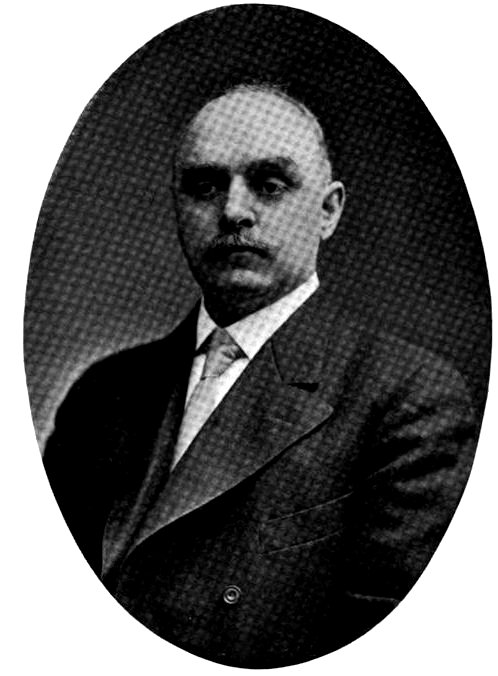
MICHAEL J. JORDAN. Of Boston, Mass. Vice-President of the Society for Massachusetts.
111“In the year that has passed our Society has singularly suffered from the loss of many of its ardent and enthusiastic workers. These pioneers of our organization have been summoned from our midst, but the heritage they have left is beyond measure or computation. Their memory will always be fragrant with the sweetness of their lives, and, whilst we chant their requiem, may they enjoy the hosannas that are sung for them in their happier abode.
“Coming now to the actual aspect of our life as an organization, we may congratulate ourselves, I rejoice to say, upon a thoroughly sound and vigorous condition. Most especially would I single out for mention the astonishing success of our new membership committee. That committee, under the chairmanship of Mr. John J. Linehan, was appointed in New York City, I need hardly remind you, scarcely two months ago, with the object of promoting the numerical increase of our membership, while of course taking due care that its quality should not fall below the standard which we had thus far maintained. So zealously and efficiently has the work of the committee been done, so just and cordial has been the appreciation of the Society’s aims, that within one month 125 new and good names were added to our roster, and the total increment, I believe, since the appointment of the committee, amounts at the present moment to something over 200. I am sure that we all heartily welcome these new recruits, and in voicing that welcome let me express the hope that every man of the new squad intends to do his utmost for the furtherance of our great aims.
“To do this, gentlemen, no mere machine action of the Society will be adequate. Our work is, remember, a work of enlightenment, therefore a work dealing with the intellect of our times and our country, and not to be accomplished without intellectual exertion. Now while societies, academies and universities have their immense value as a directive and unifying apparatus, the intellectual forces 112which operate under their control must of necessity be individual. To be effectual all effort must be controlled by system, but the most perfect system without an abundance of individual effort must be like an elaborately-constructed piece of artillery without a sufficient supply of ammunition.
“Our system has now been elaborated by the inauguration of the Recorder, to be published at stated periods and which will serve as a vehicle for such notices on topics of American Irish history as the zeal and enterprise of individual members may prompt. It is confidentially hoped that the supply of such material will be both abundant and rich in quality, and that our Recorder will become in itself a valuable magazine of information in those lines of research which are the Society’s special province.
“Let me even urge on members the advantage to our cause that would be attained if every one of us will make a point of forwarding to the Secretary-General, Judge Lee, who has assumed, in addition to the many exacting duties of his present office, that of editor of our Recorder, any newspaper clippings or other material concerning contemporary happenings relating to our work.
“Finally, gentlemen, it is in no perfunctory spirit that I here publicly render thanks to the members of our official staff, without whose zealous coöperation our year could not have been brought to the happy and glorious conclusion in which we rejoice tonight. Since the death of our beloved Secretary-General six months ago Judge Thomas Z. Lee of Rhode Island has fulfilled in large measure the colossal duties of that office, and to whom the Society owes more than mere words of thanks. With him I associate in my heartfelt gratitude our esteemed and respected Treasurer-General, Mr. Michael F. Dooley, whose devotion to our work and our interests has been, I may say without exaggeration, heroic. And, gentlemen, I must not conclude without expressing in both my own behalf and that of the Society as a whole those thanks which are fairly due to the various committees who have so successfully carried out the work of organizing this meeting. I hold that the manner in which that labor of love has been performed has been in itself a very positive demonstration of the faculty of concerted action which belongs to our race, at least on this side of the Atlantic, if not everywhere and always. And now I conclude with my personal thanks to all who are here tonight, especially the ladies, who have given a fine atmosphere 113to this occasion and without whose hearty and sympathetic countenances our gathering could not have been, as I am confident it will be, a memorable one in the history of the American Irish Historical Society.”
Hon. Patrick J. McCarthy: “Rhode Island proposes three cheers for the ladies.”
This suggestion met with a hearty response, and was quickly followed by similar proposals from representatives of Boston and New York.
President-General Quinlan: The first toast on the program is “The President of the United States, Theodore Roosevelt.”
This was drunk standing and was followed by three ringing cheers. The orchestra then played “The Star Spangled Banner,” which was sung by the assemblage.
President-General Quinlan: We will now turn to the serious aspect of this page in our history. This evening we are especially honored, ladies and gentlemen, by having at this table one of the most distinguished men, not only in the United States, but in the world. Without further ado, without further expression, because it is like carrying coals to Newcastle, I will go on and introduce to you Hon. Edward D. White, Justice of the Supreme Court of the United States of America.
Mr. Justice White was greeted with hearty applause and cheering as he arose, and, after order was restored, he spoke as follows:
“Mr. President-General, Gentlemen of the American Irish Historical Society, Ladies and Gentlemen: When the privilege was extended to me of coming here tonight there was also a request which was by me declined, to respond to one of the set toasts. This was done because it has been my wont since taking up judicial duty in Washington to eschew as far as I could public speech-making, because the thought has always been mine that if public speech-making were indulged in, even occasionally, the habit might grow and thus I might become what it seems to me is an abomination—a too loquacious and indiscreet speech-making judge. Strange as it may seem to any of you who have had to go over ponderous judicial opinions, the result of judicial work is to cause one to hesitate about words. They come to the one who does such work to be things which may be productive of great wrong if misused or misapplied. True as this is as to judicial work generally, it is more so when the character 114of that work in our own country is considered. Under our system judicial duty is not confined to the settlement of controversies between men. It is more extensive, since it controls man in his relations to government and the relations of government to the individual. It involves the power to limit government itself, since upon it is cast the ultimate duty to maintain the Constitution and apply its limitations. It, therefore, in a sense not only restrains both the national and State governments, but regulates their relations one to the other. From this all-embracing extent of the judicial authority it must be apparent that in our own country much more than in any other the discharge of judicial duty involves the dealing with subjects of the most acute public concern, where passion and political agitation are flagrant. When these things are considered it is certain that the performance of the judicial function in our country—to paraphrase the words of the Romans—involves the science of all things human and divine, the knowledge of all things good and evil.
“With these thoughts in my mind I stand up upon the generous solicitation of your President and look into your kindly faces and form the purpose to say a few words concerning your and my duty to preserve the institutions of government with which we are blest, and with the thought comes the admonition that I must be circumspect and say nothing which ought not to be said. Indeed, as I speak, there comes unbidden to my mind that beautiful prayer of the Catholic Liturgy where the Priest, as he approaches the Gospel, invokes the aid of Almighty God to cleanse his mouth as with a living coal in order that his lips may be worthy to syllable the inspired subject which he is about to approach.
“Before I say anything further, however, let me briefly establish my right to be among you tonight upon a more intimate basis than that of a mere guest. This can hardly be done because of my being an Irish American, for I am only of Irish blood on my father’s side in the fourth generation. But my right to be one of you from another point of view is quite apparent. In the state in which I was born there lived an Irish American bearing the name of White. At a public dinner—I do not believe it was an Irish American affair—he sat near one whose name was O’Rourke. Leaning over to him he said: ‘Mr. O’Rourke, what countryman are you?’ ‘What countryman?’ said O’Rourke. ‘I am an Irishman. Why do you ask me?’ 115‘Because I thought from your name you might be a Frenchman,’ was the reply. Quick came the retort: ‘That is more than I can think of you, for I can kick a White out of every sod in Ireland.’
“But there is a deeper claim than mere name on my part to be one of you, since going back over my whole life from the time when I sat as a boy learning to read out of a primer, down to this night, I can look back to nothing of joy or sorrow, of success or failure, where some Irish American friend did not stand near me aiding in the realization or accomplishment of the one or sustaining and supporting in submission to the other.
“When the French Republic was born some one asked a great French orator to prove its existence. He said: ‘The Republic is like the sun; blind is he who sees it not.’ And so tonight I shall not attempt to recount the many and priceless services from the days of the Revolution to this time which the Irish American has rendered to the upbuilding of this great and free country which we possess and enjoy. Why should this be done, since their services shine down the pathway of our national life with an effulgence so bright that blind indeed must he be who sees them not.
“The question which I ask myself, therefore, is not the superfluous one of what the Irish Americans have done for our country, but what they owe it. By what means were they enabled to render the great services which they have rendered? The answer is clear. Their possibilities arose from the wise, the free institutions which our forefathers founded and under the shelter of which the Irish Americans were enabled here to seek a haven and to establish their new homes, thus affording them the opportunity of rendering the services which they have rendered to the expansion and preservation of our institutions.
“This being true, I ask myself the question, and I ask of each one of you, how best can we honor them? How best can we show our appreciation of the great work which they have done? The answer comes spontaneously to the mind: By preserving and perpetuating those institutions which have blessed them so much and which they have in return so helped to establish and preserve.
“As I look, Mr. President, at present conditions in our country, there are indications to my mind of great danger to our institutions. It seems to me I observe a tendency in the minds of the people to forget how vital to their perpetuation is the preservation of all the 116wise limitations which our forefathers ordained. It seems to me that there is a growing forgetfulness of the fact that the liberty which our fathers founded was not license but a liberty restrained by law; that the government which they established was one of limited powers and divided authority, national and local, each fulfilling their separate functions and each intended to move in their allotted sphere like the orbs of the Sidereal universe, thus securing the plenitude of local rights whilst at the same time obtaining national power and authority, not unlimited, but confined to its allotted orbit.
“I say that it seems to me there is a tendency to forget these things because it is observable at the present time that wherever an evil obtains which needs remedying the tendency of the public mind is to attribute the evil, not to a mistaken administration, but to the existence of some one of those great safeguards upon the preservation of which our institutions depend. So also it seems to me it is observable that there is a great tendency in the public mind, whenever it is deemed that a wrong requires remedy, to grow restive under the restraints imposed by constitutional limitations, to regard them as antiquated or obsolete, and thus seek to redress the wrong without regard to those limitations, forgetful of the great truth that whatever may be the temporary good to be accomplished by a disregard of the fundamental limitations of our Constitution, such good is insignificant in comparison with the untold harm which must result from overthrowing the very foundations upon which our government rests and by the adhering to which alone it can endure.
“Again, it seems to me that this tendency in the mind of the people generally finds manifestation in the exertion of the powers of government. There seems to me to be a growing tendency to chafe at the limitations on power which the Constitution imposes; to seek to accomplish some temporary good by means deemed to be the most direct, wholly without reference to the question whether the resort to such means will conflict with or set at naught those essential limitations upon power which the Constitution was expressly adopted to secure.
“With this danger confronting us may I not say that if we would honor and reverence the memory of the Irish Americans who have done so much for the upbuilding of our institutions, that we may best do it by seeing to it that the institutions which they have helped to build up shall be preserved in all of their integrity. Ah, then, if we would perform the duty of honoring those who have gone before, let us each and all fix in our hearts the enduring purpose to see to it that these evil tendencies are corrected and thereby renew and revivify our resolution to preserve and perpetuate our institutions.
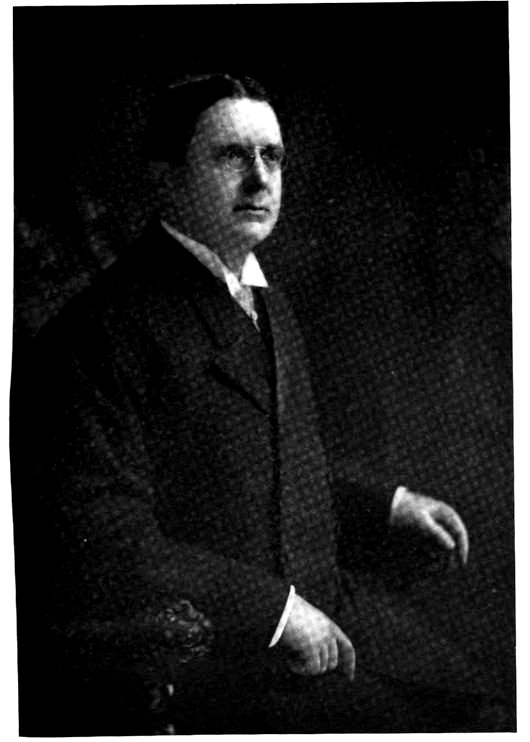
HON. VICTOR J. DOWLING. Justice of the Supreme Court of the State of New York. Jurist, Author and Historian.
117“With this in mind, before I take my seat let me propose to you a toast: ‘The Irish American of today, and the Irish American to come. May they honor and reverence the memory of their forerunners by bringing the splendor of their courage, the generosity of their devotion and the keenness of their intellect to the perpetuation of the government which the fathers founded, embodying, as it does, liberty restrained from license, government, both national and local, with limited and defined powers in the continued existence of which our future of peace and prosperity are bound up and in whose perpetuation the hopes of all mankind who value true liberty are so intimately involved.’”
Mr. Justice White’s eloquent and graceful address received the closest attention, and great applause and cheering followed the stirring toast at the end.
President-General Quinlan: “Ladies and Gentlemen, some time ago I was present at an entertainment where the orator of the occasion bore an international reputation. The chairman of the evening took an hour and a quarter to introduce the gentleman, but his speech lasted only a quarter of an hour. Now I could take an hour and a half to introduce the next speaker to you, but I will just announce his name, the Hon. Victor J. Dowling, Justice of the Supreme Court of the State of New York, who will respond to the toast “Irish Pioneers in New York.””
Judge Dowling said:
“While we know that an Irishman was in Columbus’ crew on his first voyage to the New World, we have no means of ascertaining whether any of his countrymen were on the ships of either Verrazano, Gomez or Hudson, upon the first three occasions when the Bay of New York was seen by Europeans. The mystery which has enveloped the early life of Hudson and which shrouded his end surrounds as well many of the details of his memorable cruise. We do know that besides the captain there were but two aboard that vessel out of its total equipment of from sixteen to twenty men who spoke English—Robert Juet of Limehouse, England, 118the captain’s clerk, who kept the journal of the voyage, and one John Colman, a sailor, referred to as an Englishman by Juet, but who may have been of Irish descent. He was evidently an experienced seafaring man and a follower of Hudson’s, for in the first known reference to the latter, which is the record of his voyage of discovery for the Muscovy Company, April 19, 1607, in search of a passage by way of the North Pole to Japan and China, Colman was one of the sailors. As Hudson passed the Highlands of Navesink September 1, 1609, and entered the lower bay, he was so impressed with its beauty that he described it as ‘a very good land to fall in with, and a pleasant land to see.’ On September 6 a boat’s crew was dispatched from the ship and, entering and passing the Narrows, beheld the first view of Manhattan Island. The land encircling the bay was covered with trees, grass and flowers and the air was filled with delightful fragrance. On their return the crew were attacked by Indians in two canoes, and John Colman was killed by an arrow piercing his throat—the first blood offering to the approaching civilization which was to revolutionize the hitherto peaceful scene.
“While the Dutch occupation of New Amsterdam continued, we find no positive traces of Irish names or inhabitants, save in two instances. One is the mention of the Irishman from Virginia who went to confession to Father Jogues in 1643, while the latter was temporarily sojourning in the town after his rescue by the Dutch from the hands of the Indians, and who advised the latter of the presence of Jesuit fathers in Virginia. The other is the name, several times appearing, of ‘Thomas, the Irishman,’ concerning whom I have been able to collect many scattered items. His real name was Thomas Lewis, although he is to be found referred to at various times as ‘Thomas, the Irishman,’ ‘the Irishman,’ and Lodewycksen or Lodewycksz, as well as by his proper name. He was the captain of one of Director Stuyvesant’s war yachts, which served for a dispatch-boat as well.
“His was an interesting career, and I am glad to be able to present some of its salient features, which may enjoy at least the merits of novelty. He was born in Belfast, and becoming involved in the Cromwellian wars, his family was dispersed, his two sisters first flying to Holland for refuge, where they afterwards died. They were followed by Lewis, who upon their death applied to the West India Company at Amsterdam and was by them sent to New York. 119In the Directors’ letter to Director Stuyvesant and his Council (June 14, 1656), they notify the latter: ‘In the ship Blauwe Duiff (Blue Dove) goes also over Thomas Lodewicksen, carpenter, for whom the Company, too, paid the fare, on condition of his remaining in New Netherland for three years, or if he leave before he must refund the passage money to you in Holland coin or its equivalent.’ The Blauwe Duiff arrived here September 5, 1656. Lewis appears to have gone to Albany (then Fort Orange) for in 1658 he was in partnership there with Reynier Wisselpennigh as carpenters and builders and they sued the local church for 270 guilders for building the ‘Doop-huysie’ (baptistry) and received the full amount. In 1661 his partner and he had differences over the cost of fitting out a sloop they were building. He must have come to New Amsterdam shortly thereafter, as the court records here show. In the meantime he had married, in Fort Orange, Geesje Barents.
“On October 17, 1662, Reiner Wisselpenninck brought suit against ‘Tomas, the Irishman’ in the Mayor’s Court at the City Hall, to recover a balance of six beavers due for a half-interest in a bark, and two beavers for a barrel of tar. Defendant counterclaimed and plaintiff had judgment for three beavers only. On May 29, 1663, certain tobacco contained in the bark of ‘Thomas, the Irishman’ and belonging to Samuel Etsal was attached in a suit against the latter. Hendrick Zanzen Smith sued Gysbert Frerickzen October 2, 1663, and in that action an attachment was levied on moneys belonging to defendant in the hands of ‘Thomas, the Irishman.’
“In June, 1663, Director Stuyvesant sailed from Manhattan to Wildwyck (Kingston) on Lewis’ yacht, and on the 15th of the month while lying in the ‘Long Reach’ (North River) he sent a message to the magistrates at Fort Orange, in the course of which he noted ‘this is written in haste on board of the Irishman’s yacht.’
“In the correspondence between Director Stuyvesant and Captain Cregier at the Esopus and in the minutes of the government of the latter reference is made five times in 1663 to the arrival of Lewis at ‘the redoubt’ at Esopus from Manhattan; on August 5th, on September 1st (when he and Claesje Hoorn came in their yachts) and on September 17th, 19th and 21st. On all these occasions he is referred to as ‘Thomas, the Irishman.’ In an order of the Council, August 29, 1663, Tomos Lodewyck and Claes Lock were ordered to await 120orders from Captain Cregier before the Redoubt (Roudont). This was during the Indian war in the Esopus.
“Thomas Lewis was an active and successful man, and in addition to being a ship-owner and pilot was evidently engaged in trade and in the sale of liquor. He first figured in the Mayor’s Court February 5, 1667, when he was sued by John Danrell, and the matter was referred to arbitrators. On the 7th of the same month he contributed eight beaver skins to the support of the minister. He was engaged in a long controversy with Simon Turcq in 1668 over 230 planks, which he claimed to have theretofore paid, and out of which rose a suit against Poulus Leenderson for ninety of the same boards. In 1669 he was sued by Warner Wessels, the city farmer, for taking into his house ’1 hogshead of rum and 3 anckers of stilled waters’ without accounting therefor. This suit he won. But he lost an action brought by Hendrick Obe to recover f.79.5 in wampum for the excise duties on some wine and beer. At a Council meeting held at Elizabethtown, New Jersey, November 7, 1671, it was ordered that no corn or provision be transported out of the Delaware River except what was then aboard the sloop of Thomas Lewis, then in the river, for which he was given a special license. In 1672 he sued William Waldron for borrowing his boat without his consent, and then setting it adrift, when it was thereafter found by John Benneco at Staten Island, who demanded salvage. The defendant was mulcted in the salvage and was directed to turn the boat over to the owner, who was to send his boy to the island to take possession of it. At a council held at Fort James January 27, 1673, permission was given to all vessels from this point to go up the Delaware River above New Castle, upon producing the Governor’s certificate in consequence of a complaint concerning Capt. Lewis’ sloop. During the Dutch re-occupation of the city, when war again threatened, we find in the ‘Records of New Amsterdam’ ‘that the Schout, Burgomasters and Schepens being assembled “Collegialiter” in the City Hall of New Orange March 10, 1674, they sent for the skippers and barquers of the city, when they were notified of the Governor General’s order that no more than two sloops shall go at once to Willemstadt and Esopus, and one to the South river, and that they sail alternately to be determined by lot; also that no passengers be conveyed without passports.’ Whereupon the skippers making 121known in turn their views, ‘Thomas Lewis is satisfied with what the Governor and Council decree.’
“We find records of trips made by him to Virginia, Boston, Rhode Island and the Delaware (South) River from 1665 to 1669, carrying merchandise of all kinds. September 26, 1671, Governor Lovelace promises ‘Mr. Tom’ at the Delaware to send him information by Peter Alrick ‘who tomorrow will embark in Tom the Irishman’s yacht.’ In 1675, he was appointed to make a calculation of the expense for building a new church in conjunction with Adolph Pieters and Abraham Jansen. We find that in 1678 he owned a sloop called the Katharine.
“In a list of the richest inhabitants of New York made February 19, 1674, Thomas Lewis is credited with the possession of property valued at 6,000 florins, Holland currency, only sixteen appearing therein as being wealthier. At the time of the English occupation he owned real estate on the west side of Pearl Street between Wall and William streets, then known as the Water Side, then valued at $10,000; also on the South Street (now William) between Hanover Square and Wall Street.
“From the records of the baptisms in the Dutch church we learn that he had eight children, named, respectively, Barent, Cornelia, Leendert, Catharina, Cornelia, Thomas, Cornelis and Rachel. Anthony Brockholst was one of the witnesses at the baptism of the last named in 1678. The descendants of Barent, Leendert (or Leonard) and Thomas are scattered throughout the Hudson Valley, and the family name appears at various times in the records as Lenwis, Leuis, Lieuwens, Lieuwes, Lieuwis, Lievens, Lievenszen, Lieuens, Liewensen, Liewes, and Liewis. In the New York Genealogical and Biographical Record (Volume XXXIV) the date of Thomas Lewis’ death is given as September 24, 1684, and his age as 56. His will was admitted to probate under Governor Dougan, April 1, 1686, and letters testamentary were issued to his wife Geesie Lewis. She then lived with her daughter Catharine along the Strand (Lang Strant) and they were members of the Dutch church. Her sons then living were Barent, Thomas and Leonard, with the eldest Lodiwick (apparently born at Fort Orange) who at the time of his father’s death was living with Lewis Thomson at Belfast, and thereupon returned to New York, where he died without issue.
“But there are some names of merchants doing business here from 1221643 to 1647 which, if not English, must be Irish, and while the present ascertainment of their exact nationality seems hopeless, yet careful research might still enroll them in the honor roll of Irish pioneers. These were Rev. Francis Doughty, the English minister, residing in Pearl Street, between Whitehall and State streets, who on March 28, 1647, received a grant of 6,666 (Dutch) acres of land at Mespath (Newtown patent); Robert Butler, residing on the same street, between Stone and Bridge streets; Michael Pickett, residing on Broad Street, near Beaver; and Thomas Sanderson, residing on Beaver Street, who received grants of land on this island July 13, 1643, October 25, 1653, and September 14, 1665.
“There was a Jan Patrickx or John Patrick here in 1653 and a James Code or Cody in 1658. Thomas Higgins was sued for value of 275 pieces of firewood on November 20, 1661, and by Thomas Hall for the return of a saw January 31, 1662.
“Among the names of those to whom grants of land under the Dutch occupancy were made were Thomas Hall, Thomas Chambers and George Holmes, each receiving more than one grant; the first two took the oath of allegiance to the English authorities between October 21 and 26, 1664.
“The English capture of New Amsterdam in 1664 did not, so far as we have any records, lead to any influx of Irish settlers here. So novel was their coming that we find reference made as a remarkable fact to the presence of the person, unnamed, who is supposed to have been the first direct Irish immigrant to New York, being an Irish girl, a servant in the household of Isaac Allerton, a well-known English tobacco merchant, and who was working therein in 1665, shortly after the English occupation. Little could she have dreamt of the host of her sister voyagers who brought to this country the spirit of devotion, of self-sacrifice, of faithful discharge of duty, which ultimately forced itself upon the grudgingly-given attention of the community and admiration for which as well as for the tenderness and purity of the women of the Irish race was the most potent force in tearing down the wall of hostility and hatred which intolerance and ignorance had reared in the way of the progress of the Irishmen in this country towards recognition, equality and success.
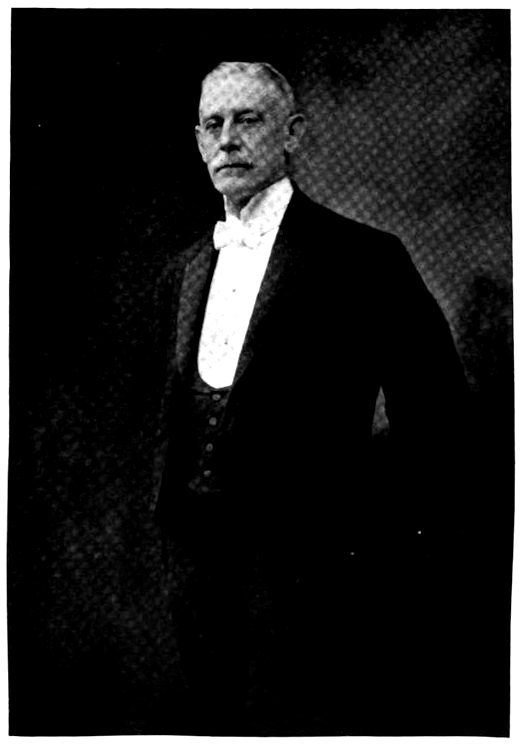
MR. JOHN J. DALY. Of New York City. An Earnest and Helpful Member of the Society.
123“Patrick Hayes must have been a resident of the city for some years. He apparently came from the colony of Maryland. We find a record of his service as a juryman in the Mayor’s Court on many occasions during the year 1666. He evidently was a tapster and hotel-keeper, for he had controversy with the excise in 1667. He must have been engaged in general business as well, for in suits between third parties moneys were attached in his hands in 1667 and he sued various parties for goods sold in 1667 and 1668. In two of these cases Thomas Carr was a joint plaintiff. In the action of William Urgent against John Ashman for slander, June 2, 1668, he was a witness to prove his knowledge of the plaintiff as a freeman in the province of Maryland. John Daaly was a plaintiff in two suits in the Mayor’s Court in 1670. John Quigly figures as a plaintiff in the Mayor’s Court against Ralph Huddison August 15, 1671, when he sued successfully to recover £16, 10 sh., for earthenware sold. He served as a juror in the same month, and was one of the arbitrators appointed in the suit of Samuel Bach and David Gomer against the Ketch Betty (attached). Dennis McKarty sued Thomas Edwards, master of the Ketch ‘Society’ in the Mayor’s Court October 24, 1671, to recover £5 for cutting and chipping logwood, and recovered judgment. He was himself sued by Samuel Hall November 14, 1671. Thomas Griffin was one of the public cartmen of the city February 13, 1672.
“During the intervening years, until the Dutch re-occupation in 1673, when its name was changed to New Orange, the city saw but few Irish faces and the list of the burghers contains no Irish names. Upon the re-cession of the city to England in 1674, when English rule became an assured fact, it is reasonable to suppose that some Irish arrivals must have been noted. Yet we can only surmise that from the names as we afterwards find them on the rolls. So, in 1674, Andrew Clare is recorded as owning land on Pearl Street, between Whitehall and State streets; in 1677, we note as residing here, William Walsh; in 1680, Abraham Corbett, a distiller, residing on Broadway near Exchange Place, and William Cox, flour merchant, residing on Hanover Square; in 1691, Lawrence Reade; in 1695, John Morris and Peter Matthews; in 1698, William Morris; in 1702, Thomas Flynn, surgeon, and Patrick Crawford; in 1703, John Barr, Thomas Carroll, Richard Flemming, Bartholomew Hart, Henry Mooney and Peter Moran; in 1708, Anthony Lynch; in 1710, Thomas Kearney; in 1711, James Maxwell. All these were freemen. In 1696, the then Governor Fletcher returned to the home authorities a list of eleven Irish Catholics residing in the city, none 124of whom was a burgher nor a landowner. Captain Evans, of the Richmond frigate, who was here with the Governor, was the son of an Irish shoemaker.
“It is significant that we first begin to notice Irish names after the administration of Governor Dongan had commenced. The commanding position held by an Irishman for the first time in Colonial history must have attracted to this colony many of his less favored compatriots, who found here not only a haven of refuge where they could practise their religion, but a favored spot where under his enlightened sway the hope of entire civil liberty was near realization. The life and services of Thomas Dongan have never received their just recognition at the hands of historians, nor do we realize the debt, which, as citizens of a great city, we owe this man whose conceptions of liberty were far in advance of his time. At the risk of triteness I cannot forbear epitomizing his career, for it is that of the first Irishman who not only figured prominently in the city’s history, but, as well, moulded its future and made it possible of achievement. Thomas Dongan, second Earl of Limerick, was born in 1634 at Castletown, County Kildare, Ireland, the youngest of the three sons of Sir John Dongan, Baronet. His mother was a sister of Richard Talbot, Earl of Tyrconnel and Lieutenant-Governor of Ireland. The family removed to France after the execution of Charles I, when Dongan entered the army and was commissioned by Louis XIV, in an Irish regiment, where he rose by degrees to the rank of Colonel. Returning to England after the Restoration, after declining an offer of preferment in the French Army, he was commissioned and an annual pension of five hundred pounds given him. In the same year, 1678, he was sent as Lieutenant-Governor to Tangier under Lord Inchiquin, where he served for two years, returning to London to spend the life of a man of society and a favorite at Court. Through the influence of the Duke of York he was made Governor of the Province of New York, his jurisdiction including parts of Maine besides Long Island, Martha’s Vineyard, Nantucket and all the land from the Connecticut River to Delaware Bay. He was also commissioned Vice-Admiral. Arriving in New York August 25, 1683, from Nantasket, he had on the way hither promised the inhabitants of the easterly end of Long Island that ‘no laws or rates for the future should be imposed but by a General Assembly’—but a slight foretaste of what he was really to accomplish. 125The population of the city was then less than four thousand and it extended from the Bay to the entrenchments along Wall Street. From the Collect Pond (the site of the Tombs) to the northwest towards the North River extended a marsh of seventy acres. From the Bouweries to Harlem there stretched a wood haunted by bears and wolves, and within the city walls themselves bear hunts took place in the orchards, one located between Cedar Street and Maiden Lane. Under his rule, general hunts were held to exterminate wolves from the city. The inhabitants were largely Dutch, but there were many French Huguenots and some few English. In this rather primitive community, great things were about to be done for liberty. Pursuant to his instructions from the Duke, Dongan ordered an election of a ‘General Assembly of all the freeholders by the persons whom they shall choose to represent them,’ in order to consider with the Governor and Council ‘what laws are fit and necessary to be made and established for the good weal and government of the said colony and its dependencies and all the inhabitants thereof,’ with full liberty of consultation and debate among the members. All laws passed were to be subject to the veto of the Governor, and if approved by him were to be submitted to the Duke of York, remaining effective until disapproved by him. It is to the glory of Dongan that he not only approved but initiated many of the revolutionary measures afterwards enacted. On September 13, 1683, a date memorable in the city’s history, the Freeholders of New York, Long Island, Esopus, Albany and Martha’s Vineyard were notified to elect representatives to meet in General Assembly in New York City on October 17th. Seventeen delegates responded, whereof four were from New York and Harlem. This first popular representative assembly met at Fort James, and Matthias Nicoll was speaker. Fourteen acts were passed, whereof the most important was, ‘The Charter of Liberties and Privileges granted by His Royal Highness to the inhabitants of New York and its dependencies.’ This was declared to be enacted ‘for the better establishing the government of this province of New York, and that justice and right may be equally done within the same.’ Among the provisions of this well-named Charter of Liberties were those providing for at least a triennial session of the General Assembly; that every freeholder and freeman should have the elective franchise without constraint or imposition; that majorities should decide every issue; that representatives should 126be apportioned among the counties; that the members should enjoy all the privileges of members of Parliament; and in fine extending to the inhabitants of this colony all the rights and privileges which Englishmen at home enjoyed under Magna Charta and the provisions of English law. Entire freedom of conscience and of religion were guaranteed to all peaceable persons ‘which profess faith in God by Jesus Christ,’ and the privileges of all existing churches and their discipline were protected. No tax was to be levied without the consent of the Governor, Council and Assembly, thus recognizing the principle which the people had wrested from Mary of Burgundy, in 1477, by the charter called ‘The Great Privilege.’ And thus, for the first time in America, the people were recognized as having legislative power and authority. Accepted by the Governor and proclaimed October 31, 1683, a new standard was set for popular liberty and popular aspiration so that Governor Hunter was able to write to Dean Swift, in 1704, ‘this is the plan of government they all aim at and make no scruple to own.’ The Duke of York accepted this charter October 4, 1684, but when he became King James II he refused to confirm it as being too liberal and implying too much recognition of the people as a political entity, and it died by his veto October 4, 1684. But the seed had been sown, and its growth could not be stopped. At the same session, courts of justice were by statute provided for; the naturalization of aliens was prescribed, and twelve counties were established in the province. To add to the other landmarks of his administration, a charter was granted to New York City April 27, 1686, which has since continued to be the basis of our municipal laws, rights, privileges, public property and franchises. ‘It was worded with care and showed that those who framed it were possessed of a broad and enlightened sense of the sanctity of corporate and private rights.’
“During all his busy rule, Dongan was kept occupied with questions of statesmanship which none but an able and resourceful man could have handled; whether adjusting boundary disputes with New Jersey, Pennsylvania or Connecticut, or outgeneralling the Governor General of Canada at his own game; whether negotiating with the Indians or planning combinations with the other colonies to resist French aggression or undertake offense operations;—in every phase of his varied activities he displayed resourcefulness, tact and power.
“He was a humane man. Under the Duke’s laws, in force from 1271665 to 1683, no Christian could keep a slave; but the New Yorkers, being unable to keep pace with the New Englanders, who habitually used their services, slaves were allowed to be kept by orders from England. But in the instructions which Dongan issued May 29, 1686, it was directed that no cruelty should be practised upon them, and the wilful killing of Indians and negroes was to be punished with death. We find as well on October 6, 1687, he proposed to his Council that some means be found for releasing Spaniards and other free people who were held here as slaves and that he forbade their masters either to sell or trade such persons pending their appeal for liberty. Again, July 30, 1688, he ordered that ‘all Indian slaves within the province, subjects of the King of Spain, that can give an account of their Christian faith and say the Lord’s Prayer shall be forthwith set at liberty, and sent home at the first convenience, and likewise them that shall hereafter come to this Province.’
“The troubles accumulating in England found their echo here and the King prohibited the establishing of printing-presses here, and on January 20, 1687, dissolved the popular Assembly. In that year Dongan wrote ‘one of the most careful as well as most honest pictures of his provincial government which an American subordinate ever sent home to his English sovereign.’ In the course of it he says: ‘I believe for these seven years past there has not come over into this province twenty English, Scotch or Irish families.’
“The entire winter of 1687 he spent at Albany, supervising the protection of the colony against the French, and being without financial help from the other settlements, he pledged his personal credit and mortgaged his farm on Staten Island for £2,000 to meet the expenses of the expedition then raised.
“On March 23, 1688, he was superseded as Governor by Andros, who was made Governor General of New England in America, comprising all of British North America, except Pennsylvania. Dongan was offered the rank of Major General, which he refused in order to remain in New York. His homestead was at Hempstead, Long Island. He owned a hunting lodge on his estates at Castleton, Staten Island, which were named after his original home; and he had property at Martha’s Vineyard as well. His city residence was on Broadway, between Maiden Lane and Ann Street, where his flower garden was a special feature. Between these places he spent 128his time, seeking to rebuild his fortune, severely shattered by his expenditures for the protection of the colony he loved, until the reins of power fell into the hands of Jacob Leisler, after the flight of James II to France, when Dongan was hunted as a rebel and enemy of the new régime, and driven to seek refuge on his brigantine, on which he kept in hiding in the lower Bay. The winds being adverse, he was unable to sail away, and flying to New York in secret, thence to New London, to Hempstead, to New Jersey, and to Boston the first advocate of popular rights was finally forced to escape the persecutions of the people, whose liberties he had assured, by sailing to England in 1691. Never repaid any considerable part of the fortune he had spent to defend the honor of his country and the safety of her colony, he died, without issue, December 14, 1715, at the age of eighty-one years. With him the history of Irish activity in New York may well be said to begin. While he came here as an official, he identified himself with the Colony and with the City, and grew so to love it that no honors appealed to him which involved leaving it. To have been the means of assisting in conferring upon a people popular government, civic liberty and religious freedom in an age of despotism and persecution, is an honor which reflects credit upon the race to which he belonged, as well as upon himself. He has been characterized by historians as ‘an excellent and prudent magistrate’ (Winsor); ‘a man of integrity, moderation and genteel manners, who may be classed among the best of our governors’ (Smith); ‘his firm and judicious policy, his steadfast integrity and his pleasing and courteous address soon won the affections of the people and made him one of the most popular of the Royal governors’ (Booth); ‘of a noble, praiseworthy mind and spirit’ (Gov. Hinckley); ‘a ruler who for breadth of mind, wide sympathy and executive ability stands far in advance of his times and measured by the system of government which he inaugurated, is easily one of the most attractive and momentous personages in American Colonial History’ (Driscoll). It is significant that this great Irish pioneer should have been an office holder, a tradition which the race did not forget when its hour of opportunity arrived. It may be said at this time that three other royal governors of the colony were of Irish birth, the Earl of Bellomont, who served from 1698, and who was the son of Baron Coote of Colooney; William Cosby, who arrived August 1, 1732, and who was an Equerry of the Queen, 129Colonel of the Royal Irish Regiment and the tenth son of Alexander Cosby of Stradbally, Queens County; and Sir William Tryon, the last of the line. But no one of these ever identified himself with the colony or is to be reckoned with as a constructive force.
“After Dongan departs from the scene, we again have a long period of silence upon Irishmen in New York. The meagerness of detail as to anything affecting their names, their activities or their achievements is disheartening. Much of it may be attributed to the lack of wealth or social standing upon the part of those who immigrated here in the end of the seventeenth and the beginning of the eighteenth centuries. Much may be charged to their desire to conceal themselves from persecution and worse. There must have been refugees here from Virginia, New England and the Barbadoes, where penal laws were savagely enforced. Maryland must have furnished its quota when religious liberty was abolished. But New York seems never to have been so favorite a resort for the persecuted as Pennsylvania. Then again many redemptioners must have come here, when their time of service had expired. These were the immigrants who were unable to pay their passage and who on arriving were sold for a specified time to those who would reimburse the ship captain for their carriage.
“In October, 1700, a number of recruits arrived in New York from Ireland, and one of them, Cottrill, a former ensign in King James’ army, was shot in the Fort here for participation in a mutiny. It is evident from reading the record that these men had been impressed into the service and coming here involuntarily, sought freedom on their arrival. In the answers which Brigadier Hunter sent to Secretary Popple, August 11, 1720, he wrote: ‘The inhabitants increase day by day from New England, and of late from the North of Ireland.’
“Among the North of Ireland emigrants to New York are many who figured prominently in the religious life of the colony. Rev. Charles Inglis, afterwards Rector of Trinity Church, came here as a missionary in 1759. In 1766 Philip Embury arrived, and helped to found the John Street Church. He is among the pioneers of the Methodist Episcopal Church in America. In that year Paul Runkle, Luke Rose, Jacob Heck, Peter Barkman and Henry Williams, all referred to as Irish Palatines, landed. Charles White and 130Richard Sause, prominent in Methodist circles, came from Dublin in 1766, and later, John McClaskey and Paul Hick.
“Major Henry Dawson left Dublin in 1760 and resided here for many years, serving as Clerk of the Common Council for twenty-six years.
“Among the freemen of the city we find the following significant names: 1740, Bartholomew Ryan; 1741, John Ryan and John Lamb; 1743, Patrick Phagan, John McGie, John Christie, John Brannigan, John Connelly, Andrew Cannon, William Blake; 1744, Andrew Carroll, Anthony Glin; 1745, Benjamin Daly, John Carr, Bryan Nevin; 1746, Donald McCoy, Hugh Rogers; 1747, Timothy Allan, Hugh Mulligan, James Welch, Hugh Gill, John McGoers, Jr., Alexander McCoy; 1748, Philip Hogan, Matthew Morris; 1749, Alexander Connelly, physician. In 1761 the poll list included seventy-four characteristic Irish names.
“Immigration from Ireland to the colonies in general did not become noticeable until 1718. It was then a steady influx, though not very large in numbers, until 1755, when it fell off and remained of less amount until after the Revolution. At the outset, the Irish families immigrating were almost entirely Presbyterians. The first Presbyterian clergyman in New York was Rev. Francis McKemie, born in Ireland, who arrived here in 1707. He was a brave and fearless man, whose pulpit utterances led to his trial for libel, upon which he was acquitted. The large Catholic exodus did not begin until after our Independence had been achieved. A prominent citizen of New York in the eighteenth century was Sir Peter Warren, born in County Meath in 1702, and the uncle of the famous William Johnson, also born in County Meath in 1715, whose life is a romance. Warren was a very heavy real estate holder in the city, owning 260 acres here, much of his holdings being of land which since has become enormously valuable. Warren Street is named after him. He was a prominent social figure in Colonial life. Among the names of those who were active in commercial life in New York City, prior to the Revolution, are many Irishmen, who figured as some of the most successful and reputable merchants of their time. Such were the two Wallaces, Alexander and Hugh, who were in business from 1750, Hugh being the second President of the Chamber of Commerce; Miles Sherbrooke, one of the founders of the Chamber in 1768, and a member of the Committee of Correspondence, the advance 131guard of the Revolution; Patrick McDavitt, an auctioneer in Kings Street, from 1768; Alexander Mulligan, an importer of Irish goods, beef, linen and other commodities; Hercules Mulligan, a merchant tailor; Oliver Templeton, an auctioneer; Daniel McCormick, also an auctioneer. During the time of the Revolution and following it, we find the names of Michael Connolly, dealer in lumber; William and James Constable, in the West Indian, China and Indian trade; the Pollocks, Carlisle, George and Hugh; John Haggerty, an auctioneer; William Edgar; John Glover; John W. and Philip Kearney, commission merchandise; John and Nathan McVickar, linen drapers; Alexander McComb, a fur dealer and then a land speculator, who invested heavily in city real estate; and Michael Hogan, in the commission and shipping business, who owned, and in memory of his birthplace in County Clare, named the northern part of his holdings, Claremont. All these men were representative, flourishing men, who stood as high in public esteem as any of the residents of the city of that day. They were all either Irish by birth or by immediate descent. How many of their poorer fellow-countrymen were then here we have no means of knowing, but it is significant that while the Jews had a synagogue here from 1730, there was no Catholic place of worship from the time when Dongan had Mass said within the Fort until the year 1786.
“Lieutenant-General John Maunsell was born in 1724, the son of Richard Maunsell of Limerick, a member of Parliament from 1741 to 1761. Commissioned as an ensign in 1741, he was at the sieges of Louisburg, Quebec, Montreal, Martinique and Havana, during which time he rose to be Captain and finally in 1761 Major of the 60th or Royal Americans. He was gazetted for gallantry Lieutenant-Colonel of the 83d Regiment October 31, 1762, and was thereafter transferred to the 27th Foot (Iniskillings). He had received for his services a grant of land adjoining Major Skene’s at Whitehall (old Skenesborough). Coming to New York City, he married for his second wife Elizabeth Stillwell, widow of Captain Peter Wraxall, at Trinity Church, June 11, 1763. He lived here with his wife at Greenwich, in the Ninth Ward, in property belonging to Oliver DeLancey, until he sailed for England with other loyalists in May, 1775, leaving his wife behind him. Returning for her in 1776, he then went to Kinsale, in Ireland, where he had received an appointment which he had requested in order to avoid serving 132against the Colonies. October 19, 1781, he was gazetted Major-General on half pay in the Irish Establishment. Living in London until 1784 he resided in New York continuously thereafter, his city house being at 11 Broadway. He was made Lieutenant-General October 12, 1793. He owned a farm of 60 acres on Harlem Heights, between Morris and Watkins places, the site now being divided by St. Nicholas Avenue. He died July 27, 1795, and was buried in the Bradhurst vault in Trinity Cemetery.
“Another striking figure of pre-Revolutionary days, and an aggressive if unpopular one, was Hugh Gaine, the printer. And it is strange that after Bradford and Franklin, the two great figures in the early history of printing in America should be those of Irishmen—Gaine in New York and Matthew Carey in Philadelphia. Gaine has been a much-abused man and was very unpopular during the Revolutionary period, but he is an example of a successful business man. Born at Belfast in 1726, he was apprenticed at an early age to James McGee, a printer there. He emigrated to New York in 1745 ‘without basket or burden,’ and secured employment with James Parker at wages of $1.25 a week. He went into the business of bookselling in 1752 in partnership with William Weyman, a former apprentice of William Bradford. A characteristic advertisement of the period is the following: ‘To be sold by Weyman & Gaine at their House on Hunters’ Key, next door but one to Mr. Perry’s, Watchmaker; Bibles of different Sizes, with and without the Common Prayer; gilt and plain Common Prayers of most sorts, Church and Meeting Psalm Books, History of the New Testament, History of the Five Indian Nations, Account of the Earthquake at Lima, Ovid’s Metamorphosis, Virgil, Cornelius Nepos, Mariners’ Compasses, Scales and Dividers, Writing paper by the Quire or Sheet, also choice good Bonnet Papers.’ On August 3, 1752, Gaine alone commenced the publication of the New York Mercury at the same store, the subscription being twelve shillings per year, and advertisements of a moderate length were published for five shillings each. He sold books and stationery as well at this time, and his was one of two stores where theatre tickets were sold. After various migrations the business was finally located at the Bible and Crown in Hanover Square in 1745. During a bitter controversy caused by the attempt of the Presbyterians to curb what they thought was the undue dominance of the Episcopalians, a letter in the form of a petition ostensibly coming from the Irish residents in New York, was sent by a committee for insertion in the Mercury, to be published anonymously; but the letter was in bad English, misspelled and full of ridiculous exaggerations—all purposely done—and Gaine refused to print it as a reflection on the Irish nation, of which he was proud. The Mercury, in 1758, in announcing the fall of Louisburg, printed a wood cut diagram of the fortress—an unusual piece of enterprise for the times. That printers did not then consider advertising the principal feature of their papers may be inferred from his apology in an issue of 1759: ‘We hope those of our customers whose advertisements are omitted this week will not take it amiss, it being occasioned by the agreeable advice received from the Fleet and Army at Quebec.’ In this connection it may be noted that in 1755 he had offered for sale ‘A very few brass mounted Broad Swords, late the property of his Most Christian Majesty; so that the purchaser, in case of a French war, will have the advantage of his enemies, as he can encounter them with their own weapons.’ He offered for sale at various times corkscrews, razors and wafers; playing cards, blacking balls and liquid blacking; boots, pumps and shoes; hogs’ fat, shaving soap and German flutes; a parcel of choice Irish butter, lottery tickets and patent medicines.
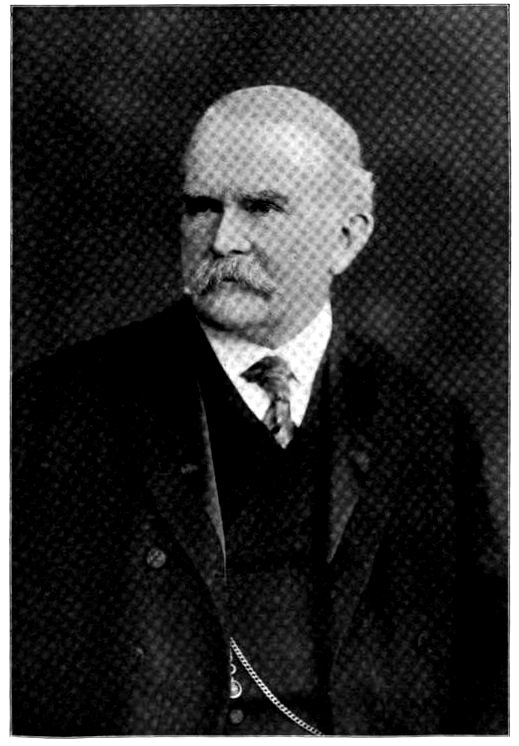
MR. EDMOND J. CURRY. Of New York City. A Member of the Society.
133“Many books issued from his press, including a series of almanacs. But his bookselling and newspaper furnished his chief source of wealth. His paper was delivered in the city by messenger. We find him advertising in 1780: ‘Wanted, a Person that will engage to deliver this paper to the Customers in Town for twelve months or longer. Good encouragement will be given. He need not attend more than four hours every Monday.’ Printing paper being scarce, he continually advertised for rags to be brought to him for purchase and in 1760 he commenced advertising in this form: ‘Ready money for clean Linen Rags to be had at H. Gaines’.’ In 1773 a paper mill was established at Hempstead by him and two of his friends.
“Among the important printing done by his press was ‘The Votes and Proceedings of the General Assembly,’ whereof the first volume appeared in 1764, the second in 1766. Appointed Public Printer by the colony, January 15, 1768, he also became the official City printer. General Gage’s famous proclamation of June 12, 1775, was printed by him, the work being done here that it might remain a 134secret in Boston until published. Up to this time Gaine had given every proof of being in sympathy with the cause of freedom, so that he was forced to fly to Newark when the British occupied New York in 1776. The authorities seized his printing plant here and published the New York Gazette therefrom, using his name for a time as proprietor. Tiring of his exile, he evidently made terms with the invaders, for he returned to New York and his business was restored to him, the first issue of the resumed paper dating from November 11, 1776, leaving behind him his press at Newark, which was promptly seized by the patriots and a paper printed thereon for some time. From this time on he was a thorough going Tory, and was the subject of particularly virulent attack from the Americans, the Pennsylvania Journal in 1777 for example enquiring: ‘Who is the greatest liar upon earth? Hugh Gaine of New York.’ But he lived through the turmoil and after freedom was obtained, he continued doing business. In 1788, against violent protest, he received the contract for printing the paper money for the State of New York. He was Treasurer and Vice-President of the St. Patrick’s Society, a vestryman of Trinity Church and an active Mason. He owned a country home at Kings Bridge Road, and a large tract of land at Canajoharie. He bought and sold land in the city, there being records of twenty-four parcels of land sold by himself or his executors.
“Gaine died April 27, 1807, at the ripe age of eighty-one, and was buried in Trinity Churchyard. Two of his children had predeceased him, and three survived, as well as his second wife. His executors were his son-in-law, John Kemp, and his friends Richard Harrison and Daniel McCormick, the latter already referred to. His lines had not fallen in pleasant places during the Revolution and his abandonment of the patriot cause was never entirely forgiven, but as a business man his integrity was never questioned.
“It is not my purpose to refer to Irish activity in the city during Revolutionary days, for that would be a field worthy of independent study and treatment. The roll of the martyrs of the Jersey prison ship, for example, is studded with Irish names. Nor is it pertinent to our subject, for no pioneers came here then, as the tide of immigration practically stopped during the war, although it is worthy of note that Richard Montgomery, destined to undying fame, bought a farm at Kingsbridge in 1773, and had intended to make this city his 135home. He was born at Swords, near Feltrim, Ireland. Like nearly all the Irish of New York, he did not hesitate a moment before casting his life and fortune into the balance when the call to arms came.
“But after the declaration of peace the Irish Catholic influx began. Among those whose names have survived, no one stands higher than Dominick Lynch. Born in Galway in 1754, he received a thorough education and went to Bruges in Flanders to open a commercial house, in which he accumulated a fortune. There he met Don Thomas Stoughton (afterwards his brother-in-law and Spanish Consul at New York) with whom he entered into partnership for the establishment of business in New York. Stoughton came here first, arriving in 1783, and Lynch followed in 1785, with his fortune in ready money, the largest sum brought to the colonies in many years. The firm dissolved in 1795. Lynch lived in luxury, occupying a house on Broadway, near the Battery, adjoining that of the Spanish Minister. He was a prominent figure in assisting in the establishment of the first Catholic Church in New York. Tradition has it that the first Catholic congregation worshipped in Ann Street, where they were ministered to by Rev. Ferdinand Farmer, and we find later a record of another composed of Frenchmen and Spaniards, who met in a building in Warren Street, known as Vaux Hall, where Rev. Charles Whelan, a Capuchin, was their pastor in 1784. St. Peter’s Church was incorporated, succeeding them, June 10, 1785. Lynch helped from his private purse to meet their needs and was one of the trustees and incorporators. He issued an appeal to the people of Galway for funds to help in building the church, most of the Irish in the fold coming from that County. He was one of the laymen authorized by Bishop Carroll to receive subscriptions for the establishment of Georgetown Academy (now the University) and was one of the signers of the address on behalf of the Catholics of America to General George Washington, four being laymen, and Bishop Carroll, the fifth. One of his sons was baptized in St. Peter’s Church—Alexander Didacus—born April 23, 1788, and for whom His Excellency Didacus de Gardoqui, Ambassador of Spain, was a sponsor. He owned two thousand acres of land adjoining Fort Stanwix on the Mohawk River, where he laid out a village called Lynchville, which afterwards became the city of Rome. His county seat was in Westchester County, on the site of the present Sacred Heart Academy, at Classon-on-the-Sound, said to have been 136the place where Mass was first said in that county. He died June, 1825, and was buried in Old Saint Patricks. His son, Dominick, was a vocalist, musician, musical critic and general society favorite, whose house was the favored resort of the most brilliant people of his time. He lived in Greenwich Street, near the Battery, and is thought to have been instrumental with Lorenzo da Ponte, the librettist of “Don Giovanni” and “Le Nozze di Figaro,” in having brought to New York the first Italian Grand Opera troupe under Garcia, when Mme. Malibran first won success and laid the foundation of her fame.
“Cornelius Heeney, born in Kings County, Ireland, in 1754, was another contemporaneous successful merchant. He was a bookkeeper for William Backhous, an English Quaker furrier, at 40 Little Dock (now Water) Street. John Jacob Astor was a porter and salesman there. When Backhous retired from business he turned it over to Astor and Heeney, who afterwards dissolved partnership. He was a very wealthy and a very charitable man, and his benefactions still continue, through the agencies he created, to maintain them. He was one of those who took title to new Saint Patricks, the other being Andrew Morris, a successful soapmaker, also born in Ireland.
“A trio of great men who came to New York after the rising of ’98 were Thomas Addis Emmet, Dr. William James McNevin and William Sampson. The lives, high professional attainments and success of the first two are too well known to require more than a passing reference. They did immeasurable good in instilling respect for Irish characteristics and admiration for Irish genius. Emmet exercised a potent influence on the early political history of the country. His location in this city, instead of going to Ohio as he had intended, was due to the advice of Governor George Clinton, and was followed by his election as Attorney-General of the State within eight years after his reaching these shores. The monument to his memory in St. Paul’s churchyard is a fitting companion to the memorial to General Montgomery. He collaborated with Doctor MacNevin in the production of ‘Pieces of Irish History.’ Doctor MacNevin, in the midst of a busy and highly lucrative practice, and while acting as a professor in a medical college, found time to establish a bureau to obtain places for Irish servant girls, and to publish “Directions or Advice to Irishmen 137Arriving in America.” William Sampson, the third of the number, was born in Londonderry, Ireland, January 17, 1764. He held a commission in the Irish Volunteers, after studying at Dublin University and being admitted as a barrister. His sympathy with the patriots and his brilliant professional defense of members of the United Irishmen led to his arrest after the uprising and his confinement in prison for some time. After his release he was re-arrested in Portugal, whither he had gone for safety, and was imprisoned on the complaint of the British Government. Secretly taken to France, he finally came to New York, arriving here July 4, 1806. He then practised stenography, as well as his profession of the law, ranking second only to Thomas Lloyd, the great reporter of Congress, as a shorthand writer. His notes furnished the basis of many volumes of reports. But as a lawyer he was especially successful and made a reputation for wit, forcefulness, ability and integrity. His daughter married a son of Theobold Wolf Tone. When Sampson removed to Washington in 1825, he was presented with an address from the citizens of New York, among the signers being James Kent and DeWitt Clinton.
“The years after the Revolution were fruitful of steady Irish arrivals, without much of great note occurring. A careful study of the statistics of the first third of the nineteenth century, so far as they are available, would doubtless be productive of good results. By 1833 there were 40,000 Irish-born residents here, it was then estimated. This growth had been gradual, but hardly remarked, and certainly was not expected. This may well be realized when we know that the graveyard in the rear of St. Peter’s Church answered all the purposes of burial for the Irish Catholics at the outset, and, until old St. Patrick’s site was bought from St. Peter’s Church in 1801, to serve for a general Catholic burial ground. It is also worthy of note that no move for a larger cemetery was made until 1826, when the site of the present Cathedral was bought at a cost of $5,500 for that purpose by the parishes of St. Peter’s, St. Patrick’s and St. Mary’s, but was abandoned after a few years’ trial as being too far out in the country. Of course, a tremendous tide of Irish immigration set in after the famine years of 1846, 1847 and 1848. But before that time, the period of the pioneers had ceased, and that of construction had begun. It ended in New York with the arrival of Bishop John Hughes. Under his masterful guidance the position 138of the Irish here completely changed; from the dwarfed and apologetic attitude which many of his people had theretofore assumed, they rose to man’s estate. He asserted their rights and made them realize the justice of their appeal for fair treatment and decent consideration. He courageously defended them from unjust attack and took every possible occasion to announce the splendor of their history and the value to American citizenship of their racial characteristics. Impressing himself on the country, and finally winning its confidence, he did more than any other one man has ever done to make the Irish people an active, useful, aggressive force in the community. He pointed out the way by which they have since risen from poverty, misery and persecution—from an isolation worse than the Ghetto—to a position so commanding as to seem almost miraculous.
“There is an impression that Irish immigration is a matter of only half a century. From this hasty sketch we have seen that it is a matter of gradual growth, the earlier citizens being successful merchants, adding to their capital, the later being the industrious, if humble, whom necessity had driven abroad from a land which no other force could have induced them to leave. Let us hope that the inspiration of this Society may lead some one to undertake this seemingly hopeless task of wresting from the past the record of those who, today unknown, did the work whose fruits we are all enjoying. All honor to the early exiles, whose very names are forgotten, and yet who, hungry, exhausted from toil, hated and despised, with their very heartstrings throbbing with the grief of a sensitive race justly proud of its glorious traditions, then scorned and derided,—yet in silence and resignation built deep and solid the foundations of the free institutions of our country. Without these pioneers the history of Irish genius and its accomplishments would have been the less glorious, but without them there would have been as well a different tale to write of this latest experiment in human freedom. New York owes that race a particular debt of gratitude, which gave to the State its first Governor, George Clinton, the son of a County Longford emigrant, and his kinsman, DeWitt Clinton, the father of the Erie Canal; which gave to the city its first mayor, James Duane, an Irishman’s son; and which gave to the city fame as the scene of the first successful attempt to conquer a way over the waters by the use of steam, when the son of a Kilkenny man, Robert Fulton, saw 139the fruition of his dreams as the Clermont sailed the Hudson, August 11, 1807.
“Irishmen and their sons have always been fond of the city which to them symbolized the freedom and opportunity of the West. New York has been the haven of their hopes. Here their eyes, still dim with tears at the thought of Erin, first saw the glimmerings of hope and confidence. She has honored and enriched their sons, and they have not been ungrateful nor unworthy. From tens of thousands of Irish hearts, when the hour for the closing of their earthly pilgrimage was near at hand, has gone up an aspiration for her continued prosperity who had not forgotten the stranger within her gates. Many an Irishman has voiced the wish which Diedrich Knickerbocker was represented as uttering as the expression of the Dutchman’s love: ‘Haply this frail compound of dust, which while alive may have given birth to nothing but unprofitable weeds, may form a humble sod of the valley, whence may spring many a sweet wild flower to adorn my beloved island of Mannahata!’”
Judge Dowling’s address met with hearty applause and he received many compliments upon the masterly manner with which he handled the difficult subject assigned him.
President-General Quinlan: “Ladies and Gentlemen, I have much pleasure in announcing to you that the next speaker of the evening, who comes from the garden spot of the Middle West and who will respond to the toast of ‘The Irish Pioneers of the West and Their Descendants,’ is the Hon. Maurice T. Moloney, Ex-Attorney General of the State of Illinois.”
Hon. Maurice T. Moloney:
“Mr. Chairman and Gentlemen of the American Irish Historical Society:
“The subject suggested for me to talk on, ‘The Pioneer Irish of the West and Their Descendants,’ is one of great latitude, yet it is one that has not been historically treated as it deserves. I hope, however, in the short time I propose to devote to it, I will not fall into the same line of thought as did one of Moore’s characters. In the Veiled Prophet of Korassan, the great chamberlain, Fadladeen, 140when about to criticise the young poet’s story, said: ‘In order to convey with clearness my opinion of the story this young man has related, it is necessary to take a review of all the stories that have ever’—and when at this point he was interrupted by the good Princess, he became mortified at not being allowed to show how much he knew about everything but the subject immediately before him. Bearing in mind, then, Fadladeen’s misadventure, still, we should not be unmindful of our migration hither, and some of the causes that led to it.
“The successive misfortunes that have overtaken that unfortunate people ever since Nicholas Brekespear gave a quit-claim deed of them to Henry II constitute even in the blood-stained pages of English history some of the greatest tragedies of ancient or modern times, and should lead some at least of those good people who believe in future rewards and punishments to consign that same Brekespear to a warm abode.
“It is needless, no doubt, to tell Irishmen or their descendants, or those interested in Irish history, of the many migrations from that country. During the latter part of the seventeenth and the first part of the eighteenth centuries, hundreds of thousands of them filled the continental armies and many other thousands, young and old, were banished to the West Indies and the colonies, as helots, under the direction of that brutal, canting knave, Cromwell, and others. I will call your attention, however, for a few moments only, to some of the migrations of the nineteenth century.
“I find on an examination of the Report of the Devon Commission to Parliament in 1845, that in the decade from 1831 to 1841, 430,963 emigrants left Ireland. I further find from an examination of Irish Immigration Statistics, that in the following decade from 1841 to 1851, 1,508,454 left the Island, and from 1851 to 1907, 4,130,015 persons emigrated from that unfortunate country, making a total leaving the Island in seventy odd years of 6,069,432. The present population of that country is about four and a half millions—a little less. What a terrible indictment of England and her seven centuries of oppression! No language that I am capable of using could more eloquently depict her continued infamies than that contained in these statistics.
“Of course, all of these people did not come to this country. Some went to other countries, especially to the Antipodes, but the great bulk of them came to the Great Republic, where many thousands of their kith and kin had preceded them.
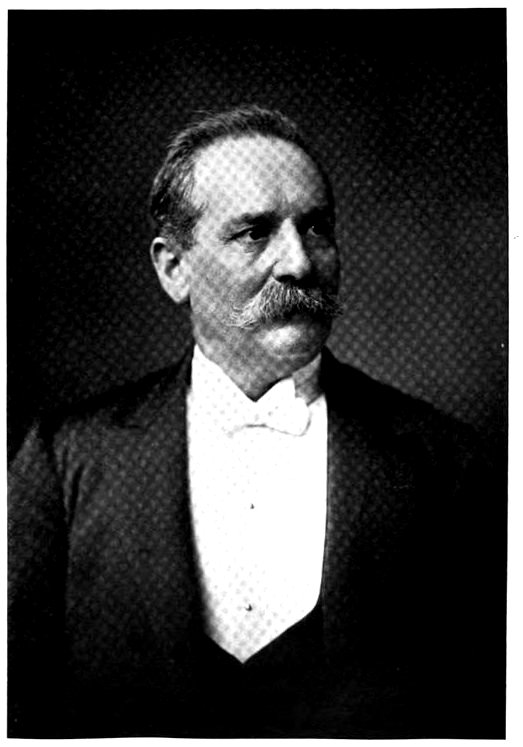
HON. HUGH McCAFFREY. Philadelphia, President McCaffrey File Co. Vice-President of the Society for Pennsylvania.
141“It would be interesting as well as instructive to follow up and trace the careers and fortunes of those Irish exiles and their descendants who thronged the shores and trod the soil of the Republic. It has never been done so far as I know. McGee, in the fifties, and Maguire, in the sixties, each wrote a small volume on the subject, and they are of some value to the student of history. Of this great swarm, how many crossed the Alleghanies and steered their course for the West? It is difficult to say. We have not even approximately correct data on the subject.
“I think, however, I am safe in saying that half of those who came to this country within the last named period did so. In the Middle West, in the great states of Ohio, Indiana, Michigan, Illinois and Iowa,—indeed, in all the great western states—there is not a county, city or village where they or their descendants are not to be found in goodly numbers. Thank Heaven! race suicide has not as yet overtaken them.
“Maguire, in his work written in the sixties, advised his countrymen to settle in the West, especially in the state of California. His advice, no doubt, carried great weight and influenced many of them in seeking Western homes.
“I remember, as a boy in Ireland, reading his lectures on the subject, and subsequently, after graduating at the University of Virginia, I determined to go to California, but straightened conditions intervening, I was compelled to remain in Illinois. Hence, I am fairly familiar with the people of that great State, and I think the history of the Irish there would be fairly typical of them in other Western States.
“And now I think I hear you ask—what of them? What have they done, and what are they doing, in what many of you Eastern gentlemen are pleased to call the ‘wild and woolly West.’ To be frank, taking into consideration their old home conditions, and the circumstances attending their coming, they are doing and have done fairly well. They were mostly of the tenant farming class and day laborers. Manufacturing in Ireland long prior to this time ceased to be a factor, having been either abolished, or prevented by successive English Parliaments. They were of necessity very poor, they and their forebears for centuries having been plundered by heartless 142tyrants. No people prefer indigence and want to prosperity. It was artificially enforced poverty that compelled them to emigrate.
“On arriving in the West, therefore, they were for the most part forced to occupy the hard lot of the unskilled laborer, and I may say without fear of contradiction, what they undertook to do they did well. They dug our great canals, built our great lines of railroads, erected our telegraph lines from Chicago to San Francisco and helped to operate them. They engaged in farming and stock raising and have been successful in both. There is not a public utility in the West whose physical structure at least does not owe its existence in the main to Irish hands; and let it not be forgotten, too, that gradually, as these men were able to put by a little of their hard earnings, they tried to elevate themselves and their children in the various walks of life. They did not rest content with their lot. They knew their natural capabilities and tried to and did improve them. Many of them, too, were men of initiative. Of course, the rich and the learned, as a rule, were not among them. People of that kind do not have to leave their country to seek homes in other climes. Labor, however, manual or otherwise, is no disgrace; rather is it a badge of respectability.
“‘Honor and shame from no condition rise,
Act well your part, there all the honor lies.’
“Of course many of them,—alas, too many,—fell by the way.
“As to the work done by our people in the West, take as an illustration the Illinois & Michigan Canal, which begins at Chicago on the southern bend of Lake Michigan and enters the Illinois River at La Salle, a distance of a hundred miles. From its inception to its close the work was mainly done by Irish emigrants. It has been to Illinois and the West a great benefit. Not only was this great work done by the labor of Irishmen, but its successful accomplishment in a financial way was due to the exertions of one of them. In 1842 work on the canal had to be abandoned because of the financial condition of the State Treasury. At that time the counties of La Salle, Grundy and De Kalb constituted a Senatorial District, and a young Irishman twenty-six years of age, one Michael Ryan, was elected State Senator from there. He was, even at that early age, easily the peer of any man in the West. So thoroughly did he master the subject both as to the necessities of the canal and its resources 143that he introduced and carried through the State Legislature, not without opposition, however, a bill enabling the State to borrow one million, six hundred thousand dollars, to complete the work. The Governor at the time, recognizing his great ability, appointed him and a Mr. Oakley agents for the State to proceed to London and borrow that sum—no small amount for those days. They succeeded in doing so. It is said of him (and there are those still living in my home town who knew him well and speak of him with affection) that he was a brilliant man, kind and courteous, an honest man. To him did the State of Illinois mainly owe its success in raising the means to complete that great undertaking.
“Another leading Irishman in Illinois in those days was one William Reddick, a State Senator for many years, a leading temperance advocate, and a man of whom any people might be proud. He left a large fortune to the city of Ottawa for library purposes. Many of the younger emigrants learned trades and became skilled workmen. Many of them engaged in the mercantile business, at the beginning in a small way, but eventually became prosperous. So, too, did they engage in manufacturing. Many of them owned coal mines and of course many, very many, were miners. The Kilgubbin coal shaft, as it was called, a valuable property in the county I reside in, was owned and operated by one Nicholas Duncan, a Cork man.