Historical Notes and Papers.
Reading edition
163
THE CIVIC VALUE OF MEMORIALS.
BY MISS MARY A. GREENE OF PROVIDENCE, R. I.
Honorary State Regent for Rhode Island, National Society Daughters of the American Revolution, Great-Great-Granddaughter of Thomas Hughes, Captain in the War of the Revolution and Major in the War of 1812 and an Original Member of the Rhode Island Society of the Cincinnati—a Man of Irish Parentage.
Who that visits Italy can fail to be inspired by the ruins of the Forum and the palaces of the Cæsars on the Palatine? The Italian Government has done wisely in making its work of excavation a work also of restoration by replacing as far as possible the statues and monuments of ancient time in their original positions, and in entrusting visitors to the care of guides educated for their duties by a university course in the history and archæology of the Eternal City. Such a guide, after a whole day spent in enthusiastic descriptions of the temples, public buildings, rostra and tombs of the Forum, was asked, “How happens it that you are so very enthusiastic over all this, when it is your duty to make this round day after day?” Never will the hearer forget his reply as, drawing himself up to his full height, he exclaimed with the proudest, loftiest accent, “I am a Roman.”
“The grandeur that was Rome” was the spirit of her citizens, their expression in the life of their city, of their high ideals. When these ideals failed to inspire, Rome fell.
That which makes a State is the character of its citizens. One of the strongest influences in the moulding of character is the example of the heroes of the past. Preservation of the history of those who helped to make and mould the nation is, therefore, essential to the maintenance of patriotism. Indeed, it is essential to the true moral development of the nation,—to the very preservation of the nation.
One great advantage of the memorial tablet and the statue over the printed page is that the former are seen and understood by all, while 164the pages of history are only turned by those who have a certain degree of education and interest. “What mean ye by these stones?” the children in the land of Canaan would ask, gazing upon the heap of twelve smooth stones by the banks of the Jordan. Then would the fathers in Israel reply, “Because the waters of Jordan were cut off before the Ark of the Covenant of the Lord, and these stones from the bed of the river are for a memorial forever of Jehovah’s leadership of his people through the dry bed of the river into the promised land.”
The historical and patriotic societies of the United States are doing a much needed work by the erection of tablets and the marking of historic spots. A want of reverence for those who founded our nation and fought to establish it; a carelessness as to the lessons to be learned from the early history of the country; a desecration of places consecrated by the blood of our heroes, had much to do with making us, in appearance, a flippant, boastful people, glorying only in the “bigness” of our country and what our own generation was doing, in short, the boastful Yankee caricatured by our European kinsmen.
That temper has changed. While the greater seriousness with which the American people undertake their problems of government is no doubt in part due to territorial expansion and greater international relations, credit must also be given to the impressive influence of the memorials placed in our State houses, our parks, along our streets, commemorating the worthy deeds of our ancestors.
It is then a direct benefit to the State, and aid to good government, and to the realization of the highest civic ideals, to place, where all can see, memorials reciting the virtues and the heroic deeds of men like Washington, Lincoln, Greene, Sullivan, Sherman and a host of others whose splendid achievements, in war and in peace, are a part of our heritage as American citizens, and are the inspiration of our youth to give also of their best, in talents and in loyal, patriotic effort; to make our country great in the best sense,—great in the character of its citizens, great in the accomplishment of high ideals; great in the enjoyment by all of the blessings of liberty.
Providence, R. I., February 12, 1909.
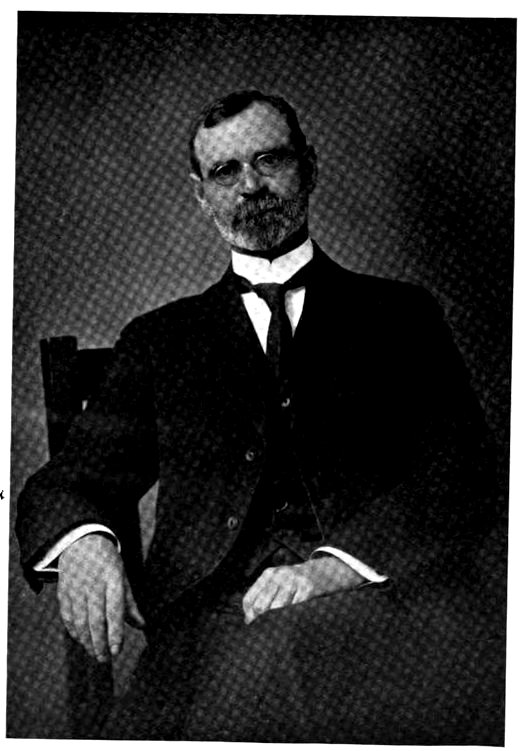
MR. PATRICK CARTER. Of Providence. R. I. Member of the Executive Council.
165
CARTER DAY NURSERY. GIFT BY MR. PATRICK CARTER, MEMBER OF THE EXECUTIVE COUNCIL, IN HONOR OF DECEASED SON.
Ceremony Takes Place at Handsome Building, Corner Pine and Byron Streets, in Presence of Clergy, Prominent Business Men and Representatives of Religious Denominations.
BY THE SECRETARY-GENERAL.
In the presence of members of the clergy, prominent business men and representatives of various religious denominations, the new Day Nursery, erected at Pine and Byron streets as a memorial to Edward A. Carter, by his parents, Mr. and Mrs. Patrick Carter, was formally transferred to Bishop Matthew Harkins at 11 o’clock yesterday morning. Previous to this ceremony there was a low Mass, at which Bishop Harkins was the celebrant, Rev. Austin Dowling, also a member of the American Irish Historical Society, acting as his assistant, at which time the building was blessed.
A large audience assembled in the hall on the second floor to witness the transfer of the keys, the deed and other documents to the Bishop. It numbered men and women prominent in the business and social life of the city, as well as others interested in charitable work.
After Bishop Harkins, wearing the purple robes of his office, had taken a seat on the stage, with Fr. Dowling on his right and Rev. William Pyne on his left, Mr. Carter made the following speech in presenting the structure to the Bishop:
MR. CARTER’S ADDRESS.
“Bishop Harkins: In my own name and that of Mrs. Carter I have great pleasure in handing over to you this morning, as the representative of Nazareth home and the head of the diocese of Providence, the keys of the Edward A. Carter Memorial, the receipted 166bills for its cost and a paid-up five years’ policy of insurance on the building for $15,000.
“I am sure it is a happy moment for Mrs. Carter and for me; I may say, the proudest moment of our lives, to be in a position to commemorate in this way our son who gave such promise in his youth, and who was taken from us so suddenly.
“A little more than a year ago we laid him away in St. Francis Cemetery and with him the hopes that we had built upon, but the money which would have been his to invest in business had he lived we have resolved to lay aside for his memory in another kind of investment.
“This is our only stipulation—that it be administered prudently, scientifically, but with mercy and in the spirit of Christian charity.
“We have no fear, Bishop, that the money which we have given to the Nazareth Home will ever be diverted from the purpose for which we intend it. We require no bonds from you, for your high standing makes the ordinary safeguard of business in this case unnecessary. Into whatever hands you entrust it, we feel certain that they will execute what we plan.
“You, ladies of the Queen’s Daughters, honor us with your presence here today. You have presided at the formation of this work; your ideas are here incorporated and you have pledged yourselves to its support; therefore, may I be the first to welcome you to its hospitality.
“Let me then, Bishop Harkins, in closing, hand over to you these evidences that the building so happily completed is entirely unencumbered; and let me assure you that while in doing so I now resign the responsibility which has been my preoccupation and pleasure for several months, still, while either Mrs. Carter or myself live, our hearts are in this building, both for the name it bears and for the work which we have confidence it will never fail to do in our community.”
RESPONSE OF BISHOP.
In response Bishop Harkins said in part: “Mr. and Mrs. Carter, I receive very willingly and gratefully these evidences of your generosity. I express to you my thanks and those of the entire community. There may have been other cases in the United States like this, but this is the first case that has come to my knowledge where 167a memorial of this kind has been reared to an apparently lost, but not really lost, son.
“This is a very special, a very peculiar case. It shows not only a very strong affection, but a very lively faith. It is that faith that is necessary, a faith in the future, a realization that death does not end all.
“Your son was a Cathedral boy, and when I say that I speak with a considerable degree of pride. He was one of us and we knew him and loved him. You determined that he should live on in a certain way and live just about where he lived when he was here. So you have made your boy to live; you have given him a kind of earthly immortality, if I may use that term.
“He will live in the persons of the poor children who will be cared for here. They will have the uplifting influence of the good sisters, the Queen’s Daughters, the clergy, and all who can help them in any way. Yet it will be he who will be living here.
“I thank you in my own name and in the name of the diocese of Providence. I am sure that all those here present agree that no better example can be given a community than that given here today. There is gratitude in the hearts of all the citizens of Providence for this gift.
“In the name of the sisters who will have charge of this institution, I wish to thank you. I welcomed them to our city here in Providence, for I knew that I could not do greater service than to bring here the wise and careful administration of charitable work they have always shown. They will be mothers to the children. They will try to give, and will well-nigh succeed in giving, all the maternal love that is given children in the most favored homes. They will train them not only in their duties to the church, but in every duty they must perform in civil life.”
In conclusion Bishop Harkins paid a tribute to the Queen’s Daughters, the organization which has assumed the maintenance of the institution.
DONORS ARE HONORED.
After the Bishop’s address, Miss Mary A. McArdle, President of the Queen’s Daughters, made a brief address, in which she stated that Mr. and Mrs. Carter had been elected honorary members of the Daughters of the Queen of Heaven, concluding by presenting to 168Mrs. Carter a bouquet of roses, in number the same as the years of life of the son in whose memory the structure was given.
Mr. Carter responded briefly and the visitors then inspected the building, many registering in the book provided for that purpose.
Among those present were: Mgr. Thomas F. Doran, Vicar General of the diocese; Rev. Owen F. Clarke, Rev. Edward E. Seagrave, Rev. D. F. Lowney, Rev. James C. Walsh, Rev. M. J. McCabe, Mayor P. J. McCarthy, Mayor-elect Henry Fletcher, Attorney-General William B. Greenough, Assistant Attorney-General Harry P. Cross, Cyrus P. Brown, Col. Cyrus M. Van Slyck, Judge Frank E. Fitzsimmons, Judge Thomas Z. Lee, John E. Canning and Thomas F. Monahan.
MODEL INSTITUTION.
This nursery, said to be one of the finest institutions of its kind in the country, has been erected for the accommodation of poor children, regardless of race, creed or color. The Queen’s Daughters, a body of Catholic women with a membership of 700, which was organized in January of the present year for the performance of charitable works, has assumed its maintenance. The organization is affiliated with the Queen’s Daughters of St. Louis, formed in 1889 by thirty-two women of that city for charitable purposes.
The Sisters of the Holy Ghost, also known as the White Sisters, to whom the institution was donated, first came to work among the sick poor in this city in September, 1907. In their errands of mercy they found that a day nursery was very much needed in the section in which their home is located. The two day nurseries already established have been unable to take care of all the children, both having long waiting lists, and the building blessed yesterday will relieve the situation to a considerable degree.
The building is admirably arranged, the purpose for which it will be used having been taken into careful consideration by the architects, Stone, Carpenter & Sheldon, and the ideas of the architects being faithfully carried out by the builder, M. J. Houlihan.
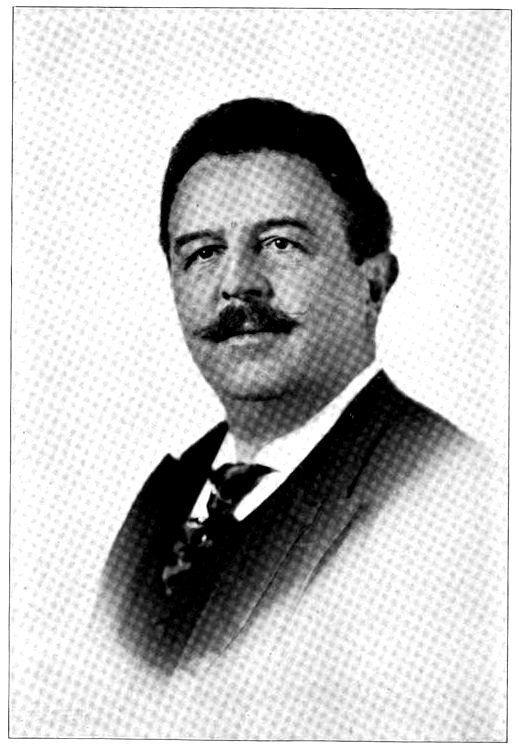
VICTOR HERBERT. Of New York. The Eminent Composer and High Authority on Music. A New Member of the Society.
169Mr. Carter’s intelligent liberality has rendered possible in Providence a charity of peculiar value. The handsome building is a better monument to his son’s memory than the most costly sarcophagus would be. It bids fair for many years to come to minister to the needs of great numbers of children of tender age whose parents cannot care for them during the working hours of the day; and the community would have double reason to congratulate itself if the example set by these donors were to inspire other citizens of Providence to similar generous gifts. There are twenty-three thousand women in this city who are employed in gainful occupations, and many of them are married, with small children to provide for. It is difficult to think of a more useful institution than one that helps to lighten the domestic anxieties of these workers during their enforced absence from home.
Mr. Carter is a member of the American Irish Historical Society and of its Executive Council and served on the Reception Committee at the events in Washington January 16, 1909.
WAR RECORD OF COLONEL JAMES QUINLAN.
One of the Earliest Members of the American Irish Historical Society.
BY FRANCIS J. QUINLAN, M. D., L. L. D., PRESIDENT-GENERAL.
In Volume VI of the Journal appeared a short sketch of Colonel Quinlan’s life, in which his military record was incomplete and the date of birth and receipt of certain commissions were incorrectly stated. The data having been carefully collected and verified, a revised sketch is hereby submitted:
James Quinlan was born in Tipperary, Ireland, September 13, 1833, and came to New York in 1850 and there studied engineering. In 1853 he joined the National Guard and became a member of the Sixty-Ninth Regiment, being commissioned a Lieutenant in 1855, under Charles S. Roe, and commissioned Captain in 1856.
On April 23, 1861, a few days after the fall of Fort Sumter, he left New York with the Sixty-Ninth as Captain of Engineers. He was present at the battle of Blackburn’s Ford, July 18th, and Bull Run July 21st, where he was severely wounded. After this battle Acting Brigadier-General T. F. Meagher recruited the celebrated Irish Brigade, and he was commissioned Major of the Eighty-Eighth New York Infantry, one of the regiments of that organization, in 1861, and ordered by General Meagher to proceed to Fort Schuyler 170and take command there until further orders. (As far as we know, he was the first volunteer officer to take command of a Fort in the Civil War.) He was present in all the battles of that famous Brigade in the Peninsular Campaign and commanded the regiment all through the Seven Days’ fighting. He won his Medal of Honor by leading a charge on a Confederate battery at Savage Station, Va., June 29, 1862. The battery in question was one of six guns, and had been very annoying to the Union troops. Several other regiments had made efforts to silence it, but without avail. General W. W. Burns, U. S. A., who was in command on that memorable day, wrote at the time Major Quinlan received his Medal of Honor as follows: “The Medal of Honor won by your gallant charge which silenced the enemy’s battery at Savage Station and closed that desperate attack upon the rear of the Army of the Potomac, June 29, 1862, is a just reward and memento for conspicuous bravery due from a grateful Republic to the brave leader of the gallant Eighty-Eighth New York. No one can feel more satisfaction for this signal proof of distinction and glory than your old Commander of that day. The Eighty-Eighth saved the lives of many gallant soldiers by that forlorn-hope charge, and cleared our way to victory that day. It commemorated the charge of the Irish Brigade at Fontenoy.” In the Circular “Medals of Honor” issued by the War Department October 31, 1897, the ground of award of Major Quinlan’s medal is as follows: “Led his regiment on the enemy’s battery, silenced the guns, held the position against overwhelming numbers, and covered the retreat of the Second Army Corps.” He was honorably mentioned by General McClellan for bravery at Malvern Hill and Antietam. He was commissioned Lieutenant-Colonel on September 22, 1862, and received his honorable discharge for disability on medical certificate February 4, 1863.
After a few weeks’ illness of heart trouble he died at his home, 104 East 96th Street, August 29, 1906.
And so has passed into history the name of a citizen of foreign birth, who owed allegiance to the whole of his adopted country, and when her troubles came he was found early at the front, dedicating his all to her perpetuity.
A firm, honest friend, a devoted Christian, a loyal brave soldier went to his rest when James Quinlan joined the soldiers of our great Republic who had gone before.
171
JOSEPH O’CONNOR, EDITOR, AUTHOR AND POET, WHO DECEASED AT ROCHESTER, N. Y., OCTOBER 9TH, 1908.
Sketch of His Life. One of His Favorite Poems.
A great editor laid down forever a brilliant, beautiful and useful pen when Joseph O’Connor, the Rochesterian, passed into Eternity from his home in Rochester on the night of October 9, 1908.
In a few hours the news had flashed to all points of the compass, bringing a pause and a hush of sadness to thousands of homes, from Maine to California, wherein his unique personality was known and loved through his nearly forty years of journalistic leadership.
Born in New York State of Irish parents in 1841, he was educated in the best schools of his native State for the practice of the law, but he early chose journalism instead of law for his life work and he made a magnificent success of it.
He brought to the work a mind well-stocked with more of the true history of the world than falls to the lot of most students of history. He brought to his work a mind imbued with the true Christian philosophy of the Catholic catechism. He had formed from youth up a habit of broad, kindly outlook on things in general. He assumed and maintained a manly attitude in politics, uncompromising in principle, but tolerant of other men’s opinions. He had a born poet’s appreciation of true poetry, and a literary judgment that came to be universally respected. He had a gift of expression as a model of unique, finished, sincere writing. And his humility was the best of it all.
He won his readers to his way of seeing things as much by the very apparent unconsciousness of his own superiority as by his logical presentation of his subject.
Through all his long life of varied editorship and many degrees of political and literary success, there is no pessimism charged to his account, no animosity, no bitterness; not even discourtesy.
Many a time in the heat of a political campaign he had to strike at a champion of the other side, but his blow was always leonine. 172It was a settler of the subject in dispute, but it left no ugly memories—no galling personalities ever marred his political battles.
He scored his successes by the friendly hand shakes of his worsted antagonists.
He prized his independence in politics, and never jeopardized it by accepting favors or honors from friend or foe.
With one or two exceptions, every change that he made in his position was due to his insistent desire to maintain his personal independence as a writer. He left the Indianapolis Sentinel because he did not wish to conform to its political policy. His editorial work on the New York World became irksome on this same account. He broke with the managers of the Buffalo Courier in 1886 because he disliked Grover Cleveland and because he did not propose to stultify his editorial utterances in a newspaper whose proprietor was specially friendly at the time to the Buffalo President. He is said to have refused a flattering offer from Charles A. Dana to become editorial writer on the New York Sun because he did not believe he could conform to Mr. Dana’s ideas, however much he might admire the genius of that brilliant editor.
He set his editorial chair on a calm high level and from it addressed daily a clientele that loyally followed him in all his journeyings through fields of philosophy, history, poetry, romance and even the common things of everyday life. To read him once was to seek him again and remain his disciple.
He might have made his fame rest on his poetry, but he subordinated that gift to his passion for regular, constant work in his editorial chair, indulging in flights of fancy only as a pastime.
Mr. O’Connor was a master of the English language; indeed, it is doubtful if any man on the American press ever wrote it better. Some twenty years ago a correspondent of the New York Sun asked Mr. Dana for information regarding literary style. In the course of his reply he said:
“Among the newspaper writers of our own country and of the present day, perhaps the best style is that of Mr. Joseph O’Connor, the editor of The Post Express of Rochester. It is terse, lucid, calm, argumentative, and without a trace of effort or affectation.”
After quoting this tribute, said Father Cronin of the Buffalo Union and Times: “It is no small source of pride and gratification to us to know that one of the great princes of American journalism 173is an Irish American. Mr. O’Connor’s pen is like the Damascene blade, polished and beautiful, yet withal so smooth and keen that the victim of its blow is severed in twain almost without realizing the catastrophe. Long may Joseph O’Connor wield it, as he has always wielded it, a menace to evil and a swift and sure protection to the right.”
All over the State of New York the daily and weekly papers, the day after his death, contained most flattering and affectionate tributes to his memory, and these were echoed and reinforced since by the press of the whole country, for “The Rochesterian” gave the key to the right solution of many a question to hundreds of editors who sought in the exchanges for “J. O’C’s” latest.
Said the Rochester Times: “For intelligence and insight he had few peers among the great journalists of his time; but in addition he had what some more renowned than he have lacked—absolute bravery of conviction. His pen was unconditionally consecrated to truth as he saw truth; and nothing could weaken his allegiance. It is familiar history that he could have held some of the highest posts in American journalism had he been willing to bend his honor or relax his sincerity.”
“Intellectually,” says the Syracuse Herald, “he was one of the frankest and bravest of men, never hesitating to champion a cause that appealed to his reason or humanity because it happened to be temporarily unpopular.”
“Journalism,” says the Troy Press, “loses a philosophical writer, a brilliant scholar and a veritable ‘knowledge-box’ in the death of Joseph O’Connor of The Post Express. He was one of the few editors whose talent and resources were so abounding that adequately to replace him is practically out of the question.”
“He set before the men of his profession,” says the Rochester Herald, “an example of frankness, courage, and independence which is emulated wherever it is possible to follow it, and is admired and envied where conditions do not permit of its acceptance. The utterances of newspapers, elsewhere in the country as well as here, are more sincere, more fearless, and freer from cant and sham because of the ideals revered and upheld by Joseph O’Connor.”
“Mr. O’Connor,” says the Rochester Times, “was a man of extensive acquaintance, of legions of friends but with few ‘cronies.’ Among these favored few might be numbered Rev. Louis A. Lambert 174of Scottsville, editor-in-chief of the New York Freeman’s Journal; Rev. John L. Codyre of Fairport, Judge John D. Lynn, and a few others. His friendships were for literary characters and their conversation was of the ultra intellectual thought. Abstruse theological and philosophical problems were discussed with as much freedom as ordinary persons talk of the weather. Yet Mr. O’Connor in his kindly, lovable, winsome way could talk entertainingly on the commonest topic with any acquaintance and his was the tactful manner which never made one feel his smallness before him.”
Such is the tribute paid him by the Rochester, N. Y., Herald of October 10th, 1908, in its editorial column.
The Society, in response to its request for further information for its archives, received the following communication from Mr. O’Connor’s lifelong friend, Edmond Redmond, Esq., which we print in full:
230 Spencer St., Rochester, N. Y.,
November 13, 1908.
Mr. Thomas Z. Lee, Secretary-General American Irish Historical Society,
Providence, R. I.
Dear Sir: I duly received your letter of the 5th instant requesting such material as I may have in relation to a biographical sketch of the late Joseph O’Connor.
I assume that you have seen the notices printed in Rochester and other newspapers immediately following his decease. I regret that I can add but little to those eulogies, which were, I have reason to believe, written by intimate associates and came from the heart.
I thought that less was said by his recent friends about his interest in Ireland and her cause than deserves to be known. And on that point I can testify from acquaintance with him that few things were nearer or dearer to him than the land of his ancestors. His pen and voice were ever ready to work in the cause of Ireland, and I have no doubt that his personal fortunes, in the ordinary commercial sense, suffered from the persistence with which, all through life, he continued to bring to the attention of an indifferent public the wrongs inflicted on the people of the island. It was, however, a labor of love with him, and his zeal in the cause continued to the end. He had no confidence in secret societies effecting any great good in Irish politics; but he gave hearty support to the Land League in Parnell’s day. He was a delegate to the famous Land League convention of 1886 in Chicago, and was urged by friends to let them propose him for President of the American branch of the Society. He has been heard to say that he was indebted to the Land League for the experience which enabled him in later years to feel at home on his feet while engaged in public speaking on other subjects.
175His regard for Ireland could not have been stronger had he been a native of the land, and it was evidently inherited. Years ago he heard a friend humming “As Slow Our Ship Her Foamy Track,” and said that when his father was leaving Ireland a group gathered about him on the deck of the ship as he sung that song, and before it was finished they were all in tears.
Although usually slow to anger, he was liable to be moved on hearing the creditable deeds of plain Irishmen ascribed, as they are so often, to the “Scotch-Irish,”—a designation which he detested, employed as it usually is to detract from Ireland the reflected honor to which she is entitled from the worthy fame of her children.
If the nature and scope of the work which you have in hand permits of eulogy, it would be impossible to speak too highly of O’Connor’s character. In both public and private life he was the soul of honor. His talents were of the first order and always exerted toward good ends. His integrity was unbounding. Like Gay his “manners were gentle, his affections mild.” In a word he was a really great and uncommonly good citizen, a true and noble man. One of his favorite poets was Goldsmith and I cannot better end this too brief sketch than with what the author of “The Deserted Village” said of Reynolds:—
To tell you my mind.
He has not left a greater or better behind.
Very truly yours,
EDMOND REDMOND.
Mr. O’Connor was the author of many poems, and in 1895 the Putnams brought out a little volume of his modestly entitled “Poems.” Many of the shorter poems in the book are characterized by delicate fancy and graceful rhyming; such poems as “Her Hands,” “Water Lilies,” and the “Wine Song.” He favored these smaller, slighter children of his fancy. He thought the best poem he ever wrote was “The Cavalier Sword,” and next in order he placed “The Fount of Castaly.” In our opinion “Her Hands” is the sweetest and most graceful of them all, and we print it herewith:
HER HANDS.
Sometimes I sit and try to trace
In memory’s records dim and faint,
The features of my mother’s face,
With the calm look of gentle grace
That marked our house’s quiet saint.
176The innocence of her blue eyes,
The winning smile about her lips,
Child-simple and yet woman-wise,
Her shining hair, her modest guise,
All come in turn; each fades and slips.
I try to fix them, but in vain;
They waver, and yet will not fuse,
Howe’er imagination strain,
To form the face that it would feign—
Till on a sudden, as I muse
There comes a thought of her dear hands,
All wrinkled, tanned and labor-worn—
And there the simple woman stands,
To meet her duty’s hard demands,
Among the children she has borne.
No work nor written word remains,
Nor picture worthy to approve;
But read in knotted joints and veins,
And tendons strong, and honest stains,
The tale of service and of love.
O hands of ministry, that wrought
In constant care, through weal and woe,
Nor rest by crib or coffin caught,
This pang is mine—I never thought
To kiss your fingers long ago.
177
CHIEF EGAN’S WAR RECORD WRITTEN FOR STATE ARCHIVES
FROM PROVIDENCE JOURNAL.
David Irwin of San Francisco, an Irishman, formerly First Lieutenant of Company F, Third Rhode Island Heavy Artillery, who served under Gen. Charles R. Brayton, a guest and speaker at the dedication of the Society of the Sullivan Memorial December 16, 1908, has recently written a sketch of his service in the Army, and while compiling the story ran across several notes of incidents in Army life which directly concern Chief of Police Patrick Egan, of Providence, R. I.
Mr. Irwin has forwarded the information to General Brayton, in order that it may be preserved in the archives of the State. In his letter Mr. Irwin says: “Being a native of the Emerald Isle, I claim the right to make a little Irish bull by saying that when I enlisted at Providence the only man I knew in my regiment was a boy fifteen years old. The day that I made up my mind to be one of the ’200,000 more’ called for by President Lincoln, I went into the workshop where this boy was learning the shoe trade and said to him, ‘Patsy, I am going to enlist. Don’t you want to go?’
“He looked up with a smile on his face and replied: ‘Yes, if you will.’
“‘All right,’ I said, ‘come along. I’m going.’
“I can imagine I see him now getting up from his bench, taking off his apron, throwing it down and putting on his coat.
“Away we went to the recruiting office and signed the roll, he giving his age as seventeen, which no one doubted. He was tall for his years.
“I had hoped we would be placed in the same company, that I might be near him and keep an eye on him, for I felt somewhat responsible for taking him away from his widowed mother, but fate or fortunes of war willed it otherwise. I was assigned to Company G and he to Company C, which was afterward mounted as a light battery. However, he soon proved to be well able to take care of himself, except, perhaps, on one occasion.
178“That was soon after the Port Royal, S. C., expedition,” Mr. Irwin explains, “of which our regiment was a part, sailed from Hampton Roads late in October, 1861, the land forces, consisting of about 12,500 men, being under Gen. Thomas W. Sherman, and a fleet of seventeen warships and thirty transports and supply vessels, commanded by Commodore Samuel F. DuPont.
“About a week before sailing our regiment embarked on an old steamship, which had been used for carrying cotton from New Orleans to New York. Patsy’s company happened to be assigned to the poorest quarters on the ship—the lower hold. The accommodations for 1,000 men were none too good, consequently, we had more or less sickness on board.
“Hearing one day that Patsy was ill, I went in search of him, and found him in a dark, poorly ventilated hole. He was a very sick boy. I took him up to my company’s quarters and put him into a berth near the hatchway, where he got better air, and, with a little care—the best we could give him under the circumstances, as we were then off Cape Hatteras and having very stormy weather—he soon recovered and in a few days he was himself again.
“It may not be out of place to relate here a little incident which took place one night during the height of the storm. About midnight the rain was coming down in sheets, the sea running high and the wind blowing a gale, when, in an instant, over went the old ship on her beam’s end. This caused quite a commotion among the boys—we were all called ‘boys’ then—some of whom rushed to the hatchway to get on deck, but were prevailed upon to remain below. One of the foremost of them, ‘Jim’ Burns, a countryman of mine, dropped on his knees on the stairs and commenced praying like a good fellow. The others quieted down and paid all due respect to Jim and his prayers. In a few minutes the ship righted again, and in a short time the worst of the storm was over.
“Next day things looked a little brighter and some of the boys thought they might have a little fun at Jim’s expense. Being First Sergeant of the company, they suggested that I appoint Jim Chaplain of the company, seeing he had made such a good prayer the night before. When I told him of their wishes, he looked at me with a twinkle in his eye and replied:
“‘No you don’t appoint me Chaplain. Let them go to the ‘divil,’ and do their own prayin’.’
179“After losing four of our supply vessels during the storm, we arrived at our destination on the morning of November 7, 1861, and witnessed the same day the bombardment and capture by the Navy of Fort Walker on Hilton Head, and Fort Beauregard on Bay Point, S. C. We landed on the ‘sacred soil’ late in the afternoon, our regiment taking possession of the abandoned rebel fortifications.
“I saw but little of Patsy after this. Active operations were soon commenced, our regiment was broken up and the companies scattered over the islands and swamps about Charleston and Savannah, where they took a prominent part in the following: Siege and surrender of Fort Pulaski, Ga., from January 1 to April 15, 1862; battle of Secessionville, James Island, near Charleston, June 16, 1862; battle of Pocotaligo, S. C., on the Charleston and Savannah Railroad, October 21, 1862; capture of Morris Island and Fort Wagner, and in the bombardment and memorable siege of Fort Sumter, 1863, and many other smaller engagements.
“In the spring of 1863 I met his captain (Brayton), who had been a Lieutenant in my company and afterward Colonel of the regiment, and asked him how ‘Patrick Egan’—that was the boy’s name—‘was getting along.’
“He answered, ‘Egan is getting along all right. He is one of my best boys. I have just made him a corporal.’
“The first time I met Patsy after this was on the disastrous battlefield of Olustee, Florida, February 20, 1864. He was then a Sergeant and had charge of a section of his battery, which was temporarily attached to a four-gun Battery M of the First United States Artillery. When I was ordered to retire from the field with the remnant of the battery in which I was then serving, E, Third United States Artillery, by the late Senator Hawley, who was then Colonel of the Seventh Connecticut, and Acting Brigadier-General, we passed near to where young Egan was, with his two guns in position.
“I rode up to him and exclaimed, ‘Patsy, what are you doing here?’
“His reply was, ‘We are doing the best we can.’
“Not seeing any officers present, I then said to him, ‘You had better get out of here as soon as possible, or you and your men and guns will all be captured.’
“He limbered up, withdrew a short distance and fired a few more 180shots of cannister which, I have no doubt, checked, at a critical moment, the advance of the enemy.
“It was now dark, and I believe these were the last guns fired at the Battle of Olustee, where the Union troops under Gen. Truman Seymour lost 1,900 men in killed, wounded and missing, and five pieces of artillery, out of a force of about 4,500 men engaged.
“The Confederates were supposed to have about 6,000 troops, commanded by General Finnegan, and their loss was reported to be little over 900.
“This engagement seemed to be more like an ambuscade than anything else. It was so unexpected—like a thunderclap out of a clear sky. We were marching leisurely through a swampy, thickly-wooded country from early morning until 3 p. m., when we came to a clearing and found the enemy, who had been retreating for several days, posted in a very strong, well-chosen position, partly intrenched and sheltered by thick woods, while we were exposed to their deadly fire in the open field, which accounts for the great difference in the losses.
“We retired in good order during the night and next day to Jacksonville, forty miles distant, with but little trouble from the ‘Johnnies.’ Here young Egan joined his own battery, turned over his section to the commanding officer and reported a loss of one man killed, six wounded and twelve horses killed or disabled. He was slightly wounded himself and had a horse shot under him. The battery to which his section was attached lost about thirty-five men in killed, wounded and missing and three out of their four guns.
“I will now quote an incident of camp life taken from his narrative of the Florida campaign:
“‘A few days after our arrival in Jacksonville the battery, together with Barton’s Brigade, was ordered to Palatka. Palatka is a small town seventy miles from Jacksonville, on the St. John’s River, and is, at the present time, a winter resort for invalids. It was here that the famous ‘cow incident’ took place, and ‘Who killed the cow?’ afterward became a by-word in the brigade, especially when Colonel Barton was within hearing distance.
“‘It came about in this way: When we occupied Palatka, the only white person in the village was an old lady, who had a fine residence, and Colonel Barton, the commander of the brigade, made his headquarters there. This woman had a very nice cow, the only one in the village, and Barton was dependent upon her for milk.
181“‘During the day the cow would feed in the dooryards and on the lawns, and sometimes she would come around to where Battery C was camped. One day some of the boys thought what a nice steak and liver they could get from the cow, and, at the same time, get square with Barton, he not being a favorite with the boys. They thought they might kill two birds with one stone by getting the steak and liver, and, at the same time, cut off Barton’s milk supply. So the next day, when the cow came along, one of the boys drove her into a back-yard near the camp, and, in a short time, that cow was a thing of the past.
“‘Steaks and liver were cut out for those who had done the work and for their friends, and the rest of the meat was sent to the cook house, where all had nice beef stew. Everything was all right until milking-time, when the cow failed to show up. Then the fun began. Men were sent out from headquarters and also from the Provost Marshal’s office to try to find the cow and to make inquiries.
“‘Of course, the men of Battery C knew nothing about her. But they were eventually suspected, for the next morning the Provost Marshal came to our quarters asking all sorts of questions. Some of the boys, including your humble servant, knew nothing about it and were sorry for the Colonel. The following morning Colonel Barton sent for the non-commissioned officers and told us that he was satisfied that the last seen of the cow was near Battery C’s camp. He also said that all he wanted was the name of the man who killed the cow, and that some of the non-commissioned officers must know something about it. He then asked each one the name of the man who killed the cow, but each denied all knowledge of it.
“‘Well, someone must have given the whole thing away, for the next day Captain James had the “assembly” blown and the company fell in. He then called the names of nine men, comprising one Sergeant, one Corporal, and seven privates. The Sergeant and Corporal were reduced to the ranks, and, with the other seven, were confined in the guard house, put on a diet of bread and water, and made a “spread eagle” of until someone should tell who killed the cow.
“‘Morning and evening they were asked who killed the cow, but they denied they knew who did it. This was carried on for three days, when someone put up a job with the pickets, and on the afternoon 182of the third day they began firing, the long roll was sounded and the prisoners were released to man the guns. No Johnnies appeared, it being a bluff to get the men released. They could not be punished again for the same offence, so thus ended the cow incident, but Colonel Barton never found out who killed the cow.
“‘In justice to Colonel Barton, who has joined the “Grand Army above,” I wish to say that I knew him very well and served under him for nearly a year, and found him to be a nice gentleman, a strict disciplinarian, a good and a brave officer. I will also state that I have good reason for believing that Comrade Egan took no part in “cutting off the Colonel’s milk supply” and that the old lady was compensated for the loss of the cow.’
“In April, 1864, his battery was ordered to Fort Monroe, Va., where it joined General Butler’s Army of the James and participated in all the battles, sieges and operations around Petersburg and Richmond from May 4 to the close of the war, having fought for the Union in four of the seceding States—South Carolina, Georgia, Florida and Virginia. He was honorably discharged when in sight of the steeples of Richmond, October, 1864. At the close of the war his old battery was the first volunteer battery to enter that long-coveted and hard-fought-for city—Richmond. To Capt. Martin S. James of this battery was assigned the honor of dismantling the fortifications around this famous stronghold and capital of the Confederacy.
“When next we met, August, 1904, at the National Encampment, G. A. R., in Boston, Mass., I could hardly believe he was the same boy I last saw—more than forty years before—on the battlefield of Olustee. He was then (1904) a fine specimen of manhood; stood six feet, one and one half inches, and weighed 240 pounds.”
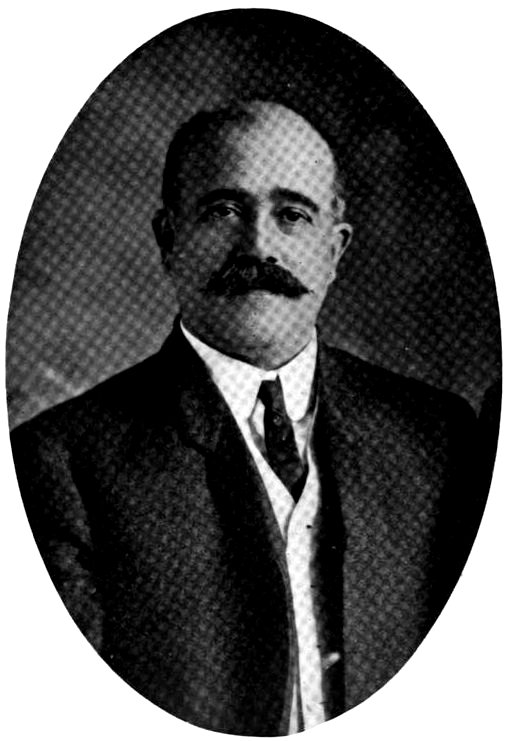
W. J. O’HAGAN, ESQ., Of Charleston, S. C. Vice-President of the Society for South Carolina.
183
THE SOCIETY OF THE FRIENDLY SONS OF ST. PATRICK IN THE CITY OF NEW YORK.
BY JOHN J. LENEHAN.
The Society of the Friendly Sons of St. Patrick in the City of New York was instituted on March 17, 1784. It had its origin among Irish officers connected with the armies of the American Revolution. On November 25, 1783, the last British soldier departed from the shores of Manhattan, the British flag which had been nailed to the flagpole of Fort George was hauled down, the American flag was run up in its place, and the Continental Army entered the city. It was led by George Washington, then an adopted member of the Friendly Sons of St. Patrick of Philadelphia. At his side rode the Governor, General George Clinton, the son of an Irishman; and the advance battalion was commanded by General Henry Knox, also the son of an Irishman, and a member of the Friendly Sons of St. Patrick of Philadelphia.
In the environment produced by these conditions, in the atmosphere of liberty and Constitutional government that followed the advent of the American army into its final possession of New York City, was born the Society of the Friendly Sons of St. Patrick. Daniel McCormick was its founder and its president for many years. The objects of the Society were to assist poor and distressed natives, and descendants of natives, of Ireland, and promote friendly, social feelings among its members.
With these laudable purposes, on March 17, 1784, the first St. Patrick’s Day following the evacuation of New York by the British, the Society inaugurated its festive functions at “Cape’s Tavern.” In the New York Packet and Advertiser of Thursday, March 18, 1784, the following appears:
Yesterday, being the anniversary of St. Patrick, his patriotic sons met at Cape’s Tavern, where they gave an elegant entertainment to his Excellency the Governor, Lieut.-Governor, Chancellor and a number of other respectable gentlemen of this State. The day and evening were spent in festivity and mirth, and a number of suitable toasts were drunk upon this joyful occasion. 184The greatest unanimity and conviviality pervaded this numerous and jovial company, and perhaps this great Saint was never honoured with a concourse of more generous and truly patriotic sons than this assembly afforded.
Thus commenced (in the words of Curran), “those happy meetings when the swelling heart conceived and communicated the pure and generous purpose, the innocent enjoyment of social mirth expanded into the nobler warmth of social virtue, and the horizon of the board became enlarged into the horizon of man.” Almost uninterruptedly since quarterly and anniversary meetings of the Society have been held. Many of the leading men of the City and State are enrolled among its members, and the records of the Society from the beginning contain names prominent in the early history of the Republic. Social and friendly intercourse was promoted and maintained among the natives of Ireland and their kinsmen and descendants. Numbers of deserving, but less fortunate fellow-countrymen, were relieved by the bounty of the Society, implements and materials for domestic manufacture were furnished to the industrious poor. The needy were assisted with money, medicine, clothing and fuel, the destitute were provided with homes and, when necessary, were furnished with sufficient funds to enable them to return to their native land.
The design of the badge worn by members of the Society, and which appears on the cover of this book, is a facsimile of the “reverse” of the medal worn by the members of the Friendly Sons of St. Patrick in Philadelphia in 1771. The following in reference to that medal is from Haverty’s American Almanac:
Each member was required to furnish himself with a gold medal of the value of three guineas, agreeably to the following description: On the right, HIBERNIA; on the left, AMERICA; in the center, LIBERTY joining the hands of HIBERNIA and AMERICA, represented by the usual figures of a female supported by a harp, for HIBERNIA; an Indian with his quiver on his back and his bow slung, for AMERICA; underneath, UNITE. On the reverse, ST. PATRICK tramping on a snake, a cross in his hand, dressed in pontificalibus, the motto, “HIER.”
These devices, designed some years before the Revolution, were certainly ominous, if not prophetic. The Goddess of LIBERTY joining the hands of HIBERNIA and AMERICA, with the superscription “UNITE,” was sufficiently significant, considering that the effect of that union powerfully promoted the subsequent dismemberment of the British Empire and the liberty and independence of America. The motto, HIER, or, without the aspirate, IER, in the Celtic language signifies “West,” and from it came the name of 185the country, Ere, Erin, or Ireland, and Ierna, aspirated Hibernia. But the word HIER had in it a duplicate and equivocal signification, peculiarly appropriate as the motto of a society whose object was to “Unite” in fellowship the sons of the little isle of the “West” with those of the great continent of the “West.” This medal the members were obliged to wear at the meeting of the Society under the penalty of 7s. 6d. for neglect to do so on St. Patrick’s day, and 5s. on the days of the quarterly meetings.[2]
The original records of the Society from 1784 to 1835, except the Treasurer’s Book from 1804, were lost by fire in August, 1835, being at that time in possession of the Secretary, whose place of business was destroyed.
The Society has been true to the principles on which it was founded. It has helped the needy and distressed, and has been the means of cementing lifelong friendships among its members and among those who participated in its festivities. From the Society grew the Irish Emigrant Society and the Emigrant Industrial Savings Bank. Uniting to the charitable and humane the friendly and social feelings, it seeks to keep ever vigorous the love of Ireland and of the Irish character. It celebrates the festival of St. Patrick as a national and immemorial custom, to commemorate the glory of Ireland, to drop a tear upon her sorrows and to express a hope for her regeneration. It has entertained illustrious and distinguished guests at its banquets. Among those of recent years may be mentioned President Theodore Roosevelt in 1905, and president-elect William H. Taft in 1908. A notable dinner was given on May 29, 1902, to the French Governmental Mission attending the Rochambeau Monument ceremonies, in acknowledgement of which the Republic of France presented to the Society a magnificent Sèvres vase, now in the Metropolitan Museum of Art.
Among the Society’s members have been many of the great merchants, business and professional men of the city. To pass over the 186living, on its rolls appear the names of Alexander Macomb, Hugh Gaine, William Constable, Dominick Lynch, DeWitt Clinton, John Caldwell, Thomas Addis Emmet, Robert J. Dillon, Joseph Stuart, Richard Bell, William Kelly, Joseph P. Kernochan, John Haggerty, Ogden Haggerty, William Sampson, David J. Graham, Charles O’Conor, James T. Brady, John R. Brady, Dr. Robert Hogan, Dr. William James MacNeven, Very Rev. Dr. John Power, Thomas W. Clerke, Daniel Devlin, Henry L. Hoguet, Eugene Kelly, Joseph J. O’Donohue, Richard O’Gorman, John Savage, Jeremiah Devlin, William Whiteside, Thomas Barbour, Hugh J. Hastings, Thomas Francis Meagher, James R. Cuming, Charles P. Daly, Frederick Smyth, William R. Grace, William L. Brown, Peter McDonnell, C. C. Shayne, Frank T. Fitzgerald, George C. Barrett, Samuel Sloan, James S. Coleman, John Crane, Vincent P. Travers, John Stewart, Daniel O’Day and Hugh Kelly. Grover Cleveland was an honorary member.
Of these, Dr. William James MacNeven and Thomas Addis Emmet, whose names are indelibly written on the pages not only of Irish history, but on the history of New York city and State, became members of the Friendly Sons of St. Patrick in 1815. Facing Broadway, in the graveyard of historic St. Paul’s, are reared the columns upon which are noted their services to their native country and to their adopted land, flanking on either side the tablet which perpetuates the memory of that other great Irishman, who fell at the siege of Quebec, General Richard Montgomery.
Free from all religious and political characteristics, it is the representative Irish society in the city of New York.
In 1827 it was incorporated by the following act of the Legislature of the State of New York:
CHARTER
OF THE SOCIETY OF
THE FRIENDLY SONS OF ST. PATRICK IN THE CITY
OF NEW YORK.
“An Act to Incorporate the Society of the Friendly Sons of Saint Patrick, in the City of New York. Passed February 13, 1827.
“Whereas, the members of a Society instituted for the relief of indigent natives of Ireland, and their descendants, have petitioned the 187Legislature for an act of incorporation, the better to enable them to obtain the objects of their association; therefore
“1. Be it enacted by the People of the State of New York, represented in Senate and Assembly, That John Chambers, James McBride, James Magee, Alexander Charters, John Montgomery, John Cauldwell and Daniel McCormick, and such other persons as now are or hereafter shall become members of the Society of the Friendly Sons of Saint Patrick in the City of New York, are hereby constituted and declared a body politic and corporate, in fact and in name, by the name of “The Society of the Friendly Sons of Saint Patrick in the City of New York,” and by that name they and their successors, during the existence of the said corporation, shall and may have perpetual succession; and shall in law be capable of suing and being sued, pleading and being impleaded, answering and being answered unto, defending and being defended, in all courts and places whatsoever; and that they and their successors may have and use a common seal, and may change and alter the same from time to time at their pleasure; and also that, by their corporate name, and in their corporate capacity, they and their successors may purchase, take, hold, use and enjoy, sell, lease and convey any estate, real or personal, for the use and benefit of said corporation: Provided, That the annual income of such real and personal estate shall not at any time exceed the sum of five thousand dollars.
“2. And be it further enacted, That the said corporation shall have power to make such constitution, by-laws and regulations, as they shall judge proper, for the appointment of officers, for the admission of new members, for the government of the officers and members thereof, for collecting annual contributions from the members towards the funds thereof, for regulating the times and places of meeting of the said Society, for suspending or expelling such members as shall neglect or refuse to comply with the by-laws or regulations, and for the managing and directing the property, affairs and concerns of said Society: Provided, That such constitution, by-laws and regulations be not inconsistent with the Laws or Constitution of this State, or of the United States: Provided further, that the said corporation shall not engage in any banking business, nor dispose of any of its funds for any other purpose than the relief of such members of the said Society, natives of Ireland, and children and grandchildren 188of natives of Ireland, or of a member of said Society, as may become indigent and poor.
“3. And be it further enacted, That the present officers of said Society shall hold their respective offices until others shall be chosen in their places.
“4. And be it further enacted, That this Act be, and hereby is declared to be, a public act, and that the same shall be construed in all courts and places, benignly and favourably for every beneficial purpose therein intended, and that no misnomer of the said corporation in any deed, gift, grant, devise or other instrument of contract or conveyance, shall vitiate or defeat the same: Provided, The Corporation shall be sufficiently described to ascertain the intention of the parties.
“5. And be it further enacted, That the Legislature may at any time hereafter amend, alter, modify or repeal this act.”
[Laws of New York, 1827; chapter 42.]
Owing to the loss of the Society’s books in 1835, the list of its early members is necessarily incomplete, but a partial list of the earliest members is:
Member In
McCormick, Daniel 1784
Gaine, Hugh 1784
Waddell, Robert R. 1784
Constable, William 1784
Macomb, Alexander 1784
Roach, Thomas 1784
Pollock, George 1784
Hill, William 1784
Shaw, John 1784
Pollock, Carlisle 1784
Bibby, Thomas 1784
Flemming, Sampson 1784
Templeton, Oliver 1784
Bradford, M. 1787
Gibson, Dr. 1787
Smith, H. 1787
Colles, Christopher 1788
Thomson, Charles 1788
Maunsell, Gen. John 1789
Clinton, DeWitt 1790
Edgar, William 1790
McVickar, John 1790
Price, Michael 1790
Saidler, Henry 1790
Charleton, John 1790
Constable, James 1790
Stewart, Alexander 1793
Wade, William 1793
Barnewell, George 1793
Glover, John 1793
Lynch, Dominick 1793
Kelly, John 1795
Wallace, William 1804
Caldwell, John 1804
189Heeney, Cornelius 1804
Parks, John 1804
Hogan, M. 1805
Searight, J. 1805
Boyle, M. 1805
Carbis, J. 1805
Reid, D. 1805
Blake, Valentine 1805
Rutledge, William 1805
Craig, W. 1805
Sullivan, J. 1805
Bailie, William 1805
Bryar, William 1805
Suffern, Thomas 1805
Shaw, W. 1805
McCarty, Charles 1805
Dickey, R. 1805
Cranston, Alex. 1805
Roth, M. 1805
Craig, S. 1805
McComb, J. W. 1805
McConnell, James 1805
Murray, J. 1805
Phelan, John 1805
Morris, Andrew 1805
Macomb, John N. 1805
Phister, Alexander 1805
McEvers, Gulian 1805
Watson, James 1805
Kemp, Dr. 1805
Jephson, William H. 1805
Chambers, James 1805
O’Connor, Capt. 1805
Keith, John 1805
Prince, Christ’er 1806
McVicker, Nathan 1812
Bailey, William 1812
Carberry, Thomas 1812
Chambers, John 1812
Craig, John 1812
Sterling, Wm. 1812
Macneven, Wm. Jas. 1815
Emmet, Thos. Addis 1815
McCarthy, Dennis 1815
Christian, Charles 1815
Woodward, John 1815
Montgomery, J. 1817
Magee, James 1817
Blood, Harris 1821
Andrews, David 1821
Nicholson, John 1821
Charters, John 1821
Kernochan, Jos. P. 1825
Laverty, Henry 1825
Moorehead, John 1825
Kyle, Wm. 1825
Gray, Andrew 1825
Muldon, Michael 1825
Charters, S. M. 1825
Alexander, Joseph 1825
Lynch, General 1825
Montgomery, J. B. 1828
Cleary, Thomas 1828
FitzGerald, R. A. 1828
Buchanan, Jas., Jr. 1828
Ingham, Charles 1828
Wilson, John 1828
James, Wm. 1828
Wright, John W. 1828
Hogan, Dr. Robert 1828
Cuming, Dr. 1828
Cassidy, Christ’r 1828
Trenor, Dr. 1830
Harvey, Jacob 1830
Bradish, Wheaton 1831
Persse, Dudley 1831
190Sampson, William 1831
Dolan, John T. 1832
Eccleston, Edward 1832
Osborne, Samuel 1832
Boyd, Capt. Wm. 1832
Corbitt, George S. 1833
Fleming, John 1833
Bush, Dr. George 1833
Donaldson, Robert 1833
White, Robert 1833
White, Campbell P. 1833
Rice, Dr. G. C. 1833
Burke, Dr. 1833
McBride, James 1833
Lambert, Charles 1833
Doyle, John 1833
Tait, John, Jr. 1833
Emmet, Robert 1833
Brown, James C. 1835
Arnold, Dr. Wm. 1835
Dillon, Robert J. 1835
O’Neill, Capt. Felix 1835
Moorhead, John 1835
Usher, Luke 1835
Chambers, J. 1835
Warren, J. 1835
Montgomery, J. B., Jr. 1835
Redmond, Wm. 1835
Brown, Stewart 1835
Miller, James 1835
Foote, John 1835
Charters, Samuel 1835
Cummin, Thomas A. 1835
Wright, Dr. 1835
Charters, Alex. 1835
Millar, Jesse 1835
Maxwell, Matthew 1835
Power, Rev. John 1835
McAllister, Samuel 1835
Harden, Geo. 1835
Kane, Wm. 1835
Alley, Saul 1835
Adams, John 1835
Brown, James 1835
Gillelan, E. H. 1835
Gibson, John 1835
Ingoldsby, Felix 1835
Niblo, W. 1835
Nicholson, John 1835
Nichols, Samuel 1835
Dore, John 1835
Buchanan, James C. 1835
Graham, Bernard 1835
Matthews, James 1835
McGloin, Edward 1835
Buchanan, Robert L. 1835
Bushe, George 1835
Bryar, James 1835
Burke, Michael 1835
Burke, Myles 1835
Cullen, Edward F. 1835
Cruise, Patrick R. 1835
Connolly, E. 1835
Cluff, John 1835
Denniston, James 1835
Dunn, Bernard 1835
Daily, Patrick 1835
Doyle, Dennis H. 1835
Fox, John 1835
Graham, David, Jr., 1835
Gray, Andrew 1835
Grattan, E. 1835
Hill, John 1835
Haggerty, John 1835
Haggerty, Ogden 1835
Jackson, Daniel 1835
191Jackson, George 1835
Jackson, Thomas 1835
Kyle, Jeremiah 1835
Kyle, Joseph 1835
Kelly, Robert 1835
Morrison, John 1835
Murray, Ham. 1835
McLaughlin, Peter 1835
Murphy, Thomas 1835
Mullen, John 1835
McKibben, Dr. 1835
McGrath, Daniel 1835
Niblo, John 1835
O’Brien, William 1835
O’Brien, Francis 1835
Park, David 1835
Patterson, Robert S. 1835
Powell, James W. 1835
Quinn, John 1835
Rutherford, Robert 1835
Stinson, Edey 1835
Shaw, James 1835
Shaw, William 1835
Thompson, Alex. 1835
Thompson, Alex. Jr., 1835
Usher, Robert 1835
Wilson, Joseph 1835
Ennis, Thomas 1835
Kelly, William 1835
COMPLETE ROLL OF MEMBERSHIP MARCH 17, 1835.
Arnold, Dr. William
Alley, Saul
Adams, John
Brown, James C.
Brown, Stewart
Bradish, Wheaton
Brown, James
Buchanan, James C.
Buchanan, Robert L.
Bushe, George
Bryar, James
Burke, Michael
Burke, Myles
Caldwell, John
Corbitt, George S.
Chambers, J.
Charters, Alex.
Charters, Samuel
Cassidy, Christopher
Cullen, Edward F.
Cruise, Patrick R.
Connolly, E.
Cluff, John
Cummin, Thomas A.
Dillon, Robert J.
Dore, John
Denniston, James
Dunn, Bernard
Donaldson, Robert
Doyle, John
Daily, Patrick
Doyle, Dennis H.
Eccleston, Edward (Second Vice-President)
Emmet, Robert
Ennis, Thomas
192Foote, John
Fox, John
Gibson, John
Graham, Bernard
Gillelan, E. H.
Graham, David, Jr.
Gray, Andrew
Grattan, E.
Harvey, Jacob
Hogan, Dr. Robert
Harden, Geo.
Hill, John
Heeney, Cornelius
Haggerty, John
Haggerty, Ogden
Ingoldsby, Felix
Jackson, Daniel
James, William
Jackson, George
Jackson, Thomas
Kernochan, Joseph P.
Kane, Wm.
Kelly, John
Kyle, Jeremiah
Kyle, William
Kyle, Joseph
Kelly, Robert
Kelly, William
Lambert, Chas. (Almoner)
Laverty, Henry
Magee, James
Moorhead, John
Montgomery, J. B., Jr.
Miller, James
Millar, Jesse
Maxwell, Matthew
Matthews, James
Morrison, John
Matthews, James, Jr.
Murray, Ham.
Montgomery, James
Murphy, Thomas
Mullen, John
Macneven, Wm. James
McBride, James
McGloin, Edward
McLaughlin, Peter
McAllister, Samuel
McKibben, Dr.
McGrath, Daniel
McBride, George
Niblo, William
Nicholson, John
Nichols, Samuel
Niblo, John
Osborne, Samuel (Treasurer)
O’Neill, Capt. Felix
O’Brien, William
O’Brien, Francis
Persse, Dudley (Secretary)
Patterson, Robert S.
Power, Rev. John
Park, David
Powell, James W.
Quinn, John
Redmond, William
Rutherford, Robert
Suffern, Thomas
Sampson, William
Stinson, Edey
Shaw, James
Shaw, William
Trenor, Dr.
Tait, John, Jr.
Thompson, Alexander
193Thompson, Alex., Jr.
Usher, Luke
Usher, Robert
Usher, William
White, Campbell P. (President)
Wilson, John (First Vice-President)
Warren, J.
White, Robert
Wright, Dr.
Wilson, Joseph
Its presidents have been noted merchants, financiers, jurists and professional men. Daniel McCormick was the first president, serving from 1784 to 1788, and in 1793 and 1794, and again from 1797 to 1827. Other presidents of this venerable Society were: William Constable, 1789, 1790 and 1795; Alexander Macomb, 1791; Thomas Roach, 1792; George Pollock, 1796; John Chambers, 1828 to 1833; James McBride, 1834; Campbell P. White, 1835 to 1838; Dr. Robert Hogan, 1839 to 1842; James Reyburn, 1843 to 1850; Richard Bell, 1851–1852 and 1865; Joseph Stuart, 1853–1856 and 1866; Samuel Sloan, 1857–1858; Richard O’Gorman, 1859; Charles P. Daly, 1860–1862, 1870, 1878–1884; James T. Brady, 1863–1864; Henry L. Hoguet, 1867; John R. Brady, 1868 and 1871–1874; Eugene Kelly, 1869; Thomas Barbour, 1875–1876; Hugh J. Hastings, 1877; Joseph J. O’Donohue, 1885–1886, 1888–1889; James R. Cuming, 1887; David McClure, 1890–1891; John D. Crimmins, 1892–1894; James S. Coleman, 1895–1896; Morgan J. O’Brien, 1897–1899; James A. O’Gorman, 1900–1902; James Fitzgerald, 1903–1905; Joseph I. C. Clarke, 1906; Michael J. Drummond, 1907; Stephen Farrelly, 1908; William Temple Emmet, 1908–1909.
The surprising growth of New York is well shown by the steady march up-town of the places where the anniversary dinners of the Society have been held since its organization to the present time.
1784
Cape’s Tavern. (Now No. 115 Broadway.)
1785
The Coffee House. (Mr. Bradford’s, in Water Street, near Wall Street.)
1786
The Coffee House.
1787
The Coffee House.
1788
Merchants’ Coffee House. (S. E. Cor. Wall and Water Streets.) 194
1789
to 1794 The City Tavern. (115 Broadway.)
1795
to 1803 The Tontine Coffee House. (N. W. Cor. Wall and Water Streets.)
1804
The Old Coffee House. (In Water Street, near Wall Street.)
1805
and 1806 The Tontine Coffee House.
1807
Phoenix Coffee House. (Wall Street.)
1808
Mechanics’ Hall. (N. W. Cor. Broadway and Park Place.)
1809
to 1815 The Tontine Coffee House.
1816
Washington Hall. (Now No. 280 Broadway.)
1817
The Tontine Coffee House.
1818
to 1832 The Bank Coffee House. (S. E. Cor. Pine and William Streets.)
1833
to 1835 The City Hotel. (115 Broadway.)
1836
and 1837 Washington Hotel. (No. 1 Broadway.)
1838
Carlton House. (N. E. Cor. Broadway and Leonard Streets.)
1839
City Hotel.
1840
Niblo’s Tavern. (Broadway and Prince Street.)
1841
to 1846 City Hotel.
1847
and 1848 No dinners—Irish famine years.
1849
City Hotel.
1850
Delmonico’s Hotel. (William Street.)
1851
to 1856 Astor House.
1857
to 1862 Metropolitan Hotel.
1863
Delmonico’s. (Broadway and Chambers Street.)
1864
to 1868 Delmonico’s. (14th Street and Fifth Avenue.)
1869
and 1870 St. James Hotel.
1871
Hoffman House.
1872
Hotel Brunswick.
1873
and 1874 Delmonico’s. (14th Street and Fifth Avenue.)
1875
Hoffman House.
1876
and 1877 Delmonico’s. (14th Street and Fifth Avenue.)
1878
Metropolitan Hotel.
1879
and 1880 Delmonico’s. (14th Street and Fifth Avenue.)
1881
to 1883 Delmonico’s. (Madison Square.)
1884
Hotel Brunswick.
1885
to 1895 Delmonico’s. (Madison Square.)
1896
Hotel Savoy.
1897
Waldorf.
1898
Waldorf-Astoria.
1899
to 1908 Delmonico’s. (Fifth Avenue and 44th Street.)
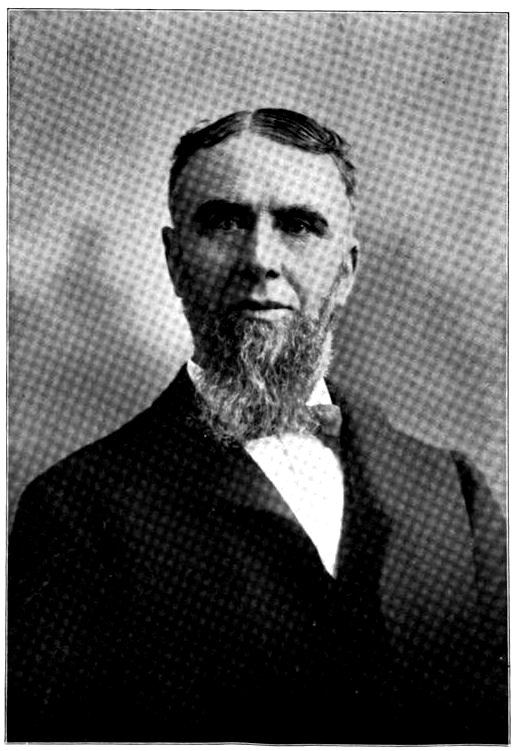
HON. PATRICK GARVAN. Of Hartford, Conn. A Life Member of the Society.
195 Note.
Mr. Lenehan is the Chairman of the Membership Committee of the American Irish Historical Society, through whose efforts and ability 250 members have been added to the Society’s rolls between the time of his appointment in June, 1908, and January 16th, 1909, the date of the eleventh annual meeting in Washington, D. C. New applications from him have been coming in almost daily since the latter date. We look forward to at least an equal number of new members being admitted during 1909, and the Society hereby expresses the highest praise of Mr. Lenehan for his faithful and fruitful efforts in its behalf. Under his guidance, the printed matter which has gone forth during 1908 throughout the country has been prepared and circulated, and in his work he is receiving the cordial support of all the members.
Although in the midst of a busy life as a successful practising lawyer, Mr. Lenehan finds time to give valuable assistance by word and deed to these two great national societies, The Friendly Sons of St. Patrick and the American Irish Historical Society, both of which claim him as an honored member.
Editor.
EARLY MARINE “WIRELESS.”
BY EDGAR STANTON MACLAY.
Not the least valuable of the many practical lessons taught by the cruise of the Atlantic battleship fleet around the world was the demonstration of the possibility of following from Washington almost every day’s move of the great white ships from their departure from Hampton Roads to their return, by means of wireless telegraphy and other methods of transmitting information. It is a cardinal point in the strategy of naval warfare to be thoroughly advised, first, of the location, disposition and conditions of your own ships and, second, the same of your adversary’s.
Some idea of the stupendous advances made in this most important detail may be gained by a comparison with the “wireless” marine telegraphy of a century ago when, although electricity had not been harnessed to the news bureau, ingenious methods of maintaining a “marine telegraph” were operative which, in some instances, were most surprising in their results.
196At the outbreak of the War of 1812 our government planned a crushing blow at British commerce. A fleet of 100 English merchantmen from Jamaica was expected to pass close to the North American coast and the most formidable squadron we could then assemble, consisting of the frigates President, United States and Congress, with the sloop and brig Hornet and Argus, under the command of Captain John Rodgers, was held in New York ready to sail. As soon as war was declared, June 18, 1812, a courier set out from Washington and in three days arrived in New York—quick work for those days, but the information now could be flashed in a few seconds.
One hour after receiving the news Rodgers got under way and on the morning of the second day out spoke an American vessel and learned from her master that he had seen the Jamaica fleet only two days before. Rodgers made sail in the direction indicated, but he was drawn away in a futile chase after the British frigate Belvidera. Afterward, however, he resumed his pursuit of the merchant fleet and on July 1 he detected “quantities of cocoanut shells and orange peels” in the water, which showed that he was in the wake of the fleet. He followed this sea-trail several days and was rapidly overtaking the chase, when he lost it in the fogs on the Newfoundland Banks.
Floating bottles, pieces of wreckage, cask-heads and other ship debris were the “clicks” of the first “marine wireless” that assisted our early mariners in discovering the whereabouts of friend or foe on the high seas. And even a marine “postoffice” was a service recognized early in the 19th century—many years before it came into general use on land. When our 32-gun frigate Essex was making her memorable cruise in the Pacific Ocean, 1813–1814, Captain David Porter records that he stopped at Charles Island of the Galapagos in the southern Pacific Ocean to examine the “postoffice”—a box nailed to a tree in which whalers and other craft deposited records of their cruises and intended movements.
That these ocean “postoffices” were sometimes used for “misinformation” is shown in the case of this same Captain Porter. One of these “postal stations” in the Atlantic was the penal island of Fernando de Noronha, off the extreme eastern limit of Brazil. This was a point usually touched by vessels bound for the Cape of Good Hope or Cape Horn. While Porter was cruising in the south 197Atlantic under orders to join the Constitution and Hornet, he hove-to off this port on December 14, 1812, and sending a boat ashore learned that there was a letter there addressed to “Sir James Yeo, of the British 32-gun frigate Southampton.” He also learned that only the week before the English 44-gun frigate “Acasta and the 20-gun sloop of war Morgiana” had stopped at that port and had sailed for Rio de Janeiro, leaving a letter addressed to “Sir James Yeo.”
Before sailing from the United States Porter had been instructed to pose as Sir James Yeo and was to join the Constitution and Hornet, which two vessels were to pass as the Acasta and Morgiana, off Cape Frio, Brazil. This was done to deceive the enemy. When Porter learned that there was a letter at Fernando de Noronha addressed to “Sir James Yeo,” he at once sent a present of porter and cheese to the governor of the island and received the coveted letter. It was found to contain the usual references of a voyage by a British commander, but some “key words” induced Porter to hold the letter to the flame of a candle, when the following instructions, written in sympathetic ink, became legible: “I am bound off Bahia, thence off Cape Frio, where I intend to cruise until the 1st of January. Go off Cape Frio, to the northward of Rio de Janeiro, and keep a lookout for me. Your friend.”
Captain Porter did as ordered, but on December 29 the Constitution captured, after a hard fight, the British frigate Java, and soon afterward the Hornet sank the English sloop of war Peacock. This left the Essex free to choose her own course and the result was her memorable cruise of two years in the Pacific.
But the most remarkable instance of early marine wireless was that of the chase after the Constitution from Boston, across the Atlantic, by a powerful British squadron, which, on March 10, 1815, cornered Old Ironsides in Port Praya, near the extreme western coast of Africa, on the very day she entered that harbor and just seventy-six days after the hostile vessels had sailed from the blockade of the New England port.
For more than eight months British cruisers had been holding the dreaded Constitution—then commanded by Captain Charles Stewart—in the Hub, but, late in December, 1814, she gave them the slip and once again was in blue water. Running down to Bermuda, where he captured the merchant ship Lord Nelson, Stewart stood 198across the Atlantic to the Madeiras and then cruised for several days within sight of the Rock of Lisbon. Shaping her course southward again the Constitution, on February 20, 1815, after a brilliant fight, captured the British cruisers Cyane and Levant and with his two prizes entered Port Praya on the morning of March 10.
Soon after the Constitution made her escape from Boston, a terrific snow storm, lasting several days, compelled the English blockading squadron to take refuge in Cape Cod Bay. On December 22, while the British officers were making themselves as comfortable as they could in the bitter cold, the English 18-gun brig sloop Arab, Captain Henry Jane, arrived with the startling information that the Constitution had escaped. At once there was a hurrying and scurrying for immediate pursuit. Provisions, bought at an exorbitant price from the canny landfolk, were hurried aboard and every preparation was made for a chase of indefinite length.
But in what direction were they to pursue? Absolutely nothing is recorded in the log of the British flagship as to what course the Constitution had taken. Here nautical sagacity, aided by the “wireless telegraphy” then so remarkably in use on the high seas, came to the aid of the British senior officer of the blockading force—Sir George Collier, of the 50-gun frigate Leander. Sir George sagely conjectured that the Flying Yankee would most likely take a southern course so as to escape the bitterly cold winter of New England. In those days there were no means for heating the cabins, wardroom, steerage or berth decks of ships, so a prolonged stay in the higher latitudes was a problem to be seriously considered. Selecting the 50-gun frigate Newcastle, Captain Lord George Stuart, and the 40-gun frigate Acasta, Captain Kerr, to accompany him, Sir George, on December 24th, made sail in a blind chase southward.
It seems that on the night of December 21st the famous American privateer, Prince de Neuchâtel, also escaped from Boston and made the same course the Constitution had taken. When only a day or so out she ran into the same storm that drove the English blockading ships into Cape Cod Bay.
On the morning of December 28, just as the gale was abating and only four days after the British squadron sailed, Sir George overtook the Prince de Neuchâtel and captured her; and from some of the Englishmen who were aboard the privateer learned somewhat of the proposed itinerary of the Constitution. With this first direct 199trace of his game, the British commander shaped his course across the Atlantic for the coast of Spain.
How eager the English were to capture the Constitution, above all other American frigates, may be seen in the record of a sailor who was in the Prince de Neuchâtel at the time. He says that after being taken aboard the Leander as a prisoner he noticed a large placard nailed to her mainmast, which read as follows:
REWARD.
“A reward of One Hundred pounds sterling to the man who shall first descry the American frigate Constitution, provided she can be brought to, and a smaller reward should they not be enabled to come up with her.”
This same sailor writes: “Every one [in the Leander] was eager in his inquiries about this far-famed frigate and most of the men appeared anxious to fall in with her, she being a constant theme of conversation, speculation and curiosity. There were, however, two seamen and a marine—one of whom had had his shin sadly shattered from one of her grape-shot—who were in the frigate Java when she was captured. These I have often heard say, in return to their shipmates’ boastings: ‘If you had seen as much of the Constitution as we have, you would give her a wide berth, for she throws her shot almighty careless, fires quick, aims low and is, altogether, an ugly customer.’”
Continuing on his trail of the much-coveted Yankee frigate, Sir George, on January 4, 1815,—seven days after sailing—while off the Western Isles, received another “wireless click” when he picked up a prize brig belonging to the American privateer Perry and from her master learned that the Perry had spoken the Constitution only a few days before, on a course that would indicate that she was making for the coast of Spain. As a matter of fact, this powerful British squadron was at that moment only a few hours’ sail from the Constitution.
Touching at the port of Fayal, January 13th, 1815, Sir George’s chase after Old Ironsides nearly terminated in disaster. A record left by one of the American prisoners in the Leander says: “We ran in with a southwest wind that had freshened to a stiff breeze till coming under the lee of the Peak of Pico, opposite to Fayal. This aided a little in breaking the wind and the heavy swell which 200came rolling in from the open sea beyond. Immediately to leeward was a rocky, perpendicular bluff of three hundred feet in height, which the sea was breaking against with the greatest fury.
“I had taken my perch upon the booms so as to have a chance of clearly seeing the working of the frigate, as well as the different objects of curiosity within my range.... The anchor was let go and the cable spun out to its entire length with the most fearful swiftness. But when all was out the frigate still went, stern-on, toward the bluff, as though the anchor was yet at the cathead. When she had drifted so as to be without the shelter of the Peak and exposed to the wind and heavy swell, both driving her on to inevitable destruction, unless suddenly checked in her course, none was so blind as not to see the peril, the almost instant annihilation with which the frigate was threatened, and in a twinkling it was known that the anchor had not taken hold, but was dragging.
“What means were adopted for the safety of the ship I know not, for my curiosity had full employment in following the old commodore [Sir George Collier] about the deck in his mad ravings. I have read and heard much of the coolness, intrepidity and readiness of the English naval officers in all sudden cases of emergency and danger; and this commodore was one of the oldest in commission and a staunch veteran in the service. He had seen long service, fought many a fight, been slashed and cut to disfiguration—as his numerous scars plainly told—had had one of his legs broken at three different places, at three separate periods between the hip and knee, each setting worse than the last, making his leg crooked, more crooked, most crooked.
“When he saw that the frigate was gathering sternway toward the bluff, he raved, stormed and swore at the ship, cable, anchor, officers, men, boys, hell and the devil, clinching each oath separately by a whack of his cane at and on everything within his reach. Now he was running toward the wheel at the stern, then furiously driving across the deck to the hawseholes at the bow, tacking first to larboard, then to the starboard side of the ship; yelling at the first lieutenant for not making the anchor hold on, swearing at the anchor for not obeying the lieutenant, damning the cable for not being longer, the water for being so deep, the bottom for lying so low; and, at last, when he had nothing else to crisp with his red-hot blessings, he blasted his own eyes, heart, liver and lights, winding 201up with a curse upon the prisoners, conveying their souls in a trice to the lower regions without benefit of clergy, for being the cause of all the disasters in store for him and his frigate—henceforth and forever.
“I was as fully sensible of the danger of our situation as any one, but I could not suppress my laughter at the antics which this hero of many wars was cutting about the decks. I have no simile nor comparison for his movements, for, verily, there is none. It was not a hitch-and-go-ahead, nor a half-hitch and side lurch; neither was it a back-and-fill, balance-haul or a bob-and-hop, straddling slide. No more like a cock-and-primed, tip-toe dance than a toe-and-heel, fore-and-after is like a cut-and-thrust, forward-spring, a back-staggering or blinker-wiper. It partook of the whole in about equal parts. In fact, I could liken his run with his crooked leg to nothing but the effort of the crab to walk upright upon a slippery surface, doggedly intent to win the wager of the half-blown terrapin, who, in the same attitude, is being balked in his first trial at the double-shuffle by attempting it in a wig, gown and Wellingtons instead of short-cuts and pumps and going at it with sleeves rolled up as an honest one should.
“At last the second anchor brought her up, and lucky it was that it did, for she had drifted within a few minutes’ distance of the bluff, where the frigate would not have held together five minutes. With the freshened winds and lashing waves throwing the spray mast-high, every soul on board must have been lost, for the water was deep and the first thing the frigate would have struck was the perpendicular cliff—three hundred feet high and of unknown depth below.”
After this narrow escape Sir George transferred his prisoners to the sloop of war Pheasant and, after replenishing his stores, resumed his chase after the Yankee frigate. Just what course was pursued by the commander from this point is not shown in American or British records. It is a fact, however, that the presence of the Constitution in European waters was known in many ocean ports and that several British cruisers were sent out from Lisbon, Gibraltar and other nearby ports to intercept her.
It was, undoubtedly, by means of this “wireless marine telegraphy” that Sir George so shaped his course, after leaving Fayal, that he arrived off Port Praya, March 10, 1815, only a few hours after the Constitution with her two prizes, the Cyane and Levant, had entered 202that harbor. The miraculous escape of the American frigate from Sir George’s overwhelming force in the offing of Port Praya is a matter of history. It is recorded that he was so chagrined over the extraordinary escape of the Constitution—after he had so successfully followed her, by means of the first “marine wireless,” across the Atlantic—that ten years afterward, on being reminded of the incident, he committed suicide.
SKETCHES OF WILLIAM DUNLAP, THOMAS P. JOHNSON AND THOMAS SHARP, DISTINGUISHED IRISH AMERICANS DURING REVOLUTIONARY TIMES.
BY JAMES L. O’NEILL OF ELIZABETH, N. J., A MEMBER OF THE EXECUTIVE COUNCIL.
The following short series of articles relate to distinguished people of our race who played prominent parts in the stirring scenes during the Revolution, and whose memoirs are full of interesting anecdotes and descriptions of those times.
William Dunlap, son of Samuel Dunlap, who was a native of Ireland, Thomas P. Johnson, one of the prominent members of the New Jersey Bar 100 years ago, and others are referred to. Mr. Dunlap himself, in his memoirs, gives a graphic description of Revolutionary scenes in New Jersey. Another of the articles is a history by Thomas Sharp, a member of the Society of Friends, of Newton, Gloucester County, N. J. The brief history is here quoted exactly as compiled by the ancient author, and its quaint language, with its disregard for spelling and construction, is interesting. Thatcher, a military writer of that time, gives a characteristic anecdote of Washington, which is here appended.
Revolutionary Times in Perth Amboy.
Perth Amboy, N. J., was the home of Governor Franklin, who was made a prisoner by the Colonials in the Revolution, and sent to Connecticut for safe-keeping.
William Dunlap, painter and author, was also a native of Perth 203Amboy, and a graphic description of “olden times” is contained in his own memoirs in his “History of the Arts of Design.” He says:
“I was born in the city of Perth Amboy and province of New Jersey. My father, Samuel Dunlap, was a native of the north of Ireland and son of a merchant of Londonderry. In youth he was devoted to the army and bore the colors of the Forty-seventh Regiment, ‘Wolfe’s Own,’ on the Plains of Abraham. He was borne wounded from the field on which his commander triumphed and died. After the French war, Dunlap, then a lieutenant in the Forty-Seventh, and stationed at Perth Amboy, married Margaret Sargent, of that place, and retired from the army to the quiet of a country town and country store. The 19th of February, 1766, is registered as the date of my birth, and being an only child, the anniversary of the important day was duly celebrated by my indulgent parents. Of education I had none, in the usual sense of the word, owing to circumstances I shall mention, and much of that which is to the child most essential was bad.
“Holding negroes in slavery was, in those days, the common practice, and the voices of those who protested against the custom were not heeded. Every house in my native place where any servants were to be seen swarmed with black slaves. My father’s kitchen had several families of them, of all ages and all born in the family except one, who was called a new negro, and who had his face tattooed. His language was scarcely intelligible, though he had been long in the country, and was an old man. These blacks indulged me, of course, and I sought the kitchen as the place to find playmates and amusements suited to my taste. Thus in the mirth and games of the negroes, and the variety of visitors of the black race who frequented the place, my desires were shaped. This may be considered my first school, and, indeed, such was the education of many a boy in the states where the practice of slavery continued. The infant was taught to tyrannize, the boy was taught to despise labor, the mind of the child was contaminated by hearing and seeing that which, perhaps, was not understood at the time but which remained in the memory. These kitchen associations were increased during a part of the Revolution by soldiers, who found their mess fare improved by visiting the negroes, and by servants of officers billeted in the house.
204“Perth Amboy being now in the possession of the British, my father returned with his family to his home, and I saw in my native town, particularly after the battles of Princeton and Trenton, all the discomforts of a crowded camp and garrison. An army which had recently passed in triumph from the sea to the banks of the Delaware, and chosen its winter quarters at pleasure, was now driven in, crowded upon a shore washed by the Atlantic, and defended by the guns of the ships which had borne it thence.
“I have elsewhere compared the scenes I now witnessed to the dramatic scenes of Wallenstein’s Lager. Here was centered in addition to the soldiery cantoned at the place all those drawn in from the Delaware, Princeton and Brunswick, together with the flower of the army, English, Scotch, and German, which had been brought in from Rhode Island. Here was to be seen a party of the Forty-Second Highlanders in national costume, and there a regiment of Hessians, their dress and arms a wide contrast to the first. The slaves of Anspach and Waldeck were there, the first somber as night, the second gaudy as noonday. Here dashed by a party of the Seventeenth dragoons, and there scampered a party of Yagers. The trim, neat and graceful English Grenadier, the careless and half-savage Highlander, with his flowing robes and naked knees, and the stiff German, could hardly be taken as members of one army. Here might be seen soldiers driving in cattle, and others guarding wagons loaded with household furniture instead of the hay and oats they had been sent for.
“The landing of the grenadiers and light infantry from the ships which transported the troops from Rhode Island; their proud march into the hostile neighborhood, to gather the produce of the farmer for the garrison; the sound of the musketry, which soon rolled back upon us; the return of the disabled veterans who could retrace their steps; and the heavy march of the discomfited troops, with their wagons of groaning wounded, in the evening, are all impressed on my mind as pictures of the horrors and the soul-stirring events of war.
“These scenes and others more disgusting—the flogging of English men and thumping and caning of German—which even my tender years could not prevent me from seeing all around, and the increased disorder among my fathers’ negroes, from mingling with the servants of officers, these were my sources of instruction in the winter of 1776–1777.”
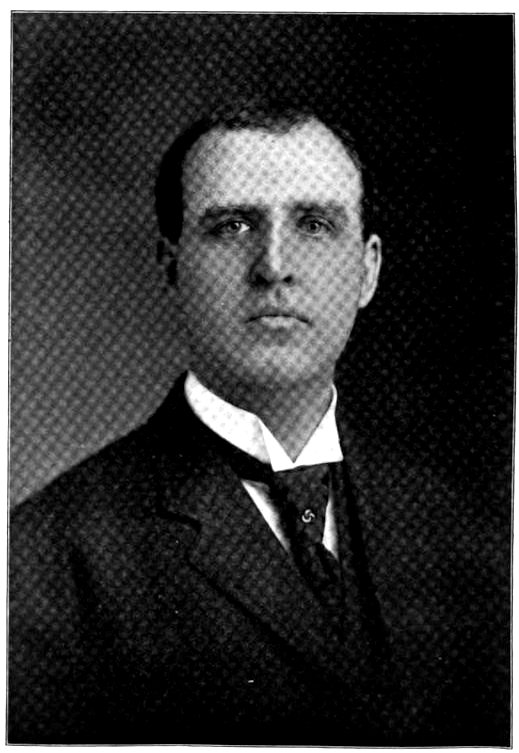
JAMES H. DEVLIN. Jr., Of Boston, Mass. President of the Boston Charitable Irish Society, now in its 172d Year.
205
Thomas P. Johnson, Noted Lawyer One Hundred Years Ago.
Among the distinguished men who have adorned the New Jersey bar few, in their day, were held in higher repute for eloquence and extensive legal knowledge, and especially for intellectual vigor and versatility of talent, than Thomas P. Johnson.
He was born about the year 1761. His parents were Friends. His father, William Johnson, a native of Ireland, emigrated to this country about 1747. He married Ruth Potts, of Trenton. Thomas was their second child. When he was quite small the family removed to Charleston, S. C., where the father established a flourishing boarding-school and gained much repute by his lectures on various branches of Natural Philosophy. His fondness for such studies seemed to have been inherited by the son, who even in his later years continued to turn his attention to them. The father died in the South, after a residence of some years there. The mother, with five children, returned to her native state, and with the aid of her brother opened a store in Trenton. There Thomas was placed an apprentice to a carpenter[3] and joiner. After following this business some time he was compelled, by a rupture of a blood vessel in the lungs, to abandon it. He then engaged in teaching in Hunterdom County and afterwards in Bucks County, Pa.—later then in Philadelphia. For this profession he had rare qualifications. Few men had such powers of communication; few could so simplify truth, and throw an interest around it to captivate the youthful mind.
While in Philadelphia a mercantile house took him in partnership, and sent him to Richmond, Va., where the firm opened a large store. There he became well acquainted with Chief Justice Marshall, and often had the privilege of listening to the first lawyers in the Old Dominion. This probably led to his turning his thoughts to the bar. After a few years the loss of his store and goods by fire 206caused him to return to the scenes of his youthful days. He took up his residence at Princeton, there married a daughter of Robert Stockton, and entered his name as a student of law in the office of the Hon. Richard Stockton. In due time he was admitted to the bar as an attorney and counselor. His career was brilliant. Whether arguing points of law, or spreading a case before a jury, he was always heard with fixed attention and lively interest. So lucid was he in arranging and expressing his thoughts, so quick to seize hold of strong points in a case, and, when he pleased, so well able to touch the chords of feeling, that he rarely failed to produce an impression.
He was no indifferent student of the great political questions. With the majority of the New Jersey bar, he belonged to the Washington school, and exerted all his energies in what he honestly conceived to be his country’s real interests. For his brethren of the New Jersey bar he cherished a warm attachment, and they were forward in evincing their high esteem of his worth. A few years before his death a number of them obtained the services of an artist and had a full-length portrait of him executed. This now hangs over the judge’s chair in the court-room at Flemington. He died March 12, 1838.
History of Newton, Gloucester County, N. J.
Newton, Gloucester County, N. J., was early settled by the society of Friends. The following history was written by Thomas Sharp, the first conveyancer and surveyor of the county:
“Let it be remembered. It having wrought upon ye minds of some, Friends that dwelt in Ireland, a pressure having laid upon them for some years which they could not get from under the weight of until they gave upp to leave their friends and relations there, together with a comfortable subsistence to transport themselves and familys into this wilderness part of America, and there by expose themselves to difficulties, which, if they could have been easy where they were, in all probability might never have been met with; and in order thereunto, sent from Dublin in Ireland to one Thomas Lurtin a friend in London commander of a Pink, who accordingly came, and made an agreement with him to transport them and their familys into New Jersey, viz.; Mark Newby and family. Thomas Thackarg and family, William Bate and family, George Goldsmith 207an old man, and Thomas Sharp, a young man, but no familys; and whilst the ship abode in Dublin harbor providing for the voyage, said Thomas Lurtin was taken so ill that could not perform ye same, so that his mate, John Dagger, undertook it. And upon the 19 day of September, in the year of our Lord, 1681, we sett sail, from the place aforesaid, and through the good Providence of God towards us we arrived at Elsinburg, in the country of Salem, upon the 19 day of November following, where we were well entertained at the houses of the Thomsons, who came from Ireland about four years before, who, by their industry, were arrived to a very good degree of living, and from thence we went to Salem, where were several houses yet were vacant of persons who had left the town to settle in ye country, which serve to accommodate them for ye winter, proving moderate, we at Wickacog, among us, purchased a boat of the Swansons, and so went to Burlington to the commissioners, of whom we obtained a warrant of ye surveyor general, which then was Daniel Leeds; and after some considerable search to and fro in that then was called the third or Irish tenth, we at last pitched upon the place now called Newton, which was before the settlement of Phila; Pa; and then applied to S,d Surveyor, who came and laid it out for us; and the next Spring, being the beginning of the year 1682 we all removed from Salem together with Robert Lane, that had been settled there, who came along from Ireland with the Thomsons before hinted, and having expectation of our coming only bought a lot in Salemtown, upon the which he seated himself until our coming, whose proprietary right and ours being of the same nature, could not then take it up in Fenwicks tenth, and so began our settlement; and although we were at times pretty hard bestead, having all our provisions as far as Salem to fetch by water, yet, through the mercy and kindness of God, we were preserved in health and from any extreme difficulties.