THE IRISH CHAPTER IN THE HISTORY OF BROWN UNIVERSITY.[16]
Reading edition
THE IRISH CHAPTER IN THE HISTORY OF BROWN UNIVERSITY.[16]
BY THOMAS HAMILTON MURRAY, WOONSOCKET, R. I.
The founding of Brown University marks a pivotal era in the educational history of Rhode Island. It is not the beginning of that history any more than it is the ultimate conclusion thereof. For, before the founding came the pioneers of education, the skirmish line, clearing the underbrush, paving the way, opening the battle for the cause of knowledge.
In the van, then, were the private teachers who received pupils into their homes or taught them at their own firesides. Many of these teachers in early Rhode Island history were talented Irishmen. Indeed, Irish schoolmasters were numerous throughout all the colonies. In reading the lives of the men of the Revolution, we are astonished at the number receiving their education from these Irish teachers.
Of the Irish masters who taught in Rhode Island at an early period may be mentioned Brown, MacSparran, Crocker, Knox, Kelly, Jackson, Phelan, Reilly and others.
Rev. Dr. MacSparran was a leading Irish preacher and teacher whose educational influence without doubt helped pave the way and render desirable the founding of a Rhode Island college. His arrival in these parts dates from about 1718, when he located in Bristol. Later, and for a period of nearly forty years, he was pastor of St. Paul’s church in Narragansett. Dr. MacSparran always had a warm affection for his native land, and loved to speak and read the Irish language. During his long period of service in Narragansett he received many pupils at his home, imparting a knowledge of the Greek and Latin classics and various other branches. Writing in 1752, he says: “Mr. Thomas Clap, president of Yale college, was my scholar when I came first to these parts, and on all occasions gratefully acknowledges his receiving the first rudiments of his 181learning from me, who, by the way, have not but a modicum to boast of myself.” MacSparran died in 1757.
Rev. Marmaduke Brown, an Irishman, while rector of Trinity church, Newport, opened a school for the instruction of negro children. In 1763 he had provided for teaching thirty pupils, fifteen of each sex. He likewise contributed in many other ways toward creating and perpetuating an educational spirit in the community. This Irishman, Brown, is mentioned in the charter of the university as a member of the first board of Fellows. He also appears as a member of the board in 1770. His wife was an Irish woman of sterling worth and fine intellect. His father, Rev. Arthur Brown, a native of Drogheda, in Ireland, came to Rhode Island about 1729, and was pastor of King’s church in Providence. Marmaduke Brown had a son, Arthur, who became senior Fellow of Trinity college, Dublin, and member of the Irish parliament. It is not known,—at least I do not know,—that these Irish Browns of Newport and Providence were related to the family from whence the university derives its name.
Stephen Jackson of Kilkenny was another Irish teacher. Some of his descendants have been identified with Brown university. Stephen came to this country in 1724. He was a resident of Providence in 1745 and is mentioned as a “schoolmaster.” In 1762 he was living on Benefit street. One of his sons married Susan Waterman. A grandson of this Kilkenny teacher was town clerk of Providence for many years, another was cashier of the Exchange bank, a third was president of the Washington Insurance company, while a great-grandson of the Irish immigrant became governor of Rhode Island and was always a warm friend of the university.
Another Irish teacher who must have settled here before Rhode Island college was instituted, and who thus helped create the educational atmosphere which so eventuated, was “Old Master” Kelly. He lived and labored at Tower Hill, in South Kingstown, R. I., and vicinity. In the Narragansett Historical Register (Vol. 1) it is stated that “Master Kelly was an Irishman and noted for his love of a good joke, a good dinner and his courtesy of manner.” When Commodore O. H. Perry was a boy Kelly was his teacher, having already taught three generations of the youth of that neighborhood. Anecdote and reminiscence of Kelly are still numerous among the old families of that part of the state. “It is recorded of the worthy pedagogue, that during the whole of his long servitude at Tower Hill, he had never once been known to lose his temper, but 182ever preserved a blessed equanimity, to be envied by all of his arduous and important calling.”
Cole’s History of Washington and Kent Counties, R. I., states that “Before 1800, Masters Knox and Crocker, natives of Ireland, taught school at Bowen’s hill [in Coventry] and the neighborhood.” The name Knox is found in Coventry in 1766. Perhaps the schoolmaster was there as early as that period or about the time of the founding of Rhode Island college.
Terence Reilly was a schoolmaster in Providence at the period of the Revolution and, it may be, for some years previous thereto. I am told that representatives of old Providence families still have in their possession receipts for tuition fees paid Master Reilly by their grandfathers or great-grandfathers.
John Phelan was one other old time schoolmaster in Providence. His quarters in 1792 were on the west side of the “Great Bridge,” where he conducted a day and evening school. But Reilly and Phelan came after the establishment of Brown and so had no bearing on that fact. I merely mention them here in order that their names may be perpetuated for future treatment.
It is a remarkable fact that one of the earliest suggestions of which we have record, for the establishment of a college in Rhode Island, came from an Irishman—the peerless and immortal Berkeley. No name in the intellectual life of the colony and the state is more cherished than his. He was a native of Kilkenny and one of the most illustrious Irishmen of his day. Born in 1648, he entered the ecclesiastical calling, and in 1724 was made dean of Derry. For many years he had entertained a plan for christianizing and civilizing the American Indian. His central idea was to establish a college in Bermuda, where missionaries were to be educated for work among the red men.
He was promised funds with which to carry out this project. Relying upon these assurances, he resigned his deanery, and in “a hired ship of 250 tons” arrived at Newport, R. I., in 1729. His object was, according to numerous authorities, to here await the arrival of the expected funds, when he would proceed to Bermuda. It is now also believed that while in Rhode Island he intended to influence well-to-do people here in behalf of his plans.
Soon after his arrival in Newport his great merit was recognized and he was quickly conceded the intellectual leadership of the colony. Berkeley often visited the Updikes and other noted families in 183Narragansett. It was during one of these visits he declared that if the promised funds for his college ever arrived he would build the institution on Barber’s Height, North Kingstown, R. I., instead of in Bermuda.
Alluding to this intention, Mr. William E. Foster, public librarian of Providence, declares of Berkeley that by “thus anticipating by over a third of a century the actual establishment of a college in Rhode Island, his plans unquestionably had an important bearing on the steps leading to it.”
The direct cause, however, that led to the establishment of Brown was the action taken in 1762 by the Philadelphia Baptist association and which resulted as aforesaid. The details for the inauguration of the institution were entrusted largely to Rev. Morgan Edwards of Philadelphia, and Rev. Samuel Jones of Lower Dublin, Penn. The institution was incorporated in 1764, its first location being Warren, R. I., a town named in honor of an Irishman, Sir Peter Warren. In 1770 it was removed to Providence, and in 1804 the name was changed from Rhode Island college to Brown University.
Dr. Guild in his production on “The First Commencement of Rhode Island College” declares: “It is a singular and well-known fact, and it may perhaps be stated in this connection, that the first funds of the college were obtained from Ireland, in guineas and half guineas, from Mary Murphy, Susanna Pilson, Joseph Fowke and other members of Protestant churches and societies in Cork, Waterford, Belfast, Ballymony, Coleraine, Londonderry and Dublin.” “This,” Dr. Guild continues, “may be accounted for when we learn that Mr. Edwards’s first settlement in the ministry, before coming to this country, was in Cork, where he married his wife [Mary Nunn]. The original subscription book, with genuine signatures, is one of the most interesting documents on file in connection with the history of the university.”
Morgan Edwards’s journey to Ireland and England was made in 1767. His Irish subscription list, mentioned by Dr. Guild, is still preserved in the university archives. It bears the following heading, written by Edwards himself:
“A list of persons in Ireland who have contributed towards endowing the college in Rhode Island government. Published, according to promise, partly for the honor of the benefactors, and partly to satisfy them and the college of the fidelity of their humble 184servant, by whom the money has been collected. The sums are put down in English currency, because better known in America.”
Let us accompany him on his Irish visit. I am inclined to believe that not all his contributors were Protestants. Doubtless there were also generous, large-hearted Roman Catholics who aided him. In Cork he found over fifty subscribers. They included Mary Murphy, Matthew O. Dwyer, Francis McCarthy, Humphrey Crowley and Samuel Neale. In Waterford he found many friends. In Dublin his contributors included Mrs. Luke Kelly, Rachel Connor, John Reilly, William Gowan, James Martin and sixty or seventy others. Samuel McCormick was one of the many who aided him in Antrim. James Brennan and several others helped him in Westmeath. And so it was elsewhere throughout the country—a cordial greeting and a generous reception. The sums contributed were remitted to the college, from Cork, Newry, Belfast and Derry. Before leaving Ireland, he designated certain agents in Dublin to whom additional contributions intended for him could be sent.
In concluding his Irish tour he thus wrote: “Mr. Edwards begs the excuse of those gentlemen on whom he has not been able to wait a second time to receive their subscriptions; and desires they will be pleased to pay the same to Mr. Abram Wilkinson of Park street, or Mr. John Pym Joshua of Ushers Quay, Dublin, who will soon be authorized by the college to solicit, receive and remit money for its use. Mr. Edwards has also heard, since he left Ireland, of several who expressed a willingness to become benefactors to said college. He thanks them for their good will; and entreats them to deposit their gifts, whether money or books, with the above mentioned merchants in Dublin. This list may be had of the Rev. W. Boulton, in Golden Lane, Dublin.”
From the foregoing it would appear that Irish friends of Rhode Island college gave books as well as money to the institution. Writing from abroad in 1768 to President Manning at Warren, Edwards says:
“My Dear Friend: I long to hear from you. Your last was of October 12, 1767.... Mr. Miles informed me that he had sold one of my Irish bills ... for £138 12s 4d, which gained for the college upward of £13. I have not had any account of the sale of the other bill for the same country. I want much to know how you intend to put the money out.... You must also 185observe that in England, as in Ireland, I solicit for money towards endowing the college, and, therefore, take care that you all attend to the design of the donors. Inclosed you have a list of all the sums I received in Ireland, which list was distributed in the several places where I have been. The design was to let every one of them see that I gave credit for what I received.”
Irish generosity was likewise early displayed in this country toward the young institution. In 1769–’70, Rev. Hezekiah Smith solicited funds in South Carolina and Georgia. He says in his diary of the tour: “Thursday, March 1 [1770], went to Malachi Murfee’s.” The list of those who subscribed in aid of the college on this Southern trip includes Edward Dempsey, Charles Reilly, Patrick Hinds, James Welsh, Hugh Dillon, John Boyd, Matthew Roach and Capt. John Canty. Their names deserve to be perpetuated.
Rev. and Mrs. Edwards, to whom reference has just been made, had several children. Some of the latter were perhaps born in Ireland. One of the sons, William, was graduated from Brown in 1776, under President Manning. At the commencement in 1770, six years previously, this incident occurred as narrated in the Providence Gazette:
“The business of the day being concluded, and before the assembly broke up, a piece from Homer was pronounced by Master Billy Edwards, one of the Grammar school boys, not nine years of age.”
Joshua, another son of Mr. and Mrs. Edwards, was hale and hearty in 1849, at over 80 years of age, and presented his father’s Irish and English subscription lists to the university. I think it may be justly claimed that if Brown is now prosperous, vigorous and progressive, she is largely indebted for it to the assistance rendered in the formative period by Morgan Edwards and his Irish wife.
We have already seen how Marmaduke Brown, an Irishman, was a member of the university’s first board of Fellows. We now come to another man of Irish blood who was a graduate of the institution and subsequently a member of its governing body. I refer to John Dorrance. The immigrant Dorrances arrived from Ireland about 1715–1720. They settled in what is now the town of Foster, this state. The immigrants included George and his two sons, George and James. John Dorrance, the alumnus of Brown, was born about 1747. He entered Rhode Island college, and in 1774 was graduated 186therefrom. For the last sixteen years of his life, the citizens of the town (Providence) manifested their confidence in him by making and continuing him president of the town council.
Thus as head of the town he enjoyed a period of duty nearly as long as the late Mayor Doyle, head of the city. Dorrance was elected sixteen times and Doyle, I believe, eighteen.
The study of Ireland and the Irish people has for a long period received attention from many students of Brown. Thus at the graduation exercises in 1824 Ezra Wilkinson’s oration was entitled a “Defence of the Irish Character.” At the exercise in 1848, Samuel B. Vernon took as the subject of his oration “The Mission of St. Patrick to Ireland.”
Joseph Moriarty graduated in the class of 1830, at which time he delivered an essay on the “Character of Roger Williams.” Mark D. Shea graduated in 1865. James G. Dougherty was also of that class.
Pleasant memories cluster around the walls and halls of old Brown. The university is rich in reminiscence and association. In 1799 the institution conferred the degree of LL. D. upon Hon. James Sullivan, a son of the Limerick schoolmaster. James was a brother of Gen. John Sullivan, and with the latter participated in the siege of Newport and in the battle on the island of Rhode Island. He became governor of Massachusetts. James Sullivan was, no doubt, intimately acquainted with leading Rhode Island people and was in all probability a frequent visitor here. Brown honored herself in honoring him.
In 1844, over fifty years ago, the degree of D. D. was conferred by Brown upon John Sharp Maginnis. His parents—John and Jane Maginnis—were from Ireland. In May, 1827, John was licensed to preach as a Baptist. He was a student of Brown, but his health being poor, his studies were interrupted. In the winter of 1837–’38, he became pastor of the Pine Street church in Providence. Delicate health obliged him to resign, however, and he later became professor of philosophy in Rochester University. Brown recognized his ability and showed her appreciation of his talents by making him a doctor of divinity, as stated.
In 1860, Brown again conferred eminent honor upon a gentleman of Irish lineage. I allude to John Meredith Read, the great jurist, a descendant of one of the Irish signers of the Declaration of Independence. Brown gave him the degree of LL. D. Dr. Read was 187chief justice of Pennsylvania. His son, John Meredith Read, Jr., was a graduate of Brown, and received the degree of A. M. During his residence in Providence this latter gentleman became captain of the National Cadets, or Tigers, and also served on the staff of Governor Hoppin.
Early in the present century, when Brown had a medical department, there were several students of the latter whose names are indicative of Irish extraction, though one or two may be of Scotch blood. Among these were John Mackie (A. B. 1800), believed to have graduated in medicine about 1813; Andrew Mackie (A. B. 1814), medicine 1817; John McGore (A. B. 1811), medicine 1816; and Joseph Mulliken (A. B. Dartmouth, 1802), medicine, Brown 1817.
At the centennial of the university in 1864, General Burnside, always a warm friend of Brown, was among the speakers, as he indeed was at various other times. It is not generally known, perhaps, that maternally Burnside was of Irish descent. Yet such is the fact. Ambrose E. Burnside, whose portrait occupies an honored place on the walls of the university, was a son of Edghill and Pamelia (Brown) Burnside. Pamelia Brown, the general’s mother, was the daughter of John Brown, an Irish immigrant, who had located in South Carolina. Ben: Perley Poore’s “Life of General Burnside” refers to Pamelia, his mother, as “having the fair skin and brown hair of her Celtic ancestors, with large, expressive hazel eyes.” She was born in the Laurens district, S. C.
It is generally claimed that Burnside, in the male line, was of direct Scottish descent. I do not dispute this, although Burnsides are numerous in Ireland, and have been so for nearly three hundred years. The Irish Burnsides have been allied with prominent families in Cavan, Donegal and other parts of the country. The name is mentioned in O’Hart’s Irish Pedigrees. Betsy Burnside, an Irish woman, was a resident of Lincoln, R. I., some years ago, being then ninety-five years of age. We read that at Fredericksburg, as Meagher’s shattered lines were retiring from their heroic efforts, Burnside saluted Meagher as the latter passed and silently grasped his hand. It was a meeting of two valiant commanders, the one of Irish birth, the other of maternal Irish descent, a fit subject for the greatest painter that ever lived. Fitting it was that an Irish sculptor was selected to produce the equestrian statue of Burnside which stands in Providence.
188But Burnside is not the only personage of Irish lineage whom Brown has honored by permanently displaying his portrait on her walls. There is another—Commodore Perry, the hero of Lake Erie. Perry of Irish lineage? Yes, on his mother’s side. Who was his mother? Sarah Alexander, a native of Newry, Ireland. During our Revolution some American prisoners of war were confined by the British at Newry, Sarah’s native place. Among them was Christopher R. Perry. The American prisoners naturally elicited much commiseration from the Irish, who were in hearty sympathy with the Revolution.
Miss Alexander became acquainted with Mr. Perry during his imprisonment. This acquaintance in after years ripened into love and marriage. Commodore Oliver H. Perry was their son. Shortly after their marriage they came to Rhode Island and settled in South Kingstown. They were described as “a young and uncommonly handsome couple,” and their advent was celebrated by feasting and sociality.
None gave a heartier welcome to Mr. Perry and his fair young Irish bride than the former’s maternal grandfather, the venerable Oliver Hazard. As Mrs. Perry, Sarah Alexander became one of the most noted women in Rhode Island history. She had five sons—all distinguished—and three daughters. Speaking of Mrs. Perry, Mackenzie, a biographer of Commodore Perry, states that her friends in the old country “had been involved in the Irish rebellion. She, herself, had felt a lively interest in the cause of liberty, and had listened with deep interest to every account she had heard [in Ireland] of battles and skirmishes in the neighborhood. She took a pleasure in recounting to her son the achievements of her countrymen, and always insisted that they [the Irish] were the bravest people in the world.” These narrations fired the mind of young Perry and created a desire in him to pursue the profession of arms. His mother, “to great strength of character added high intellectual powers and rare social grace, training her children with extraordinary care to high ideals of life and duty.” It was also said of her that she fitted Perry “to command others by teaching him early to obey,” and when he was old enough to attend school she consigned him to the care of Old Master Kelly, the Irish teacher whom I have already noticed. For years after the Lake Erie triumph it was spoken of in Rhode Island as “Mrs. Perry’s victory,” in allusion to the manner in which Oliver had been reared.
189The university also possesses a portrait of Andrew Jackson. The latter visited Rhode Island while president of the United States, and may have been a guest in Providence and likewise have visited Brown. Jackson was of Irish descent. In an address to the Charitable Irish Society of Boston, in 1833, he said: “I am glad to see assembled on this occasion so many of the countrymen of my father. I am proud,” he continued, “to be descended from that race which has so much to recommend it to the good wishes of the world.” The portrait of Jackson in possession of the university was, I understand, to be seen a few years since in Rhode Island hall. Possibly it is still there.
In 1850—quite half a century ago—a committee was appointed to raise a fund of $125,000 for the university. President Wayland was then at the head of the institution. Among the subscribers to this fund was Matthew Watson, who contributed $500. Watson was, I believe, a descendant of a sturdy Irish immigrant, who settled in Barrington, R. I., in 1722. This immigrant’s name was also Matthew Watson, and nearly every generation of the family since that day has had a Matthew in it. Bicknell, in his “Sketches of Barrington,” tells us that Matthew the settler became a brickmaker and in time wedded Miss Read, the daughter of his employer. Her father opposed the match and represented to her the “folly” of throwing herself away, as he expressed it, on “a little poor Irishman.” His arguments were of no avail, however, and she and Matthew were married at Barrington in 1732. The marriage was a happy one. The “little poor Irishman” subsequently purchased the farm of his father-in-law and conducted the brickmaking business on an extensive scale. He erected a commodious brick house, which became known to the country round about as “the great Watson mansion.” Matthew, the immigrant, at one time held the position of judge of the court of common pleas for Bristol county. He is estimated to have accumulated in his brickmaking industry a fortune of $80,000. Some of his descendants are still living on the homestead. Matthew Watson, the benefactor to Brown in 1850, is believed, as I have stated, to be a descendant of this old Barrington settler.
The part taken by students and alumni of Brown University in the Civil War has been alike honorable and eminent. A memorial volume has been published on the subject. Of the graduates in 1856, Thomas Ewing, Jr., became one of the most distinguished. 190He came of a prominent Ohio family and on his mother’s side was of Irish descent. He was made colonel of the Eleventh Kansas Volunteers, 1862; brigadier-general of United States Volunteers, 1863, and brevet major-general United States Volunteers in 1865. Later he became chief justice of Kansas.
John C. Sullivan of the class of 1867 served in the Fourth Massachusetts Volunteers, entering the regiment in 1862. He became a student of Brown University after leaving the army.
In 1861, when the literary society of Brown was arranging its annual reunion, the question of a poem, of course, came up. It was finally decided that Fitz James O’Brien, a brilliant young Irishman, should be invited to officiate as poet of the occasion. O’Brien was a native of Limerick, Ireland, and born in 1828. His father was a lawyer and his mother a woman of uncommon beauty. Fitz James was educated in Dublin. He came to this country in 1852 with letters of introduction to prominent Americans. He quickly gained entrance to literary and fashionable society, where his talents soon made him a great favorite. He wielded a prolific pen. Among his contributions were: “The Ballad of Sir Brown,” “The Gory Gnome,” “The Wonderful Adventures of Mr. Papplewick” and “The Demon of the Gibbet.” Among his poems, in addition to those mentioned, were: “Down in the Glen at Idlewild,” “The Zouaves,” “Helen Lee,” “The Countersign,” “Sir Brasil’s Falcon,” “The Song of the Locomotive,” and “The Prisoner of War.” His stories include “The Diamond Lens,” “The Golden Ingot,” “The Dragon Fang” and “The Pot of Tulips.”
O’Brien enlisted in the Seventh New York regiment and marched with it to the defence of Washington. At the expiration of his term of service he returned to New York and started in, personally, to raise a regiment to be known as the McClellan Rifles. It was while thus engaged that he received the invitation to attend the exercises at Brown. After considering the matter, he replied, expressing regret at being unable to accept. Said he:
“A regiment of rifles which I am now engaged in raising demands all my time. If you can put me on the track of one hundred good men, you will please me better than if you crowned me with bays. If there is a spare population up your way, I would take a recruiting trip thither, and present my regrets in person.”
So he did not come and the assemblage at Brown was denied the sunshine of his presence. O’Brien died of a wound received in 191battle and was given a soldier’s burial in Greenwood. Nowhere was his death more deeply felt than among his friends in Providence.
I have already alluded to James G. Dougherty of the class of 1865. In 1862 he enlisted in the Tenth Rhode Island Volunteers, and saw service in Virginia. The close of the war was enthusiastically celebrated at Brown. Dougherty was chairman of the committee of arrangements and introduced President Sears to the great gathering assembled on that occasion. Mayor Doyle of Providence was also among the speakers. There was music, an illumination and unbounded enthusiasm.
The university has long numbered among her brightest students young men of Irish lineage. From the days of long ago down to the present, graduates of Irish descent have gone forth and won honorable distinction in life. The dear old alma mater has proudly watched their career and rejoiced in the credit reflected by their success. Americans they are, Americans they have been, by birth, by association, by education, in sympathy, in allegiance, in patriotism. Not that they love the land of their ancestors less, but that of their nativity more. Of Brown’s alumni may be mentioned in this connection:
McGuinness, twice secretary of state of Rhode Island, and twice mayor of Providence.
Whitney, later ordained to the Roman Catholic priesthood.
Harson, the prominent merchant, the vigorous writer, a founder of the fraternity Phi Kappa Sigma.
Sheahan, clerk of the house of representatives; member of the bar.
Monaghan, United States consul to Mannheim and Chemnitz.
Brennan, a lawyer of note; judge-advocate-general on the staff of Governor Davis.
And so on, through a long and imposing list,—Murphy, Quinn, Holland, O’Connor, Kiley, McDonald, Gillrain, McGinn, Smith, Corcoran, Fitzgerald, Magill, Sexton, Cunningham, O’Neil, Hamill, O’Donnell, Mahoney, Hoye, Feeley, Cavanaugh and the rest.
The late George J. West, the eminent lawyer, the able legislator, the earnest friend of public education, was also a graduate of Brown. He was born in Ireland.
Nor should we forget that other graduate, Hon. Augustus S. Miller, who became speaker of the Rhode Island house of representatives. 192He himself has told me of his paternal Irish ancestry.
Sarah E. Doyle, on whom the university recently conferred a degree, likewise should not be overlooked. Eminent honor has she reflected on her Irish father.
And so I conclude. I have endeavored in this paper to show that in the history of Brown there is an Irish chapter and one of which we may be proud; one, too, of which the university may be proud. I have by no means exhausted the subject, which is capable of much additional development.
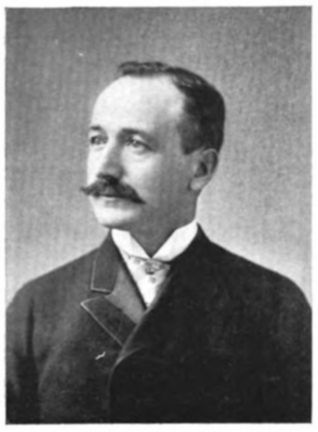
HON. C. T. DRISCOLL, Mayor of New Haven, Conn.
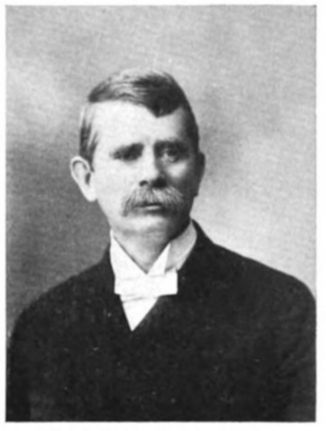
HON. JEREMIAH CROWLEY, Mayor of Lowell, Mass.
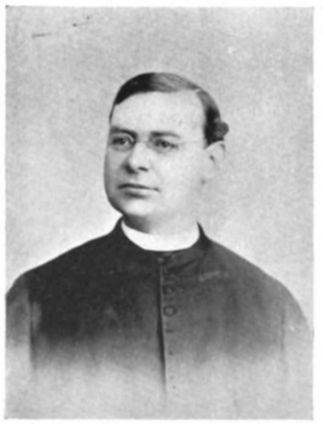
REV. JAMES H. O’DONNELL, Watertown, Conn.
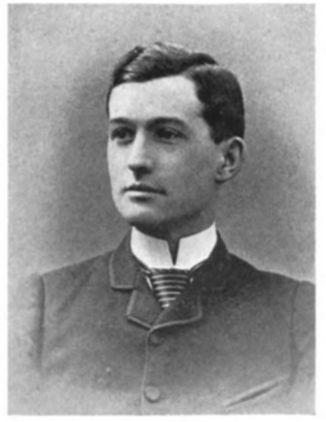
MR. CORNELIUS HORIGAN, Biddeford, Me.
FOUR MEMBERS OF THE SOCIETY.
193
BRIGADIER-GENERAL THOMAS W. SWEENY, U. S. A.—A BIOGRAPHICAL SKETCH—1820–1892.
BY WILLIAM MONTGOMERY SWEENY, ASTORIA, L. I., N. Y.
Thomas William Sweeny, popularly known as “Fighting Tom” Sweeny, was born in Cork, Ireland, Dec. 25, 1820. He immigrated to the United States in 1832, and died at Astoria, L. I., N. Y., April 10, 1892.
He was the youngest son of William Sweeny of Dunmanway, in the county of Cork, of whom it is said that he “was a true Celt, gifted with uncommon force of character, and not less remarkable for his courage, daring, and manly spirit than for that nice sense of honor that ever distinguishes ‘the noblest work of God, an honest man.’” He died in 1827 and was buried at Macroom, Cork, where numerous generations of the family are interred.
The branch of the family from which Gen. Thomas William Sweeny, the subject of this sketch, was descended, has been located in the county of Cork since the thirteenth century, having migrated thither from Donegal, in the north of Ireland. Of the parent stock, Dr. McDermott states that “it was itself a branch of the O’Neills which settled in Donegal and founded three great families, namely: MacSweeny of Fanad, who had extensive territories west of Lough Swilly, and whose castle was at Rathmullen; MacSweeny of Banagh, who had a castle at Rathain, and MacSweeny na D’Tuatha, signifying MacSweeny of the Territories.” According to O’Brien and other authorities he was called MacSweeny na D’Tuagh, signifying MacSweeny of the Battle Axes, a title said to have been derived from their having been standard bearers and chiefs of gallowglasses to the O’Donnells. It is from the latter MacSweeny that the subject of our sketch was descended.
Dr. Smith, in his History of the County of Cork, states that “the MacSweenys had the parish of Kilmurry, in the territory of Muskery, county of Cork, and their chief castle at Cloghda, near Macroom, and had also Castlemore, in the parish of Moviddy.” He 194likewise mentions that “they were anciently famous for Irish hospitality,” and relates “that one of the family erected a large stone near the castle of Cloghda, inviting all passengers to repair to the house of Edmund MacSweeny for entertainment.” John O’Mahony, the distinguished Irish scholar, author of the standard translation of Keating’s History of Ireland, says: “The MacSweenys were standard bearers and marshals of the O’Donnells. They were famous throughout Ireland as leaders of those heavy-armed soldiers called gallowglasses. A branch of the family settled in the county of Cork in the thirteenth century, as commanders of those soldiers under the McCarthys of Desmond.”
On the passage to the United States, with his mother and brother William, in 1832, Thomas W. Sweeny, the subject of this sketch, was swept overboard from the ship Augusta, by a huge wave, and narrowly escaped drowning, being rescued by three members of the crew who put off in a boat. He had been in the water thirty-five minutes.
After finishing his education in the schools of New York city, young Sweeny was apprenticed to the printing business in the well known firm of Gould, Banks & Company (now, 1899, Banks & Brother), at that time the leading law book publishers of the United States, “where his many good qualities made him a general favorite.”
He early evinced a taste for military training, and in 1837, while a mere youth, attached himself to a military and literary association of young men known as the “Paul Jones Parading Club,” commanded by Capt. Joseph Hinken. Afterwards they placed themselves under the command of Capt. W. W. Tompkins, and adopted the name of “Tompkins’ Cadets.” They then consolidated with the “Scott Cadets,” commanded by Capt. Charles Baxter, and in 1842 or 1843, they were again strengthened by a portion of the seceders from the “Tompkins’ Blues,” whereupon, for the purpose of identification, they adopted the name “Independent Tompkins’ Blues.”
At the breaking out of the Mexican War, in 1846, Sweeny was one of the first to volunteer, and he was elected second lieutenant in Company A of the First New York Volunteers, commanded by Col. Ward B. Burnett. On Christmas day, 1846, Messrs. Gould, Banks & Company, uniting with a large number of individuals in their employ, took the occasion—which was also his birthday—to present Lieutenant Sweeny “a handsome pair of revolving pistols as a token of esteem and regard.”
195On Jan. 8, 1847, Sweeny’s regiment, to the number of about 800 men, sailed from New York for the seat of war. At Lobos Island, near Vera Cruz, where the troops landed, Lieutenant Sweeny was placed in command of a detachment to prepare the ground for encampment. This was his first command, and was “executed with dispatch and to the full satisfaction of his superior officer.” Speaking of his subsequent movements an eye witness says: “After the bombardment of Vera Cruz, his regiment with the others, was marched into the interior. It was at Cerro Gordo, April 18, 1847, that Lieutenant Sweeny first practically smelt powder. Company A and one other were detached to support Capt. Francis Taylor’s battery in taking the first height. They cut a road through the chaparral for the artillery, to the left of the enemy’s position, in order to turn it. After reaching the base of the hill, and winding around it, they halted for orders. They were here exposed to a raking fire of grape and canister from the Mexican batteries.”
At Contreras, Aug. 19, 1847, where the New York regiment stood the whole night in a gully up to their knees in mud, the men were greatly encouraged by the bearing of Lieutenant Sweeny.
At Churubusco, Aug. 20, 1847, while leading his men into action, Sweeny was struck in the groin by a spent ball. It passed through three pieces of clothing and produced a painful, though not dangerous, wound. Although advised to retire, he refused so long as he was able to stand. In a few minutes he was again wounded, receiving a musket ball in the right arm, but nevertheless he continued to lead and animate his men until he sank from exhaustion and loss of blood and had to be carried to the rear.
The wound in his arm proved to be so serious that amputation was found to be necessary in order to save his life. General Shields, who was present at the operation, was affected even to tears at the fortitude displayed by Sweeny, who, notwithstanding the fact that no anæsthetics were used, showed not the slightest signs of flinching under the terrible ordeal.
On his return to New York city, in 1848, Lieutenant Sweeny was received with much honor; he was brevetted captain by the governor of the state, and was presented a silver medal by the city government. He was also given a “grand reception ball” at Castle Garden, which was described as the “largest and most brilliant ball of the season.” Among the invited guests were ex-President Martin Van Buren, Major-Gen. John A. Quitman, U. S. A., Hon. Simon 196Cameron of Pennsylvania, Hon. William B. Maclay, M. C., representatives of the city and state governments and other people of note.
On recommendation of General Scott, Sweeny was appointed by the president a second lieutenant in the Second United States Infantry, March 3, 1848, and from March to July, 1848, he was stationed at Fort Columbus, Governor’s Island, New York harbor. During August and September, 1848, Lieutenant Sweeny was at Jefferson Barracks, Missouri, and in October, 1848, he was stationed at Fort Hamilton, New York harbor, on recruiting service.
Nov. 8, 1848, his regiment, under command of Brevet Maj.-Gen. Bennett Riley, who had been appointed military governor of California, sailed from New York for California via Cape Horn. At Rio Janerio, where they stopped several days, they were entertained at a ball aboard the United States steamship Brandywine. They reached Monterey, Cal., April 6, 1849, and soon established regimental headquarters at San Diego.
On June 11, 1851, Sweeny was promoted to be first lieutenant in the Second Infantry. In 1852 he engaged in the Yuma Indian War, and commanded an expedition of twenty-seven men, who penetrated into the Cocopa country in May, and after a sharp engagement, captured one hundred and twenty-five armed warriors and marched them into Camp Yuma, where a treaty was entered into which broke up the confederation of the River tribes. While engaged on this duty, Sweeny received a severe arrow wound in the neck.
In 1854 he was ordered to Fort Pierre, in what was then northern Nebraska, where he served as aid to Gen. William S. Harney, participating in the campaign against the Sioux in 1855–’56, and was present at the “Great Treaty” made with the Sioux nation at Fort Pierre, at which many famous chiefs were present. In 1858 Sweeny was ordered to New York city on recruiting service, and was stationed there when the Rebellion broke out.
Jan. 19, 1861, he was promoted to captain, and soon after was ordered by General Scott to proceed to St. Louis, Mo., and assume command of the United States arsenal there. It contained at this time sixty thousand stand of arms, several field batteries, a number of heavy guns, a million and a half of ball cartridges, over forty tons of powder and a large quantity of other munitions of war. Captain Sweeny had only forty unassigned recruits under him to 197defend this vast property, while in the city were over three thousand Confederate minute-men, armed and drilled, to be ready at a moment’s notice. Learning of a threatened attack, Sweeny let it be known that he would blow up the arsenal sooner than allow it to be captured, and he meant what he said. So they did not make the attempt.
Sweeny was brigadier-general of Missouri Infantry, May 20 to Aug. 14, 1861; made colonel of Fifty-second Illinois Infantry, Jan. 21, 1862; was brigadier-general of volunteers, Nov. 29, 1862, to Aug. 24, 1865; commissioned major in the Sixteenth United States Infantry, Oct. 20, 1863, and was retired with the full rank of brigadier-general, United States army, May 11, 1870.
In June, 1861, General Sweeny took command of the Southwest expedition, and proceeded to Springfield, Mo., where he assumed command of all the United States forces in that part of the state, including Siegel’s and Saloman’s regiments, which had left St. Louis with two 4–gun batteries. July 20, General Sweeny took command of a flying column of twelve hundred men, moved on a depot of Confederate supplies at Forsyth, Mo., and captured the same. He led the Second Kansas regiment at the battle of Wilson’s Creek, Aug. 10, 1861, General Lyon leading the First Iowa. Sweeny was severely wounded, but after the death of Lyon favored following up the enemy. Sturgis, who succeeded Lyon in command, however, decided otherwise.
As colonel of the Fifty-second Illinois, Sweeny was attached to General Grant’s army, and after the capture of Fort Donelson took charge of six thousand prisoners of war en route to Alton, Ill. At the battle of Shiloh (Pittsburg Landing), April 6 and 7, 1862, Sweeny commanded the Third Brigade of the Second Division, Army of the Tennessee, the brigade comprising about five thousand, five hundred men. Towards the close of the first day’s battle, his command occupied a ravine near Gen. W. T. Sherman’s left, known as the “Hornet’s Nest.”
Speaking of this battle General Sherman has said: “I remember well that Col. Thomas W. Sweeny, a one-armed officer who had lost an arm in the Mexican war and did not belong to my command, stood near by and quickly spoke up: ‘I understand perfectly what you want; let me do it.’ ‘Certainly,’ said I; ‘Sweeny, go at once and occupy that ravine, converting it into a regular bastion.’ He did it, and I attach more importance to that event than to any of 198the hundred achievements which I have since heard ‘saved the day,’ for we held that line and ravine all night, and the next morning advanced from there to certain victory.”
In this battle Sweeny was again wounded, “receiving a minié ball in his remaining arm and another shot in his foot, while his horse fell riddled with seven balls. Almost fainting from loss of blood, he was lifted upon another horse and remained on the field through the entire day. His coolness and his marvelous escapes were talked of before many campfires throughout the army.”
Capt. C. H. Fish, Fifty-second Illinois, speaking of the first day’s battle at Shiloh, wrote of Sweeny: “Colonel Sweeny came riding up the line and reached our regiment, but not recognizing it, asked: ‘What regiment is this?’ On my telling him it was the Fifty-second Illinois, he said: ‘Well, I am at home once more. I guess I will stay here.’ Our colonel had only one arm—the left one; the other he lost in Mexico. When on drill or review he held the reins in his teeth and sword in left hand. The balls seemed to fill the air at this moment, the firing was so terrific, but our colonel [Sweeny] coolly sat on his horse, quietly smoking a cigar, ever and anon removing it and puffing forth vast quantities of smoke. Presently a minié ball came cutting through the air, struck his cigar, and cut it off at his teeth, doing some slight injury to his moustache. Yet not a muscle moved. He quietly replaced the cigar with a fresh one and smoked away.”
After the battle of Shiloh, Sweeny was granted a leave of absence owing to disability resulting from wounds received. During this period he was presented an elegant sword by the city of Brooklyn, N. Y. At the expiration of his leave, he again took the field, returning in time to participate in the battle of Iuka and the siege of Corinth—Oct. 3 and 4, 1862,—where he was again wounded, and had a horse shot under him. Gen. Thomas A. Davies, commanding the Second Division, in his report of the battle of Corinth, states that “Colonel Sweeny, commanding First Brigade, behaved in the most gallant manner throughout, and should be immediately promoted.”
Sweeny was commissioned brigadier-general of volunteers, Nov. 29, 1862. In the Atlanta campaign, he commanded the Second Division of the Sixteenth Corps, Army of the Tennessee. At Snake Creek Gap he took possession of the “Gap” with his division twenty-four hours before the arrival of supporting cavalry, and held 199it in spite of the desperate efforts of the enemy to dislodge him. Subsequently he took part in the battle of Resaca, and forced a passage across the Oostenaula river, at Lay’s Ferry, where he fought a successful battle which resulted in Gen. “Joe” Johnston’s retreat southward. He also took part in the battles of Dallas and Kennesaw Mountain, the actions at Nickajack Creek, Ruff’s Mills, Rome Cross Roads, Calhoun’s Ferry and other engagements.
At the battle before Atlanta, July 22, 1864, his division drove the enemy back with great slaughter, capturing four battle flags and nine hundred prisoners. This was the day that General McPherson was killed—he had shared Sweeny’s tent the previous night. At the conclusion of the battle Gen. Frank P. Blair, commanding the Seventeenth Army Corps, who had witnessed the repulse by Sweeny’s division, rode down at the head of his staff to where Sweeny stood and grasping him warmly by the hand, said: “Sweeny, I congratulate you. You have saved the army of the Tennessee!”
General Sweeny was one of the Guard of Honor in charge of the remains of President Lincoln when they lay in state in the city hall, New York. On Aug. 24, 1865, Sweeny was mustered out of the volunteer service, and was in command of the post at Nashville, Tenn., to October of that year.
An ardent lover of the land of his birth, General Sweeny longed for the day and the hour when, on the field of battle, he might meet the common foe of his adopted and of his native land. Even while lying disabled by his wounds in Mexico, he had made arrangements to cast himself into the then expected struggle for Irish independence, but the opportunity was not afforded him. In 1856, while he was stationed at Fort Pierre, Nebraska territory, he wrote to his family: “I see they are making another movement for Irish independence. I hope it will amount to something this time. E——, how would you like me to embark in such an undertaking? We might accomplish great things—do deeds that our children could point at on the page of history with pride—perhaps help to pull a sinewy tyrant from his throne, and raise a prostrate people from chains to liberty.”
It was not, however, until after the close of the Civil War that the opportunity arrived. In 1865 the Fenian congress assembled in Philadelphia to decide upon the best means to adopt to obtain the liberation of Ireland. General Sweeny appeared before this 200convention and submitted to it his plan for the invasion of Canada. He also offered his services to aid in carrying out the plan, both plan and services being accepted. He was appointed secretary of war of the Fenian Brotherhood, and commander-in-chief of the Irish forces with the rank of major-general; William R. Roberts, a prominent merchant of New York and afterwards United States minister to Chili, was appointed president.
In 1866, General Sweeny was offered, by the Mexican government, the grade of general of division in the Mexican army, which he declined. He was finally retired from active service May 11, 1870, with the rank of brigadier-general, U. S. A. He was wounded so often in battle that on one occasion, after an engagement, General Grant met him and laughingly said: “How is it, Sweeny, that you have not been hit? There must be some mistake. This fight will hardly count unless you can show another wound!”
In a sketch of General Sweeny published some years ago, Junius Henri Browne, war correspondent of the New York Tribune, says: “Sweeny is, as his name indicates, an Irishman by birth, but an American to the backbone. No soldier was more devoted to the Union cause, or fought more valiantly for the integrity of the republic.”
General Sweeny was twice married. His first wife was Eleanor Swain Clark of Brooklyn, N. Y., daughter of John and Hepsabeth (Paddock) Clark. In both the paternal and maternal line, she was descended from the Coffins, Barnards, Folgers, Husseys, Macys and Swains, who were among the ten purchasers of Nantucket in 1659. She was sixth in descent from John Swain, 2d, son of John Swain, 1st, and Mary (Weir) Swain, the first male white child born on the island (in 1664), and seventh in descent from Benjamin Franklin.
General Sweeny’s second wife—who survives him—was Eugenia Octavia Reagan of Augusta, Ga., daughter of Dr. Francis Washington Reagan and Sarah Cecelia (Refo) Reagan. Her paternal ancestors were among the first settlers of the present states of Virginia, North Carolina, Georgia and Tennessee. Through her paternal great-grandmother, Mary Dandridge of Virginia, Mrs. Sweeny is descended from Dorothea Spotswood Dandridge, the second wife of Patrick Henry, and Martha Dandridge Custis, the wife of George Washington.
After retirement from the army General Sweeny virtually withdrew to private life. The last public act of his “long, varied and 201useful career,” was to use his personal aid and influence to secure a fund for the erection of a home at Austin, Texas, for disabled Confederate veterans.
General Sweeny died at his residence, 126 Franklin street, Astoria, Long Island, April 10, 1892. He was buried in the family plot, Greenwood cemetery, with military honors, six batteries of the First U. S. Artillery furnishing the escort. The following are a few of the many tributes paid the deceased soldier:
Gen. W. T. Sherman: “One of my ‘Old Guard.’”
Gen. J. M. Schofield: “General Sweeny was regarded by all who knew him as an exceedingly brave soldier and an ardent patriot.”
Gen. F. Sigel: “He was an eminent soldier and a patriotic citizen.”
Gen. Robert Nugent: “His gallant and unblemished record in the army is a matter of history.”
Gen. John P. Hawkins: “He was a brave soldier and an honest man.”
Army and Navy Journal: “As gallant, warmhearted and impulsive an officer as ever wore the uniform.”
Archbishop Ryan of Philadelphia: “Many noble qualities distinguished that truly Christian soldier.”
Harper’s Weekly: “A distinguished soldier of three wars, whose conduct at Shiloh won Sherman’s especial praise.”
New York Recorder: “From lieutenant, to brigadier-general, he honored every position held by him during a period of service commencing with the Mexican War.”
Military order of the Loyal Legion, Commandery of the State of New York: “General Sweeny was a man of noble heart and the highest aspirations.”
202
PAPERS READ BEFORE THE SOCIETY, OR CONTRIBUTED FOR PUBLICATION.
Since its organization the Society has been favored with twenty-nine papers and many addresses, on topics within its line of work. Following is the list of papers:
By Thomas Hamilton Murray, Secretary-General of the Society: “The Irish Bacons who settled at Dedham, Mass., in 1640,” one of whose descendants, John Bacon, was killed April 19, 1775, on the fight at West Cambridge (battle of Lexington).
By Hon. John C. Linehan, State Insurance Commissioner, Concord, N. H., a paper on “The Seizure of the Powder at Fort William and Mary,” by Maj. John Sullivan and his associates, some of which powder was later dealt out to the patriots at Bunker Hill.
By Edward J. Brandon, City Clerk, Cambridge, Mass., a paper on the “Battle of Lexington, Concord and Cambridge,” during which he read a list of Irish names borne by Minute-men or militia in the battle of the Nineteenth of April, 1775.
By Joseph Smith, Secretary of the Police Commission, Lowell, Mass., on “The Irishman, Ethnologically Considered.”
By Dennis Harvey Sheahan, Providence, R. I., ex-Clerk of the Rhode Island House of Representatives, “The Need of an Organization such as the A. I. H. S., and its Scope.”
By Thomas Hamilton Murray: “Matthew Watson, an Irish Settler of Barrington, R. I., 1722.”
By Thomas Addis Emmet, M. D., New York city: “Irish Emigration During the Seventeenth and Eighteenth Centuries.”
By Hon. John C. Linehan, Concord, N. H.: “Some Pre-Revolutionary Irishmen.”
By Rev. John J. McCoy, P. R., Chicopee, Mass.: “The Irish Element in the Second Massachusetts Volunteers in the Recent War” (with Spain).
By Bernard Corr, Boston, Mass.: “The Ancestors of Gen. John Sullivan.”
203By Hon. Joseph T. Lawless, Secretary of State, Virginia: “Some Irish Settlers in Virginia.”
By James F. Brennan, Peterborough, N. H.: “The Irish Pioneers and Founders of Peterborough.”
By Joseph Smith, Lowell, Mass.: “Some Ways in which American History is Falsified.”
By James Jeffrey Roche, Boston, Mass.: “The ‘Scotch Irish’ and ‘Anglo-Saxon’ Fallacies.”
By Thomas Hamilton Murray: “Sketch of an Early Irish Settlement in Rhode Island.”
By Edward Fitzpatrick, Louisville, Ky.: “Early Irish Settlers in Kentucky.”
By Thomas Hamilton Murray: “Gen. John Sullivan and the Battle of Rhode Island, 1778.”
By Martin Scully, Waterbury, Conn.: “An Early Irishman of Waterbury.”
By Daniel M. O’Driscoll, Charleston, S. C.: “David Hamilton, a Soldier of the American Revolution.”
By Hon. John C. Linehan, Concord, N. H.: “Irish Pioneers of Texas.”
By Hon. Thomas J. Gargan, Boston, Mass.: Four papers outlining the field of the Society’s work.
By Thomas Hamilton Murray: “The Irish Chapter in the History of Brown University.”
By Joseph Smith, Lowell, Mass.: “The Whistlers—A Family Illustrious in War and Peace.”
By Hon. John C. Linehan, Concord, N. H.: “Irish Pioneers and Builders of Kentucky.”
By Michael E. Hennessy, of the Daily Globe staff, Boston, Mass.: “Men of Irish Blood who Have Attained Eminence in American Journalism.”
By William Montgomery Sweeny, Astoria, L. I., N. Y.: “Brigadier-General Thomas W. Sweeny, U. S. A., A Biographical Sketch.”
ADDRESSES DELIVERED.
Addresses have been delivered before the Society, or at events held under its auspices, by the following among others:
Hon. Thomas J. Gargan, Boston, Mass.
Hon. Hugh J. Carroll, Pawtucket, R. I.
204Hon. John C. Linehan, Concord, N. H.
Charles A. DeCourcy, Lawrence, Mass.
Paul B. Du Chaillu, the traveler and author.
Osborne Howes, Boston, Mass.
James Cunningham, Portland, Me.
Robert A. Woods, Boston, Mass.
Gen. James R. O’Beirne, New York City.
John Mackinnon Robertson, London, England.
P. J. Flatley, Boston, Mass.
Rev. John J. McCoy, Chicopee, Mass.
Rev. Edward McSweeny, Bangor, Me.
Rev. P. Farrelly, Central Falls, R. I.
James Jeffrey Roche, Boston, Mass.
Edward A. Moseley, Washington, D. C.
Thomas B. Lawler, Worcester, Mass.
M. J. Harson, Providence, R. I.
Joseph Smith, Lowell, Mass.
Dennis H. Sheahan, Providence, R. I.
Rear-Admiral Belknap, U. S. N. (retired), Boston, Mass.
J. D. O’Connell, Washington, D. C.
Hon. Patrick A. Collins, ex-U. S. Consul-General to London.
Judge Wauhope Lynn, New York City.
Capt. Edward O’Meagher Condon, Washington, D. C.
Hon. Thomas Dunn English, Newark, N. J.
Dr. Thomas Addis Emmet, New York City.
Very Rev. M. C. O’Brien, V. G., Bangor, Me.
E. Benj. Andrews, President of Brown University.
Prof. Alonzo Williams, Brown University.
Rev. Arthur J. Teeling, Lynn, Mass.
Rev. T. P. Linehan, Biddeford, Me.
Mayor Tilton, Portsmouth, N. H.
Charles H. Clary, Hallowell, Me.
John Griffin, Portsmouth, N. H.
James F. Brennan, Peterborough, N. H.
Cornelius Horigan, Biddeford, Me.
Rev. James A. Flynn, Biddeford, Me.
Rev. John J. McGinnis, Sanford, Me.
Bernard Corr, Boston, Mass.
Dr. W. D. Collins, Haverhill, Mass.
John F. Doyle, New York City.
205W. J. Kelly, Kittery, Me.
Dr. W. H. A. Lyons, Portsmouth, N. H.
James H. McGlinchey, Portland, Me.
Hon. John D. Crimmins, New York City.
Hon. Charles E. Gorman, Providence, R. I.
Hon. William McAdoo, New York City.
Charles McCarthy, Jr., Portland, Me.
Hon. Theodore Roosevelt, Governor of New York.
Hon. Patrick J. Boyle, Mayor of Newport, R. I.
Thomas F. O’Malley, Somerville, Mass.
Stephen J. Richardson, New York City.
Rev. S. Banks Nelson, Woonsocket, R. I.
Rev. Frank L. Phalen, Concord, N. H.
Rev. L. J. Deady, Newport, R. I.
Dennis H. Tierney, Waterbury, Conn.
John Jerome Rooney, New York City.
P. J. McCarthy, Providence, R. I.
206