PAPERS CONTRIBUTED TO THE SOCIETY, During the Year, for Publication.
Reading edition
THE IRISH PIONEERS OF TEXAS.
BY HON. JOHN C. LINEHAN, CONCORD, N. H.
Philip Nolan can well be styled the original “Texan Ranger.” He was one of the first, if not the very first, of the adventurous spirits to explore Texas, and whose daring and persistent bravery finally added the Lone Star state to the American Union. His romantic career and tragic fate, it is said, furnished a name for Edward Everett Hale’s “Man Without a Country.”
He was of direct Irish origin and a citizen of the United States. He left Natchez, Miss., in the summer of 1797, ostensibly to buy horses, but in reality to reconnoitre and survey the country. A second trip was made in 1800. He was accompanied by thirty armed men. The viceroy of Mexico, looking on his movements with suspicion, issued orders to arrest any foreigners who might enter the Spanish province.
He had been informed that a number of them had gone into Texas, and that Philip Nolan was considered the most dangerous among them; that he was authorized by General Wilkinson to reconnoitre the country, and make maps of it, and that it was of the utmost importance that he be captured and disposed of. In accordance with these instructions an expedition was fitted out to secure him.
It was composed of one hundred men, sixty-eight of whom were regulars, well armed, and possessed of one field piece. It started in pursuit on March 4, 1801. Two weeks later they reached the point where he had entrenched himself on the bank of a river. The Spanish commander thereupon sent a messenger, “Mr. William Barr, an Irishman,” who had joined his command as interpreter, to summon Nolan to surrender. Nolan and his men determined to fight, and at daybreak next morning, began the engagement by firing on the Spaniards. The contest lasted until nine o’clock a. m., when Nolan was struck and killed by a cannon ball. His party then surrendered.
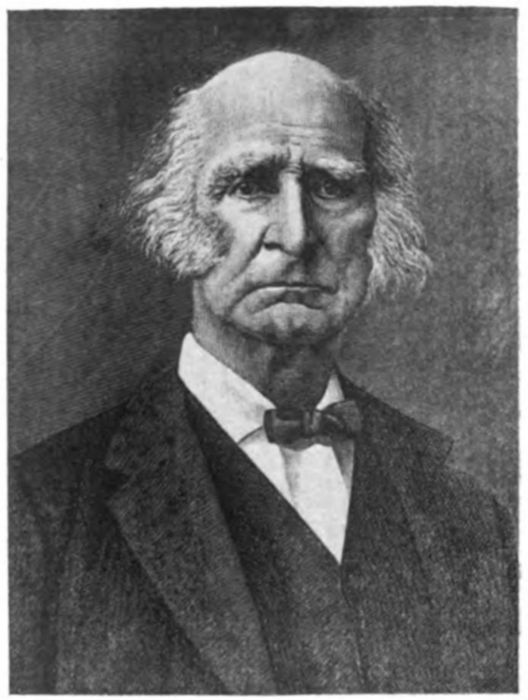
HON. JOHN J. LINN, Born in County Antrim, Ireland, 1798; a pioneer settler of Texas; was a member of the Texan Congress; author of “Reminiscences of Fifty Years in Texas.”
121The stream on whose bank he was killed is known as Nolan’s Creek, and Nolan county, Texas, was named in his memory. Three of his associates, judging from their names, were of his blood, namely, Michael Moore, William Dandlin and Simon McCoy. John Henry Brown, author of the History of Texas, quotes the following from a Mr. Quintero: “The diary kept by Nolan, and many of his letters which are in my possession, show conclusively that he was not only a gallant and intelligent gentleman, but an accomplished scholar. He was thoroughly acquainted with astronomy and geography. He made the first map of Texas, which he presented to the Baron Carondelet, on returning from his first trip in 1797.”
He was followed four years later by Capt. Zebulon Pike. A third invasion was that of the party led by A. W. Magee, a native of Massachusetts, a graduate of West Point, and an ex-officer of the United States Army. This expedition like that of Nolan’s ended badly for those engaged. Seventy or eighty of them who were captured by the Spaniards were shot and buried in one grave. They had rendered material aid, however, to the Mexican patriots in their struggle for independence.
In 1822, thirteen years after their death, the governor of Texas, under the new republic of Mexico, collected their bleached bones, and had them interred with military honors. A tablet on an oak tree, near the place of sepulchre, bore the inscription: “Here lie the braves who, imitating the immortal example of Leonidas, sacrificed their fortunes and their lives contending against tyrants.” It is not possible to make an estimate of the number in this expedition who were, like Nolan and Magee, of Irish origin, as their names are not given, but that there were many, the record of those who followed proves. From 1813 to 1819 others followed in the steps of Nolan and Magee.
Among them were the parties led by Perry and Young. The latter had served in the United States Army during the war of 1812. He took an active part in the Mexican war of Independence, and lived to see them throw off the Spanish yoke. Perry was not so fortunate. In his last fight with the enemy every man in his command 122was killed, and preferring death to capture, he took his own life, blowing out his brains. Another expedition left Natchez, the headquarters of the ill-fated Nolan, on the 17th of June, 1819. It numbered three hundred men. and was under the command of Dr. James Long, a native of Tennessee, and surgeon in Carroll’s brigade in the war of 1812 and 1815.
After suffering untold hardships, this, like the others preceding it, failed to accomplish its purpose, and the survivors, not prisoners, returned to the state. Later, Long made a second attempt. His party consisted of fifty-two men; the names of thirty-two are known, among them Lieutenant Eagan from New York, “Dr. Allen, an Irish surgeon, and Capt. John McHenry, an Irishman.” Of the latter the historian quoted says:
“It was my fortune in early life to be a neighbor and enjoy the sincere friendship of that true-hearted son of Ireland, Capt. John McHenry.... He was a man utterly incapable of falsehood or deception, a true patriot, and a friend to public and private virtue.... He was born in Ireland in 1798, and arrived at New Orleans in 1812. He took part in Long’s expedition, and, returning in 1822 with one hundred and fifty others in the sloop-of-war Eureka, he participated in an expedition organized in aid of the Revolutionists in South America. A year or so later he entered the trade between New Orleans and the Texas coast, as owner and commander of a schooner. In 1826 he settled permanently on the Lavaca river, where he reared a family and lived until his death, passing through the Revolutionary and Indian wars as a brave man and an honorable citizen. He died honored by those who had known him for half a century.”
Long’s expedition met the same fate as those preceding it. He and his men were captured. Eagan died in prison, and Long, who was taken to the City of Mexico, was shot dead by a soldier, said to be an assassin hired for the purpose. The time had, however, arrived when largely to the enterprise, tact and bravery of the descendants of the men who had established the United States government, Texas was thrown open to all who desired to create new homes on its broad expanse. The leader in this new and successful colonization enterprise came from far-off New England.
His name, now a household word in Texas, was Moses Austin. He was born in Connecticut. Early in life he went to Philadelphia, later to Virginia, and still later to Missouri, or what is now known 123as Missouri. While here his adventurous nature was attracted toward Texas by the reports of Nolan, Magee and their successors. His ventures heretofore had been failures, and he became interested in the founding of a colony in the territory coveted by all who had seen or heard of it. With this object in view, and desirous of securing permission from the proper authorities, he made a journey to San Antonio de Bexar in December, 1820.
His residence in Missouri, then under the dominion of Spain, familiarized him with the language and customs of its people. His mission was successful. He returned to his home, but like Moses, he was not destined to see the promised land, for he died shortly afterwards, transmitting to his son, Stephen F. Austin, the duty of executing his plans.
His application for his grant of land for a colony had been approved by the Spanish power, about eight months before its fall, and the fact that this concession had been made, while the memories of the invasions of Nolan, Magee and Long were still fresh, proves that Austin was a man of tact and resources. His daughter had married James Bryan, so that here in the beginning, the Saxon and the Gael intermixed. Three sons, the product of this union, William J., Moses A., and Hon. Guy M. Bryan, have been among its most honored citizens.
Not only was Austin’s application for land for a colony granted, but a special commissioner was sent to the United States with instructions to conduct the first band of immigrants into the country. Stephen F. Austin returned with the commissioner to secure a transfer of the grant made to his father, and was accompanied by fourteen persons, all of whom became settlers. Of these were Erwin, Barre, Beard, Belew and Dr. James Hewitson. The latter was born in Ireland, the others bear Irish names.
The overthrow of the Spanish power and the establishment of the Mexican government, a year later, did not affect the concessions made to Austin. They were confirmed by the new government, and the grantee’s powers to colonize were increased. Others, as well as he, were granted similar privileges. Each head of a family was to receive four thousand four hundred and twenty-eight acres of land, and one thousand seventy-six acres were assigned to each single man.
It will not be amiss to write that during the period mentioned, namely, the struggle for Mexican independence, General Count 124O’Donoju was in command of the Royal forces, and that his failure to bring about a reconciliation between the Revolutionists and his government occasioned his death, which occurred in the city of Mexico, July 5, 1821. Among the original three hundred colonists led by Austin into Texas were the following: Martin Allen, John and Edward R. Bradley, James Beard, Charles Breen, William Barrett, James Cummins, John Cummins, William Cummins, Morris Callahan, David Fitzgerald, Isaiah Flanagan, David Fenton, Charles Garrett, C. S. Corbett, Daniel Gilliland, John W. Moore, Michael Goulderich, William Holland, Francis Holland, Samuel Kennedy, John Kelly, Alfred Cannon, James Kerr, James Lynch, Nathaniel Lynch, Robert James, William Millican, William McWilliams, David McCormick, James McCoy, James McNair, John McNeil, Luke Moore, Daniel, John G. and Geo. W. McNiel, Arthur McCormick, John McFarland, John McClosky, Thomas McKenny, Stirling and Pleasant D. McNeil, Frederick Rankin, Elijah Rourk, Patrick Reels and John McCormick.
Among others to whom grants of land were made were “James Power and James Hewitson, ‘Irishmen,’ for two hundred families on Arransas Bay.” This colony was known as “Refugio,” and the grant was made on June 11, 1828. Another was to “John McMullen, and Patrick McGloin, ‘Irishmen,’ dated August 17, 1828, for two hundred families on the Nieces river.” This colony was known as “San Patricio.”
Both were composed mainly of natives of Ireland, with a sprinkling of Americans of their own blood and of mixed origin. The members of these two colonies took an active part in the movements which ended in the establishment of the Texan republic, and the ultimate annexation of Texas to the American Union. This tribute is paid them by John Henry Brown in his history of Texas, in connection with what he has written of the other colonies:
“The colony of DeLeon had increased considerably by the incoming of a good class of Mexicans, and quite a number of Americans, including several Irishmen and their families from the United States, the younger members being natives of that country, and among whom were the veteran John McHenry, a settler since 1826; John Linn with his sons, John J., Charles, Henry and Edward Linn, and two daughters. Subsequently, the wives of Major Kerr and John A. Moody, Mrs. Margaret Wright, Joseph Wright and others.
125“From 1829 to 1834 the colonies of Power and Hewitson, with headquarters at the Mission of Refugio, and McMullen and McGloin, of which San Patricio was the capital, received valuable additions in a worthy, sober, industrial class of people, chiefly from Ireland, a few of Irish extraction born in the United States, and others who were Americans.
“They were more exposed to Mexican oppression than the colonists further East, and equally so to hostile Indians. Twenty-six of these colonists signed the Goliad Declaration of Independence, Dec. 20, 1835. Four of them signed the regular declaration of Texan independence, March 2, 1836, and fourteen of them fell in the slaughter of Fannin’s men, March 27, 1836. In the footnote below is given a partial list of these bold and open-hearted pioneers in reclaiming the southwestern portion of our territory.”
Those mentioned in the footnote are as follows: Signers of the Goliad Declaration of Independence—Morgan Bryan, John Dunn, Spirce Dooley, James Elder, E. B. W. Fitzgerald, Peter Hynes, Timothy Hart, Thomas Hansom, J. B. Kirkpatrick, Michael Kelly, Walter Lambert, Charles Malone, Edward McDonald, Hugh McMinn, Thomas O’Connor, C. J. O’Conner, Patrick O’Leary, Michael O’Donnell, James O’Connor, John Pollan, William Quinn, Dr. Alexander Lynch, Edward Quirk, John Shelly, Edward and James St. John and John W. Welsh.
Those butchered with Fannin’s men were—Matthew Byrne, Daniel Buckley, Matthew Eddy, John Fagan, John Gleason, John James, John Kelly, John McGloin, Dennis McGowen, Dennis Mahoney, Patrick Nevin, Thomas Quirk, Edward Ryan and Capt. Ira Westover.
Signers of the regular Declaration of Independence—Edward Conrad, James Power, David Thomas and John Turner.
Others of the Irish colonies of Refugio and San Patricio who had distinguished themselves otherwise in the cause of Texan independence were—Lewis Ayers, Elkanah Brush, John Bowan, Michael Cahill, John Coughlan, Robert Lawrence, John Carlisle, Festus Doyle, William Donahue, Benjamin Dale, Patrick Downey and his sons Francis, Thomas, Patrick, Jr., John and James Downey; Patrick Fitzsimmons, Nicholas Fagan, William Gamble, John Hefferman, Robert Hern, William Hewes, Dr. James Hewitson, James Hewitson, Jr., John Hynes, John Hart and his sons Patrick, John and Luke Hart; Thomas Hennessy, Timothy Hoyt, Charles Kelly, John Keating, John 126Malone, Thomas Mullen, Patrick, Edward and James McGloin, Malcolm McAuley, John McMullen, Martin O’Toole, Daniel Driscoll, James O’Connor, Daniel and John O’Doyle, Edward Parry, James and Martin Power, Patrick and John Quinn, Michael Kelly, William Redmond, William St. John, Peter, John and Thomas Scott and John Toole. The entire number of names given is one hundred and two.
The historian adds: “Yet in a time of political frenzy in 1855, it was charged that these colonists were not true to Texas in the Revolution of 1835–’36. It was the privilege of the author of this work to crush the infamous slander by presenting the preceding facts, and many others attesting their fidelity in suffering, heroism, and in death, till the republic became the state of Texas in 1846.” The malignant slanders were repeated a few years ago when the patriotism and loyalty of the Irish in the Union army were assailed by the legitimate successors of the Know Nothings of 1855—the A. P. A.’s of 1895.
The entire number of signers of the Goliad Declaration of Independence, which was adopted more than two months before the signing of the general Declaration of Independence, was ninety-one. Of this number, twenty-seven, whose names have been given, were of the Irish colonies of Refugio and San Patricio. In addition to these, the following names, Irish in appearance, from the other colonies, were also appended to the Declaration: George W. Welsh, John Shelly, Robert McClure, Andrew Devereau, George W. Cash,—making thirty-two in all, or over a fraction of one third of the whole number of signers.
Among those who went into Texas with DeWitt’s colony in 1828 were Maj. James Kerr, Arthur and Squire Burns, George Blair, Matthew Caldwell, John Daly, John Duncan, John Fennell, Michael Gillan, Daniel, John, Joseph, Jesse, John, Jr. and Samuel McBay, Stephen Morrison, George Monoghan, B. D. McClure, John A. Neill and James B. Patrick.
“Among the early most worthy settlers at the extreme northwestern corner of Texas, on the Red river, was Collin McKinney.” He was the oldest man who signed the Texan Declaration of Independence, being seventy when he affixed his name to it. Capt. Thomas William Ward went to Texas, in 1835. He was a native of Ireland and at the outbreak of hostilities in Texas was a member of the “New Orleans Grays.” He commanded an artillery company at the capture of San Antonio, where he lost a leg.
127He lived in Texas until his death in 1872, honored and respected by his fellow-citizens. He had held honorable positions in the gift of both state and nation. Elijah Rourk went from North Carolina to Texas in 1821. He was one of the pioneers of the state. While in company with David McCormick and two others, on his way to San Antonio to market a drove of hogs, he was killed by Indians, Dec. 25, 1829. Rourk’s son, who was with him, and McCormick made their escape. The former died as late as 1892. He had served in the War for Independence, and in himself was a living reminder of the sufferings of the early colonists of Texas.
William M. Logan went to Texas in 1826, one of a family which has given eminent men to the nation for over a century. With him were several of the Moore family. In an Indian fight reported by the celebrated James Bowie, Dec. 10, 1831, he mentions for bravery the names of ten persons; three of them were Matthew Doyle, Daniel Buchanan, wounded, and Thomas McCaslin, who was killed.
In an encounter with the enemy at Anahuac in 1832, the following were mentioned: Thomas H. Brennan, James S. McGahey and Edward Miles.
“The good Father Muldoon” has mention in an account of the battle of Velasco, June 26, 1832. He “was an Irish priest, resident of Mexico, and held in high esteem by the colonists.” He is also spoken of in the prison journal of Stephen Austin. Santa Anna gave him permission to visit Austin while the latter was in prison. He is also mentioned in the Quarterly of the Texas Historical Society of January, 1899, and a toast given by him at a banquet held in Anahuac is printed therein. It showed his sympathies for the colonies, although not one of the colonists, and was as follows:
“May plow and harrow, spade and tack,
Remain the arms of Anahuac,
So that her rich and boundless plains
May yearly yield all sorts of grains.
May all religious discords fall
And friendship be the creed of all.
With tolerance your pastor views
All sects of Christians, Turks, and Jews.
I now demand three rousing cheers,
Great Austin’s health, and pioneers.”
Previous to the battle of Velasco, Father Muldoon was allowed to visit the Mexican commander, and authorized to adjust the affairs 128in conflict. His mission was a failure, the enemy deeming itself strong enough to secure its end, a mistaken idea; after a contest in which two thirds of the Mexicans were killed or wounded, the survivors surrendered to the Americans.
Among those who are named as participating in the engagement were John G. Stirling, Pinkney McNeal, George B. McKinistry and Andrew Scott. Among the delegates to the first convention held in Texas, in October, 1832, were William D. Lacy, George W. McKinistry, James Kerr, Hugh McGuffin, Joseph, Samuel and James Looney, John Connell, Jacob Garrett, George Butler, John M. Bradley and James Morgan.
A second convention, held on April 1, 1833, had among its members George Butler, John M. Bradley, Jesse Grimes, Jacob Garrett, Sam Houston, James Kerr, John H. Moore, James Morgan, William McFarland and B. D. McClure.
Mention is made of William Donoho in connection with the massacre of the survivors of the Grant colony by the Indians. He was a merchant in Santa Fé.—“One of those great hearted, sympathetic men who honor humanity.” His children are credited with being “the first American natives of the ancient town of Santa Fé.” He was from Missouri. He is credited with being the medium through whom three English ladies were released after being captured by the Indians, survivors of an English colony in Texas, and whose sufferings while in possession of the Indians were terrible. He was born in Kentucky. He died in Clarksville, Texas, in 1845, “lamented as a true son of Kentucky.” He is spoken of in the highest terms in Brown’s History of Texas and the Texas Scrap Book.
Daniel McCoy has mention in an account of a fight with the Indians at San Marcos in the spring of 1835, and with him were Matthew Caldwell and B. D. McClure. In another fight with the Indians near the Brazos, at Washington, in July, 1835, a detachment of three companies was commanded by Col. John H. Moore. The adjutant was Joseph C. Neill, and others in command were Capt. Robert M. Coleman and Capt. Coheen.
Among those in attendance at the “Navidad and Lavaca meeting on July 17, 1835,” were William Millican and Major James Kerr, “the veteran John McHenry who had fought for liberty in South America,” and was with Long and suffered imprisonment with Millan and Austin; Patrick Usher, Coleman, Loony, McNutt, and Scott. Among those who made a reputation in Texas in those early days 129were three brothers, Patrick C., William H. and Spencer H. Jack. They were the sons of Capt. Patrick Jack of North Carolina.
Captain Jack was the messenger selected by the Mecklenburg Convention, held in May, 1775, to convey the Declaration of Independence adopted by it to the Continental Congress in session at Philadelphia.
In a movement to prevent the taking away by the Mexicans of a four-pounder left with the people of Gonzales for protection against the Indians, the following participated: John H. Moore, Matthew Caldwell, James Kerr, John J. Linn, and representatives of the McClure and McCoy families. Mrs. Margaret Linn took an important part in the affair, and this tribute is paid her by the writer quoted: “Pause a moment, reader, to reflect that this note was written to a young bride, not yet a mother, educated, refined and accomplished, as many were whose graces gave tone to society in that period of danger and excitement.”
Mrs. Linn’s duty was to forward an important despatch to a point where aid could be procured. These were exciting times in Texas. The storm which was to end at San Jacinto was brewing, and the settlers were constantly on the alert, in order to be prepared for it. A party of forty men captured the Mexican fort, Lipantitlan, twelve miles from San Patricio. Major James Kerr, John J. Linn and James Power distinguished themselves in this affair. No doubt there were many of their kindred with them whose names were not given. It was a gallant and daring enterprise, and occurred on the 5th of November, 1835.
It prevented the three men named from attending the consultation which took place at San Felipe on the third of the same month, but “it caused the release of several Irish prisoners held by the Mexicans.”
Some time after this event, for reasons which he deemed sufficient, Stephen F. Austin removed the commander of a company, many of which had aided in the capture of this fort. The company adopted a resolution against a change, every man but the captain, Dimmitt, signing it, sixty-seven in all. Among them were: James O’Connor, George McKnight, James Duncan, Edward Quirk, Spirse Dooly, Robert McClure, Thomas O’Connor, Thomas Brien, Michael Riley, Andrew Devereau, J. B. Dale, Michael O’Donnell, Chas. Malone, Thomas M. Blake, J. L. McKenzie, Morgan Brien, Martin Lawlor, William Cumming, Patrick O’Beary, William Quinn, 130John Bowan, Jeremiah Day, Patrick Quinn, John Dunn, Thomas Todd and James Fagan.
A company, known as the New Orleans Grays, arrived at Brazoria to aid the Texan cause. They numbered sixty-two. Among the members were Chas. W. Connor, John Connell, Michael Cronican, Geo. H. Gill, William Harper, “of Ireland;” Nicholas Herron, Francis Leonard, Dennis Mahoney, M. B. McIver, John D. McLeod, John D. McNeill, James Nowland, Christopher O’Brien, Richard Ross, Thomas William Ward, Allen O’Kenney,—sixteen in all. Of these, Gill, Harper, Kenney and Mahoney were butchered with Fannin.
Among the signers of resolutions declaring for independence at Columbia, Dec. 25, 1835, were John Sweeney and P. R. Splane. Among those massacred with Fannin, and not mentioned thus far, were George McKnight, James Fagan, John Donoho, James McDonald, Robert Owens, R. R. Rainey, Lieut. John Grace (brother of subsequent Bishop Grace of Minnesota), James Logan, John O’Moore, John S. Scully, James McCoy, Moses Butler, J. M. Powers, Michael Carroll, Dominick Gallagher, Martin Moran, Patrick Osborne, J. B. Murphy, J. H. Moore, John McGowan, Cornelius Rooney, Edward Fitzsimmons, John O’Donnell, —— Glennan, George W. Coghlan, Lieut. J. B. Manomey, James Kelley, William McMurray, Z. O’Neill, Arthur G. Foley, D. Moore, Alfred Dorsey, J. W. Duncan, John Kelly, W. E. and James Vaughn and William Quinn.
S. Tucker Foley and James Foley, brothers of Frank G. Foley, were killed by the Indians. Among the few who escaped the Fannin butchery were Capt. James H. Callahan, Peter Griffin, J. McSherry, Nicholas Waters, W. Welsh, A. M. Boyle, Capt. Wm. Sherlock, William Brennan, J. H. Neely, N. J. Devenny, Bennett Butler and William Murphy.
During General Houston’s march he encamped at the ranch of a Mrs. McCurley. The historian writes that the condition of affairs just before the battle of Jacinto was such that the hopes and fears of the whole American population west of the Trinity gathered around General Houston.
Many of those who inhabited the western portion were without means of escape. Among the number were many of the Irish families of Refugio and San Patricio, still weeping and wailing for their sons and brothers who had been massacred with Fannin. The wife, sister and first-born child of John J. Linn were of the number.
131The battle of San Jacinto occurred on April 21, 1836. Among those who participated of known Irish origin, or bearing Irish names, were the following,—Gen. Sam Houston, Col. Robert M. Coleman, Surgeon J. P. T. Fitzhugh, Lieut.-Col. J. C. Neill, John M. Wade, Willis Collins, J. Neil, E. Nixon, Jacob Duncan, W. B. Sweeney, Lieut. Robert McClusky, Daniel O’Driscoll, and Cassidy, Flynn, Farley, Montgomery, O’Niel, Sullivan, Moore, Hogan, Callahan, Capt. Richard Roman, McStea, McAllister, Morgan, McNeill, Donan, Gill, Adjutant Nicholas Lynch, Griffin, Hayes, Welsh, Magill, Cunningham, Herron, Conley, Dempsey, Blahey, Connell, McClelland, Bryan, Duncan, Maher, O’Conner, Connor, McNeill, Malone, McLaughlin, Hagan, McCrabb, Sennatt, O’Connor, Ryan, John, Lewis and Stephen T. Foley; Waters, Rainey, Cannon, Gentry, Dunn, Adjutant B. McNelly, Kincannon, Mitchell, McCoy, McLinn, Logan; Patrick Carnell, McManus, McFadden, Orr, Cornelius Devoy, Duffy, Cole, Lieut. David Murphy, Bradley, Boyd, Barr, Sweeney, Gallaher, McGay, McCormick, Hayes, Kenyon, Brennan, Corry, Capt. Thomas McIntire, Gill, Boyle, Campbell, McCorley, Madden, Montgomery, John and Andrew Ferrall, McMillan, O’Bamion, Capt. Bryan, Irvine, Clarke, McGary, Maxwell, McGowan, Hughes and Hannan.
When Santa Anna was captured and brought before General Houston a youth named Bryan, nineteen years old, acted as interpreter. Among those butchered by the Indians pending the siege of the Alamo, was the Dougherty family, but two members escaping. Of another party attacked about the same time, five of the males were killed. Five persons more, three of whom were females, were taken away by the Indians. One of the latter was rescued in 1860, after being a captive nearly twenty-five years.
Her recovery was made by Capt. Lawrence Sullivan Ross, commanding a company of Texas Rangers, later a general in the Confederate army, and still later governor of Texas. The counties of Refugio and San Patricio had been almost depopulated by the ravages of Mexicans and Indians. In consequence, the scattered exiles from these localities wherever they might have been, were allowed to vote for representatives and senators to represent their county in the first congress of the Texan republic.
This congress met on the third of October, 1836. Sam Houston had been chosen president, receiving 5,119 votes of a total of 6,640. The two Irish colonies were represented in congress as follows: 132Refugio, Elkanah Brush; San Patricio, John Geraghty. The colony of Victoria had quite a sprinkling of Irish settlers, among them the family of the McLinns. It was represented by Richard Roman. It is not at all unlikely that this may originally have been the name Ronan, a common Irish name. Sabine sent John Boyd. Collin McKinney represented Red River, and Jesse Grimes, Washington. Among the judges appointed by this congress were W. H. McIntire, Massillion Farley, Patrick Usher, Bartlett McClure, Geo. B. McKinstry, John Dunn, John Turner (the two latter were for Refugio and San Patricio), William McFarland and John McHenry.
Stephen F. Austin died in December, 1836. “Among the touching episodes connected with the death of General Austin was the presence with him in the hour of death of perhaps his oldest friend, Major James Kerr, of Lavaca, who had served with him in the territorial legislature of Missouri, twenty years before, and who had ever been his warm and confidential friend in Texas.” What this friendship meant to Austin none but the readers of Texan history, or those who took part in the stirring events of the period, can determine.
Among the commanders in the new Texan navy was Capt. J. D. Boyland, and among the members of the second congress were Patrick J. Jack, James Power, John Boyd, John J. Linn, Collin McKinney, Thomas H. Brennan and John Dunn. In the third congress were Holland Coffee, James Kerr, Richard Roman, Benjamin Odlum, John J. Linn and Anthony Butler, the latter afterwards United States minister to Mexico.
Austin, the capital of Texas, was laid out and building begun in 1839. Before November of that year, it was said to contain fifteen hundred souls, and this was written of it: “Certainly in no settlement where defence against savages depended upon the members of every household, was there ever more enlightenment and refinement.”
Among the prominent residents at this period were Martin Carroll Wing, Col. Hugh McLoud, A. C. McFarland, William H. Murrah, James Burke, H. Mulholland, John D. McLoud and Richard F. Brennan. Among the killed and wounded in an affair with the Indians at San Antonio in March, 1840, were a Mr. Casey and Private Kelley. In an engagement brought about by an Indian raid on Victoria and Linnville, in August, 1840, the following took part: John H. Moore, Capt. Matthew Caldwell, Capt. Thomas William Ward, Capt. Andrew Neill and W. H. Magill.
133One of the three commissioners accompanying the expedition to New Mexico, under command of Gen. Hugh McLoud, in June, 1841, was Dr. Richard F. Brannan, “as gallant a gentleman as was ever born on the soil of Kentucky,” and accompanying him was a Mr. Fitzgerald. This expedition, partly owing to the treachery of one of its officers, was obliged to surrender to the Mexicans. Many were taken captives to the City of Mexico, and were treated in the most inhuman manner by those having them in charge. One of them, John McAllister, being unable to march, was shot dead by the brutal commander, who cut off his ears as trophies.
Among other officers in the Texan navy, were Captains Brennan and McKinney, Lieutenant Gallaher and Doctor Quinn. James Morgan and William Bryan were appointed commissioners by President Houston to take possession of vessels of the Texan navy on the Mississippi, in 1843. During Houston’s second term, James Reilly was minister to the United States, and Captain Thomas William Ward was commissioner of the land office.
William Bryan represented Texas as a local agent in New Orleans in 1835. It was through his influence largely that the services of the New Orleans Grays were secured. M. A. Bryan was secretary of legation at Washington under the presidency of Lamar, 1838 to 1841. James Reilly was one of four commissioners to effect a foreign loan under the same administration, and two of the United States ministers to Texas during the same period were William H. Murphy and George H. Flood, both of whom died in Galveston.
In the movement to repel the attack of Vasquez on San Antonio, in 1842, the following took a prominent part: Capt. John C. Hayes, Cols. Matthew Caldwell and John H. Moore, Capt. James H. Callahan, John R. Cunningham, John Twohig, James Dunn, Capt. Andrew Neill, James P. Kincannon, Stewart Foley, Maj. James Kerr, Matthew Talbott, John J. Linn, David Murphy, John Sweeney and M. A. Bryan. The name of Capt. William M. Ryan appears as the commander of a company for the invasion of Mexico about the same period. Among others were Capt. S. McNeill, Capt. John C. Hayes, Maj. David Murphree, John Sweeney, Edward Linn, Lieut. M. A. Bryan, Jr., and Adjutant Thomas A. Murray.
Among the “doomed seventeen” Texans shot by the Mexicans after their surrender at the Battle of Mier were P. Mahoney, Henry Whaling, J. L. Cash, W. N. Cowan and Martin Farrell Wing. Among those shot in the City of Mexico was Capt. Ewen Cameron, a 134“Highlander” native of Scotland. He had been the loved and trusted leader of his band of Rangers for seven years. Among the others killed or butchered, connected with this expedition, were James Urie, W. J. McIllrea, Dr. Richard F. Brennan, A. Fitzgerald, Patrick Lyons, L. L. Cash, Patrick Mahan, William Rowen and James Neely. Among those who died in prison were W. B. C. Bryan, John Irvin, Mr. McDade, John Owen and Patrick Usher. Among the prisoners who survived were Nathan Mullin, Jerry Lehan, Thomas A. Murray, Patrick Doherty, John Fitzgerald, John Morgan, Major McQueen, John Canty, —— Donnell, John Brennan, Thomas Burke, Frank Hughes, Edward and Richard Queen, John Lacy, Patrick and S. G. Lyon, P. M. Maxwell, William Moore, G. McFall, John McGinley. Charles McLaughlin, —— McMath, James McMicken, John McMullin, James B. and H. Neely, Francis Kelly, A. J. Rourk, William M. Ryan, Daniel C. Sullivan, John Twohig, Andrew Neill and Francis McCoy.
In January, 1842, Henri De Castro received authority from President Houston to settle a colony west of the Medina, and before his labors were completed, he had introduced over five thousand emigrants from the Rhenish provinces of France. Castro and his colony are spoken of in the highest terms by all Texan writers. They received a cordial welcome from the Texans, many of whom visited them in person. These new immigrants, added to the others preceding them, furnished the new republic with a most composite population. In the convention of 1845, which voted for annexation to the United States, among others were: Philip M. Cuney, John Caldwell, A. S. Cunningham, Spearman Holland, H. L. Kinney, Andrew McGowan, John T. McNeill, Francis Moore, James Scott and James Power.
Sam Houston was chosen one of the two first United States senators to represent the new state. Among those whom the historian of Texas writes should be held in grateful remembrance for what they have done for Texas are: Sam Houston, David Crockett, Patrick C. Jack, Thomas William Ward, Robert C. Wallace, Henry W. Karnes, John Forbes, James Power, John McMullen, Patrick McGloin, Francis Moore, Thomas McKinney, Holland McKinney, Jesse Grimes and John H. Moore.
The outbreak of the Mexican War, which followed annexation, furnished opportunity to settle old scores, and here Irish names galore appear, battling in a contest which was to extend still farther 135the boundaries of the United States. Their history, however, more properly belongs to the nation than the state. Many of those mentioned heretofore, surviving the contests with the Indians and the Mexicans, participated in the Mexican War, and with them many of their kindred of Irish origin,—men like General William S. Harney, the immortal Phil Kearney, who fell at Chantilly; Commodore Kearney, Maj. Andrew McReynolds, a native of historic Dungannon, and a schoolmate of Gen. James Shields, and who, like Shields, lived to take part in the Civil War, being a major-general in the Union army; and many others.
Among the signers of the Texan secession ordinance were: Lewis F. Casey, Lewis W., Thomas and Burns C. Moore, Thomas McCraw, T. C. Neal, Thomas J. Devine, Edward Dougherty, John N. Fall, John H. Feeney, John Ireland, W. C. Kelly, J. R. Hayes, W. N. Neyland, D. M. Pendergast, John H. Reagan, W. T. Scott and J. S. Lester. John H. Reagan became postmaster-general of the Southern Confederacy, and T. J. Devine took a prominent part in public affairs during the Civil War.
Among the Texans who distinguished themselves in that war in the Confederate army were: Col. James Bowland, Maj. Joseph A. Carroll, Gen. Lawrence Sullivan Ross; Colonels: Hugh McLoud, James E. McCord, James Duff, John C. Burke, James Reilly, Harry McNeill, W. H. Griffin, F. I. Malone; Majors: John Ireland and Thomas Flynn, and Gen. John D. McAdoo.
James W. Flannigan was the first lieutenant-governor of Texas elected under the reconstruction period, November, 1869. Later, James W. Flannigan was elected United States senator. Webster Flannigan was president of the state senate in 1871, and Guy M. Bryan speaker of the house in 1874.
John H. Reagan was chosen United States senator in 1887. Among the representatives chosen since the Civil War to congress were: John C. Conner, W. P. McLean, W. H. Martin, L. W. Moore and Silas Hare.
S. B. Donley was one of the judges of the supreme court in 1867, and associated later with him was John D. McAdoo. On the reorganization of the supreme court in 1874, George F. Moore, Thomas J. Devine, and, later, John Ireland were appointed judges of the supreme court. John Ireland was elected governor in 1882, serving two terms. He was succeeded by Gen. Lawrence Sullivan Ross, who also served the same number of years.
136Father Timon was the first priest to say mass in the new towns of Galveston, Houston and Austin, in 1838. He did not remain in Texas. A year later Fathers Joseph Hayden and Edward A. Clarke came from Bardstown, Kentucky, to minister to the Catholics, who were numerous in Lavaca county, and many of whom came from Missouri, Pennsylvania and Kentucky.
Father Hayden also attended to the spiritual wants of the Catholics in Refugio and San Patricio, and the other settlements in the coast country. He died less than two years after his arrival. Father Clarke labored in Texas for eighteen years, dying in Houston. Rev. John Murray Odin was ordained bishop of Galveston in 1847. In 1893 there were three Catholic bishops, namely: Gallagher of Galveston, Nerez of San Antonio, and Brennan of Dallas. Rev. Daniel Carl, Rev. A. Rourk and Rev. Andrew McGowan were Methodist clergymen laboring in Texas in 1837.
Dr. Francis Moore was one of the proprietors of the Telegraph and Texas Register in 1837; Martin Carroll Wing was assistant editor of the Texas Sentinel in 1840; and Michael Cronican was one of the proprietors of the National Register. B. F. Neill was one of the founders of the Galveston News in 1842, and John D. Logan of the Texan Advocate. Robert Loughery in 1848 established the Texas Republican.
Among the counties named in honor of persons of Irish origin are: Callahan, Coleman, Collin, Cochran, Crockett, Donley, Foley, Grimes, Hayes, Karnes, Kinney, Linn, McLennand, McMullen, Montgomery, Moore, Martin, Mitchell, Nolan, Terry, and the two Irish colonies are remembered in two counties named San Patricio and Refugio.
Sam Houston, in a speech made in 1855, during the Know-Nothing period, is quoted by the New Hampshire Patriot of June 30, 1855, as saying: “Every drop of blood in my body comes from an Irish source.” It is also stated in the Quarterly of the Texas Historical Association for January, 1899, that when he first went to Texas he was baptized a Catholic, his godmother being Mrs. Eva Catherine Rosine Sterne, wife of Capt. Adolphus Sterne, and mother of Mrs. W. A. Ryan of Houston, Texas.
The Quarterly of the same association for October, 1898, contains an article on Rutersville college. It was founded in 1838 by the Methodist denomination, and the first teacher was Rev. D. N. V. Sullivan. The trustees and honorary trustees, or among them, were: 137Joseph, William, A. W., Lewis N., Quincy S. and Clarke D. Nail, E. L. and John C. Moore, Daniel Barrett, Jordan Sweeney and Mr. Sweeney, Martha Reagan, Miss Reagan and Elvira Nail. An article in the same Quarterly, written by A. M. Kenny, states that the first school in Austin’s colony was opened in 1835, and was taught by an Irishman named Cahill. Another, in 1836, had for a teacher a Miss McHenry, and a third was taught by a Mr. Dyas, “an old Irish gentleman.”
The Texas Historical Association is but two or three years old. One of its founders is Hon. John H. Reagan, ex-postmaster-general of the late Southern Confederacy. Its only life-member in January, 1899, was D. M. O’Connor of Victoria county. Associated with him as honorary life-members were Guy M. and Joel Bryan and John H. Reagan. The Texas Scrap-Book states that the father of David Crockett was an Irishman, and his mother a native of Maryland. He was born in Tennessee.
Most of the material for this paper was compiled from Ramsay’s History of Tennessee, Pickett’s History of Alabama, and Brown’s History of Texas.
The latter can well be considered one of the fairest historical works, so far as nationality and creed are concerned, of any published since Ramsay’s History of the United States. It is about the only work relating to the early history of a state in which the Irish, as a race, have had due credit given. The term “Scotch-Irish” is not found in either volume of the work.
No attempt has been made in this paper to give a history of the stirring events which brought about the separation of Texas from the Mexican republic. The only object was to place on record in proper form the names of those whose character denotes the origin of those who bore them, and at the same time to endeavor to arrange them, partially, in the shape of a narrative, in order, if possible, to make it interesting to the reader.
The part taken by the Irish in Texas is pleasant reading for those of that element. Three Texas members of the American-Irish Historical Society, all bearing distinguished Irish names, are: Gen. A. G. Malloy, Capt. Moses Dillon and Mr. Charles Mehan, of El Paso, Texas, and to them this paper is respectfully dedicated.
Note.—Since writing this paper on Texas I have received a communication from the Rev. T. K. Crowley, of Dennison, Texas. He writes that having seen mention of what I was preparing, he took the liberty of sending me a book entitled 138“Reminiscences of Fifty Years in Texas,” published in 1853 and written by Hon. John J. Linn, who is one of the Irish-American pioneers mentioned in this paper. Mr. Linn was born in the county of Antrim, Ireland, in the year 1798. His father was identified with the United Irishmen Association, and being one of those fortunate enough to escape death or imprisonment, came to this country with his family early in the nineteenth century. They were Catholics, true adherents of the old faith, and this fact evokes the thought that had the Linns been Presbyterians instead of Catholics, and had they immigrated to New Hampshire instead of to Texas, their descendants would, undoubtedly, in our day, have styled them Scotch-Irish, and as is the custom, claimed they were of pure Saxon blood.
Father Crowley wrote that he knew Mr. Linn very well, and that he served Mass for him in the cathedral in Galveston when he was eighty years of age. He was truly one of the original pioneers of the Lone Star state, going there as early as 1829. This is but a little over a quarter of a century after the death of the ill-fated Philip Nolan.
The very fact that the mention of this paper in the press brought this communication from Father Crowley, is proof that the leaven is working, and many facts now hidden will, in time, through the labors of the Society, be brought to light.
J. C. L.
MR. JAMES CONNOLLY, Of California. Residence, Coronado.
REV. JOHN J. McCOY, P. R., Chicopee, Mass.
COL. JAMES MORAN, Providence, R. I.
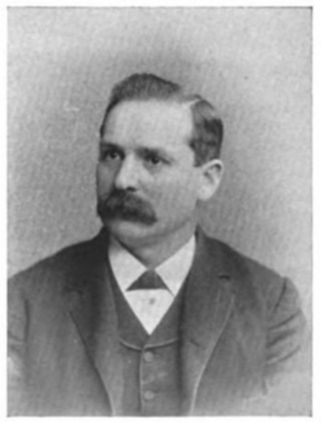
MR. HUGH McCAFFREY, Philadelphia.
STATE VICE-PRESIDENT FOR CALIFORNIA, AND THREE OTHER MEMBERS OF THE SOCIETY.
139
EARLY IRISH SETTLERS IN KENTUCKY.
BY EDWARD FITZPATRICK,[5] LOUISVILLE, KY.
Kentucky was admitted to the Union as a state June 1, 1792, but long before that time Irishmen had invaded the “Dark and Bloody Ground.” Indeed, when Daniel Boone took time to write a little history for future generations, on one occasion, by carving in the bark of a tree with his jack-knife: “Here D. Boone Cilled a Bar,” it is not improbable that an Irishman was within speaking distance.
Simon Kenton, the companion of Boone, and who came to Kentucky in 1771, was of Irish parentage. His father was born in County Donegal. Another Irish companion was Michael Stoner. Kenton’s life was even more romantic than Boone’s. While yet a minor he fled from his state because he believed he had killed a rival for the hand of a fair Virginia damsel, and, coming to the wilds of Kentucky, assumed the name of Simon Butler. To recount his many deeds of personal bravery and privation would fill a volume. Indeed, it was asserted by many that he was the greatest Indian fighter the country ever produced.
In 1782, hearing that the man he had struck down with his fist was still alive, he resumed his name, and in 1795 served as major under Gen. Anthony Wayne. He founded Kenton’s Station and Maysville, and planted the first corn raised in the state north of Kentucky river. Michael Stoner, one of his companions, and Thomas Kennedy, another Irishman, built a cabin and made some improvements on Stoner’s fork of Licking river, in Bourbon county, in 1774. Future generations are indebted to men of Irish blood for many of the early settlements of this state, made under so much difficulty, and it would be impossible to fully treat the subject in one paper or in a dozen, so romantic are many of the characters.
Kentucky was only a colony or county of Virginia up to 1791, and the latter state exercised full control over its lands until Gen. George Rogers Clark disputed this right shortly before the state 140was admitted to the Union. The records show that with the surveying parties sent out by the state of Virginia to this territory were many men bearing Irish names, not “Scotch-Irish,” but plain Irish.
Col. George Croghan, an Irishman, writing in his journal June 1, 1765, says: “We arrived within a mile of the falls of the Ohio (Louisville) where we encamped after coming 50 miles this day.” This was even before Boone’s time. Colonel Croghan was a connection by marriage of Gen. George Rogers Clark, who reduced the British possessions in the entire Northwest and made it first possible for the United States, instead of England, to acquire this territory. If General Clark was not an Irishman himself, his records show that he had many Irishmen with him as soldiers. His sister married William Croghan.
The first survey made of Louisville was in 1773 by Capt. Thomas Bullitt; his associates were John Fitzpatrick, James, George and Robert McAfee. Dr. John Connolly owned two thousand acres of land in Louisville in 1773. Col. John Campbell, a native of Ireland and a resident of Louisville about this time, was afterward a member of the first state constitutional convention, held in Danville in 1797.
Colonel Campbell was an Irish Presbyterian and proud that he was Irish. He never mentioned once in any of his letters or speeches that he was “Scotch-Irish,” though he made many speeches and wrote many letters. He was speaker of the Kentucky house of representatives and afterward a member of congress. He was often a delegate to the Presbyterian Synods in Kentucky and was always spoken of as an Irishman, without any prefix, though he was born in the province of Ulster. Colonel Campbell was a pioneer of whom the Irish might well feel proud. He was an intense patriot, and being a large landowner, sent for many of his countrymen to come to Louisville, and this was another cause for swelling the early Irish immigration to Kentucky.
William H. English spent much money and five years of his life writing a history of the “Conquest of the Northwest Territory,” by George Rogers Clark and his associates. While Mr. English may perhaps be forgotten by future generations as the man who was the running mate of Gen. Winfield S. Hancock on the Democratic presidential ticket of 1880, he will ever be remembered by reason of the publication of this most accurate and valuable history. He, during 141twenty years, collected while a congressman and at other times, the names of nearly all the soldiers who were with General Clark in his fights with the British and Indians, beginning in 1780, several years before Kentucky was a state. He devotes seven hundred pages to the deeds of Clark and his men, and they deserve all of it. It would take a good deal of space to give the Irish names in this roll of Clark’s soldiers.
With General Clark came to Louisville, in 1778, John Haggin and John Montgomery, and both were captains in his command. They landed at Corn Island, in the Ohio river, at the head of the falls, opposite where Louisville now stands. In 1782 there lived in Louisville, with their families: John MacManus, Hugh Cochran, John Doyle, John Caghey, John Cunningham, Michael Humble, John Handley, Andrew Hines, Thomas McCarty, Thomas Purcell, James Sullivan, James Brown and John McCarland, and most of these came with Clark. That was a pretty good Irish settlement for those days when a man who went out to plough corn was obliged to take his rifle along to defend himself against hostile Indians.
No one will venture to say that Matthew Lyon, born in County Wicklow, in 1746, was a “Scotch-Irishman,” though I have heard lately that some of his descendants are now claiming that rather peculiar distinction. Matthew Lyon brought the first printing office across the mountains to Kentucky, and it did not come in a railroad train either. It was fetched in a jolt wagon and a good deal of the type was “pied” before it ever got here. From this type and press the first newspaper ever printed in Louisville was issued. Matthew Lyon’s father was executed in Ireland for alleged treason in 1765. The boy, aged thirteen years, was bound by himself to the captain of the vessel which brought him across the ocean, to work for twelve months to pay for his passage.
A Connecticut farmer gave the captain two bulls for Matthew Lyon’s services, and he worked out his time faithfully with that farmer. Ever afterward his great oath was “By the bulls that bought me.” Lyon county, Ky., is named for him, and his remains lie buried at Eddyville, which town he founded. Matthew Lyon, though once sold for two bulls, took no mean part in the making of history for his country, not only in Kentucky, but also in Vermont, where he went after working out his time with the Connecticut farmer. He belonged to the Green Mountain Boys, was a colonel in the Revolutionary War, and afterwards a member of congress 142from the Granite state as well as from Kentucky. In 1798 he was prosecuted under the Alien and Sedition laws and fined one thousand dollars and confined in jail for four months. While in jail he was elected to congress, and by his vote broke the deadlock which elected Jefferson president.
Coming to Kentucky soon afterward, he was a pioneer in the wilderness where Lyon county is now situate, and his neighbors sent him to the legislature at Frankfort. He afterwards served in congress from Kentucky for eight years (1803–’11). He was in 1813 appointed to an Indian agency in Arkansas, and was elected to congress from that state. So Matthew Lyon, a plain Irishman, claiming no Scotch prefix, has the record of being elected to congress from three states. His son, Chittendon Lyon, was a member of congress in 1827, and his descendants still live in the state.
Many of the old families in Louisville are of Irish descent, but it would take too much space to mention even a fair portion of them. In 1784 Patrick Joyes settled in Louisville, and his family grew, leaving many descendants, one of them being the present county attorney of Jefferson county. The original Joyes was a man of education, speaking French, Spanish and other tongues fluently, so that at least one Irishman was of polished intellect in the early settlement of the city.
William H. English, being a millionaire, could afford to spend a great deal of time and money in collecting information about the Northwest territory and Kentucky. On one of his visits to Louisville he told me that had it not been for the Irish in Clark’s command the latter would never have whipped the British and Indians. The Irish, fresh from persecutions in the old country, were very bitter against the English, and were of great help to Clark. Mr. English had a great deal of information on this subject which has never been published. Of course, in his history he makes no reference to nationalities except where it was absolutely necessary, it being his purpose to simply give credit to Clark and his soldiers for their wonderful work.
Dr. Thomas Dunn English, writing of a trip he made through the mountains of Kentucky, on one occasion tells of an incident which shows that many people of Irish descent in this state are ignorant of the fact. He was riding along one day in a wagon when his companion, a lanky native boy of the mountains, saw a rabbit run across the road. “Stop a minute, Dock,” said the boy, “till I heave a 143dornick at that rabbit.” Dr. English coming to inquire, found that the mountains of Kentucky had been settled long ago by Irish and that “dornick” was one of the many Irish words which survived.
Even before Clark came to Louisville, Simon Kenton records that, in 1775, he located in the Upper and Lower Blue Licks, where there was an abundance of game, and he considered it a paradise. One day, to his great astonishment, there came out of the woods toward his cabin, two men who gave their names as Fitzpatrick and Hendricks. They had been living in the vicinity for sometime. Fitzpatrick said he wanted to return to Virginia, and Kenton escorted him to the Ohio river, bidding him good-by near where the town of Maysville now stands. While Kenton was taking Fitzpatrick to the river, Indians entered the cabin and killed Hendricks. Michael Stoner, another Irishman, who was Boone’s companion in 1774, told Kenton that there were a number of settlers in the interior who were not from Virginia.
In 1775 Hugh Shannon, Patrick Jordan, John Lee and others settled at what is now known as Lexington. It is recorded that Patrick Jordan found a spring down the fork on which they camped. Joseph Lindsey afterward paid Jordan two guineas to allow him to locate near the spring, and the first clearing was made there. This is now the garden spot of the Blue Grass region of Kentucky, where all the fine fast horses and the pretty women and good whiskey come from. In 1775 the first roasting ears were gathered from this clearing. John Haggin located there soon afterward, having come down the Ohio and up the Licking river to the settlement.
There were probably other Irish people eating roasting ears in the Blue Grass region one year before the Declaration of Independence was read in Philadelphia, but their names have not been preserved. Certain it is that the people living in this settlement, first peopled by the Shannons and the Jordans, as soon as they heard of the Revolutionary battle of Lexington, Mass., named their settlement after that battle. They were certainly not English sympathizers to do this.
In 1775 Ben. Logan settled where the town of Stanford is. Both his father and mother were born in Ireland. Logan was a companion of Boone. He planted the first corn in what is now known as Lincoln county, was a colonel in the militia, and was one of the most daring of the early pioneers.
Daniel Boone, in 1775, found in Powell’s Valley, Richard Hogan, Hugh McGarry, Thomas Denton, and their families. These located 144afterwards at Harrodstown. Mrs. McGarry and Mrs. Hogan were the first white women to go up Salt river, which historic stream is now so frequently mentioned in connection with the defeated candidates after elections. The Hogans and the McGarrys have frequently “gone up Salt river” since, figuratively speaking, but the Indians were not waiting for them on the banks with a tomahawk as they were for Mrs. Hogan and Mrs. McGarry in 1775.
People of Irish birth or extraction were pioneers in the educational line in this commonwealth, even before the Declaration of Independence. Bishop Spalding, in his notes on Kentucky, says that Mrs. William Coomes, an excellent Catholic lady, taught school in Harrodsburg in 1775. This was before a church or a court was opened in Kentucky. Smith, the historian, though not a Catholic, agrees with Bishop Spalding, and says that “in the year 1775 Dr. Hart and William Coomes settled Drennon Spring in Henry county, but afterward moved to Harrod’s Station. Dr. Hart practised medicine, and Mrs. William Coomes opened a school for children.” “Thus,” he observes, “the first physician and the first school teacher in Kentucky were both Catholics.” Whether they were Irish or not they got the credit as being of that race, as did all the Presbyterian Irish in the early history of the state get the reputation of being Scotch.
Joseph Doniphan taught school in Booneboro in 1779, and the children of Daniel Boone were his pupils. Nothing is known of his early history, but it has been asserted that his proper name was Donavon, and was corrupted into Doniphan or Doniphant.
A writer with the leisure and means could strike a rich field in looking up the names of the Irish connected with the early settlement of the state, and it is no exaggeration to say that seventy-five per cent. were of that nationality.
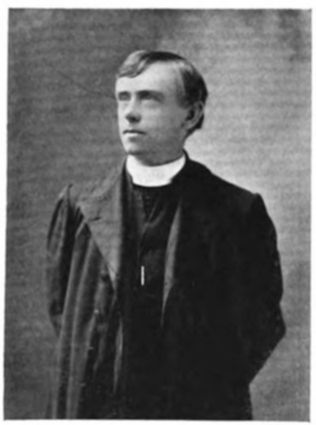
REV. RICHARD HENEBRY, Ph. D., Professor of Keltic Languages and Literature, Catholic University, Washington, D.C.
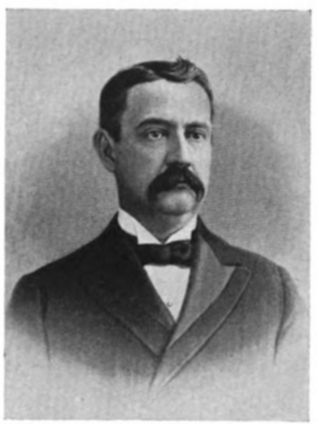
HON. EDWIN D. McGUINNESS, Ex-Secretary of State, Rhode Island; ex-Mayor of Providence.
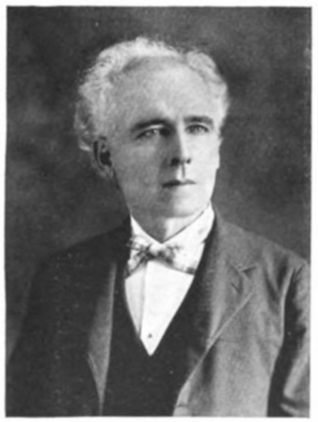
COL. JAMES ARMSTRONG, Charleston, S. C.
COL. WILLIAM H. DONOVAN, Lawrence, Mass.
FOUR MEMBERS OF THE SOCIETY.
145
THE IRISH PIONEERS AND FOUNDERS OF PETERBOROUGH, NEW HAMPSHIRE.[6]
BY JAMES F. BRENNAN, OF PETERBOROUGH.
Mr. Toastmaster, Ladies and Gentlemen:
My memory leads me back over a comparatively brief part of the time covered by the recollections of the gray haired men and women who are here present. I was born in this beautiful village; my first hallowed recollections cluster here; its territory is familiar to me; I know its people and something of its history, and wherever I go my mind reverts with pride to this good old town.
It is with great pleasure that I accept the honor of responding to this toast, and in what I have to say shall not refer to the comparatively modern generation of Irishmen—Murphy, Brennan, Hamill, Noone, and scores of others—and their descendants, who have helped to build up this town, and whose history should be left for a résumé of fifty years hence, but to those early settlers who came across the ocean, and their descendants; men who risked all, even life itself, to make this spot a fit place for the abode of man.
They were composed in a very small part of Scotchmen, Englishmen and other nationalities, but the essential part of the pioneers of our town, in fact nearly all of them, were Irishmen, for I assume that where men were born in Ireland, as they were, where many of their fathers, perhaps, also, some of their grandfathers were born, they were men who can unqualifiedly be called Irishmen. Adopt any other standard and a large part of the inhabitants of Ireland at the time they emigrated would not be considered Irishmen, and probably few persons in this town to-day would be considered Americans.
The Scotchmen who came to Ireland, and from whom some of the pioneers of this town trace their ancestry, landed on that Emerald Isle, as our town history records it, in 1610, more than a century and a quarter before their descendants came to this country in 1736. 146These immigrant descendants were indeed Irishmen to the manor born, with all the traits, impulses and characteristics of that people, having, as the Rev. Dr. Morison said in his centennial address, the “comic humor and pathos of the Irish,” and to their severe character and habits “another comforter came in, of Irish parentage; the long countenance became short, the broad Irish humor began to rise,” etc. Need I ask the indulgence of my hearers if I occupy a part of the time allotted me in naming some of these men who were the founders of this town and the inaugurators of civilization in this section?
Samuel Gordon and wife (Eleanor Mitchell) were born in the County Tyrone, Ireland, as were also his father and mother; they are all buried in the old cemetery on the hill. By marriage the blood intermixed with Holden, Kimball, Barnes, Pierce, Cochran, Dickey, White, Brooks and Hurd.
William Alld was born in Ireland in 1723, and was one of the early settlers. The blood mixed by marriage with Swan, Metcalf, Worcester, Way and Whitten.
John McKean was born in Ballymony, Ireland, in 1714, and was the ancestor of all the McKeans in this section. His son James lived and died on the David Blanchard place.
John Ferguson was born in Ireland in 1704, and came to this country with the Smiths, Wilsons and Littles. The blood infused into Morison, Stuart, Duncan, Miller, Moore, Evans and Whiting.
George Duncan was born in Ireland and was the ancestor of all of that name in this section. Shortly after immigrating he married Mary Bell of Ballymony, and their progeny married into the Taggart, Todd, Black, McClellan, Moore, Wallace, Wells and Cummings families.
John Swan came from Ireland, and the family mixed by marriage with Parker, Stuart, Gilchrest, Morse, Caldwell, Alld, Sawyer, Graham, Chamberlain, Nay, Hoyt, Steele, Hannaford, Moore, Mitchell, Cutter and White.
Joseph Turner and wife immigrated from Ireland with their sons Thomas, Joseph and William, who were all born there. The blood by marriage went into Wellman, Sanders, Shedd, Converse, Nichols, Goodhue, Nutting, Taggart, Davis and Preston.
John Moore immigrated from Ireland in 1718, and is the ancestor of all of the same name here. The blood mixed by marriage with Jewett, Priest, Taggart, Woodward, Smith, Gregg, Dinsmore, Wood, Steele, Turner, Holmes, Burnham, Jordan and Phelps.
147Andrew Todd was born in Ireland in 1697, and married a daughter of John Moore. Their progeny married with Morison, Miller, Taggart and Brown.
John Smiley, after his marriage, immigrated from Ireland. The blood by marriage went into Miller, Hovey, Parker, McCoy, Wilson and Leonard.
Abial Sawyer was born in Ireland in 1721, where also his wife was born in 1726. From them all of the name about here trace their origin, intermixing by marriage with Gregg, Bailey, Scott, Farnsworth, Howard and Nichols.
Matthew and James Templeton came from Ireland, and their blood intermixed by marriage with Holmes, Miller, Robbe, Wilder and McCoy.
William Robbe, both of his wives, and seven children were all born in Ireland, three generations of the family having lived there. From them all of the name in town trace their origin. They mixed by marriage with Taggart, Whittemore, Farnsworth, Mussey, White, Redding, Chapman, Gowing, Livingston, Morrison, Moore, Follansbee and Swallow.
Thomas Steele was born in Ireland in 1694, and came here in 1718. The blood mixed by marriage with Gregg, Mitchell, Wilson, Smith, Ramsey, Swan, Senter, Willey and Rice. With another branch of the Steeles which emigrated from Ireland was the father of the late John H. Steele, governor of our state in 1844–’45.
William Wilson immigrated from County Tyrone, Ireland, in 1737, with his wife, daughter and son Robert, who was born in that county, and commanded a party of men organized to go to Lexington, armed, as our town history says, with guns, pitchforks and shillelahs. The blood by marriage went into Swan, Steele, Johnson, Hunter, Lee, Gibbon, Scott, Jackson, Sherwood, Fisk and Taintor.
Thomas Davidson immigrated from Ireland with his brother John Davidson and Matthew Wright. By marriage the blood went into Patrick, Hoar, Dodge, Clark, Cutter and Nichols.
Thomas Cunningham was a native of Ireland. The blood mixed by marriage with Robbe, McKean, Treadwell, Hale, Goodhue, Jackson, Caldwell, Porter and Bishop.
John Wallace came to Londonderry from County Antrim, Ireland, in 1719, and was the ancestor of the name here. The blood is mixed with Mitchell, Noone and Spline.
James Gregg emigrated from Ireland to Londonderry in 1718, 148and was the ancestor of all of the name in this section. The family intermixed with Steele, Gibbs, Hutchins, Nelson, Macy and Wright.
William McNee, born in Ireland in 1711, was one of the settlers of the town. Before he came to this country he married Mary E. Brownley, by whom he had all his children. His descendants have now reached the eighth generation, but unfortunately the name is entirely lost. The first and second generations retained the name, but the third changed it to Nay. They intermixed with Cunningham, Taggart, Millikin, Swan, Upton, Weston, Davidson, Turner, Miller, Gilbert, Frost, Buss, Wood, Felt, Cross, Porter, Jaquith, Vose, Adams, Young, Balch, Perkins and Hapgood.
Nathaniel Holmes (the ancestor of our able orator[7] here to-day and of all of the name in this section) was born in Coleraine, Ireland, as was also his father. Thus we have three generations of this family which lived in Ireland. He was an early settler and by marriage the blood mixed with Whittemore, Adams, Clement, Swasey, Leach, Kimball, Dickey, Hall, Griffin, Gregg, Miller, Aiken, Bruce, Sewall, Smith, Newton and Livingston.
There were two distinct families of Millers in town, remotely related; the ancestors of both, however, came from Ireland. Back to these people our president of this day[8] and all of the name hereabouts trace their ancestry. They intermarried with Patterson, Burns, Campbell, Vickery, Johnson, Mead, Shipman, Templeton, McFarland, White, Duncan, Davis, Ropes, Wilkins, Phelps, McCoy, Thompson, Cunningham, Taggart, Gowing, Clark, Gregg, Holt, Sanderson, Wilder and Scott.
All the Whites in town, including the marshal of this day,[9] are descendants of Patrick White, who was born in Ireland in 1710. By marriage they intermixed with Stuart, Shearer, Gregg, Upton, Cram, Stearns, Carley, Parker, Grant, Dennis, Goodwin, Farmer, Perry, Swan, Pierce, Fisk, Washburn, Whittemore, Shattuck, Leighton, Burns, Alld, Grimes, Loring, Holmes, Mitchell, Scott, Cunningham, Lakin, Spafford, Longley, Kyes and Tenney.
Samuel Morison and wife emigrated from Ireland, leaving their parents, but taking with them eight children, who were all born there. From them descended all that family in this section who spell their name with one r, including our poet of to-day,[10] and the 149venerable gentleman[11] whom we are proud to have with us here, who delivered the oration at our centennial fifty years ago. By marriage their blood went into the following named families: Steele, Mack, Knight, Johnson, Bassett, Williams, Mitchell, Smith, Moore, Todd, Wallace, Hale, Graham, Felt, Wilcox, Holmes, Buxton and Wells.
James Smith, the progenitor of all the Smiths in this section, was from Ireland. His son Robert was born in Moneymore, Ireland, and with his four children, John, Sarah, Mary and William, all born near Lough Neagh, came to this country in 1736. Thus we find that three generations of this family were from Ireland. Dr. Smith, the historian of our town, was a descendant of this family. By marriage the blood went into Bell, McNee, Morison, White, Annan, Dunshee, Fletcher, Smiley, Burns, McCrillis, Emery, Findley, Pierce, Russell, Barker, Fifield, Cavender, Walker, Gordon, Fox, Foster, Reynolds, Kilbourne, Jones, Leonard, Blanchard, Lewis, Cheney and Dearborn.
William Scott immigrated in 1736 from Coleraine, Ireland, where all his children were born, among them William, who settled here the same year. This man and his father were Irish, as was also Alexander Scott, progenitor of another branch which settled here and immigrated at the same time. From these families sprang every person of the name in town, among them our efficient toastmaster,[12] and by marriage the blood has mingled with Cochran, Robbe, Wills, Maxfield, Cummings, Ramsey, Whitney, Lincoln, Loomis, Gray, Bullard, Jewett, Fuller, Bowers, Orr, Allyn, Blanchard, Clark and Ramsdell.
This is only a partial list of the Irishmen who were the founders and builders of Peterborough—which may be completed at some future time. It could be extended considerably, but sufficient names are here given to show the nationality of the men to whom this town owes its existence. All the brief facts here given are taken from the history of this town and that of Londonderry, N. H.
Thus we see that there are comparatively few persons in town to-day, with the exception of recent comers, who have not coursing in their veins the blood of those sturdy Irishmen who made this town what it is, whose bodies have long since returned to clay in the old cemetery on the hill, and whose history is the history of the 150town itself. Long may their memory be cherished! Long may the pride which exists in such ancestry be retained! They were brave, honest, manly men, who broke down the barriers that civilization might enter. Their lot was a life of hardship; it is ours to enjoy the fruits of their work.
Not only the privations of this cold, uninviting country were theirs to suffer, but intolerance and bigotry met them at the threshold of the country to which they were about to bring a blessing. Rev. Dr. Morison, in his centennial address, said that when the Smiths, Wilsons, Littles and others arrived, “It was noised about that a pack of Irishmen had landed.” They were denied even lodgings. Mr. Winship of Lexington, who extended a welcome to them, however, said, “If this house reached from here to Charlestown, and I could find such Irish as these, I would have it filled up with Irish, and none but Irish.”
If there is a town or city in this broad land owing a greater debt of gratitude to that green isle over the sea than does this town, I know it not. If there is a place which should extend more earnest and loving sympathy to Ireland in her struggles, I know not where it is. It was there that your forefathers and mine were born; there where their infant feet were directed; there where they were educated in those grand principles of honesty, sturdy manhood and bravery well fitting them to become the pioneers of any country, and fortunate it was for that land toward which they turned their faces.
Here they built their log cabins and shrines to worship God, and reared families of from eight to sixteen children, for they were people among whom large families were popular, and the more modern aversion to a large number of children had not taken possession of those God-fearing men and women. Happy it was that the duty of populating this country was theirs, and not that of the present generation, whose disposition to do this might be doubted. Dr. Smith writes in our town history: “Of the large and influential families of Todd, Templeton, Swan, Alld, Stuart, Cunningham, Mitchell, Ritchie, Ferguson and many more, not a single individual of their family remains in town; and of the large families of Steele, Robbe, Smith, Morison, Moore and Holmes, their numbers are greatly lessened, and they are growing less every year.”
In reviewing the character of these men, we should not, as a first essential, go into an inquiry of how they worshipped God; or what 151were their religious or political beliefs; whether Protestant or Catholic, Whig or Tory. We only ask were they honest men, holding fast to those principles which they believed right? The answer to this will not bring the blush of shame upon our cheek, nor the consciousness of regret that their blood is part and parcel of our bodies. If we follow in their footsteps in our dealings with men; if we are as honest and courageous as they; if we do an equal share to make the world better and more attractive to future generations, we can, when the toil of this life is over, rest in the secure belief of duty well done.
152
SKETCH OF AN EARLY IRISH SETTLEMENT IN RHODE ISLAND.
BY THOMAS HAMILTON MURRAY, WOONSOCKET, R. I.
Among the old-time, honored names in Rhode Island is that of Dorrance. It has figured prominently for a long period. About 1715–1720, George Dorrance and his two sons—George and James—came from Ireland to the colony and settled in what is now the town of Foster. They bought a large tract of land which subsequently became known as the Dorrance Purchase.
This tract was at that time supposed by some to be within the jurisdiction of Connecticut. When, however, the boundary between Rhode Island and Connecticut was finally settled, the Dorrance Purchase was decided to be a part of Rhode Island. The controversy had lasted sixty-five years and was not definitely adjusted until 1728.
The territory thus acquired by Rhode Island was commonly known as Head Lots and included, as has been stated, the great Dorrance property. Later, it was comprised in the town of Scituate, R. I., and when, in 1781, Foster was set apart from Scituate, the Dorrance Purchase was comprised in the boundaries of the new town thus created.
Soon after their arrival from the old country, the Dorrances, with true Irish enterprise, erected a sawmill at a stream on their estate. This stream was called Quandock brook. Here they sawed lumber for building purposes for themselves, and also for their neighbors. Subsequently, a grist mill was added, and the locality became widely known as the Dorrance Mills.
The elder George Dorrance from Ireland, was born in 1675. He died at his home on the Purchase in 1754, at the age of seventy-nine years, and was buried on the “Plains,” near Oneco, Conn.
His son, Captain George, also from Ireland, settled on the northern part of the Purchase, on the road going west by “Tyler’s store” into Connecticut. This was later named the Brooklyn road. Captain 153George obtained his military title for valuable services rendered. He passed away in 1793, and was buried with his father. He left two sons, George and Alexander, and some say a third, named John.
James Dorrance, the other son of the elder George from Ireland, located in the central portion of the Dorrance Purchase and built a substantial dwelling. It fronted south and comprised two stories. In the centre of the house was a huge stone chimney, measuring 10 × 18 feet. In each room was a large, old-fashioned fireplace. In the great east room downstairs was one ten feet wide and six feet high, constructed on the same plan as many in Ireland. There was a large oven in the back. Those were the days of the spinning-wheel, and of blazing logs whose flame mounted up the great chimney and shed light over the family group after nightfall.
They were a sturdy race—the Dorrances—and worthy representatives of Irish pluck, energy and progressiveness. This James was one of the sons who came from Ireland. He died in 1779, while our Revolution was still in progress, at the venerable age of ninety-six years, a good instance of Irish longevity. He was buried with his father and brother, and was sincerely mourned by all the country roundabout. He left two sons, James and Michael Dorrance.
The third George Dorrance, or grandson of the first George, the immigrant, had extensive military experience, and was known as Major Dorrance. He erected a house near the old homestead. It was two stories high in front and one in the rear, with a “lean-to” roof. Like the other house just mentioned, it had an enormous stone chimney. Major Dorrance died in 1827 or 1828, aged seventy-seven years. He left considerable property, but no children.
The most eminent member of this famous Dorrance family was John, who was born about 1747. He entered Rhode Island college, now Brown university, and was graduated in 1774. On that occasion he delivered an oration on “The Necessity and Advantages of Cultivating our Own Language.” He also participated in a syllogistic dispute in Latin, taking the affirmative on the question: “Should the Dictates of Conscience Always be Obeyed?”
He was twice married. His first wife was Polly Whitman, daughter of Jacob Whitman of Providence, who owned the “Turk’s Head” property. His second wife was Mrs. Amy Clark, widow of Dr. John Clark and daughter of Commodore Esek Hopkins. John Dorrance had previously removed from Foster to Providence and lived at the corner of Westminster and Exchange streets, where the National 154Exchange bank was afterwards located. He studied law and in 1794 was elected judge of the Court of Common Pleas for Providence county. This eminent position he also filled by annual election until 1801. He was then defeated. The defeat was owing to the bitter opposition of Gov. Arthur Fenner, which arose over a lawsuit between the two.
Judge Dorrance was likewise a member of the General Assembly for several terms. In 1789 he was an assistant (senator) to Gov. John Collins, and, with George Sears, was appointed by the Assembly a committee to audit the accounts of “the late intendants of trade for the ports of Newport and Providence.” In 1790 his name appears as a member of the Providence Society for the Abolition of Slavery. The Rhode Island American, Jan. 8, 1811, notes his election as a director of the Exchange bank of Providence. In 1792 or 1794 he was a candidate for congress and received a flattering vote.
Speaking of Judge Dorrance, Dr. Pardon Bowen declared that “he possessed an adequate law knowledge and was a man of the strictest integrity.” The judge died June 29, 1813. That excellent authority, the Providence Gazette, in its issue of July 3, the same year, had a notice of his death, and after stating that “the Honourable John Dorrance” had departed this life, it went on to say: “Judge Dorrance was descended from Irish parentage, but was himself born in Foster, in this state. He received a degree from Rhode Island college, and afterwards became a tutor and since a member of the corporation of that institution.”
Continuing, it states that he was of unblemished integrity and undeviating patriotism; that for many years he was a member of the state legislature from Providence, “both in the senate and as a representative.” It likewise chronicled the fact that for the last sixteen years of his life, the citizens of the town (Providence), manifested their confidence in him by making and continuing him president of the town council.
The obituary notice referred to thus concludes: “His intimate knowledge of the science of jurisprudence made him the adviser of all who were in distress. His life was marked by an honesty that neither power nor wealth could swerve from its duty.”
Judge Dorrance’s death was deeply regretted throughout the state. He left a widow and “a large train of relatives.” The deceased was prominent all through the Revolution, and by his patriotic activity rendered incalculable service to the cause of liberty.
155There was also a Samuel in the Dorrance family at an early period. His name is found in the records in 1734. At the period of the Revolution, the records, 1775, show that George Dorrance, probably a grandson of the senior Irish immigrant, was ensign in the lieutenant-colonel’s company of the regiment of Providence. In 1780, a George Dorrance was appointed lieutenant of the second company of Scituate. In 1781, George Dorrance, Jr., was captain in a Scituate company. The same year Capt. George Dorrance had a company in a regiment raised by act of the General Assembly. In 1782, George Dorrance, Jr., was commissioned major of the Third regiment of militia in the county of Providence. There is not much doubt but that in all the operations throughout Rhode Island during the Revolution, these and other members of the Dorrance family took an active part.
Alexander, another grandson of the senior Dorrance from Ireland, settled in the northerly section of the Dorrance Purchase on the road running through the centre of Head Lots and at right angles with the Brooklyn road. He died in 1840 leaving two sons, Palmer and Frink. Palmer Dorrance was born at the old homestead in Foster in 1804. He embarked in business at an early age, went to New York, and engaged in the rubber trade with Erastus Corning, his brother-in-law.
In 1831 he located in Providence and engaged in the boot and shoe business on Weybosset street, nearly opposite the present post-office. In 1833 he returned to Foster, his native town, and was in business there until 1839, when he removed to the northerly part of Foster, bought the Colonel Hopkins property and conducted a tavern and store for several years. In 1847 he removed to Apponaug, R. I., and was in the hotel business there, and at Natick and Buttonwoods, until 1854. At the time of his death, 1873, he was engaged again in Providence.
The second James Dorrance, grandson of the first George from Ireland, was born in 1762, and resided on the homestead in Foster until his death, at the age of seventy-one years. He had a son, Abram, who passed away in 1859, leaving no heirs. He used to say there was “stone enough in the old chimney to wall in the farm.”
Michael Dorrance, a son of the first James, who immigrated with his father from Ireland, was a native of Foster, and erected a substantial dwelling on the southerly part of the Purchase. He left two sons, George and James. The former became a man of much 156prominence, and was commissioned as captain in 1834. Michael, the father, passed from earth in 1874, being then seventy-three years of age. Michael’s father-in-law, Mr. Placet, was town treasurer of Foster from 1810 to 1828, and later represented the town in the General Assembly. For many years he was cashier of the Mount Vernon National bank, and was also in charge of the Mount Vernon post-office. He died at Foster in 1849.
In the preparation of this article, I have received much material from Casey B. Tyler, who is well acquainted with the history of the Dorrances, and is likewise excellently posted on that of many other prominent Rhode Island families. Mr. Tyler also sent me the following interesting facts relating to the subject of this sketch:
“I have had in my possession,” he says, “a pane of glass which Susanna [Dorrance] Wells presented me many years ago, which she said came from the old country [Ireland], and was originally set in a lead sash and brought from Ireland by her great-great-grandfather, George Dorrance, and used in the same old house for many years, until replaced by a wood sash and a 6 × 8 glass. This old pane of glass is yellowish and coarse and in diamond shape, and measures four inches on each side. She also said that she kept a part of the sash for a long time, but the boys used it up making shot and bullets to hunt with. This Susanna Dorrance was born in 1799, and married Jeremiah Wells, son of Benjamin Wells at Foster, and lived to a good old age, a very intelligent and highly-esteemed woman.
“Maj. George Dorrance, who lived in the other old house, and who died in 1827, aged seventy-seven years, without children, had many articles which came from Ireland with his ancestors. They were sold at auction in 1833 by Palmer Dorrance, one of the heirs-at-law. Among the rest was an old-fashioned solid mahogany double-bureau, which was purchased by John Tyler of ‘Tyler’s store,’ who had the old brass trimmings taken off, and had it made into two nice bureaus with more fashionable trimmings.
“One of these bureaus was later owned by his granddaughter, Matilda Rathbun, in Mossup Valley, and highly prized. The other came into possession of his grandson, Albert Tyler, near the Centreville, R. I., depot. These two bureaus were altered by Israel Lyon in 1833, while he carried on the carriage business in the basement of the house in Foster, where his brother, Hon. Sheldon P. Lyon, lived and died.
“An old-fashioned silver tankard, holding two quarts, with a cover 157like a Brittania teapot cover, was sold at the same time, and it was a well-known fact that Major Dorrance, when first born, was very small, and was put into that tankard, and the cover shut down, although he was a man afterwards six feet two inches in height. John Tyler always regretted not buying the tankard.”
The Dorrance mills remained in the Dorrance family down to 1808. During the next few years the mills changed hands several times. In 1813 they were sold to Peleg Place, whose daughters married Dorrances. Mr. Place occupied the mill property until 1824, the balance of the estate, or most of it, still remaining in the Dorrance family.
In 1824 Mr. Place sold the mills to Stephen Potter, who put up another building, introduced “water looms,” and made cotton cloth for several years.
George Dorrance and Phebe (Place) Dorrance left several sons. One of them was named Thomas G., and another Albert L. The latter became an influential farmer on the homestead inherited from his grandfather. He died, leaving a widow and two daughters.
The Dorrance name is still found in Rhode Island, and Dorrance street, a leading thoroughfare in Providence, helps perpetuate it. Bearers of the name, descendants of the immigrants, are likewise found, some of them in Providence. The old dam at Dorrance mills was long since demolished. The original dwellings have long been ruins, the great chimneys being the last to go, but the history and the memories of the Dorrance Purchase still form one of the charms of that section of the state.
158
AN EARLY IRISHMAN OF WATERBURY, CONN.
BY MARTIN SCULLY,[13] OF WATERBURY.
A good deal of research has been indulged in during the past ten or fifteen years, with a view to ascertaining for a certainty the name of the Irishman who first visited the territorial limits of Waterbury, Conn.
So far the question seems to be an open one, the preference having been ascribed to various persons by different writers. Half a dozen or more of the old Irish settlers of the town who came here over half a century ago and who have resided here continuously since, tell conflicting stories in relation to this subject, and as they were the only source from which much information on this matter could be obtained, the question has never been fully decided, each naming a different person as being the first to lead the way for his countrymen into this section of the state.
I recently conceived the idea of making some investigation on this point from sources other than those which have heretofore been brought into use, with the result that I have succeeded in obtaining information in relation to this issue, which will be of interest to future historians, of the first Irish residents of this town, and cannot but help settle the much disputed question on this point.
As nearly as data can at present be collected, the first known Irishman to see this part of the country was Joseph Rourke, a soldier who served in one of the companies attached to a regiment in command of General Putnam in the Revolutionary War. He was with Putnam through most of his campaigns and took such a liking to that dashing soldier that he refused to serve under the command of any other captain. It was this fascination which led him to follow Putnam to his home in Brooklyn, this state, and he was seriously wounded in the retreat of the Revolutionary troops from Horseneck to Stamford, Conn., in 1779.
159During his service in the Revolutionary army Rourke met and formed the acquaintance of a son of Gideon Hotchkiss, the great-great-grandfather of Judge George H. Cowell of this city, and in 1784 he accompanied young Hotchkiss to the family residence, then situated about three miles southeast of Prospect Centre. Remaining here for about twelve or thirteen years, he learned of the intended uprising in his native country, which culminated in the rebellion of 1798, and left on the old stage line for Derby, Conn., thence by way of the Sound for New York, with a view of reaching the scene of the conflict in time to render what service he could to the cause of the Irish patriot party. Whether he reached the scene of operations and met the fate of many of his countrymen who had dared throw down the gauge of battle to the enemies of Ireland will never be known, but sufficient information has been obtained to satisfy me that the story of his visit to these parts is founded on fact.
Judge Cowell can tell many reminiscences of the man’s characteristics which he often heard related by his maternal grandmother. “There is nothing strange about this,” said Judge Cowell, when asked about the matter; “everybody knows that the Irish people had been fleeing to all parts of the world to shun the persecution to which they were subjected at home for centuries prior to that time, and it is the most reasonable thing in the world to believe that some of them should show up in these parts. It is a well-established fact that there were a large number of Irishmen in the Revolutionary War, not only in the rank and file, but as captains and generals. Were not several of the signers of the Declaration of Independence Irishmen?
“Joseph Rourke was not the only one of his race who came along here after the close of the Revolutionary War, but he is the only one I have a good recollection of hearing talked of when I was a boy. What made the old people remember him so well was the fact that in addition to being a brave soldier he was an excellent shoemaker and earned his living during his stay here by going among the farmers, repairing and making new footwear, and the handsomest footwear ever worn in this state by the forefathers of many of the old American families of this section was put up by Joseph Rourke.
“He was in the place,” continued the judge, “for a good many years, and made a practice of leaving every year a couple of months 160before the winter season, telling his friends that he wanted to reach New York in time to attend divine service on Christmas day. In those days Christmas was not the great religious festival in New England that it is to-day, and the people were practically ignorant of the real meaning of the tenets of the Catholic faith. Rourke never tried to deny his religion, and it was a common thing for the farmers for miles around to gather at the house where he was making a pair of boots and hear him tell of the inhuman cruelties perpetrated on his countrymen on account of their faith, and in my opinion he was the first man that told the old settlers of this town the Catholic meaning of the word ‘Mass.’ After an absence of a few months he was sure to return and remain until the following Christmas, when he was off again. Finally he expressed a determination to revisit the scenes of his early boyhood and use his genius in defence of his native country, and that was the last the townspeople ever heard of him.”
HON. FRANKLIN M. DANAHER, Albany, N. Y.
MR. THOMAS F. O’MALLEY, Somerville, Mass.
MR. JAMES P. BREE, New Haven, Conn.
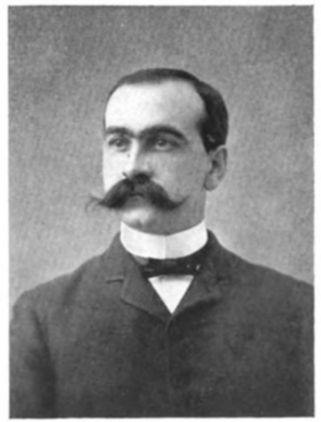
MR. THOMAS J. LYNCH Augusta, Me.
FOUR MEMBERS OF THE SOCIETY.
161
SOME IRISH SETTLERS IN VIRGINIA.
BY HON. JOSEPH T. LAWLESS,[14] RICHMOND, VIRGINIA.
Perhaps the most distinguished man of Irish birth who identified himself completely with Virginia, was Gen. Andrew Lewis, who was born in Ireland about 1720, and came to Virginia with his parents in 1732. John Lewis, the father, was the first white man who fixed his home in the mountains of West Augusta.
Andrew Lewis served as a major in the regiment commanded by Washington in the Ohio campaign of 1754 and 1755. He served with valor in the French and Indian wars, and was highly regarded by Washington, at whose suggestion he was appointed a brigadier-general in the Continental army. Four of his brothers served in the Revolutionary War, one of them, Col. Charles Lewis, being killed at Point Pleasant. No better evidence of the value which Virginia placed on the services of this Irishman could be wished than the fact that she has deemed his effigy worthy to stand for all time beside the immortal group of Henry, Mason, Marshall, Nelson and Jefferson, which surrounds the heroic equestrian statue of Washington in the Capitol Square at Richmond. This celebrated work of Crawford’s is pronounced by the critics to be one of the finest in the world.
Descendants of John Lewis, the father of Gen. Andrew Lewis, are numerous in the state at this day. Some of them have been very distinguished men: John F. Lewis, who died recently, was lieutenant-governor of Virginia, and a senator of the United States. Lunsford L. Lewis, his half-brother, was president of the supreme court of appeals of Virginia for twelve years, retiring from that office a few years ago. Dr. Lewis Wheat is a well-known practising physician of Richmond. Judge John Lewis Cochran, whose 162mother was a great-granddaughter of John Lewis, father of Gen. Andrew Lewis, and whose great-grandfather, with his wife, née Susanna Donnelly, came to America about 1742, was a gallant soldier in the Confederate army, and a distinguished lawyer and judge. James C. Cochran, brother to the foregoing, was a colonel of Confederate militia in the late war. Henry King Cochran served as a surgeon in the Confederate service throughout the war. William Lynn Cochran was a major in the Confederate service, and a lawyer by profession. Howard Peyton Cochran was a captain in the same service. It is claimed that there were one hundred and five of the Lewis family in the service of the Confederate states.
Another Irishman who came to Virginia and left his impress was John Daly Burk, of Petersburg, Va. He was born in Ireland, and educated at Trinity college, Dublin. Because of his political opinions and affiliations he was compelled to leave the country (1797) while yet a student at college. He first tried his fortune in Boston, and afterwards in New York. But he received no encouragement. His love for Ireland and his ardent democracy made against his success at the North, and he finally came to Virginia. Here he became the friend of Jefferson and John Randolph, both of whom encouraged the brilliant young refugee.
He was a lawyer, poet, dramatist and historian, and was undoubtedly one of the most accomplished men in the state during his day. His history of Virginia in four volumes was the first comprehensive history of the state written, and is regarded as one of the best ever compiled. He also wrote “A History of the Late War in Ireland,” with an account of the United Irish Association, from the first meeting in Belfast, to the landing of the French at Killala (8 vols., 1779, Philadelphia). Before he completed the fourth volume of the history of Virginia he was killed in a duel with a French gentleman at Campbell’s Bridge, Chesterfield county, Virginia, on the 11th of April, 1808.