ADDRESSES MADE AND PAPERS READ. (continued 2)
Reading edition
While honoring, as they deserve to be honored, the men of Boston and Massachusetts who initiated the War of the Revolution, we are not unmindful of what others have done to make our independence possible, and to establish this form of government of ours, founded upon the doctrine—not of the divine right of kings or of any other ruler, no matter what he may call himself—to rule people, but the divine right of the people to rule themselves, and lest we forget, in our hour of conquest, let us recall again the doctrine of the founders of this government: that all government ought to rest on the consent of the governed. In establishing this government, the Irish 95element was a very important factor. In the British House of Commons’ Report, fifth session, fourteenth Parliament, Vol. xiii, page 303, we find the report of an investigation of the causes of defeat in the war with the colonies—the investigation was held in 1779—Major-General Robertson, who had served twenty-four years in America, was asked: “How are the provincial corps composed, mostly from native Americans, or from emigrants from various nations of Europe?” He answered: “Some of the corps mostly of natives, others, I believe the greatest number, are enlisted from such people as can be got in the country, and many of them may be emigrants. I remember General Lee telling me that he believed half the rebel army were from Ireland.”
In Vol. xiii, British Commons’ Reports, page 431, Joseph Galloway, a native of Pennsylvania, speaker of the assembly of the colony for twelve years, and a delegate to the First Continental Congress, who became a violent Tory in 1773, was examined for several days by members of the House of Commons. Among the questions asked was: “That part of the rebel army that enlisted in the service of congress, were they chiefly composed of natives of America, or were the greater part of them English, Scotch, or Irish?” Galloway answered: “The names and places of their nativity being taken down, I can answer the question with precision. There were scarcely one fourth natives of America, one half Irish, the other fourth English and Scotch.”
The Irish contributed their full share in the War of 1812, in the war with Mexico, and in the war that kept the Union whole. All facts relating to the part borne by them should be carefully collected. In the late war with Spain we have a large field for investigation. From the state of Massachusetts, one fifth of her quota of soldiers were unmistakably of Irish ancestry; the Ninth regiment, Massachusetts volunteers, went into the field as an Irish-American regiment; of the four other regiments, and the large number of sailors, an impartial investigation would show a surprisingly large number of men of Irish ancestry, and what is true of Massachusetts is true of every state in the Union.
Gentlemen, while we are proud of our origin and our ancestry, we do not forget that, above all, we are Americans, that we earnestly desire that all the different elements that go to make up this nation shall be blended together.
This American republic is a mighty crucible into which are 96thrown many elements. We have been, and shall be, tested by severe fires; we must separate the dross and the alloy, and the refined product will come forth purified by the severest tests. In our process of amalgamation, we shall eliminate from the different nationalities and races what is gross and bad, avoiding the vices and emulating the good traits and virtues, evolving, as the product of our American civilization, the highest type of manhood or womanhood to be found on the habitable globe.
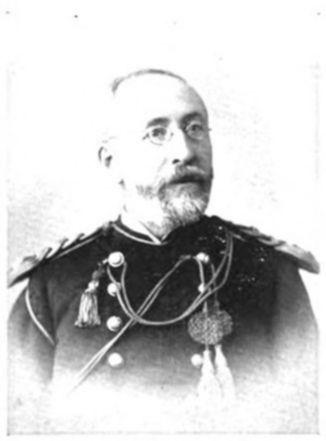
COL. JOHN P. DONAHOE, Of Delaware. Residence, Wilmington.
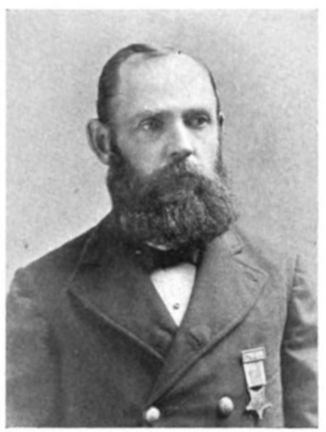
CAPT. PATRICK O’FARRELL, Of the District of Columbia. Residence, Washington.
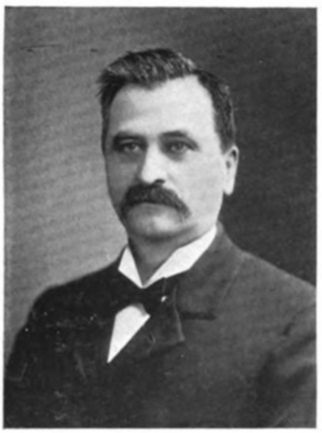
COL. C. C. SANDERS, Of Georgia. Residence, Gainesville.
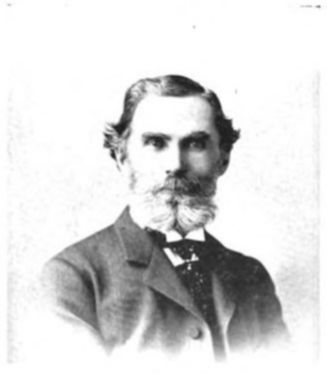
MR. P. T. BARRY, Of Illinois. Residence, Chicago.
VICE-PRESIDENTS, RESPECTIVELY, FOR DELAWARE, GEORGIA, ILLINOIS, AND DISTRICT OF COLUMBIA.
97
RUSSIA THE FRIEND OF THE REPUBLIC.
BY JOSEPH SMITH, LOWELL, MASS.
At a time when so many Americans seem to be forgetting the history of their country and are fatuously pursuing the political will-o’-the-wisp called “British friendship”; when a society organized to frustrate the unwisdom of foreign alliances,—the League of American Independence,—is flouted and insulted; when the tendency of the dominant political party in the Republic is towards international folly and its motto appears to be “Away with the Constitution,” the incident embodied in the appended letter may perhaps remind sane Americans what the true attitude should be to-day towards the Russian and British empires, respectively. The letter in question is an answer to a request made by me on Mr. Jeremiah Curtin,—the scholarly translator of “Quo Vadis” and other works of Sienkiewicz, and himself the author of a number of remarkable volumes on folk-lore and kindred subjects,—for a paper on Andrew Curtin, his uncle, the famous war governor of Pennsylvania:
Warsaw, Russian Empire,
December 28, 1898.
Joseph Smith, Esq.:
Dear Sir:—I have just received your letter of December 5, and hasten to reply.
The time between this date and the meeting of the American-Irish Historical Society is so short that it would be impossible for me to prepare a paper as you suggest; were I free there would be sufficient time, perhaps, but as I am in the midst of important and urgent investigations I can do no more than write you a few lines.
There are many subjects, of course, which would be of interest to the Society and consequently to America. The time has come when men who are of more than ordinary culture, and interested in the history of America and the British empire, are beginning to understand that the political and social development of these two immense 98aggregations of mankind cannot be studied in a satisfactory and scientific way without a thorough knowledge of the Celtic race. But, as I understand, the Society is occupied specially at present in showing the part which the Irish have taken in the United States both in winning independence for the republic and afterward in building it up; the wider aspects of the history and career of the Celtic race may be considered at some later time, should the Society so desire.
Among men of Irish descent who have played an important part in American history, the late Governor Curtin deserves a high place. His father, Roland Curtin, when a young man, was informed by governmental authority that he had twenty-four hours in which to leave Ireland. He went to France, and from France to America. He settled in Pennsylvania, and established the first iron works, if not in the state, in that part of it where he lived.
Without entering into the details of the governor’s career and the great part which he took in defending the integrity of the American Union, it is sufficient to state here that it was owing to him that Abraham Lincoln received his first nomination for the presidency. Had it not been for Andrew G. Curtin, Abraham Lincoln would not have been president of the United States. Curtin, then governor of Pennsylvania, received Lincoln on his way to Washington at the boundary of the state; together they planned the manner of the president’s further journey, by which he escaped, if not assassination, the possibility of meeting men who had it in mind.
When a separation of the Southern states had become a fact, Governor Curtin invited all the loyal governors to meet in conference at Altoona, Pa., where he made the statement to them, that either the war must be carried on in real and deadly earnest with all the powers of the country placed at the disposal of the president, or be dropped altogether. After due consultation the governors decided to offer all the power of the states to the president, and went to Washington to lay that decision before Lincoln; all went except Governor Bradford of Maryland. After the Altoona conference and the meeting of the governors with President Lincoln at Washington, the war became that reality which won final success.
Governor Curtin’s actions during the succeeding years of the struggle were such that he, Governor Morton of Indiana and Governor Andrew of Massachusetts, were pre-eminently the great war governors, the three governors uppermost in men’s minds.
99Governor Curtin’s untiring work on behalf of the soldiers of his state is well known and universally remembered. It is perhaps not so well known that he founded the first Soldiers’ Orphans’ Home in the United States, that of Pennsylvania.
Some time after the war he went to St. Petersburg, as Minister Plenipotentiary, where he gained the respect and esteem of Alexander II. At his last interview the Emperor presented him a full length portrait of himself. This portrait, painted in oil, was made expressly for Governor Curtin, and was sent to his home in Pennsylvania by the Russian government.
While at St. Petersburg, Prince Gortschakoff took the governor into the archives of the foreign office, and showed him the correspondence which took place between the Emperor Napoleon III and Alexander II of Russia concerning the recognition of the independence of the Confederate states. The Emperor Napoleon addressed an autograph letter to Alexander II, stating that the government of Her Britannic Majesty and his government were ready to acknowledge the independence of the Confederate States of America, and invited him to join with them. To this the Emperor of Russia answered, also in an autograph letter, that the people of the United States had a government of their own choice, and that they were using their best blood and treasure to defend it, and not only would he not do anything to oppose them, but he would reserve freedom of action to proceed as he deemed necessary under the circumstances. Soon after, the Russian fleets appeared in New York and San Francisco.
Governor Curtin read the two letters of the emperors himself, and gave me the contents, the substance of which I have just given.
Very sincerely yours,
Jeremiah Curtin.
The potent action of Russia in our hour of bloody stress, which held the hands of England and Napoleon the Little, speaks louder than the strident clamor of the American ingrates, who, forgetting our debt to the Muscovite, would make us the ally of the Briton, the deadly enemy of our friend and of us. Under the Providence of God, the action of Alexander II saved this republic from being torn asunder, and we were base indeed, if in these days we were to turn from the friend of our hour of need to take the hand red with the blood of a hundred helpless races.
100
THE “ANGLO-SAXON” SHIBBOLETH CONDEMNED.
BY HON. WILLIAM McADOO,[4] NEW YORK CITY.
Mr. President and Gentlemen:
I came here to-night simply to excuse myself for not being able, as requested, to read a paper which I had promised your committee on “Immigration to the United States from the Province of Ulster in Ireland.”
If I am still honored by your Society, I will be glad to read it at a future meeting, with a view to showing not only the influence of this immigration on the history of the United States, but the fact that these immigrants considered themselves Irish without any qualifying clauses, and were so regarded in America, England and Ireland.
Modern political exigencies are playing sad havoc with ethnology. If an Irishman becomes distinguished at home or abroad, in field, forum, market or shop, he is immediately made an Anglo-Saxon; but if he brings up in the police court he is simply a common Irish Celt. The “Anglo-Saxon” race is claiming everything good in the world, and they are bent upon leaving not much of the world for anybody else.
It is very fashionable now to be an Anglo-Saxon, even if you had an Irish father and a Russian mother. If by some divine miracle and phenomenal transformation, all men and women with Celtic blood in their veins could wake up in the morning with some startling demonstration of the fact, such as green hair and yellow eyes, there would be frightful consternation in the ranks of Anglo-Saxondom, even in the great city of New York, and in some of the back settlements into which the first immigrants from Ireland wandered, and where even their names have been transformed.
If one could run all races other than the “Anglo-Saxon” out of the United States it would not be worth England’s while to form an alliance with what remained, and she would treat them in that kindly, patronizing, contemptuous way that she does the ultra-loyal Canadians. 101It needs no learned historian to show us the splendid record of the Irish in America, nor how enduringly they have stamped their highest and noblest racial impulses on every page of American history. Some of their critics sneeringly point to the apparent fact that they have been almost altogether too conspicuous on the field of military action, and more or less lacking in the more patient and plodding ways of commerce and business. They assert that they have attained more in the intellectual diversions and pleasing arts of speech and hand, or in the mere drudgery of unintelligent labor, rather than in those achievements in agriculture and manufactures, which is said to be a marked characteristic of the heavenly Anglo-Saxon.
This is gross libel on the Irishmen of America. We have here to-night at our board, such a thoroughly representative business Irishman who in vast enterprise, splendid achievement, industry, and dogged perseverance, crowned with the highest success, can give the best Anglo-Saxon in the states or England, in any venture from building railroads to managing them, the sharpest competition of his life; and yet Mr. John D. Crimmins of New York is but one of a splendid army of men of Irish birth or descent who are in the very forefront of the great industrial armies as captains and generals of those tremendous forces which nowhere play so important a part as in the United States, and which nowhere have competition among them more keen, nay, more deadly, nor requiring higher talents and greater courage. Why, in this very metropolis you cannot point to any great field of action—leaving out the learned professions in which the Irish race is most markedly conspicuous—in banking, manufactures, commerce, shipbuilding, and all kinds of industrial and railroad enterprises, in which Irish names do not appear in the directorates, fill the managers’ offices, plan and execute the great battles of modern finance. I say we need not speak of the learned professions, because there the keen wit, the bright, sharp intellectuality, wonderful racial adaptability, breadth and grasp of mind, and love of learning, have given them most commanding influence; the same is true of congress, in legislatures, municipal bodies, and in every court-house of the United States. The same is true of the professions of medicine and teaching, and on the press, where they used to say that Mr. Bennett’s pay-roll on the Herald read like the roster of the Fenian army. At any rate, there is no newspaper office in New York where they have not conspicuous places.
102Politically, I claim for them that impulsively, by reason of their history and experiences, they are the very best of Americans. They oppose entangling alliances because they know better than any one else, by reason of a long, bloody, and painful history, how false are international promises, how hypocritical and treacherous even the great and seraphic Anglo-Saxon can be when he once gets the upper hand. Henry II made with them the first Anglo-Saxon alliance, and Cromwell completed it over the graves of murdered millions; over the ruins of castle, cabin, and church, until its climax was reached when the greatest orator of Ireland said that the instruments of government had been simplified to “the tax gatherer and the hangman.”
Is it any wonder, therefore, that the Irish element in the United States should be the first to raise the cry of alarm against the plot to make this great Republic in the very hour of its triumph a mere colonial dependency instead of a regnant and invincible nation? For myself I yield to no man living or dead in the quality of my Americanism. I came to the Republic and have received with unstinted hand the usufruct of its noble freedom, its generous institutions, its magnificent and dazzling opportunities held out to him, however humble, who cultivates the civic virtues, is able, industrious, courageous and honest. I yield to the Republic no double allegiance. I stand for the United States in its vast and tremendous interests here and everywhere against all other countries’ fatherlands and motherlands, without stint, without reservation or hesitation.
I am proud of my Irish birth, but above all things I glory in my American citizenship. I glory in the Republic and the splendor of its achievements, and I transmit to my descendants for a thousand years as a priceless heritage, that exhibition of magnificent military courage where American arms, in spite of the axioms of military science, in spite of the handicaps under which they suffered, swept in magnificent fury and heaven-born courage upon the fire-fringed hills of San Juan, brave men dying gladly, to catch a glimpse of the blessed banner of the great Republic; ours and theirs the glory of those ships which thundered at Cervera, that lightened the gloom of barbarian Manila, and in those ranks of the marines at Guantanamo, and the heroes at Santiago.
Who of Irish birth or descent can but read the rosters on sea and shore with a discriminating eye, to find his heart aflame with pride 103at the splendid and unanswerable percentage of men with the hot blood of the Celt and the high patriotism of the American, and who, next to the flag of our common country, revere the fact that they draw their lineage from the historic island across the sea. Surely they were not all Anglo-Saxons in name or race who went with Hobson in his grand and heroic endeavor, which takes its place as outstripping the classic legends of Greece and Rome. Surely no one will deny that the roster call of the marines at Guantanamo and the army at Santiago fairly teems with representatives of the historic Irish soldier.
The Sixty-ninth New York and Ninth Massachusetts would be far outstripped in numbers by the thousands of units scattered throughout our army and navy, regular and volunteer, for wherever the stars of the Republic light the gloom of the battle-field, or war thunders on the deep, there, his breast bared to her enemies, whoever they be, you find the most loyal and valorous Americans in the sons of the expatriated Irishman. While Anglo-Saxon statesmen may quibble in congress and Anglo-Saxon schoolmen criticise in college, “Like lions leaping at a fold when mad with hunger’s pang,” you will find in the forefront, disdaining quibble and laughing at criticism, the hot tide of valor and chivalry which, proud to be American, is not ashamed to be called Irish. Out upon the bigots who would do it injustice! Defiance to those who would deride its power or minimize its influence!
It asks no quarter in any field of industry, learning, or strife, and is as great in peace as in war. If its more acknowledged glories are of the more sanguinary fields when Mars sows in blood and night what Minerva reaps in the dews and light of the morning, it is not because of any undue pugnacity, any animal ferocity, but because the Irish Celt, threatened with an extermination more cruel than that of our red Indians, with the schoolhouse closed to his intellect, and the church to his conscience, had to take down the stainless and invincible sword of his fathers and become a universal soldier. In every land, from the Shannon to the Tiber, from the Tiber to the Ganges, from the Ganges to the Potomac, and from the Potomac to San Juan; on every battle-field from Clontarf to Fontenoy, from Fontenoy to Waterloo, from Waterloo to Marye’s heights, where the Irish brigade climbed steeps made slippery with their blood; and from Fredericksburg to Santiago and Manila, Irish valor has gleamed a star on the pages of universal history.
104