ADDRESSES MADE AND PAPERS READ.
Reading edition
At the Annual Meeting, Thursday Evening, January 19, 1899.
LETTER FROM EDWARD A. MOSELEY, THE RETIRING PRESIDENT-GENERAL.
Edward A. Moseley, Washington, D. C., the retiring president-general of the Society, wrote as follows:
To the Members of the American-Irish Historical Society:
Brothers:—I regret very much that it will be impossible for me to attend the annual meeting of our Society on the 19th instant. I have been under medical treatment during the past ten days, and I am still far from well, and am advised by my physician that it would be very unwise for me to leave the city for some time to come.
It would be an exceeding pleasure to me to be with you, and to meet so many of the distinguished gentlemen of our Society who will be present, and who will, no doubt, illuminate with their wit and eloquence the banquet hall at Sherry’s on the evening of the 19th. I shall be with you in spirit, but as I cannot be there in person, would you kindly make a few suggestions for me at the meeting.
I have received the copy of Volume I of the Journal. It is a handsome volume, and a publication creditable to its editors and our Society. My only regret is that we cannot afford to publish such works extensively, and place one in the household of every American who boasts of his supposed Anglo-Saxon ancestry, and especially in the hands of our dear brethren, the “Scotch-Irish” advocates, who take so much pains to distinguish themselves from the mere Irish element.
In these days, when the brotherhood of man does not count for so much as in the early days of the republic, and when some are dividing themselves into classes and races and assuming superiority for the so-called “Anglo-Saxon race” over all the other races of men created by Almighty God, it seems to me that, as we do not claim to be of the “Anglo-Saxon race,” we should not submit to the implication contained in the term that all other peoples, including the Irish, are inferiors in race.
54It is, therefore, high time for us to reassert and emphasize our protest against the claim that the American people belong to the “Anglo-Saxon race,” or that any of the Caucasian peoples are in any degree inferior in race to any other. Where differences exist it is a question of environment. After two or three generations, no one can perceive any radical distinctions between Americans descended from ancestors who were Englishmen, Irishmen, Scotchmen, Welshmen, Dutchmen, Germans, Scandinavians or of any other European nationality.
As there never was an “Anglo-Saxon” race—that being a term which designated two German tribes—we repudiate any suggestion that American civilization or progress is materially indebted to any supposed Anglo-Saxon element in our composition. On the contrary, we assert that all European nationalities have contributed to our advancement and magnificent citizenship.
The purpose of our Society is not to attribute all our splendid traits and achievements alone to the Irish element in our composition. Unlike our Anglomaniac brethren, who contend that everything great and good must be Anglo-Saxon, we merely claim credit for a just share in the upbuilding of the nation.
I would like the learned gentlemen of our Society to enlighten the average American, from time to time, in his local newspaper or on the rostrum, in respect to this Anglo-Saxon fetish. This has already been done for the American student by many distinguished ethnologists. It is easy to give object lessons on this line by the color of the hair and the eyes, and the shape of the skull, features which demonstrate beyond question that men of the supposed Anglo-Saxon type are the rare exceptions in our make-up, and are often very far from being at the top of the scale in any respect; while on the other hand, men of the received Celtic type compose the overwhelming majority in this country and in the British Isles—even in England itself, and in every part of England. They are in the vast majority all over the world wherever the English tongue prevails.
Many of the gentlemen of our Society can write just such admirable papers as Mr. Bocock contributed to the Cosmopolitan magazine of this month (who confined himself, however, to instances of Irishmen who achieved great fame). No one has done more in this direction than our respected vice-president for the District of Columbia, Mr. J. D. O’Connell, whose pen has ever been at the service of his countrymen, particularly in this respect.
55Whenever an Irishmen attains to fame or distinction in war, literature, art, law, or statesmanship in the British Empire, he is immediately claimed to be an Englishman, and, consequently, as displaying “Anglo-Saxon” pluck and “Anglo-Saxon” intellect.
The truth is, that among all those who have achieved great prominence in the English-speaking world, the Anglo-Saxon type is conspicuous by its absence. Nine times in ten, when a man boasts of “Anglo-Saxon” pluck, enterprise, ability, and progress, he himself is not of that type of man, and nine-tenths of the incidents he cites were brought about through the pluck, enterprise, ability and progress which came from mixed blood.
I can only liken this misrepresentation of the truth of history to the rattling of peas in a bladder, shaken by one of Shakespeare’s clowns. Puncture the bladder, my friends, whenever and wherever it is shaken. Tell the clown who calls himself an “Anglo-Saxon” that he is an ass! and prove to him by the color of his hair, the color of his eyes, and the shape of his skull that he is a Celt, a Milesian, a Latin, or anything but an “Anglo-Saxon,” and that if it was ever true that the English people were Anglo-Saxon, and that the Anglo-Saxons were ever, at any time, the greatest people on earth—superior to all other races—that time has so long since passed away that no one now remembers it, and no true history chronicles when and where they flourished.
But I have already trespassed too far on this line. Permit me to wish you all, if not too late, a very happy and prosperous New Year, and also to say to you that, as I have been twice honored by election to the presidency of the Society—and that is, I think, sufficient honor for any member—I beg to invoke the national rule against a third term. Therefore, if any friend of mine should be so indiscreet as to nominate me for that office, I request and urge you to ask him to immediately withdraw the nomination.
Fraternally yours,
Edward A. Moseley,
President-General.
Washington, D. C., Jan. 17, 1899.
56
IRISH EMIGRATION DURING THE SEVENTEENTH AND EIGHTEENTH CENTURIES.
BY THOMAS ADDIS EMMET, M. D., NEW YORK CITY.
Irish people were among the pioneers in this country from almost the first settlement on the Atlantic coast, and continued until the line of immigration had crossed the continent to the Pacific.
The Colonial records bear testimony that Irish people were here at an early period, and so many hamlets on the frontier were designated by distinctive Irish names that had we no other proof than these facts, we could not honestly divest ourselves of the conviction that Ireland contributed more in numbers for the development of this country than came from any other one source.
Great injustice has been done the Irish people by depriving them of credit so justly due them. This has resulted partially from ignorance, but to a greater extent it is due to an influence exerted prior to the first settlement in this country. The purpose which prompts this injustice has been maintained through English influence, and has always been wanting so much in charity to the Irish people, that we can hope to accomplish little in any effort to establish the truth so long as individuals in this country are willing to have their judgment influenced by the policy of a foreign power.
The same influence has been as actively engaged in claiming that we are English; that this country is consequently “a worthy daughter of a more worthy mother!” Yet my investigations have impressed me with the belief that of the seventy-five millions forming our present population, there are a far greater number of individuals who could be more certain of their African origin, than there are those who could prove a direct English descent.
It is not sufficient to show proof of an ancestor sailing from an English port, as all such were rated during the seventeenth century as English, without reference to their nationality. Moreover the bearing of an English name would be no more conclusive, as we 57shall show that a large proportion of the “Wild Irish” were compelled by law to assume English surnames, which their descendants bear at the present time.
I have no precise data bearing directly upon the earliest immigration of the Irish to this country, for none exists. On the other hand, the assertion that they were among the first settlers, and the most numerous afterwards, cannot be rejected or disproved. I will now very clearly show, as circumstantial evidence, that throughout the greater portion of the seventeenth century a dire provocation existed, and that the Catholics were driven out of Ireland by a persecution which has never been equaled. The world to-day is in ignorance of the fact, since a complete history of Ireland, and of the suffering borne by a majority of the people, has yet to be written.
Whenever an advantage was to be gained by falsifying an historical event in connection with Ireland, the English government has never hesitated, in the past, to exercise its influence for that purpose. Yet with a strange inconsistency every record in the keeping of the government bearing upon its own immediate history, is zealously preserved, notwithstanding the most damning testimony is thus furnished of corruption, double dealing and crime.
As an American I would gladly have laid aside all religious appellations if it had been possible otherwise to have done justice to my subject, but unfortunately, as a consequence of the prejudices of centuries, not a few people regard the “Protestant Irishman,” the “Presbyterian Irishman,” and the “Catholic Irishman” as so many distinct species of the human family. The necessity, therefore, exists in doing justice to Ireland, that all at least in relation to the Catholic portion should be made prominent, as this precludes the plea of being either English or “Scotch-Irish.”
But as regards the race, the fact is that even within the period of which we shall treat in regard to the forced emigration, there remained in Ireland but little of the pure old Celtic stock. The inhabitants of Ireland had been gradually becoming a mixed people, and were as much of an aggregation as the population of the United States is a conglomeration of all other races. Yet there is something in the Irish climate and surroundings, which, even within a generation, exercises a powerful influence in bringing the descendants of all foreigners to a type possessing much in common, and with characteristics unlike any other people.
It was not until near the close of the reign of Charles the First, 58that the Irish people were forced to emigrate. Therefore, I propose to begin with a brief reference to the so-called “Rebellion of 1641.”
In this movement Charles the First of England was the active spirit, and if ever a man richly deserved his fate through retributive justice, Charles rightly suffered. His inhuman treatment of the Irish people, who had been most loyal to him, would have justified his execution if no other cause existed. No historical event, which antedates the testimony of living witnesses, can be more clearly established in all its details than the history of this forced outbreak in 1641, and this can be done notwithstanding there are few instances in history which have been more distorted by falsehood.
It would not be germane to my subject to enter into detail at greater length than to establish the provocation, or necessity existing at this time, for a large emigration of the Irish people. The English government had long held for the crown an absurd claim which involved the title of every estate in Connaught. The Catholics held nine tenths of the land and they bore in numbers about the same proportion to the population. During the reign of James an effort had been made to clear off this claimed lien, and large sums of money had been paid by the owners to the English government for this purpose, with the understanding that these transactions should be made a public record.
When Charles came to the throne it was found that James had appropriated this money for his own use, and the only record existing was one in which only the title of estates held by Protestants was established.
For an additional sum Charles promised, among many other promises which he did not keep, to have the title of the estates held by the Catholics cleared of all government claims, wherever the holder could prove his right of possession. For this ostensible purpose a commission was appointed, at the head of which was the Lord Chief Justice and the chief prosecuting officer for the crown in Ireland.
It is now known that the real object of the commission was to obtain some pretext for a general confiscation of the land, and to make a plantation of Catholic Connaught, after the people had been disposed of. As a stimulus to the zeal of these officers an additional bonus of two shillings on the pound was granted from the value of each estate confiscated to the crown, when made on the plea of a defective title. The owner was generally made foreman of 59the jury and whenever the verdict was a “Prevarication on the evidence,” as it was termed, and not for the crown, he was fined to bankruptcy, his estate confiscated “legally,” and the jurymen were both fined and imprisoned.
But this semblance of justice proved to be too slow a process, so the country was suddenly overrun with English troops to force an extended outbreak. Additional instructions were given to exterminate, if possible, the whole Catholic population, English as well as Irish, as is clearly proved by the writings of Leland, Clarendon, Warner, Carte, and other writers, who had no sympathy for the Irish people.
The cattle and all available property were seized; persons in all stations of life were imprisoned, without having charges preferred against them, or they were wilfully murdered without provocation; the wives and daughters of the Catholic Irish were subjected to unspeakable brutality, and it was a frequent boast that no woman was spared; the well and the sick, the young and the old were indiscriminately turned adrift, their houses were burned, and all provisions and stores which could not be used by the troops were wantonly destroyed.
No less than three thousand heads of families, constituting the Catholic nobility and gentry, and the owners of the land in the west of Ireland were imprisoned, charged with treason, and their property was seized.
A new commission was now formed, consisting of judge and jurymen in English interests, yet who were sworn, it is supposed, to investigate with some pretext to honesty the charge of treason against these individuals. As a result of their labors over one thousand indictments were drawn up by this commission in two days, by which each individual was found guilty of treason, thus losing his life, and his property was seized for the crown! If it be assumed that this jury worked continuously each day for twelve hours, the average would be about one indictment for a little less than every minute and a half. During which time it was supposed that witnesses duly sworn were examined as to the guilt of each individual, and after due deliberation, and after giving the prisoner the benefit of all doubt, where the testimony was deemed unreliable, the verdict had been rendered.
Is it possible to conceive of a more complete travesty on justice? The prisoners knew nothing of the proceedings, and the average time 60for conviction of less than one minute and a half was scarcely sufficient to add the signatures necessary to give each death warrant a semblance of legality.
By this one transaction the British crown came into possession of some ten millions of acres, which was a little more than one half of all the available land in Ireland.
Between five and six hundred thousand men, women, and children were slaughtered, or died from starvation. Many thousand were sent to the West Indies, or to the American colonies, and sold as slaves. A limited number escaped to the mountains, where many died from starvation, and the remainder lived for years a life in common with the wild beasts, with a price upon their heads, and were hunted as such. The whole and entire population of this great tract of country disappeared, and was literally wiped out.
Shortly after, Cromwell overran the south and southwestern portion of Ireland which was also chiefly settled by Catholics, and they received as little mercy from his army as had been meted out to those of their creed in Connaught. When Cromwell had completed his work at least two thirds of the landed property in Ireland had been confiscated; and after the greater portion of the Catholic Irish men, women, and children had been put to the sword, or driven into exile, the whole country became resettled with his soldiers, or by persons devoted to the English interest. Over one hundred thousand young children, who had been made orphans, or who were taken from their Catholic parents, were sent to the West Indies, to Virginia, or to New England, that they might thus lose their faith, as well as all knowledge of their nationality.
During this period thousands of Irishmen were driven into exile, to enter the armies of European nations, or to emigrate and settle on the frontiers of the American colonies, as a bulwark against the Indians, for the protection of the more favored settlers on the coast.
In addition, a host of both men and women who were taken prisoners, were sold in Virginia and New England as slaves, and without respect to their former station in life.
In later years, certain writers have attempted to pervert the truth by claiming that these men and women, who were refined and educated, and who had been the owners of the confiscated lands, were convicts. But I have not been able to obtain any reliable evidence to prove that Virginia or any of the American colonies were ever made penal settlements.
61The Catholics of Ireland were the only people of Europe who had at this time so great a necessity for leaving their country. It is a well established fact that during the greater part of the eighteenth century thousands of able-bodied male Catholics, in the south and western portion of Ireland, left the country at an early period of life for some European port, and very few ever returned. This is corroborated by the circumstance that the Catholic population of Ireland steadily decreased during this period, and at one time it was less than half a million of individuals scattered through the bogs and wilds of the country.
The wealthy English people invested their money freely in the early settlement of the West Indies and in Virginia, but they remained at home. The middle and lower classes, who were more likely to have emigrated to a new country, were, to a great extent, contented at home. They had no cause to leave it, as the political changes which occurred in England during the seventeenth century had a decided tendency to better their condition.
I believe that with the exception of some among the first settlers in Virginia and New England, the far greater portion of the English who did emigrate during the seventeenth and the first half of the eighteenth century, went to Bermuda, Barbadoes, Jamaica, and the other West India Islands, and did not come to this country. The American colonies were mostly settled under a grant to some proprietor or corporation, with more restrictions on business pursuits than were made by the English government for the West India Islands. Consequently the field for individual enterprise was greater on the Islands.
Those of English birth who settled on the main land did so largely in Virginia and Carolina, and as a rule their business was confined to the seaport towns. I believe that a larger proportion of the English than of any other people, when successful in business, returned in after life to their native country, or went with their families to Barbadoes or Jamaica to invest their money in sugar plantations. It is from this circumstance that these islands have always been more English in character than any American colony now within the territory of the United States.
For an Irishman without means there was no opening in any of the West India Islands but as a common laborer. In the American colonies, however, he could easily reach the frontiers, free from all restriction after he had served out the time necessary to pay for his 62passage, and could there establish his independence with the labor of clearing off the forest from the land selected by himself.
In consequence of the restrictions made by England to destroy Irish commerce, it is well known that for several centuries the intercourse between Ireland and different continental countries, by means of vessels engaged in smuggling, was far greater than by any communication with England, which was almost an unknown land to the west coast Irishman.
It is not possible to form even an estimate as to the numbers of Irish who went by means of these smugglers chiefly to France and Spain. We only know the fact that a steady current of impoverished Irishmen passed over to the continent year after year. We also know that a very large number served in the armies of those countries, but it is doubtful, under any circumstances, if more than a comparatively small proportion of the number could have been thus provided for. Of the remaining portion but few could have had any other means of support, and no other explanation presents itself but emigration to America from necessity, and on their arrival in a foreign vessel their nationality would have been overlooked.
The English government during the eighteenth century allowed no vessel, knowingly, to sail from Ireland direct, but it was necessary by law first to visit an English port before clearance papers could be obtained for the voyage. A record was also kept for the purpose of collecting a head tax on every individual thus leaving an English port for the colonies. I have gone carefully over this register, and to my surprise scarcely a name appears which could be identified with Ireland. Notwithstanding this fact the official register has been cited in proof that there was no emigration from Ireland but those who were sent abroad in servitude, and consequently that this country for a century, at least, was settled chiefly by English people.
But we must remember that every Irishman in Ireland within reach of English authority was at that time governed by the following law: “An act that Irishmen dwelling in the counties of, etc. ... go appareled like Englishmen and wear their beards after the English manner, swear allegiance, and take English sirnames; which sirnames shall be of one town, as Sutton, Chester, Trim, Skryne, Corke, Kinsale; or colours, as white, black, brown; or arts or sciences, as smith or carpenter; or office, as cook, butler, etc., and it is enacted that he and his issue shall use this name under 63pain of forfeyting of his goods yearly, etc.” As a consequence, every Irish emigrant crossing in an Irish or English vessel and from either England or Ireland, appeared in the official record as English, for the voyage did not begin according to law until cleared from an English port.
By this circumstance we prove the converse, that a large Irish emigration did reach this country by some route which was not under English control. How otherwise can we explain the presence of undoubted Irish surnames unchanged, as found in early records of the country? And on the other hand we find to-day Irishmen and their descendants in this country, bearing the names of Sutton, Chester, Kinsale, White, Black, Brown, Smith, Carpenter, Cook, Butler, etc., proving thereby that this law was enforced, by which they were deprived of their pure Irish names, and that they did not change these names after coming to this country.
Virginia was undoubtedly first settled by the English, but at an early period the Irish began to come in, bound to serve a stated term in payment for their passage money, but eventually these people became free men, settling down on the frontier, and their descendants in the next generation, as indicated by their names appearing in the records, began to take part in the affairs of the colony.
Maryland was largely settled by Irish Catholics, and Calvert himself received his title of Lord Baltimore from a place in the southwest of Ireland.
William Penn spent a portion of his life in Ireland before he received his grant in America. A number of his followers were Irish, and the most prominent person next to Penn himself was James Logan, an Irishman, who acted as governor of the province for a number of years. He was most tolerant to the Irish Catholics, who were allowed free exercise of their religion, and they received protection in this colony from the first settlement.
Many of those who first settled in New Jersey were from Ireland, and there were undoubtedly some Irish in New Amsterdam. In the Jesuit Relations it is shown that Father Jogues, who afterwards suffered the death of a martyr among the Indians of Central New York, came about 1642 from Canada to administer to some of his faith then living among the Dutch and in New Jersey.
In 1634 the General Court of Massachusetts Bay granted lands on the Merrimac river for an Irish settlement, and there were many 64Irishmen who served in King Philip’s Indian War, whose names are still preserved in the colonial records. I have a record of the fact, but neglected to note the authority, of a reference to a contemporaneous account of a fearful storm which occurred in the winter of 1634–’35, off the north coast of Ireland.[2] As one of the incidents mention is made of the shipwreck of a vessel filled with Irish emigrants, on the second day out of their voyage to join, as was stated, the Merrimac river settlement in New England.
This straw of information is a valuable indication in our current of circumstantial evidence. It establishes the fact by another source that an Irish settlement was planned on the Merrimac river as early as 1634. It also shows that however intolerant the New England Puritans were sometimes to the Irish in their immediate surroundings, they did tolerate in this instance and likely in many others, the “fighting Irish,” as they were termed. In fact they gave little thought to their religious belief so long as they remained on the frontier to fight the Indians. This incident shows that emigrants sailed from the north of Ireland for this settlement, notwithstanding it may have been necessary to have officially commenced their voyage from an English port. The fact as to their religion is established by a knowledge of the condition of the country at that particular time, which I have attempted to describe. The Catholics were fleeing in all directions from the districts of country which had been laid waste, and in some instances they had to subsist on the dead bodies of those who had preceded them, and who had died on the way from starvation. Comparatively few but Catholics left Ireland at this time, as individuals in sympathy with the English were then busy in bettering their condition by securing a portion of the spoils.
There were a number of adult Catholics, as I have stated, sent out to New England through the efforts of Cromwell, and, although they may not have come at that time as willing emigrants, they were not likely to have lost their faith under the circumstances, and their descendants must afterwards have become identified with the country.
Prendergast in “The Cromwellian Settlement of Ireland,” states the following: “As one instance out of many: Captain Vernon was 65employed by the commissioners for Ireland into [from] England, and contracted in their behalf with Mr. David Selleck and Mr. Leader, under his hand, bearing date of 14th of September, 1653, to supply them with two hundred and fifty women of the Irish nation, above twelve years and under the age of forty-five, also three hundred men above twelve years of age and under fifty, to be found in the country within twenty miles of Cork ... to transplant them into New England.” These men and women were seized and sold in New England at a profit for the English commissioners. Prendergast further states in this connection: “How many girls of gentle birth must have been caught and hurried to the private prisons of these men-catchers none can tell.” “But at last the evil became too shocking and notorious, particularly when these dealers in Irish flesh began to seize the daughters and children of the English themselves, and to force them on board their slave ships; then, indeed, the orders, at the end of four years, were revoked.”
If we take into consideration the total number of “Puritan Fathers” in New England at this time, it would seem not improbable that these two hundred and fifty young Irish women, with many others sent over from Ireland about the same time, must have all eventually been transformed at least into Irish Puritans. If so their progeny must in time have given quite a Hibernian tint to the blue blood of the descendants from the Mayflower. I have not found that the New England writers have noted these facts, but probably they failed to do so on evidence that they were not “Scotch-Irish” women.
From the time that William of Orange possessed himself of the British crown and until the beginning of our Revolution, a steady stream of emigrants passed out of Ireland to this country. The English government manifested a determination to destroy utterly every Irish industry, and this policy was maintained until the Volunteer movement, when for a period a portion at least of the Irish people had charge of their own affairs.
William, of “Blessed Memory,” in consequence of his hatred of the Irish people, both Catholic and Protestant, caused the destruction of all woolen manufactories, and other industries of the north of Ireland. The so-called “Scotch-Irish” were chiefly the sufferers at this time, and as a consequence thousands of them emigrated to France, where, with the assistance of the French government, these people established in that country woolen and silk industries which, 66for nearly two hundred years, have been a constant menace to England’s trade.
After the departure of a large portion of these people from Ulster, the country became again gradually settled up from England, and by Catholic, Presbyterian, and Protestant Irish from different parts of Ireland, who were not Scotch.
In a few years later a large proportion of the Irish Presbyterians, with a limited number of Catholics in Ulster, became engaged in commerce and various manufacturing interests. But all these people were ultimately ruined by England’s policy, that Ireland should not prosper, and they were gradually forced to leave the country to better their condition by emigration to the American colonies.
The Presbyterians who settled in the north of Ireland, after the early part of the eighteenth century, had come chiefly from the central portion of England, and as a rule represented the better element among the new settlers. They, like Cromwell, hated the Scotch, and would never have accepted the term “Scotch-Irish” for themselves. After “the Restoration” these people in common with the Catholics, were only tolerated as non-conformists, and were not allowed by the Protestant authorities to take any part in public affairs.
From adversity these people became in time more tolerant towards their fellow sufferers, the Catholic portion of the population, and were finally moulded into a remarkably fine and self-reliant type of men. Those who emigrated to the colonies were well fitted to help lay the foundation of the American Republic, and those who remained behind proved sturdy patriots. A little more than one hundred years ago they originated in Belfast the United Irishmen movement, and they were the first to make the demand for religious tolerance in Ireland, that their Catholic countrymen might be free to worship God according to the dictates of their conscience.
During the last century, Maine, New Hampshire, the greater part of Vermont and west Massachusetts, west Pennsylvania, a large portion of Maryland, the western part of Virginia, between the Blue Ridge and the Alleghany mountains, into North Carolina, along the French Broad river, to the upper part of South Carolina, and into the territory now forming Tennessee and Kentucky, with a part of the northwest territory, to the north of the Ohio river, and which then belonged to Virginia, was largely, and in some sections was entirely, settled by Irish, who did not change their names before or after 67leaving Ireland. From the latter circumstance the course of settlement can be traced by the surnames of the first settlers, and the indications are rendered all the stronger by the names of so many settlements which clearly indicate the localities in Ireland whence these people came.
It can be claimed that some of these Irish emigrants were of English descent from some period more or less remote. This was doubtless true, but they became Irish by birth, and were no longer in sympathy with English interests, or they would not have left the country. Notwithstanding the severe penalties, which were so long in operation, for “taking up with the Irishy,” the fate of many of the invaders was the same after each invasion. In time they yielded to the charms of the Irish women, and their progeny became often more Irish than those from the original Celtic stock. The descendants of many a Cromwellian soldier can be found in Ireland and abroad, who are to-day bitter and uncompromising foes to England’s rule in Ireland, and are a potent check to her influence elsewhere.
I have found reported among the debates in the Irish Parliament, a speech by the Hon. Luke Gardiner, delivered April 2d, 1784, on Irish Commerce, and from which I quote: “America was lost by Irish emigrants. These emigrations are fresh in the recollection of every gentleman in this house. I am assured, from the best authority, the major part of the American army was composed of Irish, and that the Irish language was as commonly spoken in the American ranks as English. I am also informed it was their valor determined the contest, so that England had America detached from her by force of Irish emigrants, etc.”
I find in Marmion’s work, “The Ancient and Modern History of the Maritime Ports of Ireland,” some interesting facts bearing upon a portion of the exodus to this country.
In 1771, 1772, and 1773, over twenty-five thousand emigrants left Belfast, and other ports in that immediate neighborhood, for the American colonies, in consequence of having been evicted from one of the estates of the Marquis of Donegal, in Antrim.
Marmion states, “The emigrants were chiefly farmers and manufacturers who, it was calculated, by converting their property into specie, which they took with them abroad, deprived Ulster of one fourth of its circulating medium, which then consisted altogether of specie; and also a portion equal thereto to the most valuable part of its population.”
68Could Robert Morris, the financier of the Revolution, enlighten us as to the effect from bringing this amount of specie into the country, we would realize that the benefit was an incalculable one, and it is a matter of surprise that writers of our history have not noted so important a circumstance.
What credit we had in this country after the paper money had depreciated, was based upon this specie throughout the greater part of the Revolution. Among many instances to this purpose was its use in moving the army to Virginia with such expedition as to ensure the capture of Cornwallis, which event contributed more to the termination of the war than any other; and without the credit based on this specie the struggle would have terminated long before the alliance was made with France.
The Irish people throughout this country were with few exceptions in sympathy with the cause of the colonies, and immediately after the battle of Bunker Hill thousands among them entered the army, but particularly such was the case with these emigrants from the north of Ireland, who, from their continuous service and discipline, became a mainstay of the organization until the end of the war. These Irishmen, who had settled in Pennsylvania, turned out chiefly under the command of Col. Edward Hand and Col. William Irving. They were both Irishmen, and had served as surgeons in the British service, the first in the army and the latter in the navy.
Hand was certainly of Catholic parents from the north of Ireland, and his command, composed largely of Presbyterians, joined the army before Boston shortly after Washington took command. But the arrival of Hand’s troops, it is claimed, had been preceded a few days by a body of Catholic Irishmen from Maryland and lower Pennsylvania, under the command of Col. Stephen Moylan, who was a personal friend of Washington, an aide on his staff, and an active officer throughout the war. Moylan was a brother of the Catholic bishop of Cork, Ireland, who was a devoted friend to the American cause.
Joseph Galloway, a native of Maryland, but long a resident of Pennsylvania before the Revolution, was one of the best informed men in the colonies, and probably, with the exception of Franklin, had no equal as to his accurate knowledge relating to the general condition of affairs in the country. He was an early and active sympathizer in the American cause until the Declaration of Independence, when he became a Loyalist. During a visit to England 69he was examined in June, 1779, before an investigating committee of the House of Commons, and his testimony has been frequently published. When asked as to the composition of the Rebel army—his answer was—“The names and places of their nativity being taken down I can answer the question with precision,—there were scarcely one fourth natives of America; about one half Irish,—the other fourth were English and Scotch.” He might have stated more in detail, that the fourth part was composed of some English, very few Scotch, and more Germans, or Dutch, as they were called, from Pennsylvania and the valley of Virginia, who formed the brigade under the command of Muhlenberg, and the Eighth Virginia regiment.
Galloway’s testimony was in relation to his experience while superintendent of the police in Philadelphia during the British occupancy. It is but just to state that to a subsequent question, “Do you know anything of the army of the Rebels in general, how that is composed—of what country people?” His answer was, “I judge of that by the deserters that came over.” Had we no other testimony to corroborate Galloway’s first statement it would be to the discredit of the Irish, but taken as a whole it is shown that no larger proportion of them deserted than of any other nationality; and if the proportion of native born from Irish parents could be ascertained, the number of deserters among those of Irish blood would be shown to have been less than any other.
I have estimated that about one fourth of all the American officers were Irish by birth or descent.
A large number of Irish were in the Continental Congress or prominent as leaders in every station of life. I may mention that even Washington was possibly descended on his father’s side from a Washington who had lived in Ireland, and his mother’s family, the Balls, beyond doubt came from the neighborhood of Dublin. Walford in his “Country Families of the United Kingdom” shows that at the present time the only families with any property bearing the name of Ball, are to be found in Ireland. The family, it is stated, came to Ireland in the Fourteenth century as Flemish emigrants. The De Wessyngtons, it is also claimed, were Flemish, who settled about the same time in both England and Ireland. But the head of the English family, it seems, died some years before the planting of Jamestown, Va. The members of the Irish branch[3] have 70all been traced and some of them to this country. One, a son of Henry Washington, who was a prominent man, disappeared from Ireland during the troubles I have described. He probably escaped to Bermuda, where many vessels first stopped on their way to the American colonies.
During a visit to Bermuda in 1852, I had occasion to examine some of the early church records. I there saw several references made in the minutes of the Vestry meetings to one Washington, “a sojourner,” who was several times fined for not conforming by attending the service of the Established church. He seemed to have proved incorrigible as he was finally ordered “to go his way.” He probably did so to Virginia, from the known fact that his father had been a friend of Lord Baltimore, and others who were connected with the Virginia settlements.
The Irish Presbyterians and Catholics were in full sympathy with this country during the Revolution, while in Ireland or elsewhere there were very few Scotch who favored the American cause. A noted exception to the rule was John Witherspoon, a signer of the Declaration of Independence from New Jersey, who was a devoted patriot. The only large settlement of Scotch in the colonies was formed in North Carolina by the British government, after the battle of Culloden, by transplanting the Highlanders. Among them was Flora McDonald, whose husband, with every other man in the settlement, espoused the English cause and fought against the Americans.
It is full time that we divest ourselves of English influence in this country. Until this be done we will remain in ignorance of the truth relating to a large portion of our history, which has yet to be written in strict accord with the facts.
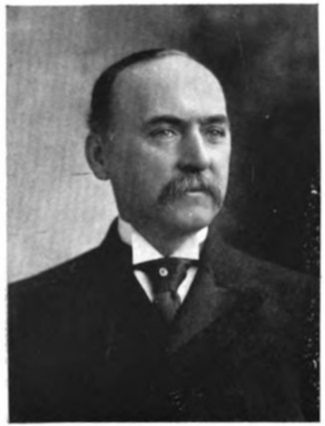
HON. MORGAN J. O’BRIEN, A Justice of the New York Supreme Court.
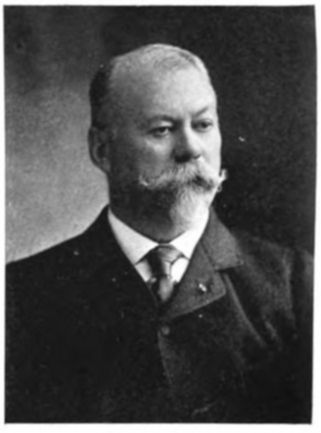
MR. JOHN CRANE, New York City.
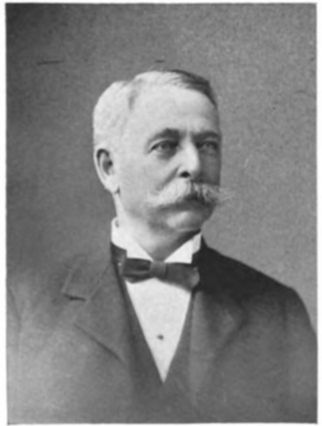
MR. STEPHEN J. GEOGHEGAN, New York City.
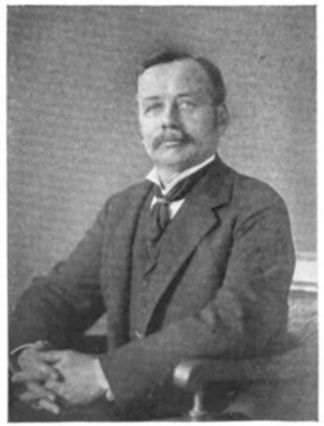
MR. JOSEPH FORSYTH SWORDS, New York City.
FOUR MEMBERS OF THE EXECUTIVE COUNCIL.
71
SOME PRE-REVOLUTIONARY IRISHMEN.
BY HON. JOHN C. LINEHAN, CONCORD, N. H.
Two hundred and fifty years ago, the Five Nations, better known later as the Six Nations, was the most powerful confederacy of Indians in North America. The governor of the province of New York, in a communication to the committee of trade dated February 22, 1687, said, “The Five Nations are the most warlike people in America. They go as far as the South sea, the Northwest passage, and Florida to war. They are so considerable that all the Indians in these parts of America are tributary to them.” To gain the friendship of these people, was the constant aim of the French in Canada, and the English in New York and New England.
The latter at the outset had an advantage from the fact, well-known, that the former under Champlain, had antagonized the confederacy, by forming an alliance with the Hurons whom it had not, up to that time, subjected to its rule. This advantage, however, there is good reason to believe, would not have inured to the benefit of the English, were it not for the influence of two men of Irish blood, who by their tact, discretion, and humanity, secured the alliance of the Six Nations for the British government. The union thus created was of the greatest possible benefit to the English colonies, and existed until the power of the confederacy was destroyed forever, and the Indians themselves, connected with it, almost swept from the face of the earth.
This deed was performed by troops under the command of another man of Irish blood, who is credited with being the first in the English colonies to commit an overt act against the British government by leading a body of armed men against the Royal troops at Newcastle, N. H., on Dec. 14, 1774. Thus will the names of three men, Thomas Dongan, William Johnson, and John Sullivan, be forever inseparably connected with the annals of the Six Nations, and the records of the province and state of New York.
72The ferocity, the cruelty, and the barbarism of the Indians comprising the Six Nations, are described at length on the pages of the various works written by Francis Parkman. Their very name terrorized the other Indian tribes, almost from the Gulf of St. Lawrence to the Mississippi, and in their efforts to dominate all others, they devastated the entire country. It was not, therefore, surprising that their enmity was feared, and their friendship sought. After the conquest of New York, and during the dominion of the three first governors appointed by the English government, no effort had been made to secure the latter.
The appointment, however, by James II, of Col. Thomas Dongan, placed at the head of affairs in New York a man of distinguished character as a soldier, and, as events subsequently proved, possessed of abilities in civil affairs that entitle him to the rank of a statesman. He was a native of Ireland, a Catholic in religion, and had been, through weal and woe, a stanch adherent of his royal master. He had seen service in the French army, and in both Britain and France was looked upon as a brave and skilful officer.
He was commissioned governor on Sept. 30, 1682. Under his administration the first legislative assembly met in the colony and under it a law was enacted granting religious toleration to the members of all Christian churches. He had not been long in his new position before he realized the importance of securing for his government the good will of the Five Nations. It goes without saying that, in their intercourse with the American Indians, the French, for one reason or another, had been able to get along with them better than did the English, and up to the time of Colonel Dongan’s arrival, they were doing all in their power to secure an alliance with the Indians whose prowess they feared as well as respected. He saw that action, immediate action, was necessary to counteract the influence being exercised by the French.
One of the first steps taken by him was to oblige the Jesuit missionaries who were among them to return to Canada; thus proving that his religion was no obstacle in the way of loyalty to his government. For this, and for other similar acts, he was complained of by the Canadian authorities, who wrote at length to the king of France, who in turn complained to the king of England in relation to the matter.
This did not deter Dongan, however, and during his entire administration, extending over a period of nearly six years, he 73labored incessantly to effect a union between his government and the Indians, which, through his tact, and his good judgment, was finally effected to his satisfaction before his departure. No man of British birth or of the Protestant religion, labored more diligently, zealously, or successfully for his government, than did this Irish-born Catholic. His address to the Indian Nations in City hall, Albany, on Aug. 5, 1687, near the close of his administration, as published in the documentary history of New York, is most interesting reading, as well as a good illustration of the condition of affairs then existing between the French and the English nations on this continent.
Dongan was so fair, honorable, and equitable in his dealings with all men, that, to this day, none of New York’s rulers, before or since the Revolution, stands higher with historical writers. An unpublished life of him, written more than seventy-five years ago, by ex-Governor Plumer, of New Hampshire, is now in possession of the New Hampshire Historical Society. During Dongan’s term as governor, all the New England governors looked to him for counsel and advice. It was not uncommon in those days to appeal to him to send the Mohawks to their aid in repelling the attacks of the French and Indians. It can safely be said that from the settlement of New Amsterdam down to the day of his departure, no one man had done more than he in shaping the course of events which ultimately led to the success of the English government, and the final establishment, in consequence, of the republic. It is not too much to say that, had the French been successful thus early in securing the coöperation of the Indians mentioned, the result to the English colonies would be easy to conjecture.
From 1688 to 1746 it is safe to say that the colony of New York contained no man who can be considered equal to Dongan in the capacity of either a soldier or a statesman. In the latter year, however, a young man arrived in America, commissioned by the royal government as “colonial agent and sole superintendent of all the affairs of the Six Nations and other Northern Indians,” who became in time his legitimate successor. For nearly thirty years he was the greatest power in New York, and his reputation extended far beyond its borders.
His name was William Johnson. He was the son of Christopher Johnson, of Smithtown, County Meath, Ireland, who was descended from a distinguished Irish family. His mother was Anne Warren, 74daughter of Michael Warren, of the same county, and sister of Admiral Sir Peter Warren, who was second in command, under Admiral Lord Boscawen, at the reduction of Louisburg, Cape Breton. Christopher Johnson was the son of William McShane, afterwards anglicized to Johnson, and of Anne Fitzsimmons, of Westmeath, Ireland.
William McShane was the son of Thomas McShane, and Thomas McShane was the son of John O’Neill, who was a descendant of the O’Neills of Ulster. Four steps backward, consequently, places William Johnson where he properly belongs as a descendant of one of the greatest of the Northern Gaelic clans. The Warrens, from whom his mother was descended, came to Ireland in 1170. This record is taken from the order book of Sir John Johnson, the son of William, and a major-general in the British army during the Revolution.
William Johnson was adopted by his uncle Admiral Warren, and accompanied him to America in 1746, or thereabouts. From the first he took an active part in the affairs of the province and it was not long before his reputation extended beyond it. His services were duly recognized by the home government and a baronetcy was the expression of its satisfaction with his management of the affairs committed to his charge.
His power over the Indians of the Six Nations was unbounded. The union effected by Dongan was strengthened and perfected by him. In the various conflicts occurring from his arrival in New York, until the final downfall of the French power in Canada, he was looked up to as a leader by all the eastern provincials. He was commander-in-chief of the forces engaged in the expedition against Crown Point, to which soldiers were furnished by the four New England colonies and New York.
In consequence, his form and features became familiar to Rogers, Stark, and others from New Hampshire, who were with him at Lake George and Fort William Henry. Of him it was said at this period by a well known historical writer, that “he was perhaps the most prominent man in the province of New York, during the decade that preceded the Declaration of Independence.”
The sturdy Knickerbocker, Peter Van Shaak, in alluding to him, said, on July 24, 1774, “I own I consider him as the greatest character of the age.”
Another writer said of him, “Coming to America at the age of 75twenty-three, although of good birth and family, he set out to make his own fortunes, and plunged into the forests. He opened a store, bought furs, and traded with the natives. He won their admiration, for he was athletic, brave and true-hearted. He won their confidence, for he always told the truth, and treated them with justice. He was made superintendent of Indian affairs, but he never took advantage of his place to rob his wards.
“He was made a baronet, but he never forgot his humble friends. For nearly thirty years he stood up as the advocate of the Six Nations, compelling a recognition of their rights. The struggle often was severe, for he encountered every obstacle that the greed or avarice of the whites could suggest, but he triumphed, enforced good faith towards the red men, and retained their friendship.”
The correspondence between Sir William and the governors of the New England colonies, in those trying times, takes up considerable space in the Provincial records. In considering the present condition of New York, Massachusetts, Connecticut, Rhode Island and New Hampshire, so far as population and resources are concerned, it cannot but be of interest to make a comparison with the situation then. On the authority of Theodore Atkinson, provincial secretary of New Hampshire, in the spring of 1755, that province fitted out a regiment of 500 men for the Crown Point expedition and had them in the woods fully two months before the other provinces had their men on the Hudson river.
In addition, the province supplied its own troops with rations during that period. Colonel Blanchard of this regiment was post-commander at Fort Edward. The New York regiment was also under his command. Colonel Blanchard’s regiment experienced hard service, and acquitted itself creditably. Sir William wrote Governor Wentworth, Nov. 4, 1755, and said: “The activity and usefulness of Colonel Blanchard’s regiment would prejudice me in favor of any other from your province.” In September of the same year a second regiment, numbering 300 men, was raised and placed under command of Colonel Gilman.
In the formation of this expedition the following apportionments were made for the colonies named: Massachusetts, 1,200; Connecticut, 1,000; New York, 800; Rhode Island, 500; New Hampshire, 600.
To this division, so far as the provinces of New Hampshire and Massachusetts were concerned, the New Hampshire officials objected. 76Their proportion as a rule being one hundred, to Massachusetts, 1,000. They were informed in reply that Massachusetts had raised four regiments, respectively, for Governor Shirley, Sir William Pepperell, and two for the Nova Scotia campaign, and in justice, this fact ought to be taken into consideration.
New Hampshire retorted in turn, that, while willing to give Massachusetts credit for raising the four regiments named, their province furnished more than half of the men; a circumstance similar to that which occurred twenty years later at Bunker Hill, where New Hampshire furnished more than one half of the men, and Massachusetts took nearly all the honor. A compromise was effected by reducing the number from 600 to 500. It can be seen from this that the provinces of New York and New Hampshire were in close touch in those early days, and the record made in the Civil War by the descendants of the men who fought at Fort Edward and Fort William Henry, was fully equal to that made by their ancestors, as testified to by Sir William Johnson. To the white settlers around him, he was always a kind friend as well as a wise counselor.
To his subordinates, he was a generous and liberal superior. When appointed to take command of the expedition in question, and while negotiating with the authorities of New Hampshire and Massachusetts for the appointment of white officers for the Indian troops, he insisted that as the service would be very severe, they must receive the same compensation as the officers in the regular service, and required what he called “solid satisfaction” instead of a verbal agreement as a guarantee for the payment of the same. He was surrounded on his estate by many of his own countrymen, and lived in the same style, so far as it could be done, as those of his rank did in Ireland. It is fair to presume that the Gaelic tongue was not unknown in his family, for one of his daughters was alluded to as “Sheilia,” and Sir Guy Johnson, his nephew and successor, was credited with being the possessor of a “genuine rich Irish brogue.”
His son John succeeded to his estate and title. As in the case of Colonel Dongan, Great Britain did not possess on the American continent a more loyal or devoted subject or a more faithful officer than it had in Sir William Johnson, and both, as the records show, in blood were Irish of the Irish. It was not his fortune to live when the struggle began between the colonies and Great Britain for he died on June 24, 1774.
77On Dec. 14, 1774, barely six months from the death of Johnson, the first rumble of the guns of the Revolution was heard. On that date an armed body of determined men, led by Major John Sullivan and Capt. John Langdon, stormed Fort William and Mary, at Newcastle, near Portsmouth, N. H. The garrison was captured, the munitions of war taken, and in broad daylight, the British flag was hauled down, and, so far as New Hampshire was concerned, remained down forever. This was the first overt act against the Royal government in the thirteen colonies. It was four months before the conflict at Concord and Lexington, and six months before the battle of Bunker Hill.
The powder captured at Newcastle was put to good use at Bunker Hill, and many of the men who handled it in both places had served their apprenticeship as soldiers under Johnson during the various Indian campaigns. John Sullivan was the grandson of Major Philip O’Sullivan, one of the defenders of Limerick, who went with his regiment to France after the surrender. His family was one of the most distinguished in the south of Ireland. His father was Owen O’Sullivan, who was a teacher in New Hampshire for over fifty years. He contributed four sons, all of whom became commissioned officers, to the Continental army. Two of these later became governors, respectively, of New Hampshire and Massachusetts. John Sullivan, when the troubles first began, was an attorney with an established reputation and with a lucrative practice. On the authority of John Adams, he was worth ten thousand pounds when he cast his lot with the advocates of independence. He held the commission of major in one of the Provincial regiments.
He had seen no active service, but possessed a good theoretical military education from a close study of all available works relating to the art of war. His ability was recognized by his associates. He was chosen delegate from his town to the first Provincial congress of New Hampshire, and was selected by that body to represent his native province in the first Continental congress which met in Philadelphia in 1774. He was reappointed January 25, 1775. He was the first person chosen to represent New Hampshire in Congress, and his name heads the first roll of delegates to that body. He was one of the eight brigadier-generals appointed by Congress in 1775, and in less than a year from the date of his commission was promoted to major-general.
His first appointment came to him for his leadership at Newcastle, 78and his promotion for the ability displayed in leading Montgomery’s defeated army back from Canada, without, it is said, the loss of a man or a gun. The Royal government recognized his ability as it feared his influence. Realizing who was to be held responsible for the storming of the fort at Newcastle, Peter Livius, a Royalist refugee, who had been chief justice of New Hampshire, wrote him in June, 1777:
“You were the first man in active rebellion, and drew with you the province you live in. You will be one of the first sacrifices to the resentment and justice of the government. Your family will be ruined, and you must die with ignominy.” This was the man to whom Washington turned for a leader when Congress determined, in 1779, to organize an expedition for the destruction of the Six Nations. When the Revolution began the colonial authorities sent delegates to the great council of the Iroquois, to secure, if possible, their neutrality in the coming contest. There was good reason to expect it, for the Provincials had fought with them and for them against the French for years. The confederacy could muster at this time about 2,000 warriors. The delegates returned, confident that an arrangement had been effected, but, as subsequent events proved, any action by the Indians to that end was revoked, and fully 1,200 of them were secured for the British service.
It is not necessary, neither was it the intention, to describe here the events occurring on the frontiers of New York and Pennsylvania during the years 1777 and 1778. The terrible atrocities perpetrated on the defenceless settlers by Indians, Tories, British regulars, and refugees, whose passions were inflamed with hatred against the struggling patriots, were a disgrace to civilization and a foul blot on the British government, which sought to crush the Revolution by such horrible methods. A well-known New York writer, a descendant of some of those who suffered at Cherry Valley, while describing the massacres by the Indians said: “But, after all, I blame much more the English monarch who incited the fiendish warfare, than the red men, who took his gold and fought after their fashion.”
He could have truthfully added that but twenty years after, similar deeds were committed without the aid of Indian auxiliaries, by order of the same government, when it crushed, in Ireland, the rebellion of 1798.
Many of those who then met their death by the bullet or bayonet, 79or swung from the gallows, were akin to hundreds who marched and fought under Sullivan in this campaign. A kinsman of one of them, Francis McKinley, who suffered death on the scaffold in Ireland at that time, is now president of the United States. The destruction of the thriving settlement of Wyoming and Cherry Valley, and the devastation along the banks of the Susquehanna, finally brought Congress to a realization of the situation.
That body adopted a resolution on February 27, 1779, authorizing General Washington to take the most effective measures for protecting the people and punishing the Indians, who were allies of the British. The commander-in-chief made no delay. An expedition consisting of four brigades, made up of some of the best troops in the Continental Army, was organized. Their composition was as follows: First Brigade, Brig.-Gen. William Maxwell, four regiments from New Jersey; Second Brigade, Brig.-Gen. Enoch Poor, three New Hampshire and one Massachusetts regiments. Third Brigade, Brig.-Gen. Edward Hand, three Pennsylvania regiments, a German battalion, three independent companies, and a battalion of Morgan’s riflemen. Fourth Brigade, Brig.-Gen. James Clinton, four New York regiments and a section of artillery.
The command of the expedition was first offered to General Gates, the hero of Saratoga, as a matter of courtesy, with the request, in case he did not desire to assume command, to turn it over to General Sullivan. The expected happened; it was refused, and the army was placed under Sullivan’s leadership. Washington’s instructions were, in short, to devastate, and, if possible, destroy the Indian settlements totally, and to capture as many persons as possible. Sullivan had no easy task before him. Difficulties, which are needless to mention here, beset him on all sides. Some of the troops were discontented, almost to the point of mutiny, on account of the worthless character of the Continental paper money paid them; and delays in furnishing supplies were not among the least annoyances of the situation.
Sullivan’s energetic disposition and tireless efforts, aided largely by Washington’s sympathetic encouragement, finally overcame all obstacles, and on June 14, 1779, his command had reached Wyoming. It is not necessary to describe in detail this campaign, for it is too well known.
Washington’s instructions were carried out to the letter. The powerful confederacy of the Indians, for more than a century the 80terror of the country and the peaceful settlers, was completely destroyed; their villages, orchards, and cornfields were devastated beyond reparation, and the greater part of themselves, not killed or captured, driven forever beyond the Canadian border. No repetitions of Wyoming and Cherry Valley were possible thereafter. For his conduct of the campaign, Sullivan was severely criticised. The destruction of property was cruel and needless, it was said, and the treatment of the Indians not in harmony with civilized warfare.
To these strictures no reply was made. Sullivan heard them in silence, and through life bore them uncomplainingly. He had obeyed the orders given him by General Washington, and time has done him justice. The great state of New York has ever held his name in grateful remembrance. It is borne by one of its counties. Nearly twenty years ago the people dwelling in the valleys through which marched his victorious troops, assembled at Newtown, Waterloo, Geneseo, and Aurora, to celebrate the first centennial of the campaign, which opened up the fertile lands of Central New York to the victors in the War of Independence.
The principal celebration was at Newtown. Among the participants were the governors of New York, Pennsylvania, and New Hampshire, the provinces furnishing full three quarters of Sullivan’s soldiers; and Gen. William T. Sherman, then commander of the United States Army. In his address, he said: “Washington gave General Sullivan orders to come here and punish the Six Nations for their cruel massacre in the Valley of the Wyoming, and to make it so severe that it would not occur again, and he did so. General Sullivan obeyed his orders like a man and like a soldier.”
As a recognition of what had been done, Sullivan and his troops received the thanks of Congress, and were complimented in General Orders by Washington. At the conclusion of his military service, John Sullivan returned to his native state, where he lived to the hour of his death, honored and respected by those who knew him best. He was its third governor, its first United States judge, appointed by Washington, and the organizer, and for a time commander, of the state militia.
He was attorney-general of his state for years, and was succeeded later in the same position by his son and grandson. His great great grandson, Captain John Sullivan, was an officer in the Thirteenth N. H. Regiment in the Civil War. From the entrenchments round Boston in the winter of 1775 he wrote to the Committee of 81Safety of New Hampshire, in response to its request, giving his opinion of the kind of a government we ought to have for he was in favor of separation from the outset. On the line of his suggestions was drafted the State Constitution of 1776, which was the first to be adopted by any of the thirteen colonies, and this at a time when the minds of many, prominent in public affairs, were wavering on the question of independence. There was no intention to give, in this paper, any account in detail of the great events occurring between 1682 and 1779, save what is necessary to bring out as clearly as possible the characters and the deeds of a few men of Irish blood who aided largely in furnishing material for making American history, and as well to give the country which produced them the credit to which it is justly entitled.
The credit due Ireland for them, as well as for many others who have distinguished themselves here in years gone by, has not always been given. Our duty, as members of the American-Irish Historical Society, will be to right this great wrong and never cease our efforts until the errors of latter day historians, so far as they relate to the Irish in America, are corrected. This expedition against the Six Nations is in itself a great illustration of the prominent part taken by men of Irish birth or parentage in the War for Independence and the establishment of the Republic. Of the five generals holding command, the leader, Major-General John Sullivan, and Brigade-Commander James Clinton were born here of Irish parentage. Two of the other three, namely: General Edward Hand and General Wm. Maxwell, were born in Ireland. The fifth, General Enoch Poor, was a native of New Hampshire.
That there were many of Irish blood in the ranks with muskets on their shoulders, the rosters of each regiment will doubtless show. Among them was Timothy Murphy, who was one of the few of Lieutenant Boyd’s scouting party escaping capture by the Indians. He was styled by Colonel Hubbley, commander of one of the Pennsylvania regiments, in his diary, as a noted marksman and a great soldier. On his authority Murphy killed, during the campaign, thirty-three Indians. His name is, in consequence, a household word in Pennsylvania and New York. Among those of Boyd’s party killed or tortured to death were Lieut. Thomas Boyd, Corp. Michael Parker, John Conroy, William Faughey, James McElroy, Benjamin Curtin and Corporal Calahawn. Col. Thomas Proctor, who commanded the Pennsylvania artillery regiment, and Col. 82William Butler, of the same brigade, were both born in Ireland.
As a native of Ireland I am proud of the record here spread forth of the deeds of Irishmen and the sons of Irishmen; and as an adopted son of New Hampshire, I glory in the spirit of independence displayed by the people of that state from the very first, and believe that it is largely due to the liberal strain of Irish blood running in the veins of her sons. Her men were with Johnson at Crown Point, as they were with Stark at Bunker Hill, and Sullivan at Newtown. They never failed to go where duty called, and their service in the Civil War showed no degeneration, for the official records of the Union and Confederate armies give the Fifth New Hampshire credit for losing more men in action than any other infantry regiment in the Union army. Territorially, as well as in population, she does not cut a large figure to-day, but less than a century and a half ago, she sent as many men to Crown Point as the province of New York, and contributed nearly one quarter of the troops for Sullivan’s expedition, besides furnishing its commander.
She contributed more than her quota of men to the Continental army, one hundred thousand dollars more than her proportion of money, and possessed within her borders fewer Tories than did any one of the original thirteen colonies. It has often and truthfully been said, “New Hampshire is a good state to hail from.” She gave you here in New York one of your most distinguished governors, Gen. John A. Dix, who, when the shadow of secession hung like a cloud all over the country, penned the memorable sentence, “If any man attempts to haul down the American flag, shoot him on the spot.” She sent to Massachusetts the only man, Gen. Benjamin F. Butler, who dared to execute the order; only he thought shooting too honorable and hanged the man Mumford, who dared to disobey it. The record of her sons for bravery and honorable service has been second to none. One of her regimental commanders, Henry Dearborn, who was with Sullivan in his campaign, became afterwards commander-in-chief of the United States army. Another, Maj.-Gen. John G. Foster, was one of the defenders of Sumter, and a gallant soldier of the Civil War. Still another was Maj.-Gen. Fitz John Porter, who, like General Dix, became a resident of New York. The Kearsarge, built of New Hampshire timber and manned mainly by New Hampshire tars, met the Alabama, and under the direction of executive officer Capt. James S. Thornton, 83the grandson of New Hampshire’s Irish-born signer of the Declaration of Independence, in a fair, open fight, sent the British-built and British-armed privateer to the bottom of the ocean.
In civil affairs, also, her sons have distinguished themselves. She sent to Massachusetts, Henry Wilson; to Maine, William Pitt Fessenden; to Iowa, James W. Grimes; to Michigan, Zachariah Chandler; and to Ohio, Salmon P. Chase. The latter was secretary of the treasury, and the others chairmen, respectively, during the Civil War, of the senate committees on military affairs, on finance and appropriations, on District of Columbia, and on committee on commerce. To represent herself during the same period, she sent to the United States senate John P. Hale and Daniel Clark. The former was chairman of the committee on naval affairs, the latter chairman of the committee on claims.
She contributed to New York, in addition to those named, Horace Greeley and Charles A. Dana. Of those here mentioned, John P. Hale, Daniel Clark, James W. Grimes and Horace Greeley were of Irish descent. Hale was the son of Mary O’Brien. Her father was Wm. O’Brien, the younger of the historic O’Brien brothers of Maine. While acting as second in command under his brother, Capt. John O’Brien, on the Hibernia ship of war during the Revolution, he was mortally wounded in an engagement with an English vessel, and died of his wounds at the age of twenty-two.
The reader of history to-day, if conversant with the events occurring in British and French America from the first settlement down to the outbreak of the Revolution, can see the wisdom of securing the friendship of the Six Nations. For a century they stood as a bulwark between the English and their northern rivals. Without their aid and with their enmity the former could not have prospered as they had; and, as a consequence, would not have been in condition to resist the unjust exactions of the home government. For this reason the names of Colonel Thomas Dongan and of Sir William Johnson ought to be held forever in remembrance in New York and in New England for what they had done in bringing this about. The ways of Providence are mysterious, and to mortals often beyond comprehension.
This powerful confederacy, for so many years the terror of the French, as it was the hope of the English settlements, outlived its usefulness; and its downfall was finally brought about by the men or the children of the men with whom it had been for so many 84years in alliance. As in the first instance, the union between it and the English had been effected mainly through the influence of two men of Irish birth, so in the end it was broken forever by an army led by a man of Irish parentage.
If these conclusions are correct, Thomas Dongan, Wm. Johnson O’Neill, and John Sullivan ought to be assigned honorable positions among the pioneers and builders of the United States of America.
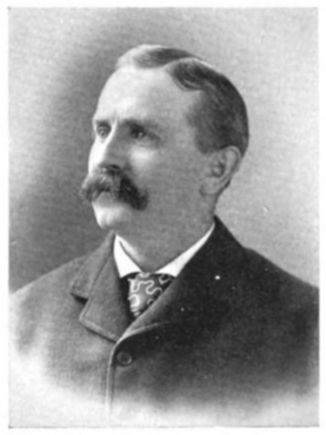
MR. JAMES F. BRENNAN, Of New Hampshire, State Library Commissioner. Residence, Peterborough.
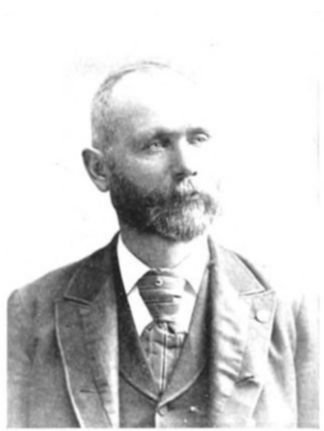
JOHN D. HANRAHAN, M. D., Of Vermont, Ex-President Rutland County Medical and Surgical Society. Residence, Rutland.
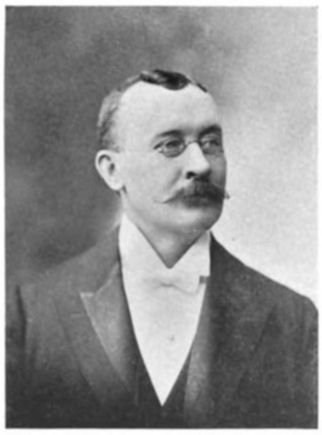
JOHN F. HAYES, M. D., Of Connecticut, Member Waterbury Board of Education. Residence, Waterbury.
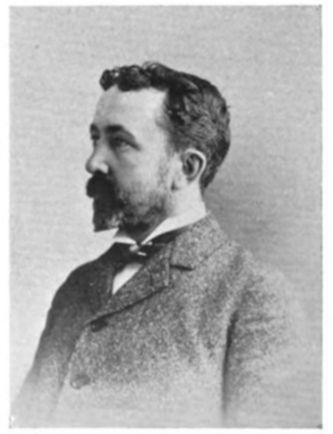
WILLIAM A. M. MACK, M. D., Of New Jersey. Mayor of ELizabeth, N. J.
FOUR STATE VICE-PRESIDENTS OF THE SOCIETY.
85
THE IRISH ELEMENT IN THE SECOND MASSACHUSETTS VOLUNTEERS IN THE RECENT WAR (WITH SPAIN).
BY REV. JOHN J. McCOY, P. R., CHICOPEE, MASS.
“What have ye brought to our Nation-building, Sons of the Gael?
What is your burden or guerdon from old Innisfail?
Here build we higher and deeper than men ever built before;
And we raise no Shinar tower, but a temple forevermore.”
—John Boyle O’Reilly.
Just after the Parnell investigation in 1885, when the Irish Parliamentary party came out of the fires of ill will and fraud, and was crowned with the world’s credit, John Boyle O’Reilly said to a priest friend of mine, the Rev. Dr. O’Callaghan of Boston, “Father Denis, in the clubs of Boston to-night it is a glory to be an Irishman.”
What the hot-hearted O’Reilly said that happy night of exclusive and scholarly Boston may as truthfully be said now of the whole state from the Cape to the Berkshires. Men who most love the Bay state’s white flag, with its protecting shield and uplifted arm, are saying it is a glory in Massachusetts to-night to be an Irishman or an Irishman’s son; and they find their reason for this in the heroic showing of her citizen soldiers, who went out from a people that had not enervated under more than thirty years of softening peace, right into the zone of flame and blood at El Caney, San Juan, and Santiago, and bore themselves so gallantly there, and in the other fact that more than every second man in the Massachusetts contingent had the heart within him warmed by the red blood of the fighting Gael.
The Ninth Massachusetts Volunteers, though not entirely as is usually supposed of Irish blood, is yet so nearly so, that at home our people commonly speak of the splendid command, as “the Irish Ninth;” while the Second, which has won imperishable renown in Cuba, and has awakened the honest pride of every patriotic heart at 86home, in the valley of the Connecticut, upon the Berkshire hills, and along the quiet Quinsigamond, is spoken of by press and people as the ideal Massachusetts regiment, and as made up from the best blood of liberty-loving New England. This is true; and it is the best blood because most of it is Irish blood. Many men appear to think that a man to be of Irish stock must be an O’Sullivan, an O’Brien, a McCarthy or an O’Neill.
Five young men of my near neighborhood went to the war. Their names were Tobin, Nesbett, McCullough, Braziel and Judd. Three, Tobin, Braziel and Judd, were of Irish parents, but American born, and a few months before were boys in my parish school. The two others, McCullough and Nesbitt, were Protestant boys born in Ireland. Only one of the names would ordinarily be recognized as Irish. Thinking that what was true in this case might be in others, and that many of the men of the regiment might be of Irish blood, I sought for the facts, believing that the facts when known would make for the credit of our people. I sought the rosters of the companies, and asked the officers to mark the names of men of Irish blood, and from this excellent source have I the word which I say to-night.
In answer to a letter sent to the captains of companies, I received replies giving me the following figures:
Company A has 11, known to be of Irish blood, and then such names as Allison, Fay, Cardin and Young have not been counted in.
Company B has 33 men of Irish blood, and does not count Devine or Young. Company C has 9 men. Company D has 14 men. Company E has 6, and still we find such names as Doane, Leonard and Blake outside the count. Company F has 14 men.
Company G has 40 Irish Catholics, 2 Irish Protestants, 2 Italians, 3 Germans, 3 Scots, 2 Swedes, 1 Nova Scotian, 7 French-Canadians, and 17 of old Yankee stock.
Company H has 13 men. Company I, 24 officers and men. Company K has 12, and still we are not counting such names as Verrily, Kelley, Carr and Crehy.
Company L has 13, and outside of that we find Barnes, Carney, Kingston, Norton and Raymond.
Company M has 22, and beyond that 22 there is a Simmons, a Carey, Daniels, Graham, Manning, Riley and Ward—all good old Irish names.
The count I have given you is in most cases that of the captains 87of companies, as far as received, and is as close as hasty work can hope to be. I am satisfied that with more time and kindly aid of officers and men, I shall be able to make the roll exact and the number of men of Irish stock much increased.
We may note, too, that our count to-night is only of men Irish born or in the first American generation. Many of the best in the regiment have it farther back, as for instance the gallant colonel himself, who writes me, “My great-grandfather was Patrick Clark who came from Ireland.”
In the regiment was a young second lieutenant, whom the correspondents praised and the artists pictured, and who drew the eyes of Massachusetts to himself by his cool bravery and marvelous skill as a sharpshooter which he used in silencing the murderous Spaniards who fired from the trees at our wounded. A Spanish mauser ploughed through his shoulder, but he is alive and well, and to-day the gentlest and most unspoiled hero of the war is Lieut. Daniel Moynihan of Northampton.
“I myself am of Irish blood, and Second Lieut. Thomas F. Burke is of Irish blood also,” writes the city marshal of Springfield, Henry McDonald, who was captain of Company B.
Of Irish blood, too, is the captain of Company G, who was acting major in the dangerous time, John J. Leonard. So, too, is his soldierly and capable first lieutenant, William G. Hayes. So, too, the second lieutenant, Edward J. Leyden, and Sergeants Scully, Ward, Murphy and Gibbons.
After a long and intimate knowledge of the regiment, and a closer acquaintance with its personnel than any other man could possess just now, its colonel, who is high sheriff of Hampden county and known for his conservativeness and thoughtfulness of speech, thus gives me his estimate, and writes it over his own hand: “If we go back for two generations, I think from one half to three fourths of the members of the Second Massachusetts Volunteers were of Irish blood.”
This regiment had in the war the gratuitous services of a chaplain whose name is a benediction to-day in the Connecticut valley, Father Fitzgerald, chaplain of the Twenty-second Infantry, U. S. A. He is an Irishman born, and may fittingly be spoken of in this connection, and the world will honor us as well as him. Every man of the regiment, Catholic and Protestant alike, loves him, and can scarcely meet a priest to-day without claiming kindly right to speak 88of him. The gist of the general love is in the words of an enthusiastic captain, who writes me in this manner: “The Rev. E. A. Fitzgerald, chaplain Twenty-second Infantry, U. S. A., was as truly chaplain of the First Brigade, Second Division of the Fifth Army Corps, comprising the Eighth and Twenty-second Regular Infantry and the Second Massachusetts Volunteers.”
Chaplain Fitzgerald had the respect of all the officers and men of the brigade for his earnest devotion to their interests and for his unflinching courage during the progress of the battles at El Caney and San Juan, where he confronted danger at every turn and amid shot and shell attended to the needs of the wounded. He won for himself a name unequaled in bravery by that of any other chaplain in the Santiago campaign. While he was not wounded, his clothing showed the effect of the mausers.
During the time of disease, a horror of war more trying than battle, he was unceasing in his labors for the sick, going from one end of the brigade to the other daily, and reeking with sweat during the heat of the day. His cheerful countenance and kindly disposition in his daily work brought comfort and true sunshine to many a drooping soldier irrespective of creed or race. Colonel Clark, Second Massachusetts Volunteers, says of him: “One of God’s noblemen,” and Adjutant Hall, Twenty-second Infantry, in speaking of him, said that he was the “salt of the earth.” The officers and men of the brigade are unstinted in his praise, and his name will ever be cherished with reverence, respect and good wishes by his comrades in the Santiago campaign, the rank and file of the unassuming volunteers of the Second Massachusetts. I am satisfied that a study of the men who fought on land and on the sea in the war with Spain, will be highly creditable to our people.
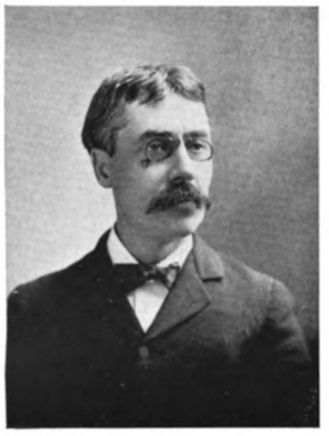
MR. JOHN D. O’BRIEN, Of Minnesota. Residence, St. Paul.
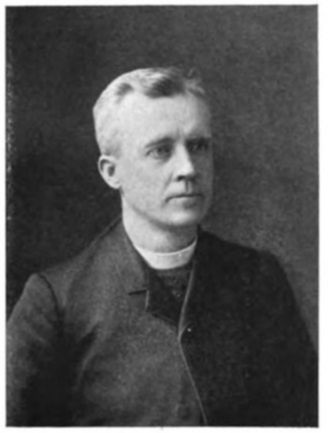
REV. M. C. LENIHAN, Of Iowa Residence, Marshalltown.
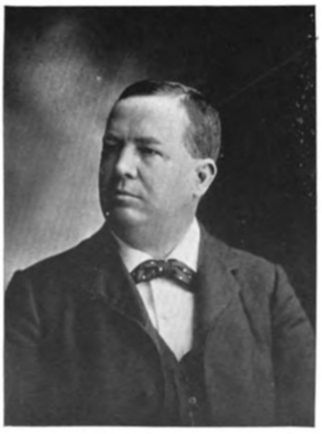
MR. EDWARD FITZPATRICK, Of Kentucky. Staff of the Louisville Daily Times.
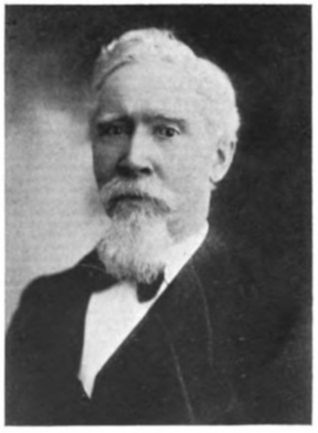
MR. MICHAEL GAVIN, Of Tennessee. Residence, Memphis.
FOUR STATE VICE-PRESIDENTS.
89
THE “SCOTCH-IRISH” AND “ANGLO-SAXON” FALLACIES.
BY JAMES JEFFREY ROCHE, BOSTON, MASS.
Mr. President and Gentlemen of the American-Irish Historical Society:
A few weeks ago I attended a performance of Sheridan’s comedy, “The Rivals,” very ably interpreted by a new company of players.
One of them, an excellent performer, taking the part of Sir Lucius O’Trigger, interpolated a “gag,” as it is called in theatrical parlance, to the effect that modesty is a word which has no equivalent in the Irish language. It was an interpolation to make the unthinking laugh—but to make the judicious grieve.
For the Irishman is not immodest, not as the word is meant to imply—impudent. Thackeray, the shrewd judge of character, rather condemns the Irishman for his national bashfulness.
The Irishman, at home and abroad, has ever been shamefully apologetic for his race and himself. He, the proudest of mortals, is always depreciating his nation’s glory before the world.
The most successful of Irish soldiers, as we gauge success, was Wellington, a man of Irish birth, whose family had lived in Ireland for three hundred years. Yet, if we may believe biography, he always called himself an “Englishman.” If he with three hundred years of Irish ancestry behind him was English, is there, on all this continent, such a being as an “American,” since not many of us can call ourselves “natives” by much over one century of heritage?
Quite recently, in Boston, a wise and patriotic Irishman, though not a Home Ruler, said, in presenting his case before an American audience, that his family was not exactly “Irish,” since they had been in Ireland only six hundred years!
And the patriotic poet, Doctor Sigerson, of Dublin, talking with my dear lamented friend, the late Alfred Williams, himself a descendant of the great Roger Williams, of Rhode Island, remarked, incidentally, 90in regard to a mutual friend, that “there was an old feud between his family and mine—but we have agreed to forget it.”
The “feud” dated back to the Danish invasion—many centuries ago—when Doctor Sigerson’s ancestors fought against Brian Boru! I mention this incident merely to show that it is possible to go back—too far—in the path of genealogy.
Let us be content with reasonable research. If we can prove that St. Brendan was the first discoverer of America, and that a seaman named “Patrick Maguire” was the bow-oar who set the first foot on the strand of the New World, from the boat of Columbus—what of it? Any clumsy forger will come forward at once and declare that Brendan was a “Scotch-Irishman” and Maguire an “Anglo-Saxon,” as their names imply. For have they not demonstrated, to their own entire satisfaction, that St. Patrick was not only a Scot, but also a Calvinist—centuries ere Calvin was born? We can afford to ignore the fables of what is, to us, comparative antiquity.
The point that I wish to make is this: I concede willingly, and, I may say, gladly, that the founders of the great Irish-American societies in America, a century or a century and a half ago, were not all of the distinctively Irish race whose faith was Catholic; but of their nationality there was not the shadow of a doubt. They were Irish, and proud to call themselves such. They were not “Scotch-Irish,” nor “Anglo-Irish.”
If they belonged, for the most part, to the faith of Grattan and Tone and Emmet, does any true Irishman love their memory the less therefor? Not one! In all the history of this, our poor, crime-stained, unhappy world, there is no nation so free from the sin of persecution for conscience’s sake as poor, persecuted Catholic Ireland. Our national saints and martyrs have been Catholic and Protestant. We have never discriminated against any man because of his religious belief, but, rather, have been proud of following our leaders who loved Ireland first.
But we are jealous in claiming our own. We do not want any man to be called “Scotch-Irish” or “Anglo-Saxon,” because he did not happen to be of the same faith as Strongbow or Henry the Second, the Catholic invaders who first overran Ireland.
Emmet is ours as much as O’Connell; Parnell belongs to Ireland as much as Owen Roe. We do not discriminate between Andrew Jackson and Phil Sheridan when we glory in the deeds of Irish-Americans.
91We have only one living thought at present. Our faces are set against any alliance with the hereditary enemy of Ireland and of America. That feeling is not Irish alone; it is American. It is born of experience. On our part, seven hundred years old. On the part of America, over one hundred years old. But is not the experience of one century as valuable as that of seven when we have to deal with real things? It ought to be more valuable, even as the injury of yesterday is more stinging than one of seven years ago.
The danger of an Anglo-American alliance is imminent. Its effect on Ireland is comparatively trivial. Its effect on America is immeasurably disastrous. By it we should forfeit the friendship of France, whose men and money made our freedom possible, and of Russia, whose timely aid saved us from disintegration during the Civil War. “Republics are ungrateful,” says the old adage. This republic must prove, at least, one exception to the rule, if it be a rule.
The American, and especially the Irish-American, who would favor an alliance with England, would be unworthy of Heaven, unwelcome in Purgatory, and lonesome in Perdition.
THE IRISH NAME.
John Jerome Rooney, of New York, read the following beautiful and stirring poem:
Who fears to claim the Irish name?
Who will forswear his blood?
Who holds in shame the deeds and fame
Of Emmet, Grattan, Flood?
Their hearts held true through death and rue,
Through death and sore disgrace,
Then who’ll forget the boundless debt
We owe our Irish race?
Ere Learning’s sun had found the road
Above the Eastern hill,
Her lamp of art and wisdom glowed
By Irish lake and rill;
To Scotia’s crags it flashed a ray,
And Albion spoke reply;
From tower and shrine it beamed benign,
A beacon in the sky!
Where’er the rights of man were pressed
Beneath the heel of wrong—
Where’er, from utmost East to West,
The helpless sought the strong—
92There—there the son of Erin found
His soul’s appointed place—
When Freedom calls, oh, what appals
The dauntless Irish race.
Within the mighty woods of Maine
You hear their cheery word;
Upon the boundless Texan plain
They drive their thundering herd;
They smite the veins of golden ore,
They gird the earth with plans—
But first and most (their proudest boast),
They’re true Americans!
Then, who would shame the Irish name
By one ignoble deed?
He—he alone we will not own
Who would belie his seed!
We claim our line—your blood and mine—
From out a sacred sod.
Then, hand in hand, we’ll take our stand—
True to ourselves and God!
93
THE WORK OF THE SOCIETY.
BY THOMAS J. GARGAN, BOSTON, MASS.
The new president-general of the Society, Thomas J. Gargan, said:
Gentlemen:-We may congratulate ourselves on the progress which this Society has made during the two years of its existence. On Jan. 20, 1897, in response to a call, signed by thirty gentlemen from several of the states of our republic, forty or more gentlemen assembled at Boston and organized the Society.
Among other statements, the call recited that a number of gentlemen, interested in the part taken in American history by people of Irish birth or lineage, are about to organize themselves into an historical society for the purpose of investigating and recording the influence of that element in the upbuilding of the nation; also to place the Irish element in its true light in American history. To secure its correct perspective in relation to historic events on this soil is the final aim of the new Society. Its primal object will be to ascertain the facts, weigh them in relation to contemporary events, and estimate their historical value, avoiding in this process the exaggeration and extravagance of poorly-informed writers on the one hand, and the prejudice and misrepresentation of hostile writers on the other.
We further stated, the organization will be constructed on a broad and liberal plan. It will be non-political, and no religious test will be required for admission to membership or the holding of office. Being an American organization in spirit and principle, the Society will welcome to its ranks Americans of whatever race descent who evince an interest in the special line of research for which the Society is organized.
Established on this broad and liberal basis, the accessions to its roll of membership have been most encouraging, as we have now more than one thousand members, representatives in the truest sense of the intelligence and character of the descendants of the 94Irish race in America, coming from all parts of this great country, a country which their forefathers, among the early colonists, took an active part in reclaiming from the wilderness and upbuilding into this great republic of the United States, of which we are no insignificant factor. A distinguished man, who wrote nearly a century ago, said that all history was a series of lies, which a few men agreed to consider facts. We all agree that much of the history that has been written in the past has been written by men who have preferred to see things through their prejudices rather than their eyes, and no people have suffered more from the ignorance and prejudice of writers—particularly English writers—than the Irish people.
Unfortunately, many New England writers inherited the prejudices of their English ancestors, and have either deliberately slurred the contributions of the Irish in our history, or have failed to record them. A discriminating and critical public demands that the searchlight shall be thrown upon the dark spots. We are now, in this scientific age, rewriting much of our history and revising our judgment of men. We cordially welcome this new era, confident that when all the facts are carefully scrutinized and critically examined, the Irish in the United States have nothing to fear, but, on the contrary, will gain immeasurably in the minds of all intelligent and impartial men.
In the first volume of the Journal of this Society, papers will be found treating of the early history of the Irish settlers in New England, by Messrs. Murray, Linehan, Smith, Brandon and Sheahan, members of our Society, thus preserving in permanent form facts useful to the future historian. The New England historian has never been noted for modesty in claiming a full share of the glory of our country for New Englanders, or, as he is prone to write it, descendants of the “Anglo-Saxon” race.