PAPERS CONTRIBUTED TO THE SOCIETY, During the Year, for Publication. (continued 2)
Reading edition
The Preston family in Virginia is a distinguished one. Its propositus John Preston was born in Ireland, and came to Virginia in 1735. He married Elizabeth Patton before coming to America. She was a sister of Col. James Patton, also of Irish birth. The latter was killed in Virginia by the Indians in 1753, leaving two daughters, from whom descended John Floyd and John B. Floyd, governors of Virginia; Hon. James D. Breckinridge of Louisville, Ky., and Col. Wm. P. Anderson of the United States army.
163John Preston left one son, William, and four daughters, from whom are descended some of the most distinguished men in American history. Dr. R. A. Brock in his “Virginia and Virginians” says, “Scarce another American family has numbered as many prominent and honored representatives as that of the yeoman-founded Preston, with its collateral lines and alliances.” In support of this claim he continues: “It has furnished the National government a vice-president [Hon. John Cabell Breckinridge], has been represented in several of the executive departments and in both branches of congress. It has given Virginia five governors—McDowell, Campbell, Preston and the two Floyds—and to Kentucky, Missouri and California, one each, in Governors Jacobs, B. Gratz Brown and Miller; Thomas Hart Benton, John J. Crittenden, William C. and William Ballard Preston, leading moulders of public sentiment; the Breckinridges, Dr. Robert J. and William L., distinguished theologians of Kentucky; Professors Holmes, Venable and Cabell, of the University of Virginia, besides other distinguished educators.”
Nor is their battle-roll less glorious. It is claimed that more than a thousand of this family and its connections served in the contending armies during the late Civil War. Among the leaders were Generals Wade Hampton, Albert Sydney Johnston, Joseph E. Johnston, John B. Floyd, John C. Breckinridge and John S. and William Preston. When it is stated that besides the names enumerated, the family is connected with those of Baldwin, Blair, Bowyer, Brown, Buchanan, Bruce, Cabell, Carrington, Christian, Cocke, Flournoy, Gamble, Garland, Gilmer, Gibson, Grattan, Hart, Henry, Hughes, Howard, Lee, Lewis, Madison, Marshall, Mason, Massie, Mayo, Parker, Payne, Peyton, Pleasants, Pope, Radford, Read, Redd, Rives, Seddon, Sheffey, Taylor, Thompson, Trigg, Venable, Watkins, Ward, Watts, Winston, Wickliff, among many others, as well-esteemed, some idea may be formed of its mental characteristics and social influence.
Judge Peter Lyons was born in Ireland, and came to Virginia in his early life. He was made a judge of the general court in 1779, becoming also a judge of the first court of appeals. He served as such until his death, July 30, 1809. As a jurist he ranked high. Among his colleagues on the bench were Chancellor Wythe, Edmund Pendleton, St. George Tucker and Spencer Roane. His descendants for several generations were eminent in the professions, and 164some of them are still living in Virginia. James Lyons, Jr., who was a colonel on the staff of Governor O’Ferrall, is the oldest male descendant in the direct line. He married a daughter of William Wirt Henry, grandson of Patrick Henry, and by her has several children living.
Another judge of the supreme court of appeals was William C. Burks, of whose ancestors little is known except that they were Irish. He died recently, mourned by the profession which he had so signally adorned by the profundity of his juridical learning and the simplicity and spotlessness of his life. His opinions are as highly regarded as those of any man who sat upon the bench of that court within a half century. He was of weak frame and never enjoyed good health—“a creaking door,” was the expression he commonly used to indicate himself—and never held public office other than that mentioned. Yet his capacity for labor was truly remarkable. He was one of the early presidents of the Virginia Bar Association, which he was largely instrumental in organizing; and until the time of his death was one of the editors of the Virginia Law Register, the organ of the profession in this state.
Perhaps the ablest Irish lawyer in the state was Thomas J. Michie, whose reputation extended throughout Virginia as a brilliant wit as well as able jurist. Among the judges of the present supreme court of appeals of Virginia is John W. Riely, who was a major in the Confederate service, and whose ancestors were Irish. The speaker of the House of Delegates, session of 1897–8, was John F. Ryan. A late governor of Virginia was Philip W. McKinney, of Irish descent. His successor was Charles T. O’Ferrall, a man of Irish descent. Among the state officers of Irish descent may be mentioned P. H. O’Bannon, public printer; John Bell Bigger, clerk of the House of Delegates; Major B. W. Lynn, superintendent of the penitentiary, and the writer (Secretary of State Lawless), both of whose parents were born in Galway, and came to America after the “black famine.”
Gen. William Mahone was a descendant of an Irish progenitor who settled in Virginia in colonial days. Judge Anthony Kiely is of Irish lineage, and you know his history. After his appointment as minister to Austria by Mr. Cleveland, and the indication on the part of Francis Joseph that he was at Vienna persona non grata, Mr. Kiely was made one of the judges of the international court at Cairo, Egypt, and became its president.
165Dr. Hunter McGuire, who was medical director of Stonewall Jackson’s corps and the intimate friend of that great soldier, is of Irish lineage. His great-grandfather, Ed. McGuire, left Ordfest, County Kerry, in 1756, and settled in Winchester, Va.
The Dooleys, Pattersons, Glennans, Kevills, Barrys, O’Connors, Fitzgeralds, Keans, Rheas, Kendricks, Kellys, McChesneys, Goolricks, Wards, Higgins, Doyles, Lawlers, Rafters, Ferriters, McKenneys, McCrackens, Youngs, Coles, Macgills, O’Bannons, Irvings, Irwins, Nolans, O’Sullivans, Sullivans, Walshs, O’Neills, Kanes, Murphys, Ryans and a hundred others, came largely during the present century. Perhaps most of these families left Ireland in the great exodus which followed the famine of 1846–’47. Certainly Virginia received about that time the greatest number of immigrants who, unfortunately for themselves and for their race, have preferred for the most part to lead urban lives. But they and their progeny have not failed to leave the impress of their character upon the people among whom their lot was cast.
And it is not too much to say that in the years to come, when, in the expiring hours of the twentieth century, some chronicler pauses to consider the virtues and deeds of Virginians, he will dwell in loving admiration upon the talents and traits of those of Irish blood, who have already made bricks without straw, and won the confidence and esteem of their neighbors.
They are a people whose genius under the ægis of the Constitution enjoys here that freedom of thought and liberty of action which have been denied their fathers for eight hundred years—who love the Republic and its institutions next only to their God, and who read their own happiness and the fulfilment of all their earthly hopes in the increasing and enduring glory thereof.
Capt. Page McCarty, of Richmond, Va., writes: “I learned something of Irish-Americans from the papers of my father, governor of Florida at one time, and member of congress in 1839. The ‘Scotch-Irish’ appear to have established a theory of pre-emption or monopoly, and of that I learned but little. O’Brien, of General Washington’s staff, was from Alexandria, Va. Colonels McClanahan and Andrew Wagoner and Maj. Richard McCarty, of the Revolution, were descendants of a small group of Irishmen who named the little town of Kinsale on the Potomac about 1662. Daniel McCarty, speaker of the Virginia House of Burgesses 1715, was of this set of people, and grandson of McCarty, of Clenclare, though 166I see that some of his kin are trying to Scotch-Irish him also. The main immigration of Irish was through Philadelphia and Charleston, S. C., and they penetrated to the mountains with the most adventuresome pioneers and met in the valley that extends from the Peaks of Otter to the headwaters of the Tennessee river.”
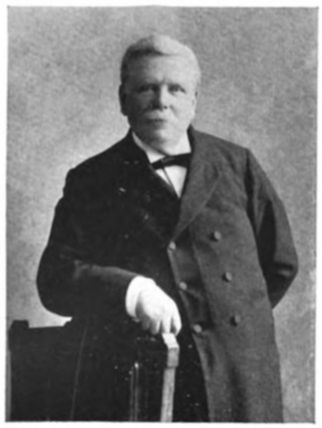
MR. BERNARD CORR, Boston, Mass.
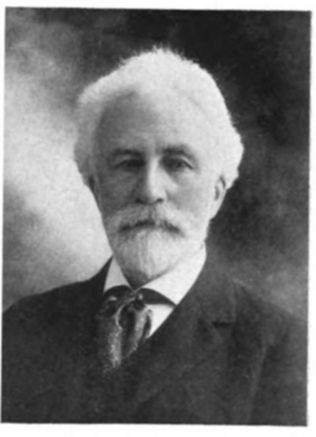
MR. EDMUND REARDON Cambridge, Mass.
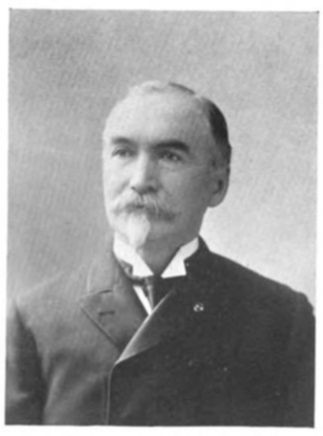
HON. PAUL KENDRICKEN, Boston, Mass.
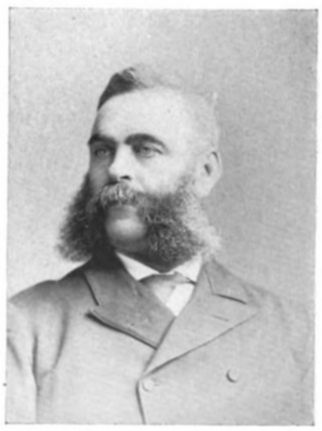
POLICE CAPT. JOHN F. MURRAY, Cambridge, Mass.
FOUR MEMBERS OF THE SOCIETY.
167
THE WHISTLERS—A FAMILY ILLUSTRIOUS IN WAR AND PEACE.
BY JOSEPH SMITH, LOWELL, MASS.
The following sketch of the Whistler family appeared originally in the Illustrated American of May 25, 1895, and is reproduced with some few slight emendations, because it is germane to the work of the American-Irish Historical Society. It was the intention of the writer to make a brief sketch of the famous artist, whose birthplace was at that time the subject of much amusing discussion, but he found the antecedents of the artist such interesting personalities and their history so romantic, that he amplified his first sketch into a brief story of the family.
Major Whistler’s connection with the beginnings of Lowell, Mass., led the writer further afield and gave him material that may at some future time be added to the literature of the society. It is sufficient to say here that this splendid seat of American industry—Lowell—was conceived, founded, cradled and fostered by the grandson of an Irishman and the husband of that grandson’s sister, Patrick Tracy Jackson and Francis E. Lowell, from the latter of whom it received its name.
The French savant, Guèrinsen, may or may not have been scientifically correct when he wrote, “Genius is a disease of the nerves;” but certainly the eccentricities of genius point too frequently to neurotic degenerations, to aberrations from the normal, and to symptoms that are “conceived in spleen and born in madness.” Modern instances of this truism are on every hand. There is that in James Abbot McNeill Whistler, for instance, which marks him distinctly as standing among the eccentrics of genius; and which, in his splenetic vagaries, shows him to be hovering on the borderland of madness.
While his affectations in art, his “harmonies,” “symphonies” and 168“arrangements” in blue and gold, and gray and green, and so on ad nauseam, might seem to set him down among the Barnums of art, with the poseurs of the æsthetic, Whistler’s work shows him to be a man of undoubted genius, a most uncomfortable and irritating genius perhaps, but still a genius whose brilliancy is flawed by his aggressive ego-mania. When we have discounted all the theatrical “isms” in which he frames his art, we are compelled to recognize the fact that he is an artist whose work will live. No ordinary man, no merely artistic charlatan, could make the impression on the age that Whistler has done. Whistler is a writer of deliciously clever and disagreeable things; he has a literary quality whose acidity has etched his personality on this decade; he is a brilliant talker, overflowing with quirk and bon mot, satire and repartee, alert and resourceful in the battle of wits, and he is easily the central figure at the social functions he honors, outshining all other lights, out-roaring other lions, a meteor among the stars.
While English in his remote racial root, his forbears lived long enough in Ulster to extract from the soil and atmosphere of Ireland that Celtic wit and pugnacity, that brilliance and originality so characteristic of the man. The transplantation of his immediate ancestors to American soil added to the mental celerity and nervous alertness of his fiber, giving to his personality that Gaelic flavor which the English-speaking races acquire under our skies in sloughing off the heavy heritage of insularity of the land of fogs.
Great talents are seldom transmitted from one generation to another, yet certain characteristics which are physiological rather than psychological, may mark the branches of a common family tree. Whistler owes his intellectual qualities to his racial fiber, to his mixture of blood and the changing environments of his ancestors; they are in fact highly developed racial characteristics, while his artistic instincts—raised in him to the plane of genius—are a family inheritance. His wit, humor and mental dynamics he owes to his Irish fathers; his merciless mockery, his acidulous aggressiveness, his satirical sardonism, are the Calvinism of his Scottish strain run to seed and sprouting in the soil of Bohemia: a sparkling champagne, which has been spoiled with vinegar.
The son of a great father, standing in the glare of a great light, has his own brilliance minimized and is deprived of that natural light and shade so necessary to his artistic proportion. If he be great himself, his contemporaries will institute comparisons that are 169ever odious, unless their greatness be in different directions. On the other hand, when the son is great his glory only adds to the aureole of the great father.
Whistler’s father was a famous man in his day; but time has done for the father what it has yet to do for the son—it has stilled the voices of contemporary panegyric and detraction, it has estimated his true worth, measured and ascertained his proportion and given him a definite historical verdict.
A glance at Whistler’s antecedents will be of interest to all, for they have added to the glory of the Republic and given it as loyal service as any one family in its history.
The Whistler family is remotely of English origin, and it was Ralph, son of Hugh Whistler of Goring, in Oxfordshire, who founded its Irish branch, removing to Ulster as a tenant of one of those predacious London guilds which exchanged its guineas for the broad acres which that thrifty monarch, James Stuart, had despoiled from the O’Neills and O’Donnells of Ulster.
The first Whistler on American soil was John, a scion of this Ulster settler of the Plantation. While little that is definite is known of this branch, the internal evidence forces us to conclude that it was one of some social and political importance, for it was on terms of intimacy with the landed proprietors of the province. The character of this John indicates that whatever the religious and political opinions of the Irish Whistlers may have been, they had grown on the soil to be Irish of the Irish. John Whistler was a high-strung, bold, brave, devil-may-care blade, who loved adventure and excitement and had the Irishman’s love of a fight and a soldier’s life. While yet a mere boy he ran off from home, enlisted in King George’s army and was hustled off in a transport to America to aid in the work of subduing the rebellious colonies.
He reached Canada in season to march with the luckless Burgoyne and to come to grief and captivity with his superior at Saratoga. He fell in love with his captors and the country, and doubtless registered a vow that he would make his home in America at some future period. In time he was exchanged and sent back to England. He was poor, yet, with that amusing contempt of poverty so characteristic of the Irish gentleman, he aggravated his troubles by falling rapturously in love with the pretty daughter of his father’s friend, Sir Edward Bishop. The maid was as ardent and foolish as her lover, but the father looked askance at the suit 170of the young soldier of fortune. The lovers solved the problem for themselves in Irish fashion by running away, marrying and taking ship for the rebellious colonies before the elders woke up. The young couple landed at Baltimore with full hearts and empty pockets and settled down at Hagerstown to begin the battle of life.
It is certain that fortune continued as unkind and capricious under American skies as she had been under Irish ones, and we next hear of the young husband bidding adieu to his young wife and child, and marching with a musket on his shoulder, as a soldier of the United States, into the wilderness of the West, under General St. Clair.
Fighting and soldiering in those days were done in rough and ready fashion under conditions that called for courage and endurance, when pluck and dash and personal prowess were the prime essentials of a soldier; and in such a school an Irish daredevil like Whistler easily made his mark. In that disastrous battle on the Miami in 1791, where the forces of St. Clair were surprised and routed by the vengeful tribesmen under Blue Jacket and the renegade, Simon Girty, young Whistler was wounded, but his gallant conduct in the battle and on the retreat earned him his shoulder-straps, and gave him a position that his birth, breeding and education enabled him to fill with honor to himself and credit to the republic. It gave him an assured position in the calling he loved best, and for which his talents and taste fitted him.
As the years rolled by, he served in many a hard-fought campaign against the enemies of his adopted country, earning promotion and fighting the soldiers of King George with as much enthusiasm as in other days he had served that fat-witted monarch. His devoted wife followed his fortune, traveling in the military train, and living at lonely frontier forts with as much content as she would had fortune strewn their paths with brighter flowers. This heroic woman had much to do in forming the character of the children born to their marriage, and her brave and gentle personality made a lasting impression on them. The Whistlers were good fighting stock, and when his sturdy boys were old enough, the fighting old major placed a sword in their hands and gave them to the land he loved, and true, loyal soldiers they were in every emergency. When age, disease and wounds stiffened the old warrior, and rendered him unfit for active service in the field, the government appointed him storekeeper at the military post at Newport, Ky., and later transferred 171him to Jefferson Barracks, near St. Louis, Mo., where he died in 1829, at the age of seventy-three.
The splendid old soldier had served the land of his adoption bravely, faithfully and loyally, and, dying, he bequeathed to his sons an unsullied reputation, and to the republic children who never failed her in the hour of need.
William Whistler, the major’s first-born, first saw the light of day in 1780 at Hagerstown, Md., and grew up with drums for his music and swords for his toys, and became a lieutenant in the army in 1801. He fought against Indians and British on the frontier with gallantry, and was badly wounded at the battle of Maguaga, Mich., in the year 1812. He passed through the various grades, fought in nearly every war the army was engaged in, and was retired with the rank of colonel of the Fourth United States infantry in 1861. Next to Gen. Winfield Scott, William Whistler was then the oldest soldier in the American army. William’s son, Joseph Nelson Garland Whistler, was, like his father, a soldier. He was graduated from the West Point Military Academy in 1846, served with distinction in the Mexican War and the Rebellion, and was colonel of the Fifteenth United States infantry, when he was placed on the retired list in 1886.
George Washington Whistler, the father of the artist and writer of “the gentle art of making enemies,” was the second son of Maj. John Whistler. He was born on the ragged edge of civilization, in the shabby frontier post of Fort Wayne, in the territory of Indiana, on May 19, 1800. He traveled up and down the rough trails of the Western wilderness with his father’s regiment, receiving what education he could from his mother until he was sent, while yet a boy, to West Point. He had a well-developed talent for draughtsmanship, and was a man of refined and artistic tastes; he was a charming companion, and withal a handsome, soldierly gentleman. One of the brightest men ever turned out of West Point, he was graduated high in his class, and commissioned as a second lieutenant in the United States artillery corps; but his engineering talents were utilized by the government in topographical surveys while in the service, except for the brief period when he was an assistant professor at the academy. One of the burning questions of those days of the early twenties was the frontier between the republic and the British dominions, our government claiming much that is still a fishing and hunting-ground in the province of New Brunswick; John 172Bull, with unerring instinct, seeking to push his lines south to include the country that has blossomed into the commonwealths of Iowa, Minnesota and the Dakotas.
From 1822 to 1826 the young lieutenant was engaged in tracing and defining the boundary in the terrible wilderness that stretches from Lake Superior west to the Lake of the Woods, enduring cold, hunger and incredible hardships, and laying the seeds of disease that was to cut him off in the prime of manhood and the zenith of his success. When he came back to civilization from these arduous duties, he found the country agog with railroad excitement, caused by the work of the Stephensons in England. American capitalists were eager to build railroads, but they realized that the radically different conditions of the two countries necessitated essentially different systems of construction and operation.
Needing the best engineering skill in the country, they applied to the government, and Whistler was, with others, detailed to survey the routes, report on systems and supervise construction of the roads. He was engaged in this responsible work for years, but, knowing that such talents as his—and he was recognized as one of the ablest engineers in the country—found but slender rewards in the service of the republic, and were better appreciated in civil life, he resigned his commission in December, 1833. His services were secured at once by the railroads, and he was sent with Jonathan Knight, William Gibbs McNeill and Ross Winans to England to examine the system there, and returning he occupied himself with the affairs of the Baltimore & Ohio and Boston & Albany railroads.
It is not too much to say that, practically, George Washington Whistler laid down the lines upon which the American railroad system was built, and along which it has grown to be the most splendid and advanced in the world, the most potent agency in the progress and civilization of the republic.
In 1834 Whistler became the engineer of the proprietors of the Locks and Canals of Lowell, Mass., the corporation whose wisdom and shrewdness have been instrumental in changing the fields and pastures along the slopes of the Merrimack into the foremost and most prosperous manufacturing city devoted to textile industries on this continent. Besides looking keenly after their strictly local interests, he spent months in the corporation’s machine shops, drawing plans, evolving inventions and improvements and supervising the construction and remodeling of a Stephenson locomotive, in 173order to adapt it to the needs and peculiar requirements of American railroads. Those most familiar with railroads and their history in this country are best equipped to appreciate the work done in that little machine shop by Whistler and to understand its value.
Whistler lived in Lowell from 1834 to 1837, in a modest house on Worthen street, and there his famous son, James Abbot McNeill Whistler, was born, probably in 1834. The parish records of the old Episcopal church of St. Anne state “James Abbot Whistler, son of George W. and Anna M. Whistler,” was baptized there Nov. 9, 1834, by him who was long and reverently known to the people of Lowell as Father Edson. This is the artist who is alleged to have been born in Baltimore and Stonington, and who himself rather oddly claims Moscow in Russia as his birthplace; but this is the record, given under the signature of the present rector, the Rev. A. St. John. Chambre of Lowell.
In 1837, Mr. Whistler left Lowell for Stonington, Conn., where he took charge of the affairs of the Stonington railroad, and three years later he removed to Springfield, Mass., to take up the duties of chief engineer of the Boston & Albany road. His reputation had grown apace with his work and achievements and it was now thoroughly established as that of a wise, prudent, skilful engineer, masterful and resourceful in all emergencies. He had been engaged on the most difficult and puzzling engineering problems of the day and had successfully overcome them. His fame was commensurate with his success; he was patient, industrious, ingenious, bold, sagacious, tenacious and incorruptibly honest; he had the confidence, trust and affection of those with whom he labored, and his manly, scholarly, soldierly and tactful personality brought him a wide and well-earned esteem.
It was at this time that the Emperor Nicholas of Russia sent a commission of officers to the United States to study the American railroad system, with a view of introducing it into the empire if better adapted to its needs than the English system, which they had already investigated. Colonels Menlikoff and Krofft not only reported emphatically in favor of the American system, but spoke in terms of highest admiration of the impression made on them by the ability and courtesy of Whistler. The emperor made up his mind that Whistler was the one man to introduce the railroad system into Russia, and he made a flattering offer for his services, among many other inducements being that of an annual salary of $12,000. Major 174Whistler accepted the offer of the emperor and sailed for St. Petersburg in 1842, in company with Major Boultattz of the Russian Engineer Corps, who had been sent to escort him to Russia.
An extraordinary task lay before Whistler in Russia, and one that might have made an ordinary man hesitate. The route had to be surveyed for the contemplated road between Moscow and St. Petersburg, the road-bed had to be constructed, the tracks laid, bridges, stations and engine-houses designed and built, gauges considered and decided upon, machine shops constructed, mechanics trained, locomotives and rolling-stock planned and built, and, in fact, every detail of the immense undertaking had to be deliberated over, thought out and carried to completion under this one man’s supervision. It was an herculean task that his marvelous executive capacity was to meet and conquer.
The jealousies of officials, suspicious of a foreigner and imperial favorite, the impediments thrown in his way by a corrupt officialdom, the delays of the bureaus, the greed of contractors, the importunities of inventors and the solicitations of a horde of corrupt harpies that gather round such an enterprise, had to be reckoned with; and these he did with consummate skill and tact, taxing the resources of his urbane but firm diplomacy and exhausting the vitality of his physical being. He overcame all obstacles, he earned the respect, admiration and affection of his Russian associates, he smoothed the friction of bureaus and officials, he made the fortune of his American associate, Winans, and others, he obtained the sincere regard and respect of the autocrat of the empire and was content to remain a poor man and an honest man. His monument was the finest and best-equipped railroad on the continent of Europe. The Emperor Nicholas, anxious to show his admiration and esteem for the American, urged him in vain to accept a high commission in the Russian army, but he refused everything, contenting himself with the decoration of the Order of St. Anne.
But Whistler’s work was nearly done; he had worked too hard and too faithfully. Beside his railroad work he planned many important improvements in the fortifications at Cronstadt, which balked the British under Napier a few years later; he made useful and needed changes in the naval school and docks at St. Petersburg, and planned many other public works. In November, 1848, he had an attack of Asiatic cholera, which precipitated upon his already exhausted system a complication of diseases, and he lingered 175along until April, 1849, when he died in the Russian capital in his 49th year.
Posthumous honors were paid the distinguished dead by the emperor; Whistler’s family were treated with great kindness and consideration by the government, and it was ordered that no changes of any nature would be permitted in completing the great railroad enterprise he had created.
Major Whistler’s first wife was Mary, daughter of Dr. Foster Smith of the United States army, who fell in love with him as a cadet at the academy where her father was stationed. The son by this marriage, George William Whistler, followed in his father’s footsteps and became a famous railroad engineer. His second wife was Anna Matilda McNeill, a daughter of Dr. C. D. McNeill of Wilmington, N. C., and a sister of William Gibbs McNeill, his friend and associate. She was the mother of the artist, James Abbot McNeill Whistler.
Major Whistler’s body was carried to America and deposited in St. Paul’s church, Boston, but it was subsequently buried at Stonington, the place of all places that this wanderer loved best and which he called home. A beautiful monument stands in Twilight Dell, in Greenwood cemetery, erected to his memory by the Society of American Engineers, which bears upon it this inscription:
“In memory of George Washington Whistler, Civil Engineer. Born at Fort Wayne, Indiana, May, 1800. Died at St. Petersburg, Russia, April, 1849. Educated at the U. S. Military Academy. He retired from the army in 1833 and became associated with William Gibbs McNeill. They were, in their time, acknowledged to be at the head of their profession in this country. He was distinguished for theoretical and practical ability, coupled with sound judgment and great integrity. In 1842 he was invited to Russia by the Emperor Nicholas, and died there while constructing the St. Petersburg & Moscow Railroad. This cenotaph is a memorial of the esteem and affection of his friends and companions.”
It can well be said that Whistler, the artist, has come honestly and honorably by his brilliant gifts, and it can be stated with equal emphasis that the Genesis of a Genius is seldom as great and worthy.
176
DAVID HAMILTON, A SOLDIER OF THE AMERICAN REVOLUTION.
BY DANIEL M. O’DRISCOLL, CHARLESTON, S. C.
David Hamilton was born in Cork, Ireland, in November, 1749. He came to Charleston, S. C., when quite young. He was well educated, a man of property, and about 1774 wedded Elizabeth Reynolds. She was a daughter of Rev. James Reynolds, an Irish Presbyterian clergyman of James Island, S. C., and of his wife, Mary Ball, a native of that island. James Island was then as now the site of many large plantations.
After a siege of many months, General Lincoln, who with a small number of troops had gallantly defended the city of Charleston, surrendered May 19, 1780. The British had thought that on account of the scattered population and the number of slaves, it would be easier to subjugate the inhabitants of the Southern states than those of the Northern and Middle, whose hardy population inured to labor, especially among the mountains of Vermont and New Hampshire, had successfully resisted all efforts to overcome them. But in this they were mistaken, for although Savannah and Charleston, the chief cities of Georgia and South Carolina, were now in the hands of the enemy, still from every brush and bracken, Marion and Sumter and their scouts would spring at unexpected moments and unlooked for times.
Among those who were taken prisoners at Charleston was David Hamilton, the subject of this sketch. There is a tradition in the family that he held the rank of lieutenant.[15] This point, however, cannot be substantiated now, as the family papers and Bibles, which were in the possession of his daughter, Mrs. Sullivan of Hampton county, S. C., were lost or destroyed during the Civil War.
When the city of Charleston was surrendered to the British commander, David Hamilton, being a member of a regiment taken 177under arms, became a prisoner of war. He was offered with others a parole if he would promise not to take up arms again against the mother country. This he declined to avail himself of, and Ramsay’s History of the Revolution in South Carolina records his name as among the prisoners confined on board the prison ship Torbay in Charleston harbor in May, 1781.
This vessel conveyed these prisoners to Philadelphia where they remained until the treaty of peace was signed at Paris in 1783. Family records tell that during his detention, receiving permission to go about the city, his wife Elizabeth, at his solicitation, joined him there. The voyage in those days was a long and tedious one, but David Hamilton having vessels of his own, Mrs. Hamilton and her two children were able to perform the journey in one of them.
During her sojourn there a third daughter, Grizelle Agnes Hamilton, was born, who became in womanhood the wife of Capt. Joseph Taylor, U. S. N. After the Revolutionary War, David Hamilton, on his return to Charleston, became the partner in business of his brother-in-law, Christopher Fitz Simons, who, also an Irishman of wealth and culture, is the ancestor of the “Sir Rupert” of South Carolina, Wade Hampton, the third, the brave cavalry leader of the Southern army in Virginia. They carried on an extensive shipping, shipbuilding and wharfage business, Hamilton owning the ships and Fitz Simons the wharves. David Hamilton owned one hundred black men, slaves, with their families.
Mr. Fitz Simons was still wealthier, having $700,000, as his will still on record shows, and when his daughter, Anne Fitz Simons, became the wife of Wade Hampton the second, it was as no dowerless bride, she receiving $100,000 as her portion. The father of Colonel Hampton was the richest planter in the South, claiming to own 3,000 slaves. Christopher Fitz Simons dying a few years before David Hamilton, his will records that he leaves to David Hamilton £50 as a souvenir, according to the old English custom, and that he desired the business to continue under the firm name of Hamilton & Co.
David Hamilton died in Charleston, Nov. 29, 1794, and is buried in St. Philip’s churchyard, the Colonial Episcopal church of that city. In these sacred precincts also rest the ashes of many of his descendants. David Hamilton left five daughters and three sons: Elizabeth, who became Mrs. Pritchard; Anne, Mrs. Harvey; Catherine, Mrs. Pritchard; Grizelle Agnes, Mrs. Taylor; Mary, Mrs. Sullivan; 178of his three sons, David, John and William, David and William died unmarried. His married son, John, left a son and two daughters, from one of whom (Mary), Mrs. Nesbit, springs the family of the same name, wealthy planters of Georgetown, S. C. Of David Hamilton’s daughters, Mrs. Pritchard’s descendants attained distinction both in peace and war.
William Pritchard, her grandson, whose name is carved on the white marble tablet which stands in the vestibule of St. Philip’s Episcopal church, was a member of the historic Washington Light Infantry of Charleston, and died of country fever during the Civil War. Mrs. Harvey’s daughter, Anne, married Commandant Knight, U. S. N. Commandant Knight died while in service on the coast of Africa, of African fever. His remains still rest there. Mrs. Taylor’s grandson, William Joseph Magill, commanded a regiment of Georgia regulars during the Civil War. He was a graduate of the Military Academy of South Carolina, a man of fine physique and pleasing address. Colonel Magill lost an arm at the battle of Sharpsburg, and died some few years ago in Florida where he had settled after the war.
Another grandson of Mrs. Taylor, Dr. James Ervin Godfrey, was educated in Paris and became a surgeon in the Confederate army, with the rank of major. He married in Madison, Ga., where he still resides, as do also many of his descendants. The youngest daughter, Mary, married Timothy Sullivan (O’Sullivan), a native of County Cork, Ireland, a merchant whose name is mentioned as a broker on Vendue Range, Charleston, more than eighty years ago. Mrs. Sullivan’s eldest daughter married Patrick Cantwell (also an Irishman), an officer of the customs in Charleston. Mr. Cantwell was a first cousin of Lieut. Stephen Cassin, one of the heroes of the battle of Lake Champlain, and also a nephew of Commodore John Cassin, U. S. N., who was commander of the naval forces at Norfolk during the War of 1812, and at Charleston from 1821–’22, where he died the latter year. His remains lie in St. Mary’s churchyard. Mr. Cantwell’s eldest daughter, Mary, married Daniel O’Driscoll, of the O’Driscolls of Baltimore, born at Cork, Ireland. Of their two sons, one is a graduate of the College of Charleston, and has entered the profession of teaching; the other, a student at the Military Academy of South Carolina.
Among the surviving descendants of David Hamilton are the Godfreys of Georgia, the Magills of Florida, the Harveys, Stroheckers, 179Pritchards, Knoxes, Poppenheims, Milers, O’Driscolls, Langleys, Cantwells, Nesbits and Morrisons of South Carolina, and a family of Prestons in Alabama. A granddaughter, Mary Pritchard, married Dr. Barnard of New Haven, Conn., and her descendants still reside in that city.
180