Book 2 — CHAPTER III. THE HIGH NOON OF THE PAPACY (continued 2)
Reading edition
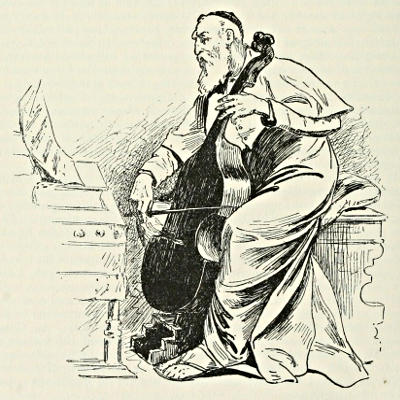
After his death the church was without a head till the third year, the cardinals disagreeing exceedingly among themselves. At length, on the 5th of July, 1294, they unanimously chose an aged man, greatly venerated for his sanctity—Pietro, surnamed di Murrhone, from a mountain in which he led a solitary and very austere life; he assumed the pontifical name of Celestine V. But as the austerity of his life tacitly censured the corrupt morals of the Romish court, and especially of the cardinals, and as he showed very plainly that he was more solicitous to advance the holiness of the church than its worldly grandeur, he was soon considered as unworthy of the office which he had reluctantly assumed. Hence some of the cardinals, and especially Benedict Cajetan, persuaded him very easily to abdicate the chair, in the fourth month of his pontificate. He died, 1296, in the castle of Fumone, where his successor detained him a captive, lest he should make some disturbance. But afterwards Clement V enrolled him in the calendar of the saints. To him the sect of Benedictine monks who were called, after him, Celestines, owed its origin; a sect still existing in Italy and France, though now nearly extinct, and differing from the other Benedictines by their more rigid rules of life.
ACCESSION OF BONIFACE VIII
[1294-1301 A.D.]
He was succeeded in 1294 by Benedict, Cardinal Cajetan, by whose persuasions he had been chiefly led to resign the pontificate, and who now assumed the name of Boniface VIII. This was a man formed to produce disturbance both in church and state, and eager for confirming and enlarging the power of the pontiffs, to the highest degree of rashness. From his first entrance on the office he arrogated to himself sovereign power over all things sacred and secular; overawed kings and states by his fulminations; decided important controversies at his will; enlarged the code of canon law by new accessions, namely, by the sixth book of Decretals; made war, among others, particularly on the noble family of Colonna, which had opposed his election—in a word, he seemed to be another Gregory VII at the head of the church. At the close of the century, he established the year of jubilee, which is still solemnised at Rome.
That the governors of the church, as well of highest rank as of inferior, were addicted to all those vices which are the most unbecoming to men in their stations, is testified most abundantly. As for the Greek and oriental clergy, many of whom lived under oppressive governments, we shall say nothing; although their faults are sufficiently manifest. But of the faults of the Latins silence would be the less proper, in proportion to the certainty that from this source the whole community was involved in the greatest calamities. All the honest and good men of that age ardently wished for a reformation of the church, both in its head and in its members, as they themselves expressed it. But to so desirable an event there were still many obstacles. First, the power of the pontiffs was so confirmed by its long continuance that it seemed to be immovably established. In the next place, extravagant superstition held the minds of the majority of the people in abject slavery. And lastly, the ignorance and barbarism of the times quickly extinguished the sparks of truth that appeared from time to time. Yet the dominion of the Roman pontiffs, impregnable and durable as it seemed to be, was gradually undermined and weakened in this century, partly by the rash insolence of the pontiffs themselves and partly by the occurrence of certain unexpected events.
PHILIP THE FAIR OVERPOWERS THE PAPACY
[1301-1305 A.D.]
The commencement of this important change must be referred to the contest between Boniface VIII, who governed the Latin church at the beginning of this century, and Philip the Fair, king of France. This high-minded sovereign first taught the Europeans what the emperors had in vain attempted—that the Roman bishops could be vanquished, and be laid under restraint. In a very haughty letter addressed to Philip, Boniface maintained that all kings and persons whatever, and the king of France as well as others, by divine command, owed perfect obedience to the Roman pontiff, and this not merely in religious matters, but likewise in secular and human affairs. The king replied with extreme bitterness. The pontiff repeated his former assertions with greater arrogance, and published the celebrated bull called Unam sanctam; in which he asserted that Jesus Christ had granted a twofold power or sword to his church, a spiritual and a temporal; that the whole human race was subjected to the pontiff; and that all who dissented from this doctrine were heretics, and could not expect to be saved. The king, on the contrary, in an assembly of his nobles, in 1303, through the famous lawyer, Guillaume de Nogaret, publicly accused the pontiff of heresy, simony, dishonesty, and other enormities; and urged the calling of a general council to depose from his office a pontiff so very wicked. The pontiff, in return, excommunicated the king and all his adherents the same year.
Soon after receiving this sentence, Philip again, in an assembly of the states of his kingdom, entered a formal complaint against the pontiff, by men of the highest reputation and influence; and appealed to the decision of a future general council of the church. He then despatched Guillaume de Nogaret, with some others, into Italy, to rouse the people to insurrection, and to bring the pontiff prisoner to Lyons, where he wished the council to be held. Nogaret, who was a resolute and energetic man, having drawn over to his interest the Colonna family, which was at variance with the pontiff, raised a small force, suddenly attacked Boniface, who was living securely at Anagni, made him prisoner, wounded him, and, among other severe indignities, struck him on the head with his iron gauntlet. The people of Anagni, indeed, rescued the pontiff from the hands of his furious enemy; but he died shortly after, at Rome, in the month of October, from rage and anguish of mind.
Benedict XI, previously Nicolo of Trevigio, the successor of Boniface, profiting by his example, restored the king of France and his kingdom to their former honours and privileges, without even being solicited; but he was unwilling to absolve from his crime Nogaret, who had so grievously offended against the pontifical dignity. This daring man, therefore, prosecuted strenuously the suit commenced against Boniface in the Romish court; and, in the name of the king, demanded that a mark of infamy should be set upon the deceased pontiff.
Benedict XI died in the year 1304; and Philip, by his secret machinations, caused Bertrand d’Agoust, a Frenchman, and archbishop of Bordeaux, to be created pontiff at Rome, on the 5th of June, 1305. For the contest of the king against the pontiffs was not yet wholly settled, Nogaret not being absolved, and it might easily break out again. Besides, the king thirsted for revenge, and designed to extort from the court of Rome a condemnation of Boniface; he also meditated the destruction of the Templars, and other matters of great importance which he could hardly expect from an Italian pontiff. He therefore wished to have a French pontiff, whom he could control according to his pleasure, and who would be in a degree dependent on him. The new pontiff, who took the name of Clement V, remained in France, as the king wished, and transferred the pontifical court to Avignon, where it continued for seventy years. This period the Italians call the Babylonian Captivity.n
HALLAM ON THE CLIMAX OF PAPAL POWER
[1198-1305 A.D.]
The noonday of papal dominion extends from the pontificate of Innocent III inclusively to that of Boniface VIII; or, in other words, through the thirteenth century. Rome inspired during this age all the terror of her ancient name. She was once more the mistress of the world, and kings were her vassals. In her long contention with the house of Swabia, she finally triumphed. After his deposition by the Council of Lyons, the affairs of Frederick II went rapidly into decay. With every allowance for the enmity of the Lombards and the jealousies of Germany, it must be confessed, that his proscription by Innocent IV and Alexander IV was the main cause of the ruin of his family.
This general supremacy effected by the Roman church over mankind in the twelfth and thirteenth centuries, derived material support from the promulgation of the canon law. By means of her new jurisprudence Rome acquired in every country a powerful body of advocates who, though many of them were laymen, would, with the usual bigotry of lawyers, defend every pretension or abuse, to which their received standard of authority gave sanction.
Next to the canon law, we should reckon the institution of the mendicant orders among those circumstances which principally contributed to the aggrandisement of Rome. By the acquisition, and in some respects the enjoyment, or at least ostentation of immense riches, the ancient monastic orders had forfeited much of the public esteem. No means appeared so efficacious to counteract this effect as the institution of religious societies, strictly debarred from the insidious temptations of wealth. These new preachers were received with astonishing approbation by the laity, whose religious zeal usually depends a good deal upon their opinion of sincerity and disinterestedness in their pastors. And the progress of the Dominican and Franciscan friars in the thirteenth century bears a remarkable analogy to that of the English Methodists. Aware of the powerful support they might receive in turn, the pontiffs of the thirteenth century accumulated benefits upon the disciples of Francis and Dominic. They were exempted from episcopal authority; they were permitted to preach or hear confessions without leave of the ordinary, to accept of legacies, and to inter in their churches. It was naturally to be expected that the objects of such extensive favours would repay their benefactors by a more than usual obsequiousness and alacrity in their service. Accordingly, the Dominicans and Franciscans vied with each other in magnifying the papal supremacy.
We should not overlook, among the causes that contributed to the dominion of the popes, their prerogative of dispensing with ecclesiastical ordinances. The most remarkable exercise of this was as to the canonical impediments of matrimony. Such strictness as is prescribed by the Christian religion with respect to divorce was very unpalatable to the barbarous nations. They in fact paid it little regard; under the Merovingian dynasty, even private men put away their wives at pleasure. In many capitularies of Charlemagne, we find evidence of the prevailing license of repudiation and even polygamy. The principles which the church inculcated were in appearance the very reverse of this laxity; yet they led indirectly to the same effect. Marriages were forbidden, not merely within the limits which nature, or those inveterate associations which we call nature, have rendered sacred, but as far as the seventh degree of collateral consanguinity, computed from a common ancestor. Not only was affinity, or relationship by marriage, put upon the same footing as that by blood; but a fantastical connection, called spiritual affinity, was invented in order to prohibit marriage between a sponsor and godchild. A union, however innocently contracted, between parties thus circumstanced, might at any time be dissolved, and their subsequent cohabitation forbidden. Innocent III laid down as a maxim that out of the plenitude of his power he might lawfully dispense with the law; and accordingly granted, among other instances of this prerogative, dispensations from impediments of marriage to the emperor Otto IV. Similar indulgences were given by his successors, though they did not become usual for some ages. The Fourth Lateran Council in 1215 removed a great part of the restraint by permitting marriages beyond the fourth degree, or what we call third cousins; and dispensations had been made more easy when it was discovered that they might be converted into a source of profit. They served a more important purpose by rendering it necessary for the princes of Europe, who seldom could marry into one another’s houses without transgressing the canonical limits, to keep on good terms with the court of Rome, which, in several instances that have been mentioned, fulminated its censures against sovereigns who lived without permission in what was considered an incestuous union.
The dispensing power of the popes was exerted in several cases of a temporal nature, particularly in the legitimation of children for purposes even of succession. This Innocent III claimed as an indirect consequence of his right to remove the canonical impediment which bastardy offered to ordination; since it would be monstrous, he says, that one who is legitimate for spiritual functions should continue otherwise in any civil matter. But the most important and mischievous species of dispensations was from the observance of promissory oaths. Two principles are laid down in the Decretals—that an oath disadvantageous to the church is not binding; and that one extorted by force was of slight obligation, and might be annulled by ecclesiastical authority. As the first of these maxims gave the most unlimited privilege to the popes of breaking all faith of treaties which thwarted their interest or passion, a privilege which they continually exercised, so the second was equally convenient to princes, weary of observing engagements towards their subjects or their neighbours.
It must appear to every careful inquirer that the papal authority, though manifesting outwardly more show of strength every year, had been secretly undermined and lost a great deal of its hold upon public opinion, before the accession of Boniface VIII, in 1294, to the pontifical throne. The clergy were rendered sullen by demands of money, invasions of the legal right of patronage, and unreasonable partiality to the mendicant orders; a part of the mendicants themselves had begun to declaim against the corruptions of the papal court; while the laity, subjects alike and sovereigns, looked upon both the head and the members of the hierarchy with jealousy and dislike. Boniface, full of inordinate arrogance and ambition, and not sufficiently sensible of this gradual change in human opinion, endeavoured to strain to a higher pitch the despotic pretensions of former pontiffs. As Gregory VII appears the most usurping of mankind till we read the history of Innocent III, so Innocent III is thrown into shade by the superior audacity of Boniface VIII. But independently of the less favourable dispositions of the public, he wanted the most essential quality for an ambitious pope—reputation for integrity.
The sensible decline of the papacy is to be dated from the pontificate of Boniface VIII, who had strained its authority to a higher pitch than any of his predecessors. There is a spell wrought by uninterrupted good fortune, which captivates men’s understanding, and persuades them, against reasoning and analogy, that violent power is immortal and irresistible. The spell is broken by the first change of success. In tracing the papal empire over mankind, we have no marked and definite crisis of revolution. But slowly, like the retreat of waters or the stealthy pace of old age, that extraordinary power over human opinion has been subsiding for five centuries. As the retrocession of the Roman terminus under Adrian gave the first overt proof of decline in the ambitious energies of that empire, so the tacit submission of the successors of Boniface VIII to the king of France might have been hailed by Europe as a token that their influence was beginning to abate. Imprisoned, insulted, deprived eventually of life by the violence of Philip, a prince excommunicated, and who had gone all lengths in defying and despising the papal jurisdiction, Boniface had every claim to be avenged by the inheritors of the same spiritual dominion. When Benedict XI rescinded the bulls of his predecessor, and admitted Philip the Fair to communion without insisting on any concessions, he acted perhaps prudently, but gave a fatal blow to the temporal authority of Rome.l
FOOTNOTES