THE CENTRAL ESKIMO. (continued 4)
Reading edition
Engravings in bone and ivory are made with the implement represented in Fig. 477. An iron point is inserted in a wooden handle; formerly a quartz point was used. The notch which separates the head from the handle serves as a hold for the points of the fingers. The designs are scratched into the ivory with the iron pin.
Stone implements were made of flint, slate, or soapstone. Flint was worked with a squeezing tool, generally made of bone. Small pieces were thus split off until the stone acquired the desired form. Slate was first roughly formed and then finished with the drill and the whetstone. The soft soapstone is now chiseled out with iron tools. If large blocks of soapstone cannot be obtained, fragments are cemented together by means of a mixture of seal’s blood, a kind of clay, and dog’s hair. This is applied to the joint, the vessel being heated over a lamp until the cement is dry. According to Lyon (p. 320) it is fancied that the hair of a bitch would spoil the composition and prevent it from sticking.
TRANSPORTATION BY BOATS AND SLEDGES.
THE BOAT (UMIAQ).
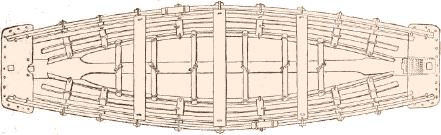
Fig. 478. Framework of Eskimo boat.
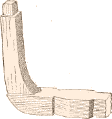
Fig. 479. Kiglo or post.
The main part of the frame of a boat is a timber which runs from stem to stern (Fig. 478). It is the most solid part and is made of driftwood, which is procured in Hudson Strait, Hudson Bay, and on the northern shore of King William Land. In Iglulik, and probably in Pond Bay, boats are rarely used and never made, as wood is wanting. The central part of this timber is made a little narrower than the ends, which form stout heads. A mortise is cut into each of the latter, into which posts (kiglo) are tenoned for the bow and for the stern. The shape of this part will best be seen from the engraving (Fig. 479). A strong piece of wood is fitted to the top of these uprights and the gunwales are fastened to them with heavy thongs. The gunwales and two curved strips of wood (akuk), which run along each side of the bottom of the boat from stem to stern, determine its form. These strips are steadied by from seven to ten cross pieces, which are firmly tied to them and to the central piece. From this pair of strips to the gunwales run a number of ribs, which stand somewhat close together at the bow and the stern, but are separated by intervals of greater distance in the center of the boat. The cross pieces along the bottom are arranged similarly to the ribs. Between the gunwale and the bottom two or three pairs of strips also run along the sides of the boat and steady its whole frame. The uppermost pair (which is called tuving) lies near the gunwale and serves as a fastening for the cover of the boat. The thwarts, three or four in number, are fastened between the gunwale and these lateral strips. All these pieces are tied together with thongs, rivets not being used at all.
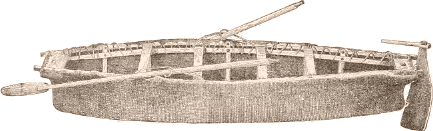
Fig. 480. Umiaq or skin boat.
The frame is covered with skins of ground seals (Figs. 480, 481). It requires three of these skins to cover a medium sized boat; five to cover a large one. If ground seals cannot be procured, skins of harp or small seals are used, as many as twelve of the latter being required. The cover is drawn tightly over the gunwale and, after being wetted, is secured by thongs to the lateral strip which is close to the gunwale. The wooden pieces at both ends are perforated and the thongs for fastening the cover are pulled through these holes.
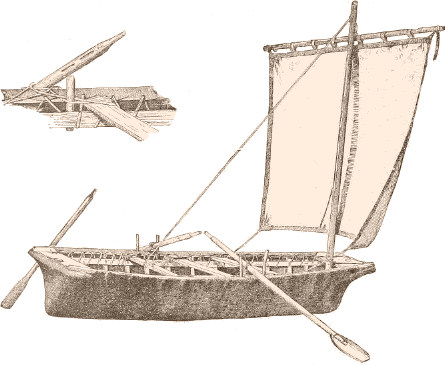
Fig. 481. Umiaq or skin boat.
The boat is propelled by two large oars. The rowlocks are a very ingenious device. A piece of bone is tied upon the skin in order to protect it from the friction of the oar, which would quickly wear it through (Fig. 481 a). On each side of the bone a thong is fastened to the tuving, forming a loop. Both loops cross each other like two rings of a chain. The oar is drawn through both loops, which are twisted by toggles until they become tight. Then the toggles are secured between the gunwale and the tuving.
The oar (ipun) consists of a long shaft and an oval or round blade fastened to the shaft by thongs. Two grooves and the tapering end serve for handles in pulling. Generally three or four women work at each oar.
For steering, a paddle is used of the same kind as that used in whaling (see p. 499). A rudder is rarely found (Fig. 480), and when used most probably is made in imitation of European devices.
If the wind permits, a sail is set; but the bulky vessel can only run with the wind. The mast is set in the stem, a mortise being cut in the forehead of the main timber, with a notch in the wooden piece above it to steady it. A stout thong, which passes through two holes on each side of the notch, secures the mast to the wooden head piece. The sail, which is made of seal intestines carefully sewed together, is squared and fastened by loops to a yard (sadniriaq) which is trimmed with straps of deerskin. It is hoisted by a rope made of sealskin and passing over a sheave in the top of the mast. This rope is tied to the thwart farthest abaft, while the sheets are fastened to the foremost one.
THE SLEDGE AND DOGS.
During the greater part of the year the only passable road is that afforded by the ice and snow; therefore sledges (qamuting) of different constructions are used in traveling.
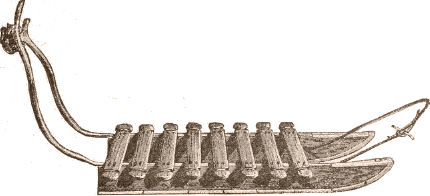
Fig. 482. Qamuting or sledge.
The best model is made by the tribes of Hudson Strait and Davis Strait, for the driftwood which they can obtain in abundance admits the use of long wooden runners. Their sledges (Fig. 482) have two runners, from five to fifteen feet long and from twenty inches to two and a half feet apart. They are connected by cross bars of wood or bone and the back is formed by deer’s antlers with the skull attached. The bottom of the runners (qamun) is curved at the head (uinirn) and cut off at right angles behind. It is shod with whalebone, ivory, or the jawbones of a whale. In long sledges the shoeing (pirqang) is broadest near the head and narrowest behind. This device is very well adapted for sledging in soft snow; for, while the weight of the load is distributed over the entire length of the sledge, the fore part, which is most apt to break through, has a broad face, which presses down the snow and enables the hind part to glide over it without sinking in too deeply.

Fig. 483. Sledge shoe. (National Museum, Washington. 34096.) ¼
The shoe (Fig. 483) is either tied or riveted to the runner. If tied, the lashing passes through sunken drill holes to avoid any friction in moving over the snow. The right and left sides of a whale’s jaw are frequently used for shoes, as they are of the proper size and permit the shoe to be of a single piece. Ivory is cut into flat pieces and riveted to the runner with long treenails. The points are frequently covered with bone on both the lower and upper sides, as they are easily injured by striking hard against hummocks or snowdrifts. Sometimes whalebone is used for the shoes.
The cross bars (napun) project over the runners on each side and have notches which form a kind of neck. These necks serve to fasten the thongs when a load is lashed on the sledge. The bars are fastened to the runners by thongs which pass through two pairs of holes in the bars and through corresponding ones in the runners. If these fastenings should become loose, they are tightened by winding a small thong round them and thus drawing the opposite parts of the thong tightly together. If this proves insufficient, a small wedge is driven between the thong and the runner.

Fig. 484. Clasp for fastening traces to sledge. (National Museum, Washington. 34110.) ½
The antlers attached to the back of the sledge have the branches removed and the points slanted so as to fit to the runners. Only the brow antlers are left, the right one being cut down to about three inches in length, the left one to one and a half inches. This back forms a very convenient handle for steering the sledge past hummocks or rocks, for drawing it back when the points have struck a snowdrift, &c. Besides, the lashing for holding the load is tied to the right brow antler and the snow knife and the harpoon line are hung upon it.
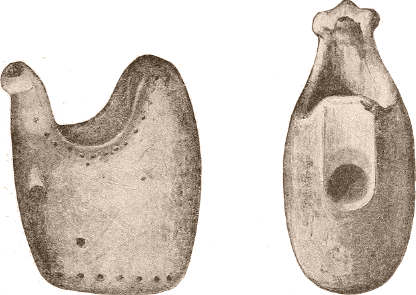
Fig. 485. Artistic form of clasp for fastening traces to sledge. (Museum für Völkerkunde, Berlin.) 1/1
Under the foremost cross bar a hole is drilled through each runner. A very stout thong (pitu) consisting of two separate parts passes through the holes and serves to fasten the dogs’ traces to the sledge. A button at each end of this thong prevents it from slipping through the hole of the runner. The thong consists of two parts, the one ending in a loop, the other in a peculiar kind of clasp (partirang). Fig. 484 represents the form commonly used. The end of one part of the thong is fastened to the hole of the clasp, which, when closed, is stuck through the loop of the opposite end (see Fig. 482). A more artistic design is shown in Fig. 485. One end of the line is tied to the hole in the under side of this implement. When it is in use the loop of the other end is stuck through another hole in the center and hung over the nozzle. The whole represents the head of an animal with a gaping mouth. The dogs’ traces are strung upon this line by means of the uqsirn, an ivory implement with a large and a small eyelet (Fig. 486). The trace is tied to the former, while the latter is strung upon the pitu.
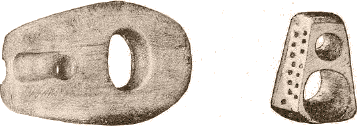
Fig. 486. Uqsirn, for fastening traces to pitu. a (National Museum, Washington. 34122.) 1/1 b (Museum für Völkerkunde, Berlin.) ½
The dogs have harnesses (ano) made of sealskin (Fig. 487) or sometimes of deerskin, consisting of two bights passing under the fore legs. They are joined by two straps, one passing over the breast, the other over the neck. The ends are tied together on the back, whence the trace runs to the sledge. According to Parry (II, p. 517), the Iglulik harnesses consisted of three bights, one passing over the breast and shoulder and two under the fore legs.
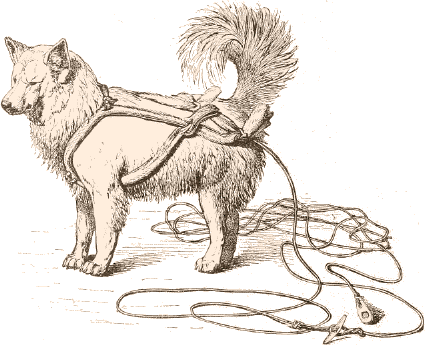
Fig. 487. Ano or dog harness. (Museum für Völkerkunde, Berlin. IV A 6730.)
It was mentioned at another place (p. 475) that in sealing a dog is taken out of the sledge to lead the hunter to the breathing hole. For this purpose the traces of some harnesses are made of two pieces, which are united by the sadniriaq, a clasp similar to that of the pitu (Figs. 487, 488). If the dog is to be taken from the sledge the fore part of the trace is unbuttoned.
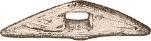
Fig. 488. Sadniriaq or clasp. (National Museum, Washington.) ⅔
Besides this form of sledge a great number of others are in use. Whenever whales are caught their bone is sawed or cut into large pieces, which are shod with the same material. If large bones are not to be had, a substitute is found in walrus skins or rolls of sealskins, which are wetted and sewed up in a bag. This bag is given the desired form and after being frozen to a solid mass is as serviceable as the best plank. In Boothia frozen salmon are used in the same way and after having served this purpose in winter are eaten in the spring. Other sledges are made of slabs of fresh water ice, which are cut and allowed to freeze together, or of a large ice block hollowed out in the center. All these are clumsy and heavy and much inferior to the large sledge just described.
Parry (II, p. 515) states that at Igiulik the antlers are detached from the sledge in winter when the natives go sealing. The tribes of Davis Strait do not practice this custom, but use scarcely any sledge without a pair of antlers.
As to the appearance of the dogs I would refer to Parry (II, p. 515) and other writers and confine my remarks to a description of their use by the Eskimo.
As the traces are strung upon a thong, as just described, the dogs all pull at one point; for that reason they may seem, at first sight, to be harnessed together without order or regularity; but they are arranged with great care. The strongest and most spirited dog has the longest trace and is allowed to run a few feet in advance of the rest as a leader; its sex is indifferent, the choice being made chiefly with regard to strength. Next to the leader follow two or three strong dogs with traces of equal length, and the weaker and less manageable the dogs the nearer they run to the sledge. A team is almost unmanageable if the dogs are not accustomed to one another. They must know their leader, who brings them to terms whenever there is a quarrel. In a good team the leader must be the acknowledged chief, else the rest will fall into disorder and refuse to follow him. His authority is almost unlimited. When the dogs are fed, he takes the choice morsels; when two of them quarrel, he bites both and thus brings them to terms.
Generally there is a second dog which is inferior only to the leader, but is feared by all the others. Though the authority of the leader is not disputed by his own team, dogs of another team will not submit to him. But when two teams are accustomed to travel in company the dogs in each will have some regard for the leader of the other, though continuous rivalry and quarrels go on between the two leaders. Almost any dog which is harnessed into a strange team will at first be unwilling to draw, and it is only when he is thoroughly accustomed to all his neighbors and has found out his friends and his enemies that he will do his work satisfactorily. Some dogs when put into a strange team will throw themselves down and struggle and howl. They will endure the severest lashing and allow themselves to be dragged along over rough ice without being induced to rise and run along with the others. Particularly if their own team is in sight will they turn back and try to get to it. Others, again, are quite willing to work with strange dogs.
Partly on this account and partly from attachment to their masters, dogs sold out of one team frequently return to their old homes, and I know of instances in which they even ran from thirty to sixty miles to reach it. Sometimes they do so when a sledge is traveling for a few days from one settlement to another, the dogs not having left home for a long time before. In such cases when the Eskimo go to harness their team in the morning they find that some of them have run away, particularly those which were lent from another team for the journey. In order to prevent this the left fore leg is sometimes tied up by a loop which passes over the neck. When one is on a journey it is well to do so every night, as some of the dogs are rather unwilling to be harnessed in the morning, thus causing a great loss of time before they are caught. In fact such animals are customarily tied up at night, while the others are allowed to run loose.
Sometimes the harnesses are not taken off at night. As some dogs are in the habit of stripping off their harness, it is fastened by tying the trace around the body. Though all these peculiarities of the dogs give a great deal of trouble to the driver, he must take care not to punish them too severely, as they will then become frightened and for fear of the whip will not work at all.
Before putting the dogs to the sledge it must be prepared and loaded. In winter the shoes of the runners are covered with a thick coat of ice, which diminishes the friction on the snow. If the shoes are of good bone, ivory, or whalebone, the icing is done with water only, the driver taking a mouthful and carefully letting it run over the shoe until a smooth cover of about one third of an inch in thickness is produced. The icicles made by the water which runs down the side of the runner are carefully removed with the snow knife, and the bottom is smoothed with the same implement and afterward somewhat polished with the mitten. Skin runners and others which have poor shoes are first covered with a mixture of moss and water or clay and water. This being frozen, the whole is iced, as has been described. Instead of pure water, a mixture of blood and water or of urine and water is frequently used, as this sticks better to the bone shoe than the former.
This done, the sledge is turned right side up and loaded. In winter, when the snow is hard, small sledges with narrow shoes are the best. In loading, the bulk of the weight is placed behind. When the snow is soft or there are wide cracks in the floe, long sledges with broad shoes are by far the best. In such cases the heaviest part of the load is placed on the middle of the sledge or even nearer the head. Particularly in crossing cracks the weight must be as near the head as possible, for if the jump should be unsuccessful a heavy weight at the hind part would draw the sledge and the dogs into the water.
The load is fastened to the sledge by a long lashing (naqetarun). This is tied to the first cross bar and after passing over the load is drawn over the notch of the next bar, and so on from one notch, over the load, to a notch on the opposite side. After having been fastened in this way it is tightened. Two men are required for the work, one pulling the lashing over the notch, the other pressing down the load and lifting and lowering the thong in order to diminish the friction, thus making the pulling of the other man more effective. The end is fastened to the brow antler. Implements which are used in traveling are hung upon the antlers at the back of the sledge. In spring, when the snow is melting and water is found under it, the travelers frequently carry in their pouch a tube for drinking (Fig. 489).

Fig. 489. Tube for drinking. (National Museum, Washington. 10383.) ¼
When the sledge has been loaded the dogs are hitched to it and the driver takes up the whip and is ready for starting. The handle of the whip is about a foot or a foot and a half in length. It is made of wood, bone, or whalebone and has a lash of from twenty to twenty-five feet in length. The lash is made of walrus or ground seal hide, the lower end being broad and stiff, thus giving it greater weight and a slight springiness near the handle, which facilitates its use. A broad piece of skin clasps the handle, to which it is tied with seal thongs. Another way of making the lower part heavy is by plaiting ground seal lines for a length of a foot or a foot and a half.
When starting the driver utters a whistling guttural sound which sounds like h!h!, but cannot exactly be expressed by letters, as there is no vowel in it, and yet on account of the whistling noise in the throat it is audible at a considerable distance. The dogs, if well rested and strong, jump to their feet and start at once. If they are lazy it requires a great deal of stimulating and lashing before they make a start. If the load is heavy it is difficult to start it and the Eskimo must use some strategy to get them all to pull at once. The sledge is moved backward and forward for about a foot, so as to make a short track in which it moves easily. Then the driver sings out to the dogs, at the same time drawing the traces tight with his hands and pulling at the sledge. The dogs, feeling a weight at the traces, begin to draw, and when the driver suddenly lets go the traces the sledge receives a sudden pull and begins to move. If assistance is at hand the sledge may be pushed forward until it gets under way.
It is extremely hard work to travel with a heavy load, particularly in rough ice or on soft snow. The dogs require constant stimulating; for this purpose a great number of exclamations are in use and almost every Eskimo has his own favorite words for driving. The general exclamation, used for stimulating is the above mentioned h! h! or aq! aq! which is pressed out from the depths of the breast and the palate, the vowel being very indistinct. Others are: djua! the a being drawn very long and almost sung in a high key, or ah! pronounced in the same way; iatit! or jauksa koksa! and smacking with the tongue. If a seal is seen basking on the ice or if the sledge happens to pass a deserted snow hut, the driver says, Ha! Do you see the seal? Ai! A seal! a seal! (Ha! Takuviuk? Ai! Uto! uto!) and Ai! There is a house; a small house! (Ai! Iglu; igluaqdjung!) or, Now we go home! (Sarpoq! Sarpoq!) The latter, however, are only used when the dogs are going at a good rate.
For directing the sledge the following words are used: Aua, aua! Aua! ja aua! for turning to the right; χoiaχoi! ja χoia! for turning to the left. In addition the whip lash is thrown to the opposite side of the dogs. The leader is the first to obey the order, but a turn is made very slowly and by a long curve. If the driver wants to make a sharper turn he must jump up and run to the opposite side of the sledge, throwing the whip lash at the same time toward the team. For stopping the dogs the word Ohoha! pronounced in a deep key, is used.
If the traveling is difficult the driver must walk along at the right side of the sledge and wherever hummocks obstruct the passage he must direct it around them either by pushing its head aside or by pulling at the deer’s skull at the back. But notwithstanding all this stimulating and all the pulling the sledge is frequently stopped by striking a piece of ice or by sinking into soft snow. As soon as it sinks down to the cross bars it must be lifted out, and when the load is heavy the only means of getting on is by unloading and afterwards reloading. In the same way it must be lifted across hummocks through which a road is cut with the end of the spear, which, for this purpose, is always lashed in a place where it is handy for use, generally on the right side of the bottom of the sledge. The difficulties of traveling across heavy ice which has been subjected to heavy pressures have frequently been described. When the sledge stops the dogs immediately lie down, and if they cannot start again, though pulling with all their strength, the leader frequently looks around pitifully, as if to say, We cannot do more!
Traveling with a light sledge and strong dogs is quite different. Then the team is almost unmanageable and as soon as it is hitched up it is off at full speed. The driver sits down on the fore part and lets the whip trail along, always ready for use. Now the dogs have time enough for playing and quarreling with one another. Though they generally keep their proper place in the team, some will occasionally jump over the traces of their neighbors or crawl underneath them; thus the lines become quickly entangled, and it is necessary to clear them almost every hour.
If any dog of the team is lazy the driver calls out his name and he is lashed, but it is necessary to hit the dog called, for if another is struck he feels wronged and will turn upon the dog whose name has been called; the leader enters into the quarrel, and soon the whole pack is huddled up in one howling and biting mass, and no amount of lashing and beating will separate the fighting team. The only thing one can do is to wait until their wrath has abated and to clear the traces. It is necessary, however, to lay the mittens and the whip carefully upon the sledge, for the leader, being on the lookout for the traces to be strung, may give a start when the driver is scarcely ready, and off the team will go again before the driver can fairly get hold of the sledge. If anything has dropped from it he must drive in a wide circle to the same place before he can stop the team and pick it up. On an old track it is very difficult to stop them at all. When attempting to do so the driver digs his heels into the snow to obstruct their progress and eventually comes to a stop. Then he stands in front of the sled and makes the dogs lie down by lashing their heads gently. Should the dogs start off he would be thrown upon the sledge instead of being left behind, which might easily happen should he stand alongside.
The sledge is steered with the legs, usually with the right foot of the driver, or, if it must be pulled aside from a large hummock, by pulling the head aside or by means of the deer’s antlers. If two persons are on the sledge—and usually two join for a long drive—they must not speak to each other, for as soon as the dogs hear them they will stop, turn around, sit down, and listen to the conversation. It has frequently been said that the method of harnessing is inconvenient, as the dogs cannot use their strength to the best advantage; but whoever has driven a sledge himself will understand that any other method would be even more troublesome and less effective. On smooth ice and hard snow any method of harnessing could be used; but, on rough ice, by any other method every cross piece would quickly break on attempting to cross the hummocks. Frequently the traces catch a projecting point and the dogs are then pulled back and thrown against the ice or under the sledge if the trace does not break. If for any reason a dog should hang back and the trace should trail over the snow the driver must lift it up to prevent it from being caught by the sledge runner, else the dog will be dragged in the same way as if the trace were caught by a hummock. Many dogs are able in such cases to strip off their harnesses and thus escape being dragged along, as the team cannot be stopped quickly enough to prevent this. Besides the driver must see to it that the dogs do not step across their traces, which in such cases would run between their hind legs, for should this happen the skin might be severely chafed. If the driver sees a trace in this position he runs forward and puts it back without stopping the team. Particular attention must be paid to this matter when the dogs rise just before starting.
The sledges are not used until the ice is well covered with snow, as the salt crystals formed on the top of the ice in the autumn hurt the dogs’ feet and cause sores that heal slowly. Late in the spring, when the snow has melted and sharp ice needles project everywhere, the feet of the dogs are covered with small pieces of leather, with holes for the nails, which are tied to the leg. As they are frequently lost and the putting on of these shoes takes a long time, their use is very inconvenient.
At this season numerous cracks run through the floe. They are either crossed on narrow snow bridges which join the edges at convenient places or on a drifting piece of ice by floating across.
A few more words in conclusion concerning the training of the dogs. The Eskimo rarely brings up more than three or four dogs at the same time. If the litter is larger than this number the rest are sold or given away. The young dogs are carefully nursed and in winter they are even allowed to lie on the couch or are hung up over the lamp in a piece of skin. When about four months old they are first put to the sledge and gradually become accustomed to pull along with the others. They undergo a good deal of lashing and whipping before they are as useful as the old ones.
If food is plentiful the dogs are fed every other day, and then their share is by no means a large one. In winter they are fed with the heads, entrails, bones, and skins of seals, and they are so voracious at this time of the year that nothing is secure from their appetite. Any kind of leather, particularly boots, harnesses, and thongs, is eaten whenever they can get at it. In the spring they are better fed and in the early part of summer they grow quite fat. In traveling, however, it sometimes happens at this time of the year, as well as in winter, that they have no food for five or six days. In Cumberland Sound, Hudson Strait, and Hudson Bay, where the rise and fall of the tide are considerable, they are carried in summer to small islands where they live upon what they can find upon the beach, clams, codfish, &c. If at liberty they are entirely able to provide for themselves. I remember two runaway dogs which had lived on their own account from April until August and then returned quite fat.
The Eskimo of all these regions are very much troubled with the well known dog’s disease of the Arctic regions. The only places where it seems to be unknown are Davis Strait and Aggo. Here every man has a team of from six to twelve dogs, while in Cumberland Sound, in some winters, scarcely any have been left. (See Appendix, Note 2.)
HABITATIONS AND DRESS.
THE HOUSE.
The houses of the Eskimo differ according to the season. All the tribes from Smith Sound to Labrador and from Davis Strait to Victoria Land are in the habit of building snow houses in winter. Though they erect another more durable kind of winter house, these are more frequently in use. The principles of construction are the same everywhere. A level place is selected for erecting the snow house. To be suitable for cutting into blocks the snowbank must have been formed by a single storm, for blocks which are cut from drifts composed of several layers break when cut. It must be very fine grained, but not so hard that it cannot be readily cut with the saw or the snow knife. The whole building is constructed of blocks of about three feet or four feet in length, two feet in height, and from six inches to eight inches in thickness. They are cut with snow knives or dovetail saws, which for this reason are much in demand. The old snow knife (sulung) was made of ivory and had a slight curve (Fig. 490). The blocks are cut either vertically or horizontally, the former way being more convenient if the snowdrift is deep. Two parallel cuts of the breadth and the depth of the blocks are made through the drift, and after having removed a small block the Eskimo go on cutting or sawing parallel to the surface. A cross cut is then made and the block is loosened with the point of the foot and lifted out of the bank. Vertical blocks are more easily detached from the snowdrift than horizontal ones.
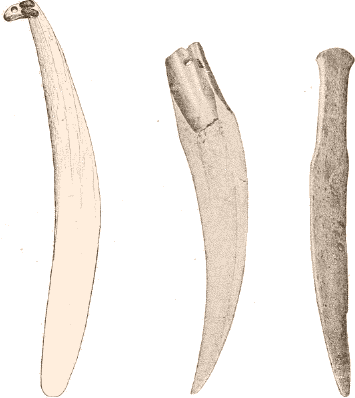
Fig. 490. Various styles of snow knife. (National Museum, Washington. a, 10386; b, 10385.)
Two men unite in building a house, the one cutting the blocks, the other building. At first a row of blocks is put up in a circle, the single pieces being slanted so as to fit closely together. Then the first block is cut down to the ground and the top of the row is slanted so as to form one thread of a spiral line. The builder places the first block of the second row with its narrow side upon the first block and pushes it with his left hand to the right so that it touches the last block of the first row. Thus the snow block, which is inclined a little inward, has a support on two sides. The vertical joint is slanted with the snow knife and tightly pressed together, the new block resting on the oblique side of the former. In building on in this way the blocks receive the shape of almost regular trapezoids. Every block is inclined a little more inward than the previous one, and as the angle to the vertical becomes greater the blocks are only kept in their places by the neighboring ones. In order to give them a good support the edges are the more slanted as their angle is greater.
This method of building is very ingenious, as it affords the possibility of building a vault without a scaffold. If the blocks were placed in parallel rows, the first block of a new row would have no support, while by this method each reclines on the previous one. When the house has reached a considerable height the man who cuts the blocks outside must place them upon the last row. The builder supports them with his head and pushes them to their proper places. The key block and those which are next to it are either cut inside or pushed into the house through a small door cut for the purpose. The key block is generally shaped irregularly, as it is fitted into the hole which remains; usually the last two blocks are triangular. When the vault is finished the joints between the blocks are closed up by cutting down the edges and pressing the scraps into the joints. Larger openings are closed with snow blocks and filled up with loose snow pressed into the fissures. Thus the whole building becomes a tight vault, without any holes through which the warm air inside may escape. Such a snow house, about five feet high and seven feet in diameter, is used as a camp in winter journeys. It takes about two hours for two skilled men to build and finish it. For winter quarters the vaults are built from ten to twelve feet high and twelve to fifteen feet in diameter. In order to reach this height the builder makes a bench on which he steps while finishing the upper part of the building.
The plan of a snow house of the Davis Strait tribes is a little different from that of the Hudson Bay and the Iglulik tribes.
I shall first describe the former according to my own observations (Figs. 491 and 492).
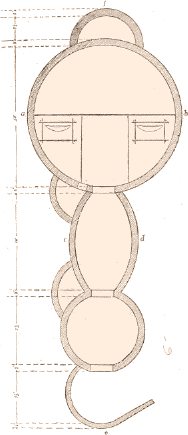
Fig. 491. Ground plan of snow house of Davis Strait tribes.
The entrance to the main building is formed by two, or less frequently by three, small vaults. The first one (uadling) is a small dome about six feet in height, with a door two and a half feet in height; the second one is a long passage of equal height formed by an elliptical vault (igdluling). Its roof is generally arched, but sometimes the top is cut off evenly and covered with slabs of snow. Both vaults together form the entrance and are called toqsung. A door about three feet high leads into the main room, the floor of which is about nine inches above that of the former. Two very small vaults are always attached to the whole building (Fig. 491). One is situated alongside of the uadling and the igdluling, and serves as a storeroom for clothing and harness (sirdloang). It is not connected with the interior of the hut, but one of the blocks of the vault can be taken out and is made to serve as a lid. On the left side of the entrance of the main building is another small vault (igdluarn), which is accessible from the main building. It serves for keeping spare meat and blubber. Frequently there is a second igdluarn on the opposite side, and sometimes even a third one in the igdluling. Another appendix of the main building is frequently used, the audlitiving (Fig. 491 and Fig. 492 c). It is a vault similar to the sirdloang and is attached to the back of the main room. It serves for storing up meat for future use.
Directly over the entrance a window is cut through the wall, either square or more frequently forming an arch, which is generally covered with the intestines of ground seals, neatly sewed together, the seams standing vertically (Fig. 493). In the center there is a hole (qingang) through which one can look out. In some instances a piece of fresh water ice is inserted in the hole. According to Ross it is always used by the Netchillirmiut (II, p. 250), who make the slab by letting water freeze in a sealskin.
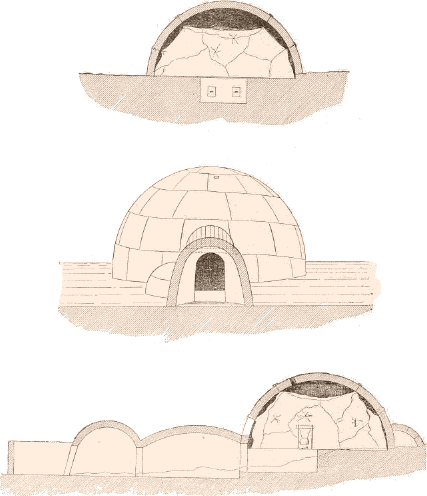
Fig. 492. Snow house of Davis Strait, sections.
In the rear half and on both sides of the door a bank of snow two and a half feet high is raised and cut off straight, a passage trench five feet wide and six feet long remaining. The rear half forms the bed, the adjoining parts of the side benches are the place for the lamps, while on both sides of the entrance meat and refuse are heaped up. Frequently the snowbank on which the hut is built is deep enough so that the bed needs very little raising, and the passage is cut into the bank. As this is much more convenient in building, the huts are generally erected on a sloping face, the entrance lying on the lower part, which faces the beach.
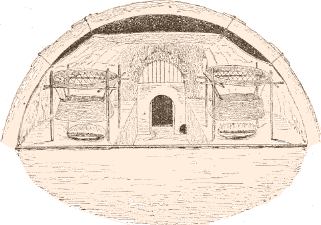
Fig. 493. Section and interior of snow house.
Before the bed is arranged and the hut furnished the vault is lined with skins, frequently with the cover of the summer hut. The lining (ilupiqang) is fastened to the roof by small ropes (nirtsun), which are fastened by a toggle on the outside of the wall (Fig. 493). In the lower part of the building the lining lies close to the wall; in the upper part it forms a flat roof about two or three feet below the top of the vault. The effect of this arrangement is to prevent the warm air inside from melting the snow roof, as above the skins there is always a layer of colder air. Close to the top of the building a small hole (qangirn) is cut through the wall for ventilation. The lamps require a good draught, which is secured by this hole. The cold air enters through the door, slowly filling the passage, and after being warmed rises to the lamps and escapes through the skin cover and the hole. The moisture of the air forms long ice needles on the inside of the roof. Sometimes they fall down upon the skins, and must be immediately removed by shaking it until they glide down at the sides, else they melt and wet the room thoroughly. Frequently a high ice funnel forms around the hole from the freezing moisture of the escaping air.
The southern and western tribes rarely line the snow house. The continuous dropping from the roof, however, causes great inconvenience, and, besides, the temperature cannot be raised higher than two or three degrees centigrade above the freezing point, while in the lined houses it is frequently from ten to twenty degrees centigrade, so that the latter are much more comfortable. To avoid the dropping the natives apply a cold piece of snow to the roof before the drop falls down, which at once freezes to it, the roof acquiring by this repeated process a stalactitic appearance. The eastern tribes use the lining in their permanent houses without any exception. The western and southern tribes, who leave the walls bare, heap a thick layer of loose snow over the whole building, almost covering it up, the window and the ventilating hole alone excepted. For this purpose snow shovels are used.
The edge of the bed is formed by a long pole. The surface of the snowbank which forms the foundation for the bed is covered with pieces of wood, oars, paddles, tent poles, &c. These are covered with a thick layer of shrubs, particularly Andromeda tetragona. Over these numerous heavy deerskins are spread, and thus a very comfortable bed is made.
According to Parry the arrangement in Iglulik is as follows (II, p. 501):
The beds are arranged by first covering the snow with a quantity of small stones, over which are laid their paddles, tent poles, and some blades of whalebone; above these they place a number of little pieces of network made of thin slips of whalebone, and lastly a quantity of twigs of birch and of the Andromeda tetragona. ***The birch, they say, had been procured from the southward by way of Nuvuk. ***There deerskins, which are very numerous, can now be spread without risk of their touching the snow.
At night, when the Eskimo go to bed, they put their clothing, their boots excepted, on the edge of the platform under the deerskins, thus forming a pillow, and lie down with the head toward the entrance. The blankets (qipiq) for their beds are made of heavy deerskins, which are sewed together, one blanket serving for a whole family. The edge of the blanket is trimmed with leather straps.
On the side benches in front of the bed is the fireplace, which consists of a stone lamp and a framework from which the pots are suspended (see Fig. 493). The lamp (qudlirn), which is made of soapstone, is a shallow vessel in the shape of a small segment of a circle. Sometimes a small space is divided off at the back for gathering in the scraps of blubber. The wick consists of hair of Eryophorum or of dried moss rubbed down with a little blubber so as to be inflammable. It is always carried by the women in a small bag. The whole vessel is filled with blubber as high as the wick, which is spread along the straight side of the vessel. It requires constant attention to keep the desired length burning without smoking, the length kindled being in accordance with the heat or light required. The trimming of the wick is done with a bit of bone, asbestus, or wood, with which the burning moss is spread along the edge of the lamp and extinguished or pressed down if the fire is not wanted or if it smokes. At the same time this stick serves to light other lamps (or pipes), the burnt point being put into the blubber and then kindled. Sometimes a long, narrow vessel stands below the lamp, in which the oil that drops from the edge is collected.
In winter the blubber before being used is frozen, after which it is thoroughly beaten. This bursts the vesicles of fat and the oil comes out as soon as it is melted. The pieces of blubber are either put into the lamp or placed over a piece of bone or wood, which hangs from the framework a little behind the wick. In summer the oil must be chewed out. It is a disgusting sight to see the women and children sitting around a large vessel all chewing blubber and spitting the oil into it.
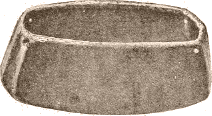
Fig. 494. Ukusik or soapstone kettle.
The frame of the fireplace consists of four poles stuck in the snow in a square around the lamp and four crossbars connecting the poles at the top. From those which run from the front to the back the kettle (ukusik) is suspended by two pairs of strings or thongs. It is made of soapstone and has a hole in each corner for the string. The kettle which is in use among the eastern tribes has a narrow rim and a wide bottom (Fig. 494), while that of the western ones is just the opposite. Parry, however, found one of this description in River Clyde (I, p. 286). When not in use it is shoved back by means of the strings. Since whalers began to visit the country a great number of tin pots have been introduced, which are much more serviceable, the process of cooking being quickened.
On the top of the frame there is always a wood or bone hoop with a net of thongs stretched across it (inetang). It serves to dry clothing, particularly boots, stockings, and mittens, over the fire. In the passage near the entrance to the hut there is frequently a small lamp (adlirn), which is very effective for warming the cold air entering through the door, and in the remotest corner in the back of the hut there is sometimes another (kidlulirn). When all the lamps are lighted the house becomes warm and comfortable.
Two small holes are frequently cut in the snowbank which forms the ledge, at about the middle of its height (see Fig. 492 a). They are closed with small snow blocks, each of which has a groove for a handle, and serve to store away anything that must be kept dry. At night the entrance of the inner room is closed with a large snow block, which stands in the passage during the day.
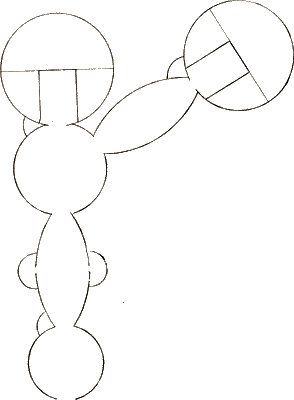
Fig. 495. Plan of double snow house.
These huts are always occupied by two families, each woman having her own lamp and sitting on the ledge in front of it, the one on the right side, the other on the left side of the house. If more families join in building a common snow house, they make two main rooms with one entrance. The plan of such a building is seen in Fig. 495.
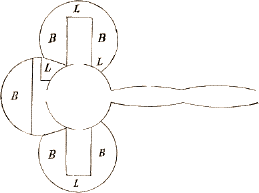
Fig. 496. Plan of Iglulik house. (From Parry II, p. 500.)
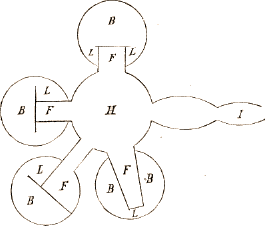
Fig. 497. Plan of Hudson Bay house. (From Hall II, p. 128.)
The plans of the Iglulik and Hudson Bay houses are different from the one described here. The difference will best be seen by comparing the plans represented in Fig. 496 and Fig. 497, which have been reprinted from Hall and Parry, respectively, with the former ones. Among the eastern tribes I have never seen the beds on the side of the passage, but always at the rear of the house.
Besides these snow houses a more solid building is in use, called qarmang. On the islands of the American Archipelago and in the neighboring parts of the mainland numerous old stone foundations are found, which prove that all these islands were once inhabited by the Eskimo. It has often been said that the central tribes have forgotten the art of building stone houses and always live in snow huts. At the present time they do not build houses, but cover the walls of an old hut with a new roof whenever they take possession of it. There is no need of any new buildings, as the Eskimo always locate in the old settlements and the old buildings are quite sufficient to satisfy all their wants.
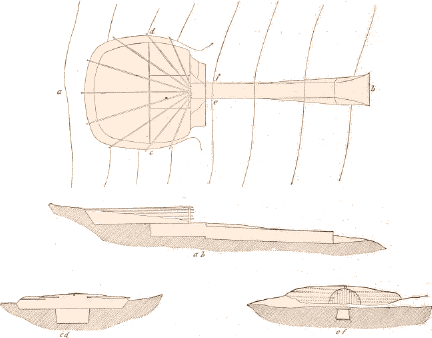
Fig. 498. Plan and sections of qarmang or stone house.
Those in good condition have a long stone entrance (ka´teng) (Fig. 498), sometimes from fifteen to twenty feet long. This is made by cutting an excavation into the slope of a hill. Its walls are covered with large slabs of stone about two and a half feet high and three feet wide, the space between the stone and the sides of the excavation being afterwards filled up with earth. The floor of the passage slopes upward toward the hut. The last four feet of the entrance are covered with a very large slab and are a little higher than the other parts of the roof of the passageway. The slab is at the same height as the benches of the dwelling room, which is also dug out, the walls being formed of stones and whale ribs. The plan of the interior is the same as that of the snow house, the bed being in the rear end of the room and the lamps on both sides of the entrance. The floor of the hut is about eight inches higher than that of the passage. The roof and the window, however, differ from those of the snow house. In the front part of the hut the rib of a whale is put up, forming an arch. A great number of poles are lashed to it and run toward the back of the house, where they rest on the top of the wall, forming, as it were, the rafters. The whole curve formed by the rib is covered with a window of seal intestines, while the poles are covered with sealskins, which are fastened in front to the whale rib. At the other end they are either fastened to the ribs in the wall or, more frequently, are steadied by stones. The roof is covered with a thick layer of Andromeda, and another skin, which is fastened in the same way, is spread over both covers. This kind of hut is very warm, light, and comfortable. The stone banks forming the bed are covered as already described.
If three families occupy one house the whale’s rib which forms the window is placed a few feet farther forward than in the previous case, at the end of the large slab which forms the roof of the last part of the passage.
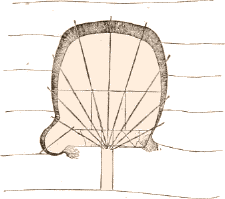
Fig. 499. Plan of large qarmang or stone house for three families.
By means of poles and bones a small side room is built (qareang), the ceiling of which is sewed to that of the main room (Fig. 499). The large slab which is in front of the window (at the end of the passage) is utilized as a storeroom for both families living on that side of the house, a place being left open only in the middle, where the spy hole is. In some instances this side room is inclosed in the stone walls of the hut.
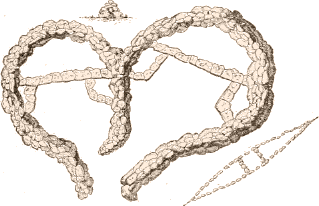
Fig. 500. Plan of stone house in Anarnitung, Cumberland Sound. (From a drawing by L. Kumlien.)
Fig. 500 and Fig. 501 present sketches of plans of some of these houses. From such sketches it appears that several houses might have a common entrance.
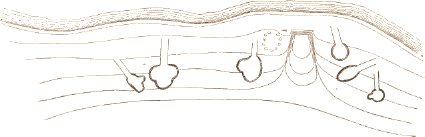
Fig. 501. Plan of group of stone houses in Pangnirtung, Cumberland Sound.
In Anarnitung I observed no passage at all for the houses, the walls being entirely above the ground and piled up with bowlders and sod. They are, however, covered in the same way as the others and the entrance is made of snow.
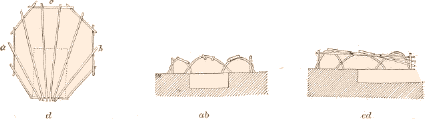
Fig. 502. Plan and sections of qarmang or house made of whale ribs.
A winter house built on the same plan is represented in Fig. 502. The wall is made entirely of whale ribs, placed so that their ends cross one another. The poles are tied over the top of the ribs and the whole frame is covered with the double roof described above. A few narrow snow vaults form the entrance. The front rib forms the door, and thus the hut becomes quite dark. Huts of this kind are also called qarmang or qarmaujang, i.e., similar to a qarmang.
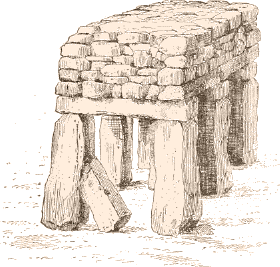
Fig. 503. Storehouse in Ukiadliving. (From a sketch by the author.)
In Ukiadliving I found, along with a great number of fine qarmat, some very remarkable storehouses, such as are represented in Fig. 503. Structures of this kind (ikan´) consist of heavy granite pillars, on the top of which flat slabs are piled to a height of from nine to ten feet. In winter, blubber and meat are put away upon these pillars, which are sufficiently high to keep them from the dogs. Sometimes two pillars, about ten feet apart, are found near the huts. In winter the kayak is placed upon them in order to prevent it from being covered by snowdrifts or from being torn and destroyed by the dogs. In snow villages these pillars are made of snow.
The purpose of the long, kayak-like building figured by Kumlien (see Fig. 500) is unknown to me. I found a similar one, consisting of two rows of stones, scarcely one foot high but twenty feet long, in Pangnirtung, Cumberland Sound, but nobody could explain its use.
In the spring, when the rays of the sun become warmer, the roofs of the snow houses fall down. At this season the natives build only the lower half of a snow vault, which is covered with skins.
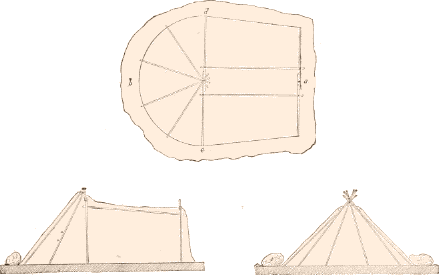
Fig. 504. Plan and sections of tupiq or tent of Cumberland Sound.
Still later they live in their tents (tupiq) (Fig. 504). The framework consists of poles, which are frequently made of many pieces of wood ingeniously lashed together. The plan (Fig. 504 a) is the same as that of the winter houses. At the edge of the bed and at the entrance two pairs of converging poles are erected. A little below the crossing points two cross strips are firmly attached, forming the ridge. Behind the poles, at the edge of the bed, six or eight others are arranged in a semicircle resting on the ground and on the crossing point of those poles. The frame is covered with a large skin roof fitting tightly. The back part, covering the bed, is made of sealskins; the fore part, between the two pairs of poles, of the thin membrane which is split from the skins (see p. 519), and admits the light. The door is formed by the front part of the cover, the left side (in entering) ending in the middle of the entrance, the right one overlapping it, so as to prevent the wind from blowing into the hut. The cover is steadied with heavy stones (Fig. 504 c). In Cumberland Sound and the more southern parts of Baffin Land the back of the hut is inclined at an angle of 45°; in Davis Strait it is as steep as 60°, or even more. In the summer tent the bed and the side platforms are not raised, but only separated from the passage by means of poles.
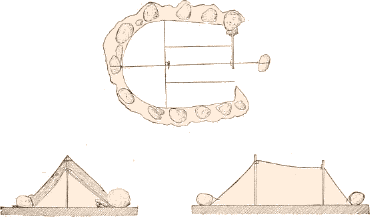
Fig. 505. Plan and sections of tupiq or tent of Pond Bay.
Farther north and west, in Pond Bay, Admiralty Inlet, and Iglulik, where wood is scarce, the Eskimo have a different plan of construction (Fig. 505). A strong pole is set up vertically at the end of the passage, a small cross piece being lashed to its top. The entrance is formed by an oblique pole, the end of which lies in the ridge of the roof. The latter is formed by a stout thong which runs over the top of both poles and is fastened to heavy stones on both sides. If wood is wanting, then poles are made from the penis bones of the walrus. Parry found one of these tents at River Clyde, on his first expedition, and describes it as follows (I, p. 283):
The tents which compose their summer habitations, are principally supported by a long pole of whalebone, 14 feet high, standing perpendicularly, with 4 or 5 feet of it projecting above the skins which form the roof and sides. The length of the tent is 17, and its breadth from 7 to 9 feet, the narrowest part being next the door, and widening towards the inner part, where the bed, composed of a quantity of the small shrubby plant, the Andromeda tetragona, occupies about one-third of the whole apartment. The pole of the tent is fixed where the bed commences, and the latter is kept separate by some pieces of bone laid across the tent from side to side. The door which faces the southwest, is also formed of two pieces of bone, with the upper ends fastened together, and the skins are made to overlap in that part of the tent, which is much lower than the inner end. The covering is fastened to the ground by curved pieces of bone, being generally parts of the whale.
This kind of tent differs from the one described by me only in the construction of its door.
I could not find a description of the tent of the Hudson Bay Eskimo. There is only one illustration in Klutschak (p. 137) and one in Ross (II, p. 581) representing tents of the Netchillirmiut. In the former there are a few conical tents, such as are used by the eastern tribes before a sufficient number of skins for a large tent can be procured. The same kind is represented in Ross’s book. The other tent drawn by Klutschak is similar to the Iglulik one, but the arrangement of the poles in the back part is invisible. The entrance is formed by two converging poles and a rope runs over the ridge and is tied to a rock.
The small tents which are used in the spring are made of a few converging poles forming a cone. They are covered with a skin roof.
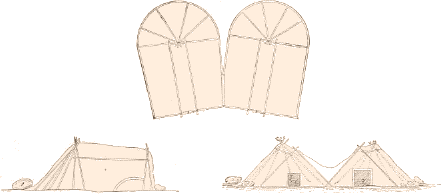
Fig. 506. Plan and sections of double winter tent, Cumberland Sound.
Some families, instead of building snow houses or stone houses in winter, cover the summer tent with shrubs and spread over them a second skin cover. In front of the tent snow vaults are built to protect the interior from the cold. In some instances several families join their tents (Fig. 506). In the front part where the tents adjoin each other the covers are taken away and replaced by a whale rib which affords a passage from one room to the other.
The plans of the feasting houses, will be found in another place (p. 600).
CLOTHING, DRESSING OF THE HAIR, AND TATTOOING.
The styles of clothing differ among the tribes of the Central Eskimo. In summer the outer garment is always made of sealskins, though the women wear deerskins almost the entire year. The sealskin clothing is made from the skins of Pagomys fœtidus, yearlings being used, and also from those of Callocephalus, if they can be obtained. The latter particularly are highly valued by the natives. The inner garment is made either of the skin of the young seal in the white coat or of a light deerskin. It is cut entirely with the woman’s knife and is sewed with deer sinews.
The prettiest clothing is made by the tribes of Davis Strait. Both men and women wear boots, trousers, and jackets. The style of the men’s clothing may be seen from Figs. 397 and 399, which represent men in the winter clothing, and 412 and 435, which show them in summer clothing. The summer boots are made from the hairless skin of Pagomys fœtidus, the soles from that of Phoca, the sole reaching to the top of the foot. The leg of the boot is kept up by a string passing through its rim and firmly tied around the leg. At the ankle a string passes over the instep and around the foot to prevent the heel from slipping down. On the top of the foot a knob (qaturang) is sometimes attached to the string as an ornament (Fig. 507). The stocking is made of light deerskin. It reaches above the knee, where it has a trimming made from the white parts of a deerskin, whereas the boot ends below the knee. Next to the stocking is a slipper, which is made of birdskin, the feathers being worn next to the foot. This is covered with a slipper of sealskin, the hair side worn outward and the hair pointing toward the heel. The boot finishes the footgear. In the huts the birdskin slippers are frequently laid aside.
The breeches of the men consist of an outside and an inside pair, the former being worn with the hair outside; the latter, which are made of the skins of young seals or of deer, with the hair inside. They are fastened round the body by means of a string and reach a little below the knee. Their make will best be seen from the figures. Only the southern tribes trim the lower end of the trousers by sewing a piece to them, the hair of which runs around the leg, while above it runs downward. This pattern looks very pretty.
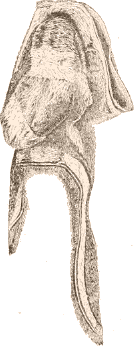
Fig. 508. Woman’s jacket. (National Museum, Washington.)

Fig. 507. Qaturang or boot ornament. (Museum für Völkerkunde, Berlin. IV A 6850.)
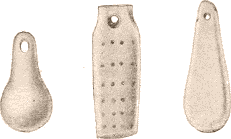
Fig. 509. Ivory beads for women’s jackets, a (Museum für Völkerkunde, Berlin. IV A 6841) b, c (National Museum, Washington. 34134.) 1/1
The jacket does not open in front, but is drawn over the head. It has a hood fitting closely to the head. The back and the front are made of a sealskin each. The hood of the Oqomiut is sharply pointed, while that of the Akudnirmiut is more rounded. The jackets are cut straight and have a slit in front. Some have a short tail behind, particularly the winter jackets. The cut of the winter clothing, which is made of deerskin, is the same as the former, and it is frequently trimmed with straps of deerskin. The jacket is rarely worn with the hood down, as it is only used while hunting and traveling. It is never brought into the huts, but after being cleaned from the adhering snow with the snowbeater (tiluqtung, as named by the eastern tribes; arautaq, as called by Hudson Bay tribes) is kept in the storeroom outside the house.
The women’s trousers are composed of two pieces. The upper one fits tightly and covers the upper half of the thigh. It is made of the skin of a deer’s belly. The other parts are, as it were, leggings, which reach from a little below the knee to the middle of the thigh and are kept in place by a string running to the upper part of the trousers. The women’s jacket (Fig. 508) is much more neatly trimmed than that of the men. It is frequently adorned with ivory or brass beads running round the edge (Fig. 509). It has a wide and large hood reaching down almost to the middle of the body. In front the jacket has a short appendage; behind, a very long tail which trails along the ground (see Fig. 508). If a child is carried in the hood, a leather girdle fastened with a buckle (Fig. 510) is tied around the waist and serves to prevent the child from slipping down. The first specimen given in Fig. 510 is remarkable for its artistic design.
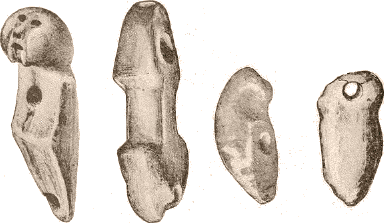
Fig. 510. Girdle buckles. a, c, d (Museum für Völkerkunde, Berlin.) b (National Museum, Washington. 34125.) 1/1
Among the Akudnirmiut of Davis Strait another fashion is more frequently in use much resembling that of Iglulik. The women have a wider jacket with a broader hood, enormous boots with a flap reaching up to the hip, and breeches consisting of one piece and reaching to the knees. Unfortunately I have no drawing of this clothing and must therefore refer to Parry’s engravings, which, however, are not very well executed, and to the figures representing dolls in this costume (see Fig. 528).
When children are about a month old they are put into a jacket made from the skin of a deer fawn and a cap of the same material, their legs remaining bare, as they are always carried in their mother’s hood. In some places, where large boots are in use, they are said to be carried in these. The cap is separate and is always made of the head of a fawn, the ears standing upright on each side of the head. The jacket is either quite open in front or has a short slit. Children of more than two years of age wear the same clothing, with trousers and boots (Fig. 511). When they are about eight years old they are clothed like men (Fig. 512). Girls frequently wear the same kind of dress for some time, until they are from nine to ten years old, when they assume the clothing of the women.
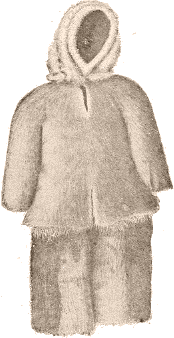
Fig. 511. Infant’s clothing. (Museum für Völkerkunde, Berlin.)
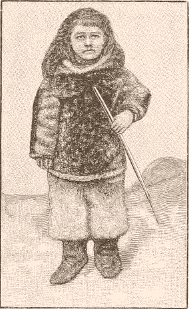
Fig. 512. Child’s clothing.
As to the mode of clothing of the other tribes I give the descriptions of the authors.
Parry describes the dress of the Iglulirmiut as follows (II, p. 495):
In the jacket of the women, the tail or flap behind is very broad, and so long as almost to touch the ground; while a shorter and narrower one before reaches halfway down the thigh. The men have also a tail in the hind part of their jacket, but of smaller dimensions; but before, it is generally straight or ornamented by a single scollop. The hood of the jacket ***is much the largest in that of the women, for the purpose of holding a child. The back of the jacket also bulges out in the middle to give the child a footing, and a strap or girdle below this, and secured round the waist by two large wooden buttons in front, prevents the infant from falling through when, the hood being in use, it is necessary thus to deposit it. ***The upper (winter) garment of the females, besides being cut according to a regular and uniform pattern, and sewed with exceeding neatness, which is the case with all the dresses of these people, has also the flaps ornamented in a very becoming manner by a neat border of deerskin, so arranged as to display alternate breadths of white and dark fur. This is, moreover, usually beautified by a handsome fringe, consisting of innumerable long, narrow threads of leather hanging down from it.A This ornament is not uncommon also in the outer jackets of the men. When seal-hunting,A they fasten up the tails of their jackets with a button behind.
The breeches and the foot gear of the men are described as being much the same as those of the Akudnirmiut. Parry remarks (loc. cit.) that several serpentine pieces of hide are sewed across the soles to prevent them from wearing out:
The inner boot of the women, unlike that of the men, is loose around the leg, coming as high as the knee joint behind, and in front carried up by a long, pointed flap nearly to the waist and there fastened to the breeches. The upper boot, with the hair as usual outside, corresponds with the other in shape, except that it is much more full, especially on the outer side, where it bulges out so preposterously as to give the women the most awkward, bow-legged appearance imaginable. ***Here, also, as in the jacket, considerable taste is displayed in the selection of different parts of the deerskin, alternate strips of dark and white being placed up and down the sides and front by way of ornament. The women also wear a moccasin (itigega) overall in the winter-time.
The dress of the Aivillirmiut is similar to that of the Igiulirmiut (Gilder, p. 139).
Traces of clothing found in old graves of Cumberland Sound and Frobisher’s description of the dress of the Nugumiut show that the style of clothing now used by the Igiulirmiut formerly obtained in all parts of Baffin Land.
All the Eskimo wear mittens. Those used in winter are made of the skin of young seals or of deerskin. In summer they use hairless sealskin, and sometimes make them with two thumbs, so as to turn the mitten round if one side should become wet.
The manner of dressing the hair practiced by the tribes of Northeastern Baffin Land differs from that of other tribes. On Davis Strait and in Hudson Bay the men allow it to grow to a considerable length, but frequently cut it short on the forehead. If all the hair is long it is kept back by a band made of the skin of deer antlers taken in the velvet. Sometimes these ties are very neatly finished. Frobisher states that the Nugumiut shaved part of their heads. The Kinipetu shave the top of the head; the Netchillirmiut wear their hair short.
The women have two styles of dressing their hair. They always part it on the top of the head. The back hair is wound into a bunch protruding from the back of the head or nicely arranged in a knot. The hair at the sides is plaited and folded over the ears, joining the knot behind. The other way is to arrange these parts in small pigtails reaching a little below the ears. They are kept in order by an ivory or brass ring (see Fig. 515).
The manner in which the Iglulirmiut dress their hair is thus described by Parry (II, p. 493):
They separate their locks into two equal parts, one of which hangs on each side of their heads and in front of their shoulders. To stiffen and bind these they use a narrow strap of deerskin, attached at one end to a round piece of bone, fourteen inches long, tapered to a point, and covered over with leather. This looks like a little whip, the handle of which is placed up and down the hair and the strap wound round it in a number of spiral turns, making the tail, thus equipped, very much resemble one of those formerly worn by our seamen. The strap of this article of dress, which is altogether called a tugliga, is so made from the deerskin as to show when bound round the hair, alternate turns of white and dark fur, which give it a very neat and ornamental appearance. ***Those who are less nice dispose ***their hair into a loose plait on each side or have one tugliga and one plait.
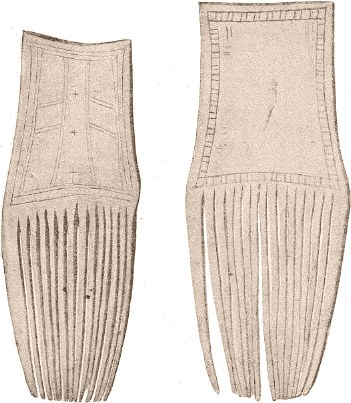
Fig. 513. Ivory combs. (National Museum, Washington. 10195.) 1/1
The natives of Southampton Island arrange their hair in a bunch protruding from the forehead (sulubaut). The same dress is worn at certain feasts on Davis Strait (p. 608).
For dressing the hair ivory combs are in use, two specimens of which are represented in. Fig. 513.
The clothing is frequently trimmed with straps of white deerskin, giving it a pleasing appearance. The edge of the women’s jacket is adorned with ivory beads. Instead of these, teeth, deer’s ears, foxes’ noses, or brass bells are sometimes used.
The inner jackets of the men are sometimes trimmed with beads, feathers, or leather straps, forming a collar and figures of different kinds on the back and on the breast. An amulet is worn in the middle of the back (p. 592). These ornaments and the amulet are only visible when the outer garment is taken off in the hut.
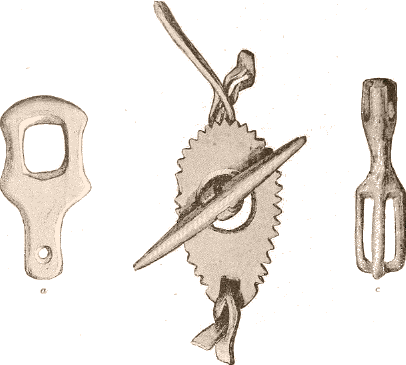
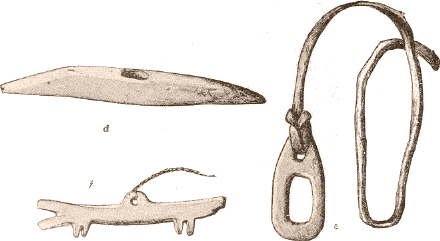
Fig. 514. Buckles. c (From Tununirnusirn.) (National Museum, Washington, a, 10196; b, 10400; c, 10177; d, 10196; e, 10195; f, 10207.) 1/1
Fig. 514 represents a number of buckles serving to carry needlecases or similar implements at the girdle, to which the eye is tied, the button being fastened to the implement. Head ornaments are in frequent use and are sometimes beautifully finished.
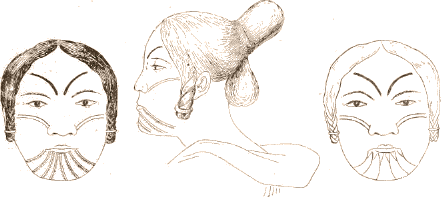
Fig. 515. Manner of tattooing face and wearing hair.
The women are in the habit of adorning their faces by tattooing. It is done, when they are about twelve years of age, by passing needle and thread covered with soot under the skin, or by puncture, the points of the tattooing instruments being rubbed with the same substance in both cases, which is a mixture of the juice of Fucus and soot, or with gunpowder, by which process they obtain a blue color. The face, arms, hands, thighs, and breasts are the parts of the body which are generally tattooed. The patterns will be seen in Figs. 515 and 516.
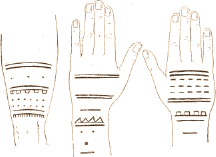
Fig. 516. Manner of tattooing legs and hands.
SOCIAL AND RELIGIOUS LIFE.
DOMESTIC OCCUPATIONS AND AMUSEMENTS.
It is winter and the natives are established in their warm snow houses. At this time of the year it is necessary to make use of the short daylight and twilight for hunting. Long before the day begins to dawn the Eskimo prepares for hunting. He rouses his housemates; his wife supplies the lamp with a new wick and fresh blubber and the dim light which has been kept burning during the night quickly brightens up and warms the hut. While the woman is busy preparing breakfast the man fits up his sledge for hunting. He takes the snow block which closes the entrance of the dwelling room during the night out of the doorway and passes through the low passages. Within the passage the dogs are sleeping, tired by the fatigues of the day before. Though their long, heavy hair protects them from the severe cold of the Arctic winter, they like to seek shelter from the piercing winds in the entrance of the hut.
The sledge is iced, the harnesses are taken out of the storeroom by the door, and the dogs are harnessed to the sledge. Breakfast is now ready and after having taken a hearty meal of seal soup and frozen and cooked seal meat the hunter lashes the spear that stands outside of the hut upon the sledge, hangs the harpoon line, some toggles, and his knife over the antlers, and starts for the hunting ground. Here he waits patiently for the blowing seal, sometimes until late in the evening.
Meanwhile the women, who stay at home, are engaged in their domestic occupations, mending boots and making new clothing, or they visit one another, taking some work with them, or pass their time with games or in playing with the children. While sitting at their sewing and at the same time watching their lamps and cooking the meat, they incessantly hum their favorite tunes. About noon they cook their dinner and usually prepare at the same time the meal for the returning hunters. As soon as the first sledge is heard approaching, the pots, which have been pushed back during the afternoon, are placed over the fire, and when the hungry men enter the hut their dinner is ready. While hunting they usually open the seals caught early in the morning, to take out a piece of the flesh or liver, which they eat raw, for lunch. The cut is then temporarily fastened until the final dressing of the animal at home.
In the western regions particularly the hunters frequently visit the depots of venison made in the fall, and the return is always followed by a great feast.
After the hunters reach home they first unharness their dogs and unstring the traces, which are carefully arranged, coiled up, and put away in the storeroom. Then the sledge is unloaded and the spoils are dragged through the entrance into the hut. A religious custom commands the women to leave off working, and not until the seal is cut up are they allowed to resume their sewing and the preparing of skins. This custom is founded on the tradition that all kinds of sea animals have risen from the fingers of their supreme goddess, who must be propitiated after being offended by the murder of her offspring (see p. 583). The spear is stuck into the snow at the entrance of the house, the sledge is turned upside down, and the ice coating is removed from the runners. Then it is leaned against the wall of the house, and at last the hunter is ready to enter. He strips off his deerskin jacket and slips into his sealskin coat. The former is carefully cleaned of the adhering ice and snow with the snowbeater and put into the storeroom outside the house.
This done, the men are ready for their dinner, of which the women do not partake. In winter the staple food of the Eskimo is boiled seal and walrus meat, though in some parts of the western districts it is musk ox and venison, a rich and nourishing soup being obtained by cooking the meat. The natives are particularly fond of seal and walrus soup, which is made by mixing and boiling water, blood, and blubber with large pieces of meat.
The food is not always salted, but sometimes melted sea water ice, which contains a sufficient quantity of salt, is used for cooking. Liver is generally eaten raw and is considered a tidbit. I have seen the intestines eaten only when there was no meat.
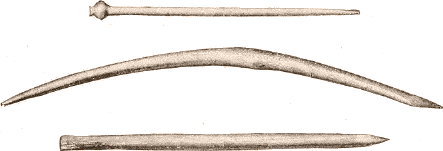
Fig. 517. Forks. a, b (From Iglulik.) (National Museum, Washington, a, 10395; b, 10393.)
Forks (Fig. 517)6 are used to take the meat out of the kettle and the soup is generally poured out into a large cup. Before the introduction of European manufactures these vessels and dishes generally consisted of whalebone. One of these has been described by Parry (I, p. 286). It was circular in form, one piece of whalebone being bent into the proper shape for the sides and another flat piece of the same material sewed to it for a bottom, so closely as to make it perfectly watertight. A ladle or spoon (Fig. 518) is sometimes used in drinking it, but usually the cup is passed around, each taking a sip in turn. In the same way large pieces of meat are passed round, each taking as large a mouthful as possible and then cutting off the bit close to the lips. They all smack their lips in eating. The Eskimo drink a great deal of water, which is generally kept in vessels standing near the lamps. When the men have finished their meal the women take their share, and then all attack the frozen meat which is kept in the storerooms. The women are allowed to participate in this part of the meal. An enormous quantity of meat is devoured every night, and sometimes they only suspend eating when they go to bed, keeping a piece of meat within reach in case they awake.

Fig. 518. Ladle of musk ox horn. (National Museum. Washington. 10382.) ½
After dinner the seals, which have been placed behind the lamps to thaw, are thrown upon the floor, cut up, and the spare meat and skins are taken into the storerooms. If a scarcity of food prevails in the village and a hunter has caught a few seals, every inhabitant of the settlement receives a piece of meat and blubber, which he takes to his hut, and the successful hunter invites all hands to a feast.
The dogs are fed every second day after dinner. For this purpose two men go to a place at a short distance from the hut, taking the frozen food with them, which they split with a hatchet or the point of the spear. While one is breaking the solid mass the other keeps the dogs off by means of the whip, but as soon as the food is ready they make a rush at it, and in less than half a minute have swallowed their meal. No dog of a strange team is allowed to steal anything, but is kept at a distance by the dogs themselves and by the whip. If the dogs are very hungry they are harnessed to the sledge in order to prevent an attack before the men are ready. They are unharnessed after the food is prepared, the weakest first, in order to give him the best chance of picking out some good pieces. Sometimes they are fed in the house; in such a case, the food being first prepared, they are led into the hut singly; thus each receives his share.
All the work being finished, boots and stockings are changed, as they must be dried and mended. The men visit one another and spend the night in talking, singing, gambling, and telling stories. The events of the day are talked over, success in hunting is compared, the hunting tools requiring mending are set in order, and the lines are dried and softened. Some busy themselves in cutting new ivory implements and seal lines or in carving. They never spend the nights quite alone, but meet for social entertainment. During these visits the host places a large lump of frozen meat and a knife on the side bench behind the lamp and every one is welcome to help himself to as much as he likes.
The first comers sit down on the ledge, while those entering later stand or squat in the passage. When any one addresses the whole assembly he always turns his face to the wall and avoids facing the listeners. Most of the men take off their outer jacket in the house and they sit chatting until very late. Even the young children do not go to bed early.
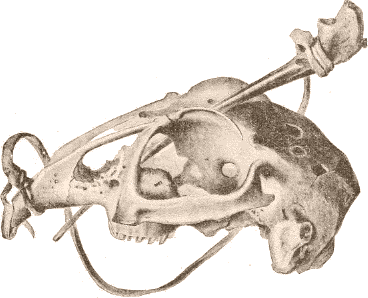
Fig. 519. Skull used in the game ajegaung, from Ungava Bay. (From L. M. Turner’s collection.) (National Museum, Washington. 90227.) 1/1
The women sit on the bed in front of their lamps, with their legs under them, working continually on their own clothing or on that of the men, drying the wet footgear and mittens, and softening the leather by chewing and rubbing. If a bitch has a litter of pups it is their business to look after them, to keep them warm, and to feed them regularly. Generally the pups are put into a small harness and are allowed to crawl about the side of the bed, where they are tied to the wall by a trace. Young children are always carried in their mothers’ hoods, but when about a year and a half old they are allowed to play on the bed, and are only carried by their mothers when they get too mischievous. When the mother is engaged in any hard work they are carried by the young girls. They are weaned when about two years old, but women suckle them occasionally until they are three or four years of age. During this time they are frequently fed from their mothers’ mouths. When about twelve years old they begin to help their parents, the girls sewing and preparing skins, the boys accompanying their fathers in hunting expeditions. The parents are very fond of their children and treat them kindly. They are never beaten and rarely scolded, and in turn they are very dutiful, obeying the wishes of their parents and taking care of them in their old age.
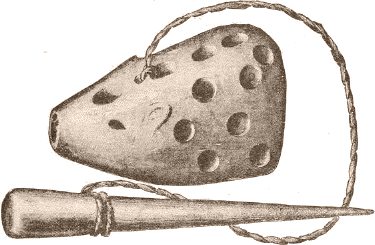
Fig. 520. Ivory carving representing head of fox, used in the game ajegaung. (Museum für Völkerkunde, Berlin. IV A 6820.) 1/1
In winter gambling is one of the favorite amusements of the Eskimo. Figs. 519–521 represent the ajegaung, used in a game somewhat similar to our cup and ball. The most primitive device is Fig. 519, a hare’s skull with a number of holes drilled through it. A specimen was kindly lent to me by Lucien M. Turner, who brought it from Ungava Bay; but in Baffin Land exactly the same device is in use. Fig. 520 represents the head of a fox, in ivory; Fig. 521, a polar bear. The specimen shown in Fig. 521 b was brought from Cumberland Sound by Kumlien. The neck of the bear is more elaborate than the one shown in a. The attachment of the part representing the hind legs is of some interest. The game is played as follows: First, the skull or the piece of ivory must be thrown up and caught ten times upon the stick in any one of the holes. Then, beginning with the hole in front (the mouth), those of the middle line must be caught. The three holes on the neck of the bear are double, one crossing vertically, the other slanting backward, but both ending in one hole on the neck. After the mouth has been caught upon the stick the vertical hole in the neck is the next, then the oblique one, and so on down the middle line of the animal’s body. If, in the first part of the game, the player misses twice he must give up the pieces to his neighbor, who then takes his turn. In the second part he is allowed to play on as long as he catches in any hole, even if it be not the right one, but as soon as he misses he must give it up. After having caught one hole he proceeds to the next, and the player who first finishes all the holes has won the game.
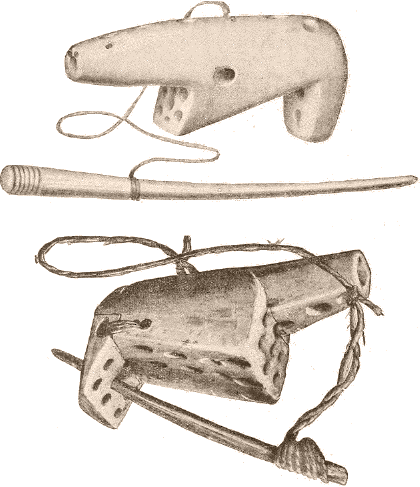
Fig. 521. Ivory carvings representing polar bear, used in the game ajegaung. a (Museum für Völkerkunde, Berlin. IV A 6819.) b (National Museum, Washington. 34078.) ⅔
A game similar to dice, called tingmiujang, i.e., images of birds, is frequently played. A set of about fifteen figures like those represented in Fig. 522 belong to this game, some representing birds, others men or women. The players sit around a board or a piece of leather and the figures are shaken in the hand and thrown upward. On falling, some stand upright, others lie flat on the back or on the side. Those standing upright belong to that player whom they face; sometimes they are so thrown that they all belong to the one who tossed them up. The players throw by turns until the last figure is taken up, the one getting the greatest number of the figures being the winner.
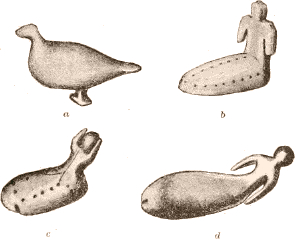
Fig. 522. Figures used in playing tingmiujang, a game similar to dice. (Museum für Völkerkunde, Berlin. IV A 6823.) 1/1
A favorite game is the nuglutang (Fig. 523). A small, rhomboidal plate of ivory with a hole in the center is hung from the roof and steadied by a heavy stone or a piece of ivory hanging from its lower end. The Eskimo stand around it and when the winner of the last game gives a signal every one tries to hit the hole with a stick. The one who succeeds has won. This game is always played amid great excitement.
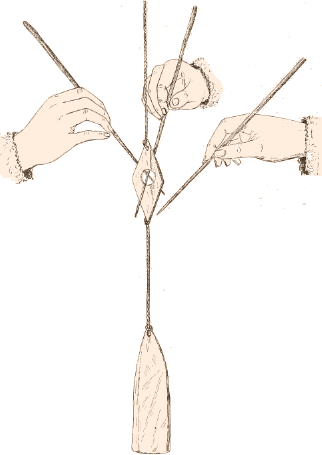
Fig. 523. Game of nuglutang. (Museum für Völkerkunde, Berlin. IV A 6821.)
The sāketān resembles a roulette. A leather cup with a rounded bottom and a nozzle is placed on a board and turned round. When it stops the nozzle points to the winner. At present a tin cup fastened with a nail to a board is used for the same purpose (Fig. 524).
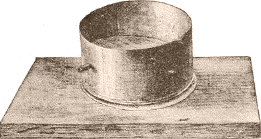
Fig. 524. The sāketān or roulette. (Museum für Völkerkunde, Berlin. IV A 6854.)
Their way of managing the gain and loss is very curious. The first winner in the game must go to his hut and fetch anything he likes as a stake for the next winner, who in turn receives it, but has to bring a new stake, in place of this, from his hut. Thus the only one who loses anything is the first winner of the game, while the only one who wins anything is the last winner.
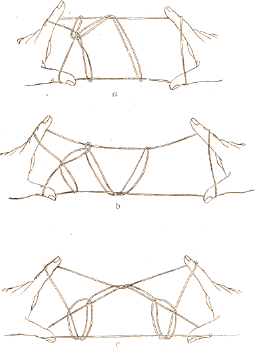
Fig. 525. The ajarorpoq or cat’s cradle. a representing deer; b, hare; c, hill and ponds.
The women are particularly fond of making figures out of a loop, a game similar to our cat’s cradle (ajarorpoq). They are, however, much more clever than we in handling the thong and have a great variety of forms, some of which are represented in Fig. 525.
As an example I shall describe the method of making the device representing a deer (Fig. 525 a): Wind the loop over both hands, passing it over the back of the thumbs inside the palms and outside the fourth fingers. Take the string from the palm of the right hand with the first finger of the left and vice versa. The first finger of the right hand moves over all the parts of the thong lying on the first and fourth fingers of the right hand and passes through the loop formed by the thongs on the thumb of the right hand; then it moves back over the foremost thong and takes it up, while the thumb lets go the loop. The first finger moves downward before the thongs lying on the fourth finger and comes up in front of all the thongs. The thumb is placed into the loops hanging on the first finger and the loop hanging on the first finger of the left hand is drawn through both and hung again over the same finger. The thumb and first finger of the right and the thumb of the left hand let go their loops. The whole is then drawn tight. A few other devices from Hudson Bay are represented by Klutschak (p. 139).
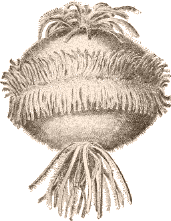
Fig. 526. Ball. (Museum für Völkerkunde, Berlin. IV A 6822.)
The ball (Fig. 526) is most frequently used in summer. It is made of sealskin stuffed with moss and neatly trimmed with skin straps. One man throws the ball among the players, whose object it is to keep it always in motion without allowing it to touch the ground. Another game of ball I have seen played by men only. A leather ball filled with hard clay is propelled with a whip, the lash of which is tied up in a coil. Every man has his whip and is to hit the ball and so prevent his fellow players from getting at it.
A third game at ball called igdlukitaqtung is played with small balls tossed up alternately from the right to the left, one always being in the air. Songs used in the game will be found in the last pages of this paper.
An amusement of women and children is to point successively on the forehead, the cheek, and the chin and to pronounce as rapidly as possible sulubautiχu´tika, tudliχu´tika, tadliχu´tika, tudliχú´tika, i.e., the forehead, the cheek, the chin, the cheek.
Young children play with toy sledges, kayaks, boats, bows and arrows, and dolls. The last are made in the same way by all the tribes, a wooden body being clothed with scraps of deerskin cut in the same way as the clothing of men. Fig. 527 shows dolls in the dress of the Oqomiut; Fig. 528, in that of the Akudnirmiut.
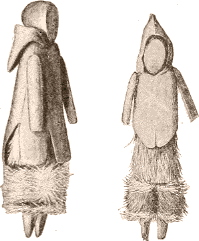
Fig. 527. Dolls in dress of the Oqomiut. (Museum für Völkerkunde, Berlin. IV A 6702.) 1/1
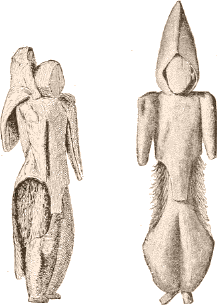
Fig. 528. Dolls in dress of the Akudnirmiut. (Museum für Völkerkunde, Berlin. IV A 6702.) 1/1
In summer children and grown up people exercise by sitting down on their knees in a large circle and simultaneously jumping up and down, by kneeling and holding their toes in their hands and trying to outdo one another in running in this position, &c.
A favorite amusement during the long winter nights is telling tales and composing songs. Old traditions are always related in a highly ceremonious manner. The narrator takes off his outer jacket, pulls the hood over his head, and sits down in the rear part of the hut, turning his face toward the wall, and then tells the story slowly and solemnly. All the stories are related in a very abridged form, the substance being supposed to be known. The form is always the same, and should the narrator happen to say one word otherwise than is customary he will be corrected by the listeners.
Children tell one another fables and sing short songs. Comic songs making fun of any person are great favorites. Details on the poetry and music of the Eskimo will be found further on.
Parry’s description of the games and sports practiced by the Iglulirmiut is so interesting that I insert it here (II, p. 538):
On an occasion when most of the men were absent from the huts on a sealing excursion, the women joined in playing, one of them being the chief performer. Being requested to amuse the rest, she suddenly unbound her hair, platted it, tied both ends together to keep it out of her way, and then stepping out into the middle of the hut, began to make the most hideous faces that can be conceived, by drawing both lips into her mouth, poking forward her chin, squinting frightfully, occasionally shutting one eye, and moving her head from side to side as if her neck had been dislocated. This exhibition, which they call ajokitarpoq, and which is evidently considered an accomplishment that few of them possess in perfection, distorts every feature in the most horrible manner imaginable, and would, I think, put our most skillful horse-collar grinners quite out of countenance.
This performance is identical with one described later (p. 578) as practiced during the meals in summer.
The next performance consists in looking steadfastly and gravely forward and repeating the words tăbā’-tăbā’; kjaibo, kjaibo; kebang inutovik, kebang inutovik; amatama, amatama, in the order in which they are here placed, but each at least four times, and always by a peculiar modulation of the voice speaking them in pairs as they are coupled above. The sound is made to proceed from the throat in a way much resembling ventriloquism, to which art it is indeed an approach. After the last amatama she always pointed with her finger toward her body, and pronounced the word angakoq, steadily retaining her gravity for five or six seconds, and then bursting into a loud laugh, in which she was joined by all the rest. The women sometimes produce a much more guttural and unnatural sound, repeating principally the word ikeri-ikeri, coupling them as before, and staring in such a manner as to make their eyes appear ready to burst out of their sockets with the exertion. Two or more of them will sometimes stand up face to face, and with great quickness and regularity respond to each other, keeping such exact time that the sound appears to come from one throat instead of several. Very few of the females are possessed of this accomplishment, which is called pitkusiraqpoq, and it is not uncommon to see several of the younger females practising it. A third part of the game, distinguished by the word kaitikpoq, consists only in falling on each knee alternately, a piece of agility which they perform with tolerable quickness, considering the bulky and awkward nature of their dress. ***Then the same woman came forward, and letting her arms hang down loosely and bending her body very much forward, shook herself with extreme violence, as if her whole frame had been strongly convulsed, uttering at the same time, in a wild tone of voice, some of the unnatural sounds before mentioned.