THE CENTRAL ESKIMO. (continued 3)
Reading edition
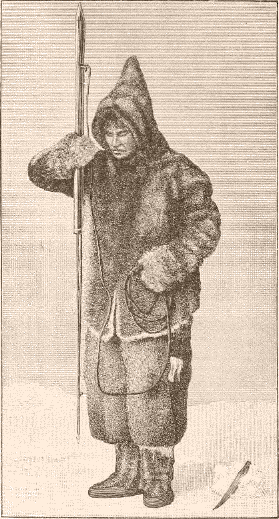
Fig. 397. Eskimo in the act of striking a seal. (From a photograph.)
If he is sure that the seal has recently visited a hole he marks its exact center on the top of the snow and then fills up his peep hole with small blocks of snow. All these preparations must be made with the utmost precaution, as any change in the appearance of the snow would frighten away the seal. The Eskimo take particular care that no hairs from their clothing fall into the hole or remain sticking in the snow, for they believe that the smell would scare away the animal. The center of the breathing hole must be marked, as the game remains invisible and only a stroke into the center will be likely to hit it. If the snow covering is very thick and strong it is cut down, but is replaced with loose snow, which is heaped around the end of the harpoon, the latter being placed upon the central point. After the harpoon has been extracted a hole remains which forms the mark for the harpooner. If the Eskimo expects the early return of the seal, he spreads a small piece of skin, generally that of a young seal, close to the hole and places his feet upon it, thus keeping them warm. He fastens the naulang to the harpoon shaft, while the lower end of the line is folded up in a coil, which he holds in the left hand. The unang is held in both hands, and thus the hunter sometimes remains for hours, occasionally stooping and listening, until he hears the blowing of the seal. Then, all of a sudden, he stands upright, and, with all his strength, sends the harpoon straight downward into the hole, paying out the line at the same time, but keeping a firm hold of the loop at its end (Fig. 397). Generally the seal is struck near the head. If the line is fastened to the shaft by a slipping hitch it is at once detached and the harpoon either remains sticking in the snow or falls down by the hole. If the line runs through the nabiring, the harpoon is dragged into the water and impedes the movements of the animal. The hunter then begins at once to cut down the snow covering with his knife, which has been left within easy reach, and hauls in the line. As soon as the seal comes to the surface to breathe it is easily dispatched and drawn up on the ice.
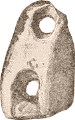
Fig. 398. Tutareang or buckle. (Museum für Völkerkunde, Berlin. IV A 6710.) 1/1
The arrangements at the seal hole are more elaborate if the sealer expects to wait a long time. If only a few men go out hunting and famine is impending, he sometimes waits for a whole day or even longer, though it be cold and the wind rage over the icy fields. He builds up a semicircular wall of snow blocks to keep off the piercing wind and makes a seat in the center of it. A skin is spread under his feet and his legs are tied together with a thong, which is fastened by a peculiar kind of buckle (tutareang) with two holes (Fig. 398). One end of the thong is firmly tied to the buckle, passing through one of the holes, while the opposite end passes tightly through the second hole. The thong may be quickly opened by a strong effort on the part of the hunter, while it helps to keep him quiet. At his right hand (Fig. 399; in this drawing it appears on the left) the snow knife is stuck into the snow, while to the left the unang is placed upon two pegs. The coil of the line lies in his lap. His left arm is drawn out of his sleeve, that he may more easily keep warm. Both sleeves are generally held together by a piece of deer’s horn with a branch on each side which serves as a hook. Thus the hunter waits until he hears the breathing of the seal. As it usually stays for several minutes he is in no hurry to get ready. Cautiously he places his left arm into the sleeve, having first disengaged it from the hook. He then takes hold of the coil, picks up his unang, and, having risen, strikes the center of the hole.
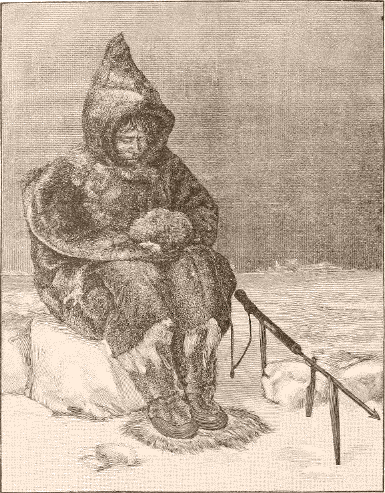
Fig. 399. Eskimo awaiting return of seal to blowhole. (From a photograph.)
Ross (II, p. 268) and Rae (I, p. 123) state that the sealing at the hole is more difficult in daylight than in the dark. I suppose, however, that when the snow is deep there is no difference; at least the Eskimo of Davis Strait never complain about being annoyed by the daylight.
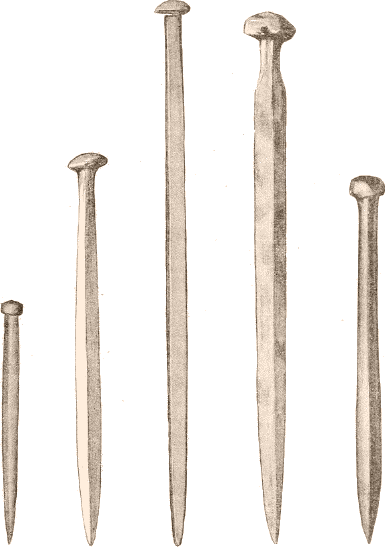
Fig. 400. Tuputang or ivory plugs for closing wounds. e (Museum für Völkerkunde, Berlin. IV A 6706.) b, c, d (National Museum, Washington. b, 10192; c, 10390; d, 9836.) 1/1
Sometimes a small instrument is used in the hunt to indicate the approach of the seal. It is called qipekutang and consists of a very thin rod with a knob or a knot at one end (Parry II, p. 550, Fig. 20). It is stuck through the snow, the end passing into the water, the knob resting on the snow. As soon as the seal rises to blow, it strikes the rod, which, by its movements, warns the Eskimo. Generally it is made of whalebone. Sometimes a string is attached to the knob and fastened by a pin to the snow, as its movements are more easily detected than those of the knob. The natives are somewhat averse to using this implement, as it frequently scares the seals.
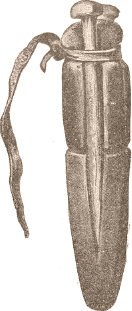
Fig. 401. Wooden case for plugs. (Museum für Völkerkunde, Berlin.) 1/1
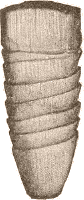
Fig. 402. Another form of plug. (Museum für Völkerkunde, Berlin.) ⅔
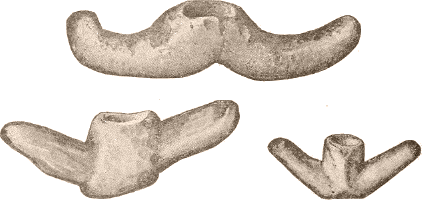
Fig. 403. Qanging for fastening thong to jaw of seal. a (Museum für Völkerkunde, Berlin. IV A 6825.) b, c (National Museum, Washington. b, 34126; c, 34129.) 1/1

Fig. 405. Qanging in form of a button. (National Museum, Washington. 34130.) 1/1
After the carcass of the animal has been drawn out of the water, the wounds are closed with ivory plugs (tuputang) (Fig. 400), which are carried in a wooden or leathern case (Fig. 401) and are either triangular or square. The plug is pushed under the skin, which is closely tied to its head. Another form of plug which, however, is rarely used, is represented in Fig. 402. The skin is drawn over the plug and tied over one of the threads of the screw cut into the wood. After the dead animal’s wounds are closed, a hole is cut through the flesh beneath the lower jaw and a thong is passed through this hole and the mouth. A small implement called qanging is used for fastening it to the seal. It usually forms a toggle and prevents the line from slipping through the hole. The patterns represented in Fig. 403 are very effective. The hole drilled through the center of the instrument is wider at the lower end than elsewhere, thus furnishing a rest for a knot at the end of the thong. The points are pressed into the flesh of the seal, and thus a firm hold is secured for the whole implement. The Eskimo display some art in the manufacture of this implement, and frequently give it the shape of seals and the like (Fig. 404). Fig. 405 represents a small button, which is much less effective than the other patterns. A very few specimens consist merely of rude pieces of ivory with holes drilled through them. Fig. 406 shows one of these attachments serving for both toggle and handle.

Fig. 404. Qanging in form of a seal. (Museum für Völkerkunde, Berlin. IV A 6825.) 1/1
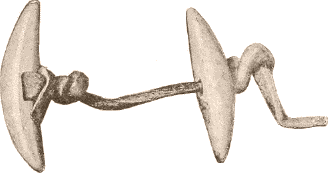
Fig. 406. Qanging serving for both toggle and handle. (National Museum, Washington. 10400.) ⅔
In order to prevent the line from getting out of order, a whirl (qidjarung) is sometimes used. Fig. 407 represents one brought from Cumberland Sound by Kumlien, and is described by him (p. 38). There was a ball in the hollow body of this instrument, which could not be pulled through any of the openings. One line was fastened to this ball, passing through the central hole, and another one to the top of the whirl. A simpler pattern is represented in Fig. 408.
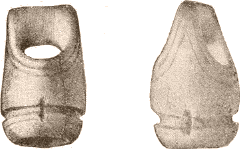
Fig. 407. Qidjarung or whirl for harpoon line. (National Museum, Washington. 34121.) 1/1

Fig. 408. Simpler form of whirl. (Museum für Völkerkunde, Berlin.) 1/1
On its capture, the seal is dragged to the sledge and after being covered with the bearskin is firmly secured by the lashing. It freezes quickly and the hunter sits down on top of it. If the seal happens to blow soon after the arrival of the hunter, a second one may be procured, but generally the day is far spent when the first seal is killed.
Wherever water holes are found they are frequently visited during the winter by the Eskimo, especially by those who have firearms. They lie in wait at the lower side of the hole, i.e., the side to which the tide sets, and when the seal blows they shoot him, securing him with the harpoon after he has drifted to the edge of the ice. These holes can only be visited at spring tides, as in the intervals a treacherous floe partly covers the opening and is not destroyed until the next spring tide.
In March, when the seal brings forth its young, the same way of hunting is continued, besides which young seals are eagerly pursued. The pregnant females make an excavation from five to ten feet in length under the snow, the diving hole being at one end. They prefer snowbanks and rough ice or the cracks and cavities of grounded ice for this purpose, and pup in these holes. The Eskimo set out on light sledges dragged by a few dogs, which quickly take up the scent of the seals. The dogs hurry at the utmost speed to the place of the hole, where they stop at once. The hunter jumps from the sledge and breaks down the roof of the excavation as quickly as possible, cutting off the retreat of the seal through its hole if he can. Generally the mother escapes, but the awkward pup is taken by surprise, or, if very young, cannot get into the water. The Eskimo draws it out by means of a hook (niksiang) and kills it by firmly stepping on the poor beast’s breast. An old pattern of the hook used is represented according to Kumlien’s drawing in Fig. 409; another, made from a bear’s claw, in Fig. 410; the modern pattern, in Fig. 411.
Sometimes the natives try to catch the old seal in a most cruel way, by using the love of the dam for her pup to lure her to the surface of the hole. They tie a thong to the hind flipper of the pup and throw it into the hole. It dives at once, crying pitifully. When it comes up to breathe the hunter pushes it back, and frequently the dam returns to her young and attempts to draw it away. As soon as she is seen the harpoon is plunged into her body and she is quickly drawn out of the water and killed.
The young seal is also pursued by foxes, which drag it from the excavation and leave nothing but the skin, which becomes a welcome find for the Eskimo.



Fig. 409. Old pattern of hook for drawing out captured seal.
Fig. 410. Seal hook of bear’s claw. Actual size, 3 feet. (Museum für Völkerkunde, Berlin. IV A 6728.)
Fig. 411. Modern form of seal hook. (From a drawing by Kumlien.)
As the season advances and the rays of the sun become warmer the seals break down the snow roofs and are seen basking beside their holes. The young ones remain with their dams until late in June.
At this season a new method of hunting is practiced, by which seals are caught with greater ease than in winter. The hunter approaches the animal from the windward side until he is within seventy or eighty yards of it. He then lies down, after having fastened a piece of skin under his left arm, upon which he reclines. The skin protects him from the melting snow, facilitates speed, and diminishes the noise as he creeps. He moves on toward the seal, resting on his left arm and side and pushing himself forward with his right foot and left arm (Fig. 412). The seal frequently raises his head and gazes around to make sure that no danger threatens. As long as the seal is looking around the hunter lies flat and keeps perfectly still, or, if he is somewhat close to the animal, imitates its movements by raising his head and rolling and playing with his hands and feet as a seal does with its flippers. Some natives will utter sounds similar to those of a blowing seal or use a small sledge with a white screen to conceal themselves from view. The sealskin clothing makes man and seal look so extremely alike that it is difficult to distinguish one from the other at some distance. If the hunter succeeds in deceiving the animal it lies down again to sleep and he pushes himself on. As the naps of the seal last but a few moments, the Eskimo approaches very slowly. At last he is near enough. He levels his gun and tries to hit the animal’s head, as it must be killed by the first shot, else it jumps into the hole and escapes. If the snow is hard and water has not yet appeared on the top of the ice, a seal may be killed in this way in twenty or thirty minutes. If the snow is very soft and deep it is almost impossible to get near enough, as it is extremely difficult to push one’s self along. The approach is rather easy through rough ice, which conceals the hunter, but the seals seldom frequent such places. Sometimes they are found at the edges of rough ice or near the shore and are easily caught when in this position.
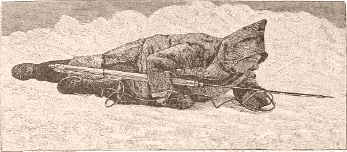
Fig. 412. Eskimo approaching seal. (From a photograph.)
Formerly, the harpoon was used instead of the gun, and is even now preferred by some hunters. The hunter gets near enough to reach the seal with the harpoon, and having struck his prey has a better chance of securing it, as the weapon prevents its escape.
After the shot has been fired or the harpoon thrown, the Eskimo at once jumps to his feet in order to prevent the escape of the animal to its hole, to which it takes if only wounded. An expert hunter can kill from ten to fifteen seals in one day.
Rae, in describing the method of hunting, states (I, p. 170) that the women at Repulse Bay are very skillful, and when they have no harpoon frequently use a small wooden club, with which they strike the seal on the nose, killing it.
Generally two men go sealing together. They set out early in the morning on one sledge, and while one creeps toward the seals the other keeps the dogs quiet. A single hunter cannot hunt successfully at this season with a sledge, for when he leaves it the dogs will either follow him or, if made fast to the ice, raise such a howling that the seal is put upon its guard. Therefore it is necessary that a continuous watch be kept on the dogs. When the shot is fired and they perceive that the seal is killed, no amount of whipping will restrain them; they rush forward until they have reached the victim, which is then lashed on the sledge.
The hunters go on in search of a second seal, at the sight of which the dogs are again stopped. When the Eskimo intend to remain out only a few hours they leave the dead animals at their holes and load them on the sledge on the return journey. A single hunter cannot leave the settlement for a long distance, but is limited to sealing near the village and killing no more animals than he can drag to it himself. Sometimes it happens that the seals are fast asleep. Then the hunter can go up to them without any precaution and kill them immediately, and even a dog team running at full speed can take them by surprise. In winter a similar method of hunting is followed whenever the edge of the floe is close to the land. In such places all kinds of seals lie on the ice, even in the midst of winter, and are pursued in the way which has been already described.
A strange method of hunting is reported by Ross (II, p. 451) as practiced by the Netchillirmiut. Eight men slowly approached the basking seal until it raised its head, when those in front stopped and shouted as loud as they could; on which three others ran up with incredible swiftness and the leader struck it with the spear.
Still later in the season, when the snow is all gone, a very successful method of hunting is practiced. All the inhabitants of the settlements set out at once, men, women, and children, and occupy every seal hole over a large area. The men keep their harpoons ready to strike the animal when it comes up to blow, while the women and children are provided with sticks only, with which they frighten away the seals whenever they rise where they are standing. The animals are compelled to rise somewhere, as otherwise they would be drowned, and thus an ample supply is secured in a short time.
After the breaking up of the ice the natives take to their kayaks and the summer hunt is started. As at this season the methods of catching all kinds of seal and walrus are almost identical, I shall describe them together; and, first, the most important part of the hunting gear, the kayak and its belongings.
The kayak (qajaq) is almost exclusively used for hunting by all Eskimo tribes from Greenland to Alaska. According to Bessels the Ita natives do not know its use, though they have retained the word. As a connection exists between this tribe and those of Baffin Land, I have no doubt that they are acquainted with the use of the boat, though it may be of little avail in that ice encumbered region. When I first visited the tribes of Davis Strait no kayak was to be found between Cape Mercy and Cape Raper, nor had there been any for several years. In the summer of 1884, however, two boats were built by these natives.
The general principles of their construction are well known. The kayak of the Nugumiut, Oqomiut, and Akudnirmiut is bulky as compared with that of Greenland and Hudson Bay. It is from twenty-five to twenty-seven feet long and weighs from eighty to one hundred pounds, while the Iglulik boats, according to Lyon (p. 322), range from fifty to sixty pounds in weight. It may be that the Repulse Bay boats are even lighter still. According to Hall they are not heavier than twenty-five pounds (II, p. 216).

Fig. 413. Frame of a kayak or hunting boat. (Museum für Völkerkunde, Berlin.)
The frame of the kayak (Fig. 413) consists, first, of two flat pieces of wood which form the gunwale (apumang). From ten to twenty beams (ajang) keep this frame on a stretch above. The greatest width between them is a little behind the cock pit (p. 487). A strong piece of wood runs from the cross piece before the hole (masing) to the stem, and another from the cross piece abaft the hole (itirbing) to the stern (tuniqdjung). The proportion of the bow end to the stern end, measured from the center of the hole, is 4 to 3. The former has a projection measuring one-fourth of its whole length. Setting aside the projection, the hole lies in the very center of the body of the kayak. A large number of ribs (tikping), from thirty to sixty, are fastened to the gunwales and kept steady by a keel (kujang), which runs from stem to stern, and by two lateral strips of wood (siadnit), which are fastened between gunwale and keel. The stem projection (usujang), which rises gradually, begins at a strong beam (niutang) and its rib (qaning). The extreme end of the stern (aqojang) is bent upward. The bottom of the boat is partly formed by the keel, partly by the side supports. The stern projection has a keel, but in the body of the boat the side supports are bent down to the depth of the keel, thus forming a flat bottom. Rising again gradually they terminate close to the stern. Between the masing and the itirbing is the hole (pa) of the kayak, the rim of which is formed by a flat piece of wood or whalebone bent into a hoop. It is flattened abaft and sharply bent at the fore part. The masing sometimes rests upon a stud.

Fig. 414. Kayak with covering of skin. (Museum für Völkerkunde, Berlin.)
The whole frame is covered with skins (aming) tightly sewed together and almost waterproof (Fig. 414). Usually the cover consists of three or four skins of Pagomys fœtidus. When put upon the frame it is thoroughly wetted and stretched as much as possible so as to fit tightly. It is tied by thongs to the rim of the hole. A small piece of ivory is attached to each side of the niutang and serves to fasten a thong which holds the kayak implements. Two more thongs are sewed to the skin just before the hole, another one behind it, and two smaller ones near the stern.
The differences between this boat and that of the Iglulirmiut may be seen from Lyon’s description (page 320). Their kayak has a long peak at the stern, which turns somewhat upward. The rim round the hole is higher in front than at the back, whereas that of the former has the rim of an equal height all around. At Savage Islands Lyon saw the rims very neatly edged with ivory. The bow and the stern of the Iglulik kayaks were equally sharp and they had from sixty to seventy ribs. While the kayaks of the Oqomiut have only in exceptional cases two lateral supports between keel and gunwale, Lyon found in the boats of these natives seven siadnit, but no keel at all. These boats are well represented in Parry’s engravings (II, pp. 271 and 508). Instead of the thongs, ivory or wooden holders are fastened abaft to prevent the weapons from slipping down.
If the drawing in Lyon’s book (p. 14) be correct, the kayak of the Qaumauangmiut (Savage Islands) has a very long prow ending in a sharp peak, the proportion to the stern being 2 to 1. Its stern is much shorter and steeper than that of the northern boats and carries the same holders as that of the Iglulirmiut.

Fig. 415. Model of a Repulse Bay kayak. (National Museum, Washington. 68126.)

Fig. 416. Sirmijaung or scraper for kayak. (Museum für Völkerkunde, Berlin.) ½

Fig. 417. Large kayak harpoon for seal and walrus. Actual length, 6½ feet. (Museum für Völkerkunde, Berlin.)
The model of a Repulse Bay kayak is represented in Fig. 415. The rim of the hole is in the same position as in the Iglulik kayak, the fore part resting on a rib bent like a hoop, whereas in the others it rests on a beam. The stern resembles closely that of the Cumberland Sound boats, while the head is less peaked, the keel having a sharper bend at the beginning of the projection, which does not turn upward. Early in the spring and in the autumn, when ice is still forming, a scraper (sirmijaung) (Fig. 416) is always carried in the kayak for removing the sleet which forms on the skin. When the boat has been pulled on shore, it is turned upside down and the whole bottom is cleaned with this implement. A double bladed paddle (pauting) is used with the boat. It has a narrow handle (akudnang), which fits the hand of the boatman and widens to about four inches at the thin blades (maling), which are edged with ivory. Between each blade and the handle there is a ring (qudluqsiuta).
The kayak gear consists of the large harpoon and its line (to which the sealskin float is attached), the receptacle for this line, the bird spear (with its throwing board), and two lances.
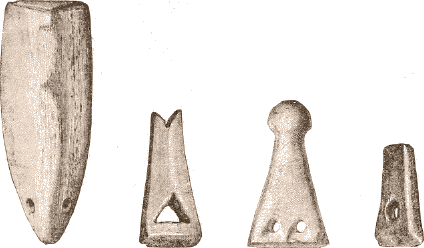
Fig. 418. Tikagung or support for the hand. a, b, c (National Museum, Washington. a, 30000; b, 30005; c, 30004.) d (Museum für Völkerkunde, Berlin.)
The large harpoon (Fig. 417) is used for hunting seals and walrus from the kayak. The shaft (qijuqtenga) consists of a stout pole from four and a half to five feet in length, to which an ivory knob is fastened at the lower end. At its center of gravity a small piece of ivory (tikagung) is attached, which serves to support the hand in throwing the weapon. A remarkable pattern of this tikagung, which nicely fits the hand of the hunter, is represented in the first of the series of Fig. 418, and another one, which differs only in size from that of the unang, in the second. At right angles to the tikagung a small ivory knob is inserted in the shaft and serves to hold the harpoon line. At this part the shaft is greatly flattened and the cross section becomes oblong or rhombic. At the top it is tenoned, to be inserted into the mortice of the ivory head (qatirn). The latter fits so closely on the tenon that it sticks without being either riveted or tied together. The qatirn is represented in Fig. 419. Into the cavity at its top a walrus tusk is inserted and forms with it a ball and socket joint (igimang).
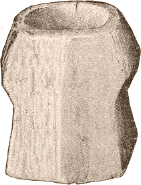
Fig. 419. Qatirn or ivory head of harpoon shaft. (National Museum, Washington. 34101.) ⅔
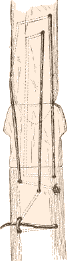
Fig. 420. Manner of attaching the two principal parts of the harpoon.
The tusk and the qatirn are fastened to each other in a most ingenious way, which may be readily made out from the engraving (Fig. 420). The principal effect of this arrangement of the holes and the thong is that the tusk is kept steady by two parallel thongs that prevent it from tipping over and only allow a movement in the plane of the flattening of the shaft as soon as any considerable force is applied to the tusk.
The harpoon head used in connection with this weapon is the tokang. To prevent it from being injured, it is carried in a wooden sheath (Fig. 421). The iron point is secured by a string of whalebone or sealskin; the lower part is fastened to the sheath as indicated in the figure. The tokang differs from the naulang in that it is larger and stouter. In some cases great care is bestowed upon the finishing of this important weapon.
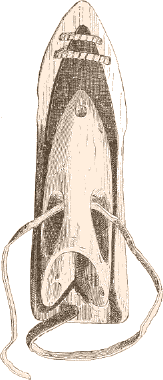
Fig. 421. Tokang or harpoon point in sheath. (In the possession of Captain John O. Spicer, Groton. Conn.) ⅔
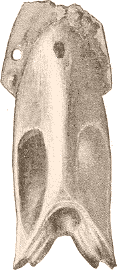
Fig. 422. Tokang or harpoon head taken from a whale in Cumberland Sound. (National Museum, Washington. 34069.) ⅔
An interesting specimen of this variety of harpoon head was found by Kumlien in Cumberland Sound (Fig. 422). It was taken from a whale and differs from the device of that country. The back is bent similar to that of the iron naulang and the barbs have two points each instead of one. The front part is sharply ridged. The specimen is very nicely finished. A few very old harpoon heads of the same pattern are deposited in the British Museum and were of Hudson Strait manufacture; therefore I conclude that Kumlien’s specimen is from the same part of the country.
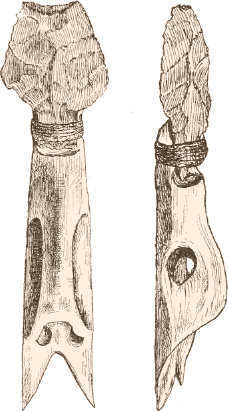
Fig. 423. Ancient tokang or harpoon head. (In A. Sturgis’s collection, New York.)
Fig. 423 represents an ancient harpoon head of the same style, the locality of which is unfortunately unknown. The specimen is of particular interest, as it shows the method of fastening the stone to the ivory part. A similar specimen is in the collections of the British Museum; it formed part of the Sloane collection. Both these specimens show perforations at the lower end of the harpoon head which are not found in the modern ones. Probably these served for holding the harpoon head to the shaft by means of a thin line, in order to prevent the head from coming off before the seal or walrus was struck. These holes are similar to the ones shown in Figs. 395 and 436.
The harpoon line (alirn) is attached to the tokang in the same way as the iparang is to the naulang. When it is fastened to the igimang, the bend of the tusk facilitates the disengagement of the harpoon head, which turns its back to that of the tusk. Attached to the line at the level of the ivory knob which has been mentioned is the teliqbing (Fig. 424), into the hole of which the knob fits closely. As the line from the tokang to the teliqbing is just long enough to allow it to be pulled down far enough to reach the knob, it holds shaft and head firmly together so long as the tusk remains in its position. As soon as a lateral strain is put upon the tusk the distance between the head and the knob is diminished and the teliqbing slips off, thus disengaging the line with the harpoon head from the shaft. Sometimes the teliqbing has two holes, one being used when the line is wet and longer, the other when it is dry and shorter.
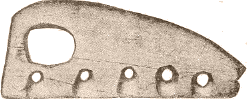
Fig. 424. Teliqbing, which is fastened to harpoon line. (National Museum, Washington. 34123.) 1/1
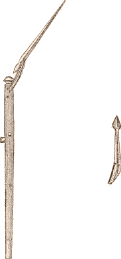
Fig. 425. Qatilik or spear from Iglulik (From Parry II, p. 550.)
In Iglulik the spear is called qatilik (Fig. 425). In pattern it is the same as that of Akudnirn and Oqo, the only difference, according to Parry’s description, being that the toung (the tusk) is straight and has a notch near its socket (see Fig. 425), while the harpoon head which belongs to it has only a single point at its lower end.
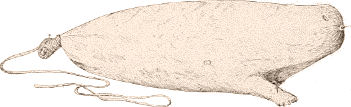
Fig. 426. Avautang or sealskin float. (National Museum, Washington. 30009.)
This harpoon is placed on the right side of the prow of the kayak, with the point directed towards its head. The harpoon line, with the tokang, lies just before the hunter in a flat receptacle (asedlun), which consists of a wooden ring with a handle, held by thongs before the hole of the kayak. The receptacle rests on the skin cover, having no feet, as has the Greenland one. In Hudson Strait it is secured upon holders. The harpoon line is rolled up in a coil, but its end is fastened to the seal float, which lies behind the hunter and is held in place by a thong. The line passes along the right side of the kayak hole. The float (avautang) (Fig. 426) consists of a whole sealskin which had been removed from the animal dexterously, its entire body being pulled through the mouth, which is enlarged by means of a cut along the throat. The nails of the flippers are frequently extracted and the openings sewed up, the hind flippers and the tail being cut off and firmly tied together by a thong, thus forming a neck (atauta), to which the harpoon line is attached. At the head a pipe for blowing up the skin (poviutang) is inserted (Fig. 427); the skin is firmly tied to the ring of the pipe, on which the stopper is secured as soon as the skin is sufficiently inflated. This device is a very convenient one, for it is difficult to inflate the skin without some kind of mouthpiece. If there are any holes in the float they are closed by a button similar to the one shown in Fig. 427 a, which, however, is without a hole.
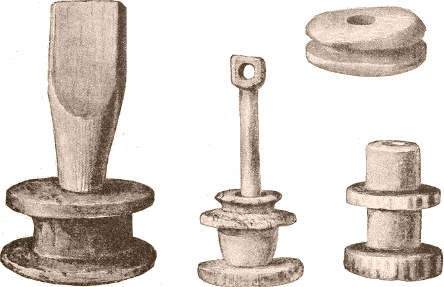
Fig. 427. Different styles of poviutang or pipe for inflating the float. (National Museum, Washington. a, 29986; b, 34118; c, 34119; d, 34120.)
If the harpoon is to be used for hunting large animals, such as walrus or whales, a very ingenious contrivance is sometimes inserted between the line and the float in the shape of a wooden hoop with a seal or deer skin stretched over it (niutang) (see Fig. 437). Three or four thongs of equal length are fastened to the hoop at equal distances and bound together. At their point of union they are attached to the line. As soon as a walrus is struck and starts to swim away, the hoop is thrown at right angles to the stretched line and exerts a strong resistance when dragged along, thus diminishing the speed of the animal and quickly exhausting its strength. The float prevents its escape, as it is too buoyant to be drawn under water. The animal cannot dive, and thus the hunter does not lose sight of his prey.
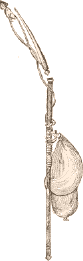
Fig. 428. Agdliaq or spear for small seals. (From Parry II, p. 550.)
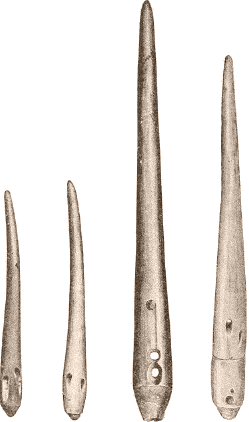
Fig. 429. Agdliaq points. (National Museum, Washington. a, 90165; b, 2991; c, 34098; d, 34063.)
For small seals a similar weapon is used, the agdliaq (Fig. 428), the main difference being that it is much smaller and has a seal bladder for a float attached to the shaft. I have not seen this weapon myself, but Kumlien has brought away parts of it. Fig. 429 shows that its point differs only in size from the large igimang. The head (probably the naulang) is tied to the shaft, which acts as a drag.
The points are fastened to the shaft in almost the same way as the former, the only difference being that they are straight; the drill holes do not cross one another. Fig. 430 represents the heads belonging to this spear; Fig. 431, a large one which is used with the large harpoon. As the lines in all these run as is represented in Fig. 429 b, they cannot act as harpoons. I had no opportunity of seeing any of these weapons myself.
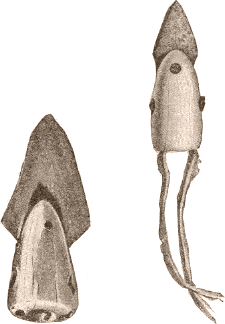
Fig. 430. Spear heads. (National Museum, Washington. a, 34076: b, 34068.)
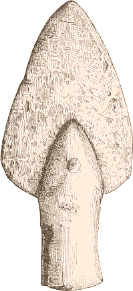
Fig. 431. Large spear head. (National Museum, Washington. 10136.) ½
In hunting walrus a lance (anguvigang) (Fig. 432) is used which is similar to the igimang. The shaft and the joint are alike in both, only the knob for the teliqbing being absent. The head is made of bone or the straight part of a walrus tusk and has an iron blade on the top. The lance serves to dispatch the animal after it has been harpooned with the igimang.


Fig. 433. Nuirn or bird spear. (Museum für Völkerkunde, Berlin.)
Fig. 432. Anguvigang or lance. Museum für Völkerkunde Berlin.
The joint prevents the shaft from being broken by the struggles of the animal. Its place is behind the hunter on the right side of the kayak, the point being directed toward the stern. Generally a second lance is carried on the left side of the boat parallel with the other. It is either of the same kind or a slender shaft with a long point firmly inserted in it (kapun, ipun). The point is about one and one-third of a foot to one and one-half feet long. This weapon, however, is more particularly in use for hunting deer in the lakes and ponds.
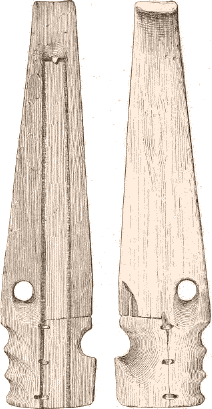
Fig. 434. Nuqsang or throwing board, (a front and (b back view. National Museum, Washington. 30013.
The last implement in the kayak gear to be described is the bird spear, nuirn (Fig. 433), with its throwing board, nuqsang (Fig. 434). It has a shaft of about four feet in length, flattened at the lower end. Among the natives on the east and southeast of Baffin Land it has an iron prong at its point, whereas in Iglulik it has two points of unequal length, with double barbs. Three double barbed prongs are attached to the center of the shaft. They have a sharp bend at their lower part, the points running parallel to the shaft. The prongs of the Greenland dart are straight and diverge from the shaft. The lower end of the bird spear fits into the groove of the throwing board. Therefore the end of the shaft is squared. The ivory knob at the end of the spear contains a small hole for the insertion of the spike which is in the end of the groove. When the board is used it is held firmly in the right hand, the first finger passing through the hole by the side of the groove, the thumb clasping the notch on the left side (Fig. 434 b), the other fingers those on the right side. The shaft is held by the points of the fingers. When the spear is hurled the posterior point of the groove describes a wide circle, and the fingers let go the shaft, which, remaining in its first position, is driven forward by the spike with great violence, and thus it attains considerable velocity.
I will now give a description of the methods of hunting seals and walrus during the summer. As long as ice cakes are drifting in the bays the natives do not use their seal floats, which would be severed from the line and easily torn to pieces. They paddle to a small cake, on which they lift their kayaks, and cautiously move the cake towards another one on which a seal or walrus is asleep. After they have come within range of their game they shoot it. As an abundance of all kinds of seals and walrus are basking on the ice plenty of food can be obtained.
An ingenious way of walrusing during this season is described by Lyon (p. 330):
When the hunters, in their canoes, perceive a large herd sleeping on the floating ice, as is their custom, they paddle to some other piece near them, which is small enough to be moved. On this they lift their canoes, and then bore several holes, through which they fasten their tough lines, and when everything is ready, they silently paddle the hummock towards their prey, each man sitting by his own line and spear. In this manner they, reach the ice on which the walruses are lying snoring; and if they please, each man may strike an animal, though, in general, two persons attack the same beast. The wounded and startled walrus rolls instantly to the water, but the siatko, or harpoon, being well fixed, he cannot escape from the hummock on which the Eskimo have fastened the line. When the animal becomes a little weary, the hunter launches his canoe, and lying out of his reach, spears him to death.
When the ice is gone seals are shot or harpooned with the igimang and the agdliaq. The float prevents their escape and they are killed with the anguvigang or the qapun. Later in summer, when they begin to shed their fur, they lose almost all their blubber and sink when shot; therefore they must be hunted with the harpoon and the float. As the walrus is a dangerous foe should it turn upon the hunters in their light boats, the harpoon is thrown from a great distance, and the animal is not attacked at close quarters until it is well nigh exhausted by dragging the float and the niutang and by loss of blood. A great number of walrus are shot or harpooned while basking on the low islands and rocks.
There are a few shoals and narrow inlets in Frobisher Bay and Cumberland Sound in which great numbers of seals are caught during the summer. In hunting them at those places some of the Eskimo in kayaks occupy the shallow entrance of the inlet, while others scare the seals from its head. As the seals approach its outlet they are speared by those who are lying in wait for them. Since the natives have procured firearms seals are shot from the boats, and in whale boats they even attack the walrus, though they prefer to have drifting ice near at hand in case the fierce animal should turn upon them and tear the boat with its powerful tusks. This method of hunting is very successful in openings which intersect the land floe in spring. To these places an enormous number of seals and walrus resort, and they are shot either when basking at the edge of the water or when blowing.
In the fall, when the small bays are covered with ice and newly formed floes drift to and fro in the open sea, the natives go sealing at the edge of the land ice (Fig. 435). The seals are shot on the drifting ice or in the water and are secured by means of the unang, in the following manner: The hunter jumps upon a small cake, which he pushes on with his spear until he is near the body of the animal, and then drags it upon the land floe with the harpoon line. This method is almost the same as the one used in sealing and walrusing during the winter wherever the open water is close to the shore.
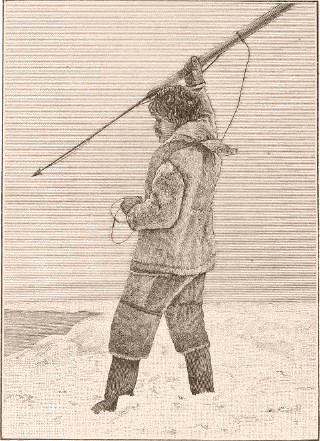
Fig. 435. Sealing at the edge of the ice. (From a photograph.)
This hunt is described by Gilder in the following words (pp. 182–184):
Usually there are two hunters who approach the walrus, one hiding behind the other, so that the two appear but as one. When the spear is thrown, both hold on to the line, which is wound around their arms so as to cause as much friction as possible, in order to exhaust the animal speedily. ***When the line is nearly run out the end of the spear shaft is passed through a loop in the end of the line and held firmly by digging a little hole in the ice for the end of the spear to rest in, the foot resting upon the line and against the spear to steady it. This gives the hunter an immense advantage over his powerful game, and if he is fortunate enough to secure this hold there is no escape for the walrus except that the line may cut on the edge of the sharp ice, or the thin ice break off, and hunter, line, and all be precipitated into the water—a not unusual experience in walrus hunting. Another cause of misfortune is for the line to become entangled around the arm of the hunter so that he cannot cast it off, in which case he is most assuredly drawn into the sea, and in nine cases out of ten drowned, for his knife is seldom at hand for an emergency and no amount of experience will ever induce an Inung [Eskimo] to provide against danger.
Sometimes the hunter is alone when he strikes a walrus, and in that case it requires considerable dexterity to secure the spear hold in the ice; or if he fails to get that he may sit down and brace his feet against a small hummock, when it comes to a sheer contest of muscle between the hunter and the walrus. In these contests victory generally perches upon the banner of the walrus, though the Inung [Eskimo] will never give up until the last extremity is reached. Often he is dragged to the very edge of the ice before he finds a protuberance against which to brace his feet, and often he is drawn down under the ice before he will relinquish his hold. He is very tenacious under such circumstances, for he knows that when he loses the walrus he loses his line and harpoon also.
Hall (I, p. 459) describes the hunt, according to his observations in Frobisher Bay, as follows:
The line is coiled, and hung about the neck of the hunter; thus prepared he hides himself among the broken drifting ice, and awaits the moment for striking his game. The spear is then thrown and the hunter at once slips the coil of line off his head, fastens the end to the ice by driving a spear through a loop in it, and waits till the walrus comes to the surface of the water, into which he has plunged on feeling the stroke of the harpoon; then the animal is quickly despatched by the use of a long lance.
Sometimes the walrus when swimming under an extensive floe of new ice are drowned by being frightened down every time they try to come up to blow.
Formerly whaling was one of the favorite hunts of the Central Eskimo and in some places it is even continued to this day. Whales are either pursued in kayaks or in skin boats. If the kayak is used, they are harpooned in the same way as the walrus, a very large float (avautapāq´) being attached to the harpoon head. The whale is pursued by a great number of kayaks and every boatman endeavors to drive his harpoon into the animal, which, by the loss of blood and the resistance of the niutang and floats, is tired out and killed with lances.
More frequently it is pursued in skin boats (p. 527), which for the purpose are propelled by means of paddles (angun). In this case the crew consists entirely of men, although on other occasions the rowing falls to the women’s share; a skillful boatman steers the boat and the harpooner stands in the bow watching his opportunity to strike the whale. The implement used in this pursuit is represented in Fig. 436. I could not procure the weapon itself (sakurpāng´, i.e., the largest weapon), but had a model made by an Akudnirmio, of which the figure is a drawing. The shaft is said to be very long and heavy, measuring from ten to twelve feet. To this shaft a bone point tapering towards the end is firmly attached. The harpoon head consists of two pieces similar to the siatko of the Iglulirmiut (see Fig. 395). The iron edge is inserted into a flat piece of bone, which fits into the slit of a large head. The latter is made from the jawbone of a whale and is extremely heavy. When the whale is struck, both parts, the head and the edge, are disengaged from the shaft and separated from each other, but both enter the flesh of the whale and work in the same way as the tokang.
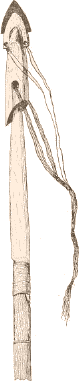
Fig. 436. Model of sakurpāng´ or whaling harpoon.
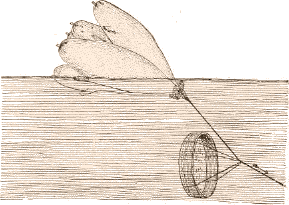
Fig. 437. Niutang, with floats.
The long harpoon line is coiled up on the first thwart of the boat. On the second one the niutang and five large floats (Fig. 437), which were fastened to the line, are kept ready and heaved overboard as soon as the harpoon is fast to a whale. The buoys and the niutang tire it out quickly and the boat can easily follow it up. It is lanced with the kalugiang whenever it comes up to blow. This lance consists of a heavy handle with a long point of rod iron; formerly bone or narwhal ivory, with an iron edge inserted into its point, was used for this purpose.
The narwhal and the white whale are hunted in the same way as the walrus and the right whale. There are a few shallow bays to which the white whale resorts in the summer. If a shoal of them has entered such a bay, the Eskimo take to their boats and kayaks, and by throwing stones frighten them into the shallowest part, where they are easily harpooned.
DEER, MUSK OX, AND BEAR HUNTING.
When the snow has melted and the short summer is at hand the Eskimo start for the deer hunt. The tribes possessed of firearms can easily procure deer all the year round, particularly where uneven land facilitates their approach toward the herd; but in summer the hunt is most important, as it is the only season in which deerskins are fit for clothing.
The favorite method of hunting is to attack the deer in the ponds when swimming from one side to the other. In many places the deer in their migrations are in the habit of crossing the narrow parts of lakes, and here the natives lie in ambush with their kayaks. In other places they are driven into the water by the Eskimo and attacked by the drivers or by hunters stationed on the lake. Favorite places for such a chase are narrow peninsulas, generally called nedlung. The Eskimo deploy into a skirmish line and slowly drive the herd to the point of the peninsula, whence the deer, the retreat being cut off, take to the water.
If the shore be too straight to permit this method of hunting, they drive the deer to a hill stretching to the lake. A line of cairns (inugsung) is erected on the top, intended to deceive the deer, which believe them a new line of hunters approaching from the opposite side. They take to the water, as they see no retreat. If there are no hills a line of cairns is erected in some part of the plain. Such monuments are found all over the country, most of them having the appearance of being very old.
As soon as the deer are in the water the natives pursue them in their kayaks, and as their boats are propelled much more swiftly than the animals can swim they are quickly overtaken and killed with the spear (kapun). Sometimes the wounded deer will turn upon the boat, in which cases the hunter must make his escape with the utmost speed, else he will be capsized or the skin of the boat will be torn to pieces by the animal’s antlers.
In some of the narrow valleys with steep faces on both sides the deer are driven toward the hunters. As there is no chance for escape on either side they are killed by the men who lie in ambush. A remarkable tradition referring to the deer hunts of a fabulous tribe in these passes is frequently told by the Eskimo (see p. 635).

Fig. 438. Wooden bow from Iglulik. (From Parry II, p. 550.)
Some places are particularly favorable to these methods of hunting. The herds when traveling north in spring and south in autumn take the same course every year, passing rivers, lakes, and valleys at the deer passes. Here the Eskimo stay during the migrations of the deer, as they are sure to fall in with them and to secure plenty of meat and skins during the season. In spring the rivers and lakes are not yet freed from their icy fetters and the pursuit is more difficult; in the autumn, however, they are easily captured in the water. Some important stations of this kind are the island Qeqertome itoq tudlirn, south of Lake Nettilling; the outlet of this lake, Koukdjuaq, particularly the peninsula formed by the river and the south shore of the lake; the country about Qudjitariaq, farther north, and the narrow valley between Piling and Itirbilung: on the continent, the lakes of Rae Isthmus, particularly North Pole Lake; some passes in the hills north of Chesterfield Inlet; the isthmus of Boothia; the entrance of Qimuqsuq, on Adelaide Peninsula; and Simpson Strait.

Fig. 439. Wooden bow from Cumberland Sound. (National Museum, Washington.)
Referring to the last, Klutschak describes an interesting method of hunting deer which is in vogue in that locality (p. 130). The narrow strait which separates Ita Island from King William Land freezes up early in the season, and the reindeer in trying to cross the strait frequently gather on this island. The Eskimo deploy over the icy bridge and make a terrible noise, frightening the reindeer, which are gradually driven toward a place the ice of which is treacherous at this time of the year. Here they break through and, being able to move only with great difficulty, are easily killed.
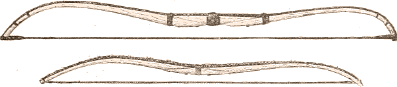
Fig. 440. Bows of reindeer antlers. (National Museum, Washington. a, 34053; b, 34055.)
When the deer have scattered over the country they must be stalked, and, wherever the natives have no firearms, bows and arrows are used.

Fig. 441. Bow of antlers, with central part cut off straight, from Pelly Bay. (National Museum, Washington. 10270.)
They have two kinds of bows (pitiqse): a wooden one (Figs. 438 and 439) and another made of reindeer antlers (Figs. 440 and 441). Parry gives a very good description of the former (II, p. 510):
One of the best of their bows was made of a single piece of fir, four feet eight inches in length, flat on the inner side and rounded on the outer, being five inches in girth about the middle where, however, it is strengthened on the concave side, when strung, by a piece of bone ten inches long, firmly secured by tree-nails of the same material. At each end of the bow is a knob of bone, or sometimes of wood covered with leather, with a deep notch for the reception of the string. The only wood which they can procure, not possessing sufficient elasticity combined with strength, they ingeniously remedy the defect by securing to the back of the bow, and to the knobs at each end, a quantity of small lines, each composed of a plat or “sinnet” of three sinews. The number of lines thus reaching from end to end is generally about thirty; but besides these, several others are fastened with hitches round the bow, in pairs, commencing eight inches from one end, and again united at the same distance from the other, making the whole number of strings in the middle of the bow sometimes amount to sixty. These being put on with the bow somewhat bent the contrary way, produce a spring so strong as to require considerable force as well as knack in stringing it, and giving the requisite velocity to the arrow. The bow is completed by a woolding round the middle and a wedge or two here and there, driven in to tighten it.
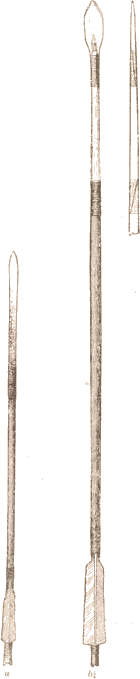
Fig. 442. Arrows with bone heads. (National Museum, Washington. a, 34054; b, 10270.)
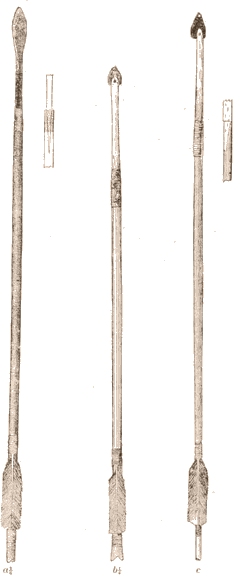
Fig. 443. Arrows with metal heads. a, b (National Museum, Washington. a, 30056; b, 34056.) c (Museum für Völkerkunde, Berlin. IV A 6707.)
442b, 443a, b: 1/4
The bow represented in Fig. 439 is from Cumberland Sound and resembles the Iglulik pattern. The fastening of the sinew lines is different and the piece of bone giving additional strength to the central part is wanting. In Cumberland Sound and farther south wooden bows each made of a single piece were not very rare; the wood necessary for their manufacture was found in abundance on Tudjan (Resolution Island), whence it was brought to the more northern districts.

Fig. 444. Arrowhead from Boothia. (National Museum, Washington. 10205.) ½
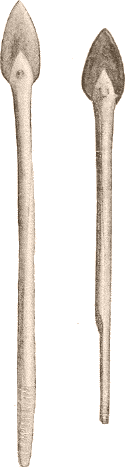
Fig. 445. Showing attachment of arrowhead vertically and parallel to shank. (National Museum, Washington. b, 10137.) ½
The bows which are made of antlers generally consist of three pieces, a stout central one slanted on both sides and two side pieces riveted to it. The central part is either below or above the side ones, as represented in Fig. 440. These bows are strengthened by plaited sinews in the same way as the wooden ones and generally the joints are secured by strong strings wound around them. A remarkable bow made of antlers is represented in Fig. 441. The central part is not slanted, but cut off straight. The joint is effected by two additional pieces on each side, a short stout one outside, a long thin one inside. These are firmly tied together with sinews. The short piece prevents the parts from breaking apart, the long one gives a powerful spring. The specimen here represented was brought home by Hall from the Sinimiut of Pelly Bay, and a similar one was brought by Collinson from Victoria Land and has been deposited in the British Museum. The strings are attached to these bows in the same way as to the wooden ones.
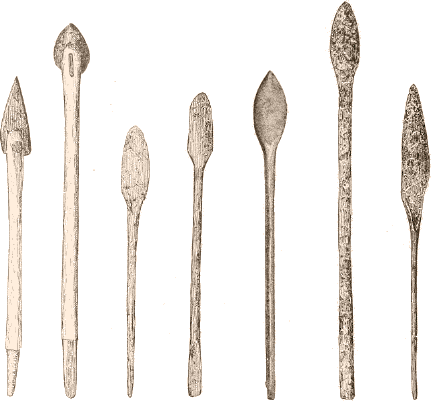
Fig. 446. Various forms of arrowhead. (National Museum, Washington. a, 29993; e, 10213.) ½
The arrows (qaqdjung) are made of round pieces of wood generally tapering a little towards the lower end, to which two feathers of an owl or some other bird are attached. The bone heads of these arrows are joined to the shaft as represented in Fig. 442, while metal heads are inserted as shown in Fig. 443. The difference in the methods used by the Mackenzie and the central tribes in fastening the point to the shaft is very striking. The arrow point of the former and of the western tribes is pointed and inserted in the shaft (Fig. 444),5 while that of the latter is always slanted and lashed to it (Figs. 442 and 443). The direction of the slant is either parallel or vertical to the edge (Fig. 445). Other forms of arrows are shown in Fig. 446. A similar difference between the fastenings of the socket to the spear handle exists in the two localities. The western tribes give its base the form of a wedge (Fig. 447), which is inserted in the shaft, while the Central Eskimo use a mortise.

Fig. 447. Socket of spear handle from Alaska. (National Museum, Washington. 36060.) ¼
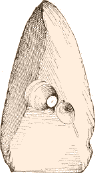
Fig. 448. Slate arrowhead. (National Museum, Washington. 10403.) 1/1
Formerly slate heads were in general use (Fig. 448); now the heads are almost everywhere made of iron or tin, riveted or tied to the point (Fig. 446). In ancient graves flint heads are frequently found, some of which are represented in Fig. 449. On Southampton Island stone heads are in use even at the present time. Fig. 423 probably shows how they were attached to the shank.
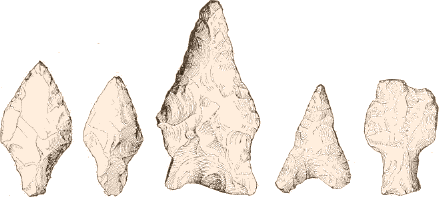
Fig. 449. Flint arrowheads from old graves. (National Museum, Washington. c, 30109; d, 34138.) 1/1
The quiver (Fig. 450) is made of sealskin, the hair of which is removed. It comprises three divisions, a larger one containing the bow and a smaller one containing four or six arrows, the head directed toward the lower end of the case. When extracted from the quiver they are ready for use. Between the two compartments there is also a small pouch, in which tools and extra arrowheads are carried.
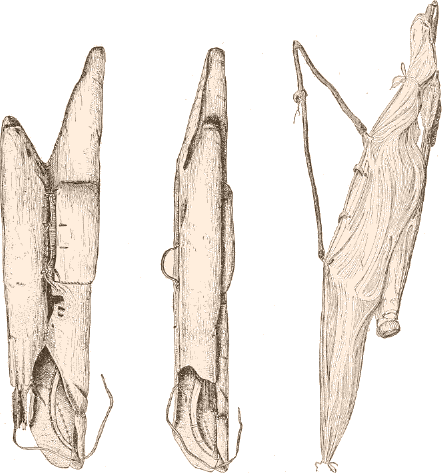
Fig. 450. Various styles of quiver. a, b Two views of a quiver from Cumberland Sound. (National Museum, Washington. 30015.) c Quiver from Iglulik (from Parry II, p. 550).
When traveling the Eskimo carry the quiver by an ivory handle; when in use it is hung over the left shoulder. Fig. 451 represents quiver handles, the first being fashioned in imitation of an ermine.
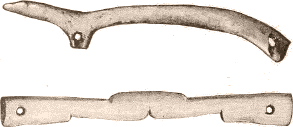
Fig. 451. Quiver handles. (Museum für Völkerkunde, Berlin. a, b, IV A 6843.)
If the deer cannot be driven into the water the Eskimo either stalk them or shoot them from a stand. In a plain where the hunter cannot hide himself it is easier to approach the herd if two men hunt together. They advance, the second man hiding behind the first one by stooping a little. The bows or the guns are carried on the shoulders so as to resemble the antlers of a deer. The men imitate their grunting and approach slowly, now stopping and stooping, now advancing. If the deer look about suspiciously they sit down, the second man lying almost flat on the ground, and both, at some distance off, greatly resemble the animals themselves. Ross (II, p. 252) states that the inhabitants of Boothia imitate the appearance of the deer, the foremost of two men stalking a herd bearing a deer’s head upon his own.
It is somewhat difficult to approach the deer near enough to get within range, especially if they are hunted with bow and arrow. Generally it is not necessary to get quite near them, for when feeding the herd moves on in the same direction for some time, and the hunter can hide behind a stone lying in that direction and wait until they are within range. After the first shot has been fired they do not take to flight at once, but stand for a few seconds, struck with surprise, and a clever hunter may kill two or three before they run away. If the country is very level the Eskimo raise heaps of stones or build circular or semicircular walls to conceal themselves and allure the animals by grunting. As the deer possess a very fine scent they must always be approached from the lee side.
An interesting method of hunting is described by Parry (II, p. 512) and confirmed by Hall (II, p. 178). Parry writes:
Two men walk directly from the deer they wish to kill, when the animal almost always follows them. As soon as they arrive at a large stone, one of the men hides behind it with his bow, while the other continuing to walk on soon leads the deer within range of his companion’s arrows.
Hall says that one hunter hides himself behind a stone while the other utters grunting sounds to attract it.
In winter deer are sometimes caught in traps made by digging holes in the snow and covering them with slabs of the same material. Sometimes urine is poured upon and around the trap or salt water ice is placed upon it, in order to allure the deer (Klutschak, p. 131). Having been attracted to the trap they fall through the roof and are speared in the hole.
Wherever the musk ox is found it is eagerly pursued by the Eskimo. Though dogs are of no use in the chase of the nimble deer, they are of great help in hunting this animal. When a track is found the dogs are let loose and soon overtake the herd. The latter form a circle of defense in which they are kept at bay until the hunter approaches. While the dogs continue attacking and dodging, the musk oxen try to hit them with their horns and do not heed the Eskimo, who assails them at close quarters with a lance to which a thong is frequently attached. When an ox is wounded it makes an impetuous attack on the hunter, who dodges to one side. The dogs being at hand again immediately keep it at bay, thus enabling the hunter to let fly another arrow or throw his lance again. Thus the struggle continues until the greater part of the herd is killed. In rare instances an ox dashes out of the circle and escapes from the pack.
Polar bears are hunted in about the same manner as the musk ox. The Eskimo pursue them in light sledges, and when they are near the pursued animal the traces of the most reliable dogs in the team are cut, when they dash forward and bring the bear to bay. As the hunter gets sufficiently near, the last dogs are let loose and the bear is killed with a spear or with bow and arrow. The best season for bear hunting is in March and April, when the bears come up the fjords and bays in pursuit of the young seals. At this season the she bear is accompanied by the cub which was born in February or March. Its skin and flesh are highly prized by the Eskimo. At some places, for instance at Cape Raper and at Cape Kater on Davis Strait, the she bears dig holes in the snow banks, in which they sleep during the winter. The natives seek these holes and kill the bear before it awakes.
The chase of the musk ox and that of the bear have become much easier since the introduction of firearms in Arctic America, and the Eskimo can kill their game without encountering the same dangers as formerly.
HUNTING OF SMALL GAME.
Lastly, I mention the methods used in catching smaller animals, such as wolves, foxes, and hares. Wolves are only pursued when they become too troublesome. Frequently they linger about the villages in winter, and when everybody is asleep they attack the store rooms or the dogs, which have the greatest fear of this voracious animal; for, although dogs will brave the bear, they do not venture to resist a single wolf. If a pack of these beasts linger about the village for weeks preying upon the native stores, traps are finally built or the Eskimo lie in ambush near a bait to kill them. The wolf trap is similar to the one used to catch deer. The hole dug in the snow is about eight or nine feet deep and is covered with a slab of snow, on the center of which a bait is laid. A wall is built around it which compels the wolf to leap across it before he can reach the bait. By so doing he breaks through the roof and, as the bottom of the pit is too narrow to afford him jumping room, he is caught and killed there (Rae I, p. 135).
A remarkable method of killing wolves has been described by Klutschak (p. 192) and confirmed by the Eskimo of Cumberland Sound. A sharp knife is smeared with deer’s blood and sunk into the snow, the edge only protruding. The wolves lick the knife and cut their tongues so severely as to bleed to death. Another method is to roll a strip of whalebone, about two feet long, in a coil, which is tied up with sinews. At each end a small metal edge is attached to the whalebone. This strip, wrapped in a piece of blubber or meat, is gulped down by the hungry wolf. As it is digested the sinews are dissolved and the elastic strap is opened and tears the stomach of the animal. A very ingenious trap is described by Parry (II, p. 514):
It consists of a small house built of ice, at one end of which a door, made of the same plentiful material, is fitted to slide up and down in a groove; to the upper part of this a line is attached and, passing over the roof, is led down into the trap at the inner end, and there held by slipping an eye in the end of it over a peg of ice left for the purpose. Over the peg, however, is previously placed a loose grummet, to which the bait is fastened, and a false roof placed over all to hide the line. The moment the animal drags at the bait the grummet slips off the peg, bringing with it the line that held up the door, and this falling down closes the trap and secures him.
Foxes are usually caught in traps. An ice house about six feet high is built of hummocks, which are cut down with the point of the spear. It is covered with ice slabs, only a hole in the center being left. Blocks of snow and slabs of ice are piled up around the building so as to permit easy access to the roof. Some blood is sprinkled round the hole to attract the fox and a larger bait is placed upon the floor of the house. The fox jumps down and, as the only exit is in the center of the roof, cannot escape. Another trap has a slab of ice erected in such a manner as to fall and kill the fox when he touches the bait.
A third trap, similar to the one above mentioned, has been described by Lyon, p. 339:
It is like a small lime kiln in form, having a hole near the top, within which the bait is placed, and the foxes (for these animals alone are thus taken) are obliged to advance to it over a piece of whalebone, which, bending beneath their weight, lets them into prison, and then resumes its former position: thus a great number of them are sometimes caught in a night. In the summer they are but rarely taken, and it is then by means of a trap of stones, formed like the ice trap, with a falling door.
Hares are either killed with small shot or with arrows or caught in whalebone snares, as are ermines and lemmings.
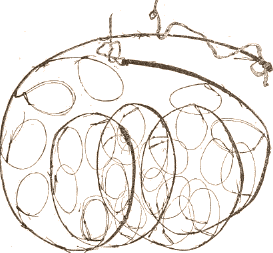
Fig. 452. Whalebone nooses for catching waterfowl. (In the possession of Captain Spicer, of Groton, Conn.)
Waterfowl of all descriptions are caught in abundance in whalebone nooses (Fig. 452) fastened to a long whalebone line or to a thong. The line is set along the edge of a lake, particularly near nesting places. In shallow lakes these lines are placed across the water to catch the diving and swimming birds, which are drawn to the shore with the line. On the low egg islands, which are inhabited by innumerable ducks, snares are set on the nests, and great numbers are caught in a short time. Swans and geese are procured in the same way. Other birds, and particularly partridges, are killed with arrows and with small shot.
Large flocks of ducks and other kinds of birds fly through certain valleys in the fall and in spring when migrating. Great numbers are caught here without any difficulty, as they can be killed with sticks.
A favorite method of catching gulls is by building a flat snow house. One block of the roof is translucent and so thin as to permit the hunter, who is hidden in the house, to push his hand through it. A bait is placed on this block, and as soon as a bird alights to feed it is pulled through the roof into the hut.
By far the greater number of birds are caught during the molting season. Partridges can be caught with the hand and waterfowl are pursued with the kayak. The waterfowl dive as soon as the boat comes near them and being frightened down again as soon as they rise they are eventually drowned. One species of goose (kango) which frequents the lakes of the country is caught in a remarkable way. A circular wall of stones is raised, with a single entrance. The Eskimo drive a flock of these birds towards the building, one man, whom the stupid creatures follow, leading the way. As soon as they have entered the wall the entrance is shut up and they are slaughtered. If they happen to be met with on the water they are encircled by kayaks and driven towards the shore, one boat leading. Then they are driven within the stone wall as already described.
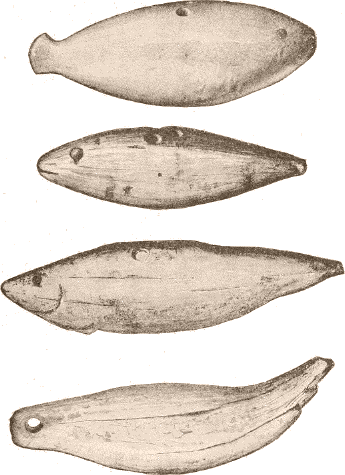
Fig. 454. Ivory fish used as bait in spearing salmon. a From Repulse Bay. a, c, d (National Museum, Washington. a, 10400; c, 34109; d, 34134.) 1/1 b (Museum für Völkerkunde, Berlin. IV A 6830.) 1/1
FISHING.
The most important fish is the salmon, which is caught in abundance during the summer. When the lakes begin to break up the salmon descend to the sea, following the narrow lead between the land floe and the water. In some places they are so plentiful as to fill the water completely. Here they are speared with the kakivang (Fig. 453). This instrument consists of a handle which widens towards the end; in the center it has a prong of bone or iron, and two larger ones at the sides, made of deer antlers or musk ox horn. These latter diverge and are furnished with a bone or iron nail on the inner side. The elasticity of these side prongs is increased by thongs or strings holding them tightly together. If the salmon are very plentiful no bait is needed and the natives cannot spear them as quickly as they swim along. When the ice is gone they are caught in the shallow rivers falling from the lakes into the sea. The natives stand on the bank or step into the water. A small ivory fish (Fig. 454) (eχalujang), tied by two or three holes in the back to a plaited string of deer sinews, is used as a bait. Frequently bear’s teeth are used for bait. They are attached to a separate line which the hunter continually moves up and down to attract the attention of the fish. When the salmon comes near the bait it is speared with the kakivang. In the left hand the fisherman holds an instrument for stringing the fish (quqartaun), some illustrations of which are given in Fig. 455. It is made of ivory. A thong fastened to the hole of the instrument has a thick knot at the opposite end. As soon as a salmon is caught it is taken out of the nippers (kakivang) and the point of the quqartaun is pushed into the gills and brought out again at the mouth; thus the fish remains sticking until it is dead. Sometimes it is killed by pushing the ivory point of the instrument into its neck. When dead it is pushed on the thong.
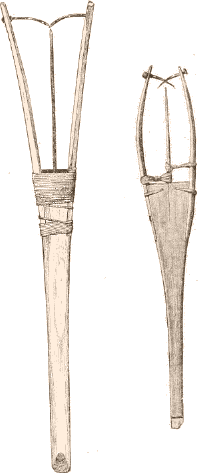
Fig. 453. Kakivang or salmon spear. (National Museum, Washington, a, 34087; b, 34086.) ¼
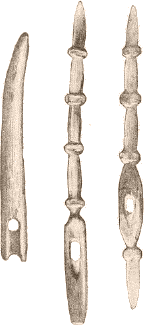
Fig. 455. Quqartaun for stringing fish. c (Museum für Völkerkunde, Berlin. IV A 6831.)
At some places wears are built, above which the fish are caught. These consist of dikes of stones about one and a half or two feet high, which are piled across a creek some distance below high water mark. The salmon cross the wall at high water, but are cut off from the sea at half tide and are speared while there. In other places the forks of rivers are shut off by dikes, above which the salmon gather.
In autumn salmon are caught when ascending the rivers. Sometimes they linger too long in small ponds and, as the rivers quickly dry up at this season, are prevented from getting out of the pools. Here they are caught until late in the season. Some of these ponds freeze to the bottom in winter, and the natives, when visiting them in the spring, cut holes in the ice and take out the frozen fish.
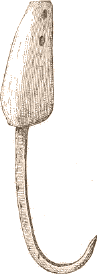
Fig. 456. Salmon hook. (National Museum, Washington. 10142.) 1/1
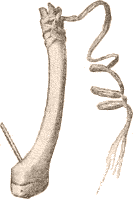
Fig. 457. Salmon hook. (Museum für Völkerkunde, Berlin. 6847.) 1/1
In the early part of the spring salmon are caught with hooks (kakliokia, Iglulik; niksiartaung, Oqo), holes being cut through the ice of the lake. Formerly the hooks were made of deer antlers. Another device consists of a nail, crooked and pointed at one end, the other being let into a piece of ivory or bone (Fig. 456). A third one is represented in Fig. 457.
The fishing line is made of plaited deer sinews and is either held in the hand or tied to a short rod. Along with these hooks baits are used similar to those mentioned in the foregoing description. If the carving represented in Fig. 458 is used, the hook is tied to it by means of two holes on the lower side of the fish, while the line passes through its back. The fish, in coming near the bait, is generally caught by the hook in the back or side. In this manner salmon, trout, and all kinds of sea fish are caught.
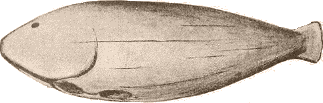
Fig. 458. Bait used in fishing with hooks. (National Museum, Washington. 34108.) 1/1
I myself have never seen any nets for fishing, but Klutschak found them in use among the Utkusiksalik tribe, and Petitot (Les grands Esquimaux, p. 278), among the natives of Anderson River. The Labrador Eskimo also use nets.
MANUFACTURES.
MAKING LEATHER AND PREPARING SKINS.
Most of the implements of the Eskimo are made of some part of the animals which they pursue. The skins are used for clothing, for building purposes, and for covering the frames of boats. Many implements are made of bone, others of walrus tusks or narwhal horn. As wood is extremely scarce, bone or other parts of animals must make up the deficiency. I shall here describe the methods of preparing these materials.

Fig. 459. Butcher’s knife with bone handle. (National Museum, Washington. 34080.) ¼
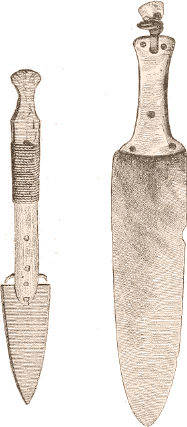
Fig. 460. Pana or knife for dissecting game, a (From Parry II, p. 548.) b (American Museum of Natural History.)
The skin of the seal (Pagomys fœtidus) is dressed in different ways, according to the purpose for which it is intended. In skinning the animal a longitudinal cut is made across the belly with a common butcher’s knife (saving). Most natives have procured this useful instrument and even in olden times a considerable number had found their way from Hudson Bay territory to their countries. The large knives of their own manufacture (pilaut) are of similar form, a metal edge being inserted into an ivory blade. Figure 459 is a more modern knife, an iron blade being fastened to a bone handle.
The skin, with the blubber, is cut from the flesh with the same knife, or still more easily with the pana, the old device of which is represented in Fig. 460 a (Parry II, p. 550). This knife is about one foot and a half long (Parry II, p. 503). The use of the small prongs near the blade was not explained by Parry. In Fig. 460 b is presented a pana from the eastern coast of Hudson Bay, collected by Dr. R. Bell; the handle is made of bone, the blade of iron. The flippers are cut off at the joints, and thus the whole skin is drawn off in a single piece. In dressing the animal the natives open the belly and first scoop out the blood, then the entrails are taken out, the ribs are separated from the breast bone and from the vertebrae, the fore flippers (with the shoulders and the hind flippers) are taken out, the only part remaining being the head, the spinal column, and the rump bone. Generally these are not eaten, but are used for dogs’ food.
The knife (ulo) used by the women serves to clean and prepare the skins. This implement, with which almost all the cutting is done, is shaped like a crescent, the handle being attached to the center, and greatly resembles a mincing knife. Fig. 461 represents the form which is now in use. Fig. 462 is a very old ulo handle from a stone circle on Qeqertuqdjuaq (Cape Broughton). It is made of bone and has a slit for the slate blade. It is worth remarking that this blade had not been riveted to the handle, but fastened with a kind of glue (see p. 526). There are a few arrow and harpoon heads the blades of which are inserted in the same manner; the bone is heated and the blade is inserted while it is hot. As it is cooling the slit becomes narrower and the blade is firmly squeezed into the bone handle. Part of a slate blade, which had been riveted to the handle, is shown in Fig. 463. Fig. 464 represents a handle from a recent grave.
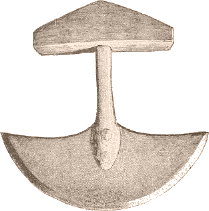
Fig. 461. Form of ulo now in use. (Museum für Völkerkunde, Berlin. IV A 6733.) ⅔
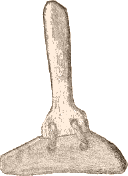
Fig. 462. Old ulo with top of handle broken off from Cape Broughton, Davis Strait. (Museum für Völkerkunde, Berlin.) 1/1
In preparing the skin the women spread it over a piece of whalebone (asimautang), a small board, or a flat stone, and sit down before it, resting on their knees, the feet bent under the thighs. They hold the skin at the nearest edge and, pushing the ulo forward, remove the blubber from it and deposit the latter in a small tub which stands near the board. As they proceed to the opposite end of the skin, the finished part is rolled up and held in the left hand.
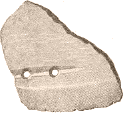
Fig. 463. Fragment of an ulo blade of slate. (Museum für Völkerkunde, Berlin. IV A 6714.) 1/1
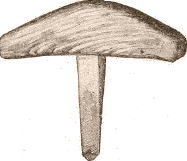
Fig. 464. Ulo handle from recent grave. (National Museum, Washington. 34137.)
If the skin is to be used with the hair on it, the tough membrane (mami) which covers the inner side is removed in the same way as the blubber and, after it has been carefully patched up and holes have been cut all around the edge, is stretched over a gravelly place or on snow by means of long pegs (pauktun), which hold it a few inches above the ground, thus allowing the air to circulate underneath it. The skin itself is washed and rubbed with gravel, snow, or ice and every hole made by the bullet or by the spear or in preparing it is sewed up. It very seldom happens that the women in preparing it damage the skin or even the thin mami. It is particularly difficult to split the skin near a hole. First they finish the work all around it and then carefully sever the membrane at its edge. The skin is dried in the same way as the membrane. In the early part of spring, though it may still be very cold, a few choice young sealskins are dried on snow walls which face to the south. In order thoroughly to dry a sealskin one fine warm spring day is needed. If the Eskimo are greatly in need of skins they dry them in winter over the lamps. A frame is made of four poles, lashed together, according to the size of the skin. A thong passes through the slits along its edge and around the frame, keeping the skin well stretched. Thus it is placed over the lamps or near the roof of the hut. However, it is disagreeable work to dry the skins inside the huts, and, as they are much inferior to those which are dried on the ground, the Eskimo avoid it if they can. When so prepared the sealskins are only fit for covering tents, making bags, &c.; they are far too hard to be used for clothing, for which purpose the skin of yearlings is almost exclusively used. The young seals, having shed for the first time, have a very handsome coat, the hair being of a fine texture and much longer than in older animals. From the middle of May until late in summer their skins are most suitable for the manufacture of summer clothing, but it is necessary to protect the carcasses of the killed animals from the burning rays of the sun as soon as possible or the skin would be quickly spoiled.
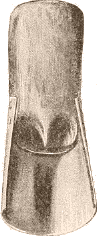
Fig. 465. Modern tesirqun or scraper. (Museum für Völkerkunde, Berlin. IV A 6734.)
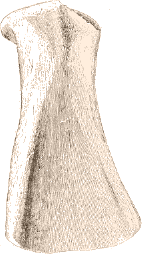
Fig. 466. Old style of tesirqun or scraper. (Museum für Völkerkunde, Berlin.)
After being dried they are cleaned with the sharp scraper (tesirqun), the modern device of which is represented in Fig. 465. It consists of a handle having a round back and a flat front, with two grooves for the knuckles of the first and second fingers, while the thumb and the other fingers clasp the handle. The scraper itself consists of a rounded piece of tin riveted to the handle. The old scraper (Fig. 466) was made of a deer’s shoulder or of some other bone. I have never seen any that were made of a thigh bone, similar to those found by Lucien M. Turner in Ungava Bay.
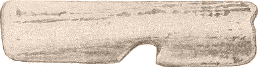
Fig. 467. Seligoung or scraper used for softening skins. (Museum für Völkerkunde, Berlin. IV A 6697.)
After being scraped the skin is soaked in salt water and washed again. As soon as it is dry it is softened with the straight scraper (seligoung) (Fig. 467).
Fig. 468 shows some very old stone scrapers found in graves. As the stones are sharpened it is probable that they were used for cleaning the skins. The hole in the right side of the handle is used for the second finger, the grooves on the back for the third and fourth. The bone is fastened to the handle by whalebone straps or thongs.
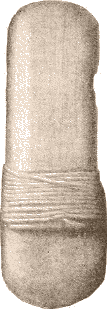

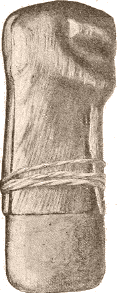
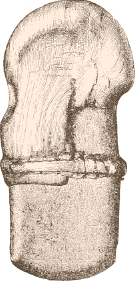
Fig. 468. Old stone scrapers found in graves. (National Museum, Washington, a, b, 34083; c, 34084; d, 34085.) ⅔
Skins of Phoca annellata, Phoca cristata, and Phoca grœnlandica are prepared in the same way.
Those which are intended for kayak covers, boots, mittens, quivers, &c. are prepared in a different way. They are either put into hot water or laid in a brook for a few days until the hair begins to loosen. Then both sides are worked with the ulo, in order to clean and shave them. When the hair is removed they are dried and made pliable in the same way as has been described. If it is intended to make the skin as soft as possible it is allowed to become putrid before it is cleansed. Then the hair and the blubber are removed, and afterwards it is left to hang in the sun for a few days until it acquires a light color.
The large ground seal (Phoca barbata) is skinned in a different manner. Its skin is very thick, thicker even than sole leather, and therefore extremely durable and suitable for all sorts of lines, particularly traces, lashings, and harpoon lines, and for soles, drinking cups, and boat covers. This seal is very large, sometimes attaining a length of ten feet. The skin of the back and of the breast dries unequally, and therefore a piece covering the throat and breast is taken out before the rest is skinned, and the parts are dried separately. If it is to be used for lines it is cut by making girdles about six inches in width around the body. The hair and the blubber are removed from these cylindrical rings, from which lines are made by cutting spirally, a strip seventy or eighty feet long being thus obtained. This line is stretched as taut as possible between two rocks, and while drying it undergoes an enormous tension. Before being taken from the rocks the edges are rounded and cleaned with a knife.
Walrus hide is always cut up before being prepared. As soon as the walrus is killed it is cut into as many parts as there are partners in the hunt, every part being rolled up in a piece of skin and carried home in it. Sometimes the skin is used for making boats, but generally it is cut into lines. Both kinds of hide, that of the walrus and that of the ground seal, are as stiff as a board when dried and require much work before being fit for use. They are chewed by the natives until they become thin and pliable. The whole skin must be chewed in this way before it can be used for soles and boat covers. Afterwards it is scraped with the tesirqun and softened with the straight scraper. The new thongs, after being dried between the rocks, must also be chewed until they become sufficiently pliable, after which they are straightened by a stretcher that is held with the feet (Fig. 469). Frequently they are only pulled over the sole of the boot for this purpose, the man taking hold of the line at two points and pulling the intermediate part by turns to the right and to the left over the sole of the foot.
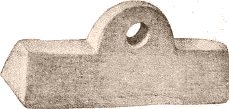
Fig. 469. Stretcher for lines. (National Museum, Washington. 9836.) 1/1
Another kind of line is cut from the hide of the white whale, which is skinned in the same way as the ground seal, but, as it must be slit on the spinal column, the single pieces of line are much shorter, and they cannot be used to the same extent as seal lines. Some lines are cut from the skins of Pagomys fœtidus, but these are weak and greatly inferior to lines of ground seal hide.
Deerskins are dried in summer and dressed after the ice has formed. Like all other kinds of skins they are not tanned, but curried. They are hung up among the rafters of the hut, and the workers—in Oqo and Akudnirn the women, in Hudson Bay the men—take off their jackets and begin preparing them with the sharp scraper. After being cleaned in this way they are thoroughly dried, either by hanging them near the roof of the hut or, according to Gilder, by wrapping them around the upper part of the body next to the skin, after which they are again scraped with the tesirqun. This done, the flesh side is wetted, the skin is wrapped up for half a day or a day, and afterwards undergoes a new scraping. Then it is chewed, rubbed, and scraped all over, thus acquiring its pliability, softness, and light color.
In the spring the skins of bears and of seals are sometimes dried on large frames which are exposed to the sun, the skins being tied to the frames with thongs. Smaller quadrupeds, as foxes and ermines, are skinned by stripping the entire animal through its mouth without making a single cut in the skin. Birds are opened at the breast and the body is taken out through this small hole, the head, wings, and legs being cut off at the neck and the other joints. Ducks are frequently skinned by cutting the skin around the head and the outer joints of the wings and legs and stripping it off. The skins are cleaned by sucking out the fat and chewing them.
Skins of salmon are used for water proof bags; intestines of seals, particularly those of ground seals, are carefully dried and after being sewed together are used for sails, windows, and kayak jackets.
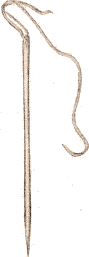
Fig. 470. Ivory needle. (National Museum, Washington. 34135.) 1/1
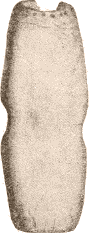
Fig. 471. Ivory needle case from Cumberland Sound. (Museum für Völkerkunde, Berlin. 6832.) 1/1
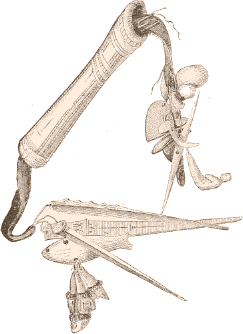
Fig. 472. Common pattern of needle case. Iglulik. (From Parry II, p. 548.)
SUNDRY IMPLEMENTS.
The sewing is done with thread made of deer or white whale sinews. Particularly are those sinews at the back dried and when intended for use they can easily be split as thin as required. At present steel needles are in general use. Wherever they are wanting ivory ones of the same pattern are used (Fig. 470). The thread is fastened to the eyehole by a kind of loop, the short end being twisted around the longer one. Kumlien described a needle of a very different device (p. 25):
This tool was almost exactly like an awl in shape, but had an eye near the point. They must have had to thread this instrument for each stitch. The needle part was apparently of deer horn and the handle of walrus ivory.
Probably it was used like a packing needle for sewing tent covers, &c. The needles (mirqun) are kept in ivory needle cases (umī´ujang). The case represented in Fig. 471 is from a grave in Cumberland Sound. The grooves on both sides are evidently intended for a leather strap which is to be tied around it. This specimen is closed at the bottom and had a stopper for closing the mouth. Fig. 472 is a more common pattern. The ivory piece forms a tube through which a leather strap passes. The needles are stuck into the leather and drawn into the tube. Small ivory implements and ornaments are attached to both ends of the strap.
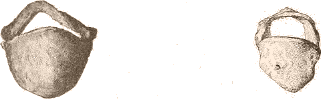
Fig. 473. Tikiq or thimble. (National Museum, Washington. 10181.) 1/1
Thimbles (tikiq) (Fig. 473) are made of an oblong piece of ground sealskin, fitting to the point of the first finger. A rim is cut around half of its circumference and thus it can be drawn over the finger. The women sew by pulling the thread toward them and making an overcast seam.
Whalebone is used for making elastic thongs and in the place of wood; for example, for kayak ribs, for the rim of the kayak hole, boxes, &c. It requires no particular preparation, being easily split and shaped so as to fit any purpose. If wood is to be bent into hoops or deer horn is to be straightened, it is made pliable by being put into boiling water for some time. Bones of whales and other large animals and the penis bone of the walrus are used instead of poles. In olden times, when iron was extremely rare and an effective saw could not be procured, they split the bone by drilling many holes, one close to the other, afterwards breaking the pieces asunder.
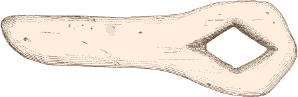
Fig. 474. Instrument for straightening bones.
Small pieces of bone, used for arrows &c., were straightened, after being steamed, with the implement represented in Fig. 474.
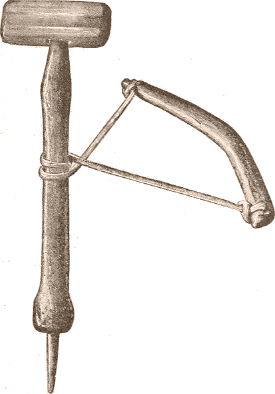
Fig. 475. Drill for working in ivory and bone. (National Museum, Washington. 34114.) ⅔
The drill (Fig. 475) is the most important implement for working in ivory and bone. It consists of three parts: the bow with its string (niuqtung), the drill (qaivun), and the mouthpiece (qingmiaq). The string of the bow is twisted around the shaft of the drill, the mouthpiece (which is made of wood or of bone) is taken into the mouth, and the rounded end of the drill is placed in its hole. Then the whole implement is put firmly against the place to be perforated and is set in motion by moving the bow. Instead of the latter, a string is sometimes used with a handle at each end. For one man, however, the first device is handier. The string of the second form is usually pulled by one man while the other holds the mouthpiece.
The same instrument is sometimes used for making fire. Instead of the iron, a piece of hard wood (ground willow) is put into the mouthpiece and placed upon a piece of driftwood cut to the shape represented in Fig. 476. The wooden drill turns rapidly in a hole of the driftwood until it begins to glow. A little moss is applied to the glowing wood and gently blown until it begins to burn. Wherever flint and pyrite are to be had these are used for striking fire. Moss or the wool-like hair of Eryophorum serves for tinder.

Fig. 476. Driftwood used in kindling fire from Nugumiut. (National Museum, Washington. 10258.) ¼
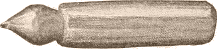
Fig. 477. Eskimo graver’s tool. (National Museum, Washington. 34105.) ½
Ivory implements are cut out of the tusks with strong knives and are shaped by chipping pieces from the blocks until they acquire the desired forms. In olden times it must have been an extremely troublesome work to cut them out, the old knives being very poor and ineffective. They are finished with the file, which on this account is an important tool for the natives; it is also used for sharpening knives and harpoons. The women’s knives are cut, by means of files, from old saw blades; the seal harpoons, from Scotch whale harpoons. If files are not obtainable, whetstones are used for sharpening the iron and stone implements.