THE CENTRAL ESKIMO. (continued 2)
Reading edition
Those who remain at Qivitung during the winter go sealing in the bay east of the peninsula and subsist upon the product of this occupation, as well as on the walrus meat which was stored up in the summer and autumn. A few leave Qivitung after the consolidation of the floe and settle on Nanuqtaqdjung, an island in Home Bay, near the northern point of Qeqertalukdjuaq.
In the winter the Akudnirmiut of Niaqonaujang generally remove to Ipiutelling, on the southern shore of Koukteling, and in May go farther south, to the island Avaudjelling. In the spring they go bear hunting on Koukteling and the peninsula of Niaqonaujang, where the she bears dig holes in the snow banks, in which they whelp.
Though the isthmuses are of great value in facilitating the intercourse between the separate settlements of Cumberland Sound and Davis Strait, as their headlands are washed by water, they are not indispensable for the tribes of Davis Strait, for the ice is passable at all points. The low peninsulas are crossed by the natives in their travels in preference to rounding their headlands. Thus they not only shorten their journey, but they avoid the rough ice often found off the points.
For example, a pass leads from the western bay of Padli Fjord to Kangertloaping, and another from Tessiujang, near Qivitung, across the narrow and low isthmus into Home Bay. Similar passes are used in crossing Koukteling, the peninsulas of Niaqonaujang, Aqojang, and Aqojartung.
At Niaqonaujang I reached the limit of my travels and have only to add reports which I obtained from other tribes and in other settlements. River Clyde and Aqbirtijung are not always inhabited, but are visited at irregular intervals by the Akudnirmiut, the same who usually stay at Niaqonaujang. It is probable that Aqbirtijung and Kangertlualung are sometimes visited by the Tununirmiut of Pond Bay.
The Aggomiut.—
I can say but little about the two subtribes of the Aggomiut (the Tununirmiut and the Tununirusirmiut), as the reports are scanty and the chart of the region is too incorrect to convey any exact information. A few statements may be derived from the Eskimo charts published by Hall (II, pp. 356 and 370). It appears that the natives winter near the entrance of Navy Board Inlet and in the back of Eclipse Sound. Settlements of the Tununirusirmiut at the western entrance of Admiralty Inlet and near its head are mentioned by Hall. Besides seals these natives also pursue the white whales and narwhals which frequent the sound. In summer the Tununirmiut live at the entrance of Pond Bay.
Although I am not informed as to the position of the settlements, and for this reason am unable to judge of the details of the life of the Aggomiut, I can give the more general facts of their relations to the neighboring tribes. Of the greatest importance is their connection with the Iglulirmiut, for through them a regular intercourse is kept up between the continent of America and the eastern shore of Baffin Land. One road leads through Kangertlukdjuaq, a fjord east of Parry’s Murray Maxwell Inlet, to the head of Anaulereëling. I received a detailed description of this road from a native whom I met at Niaqonaujang. Hall’s statement that this way leads to Pond Bay is very likely erroneous, as the natives probably said that it led to Tununirn, which comprises the whole district of Eclipse Sound and the region east of it. It is possible that another road leads to Eχaluin, a fjord of Eclipse Sound. Another route which is often used leads from Kangertlung, Parry’s Gifford River, to Angmang, and farther west to Tununirusirn. This route has already been described by Parry, who attempted to reach the north shore of Baffin Land by it (II, p. 449). Parry’s description was confirmed in 1869 by Hall (II, p. 356). I am somewhat doubtful whether Fury and Hecla Strait, which is often filled with rough ice, can be passed regularly, and whether a route leading to Tununirusirn follows the shore of the Gulf of Boothia, as stated by some of the natives of Davis Strait. This uncertainty did not occur to me until after I had read Parry’s description. Communication between Tununirn and Tununirusirn is by way of the isthmus between Kangertlung and Navy Board Inlet.
The journeys of the Aggomiut are not at all confined to Baffin Land. In favorable winters they cross Lancaster Sound, passing the small island Uglirn, and winter on the eastern half of Tudjan (North Devon). While here they keep up some intercourse with the inhabitants of Umingman Nuna (Ellesmere Land).
It is said that they cross the ice covered island on sledges. In four days they reach the northern shore, whence a long, narrow peninsula, Nedlung, stretches toward Ellesmere Land. Through the narrow passage which separates Tudjan from Nedlung runs a very swift tide which keeps open a water hole throughout the winter. All around this place the ice wastes quickly in the spring and a large basin is formed which abounds with seals. Only that part of the peninsula which lies nearest North Devon is high and steep, presenting a bold face. Farther north it is rather low.
Having reached Umingman Nuna, the Eskimo who gave me this information affirm that they fell in with a small tribe who resided on this shore. Here they lived for some time, as there was an abundance of seals during the whole year. Farther northwest is a large fjord, Kangertluksiaq, off which an island is found, Qeqertakadlinang by name. The Eskimo do not visit the land on the other side of this fjord, as bears are said to be very numerous and large there. Though these migrations to Jones Sound do not occur very frequently, they have by no means been discontinued. For instance, a family which was well known to me has visited Smith Sound, and the father of some friends of a resident of Cumberland Sound returned about fifteen years ago from a long stay on Tudjan and Nedlung.
The Iglulirmiut.—
The last group of natives belonging to Baffin Land are those of Iglulik. Our knowledge of this tribe is due to Parry and Hall. As soon as the sea begins to freeze up, the natives gather on Iglulik, where they hunt the walrus throughout the winter. According to the position of the floe edge, Iglulik, Pingitkalik, or Uglit Islands are the favorite settlements. Later in the winter, when new ice is frequently attached to the floe, part of the families move to the ice northeast of Igluling, where seals are caught with the harpoon. Another winter settlement seems to be near Amitoq. In April young seals are hunted in the bays and fjords, particularly in Hooper Inlet. According to Hall the western coast of Melville Peninsula is sometimes visited during the winter for walrusing and bear hunting (II, p. 343). An overland route leads to this district, crossing the long Grinnell Lake and Brevoort River, thus named by Hall (II, p. 342). As soon as the warm season approaches the natives go deer hunting on Melville Peninsula or more frequently on Baffin Land. From the reports of Parry and Hall and from my own inquiries, there can be no doubt that they visit the eastern shore of Fox Basin.
The Pilingmiut.—
Two tribes were settled on the eastern coast of Fox Basin, the Pilingmiut and the Sagdlirmiut, who had but slight intercourse with the Iglulirmiut. I heard both mentioned at times when traveling along Davis Strait. According to my information I should say that Piling is about 74° west and 69° north. From Parry’s reports it appears that the intercourse between these tribes and Iglulik was not very active; for, although he had staid two years at Aivillik and Iglulik, the Pilingmiut when visiting the latter tribe did not know anything about this fact, which was one of the greatest importance to all the natives (II, p. 430). Sometimes the Talirpingmiut of Cumberland Sound meet the Pilingmiut, for both tribes go deer hunting northwest of Nettilling. I heard of one such meeting between hunting parties in that district.
The Sagdlirmiut.—
The information as to the Sagdlirmiut is yet more scanty than that relating to the inhabitants of Piling. Parry learned that Sagdlirn is about east-northeast of Iglulik (II, p. 549). The description which I received on Davis Strait confirms this opinion, for the direction was denoted as qaningnang, i.e., east-northeast; besides, Sagdlirn was described as a long and narrow island.
WESTERN SHORE OF HUDSON BAY.
A remarkable difference exists between the customs of the western tribes who live on the continent of America and those of the tribes that inhabit Baffin Land and Melville Peninsula. This is chiefly due to the difference in the nature of their territorial surroundings and to the presence of the musk ox, which they frequently hunt. In addition, the tribes of the continent do not hunt the seal in the winter, laying up instead their supply of meat and blubber in the fall. The information in regard to two of these tribes is quite complete, as they have been visited by explorers frequently and at all seasons. The two tribes referred to are the Aivillirmiut, of the northwestern part of Hudson Bay, and the Netchillirmiut of Boothia Felix. Unfortunately the information in respect to the others, the Kinipetu or Agutit, the Sinimiut, Ugjulirmiut, and Ukusiksalirmiut, is less complete.
The Aivillirmiut.—
In order to describe the mode of life of the Aivillirmiut I shall give an abstract of Dr. John Rae’s observations in 1846-’47 and 1854-’55, of C. F. Hall’s life with these natives from 1864 to 1869, and of Lieut. F. Schwatka’s residence among them from 1877 to 1879. A pretty correct idea of the migrations and favorite resorts of this tribe at the different seasons may be obtained from the journals of these travelers.
When Rae arrived in Repulse Bay in the latter part of July, 1846, he met with twenty-six natives who were deer hunting among the numerous lakes of Rae Isthmus (I, pp. 35, 40, 48). Another part of the tribe had resorted to Akugdlit, where they hunted the musk ox near Point Hargrave (I, p. 49). Committee Bay (Akugdlit) was filled with a heavy pack about that time, and the natives hunted walrus in their kayaks (I, p. 58). Wherever they killed a deer or musk ox they made deposits of the meat and carefully put up the walrus blubber in sealskin bags for use during the winter. When, about the end of September, the deer were migrating southward and new ice was forming on the lakes, the natives settled in the center of that part of the country which had been their hunting ground during the summer, in order to be near their depots. For this reason they were well scattered all over the country, some establishing their tents on the lakes of the isthmus, others staying on the shore of Repulse Bay, where large deposits of deer meat and blubber had been made. During the winter most of the natives gathered in one settlement east of Fort Hope (near Aivillik), whence they started to bring in their deposits. About the 20th of February they scattered all over the bay (I, p. 91), but it is doubtful whether they did this in order to be nearer their depots or to go sealing. In March the first deer of the season were seen. (I, p. 93), but it was not until April that larger herds passed Repulse Bay on their migration northward (I, p. 99). At this time a small supply of trout was procured from Christie Lake, but it was not sufficient for the support of the natives (I, p. 99). Caches of venison were made and frequently visited until late in June (p. 166). The sealing had begun in the beginning of May (p. 135), when the first animals were seen basking on the ice. But the Eskimo were now almost independent of their old food supply. When the salmon left the lakes and the deer were roaming among the hills the time of plenty was at hand. The salmon creeks were visited, deer were caught, and seals pursued on the ice (p. 170). Although the first deer were caught in traps in May, the principal season for deer hunting opened after the breaking up of the ice, when they were easily taken while crossing the lakes.
When Rae wintered the second time in Repulse Bay (1854-’55) he was much surprised to find no natives there. They had wintered farther south, and did not come to the bay until May, 1855, when they could catch seals on the land ice. In 1864, when Hall arrived at Wager River, Repulse Bay was again deserted. This year of Hall’s stay in Hudson Bay is very instructive, as we learn from his account the particulars of the migration of the Aivillirmiut from Nuvung to Repulse Bay. The following facts are taken from his journal:
In June, 1865, a traveling party arrived in Repulse Bay (Hall II, p. 177), where numerous deer were met with. Their tents were erected on Uglariaq, whence seals were pursued, and they began at once to make blubber deposits (p. 179). They were very eager to store as much provision as possible, as there was no chance of obtaining a fresh stock at Repulse Bay during the winter. Some of the party brought their boats to the floe edge in order to follow the seal and walrus, which were swimming in the water or lying on the drifting ice in great numbers, while others preferred sledging on the land floe and shooting the basking seals (p. 181). After the breaking up of the ice, whales were seen, and kayaks and boats were made ready for their pursuit. In September most of the natives returned to North Pole Lake to hunt deer at the lower narrows (p. 202), where the meat was deposited for winter use (p. 204).
On the 19th of October the last deer was killed (p. 205), and most of the natives returned to the bay. They located at Naujan, the men in the party numbering 43 (p. 216). During the winter no kind of hunt was kept up, only a few salmon and trout being caught in the lakes (p. 210). Towards the latter part of March the settlement was broken up and its members scattered for the purpose of hunting and fishing (p. 227). Salmon were caught in North Pole Lake and deer shot in the narrow passes (p. 227). The sealing did not begin until the first of April (p. 239). In the summer, deer, seal, walrus, and salmon were caught in great abundance. In the following years the mode of life was about the same, but it maybe remarked that in August the natives lived at Pitiktaujang and afterwards went to Lyon Inlet (Maluksilaq) to hunt deer (p. 323). Part of them returned to Repulse Bay, where walrus were caught on the drifting ice during September. In the ensuing winter (1867-’68) 55 natives had gathered in a village about twenty miles east of Fort Hope (p. 333), where they lived on the stores deposited during the preceding summer. After the breaking up of the ice they succeeded in killing several whales, which afforded an ample supply of meat and blubber (p. 363). Subsequently, they hunted deer west of Repulse Bay (p. 364) and near Lyon Inlet, where probably the greater part of the families had staid since the previous year.
In November, Hall found near the head of this inlet a number of natives who came to Repulse Bay towards the end of the year, having heard that a whale had been taken there. By this addition the village of Repulse Bay suddenly increased in population to 120 inhabitants (p. 369). This was the only winter in which the natives, began sealing in January (p. 371). In March they built their huts upon the ice and scattered early in the spring for sealing and catching salmon.
From these reports and some more general accounts of these travelers, an idea can be formed of the mode of life of this part of the Aivillirmiut during the different seasons. In the spring, when the seals commence to bask upon the ice, the tents are established on the floe of Repulse Bay, the large winter settlements being broken up into a number of smaller ones. During this season they begin to store away blubber, which is carefully put into sealskin bags. Besides, reindeer are killed in the deer passes. In July a great number of the natives leave the ice and resort to the salmon rivers, where an abundant supply of food is secured, but the sealing is also continued until the breaking up of the ice. At this time of the year (i.e., in August), walrus and seal are taken in large numbers, and thus an ample stock of provisions for winter use is collected. In some seasons a few whales are caught and stored away at once. In September, most of the natives move to the lakes or rivers, particularly North Pole Lake, to hunt deer as well as the musk ox on the hills. Other favorite localities for deer hunting are west of Repulse Bay or near Lyon Inlet. Large deposits of venison are made, and when the deer go south the natives settle in the center of their summer’s hunting ground, building their snow houses on the lakes in order to have a supply of water near at hand. About January most of them gather in one settlement, which is established at Uglariaq, Naujan, or Inugsulik. Those who come from Lyon Inlet do not always join the Repulse Bay tribe, but may be identical with Parry’s Winter Island Eskimo, who move to the bay south of Lyon Inlet in winter. They go sealing in winter only in case of need, for the hunt seems to be unproductive, and they subsist on the stores deposited during the preceding summer. Towards the latter half of March the settlements are broken up and some of the natives go to the lakes to fish for trout and salmon, while others begin the sealing.
Another winter station of the Aivillirmiut is Akugdlit, which, however, has never been as important as Aivillik itself. Rae found some families here in August, 1846. They hunted the musk ox on the western shore of the bay, and later in the season, upon the pack ice which filled the sea, they hunted the walrus (Rae I, p. 58). They reported that the bay was very unfavorable for any kind of chase, as it is usually filled with closely packed ice, which prevents the visits of animals and endangers the boats of the natives (p. 49). In July the salmon creeks of Akugdlit (Committee Bay) were visited by these families, who extended their hunting ground from Colville Bay to the most northern parts of Melville Peninsula (p. 145). According to Hall a number of families live here at times. They were in the habit of staying at Repulse Bay during the early part of the summer and went to Akugdlit in the autumn to hunt the musk ox and deer. In the winter they transferred their deposits of blubber from Aivillik across the lakes to their settlement. Probably these families returned to Repulse Bay about the first of March, at which time their deposits were always exhausted (Hall II, p. 383). In some seasons the natives journey much farther south, that is, to the country between Cape Fullerton and Wager River. Klutschak’s report upon this subject, which is extracted from his observations during Schwatka’s search for the Franklin records, will be found tolerably correct (Deutsche Rundschau für Geographie und Statistik, III, 1881, p. 422). The report contains the following statement:
In the spring of every year these Eskimo live on the land floe of Hudson Bay, at some distance from the point where the tides and winds carry the pack ice past the shore. Here is the favorite feeding place of the walrus, and the Eskimo confine themselves to the pursuit of this animal. They settle near one of the numerous islands situated near the shore.
Later in the season they live in tents, and the hunting of seals and walrus is continued as long as the presence of ice permits. The greater part of the Aivillirmiut live near Depot Island (Pikiulaq). Here, on Cape Fullerton, and near the northern entrance of Chesterfield Inlet, the natives deposit their stores for winter use. As soon as the ice is gone they resort to the mainland, where deer, which descend to the shore at this season, are hunted. When the snow begins to cover the country they move inland, where they continue the deer hunt. In October they settle near a deer pass or a lake which is crossed by the herds migrating southward. In December all the deer have left the country and the natives live upon the stores deposited in the fall. Towards the beginning of the new year part of them return to the sea and live upon the deposits of walrus meat or disperse over the land floe, where seals are killed in their breathing holes. Another part take to the hills near Chesterfield Inlet and Wager River, a favorite feeding ground for the musk ox. They only return to the bay in March or April, to hunt seals until the breaking up of the ice. If the supplies of walrus meat are very abundant the Eskimo gather in one large settlement.
It appears from Klutschak’s own journal that this report is not quite complete, and I shall therefore add those of his own observations which seem to be important:
The natives who had hunted deer in the fall returned in December to Depot Island, where ten inhabitants lived at that time. They hunted walrus at the edge of the floe during the whole winter, but did not exclusively use their old stores (Klutschak, p. 32). In summer whales were hunted by means of kayaks, the blubber and meat being immediately stored for future use (p. 269). It is interesting to learn that a single family spent a whole year in the interior of the country, about two or three days’ journey west of Depot Island, living on the flesh of the musk ox most of the time (p. 196). He does not say what kind of fuel they used.
In Klutschak’s chart of Hudson Bay, which is published with his essay, a winter settlement is marked on Wager River, where the natives probably lived on seals caught in the breathing holes.
The mode of life of this tribe, as observed by Hall during his stay among them in 1864, differs in some material points from Klutschak’s account. It is particularly important that Hall found them at Wager River.
About forty Eskimo are said to have lived in Nuvung during that year, while others were at Depot Island. Large depots of deer meat were scattered over the country around the settlement (Hall II, p. 76) and were brought in by the natives one by one. In the middle of November, after having finished the work of currying their deerskins, they commenced the walrus hunt, but meantime they frequently fed on deer meat from their depots (Hall II, pp. 102, 128, 132, 133). Towards the end of February they commenced to disperse, at first moving southward in order to be nearer the floe edge (p. 144). In the beginning of March an advance party of natives moved to Wager River, where they intended to catch salmon through the ice and to visit depots in that part of the country (p. 149). In April all the former inhabitants of Nuvung had settled on the ice of Wager River, where salmon in moderate numbers were caught (p. 164), but the main subsistence was the seals, which were at first watched for at the breathing holes, while later on they were killed when basking on the ice.
As a summary of the foregoing statements, we may say that the five principal settlements of the Aivillirmiut are Pikiulaq (Depot Island), Nuvung and Ukusiksalik (Wager River), Aivillik (Repulse Bay), Akugdlit (Committee Bay), and Maluksilaq (Lyon Inlet). They may be divided into two groups, the former comprising the southern settlements, the latter the northern ones. Every one of these settlements has certain well known sites, which are frequented at the proper seasons.
It yet remains to describe the roads which are used in the intercourse between these settlements. From Pikiulaq to Nuvung the natives travel by means of sledges. In the winter of 1864-’65 two journeys were made, the first in December, the latter in January. Besides, boats are used in traveling along the shore in summer. Sledge journeys from Nuvung to Ukusiksalik cannot be accomplished on the ice, as in the entrance of the bay large water holes are formed. The sledges follow a chain of long, narrow lakes beginning near Nuvung and running almost parallel with the coast through a deep gorge. The bay is but a short distance beyond this gorge. I am not acquainted with the sledge road from Nuvung to Aivillik. Rae was visited at Fort Hope by a number of Eskimo, who came by sledges from Nuvung in June (I, p. 169). Hall traveled with the natives in boats, passing the narrows and following the edge of the land ice, while the rest of the families sledged on the shore or on the land ice (II, p. 177). The principal road across Rae Isthmus leads over North Pole Lake and is described by Rae and Hall. The latter accompanied the natives on two sledge roads, the one leading from Sagdlua, in Haviland Bay, to Qariaq, in Lyon Inlet, the other crossing the land farther south. I am not sure whether a road leading from Nebarvik to Committee Bay connects Maluksilaq with Akugdlit. It is doubtful whether the coast between Aivillik and Gore Bay is visited by the natives.
It is remarkable that the Aivillirmiut very rarely go to Southampton Island, though they are sometimes carried across Frozen Strait or Rowe’s Welcome by drifting ice. Scarcely ever of their own accord do they visit the island, which they call Sagdlirn. They know that it is inhabited, but have very little intercourse with its people.
The Kinipetu or Agutit.—
The reports upon the Kinipetu or Agutit of Chesterfield Inlet are very scanty as compared with those of the beforementioned tribe. All authors agree that they differ materially in their habits from the Aivillirmiut, and it has often been affirmed that they scarcely ever descend to the sea. As there is, however, no other tribe mentioned south of the Aivillirmiut besides this one and as in every voyage to these shores, even far south of Chesterfield Inlet, Eskimo are met with who frequently visit Fort Churchill, the most northern station of the Hudson Bay Company, there can be no doubt that they also visit the shore and the islands and hunt seals. Probably the greater part of the tribe live inland from July to March, hunting deer and the musk ox, and in winter only descend to the sea in order to procure blubber and sealskins during the season in which these are most easily obtained. It may be that another part stay near the head of Chesterfield Inlet all the year round or remain in the hilly country between the deep gulf and Back River hunting the musk ox. According to all reports, they are rather independent of the hunt of sea animals, and they do not even use their skins for garments (Klutschak, Deutsche Rundschau für Geographie und Statistik, III, p. 419). For this reason they would afford interesting material for investigation, and it is unfortunate that no trustworthy accounts of the tribe exist. Back, on his journey to the shores of the Arctic Ocean, found traces of the Eskimo on the lakes of Back River, ample proof that they were in the habit of visiting this region every summer. He found the first traces near 107° west longitude, and farther down, at the mouth of Baillie River. He did not see the natives whom Anderson and Stewart met in the summer of 1855 near McKinley River and later between Pelly and Garry Lakes. Their clothing and even the covers of their kayaks were made of deer and musk ox skins. They observed among these natives such articles of European make as the Hudson Bay Company used for barter and which were traded to the most southern Eskimo tribes of Hudson Bay. Therefore it is likely that these natives belonged to Chesterfield Inlet. This opinion is supported by Klutschak’s remark that a native of the mouth of Back River knew an overland route leading from the lakes at its upper course to Chesterfield Inlet.
The Sagdlirmiut of Southampton Island.—
Before leaving the subject of the Hudson Bay Eskimo I may mention the inhabitants of Southampton Island, a tribe which is almost unknown and the only record of which was obtained by Captain Lyon during the few hours which he passed among them in 1824 (Attempt to reach Repulse Bay, p. 54). In August he found a few families on the island south of Cape Pembroke, who were living upon salmon which had been deposited in stone caches and who had tents made of sealskins. A winter house was found at the same point. About 1865 an American whaling vessel found some natives on Manico Point living in five tents. Even then they had scarcely any iron, but used the old stone implements; this proves the want of all communication with the natives of the mainland. Parry found traces of Eskimo in York Bay and they have been seen on many other parts of the island. The Hudson Bay tribes call this tribe the Sagdlirmiut, i.e., the inhabitants of Sagdlirn, and their knowledge about them is very scanty, as they meet very rarely and by chance only.
The Sinimiut.—
Northwest of Hudson Bay we find a tribe in Pelly Bay. The reports upon it are very scanty and it is difficult to find out the extent of the district which is occupied by it. Ross did not fall in with the tribe, and in the accounts of the Netchillirmiut on their journey to Repulse Bay no mention is made of an intervening tribe (II, p. 263). In April, 1847, Rae found signs of the tribe near Helen Island, in Pelly Bay (I, p. 113). There was an abundance of seals on the ice all around the islands (p. 111), but besides these they had large stocks of dried musk ox and salmon (p. 124). On his second journey he found their winter habitation on Barrow and Cameroon Lakes (II, p. 938), and on the 20th of April he met with seventeen natives on the mainland west of Augustus Island, among whom were five women. In traveling farther west he fell in with a native who had been hunting the musk ox. On the 17th of May he found twelve natives settled in the same place and living on seal (II, p. 842).
Hall met with this tribe twice, in 1866 and in 1869. On the 28th of April, in his first attempt to reach King William Land, he found the Sinimiut settled near Cape Beaufort, in Committee Bay, where they were probably sealing (II, p. 255). No further account of this meeting is found except the remark that these natives were on their way to Repulse Bay (p. 259). Therefore it is rather doubtful whether the eastern shore of Simpson Peninsula belongs to their customary district. In April, 1869, on his second visit to Pelly Bay, Hall found their deserted winter huts on Cameroon Lake (p. 386). In the early part of the spring they had lived on the ice south of Augustus Island, the only place where seals could be caught, as the rest of the bay was filled with heavy floes which had been carried south by the northerly winds prevailing during the preceding fall. The natives themselves were met with on the mainland west of Augustus Island, where they were hunting the musk ox. When Hall crossed the bay in the first days of June the natives had changed neither their place nor their mode of subsistence.
There is a discrepancy in Nourse’s extract from Hall’s journal, for he sometimes refers to the Pelly Bay natives as different from the Sinimiut, while in other passages all the inhabitants of the bay are comprised in the latter term. I think this discrepancy is occasioned by the fact that a number of Aivillirmiut had settled in Pelly Bay and some others were related to natives of that locality; the latter Nourse calls the Pelly Bay men, the rest the Sinimiut. The place Sini itself, according to a statement of Hall, is near Cape Behrens, on the northwestern shore of the bay.
As the winter huts of the Sinimiut have been found four times on the lakes of the isthmus of Simpson Peninsula, we may suppose that they generally spend the winter there, living on the stores deposited in the preceding season and occasionally angling for trout and salmon (Rae I, p. 110) or killing a musk ox. In March they leave for the sea in order to hunt seals and to secure a fresh supply of blubber for their lamps. Their chief subsistence is the musk ox; besides, salmon are caught in great numbers, for they live on dried fish until spring (Rae I, p. 124).
BOOTHIA FELIX AND BACK RIVER.
The Netchillirmiut.—
Following the shore westward we find the interesting tribes that inhabit Boothia Felix, King William Land, and the mouth of Back River. Among them the Netchillirmiut are the most important. Their favorite hunting grounds seem to have undergone a remarkable change since they were first visited by Ross in 1829. At that period their district occupied the southern part of Boothia Felix, particularly the narrow isthmus and the adjoining parts of both coasts. They were acquainted with Bellot Strait (Ikerasaq), which they described as the way the Victory had to take in order to effect a passage to the western sea. A part of the tribe was in the habit of wintering on Owutta Island; they also probably visited the eastern part of King William Land. The southwestern termination of their district cannot be exactly defined, but from their description of the land south of Lake Willerstedt it appears that they visited Shepherd Bay; besides, I find that in June, 1831, a number of families lived south of Netchillik, i.e., probably in Rae Strait or on Shepherd Bay (Ross II, p. 537).
So far as can be gathered from Ross’s account the tribe had three winter settlements, one on the eastern shore of the Isthmus of Boothia, another at Lake Netchillik, and the third on Owutta Island.3 As to the first meeting of the natives with the Victory two contradictory accounts are found. At first it is related (p. 252) that they came from Akugdlit, having been on the road ten days. Later, and this is more probable, it is said that two natives had descried the ship in September, 1829, when passing near Victoria Harbor (p. 309). Being in great fear, they had immediately traveled to Netchillik to communicate with their countrymen. There they met with a woman who had been on board of Parry’s ships, and she had induced all the natives, by her stories, to be on the lookout for the Europeans. At the first meeting, on the 9th of January, 1830, 31 men approached the ship. This would answer to a population of about one hundred and twenty persons, and it is quite unprecedented that such a party should travel for any distance and even beyond the limitations of their own territory and of their customary migrations. Probably a traveling party had joined the Netchillirmiut, who had lived somewhere in Lord Mayor’s Bay, and they all went to meet the ship.
From Ross we also learn that during January and February these natives lived on seals, which were killed with harpoons (pp. 250, 255, 259), but, in addition, they had deposits of venison, seal blubber, and fish (pp. 251, 262). Sometimes they went hunting the musk ox on the mainland farther north, and a small party may have staid there throughout the winter (p. 265). In the first days of March they began to scatter all over the ice (p. 290), in order to have a better chance of sealing and of catching young seals in the white coat (pp. 293, 295). The young sealing commenced about the 10th of March. It is worth remarking that this is the only tribe on the continent of America which pursues the young seal; they are enabled to do this by the extent of the land floe in the large bays. In the last days of March some of the natives started for Sarvaq and Netchillik to fetch their kayaks (p. 315), which they had left there the preceding season. As they intended to hunt deer at the lakes farther north, they were obliged to have their boats at hand at the breaking up of the ice. The further the season advanced the more the settlements were broken up (p. 338), and towards the end of April the first families left for Netchillik to join the other part of the tribe (p. 323). At this season the musk ox and the returning reindeer were frequently hunted (pp. 252, 335, 349). In the first days of May some of the natives went to Netchillik (p. 337), and another party followed a month later (p. 383). They stopped on Middle Lake for a short time to fish for trout (p. 384). A number of families remained near the ship, sealing, catching salmon, and hunting the musk ox (pp. 436, 441, 450, 453) until the beginning of July, when the fishing season ended and they went to the inland lakes to hunt deer and fish for trout in the rapids between the lakes (p. 450). In the summer their principal fishing stations were Lindsay River and Sarvaq.
The other part of the tribe which had lived at Lake Netchillik were even more numerous than that of the coast, as 21 snow houses were found which had been inhabited by them during the winter (p. 389). The number of inhabitants of this village was about one hundred and seventy, and, since there were a few who lived on Owutta Island and yet others who may have been scattered in different parts of the country, it is probable that the whole tribe numbered 350 persons.
As they were seen only a few times by the expedition the reports are rather incomplete. In the winter they lived on a plain, which was called Okavit, on the eastern shore of Lake Netchillik (p. 315). The exact position cannot be learned from Ross’s journal. As some mention is made of blubber deposits at Netchillik (p. 388), it is probable that they lived on stores deposited in summer. Toward the end of May and in the beginning of June they were met with at Spence Bay and Josephine Bay. One of their stations was on the island Inugsulik, near Padliaq, the head of Spence Bay. Here their principal food was codfish, which they caught in holes cut through the ice, while the sealing was there a less important interest (pp. 391, 426). The kayaks which were found deposited on the west shore of Boothia as far as Josephine Bay proved that they resorted to this region in the deer hunting season (pp. 406, 407). The families who had been at Owutta during the winter of 1829-’30 were found in June, 1831, in Padliaq, whence they crossed the isthmus and visited Tarionitjoq (p. 431).
In 1830 no natives were seen after the usual time of their departure for the interior of the country, and it was not until April, 1831, that they were found again. They had wintered at Lake Avatutiaq, on the eastern shore of Boothia (p. 511), where they had lived on a large stock of salmon caught in the fall (p. 531) and on musk oxen which were hunted during the entire year in the hilly country near the lakes. Others had wintered farther south, on Lake Owen (p. 524). A portion of these Eskimo set out for Netchillik in April (p. 522), while the others remained in Tom’s Bay and subsisted upon codfish, salmon, and seals (p. 546).
In June another party left for Netchillik, whence some of the natives, who had not seen the ship before, arrived at Victoria Harbor in July, probably having heard of her new station at this place through the returning families (p. 577). In August the last of them left, going west (p. 592).
Though these reports are rather imperfect, they enable us to get a fair idea of the mode of life of this tribe.
In the large bays on the eastern side of the isthmus the natives live just as do the southern tribes of Baffin Land, pursuing the seal at its breathing hole during the winter. Here, as everywhere else, the settlements were broken up early in the spring. The fishing is commenced remarkably early, while in the east scarcely any salmon are caught before the breaking up of the lakes. West of Melville Peninsula the fishing is commenced in March or even earlier. On Boothia the most important means of subsistence for the natives is the codfish, on which they live during the spring and probably during a part of the winter. It is also an important article of food for the other tribes of this region, while farther east it is of no importance. The salmon fisheries of Boothia are very productive, of which Netchillik and Padliaq in Josephine Bay, Stanley and Lord Lindsay Rivers, Qogulortung, Angmalortuq, and Sarvaq may be considered the most important. Deer are hunted while swimming across the numerous lakes of Boothia, and the musk ox in the granite hills of its northern part. Here is also another winter resort of the tribe, from which the island Tukia, north of Lake Avatutiaq, is visited in summer, to collect pyrite or native iron (p. 362), which is used for kindling fire. The life of the western part of the tribe, as far as we are acquainted with it, was described in the foregoing paragraph.
Neither Dease and Simpson, who visited Castor and Pollux River in 1839, nor Rae, on his second voyage to Boothia, met the natives themselves; the latter, however, saw their marks on the islands of Acland Bay (II, p. 840).
The next traveler who fell in with the tribe was M’Clintock, who visited King William Land in search of the Franklin records. In February, 1859, he met several families near Cape Adelaide (p. 230). They traveled during the spring all along the shore and had been near Tasmania Islands in March and April. They were seen by him on their return journey to Netchillik, near Cape Nicholas. They traveled slowly south, hunting seals. They knew the coast as far as Bellot Strait and were able to name every cape of this district. A few families who had wintered in company with this party at Cape Victoria had returned to Netchillik when the other parties started north (p. 253). On the 4th of May, twenty deserted snow huts were found on the southwest point of Matty Island (p. 257). From the direction of the sledge tracks, M’Clintock concluded that the natives who had formerly lived here had gone to Netchillik. On the 7th of May a settlement of 30 or 40 individuals was found on the eastern coast of King William Land (p. 260). This party had not communicated with the villages on the mainland of Boothia since the preceding fall (p. 260).
An interesting change in the territory which is inhabited by this tribe has occurred since Ross’s visit to this country. In order to describe it more fully, I must refer to the relations of the Netchillirmiut to the Ugjulirmiut. At this early period the intercourse between the tribes of Ugjulik and Netchillik was of little consequence. No European had ever been in their districts, which included Adelaide Peninsula and the southern shore of King William Land (Ross II, p. 317), but quite a number of persons were known to the Netchillirmiut (p. 357), who had met them in their trading excursions. In addition to this, a young single man of Ugjulik had been adopted by a Netchillirmio who lived on the eastern coast of King William Land and on Owutta Island (p. 355). When the Franklin expedition perished on King William Land, in 1848, the Netchillirmiut had not yet visited that part of the country. From Schwatka’s inquiries we learn that the tribe that found Crozier and his fellow sufferers did not extend its migrations beyond Adelaide Peninsula and the southern shore of King William Land. In the summer of 1848 they attempted in vain to cross Simpson Strait, and were compelled to stay on the island. They traveled all over the country as far as Peel Inlet, opposite to Matty Island (Gilder, p. 91). Hence it is obvious that the Netchillirmiut, up to the time of the Franklin catastrophe, lived in their old territory, as the inhabitants of Boothia in 1859 had only indirect news of the shipwreck.
When the Ugjulirmiut obtained an enormous stock of metals and wood by the destruction of Franklin’s ships, the Netchillirmiut commenced to visit King William Land, in order to partake also of these riches. Thus they began, by degrees, to move westward, and became intermingled with the Ugjulirmiut. Hall mentions quite a number of Boothians who had met Ross on the eastern shore of the isthmus, though they were living on King William Land at that time (Hall II, p. 405). Besides, according to all accounts, the number of women is much smaller among the Netchillirmiut than that of men, and these are obliged to look for wives among the neighboring tribes, particularly among the Ugjulirmiut. As these do not differ in the fashion of their clothing and tattooing from the Netchillirmiut, it is scarcely possible at the present time to separate the tribes. It is worth remarking, however, that Gilder and Klutschak use both terms, and therefore I conclude that the natives themselves are conscious of belonging to different tribes.
Schwatka describes the limits of their territory as he learned them from his observations in the summer of 1879 (Science, December 19, 1884, p. 543). He found them on the mainland opposite King William Land and along the islands in the vicinity of Simpson Strait. They were most numerous along the northern shores of Adelaide Peninsula, their villages being scattered every few miles along the coast from Montreal Island to Smith Point. On the chart accompanying this account the eastern shore of the Back River estuary is included in the district inhabited by the Netchillirmiut.
It is important to compare this description with the observations which were made by Hall in 1869. He found the first traces of natives at the very head of Shepherd Bay, where a sledge track was observed (p. 395). Near Point Acland several snow huts and a number of natives were met with on the 30th of April (p. 396). Farther west he found a village on Point Booth (p. 397), but the most interesting fact is that in May, 1869, the party had fresh salmon from Netchillik (p. 400). This statement is decisive of the question whether the Netchillirmiut still continued their visits to the isthmus from which they take their name.
From Klutschak’s journal a few more details may be gathered. From it we learn that in summer the Netchillirmiut scatter, and, while some go sealing near Montreal Island (p. 75), many others go inland to hunt deer in the lakes of the peninsula and farther south (p. 119). A third party resort to King William Land, the southern shore of which they frequent until September, while the more northern parts are seldom visited (p. 79). At this season they leave the island and all return to Adelaide Peninsula (p. 126). I suppose, however, that this report does not refer to the whole tribe, but that another party visited Shepherd Bay in winter. It seems to me very improbable that in the interval between 1869 and 1879 a total change should have occurred. In the spring they catch salmon, which are dried and stored to be used in winter. Their stock of blubber and deer meat is sufficient to last them during the greater part of the winter. At this season they fish only in holes made through the ice. Important winter settlements are at Point Richardson and at the outlet of Qimuqsuq (Sherman Inlet), where all the deer needed are caught in the fall while they are crossing the bay.
Although these statements do not altogether harmonize, it appears, notwithstanding, that King William Land and Adelaide Peninsula, which were not visited by the tribe in the early part of our century, became its favorite hunting ground after the loss of the Franklin expedition. Since that period the more northern parts of Boothia may have been abandoned by the natives, though no certain proof of this can be offered. Netchillik itself and the more southern parts were visited up to 1869, and probably they are yet inhabited by the Eskimo. This cannot be said with positiveness, however, for this part of the country has not been visited since the times of Ross and M’Clintock. The migration of the natives was caused, without doubt and as we have already remarked, by the profusion of metals and wood obtained from the wrecks and the starved traveling parties.
The Ugjulirmiut.—
Several important facts regarding the Ugjulirmiut are mentioned above. Dease and Simpson found their first traces on the western shore of Adelaide Peninsula. From Ross’s account (I, p. 427) it appears that their territory was the same at that period as it is now, and M’Clintock’s meeting with them on the shore of King William Land may be adduced as a proof of this. Their old country is now inhabited by both Ugjulirmiut and Netchillirmiut. Therefore their mode of life is identical and requires no comment. Visits to the northern parts of King William Land have been very rare, but it was on one of these that Franklin’s ships were discovered (Klutschak). They rarely went hunting beyond Cape Herschel, but looked for driftwood on the northern shore of the island.
The Ukusiksalirmiut.—
The last tribe of the Central Eskimo, the Ukusiksalirmiut, inhabit the estuary of Back River. They were met by Back and by Anderson and Stewart. Recently Schwatka and his party communicated with them on their visit to King William Land. Klutschak affirms that they are the remains of a strong tribe which formerly inhabited Adelaide Peninsula but was supplanted by the Netchillirmiut and the Ugjulirmiut. Klutschak calls them Ukusiksalik; Gilder, sometimes Ukusiksalik, sometimes Ugjulik. The latter author relates that a single family living on Hayes River (Kugnuaq) had formerly had its station on Adelaide Peninsula, but had retired to this country when the warlike Netchillirmiut began to visit King William Land and Adelaide Peninsula. Schwatka could identify the same man with one of those whom Back had seen in the estuary of the river in 1833 (Gilder, p. 78). Therefore they must have lived in this district a long time before the Netchillirmiut began to move westward. According to Back the party with which he fell in did not know the land beyond the estuary of Back River, which indicates that they were neither from Ugjulik nor Netchillik. As the Ugjulirmiut lived on Adelaide Peninsula when Ross wintered in Boothia, I do not consider it probable that the Ukusiksalirmiut ever lived in that part of the country, and I cannot agree with Klutschak. I may add Parry’s remark, that beyond Ukusiksalik (Wager River) another Ukusiksalik (Back River) was known to the natives of Winter Island.
The reports on their mode of life are very deficient. They were met by Schwatka a little above the great bend of Hayes River in May, 1879; he also met another party in December at the Dangerous Rapids of Back River. Schwatka counted seven families at the former and nine at the latter place. Their principal food consisted of fish, which are caught in abundance in Back River (Klutschak, p. 164). It is said that they have no fuel during the winter. Undoubtedly they use some kind of fuel, and I rather doubt the implication that they do not hunt seals at all. The musk ox and fish, however, are their main food, according to both Klutschak and Gilder. It is very remarkable that all the natives west of Boothia depend much more on fish than do any other tribes of the Central Eskimo.
A word in regard to the roads used in the intercourse between the tribes. From Akugdlit a road leads over the lakes of Simpson Peninsula to Pelly Bay. Rae and Hall traveled over it on their journeys to the northwest and it was used by the Sinimiut when they visited Repulse Bay in 1866. From Pelly Bay two roads lead to Netchillik and the estuary of Back River, the one following the east shore of the Boothia, the other running to Lake Simpson, whence the valley of Murchison River facilitates the access to Inglis Bay. The Isthmus of Boothia is crossed by the two chains of lakes discovered by Ross. In visiting the northeastern part of the peninsula the natives ascend Stanley River and cross the lakes farther north. Between Netchillik and Ugjulik the Eskimo pass by Owutta Island to Peel Inlet, whence they travel overland to the south shore of King William Land and cross Simpson Strait. Another road leads from Cape Colville to Matheson Point, following the south shore of King William Land. In traveling from Ugjulik to Back River they use Sherman Inlet and the adjoining isthmus. It is probable that Back River is visited by natives belonging to Wager River. The existence of a communication between Back River and Chesterfield Inlet is proved by Anderson and Stewart, who found Eskimo at Lake Garry, and by a remark of Klutschak (p. 170), who learned from a native of Back River that Chesterfield Inlet could be reached from the upper part of that river. It is quite probable that thus an immediate though limited intercourse is kept up between the Kinipetu and the Ukusiksalirmiut.
SMITH SOUND.
The natives of Ellesmere Land.—
Last of all I have to mention the natives of Ellesmere Land and those of North Greenland. Although the latter are not generally considered as belonging to the central tribes, I find that their habits and their implements resemble those of the Central Eskimo rather than those of the Greenlanders, and therefore a brief mention of them will not be inappropriate. The inhabitants of Umingman Nuna (Ellesmere Land) probably live on the southern shore, near the western part of Jones Sound, and, according to Bessel’s and my own inquiries, they travel all around this island, passing by Hayes Sound.
The North Greenlanders.—
The North Greenlanders live in the sounds of the peninsula between Melville Bay and Kane Basin, hunting seals on the smooth floes of the bays and pursuing walrus at the floe edges. They make large deposits of the blubber and meat obtained in the fall, on which they live during the winter. They also pursue seals in winter with the harpoon. In summer they hunt reindeer on the mountains adjoining the inland ice.
INFLUENCE OF GEOGRAPHICAL CONDITIONS UPON THE DISTRIBUTION OF THE SETTLEMENTS.
In considering the distribution of the tribes it is evident that they are settled wherever extensive floes afford a good sealing ground during the winter. The Sikosuilarmiut live on the large bay east of King Cape, which is sheltered by numerous islands. The Akuliarmiut are settled near Lesseps and North Bays. I am unable to say whether there is a floe near the winter settlement of the Qaumauangmiut, as there are no reports upon the subject. Probably ice is formed in the sound, which is protected by the Middle Savage Islands, and besides it may be that the natives move to North Bay. The important tribe of Nugumiut lives on Frobisher Bay and the adjoining Grinnell and Field Bays. On the largest floe of this part of the country, in Cumberland Sound, including Lake Nettilling, the largest tribe is settled: the Oqomiut. On Davis Strait ice floes are formed between Cape Mickleham and Cape Mercy, in Exeter Sound, and between Okan and Bylot Island. The tribes are distributed accordingly: the Saumingmiut of Ukiadliving, the inhabitants of Qarmaqdjuin with their winter settlement in Exeter Sound, and the Padlimiut and the Akudnirmiut farther north. The immense land floe of Davis Strait is not so valuable a hunting ground for the Eskimo as Cumberland Sound, the ice being very rough a few miles from the coast and at some places even close inshore. When the sea begins to freeze in the fall the newly formed ice is broken up by severe gales and by the currents and is piled up into high hummocks before it consolidates. The sealing on rough ice during the winter is very difficult and unsuccessful, as it is hard to find the breathing holes and the traveling is very laborious. It is only in the northern parts of Home Bay and in the large fjords that smooth ice is formed. The settlements of the natives are manifestly distributed in accordance with these facts. In every place where smooth ice is formed we find that natives either are settled or have been settled. Aqbirtijung, River Clyde, Ijellirtung, Home Bay, Brodie Bay, Merchant Bay, and Padli are the only places along the shore of Davis Strait where smooth ice occurs. On the long shores between them, which are unsheltered from winds and currents, the ice is always very hummocky, and, therefore, the natives do not settle upon them in the winter. In the far north, extensive floes of smooth ice are formed in Eclipse Sound and Admiralty Inlet.
Concerning the country farther west the reports are rather scanty. The southwest shore of Baffin Land and the eastern entrance of Fury and Hecla Strait are always frozen over and afford a good hunting ground. On the mainland, the large floes of Repulse Bay and Wager River, Chesterfield Inlet and the bights all around it, Pelly Bay and the narrow bays adjoining Boothia Peninsula, and the mouth of Back River are important places for the distribution of the Eskimo.
There are only a few districts where the proximity of open water favors walrus hunting during the winter, and all of these have neighboring floes on which seals may be hunted with the harpoon. These places are Sikosuilaq, Akuliaq, Frobisher Bay, Iglulik, the west shore of Hudson Bay, and Smith Sound. As to the remainder the Eskimo live altogether independent of the open water during the winter.
Generally speaking, two conditions are required for winter settlements, viz, the existence of an extensive floe and smooth ice.
The different mode of hunting in the spring causes a different distribution of the settlements. During this season those regions which had been deserted during the winter are most visited by the hunters. On light dog sledges they travel over the rough ice and along the shores of the fjords and islands. The natives who lived in large settlements during the winter are spread over the whole country, in order that every one may have a better chance of traveling over his own hunting ground. In a few places the young sealing induces the Eskimo to leave the winter settlements; in other places the kayaks are prepared for visiting the floe edge, and bears and the returning birds are hunted.
Though the greater variety of food which is to be obtained and the difference in the methods of hunting in the spring require the dispersion over a wide area of the families which had kept together during the winter, the selection of places for the new settlements remains wholly dependent upon the state of the ice.
After the ice breaks up, the distribution of the deer regulates the location of the summer settlements. While during the winter the state of the ice is of decisive importance, the orography of the land comes now into consideration.
Wherever deep valleys give access to an extensive area, wherever practicable roads enable the natives to ascend the plateaus, summer settlements are established. The heads of the fjords are favorite places, as they abound with salmon. The adjoining valleys and the peninsulas which they form give the best chances for a successful deer hunt. These facts are most apparent on the coast of the steep highland of Nugumiut, over which numerous herds of deer roam.
A great influence is also exerted by the extensive plains of the western part of Baffin Land, which abound in deer. We observe that a number of tribes visit these districts, though their winter stations are at a great distance. The Akuliarmiut of Hudson Strait and the Nugumiut travel to Lake Amaqdjuaq, the Oqomiut stay on Lake Nettilling, and the Akudnirmiut visit Majoraridjen. In the same way all the tribes of Hudson Bay visit the land farther west, which is frequented by herds of the musk ox, and they go even as far as Back River. This important fact shows the attraction which is exerted by a rich country on all the tribes of the neighboring districts.
TRADE AND INTERCOURSE BETWEEN THE TRIBES.
In treating of the single tribes, the routes were mentioned which are followed by the natives as they travel from shore to shore and from settlement to settlement. These routes are established by tradition and the Eskimo never stray from them. In order to obtain a more thorough understanding of the migrations of single individuals and of families, the relations between the tribes and the settlements must be discussed.
By the lively intercourse which is always kept up between the settlements, it cannot fail that marriages between members of different tribes should be of frequent occurrence and that many ties of affinity and consanguinity should thus be created. These relations, however, as distances increase, quickly become less common. For instance, in Cumberland Sound three people are found belonging to Tununirn, about ten belonging to Akudnirn, and quite a number coming from Padli. Also, two Sikosuilarmiut live there, a few natives of Akuliaq and Qaumauang, and very many Nugumiut. Hall’s accounts concerning the Nugumiut and the Aivillirmiut prove a similar proportion of strange natives among these tribes. Every tribe may be said to bring together its immediate neighbors, as it is closely related to them, while those which are separated by the tribe itself are strangers to one another. The importance of this mediate position is regulated by the strength of the tribe, by the significance of the country in reference to its produce, and by the routes crossing it.
Thus, the Sikosuilarmiut and the Nuratamiut are closely connected, and may be considered as forming one group with the Akuliarmiut. The Sikosuilarmiut have intercourse with the Igdlumiut, the inhabitants of the northern shore of Labrador. According to Lucien M. Turner, three tribes may be distinguished there as inhabiting the shores of Ungava Bay and the eastern shore of Hudson Bay. This report differs somewhat from the accounts of the Moravian missionaries who have intercourse with the inhabitants of Ungava Bay near Cape Chidleigh. From their reports four tribes may be distinguished: the Kangivamiut of George River, the Kouksoarmiut of Big River, the Ungavamiut of Hope Advance Bay (which is properly named Ungava), and the Itivimiut of Hudson Bay. I am rather undecided whether Ungava is a bay or a large strait separating Cape Wolstenholme and the adjacent land from the continent, as the name Ungava is also reported south of Cape Wolstenholme. The inhabitants of this shore are the Itivimiut of the Labrador Eskimo and the Igdlumiut of the natives of Baffin Land. Probably the intercourse between Sikosuilaq and Cape Wolstenholme is of no great importance. The Sikosuilarmiut visit Trinity Islands (Nannuragassain) in skin boats to hunt walrus and cross by the three islands Tudjaraaq´djung, Akugdlirn, and Tudjaqdjuara´lung to the opposite shore of Hudson Strait. The passage across the strait is considered very dangerous, and therefore is rarely undertaken. The natives do not utter a single word during the long passage; they believe a destructive gale might be conjured up if they did. Only once have natives been met with on Salisbury Island (Lyon, Attempt to reach Repulse Bay, p. 128), but it is doubtful whether they belonged to the northern or to the southern shore of the strait. As for the rest, the passage is only known to me by reports I received in Cumberland Sound, which were confirmed by the whalers visiting the northern shore of Hudson Strait. I do not know whether any intercourse exists between Sikosuilaq and Southampton Island. It is worth remarking that on Mansfield Island numerous ruins of Eskimo habitations have been found (Gordon, Report on the Hudson’s Bay Expedition, 1884, p. 38).
The Qaumauangmiut are connected with the Nugumiut in the same manner as with the Akuliarmiut, and many are said to winter near North Bay, which is also visited by the Akuliarmiut. From Hall’s reports it would appear that many are settled in Frobisher Bay.
At present the intercourse between the Nugumiut and the Oqomiut is of no significance, as many years may pass without a journey being made from one tribe to the other. Formerly, when many whalers visited Cumberland Sound and Field Bay, a number of Nugumiut immigrated to the sound, and consequently almost half of the Eskimo now settled on the western shore of Cumberland Sound were born in Nugumiut or Ukadliq. At the same time many Oqomiut settled among the Nugumiut. That period was doubtless an exceptional one; at any rate, the long stretch of uninhabited shore between the settlements of the two tribes is not favorable to intimate intercourse. Indeed, even now the Nugumiut are considered strangers in the sound, and, notwithstanding the existence of many intermarriages between the tribes, a number of families are not at all acquainted with one another. It is remarkable that the number of natives born in Nugumiut is much larger on the western shore than on the eastern. They seem to have joined their nearest neighbors, the southern Talirpingmiut, perhaps for the reason that in their district the geographic character of the land is most similar to that of Frobisher Bay. The number of Nugumiut settled among the inhabitants of Nettilling Fjord and among the Kingnaitmiut is far less. Among the Saumingmiut there is no one who has traveled beyond Naujateling, and in Padli or farther north there are very few individuals who have been south of Cumberland Sound. It is only by careful consideration of the birthplace of the different individuals who are members of the settlements of Cumberland Sound that it is possible at the present time to detect the former division of the Oqomiut into subtribes. The inhabitants of the eastern shore are related to the Padlimiut and the Akudnirmiut; those of the western shore, to the Nugumiut. In 1840 a brisk intercourse existed between Padli and the sound (Eenoolooapik, p. 81), and probably sledges crossed the peninsula every winter. Though the intercourse is not so intimate to-day as it is between the settlements of the sound, it is yet active. The Kingnaitmiut form the medium of the regular intercourse between Saumia and Padli, while families removing to Akudnirn travel along the shore of Davis Strait. Among the subtribes of the Oqomiut the Saumingmiut are most nearly related to the Padlimiut and extend their migrations farthest to the north.
The Akudnirmiut, who are closely connected with the Padlimiut, are considered strangers by the Oqomiut. The intercourse between the Akudnirmiut and the Aggomiut is not very frequent, and seems to be maintained as irregularly as that between the Nugumiut and the Oqomiut.
The inhabitants of the northern sounds and of Fury and Hecla Strait frequently visit one another. Parry mentions a number of journeys in each direction (II, p. 436). Hall found natives of Tununirn and Tununirusirn settled in Iglulik (II, p. 356). I myself found two Iglulirmiut among the Akudnirmiut. The intercourse seems to have been always very active, and consequently those tribes may be considered as one group.
The inhabitants of North Devon belong to the Tununirusirmiut, a few families of this tribe sometimes settling on the island and after a few years’ absence returning to their former home.
From Parry’s, Hall’s, and Schwatka’s reports it appears that the Aivillirmiut are closely related to the Iglulirmiut, while the Eskimo of Chesterfield Inlet, the Agutit or Kinipetu, form a separate group.
It is remarkable that between the tribes of Hudson Bay and the more western ones a deep distrust exists, which prevents a frequent and unlimited intercourse. The Sinimiut and Netchillirmiut are feared by the Aivillirmiut, though intermarriages and removals from one tribe to the other are not rare. No doubt they are less closely related than are the neighboring tribes hitherto mentioned. Unfortunately, too little is known of the western tribes to admit of a decided opinion whether or not there exists an important difference in customs and habits. The Sinimiut, the Netchillirmiut, and the Ugjulirmiut may be comprised in one group, for they all hold frequent intercourse with one another and the last two even inhabit the same region at the present time. The change which the relations between these tribes have undergone since 1833 has already been referred to, as has their intercourse with the Ukusiksalirmiut. Schwatka (Science, Vol. IV, p. 543) states that they occasionally meet the Qidneliq of Coronation Bay, but that both tribes distrust each other. Our knowledge about the migrations from North Devon to Ellesmere Land and North Greenland is very scanty, but it is necessary to mention its existence.
Between tribes that are strangers to one another ceremonies of greeting are customary which are not adapted to facilitate intercourse. The ceremonies will be described further on (see p. 609). For the present it will be sufficient to say that duels, with varying details, are common between a stranger and a man of the tribe, and these sometimes result in the death of the former.
Among neighboring tribes these ceremonies are dispensed with, for instance, between the Padlimiut and Oqomiut, Padlimiut and Akudnirmiut, while a Nugumio or an Akudnirmio unknown in Oqo has there to go through the whole of the performance. The exception in favor of the former tribes is doubtless due to the frequent intermarriages with those tribes, whereby a constant acquaintance is kept up.
Real wars or fights between settlements, I believe, have never happened, but contests have always been confined to single families. The last instance of a feud which has come to my knowledge occurred about seventy years ago. At that time a great number of Eskimo lived at Niutang, in Kingnait Fjord, and many men of this settlement had been murdered by a Qinguamio of Anarnitung. For this reason the men of Niutang united in a sledge journey to Anarnitung to revenge the death of their companions. They hid themselves behind the ground ice and killed the returning hunter with their arrows. All hostilities have probably been of a similar character.
One tradition only refers to a real fight between the tribes. On the steep island Sagdluaqdjung, near Naujateling, ruins of huts are found on the level summit. They are said to have been built by Eskimo who lived by the seashore and were attacked by a hostile tribe of inlanders. The tradition says that they defended themselves with bows and arrows, and with bowlders which they rolled down upon the enemy. The occurrence of huts upon the top of an island is very unusual, and this tradition is the only one referring to any kind of fights or wars. Even the tradition of the expulsion of the Tornit a fabulous tribe said to have lived with the Eskimo on these shores, does not refer to a combat. The details of this tradition will be found in a subsequent chapter.
I wish to state here that my inquiries and my understanding of the facts as they have been reported by other travelers do not agree with the opinions given by Klutschak (Deutsche Rundschau für Geographie und Statistik, III, p. 418), who claims for the Eskimo of the west shore of Hudson Bay reservations which are limited by precise lines of demarkation. In comparing this statement with his own and with Gilder’s narratives I am led to believe that the relations between the tribes are the same in these regions as they are farther east. This opinion is strengthened by Dall’s remarks on the Alaska tribes (Science, p. 228, 1885).
The reasons for the frequent removals of individual Eskimo to strange tribes are to be looked for in the customs of the natives. I can only mention here that intermarriage, adoption, and the fear of blood vengeance are the principal ones.
It is peculiar to the migratory habits of the Eskimo that almost without exception the old man returns to the country of his youth, and consequently by far the greater part of the old people live in their native districts.
During the last decades the most important inducement to removals has been the presence of the whalers in certain parts of the country. Since the beginning of our century their fleets have visited the west shore of Baffin Bay and Davis Strait, and thus European manufactures have found their way to the inhospitable shores of the Arctic Sea. The most valuable objects which were bartered were metals and wood. The value of the former may be seen in its economical application for knives and harpoon heads. By means of this trade the Akudnirmiut and the Tununirmiut became far superior to the Oqomiut and the Iglulirmiut, with whom they traded extensively in dogs, skins, &c. The Akuliarmiut and the Qaumauangmiut also enjoyed the advantages which accrued from trade with the ships of the Hudson Bay Company.
When the whalers became better acquainted with the natives and the peculiar jargon which is still in use was developed, the traffic became very active, and reached its height after Cumberland Sound was rediscovered by Penny. As soon as the whalers began to winter in the sound and to employ the natives the latter received firearms and European boats in exchange for their wares, and then their modes of living became materially changed. The immense quantity of European manufactured articles which thus came into the possession of the natives induced the removal of many families to the favored region. Particularly did the Nugumiut and the Akudnirmiut migrate during that period. When in the course of time the Bay of Nugumiut was visited by the whalers removals of members of this tribe became less frequent.
After the Eskimo had become acquainted with the advantages of firearms the natives of Davis Strait also began to trade bearskins for guns and ammunition, having learned how highly they were prized in Cumberland Sound. Besides, they received, in exchange for seals and walrus blubber put up for the whalers, tobacco, pipes, coffee, boxes, &c. In a similar way the Saumingmiut barter with the whalers of Cumberland Sound, whom they visit during the winter, carrying heavy loads of bearskins to the stations.
A brief sketch of the way in which the whaling and the trade with the Eskimo in Cumberland Sound are carried on may be of interest at this point. Two of the whaling stations are still kept up. They are situated on Qeqerten, the settlement of the Kingnaitmiut. When the Eskimo who have spent the summer inland return at the beginning of October they eagerly offer their services at the stations, for they receive in payment for a half year’s work a gun, a harmonium or something of that nature, and a ration of provisions for their families, with tobacco every week. Every Saturday the women come into the house of the station, at the blowing of the horn, to receive their bread, coffee, sirup, and the precious tobacco. In return the Eskimo is expected to deliver in the kitchen of the station a piece of every seal he catches.
The time for the fall fishing commences as soon as the ice begins to form. If the weather, which is generally stormy, permits it, the boats leave the harbor to look out for the whales which pass along the east shore of the sound toward the north. During the last few years the catch has been very unprofitable, only a few whales having been seen. As the ice forms quickly the boats must be brought back about the end of October or the beginning of November. Since the whale fishery has become unprofitable the stations have followed the business of collecting seal blubber and skins, which they buy from the Eskimo. (See Appendix, Note 1.)
A lively traffic springs up as soon as the ice becomes strong enough to allow sledges to pass from shore to shore. The sledges of the stations are sent from one settlement to another to exchange tobacco, matches, coffee, bread, &c. for skins and the spare blubber which the Eskimo have carefully saved up. On the other hand, those natives who require useful articles, such as cooking pots, lamps, &c., collect quantities of hides and blubber and go to Qeqerten to supply their wants. The winter passes quickly amid the stir of business, till everything comes to a stop at the end of March, when the young sealing season fairly opens.
When the sun has reached such a height that the snow begins to melt in favored spots, a new life begins at the stations. The skins which have been collected in the winter and become frozen are brought out of the store room and exposed to the sun’s rays. Some of the women busy themselves, with their crescent shaped knives, in cutting the blubber from the skins and putting it away in casks. Others clean and salt the skins, which are likewise packed away. The men also find enough work to do after the young sealing is over, for the whale boats must be got ready for the spring fishing. Strangers whose services have been engaged by the station for the next few months arrive daily with their families and all their goods to take up their abode on Qeqerten. The boats are dug out of the deep snow, the oars and sails are looked after, the harpoons are cleaned up and sharpened, and everything is in busy preparation. The boats are made as comfortable as possible with awnings and level floors, for the crews are not to come to the shore for about six weeks.
By the beginning of May, the arrangements having been completed, the boats are put upon the sledges, which, under the direction of native drivers, are drawn by dog teams, with their crews, to the floe edge. The sledges being heavily laden and food for the dogs having to be provided by hunting, each day’s stage is rather short. Arriving at the floe edge the sledges are unloaded and the boats are launched. Seals and birds of all kinds are now found in profusion and the chase is opened without delay upon everything that is useful and can be shot. Sledges are regularly sent back to Qeqerten with skins and meat for the families of the Eskimo, while the blubber is packed in casks, which are kept ready on the spot.
The most important object of the expedition is the whale. Harpoons and lines are always in readiness for the contest with the mighty monster. The boats return to the north with the breaking up of the ice and the fishing ends in July. The Eskimo are paid off and dismissed and resume their reindeer hunting, while the whites are glad to enjoy some rest after the weeks of exhausting labor.
The constant contact between the Eskimo and the whalers has effected a perfect revolution in the trade between the Eskimo tribes. As the whale catch in Cumberland Sound has fallen off during the past fifteen years, a remigration of the population of Davis Strait has occurred, ships visiting these shores every fall and a regular traffic being kept up. Therefore many Oqomiut now travel as far as Qivitung in order to trade there. As Nugumiut is still frequently visited by whalers, there is no inducement for the inhabitants to leave their country.
Within a few years the Akuliarmiut also have become amply provided with firearms and European products in general by means of a new whaling station which has been established in their vicinity.
As to the Iglulirmiut, the importation of European manufactures at Pond Bay makes the trade with that region even more important than formerly.
The Aivillirmiut and the Kinipetu have immediate intercourse with the whalers frequenting the western shore of Hudson Bay. Besides, the southern tribes trade with the stations of the Hudson Bay Company.
The more western tribes of Boothia and its environs are dependent on the mediation of the Aivillirmiut for their supply of goods, as they themselves have no chance of communicating with the whites.
Finally, I shall describe the old trading routes which existed between these tribes before matters were totally changed by the influence of the Europeans. Two desiderata formed the principal inducement to long journeys, which sometimes lasted even several years: wood and soapstone. The shores of Davis Strait and Cumberland Sound are almost destitute of driftwood, and consequently the natives were obliged to visit distant regions to obtain that necessary material. Tudjaqdjuaq in particular was the objective point of their expeditions. Their boats took a southerly course, and, as the wood was gathered, a portion of it was immediately manufactured into boat ribs and sledge runners, which were carried back on the return journey; another portion was used for bows, though these were also made of deer’s horns ingeniously lashed together. A portion of the trade in wood seems to have been in the hands of the Nugumiut, who collected it on Tudjaqdjuaq and took it north. Another necessary and important article of trade, soapstone, is manufactured into lamps and pots. It is found in a few places only, and very rarely in pieces large enough for the manufacture of the articles named. Among the places visited by the natives for the purpose of obtaining it may be mentioned Kautaq, east of Naujateling; Qeqertelung, near the former place; Qarmaqdjuin (Exeter Bay), and Committee Bay. The visitors come from every part of the country, the soapstone being dug or “traded” from the rocks by depositing some trifles in exchange. In addition to wood and soapstone, metals, which were extremely rare in old times, have formed an important object of trade. They were brought to Baffin Bay either by the Aivillirmiut, who had obtained them from the Hudson Bay Company and the Kinipetu, or by the Akuliarmiut. Even when Frobisher visited the Nugumiut in 1577 he found them in possession of some iron (Frobisher).
The occurrence of flint, which was the material for arrowheads, may have given some importance to places where it occurs. Formerly an important trade existed between the Netchillirmiut and the neighboring tribes. As the district of the former is destitute of driftwood and potstone they are compelled to buy both articles from their neighbors. In Ross’s time they got the necessary wood from Ugjulik, the potstone from Aivillik. They exchanged these articles for native iron (or pyrite), which they found on the eastern shore of Boothia and which was used for striking fire. After having collected a sufficient stock of it during several years, they traveled to the neighboring tribes. For reasons which have been mentioned this trade is now essentially changed. According to Schwatka there is a mutual distrust between the Ugjulirmiut and the Netchillirmiut on one side and the Qidnelik on the other, for which reason the intercourse between these tribes is very limited.
LIST OF THE CENTRAL ESKIMO TRIBES.
The following list gives the tribes of the Central Eskimo and their geographical distribution:
I. Northern coast of Labrador: (1) Kangivamiut (George River). (2) Kouksoarmiut (Big River). (3) Ungavamiut (Hope Advance Bay). (4) Itivimiut (Cape Wolstenholme).
II. Northern shore of Hudson Strait: (5) Sikosuilarmiut (King Cape). (6) Akuliarmiut (North Bluff). (7) Qaumauangmiut (Middle Savage Islands).
III. Davis Strait: (8) Nugumiut (Frobisher Bay). (9) Oqomiut (Cumberland Sound): a. Talirpingmiut (west shore of Cumberland Sound and Nettilling). b. Qinguamiut (head of Cumberland Sound). c. Kingnaitmiut (Qeqerten and environs). d. Saumingmiut (southern part of Cumberland Peninsula). (10) Akudnirmiut (Davis Strait). a. Padlimiut (Padli Fjord). b. Akudnirmiut (Home Bay).
IV. Northern part of Baffin Land, North Devon, and Ellesmere Land: (11) Aggomiut. a. Tununirmiut (Eclipse Sound). b. Tununirusirmiut (Admiralty Inlet and North Devon). (12) Inhabitants of Umingman Nuna (Ellesmere Land).
V. Melville Peninsula, Wager River, and Southampton Island: (13) a. Iglulirmiut (Fury and Hecla Strait). b. Amitormiut (eastern coast of Melville Peninsula). (14) a. Pilingmiut (eastern coast of Fox Basin). b. Sagdlirmiut (islands of Fox Basin). (15) Aivillirmiut (Repulse Bay and Wager River). (16) Sagdlirmiut (Southampton Island):
VI. (17) Kinipetu (Chesterfield Inlet).
VII. Boothia Felix and King William Land: (18) Sinimiut (Pelly Bay). (19) Netchillirmiut (Boothia Felix and King William Land). (20) Ugjulirmiut (King William Land and Adelaide Peninsula). (21) Ukusiksalirmiut (estuary of Back River).
VIII. Qidnelik (coast west of Adelaide Peninsula).
IX. Inhabitants of North Greenland.
HUNTING AND FISHING.4
SEAL, WALRUS, AND WHALE HUNTING.
The staple food of the Central Eskimo is the seal, particularly Pagomys fœtidus. The methods of hunting this animal differ materially at different seasons, as its mode of life depends on the state of the ice.

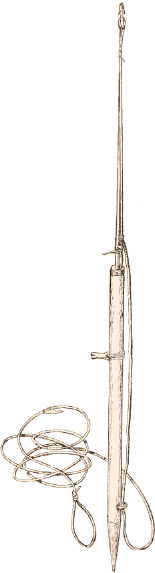
Fig. 390. harpoon from Alaska. (American Museum of Natural History, New York.) Fig. 391. Modern unang or sealing harpoon. (Museum für Völkerkunde, Berlin. IV A 6729.)
In the winter it takes to the smooth parts of the floe a few miles from the coast, where it scratches breathing holes through the ice, in which it rises to blow. It shuns hummocky ice and floes of more than one year’s age. Wherever the edge of the ice is at a great distance from the settlements, the only way of procuring seals is by watching for them at these holes. For the pursuit a light harpoon is used, called unang. The shape of this weapon has been somewhat changed since the introduction of rod iron. Formerly it consisted of a shaft having at one end an ivory point firmly attached by thongs and rivets, the point tapering toward the end. The point was slanting on one side so as to form almost an oblique cone. Thus it facilitated the separation of the harpoon head from the unang. On the opposite end of the shaft another piece of ivory was attached, generally forming a knob. The material used in making the shaft was wood, bone, or ivory, according to the region in which it was manufactured. In Iglulik and in Aggo the narwhal’s horn was the favorite material for the whole implement, a single horn being sufficient to make a whole shaft. Wherever wood could be procured small pieces were ingeniously lashed together. As the shaft is apt to be broken by the struggles of the animal when struck by the weapon, it was strengthened by a stout thong running along the whole length of the shaft. In all other respects the old design corresponds to the modern one. Unfortunately I have seen no specimen of this description, but a figure may be seen in Ross II, p. 272, in the hand of one of the natives. In Alaska a similar harpoon is in use, a specimen of which is represented in Fig. 390. It consists of a wooden shaft, with a stout ivory point at the lower end and another at the upper end. Both are fastened to the shaft by whalebone strings. In the upper end a slanting ivory point is inserted, which serves for attaching the harpoon head to it. The whole shaft is strengthened by a seal line, as shown in the figure.
The unang now in use in Baffin Land and on the western shore of Hudson Bay (Fig. 391) consists of a wooden shaft into which an iron rod (unartenga) is sunk. The latter is pointed at the end (see, also, Fig. 393) in about the same way as the old ivory implement. The socket is secured by a small ivory ring (unaqiuta) or a string wound around the end of the shaft. In the socket close to the iron rod a bent nail is inserted, forming a narrow eye (tagusiarbing). Near the center of the whole implement a small piece of ivory (tikagung; see, also, Fig. 418) is fastened to the shaft, forming a support for the hand when throwing the weapon. At the lower end of the shaft a string of deer sinews or a thong is fastened, forming a loop (nabiring) which passes through a hole drilled through the shaft. A stout iron point is also attached to the lower end of the shaft (tounga).
Fig. 392. Old style naulang or harpoon head. (Museum für Völkerkunde, Berlin. IV A 6692.) 1/1
The natives carry this implement on all their winter excursions, as it is serviceable for numerous purposes. It is always kept within reach on the sledge, as the strong iron point is useful for cutting down hummocks, should any obstruct the passage of the sledges, or for cutting holes through the ice, or it takes the place of a hatchet in breaking the frozen meat which is carried along for dogs’ food. The long iron rod is extremely useful in trying the strength of the ice or the depth of the snow. By taking precautionary measures of this kind the natives pass over extensive floes of weak ice.

Fig. 393. Modern naulang or harpoon head (Museum für Völkerkunde, Berlin. IV A 6729.) ½
The head belonging to the unang is called naulang. Since iron has been introduced in Baffin Land and Hudson Bay, the natives file their harpoon heads out of it, but adhere almost exactly to the old pattern. The old naulang was cut out of bone or more frequently out of ivory (Fig. 392). It was one inch to two inches long and had a piece of metal inserted into the slit at the top. Through the middle of the instrument a hole was drilled parallel to the plane of the blade. The harpoon line passed through the hole, and as soon as the point struck an animal and a strain was put upon the line it turned at a right angle to the latter, thus acting as a toggle. The effect was increased by two points at the lower end of the naulang, called uming (beard). These pressed into the flesh or the skin of the animal and prevented the harpoon head from slipping back.
The modern naulang (Fig. 393) is about the same length as the old one, but much more slender. While the back of the old pattern was straight, the points of the iron one are bent outward and backward in order to increase its effect.
The naulang is fastened to the harpoon line (iparang). This part of the instrument is much longer than the unang, as it must allow for the struggles of the diving seal. The end of the line passes through the hole of the naulang and a loop is formed and secured by deer sinew or arranged as may be seen in Fig. 393. At a distance equal to the length of the iron rod of the unang a small thong (taguta) is attached to the line and serves to fasten it to the shaft (see Fig. 391). It is drawn through the eye formed by the tagusiarbing. As soon as a strain is put upon the naulang the line parts from the shaft, as the taguta is only squeezed into the eye and is easily detached. The harpoon line passes through the nabiring or is fastened by a slipping hitch to the shaft of the unang.
If the unang has a nabiring the line passes through this loop. A few feet below it a small piece of ivory (akparaiktung) is attached to the line, acting as a hook after it has run out. It catches the nabiring and drags the harpoon along, thus impeding the movements of the animal (see Fig. 391).
Fig. 394. Qilertuang or leather strap and clasps for holding coiled up harpoon lines. a, c (National Museum, Washington. a, 34128; c, 34132.) b (Museum für Völkerkunde, Berlin.) 1/1
The rest of the line is coiled up and held by the hunter. The end is doubled so as to form a loop which serves as a handle when the line runs out with the diving seal. Generally, a small piece of leather (Fig. 394) with two slits at one end and an ivory clasp (qilertuang) at the other is fastened to this loop; it serves to hold the bights together when the line is detached from the harpoon and rolled up. Some art is bestowed on the manufacture of this clasp (Fig. 394). Usually it represents a seal, the head of which forms a hook on which the slits can be fastened. The clasp is either tied or otherwise secured to the leather strap. Some specimens in the British Museum, which are about one hundred and fifty years old, show that these implements have not undergone any change during that time.
Parry describes another harpoon head used by the Iglulirmiut for the unang. He calls it a siatko (Fig. 395). I myself have not seen any of a similar pattern, but Kumlien gives a sketch of one found in a grave at Exeter Sound (Fig. 396). The principal difference between the naulang and the siatko is that the edge of the former is parallel to the hole through which the line passes, while in the latter their directions are vertical to each other. The head of the whaling harpoon (see Fig. 436) acts on the same principle.
Fig. 395. Siatko or harpoon head of the Iglulirmiut. (From Parry II, p. 550.)
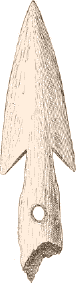
Fig. 396. Siatko found at Exeter Sound. (From a drawing by L. Kumlien.)
When the day begins to dawn the Eskimo prepares for the hunt. The dogs are harnessed to the sledge and the hunting implements are fitted up. The harpoon line and the snow knife are hung over the deer’s antlers, which are attached to the hind part of the sledge, a seal or bear skin is lashed upon the bottom, and the spear secured under the lashing. The hunter takes up the whip and the dogs set off for the hunting ground. When near the place where he expects to find seals, the hunter stops the team and takes the implements from the sledge, which is then turned upside down. The points of the runners and the short brow antler are pressed into the snow in order to prevent the dogs from running away. A dog with a good scent is then taken from the team and the Eskimo follows his guidance until a seal’s hole is found. In winter it is entirely covered with snow, but generally a very small elevation indicates the situation. The dog is led back to the sledge and the hunter examines the hole to make sure that it is still visited by the seal. Cautiously he cuts a hole through the snow covering and peeps into the excavation. If the water is covered with a new coat of ice the seal has left the hole and it would be in vain to expect its return. The hunter must look for a new hole promising better results.