KENILWORTH CASTLE.
Reading edition
“Gaze on yon Arch, and mark the while, Of all that feudal glory shared, How war has reft what time had spared. Oh, for a bard of olden time To yield thee back thy life in rhyme— To sing afresh thy glorious prime, When wassail rout convulsed thy tower, When banquet shook thy festive halls. But all is still! thy crumbling walls No more shall echo back the tread Of prancing steeds: no more shall War Roll at thy feet his iron car; Nor trumpets’ clang, nor clashing swords, Nor prisoner’s sigh, nor love’s last words, Whisper amid thy voiceless dead.”—Leatham.
ONE of the most graphic pictures of “Old Kenilworth” which we have met with, occurs in the following passage:—“Where wilde brookes meeting together make a broad poole among the parkes, and so soone as they are kept in with bankes, runne in a chanell, is seated Kenelworth—in times past commonly called Kenelworde, but corruptly Killingworth—and of it taketh name a most ample, beautifull, and strong Castle, encompassed all about with parkes, which neither Kenulph, nor Kenelm, ne yet Kineglise built (as some doe dreame) but Geffrey Clinton, chamberlaine unto Kinge Henrie the First and his sonne with him, as may be shewed by good evidences; when he had founded there before a church for chanons regular. But Henrie, his nephew in the second degree, having no issue, sold it unto King Henrie the Third, who gave it in franke marriage to Simon Montfort, Earl of Leicester, together with his sister Aleonor. And soone after, when enmity was kindled between the Kinge and Earl Simon, and hee slaine in the bloody wars which he had raised vpon faire pretexts against his Soveraigne, it endured six months’ siege, and in the end was surrendered vp to the Kinge aforesaid, who annexed this castle as an inheritance to Edmund his sonne, Earl of Lancaster; at which time there went out and was proclaimed from hence an edict, which our lawyers use to call ‘Dictum de Kenilworth,’ whereby it was enacted that ‘whosoever had tooke arms against the King, should pay every one of them five yeeres rent of their lands.’ A severe yet a good and wholesome course, without effusion of blood, against rebellious subiects, who, compassing the destruction of the state, put all their hopes upon nothing else but dissentions. But this Castle, through the bountifull munificence of Queene Elizabeth, was given and granted to Robert Dudleie, Earle of Leicester, who to repaire
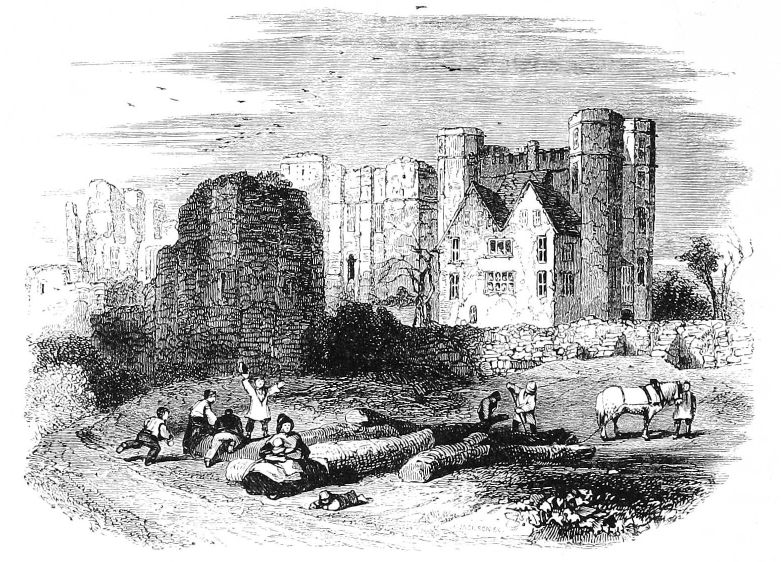
and adourn it spared for no cost; insomuch, as if a man consider either the gallant building or the large parkes, it would seem as it were to be ranged in a third place amongst the Castles in England.”
Such is the concise description and historical epitome of this celebrated Castle, as recorded by the author of the “Britannia.” But many changes have occurred since then; its walls have been dismantled, its apartments thrown open to the weather, siege and storm have alternately expended their fury on its iron strength, and mutilated what they could not overthrow; for it is too firmly seated, too massive in its structure and materials, to feel the wasting hand of time, and happily too well cemented to be turned into a profitable quarry. The northern Ariosto, however, has done more to preserve it from further dilapidation than its own lords—he has invested its courts and halls with a charm which nothing can dissolve; and we have good reason to believe that the scenes which Scott has now rendered classic, the taste and patriotism of Clarendon will transmit unimpaired to posterity.
“Dim peering through the vale of night, Yon murky forms bring back a crowd Of images that seek the light, That leap from out the misty shroud Of ages—picturing as they glide Athwart the tablet of my thought, What did of good or ill betide These walls, and all the deeds here wrought.”—Leatham.
Previous to the Conquest, observes the best authority on this subject, Kenilworth was a member of the neighbouring parish of Stoneleigh, being an ancient demesne of the Crown, and had within the precincts thereof a Castle, situate upon the banks of Avon, in the woods opposite to Stoneleigh Abbey, which castle stood upon a place called Holm Hill, but was demolished in those turbulent “times of warre betweene King Edward and Canutus the Dane.” At the time of the Norman Survey, Kenilworth was divided into two parts, one of which was styled Optone, and was held of the king by Albertus Clericus in “pure almes.” The other portion was possessed by Richard the Forester. In the reign of Henry the First, the manor was bestowed by the king upon Geoffrey de Clinton, who founded here a potent castle and a monastery. But although a fortified residence and a religious foundation were usually, in the early ages, the harbingers of wealth and consequence to the neighbouring town, Kenilworth does not appear to have greatly profited by its position, either in commerce or population. Henry the Third bestowed upon it the privileges of a weekly market on the Tuesday, and an annual fair to last three days; but this, it would appear, had fallen into disuse, for Robert Dudley, Earl of Leicester, obtained from Queen Elizabeth the grant of a weekly market to be held on Wednesday, and a yearly fair on Midsummerday. Prosperity, however, never seems to have taken a hearty liking to the spot, and, notwithstanding the advantages of royal patronage and local position, became at length estranged from it, and fixed her seat in another though less favoured part of the county. The Castle, however, has in a great measure compensated for the lack of commerce; and by the great number of visitors who now resort to it at all seasons, from all parts of the kingdom, the inhabitants are partly indemnified for other privations. The romance of Kenilworth, it is probable, has brought, within the last fifteen years, more pilgrims to this town and neighbourhood—pilgrims of the highest rank—than ever resorted to its ancient shrine of the Virgin; more knights and dames than ever figured in its tilts and tournaments.
Of this lordly palace, where princes feasted and heroes fought—now in the bloody earnest of storm and siege, and now in the games of chivalry, and where beauty dealt the prize which valour won—“all,” says Sir Walter Scott, “all is desolate. The bed of the lake is but a rushy swamp, and the massive ruins of the Castle only show what their splendour once was; and impress on the musing visitor the transitory value of human possessions, and the happiness of those who enjoy a humble lot in virtuous contentment.” But from the picture of Kenilworth as it is, we return to those passages of ancient history which point out to us what it was.
The founder of the Castle, Geoffroi de Clinton, was treasurer and chamberlain to King Henry the First, but “to whom related” or from whom descended is a question on which genealogists have come to no satisfactory conclusion. By one he is said to have been a grandson of William de Tankerville, who held a distinguished office under the Duke of Normandy; by another he is mentioned as a soldier of fortune, who had no patrimony but his sword, with which he ultimately cut his way to the highest official dignities. But whatever his descent may have been, he was, beyond doubt, a person in whom the grand recommendations of valour and wisdom were eminently united. In addition to the offices of trust above-mentioned, he was appointed by the king to the chief-justiceship of England; and thus invested with all that honourable distinction to which a subject could aspire, he readily obtained those territorial possessions which gave him a high standing among the barons of his day, and have transmitted his name to the present time in a spot of ground near the Castle, with the distinctive appellation of ‘Clinton’s Green.’ The original keep, or donjon, appears to have been the work of this enterprising Norman, and is still the most imposing feature in the Castle. It is distinguished from the Norman donjon towers of that period by having had no prisons underground—such at least is the conclusion; for in several experiments which have been expressly made for ascertaining the truth of this exception, the ground on which it stands has been found solid, and with no appearance of either arches or excavations, although the examination has been carried to a depth of fifteen feet and upwards. It is probable, however, that the dungeons were either in the angular towers above, or in a part near the foundation, which remains to be discovered; for it is not at all probable that an appendage so indispensable to a feudal residence would have been neglected in this solitary instance. This massive and gigantic fabric, which was constructed to resist the slow waste of centuries, with scarcely any diminution of strength or bulk, has suffered greatly by the hand of violence. The north side appears to have been demolished for the sake of its materials, or to render it incapable of being again employed as a fortress. The external features have apparently undergone various alterations: the windows, which originally consisted of the roundheaded Norman arch, have been transformed in this particular to the fashion of a later day—a square head, to correspond with the other buildings erected by Leicester, so that in style and appearance the Castle might present one harmonious whole. The small towers which crowned the four angles in the battlements were originally much higher; but, in subserviency to the same plan, their height was reduced to Leicester’s new standard, and thus the more ancient character of the building was impaired rather than improved. The staircases in the south-west and north-east angles, the ancient well, some remains of colour in fresco, in imitation of niches, with trefoil heads, are among the few objects which arrest the eye and invite inspection.
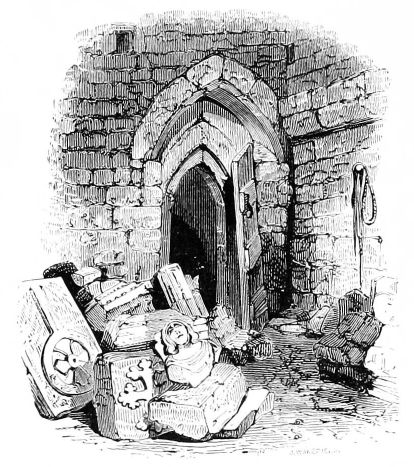
But of De Clinton, with whose name this part of the Castle is so particularly associated, little is known beyond the fact already mentioned, of his having founded this Castle, and a Monastery of canons-regular of the Saint Augustin order, which he amply endowed with lands, tithes, and other revenues.—“And more,” says Dugdale, “I cannot say of him than that, in the thirtieth of Henrie the First, the king, keeping his Christmas at Wodstoke, a false accusation of treason was there brought against him, and that he left issue Geffrey his son and heir, who held that office of chamberlain to the king, as his father had done. He married Agnes, daughter of Roger, Earl of Warwick, and with her obtained various grants and concessions of importance. He gave, at the burial of his father, the lordship of Neuton to the monks of Kenilworth, with eleven other possessions of great value and consideration. Henry de Clinton his son, and heir of Kenilworth, added considerably to these bequests; and in consideration of his piety and munificence to the church, the monks allowed him every day during his life two manchets—such as two of those canons had—with four gallons of their best beer, according to wine measure; all of which he was to have, whether he were at Kenilworth or not, from the time he should assume the habit of religion, except on such days as he should have entertainment in that monastery.” These worthy brethren, like the fraternity of Melrose, appear to have been no eschewers of “faire cookerye and good drinke.”
“The jolly monks they made good kail On Fridays when they fasted, Nor wanted they good beef and ale As long as their neighbours’ lasted.”
“But,” says Dugdale (Baron. art. Clinton), “this Henry, ‘who had sold his heritage for a sop,’ quitted to King John all his right in Kenilworth Castle, and in the woods and pools, with whatsoever else appertained thereto; excepting what he did possess at the death of Henry the Second. By his wife, Amicia de Bidun, he left issue Henry, his son and heir, who having been in arms with the rebellious barons, returned to obedience 2ᵈᵒ Henry the Third, assuring the king of his future fidelity; whereupon he had livery of those lands in Kenilworth which descended to him by the death of his father; but dying without issue, his estates passed into the families of his three sisters, Amicabile, Isabel, and Agnes, who severally married Lucas de Columbers, Ralph Fitz-John, and Warine de Bragenham.
From this epoch in the history of Kenilworth, to the time when it was given by King Henry to Simon de Montfort, Earl of Leicester, as a marriage portion with his daughter, the Castle continued to be crown property. This alliance took place in 1253, and by various documents extant it appears that considerable sums were expended at intervals in repairs and embellishments of the royal fortress. Simon de Montfort, however, by joining the barons, as already mentioned in the history of Rochester Castle, made shipwreck of his fortune. At the battle of Evesham—a day on which, as the Monk of Gloucester observes, “the very heaven appeared in its most appalling hues”—Montfort, with his son Henry and many individuals of high rank, died on the field. “At the houre of his death,” says another chronicle, “it thundered and lightened, and so great a darkness spread the sky that men were sore amazed.” “A cruell and bloodye battayle it was,” says the annalist; “after which, in despite of the erle, some malicious persons cut off his head, mutilating him otherwise with a barbaritie too disgusting to mention. His feet also, and handes, were cut off from the body and sent to sundrie places, and the truncke of hys bodye was buryed within the church of Euisham.” But all this met afterwards with a singular retribution of vengeance at Viterbo, in Italy, as recorded by Rymer, Muratori, and others.
The king had hitherto been a prisoner in the camp of the barons, captured as already noticed at the battle of Lewis. But having now recovered his liberty, and made various state arrangements, he assembled his victorious troops in the month of June following; and with his son, Prince Edward, at their head, sat down before the walls of Kenilworth Castle, which still held out under the surviving son of De Montfort. Sir Henry Hastings, to whom Montfort, during his absence in France—where he was endeavouring to awaken a strong interest on behalf of the barons—had intrusted the command, so ably conducted the defence, that six months had elapsed before any impression could be made upon the garrison by the king’s forces.
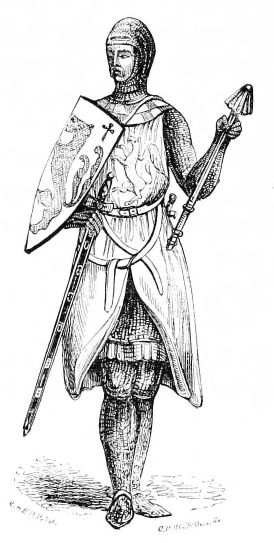
Famine, however, accomplished what mere force could not effect. On the 20th of December, 1265, after the Dictum[191] had been issued, a special stipulation was entered into, that “Sir Henry Hastynges and all those that were with him should have life and limme, horse and harnesse, with all things within the castelle to them belongyng, and a certeine of leysure to cary away the same.” The Castle was then delivered up to the king. The principal cause which had rendered this monarch so unpopular among his natural subjects, the old and high-spirited nobility, has been already noticed in the account of Rochester. His patronage of foreigners, and predilection for exotic customs, had prejudiced the native chivalry against him; and hence the series of battles and sieges, which only ended with the death of Simon de Montfort,[192] and the surrender of Kenilworth Castle. At this siege stone balls of great size were employed by the besieged; some of them, which have been since dug up, measure sixteen inches in diameter, and ‘weigh nearly two hundred pounds.’ “But I doe not thinke,” says an old commentator, “that the gunnes of those dayes were such gunnes as we nowe use, but rather some pot gunne, or some such other invention.” The warlike engines then in use, however—the ‘catapultæ’ or ‘mangonels’—were sufficiently powerful to throw stones much heavier than those found at Kenilworth, as in a subsequent portion of this work we shall have occasion to show. It was whilst prosecuting this siege that the king gave his niece in marriage to the Duke of Brunswick; when the queen and her ladies, who had travelled from Windsor for that purpose, graced the ceremony with their presence.
Having thus recovered possession of the fortress, King Henry bestowed it upon his younger son Edmund, “with free chase and free warren, and right to hold in Kenilworth the weekly market and annual fair,” already mentioned; and, two years afterwards, created him Earl of Lancaster.
1279. In this year the Castle of Kenilworth became the scene of one of those brilliant displays which commenced and vanished with the days of chivalry, but which still sparkle in the pages of the old chronicles, and enliven the tedium of more grave details. Edward I., on coming to the throne, greatly encouraged those martial exercises and amusements in which he himself so much delighted and excelled. It was under his auspices that, in imitation of the British Arthur, this fête of baronial splendour was got up; and at the head of it was Roger Mortimer, Earl of March, who was imbued with the true spirit of his age, and delighted in those military spectacles which brought beauty and chivalry together.[193] On this occasion, the round-table was introduced at Kenilworth, by means of which the guests were placed, for the time at least, on a footing of equality.[194] The company consisted of five score knights, and an equal number of ladies. Among the former were many French and other foreign knights of distinction, who, in honour of their ladye-loves, had come to break a lance with England’s chivalry. The halls of the Castle were thrown open to the daily banquet; the tilt-yard was thronged with rival knights, where the fairest dame, presiding at the ring, rewarded the successful competitors for every successive display of martial strength and agility. In the evening, music and dancing filled up the interval till supper; after which the ladies retired to their ‘bower,’ and the wassail bowl circling for a time at the barons’ board, closed the brilliant exhibitions of the day. Of the dress of these court dames it is mentioned, as a proof of extreme luxury in that age, that they all appeared in “rich silken mantles.” Of this great military festival, Hardyng has drawn the following picture, which gives us a still more magnificent idea of Earl Roger’s splendour. The assembly, according to his account, was nearly tenfold that mentioned by other chroniclers:—
“And in the yere a thousand was full then, Two hundred, also sixty and nineteen, When Sir Roger Mortimer so began At Kilengworth, the Round-table as was sene, Of a thousand knyghts for discipline, Of young menne, after he could devyse Of turnementes and justes to exercise. A thousand ladyes, excellyng in beautye, He had also there in tentes high above The justes, that thei might well and clerely see Who justed beste there for their ladye-love, For whose beautie it should the knightes move In armes so eche other to revie [rival] To get a fame in play of chivalrye.”—Hardyng Chron.
In illustration of this subject, it may be proper to introduce a passage from Strutt’s View of Manners and Customs, in which he justly remarks, “That all these warlike games—such as those of the round-table, and tilts, and tournaments—are by historians too often confounded together. They were, nevertheless, different games, as appears from the authority of Matthew Paris, who writes thus—Non in hastiludio illo quod vulgariter torneamentum dicitur, sed potius in illo ludo militari, qui mensa rotunda dicitur—‘Not in the tilts which we commonly call tournaments, but rather in that military game called the round-table.’ The first was the tilting, or running at each other with lances; the second, probably, was the same with that ancient sport called barriers, from the old French barres or jeu de barres, a martial game of men armed, and fighting together with short swords within certain limits or lists, whereby they were severed from the spectators; and this fighting without lances distinguished the barriers, or round-table knights, from the other.” (Vide also Warner’s Illustrations, critical and historical, vol. i. p. 255.) This splendid exhibition at Kenilworth was succeeded by the revival of the round-table at Windsor; and “so great was the concourse that flocked from all the countries of Europe—and particularly from France—to reap the laurels of chivalry in the court of Edward, that Philip de Valois, the French monarch, either stimulated by envy, or fearful that his own palace would be deserted by the flower of his nobility, instituted a round-table in his kingdom also. “The tournaments of this magnificent reign,” observes Warton, “were constantly crowded with ladies of the first distinction, who sometimes attended them on horseback, armed with daggers, and dressed in a succinct soldier-like habit or uniform, made expressly for the purpose.” “But this practice,” says Warren, on the testimony of Knyghton, “was at length deemed scandalous,” or at least very unfeminine.
The Hall, in which were held so many splendid reunions and banquets, is still magnificent in decay. Its proportions are ninety feet in length, forty-five
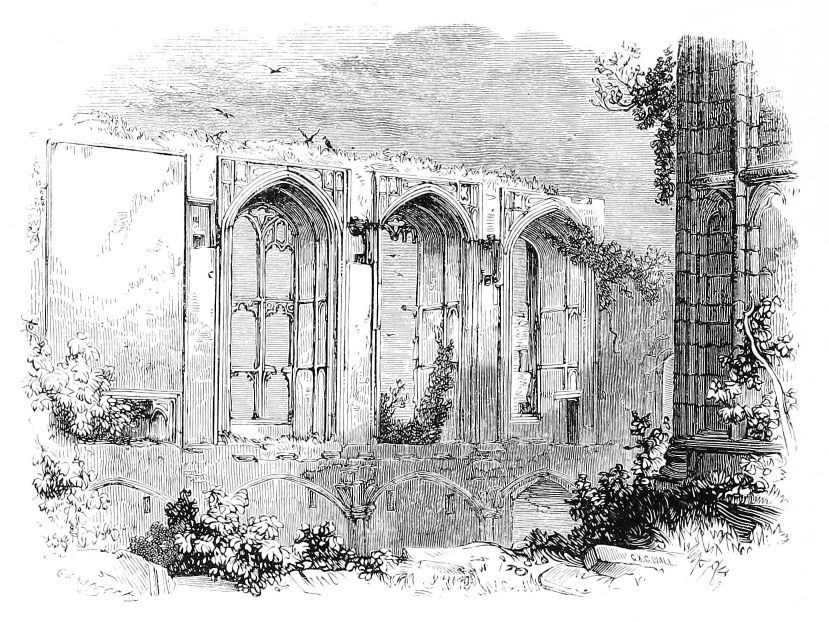
in breadth, and the same in height—proportions which were generally observed by the ancient builders in all edifices where harmony of parts and grandeur of effect were to be combined. In the windows, the richness of the mouldings and tracery still remains as a proof of what they must have been when, on the decoration of this Castle, all that art could accomplish or wealth command was lavishly bestowed. The undercroft, or hall, as described in the survey, is “carried upon pillars and architecture of freestone, carved and wrought as the like are not within this kingdom.” It is of the same dimensions as the Baron’s Hall above, and was intended for the domestics and those numerous guests and retainers who were not entitled to a place at the upper table.” On each side of the upper hall is a fire-place; near to the inner court is “an oriel, in plan comprehending five sides of an octagon, and a fire-place. On the side opposite is a recess with a single window and a small closet, described by the guide as ‘Queen Elizabeth’s dressing-room.’”
From the period just mentioned till that of Edward the Second, Kenilworth appears to have enjoyed uninterrupted tranquillity, if not sunshine. It was the frequent resort of that “brave but unlettered nobility,” among whom it was the monarch’s ambition to keep alive the martial ardour which his example had awakened. On the death of the first Edward, however, and the accession of his son, a crisis was approaching. The reign of the latter, his weak and impolitic government, his disregard of public opinion, his total abandonment of the kingly duties in favour of pleasure; his patronage of foreign adventurers, and his protection of servile flatterers, on whom he lavished wealth, and power, and honours, alienated the nobility, and hastened his own downfall and that of his favourites. But without minutely entering into this subject, we shall merely touch upon such facts, or incidents, as connect the Castle of Kenilworth with the history of that period.
On the attainder of Thomas Earl of Lancaster, in the fifteenth year of this reign, Kenilworth again reverted to the crown, and was held by the king until the eve of his ‘abdication,’ when the orders issued to Odo de Stoke, his castellan, for its defence, could not be carried into effect. The king had left the capital, and become a fugitive from his exasperated vassals. Having lost his favourites—the Gavestons, and now losing both the Le Despensers by a horrid death—the unhappy monarch, thinking to secure his safety by flight, went on board a ship at Bristol, with the view of seeking refuge on the coast of Ireland. But contrary winds prevailing, he was driven on the coast of Wales; and being there made prisoner by Leicester, brother of him whom he had lately caused to be attainted, was conducted to Kenilworth Castle. “Alas,” says the chronicle, “with corrupt dispositions, even to everting of all bonds of either religious or civil duty, what will not money, diligence, and fair words accomplish! For by these means the desolate, sad, and unfortunate king fell into his cousin of Lancaster’s hands, and with him the yonger Lord Spenser, Earle of Glocester, Robert Baldock, Lord Chancellour, and Simon de Reding, there being no regard had to the detention of any other. The king was conveyed by the earle from the place of his surprise to Monmouth and Ledbury, and so on to the Castle of Kenelworth, belonging to the Earle of Leicester, who was appointed to attend him; that is, to keepe him safe. The other three, Spenser, Baldock, and Reding, were strongly guarded to Hereford, there to be disposed of at the pleasure of their most capitall enemies;” as hereafter will appear. “The mournefull king being at Kenelworth Castle, there repaired thither the Bishops of Winchester, Hereford, and Lincolne, two earles, two abbots, foure barons, two justices, three knights for every county; and for London, and other principall places, chiefly for the Cinque ports, a certaine chosen number, selected by the Parliament, which then the queene and her sonne held at London. The Bishops of Winchester and Lincolne, as it was agreed upon, came thither before any of the rest, as well to give the king to vnderstand what kinde of embassage was approaching, as to prepare him by the best arguments they could, to satisfie the desire and expectation of their new moulded common-weale, which could onely be by resignation of his crown, that his sonne might reign in his stead.” When they were admitted to his presence—the Earl of Leicester his keeper, being at hand—they “together so wrought upon him, partly by shewing the necessity, partly by other reasons, drawn out of common places, thoroughly studied for that purpose, that—although not without many sobs and teares—he finally did not dissent, if his answere, which some doubt, were truly reported to Parliament.”
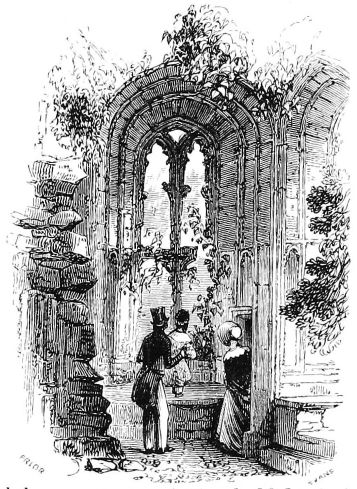
The whole company sent by the Order of State—if “that might be called a body which then had no head there—from London, being placed by the Bishop of Hereford according to their degrees in the Presence Chamber of Kenilworth Castle, the king gowned in blacke came forth at last out of an inwarde roome—the Privy Chamber[195]—and presented himself to his vassals, where—as being privy to their errand—sorrow stroke such a chillnesse into him that he fell to the earth, lying stretched forth in a deadly swoon.” The Earl of Leicester and the Bishop of Worcester beholding this ran to him, and with much labour recovered the half-dead king, setting him on his feet. But “rueful and heavy” as this sight was, we read not yet of any acts or effects of compassion expressed toward him—so settled was their hatred and aversion.
. . . . Miser atque infelix est etiam Rex, Nec quenquam, mihi crede, facit diadema beatum.
The King being now come to himself—but to the sense of his misery—the Bishop of Hereford declared to him the cause of their present embassy; and running over the former points, concluded by saying, “That the king must resigne his diadem to his eldest sonne; or, after the refusall, suffer them to elect such a personne as themselves should judge to be most fit and able to defend the kingdome.” The delirious king having heard this speech, “brake forth into sighes and teares.” Yet, nevertheless, said that “it was greatly to his good pleasure and liking that—seeing it could none other be on his behalfe—his eldest son was so gracious in their sight; and therefore he gave them thanks for choosing him to be their kinge.” This being said, there was “forthwith a proceeding to the short ceremony of his resignation, which principally consisted in the surrender of his diadem and ensigns of majestic to the use of his sonne, the new kinge.... Edward being thus de-kinged, the embassie rode joyfully backe to London to the Parliament with the afore-named ensigns and dispatch of their employment.”—(So far Speed, Polyd. Virg., Thomas de la More, Walsingham.)
“Now, after he was deposed of his kinglie honor and title,” says Holinshed, “the said King Edward remained for a time at Killingworth Castle, in custodie of the Earle of Leicester. But within a while the Queen[196] was informed by the Bishop of Hereford—whose hatred towards him had no end—that the Earle of Leicester favoured her husbande too much, and more than stoode with the suretie of her sonne’s estate; whereupon he, the King, was appointed to the keeping of two other lords, Thomas Berkeley and John Maltravers, who receiving him of the Earle of Leicester on the third of April, conveyed him from Kenilworth to Berkeley Castle, there to remain a close prisoner.” With the episode of this tragical history every reader is acquainted. In the words of the prophetic bard of Gray, he seems to hear
The shrieks of death through Berkeley’s roofs that ring, Shrieks of an agonizing king!
But taking leave of this melancholy incident in the history of Kenilworth Castle, we pass on in company with the circumstantial chroniclers of that day. On the accession of Edward the Third, Henry, brother of the attainted lord, and who had captured the fugitive king in Wales, was restored to all his titles, honours, and estates, when Kenilworth became once more the seat of baronial splendour. To this nobleman succeeded Henry his son, whom the sovereign, as a farther mark of his approbation, created Earl of Derby and of Lincoln, and lastly Duke of Lancaster. But here the line was again
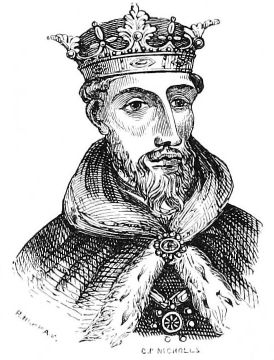
cut short. Dying without male issue in the thirty-fifth year of that reign, his two daughters became heirs to his vast demesne. Maude, the elder of these, married William Duke of Bavaria; and Blanche, the younger, John of Gaunt, fourth son of Edward the Third, who shortly after, reviving the late title, created him Duke of Lancaster, “by girding him with a sword, and putting a cap of fur on his head, with a circlet of gold and pearles.” To him, in right of his wife, was assigned, in the partition of lands which followed, the Castle of Kenilworth as part of her dower; but to which, after the death of the said Maude, Duchess of Bavaria, the manor of Leicester and a great many others, as enumerated by Dugd. vol. ii. p. 114, were added.
Lancaster Buildings, so called from this celebrated personage, were among the important additions which he made to the Castle during the interval which elapsed between his accession to the demesne, and his death in 1399. The repairs, additions, and embellishments which he contributed to this ancient fortress, consisted of the range of buildings here named—forming the south side of the interior quadrangle; and the tower, with three stories of arches adjoining the hall on the north side. He flanked the outer walls with turrets, and accomplished many other works calculated to improve and strengthen the means of defence. Visitors will do well to climb over these arches, which the ruined state of the building and the rubbish that has fallen down render no difficult task, and from the top “they will enjoy a magnificent view of the country, with the house and church at Honiley in the background. One cannot stand here a moment without being struck with the idea of what a glorious prospect it must have been, with the valleys on either hand filled with the transparent waters of the lake, surrounded with a beautiful variety of pleasure-ground laid out in lawns and woods.”
Du marbre, de l’airain, qu’un vain luxe prodigue, Des ornaments de l’art, l’œil bientôt se fatigue; Mais les bois, mais les eaux, mais les ombrages frais, Tout ce luxe innocent ne fatigue jamais.
In the following reign, when so much noble blood flowed on the scaffold, Lancaster was often exposed to the cold-hearted suspicions of his nephew, Richard the Second. In a former part of this work, where we have detailed at some length the circumstances attending the trial and execution of Richard Fitzalan, Earl of Arundel, the Duke of Lancaster appeared at his trial; and it was he, John of Gaunt, who was conspicuously active in bringing that unhappy nobleman to the block. He survived him, however, only two years; and after many splendid services to the state, and having borne the titles of “Duke of Aquitaine, Duke of Brittany, King of Castille,” and been thrice married,[197] he died at his Castle of Leicester, or, according to others, at Ely House, in Holborn. Instances of his knightly prowess and prudent sayings are often detailed by the old chroniclers.
When leading the van in the battle against Henry, the bastard brother of Don Pedro in Spain, near the city of Pampeluna, pointing to the enemy in front—“There,” said he to Sir William Beauchamp, “there are your enemies; this day you shall seeme a good knight or die in the quarrel.” When John Wycliffe was called before the Archbishop of Canterbury, the Bishop of London, and other prelates and peers, of whom this Duke of Lancaster was one; he (in favour of Wycliffe) spoke some reproachful words against the bishop, which gave such discontent to the citizens that they rose in an uproar and resolved to have murdered him, and to have set fire to his house, called the Savoy—then the fairest structure in England—had ‘not the bishop qualified them.’ On the accession of his nephew, King Richard, observing that he was under improper influence, and fearing that public blame might attach to him as the principal adviser, he obtained leave to retire to his Castle of Hereford, which he intended to have made his chief residence, and had taken measures for repairing and fortifying it. But in this he was defeated by the King’s injustice, who took it from him, at which he was much troubled, and in consequence took up his residence in his Castle of Kenilworth.—Baron.
The Hall, already mentioned, was finished only two years before the death of John of Gaunt, who, after being deprived of his other castle by King Richard, as above stated, employed his active mind in a thorough restoration of that at Kenilworth; “and for which,” says Dugdale, “he obtained a warrant from Richard, directed to Robert de Skillington, master mason, and supervisor of his buildings at Kenilworth, to impress twenty masons, carpenters, and others.”
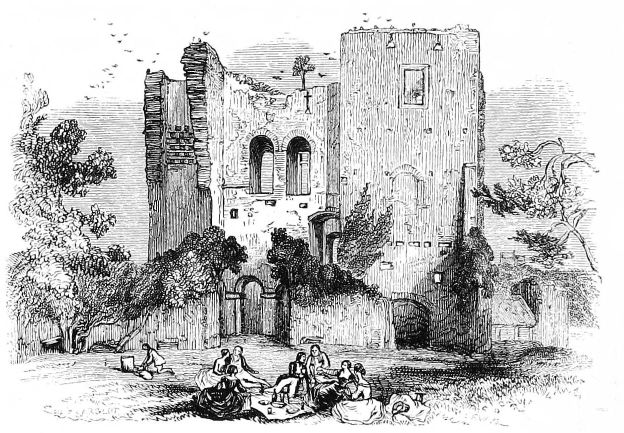
The Strong Tower, or that which in the “Romance of Kenilworth” is called Mervin’s Tower, is also ascribed to John of Gaunt. Henry de Bolingbroke, his son, Duke of Hereford, who was destined to play so conspicuous a rôle in the national history, succeeded to his illustrious father in 1399. On his return from abroad—where he had been some time in exile—to take possession of his heritage according to the royal patent, Richard, jealous of his power and growing popularity, applied to the parliamentary commissioners, and by their authority revoked his letters patent, and retained possession of the late Duke’s estates. So glaring an act of injustice could not be overlooked, either by Hereford or his friends. Connected with most of the principal nobility by blood, alliance, or private friendship, they were easily brought, by a sense of common interest, to take part in his resentment; the consequences of which were, the deposition of King Richard, the elevation of Henry de Bolingbroke to the throne, and the origin of those unnatural wars between the houses of York and Lancaster which deluged the country with blood.
During these fierce and sanguinary contests, the castle and demesnes of Kenilworth were alternately in the power and custody of the rival houses; but the lighter amusements of the age, the chivalric entertainments, jousts and tournaments, which had so frequently enlivened its courts, had been laid aside for the stern realities of domestic war. Days of battle and nights of mourning, or fearful preparation, drove mirth and festivity from the gate; while the continual tramp of steeds, the clang of arms, and the approach of fresh conflicts, kept alive that melancholy interest and excitement, which for a time isolated this magnificent fortress and its garrison within the pale of its own fosse and ramparts.
“O England, years are fled since first Wide o’er thy plains the war-cloud burst! Long years are fled; yet following years Still hear thy groans, still mark thy tears! Yet where are they whose fatal shout To havoc roused the maddening rout? Where they who toss’d the fatal brand Of discord through their hapless land? They’re gone—and following in their place, Another and another race. But peace, peace, comes not! They repose Which kindled first their country’s woes; But, ere they slept, they left behind A fatal present to mankind.”
The Swan Tower forms the north-west angle of the outer wall, at the meeting of the lake and canal, or wet ditch. Near this, and of an oblong shape, divided into parterres cross-fashioned, and with a circular space in the centre, was the ancient garden of the Castle, which communicated with the Maison de Plaisance already named, and this again with the strong tower adjoining. In shape it is octagonal, and is supposed to have derived its name from the swans which resorted hither to be fed by the keeper. Another of these towers, which forms the opposite or north-east angle of the outer wall, is considerably larger than the preceding, polygonal in shape, and contained several apartments, two of which have fire-places. It is known in the History of the Castle as “Lunn’s Tower,” and is seen to advantage in the general view of the Castle from the north-east. Of nearly the same size within, but not nearly so high, and in its architectural style and proportions deserving of particular attention, is the Water Tower. It appears to have been intended for military defence, and used in connexion with the other warlike outworks by which, on the land side, the castle wall was protected. The next prominent object in the same line, where the lake and ditch again meet on the south-east, is Mortimer’s Tower, already described. Communicating with this, by means of a long gallery, was the Flood Gate, which contained a “spacious and noble room,” from which the ladies might conveniently witness the martial pastimes of joust and tournament in the capacious tilt-yard adjoining, which extended from tower to tower. The buildings here enumerated form the chief features in the outer circuit, and succeed each other at various distances along the embattled wall on the north and east of the castle.
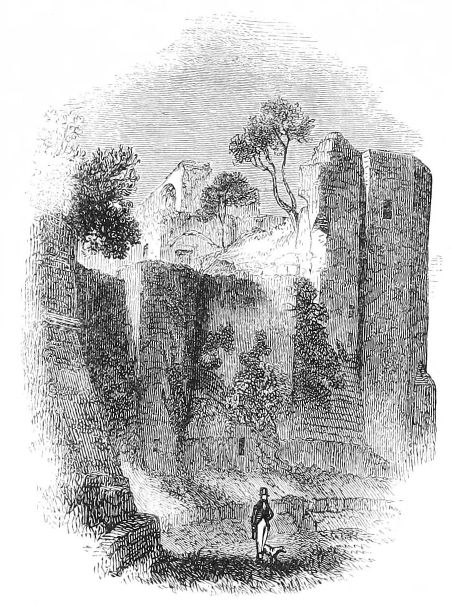
The Kitchens, three in number, occupied the whole space between the keep and the strong tower on the north-west. The buildings are in total dilapidation; but the important office to which they were applied—the restaurant of the castle—is clearly indicated by what remains. In this part of the castle—as if the walls had not yet lost the high temperature to which they had been raised in the times of baronial revelry—the ivy luxuriates in great redundancy; the lizard sports on the hearth, and the owl and bat roost together in the larder. Così trapassa, al’ trapassar’ d’ un giorno, la gloria della—cucina!
1114. Henry the Fifth, according to Stow, kept his “Lent in the Castle of Kenelworth, and caused an harbor there to be planted in the marish for his pleasure, among the thorns and bushes, where a foxe had harbored, which foxe he killed, being a thing thought to prognosticate that he should expell the craftie deceit of the French king; besides which he also there builded a most pleasaunt place, and caused it to bee named ‘le Plaisant Marais,’ or the Pleasaunt Marsh.” Here, also, during the same Lent, “whilst the King lay at Kenelworth, messingers came to him from the Dolphin of France, named Charles, with a present of Paris balles with him to play withall; but the Kinge wrote to him that he would shortlie send to him London balles, with the whiche he woulde breake down the roofes of houses.” Of this incident Shakspeare has taken advantage in the following scene in his play of Henry the Fifth:—
Ambass. The prince, our master, Says that you savour too much of your youth, And bids you be advised, there’s nought in France That can be with a nimble gaillard won— You cannot revel into dukedoms there; He therefore sends you, meeter for your spirit, This tun of treasure; and in lieu of this, Desires you let the dukedoms that you claim Hear no more of you. This the Dauphin speaks. K. Hen. What treasure, uncle? Exe. Tennis-balls, my liege. K. Hen. We are glad the Dauphin is so pleasant with us; His present and your pains we thank you for. When we have matched our rackets to these balls, We will in France, by God’s grace, play a set Shall strike his father’s crown into the hazard. And tell the pleasant prince, this mock of his Hath turn’d his balls to gun-stones; and his soul Shall stand sore charged for the wasteful vengeance That shall fly with them; for many a thousand widows Shall this his mock, mock out of their dear husbands; Mock mothers from their sons; mock castles down.—Act i. sc. 2.
On the accession of Henry the Seventh, the Castle was bestowed upon his son, as Duke of Cornwall, who, to the numerous repairs and embellishments made by his royal predecessors, contributed many others. He removed what was called the ‘Plaisance en Marais’—supposed to have been a small summer-house in the marshy flat beyond the walls—to the interior of the castle-yard, where its remains are still visible near the Swan Tower. Inheriting the munificence and taste of his father—“the onlie phœnix of hys tyme for fyne and curious masonrie,”[198] and whose “buildings were most goodlie and after the newest caste, all of pleasure,”[199] the Duke evinced in his repairs of Kenilworth[200] that love and patronage of the fine arts by which he was afterwards distinguished as Henry the Eighth. The building formerly known as “Henry the Eighth’s Lodgings,” was a capacious structure, situated between the Keep, or Cæsar’s Tower, on the right, and Leicester’s Buildings on the left; comprising an extensive suite of apartments, and forming the eastern side of the inner court. Through this building, close to the tower, was the archway leading into the castle-yard. From Henry the Eighth it descended to his son, Edward the Sixth; then to Mary, and lastly to Queen Elizabeth, who bestowed it upon her favourite, Robert Dudley, fifth son of the Duke of Northumberland, with all the royalties thereto belonging. This forms the most memorable incident in the history of Kenilworth.
This Sir Robert Dudley appears on almost every page of the history of Elizabeth’s reign. He had been included in the attainder of his family, but was restored in blood by Queen Mary, who appointed him, when a very young man, Master of the Ordnance at the siege of St. Quintin. Elizabeth overwhelmed him with dignities; giving him the Garter while a commoner; creating him Baron of Denbigh and Earl of Leicester; and investing him with the order of St. Michael, which the King of France, by way of compliment, had requested her to confer on two of her subjects. He was likewise Master of the Horse, Steward of the Household, Chancellor of Oxford, Ranger of the Forests south of Trent, and Captain-general of the English forces in the Netherlands; and, as though the great ancient offices of his country were not sufficient for the gratification of his ambitious temper, a patent was preparing at the time of his death for one before unheard of—the Queen’s Lieutenant in the government of England and Ireland. He was distinguished by the elegance of his manners and the profuseness of his expenses, and affected a great degree of piety, and a strict purity of conduct. To these plausible appearances, though unpossessed of either wisdom or virtue, he owed the maintenance of his power to the last, against a strong party at court, and even against the Queen herself, who would gladly have pulled him down when those motives, which doubtless produced her first favours to him, had lost their force. The most material circumstances of his political history never appeared to public view; for he was the darkest character of his time, and delighted in deriving the success of his schemes from the operation of remote causes, and the agency of obscure instruments. It is highly probable that the Queen of Scots, and the Duke of Norfolk, were sacrificed to this crooked sort of policy; a conjecture which tends to wipe out somewhat, though, alas! but little, of the bloody stain which those enormities have left on Elizabeth’s memory.—Illust. of Brit. Hist.—Lodge.
He married, first, Anne, daughter and heiress to Sir John Robsart (for a particular account of whose murder, and the suspicions that fell on her husband, see Ashmole’s History of Berks): secondly, Douglas, daughter of William Lord Howard of Effingham, and widow of John Lord Sheffield, by whom he had a son, Sir Robert, who is frequently mentioned in the papers of the succeeding reign. But soon after, having conceived a violent passion for Lettice, daughter of Sir Francis Knollys, and widow of Walter Devereux, Earl of Essex, whose late death had been attended by strong indications of foul play, he wedded her, and disowned his former marriage and its unfortunate offspring. Douglas submitted patiently, and lived for some time in the obscurity which suited her disgraced character; till Leicester having attempted to take her off by poison, she married Sir Edward Stafford of Grafton, in hopes of shielding herself against the Earl’s future malignity, by affording him in her own conduct a presumptive evidence in favour of his allegations. All the curious circumstances relating to this double bigamy may be found in Dugdale’s Warwickshire.—Ibid. Note, vol. i. p. 378.
The repairs, alterations, and additions made to the Castle by this nobleman were on the most splendid scale, and finished at an expenditure of sixty thousand pounds: an immense sum at that time.
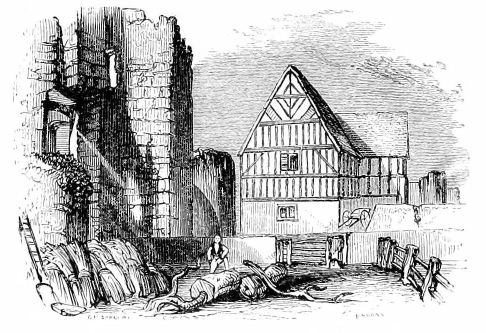
The Stables, which formed so important an object in the establishment of every military baron, were in proportion to the number of his retinue and retainers. The lower story of the building, described as Leicester’s Stables, is of solid stone mason-work. The lofts, or upper story, consist of brick and timber pane-work, each compartment having a diagonal piece of timber in it, carved in rude imitation of the “Ragged Staff,” part of the armorial bearings of the family.
His principal works are thus enumerated:—“The first was the great Gate-house on the north side; for, after having filled up a part of the moat on that side, he made the principal entrance from the north, instead of the south, as it had been originally. He erected a large mass of square rooms at the north-east angle of the upper court, called Leicester’s Buildings, and built from the ground two handsome towers at the head of the pool. The one called Flood-gate, or Gallery Tower, stood at the end of the tilt-yard, and contained a spacious and noble room, from which the ladies might conveniently see the exercises of tilting and other sports. The other was called Mortimer’s Tower, either, as Dugdale thinks, after one that previously stood there, and in which this lord lodged at the round-table festival already mentioned, or because Sir John Mortimer was confined there when a prisoner in the reign of Henry the Sixth. By Leicester, also, the baronial chase, or park, was greatly enlarged. But although his works are of so recent a date, they present, nevertheless, the appearance of great antiquity, owing to the quality of the stone, which, being of a friable nature, is readily acted upon by the weather.”
Leicester’s Buildings, which comprise the lofty range from north-east to south-west, present, even in their present state of dilapidation, the skeleton of a majestic structure, and enable the stranger to form a fair estimate of the splendid accommodation provided for the queen and her court. To correct a popular error, it may be observed that “the great staircase flanked the centre apartment, and that the projecting erection at the south-west angle, usually called the staircase, was a suite of closets or dressing-rooms.” The date of 1571 is cut in stone below the centre window of the east front. To give a general idea of the extent and splendour of this Castle at the time
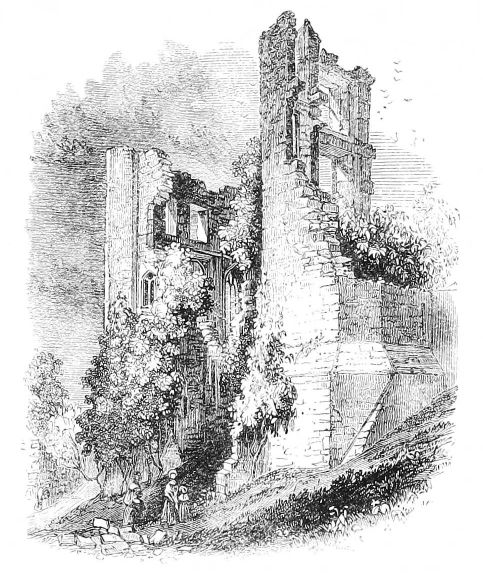
of the queen’s arrival, when it was in the meridian of its strength and beauty, we select the following particulars from the pen of the ‘Great Magician:’—“The outer wall enclosed a space of seven acres, a part of which was occupied by extensive stables, and by a pleasure garden with its trim arbours and parterres, and the rest forming the large base-court, or outer yard, of this noble castle. The lordly structure itself, which rose near the centre of this spacious enclosure, was composed of a huge pile of magnificent castellated buildings, apparently of different ages, surrounding an inner court; and bearing in the names attached to each portion of the magnificent mass, and in the armorial bearings which were there blazoned, the emblems of mighty chiefs who had long passed away, and whose history—could ambition have bent an ear to it—might have read a lesson to the haughty favourite who had acquired, and was now augmenting, this fair domain. A large and massive keep—[that already described as Cæsar’s Tower]—which formed the citadel of the castle, was of uncertain though great antiquity: it bore the name of Cæsar, probably from its resemblance to that in the Tower of London so called. The external wall of this royal castle was, on the south and west sides, adorned and defended by a lake, partly artificial, across which Leicester had constructed a stately bridge, that Elizabeth might enter the castle by a path hitherto untrodden, instead of the usual entrance to the northward, over which he had erected a Gate-house or barbican, which still exists, and is equal in extent, and superior in architecture, to the baronial castle of many a northern chief. Beyond the lake lay an extensive chase, full of red deer, fallow deer, roes, and every species of game, and abounding with lofty trees, from amongst which the extended front and massive towers of the castle were seen to rise in majesty and beauty.” Such was the royal Castle of Kenilworth, when, attended by thirty-one barons, the ladies of her court, and four hundred inferior servants, Queen Elizabeth accepted the hospitality of Robert Dudley, Earl of Leicester.
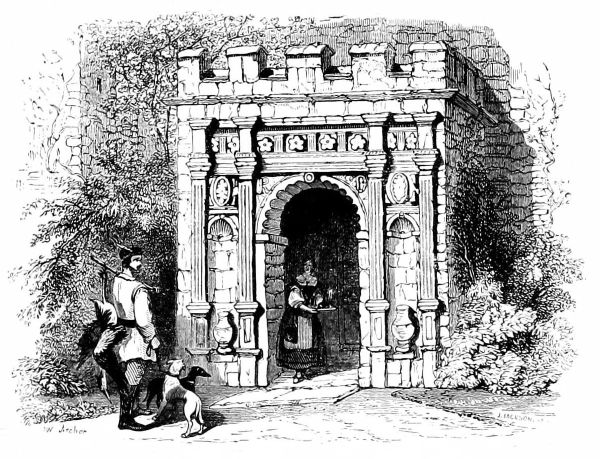
The progresses of the maiden Queen were eminently calculated to inspire lofty ideas of royalty. They were performed with a pomp and circumstance which dazzled the popular eye, drew around her the great and gifted of the land, excited the envy and admiration of foreigners, and, by the splendid hospitality with which she was entertained, insured a free and even profuse circulation of money wherever she halted.
Harrison, after enumerating the Queen’s palaces, adds, “But what shall I need to take upon me to repeat all, and tell what houses the Queen’s Majesty hath? Sith all is hers; and when it pleaseth her in the summer season to recreate herself abroad, and view the estate of the country, and hear the complaints of her poor commons, injured by her unjust officers or their substitutes; every nobleman’s house is her palace, where she continueth during pleasure, and till she return again to some of her own, in which she remaineth so long as she pleaseth.”[201] But in no palace was her Majesty entertained in such gorgeous state as in that of Kenilworth.
It was the twilight of a summer night—the 9th of July, 1575—the sun having for some time set, and all were in anxious expectation of the Queen’s immediate approach. “The multitude had remained assembled for many hours, and their numbers were still rather on the increase. A profuse distribution of refreshments, together with roasted oxen, and barrels of ale set abroach in different places of the road, had kept the populace in perfect love and loyalty towards the Queen and her favourite, which might have somewhat abated had fasting been added to watching. They passed away the time, therefore, with the usual popular amusements of whooping, hallooing, shrieking, and playing rude tricks upon each other, forming the chorus of discordant sounds usual on such occasions. These prevailed all through the crowded roads and fields, and especially beyond the gate of the chase, where the greater number of the common sort were stationed; when all of a sudden, a single rocket was seen to shoot into the atmosphere, and, at the instant, far heard over flood and field, the great bell of the castle tolled.
“Immediately there was a pause of dead silence, succeeded by a deep hum of expectation, the united voice of many thousands, none of whom spoke above their breath; or, to use a singular expression, the whisper of an immense multitude.”
The annexed account is abridged from the “Somerz Progrest, 1575.”
His honour, Robert Dudley, having made her Majesty great cheer at dinner on her halt at Long Ichington, and pleasant pastime in hunting by the way after, it was eight o’clock in the evening ere her Highness came to Killingworth; where, in the park, about a slight shoot from the Brays and first gate of the castle, one of the ten sibyls, comely clad in a pall of white silk, pronounced a proper poezie in English rhyme and metre,—of effect how great gladness her good presence brought into every stead where it pleased her to come; and specially now into that place that had so often longed after the same; and ended with prophecy certain, of much and long prosperity, health, and felicity. This her Majesty benignly accepting, passed forth unto the next gate of the Brays, which for the length, largeness, and use—as well it may so serve—they call now the Tilt-yard, where a porter, tall of person, big of limb, and stern of countenance, wrapt also all in silk, with a club and keys of quantity according, had a rough speech full of passions, in metre, aptly made to the purpose: whereby, as her Highness was come within his ward, he burst out in a great pang of impatience to see such uncouth trudging to and fro, such riding in and out, with such din and noise of talk within the charge of his office; whereof he never saw the like, nor had any warning afore, nor yet could make to himself any cause of the matter. At last, upon better view and advisement, as he pressed to come nearer, confessing anon that he found himself pierced at the presence of a personage, so evidently expressing an heroical sovereignty over all the whole estates, and by degrees there beside, calmed his astonishment, proclaimed open gates and free passage to all, yielded up his club, his keys, his office, and all, and on his knees humbly prayed pardon of his ignorance and impatience: which her Highness graciously granting, he caused his trumpeters that stood upon the wall of the gate there, to sound up a tune of welcome. Which,
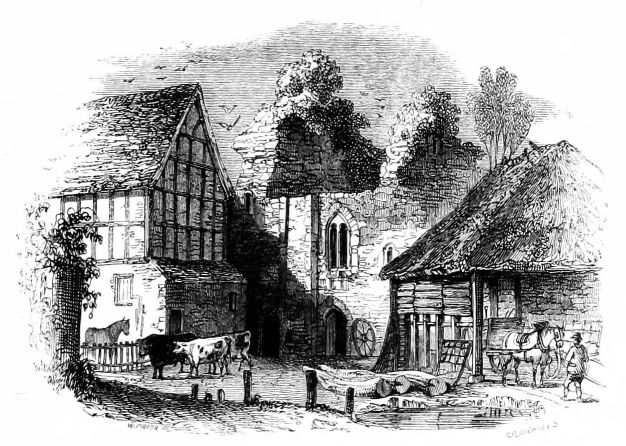
beside the noble noise, was so much the more pleasant to behold, because these trumpeters, being six in number, were every one an eight foot high, in due proportion of person beside, all in long garments of silk suitable, each with his silvery trumpet of five foot long, formed taper ways, and straight from the upper part unto the nether end, where the diameter was sixteen inches over, and yet so tempered by art, that being very easy to the blast, they cast forth no great noise, nor a more unpleasant sound for time and tune, than any other common trumpet, be it never so artificially formed. These harmonious blasters, from the foreside of the gate at her Highness’s entrance where they began, walking upon the walls unto the inner, had this music maintained from them very delectably; while her Highness, all along this tilt-yard, rode under the inner gate, next the base-court of the castle: where the Lady of the Lake, famous in King Arthur’s Book, with two nymphs waiting upon her arrayed all in silks, attended her Highness’s coming. From the midst of the pool, where, upon a moveable island, bright blazing with torches, she, floating to land, met her Majesty with a well-penned metre, and matter after this sort: viz. First of the antiquity of the castle, who had been owner of the same e’en till this day, most always in the hands of the Earls of Leicester; how she had kept this lake since King Arthur’s days; and now, understanding of her Highness’s coming hither, thought it both office and duty, in humble ways to discover her and her estate; offering up the same, her lake and power therein, with promise of repair unto the court. It pleased her Highness to thank this lady, and to add withall, “We had thought indeed the lake had been ours, and do you call it yours now? Well, we will herein commune more with you hereafter.”
This pageant was closed up with a delectable harmony of hautboys, shalms, cornets, and such other loud music, that held on while her Majesty pleasantly so passed from thence toward the castle gate; whereunto from the base-court, over a dry valley cast into a good form, was there framed a fayre bridge of a twenty foot wide, and a seventy foot long, gravelled for treading, railed on either part with seven posts on a side, that stood twelve foot asunder, thickened between with well-proportioned pillars turned. Upon the first pair of posts were set two comely square wire cages, a three foot long, two foot wide; and high in them live bitterns, civileirs, shoovelarz, hearsheawz, godwitz, and such like dainty birds of the presents of Sylvanus, the God of Fowls. On the second pair, two great silver’d bowls, featly apted to the purpose, filled with apples, pears, cherries, filberds, walnuts, fresh upon their branches; and with oranges, pomegranates, lemons, and pippins, all as gifts of Pomona, the Goddess of Fruits. The third pair of posts, in two such silver’d bowls, had (all in ears green and old) wheat, barley, oats, beans, and pease, as the gifts of Ceres. The fourth post against it had a pair of great white silver livery pots for wine; and before them two glasses of good capacity filled full; the one with white wine, the other with claret, so fresh of colour, and of look so lovely, smiling to the eyes of many, that by my faith methought, by their leering, they could have found in their hearts, as the evening was hot, to have kissed them sweetly, and thought it no sin: and these for the potential presents of Bacchus, the God of Wine. The fifth pair had each a fair large tray, strewed with fresh grass; and in them, conger, burt, mullet, fresh herring, oysters, salmon, crevis, and such like, being gifts to her Highness, from Neptune, God of the Sea. On the sixth pair of posts were set two ragged staves of silver, as my Lord gives them in arms, beautifully glittering of armour, thereupon depending, bows, arrows, spears, shield head-pieces, gorget, corslets, swords, targets, and such like, for Mars’ gifts, the God of War. And the more aptly, methought, was it that those ragged staves supported these martial presents, as well because these staves by their tines seem naturally meet for the bearing of armour, as also that they chiefly in this place might take upon them principal protection of her Highness’s person, that so benignly pleased her to take harbour. On the seventh posts, the last and next to the castle, were there pight to faer bay branches of a four foot high, adorned on all sides with lutes, violins, shalms, cornets, flutes, recorders, and harps, as the presents of Phœbus, the God of Music, for rejoicing the mind, and also of physic, for health to the body. Over the castle gate was there fastened a table, beautifully garnished above with her Highness’s arms, and featly with ivy wreathes bordered about, of a ten foot square; the ground black, whereupon in large white Roman capitals, fayr written, a poem mentioning these gods and their gifts, thus presented unto her Highness: which, because it remained unremoved, I took it out as followeth:—[Each word in reference to the Queen was written in gold.]—
Ad Majestatem Regiam. Jupiter huc certos cernens te tendere gressus Cœlicolas Princeps actutum convocat omnes; Obsequium præstare jubet tibi quemque benignum. Unde suas Sylvanus aves, Pomonaque fructus, Alma Ceres fruges, hilarantia vina Lyæus, Neptunus pisces, tela et tutantia Mavors, Suave melos Phœbus, solidamque longamque salutem. Dii tibi, Regina, hæc (cum sis Dignissima) præbent; Hoc tibi cum Domino, dedit se et werda Kenelmi.
This was read to her by a poet, “in a long ceruleous garment, with a bay garland on his head, and a skro in his hand. So passing into the inner court, her Majesty (that never rides but alone), thear set down from her palfrey,
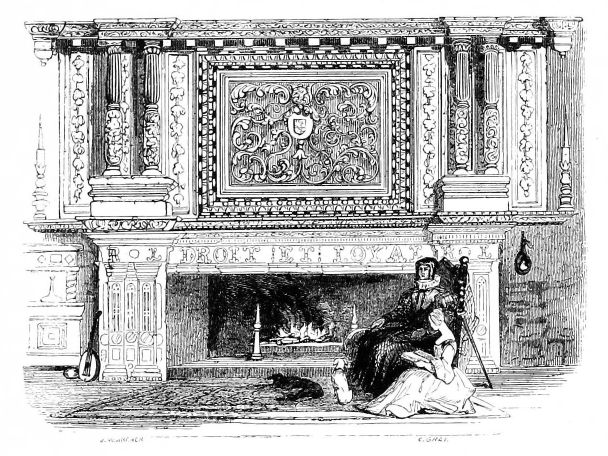
was conveied up to Chamber[202] [in which stood a splendid Chimney-piece], when after did follo a great peal of gunz, and lightning by fyrwork.”—Progrest.
The festivities lasted seventeen days, and comprised nearly every pastime which the resources of the age could produce. The hart was hunted in the park; the dance was proclaimed in the gallery; and the tables were loaded from morn to midnight with sumptuous cheer. The park was peopled with mimic gods and goddesses, to surprise the regal visitant with complimentary dialogues and poetical representations. In the chase, a savage man, with satyrs, bear-baitings, fireworks, Italian tumblers, a country bride-ale, with runnings at the quintain and morrice-dancing; and that nothing might be wanting which those parts could afford, the Coventry men came and acted the ancient play, long since used in that city, called “Hock’s Tuesday,”[203] setting forth the destruction of the Danes in King Ethelred’s time; which pleased the Queen so much, that she gave them a brace of bucks, and five marks in money, to bear the charges of a feast. Likewise on the pool there was a Triton, riding on a mermaid, eighteen feet long; as also Arion, on a dolphin; and rare music. The costs and expenses of these entertainments may be guessed at by the quantity of beer then drank, which amounted to three hundred and twenty hogsheads of the ordinary sort. More simple amusements were also studiously introduced: the rural neighbours were assembled to run at the quintain; and a marriage, in strict consistency with country ceremonials, was celebrated under the observance of the Queen. Every hour had its peculiar sport. A famous Italian tumbler displayed feats of agility; morris-dancers went through their rude evolutions, by way of interlude; and thirteen bears were baited for the gratification of the courtiers! During the Queen’s stay, five gentlemen were honoured with knighthood, and “nyne persons were cured of the peynful and daungerous deseaz called the King’s Evil.”—Letter from a freend officer attendant in the coourt unto his freend a citizen and merchaunt of London, in this Somerz Progrest, 1575.
After this splendid reception given to her Majesty at Kenilworth, and which cost the noble host a thousand pounds per diem, Leicester continued to make the Castle his favourite residence. At his death he bequeathed it to his brother
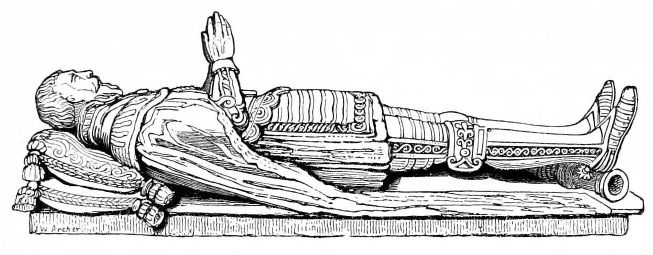
Ambrose Earl of Warwick for life, and after him to his own son Sir Robert Dudley, who wandered abroad till his father’s death, when he returned, and challenged his right to the family dignities; which being denied, he determined to quit for ever a country in which he had experienced so much injustice. To complete this long scene of iniquity, James I. seized the estates by virtue of Mary’s statute of fugitives; but, in order to avoid the odium which so tyrannical an act justly merited, obliged Sir Robert to consent to a nominal sale of them to Henry Prince of Wales, at one third of their value, and even that was never paid. Thus this great property was unjustly drawn back to the same source from which, with so little merit, it had been originally derived.—See Lodge’s Illustrations of British History.—Letters.
Survey by the King’s Commissioners. The following survey of Kenilworth Castle and the demesne thereto adjoining, which was made at this time, conveys a splendid idea of a baronial residence. (Our authority is Dugdale.) The Castle is described as situated on a rock; the circuit whereof within the walls containeth seven acres; and upon the walls are walks so spacious and fair, that two or three persons together may walk upon most places thereof. The Castle and the four gatehouses are all built of freestone, hewn and cut: the walls in many places are ten and fifteen feet in thickness, some more, some less, the least four feet. The Castle and the four gatehouses aforesaid are all covered with lead, whereby it is subject to no other decay but the glass, through the extremity of the weather. The rooms of great state within the same are able to receive his Majesty, the Queen and Prince at the same time, and are built with as much uniformity and convenience as any houses of later times, and with such stately cellars (the Undercroft or Nether-hall already noticed) as are not within this kingdom, and also all other houses for offices answerable. About the said Castle, in chases and parks, there lieth twelve hundred pounds per annum; nine hundred whereof are grounds for pleasure, the rest is meadow and pleasure lands thereunto adjoining, tenants and freeholders. There joineth upon this ground a park-like ground called the King’s Wood, with fifteen several coppices lying together, containing seven hundred and eighty-nine acres within the same, which in the Earl of Leicester’s time were stored with red deer, since which the deer have strayed. But the ground is in no sort blemished, having great store of timber and other trees of much value upon the same. There runneth through the said grounds, by the walls of the Castle, a fair pool, containing one hundred and eleven acres, well stored with fish and wild fowl, which pool is at pleasure to be let round the Castle.
For timber and wood upon the ground to the value of twenty thousand pounds has been offered, having a convenient time allowed for their removal, but which, to his Majesty, are valued at eleven thousand seven hundred and twenty-two pounds; which proportion, in a like measure, is held in all the rest upon the other values to his Majesty. The circuit of the castle, manors, parks, and chase, lying round together, contains at least nineteen or twenty miles, in a pleasant country; the like both for strength, state, and pleasure, not being within the realm of England.
These lands have been surveyed by Commissioners from the King and the Lord Privy Seal, with directions from his Lordship to find all things under their true worth,[204] and upon the oaths of jurors, as well freeholders as customary tenants; which course being held by them, are, notwithstanding, surveyed and returned at thirty-eight thousand five hundred and fifty-four pounds fifteen shillings. Out of this sum there is to be deducted ten thousand pounds for Sir Robert Dudley’s ‘Contempt,’ and for the Lady Dudley’s jointure, which is without impeachment of waste, whereby she may sell all the woods, which by their survey amount to eleven thousand seven hundred and twenty-two pounds. His Majesty hath herein the mean profits of the castle and premises, through Sir Robert Dudley’s ‘Contempt,’ during life, or his Majesty’s pardon, the reversion in fee being in the Lord Privy Seal.—See References.
It may be readily imagined that a castle with so many powerful recommendations was not lost sight of by the King and his advisers; and as Prince Henry was in want of a country palace befitting his name and station, that of Kenilworth was at once suggested to him as possessing every requisite for a princely residence. But independently of that splendour to which it had been raised by the late Earl of Leicester, the Castle was strongly associated with the lives and actions of former sovereigns, who had either made it their residence, or the scene of alternate conflict or festivity, from the days of Henry the First to those of Elizabeth. Enhanced by these recommendations, it was an object of ambition with the prince to obtain possession of it, and with this view, “affecting it as the noblest and most magnificent thing in the midland
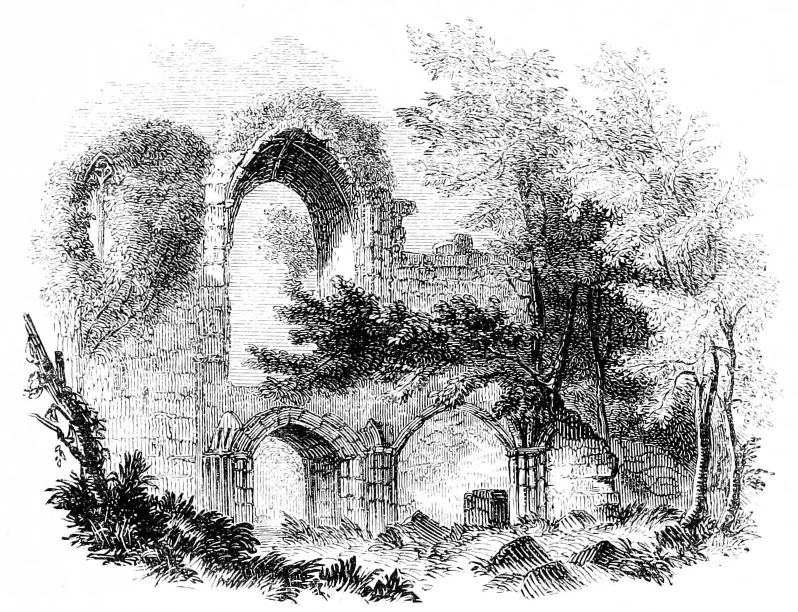
parts of this realm, he made overture by special agents” to Sir Robert Dudley, to purchase the castle and domain for a sum not exceeding fourteen thousand five hundred pounds. This was probably not more than one-fourth of its value; but as the offer came from a quarter where he could expect little favour, and seeing no prospect of his being ever restored to his paternal inheritance, the unfortunate heir was driven to the painful alternative of either disposing of his right for the sum offered, or of provoking by non-compliance the resentment of the Court. “Whereupon, in consideration of £14,500 being paid within the compass of a twelvemonth, certain deeds were sealed and fines levied, settling the inheritance thereof.”
Having completed the transfer, the last hope was abandoned, and Dudley resolved never to return to a country in which he had received such manifest injustice. The conditions were, that three thousand pounds should be paid within a twelvemonth after the ratification of the transfer; but the money, which was to have been remitted to him at Florence in Italy, was lost by the failure of the merchant in whose hands it had been incautiously placed. Of the remaining sum of eleven thousand five hundred, nothing was ever paid; yet on the death of Henry the Prince of Wales, his brother Charles took possession of the castle and manor as heir to his brother, and obtained a grant out of the Exchequer for four thousand pounds to be paid to the Lady Alice, wife of Sir Robert Dudley, in lieu of her jointure, but which was not paid for many years, to the damage of the said lady. It remained thus in the possession of Prince Charles till his accession to the throne: after which, in the first year of his reign, he made a grant of it to Robert Carey, Earl of Monmouth, Lord Carey, his eldest son, and Thomas Carey, Esq., in whose hands it continued till—
“Teint du sang de son Roi, l’hypocrite Cromwell Etablit, par degrés, son pouvoir criminel: Usurpateur habile autant que politique, De l’état qu’il transforme en une république, Il renverse à son gré les anciens fondemens.”—Fastes Britann.
Having then fallen into the hands of Oliver, the castle and manor were divided amongst several of his officers, who, paying no respect either to the splendour of the edifice, the richness of the furniture, or the beauty of the landscape in which the castle was embosomed, regarded it only in a pecuniary point of view; and apprehensive, probably, that their tenure was very insecure, made haste to convert everything available into money. They stript the castle of its princely decorations, cut down the timber, drained the lake, and demolished the very walls for the sake of the materials. They threw open the park and chase, killed and dispersed the deer, and subdivided the whole into distinct farms, the rental of which they continued to receive and appropriate to their own use till the Restoration. These officers were Colonel Hawkesworth, Major Creed, Captain Phipps, Captain Ayres, Captain Smith, Captain Matthews, and four others, of the names of Hope, Palmer, Clark, and Coles. “These new lords of the manor,” says the old record of that day, “tyrannize and govern the parish as they list. They pull down and demolish the castle, cut down the King’s woods, destroy his parks and chase, and divide the lands into farms amongst themselves, and build houses for themselves to dwell in. Hawkesworth seats himself in the gate-house of the castle, and drains the famous pool, consisting of several hundred acres of ground. Hope and Palmer enclose a fourth part of the commons, called the King’s woods, from the inhabitants, and take it as their own free estate. In 1657 these petty lords, attended by some of the inhabitants of the parish, took a survey, and gave in an estimate of all the lands within the liberties of the said manor, and in the following year, on the fourteenth of June, made their perambulation, and went their procession round the bounds of the parish. But, on the twenty-seventh of May, 1660, King Charles the Second came to enjoy his own dominions, and among others the lands and manor of Kenilworth. Hereupon these soldiers soon scampered away, when the daughters of Lord Carey, Earl of Monmouth, intercede and prevail to hold that said manor, as their father before them, by lease or leases from the Crown.” But this having nearly expired, he granted the reversion of the whole manor to Laurence, Lord Hyde, second son to Lord Chancellor Clarendon, whom he created Baron Kenilworth and Earl of Rochester. On the death of this nobleman in 1711, he was succeeded in his estates and titles by Henry his only son, who, at the death of Edward, the third Earl of Clarendon, in 1723, succeeded to that title also. But leaving no male issue at his decease in 1753, his grand-daughter, the Lady Charlotte Capel—daughter of William Capel, Earl of Essex, and the Lady Jane Hyde, his wife, then dead—became the representative of the Hyde family, and, in pursuance of the will of the late earl, took the name and arms of Hyde. This lady married the Honorable Thomas Villiers, second son of the Earl of Jersey, who in 1756 was created, by George the Second, Baron Hyde of Hindon, in the county of Wilts. He
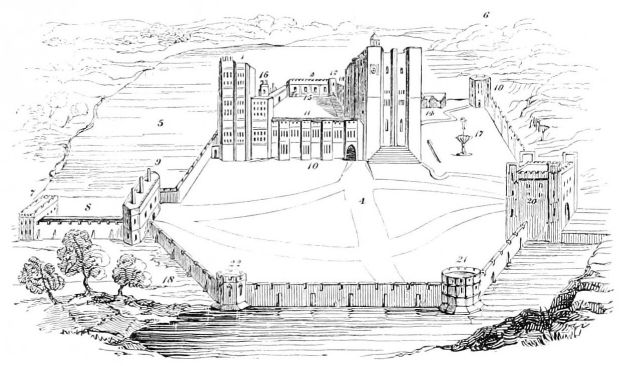
See Appendix.
had the further title of Earl of Clarendon conferred upon him by George the Third, and, at his death in 1786, was succeeded by his eldest son the late earl, whose family honours are inherited by his nephew, George William-Frederick Villiers, Earl of Clarendon, Lord Hyde of Hindon, a Count of Prussia, and sometime envoy and minister plenipotentiary at the Court of Madrid. Such is a brief outline of the descent of Kenilworth Castle, and of the many changes which it has undergone during the lapse of seven centuries.
“Illustrious Ruin! hoary Kenilworth! Thou hast outlived the customs of thy day; And, in the imbecility of age, Art now the spectacle of modern times. Yet though thy halls are silent, though thy bowers Re-echo back the traveller’s lonely tread, Again imagination bids thee rise In all thy dread magnificence and strength; Thy draw-bridge, foss, and frowning battlements, Portcullis, barbican, and donjon-tower.”
In addition to the particulars already stated regarding the life and character of that extraordinary individual, Robert, Earl of Leicester, we avail ourselves of the following facts, as related by various writers who were his contemporaries, and founded their judgment on close personal observation. During the life of his father, the Duke of Northumberland, the first appointment which he received at Court, and to which he was duly sworn, was that of one of the six gentlemen in ordinary to Edward the Sixth. “But,” says Hayward in his life of that monarch, “this Robert Dudley was his father’s true heir, both of his hate against persons of nobility, and cunning to dissemble the same; and afterwards for lust and cruelty a monster of the Court; and as he was apt to hate, so was he a true executioner of his hatred; such was his, rather by practice than by open dealing, as wanting rather courage than wit; and,” adds the same authority darkly, “after his entertainment into a place of so near service (that of the privy chamber), the king enjoyed his health not long.” (Sir John Hayward’s Life of Edward the Sixth.) But although included in the sentence of attainder pronounced against his family, he soon emerged from obscurity, and by the very hand which had signed his father’s execution, he was made master of the Queen’s horse at the battle of St. Quentin’s, an office which was also confirmed to him by Elizabeth, who—to the surprise of many, and the disgust of all who knew his real merits—loaded him with honours. He was installed a Knight of the Most Noble Order of the Garter, made Constable of Windsor Castle for life, and finally recommended as a husband to Mary, Queen of Scots; promising, that on the Queen’s assenting thereto, she, Elizabeth, would then, by authority of Parliament, declare her to be her sister or daughter, and heir to the crown of England, in case she herself should die without issue. Her real intentions, however, are matter of suspicion; and those who were best acquainted with the policy of the Maiden Queen, thought that all this show was merely to try if the proposal would be accepted, and then to marry him herself with less dishonour. (See Appendix.)
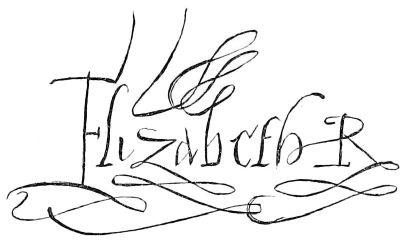
To give further weight to this recommendation, she advanced him to the dignity of the peerage with the title of Baron Denbigh, and the very day following, being Michaelmas-day, she raised him to the Earldom of Leicester. But the French nation esteeming it dishonourable that such an alliance should be offered to Queen Mary, urged the Scotch authorities to decline it,—promising the nation many advantages in return, and suggesting that Elizabeth had no real intention of ever allowing the match to be carried into effect (Dugdale), a suspicion which appears to have been correctly founded. In compliment to Elizabeth, with whom Dudley was now the chief favourite, Charles the Ninth conferred upon him the Order of St. Michael. No Englishman had ever been admitted into this Order before, except Henry the Eighth, Edward the Sixth, and Charles Brandon, Duke of Suffolk, which made the Queen “look upon it as a considerable honour.” The ambassador charged with this complimentary office was M. Rambouillet; and the Queen having selected from the noblemen of her Court the Duke of Norfolk and the Earl of Leicester—the one distinguished by his high birth, the other by her Majesty’s favour—as candidates for the honour, they were invested in the Royal Chapel at Whitehall with great solemnity. But the more that honours were showered upon Leicester, the more was he exposed to the contempt of the old nobility, who felt as if their own degradation at Court was in exact proportion to his advancement. This was not disguised by the Earl of Sussex, who piqued himself much in the antiquity of his house, and could ill brook to see the Queen’s favour lavished on a parvenu. “Who,” said he, “is this Earl of Leicester? He can name but two ancestors, and both were executed for treason!” This language—which was the more galling from its truth—divided the whole Court into factions; and whenever the two earls went abroad, they were attended with a large retinue of followers, armed with “swords and bucklers, with iron pikes pointing out at the bosses,” insomuch that the Queen was compelled to interpose her authority, when the breach was seemingly made up. But Sussex never overcame his aversion to Leicester; and even in his last illness addressed his friends in these words: “I am now passing into another world, and must leave you to your fortunes and to the Queen’s grace and goodness; but beware of the ‘Gypsie’ (meaning Leicester), for he will be too hard for you all: you know not the beast so well as I do.”
Leicester, continuing to advance in favour, was one of the peers appointed for the trial of the Duke of Norfolk; and four years afterwards, when Walter, Earl of Essex, died in Ireland by “no common death,” it was much suspected that he had a hand in it; which is the more probable, as from that time he forsook his wife, the Lady Douglas Sheffield, by whom he had a son, Robert, already mentioned, and promised her much money and other advantages in case she would be content therewith, and so married Lettice, daughter of Sir Francis Knolles, and widow of the Earl of Essex, “to whom,” says Dugdale, “he had privately borne much affection before.”
The death of Essex, “in the midst of incredible torments,” was attributed to poison. Two of his own servants, Crumpton his cupbearer, and Lloyd his secretary, are reported to have been confederates in the murder; and it is said that Mrs. Alice Dracot, a pious lady, whom the earl much valued, was accidentally poisoned at the same time and with the same cup, and died a few days before him. It is farther alleged that his lordship’s page, who was accustomed to taste of his drink before he gave it to him, very hardly escaped with his life, and not without ‘the loss of his hair,’ though he drank but a small quantity; and that the earl, in compassion to the boy, called for a cup of drink a little before his death, and drank to him in a friendly manner; and says he, “I drink to thee, my Robin; but ben’t afraid, ’tis a better cup of drink than that thou tookest to taste when we both were poisoned.” (Secret Memoirs of the Earl of Leicester.) This report was formally contradicted by Sir Henry Sidney, the Lord Deputy of Ireland; but the suspicion of Leicester’s being privy to the death of Essex was never removed; and the facts of his previous intimacy and subsequent marriage with the countess added no little strength to the charge.
When the marriage between the Queen and the Duke of Anjou was first suggested at Court, he opposed it with all his influence, public and private, and had the satisfaction of attending that prince on his hasty departure from the English Court. But on his return, the elevation at his success was not a little damped by the discovery that his marriage with the Lady Lettice had been communicated to the Queen by Simier, the French minister, in revenge of the defeated plans of the Duke of Anjou. Greatly incensed at this act of duplicity, and piqued with jealousy of the lady, Elizabeth caused the Earl to be shut up in the Castle of Greenwich, as a prelude to his being sent to the Tower. Charging all these misfortunes to the conduct of Simier, he indulged the wildest passion for revenge; but the rigour of his confinement was soon moderated; the Queen relented; and the only results were greater honours, more unlimited confidence, which proved that Dudley held no secondary place in the heart of the Queen.
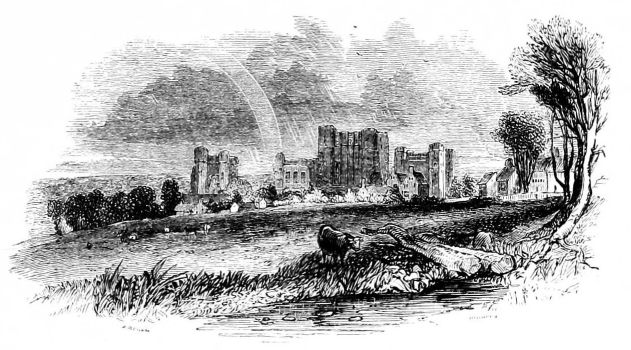
It was in his Castle of Kenilworth that Leicester first married Lady Essex privately; but her father, Sir Francis Knolles, being well acquainted with his lordship’s inconstancy, refused to give any credit to it unless the marriage were solemnised in his own presence. In consequence of this resolution, the ceremony was again performed at Wanstead, in presence of the said Sir Francis, the Earl of Warwick, the Lord North, a public notary, and several other witnesses. On the publication of marriage, his former wife, the Lady Douglas, in “order to secure her life from any future practices,” contracted a marriage with Sir Edward Stafford, a man of high character and reputation, and at that time Her Majesty’s ambassador in France. This step was peremptorily called for, as she laboured under constant apprehension of being made away with by Leicester; for it is certain, according to Dugdale, that she had already “some ill potions given to her,” so that, with the loss of her hair and nails, she narrowly escaped death.
Some time before the arrival of Simier with overtures from the Duke of Anjou, Leicester had engaged Astley, one of the Queen’s bedchamber, to search out her disposition towards him, and had met with an unfavourable answer. For when he was covertly recommended to her Majesty for a husband, she replied in a passion—“Do you think that in choosing a husband I should be so regardless of my character, so unmindful of my royal dignity, as to prefer my servant whom myself have raised, to the greatest princes of Christendom?” These words being reported, were thunderbolts to the Earl of Leicester; who now perceived that, should he interpose in the affair of the French match, his opposition would be construed to proceed from interested motives, and might be a means to promote rather than prevent it. He therefore chose to withdraw himself from public view, to counterfeit sickness and retire to his chamber; and there, under pretence of taking physic, he became a voluntary prisoner.
In 1585, he was made Justice-eyre of all the Forests south of Trent. He received a commission for levying five hundred men to be sent into Holland; and three weeks afterwards, he was constituted Lieutenant and Captain-General of the whole army designed for the service of the United Provinces against the Spaniards, and the same year took the command in person. In little more than a year, however, many grave charges were brought against him by the States for having abused his authority, and neglected the due performance of the high trusts reposed in him. Greatly mortified at these complaints, which, besides wounding his vanity, had a tendency to weaken his influence at Court, he affected disgust at the injustice inflicted upon him, and made his last will and testament at Middleburg, as a preparation for his retiring altogether from the public service. The contents of this will, dated the 1st of August, 1587, have been already mentioned.
On his return to England, he found that the complaints lodged against him by the Dutch had so moved the Queen’s displeasure, that “he was constrained to humble himself to his royal mistress, and with tears to beg of her, that, having sent him thither with power, she would not receive him back with disgrace; that whom she had raised from the dust, she would not bury alive!” The Queen was moved by this strain of courtly pleading, and the influence of the favourite became greater than ever. The last public service in which Leicester was engaged was with the army at Tilbury, when the Spanish Armada was expected to make a landing, and when the Queen, in addressing the troops, did him honour in these terms: “In the meantime, my Lieutenant-General shall be in my stead, than whom never prince commanded a more noble or worthy subject; not doubting but by your obedience to my General, by your concord in the camp, and by your valour in the field, we shall shortly have a famous victory over the enemies of my God, of my kingdoms, and of my people.” But, notwithstanding her Majesty’s commendation, there was no opportunity for his lordship to exert his abilities; for the Spanish army never landed on the English shore—the elements performed all the service which was to have devolved on Leicester.
Having thus concluded his public career, he designed to spend the remainder of his days in his Castle of Kenilworth, on which he had continued to expend all the resources of art; but, taken suddenly ill of a fever at Cornbury Park, in Oxfordshire, he there closed his earthly account, on the 4th of September. From Cornbury Park his remains were conveyed with much pomp to Warwick, and there interred, in our Lady’s Chapel, adjoining the choir of the Collegiate Church, where a very noble monument was erected to his memory, with the following inscription:—
Deo Viventium S.
Spe Certa Resurgendi In Christo Hic Situs Est Illustrissimus Robertus Dudleyus, Johannis Ducis Northumbriæ, Comitis Warwicki, Vice-Comitis Insulæ, &c., Filius Quintus, Comes Leicestriæ, Baro Denbighæ, Ordinis Tum S. Georgii Cum S. Michaelis Eques Auratus, Reginæ Elizabethæ (Apud Quam Singulari Gratia Florebat) Hippocomus Regiæ Aulæ, Subinde Seneschallus, Ab Intimis Conciliis; Forestarum, Parcorum, Chacearum, &c. Citra Trentam Summus Justificarius; Exercitus Anglici A Dicta Regina Elizabetha Missi In Belgio, Ab Anno MDLXXXV. Ad Annum MDLXXXVII. Locum Tenens Et Capitaneus Generalis; Provinciarum Confederatarum Ibidem Gubernator Generalis Et Præfectus, Regnique Angliæ Locum Tenens Contra Philippum II. Hispanum, Numerosa Classe Et Exercitu Angliam Anno MDLXXXVIII. Invadentem. Animam Deo Servatori Reddidit, Anno Salutis MDLXXXVIII., Die Quarto Septembris. Optimo Et Charissimo Marito, Mœstissima Uxor Leticia, Francisci Knolles Ordinis S. Georgii Equitis Aurati, Et Regiæ Thesaurarii, Filia, Amoris Et Conjugalis Fidei Ergo Posuit.
It is said that the Earl died much in the Queen’s debt, and that her Majesty caused his goods to be sold at a public sale, that payment might be made; for “however favourable,” says her biographer, “she might have been in all other respects, the Queen is observed never to have remitted the debts that were owing to her treasury.”
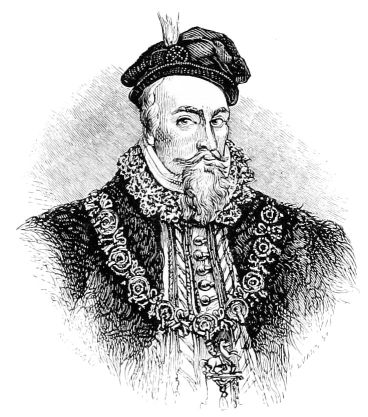
The generally received account is, that his death was occasioned by his having swallowed a draught of poison, which had been designed by him for another person: a just stroke of retribution for the lives which—as there were strong grounds to suspect—had been cut short by his employment of the like means. In a curious manuscript copy of the information given by Ben Jonson to Drummond of Hawthornden, as abridged by Sir Robert Sibbald, Leicester’s death is ascribed to poison administered as a cordial by his Countess, to whom he had given it, representing it to be a restorative in any faintness, in the hope that she herself might be cut off by using it. It may be here added, that the following satirical epitaph on Leicester occurs in Drummond’s Collections, but is “evidently,” says Scott, “not of his composition:”—
Epitaph on the Erle of Leister. Here lies a valiant warrior, Who never drew a sword; Here lies a noble courtier, Who never kept his word; Here lies the Erle of Leister, Who govern’d the estates, Whom the earth could never living love, And the just heaven now hates. “Kenilworth,” Vol. ii. 397.
The character of Leicester is thus summed up by Camden in his Annals of Elizabeth:—“He was esteemed a most accomplished courtier, free and bountiful to soldiers and scholars; a cunning time-server and respecter of his own advantages; of a disposition ready and apt to please; crafty and subtle towards his adversaries; much given formerly to women, and in his latter days doating extremely upon marriage. But, whilst he preferred power and greatness, which are subject to be envied before solid virtue, his detracting emulators found large matter to speak reproachfully of him, and, even when he was in his most flourishing condition, spared not disgracefully to defame him by libels, not without a mixture of some untruths.” But, “to take him in the observation of his letters,” says Sir Robert Naunton, “I never saw a style or phrase more seeming religious and fuller of the strains of devotion, had they been sincere!”—Dugd. Bar.; Camden’s Annals; Secret Mem. of Robert Dudley.
The following particulars of Sir Robert Dudley, who was so unjustly deprived of his rightful inheritance, may be new to some of our readers. His life is a striking instance of the vicissitudes to which every condition of society, and more particularly that of the patrician order, was exposed, during the period in question. He was educated at Christ Church, Oxford, and is said to have been a profound mathematician, and master of other acquirements, which he had afterwards an opportunity of turning to good purpose abroad. His earliest service was in 1595, when he had the command of three small ships, with which he took and destroyed nine Spanish traders freighted with wine. The following year he served under the Earl of Essex in the expedition to Cadiz, where he displayed so much characteristic gallantry and prudence, that he received from her Majesty the honour of knighthood; and was justly esteemed among his companions in arms, as a soldier who possessed in no ordinary degree the virtues of wisdom and prowess.
Soon after this, in a voyage to the West Indies, he called an island in the mouth of the river Orinoco, after his own name, Dudleyana. In the will of his father, the “favourite Dudley,” he is pronounced illegitimate—“my base son;” but notwithstanding this paternal stigma, there is every ground to believe that he was born in wedlock: for it appeared by depositions afterwards taken on oath in the Star Chamber, that the Earl of Leicester had been lawfully married to his mother, the Lady Douglas Sheffield, by a clergyman, according to the form prescribed by the Church of England. But by the interest of the Lady Letitia, widow to the Earl of Essex, whom Leicester had married some time before his death, these depositions were ordered to be sealed up by the Clerk of the Court, and never more to be seen or published; whilst at the same time a censure was passed upon the deponents as having entered into a conspiracy to defame the Dowager Lady Leicester, and unjustly to entitle Sir Robert Dudley to the honours which had been enjoyed by his ancestors. The unfairness, the palpable injustice of such proceedings, filled his mind with such disgust, that he determined, as already mentioned, to abandon the country of his birth; and having obtained the King’s permission to travel for three years, proceeded to Italy, where he took up his residence in the Tuscan capital with “the style of Earl of Warwick.” But having left several enemies at home, who watched every opportunity to wrest from him his princely inheritance of Kenilworth, his absence was construed into disaffection;
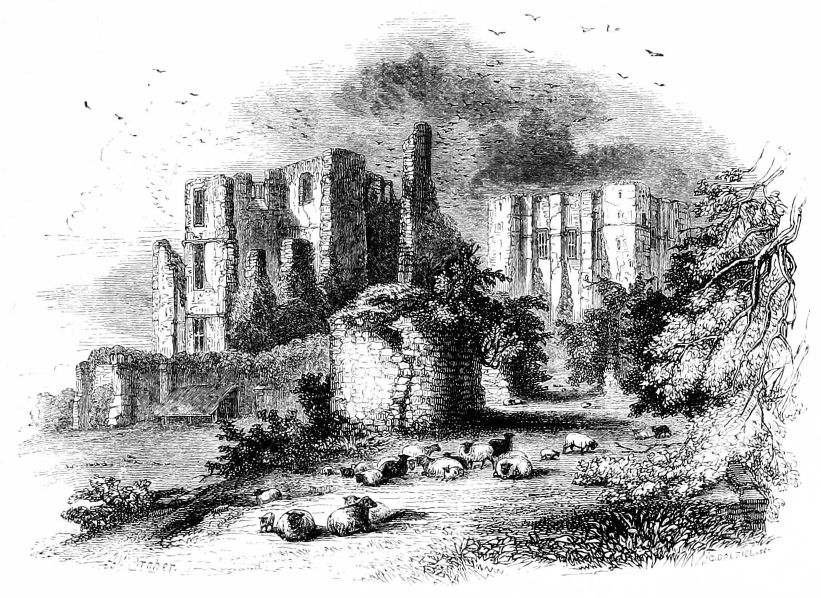
and a special Privy Seal being obtained for that purpose, he was commanded to return home forthwith. But fully aware of the motive which actuated the King’s advisers, and of the annoyance and mortification which awaited him, he evaded the summons, and resolved to continue in exile beyond the Alps. Advantage was immediately taken of his contumacy, and by the “statute of fugitives,” his lands were seized in the manner already described in the survey, and the mesne profits of them applied to the King’s use.
There is a romantic story told of this Sir Robert—the last of the Dudleys of Kenilworth—which mentions, that on quitting England he carried off with him the beautiful daughter of Sir Robert Southwell, in the habit of a Page.[205] The lady had long been the object of his admiration; but as the legal proceedings instituted against him were calculated, however unjustly, to strip him of his inheritance and degrade him in his station, the family of the lady were naturally averse to the alliance, and took all necessary precautions to break off the intimacy which had hitherto existed between the parties. Driven to the necessity of expedients, where the open and honourable profession of his attachment had been rejected with coldness or even disdain, the knight employed stratagem; and having arranged a stolen interview with the lady, had no great difficulty in persuading her to quit an ungrateful country, and with him to seek refuge in that southern land where he was sure of a welcome, and where, at least, they would be far beyond the reach of both kingly and paternal despotism. How these arguments were received by the lady may be readily understood by the fact, that, within a few days after this interview, Sir Robert Dudley, accompanied by a beautiful page, had embarked for Italy.
It is not our province to detail the adventures which befell this “Lara” of his time, and his gentle page by the way; but on their reaching the Tuscan Athens, the page had suddenly disappeared, no person of his small retinue knew how. In the venerable church of the Santa Croce, however, preparations were observed as if for some religious solemnity; and in the evening of the feast of St. George, Dudley communicated to his immediate friends and attendants, that he should that evening lead a bride to the altar, and invited them to partake of the supper which had been prepared at his quarters in the Piazza della Trinità. The mere announcement of his marriage excited no particular surprise; for inheriting the manly figure, the courtly manners, and elegant accomplishments of his father, whom the maiden Queen of England had so “delighted to honour,” it was readily surmised that some signora, with the old Etruscan blood in her veins, had made a conquest of the English knight: and yet the name of the lady was a profound secret, which puzzled as much the learned cognoscenti as it did the simple contadini, whom the rumour of “English espousals” had drawn to the square in front of the church. But the mystery was speedily solved; for the procession was already under the porch of the sacred temple, and on kneeling at the altar it was no difficult matter to recognize in the lovely bride, the peerless features of Blanche Southwell—the faithful page of the exiled Robert Dudley.