Volume 2 — TALE OF KING OMAR BIN AL-NU'UMAN AND HIS SONS SHARRKAN AND ZAU AL-MAKAN, AND WHAT BEFEL THEM OF THINGS SELD-SEEN AND PEREGRINE.[138] (continued 4)
Richard Francis Burton translation
Now when it was the Eighty-third Night,
She said, It hath reached me, O auspicious King, that the Wazir Dandan continued to Zau al-Makan:—Now, quoth the fifth damsel to thy sire, "When Moses (on whom be peace!) entered the home of Shu'ayb where supper was ready, Shu'ayb said to him, O Moses, I desire to pay thee thy wage for having drawn water for these two. But Moses answered, I am of a household which selleth nothing of the fashion of the next world[363] for what is on earth of gold and silver." Then quoth Shu'ayb, O youth! nevertheless thou art my guest, and it is my wont and that of my forbears to honour the guest by setting food before him. So Moses sat down and ate. Then Shu'ayb hired Moses for eight pilgrimages, that is to say, eight years, and made his wage marriage with one of his two daughters, and Moses' service to him was to stand for her dowry. As saith the Holy Writ of him:—Verily I will give thee one of these my two daughters in marriage, on condition that thou serve me for hire eight pilgrimages: and if thou fulfil ten years, it is in 207thine own breast; for I seek not to impose a hardship on thee.[364] A certain man once said to one of his friends whom he had not met for many days:—Thou hast made me desolate, for that I have not seen thee this long while. Quoth the other, I have been distracted from thee by Ibn Shiháb: dost thou know him? Quoth his friend, Yes, he hath been my neighbour these thirty years, but I have never spoken to him. He replied, Verily thou forgettest Allah in forgetting thy neighbour! If thou lovedst Allah thou wouldst love thy neighbour. Knowest thou not that a neighbour hath a claim upon his neighbour,[365] even as the right of kith and kin? Said Huzayfah, "We entered Meccah with Ibráhím bin Adham, and Shakik al-Balkhí was also making a pilgrimage that year. Now we met whilst circumambulating the Ka'abah and Ibrahim said to Shakik, What is your fashion in your country? Replied Shakik, When we are blest with our daily bread we eat, and when we hunger we take patience. This wise, said Ibrahim, do the dogs of Balkh; but we, when blest with plenty, do honour to Allah and when an-hungered we thank Him. And Shakik seated himself before Ibrahim and said to him, Thou art my master. Also said Mohammed bin Imrán, A man once asked of Hátim the Deaf[366] What maketh thee to trust in Allah? Two things, answered he, I know that none save myself shall eat my daily bread, so my heart is at rest as to that; and I know that I was not created without the knowledge of Allah, and am abashed before Him." Then the fifth damsel retired and the ancient dame came forward and, kissing the ground before thy father nine times, said, "Thou hast heard, O King, what these all have spoken on the subject of piety; and I will follow their example in relating what hath reached me of the famous men of past times. It is said that the Imam al-Sháfi'í departed the night into three portions, the first for study, the second for sleep and the third for prayer. The Imam Abú Hanífah[367] was wont also to pass half the night in prayer. One 208day a man pointed him out to another, as he walked by and remarked, Yonder man watcheth the whole night. When he heard this Abu Hanifah said, I was abashed before Allah to hear myself praised for what was not in me; so after this he used to watch the whole night. And one of the Sages hath said:—
Who seeketh for pearl in the Deep dives deep; ✿ Who on high would hie robs his night of sleep.
Al-Rabí a relates that Al-Shafi'i used to recite the whole Koran seventy times during the month of Ramazán, and that in his daily prayers. Quoth Al-Shafi'i (Allah accept him!), During ten years I never ate my fill of barley-bread, for fullness hardeneth the heart and deadeneth the wit and induceth sleep and enfeebleth one from standing up to pray.[368] It is reported of Abdullah bin Mohammed al-Sakrá that he said, I was once talking with Omar and he observed to me, Never saw I a more God-fearing or eloquent man than Mohammed bin Idris al-Sháfi'í. It so happened I went out one day with Al-Háris bin Labíb al-Saffár, who was a disciple of Al-Muzani[369] and had a fine voice and he read the saying of the Almighty:—This shall be a day whereon they shall not speak to any purpose, nor shall they be permitted to excuse themselves.[370] I saw Al-Shafi'i's colour change; his skin shuddered with horripilation, he was violently moved and he fell down in a fainting fit. When he revived he said, I take refuge with Allah from the stead of the liars and the lot of the negligent! O Allah, before whom the hearts of the wise abase themselves, O Allah, of Thy beneficence accord to me the remission of my sins, adorn me with the curtain of Thy protection and pardon me my shortcomings, by the magnanimity of Thy Being! Then I rose and went away. Quoth one of the pious, When I entered Baghdad, Al-Shafi'i was there. So I sat down on the river-bank to make the ablution before prayer; and behold, there passed me one who said, O youth, make thy Wuzu-ablution well and Allah will make it well for thee in this world and in the next. I turned and lo! there was a man behind whom came a company of people. So I hastened to finish my 209ablution and followed him. Presently, he turned and asked me, Say, dost thou want aught? Yes, answered I; I desire that thou teach me somewhat of that which Allah Almighty hath taught thee. He said, Know then that whoso believeth in Allah shall be saved, and whoso jealously loveth his faith shall be delivered from destruction, and whoso practiseth abstinence in this world, his eyes shall be solaced on the morrow of death. Shall I tell thee any more? I replied, Assuredly; and he continued, Be thou of the world that is, heedless; and of the world to come, greediest. Be truthful in all thy dealings, and thou shalt be saved with the Salvationists. Then he went on and I asked about him and was told that he was the Imam Al-Shafi'i. Al-Shafi'i was wont to remark, I love to see folk profit by this learning of mine, on condition that nothing of it be attributed to me."——And Shahrazad perceived the dawn of day and ceased saying her permitted say.
Now when it was the Eighty-fourth Night,
She said, It hath reached me, O auspicious King, that the Wazir Dandan continued to Zau al-Makan:—The old woman bespake thy sire, saying, "The Imam Al-Shafi'i was wont to remark, I love to see folk profit by this learning of mine on condition that nothing of it be attributed to me. He also said:—I never disputed with any one, but I would that Almighty Allah should give him the knowledge of the Truth and aid him to dispread it: nor did I ever dispute with anyone at all but for the showing forth of the Truth, and I reck not whether Allah manifest it by my tongue or by His. He said also (whom Allah accept!), if thou fear to grow conceited of thy lore, then bethink thee Whose grace thou seekest and for what good thou yearnest and what punishment thou dreadest. It was told to Abu Hanífah that the Commander of the Faithful, Abú Ja'afar al-Mansúr, had appointed him Kazi and ordered him a salary of ten thousand dirhams; but he would not accept of this; and, when the day came on which the money was to be paid him, he prayed the dawn-prayer, then covered his head with his robe and spoke not. When the Caliph's messenger came with the money, he went in to the Imam and accosted him, but he would not speak to him. So the messenger said, Verily this money is lawfully thine. I know that it is lawfully mine, replied he: but I 210abhor that the love of tyrants get a hold upon my heart.[371] Asked the other, If thou go in to them canst thou not guard thyself from loving them. Answered Abu Hanifah, Can I look to enter the sea without my clothes being wet? Another of Al-Shafi'i's sayings (Allah accept him!) is:—
Oh soul of me, an thou accept my rede, ✿ Thou shalt be wealthy and of grace entire:
Cast off ambitious hopes and vain desires; ✿ How many a death was done by vain desire!"
Among the sayings of Sufyán al-Thaurí, with which he admonished Ali bin al-Hasan al-Salamí was, Be thou a man of truth and 'ware lies and treachery and hypocrisy and pride. Be not indebted save to Him who is merciful to His debtors; and let thine associate be one who shall dissociate thee from the world. Be ever mindful of death and be constant in craving pardon of Allah and in beseeching of Allah peace for what remaineth of thy life. Counsel every True Believer, when he asketh thee concerning the things of his faith; and beware of betraying a Believer, for whoso betrayeth a Believer, betrayeth Allah and His Apostle. Avoid dissensions and litigation; and leave that which causeth doubt in thee for things which breed no doubt:[372] so shalt thou be at peace. Enjoin beneficence and forbid malevolence: so shalt thou be loved of Allah. Adorn thine inner man and Allah shall adorn thine outer man. Accept the excuse of him who excuseth self to thee and hate not any one of the Moslems. Draw near unto those who withdraw from thee and excuse those that misuse thee: so shalt thou be the friend of the Prophets. Let thine affairs, both public and private, be in Allah's charge, and fear Him with the fear of one who knoweth he is dead and who fareth towards Resurrection and Judgement-stead between the hands of the Lord of Dread; and remember that to one of two houses thou art sped, either for Heavens eterne or to the Hell fires that burn." Thereupon the old woman sat down beside the damsels. Now when thy father, who hath found mercy, heard their discourse, he knew that they were the most accomplished of the people of their time; and, seeing their beauty and 211loveliness and the extent of their wisdom and lore, he showed them all favour. Moreover, he turned to the ancient dame and treated her with honour, and set apart for her and her damsels the palace which had lodged Princess Abrizah, daughter of the King of Greece, to which he bade carry all the luxuries they needed. They abode with him ten days and the old woman abode with them; and, whenever the King visited them, he found her absorbed in prayer, watching by night and fasting by day; whereby love of her took hold upon his heart and he said to me, "O Wazir, verily this old woman is of the pious, and awe of her is strong in my heart." Now on the eleventh day, the King visited her, that he might pay her the price of the damsels; but she said to him, "O King, know that the price of these maidens surpasseth the competence of men; indeed I seek not for them either gold or silver or jewels, be it little or much." Now when thy father heard these words he wondered and asked her, "O my lady and what is their price?"; whereto she answered, "I will not sell them to thee save on condition that thou fast, watching by night a whole month, and abstaining by day, all for the love of Allah Almighty; and, if thou do this, they are thy property to use in thy palace as thou please. So the King wondered at the perfection of her rectitude and piety and abnegation; she was magnified in his eyes and he said, "Allah make this pious woman to profit us!" Then he agreed with her to fast for a month as she had stipulated, and she said to him, "I will help thee with the prayers I pray for thee and now bring me a gugglet of water." They brought one and she took it and recited over it and muttered spells, and sat for an hour speaking in speech no one understood or knew aught thereof. Lastly she covered it with a cloth and, sealing it with her signet-ring, gave it to thy sire, saying, "When thou hast fasted the first ten days, break thy fast on the eleventh night with what is in this gugglet, for it will root out the love of the world from thy heart and fill it with light and faith. As for me to-morrow I will go forth to my brethren, the Invisible[373] Controuls, for I yearn after them, and I will return to 212thee when the first ten days are past." Thy father took the gugglet and arose and set it apart in a closet of his palace, then locked the door and put the key in his pocket. Next day the King fasted and the old woman went her ways. And Shahrazad perceived the dawn of day and ceased saying her permitted say.
Now when it was the Eighty-fifth Night,
She said, It hath reached me, O auspicious King, that the Wazir Dandan thus continued to Zau al-Makan:—Now when came the day for the Sultan's fast, the old woman went her ways. And after he had accomplished the ten days thereof, on the eleventh he opened the gugglet and drank what was therein and found it cordial to his stomach. Within the second ten days of the month the old woman returned, bringing sweetmeats wrapped in a green leaf, like no leaf of known tree. She went in to thy sire and saluted him; and, when he saw her, he rose to her saying, "Welcome, O pious lady!" "O King," quoth she, "the Invisible Controuls salute thee, for I told them of thee, and they rejoiced in thee and have sent thee their Halwá,[374] which is of the sweetmeats of the other world. Do thou break thy fast on it at the end of the day." The King rejoiced at this with great joy, and exclaimed, "Praised be Allah, who hath given me brethren of the Invisible World!" Thereupon he thanked the ancient dame and kissed her hands; and he honoured her and the damsels with exceeding honour. She went forth for the twenty days of thy father's fast, at the end of which time she came to him and said, "Know, O King, that I told the Invisible Controuls of the love which is between me and thee, and informed them how I had left the maidens with thee, and they were glad that the damsels should belong to a King like thee; for they were wont, when they saw them, to be strenuous in offering on their behalf prayers and petitions ever granted. So I would fain carry them to the Invisible Controuls that they may benefit by the breath of their favour, and peradventure, they shall not return to thee without some treasure of the treasures of the earth, that thou, after completing thy fast, mayst occupy thyself with their raiment and help thyself by the money they shall bring thee, to the extent of thy 213desires." When thy sire heard her words, he thanked her for them and said, "Except that I fear to cross thee, I would not accept the treasure or aught else; but when wilt thou set out with them?" Replied she, "On the seven-and-twentieth night; and I will bring them back to thee at the head of the month, by which time thou wilt have accomplished thy fast and they will have had their courses and be free from impurity; and they shall become thine and be at thy disposal. By Allah, each damsel of them is worth many times thy kingdom!" He said, "I know it, O pious lady!" Then quoth the old woman, "There is no help but that thou send with them someone in thy palace who is dear to thee, that she may find solace and seek a blessing of the Invisible Controuls." Quoth he, "I have a Greek slave called Sophia, by whom I have been blessed with two children, a girl and a boy; but they were lost years ago. Take her with thee that she may get the blessing."——And Shahrazad perceived the dawn of day and ceased to say her permitted say.
Now when it was the Eighty-sixth Night,
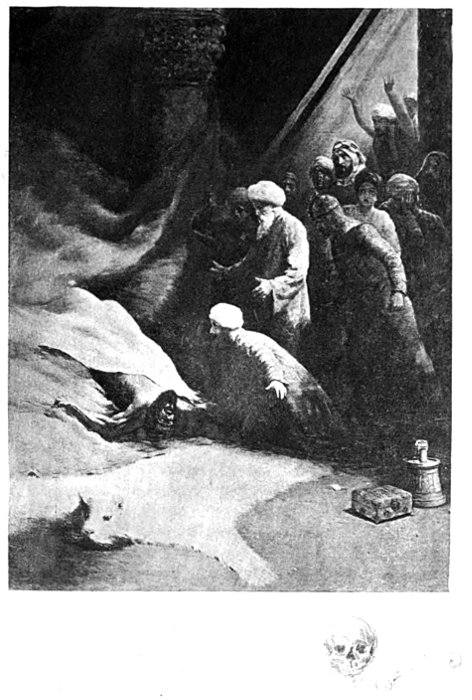
She said, It hath reached me, O auspicious King, that the Wazir Dandan continued to Zau al-Makan:—Quoth thy sire to the ancient woman when she demanded the handmaids of him, "I have a Greek slave called Sophia, by whom I have been blest with two children, a girl and a boy, but they were lost years ago; so take her with thee, haply she may get the benediction and, belike, the Invisible Controuls will sue Allah for her that her two children may be restored to her." "Thou hast said well," replied she; "for that indeed was her grievousest want." Thy sire gave not over finishing his fast till the old woman said to him, "O my son, I am going to the Invisible Controuls; so bring me Sophia." Accordingly, he summoned her and she came forthright, and he delivered her to the old woman who mixed her up with the other damsels. Then she went in to her chamber and bringing out a sealed cup, presented it to the Sultan saying, "On the thirtieth day, do thou repair to the Hammam and when thou comest out, enter one of the closets in thy palace and drink what is in this cup. Then sleep, and thou shalt attain what thou seekest, and peace be with thee!" Thereat the King was glad and thanked her and kissed her hands. Quoth she, "I commend thee to Allah's care;" whereat quoth he, 214"And when shall I see thee again, O pious lady? In very sooth I love not to part with thee." Then she called down blessings on him and departed with the five damsels and the Queen; whilst the King fasted after her departure other three days, till the month ended, when he arose and went to the Hammam and coming out, shut himself up in a closet of his palace, commanding that none should go in to him. There, after making fast the door, he drank what was in the cup and lay down to sleep; and we sat awaiting him till the end of the day, but he did not come out and we said, "Perchance he is tired with the bath and with watching by night and fasting by day; wherefore he sleepeth." So we waited till next day; but still he did not come forth. Then we stood at the closet-door and cried aloud so haply he might awake and ask what was the matter. But nothing came of that; so at last we lifted up the door;[375] and, going in, found him dead, with his flesh torn into strips and bits and his bones broken.[376] When we saw him in this condition it was grievous to us, and we took up the cup and found within its cover a piece of paper whereon was inscribed, "Whoso doeth evil leaveth no regrets, and this be the reward of him who playeth traitor with the daughters of Kings and who debaucheth them; and we make known to all who fall upon this scroll that Sharrkan, when he came to our country, seduced our Queen Abrizah; nor did that suffice him but he must needs take her from us and bring her to you. Then he[377] sent her away in company of a black slave who slew her, and we found her lying dead on the desert sward and thrown out to wild beasts. This be no kingly deed, and he who did this is requited with naught but what he merited. So do ye suspect none of having killed him, for no one slew him but the cunning witch, whose name is Zat al-Dawahi. And behold, I have taken the King's wife, Sophia, and have carried her to her father, Afridun King of Constantinople. Moreover, there is no help for it but that we wage war upon you and kill you and take your country from you, and ye shall be cut 215off even to the last man, nor shall a living soul be spared by Death nor one who bloweth fire with his breath, save he who Cross and Belt[378] worshippeth." When we read this paper, we knew that the ancient woman had beguiled us and carried out her plot against us: whereupon we cried aloud and buffeted our faces and wept sore when weeping availed us naught. And the troops fell out as to whom they should make Sultan; some would have thee, and others would have thy brother Sharrkan; and we ceased not to dispute about this for the space of a month, at the end of which certain of us drew together and agreed to repair to thy brother Sharrkan: so we set out and journeyed on till we fell in with thee. And such is the manner of the death of Sultan Omar bin al-Nu'uman! Now when the Wazir Dandan had made an end of his story, Zau al-Makan and his sister, Nuzhat al-Zaman, wept; and the Chamberlain, who wept also, said to Zau al-Makan, "O King, weeping will avail thee naught; nor shall aught profit thee but that thou harden thy heart and strengthen thy stress and stablish thy sovranty; for verily whoso leaveth the like of thee is not dead." Thereupon Zau al-Makan gave over his weeping and caused his throne to be set up without the pavilion, and then commanded the army to pass in review-order before him. And the Chamberlain sat by his side and all the armour-bearers[379] behind him, whilst the Wazir Dandan and the rest of the Emirs and Grandees stood each in his dividual stead. Then quoth King Zau al-Makan to the Minister Dandan, "Inform me concerning my sire's treasures;" and he replied, "I hear and I obey;" and gave him to know of the late King's hoards and monies, and what was in the treasury of amassed wealth and jewels, and acquainted him with other precious things. So Zau al-Makan opened his hand to the army, and gave a sumptuous robe of honour to the Wazir Dandan, saying, "Thou continuest in office." Whereupon 216Dandan kissed the ground before him and wished him long life. Then he bestowed dresses on the Emirs, after which he said to the Chamberlain, "Bring out before me the tribute of Damascus that is with thee." So he was shown the chests of money and rarities and jewels, when he took them and parted them all amongst the troops,——And Shahrazad perceived the dawn of day and ceased saying her permitted say.
Now when it was the Eighty-seventh Night,
She said, It hath reached me, O auspicious King, that Zau al-Makan ordered the Chamberlain to bring out before him what he had brought of the tribute of Damascus; and, when he was shown the chests of money and rarities and jewels, he took them and parted them all amongst the troops, till nothing was left. And the Emirs kissed the ground before him and wished him long life, saying, "Never saw we a King, who gave the like of these gifts." Then all went away to their tents and when it was morning he gave orders for marching. So they marched for three days, till, on the fourth day, they drew near to Baghdad. When they entered the city, they found it decorated, and Zau al-Makan, the Sultan, went up to his father's palace and sat down on the throne, whilst the Emirs of the army and the Wazir Dandan and the Chamberlain of Damascus stood between his hands. Then he bade his private secretary write a writ to his brother Sharrkan, acquainting him with all that had passed, from first to last, and he concluded, "As soon as thou hast read this letter, make ready thine affair and join us with thine army, that we may turn to Holy War upon the Infidels and take man-bote for our father and wipe out the stain upon our honour." Then he folded the letter and sealed it with his seal-ring and said to the Minister Dandan, "None shall carry this letter but thou; and it behoveth thee speak my brother fair and say to him:—If thou have a mind to thy father's kingdom, it is thine, and thy brother shall be Viceroy for thee in Damascus; for to this effect am I instructed by him." So the Wazir went down from before him and made ready for his march. Then Zau al-Makan bade set apart a magnificent house for the Fireman and furnished it with the best of furniture and long is the tale of that Fireman.[380] Presently Zau al-Makan went out chasing and hunting 217and, as he was returning to Baghdad, one of the Emirs presented him with blood-horses and with beauteous handmaids whose description the tongue evades. One of the damsels pleased him: so he went in unto her and knew her that night, and she conceived by him forthright. After a while, the Wazir Dandan returned from his journey, bringing him news of his brother Sharrkan and that he was then on his way to him, and said, "It were fitting thou go forth to meet him." Zau al-Makan replied, "I hear and I consent;" and, riding forth with his Grandees a day's journey from Baghdad, he pitched his pavilions there awaiting his brother. Next morning appeared King Sharrkan amid the army of Syria, a horseman of might, a lion fierce in fight, a prow and doughty knight. As the squadrons drew nigh and the dust-clouds came hard by and the troops rode up with banners on high, Zau al-Makan and those with him pushed forward to meet Sharrkan and his men; and when Zau al-Makan saw his brother, he desired to dismount, but Sharrkan conjured him not to do on this wise, and himself footed it, and walked a few paces towards him.[381] As soon as he reached Zau al-Makan, the new Sultan threw himself upon him, and Sharrkan embraced him and wept with great weeping and the twain condoled with each other. Then they mounted and rode onward, they and their troops, till they reached Baghdad, where they alighted and went up to the royal palace and there they passed that night, and when next morning came, Zau al-Makan went forth and bade summon the troops from all parts, and proclaimed a Holy War and a Razzia.[382] They then awaited the coming of the levies from each quarter of the kingdom, and every one who came they entreated with honour and promised him all manner of good; till in so doing a full month had sped, and the fighting men flocked to them in a continuous body. Then Sharrkan said to Zau al-Makan, "O my brother, tell me thy history." So he told him all that had befallen him from first to last, including the benevolent dealing of the Fireman with him. Asked Sharrkan, "Hast thou requited his kindness?"; and he answered, "O my brother! I have not rewarded him as yet, but Inshallah! I will recompense him whenas I return from this raid."—And Shahrazad perceived the dawn of day and ceased saying her permitted say.
218
Now when it was the Eighty-eighth Night,
She said, It hath reached me, O auspicious King, that Sharrkan asked his brother Zau al-Makan, "Hast thou requited the Fireman for his kindness?"; and he answered, "O my brother, I have not rewarded him as yet, but Inshallah! I will recompense him whenas I return from this raid and find time so to do." Therewith Sharrkan was certified that his sister, Nuzhat al-Zaman, had told him the whole truth; but he concealed what had passed between them and offered his salutation to her by her husband the Chamberlain. She sent him back her greeting, calling down blessings on him and enquiring after her daughter Kuzia-Fakan, to which he replied that the maiden was well and in the best of health and safety. Whereupon she praised Almighty Allah and gave him thanks. Then Sharrkan went to his brother to take counsel with him for departure; and Zau al-Makan said, "O my brother, as soon as the army is complete and the Arabs have come in from all parts, we will march forth." So he bade make ready the commissariat and prepare munitions of war and went in to his wife, who was now five months gone with child; and he put under her astrologers and mathematicians, to whom he appointed stipends and allowances. Then he set out three months after the arrival of the army of Syria, and as soon as the Arabs were come in and the troops were assembled from all directions; and, as he fared forth, he was followed by the warriors and the united host. Now the name of the General of the Daylam army was Rustam and that of the General of the army of the Turks[383] Bahram. And Zau al-Makan marched in mid-host and on his right was his brother Sharrkan, and on his left the Chamberlain his brother-in-law. So the squadrons broke up and pushed forward and the battalions and companies filed past in battle-array, till the whole army was in motion. They ceased not to fare on for the space of a month, and each body dismounted at its own ground and there rested every week three days (for the host was great); and they advanced in this order till they came to the country of the Greeks. Then the people of the villages and hamlets and the poorer sort took fright at them and fled to Constantinople. But when King Afridun heard the tidings he arose and betook himself to Zat al-Dawahi, 219the same who had contrived the stratagem, and had travelled to Baghdad and had slain King Omar bin al-Nu'uman; and who, after carrying off her slaves and Queen Sophia, had returned with them all to her native land. Now when she had been restored to her son, the King of Greece, and felt herself safe, she said to King Hardub, "Cool thine eyes; for I have avenged by blood the shame of thy daughter Abrizah, and have killed Omar bin al-Nu'uman and have brought back Sophia. So now let us go to the King of Constantinople and carry to him his daughter and acquaint him with what hath happened, that all of us be on guard and prepare our forces; and I will fare with thee to King Afridun, Lord of Constantinople, for I opine that the Moslems will not await our attack." Said Hardub, "Tarry thou till they draw near our country, that we may make us ready meantime and assemble our power." Accordingly they took to levying their forces and preparing for war, and, when the news of the Moslems' advance reached them, they were prepared for defence; and Zat al-Dawahi had preceded them. Now when she and her son arrived at Constantinople, the King of Kings, Afridun, hearing of the approach of Hardub, King of the Greeks, came forth to meet him and asked how it was with him and the cause of his visit. So Hardub acquainted him with the cunning doings of his mother, Zat al-Dawahi, how she had slain the Moslem King and recovered from him Queen Sophia, and had said, "The Moslems have assembled their forces and are on their way to attack us, wherefore it behoveth that we two join hands in single band and meet them." Now King Afridun rejoiced in the return of his daughter and the killing of King Omar bin al-Nu'uman; and he sent to all countries seeking succour and acquainting the folk with the cause of slaying the Moslem King. So the Nazarene troops flocked to him and three months were not past ere the army of the Greeks was complete, besides which there joined themselves to him Franks from all their lands, French, Germans[384] and Ragusans,[385] with men of Zara,[386] Venetians, Genoese, and all the hosts 220of the Yellow Faces[387]; and, when the gathering was at its full, earth was straitened on them by reason of their multitude. Then Afridun, the Great King, ordered a march; so they set out and ceased not to defile through the city for ten days. They fared on till they reached the Wady hight Al Nu'uman, a broad-sided vale hard by the Salt Sea, where they halted three days; and on the fourth they were about to set out again, when news came that the army of Al-Islam on them prest, and the defenders of the faith of Mohammed, of Men the Best. So they halted in it other three days, and on the eighth they espied a dust-cloud which towered till it walled the whole land; nor was an hour of the day past ere that dust began to drift and was torn to shreds in the lift, and pierced through its shades the starry radiance of lance and the white leven of blades. Presently there appeared beneath it the banners Islamitan and the ensigns Mahometan; the horsemen urged forward, like the letting loose of seas that surged, clad in mail, as they were mackerel-back clouds which the moon enveil; whereupon the two hosts clashed, like two torrents on each other dashed. Eyes fell upon eyes; and the first to seek combat singular was the Wazir Dandan, he and the army of Syria, numbering thirty thousand bridles, and with him were the General of the Turks, and the General of Daylam, Rustam and Bahram, amid twenty thousand horse, behind whom came the men from the shores of the Salt Sea, clad in iron mail, as they were full moons that past through a night o'ercast. Then the Nazarene host called out on Jesus and Mary, and the defiled[388] Cross and they heaped themselves upon the Wazir Dandan and those with him of the Syrian host. Now all this was in pursuance of a stratagem 221devised by that ancient woman Zat al-Dawahi; for, before his departure, King Afridun had gone in to her and asked her, "How shall I do and what plan shall I pursue?; it is thou hast caused this great distress to us;" and she had answered, "O great King and mighty Cohen![389] I will teach thee a trick would baffle Iblis himself, though he summon to his assistance all his grisly hosts."——And Shahrazad perceived the dawn of day and ceased to say her permitted say.
Now when it was the Eighty-ninth Night,
She said, It hath reached me, O auspicious King, all this was a stratagem of the ancient woman, for that the King before his departure had gone to her and asked, "How shall I do and what plan shall I pursue? it is thou hast caused this great distress to us!" And she had answered, "O great King and mighty Cohen, I will teach thee a trick would baffle the Devil himself though he summon to his assistance all his grisly hosts. It is that thou send fifty thousand men going down in ships, and sailing over the sea to the Mountain of Smoke; and there let them land and stir not till the standards of Al-Islam come upon thee, when do thou up and at them. Then bid the troops from the seaward sally out upon the Moslems and take them in rear, whilst we confront them from the landward. So not one of them shall escape, and our sorrows shall cease and peace abide with us." Now the counsel of this ancient woman commended itself to King Afridun, and he replied, "Right is the recking thou reckest, O Princess of wits and recourse of Kings and Cohens warring for their blood-wit!" So when the army of Al-Islam came upon them in that valley, before they knew of it the flames began to burn up the tents and the swords in men's bodies to make rents. Then hurried up the army of Baghdad and Khorasan who numbered one hundred and twenty thousand horse, with Zau al-Makan in the front of war. When the host of the Infidels that lay by the sea saw them, they sallied out against them and followed in their tracks; and when Zau al-Makan espied this he cried out to his men, "Turn back to the Infidels, O People of the Chosen Apostle, and slay those who deny and hate the authority of the Compassionating, the Compassionate!" So they turned and 222fought with the Christians. Then Sharrkan marched up with another corps of the Moslem host, some hundred thousand men, whilst the Infidels numbered nigh upon a thousand and six hundred thousand men. When the Moslems were united, their hearts were strengthened and they cried out, saying, "Verily Allah hath promised us victory, and to the Infidels hath assigned defeat." And they clashed together with sword and spear. Now Sharrkan tare through rank and row and raged among the masses of the foe, fighting so fierce a fight as to make children grey grow; nor did he cease tourneying among the infidel horde and working havoc among them with the keen-edged sword, shouting "Allaho Akbar!"—Allah is Most Great—till he drove back the host to the coast. Then failed the force of the foe and Allah gave victory to the faith of Al-Islam, and folk fought folk, drunken without strong drink, till they slew of the Infidels in this affair forty and five thousand, while of the Moslems but three thousand and five hundred fell. Moreover, the Lion of the Faith, King Sharrkan, and his brother, Zau al-Makan, slept not that night, but occupied themselves with congratulating their braves and with looking to the wounded and with assuring the army of victory and salvation and promise of reward in the world to come. Thus far concerning the Moslem; but as regards King Afridun, Lord of Constantinople and Sovran of Roum, and Zat al-Dawahi, they assembled the Emirs of the host and said to them, "Verily, we had worked our will and solaced our hearts, but our over-confidence in our numbers, and that only, defeated us." Then quoth to them the ancient one, the Lady of Calamities, "In very sooth nought shall profit you, except ye draw you nigh unto the Messiah and put your trust in the True Belief; for, by the virtue of the Messiah, the whole strength of the Moslem host lieth in that Satan, King Sharrkan." "To-morrow," said King Afridun, "I have resolved to draw up in battle array and to send out against them that redoubtable cavalier, Luka bin Shȧmlút; for if King Sharrkan come forth as a champion to fight single-handed, our man will slay him and will slay the other Moslem Knights, till not one is left. And I purpose this night to sacre you all with the Holy Incense." When the Emirs heard these words they kissed the ground before him. Now the incense which he designated was the excrement of the Chief Patriarch, the denier, the defiler of the Truth, and they sought for it with such instance, and they so highly valued it that the high priests of the Greeks used to send it to all the countries of the Christians in silken wraps after mixing it with 223musk and ambergris. Hearing of it Kings would pay a thousand gold pieces for every dram and they sent for and sought it to fumigate brides withal; and the Chief Priests and the great Kings were wont to use a little of it as collyrium for the eyes and as a remedy in sickness and colic; and the Patriarchs used to mix their own skite[390] with it, for that the skite of the Chief Patriarch could not suffice for ten countries.[391] So, as soon as dawn was seen and the morning shone with its shine and sheen, the horsemen ran to their spears full keen, and King Afridun——And Shahrazad perceived the dawn of day and ceased saying her permitted say.
Now when it was the Full Ninetieth Night,
She said, It hath reached me, O auspicious King, as soon as dawn was seen and the morning shone with its shine and sheen, the horsemen ran to their spears full keen and King Afridun summoned his chief Knights and Nobles and invested them with dresses of honour; and, drawing the sign of the cross on their brows, incensed them with the incense which as aforesaid was the skite of the Chief Patriarch, the Cohen, the Heresiarch. This incensing done, he called for Luka bin Shamlut, surnamed the Sword of the Messiah; and, after fumigating him and rubbing his palate with the Holy Merde, caused him to snuff it and smeared his cheeks and anointed his moustaches with the rest. Now there was no stouter champion in the land of Roum than this accursed Luka, nor any better at bending of bow or sway of sword or lunge with lance on the day of devoir; but he was foul of favour, for his face was as the face of an ass, his shape that of an ape and his look 224as the look of a malignant snake: his presence was grievouser than parting from the beloved make; and blacker than night was his blackness and more fetid than the lion was his breath for foulness; more crooked than a bow was his crookedness and grimmer than the leopard was his ugliness, and he was branded with the mark of the Infidels on face.[392] After this he came up to King Afridun and kissed his feet and stood before him; and the King said to him, "I desire thou go out against Sharrkan, King of Damascus, son of Omar bin al-Nu'uman, and deliver us from this affliction." Quoth Luka, "Hearkening and obedience;" and the King made the sign of the cross on his forehead and felt assured of help from Heaven being near hand. Then Luka went out from the presence and the accursed one mounted a sorrel horse; he was clad in a red robe and a hauberk of gold set with jewels, and he bore a trident spear, as he were Iblis the damned on the day of drewing out his hosts war to darraign. Then he rode forward, he and his horde of Infidels, even as though they were driving to the Fire, preceded by a herald, crying aloud in the Arabic tongue and saying, "Ho, sect of Mohammed (upon whom be salutation and salvation!), let none of you come out but your champion Sharrkan, the Sword of Al-Islam, Lord of Damascus in Shám[393]!" Nor had he made an end of speaking, when arose a tumult in the plain; all the people heard the strain and the whole moving bodies of the armies twain called to mind the Day of Complain. Then the cowards trembled and all necks turned towards the sound, and lo! it was King Sharrkan, son of King Omar bin al-Nu'uman. For when his brother, Zau al-Makan, saw that accursed one push out on the plain, and heard the pursuivant, he turned to Sharrkan and said to him, "Of a surety they seek for thee." Said he, "Should it so be, 'twere most pleasing to me." So when they made sure of the matter and heard the herald crying in the plain, "Let none 225of you come out against me save Sharrkan," they knew this cursed Luka to be champion of the land of Roum who had sworn to sweep the earth clean of Moslems. Now he was one of the greatest of villains, a wretch who caused hearts to pain; and the Daylamites, Turks and Kurds dreaded his might and main. Presently Sharrkan drave at him like a lion angry-grim, mounted on a courser like a wild gazelle flying snell and slim; and coming nigh to him made the spear he hent to shake as it were a darting snake, and recited these couplets:—
I have a sorrel steed, whose pride is fain to bear the rein, ✿ Shall give thee what thou likest not and make thee feel his main:
I have a handy limber spear full bright and keen of point, ✿ Upon whose shaft the dam of Death her throny seat hath ta'en:
I have a trenchant glaive of Hind; and, when I bare its face ✿ Of scabbard-veil, from out its brow the rays of leven rain.
Luka understood not the sense of his speech nor did he apprehend the vehemence of the verse: but he smote his forehead with his hand, in honour of the Cross drawn thereon and kissed it; then he couched his throw-spear and ran at Sharrkan. But first he tossed the javelin with one hand in air to such height that it was lost to the spectators' sight; and, catching it with the other hand as do the jugglers, hurled it at Sharrkan. It flew from his grasp like a shooting star and folk clamoured and feared for Sharrkan; but, as the spear flew near him, he put out his hand and caught it in full flight to the amazement of all who saw the sight. Then he shook it with the hand that took it till it was well-nigh broken, and hurled it so high into the welkin that it disappeared from view. As it descended, he caught it again with the other hand, in less than the twinkling of an eye, and cried out from his heart-core, saying, "By the truth of Him who created the seven-fold skies, I will assuredly make this cursed wight a byword for mankind to despise!" Then threw he the throw-spear at Luka, who thought to do as Sharrkan had done and put forth his hand to bend it in mid-flight; but Sharrkan prevented him, and sped at him a second throw-spear which smote him and the point fell on his forehead, in the very centre of the sign of the Cross, and Allah hurried his soul to the Fire and Dwelling-place dire.[394] But when the Infidels saw 226Luka bin Shamlut fall slain, they buffeted their faces and they cried, "Alas!" and "Woe worth the day!" and called for aid upon the Abbots of the monasteries——And Shahrazad perceived the dawn of day and ceased to say her permitted say.
Now when it was the Ninety-first Night,
She said, It hath reached me, O auspicious King, that when the Infidels saw Luka bin Shamlut fall slain, they buffeted their faces and cried, "Alas!" and "Woe worth the day!" and called upon the Abbots of the monasteries and cried, "Where be the crosses?" So the Religious offered up prayers and the Christians all drew together against Sharrkan; and, brandishing their scymitars and lances, rushed forward to the attack. Then army met army and breasts fell under hoof, whilst spear and sword ruled the day and fore-arms and wrists grew weak and the coursers seemed created without legs;[395] nor did the herald of war cease calling to fight, till arms were aweary and day took flight and night came on with darkness dight. So the two hosts drew apart, whilst every brave staggered like a drunken knave, for that with so much cut and thrust they strave; and the place was choked with the slain; fell were the wounds and the hurt knew not by whom they fell. Then Sharrkan joined his brother, Zau al-Makan, and the Chamberlain and the Wazir Dandan, and said to them, "Verily Allah hath opened a door for the Infidels to fall, praised be the Lord of the Worlds one and all!" Replied Zau al-Makan, "Let us never cease to praise Allah, for that He hath dispelled trouble from the Arab and the Ajam. Indeed the folk, generation after generation, shall tell of thy derring-do against the accursed Luka, the falsifier of the Evangel;[396] of thy catching the throw spear 227in mid-flight, and how the enemy of Allah among men thou didst smite; and thy fame shall endure until the end of time." Then said Sharrkan, "Harkye, O grand Chamberlain and doughty Capitayne!" and he answered, "Adsum!"[397] Quoth Sharrkan, "Take with thee the Wazir Dandan and twenty thousand horse, and lead them seven parasangs towards the sea, and force the march till ye shall have come near the shore, and there remain only two parasangs between thee and the foe. Then ambush ye in the hollows of the ground till ye hear the tumult of the Infidels disembarking from their ships; and the war-cry from every side strike your ear and ye know that the sabres have begun labour between us and them; and, whenso ye see our troops falling back, as if defeated, and all the Infidels following them, as well those in front as those from the seaward and the tents, do ye still lie in wait for them: but as soon as ye see the standard with the words, There is no god but the God, and Mohammed is God's Apostle (on whom be salutation and salvation!), then up with the green banner, and do your endeavour and fall on their rear and shout, Allaho Akbar! Allah is most Great! and circle round that they may not interpose between the retreating army and the sea." He replied, "To hear is to obey!"; and forthright they agreed upon this matter and they went forth. Now the Chamberlain took with himself the Wazir Dandan and twenty thousand men even as Sharrkan had commanded. As soon as dawned the morn, the 228troops sprung to horse when they had donned their armour-gear and drawn the scymitar and slung the spear. Then the Christians dispread themselves over hill and dale and the Ecclesiasts[398] cried out and all heads were bared, and those in the ships hoisted the Cross at their mast-heads and began making for shore from every side, and landed their horses and gat them ready for fight and fray, whilst the sword-blades glittered bright and the javelins glanced like leven-light on mail-shirt white; and all joined fight and the grind-mill of Death whirled round and ground those who fought from horse and aground: heads from bodies flew and tongues mute grew and eyes no vision knew. Scymitars strave with utmost strain and heads flew over the battle plain; gall-bladders clave and wrists were shorn in twain; steeds plashed in pools of gore and beards were gripped right sore; the host of Al-Islam called out, saying, "On the Prince of Mankind be blessings and peace, and to the Compassionate glory and praise, which ne'er shall cease, for His boons which aye increase;" and the host of the Infidels shouted, "Glory to the Cross and the Belt and the vine-prest juice, and the wine-presser and the Priests and the Monks and the Festival of Palms and the Metropolitan!" Now Zau al-Makan and Sharrkan held back and their troops gave way and feigned flight from before the enemy, while the Infidel array pressed hard upon them deeming them in rout, and made ready to foin and hew. Then the meiny of the Moslems raised their voices, reciting the first verses of the Chapter of the Cow,[399] whilst the dead were trampled under hoofs of steeds, and the heralds of the Greeks cried out, "Ho, servants of the Messiah! Ho, people of the True Faith! Ho, followers of the Primate![400] Verily Divine grace upon you opes; for see, the hosts of Al-Islam like birds with broken wings incline to elope! So turn ye not to them your backs, but let your swords cleave deep in their necks and hold not your hands from them, else are ye outcasts from the Messiah, Mary's son, who spoke even when a cradled one!"[401] Now Afridun, King of Constantinople, 229deemed that the Infidels were victorious, knowing not that this was but a clever stratagem of the Moslems, and sent to King Hardub of Roum congratulations on success, adding, "Availed us naught but the Holy Merde of the Arch-Patriarch, whose fragrance exhaled from the beards and mustachios of the slaves of the Cross near and far; and I swear, by the Miracles of the Messiah; and by thy daughter Abrizah, the Nazarene, the Mariolater; and by the Waters of Baptism, that I will not leave upon the earth a single defender of Al-Islam! And to the bitter end will I carry out this plan." So the messenger betook himself with the address to King Hardub, whilst the Infidels called to one another saying, "Take we vengeance-wreak for Luka!"——And Shahrazad perceived the dawn of day and ceased to say her permitted say.
Now when it was the Ninety-second Night,
She said, It hath reached me, O auspicious King, that the Infidels called to one another, saying, "Take we vengeance-wreak for Luka!" while Hardub King of Greece cried aloud, "Ho, to our revenge for Abrizah!" Thereupon King Zau al-Makan shouted "Ho, servants of the Requiting King!: smite the children of denial and disobedience with the blanch of sword and the brown of spear!" So the Moslems returned to the Infidels and plied them with the keen-edged scymitar, whilst their herald cried aloud, "Up, and at the foes of the Faith, all ye who love the Prophet Elect, with hope of salvation on the Day of Fear, to win favour of the Bountiful, the Forgiving One; for verily the Garden of Paradise is under the shadow of swords!" And behold, Sharrkan and his men charged down upon the Infidels and cut off their retreat and wheeled and tourneyed among the ranks; when lo! a knight of goodly presence opened a passage through the army of Unbelievers and circled hither and thither amongst the Deniers, cutting and thrusting and covering the ground with heads and trunks, so that the Faithless feared him and their necks bent under his lunge and hew. He was girt with two swords, his glances and his brand, and he was armed with two lances, one of bamboo-cane and the other his straight wandlike shape; and his flowing hair stood him in stead of many warriors, even as saith the poet:—
230Laud not long hair,[402] except it be dispread ✿ In two-fold locks, on day of fight and fray,
O'er youth who bears his lance 'twixt flank and thigh, ✿ From many a whiskered knight to win the day.
And as singeth another:—
I say to him, what while he slings his sword, ✿ "For sword shall serve those looks that sword-like show!"
Says he, "My sabre-looks for those I love, ✿ My sword for those who sweets of love unknow!"
When Sharrkan saw him, he said to him, "I conjure thee by the Koran and the attributes of the Compassionate One, O Champion of the Champions! tell me who thou art: for verily by thy deeds this day thou hast pleased the Requiting King, whom one thing distracteth not from other thing; in that thou hast been discomfiting the children of impiety and in rebellion revelling." Then cried the Cavalier to him saying, "Thou art he who madest brother-covenant with me but yesterday: how quickly thou hast forgotten me!" Thereupon he withdrew his mouth-veil,[403] so that what was hidden of his beauty was disclosed, and lo! it was none other than Zau al-Makan. Then Sharrkan rejoiced in his brother, save that he feared for him the rush of fighting and the crush of braves a-smiting; and this for two reasons, the first, his tender age and exposure to the evil eye, and the second, that his safety was to the kingdom the greater of the two overshadowing wings. So he said to him, "O King! thou riskest thy life, so join thy steed to mine; in very sooth I fear for thee from the foe; and better thou stint hazarding thyself forth of these squadrons, that we may shoot at the enemy thine unerring shaft." Quoth Zau al-Makan, "I desire to even thee in fray and I will not be niggard 231of myself before thee in the mellay." Then the host of Al-Islam, heaping itself upon the Infidels, girt them on all sides, warred on them a right Holy War, and brake the power of the children of impiety and pride and stowre. But King Afridun sighed when he saw the evil wreak that had fallen on the Greek, and they turned their backs from fight and addressed themselves to flight, making for the ships, when lo! there came out upon them from the sea-coast another host, led by the Minister Dandan, the champion who was wont to make champions bite the dust, and to lay load on them with cut and thrust. Nor less came forth the Emir Bahram, Lord of the Provinces of Sham, amid twenty thousand horse doughty of arm; and the host of Al-Islam pressed them in front and on flank and wrought them grievous harm. Then a body of the Moslems turned against those who in the ships remained, and perdition on them rained, till they threw themselves into the main, and they slew of them many slain, more than a hundred thousand noblemen, nor was one of their champions, great or small, saved from bale and bane. Moreover, they took their ships, with all the money and treasure and cargo, save a score of keel, and the Moslems got that loot whose like was never gotten in bygone years; nor was such cut and thrust ever heard of by men's ears.[404] Now amongst the booty were fifty thousand horses, besides treasure and spoil past reckoning and arithmetic, whereat the Moslems rejoiced with an exceeding joy for that Allah had given them victory and protection. Such was the case with them; but as regards the fugitive Infidels they soon reached Constantinople, whither the tidings preceded them that King Afridun had prevailed over the Moslems; so quoth the ancient dame, Zat al-Dawahi, "I know that my son Hardub, King of Roum, is no runagate and that he feareth not the Islamitic hosts, but will restore the whole world to the Nazarene faith." Then she bade the Great King, Afridun, give command that the city be decorated, and the people held festival high and drank their wines drunkenly and knew not the decrees of Destiny. Now whilst they were in the midst of their rejoicings, behold, the raven of dule and downfall croaked over them, and up came the twenty fugitive ships wherein was the King of Cæsarea. So King Afridun, Lord of Constantinople, met them on the sea-shore, and they told him all that had befallen them from the Moslem, and they wept 232sore and groaned and moaned; and rejoicing at weal was turned into dismay for unheal; and they informed him concerning Luka son of Shamlut, how calamity had betided him and how Death had shot him with his shaft. Thereat the horrors of Doomday rose upon King Afridun,[405] and he knew that there was no making straight their crook. Then came up from them the sound of weeping and wailing; the city was full of men mourning and the keeners were keening, and sighs and cries were heard from all sides. And when King Hardub of Greece met King Afridun he told him the truth of the case and how the flight of the Moslems was by way of stratagem and deceit, and said to him, "Look not to see any of the army, save those who have already reached thee." When King Afridun heard these words he fell down in a fainting fit, with his nose under his feet; and, as soon as he revived, he exclaimed, "Surely the Messiah was wroth with them that he caused the Moslems to prevail over them!" Then came the Arch-Patriarch sadly to the King who said to him, "O our father, annihilation hath overtaken our army and the Messiah hath punished us!" Replied the Patriarch, "Grieve not nor feel concerned, for it cannot be but that one of you have sinned against the Messiah, and all have been punished for his offence; but now we will read prayers for you in the churches, that the Mohammedan hosts may be repelled from you." After which the old woman, Zat al-Dawahi, came to Afridun and said to him, "O King, verily the Moslem hosts are many, and we shall never overcome them save by wile: wherefor I purpose to work upon them by guile and repair to this army of Al-Islam, haply I may win my wish of their leader and slay their champion, even as I slew his father. If my stratagem succeed in his case, not one of the host he leads shall return to his native land, for all are strong only because of him; but I desire to have some Christian dwellers of Syria, such as go out every month and year to sell their goods, that they may help me (for this they can do) in carrying out my plan." Replied the King, "Be it so whenever thou wilt." So she bade fetch an hundred men, natives of Najrán,[406] in Sham, and the King asked 233them, "Have ye not heard what hath befallen the Christians with the Moslems?" "Yes," answered they; and he rejoined, "Know ye that this woman hath devoted her life to the Messiah and purposeth to go forth with you, disguised as Monotheists and Mohammedans, to work out a device which shall profit us and hinder the Moslem from us: say, then, are ye also willing to devote yourselves to the Anointed and I will give you a quintal of gold?[407] He of you who escapeth shall have the money, and him of you who dieth will the Messiah reward." "O King," replied they, "we will devote our lives to the Messiah, and we will be thy sacrifice." Thereupon the old woman took all she required of aromatic roots and placed them in water which she boiled over the fire till the black essence of them was extracted. She waited till the decoction was cold, then dipped the corner of a long kerchief therein and stained her face therewith. Moreover, she donned over her clothes a long gaberdine with an embroidered border and took in her hand a rosary, and afterwards went in to King Afridun, who knew her not, nor did any of his companions know her, till she discovered herself to them: and there was none in the assembly but who thanked and praised her for her cunning; and her son rejoiced and said, "May the Messiah never fail thee!" Thereupon she took with her the Syrian Christians, and set out for the army of Baghdad.—And Shahrazad perceived the dawn of day and ceased saying her permitted say.
Now when it was the Ninety-third Night,
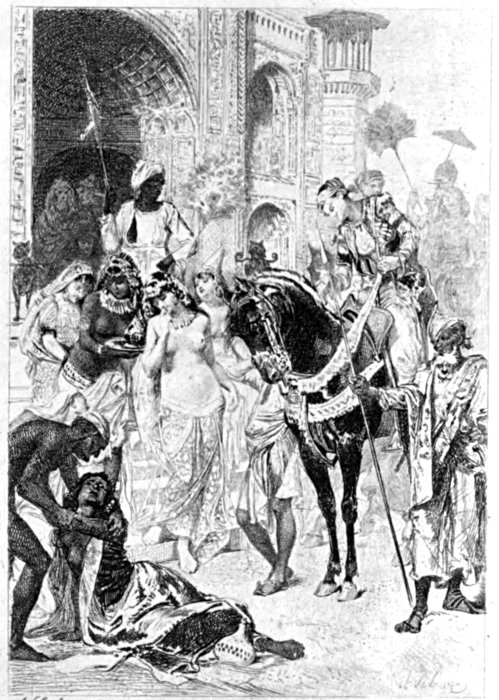
She said, It hath reached me, O auspicious King, that when King Afridun heard these words, he fell into a fainting-fit with his nose under his feet; and, as soon as he revived, fear fluttered the scrotum[408] below his belly and he complained to the ancient dame, Zat al-Dawahi. Now this accursed old woman was a witch of the witches, past mistress in sorcery and deception; wanton and wily, deboshed and deceptious; with foul breath, red eyelids, yellow cheeks, dull-brown face, eyes bleared, mangy body, hair grizzled, back humped, skin withered and wan and nostrils which ever ran. 234But she had studied the scriptures of Al-Islam and had made the Pilgrimage to the Holy House of Meccah and all this that she might come to the knowledge of the Mohammedan ordinances and the miraculous versets of the Koran; and she had professed Judaism in the Holy City of Jerusalem[409] for two years' space, that she might master the magic of men and demons; so that she was a plague of plagues and a pest of pests, wrong-headed as to belief and to no religion lief. Now the chief reason of her sojourn with her son, King Hardub of Greece, was on account of the slave virgins at his court: for she was given to tribadism[410] and could not exist without sapphism or she went mad: so if any damsel pleased her, she was wont to teach her the art of rubbing clitoris against clitoris and would anoint her with saffron[411] till she fainted away for excess of volupty. Whoso obeyed her she was wont to favour and make her son incline towards her; but whoso repelled her she would contrive to destroy; and so she abode for a length of time. This was known to Marjanah and Rayhánah and Utrijah, the handmaids of Abrizah, and their Princess loathed the old woman and abhorred to lie with her, because of the rank smell from her armpits, the stench of her fizzles more fetid than carrion, and the roughness of her hide coarser than palm fibre. She was wont to bribe those who rubbed parts with her by means of jewels and instructions; but Abrizah held aloof from her and sought refuge with the Omnipotent, the Omniscient; for, by Allah, right well quoth the poet:—
235Ho thou who grovellest low before the great ✿ Nor over-lording lesser men dost blench,
Who gildest dross by dirham-gathering, ✿ No ottar-scent disguises carrion-stench!
And now to return to the story of her stratagem and the woes of her working. Presently she departed, taking the chief Nazarenes with their hosts, and turned towards the army of the Moslems. Whereupon King Hardub went in to King Afridun and said to him, "O King, we have no need of the Chief Patriarch nor of his prayers, but will consult my mother's counsel and observe what she will do with her craft unending against the Moslem hosts; for these are marching with all their power, they will soon be upon us and they will encircle us on all sides." When King Afridun heard this, terror took hold upon his heart and he wrote letters, without stay or delay, to all the nations of the Nazarenes, saying, "It behoveth none of the Messiahites or Cross-knights to hold back, especially the folk of the strongholds and forts: but let them all come to us, foot and horse, women and children, for the Moslem hosts already tread our soil. So haste! haste ye! ere what we fear to us here appear." Thus much concerning them; but regarding the work of the old woman, Zat al-Dawahi; when she went forth from the city with her suite, she clad them in the clothing of Moslem merchants, having provided herself with an hundred mules carrying stuffs of Antioch, such as goldwoven satins and royal brocades and so forth. And she had taken a letter from King Afridun to the following effect:—"These be merchantmen from the land of Sham who have been with us: so it befitteth none to do them harm or hindrance, nor take tax and tithe of them, till they reach their homes and safe places, for by merchants a country flourisheth, and these are no men of war nor of ill-faith." Then quoth the accursed Zat al-Dawahi to those with her, "Verily I wish to work out a plot for the destruction of the Moslem." Replied they, "O Queen, command us whatso thou wilt; we are at thy disposal and may the Messiah never disappoint thy dealings!" Then she donned a gown of fine white wool and rubbed 236her forehead, till she made a great mark as of a scar and anointed it with an ointment of her own fashion, so that it shone with prodigious sheen. Now the old hag was lean-bodied and hollow-eyed, and she bound her legs tightly round with cords[412] just above her feet, till she drew near the Moslem camp, when she unwound them, leaving their marks deeply embedded in her ankles. Then she anointed the wheals with dragon's blood and bade her companions beat her with a severe beating, and set her in a chest and, quoth she, "Cry abroad the Refrain of Unity,[413] nor fear from it aught of damage!" Replied they, "How can we beat thee, who be our sovereign lady, Zat al-Dawahi, mother of the King we glory in?" Then said she, "We blame not nor deal reproach to him who goeth to the jakes, and in need evil becometh good deed. When ye have set me in the chest, take it and make it one of the bales and place it on mule-back and fare forth with it and the other goods through the Moslem camp, and fear ye no blame. And if any of the Moslems hinder you, give up the mules and their lading and betake yourselves to their King, Zau al-Makan, and implore his protection saying:—We were in the land of the Infidels and they took nothing from us, but wrote us a passport, that none shall do us hindrance or work our mischance. If he ask you, What profit had ye of your property in the land of Roum? answer him:—We profited in the deliverance of a pious man, who had been bound down in an underground cell nigh fifteen years, crying out for help yet none helped him. Nay, the Infidels tortured him night and day. We knew not this; but, after we had tarried in Constantinople for some time, having sold our goods and bought others in their stead, we determined on and made ready for a return to our native land. We spent that night conversing about our journey, and when day broke, we saw figured upon the wall a human form; and as we drew nigh it, behold, it moved and said:—O Moslems, is there amongst you one who is minded to woo the favour of the Lord of the three Worlds?[414] How so? asked we; and the figure answered:—Know that Allah hath made me speak to you, to the 237intent that your faith be fortified, and that your belief embolden you and that you may go forth of the country of the Infidels and repair to the Moslem host; for with them wones the Sword of the Compassionate One, of our Age the Champion, King Sharrkan, by whom He shall conquer Constantinople town and destroy the sect of the Nazarene. And when ye shall have journeyed three days, you will find an hermitage known as the Hermitage of the ascetic Matruhina[415] and containing a cell; visit it with pure intent and contrive to arrive there by force of will, for therein is a Religious from the Holy City, Jerusalem, by name Abdullah, and he is one of the devoutest of mankind, endowed with the power of working saintly miracles[416] such as dispel doubts and obscurity. Certain of the monks seized him by fraud and shut him up in a souterrain where he hath lain a long time. By his deliverance you will please the Lord of Faithful Men, for such release is better than fighting for the Faith." Now when the ancient dame and those with her had agreed upon such words, she said, "As soon as that which I impart shall reach the ears of King Sharrkan, say him further:—Hearing this from that image we knew that the holy man"——And Shahrazad perceived the dawn of day and ceased to say her permitted say.
Now when it was the Ninety-fourth Night,
She said, It hath reached me, O auspicious King, that when the old woman, Zat al-Dawahi, and those with her had agreed upon such words, she said, "Now as soon as that which I impart shall reach the ears of King Sharrkan say him further:—Hearing these words from that image we knew that the holy man was indeed of the chiefest devotees and Allah's servants of purest qualities; so we made three days' march till we came in sight of that hermitage, and then we went up to it and passed the day in buying and selling, as is the wont of merchants. As soon as day had departed our sight and night was come to darken light, we repaired to the cell wherein 238was the dungeon, and we heard the holy man, after chanting some verses of the Koran, repeat the following couplets:—
My heart disheartened is, my breast is strait, ✿ And sinks my soul in sea of bale and bate:
Unless escape be near I soon shall die; ✿ And Death were better than this doleful strait:
O Lightning an thou light my home and folk, ✿ An their still brighter charms thy shine abate,
Say, what my path to meet them, being barred ✿ By wars; and barricado'd succour's gate?"
"When once ye have brought me into the Moslem camp, and I mix with them you shall see," the old woman continued, "how I will make shift to beguile them and slay them all, even to the last man." The Nazarenes hearing what she said, kissed her hands and set her in the chest, after they had beaten her with a grievous beating in obedience to her commands, for they saw it was incumbent on them to do her bidding in this; then they all made for the Moslem host as hath erst been said. Such was the case with the damned hag, Zat al-Dawahi and her companions; but as regards the Mohammedan army, they indeed, after Allah had given them victory over their enemies and they had plundered everything in the ships of money and hoards, all sat down to converse with one another and Zau al-Makan said to his brother Sharrkan, "Verily, Allah hath granted us to prevail because of our just dealing and discipline and concord amongst ourselves; wherefore continue, O Sharrkan, to obey my commandment, in submission to Allah (be He exalted and extolled!), for I mean to slay ten Kings in blood-revenge for my sire, to cut the throat of fifty thousand Greeks and to enter Constantinople." Replied Sharrkan, "My life be thy ransom against death! Needs must I follow out the Holy War, though I wone many a year in their country. But I have, O my brother, in Damascus a daughter, named Kuzia Fakan, whom I love heartily, for she is one of the marvels of the time and she will soon be of age." Said Zau al-Makan, "And I also have left my wife with child and near her time, nor do I know what Allah will vouchsafe me by her. But promise me, O my brother, that if Allah bless me with a son, thou wilt grant me thy daughter for wife to him, and make covenant with me and pledge me thy faith thereon." "With love and good will," replied Sharrkan; and, stretching out his hand to his brother, he said, "If she bring thee a son, I will give him my daughter Kuzia Fakan, to wife." At this Zau al-Makan rejoiced, and they fell to 239congratulating each other on the victory over the enemy. And the Wazir Dandan also congratulated the two brothers and said to them, "Know, O ye Kings, that Allah hath given us the victory, for that we have devoted our lives to Him (be He exalted and extolled!); and we have left our homes and households; and it is my counsel that we follow up the foe and press upon him and harass him; so haply Allah shall enable us to win our wishes, and we shall destroy our enemies, branch and root. If it please you, do ye go down in these ships and sail over the sea, whilst we fare forward by land and bear the brunt of battle and the thrust of fight." And the Minister Dandan ceased not to urge them to combat and repeated his words who said:—
To slay my foes is chiefest bliss I wist, ✿ And on the courser's back be borne a-list;
Comes promising tryst a messenger from friend ✿ Full oft, when comes the friend withouten tryst.
And these words of another:—
War for my mother (an I live) I'll take; ✿ Spear for my brother; scymitar for sire,
With every shag-haired brave who meets his death ✿ Smiling, till won from Doom his dear desire!
And when the Wazir ended his verses, he said, "Praise be to Him who aided us dear victory to uphold and who hath given us spoil of silver and fine gold!" Then Zau al-Makan commanded the army to depart; and they fared on forcing their marches for Constantinople, till they came to a wide and spacious champaign, full of all things fair and fain, with wild cattle frisking and gazelles pacing to and fro across the plain. Now they had traversed great deserts and drink had been six days cut off from them, when they drew near this meadow and saw therein waters founting and ripe fruits flaunting and that land as it were Paradise; for it had donned its adornments and decked itself.[417] Gently waved the branches of its trees drunken with the new wine of the dew, and combined with the nectar of Tasnim the soft breathings of the morning breeze. Mind and gazer were confounded by its beauty, even as saith the poet:—
240Behold this lovely garden! 'tis as though ✿ Spring o'er its frame her greeny cloak had spread.
Looking with fleshly eyne, thou shalt but sight ✿ A lake whose waters balance in their bed;
But look with spirit-eyes and lo! shalt see ✿ Glory in every leaf o'erwaves thy head.
And as another saith:—
The stream's a cheek by sunlight rosy dyed, ✿ Whose down[418] is creeping shade of tamarisk-stems;
Round legs of tree-trunks wavelets roll in rings ✿ Silvern, and blossoms are the diadems.
When Zau al-Makan saw this champaign, with its trees bowing and its flowers blooming and its birds warbling, he called to his brother Sharrkan and said, "O my brother, verily in Damascus is naught the like of this place. We will not march from it save after three days, that we may take rest ourselves and that the army of Al-Islam may regain strength and their souls be fortified to encounter the blamed Infidels." So they halted therein and while camping behold, they heard a noise of voices from afar, and Zau al-Makan asked the cause thereof, and was answered that a caravan of merchants from the Land of Syria had halted there to rest and that the Moslem troops had come on them and had haply seized something of the goods which they had brought from the country of the Infidels. After a while up came the merchants, crying out and appealing to the King for aidance. When Zau al-Makan saw this, he bade them be brought before him and, when in presence, they said to him, "O King, we have been in the country of the Infidels and they plundered us of nothing: why then do our brothers the Moslems despoil our goods, and we in their own land? Of a truth when we saw your troops, we went up to them, and they robbed us of what we had with us and we have now reported to thee all that hath befallen us." Thereupon they brought out to him the letter of the King of Constantinople, and Sharrkan read it and said, "We will presently restore to you what hath been taken from you; but yet it behoveth you not to carry merchandise to the country of the Infidels." Replied they, "O our Lord, in very sooth Allah despatched us thither that we might win what Gházi[419] never won the like of, not even thou in all thy 241razzias." Asked Sharrkan, "What was it ye won?" "O King," answered they, "we will not tell thee save in private; for if this matter be noised among the folk, haply it may come to the ears of some,[420] and this will be the cause of our ruin and of the ruin of all Moslems who resort to the land of the Greeks." Now they had hidden the chest wherein was the damned Zat al-Dawahi. So Zau al-Makan and his brother brought them to a private place, where they laid bare to both of them the story of the devotee, and wept till they made the two Kings weep——And Shahrazad perceived the dawn of day and ceased saying her permitted say.
Now when it was the Ninety-fifth Night,
She said, It hath reached me, O auspicious King, that the Nazarenes who wore merchants' weed, when brought to a private place by Zau al-Makan and his brother Sharrkan, laid bare to both of them the story of the devotee and wept till they made the two Kings weep and repeated to them all which had been taught by the old witch Zat al-Dawahi. Thereupon Sharrkan's heart yearned to the devotee and he was moved to ruth for him and was fired with zeal for the service of Almighty Allah. So quoth he to them, "Did ye rescue this holy man or is he still in the hermitage?" Quoth they, "We delivered him and slew the hermit, fearing for our lives; after which we made haste to fly for dread of death; but a trusty man told us that in this hermitage are quintals of gold and silver and stones of price." Then they fetched the chest and brought out the accursed old woman, as she were a cassia-pod[421] for excess of blackness and leanness, and she was laden with the same fetters and shackles. When Zau al-Makan and the bystanders saw her, they took her for a man of the best of Allah's devotees and surpassing in pious qualities, more especially because of the shining of her forehead for the ointment wherewith she had anointed her face. So Zau al-Makan and Sharrkan wept sore; then they rose up in honour and kissed her hands and feet, sobbing aloud: but she signed to them and said, "Cease this weeping and hear my words." Hereat they dried their tears in obedience to her bidding, and she said, "Know ye both that I was content to accept what my Lord 242did unto me, for I kenned that the affliction which befel me was a trial from Him (be He exalted and extolled!); and whoso hath not patience under calamity and tribulation, for him there is no coming to the delights of Paradise. I had indeed supplicated Him that I might return to my native land, not as a compensation for the sufferings decreed to me, but that I might die under the horse-hoofs of warriors fighting for the Faith who, being slain in fray, live again without suffering death."[422] Then she repeated the following couplets:—
Our Fort is Tor,[423] and flames the fire of fight: ✿ Moses art thou and this is time for aid:
Cast down thy rod, 'twill swallow all they wrought, ✿ Nor dread for men their ropes be vipers made:[424]
For Chapters read on fight-day lines of foes, ✿ And on their necks 'grave versets[425] wi' thy blade!
243When the old woman had ended her verse, her eyes overflowed with tears and her forehead under the unguent shone like gleaming light, and Sharrkan rose and kissed her hand and caused food be brought before her: but she refused it, saying, "I have not broken my fast by day for fifteen years; and how should I break it at such a time when my Lord hath been bountiful to me in delivering me from the captivity of the Infidels and removing from me that which was more grievous to me than torment of fire? I will wait till sundown." So when it was nightfall, Sharrkan and Zau al-Makan came and served her with food and said, "Eat O ascetic!" But she said, "This is no time for eating; it is the time for worshipping the Requiting King." Then she stood up in the prayer-niche and remained praying till the night was spent; and she ceased not to do after this fashion for three days and nights, sitting not but at the time of the Salám or salutation[426] ending the several prayers. When Zau al-Makan saw her on this wise, firm belief in her gat hold of his heart and he said to Sharrkan, "Cause a tent of perfumed leather to be pitched for this Religious, and appoint a body servant to wait upon him." On the fourth day she called for food; so they brought her all kinds of meats that could seduce the sense or delight the sight; but of all this she would eat only a scone with salt. Then she again turned to her fast and, as the night came, she rose anew to pray; when Sharrkan said to Zau al-Makan, "Verily, this man carrieth renunciation of the world to the extreme of renouncing, and, were it not for this Holy War, I would join myself to him and worship Allah in his service, till I came before His presence. And now I desire to enter his tent and talk with him for an hour." Quoth Zau al-Makan, "And I also: to-morrow we sally forth to fight against Constantinople, and we shall find no time like the present." Said the Wazir Dandan, "And I no less desire to see this ascetic; haply he will pray for me that I find death in this Holy War and come to the presence of my Lord, for I am aweary of the world." So as soon as night had darkened, they repaired to the tent of that witch, Zat al-Dawahi; and, seeing her standing to pray, they drew near her and fell a-weeping for pity of her; but she paid no heed to them till midnight was past, when she ended her orisons by pronouncing 244the salutation. Then she turned to them and after wishing them long life, asked them "Wherefore come ye?"; whereto they answered, "O thou holy man! diddest thou not hear us weep around thee?" She rejoined, "To him who standeth in the presence of Allah, remaineth no existence in time, either for hearing any or for seeing aught about him." Quoth they, "We would have thee recount to us the cause of thy captivity and pray for us this night, for that will profit us more than the possession of Constantinople." Now when she heard their words she said, "By Allah, were ye not the Emirs of the Moslems, I would not relate to you aught of this at any time; for I complain not but to Allah alone. However, to you I will relate the circumstances of my captivity. Know, then, that I was in the saintly City of Jerusalem with certain ecstatics and inspired men, and did not magnify myself among them, for that Allah (be He exalted and extolled!) had endowed me with humility and abnegation, till I chanced to go down to the sea one night and walked upon the water. Then entered into me pride; whence I know not, and I said to myself:—Who like me can walk the water? And my heart from that time hardened and Allah afflicted me with the love of travel. So I journeyed to Roum-land and visited every part for a whole year, and left no place but therein I worshiped Allah. When I came to this spot,[427] I clomb the mountain and saw there an hermitage, inhabited by a monk called Matruhina, who, when he sighted me, came out and kissed my hands and feet and said:—Verily, I have seen thee since thou enteredst the land of the Greeks, and thou hast filled me with longing for the land of Al-Islam. Then he took my hand and carried me into that hermitage, and brought me to a dark room; and, when I entered it unawares, he locked the door on me and left me there forty days, without meat or drink; for it was his intent to kill me by delay. It chanced one day, that a Knight called Dakianús[428] came to the hermitage, accompanied by ten squires and his daughter Tamasil, a girl whose beauty was incomparable. When they entered that hermitage, the monk Matruhina told them of me, and the Knight said:—Bring him out, for surely there is not on him a bird's meal of meat. So they opened the door of the dark room and found me standing in the niche, 245praying and reciting the Koran and glorifying Allah and humbling myself before the Almighty. When they saw me in this state Matruhina exclaimed:—This man is indeed a sorcerer of the sorcerers!; and hearing his words, they all came in on me, Dakianus and his company withal, and they beat me with a grievous beating, till I desired death and reproached myself, saying, This is his reward who exalteth himself and who prideth himself on that which Allah hath vouchsafed to him, beyond his own competence! And thou, O my soul, verily self-esteem and arrogance have crept into thee. Dost thou not know that pride angereth the Lord and hardeneth the heart and bringeth men to the Fire? Then they laid me in fetters and returned me to my place which was the dungeon under ground. Every three days, they threw me down a scone of barley bread and a draught of water; and every month or two the Knight came to the hermitage. Now his daughter Tamasil had grown up, for she was nine years old when I first saw her, and fifteen years passed over me in captivity, so that she had reached her four-and-twentieth year. There is not in our land nor in the land of the Greeks a fairer than she, and her father feared lest the King take her from him; for she had vowed herself to the Messiah and rode with Dakianus in the habit of a cavalier, so that albeit none might compare with her in loveliness, no one who saw her knew her for a woman. And her father had laid up his monies in this hermitage, every one who had aught of price or treasured hoard being wont to deposit it therein; and I saw there all manner of gold and silver and jewels and precious vessels and rarities, none may keep count of them save Almighty Allah. Now ye are worthier of these riches than those Infidels; so lay hands on that which is in the hermitage and divide it among the Moslems and especially on fighters in the Holy War. When these merchants came to Constantinople and sold their merchandise, that image which is on the wall spoke to them, by grace of a marvel which Allah granted to me; so they made for that hermitage and slew Matruhina, after torturing him with most grievous torments, and dragging him by the beard, till he showed them the place where I was; when they took me and found no path but flight for dread of death. Now to-morrow night Tamasil will visit that hermitage as is her habit, and her father and his squires will come after her, as he feareth for her so, if ye would witness these things, take me with you and I will deliver to you the 246monies and the riches of the Knight Dakianus which be in that mountain; for I saw them bring out vessels of gold and silver to drink therefrom, and I heard a damsel of their company sing to them in Arabic and well-away! that so sweet a voice should not be busied in chaunting the Koran. If, then, ye will; enter into that hermitage and hide there against the coming of Dakianus and his daughter; and take her, for she is fit only for the King of the Age, Sharrkan, or King Zau al-Makan." Thereat they all rejoiced with the exception of the Wazir Dandan, who put scant faith in her story, for her words took no hold on his reason, and signs of doubt in her and disbelief showed in his face.[429] Yet he was confounded at her discourse, but he feared to speak with her for awe of the King. Then quoth the ancient dame, Zat al-Dawahi, "Verily, I fear lest the Knight come and, seeing these troops encamped in the meadow, be afraid to enter the hermitage." So Zau al-Makan ordered the army to march upon Constantinople and said, "I have resolved to take with me an hundred horse and many mules and make for that mountain, where we will load the beasts with the monies which be in the hermitage." Then he sent at once for the Chief Chamberlain whom they brought into the presence; and he summoned likewise the leaders of the Turks and Daylamites and said, "As soon as it is dawn, do ye set forth for Constantinople; and thou, O Chamberlain, shalt take my place in council and contrivance, while thou, O Rustam, shalt be my brother's deputy in battle. But let none know that we are not with you and after three days we will rejoin you." Then he chose out an hundred of the doughtiest riders, and he and Sharrkan and the Minister Dandan set out for the hermitage, and the hundred horsemen led the mules with chests for transporting the treasure.——And Shahrazad perceived the dawn of day and ceased saying her permitted say.
Now when it was the Ninety-sixth Night,
She said, It hath reached me, O auspicious King, that Sharrkan and his brother, Zau al-Makan and the Wazir Dandan set off with an hundred horse for the hermitage described to them by that 247accursed Zat al-Dawahi; and they took with them mules and chests for transporting the treasure. Now as soon as dawned the morn, the Chamberlain signalled to the host an order for departure, and they set out thinking that the two Kings and the Wazir were with them; knowing not that the three had made for the monastery. Such was the case with the host; but as regards the two Kings and the Minister, they tarried in their place till the end of that day. Now the Infidels who were with Zat al-Dawahi took their departure privily, after they had gone in to her and kissed her hands and feet and obtained her leave to march. So she not only gave them permission but also taught them all she minded of wile and guile. And when it was dark night, she arose and went in to Zau al-Makan and his companions and said to them, "Come, let us set out for the mountain, and take with you a few men-at-arms." They obeyed her and left five horsemen at the foot of the mountain, whilst the rest rode on before Zat al-Dawahi, who gained new strength for excess of joy, so that Zau al-Makan said, "Glory be to Him who sustaineth this holy man, whose like we never saw!" Now the witch had written a letter to the King of Constantinople and despatched it on the wings of a bird,[430] acquainting him with what had passed and ending, "I wish thee to send me ten thousand horsemen of the bravest of the Greeks and let them steal along the foot of the mountains with caution, lest the host of Al-Islam get sight of them; and, when they reach the hermitage, let them ambush themselves there, till I come to them with the Moslem King and his brother, for I shall inveigle them and will bring them thither, together with the Wazir and an hundred horse and no more, that I may presently deliver to them the crosses which be in the hermitage. I am resolved to slay the Monk Matruhina, since my scheme cannot be carried out but by taking his life. If my plot work well, not one of the Moslems shall return to his own country; no, not a living wight nor one who blows the fire alight; and Matruhina shall be a sacrifice for the followers of the Nazarene faith and the servants of the Cross, and praise be to the Messiah, first and last." When this letter reached Constantinople, the 248keeper of the carrier-pigeons carried it to King Afridun, who read it and forthwith inspected his host and equipped ten thousand cavaliers with horses and dromedaries and mules and provaunt and bade them repair to that hermitage and, after reaching the tower, to hide therein. Thus far concerning them; but as regards King Zau al-Makan and his brother Sharrkan and the Wazir Dandan and the escort, when they reached the hermitage they entered and met the Monk Matruhina, who came out to see who and what they were; whereupon quoth that pious man Zat al-Dawahi, "Slay this damned fellow."[431] So they smote him with their swords and made him drink the cup of death. Then the accursed old woman carried them to the place of offerings and ex votos, and brought out to them treasures and precious things more than she had described to them; and after gathering the whole together, they set the booty in chests and loaded the mules therewith. As for Tamasil, she came not, she or her father, for fear of the Moslems; so Zau al-Makan tarried there, awaiting her all that day and the next and a third, till Sharrkan said to him, "By Allah, I am troubled anent the army of Al-Islam, for I know not what is become of them." His brother replied, "And I also am concerned for them: we have come by this great treasure and I do not believe that Tamasil or any one else will approach the hermitage, after that befel which hath befallen the host of the Christians. It behoveth us, then, to content ourselves with what Allah hath given us and depart; so haply He will help us conquer Constantinople." Accordingly they came down from the mountain, while Zat al-Dawahi was impotent to oppose their march for fear of betraying her deceit; and they fared forwards till they reached the head of a defile, where the old woman had laid an ambush for them with the ten thousand horse. As soon as these saw the Moslems they encircled them from all sides, couching lance and baring the white sabre blade; and the Infidels shouted the watchword of their faithless Faith and set the shafts of their mischief astring. When Zau al-Makan and his brother Sharrkan and the Minister Dandan looked upon this host, they saw that it was a numerous army and said, "Who can have given these troops 249information of us?" Replied Sharrkan, "O my brother, this be no time for talk; this is the time for smiting with swords and shooting with shafts; so gird up your courage and hearten your hearts, for this strait is like a street with two gates; though, by the virtue of the Lord of Arabs and Ajams, were not the place so narrow I would bring them to naught, even though they were an hundred thousand men!" Said Zau al-Makan, "Had we wotted this we would have brought with us five thousand horse;" and the Wazir Dandan continued, "If we had ten thousand horse they had availed us naught in these narrows; but Allah will succour us against them. I know this defile and its straitness, and I know there be many places of refuge in it; for I have been here on razzia with King Omar bin al-Nu'uman, what while we besieged Constantinople. We abode in this place, and here is water colder than snow. So come, let us push out of this defile ere the Infidel host increase on us and get the start of us to the mountain-top, whence they will hurl down rocks upon us, and we powerless to come at them." So they began hurrying on to get out of those narrows; but the pious man, Zat al-Dawahi, looked at them and said, "What is it ye fear, ye who have vowed yourselves to the Lord, and to working His will? By Allah, I abode imprisoned underground for fifteen years, yet never gainsaid the Almighty in aught he did with me! Fight ye in Allah's way; so whoever of you is slain Paradise shall be his abode, and whoso slayeth, his striving shall be to his honour." When they heard from the ascetic these words, their care and anxiety ceased from them and they stood firm till the Infidels charged down from all sides, whilst the swords played upon their necks and the cup of death went round amongst them. The Moslems fought for the service of Allah a right good fight, and wrought upon His foes with sway of sword and lunge of lance; whilst Zau al-Makan smote upon the men and garred the knights bite the dust and their heads from their bodies take flight, five by five and ten by ten, till he had done to death a number of them past numbering and an accompt beyond counting. Now while so doing, he looked at the accursed old woman who was waving her sword and heartening them, and all who feared fled to her for shelter; but she was also signing the Infidels to slay Sharrkan. So troop after troop rushed on him with design to do him die; but each troop that charged, he charged and drove back; and when another troop attacked him he repelled the assault with the sword in their backs; 250for he thought it was the devotee's blessing that gave him the victory, and he said in himself, "Verily on this holy man Allah looketh with eyes of His favour and strengtheneth my prowess against the Infidels with the purity of his pious intent: for I see that they fear me and cannot prevail against me, but every one who assaileth me turneth tail and taketh flight." So they battled the rest of the day and, when night fell, the Moslems took refuge in a cave of that defile being weary with stress of war and cast of stone: and that day were slain of them five-and-forty. And when they were gathered together, they sought the devotee, but could find no trace of him; and this was grievous to them and they said, "Belike, he hath died a martyr." Quoth Sharrkan, "I saw him heartening the horsemen with divine instances and using as talisman verses of Holy Writ." Now while they were talking, behold, the accursed old woman, Zat al-Dawahi, stood before them, hending in hand the head of the Chief Captain of the ten thousand horse, a noble knight, a champion fierce in fight and a Satan for blight. One of the Turks had slain him with an arrow, and Allah hurried his soul to the fire; and when the Infidels saw what that Moslem had done with their leader, they all fell on him and wrought his bane and hewed him in pieces with their swords, and Allah hurried his soul to Heaven. Then the accursed old woman cut off that Knight's head and brought it and threw it at the feet of Sharrkan and Zau al-Makan and the Wazir Dandan. Now when Sharrkan saw her, he sprang up hastily before her and exclaimed, "Praised be Allah for thy safety and for our sighting thee, O holy man and devout champion of the Religion!" Replied she, "O my son, I have sought martyrdom this day, and have thrown my life away amid the Infidel array, but they feared me with dismay. When ye dispersed, I waxed jealous for your honour; so I rushed on the Chief Knight their leader, albeit he was a match for a thousand horse, and I smote him till I severed head from trunk. Not one of the Infidels could near me; so I brought his head to you,"——And Shahrazad perceived the dawn of day and ceased to say her permitted say.