LONG-WINGED SWIMMERS. Order II. LONGIPENNES SKUA AND JAEGERS. Family STERCORARIIDAE (continued 3)
Reading edition
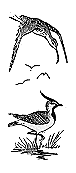
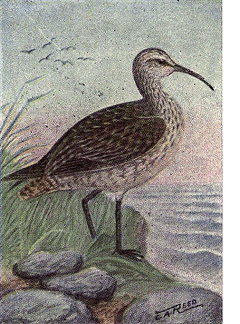
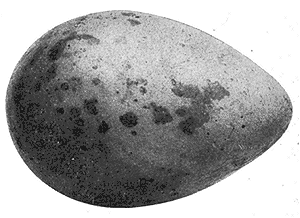
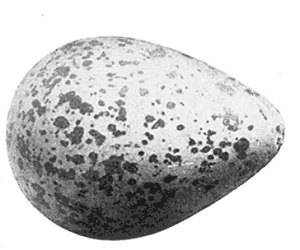
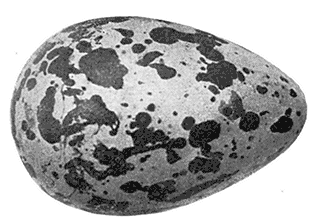
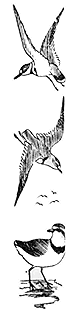
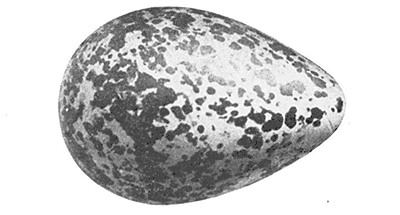
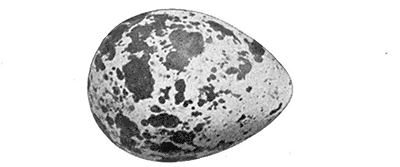
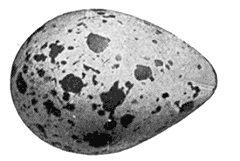
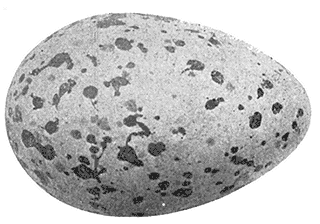
Page 161 PLOVERS. Family CHARADRIIDÆ Grayish. Plovers are stouter built birds than those of the previous family, have larger head, shorter necks and but three toes, the bill also is much harder and shorter. 269. Lapwing. Vanellus vanellus. An abundant European species accidentally occurring on the Atlantic coast. It may readily be recognized by its long black crest, black chin and throat, and white under parts. It breeds throughout temperate Europe, laying its eggs in hollows on the ground. The eggs have a dark grayish buff ground and are spotted with black. Size 1.85 × 1.30. 269.1. Dotterel. Eudromias morinellus. A European bird supposed to have been accidentally taken on the Atlantic coast. 270. Black-bellied Plover. Squatarola squatarola. Greenish buff. Range.--Northern Hemisphere, breeding in the Arctic regions and wintering from the Gulf States to northern South America. This is a remarkably handsome species when in the summer dress. The upper parts are largely white with black spots and bars on the back, wings and tail; the throat, sides of head, breast and fore under parts, black. In winter, brownish-black, somewhat mottled, above; below, dull white. Young similar to winter adults, but the back is spotted with yellowish-white. While these handsome plover migrate to some extent, and sometimes in large flocks, through the interior of the United States, they are chiefly and most abundantly found on the coast. This species has a very small hind toe. It is a very familiar bird to sportsmen and gunners, to whom it is generally known by the names of "Bull-head," or "Beetle-head Plover." They are very numerous in the fall, during which season the underparts are entirely white. The eggs are either laid upon the bare ground or upon a slight lining of grasses or dead leaves. They are three or four in number, brownish or greenish buff in color and boldly marked with black. Size 2.00 × 1.40. Data.--Point Barrow, Alaska, June, 1900. Nest a small hollow on side of hillock, lined with dry grass.
Page 162 BLACK-BELLIED PLOVER.
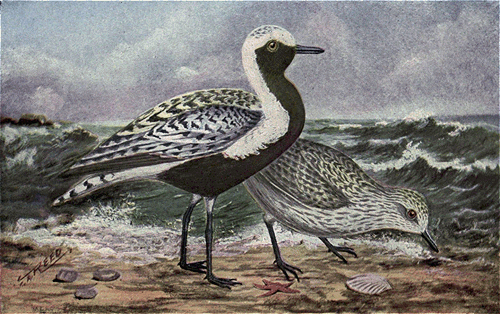
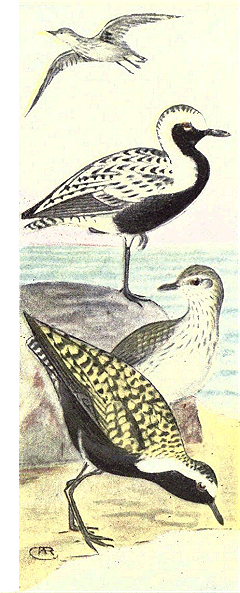
Page 163 Black-bellied Plover. Golden Plover. 272. European Golden Plover. Charadrius apricarius. A European bird, similar to the next, casually found in Greenland. It is a very abundant bird throughout Europe, breeding in the northern parts. Its habits, nests and eggs are the same as those of the American bird. 272. Golden Plover. Charadrius dominicus dominicus. Range.--Whole of North America, breeding in the Arctic regions and wintering south to Patagonia. Greenish buff. This handsome bird is about the same size as the Black-bellied Plover (10.5 inches long). No hind toe. Back and tail mottled with black and yellow; below, more or less entirely black to the tail. Young and winter adults, more or less spotted with yellow and blackish-brown above, and grayish-white below, with indistinct streaks on the breast. Often confused with the last species in this plumage, but is smaller, bill smaller and more slender, and the axillars, or feathers nearest the body, under the wings, are gray while those of the Black-bellied Plover are black. This species is now regarded as rare on the North Atlantic coast during migrations, while in the interior it is more abundant than the last species. They do not seem to be as suspicious as the Black-bellies, and a flock will often allow a close approach, even when they see you. They nest abundantly along the coast and islands of the Arctic Ocean. The four eggs are very similar to those of the preceding, but smaller. Size 1.90 × 1.30. Data.--Peel River, Arctic America, June 1, 1898. Nest of grasses and leaves on the ground in the moss. 272a. Pacific Golden Plover. Charadrius dominicus fulvus. Range.--An Asiatic species, breeding in northern Asia and on the islands and coast of Asia. Very like the preceding, but more golden color on the back and wings. Nesting and eggs the same.
Page 164 NEST AND EGGS OF KILLDEER.
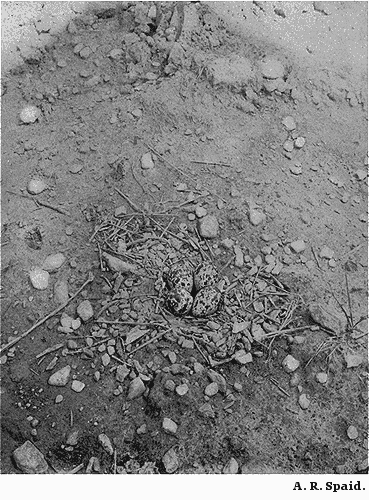
Page 165 Kildeer. Semi-palmated Plover. 273. Killdeer. Oxyechus vociferus. Range.--Temperate North America from the southern parts of Canada southward. Next to the Spotted Sandpiper, this bird is the most common of the shore birds in the United States. It is rarely seen in New England, but is common south of there and in the interior of the country to Canada. Grayish buff. They are very noisy birds, continually uttering their "kil-deer, kil-deer" from which they take their name. They nest anywhere on the ground, generally near water, placing their nests in fields, cornfields or meadows. The eggs are drab or greenish buff and profusely spotted with black. Size 1.50 × 1.10. Data.--Refugio county, Texas, May 11, 1899. 4 eggs in a depression on the ground, lined with a few grasses. 274. Semipalmated. Ægialitis semipalmata. Range.--North America, breeding in the interior of Canada and wintering south from the Gulf States. Buff. Small web between the bases of the two outer toes. Single broad, black band across the breast; black line from base of bill to eye. They are very abundant on our seacoast in Fall, both in flocks composed entirely of their own kind, and also with Least and Semipalmated Sandpipers. They usually keep on the inner side of sandbars or muddy flats bordering marshes, rather than on the open ocean beach. It is also found in smaller flocks, about ponds and marshes in the interior of the country. They are usually unsuspicious and will allow a close approach, or if you are still, will run by within a very few feet. Nest on the ground; eggs buffy, sparsely specked with black, 1.30 × .90; June.
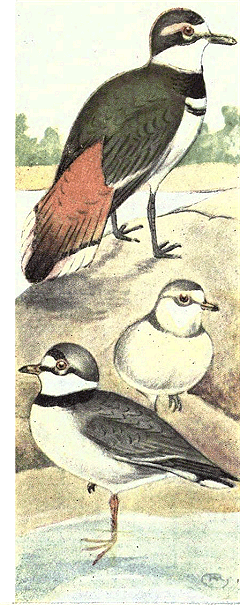
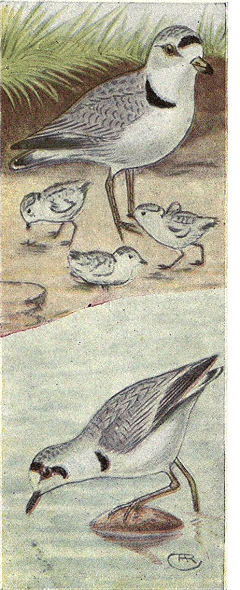
Page 166 Ring Plover. Snowy Plover. 275. Ring Plover. Ægialitis hiaticula. Buffy. Range.--A European bird that breeds abundantly in Greenland. It nests in great numbers on the banks of streams and in fields, laying its eggs in hollows on the ground, generally without any lining. Their three or four eggs are practically not distinguishable from those of the Semipalmated Plover, but larger; size, 1.40 x 1.00. The bird, too, is similar, but the toes are not palmated, and the black breast band is wider. 276. Little Ringed Plover. Ægialitis dubia. An Old World species, accidentally occurring on the Pacific coast. Like the last species, but smaller. The eggs, too, are smaller; size 1.20 x .85. 277. Piping Plover. Ægialitis meloda. Clay Color. Range.--Eastern North America, chiefly along the Atlantic coast, breeding from the Carolinas north to Newfoundland. A handsome little bird, with a black crescent on each side of neck, a small black patch on top of the head, and without any black on the lores or ear coverts. It is the lightest colored of any of the eastern Plovers. Length, 7 inches. Young, similar, but the black replaced by grayish, as is the case with the last species. This species, apparently, never could be classed as abundant and of late years, it is becoming rather rare along our Atlantic coast; this is probably more due to the building of summer resorts and homes along their former breeding grounds than to hunters. They are rather more shy than the last species, but will usually attempt to escape by running along the beach or by hiding, rather than by flight. Owing to their light colors it is very difficult to see them at any distance. They lay their eggs upon the sandy beaches in slight, and generally unlined, hollows. The eggs have a pale clay colored ground and are sparsely specked with small black dots. Size 1.25 x 1.00.
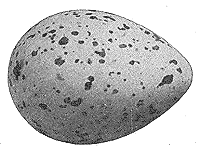
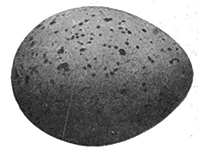

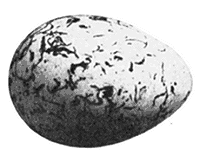
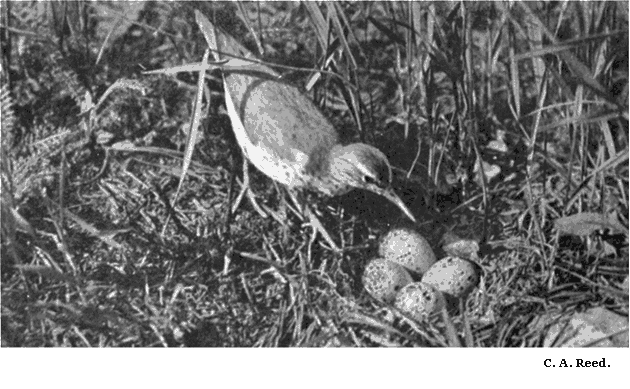
Page 167 278. Snowy Plover. Ægialitis nivosa. Range.--Breeds along the Pacific coast of the United States, and from Texas to Manitoba in the interior. Winters on the California coast and south to Chili. Pale buff. Snowy Plovers are very much like the Piping, but are smaller (length 6.5 inches), have a longer and more slender bill, and have a small black patch on the side of head. It is the palest colored of the Plovers. Large numbers of them nest along the Pacific coast and in Texas; north of Texas, in the interior, they are locally distributed. The eggs are pale clay color, marked with small scratchy dots of black. Size 1.20 x .90. Data.--Newport Beach, California, May 1, 1897. Nest a hollow in the sand, a short distance above high water; lined with broken shell. Collector, Evan Davis. 279. Mongolian Plover. Ægialitis mongola. An inhabitant of the Old World, awarded a place in our avifauna because of its accidental occurrence at Alaska. SPOTTED SANDPIPER AND NEST.
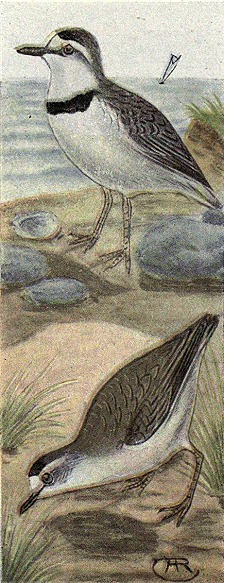
Page 168 Wilson's Plover. Mountain Plover. 280. Wilson's Plover. Octhodromus wilsonius. Range.--An abundant breeding species on the Gulf coast, coast of Lower California, and on the Atlantic coast north to Virginia, and casually farther. Olive gray. A common Plover, which may be distinguished from others of the genus by its comparatively large heavy black bill, and the single broad black band across the breast, and not extending around the back of the neck. They nest on pebbly "shingle" or in the marsh, back of the beaches. Their eggs are an olive gray color and are spotted and scratched with blackish brown, with some fainter markings of gray. Size 1.40 x 1.05. Data.--Corpus Christi, Texas, May 10, 1899. 4 eggs laid on the ground among drifted grass on a salt marsh near town. Collector, Frank B. Armstrong. 281. Mountain Plover. Podasocys montanus. Brownish gray. Range.--Plains and prairies of western North America, breeding from the central portions north to Manitoba, and wintering in California and southward. A very peculiar species, inhabiting even the driest portions of the western prairies. It is 9 inches in length, and has a plumage of a pale buffy tone. It seems to be less aquatic than any other American Plover and is rarely found in the vicinity of bodies of water. It nests on the ground anywhere on the prairie, laying its eggs in a slight hollow. The eggs are brownish gray in color and are spotted and blotched with blackish brown. Data.--Morgan county, Colorado, May 7, 1902. Nest a slight hollow on the ground, near a large cactus bed and close to a water hole. No lining to nest. Collector, Glenn S. White.
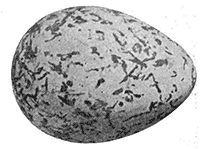
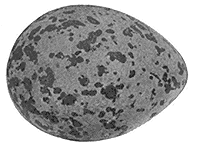
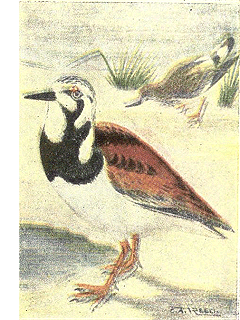
Page 169 SURF BIRDS AND TURNSTONES. Family APHRIZIDÆ Turnstone. 282. Surf Bird. Aphriza virgata. Creamy. This species, which is found on the Pacific coast from Alaska to Chili, seems to be the connecting link between the plovers and the Turnstones, having the habits of the latter combined with the bill of the former. Its nest and eggs are not known to have been yet discovered. 283. Turnstone. Arenaria interpres. Range.--The distribution of this species, which is grayer above than the following, is supposed to be confined, in America, to the extreme north from Greenland to Alaska. Its habits and eggs are precisely like the next. 283a. Ruddy Turnstone. Arenaria interpres morinella. Range.--Breeds in the Arctic regions, and migrates through all parts of the United States, south to the southern parts of South America. This species has the upperparts variegated with reddish brown, black and white; the underparts are pure white, except for a black patch on the throat, branching upward to the eye and back to the sides of the breast. It has a peculiar, slightly up-turned bill, which is used, as their name implies, for turning over pebbles and stones in their search for food. They nest commonly in northern Labrador, about Hudson Bay and in Alaska, laying their eggs in scantily lined hollows on the ground, near water. The eggs are very peculiar and beautiful, having a light grayish or cream color ground, peculiarly marbled with many shades of brown and lilac. Size 1.65 × 1.10. Data.--Mackenzie River, Arctic America, June 28, 1900. Four eggs in a grass lined depression in the sand.
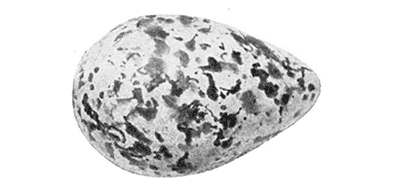

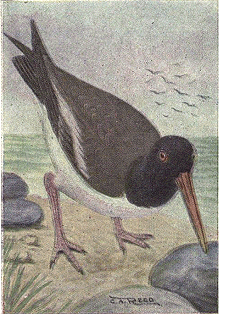
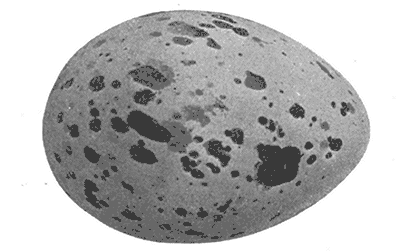
Page 170 284. Black Turnstone. Arenaria melanocephala. Grayish. Range.--Pacific coast of North America, breeding from British Columbia northward, and wintering south to Lower California. This species, which has the form and habits of the preceding, is blackish above and on the breast; the rump and the base of the tail are white, being separated from each other by the black tail coverts. Their nesting habits are in no wise different from those of the common turnstone. The eggs are similar, but the markings are not so strikingly arranged. Size 1.60 × 1.10. Data.--Kutlik, Alaska, June 21, 1898. Nest simply a depression in the sand on the sea beach. OYSTER-CATCHERS. Family HÆMATOPODIDÆ 285. European Oyster-catcher. Hæmatopus frazari. This European species is very similar to the American one which follows. It casually occurs in Greenland. American Oyster-catcher. 286. Oyster-catcher. Hæmatopus palliatus. Range.--Breeds on the coast of the South Atlantic States and Lower California and winters south to Patagonia. Oyster-catchers are Buff. large, heavy-bodied birds, with stocky red legs and long, stout red bills. The present species has the whole upper parts and entire head and neck, blackish; underparts and ends of secondaries, white; length, 19 inches. They are abundant breeding birds on the sandy beaches of the South Atlantic States, and casually wander north to Nova Scotia. They lay their two or three eggs on the ground in slight hollows scooped out of the sand. The eggs are of a buffy or brownish buff color, and are irregularly spotted with blackish brown, with subdued markings of lavender. Size 2.20 × 1.50. Data.--Sandy Point, S. C., May 12, 1902. Three eggs on the sand just above high water mark; nest a mere depression on a small "sand dune" lined with pieces of shells.
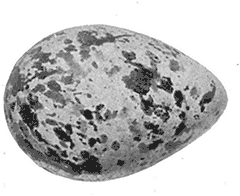
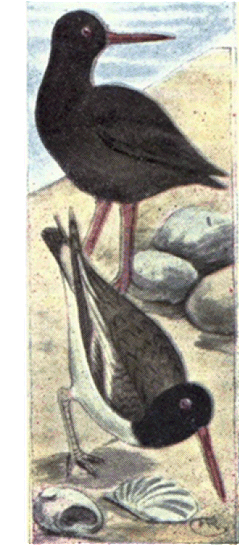
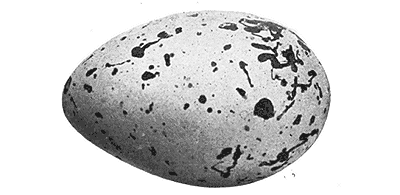
Page 171 287--286.1. 286.1. Frazar's Oyster-catcher. Hæmatopus bachmani. Brownish buff. Range.--Lower California. This species is darker on the back than the preceding, and the breast is mottled with dusky. Bill very long, heavy, compressed, and thin and chisel-like at the tip. Bill and eyes red; legs flesh color; under parts white, and a white wing bar. These are large, awkward looking birds. It is not an uncommon wader in its somewhat restricted range. Its nesting habits are the same as those of the preceding one, but the markings are generally more sharply defined. The one figured is from a set in the collection of Mr. C. W. Crandall. 287. Black Oyster-catcher. Hæmatopus bachmani. Olive buff. Range.--Pacific coast of North America from Lower California north to Alaska. This species is the same size as the Oyster-catcher, but the plumage is entirely black both above and below. They are found upon the rocky coasts and islands, more frequently than upon sandy beaches. Their eggs are laid upon bare rocks or pebbles with no attempt at lining for the nest. The eggs are an olive buff in color, spotted and blotched with brownish black. Size 2.20 × 1.55. Breeding throughout the Aleutian Islands, British Columbia and south to Lower California. Three or four eggs are laid.
Page 172 JACANAS. Family JACANIDÆ Mexican Jacana. 288. Mexican Jacana. Jacana spinosa. Range.--Tropical America, north in summer to the lower Rio Grande Valley in Texas, and casually to Florida. Yellowish olive. This interesting species has most of its structural characters similar to the Plovers, but has more the appearance and habits of the Rails. They are about eight inches long, the head and neck are black, the body chestnut, and the wings largely greenish yellow. They have long legs, long toes and extremely long toe nails, a scaly leaf on the forehead, and a sharp spur on the shoulder of the wing. Owing to their long toes and nails, they are enabled to walk over floating weeds and rubbish that would sink beneath their weight, otherwise. They build their nests on these little floating islands in the marsh; they are also sometimes made of weeds and trash on floating lily pads. They lay from three to five eggs of a yellowish olive color, curiously scrawled with brown and black. Size 1.22 × .95. Data.--Tampico, Mexico, June 3, 1900. Three eggs. Nest of weeds and drift on lily leaf floating in fresh water pond near town.
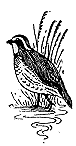
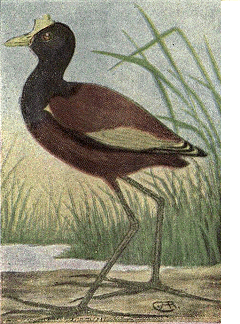
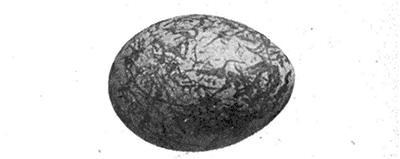
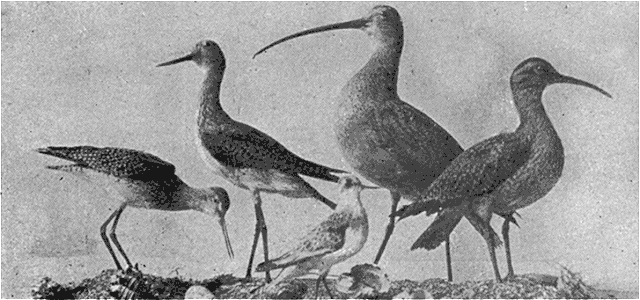
Page 173 NEST AND EGGS OF BOB-WHITE.
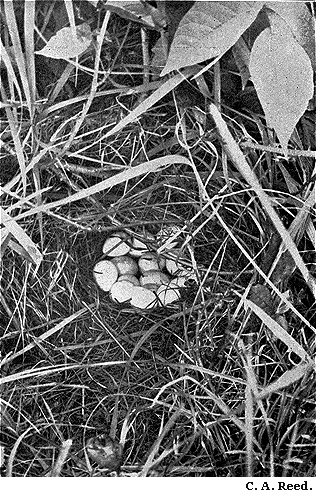
Page 174 BOB WHITE. Female--Male.
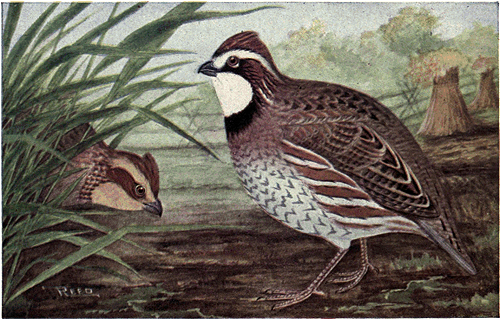
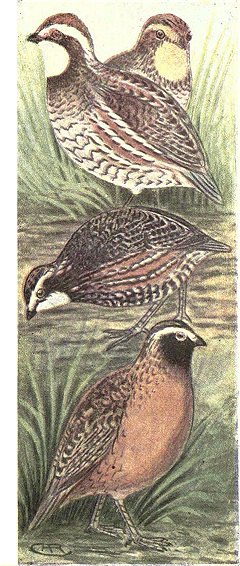
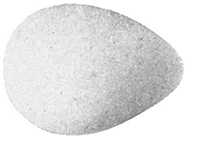
Page 175 GALLINACEOUS BIRDS. Order X. GALLINÆ GROUSE, PARTRIDGES, ETC. Family TETRAONIDAE The members of this family are birds of robust form, subdued (not brightly colored) plumage, comparatively short legs and necks; the tarsi and toes are feathered in the Ptarmigan, the tarsi, only, feathered in the Grouse, and the tarsi and toes bare in the Partridges and Bob-whites. They feed upon berries, buds, grain and insects. Bobwhite. Florida Bobwhite. Masked Bobwhite. 289. Bob-white. Colinus virginianus virginianus. Range.--United States east of North Dakota and Texas and from the southern British Provinces to the Gulf coast. White. A celebrated "game bird" which has been hunted so assiduously in New England that it is upon the verge of extermination, and the covers have to be continually replenished with birds trapped in the south and west. They frequent open fields, which have a luxuriant growth of weeds, or grain fields in the fall. Their nests are built along the roadsides, or beside stonewalls or any place affording satisfactory shelter. The nest is made of dried grasses and is arched over with grass or overhanging leaves so as to conceal the eggs. They lay from ten to twenty pure white eggs, which are very frequently nest stained when found. Size 1.20 × .95. Often two or three broods are raised in a season, but frequently one or more broods are destroyed by rainy weather. 289a. Florida Bob-white. Colinus virginianus floridanus. Range.--This sub-species, which is found in the southern half of Florida, is very much darker than the northern Bob-white, and is numerously barred below with black. Its nesting habits and eggs are identical with those of the preceding. 289b. Texas Bob-white. Colinus virginianus texanus. Range.--Texas; casually north to Kansas. A grayer variety of the Bob-white. The nesting habits and eggs are the same as those of the Bob-white, except that the eggs may average a trifle smaller. Size 1.18 × .92. 291. Masked Bob-white. Colinus ridgwayi. Range.--Sonoran region of Mexico north to southern Arizona. The female of this species is like that of the Texan Bob-white. Their nesting habits and eggs are in all respects like those of the other Bob-whites. Size of eggs, 1.20 × .95.
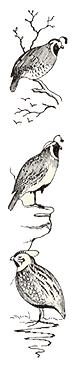
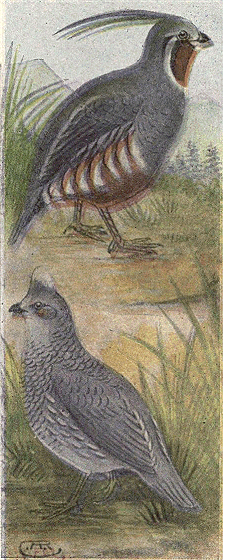
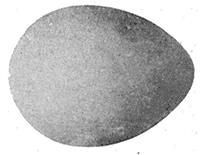
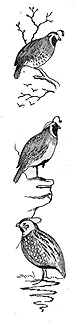
Page 176 Mountain Partridge. Scaled Partridge. 292. Mountain Quail. Oreortyx picta picta. Range.--Pacific coast of North America from California to Washington. Reddish buff. This is the largest of the Partridges, being 11 inches in length. It is of a general grayish color, with chestnut throat patch, and chestnut flanks, barred with white. Two long plumes extend downward from the back of the head. This species nests abundantly in the mountainous portions of northern California and throughout Oregon, and is gradually increasing in numbers in Washington. As a rule they nest only on the higher mountain ranges, placing their nest of leaves under the protection of an overhanging bush or tuft of grass. Their eggs number from six to fifteen, and are of a pale reddish buff color. Size 1.35 × 1.05. 292a. Plumed Quail. Oreortyx picta plumifera. Range.--Mountain ranges of California and Lower California, chiefly in the southern parts of the former. This species is like the latter except that it is grayer on the back of the head and neck. Its nesting habits and eggs are like the preceding. 292b. San Pedro Quail. Oreortyx picta confinis. Range.--San Pedro Mountains, Lower California. This species, which is grayer above than the preceding two, breeds only in the highest peaks of its range. Otherwise its nesting habits and eggs are the same as the other Plumed Partridges. 293. Scaled Quail. Callipepla squamata squamata. Creamy white. Range.--Mexico and southwestern border of the United States. This blue gray species is 10 inches in length; the feathers on the neck and underparts have narrow dark borders, thus giving the plumage a scaly appearance, from which the birds take their name. They have a small tuft of whitish or buffy feathers on the top of the head. It is especially abundant in the dry arid portions of its range, being found often many miles away from water. Their eggs are laid in a shallow hollow under some small bush or cactus, and number from eight to sixteen; they are creamy white, finely specked with buff or pale brownish. Size 1.25 × .95.
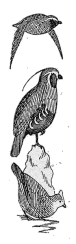
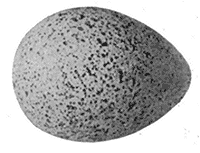
Page 177 California Partridge. 293a. Chestnut-bellied Scaled Quail. Callipepla squamata castanogastris. Range.--Lower Rio Grande Valley in Texas and and southward into Mexico. This sub-species is like the last with the addition of a chestnut patch on the belly. Their breeding habits do not vary in any particular way from those of the Scaled Partridge. 294. California Quail. Lophortyx californica californica. Range.--Coast region of California, Oregon, Washington and British Columbia. Creamy white. This is one of the most beautiful of the Partridges, with its crest of feathers rising from the crown and curving forwards so that the broadened ends hang directly over the bill. It is about the size of the preceding species, and is distinguished from the following one by its white forehead, chestnut patch on the belly and the scaly appearance of the feathers in that region, by its dark crown and the gray flanks with white streaks. They lay from eight to twenty eggs with a creamy white or buffy ground color, handsomely blotched with shades of brown and yellowish brown. Size 1.20 × .93. 294a. Valley Partridge. Lophortyx californica vallicola. Range.--Interior portions of California, Oregon and Washington. The nesting habits of this grayer sub-species do not differ in any manner from those of the above species. The eggs are indistinguishable. 295. Gambel Quail. Lophortyx gambeli. Buff. Range.--Southwestern United States from Texas to California; north to Utah. This handsome species differs from the California in the Chestnut crown and flanks, and the black patch on the belly. They are very abundant in Arizona, both on the mountains and in the valleys, and apparently without any regard to the nearness to, or remoteness from a water supply. They breed during May, laying their eggs on the ground under any suitable cover. The eggs cannot be distinguished from those of the California Partridge, except that they average a trifle larger. Size 1.25 × .95.
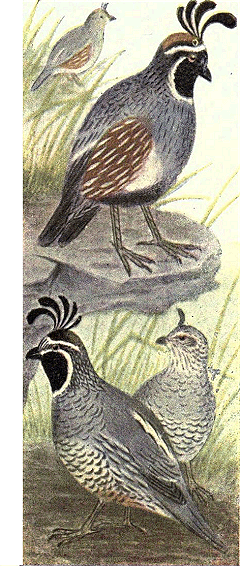
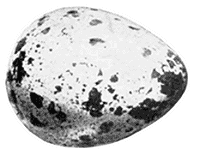
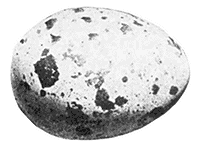
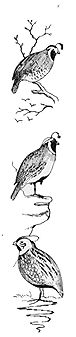
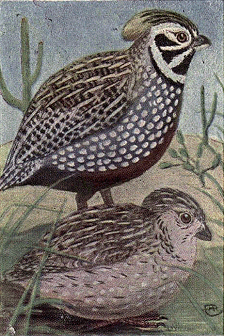
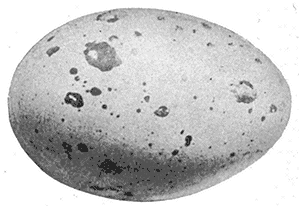
Page 178 Mearns Partridge. 296. Mearns Quail. Cyrtonyx montezumæ mearnsi. Range.--Mexico, north to southern Arizona and New Mexico, and to western Texas. A remarkable species about 9 inches long; often called "Fool Quail" because of its eccentric and clownish markings, streaks and spots of black, white, buff, gray and chestnut. It is met with in small flocks on the mountains and less frequently in the valleys. It frequents scrubby wooded places rather than open hill sides and is very easy to approach and kill; this confidence or stupidity together with its clownish appearance are the reasons for its commonly used local name. Their nests are hollows in the ground, lined with grasses and concealed by overhanging tufts of grass. The eggs, which are pure white, are not distinguishable with certainty from those of the Bob-white, but average longer. Size 1.25 × .95. 297. Dusky Grouse. Dendragapus obscurus obscurus. Range.--Rocky Mountain region from central Montana south to New Mexico. With the exception of the Sage Grouse, this species is the largest of the family, being about 20 inches in length. The general tone of its plumage below is gray; above, blackish gray and the tail blackish with a broad terminal band of light gray. They frequent the wooded and especially the coniferous districts, where they build their nests under fallen trees or at the bases of standing ones. They lay from six to ten eggs of a buffy color, sparsely spotted and blotched with brownish. Size 2.00 × 1.40. Rich buff. 297a. Sooty Grouse. Dendragapus obscurus fuliginosus. Range.--Mountain ranges along the Pacific coast from California to British Columbia. Like the last, this somewhat darker sub-species is met with in timbered regions, where its habits are about the same as those of the Ruffled Grouse, except, of course, that they are not nearly as shy as the Grouse in New England. Their eggs are laid in hollows beside stumps or under logs. The eggs are buff colored, spotted with reddish brown. Size 2.00 × 1.40.

Page 179 Sooty Grouse. Spruce Grouse. 297b. Richardson's Grouse. Dendragapus obscurus richardsoni. Range.--Northern Rocky Mountains from central Montana to British Columbia. A dark variety with no terminal band of gray on the tail. Its habits, nesting and eggs are precisely like those of the preceding species. 298. Hudsonian Spruce Partridge. Canachites canadensis canadensis. Bright buff. Range.--Northern United States and southern British Provinces; west to Minnesota. A dark species, smaller than the last (15 inches long), and easily recognized by its black throat and extensive black patch on the breast. The habits of this species and the two varieties into which it has been sub-divided are the same; as a species, they are very tame, will not fly unless actually obliged to, and frequently allow themselves to be knocked down with sticks. Their nests are hollows in the leaves on the ground, generally under the sheltering branches of a low spreading fir tree. The six to fifteen eggs are a bright buff color, blotched and spotted boldly with various shades of brown. Size 1.70 × 1.25. 298b. Alaska Spruce Partridge. Canachites canadensis osgoodi. Range.--Alaska. This variety is practically the same as the preceding, the birds not always being distinguishable; the nest and eggs are the same as the Canada Grouse. 298c. Canada Spruce Partridge. Canachites canadensis canace. Range.--Labrador and the Hudson Bay region. Like the last, this variety is hardly to be distinguished from the Hudsonian. Its nesting habits and eggs are the same.
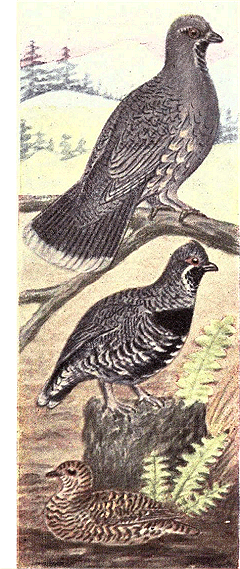
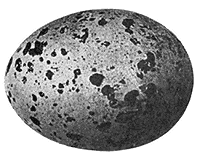

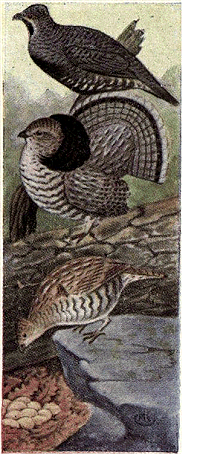
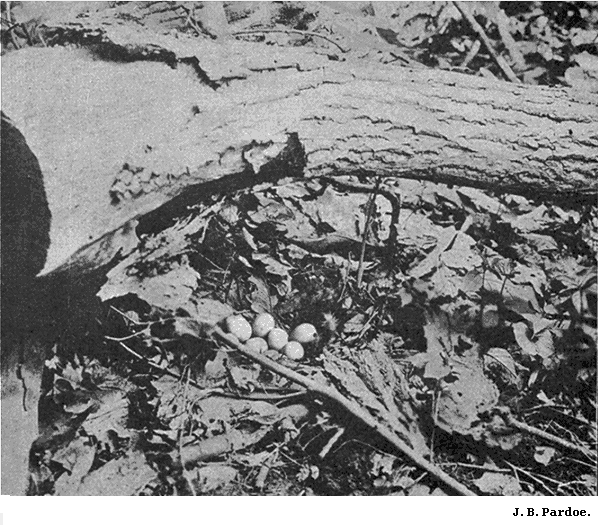
Page 180 Ruffed Grouse. 299. Franklin's Grouse. Canachites franklin franklini. Brownish buff. Range.--Northwestern United States and British Columbia. This species is very similar to the Canada Grouse, the most apparent difference being the absence of the brownish gray tip to the tail, and the upper coverts are broadly tipped with white. This species, which is very abundant in the northwest, has the same stupid habits of the eastern bird. During the mating season, the males of both this and the preceding species have the same habit of "drumming" that the Ruffed Grouse has. Their nests are placed on the ground under bushes or fir trees and from eight to fifteen eggs are laid. These are brownish buff in color, spotted and blotched with rich brown. They are very similar to the eggs of the Canada Grouse. Data.--Moberly Peak, Cascade Mts., British Columbia, June 9, 1902. 7 eggs in a slight hollow on the ground. Collector, G. F. Dippie. 300. Ruffed Grouse. Bonasa umbellus umbellus. Brownish buff. Range.--Eastern United States from Minnesota to New England; south to Virginia. The Ruffed Grouse is "King of the Game Birds" in the east, where it has been hunted so freely, that it has become very wary and requires a skillful marksman to bring it down. Because of the cutting off of all heavy timber, and the vigor with which they are pursued by hunters, they are becoming very scarce in New England, and within a few years they will probably be practically extinct in that section. Their favorite resorts are heavily timbered woods or low growth birches. Their nests are hollows in the leaves under fallen trees, beside some stump or concealed among the small shoots at the base of a large tree. The bird sits very close, but when she does fly, goes with the familiar rumble and roar which always disconcerts the novice, the wind created by her sudden flight generally causing the leaves to settle in the nest and conceal the eggs. They lay from eight to fifteen eggs, of a brownish buff color, sometimes with a few faint markings of brown, but generally unspotted. Size 1.55 × 1.15. The young of all the Partridges and Grouse are born covered with down and follow their parents soon after leaving the shell. The adults are very skillful in leading enemies away from their young, feigning lameness, broken wings, etc. The nesting habits and eggs of the three sub-species are precisely the same in every respect as those of this bird.
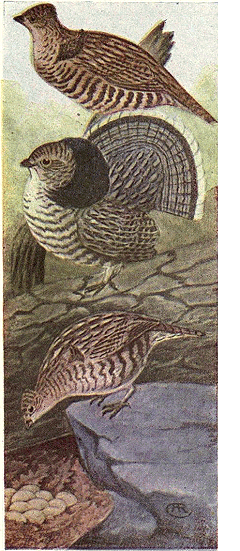
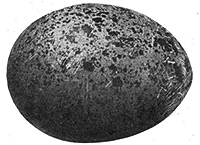
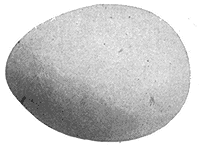
Page 181 RUFFED GROUSE.
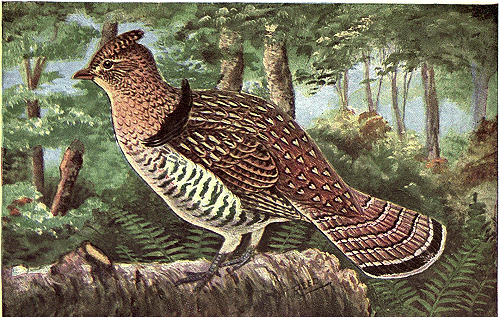
Page 182 299--300a. 300a. Canada Ruffed Grouse. Bonasa umbellus togata. Range.--Northern United States and southern British Provinces from Maine and Nova Scotia west to Washington and British Columbia. 300b. Gray Ruffed Grouse. Bonasa umbellus umbelloides. Range.--Rocky Mountain region from Colorado to Alaska. A grayer species than the common. 300c. Oregon Ruffed Grouse. Bonasa umbellus sabini. Range.--Pacific coast from California to British Columbia. A dark species with the prevailing color a reddish tone. NEST AND EGGS OF RUFFED GROUSE.
Page 183 Willow Ptarmigan. Rock Ptarmigan. 301. Willow Ptarmigan. Lagopus lagopus lagopus. Range.--Arctic regions, in America south nearly to the United States border, and casually to Maine. Brownish buff. Ptarmigan are Grouse-like birds, feathered to the toe nails; they have many changes of plumage, in winter being nearly pure white, and in summer largely reddish brown or grayish, barred with black. In the breeding plumage they have red comb-like wattles over the eye. In other seasons, their plumage varies in all degrees between winter and summer. They nest on the ground in hollows among the leaves, lined with a few grasses, and sometimes feathers. They lay from six to sixteen eggs which have a ground color of buff or brownish buff, heavily speckled, blotched and marbled with blackish brown. Size 1.75 × 1.25. 301a. Allen's Ptarmigan. Lagopus lagopus alleni. Range.--Newfoundland. A very similar bird to the preceding; eggs indistinguishable. Buff. 302. Rock Ptarmigan. Lagopus rupestris rupestris. Range.--Chiefly in the interior of British America, from the southern portions to Alaska and the Arctic Ocean. A species with a smaller bill and in summer a grayer plumage, more finely barred with black. Its nesting habits are the same as the other species, it nesting on the ground in such localities as would be frequented by the Ruffed Grouse. Its eggs cannot be positively distinguished from those of the Willow Ptarmigan. Size 1.70 × 1.20.
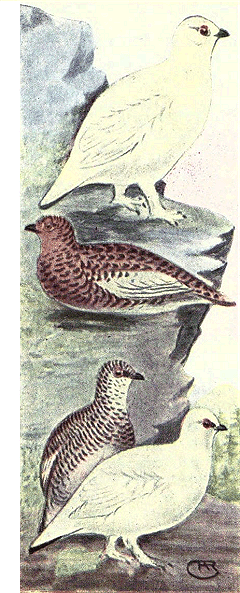
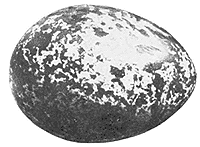
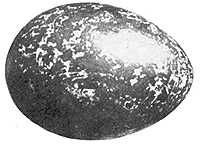
Page 184 302a. Reinhardt's Ptarmigan. Lagopus rupestris reinhardi. Range.--Labrador and Greenland; an eastern variety of the preceding species. Its habits, nesting habits and eggs are just the same as those of Rock Ptarmigan. 302b. Nelson's Ptarmigan. Lagopus rupestris nelsoni. Range.--Unalaska, of the Aleutian chain. An abundant species in its restricted range, making its nest on the ground in the valleys. Eggs like the others. 302c. Turner's Ptarmigan. Lagopus rupestris atkhensis. Range.--Atka Island, of the Aleutian chain. Nests and eggs not distinctive. 302d. Townsend's Ptarmigan. Lagopus rupestris townsendi. Range.--Kyska Island of the Aleutian group. On account of the constantly changing plumage of these birds, while interesting, they are very unsatisfactory to study, and it is doubtful if anyone can identify the different sub-species of the Rock Ptarmigan, granting that there is any difference, which is doubtful. 302.1. Evermann's Ptarmigan. Lagopus evermanni. Range.--Attu Island, of the Aleutian group. This is, in summer, the darkest of the Ptarmigans, having little or no rufous and much blackish. The nesting habits and eggs are the same as those of the Rock Ptarmigan. 303. Welch's Ptarmigan. Lagopus welchi. Buff. Range.--Newfoundland. This species, in summer, is more grayish than the Rock Ptarmigan, and is very finely vermiculated with blackish. It is a perfectly distinct species from the Allen Ptarmigan, which is the only other species found on the island. They inhabit the higher ranges and hills in the interior of the island, where they are quite abundant. They build their nests on the ground under protection of overhanging bushes. The eggs are laid in a hollow in the dead leaves, sometimes with a lining of grasses. The eggs do not differ in size or appearance from those of the Rock Ptarmigan. Data.--Newfoundland, June 3, 1901. Nest a slight hollow in the moss, besides a fallen stump; lined with a few feathers. Collector, E. H. Montgomery.
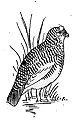
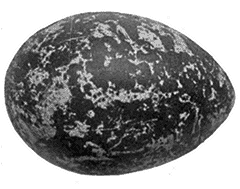
Page 185 304. White-tailed Ptarmigan. Lagopus leucurus leucurus. Range.--Higher ranges of the Rocky Mountains, from New Mexico north to Alaska. Ptarmigan are remarkable birds in that they are in an almost continual state of molting, nearly every month in the year showing them in different stages of plumage, ranging from the snow-white winter dress to the summer one in which reddish-brown prevails on Willow Ptarmigan and a black and gray barred effect predominates on the other species. Notice that they are feathered to the toes, in winter the feathers on the toes growing dense and hair-like, not only protecting the toes from the cold but making excellent snowshoes which enable them to walk with impunity over the lightest snow. Ptarmigan form the staple article of diet for northern foxes, and were it not for the fact that their plumage changes to correspond to the appearance of the ground at the various seasons they would fare hardly indeed. In spring the little red combs above the eyes of the males are swollen and conspicuous. At this season they strut and perform curious antics, such as all Grouse are noted for. This species differs from any of the preceding in having at all seasons of the year, a white tail; it is also somewhat smaller than the Rock Ptarmigan. They nest abundantly near the summits of the ranges in Colorado, making their nests among the rocks, and generally lining them with a few grasses. During June, they lay from six to twelve eggs having a creamy background, speckled and blotched with chestnut brown. Size 1.70 x 1.15. 304a. Kenai White-tailed Ptarmigan. Lagopus leucurus peninsularis. Range.--Kenai Peninsular, Alaska. A similar but paler (in summer) variety of the preceding. The nesting habits or eggs will not differ. 305. Prairie Chicken. Tympanuchus americanus americanus. Range.--The prairies, chiefly west of the Mississippi; north to Manitoba, east to Ohio, and west to Colorado. This familiar game bird of the west is about 18 inches in length, brownish above and grayish below, with bars of brownish black both above and below. In the place of the ruffs of the Ruffled Grouse, are long tufts of rounded or square ended feathers, and beneath these a peculiar sac, bright orange in the breeding Olive Buff.
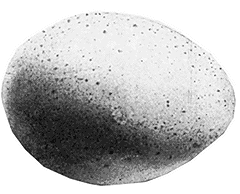
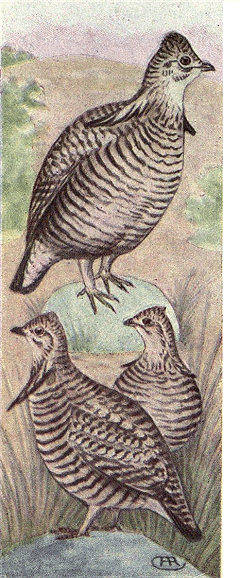
Page 186 Prairie Chicken. Heath Hen. season, and capable of being inflated to the size of a small orange; this is done when the bird makes its familiar "booming" noise. They are very good "table birds" and although they are still very abundant in most of their range, so many are being killed for market, that it has become necessary to make more stringent laws relating to the killing and sale of Pinnated Grouse, as they are often called. They nest anywhere on the prairie, in hollows on the ground under overhanging bushes or tufts of grass. They lay from eight to fifteen eggs having a buffy or olive buff ground color, sparingly and finely sprinkled with brown; size 1.70 × 1.25. 305a. Attwater Prairie Chicken. Tympanuchus americanus attwateri. Range.--Coast region of Louisiana and Texas. This is a slightly smaller and darker variety of the Pinnated Grouse. Its eggs cannot be distinguished from those of the more northerly distributed bird. 306. Heath Hen. Tympanuchus cupido. Range.--Island of Martha's Vineyard, Mass. This species is similar to the preceding, but has the scapulars more broadly tipped with buff, the axillars barred, and the pinnated feathers on the neck pointed. It is slightly smaller than the western species. It is found on the wooded portions of the island, where its breeding habits are the same as those of the Ruffed Grouse. Mr. Brewster probably has the only authentic set of the eggs of this species. They are of a yellowish green color and are unspotted. Size 1.70 × 1.25. A number of Prairie Hens liberated on the island several years ago are apparently thriving well, and nests found there now would be fully as apt to belong to this species.
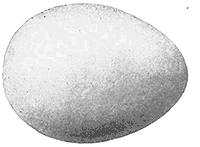
Page 187 Pale buff. 307. Lesser Prairie Chicken. Tympanuchus pallidicinctus. Range.--Prairies from southwestern Kansas through Indian Territory to western Texas. A smaller and paler species than the Prairie Chicken. Never as abundant as the common Pinnated Grouse, this species appears to be becoming scarcer each year. Its nests are concealed under overhanging brush or placed under a large tuft of prairie grass, and are generally lined with a few grasses or leaves. They lay from eight to twelve eggs of a buffy color, much lighter than those of the Prairie Chicken, and unmarked. Size 1.65 × 1.25. Prairie Sharp-tailed Grouse. 308. Sharp-tailed Grouse. Pedioecetes phasianellus phasianellus. Range.--Interior of British America, from the United States boundary northwest to the Yukon. Buffy drab. Sharp-tailed Grouse are similar in form to the Prairie Chicken, but are somewhat smaller and very much lighter in color, being nearly white below, with arrowhead markings on the breast and flanks. This species is very abundant in Manitoba and especially so on the plains west of Hudson Bay. Their nests are generally concealed under a thicket or a large tuft of grass, and are lined with grasses and feathers. They lay from six to fifteen eggs of a drab color, very minutely specked all over with brown. Size 1.70 × 1.25. 308a. Columbian Sharp-tailed Grouse. Pedioecetes phasianellus columbianus. Range.--Northwestern United States and British Columbia to central Alaska. Both the nesting habits and eggs of this variety are the same as the last, with which species, the birds gradually intergrade as their ranges approach. 308b. Prairie Sharp-tailed Grouse. Pedioecetes phasianellus campestris. Range.--Plains of the United States from the Mississippi to the Rockies. This sub-species shades directly into the two preceding where their ranges meet, and only birds from the extreme parts of the range of each show any marked differences. The nesting habits and eggs of all three are not to be distinguished.
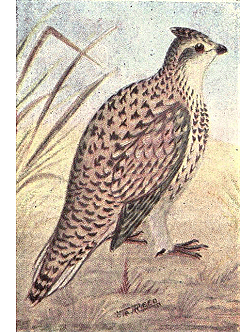
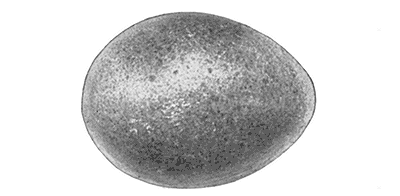
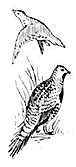
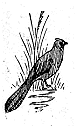
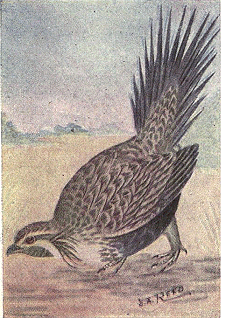
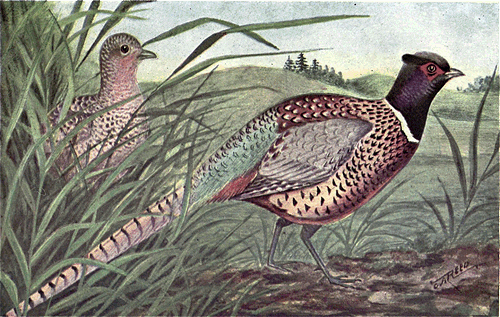
Page 188 Sage Hen. 309. Sage Hen. Centrocercus urophasianus. Pale greenish drab. Range.--Sage plains of the Rocky Mountain region from British Columbia to New Mexico, and from California to Dakota. This handsome bird is the largest of the American Grouse, being about 30 inches long (the hen bird is about six inches shorter). It may easily be recognized by its large size, its peculiar graduated tail with extremely sharp pointed feathers, and the black belly and throat. Their nests are hollows scratched out in the sand, under the sage bushes, generally with no lining. The nesting season is during April and May, they laying from six to twelve eggs of a greenish drab color, spotted with brown. Size 2.15 × 1.50. PHEASANTS. Family PHASIANIDÆ * * *Ring-necked Pheasant. Phasianus torquatus. Greenish buff. Several species of Pheasants have been introduced into the United States, among them being the Ring-necked, English, and Green Pheasants. The Ring-necked species seems to be the only one that has obtained a really strong foothold, it being now very abundant in Oregon and Washington, and adjacent states, and also found in abundance on many game preserves in the east. The males of any of the species may at once be distinguished from any of our birds by the long tail. Their nests are hollows in the leaves under tufts of grass or bushes. They lay from eight to fourteen eggs of a buff or greenish buff color, unmarked; size 1.50 × 1.30.
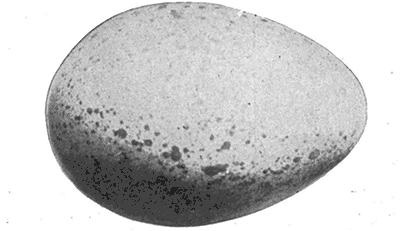
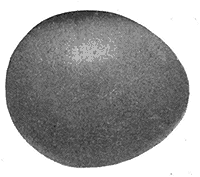
Page 189 RING-NECKED PHEASANT.
Page 190 TURKEYS. Family MELEAGRIDÆ Sage Hen. Wild Turkey. 310. Wild Turkey. Meleagris gallopavo silvestris. Buff. Range.--Eastern United States from southern Middle States south to central Florida and west to the Mississippi Valley and eastern Texas. These magnificent birds, which once ranged over the whole of eastern United States, are being yearly confined to a smaller range, chiefly because of the destruction of their natural covers, and from persecution by hunters. They are generally very wary birds and either escape by running through the underbrush or by flying as soon as a human being appears in sight. Their nests are made under tangled growths of underbrush or briers. Their eggs, which are laid during April and May, range from eight to sixteen in number. They are of a buff color sprinkled and spotted with brownish. Size 2.55 × 1.90. Data.--Hammond, La., April 17, 1897. Fifteen eggs. Nest hollow scraped in the ground under a bush on the edge of a pine woods; lined with grasses and leaves. Collector, E. A. McIlhenny. 310a. Merriam's Turkey. Meleagris gallopavo merriami. Range.--Southwestern United States from Colorado south through western Texas, New Mexico and Arizona to Mexico. This variety is abundant throughout its range, its nesting habits and eggs being practically indistinguishable from those of the eastern form.
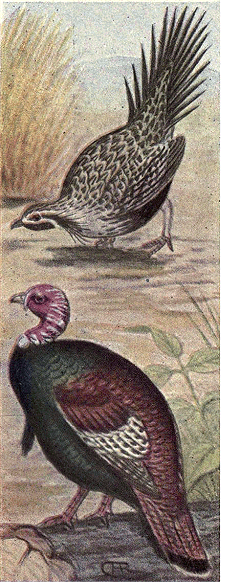
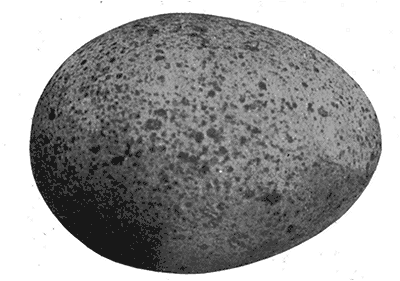
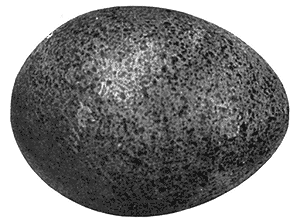
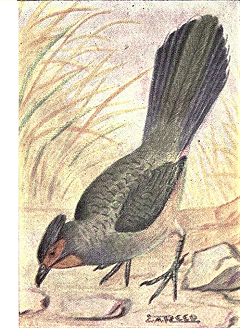
Page 191 310b. Florida Turkey. Meleagris gallopavo osceola. Greenish buff. Range.--Southern Florida. A small variety of the Wild Turkey, about 42 inches long. They breed in the tangled thickets in the higher portions of the southern half of Florida, laying from ten to sixteen eggs of a brighter and deeper buff color than the northern variety, and smaller; size 2.30 × 1.75. Their nests are generally lined with grasses and occasionally with feathers. The female sits very close when incubating and will not fly until almost trod upon, trusting to her variegated markings to conceal her from observation. 310c. Rio Grande Turkey. Meleagris gallopavo intermedia. Range.--Lowlands of the southern parts of Texas and northern Mexico. A sub-species which differs slightly in plumage and not at all in nesting habits or eggs from the common Wild Turkey. CURASSOWS AND GUANS. Family CRACIDÆ 311. Chachalaca. Ortalis vetula mccalli. Chachalaca. Range.--Eastern portions of Mexico, north to the Lower Rio Grande Valley in Texas. Buffy white. A very peculiar grayish colored bird with a greenish gloss to the back, and a long, broad tail, quite long legs, and with the face and sides of the throat devoid of feathers. They are very abundant birds in some localities, and very noisy during the breeding season, their notes resembling a harsh trumpeting repetition of their name. They are ground inhabiting birds, but nest in low bushes. Their nests are made of sticks, twigs, leaves, or moss and are generally frail, flat structures only a few feet above the ground. During April, they lay from three to five buffy white eggs, the shell of which is very rough and hard. Size 2.25 × 1.55.
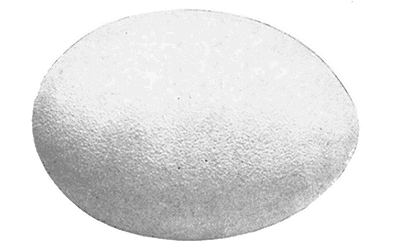
Page 192 PIGEONS AND DOVES. Order XI. COLUMBÆ Family COLUMBIDAE Pigeons and doves are distributed throughout nearly every temperate and tropical country on the globe, nearly five hundred species being known, of which twelve occur within our limits. Their plumage is generally soft and subdued colors, the head small, the wings strong and the flight rapid. 312. Band-tailed Pigeon. Columba fasciata fasciata. White. Range.--The Rocky Mountains and westward to the Pacific, from British Columbia south to Mexico. This large species may be generally recognized by the white crescent on the nape; it is about 15 inches in length. They nest abundantly on the mountain ranges, sometimes in large flocks, and again, only a few pairs together. Their nests are rude platforms of sticks and twigs either in bushes or in large trees in heavily wooded districts. The two eggs which are laid during May or June are pure white in color, and like those of all the pigeons, equally rounded at each end. Size 1.55 × 1.10. 312a. Viosca's Pigeon. Columba fasciata vioscæ. Range.--Southern Lower California. This is a paler variety of the preceding species and is not noticeably different in its habits, nesting or eggs. 313. Red-billed Pigeon. Columba flavirostris. Range.--Mexico and Central America, north to southern Texas, Arizona and New Mexico. This species, characterized by its red bill, purplish colored head, neck and breast and absence of iridescent markings, is abundant in the valley of the Lower Rio Grande, where they build their frail nests in thickets and low bushes, and during May and June lay their white eggs. Size of eggs, 1.55 × 1.05. 314. White-crowned Pigeon. Columba leucocephala. Range.--Resident of the West Indies; in summer, found on the Florida Keys. This species, which can be identified by its white crown, nests in trees or mangroves on certain of the Florida Keys, laying its two white eggs on its rude platform of sticks and twigs. Size of eggs 1.40 × 1.05. Nests in April and May. 314.1. Scaled Pigeon. Columba squamosa. A West Indian species, a single specimen of which was taken at Key West, Florida. A dark colored species, with purplish head, neck and breast; named from the scaly appearance of the iridescent feathers on the sides of the neck.
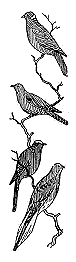
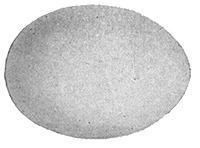
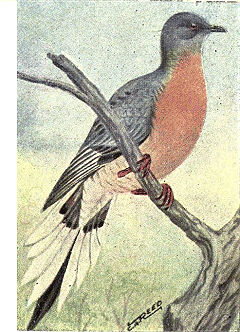
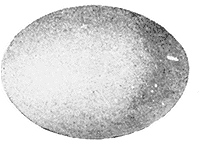
Page 193 Passenger Pigeon. 315. Passenger Pigeon. Ectopistes migratorius. Range.--Formerly, North America east of the Rockies; casually seen in the upper Mississippi Valley, now extinct. White. A handsome species (see frontispiece) with ruddy underparts, grayish upperparts and a long graduated tail. This species years ago found in flocks of thousands or millions, is now practically exterminated, chiefly by being hunted and trapped. A few pairs probably now nest in the interior, from northern United States to Hudson Bay. Their nests are very rude, frail platforms of twigs, on which two white eggs are laid, they being longer and narrower, comparatively, than those of other species. Size of eggs, 1.50 × 1.02. Data.--Southwest shore of Lake Manitoba, June 1, 1891. Nest of twigs in an aspen tree. 316. Mourning Dove. Zenaidura macroura carolinensis. Range.--North America from New England, Manitoba and British Columbia, southward. Mourning Dove. White. Now that the Passenger Pigeon has disappeared, this species becomes the only one found in the east, with the exception of the little Ground Dove in the South Atlantic and Gulf States. While, sometimes, small flocks of them nest in a community, they generally nest in companies of two or three pairs. Their nests are generally at a low elevation, in trees, bushes and often upon the ground. Their nests are made entirely of twigs and rootlets, and eggs may be found from early in April until the latter part of September, as they often raise two or three broods a season. The two eggs are white. Size 1.15 × .80. Data.--Refugio Co., Texas, May 3, 1899. Two eggs laid on the ground in a slight cradle of twigs. Collector, James J. Carroll.
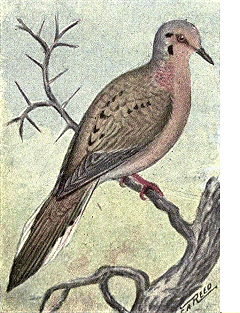
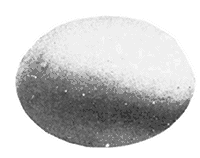
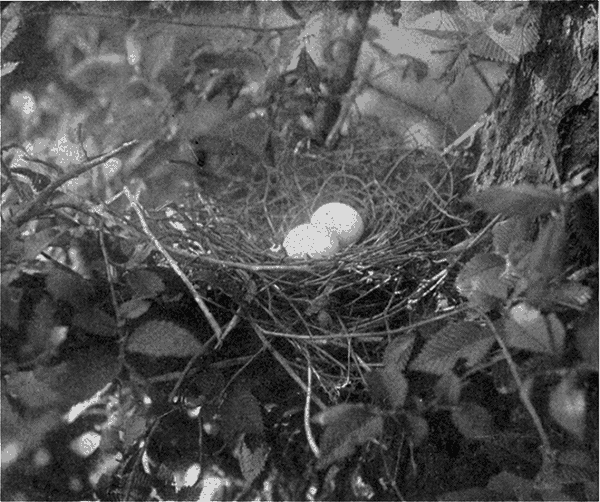
Page 194 NEST AND EGGS OF MOURNING DOVE H. B. Stough. 317. Zenaida Dove. Zenaida zenaida. Range.--West Indies; in summer, on the Florida Keys, but not in great numbers. This species is similar in size to the Mourning Dove, but it has a short and square tail, and the secondaries are tipped with white, and the underparts more ruddy. They generally nest upon the ground, but occasionally in small bushes, laying two white eggs a trifle larger than those of the preceding species. Size 1.20 × .90. The nests are made of grasses and twigs, on the ground under bushes.
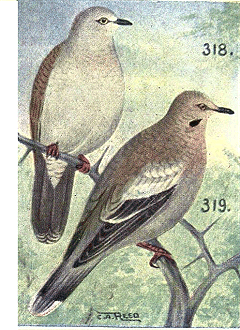
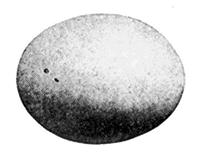
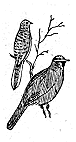
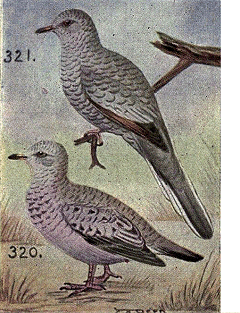
Page 195 318. White-fronted Dove. Leptotila fulviventris brachyptera. White-fronted Dove. White-winged Dove. Range.--Mexico and Central America north to southern Texas. Slightly larger than the last, much paler below, with no black ear mark as in the two preceding species, and with the forehead whitish. They build their nests of sticks, grasses and weeds, and place them in tangled vines and thickets a few feet from the ground. Their two eggs, which are laid in May and June, have a creamy white or buffy color. Size 1.15 × .85. They cannot be called a common species within our borders. 319. White-winged Dove. Melopelia asiatica. White. Range.--Central America, Mexico and the southwestern border of the United States. This species is 12 inches in length, has a black patch on the ear coverts, white tips to the greater and lesser coverts and some of the secondaries, and broad white tips to the outer tail feathers, which are black. This species is very abundant in some localities within our borders. Their nests are very frail platforms of twigs placed in trees or bushes or precariously suspended among tangled vines. Their two eggs are white or creamy white, and measure 1.15 × .85. 320. Ground Dove. Columbigallina passerina terrestris. Range.--South Atlantic and Gulf States to eastern Texas. The Ground Doves are the smallest of the family, measuring but about 6.5 inches in length. Their nesting habits and eggs are exactly like those of the next to be described. They are very abundant, especially along the South Atlantic coast. 320a. Mexican Ground Dove. Chæmepelia passerinus pallescens. White. Range.--Border of the United States from Texas to southern California and southward. This paler sub-species builds a nest of twigs and weeds, placing the flat structure either in low bushes or on the ground. Their two white eggs are laid during April to July, they sometimes rearing two broods a season. Size of eggs, .85 × .65. 320b. Bermuda Ground Dove. Chæmepelia passerina bermudiana. Range.--Bermuda. Smaller and paler than the last; otherwise the same in nesting habits and eggs.
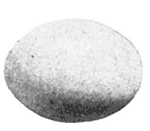
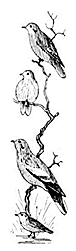
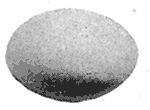
Page 196 321. Inca Dove. Scardafella inca. Inca Dove. Ground Dove. White. Range.--Mexican border of the United States south to Central America and Lower California. This handsome species is about the size of the last, but its tail is longer and graduated, consequently its length is greater, it being about 8 inches long. It is not an uncommon species along our Mexican border, but is not nearly as abundant as is the Ground Dove. It is often called "Scaled Dove" because of the blackish edges of nearly all its feathers. They build fairly compact nests of twigs, rootlets and weeds, these being placed in bushes at a low elevation. They are two in number and pure white. Size .85 × .65. 322. Key West Quail Dove. Geotrygon chrysia. Range.--West Indies, rarely found at Key West, although supposed to have been common there in Audubon's time. This species is of about the size of the Mourning Dove, has rusty colored upper parts, and is whitish below, the white below the eye being separated from that of the throat by a stripe of dusky from the base of the bill. They nest in trees, laying two buffy white eggs. Size 1.15 × .9O. 322.1. Ruddy Quail Dove. Geotrygon montana. Range.--Central America, north to eastern Mexico and the West Indies; once taken at Key West. This species is similar to the last but has no white streak under the eye, and the underparts are buffy. Eggs, creamy white. Size 1.15 × .90. 323. Blue-headed Quail Dove. Starnoenas cyanocephala. Range.--Cuba, accidentally straying to Key West, but not in recent years. It is a beautiful species, with a bright blue crown, black throat and stripe through the eye, separated by a white line under the eye. The rest of the plumage is of a brownish or rusty color. Eggs buffy white. Size 1.30 × 1.05.
Page 197 CALIFORNIA VULTURE.
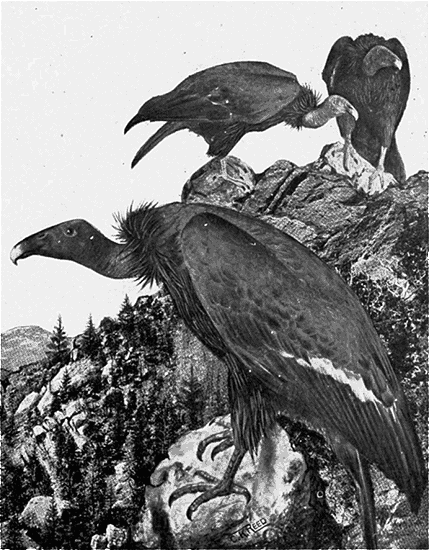
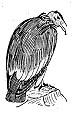
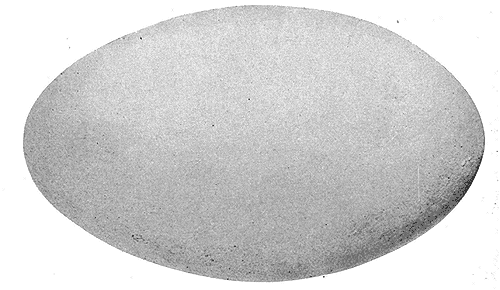
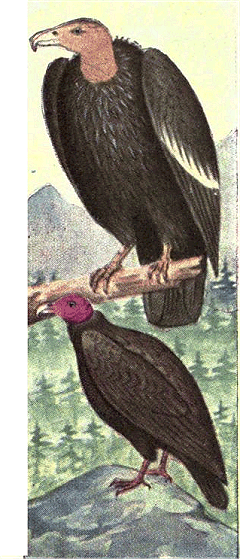
Page 198 VULTURES, HAWKS and OWLS. Order XII. RAPTORES AMERICAN VULTURES. Family CATHARTIDAE Vultures are peculiarly formed birds of prey, having a bare head and neck, a lengthened bill strongly hooked at the end for tearing flesh, and long, strong, broad wings upon which they float in the air for hours at a time without any visible flapping. They are scavengers and do great service to mankind by devouring dead animal matter, that, if allowed to remain, would soon taint the atmosphere. Their eyesight and sense of smell is very acute. They do not, except in very unusual cases, capture their prey, but feed upon that which has been killed or died of disease. Ashy gray. 324. California Vulture. Gymnogyps californianus. Range.--Apparently now restricted to the coast ranges of California, casually inland to Arizona, and formerly to British Columbia. This large bird, which weighs about 20 pounds, measures about 4 feet in length, and has an expanse of wings of about 10 feet. Its plumage is blackish with lengthened lanceolate feathers about the neck, and with the greater wing coverts broadly tipped with grayish white (in very old birds). The birds are very rare in their restricted range and are becoming scarcer each year, owing to their being shot and their nests robbed. While the eggs are very rarely found and only secured at a great risk, they are not as unobtainable as many suppose, as may be seen from the fact that one private collection contains no less than six perfect specimens of the eggs and as many mounted birds. These birds lay but a single egg, placing it generally in caves or recesses in the face of cliffs, hundreds of feet from the ground, and often in inaccessible locations. The eggs are of an ashy gray color and measure about 4.45 × 1.55.
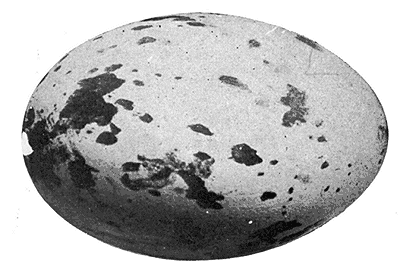
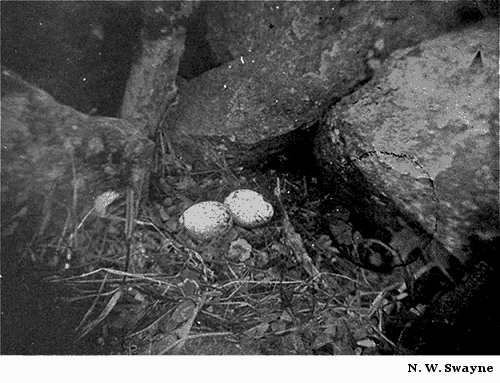
Page 199 324--325. 325. Turkey Vulture. Cathartes aura septentrionalis. Range.--America, from New Jersey on the Atlantic coast, Manitoba and British Columbia, south to southern South America, wintering in the southern half of the United States. Creamy white. The plumage of this small Buzzard (length 30 inches) is blackish brown, the naked head being red. It is very common in the southern and central portions of its range, where it frequents the streets and door yards picking up any refuse that is edible. It is a very graceful bird while on the wing, and can readily be identified when at a distance from the fact that, when in flight, the tips of the wings curve upward. The two eggs which constitute a set are laid upon the ground between large rocks, in hollow stumps, under logs, or between the branching trunks of large trees, generally in large woods. They frequently nest in communities and again, only a single pair may be found in the woods. Its nesting season ranges from March until June in the different localities. The eggs are creamy or bluish white, spotted and blotched with shades of brown, and with fainter markings of lavender. Size 2.70 × 1.85. 326. Black Vulture. Catharista uruba. Range.--More southerly than the preceding; north regularly to North Carolina and southern Illinois, and west to the Rocky Mountains. This species is about the same size, or slightly smaller than the Turkey Vulture; its plumage is entirely black as is also the naked head, and bill. In the South Atlantic and Gulf States, the present species is even more abundant than the preceding, and might even be said to be partially domesticated. The nesting habits are the same as those of the Turkey Buzzard but their eggs average longer and the ground color is pale greenish or bluish white rather than creamy. They are spotted and blotched the same. Size 3.00 × 2.00.
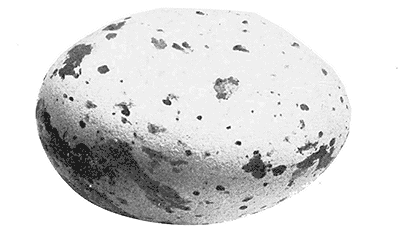

Page 200 Bluish white. EGG OF BLACK VULTURE. NEST AND EGGS OF TURKEY VULTURE.
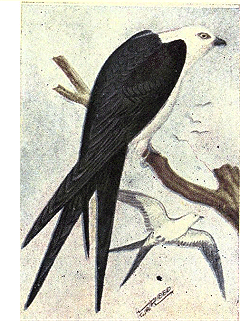
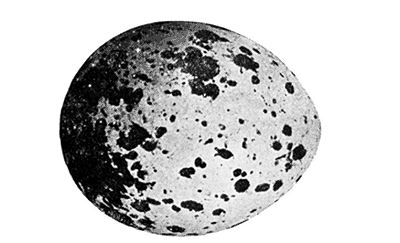
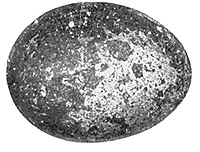
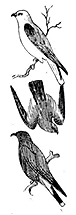
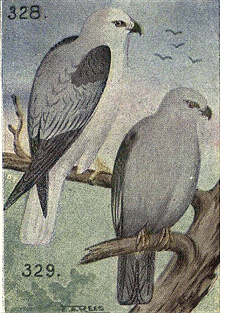
Page 201 KITES, HAWKS AND EAGLES. Family BUTEONIDÆ The members of this family are chiefly diurnal; they get their living by preying upon smaller animals or birds. They have strong sharply hooked bills, powerful legs and feet armed with strong, curved and sharply pointed talons. Swallow-tailed Kite. 327. Swallow-tailed Kite. Elanoides forficatus. Range.--Southern United States; casually north to New York and Manitoba. White. This most beautiful Kite can never be mistaken for any other; its whole head, neck and underparts are snowy white, while the back, wings and tail are glossy blue black, the wings being very long and the tail long and deeply forked. The extreme length of the bird is 24 inches. As a rule nests of this bird are placed high up in the tallest trees; they are made of sticks, weeds and moss. Two eggs, or rarely three, constitute a full set. They are white or bluish white, spotted with brown. The one figured is an unusually handsome marked specimen in the collection of Mr. C. W. Crandall. Average size of eggs, 1.80 × 1.50. Data.--Yegna Creek bottoms, Texas, April 27, 1891. Two eggs. Nest of sticks and green moss, the same moss also being used for lining; in an elm tree 80 feet up. 328. White-tailed Kite. Elanus leucurus. Range.--Southern United States, north to the Carolinas, Illinois and middle California. Creamy white. This species can be recognized by its light bluish gray mantle, black shoulders and white tail. It is a very active species, feeding upon insects and reptiles, and small birds and mammals. The nests of these species are placed in trees at quite an elevation from the ground, being made of sticks, weeds and leaves. The eggs are creamy white, profusely blotched and spotted with reddish brown and umber. Size 1.65 × 1.25. Data.--Los Angeles, Cal., April 9, 1896. Nest in fork of willows about 25 feet up. Made of willow twigs and weed stalks, lined with pieces of bark.
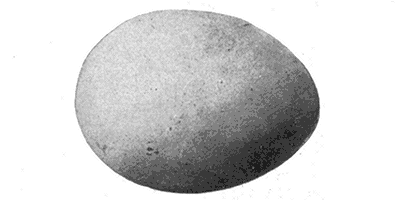
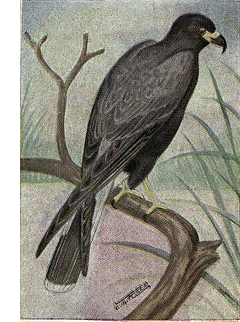
Page 202 White-tailed Kite Mississippi Kite. 329. Mississippi Kite. Ictinia mississippiensis. Range.--Southeastern United States, north to South Carolina and Illinois. Bluish white. A small species (length 14 inches) with the head, neck, and underparts gray, and the back, wings and tail blackish, the tips of the secondaries being grayish. They live almost exclusively upon insects, such as grasshoppers, and small reptiles. They build their nests of sticks and weeds well up in tall trees. The eggs are two or three in number and normally bluish white, unmarked, but occasionally with very faint spots of pale brown. Size 1.65 × 1.25. Data.--Giddings, Texas, May 31, 1887. Nest of sticks and weeds, with green pecan leaves in the lining; placed in the top of a live oak sapling, 20 feet from the ground. Collector, J. A. Singley. 330. Everglade Kite. Rostrhamus sociabilis. Everglade Kite. Range.--South America, north to southern Florida and Mexico. This peculiar species has a long, slender, curved bill, blackish plumage, with white rump and bases of outer tail feather. They feed largely upon snails, both land and water varieties. They nest at a low elevation in bushes or under brush, often over the water. Pale greenish white. The nests are of sticks, weeds and leaves. The three eggs are light greenish white, spotted and splashed with chestnut brown. Size, 1.70 × 1.30. Nest in a custard apple tree, 6 feet from the ground, built of twigs, lined with small vine stems and willow leaves.
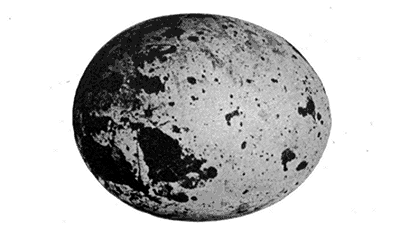
Page 203 NEST AND EGGS OF MARSH HAWK.
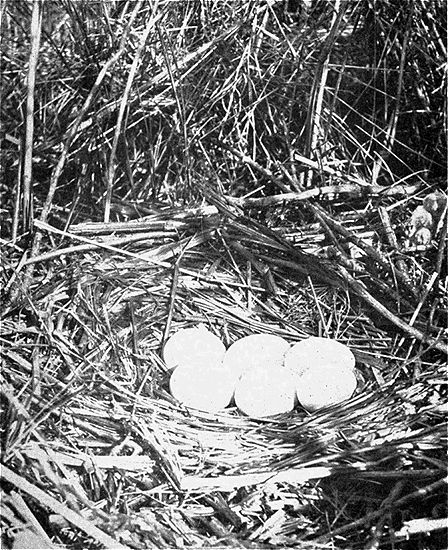
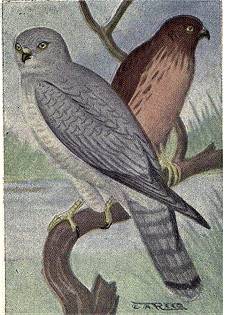
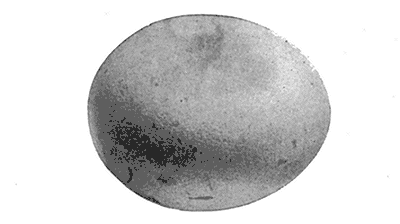
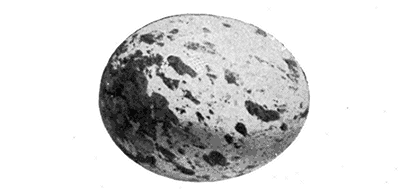
Page 204 (Adult and young) Marsh Hawk. 331. Marsh Hawk. Circus hudsonius. Range.--Whole of North America, very abundant in all sections. Pale bluish white. The adult of this species is very light colored, and young birds of the first two years have a reddish brown coloration; in both plumages the species is easily identified by the white patch on the rump. They are, almost exclusively frequenters of fields and marshes, where they can most often be seen, towards dusk, swooping in broad curves near the ground, watching for field mice, which form the larger portion of their diet. Their nests are made in swampy ground, often in the middle of a large marsh, being placed on the ground in the centre of a hummock or clump of grass; it is generally well lined with grasses and often rushes. They lay from four to seven pale bluish white eggs, generally unmarked; size 1.80 × 1.40. Sharp-shinned Hawk. 332. Sharp-shinned Hawk. Accipiter velox. Bluish white. Range.--Whole of North America, wintering in the United States and southward; breeds throughout its range, but most abundantly in northern United States and northward. This is one of the smallest of the hawks and in the adult plumage is a beautiful species, being barred below with light brown, and having a bluish slate back. It is a very spirited and daring bird and is one of the most destructive to small birds and young chickens. Its nest is a rude and sometimes very frail platform of twigs and leaves placed against the trunk of the tree at any height, but averaging, perhaps, fifteen feet. The eggs are bluish white, beautifully blotched and spotted with shades of brown.
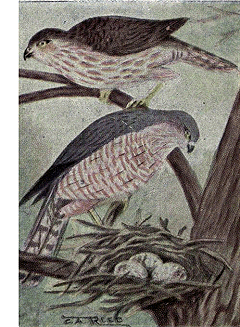
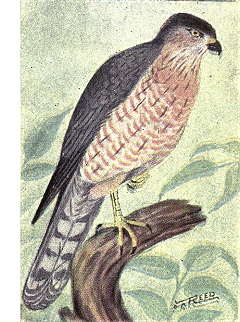
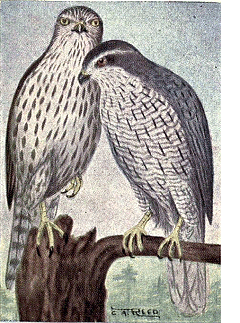
Page 205 Cooper's Hawk. 333. Cooper's Hawk. Accipiter cooperi. Bluish white. Range.--Whole of temperate North America, breeding throughout its range. Although larger (length 17 inches), the plumage of this species is almost exactly the same as that of the preceding. Like the last, this is also a destructive species. They construct their nests in the crotches of trees, generally at quite a height from the ground; the nest is made of sticks and twigs, and often lined with pieces of bark; occasionally an old Hawk's or Crow's nest is used by the birds. Their eggs are bluish white, unmarked or faintly spotted with pale brown. 334. Goshawk. Astur atricapillus atricapillus. Range.--Northern North America, south in winter to the northern parts of the United States. American Goshawk. Bluish white. This species is one of the largest, strongest and most audacious of American Hawks, frequently carrying off Grouse and poultry, the latter often in the presence of the owner. It is a handsome species in the adult plumage, with bluish gray upper parts, and light under parts, finely vermiculated with grayish and black shafts to the feathers. Length 23 inches. Their nests are placed well up in the tallest trees, usually in dense woods, the nests being of sticks lined with weeds and bark. The three or four eggs are bluish white, generally unmarked, but occasionally with faint spots of brown. Size 2.30 x 1.70.
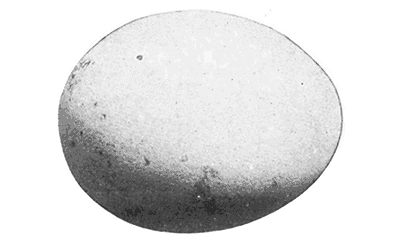
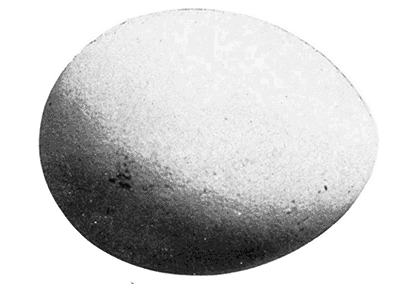
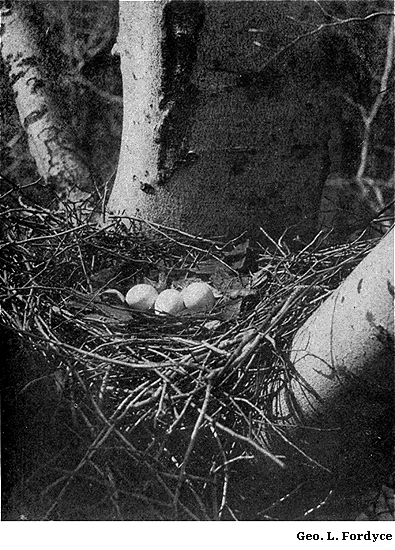
Page 206 NEST AND EGGS OF COOPER'S HAWK.
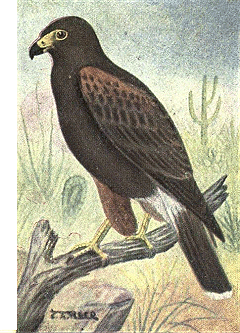
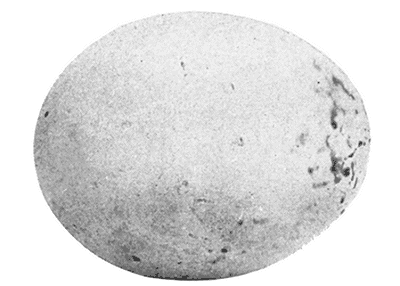
Page 207 Harris's Hawk. 334a. Western Goshawk. Astur atricapillus striatulus. Bluish white. Range.--Western North America from Alaska to California, breeding chiefly north of the United States except in some of the higher ranges of the Pacific coast. This sub-species is darker, both above and below, than the American Goshawk. Its nesting habits and eggs are precisely the same. The eggs are quite variable in size. 335. Harris's Hawk. Parabuteo unicinctus harrisi. Range.--Mexico and Central America, north to the Mexican border of the United States; very abundant in southern Texas. This is a peculiar blackish species, with white rump, and chestnut shoulders and thighs. It is commonly met with in company with Caracaras, Turkey Buzzards and Black Vultures, feeding upon carrion. They also feed to an extent on small mammals and birds. Their nests are made of sticks, twigs and weeds, and placed in bushes or low trees. The three or four eggs are laid in April or May. They are dull white in color and generally unmarked, although often showing traces of pale brown spots. They are quite variable in size, averaging 2.10 x 1.65. White.
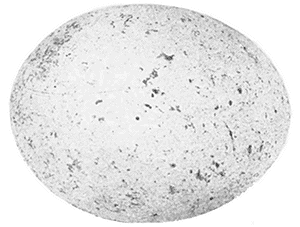
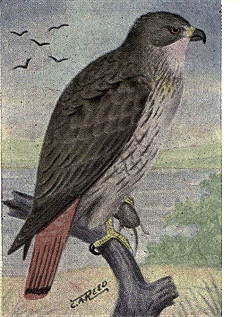
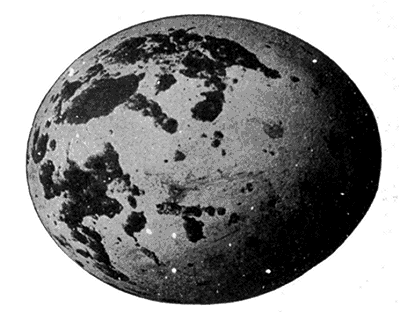
Page 208 Red-tailed Hawk. 337. Red-tailed Hawk. Buteo borealis borealis. Pale bluish white. This is one of the handsomest of the larger hawks, and is the best known in the east, where it is commonly, but wrongly, designated as "hen hawk", a name, however, which is indiscriminately applied to any bird that has talons and a hooked beak. The adult of this species is unmistakable because of its reddish brown tail; young birds are very frequently confounded with other species. Their food consists chiefly of small rodents, snakes and lizards, and only occasionally are poultry or birds taken. They nest in the tallest trees in large patches of woods, the nests being made of sticks, weeds, leaves and trash. The eggs number from two to four, and are white, sometimes heavily, and sometimes sparingly, blotched and spotted with various shades of brown. Size 2.35 x 1.80. 337a. Krider's Hawk. Buteo borealis krideri. Range.--Plains of the United States, north to Manitoba. This sub-species is described as lighter on the underparts, which are almost immaculate. Its nesting habits and eggs are the same as those of the preceding. White. 337b. Western Red-tail. Buteo borealis calurus. Range.--Western North America, chiefly west of the Rocky Mountains. This sub-species varies from the plumage of the eastern Red-tail, to a nearly uniform sooty above and below, with the dark red tail crossed by several bands; it is a generally darker variety than the Red-tail. Its nesting habits are the same and the eggs show the great variations in markings that are common to the eastern bird.
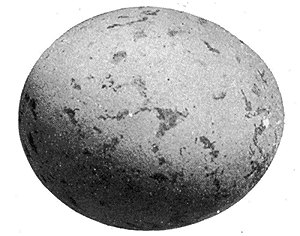
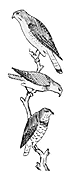
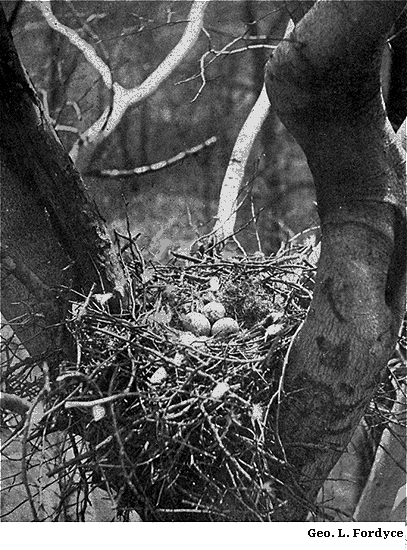
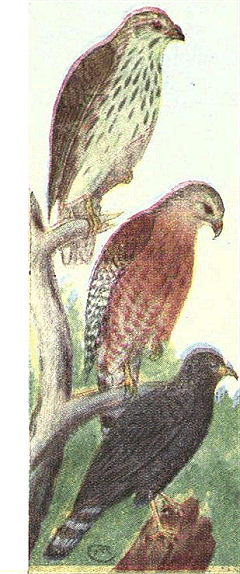
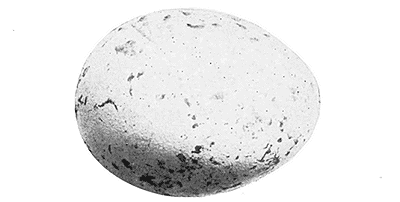
Page 209 Red-shouldered Hawk. 337d. Harlan's Hawk. Buteo borealis harlani. Range.--Gulf States and southward, north to Kansas. This dark sub-species is generally nearly uniform blackish, but sometimes is lighter or even white below. Its tail is rusty, mottled with blackish and white. Its nesting habits are the same and the eggs are not distinguishable from those of the other Red-tails. 339. Red-shouldered Hawk. Buteo lineatus lineatus. Range.--North America, east of the Plains and from the southern parts of the British Provinces southward; abundant and breeding throughout its range. White. This species is smaller than the Red-tailed and is not as powerfully built; length 19 inches. The adults are handsomely barred beneath with reddish brown, giving the entire underparts a ruddy color. Like the last species, they rarely feed upon poultry, confining their diet chiefly to mice, rats, frogs, reptiles, etc. These Hawks nest in the larger growths of timber, usually building their nests high above the ground. The nest is of sticks, and lined with leaves, weeds and pieces of bark. They lay three or four eggs with a white ground color, variously blotched and spotted, either sparingly or heavily, with different shades of brown. Size 2.15 × 1.75. Data.--Kalamazoo, Michigan, April 25, 1898. Nest about 40 feet up in an oak tree; made of sticks and twigs and lined with bark. Four eggs. Collector, J. C. Holmes. 339a. Florida Red-shouldered Hawk. Buteo lineatus alleni. Range.--Florida and the Gulf coast; north to South Carolina. The nesting habits of this paler sub-species are precisely like those of the last species.
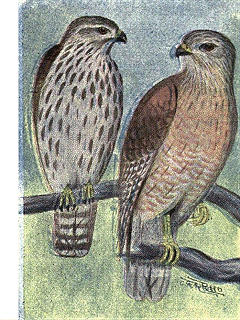
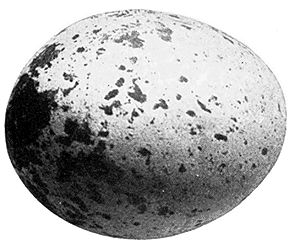
Page 210 NEST AND EGGS OF RED-SHOULDERED HAWK.
Page 211 339b--340. 339b. Red-bellied Hawk. Buteo lineatus elegans. Range.--Pacific coast from British Columbia south to Lower California, chiefly west of the Rockies. White. This variety is similar to, but darker than lineatus, and the underparts are a uniform reddish brown, without barring. Their nests are like those of the Red-shouldered variety, and almost always placed high up in the largest trees. The eggs are very similar, but average lighter in markings. Size 2.15 × 1.70. Data.--Diego, Cal., April 13, 1897. Nest in a sycamore 20 feet from ground, made of sticks, leaves and feathers. 340. Zone-tailed Hawk. Buteo abbreviatus. Range.--Mexico and Central America, north to the Mexican border of the United States. This species, which is 19 inches long, is wholly black with the exception of the tail, which is banded. Their nests are built in heavy woods, and preferably in trees along the bank of a stream. The nest is of the usual Hawk construction and the two to four eggs are white, faintly marked with pale chestnut. Data.--Marathon, Texas. Nest of sticks, lined with weeds and rabbit fur; on a horizontal branch of a cotton-wood tree, 30 feet up. White.
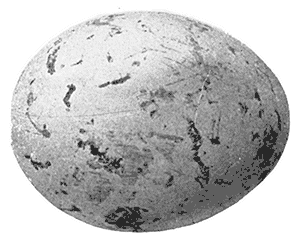
Page 212 Sennett's White-tailed Hawk. 341. Sennett's White-tailed Hawk. Buteo albicaudatus sennetti. Range.--Mexican border of the United States and southward. A large, handsome Hawk which may be identified by its dark upper parts and white underparts and tail, the flanks and tail being lightly barred with grayish; the shoulders are chestnut. It is especially abundant in the southern parts of Texas, where it builds its nests of sticks and weeds, lined with grasses, leaves and moss. They nest in March and April, laying two, or rarely three, eggs which are a dull white, and generally immaculate, but occasionally faintly or sparingly spotted with brown. Size of eggs 2.25 × 1.80. 342. Swainson's Hawk. Buteo swainsoni. Range.--Central and western North America, from the Mississippi Valley and Hudson Bay, to the Pacific coast, breeding throughout its range. White. Swainson's Hawk. In the greater part of its range, this is the most abundant of the Hawk family. Its plumage is extremely variable, showing all the intergradations from a uniform sooty blackish to the typical adult plumage of a grayish above, and a white below, with a large breast patch of rich chestnut. Their nesting habits are as variable as their plumage. In some localities, they nest exclusively in trees, in others indifferently upon the ground or rocky ledges. The nest is the usual Hawk structure of sticks; the eggs are white, variously splashed and spotted with reddish brown and umber. Size 2.20 × 1.70. Data.--Stark Co., N. D., May 21, 1897. Nest of sticks, lined with weeds in an ash tree. Collector, Roy Dodd.

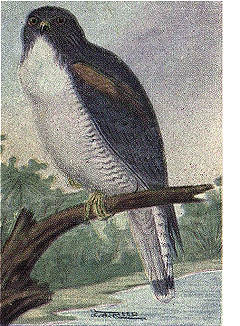
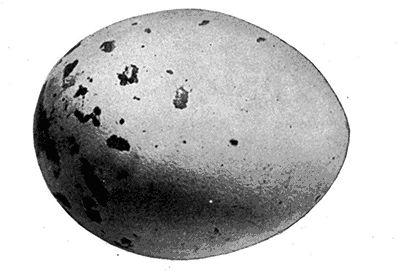
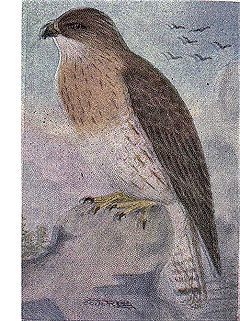
Page 213 American Rough-legged Hawk. 343. Broad-winged Hawk. Buteo platypterus. Range.--North America, east of the Plains, and from the British Provinces southward. Grayish white. A medium sized species, about 16 inches in length, and with a short tail and broad rounded wings; adults have the underparts handsomely barred with brown. Their nests are usually built in large trees, but generally placed against the trunk in the crotch of some of the lower branches. It is made of sticks and almost invariably lined with bark. The two to four eggs are of a grayish white color, marked with chestnut, brown and stone gray; size 1.90 × 1.55. Data.--Worcester, Mass., May 16, 1895. Nest about 20 feet up in a large chestnut tree. The birds continually circled overhead, their weird cries sounding like the creaking of branches. Collector, A. J. White. 344. Short-tailed Hawk. Buteo brachyurus. Range.--A tropical species, which occurs north to the Mexican border and regularly to southern Florida, where it breeds in the large cypress swamps. Its eggs are pale greenish white, sparingly spotted with brown, chiefly at the large end. Size 2.15 × 1.60. Grayish white. 345. Mexican Black Hawk. Urubitinga anthracina. Range.--Mexican border of the United States and southward. A coal black species about 22 inches in length, distinguished by the white tip, and broad white band across the tail about midway. This is one of the least abundant of the Mexican species that cross the border. They are shy birds and build their nests in the tallest trees in remote woods. Their two or three eggs are grayish white, faintly spotted with pale brown; size 2.25 × 1.80. Data.--Los Angeles County, Cal., April 6, 1889. Nest of sticks, lined with bark and leaves; 45 feet up in a sycamore tree. Collector, R. B. Chapman.
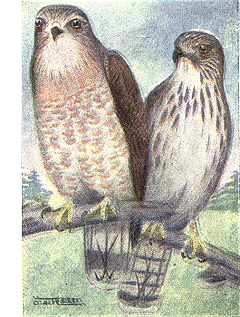
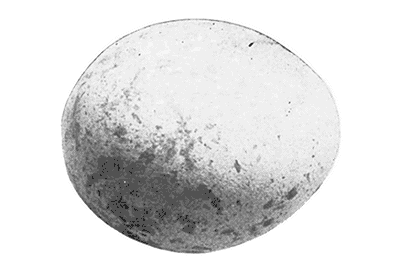
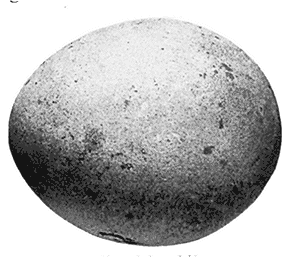
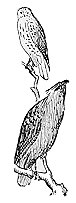
Page 214 Rough-legged Hawk. 346. Mexican Goshawk. Asturina plagiata. Range.--Mexico, north to the border of the United States. White. A beautiful, medium sized Hawk (17 inches long), slaty gray above, white below, numerously barred with grayish; tail black, crossed by several white bars. These are graceful and active birds, feeding largely upon small rodents, and occasionally small birds. They nest in the top of tall trees, laying two or three greenish white, unmarked eggs; size 1.95 x 1.60. Data.--Santa Cruz River, Arizona, June 3, 1902. Nest in the fork of a mesquite tree about forty feet from the ground; made of large sticks, lined with smaller ones and leaves. Three eggs. Collector, O. W. Howard. 347a. Rough-legged Hawk. Archibuteo lagopus sancti-johannis. Range.--Northern North America, breeding chiefly north of our borders and wintering south to the middle portions of the United States. Bluish white. The Rough-legs are large, heavily built birds of prey, specially characterized by the completely feathered legs. The present species is 22 inches long, and in the normal plumage has a whitish head, neck, breast and tail, the former being streaked and the latter barred with blackish; the remainder of the upper and underparts are blackish brown. Their nests are usually placed in trees, and less often on the ground than those of the next species. These Rough-legs are very irregularly distributed, and are nowhere as common as the next. While the greater number nest north of the United States, it is very probable that a great many nest on the higher ranges within our borders. The species is often taken in summer, even in Massachusetts. They lay three eggs of a bluish white color, boldly splashed with dark brown; size 2.25 x 1.75.
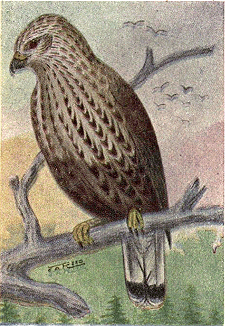
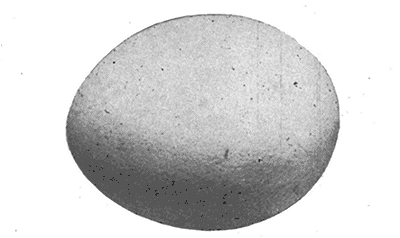
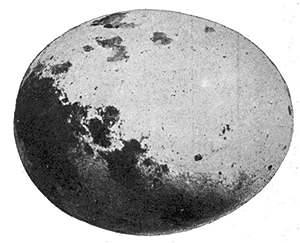
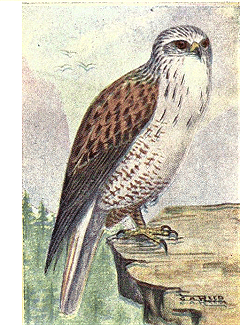
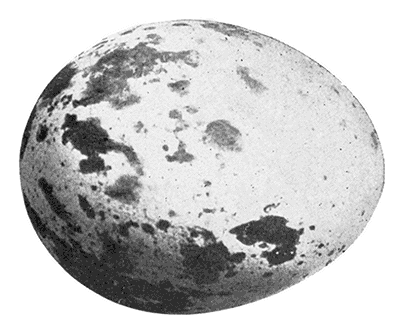
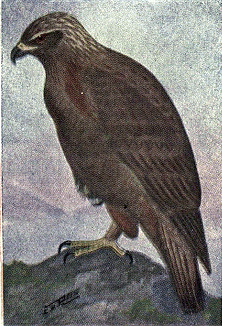
Page 215 Rough-legged Hawk. 348. Ferruginous Rough-leg. Archibuteo ferrugineus. White. Range.--North America, west of the Mississippi, breeding from the latitude of Colorado north to the Saskatchewan region. This species nests very abundantly along our northern states, particularly in Dakota. It is a larger bird than the preceding and can easily be told by its reddish coloration, particularly on the shoulders and tibia. While in some localities they nest only in trees, the greater number appear to build their nests on the ground or rocky ledges, making a large heap of sticks, weeds and grass. Their three or four eggs are white, beautifully spotted and blotched, in endless variety, with various shades of brown. Size 2.60 x 2.00. Data.--Stark Co., N. D., April 29, 1900. Nest built of coarse sticks on a clay butte. 349. Golden Eagle. Aquila chrysætos. Golden Eagle. Range.--North America, west of the Mississippi; most abundant in the Rockies and along the Pacific coast ranges. This magnificent bird, which is even more powerful than the Bald Eagle, measures about 34 inches long, and spreads about 7 feet. Its plumage is a rich brownish black, very old birds being golden brown on the nape. They can be distinguished in all plumages from the Bald Eagle by the completely feathered tarsus. They build their nests in the tops of the tallest trees in the wild, mountainous country of the west, and more rarely upon ledges of the cliffs. The nests are made of large sticks, lined with smaller ones and leaves and weeds. Their eggs are the most handsome of the Raptores, being white in color, and blotched, splashed, spotted and specked with light brown and clouded with gray or lilac, of course varying endlessly in pattern and intensity. Size 2.90 x 2.50. Data.--Monterey Co., Cal., May 3, 1888. Three eggs. Nest of sticks, lined with pine needles, in a pine tree, 50 feet up.
Page 216 BALD EAGLE.
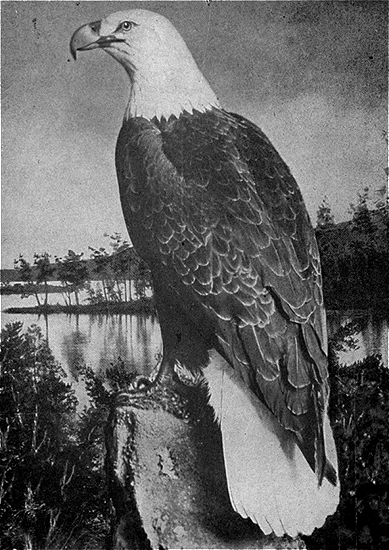
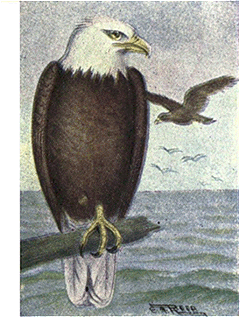
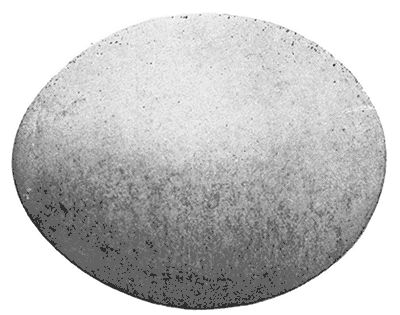
Page 217 351. Gray Sea Eagle. Haliæetus albicilla. A common species on the sea coasts of Europe; straggling to southern Greenland, where it nests upon the rocky cliffs. Bald Eagle. 352. Bald Eagle. Haliæetus leucocephalus leucocephalus. White. Range.--Whole of North America; most abundant on the Atlantic coast; breeds throughout its range. This large white-headed and white-tailed species is abundant in sufficiently wild localities along the Atlantic coast. It only attains the white head and tail when three years old, the first two years, being blackish. It is about 34 inches in length and expands about seven feet, never over eight feet, and only birds of the second year (when they are larger than the adults) ever approach this expanse. Their food consists of fish (which they sometimes capture themselves, but more often take from the Osprey), carrion, and Ducks, which they catch in flight. Their nests are massive structures of sticks, in the tops of tall trees. They very rarely lay more than two eggs, which are white. Size 2.75 x 2.10. Data.--Mt. Pleasant, S. C., nest in top of a pine, 105 feet from the ground; made of large sticks and lined with Spanish moss. 352a. Northern Bald Eagle.--Haliæetus leucocephalus alascanus. Range.--Alaska. This sub-species averages slightly larger than the Bald Eagle, but never exceeds the largest dimensions of that species. Its nesting habits and eggs are the same, except that it more often builds its nests on rocky cliffs than does the Bald Eagle. The eggs are laid in February and March.
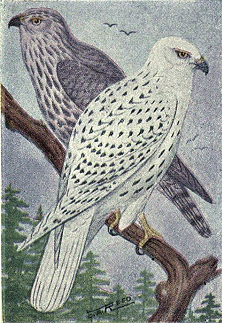
Page 218 FALCONS AND CARACARAS Family FALCONDIDAE Gray Gyrfalcon. White Gyrfalcon. 353. White Gyrfalcon. Falco islandus. Range.--Arctic regions; south in winter casually to northern United States, chiefly on the coast. Buff. Gyrfalcons are large, strong, active and fearless birds, about 23 inches in length. Their food consists chiefly of hares, Ducks and Waders which abound in the far north. The present species is snowy white, more or less barred with blackish brown on the back and wings and with a few marks on the breast. They nest upon the ledges of high cliffs, laying three or four eggs of a buffy color, blotched and finely specked with reddish brown, this color often concealing the ground color. Size of eggs, 2.30 × 1.80. In America, they nest in Greenland and the Arctic regions. 354. Gray Gyrfalcon. Falco rusticolus rusticolus. Buff. Range.--Arctic regions; south in winter to northern United States. This species is of the size of the last but the plumage is largely gray, barred with dusky. They nest more abundantly in southern Greenland than do the preceding species. The nesting habits and eggs do not differ. 354a. Gyrfalcon. Falco rusticolus gyrfalco. Range.--Arctic regions; south casually to Long Island. This sub-species is hardly to be distinguished from the preceding; its nesting habits and eggs are identical, the nests being of sticks, lined with weeds and feathers and placed upon the most inaccessible ledges of cliffs.
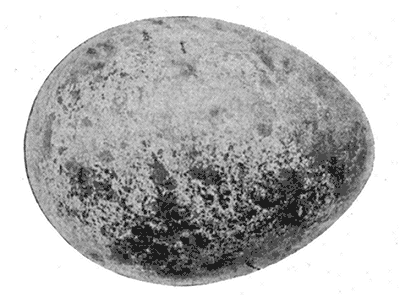
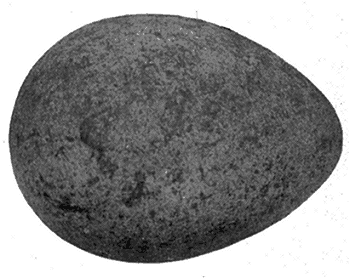
Page 219 354b. Black Gyrfalcon. Falco rusticolus obsoletus. Prairie Falcon. Range.--Labrador; south casually, in winter, to Long Island. A slightly darker variety. Eggs indistinguishable. Data.--Ungava coast, Labrador, May 25, 1900. Nest a heap of seaweed and feathers on sea cliff, containing three eggs. 355. Prairie Falcon. Falcon mexicanus. Range.--United States west of the Mississippi, and from Dakota and Washington southward to Mexico. Reddish buff. This species abounds in suitable localities, generally placing its nests upon rocky ledges and cliffs, and sometimes trees, generally upon the banks of some stream. The nests are masses of sticks, lined with weeds and grasses. The three or four eggs have a reddish buff ground color, and are thickly sprinkled and blotched with reddish buff brown and chestnut; size 2.05 × 1.60. 356a. Duck Hawk. Falco peregrinus anatum. Range.--Whole of North America, breeding locally, chiefly in mountainous regions, throughout its range. Duck Hawk. Buff or reddish buff. This beautiful species, characterized by its black moustache, is the most graceful, fearless, and swiftest of the Falcons, striking down birds of several times its own weight, such as some of the larger Ducks. It breeds quite abundantly on the Pacific coast and in certain localities in the Dakotas, laying its eggs on the rocky ledges. Their eggs are similar to those of the Prairie Falcon, but are darker and brighter, in fact they are the darkest, brightest marked, and most beautiful of Falcon eggs; size 2.05 × 1.55.
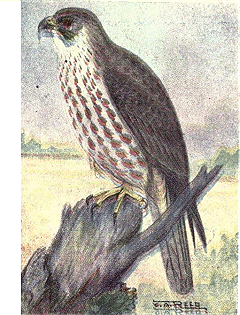
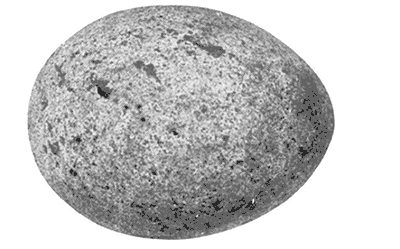
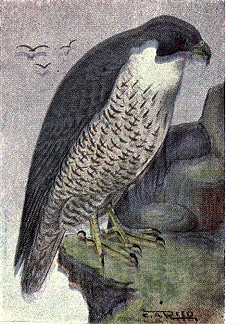
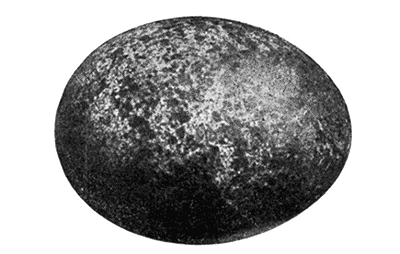
Page 220 356b. Peale's Falcon. Falco peregrinus pealei. Pigeon Hawk. Range.--Pacific coast from northern United States north to Alaska. A darker form of the preceding, such as occurs in this section with a great many other birds. The nesting habits and the eggs are precisely like those of the Duck Hawk. 357. Pigeon Hawk. Falco columbarius columbarius. Brownish buff. Range.--North America, breeding chiefly north of the United States except in some of the higher ranges along our northern border. A small Falcon, about 11 inches long, often confused with the Sharp-shinned Hawk, but much darker and a more stoutly built bird. It is a daring species, often attacking birds larger than itself; it also feeds on mice, grasshoppers, squirrels, etc. They generally build a nest of sticks in trees, deep in the woods; less often in natural cavities of dead trees; and sometimes on rocky ledges. Their four or five eggs have a brownish buff ground color, heavily blotched with brown and chestnut. Size 1.50 × 1.22. 357a. Black Pigeon Hawk. Falco columbarius suckleyi. Richardson's Pigeon Hawk. Range.--Pacific coast from northern United States north to Alaska. Very similar in appearance to the preceding, but much darker, both above and below. Its nesting habits and eggs will not differ in any manner from those of the Pigeon Hawk. 357b. Richardson's Pigeon Hawk. Falco columbarius richardsoni. Range.--Interior of North America from the Mississippi to the Rockies and from Mexico to the Saskatchewan. This species is similar to the Pigeon Hawk, but is paler both above and below, and the tail bars are more numerous and white. Their nesting habits are the same as those of the preceding species, they either building in hollow trees, or making a rude nest of sticks and twigs in the tops of trees. The eggs have a creamy ground and are sprinkled with dots and blotches of various shades of brown. Size 1.60 × 1.23. The egg figured is one of a beautiful set of four in the collection of Mr. C. W. Crandall.
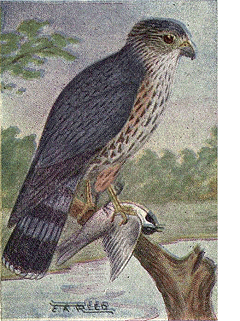
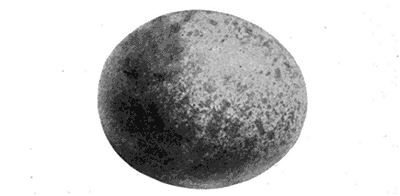
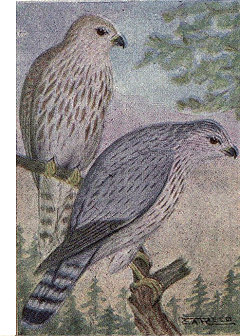
Page 221 Aplomado Falcon. Desert Sparrow Hawk. 358.1 Merlin. Falco æsalon. This common European species was once accidentally taken in southern Greenland. Their eggs are generally laid on the ground on cliffs or banks. 359. Aplomado Falcon. Falco fusco-cærulescens. Range.--Tropical America north to Mexican boundary of the United States. This handsome and strikingly marked Falcon is found in limited numbers within the United States, but south is common and widely distributed. They nest at a low elevation, in bushes or small trees, making their rude nests of twigs, lined with a few grasses. They lay three, and sometimes four, eggs which have a creamy white ground color, finely dotted with cinnamon, and with heavy blotches of brown. Size 1.75 × 1.30. Buff. 359.1. Kestrel. Falco tinnunculus. Range.--Whole of Europe; accidental on the coast of Massachusetts. This species is very similar in size and coloration to the American Sparrow Hawk. They are much more abundant than the Sparrow Hawk is in this country and frequently nest about houses, in hollow trees, on rafters of barns, or on ledges and embankments. Their eggs are of a reddish buff color, speckled and blotched with reddish brown, they being much darker than those of the American Sparrow Hawk. Reddish buff. 360a. Desert Sparrow Hawk. Falco sparverius phalæna. Range.--Western United States from British Columbia south to Mexico. This variety is slightly larger and paler than the eastern form. There are no differences in the identification of the two varieties.
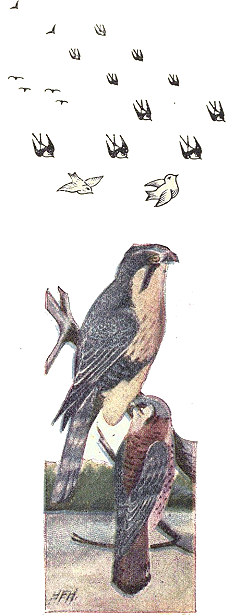
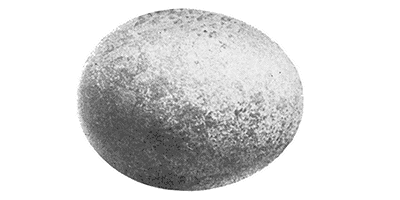
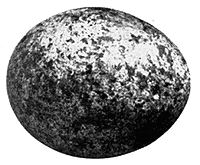
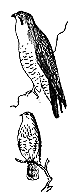
Page 222 Sparrow Hawk. 360. Sparrow Hawk. Falco sparverius. Range.--North America, east of the Rocky Mountains and north to Hudson Bay; winters from the middle portions of the United States, southward. Buffy. This beautiful little Falcon is the smallest of the American Hawks, being only 10 inches in length. They are very abundant in the east, nesting anywhere in cavities in trees, either in woods or open fields. The eggs are generally deposited upon the bottom of the cavity with no lining; they are creamy or yellowish buff in color, sprinkled, spotted or blotched in endless variety, with reddish brown. Size 1.35 × 1.10. These birds are very noisy, especially when the young are learning to fly, uttering a loud, tinkling, "killy, killy, killy." They have a very amiable disposition, and frequently nest harmoniously in the same tree with other birds, such as Flickers and Robins. 360b. St. Lucas Sparrow Hawk. Falco sparverius peninsularis. Range.--Lower California. This variety is smaller than the eastern, and even paler than the western form. Eggs identical with eastern specimens. 361. Cuban Sparrow Hawk. Falco sparveroides. A darker colored West Indian form, whose habits and nesting do not vary from those of the common Sparrow Hawk; casually taken in Florida. Egg of Golden Eagle.
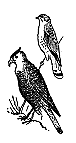
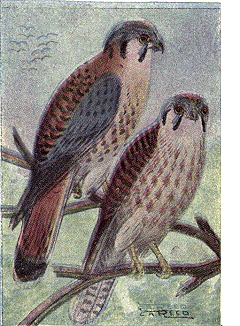
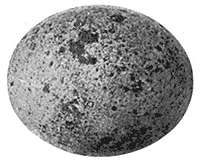
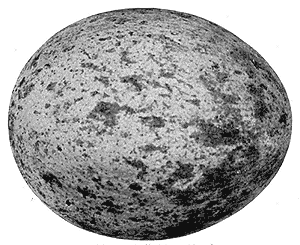
Page 223 SPARROW HAWK.
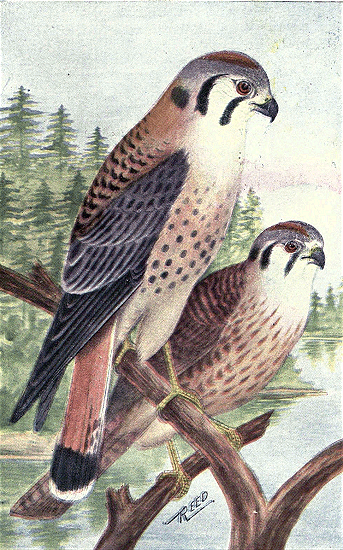
Page 224 Audubon's Caracara. 362. Audubon Caracara. Polyborus cheriway. Range.--Southern border of the United States south to South America. A strikingly marked blackish and whitish species, much barred on the fore back and the breast, with the head and throat largely white, except for a black and somewhat crested crown. They are numerous in southern Texas and also in the interior of southern Florida, where they are resident. They build bulky, but shabby nests of sticks, weeds and grass, piled into a promiscuous heap, generally located in bushes or low trees. Their two or three eggs have a ground color varying from buff to bright cinnamon, and are dotted and blotched with all shades of brown and umber. On the whole, these eggs show a greater diversity of markings and ground color than those of any other species. Size 2.50 × 1.80. Cinnamon. 363. Guadalupe Caracara. Polyborus lutosus. Range.--Guadalupe Island and others off Lower California. This species is somewhat like the preceding, but the plumage is duller, and the coloration more uniform. Their nesting habits and eggs do not vary essentially from those of Audubon Caracara. Mr. John Lewis Childs has a set of two eggs taken June 8, 1896, on Santa Anita Island, by Coolidge and Miller. The nest was made of sticks and situated in a giant cactus. The eggs are slightly brighter and more clearly marked than any of cheriway that I have ever seen.
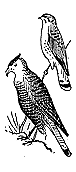
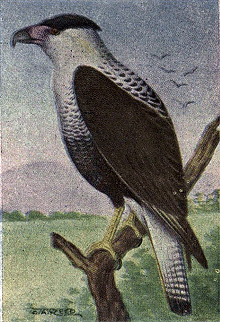
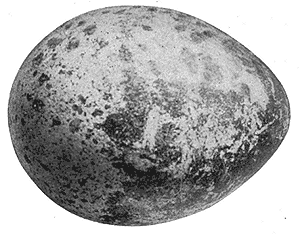

Page 225 OSPREY. Family Pandionidae 364. Osprey. Pandion haliætus carolinensis. American Osprey. Range.--Whole of temperate America from the Arctic circle south to the equator, most abundant along the sea coasts. Real old birds have the head whiter, and less white edging to the back feathers, than do the young. Feet very strong, and very hard and rough, perfectly adapted to grasping slippery fish; outer toe can be used equally as well, either in front or behind, when perching or grasping their prey. Probably this great fisherman is as well known from one end of the country to the other as any of our wild birds. He is protected by law in a great many states and by custom in nearly all localities where they breed. It is one of the pleasantest sights along the coast to watch a number of these great birds as they soar at an elevation above the water, watching for fish to come near the surface, when, with folded wings, the bird speeds downward and plunges into the water, rarely missing his prey. In many localities they are very tame and nest in the vicinity of houses, sometimes even in the yard. Their nests are platforms of sticks, which, being used year after year and constantly added to, become of enormous proportions. They lay two or three eggs of a bright creamy color, handsomely blotched with bright chestnut brown. They show a great diversity of size as well as markings, but average 2.40 × 1.80.
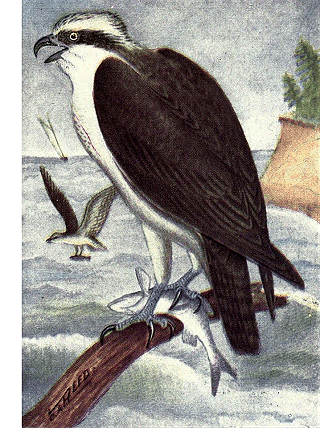
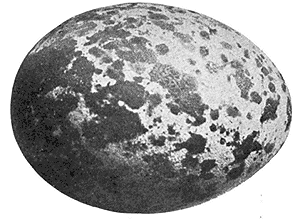
Page 226 OSPREY LEAVING NEST.
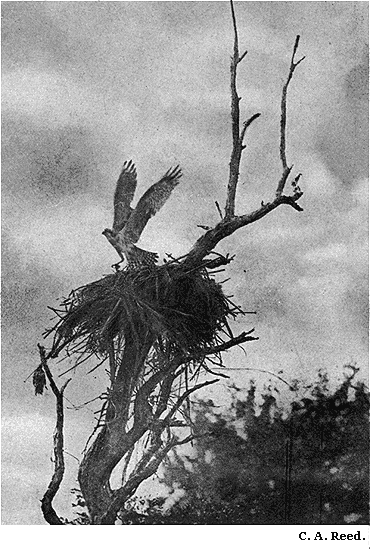
Page 227 BARN OWLS. Family Alucondidae Barn Owl. 365. Barn Owl. Aluco pratincola. Range.--Chiefly in the southern parts of the United States; north casually to Massachusetts, Minnesota and Washington. White. This is one of the lightest colored of the Owls; it has a long, peculiarly hooded face, from which it gets the name of "Monkey-faced Owl." Its plumage is yellowish buff, specked and barred lightly with blackish. It nests usually in hollow cavities of trees, but appears to have no objections to barns, holes in banks, or anywhere it can find a concealed crevice in which to deposit its four to six pure white eggs; size 1.70 × 1.30. HORNED OWL. Family Strigidae Long-eared Owl. 366. Long-eared Owl. Asio wilsonianus. Range.--North America, breeding from the southern parts of British America, southward. White. This species is 15 inches in length; it can easily be separated from any other species by its long ear tufts, brownish face, and barred underparts. Their food consists almost entirely of small rodents, which they catch at night. Most of their nests are found in trees, they generally using old Crow's or Hawk's nests. They also, in some localities, nest in hollow trees, or in crevices among rocks. They lay from four to seven pure white eggs; size 1.55 × 1.35.
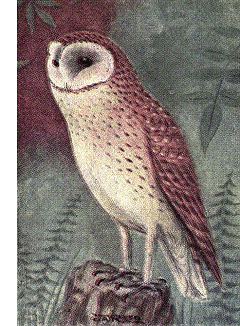
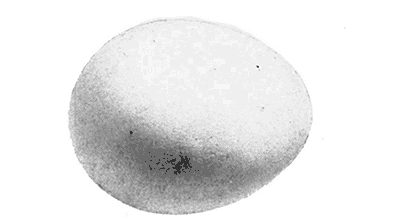
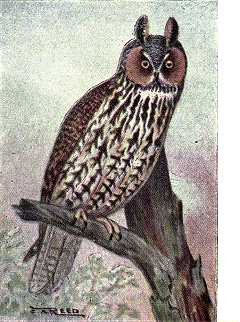
Page 228 LONG-EARED OWL ON NEST.
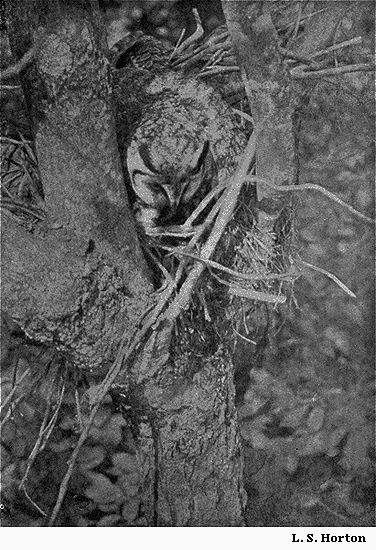
Page 229 Short-eared Owl. 367. Short-eared Owl. Asio flammeus. Range.--Whole of North America, breeding from the middle portions of the United States northward, and wintering in the United States. White. This species is of the size of the last, but is paler, has very short ear tufts, and is streaked beneath. Its habits are the same except that it frequently hunts, over the marshes and meadows, on dark days and towards dusk. Their four to seven pure white eggs are laid upon the ground in marshy places, sometimes upon a lining of sticks and weeds, and are generally under a bush, or close to an old log. Size of eggs 1.55 × 1.25. White. 368. Barred Owl. Strix varia varia. Range.--Eastern North America, from the British Provinces, southward; west to the Rockies. Barred Owl. This species is the most common of the large owls, and can be distinguished by its mottled and barred gray and white plumage, and lack of ear tufts; length 20 inches. It is the bird commonly meant by the term "hoot owl", and being strictly nocturnal, is rarely seen flying in the day time, unless disturbed from its roosting place in the deep woods. Its food consists chiefly of rats, mice and frogs, and sometimes, but not often, poultry. It nests in the heart of large woods, generally in hollows of large trees, and less often in deserted Crow's nests. They lay from two to four pure white eggs, averaging considerably smaller than those of the Great Horned Owl; size 1.95 × 1.65. 368a. Florida Barred Owl. Strix varia alleni. Range.--Florida and the Gulf States; north to South Carolina.
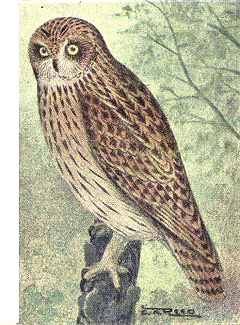
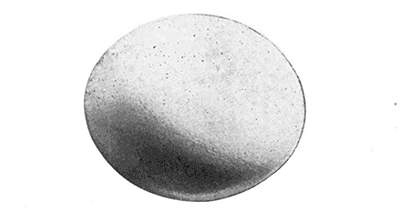
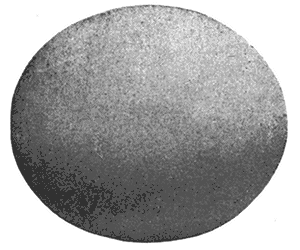
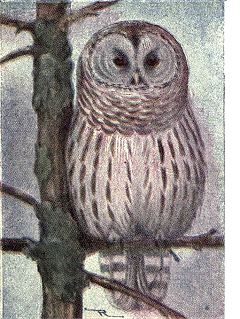
Page 230 BARRED OWL.
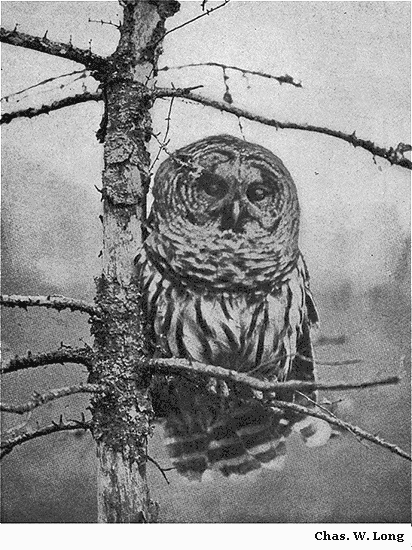
Page 231 Great Gray Owl. 368b. Texas Barred Owl. Strix varia albogilva. Range.--Southern Texas. A very similar but slightly paler variety than the Barred Owl, and with the toes bare, as in alleni. Eggs indistinguishable. 369. Spotted Owl. Strix occidentalis occidentalis. Range.--Western United States, from southern Oregon and Colorado, southward. Similar to the Barred Owl, but spotted, instead of barred, on the back of head and neck, and much more extensively barred on the under parts. The nesting habits do not appear to differ in any respect from those of the eastern Barred Owl, and their eggs, which are from two to four in number, can not be distinguished from those of the latter species; size 2.05 × 1.80. 369a. Northern Spotted Owl. Strix occidentalis caurina. Range.--Northwestern United States and British Columbia. Similar to the preceding, but darker, both above and below; nesting the same, in hollow trees or in old Hawk's or Crow's nests. Eggs not distinguishable. 370. Great Gray Owl. Scotiaptex nebulosa. White. Range.--Northern North America; wintering regularly south to the northern border of the United States and casually farther. This is the largest of American Owls, being about 26 inches in length; it does not weigh nearly as much, however, as the Great Horned or Snowy Owls, its plumage being very light and fluffy, and dark gray in color, mottled with white. The facial disc is very large, and the eyes are small and yellow, while those of the Barred Owl are large and blue black. They nest in heavily wooded districts, building their nests of sticks, chiefly in pine trees. The two to four white eggs are laid during May and June; size 2.15 × 1.70.
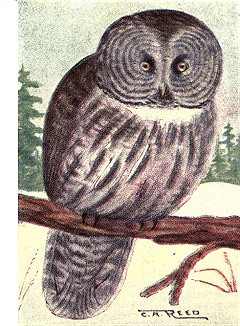

Page 232 Richardson's Owl. Saw-whet Owl. 370a. Lapp Owl. Scotiaptex nebulosa lapponica. A paler form of the Great Gray Owl, inhabiting the Arctic regions of the Old World; accidental on the coast of Alaska. Their nesting habits and eggs do not differ from those of the American bird. 371. Richardson's Owl. Cryptoglaux funerea richardsoni. White. Range.--Northern North America, breeding north of the United States; winters south to our border and casually farther. This is a dark grayish and white bird, 10 inches in length, and without ear tufts. Breeds commonly in the extensively wooded districts of British America, chiefly in the northern parts. Their three or four white eggs are usually at the bottom of a cavity in a tree, but occasionally the birds build a rude nest of sticks and twigs, lined with leaves and placed in trees at a moderate height from the ground. Size of eggs, 1.25 × 1.05. 372. Saw-whet Owl; Acadian Owl. Cryptoglaux acadica acadica. Range.--North America, breeding in the northern parts of the United States and in British America, and south in the Rockies to Mexico; winters south to the middle portions of the United States. This small species (length 8 inches) is marked very similarly to the preceding, but the plumage is brown instead of gray. They normally nest in hollow trees, generally in deserted Woodpecker holes, in extensively wooded sections, and usually in mountainous country, especially in the United States. They have also been known to nest in bird boxes near farm houses and in old Crow's nests. During April or May, they lay from three to six white eggs. Size 1.20 × 1.00. They are quiet and chiefly nocturnal birds, not often seen, and may be found nesting in any of the northern states. 372a. Northwestern Saw-whet Owl. Cryptoglaux acadica scotiæa. Range.--A dark variety found on the coast of British Columbia.
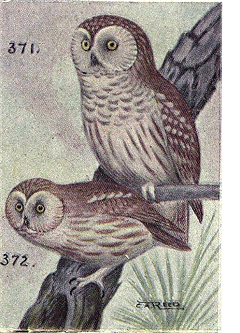
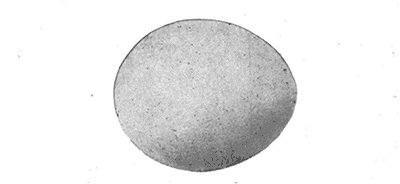
Page 233 Screech Owl. 373. Screech Owl. Otus asio asio. Range.--North America, east of the plains and from the southern British Provinces to Florida. White. This well known species, which is often called "Little Horned Owl" because of its ear tufts is found either in the type form of some of its varieties in all parts of the United States. They have two color phases, the plumage being either a yellowish brown or gray, and black and white; these color phases are not dependent upon sex or locality, as often young or both phases are found in the same nest; the gray phase is the most abundant. They nest anywhere in hollow trees, being found very frequently in decayed stubs of apple trees. They also often nest in barns or other old buildings which are not frequented too freely. Their food consists chiefly of mice and meadow moles, with occasionally small birds. During April or May they lay their white eggs, the full complement of which is from five to eight. Size 1.35 × 1.20. The nesting habits of all the sub-species, as far as we can learn, are exactly like those of the eastern Screech Owl; the eggs cannot be distinguished, and in most cases, even the birds cannot be distinguished. 373a. Florida Screech Owl. Otus asio floridanus. Range.--South Atlantic and Gulf coasts. Slightly smaller and darker than asio. The eggs average slightly smaller. Size 1.30 × 1.15. 373b. Texas Screech Owl. Otus asio mccalli. Range.--Texas, and southward into Mexico. Very similar to floridanus. 373c. California Screech Owl. Otus asio bendirei. Range.--Coast of California and Oregon. Size of, but darker than asio. 373d. Kennicott's Screech Owl. Otus asio kennicotti. Range.--Pacific coast from Oregon to Alaska. This is the darkest of the Screech Owls and averages a trifle larger than the eastern form. 373e. Rocky Mountain Screech Owl. Otus asio maxwelliæ. Range.--Foothills of the Rockies, from Colorado to Montana. This is the palest form of the Screech Owl. Of the same size as the last.
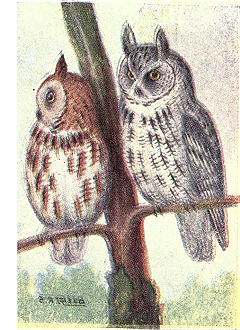
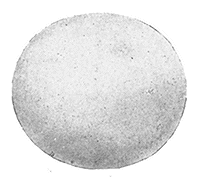

Page 234 374--375a. 373f. Mexican Screech Owl. Otus asio cineraceus. Range.--Western Mexico and southwestern border of the United States. A gray form with little or no buff, and more numerously barred below. 373g. Aiken's Screech Owl. Otus asio aikeni. Range.--El Paso County, Colorado. A gray form, with the dark markings coarser and more numerous than in any other. 373h. MacFarlane's Screech Owl. Otus asio macfarlanei. Range.--Northern border of the United States from Washington to Montana. 373.1. Spotted Screech Owl. Otus trichopsis. Range.--Mountains of southern Arizona, south into Mexico. A grayish species, similar to asio, but paler and more finely barred beneath, and with whitish spots on the feathers of the foreback. The nesting habits and eggs are probably the same as those of the Screech Owl. 373.2. Xantus's Screech Owl. Otus xantusi. Range.--Southern Lower California. A grayish species with the back and underparts finely vermiculated with reddish brown, and with streaks of darker. It is not likely that the habits or eggs of this species will be found to differ from those of the Screech Owl. 374. Flammulated Screech Owl. Otus flammeolus flammeolus. Range.--Mountain ranges of Mexico, north to Colorado and west to California. This species is smaller than asio, has shorter ear tufts, the plumage is much streaked and edged with rusty, and the toes are unfeathered to their base. They nest in hollow trees, generally using deserted Woodpecker holes. Their three or four eggs are white. Size 1.15 × .95. This species is uncommon in all parts of its range. 374a. Dwarf Screech Owl. Otus flammeolus idahœnsis. Range.--Local in Idaho, eastern Washington and California. This rare variety is smaller than the preceding and is considerably paler. Its eggs have not been described, but should be a trifle smaller than the last.

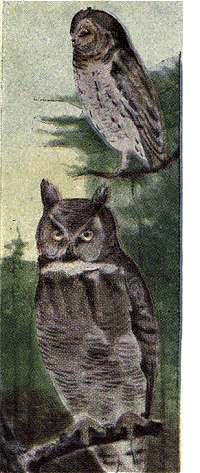
Page 235 Great Horned Owl. 375. Great Horned Owl. Bubo virginianus virginianus. Range.--North America, east of the Plains and north to Labrador. White. This species and its varieties are the only large Owls having conspicuous ear tufts. They are about 22 inches in length, and have a mottled brown, black and white plumage, barred below. This is also one of the "Hoot Owls," but is not nearly as abundant as the Barred Owl. It is one of the strongest of the family, and captures rabbits, grouse and poultry, and is very often found to have been feeding upon, or to have been in the immediate vicinity of a skunk. They nest very early, January, February and March. Deserted Hawk's or Crow's nests are very frequently used by this bird, if they are located in dense woods. They also sometimes nest in hollow cavities in large trees. They lay from two to four pure white eggs. Size 2.25 × 1.85. 375a. Western Horned Owl. Bubo virginianus pallescens. Range.--Western North America, except the Pacific coast. A smaller and lighter colored form of the preceding, having the same habits and the eggs being indistinguishable from those of the eastern bird. 375b. Arctic Horned Owl. Bubo virginianus subarcticus. Range.--Interior of Arctic America from Hudson Bay to Alaska; south in winter to the northwestern tier of states. A very pale colored Horned Owl with little or no buff or brownish in the plumage, some specimens (very rare) being pure white with only a few black bars on the back. Their nesting habits are the same and the eggs do not vary appreciably from those of the eastern Horned Owl. 375c. Dusky Horned Owl. Bubo virginianus saturatus. Range.--Pacific coast from California to Alaska. This is the darkest of the Horned Owls, the extreme case being nearly black on the back and very dark below. Nesting the same as the Great Horned Owl. 375d. Pacific Horned Owl. Bubo virginianus pacificus. Range.--California, southward and east to Arizona. Smaller and darker than the eastern form but not as dark as the last. Eggs the same as those of the others.