LONG-WINGED SWIMMERS. Order II. LONGIPENNES SKUA AND JAEGERS. Family STERCORARIIDAE (continued 2)
Reading edition
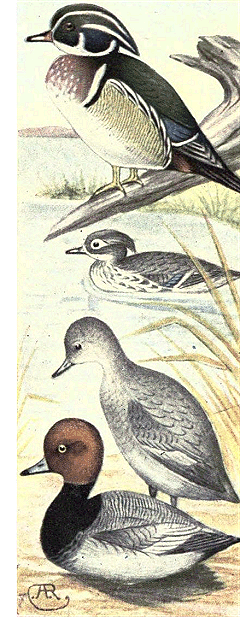
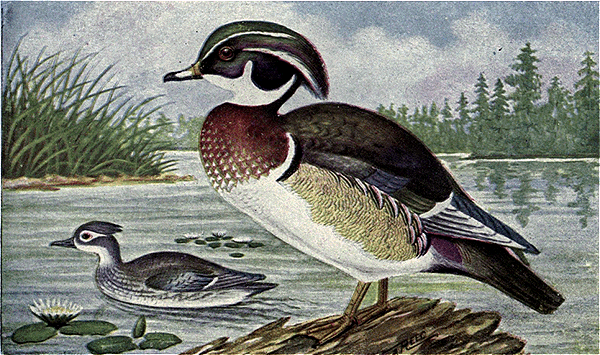
Page 96 WOOD DUCK.
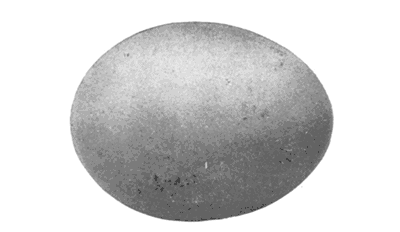
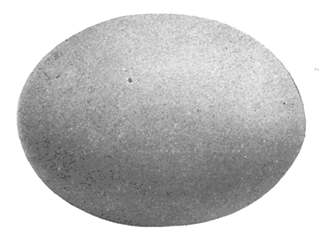
Page 97 Canvas-back. American Scaup Duck. 147. Canvas-back. Marila valisineria. Range.--Whole of North America, breeding chiefly in the interior from the United States to the Arctic Ocean. A noted table bird, especially in the south where it feeds on wild celery. Can be distinguished from the Redhead by its darker head, lighter back, and gradually sloping bill. They nest abundantly in Manitoba, their habits being the same as the preceding. They lay from six to ten eggs of a darker shade than the Red-heads. Size 2.40 × 1.70. Data.--Haunted Lake, N. Alberta, June 12, 1897. Ten eggs. Nest of reeds in a heavy reed bed out in the lake. Collector, Walter Raine. Pale greenish gray. 148. Scaup Duck. Marila marila. Range.--North America, breeding from North Dakota northward, chiefly in the interior; south in winter to Central America. This and the following species are widely known as "Blue-bills" owing to the slaty blue color of that member. Their plumage is black and white, somewhat similar in pattern to that of the Redhead, but darker, and the whole head is black. They nest in marshes about many of the ponds and lakes in the interior of British America. The nest is made of marsh grasses and lined with feathers. The six to ten eggs are pale grayish or greenish gray. Size 2.50 × 1.70. Data.-- Saltcoats Marshes, N. W. Canada, June 15, 1901. Ten eggs. Nest in the grass; a depression lined with down and dried grasses. Collector, Walter Raine.
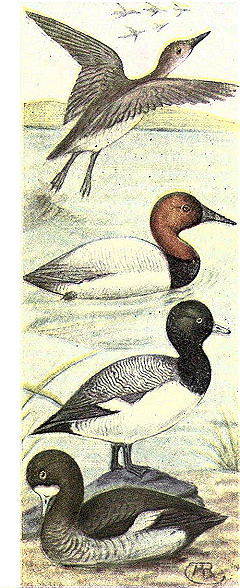
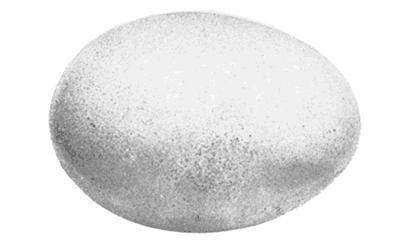
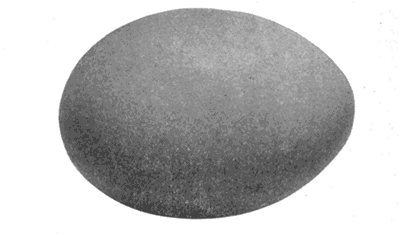
Page 98 Lesser Scaup Duck. Ring-necked Duck. 149. Lesser Scaup Duck. Marila affinis. Range.--North America, breeding from North Dakota and British Columbia northward; winters south to Central America. This Duck is distinguished from the preceding, chiefly by its size which is about two inches less, or 17 inches in length. The nesting habits are the same as those of the Greater Scaup and the eggs are similar but smaller. Size 2.25 × 1.55. Data.--Northern Assiniboia, June 10, 1901. Ten eggs on grass and down at the edge of a lagoon. Collector, Walter Raine. 150. Ring-necked Duck. Marila collaris. Lead gray. Range.--North America, breeding in the interior, from North Dakota and Washington northward. Winters from Maryland on the east and British Columbia on the west to Central America. Similar to the Lesser Scaup in size and plumage, except that it has a narrow chestnut collar around the neck, the back is black instead of barred with white, and the speculum is gray instead of white. The habits and nesting habits of the Ring-neck do not differ from those of the other Scaups. They lay from six to twelve eggs. Size 2.25 × 1.60. Data.--Cape Bathurst, N. Y. T., June 18, 1901. Ten eggs in a slight hollow in the moss, lined with down. Collector, Captain Bodfish.
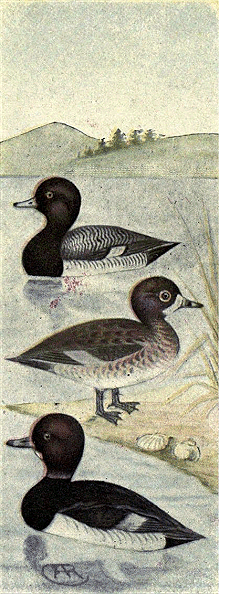
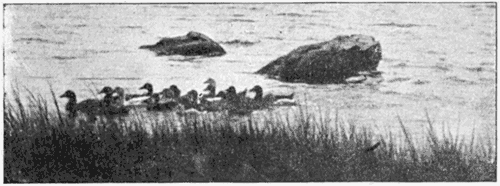
Page 99 American Golden-eye. Barrow Golden-eye. 151. Golden-eye. Clangula clangula americana. Range.--North America, breeding both on the coast and in the interior, from the northern border of the United States northward to the Arctic Ocean. Grayish green. These are handsome Ducks known as "Whistlers" from the noise of their wings when flying, and "Greatheads" because of the puffy crest. The head is greenish with a large round white spot in front of, and a little below the eye. The rest of the plumage is black and white. This species nests in hollow trees near the water, lining the cavity with grass, moss and leaves, and lining the nest with down from their breasts. In May and June they lay from six to ten eggs of a grayish green color. Size 2.30 × 1.70. 152. Barrow's Golden-eye. Clangula islandica. Range.--Northern North America, breeding north of the United States except from the mountainous portions of Colorado northward. This Golden-eye differs from the preceding chiefly in the shape of the white spot before the eye, which in this species is in the form of a crescent. The size is the same, about 20 inches in length. The reflections on the head are purplish rather than greenish as in the preceding. The nesting habits are the same, they building in hollow trees near water. The six to ten eggs are not different from the preceding. Size 2.30 × 1.65. Data.--Alfusa, Iceland, June 30, 1900. Seven eggs. Nest of grass and down in a box attached to a tree by an islander.
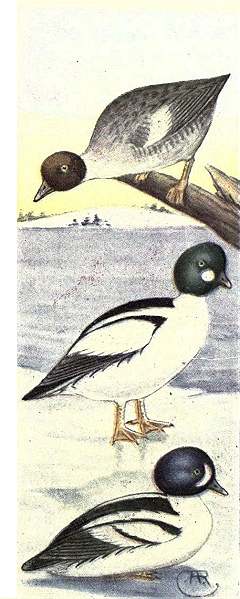
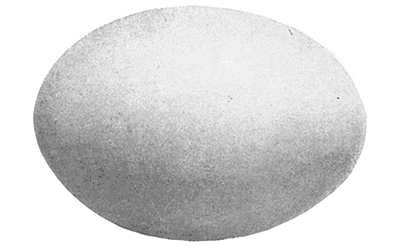

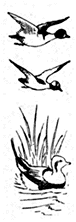
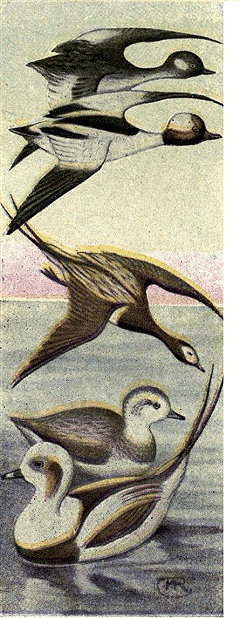
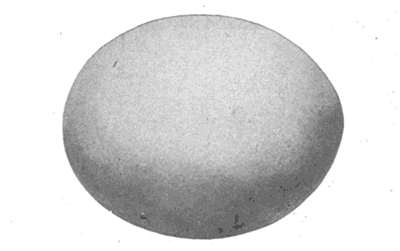
Page 100 Buffle-head. Old-squaw. 153. Buffle-head. Charitonetta albeola. Range.--North America, breeding from United States northward. Winters south to Mexico. Dull buff. Gunners know this handsome little duck by the names of "Butter-ball," and "Dipper," a name also given to Grebes. It is also quite similar, but smaller (15 in. long), to the American Golden-eye but has a large white patch on the back of the head, from eye to eye. It is an active bird and, like the two preceding, is capable of diving to a great depth to get its food. Its nesting habits are like the preceding. Eggs eight to fourteen. Size 2 × 1.40. Data.--Alberta, Canada, June 6, 1899. Seven eggs. Nest in hole in tree stump, lined with down. Collector, Dr. George. 154. Old-squaw. Harelda hyemalis. Range.--Northern Hemisphere, breeding in the Arctic regions; south in winter to New Jersey and Illinois. Buff. The Long-tailed Duck, as it is called, is especially noticeable because the breeding plumage of the male differs markedly from that in the winter. In summer their general plumage is blackish brown, with a white patch around the eye, and white belly. In winter they are largely white. The central tail feathers are much lengthened. They breed abundantly in Greenland, Alaska and the Hudson Bay Territory, placing their nests of grasses and weeds on the ground near the water. It is generally concealed in the long grass. The eggs number from six to twelve. Size 2. × 1.50. Data.--N. Iceland, June 10, 1900. Nest on ground, lined with down. Collector, S. H. Wallis.
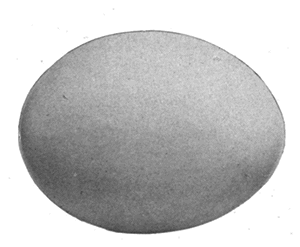
Page 101 Harlequin Duck. Labrador Duck. 155. Harlequin Duck. Histrionicus histrionicus. Range.--Northern Hemisphere in America, breeding from Newfoundland and the Rocky Mountains in Colorado, northward. South in winter to California and New England. Greenish buff. A beautiful and most gorgeous bird, not in colors, but in the oddity of the markings, the colors only including black, white, gray and chestnut. Either sex can be recognized by the small short bill. They breed mostly in single pairs along swiftly running streams, placing their nest, which is woven of weeds and grasses, in the ground near the water. It is also claimed that they sometimes nest in hollow trees. They lay from five to eight eggs, yellowish or greenish buff in color. Size 2.30 × 1.60. Data.--Peel River, Alaska, June 13, 1898. Seven eggs in a hollow in river bank, lined with down. Collector, C. E. Whittaker. 156. Labrador Duck. Camptorhynchus labradorius. This bird, whose range was from Labrador to New Jersey in the winter, has probably been extinct since 1875, when the last authentic capture was made. It is a strange fact that a bird of this character should have been completely exterminated, even though they were often sold in the markets. Only forty-one specimens are known to be preserved at present and nothing is known in regard to their nesting habits or eggs.
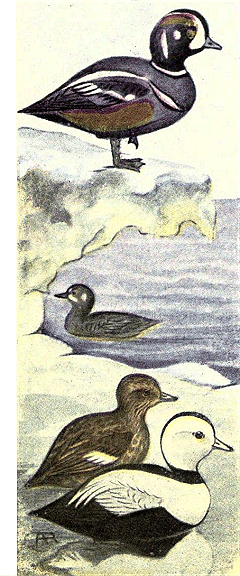
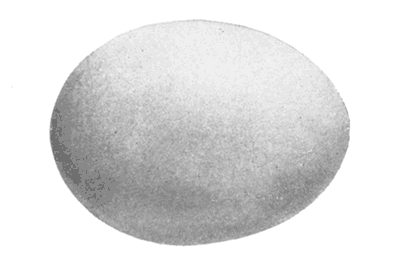

Page 102 Steller's Duck. Spectacled Eider. 157. Steller's Duck. Polysticta stelleri. Range.--Arctic regions in America, chiefly on the Aleutian Islands and northwest coast of Alaska. A very beautiful species eighteen inches long; head white, washed with greenish on the forehead and nape; chin, throat, neck, back, tail and crissum, black; underparts chestnut; wing coverts white, the long scapulars black and white. It breeds on the rocky coasts and islands of Bering Sea. The six to nine eggs are pale olive green in color. Size 2.25 × 1.60. Data.--Admiralty Bay, Alaska, June 22, 1898. Nest on a hummock of the tundra, near a small pool, lined with grass and down. Collector, E. A. McIlhenny. 158. Spectacled Eider. Arctonetta fischeri. Range.--Coast of Alaska from the Aleutians to Point Barrow. Pale olive green. Like the rest of the true Eiders, this species is black beneath and mostly white above. The head is largely washed with sea green, leaving a large patch of white, narrowly bordered by black around each eye, thus resembling a pair of spectacles. The nests are made of grass and seaweed and lined with down; they are placed on the ground in clumps of grass or beneath overhanging stones. The five to nine eggs are an olive drab or greenish color. Size 2.70 × 1.85. Data.--Point Barrow, Alaska, June 15, 1898. Six eggs. Nest of moss and down in a hollow in dry tundra. Collector, E. A. McIlhenny. 159. Northern Eider. Somateria mollissima borealis. Range.--North Atlantic coast, breeding from Labrador to Greenland and wintering south to New England. A large Duck similar to the next species, but with the base of the bill differing, as noted in the description of the following species, and with a more northerly distribution. The nesting habits are the same as those of the other Eiders. Six to ten eggs generally of a greenish drab color. Size 3. × 2.
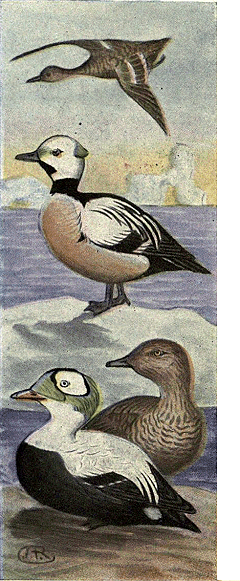
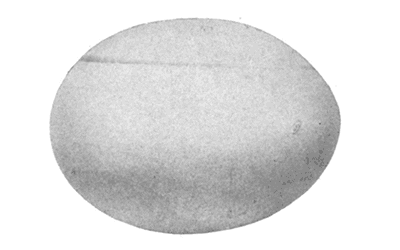
Page 103 Eider. Pacific Eider. 160. Eider. Somateria dresseri. Range.--Atlantic coast, breeding from Maine to Labrador and wintering south to Delaware. Greenish drab. This species differs from the preceding only in the fleshy part of the base of the bill, which extends back on each side of the forehead, it being broad and rounded in this species and narrow and pointed in the Northern or Greenland Eider. This species, but more especially the Northern Eider, are the ones chiefly used for the eider-down of commerce. The preceding species is often semi-domesticated in Greenland, the people protecting them and encouraging them to nest in the neighborhood. They make their nests of seaweed and grass and warmly line it with down from their breast; this down is continually added to the nest during incubation until there is a considerable amount in each nest, averaging about an ounce in weight. The birds are among the strongest of the sea ducks and get their food in very deep water. Their flesh is not good eating. Their eggs number from five to ten and are greenish drab. Size 3. × 2. 161. Pacific Eider. Somateria v-nigra. Range.--North Pacific from the Aleutian Islands northward, and east to Great Slave Lake. This bird is, in plumage, like the Northern Eider, except that it has a black V-shaped mark on the throat. They nest sparingly on the Aleutian Islands, but in great numbers farther north on the coast about Point Barrow. Their habits, nests and eggs are precisely the same as those of the eastern forms. Their eggs number from five to ten and are of olive greenish color. Size 3. × 2. Data.--Cape Smythe, Alaska, June 8, 1900. Eight eggs. Nest a hollow in the moss, lined with grass and down.
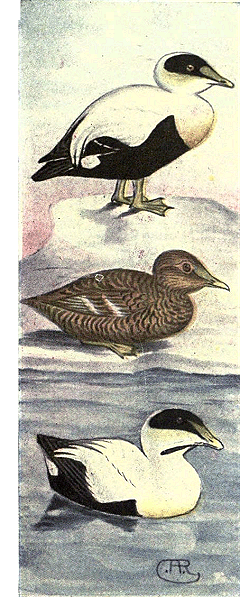
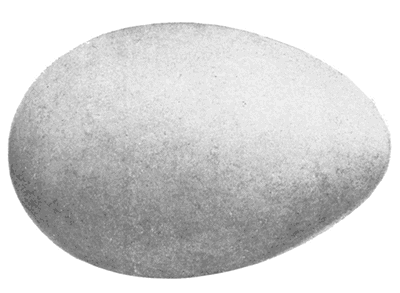
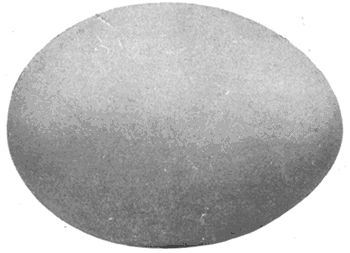
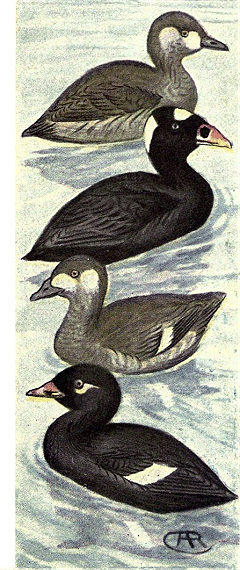
Page 104 King Eider. Scoter. 162. King Eider. Somateria spectabilis. Range.--Northern Hemisphere, breeding in America from Labrador to Greenland and the Arctic Ocean; south in winter to the New England States and rarely farther on the eastern side, and to the Aleutians on the Pacific; also casually to the Great Lakes in the interior. A handsome and very different species from any of the foregoing, having the crown ashy blue, and the long scapulars black instead of white. It also has a broad V-shaped mark on the throat. Like all the other Eiders, the female is mottled brown and black, the different species being very difficult to separate. The nests are sunk in the ground and lined with down. Eggs number from six to ten. Size 2.80 × 1.80. Data.--Point Barrow, Alaska, July 5, 1898. Five eggs. Nest a hollow in the moss on tundra lined with moss and down. Collector, E. A. McIlhenny. 163. Scoter. Oidemia americana. Range.--Northern North America, breeding from Labrador, the Hudson Bay region and the Aleutian Islands northward; winters south to Virginia, the Great Lakes and California. Scoters or "Coots" as they are generally called are sea ducks whose plumage is almost wholly black; they have fantastically colored and shaped bills. The American Scoter is entirely black without markings; base of bill yellow and orange. This species nest as do the Eiders, often concealing the nest, of grass and feathers, under some overhanging rock. They lay from six to ten eggs of a dingy buff color. Size 2.50 × 1.70. Data.--Mackenzie Bay, June 15, 1899. Ten eggs. Nest a hollow in the sand, lined with down. Buff.
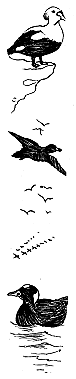
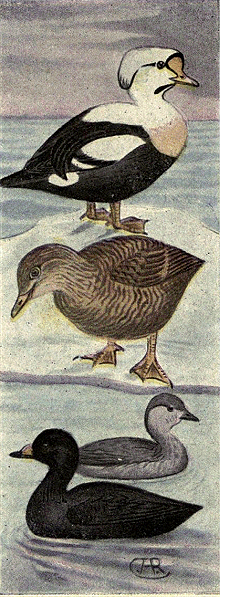
Page 105 Surf Scoter. White-winged Scoter. 164. Velvet Scoter. Oidemia fusca. An Old World species that has accidentally occurred in Greenland. 165. White-winged Scoter. Oidemia deglandi. Range.--Abundant in North America, breeding from Labrador, North Dakota and British Columbia, northward. Wintering south to the Middle States, southern Illinois and southern California. The largest of the Scoters, length 22 inches, distinguished by a large white speculum on the wing, also a white comet extending from under the eye backwards. It also has a yellow eye. Like the other Scoters, this species often feeds in very deep water. They are strong, active diving birds, and are also strong on the wing, generally flying close to the surface of the water. Their flesh is not regarded as good eating, although they are often sold for that purpose. They nest on the ground, generally in long grass or under low bushes making a coarse nest of grasses, and sometimes twigs, lined with feathers. They lay from five to eight eggs of a pale buff color. Size 2.75 × 1.85. 166. Surf Scoter. Oidemia perspicillata. Range.--Northern North America, breeding north of the United States boundary, and wintering south to Virginia and southern California. The male of this species is entirely black, except for the white patches on the forehead and nape, and the vari-colored bill of black, white, pink and yellow. They nest either along the coast or in the interior, building a nest lined with down, in the marsh grass bordering small ponds. They lay from five to eight buffy cream colored eggs. Size 2.40 × 1.70. The females of all the Scoters are a dingy brownish color, but show the characteristic marking of the species, although the white is generally dull or sometimes mottled. Data.--Mackenzie River, June 25, 1894. Six eggs in a nest of down on an island in the river.
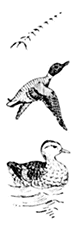
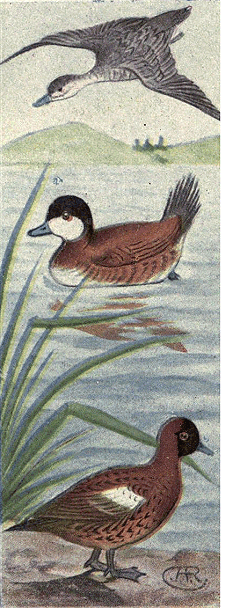
Page 106 Ruddy Duck. Masked Duck. 167. Ruddy Duck. Erismatura jamaicensis. Range.--Whole of North America, breeding chiefly north of the United States border except locally on the Pacific coast. Winters along the Gulf and through Mexico and Central America. Grayish white. This peculiar species may always be recognized by the brownish or chestnut upper parts, blackish crown, white cheeks and silvery white underparts. The bill is very stout and broad at the end, and the tail feathers are stiff and pointed like those of a Cormorant. They build their nests in low marshy places, either placing them on the ground near the water or in the rushes over it. Their nests are made of rushes and grasses, sometimes lined and sometimes not, with down from the parents breast. The eggs number from six to twelve and are grayish in color. Size 2.40 × 1.75. Data.--Northern Assiniboia, Canada, June 6, 1901. Eight eggs. Nest made of aquatic grasses, lined with down. Built in a tuft of rushes in a marsh. Collector, Walter Raine. 168. Masked Duck. Nomonyx dominicus. This is a tropical species which is resident in Mexico, Central America and in the West Indies. It occurs in Mexico north to the lower Rio Grande Valley and has in three known instances strayed to northern United States. The general plumage is a rusty chestnut, mottled with blackish, it has a black face and throat, with white wing bars.
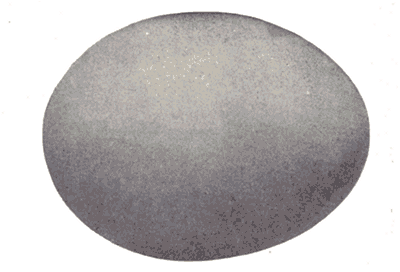
Page 107 Lesser Snow Goose. Blue Goose. 169. Snow Goose. Chen hyperboreus hyperboreus. Range.--North America west of the Mississippi Valley, breeding in northern Alaska and the MacKenzie River district. This smaller species of the Snow Goose nests on islands in rivers along the arctic coast. The nest is a depression in the ground, lined with grasses and, occasionally down. They lay from four to eight eggs of a buffy or yellowish white color. Size 2.75 × 1.75. 169a. Greater Snow Goose. Chen hyperboreus nivalis. Range.--Eastern North America, breeding in the Arctic regions and wintering chiefly on the Atlantic coast, south to Cuba. Grayish White. This bird is like the preceding; except in size; about thirty-six inches, instead of twenty-six inches in length as is the lesser variety. The entire plumage is white except for the black primaries. They construct their nests of grasses on the ground the same as the preceding variety. The eggs number from five to eight and are cream colored. Size 3.40 × 2.40. 169.1. Blue Goose. Chen cærulescens. Range.--North America, principally in the interior, breeding from Hudson Bay northward and wintering along the Gulf coast. This species may always be recognized by the entirely white head and neck, the body being grayish or bluish gray. They nest on the ground as do the other geese laying from four to eight eggs of a brownish buff color. Size 2.50 × 1.75. Data,--Cape Bathurst, Arctic coast, June 29, 1899. Four eggs laid in a depression lined with grass, on an island. Collected with the parent birds by the Esquimaux.
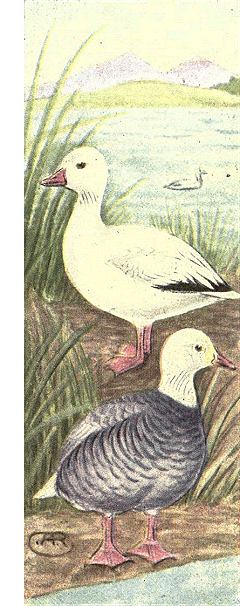
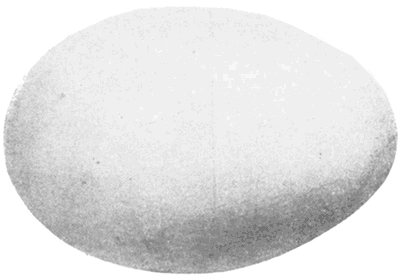
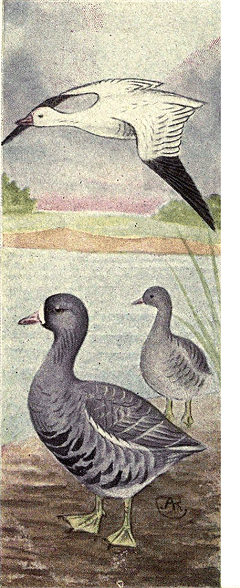
Page 108 Ross Snow Goose. American White-fronted Goose. 170. Ross's Snow Goose. Chen rossi. Range.--This beautiful species, which is similar in plumage to the large Snow Goose, is but twenty-one inches in length. It breeds in the extreme north, and in winter is found in the western part of the United States as far south as the Gulf of Mexico. Their nesting habits and eggs probably do not differ from others in the family except in the matter of size. 171. White-fronted Goose. Anser albifrons albifrons. This European species is exactly like the American except that it is said to average a trifle smaller. It is occasionally found in Greenland. 171a. American White-fronted Goose. Anser albifrons gambeli. Range.--Whole of North America, breeding in the Arctic regions and wintering south to the Gulf coast; not common on the Atlantic coast during migrations. These birds may be recognized by their mottled plumage, dark head and white forehead. This species is more abundant than any of the preceding and nests in large colonies along the arctic coast and in Alaska. Their nests are made of dried grasses, feathers and down and are placed on the ground in a slight depression. From four to nine eggs are laid; these have a dull buff ground. Size 3.00 × 2.05. Data.--Island in delta of Mackenzie River, June 10, 1899. Four eggs. Nest of grass and feathers on the ground on a small island. Collector, Rev. I. O. Stringer. [Illustration z110: ] 171.1. Bean Goose. Anser fabalis. This European species is casually found in Greenland. It is one of the most common of the Old World Species.

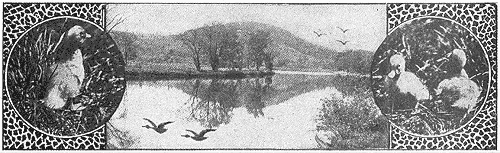
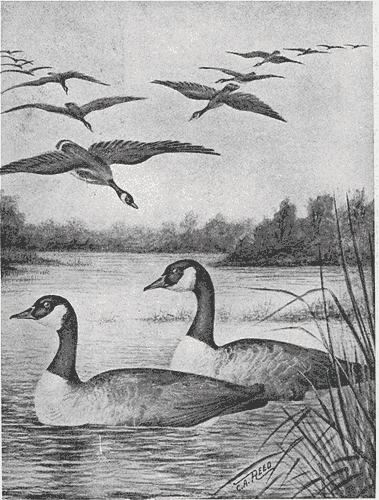
Page 109 Canada Goose. Cackling Goose. 172. Canada Goose. Branta canadensis canadensis. Range.--The whole of North America, breeding from northern United States northward, and wintering in the southern parts of the United States. This species is the most widely known of American Geese and is the most abundant. Its familiar "honk" has long been regarded as the signal of the coming of spring, and the familiar V-shaped formation in which the flocks migrate is always an object of interest to everyone. With the exception of in North Dakota and Minnesota, they breed chiefly north of the United States. They construct quite a large nest of weeds and grass, and warmly line it with down and feathers. They lay from four to nine eggs of a buff or drab color. Size about 3.50 × 2.50. Data.--Ellingsars Lake, North Dakota, May 18, 1896. Five eggs. Nest on an island in the lake, constructed of weeds and trash, and lined with a few feathers. Collector, Edwin S. Bryant. 172a. Hutchins Goose. Branta canadensis hutchinsi. This sub-species is like the preceding except that it is smaller, thirty inches in length. It is a western variety, breeding in Alaska and along the Arctic coast and wintering to southern California. Its breeding habits, nests and eggs are the same as the common goose except that the eggs are smaller. Size 3.00 × 2.05. 172b. White-cheeked Goose. Branta canadensis occidentalis. This bird is about the same size as the Canada Goose and the plumage is very similar except that the black sometimes extends on the throat, thereby isolating the white cheek patches, and there is a white collar below the back of the neck. It is a western species, breeding in Alaska and wintering along the Pacific coast of the United States. Its nesting habits and eggs are same as those of the Canada Goose except that the latter are a trifle smaller. 172c. Cackling Goose. Branta canadensis minima. This bird is really a miniature of the Canada Goose, being but twenty-four inches in length. It breeds in Alaska and along the Arctic coast and migrates into the western parts of the United States. They are abundant birds in their breeding range, where they place their nests upon the shores of ponds, or on islands in inland rivers or lakes. The nests are made of weeds and grasses, lined with down. The eggs which are buff colored, number from four to nine and are laid during June and July. Size 2.30 × 1.95.
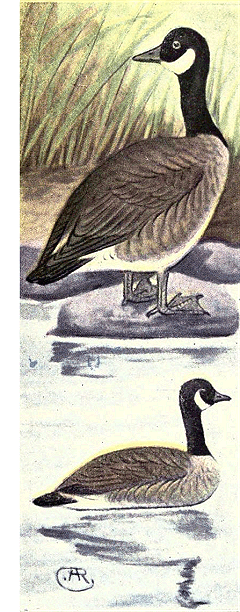
Page 110 CANADA GEESE.
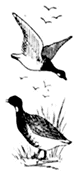
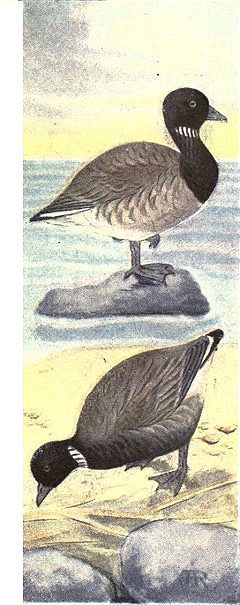
Page 111 Brant. Black Brant. 173. Brant. Branta bernicla glaucogastra. Range.--Eastern North America, breeding in the Arctic regions and wintering in the United States east of the Mississippi. The Brant resembles a small Canada Goose, except that the black of the neck extends on the breast, and only the throat is white. They are one of the favorite game birds and thousands are shot every fall and spring. Their nests and eggs are the same as the next species. 174. Black Brant. Branta nigricans. Range.--Western North America, breeding in Alaska and wintering on the Pacific coast of the United States. Rare east of the Mississippi. Grayish. This species is like the last except that the black extends on the under parts. This species nests very abundantly in northern Alaska, laying their eggs in a depression in the ground, lined with down. Favorite locations are the many small islets in ponds and small lakes. They lay from four to eight grayish colored eggs. Size 2.80 × 1.75. Data.--Cape Bathurst, North West Territory, Junes 22, 1901. Seven eggs in a small hollow in the ground, lined with down. Collector, Capt. H. H. Bodfish.
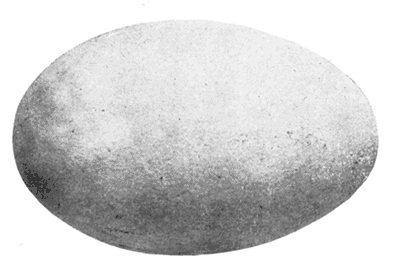
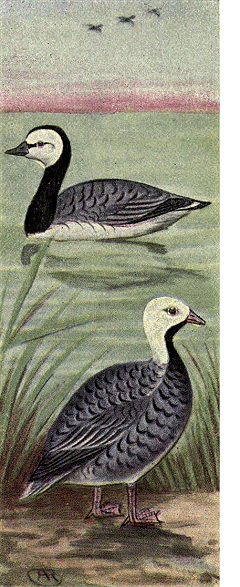
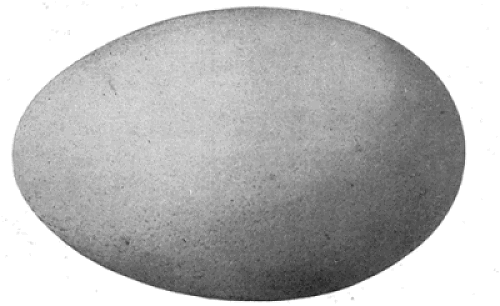
Page 112 Barnacle Goose. Emperor Goose. 175. Barnacle Goose. Branta leucopsis. This Old World species occurs frequently in Greenland and very rarely is found on the mainland of this continent. 176. Emperor Goose. Philacte canagica. Range.--Alaska, south in winter casually to California. This handsome species is twenty-six inches in length; it may be known from the mottled or "scaly" appearance of the body, and the white head with a black chin and throat. While not uncommon in restricted localities, this may be considered as one of the most rare of North American Geese. Their nests are built upon the ground and do not differ from those of other geese. They lay from three to seven eggs of a dull buff color. Size 3.10 × 2.15. Data.--Stuart Island, Alaska, June 16, 1900. Six eggs laid in a slight hollow in the ground, lined with a few feathers and some down. Collector, Capt. H. H. Bodfish. Egg of Canada Goose--Buffy drab.

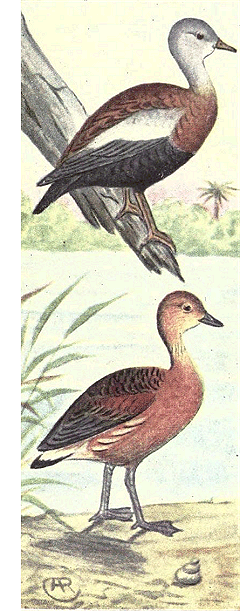
Page 113 Black-bellied Tree duck. Fulvous Tree-duck. 177. Black-bellied Tree-duck. Dendrocygna autumnalis. Range.--Tropical America, north in the Rio Grande Valley to southern Texas. These peculiar long-legged Ducks are very abundant in southern Texas during the summer months. They build their nests in hollow trees, often quite a distance from the water. They lay their eggs upon the bottom of the cavity with only a scant lining, if any, of feathers and down. They are very prolific breeders, raising two broods in a season, each set of eggs containing from ten to twenty. These eggs are creamy or pure white, size 2.05 × 1.50. The first set is laid during the latter part of April or early in May, and fresh eggs may be found as late as July. They are especially abundant about Brownsville and Corpus Christi, Texas. Data.--Hidalgo, Mexico, May 29, 1900. Ten eggs in a hole in an old elm tree on side of lake in big woods near town. Eight feet from the ground. Collector, F. B. Armstrong. White. 178. Fulvous Tree-duck. Dendrocygna bicolor. Range.--This species is tropical like the last, but the summer range is extended to cover, casually the whole southwestern border of the United States. This bird is long-legged like the last, but the plumage is entirely different, being of a general rusty color, including the entire under parts. The nesting habits and eggs are the same as those of the Black-bellied Duck, the white eggs being laid at the bottom of a cavity in a tree. They number from eight to (in one instance) thirty-two eggs in one nest. This species is nearly as abundant as the preceding in southern Texas.

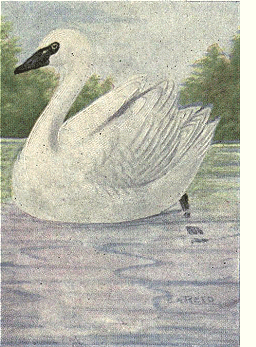
Page 114 Whistling Swan. 179. Whooper Swan. Olor cygnus. This European variety frequently is found in Greenland and formerly, regularly bred there. It nests in secluded swampy places in northern Europe. 180. Whistling Swan. Olor columbianus.. Range.--North America, breeding in the Arctic Circle, and wintering south to the Gulf of Mexico. These birds, which are nearly five feet in length, are snow white with the exception of the black bill and feet. The Whistling Swan is distinguished from the next species by the presence of a small yellow spot on either side of the bill near its base. Their nests are made of a large mass of rubbish, weeds, grass, moss, feathers and occasionally a few sticks. It is generally placed in a somewhat marshy place in the neighborhood of some isolated pond. The eggs are of a greenish or brownish buff color, and number from three to six. Size 4.00 × 2.75. Data.--Mackenzie River. Nest a mass of weeds, sods and grass, lined with feathers; on an island near the mouth of the river. Collector, I. O. Stringer. 181. Trumpeter Swan. Olor buccinator. Range.--Interior of North America from the Gulf of Mexico northward, breeding from northern United States northward. This is a magnificent bird, about five and one-half feet in length. Its plumage is exactly like that of the preceding except that the bill is entirely black, and the nostril is located nearer the eye. Their nesting habits and eggs are the same as those of the Whistling Swan. While a few pairs may breed within the United States by far the greater number are found in the extreme north, from Hudson Bay to Alaska. The eggs may average a trifle larger than those of the preceding species.
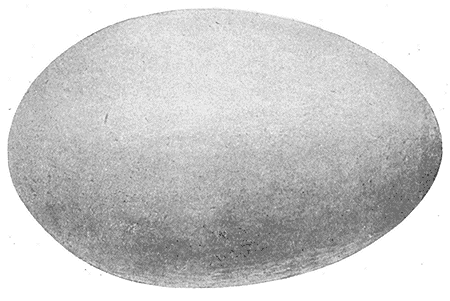
Page 115 LAMELLIROSTRAL GRALLATORES. Order VI. ODONTOGLOSSÆ FLAMINGOES. Family PHOENICOPTERIDAE American Flamingo. Roseate Spoonbill. 182. Flamingo. Phœnicopterus ruber. Range.--Tropical and sub-tropical America on the Atlantic coasts, breeding in the Bahamas and West Indies; north to Florida and casually to the South Atlantic States. These remarkable and grotesque appearing birds attain a length of about 48 inches. The plumage varies from white to a deep rosy red. It requires several years for them to attain the perfect adult plumage, and unlike most birds, they are in the best of plumage during the winter, the colors becoming faded as the nesting season approaches. The birds are especially noticeable because of the crooked, hollow, scoop-shaped bill, and the extremely long legs and neck. The feet are webbed, but more for the purpose of supporting them upon the mud flats than for use in swimming. The nests are usually built on a sandy point of an island; they are mounds of earth, grass and rubbish from one to two feet in height, the top being hollowed to receive the eggs. One or two eggs are a complete set. The shell is pale blue, but this is covered with a heavy white chalky deposit. The eggs are laid in June and July. Size 3.40 × 2.15. IBISES, STORKS, HERONS, etc. Order VII. HERODIONES The members of this order are wading birds, consequently they all have long legs and necks. They have four toes, not webbed. SPOONBILLS. Family PLATALEIDAE 183. Roseate Spoonbill. Ajaia ajaja.. Range.--Tropical America, north in summer to the Gulf States. They formerly nested in remote swamps along the whole Gulf coast, but are now confined chiefly to the Everglades in Florida.
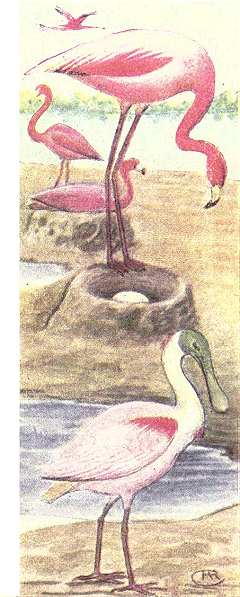
Page 116 Pale greenish blue. This bird, with its broad, flat bill, bare head, and rosy plumage with carmine epaulets and tail coverts, seem more like the fanciful creation of some artist than a real bird of flesh and blood. Its plumage and colors are strikingly clear and beautiful. Full plumaged adult birds have very brilliant carmine shoulders and tail coverts, a saffron colored tail, and a lengthened tuft of bright rosy feathers on the foreneck. This species breed in small colonies in marshy places, often in company with herons and ibises. Their nests are rather frail platforms of sticks, located in bushes or trees, from four to fifteen feet from the ground. The eggs are laid during the latter part of May and June. They are three or four in number and have a ground color of dull white, or pale greenish blue and are quite heavily blotched with several shades of brown. Size 2.50 × 1.70. Chalky bluish white. Egg of American Flamingo.
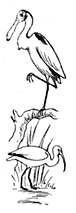
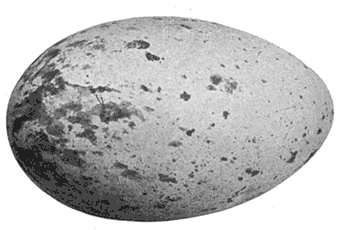
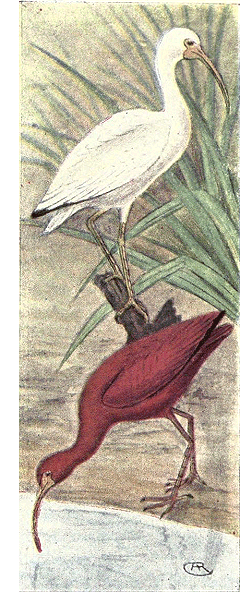
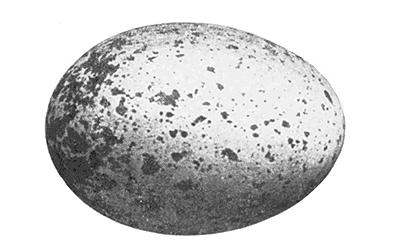
Page 117 IBISES. Family IBIDIDÆ White Ibis. Scarlet Ibis. Ibises are gracefully formed birds having a long curved bill and a bare face. 184. White Ibis. Guara alba. Range.--This is a tropical and sub-tropical species which is found along the Gulf coast, and north to South Carolina, west to Lower California. Grayish. These handsome birds are wholly white, with the exception of black primaries. The legs and the bare skin of the face is orange red. These birds are very abundant in most marshy localities along the Gulf coast, especially in Florida, where they nest in rookeries of thousands of individuals. Owing to their not having plumes, they have not been persecuted as have the white herons. They build their nests of sticks and grasses, in the mangroves a few feet above the water. In other localities they build their nests entirely of dead rushes, attaching them to the standing ones a foot or more above the surface of the water. They are quite substantially made and deeply cupped, very different from the nests of the Herons. Their eggs are from three to five in number, vary from grayish ash to pale greenish or bluish in color, blotched with light brown. Size 2.25 × 1.60. The nesting season is during May and June. Data.--Tampa Bay, Fla., June 4, 1895. Three eggs. Nest of sticks and a few weeds in small bushes on an island. Collector, Fred Doane. 185. Scarlet Ibis. Guara rubra.. Range.--Occasionally, but not recently met with in the southern states. Their habitat is tropical America, they being especially abundant along the Orinoco River in northern South America. Full plumaged adults of this species are wholly bright scarlet, except for the primaries, which are black. Their nests are built in impenetrable thickets, rushes or mangroves, the nests being constructed like those of the White Ibis. The eggs, too, are very similar to those of the preceding species, but both the ground color and the markings average brighter. While still common in some localities, the species is gradually becoming less abundant, chiefly because of the demand for their feathers for use in fly-tying.
Page 118 Glossy Ibis. White-faced Glossy Ibis. Wood Ibis. 186. Glossy Ibis. Plegadis autumnalis.. Range.--This tropical and sub-tropical species, is chiefly found in the Old World. It is occasionally found in southeastern United States where it sometimes breeds. Its habits, nesting habits and eggs are just the same as the next species. 187. White-faced Glossy Ibis. Plegadis guarauna. Range.--A sub-tropical species found in the southwestern parts of the United States, rarely found east of the Mississippi. This species differs from the Glossy Ibis in having the feathers on the front of the head white, the rest of the plumage is a dull brownish chestnut, with greenish reflections on the back. As these birds are not in demand commercially, their numbers have not decreased, and thousands of them breed in colonies in southern Texas. They build a substantial nest of reeds and rushes woven about the upright canes, close to the surface of the water. Their eggs are laid during May, and number from three to four. They are easily distinguished from those of the Herons, being of a deeper greenish blue color and averaging more elongate. Size 1.95 × 1.35. Data.--Corpus Christi, Texas, May 26, 1899. Four eggs. Nest of twigs and rushes on side of river. Collector, F. B. Armstrong. STORKS and WOOD IBISES Family CICONIIDAE 188. Wood Ibis. Mycteria americana. Range.--A sub-tropical species which is resident along the Gulf coast and which strays casually north to New England and Colorado. This peculiar member of the Stork family has the whole head and part of the neck bare and covered with numerous scales; the bill is large, long and heavy; the plumage is white, except for the black primaries and tail. It is a large bird about four feet in length. They are quite abundant in swamps along the
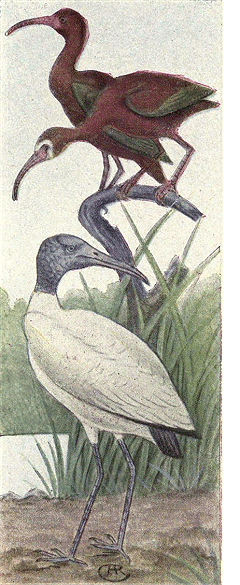

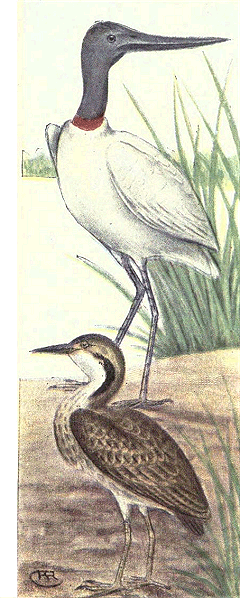
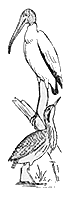
Page 119 Jabiru. Bittern. Gulf coast, where they place their nests, which are platforms of sticks, in trees and bushes over the water. They lay three eggs which are white, and have a rough surface. Size 2.75 × 1.75. 189. Jabiru. Jabiru mycteria. This large bird, which is the only true Stork that claims a place in our avifauna, is a native of South and Central America, wandering north, casually to Texas. Their nests are large platforms of sticks in very high trees. BITTERNS and HERONS Family ARDEIDAE Herons and Bitterns are long-legged waders, having straight, pointed bills, and with the head feathered, except for the lores. 190. Bittern. Bautaurus lentiginosus. Range.--United States and southern British provinces, breeding in the northern half of the United States and wintering in the southern portion. Brownish drab. This species, with its mottled rusty brownish plumage, is one of the best known of the Heron family. It is known locally by a great many names, nearly all of which have reference to the "booming" or "pumping" sound made during the mating season. They build their nests in swampy or marshy places, placing them on the ground, frequently on a tussock, entirely surrounded by water. The nest proper is only a few grasses twisted about to form a lining to the hollow. They lay from three to five eggs of brownish drab. Size 1.95 × 1.50. They do not breed in colonies, generally, but one or two pairs nesting in one marsh. Data.--Worcester, Mass., June 3, 1897. Four eggs laid in a grass lined hollow in middle of a hummock of earth and grass, in middle of marsh. Collector, James Jackson.
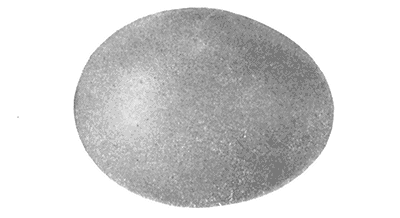
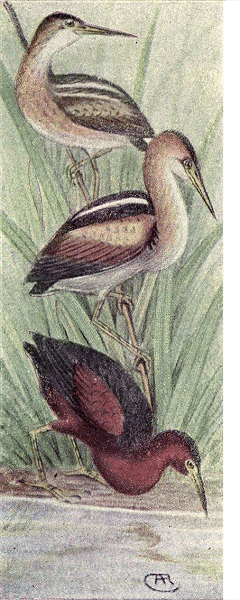
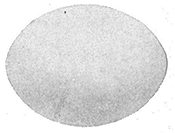
Page 120 Least Bittern. Cory's Least Bittern. 191. Least Bittern. Ixobrychus exilis. Range.--Common throughout the United States, especially in the eastern part, and in the southern British provinces. This small variety of Bittern is very common in the southern portions of the United States, but less so and locally distributed in the northern portions of its range. They are very quiet and sly birds, and their presence is often unsuspected when they are really quite abundant. When approached, they will remain perfectly quiet, with the body erect and the head and neck pointed skyward, in which position their yellowish brown plumage strongly resembles the rushes among which they are found. Their nests are made of strips of rushes woven about upright stalks, generally over water. They lay from three to five eggs of a pale bluish white color. Size 1.20 × .90. Data.--Avery's Island, La., May 1, 1896. Four eggs. Nest of strips of rushes woven together to form a platform and fastened to saw grass growing on the bank of a stream. Collector, E. A. McIlhenny. Pale bluish gray. 191.1. Cory's Least Bittern. Ixobrychus neoxenus. This rare species, of which about twenty specimens are known is probably resident in Florida, wandering north in the summer, specimens having been taken in Ontario, Canada, and in several localities in eastern United States. It is very different from the Least Bittern, having a more uniform chestnut coloration, especially on the under parts. It is twelve inches in length. Mr. C. W. Crandall has a set of five eggs of this species, taken on the Caloosahatchee River, Fla., April 15, 1891, by S. B. Ladd. Nest was made of grasses and rushes placed in the cane two feet above the water.
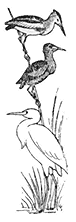
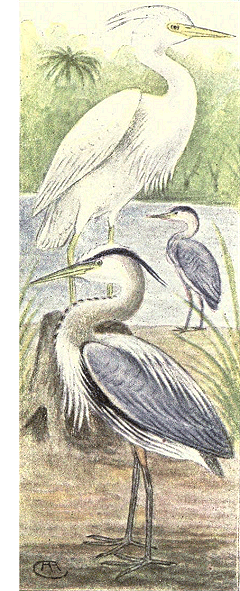
Page 121 Great White Heron. Great Blue Heron. 192. Great White Heron. Ardea occidentalis. Range.--This species occurs in the United States regularly, only in the southern parts of Florida. It is a resident of the West Indies. This large white Heron is about the same size as the Great Blue Heron; it has none of the slender plumes found on the smaller White Herons. These birds are not uncommon in southern Florida, especially on the Keyes, where they build their nests in company with Great Blue Herons. Their nesting habits and eggs are very similar to those of the Blue Heron. Size of eggs 2.25 × 1.80. Data.--Outside of Torch Key, Florida, June 16, 1899. Nest a platform of sticks about five feet from the ground, in a mangrove tree. Three eggs. Collector, O. Tollin. 194. Great Blue Heron. Ardea herodias herodias. Range.--Nearly the whole of North America, except the extreme north; resident south of the middle portions of the United States and migratory north of there. This handsome Heron is about four feet in length. Its general color is a bluish gray, relieved by a black crest, primaries and patches on the sides, and a white crown. In the south they breed in large colonies, often in company with many other species. In the northern portions of their range they breed singly or in companies of under a hundred individuals. They generally place their rude platforms of sticks well up in trees, near ponds, swamps or rivers, but in the most northerly parts of their range, where trees are scarce, they often build on the ground. Unless they are disturbed, they return to the same breeding grounds, year after year. They lay from three to five eggs of a greenish blue color. Size 2.50 × 1.50. Data.--Duck Island, Maine, May 20, 1883. Three eggs. Nest of sticks and twigs, about fifteen feet from the ground. Collector, R. B. Gray. 194a. Northwest Coast Heron. Ardea herodias fannini. This darker sub-species of the breeding is found along the Pacific coast, north to Sitka, Alaska. Its nests and eggs do not differ from the former species.

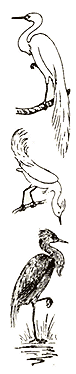
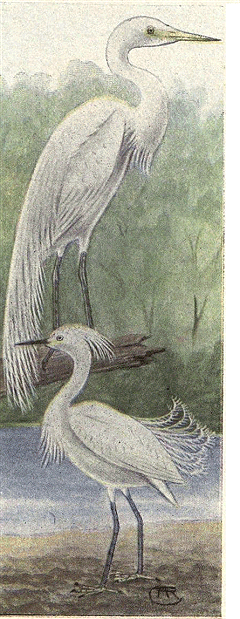
Page 122 Snowy Egret. Egret. 194b. Ward's Heron. Ardea herodias wardi. This sub-species is a resident in Florida. It is a lighter variety than the common. It nests together with the Great Blue Heron and its habits are the same. 195. European Heron. Ardea cinerea. This species is only an accidental straggler in Greenland. It is very similar to our Blue Heron and is the one which was formerly used to furnish sport for the royalty when falconry was at its height. 196. Egret. Herodias egretta. Range.--Resident in the southern portions of the United States, straggling northward casually to the northern parts. This is one of the beautiful Herons which have been sought by plume hunters till they are upon the verge of extermination. They are entirely white, with a long train of beautiful straight "aigrettes" flowing from the middle of the back. In remote localities, quite large colonies of them may still be found, but where they numbered thousands, years ago, they can be counted by dozens now. They breed in impenetrable swamps, very often in company with the following species, and also with Louisiana and Little Blue Herons, and White Ibises. Their nests are but frail platforms, generally in bushes over the water. Their usual complement of eggs numbers from three to five, four as the most common number. They are generally laid during the latter part of May, but often on account of their being disturbed, nests with eggs may be found in July. The eggs are a light bluish green in color. Size 2.25 × 1.45. Data.--Gainesville, Florida, April 14, 1894. Four eggs on a platform of sticks and grass, in a button-wood bush over six feet of water. Collector, George Graham. 197. Snowy Egret. Egretta candidissima candidissima. Light greenish blue. Range.--Common now only in restricted localities in the Gulf States and Mexico. This species, which is smaller than the last, being but twenty-four inches in length, is also adorned with "aigrettes," but they are beautifully recurved at the tips. Owing to the merciless slaughter to which they have been subjected, their ranks have been woefully decimated, and it is to be hoped that the remaining ones may be safely protected. Their nesting habits are the same as the last, although, of course, the eggs are smaller. Size 1.80 × 1.25.
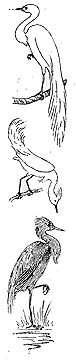
Page 123 Reddish Egret. Louisiana Heron. 198. Reddish Egret. Dichromanassa rufescens. Range.--In the United States, this species is confined chiefly to the Gulf States. Pale bluish green. It is somewhat larger than the last species, the head and neck are rufous, the body is bluish gray, and the back is adorned with slender gray plumes. It also has a white phase. This Egret is very abundant along the whole Gulf coast, but especially so in Texas. Their nesting habits are identical with those of the other small Herons and Egrets. The three or four eggs are rather of a more greenish blue than the preceding. Size 1.90 × 1.45. Data.--Gainesville, Florida, April 14, 1894. Three eggs. Nest of sticks and straw in a button-wood tree, two feet above the water. Collector, George Graham. 199. Louisiana Heron. Hydranassa tricolor ruficollis. Range.--Sub-tropical America, north regularly to the Gulf States and casually farther. Pale bluish green. This Heron is of about the size of the Reddish Egret, but the neck is longer, more slender and dark, while the chin, throat and underparts are white. The plumes from the back are short, reaching barely to the end of the tail. They nest in large colonies in company with Egrets and Little Blue Herons, placing their nests in the mangroves, only a few feet above the water. Their nests are the same as those of the other species, a slight platform of sticks, and the three to five eggs are practically not distinguishable from those of the Snowy or Little Blue Herons. Size 1.75 × 1.35.
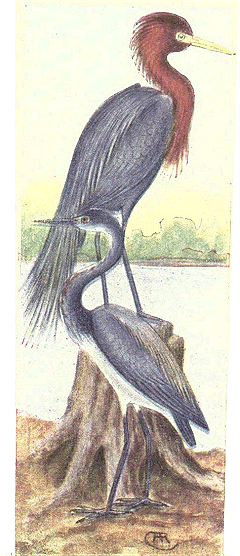
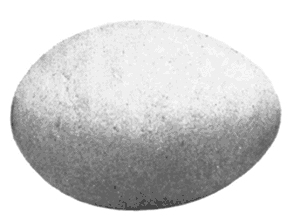
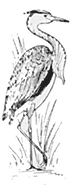
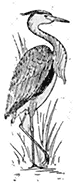
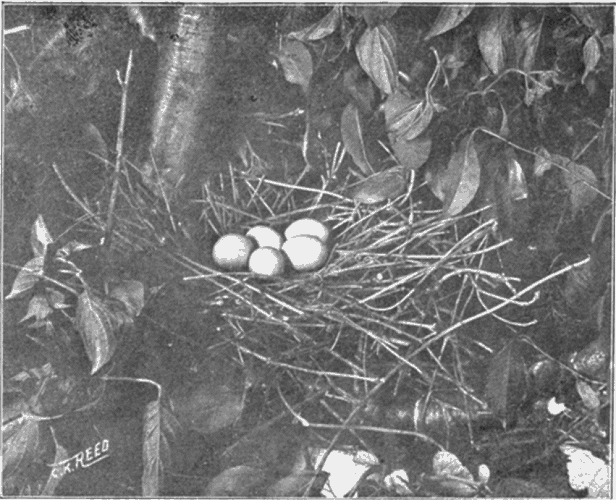
Page 124 Little Blue Heron. Green Heron. 200. Little Blue Heron. Florida cærulea. Range.--South Atlantic and Gulf coasts, north casually to New England and Manitoba; west to Kansas and Nebraska. Pale bluish green. A smaller species than the preceding, length 22 inches, plumage a uniform slaty blue changing to purplish red on the head and neck. They also have a white phase, but always show traces of the slaty blue, especially on the primaries. Young birds are always white. They breed in immense rookeries during April and May. Their nesting habits and eggs are very similar to the last species, although the eggs average a trifle smaller. Size 1.75 × 1.25. Data.--Avery's Island, Louisiana, April 21, 1896. 5 eggs. Nest a flat and frail platform of twigs in a Mimosa tree growing in floating turf, over deep water in a large swamp. Collector, E. A. McIlhenny. 201. Green Heron. Butorides virescens virescens. Range.--Temperate and sub-tropical America, breeding north to the British Provinces. Light bluish green. This is the smallest of our Herons, and is well known all over the country. Sometimes they breed in numbers in rookeries, in company with the larger Herons, but in most sections of the country they will be found nesting, one or two pairs together, along the border of some swamp or stream. They have a greater diversity of building sites, than do any of the other Herons and frequently nest a long ways from water. Their nests may be found in alders, birches or even apple trees. It is the usual Heron type of platform, upon which the three to six eggs are laid. They are a pale greenish blue in color, and measure 1.45 × 1.10. Data.--Avery's Island, Louisiana, April 10, 1894. 5 eggs on a platform of twigs placed in a willow tree growing on the edge of a pond. Collected by E. A. McIlhenny.
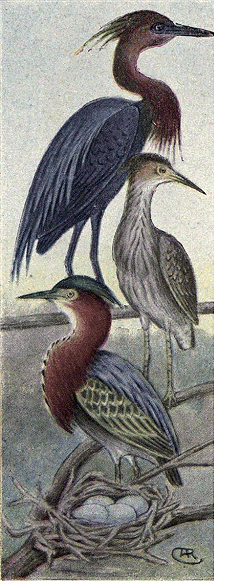
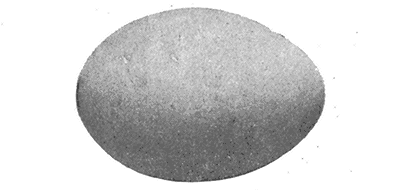
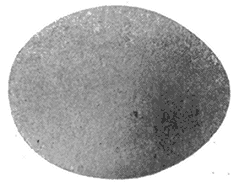
Page 125 201a. Frazar's Green Heron. Butorides virescens frazari. A darker variety found in Lower California; nesting the same as the common species. 201b. Anthony's Green Heron. Butorides virescens anthonyi. A lighter, desert form found in the arid portions of the interior of southwestern United States and Mexico. NEST AND EGGS OF GREEN HERON.
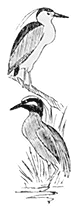
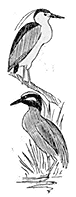
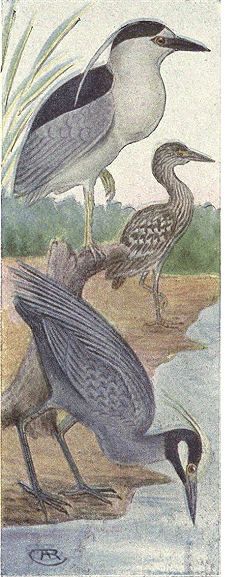
Page 126 Black-crowned Night Heron. Yellow-crowned Heron. 202. Black-crowned Night Heron. Nycticorax nycticorax naevius. Range.--North America from southern British Provinces, southward; winters along the Gulf coast and beyond. Pale bluish green. A well known bird, often called "quawk" from the sound of its note frequently heard in the evening. While, in some localities, only a few pairs of these birds are found nesting together, most of them gather together into large colonies during the breeding season. In New England they generally select a remote pine grove as their breeding grounds. If not disturbed they will return to this same place each year. Their nests are built of sticks and lined with small twigs, and are placed well up towards the tops of the trees. Frequently several nests will be found in the same tree, and I have counted as many as fifty nests in view at the same time. In large swamps in the south they generally nest at a low elevation, while in the marshes of Wisconsin and Minnesota, large colonies of them nest on the ground, making their nest of rushes. Like all Heronries, those of this species have a nauseating odor, from the remains of decayed fish, etc., which are strewn around the bases of the trees. Their eggs number from three to five and are of a pale bluish green color. Size 2.00 × 1.40. Data.--Uxbridge, Mass., May 30, 1898. 4 eggs. Nest of sticks, about thirty feet up in a pine tree. Many other nests. Collector, H. A. Smith. 203. Yellow-crowned Night Heron. Nyctanassa violacea. Range.--Sub-tropical America, breeding along the Gulf coast and to Lower California; casually farther north, to Illinois and South Carolina. A handsome grayish colored species, with long lanceolate plumes on the back, and two or three fine white plumes from the back of the head, like those of the Black-crowned species. Its black head, with tawny white crown and ear coverts, renders it unmistakable. This species nests in colonies or by pairs, like the preceding, and very often in company with other Herons. They lay from three to six eggs, very similar in size, shape and color to those of the Black-crowned Heron.
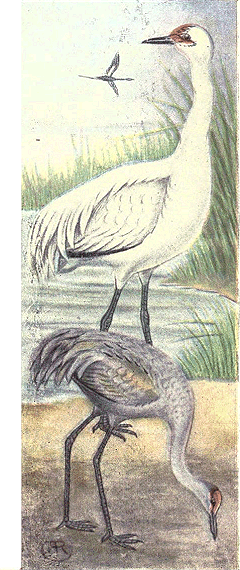
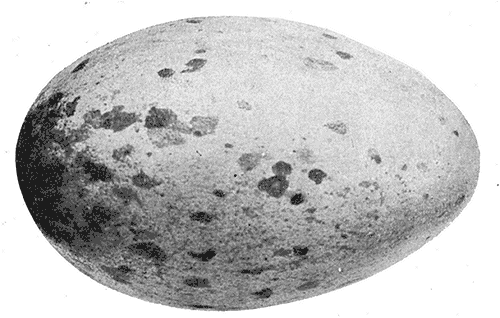
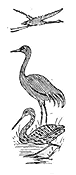
Page 127 CRANES, RAILS, etc. Order VIII. PALUDICOLÆ CRANES. Family GRUIDAE Whooping Crane. Little Brown Crane. Cranes are large, long-legged, long-necked birds, somewhat resembling Herons. Their structure and mode of living partakes more of the nature of the Rails, however. They are found upon the prairies, where besides shell fish from the ponds, they feed largely upon grasshoppers, worms, etc. 204. Whooping Crane. Grus americana. Range.--Interior of North America, breeding from about the latitude of Iowa northward to the Arctic regions; winters in the Gulf states and southward. The Whooping Crane is the largest of the family in America, measuring 50 inches or more in length. The plumage of the adults is pure white, with black primaries. The bare parts of the head and face are carmine. It is a very locally distributed species, in some sections being practically unknown, while in a neighboring locality it may be rated as common. They are very shy birds and are not easily obtained. They nest either upon the solid earth or in marshy places over the water. In either case the nest is a very bulky mass of grass and weeds from two to three feet in diameter and raised perhaps a foot above the ground. They lay two eggs of a brownish buff color, irregularly blotched with brown, and with fainter marking of gray. Size 3.75 x 2.50. Data.--Torkton, northern Assiniboia, northwest Canada. Nest a mass of marsh hay, three feet in diameter, on the prairie. The birds seen, but very wary. Collector, Cowbry Brown. 205. Little Brown Crane. Grus canadensis. Range.--North America in the interior, breeding from Hudson Bay and southern Alaska north to the Arctic coast; south in winter to Mexico. This uniform gray colored Crane differs from the next species only in size, being about three feet in length, while the Sandhill averages three and one-half feet. The eggs cannot be distinguished with any certainty.
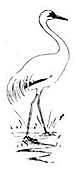
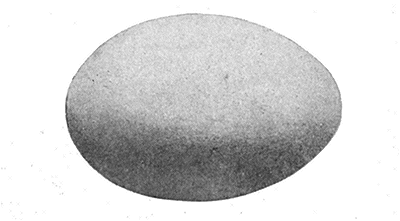
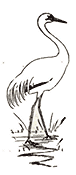
Page 128 Brownish buff. EGG OF WHOOPING CRANE. Buff. EGG OF LITTLE BROWN CRANE.
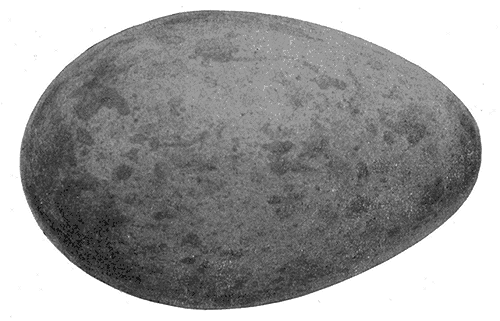
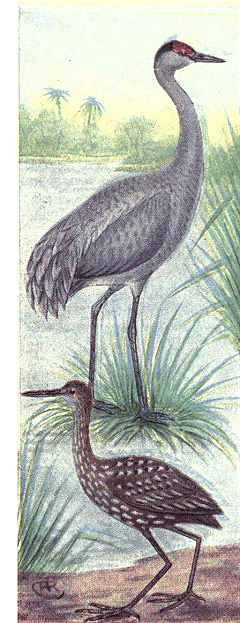
Page 129 Sandhill Crane. Limpkin. 206. Sandhill Crane. Grus mexicana. Range.--Temperate North America, breeding from the Gulf States, locally north to the southern parts of the British Provinces. This is the most common and the most southerly distributed member of the family. In some sections of Florida and Texas it is regarded as abundant. They nest in marshy places near secluded ponds. The nests are masses of grass, weeds and roots, generally placed in marshes and entirely surrounded by water. The two eggs are similar to those of the Whooping Crane, but the ground color is lighter. The eggs of the two species cannot always, with certainty, be distinguished. Size 3.75 x 2.40. Data.--Carman, Manitoba, May 31, 1903. 2 eggs. Nest on a knoll in a marsh, hidden by dead rushes and weeds; a flat loose structure of broken rushes and reeds. Collector, Chris Forge. COURLANS. Family ARAMIDÆ 207. Limpkin. Aramus vociferus. Range.--This bird is a native of the West Indies and Central America, but occurs regularly north to the southern portions of Florida. This strange bird is the only member of its family found in the United States. It may be likened to a large Rail or a small Crane, being apparently, a connecting link between the two. It is about two feet in length, and the plumage is mottled brownish and white. It lives in the marshes, from whence, until late at night, emanate its strange cries, which are likened to those of a child in distress. They nest in the most impenetrable parts of swamps, building their nests of rushes, grass and weeds, in tangled masses of vines a few feet above the ground or water. They lay from three to eight eggs having a ground color of buff or grayish white and blotched with light brown. Their coloration is very similar to those of the Cranes. Size 2.30 x 1.70. They nest in April and May. Buffy white.
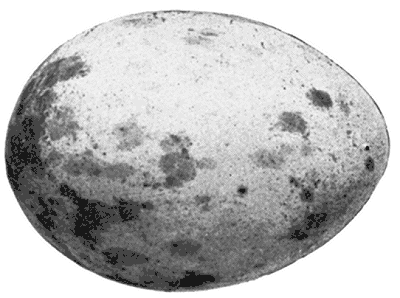
Page 130 NEST AND EGGS OF LITTLE BROWN CRANE.
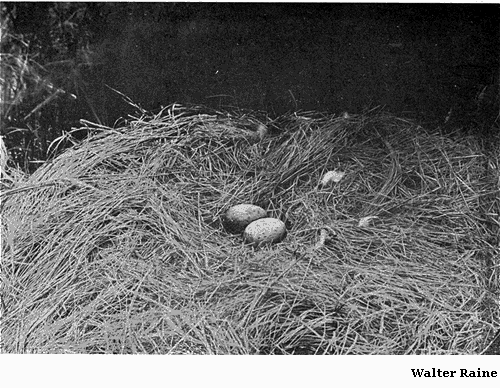
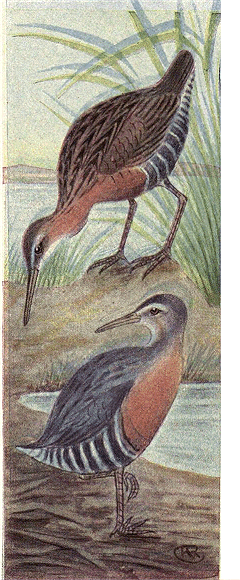
Page 131 RAILS, GALLINULES and COOTS. Family RALLIDÆ Members of this family are almost exclusively frequenters of marshes, where they lead a shy, retiring life and are more often heard than seen. 208. King Rail. Rallus elegans. Range.--Fresh water marshes of eastern United States from New England and the Dakotas, southward. Very abundant on the South Atlantic coast, in the inland marshes. Cream color. This is one of the largest of the Rails, (17 inches in length) and may be known by the richness of its plumage, the breast and wing coverts being a rich cinnamon color. It is almost exclusively a fresh water species and is very rarely found around a salt water marsh. Its nest is built on the ground, in a tuft of grass and weeds woven about the upright stalks. They lay from five to twelve eggs having a cream colored ground, sparingly speckled with brown and lilac. Size 1.60 × 1.20. Data.--Clark County, Missouri, June 6, 1893. 10 eggs. Nest composed of reed stalks; a slightly concave mass 8 inches across, and only two inches above the water, in a clump of reeds. Collector, Ed. S. Currier. 209. Belding's Rail. Rallus beldingi. Range.--Lower California and the islands in the Gulf. This is a locally confined species, very similar to the preceding but darker and with the flank bars narrower. Its nesting or eggs will not differ from those of the King Rail. 210. California Clapper Rail. Rallus obsoletus. Range.--Salt marshes of the Pacific coast of the United States. Light buff. This species is like a dull colored King Rail, with reference to the markings of the back, or a bright colored Clapper Rail, as it has a cinnamon colored breast. It is an abundant species in nearly all the salt marshes along the coast. They make their nests on the higher parts of the marsh, where it is comparatively dry, building them of grass and strips of rushes. They lay from four to nine eggs of a light buff color, boldly spotted with brown, and with fainter markings of lilac. Size 1.75 × 1.25. Data.--Palo Alto, Cal., May 1, 1899. Nest of marsh grass under a small bush on bank of slough. Collector, Ernest Adams.
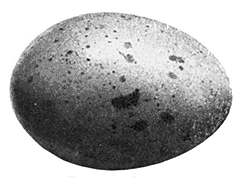
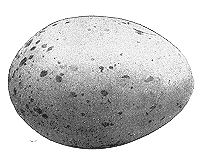
Page 132 King Rail. Clapper Rail. 211. Clapper Rail. Rallus crepitans crepitans. Range.--Salt marshes of the Atlantic coast from southern New England southward. Buff. A grayish colored Rail, about the size of, and with the markings similar to those of the King Rail. It is as exclusively a salt water species as the King Rail is a fresh water one. With the possible exception of the Carolina or Sora Rail, this is the most abundant of all the Rails, hundreds nesting in a single marsh on the South Atlantic coast. Their nests are built of rushes and weeds, and are placed on the ground either in the tall grass bordering the marshes or attached to the rushes in the midst of the marsh. The nesting season commences during April and continues through May. They lay from six to fourteen eggs, of a buff color spotted irregularly with brown and gray. Size 1.70 × 1.20. 211a. Louisiana Clapper Rail. Rallus crepitans saturatus. The habitation of this subspecies is limited to the coast of Louisiana. It is very similar to the proceeding but is said to be brighter in plumage. 211b. Florida Clapper Rail. Rallus crepitans scotti. Range.--Western coast of Florida. This bird is also similar to crepitans but is much darker and brighter. 211c. Wayne's Clapper Rail. Rallus crepitans waynei. Range.--South Atlantic coast from North Carolina to Florida. This subspecies is a little darker than crepitans, being about midway between that species and Rallus scotti. The nests and eggs of any of these sub-species cannot be distinguished from those of the common Clapper Rail. 211.2. Caribbean Clapper Rail. Rallus longirostris caribaeus. Range.--West Indies and east coast of Mexico, north to southern Texas. This species is similar to the Clapper, but has a shorter and relatively stouter bill.
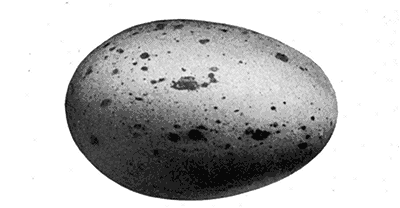
Page 133 Sora. Virginia Rail. 212. Virginia Rail. Rallus virginianus. Range.--Temperate North America, breeding from the Middle States and California, northward to British Columbia and Labrador, and wintering along the Gulf coast; most abundant in the east. Creamy white. A small Rail, 9 inches long, very similar in markings and coloration to the King Rail. It is found chiefly in fresh water swamps, where it builds its nests in tufts of rushes. The eggs number from six to fourteen, and are creamy white, or white, speckled with reddish brown. Size 1.25 × .90 Data.--Fighting Island, Detroit River, Michigan, May 30, 1904. Nest made of marsh grass, in rushes, 6 inches above the water. Collector, E. Leroy King. 213. Spotted Crake. Porzana porzana. This common European species is casually found in Greenland. It breeds in large numbers throughout temperate Europe, nesting as do the American Rails. 214. Sora. Porzana carolina. Range.--Temperate North America, breeding from the southern parts of the British possessions, south to the Gulf coast. Bright buff. This abundant species of Rail may be readily known by its small size, about eight inches long, and the black face and throat of the adult. These are the "Rail-birds" or "Ortolans" which are annually slaughtered by thousands, for sport and marketing, during their fall migration. It is only because of the large families that they rear, that they are able to withstand this yearly decimation of their ranks. They nest either in salt or fresh water marshes, making a rude structure of grass, weeds and strips of rushes, on the ground, generally concealed in a tuft of grass in a tangled swamp or marsh. During May, they lay from six to sixteen eggs of a bright, buffy gray color, spotted with reddish brown and lavender. Size 1.25 × .90.
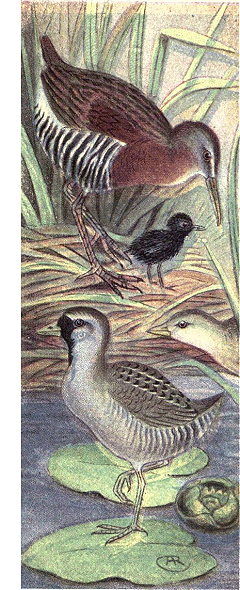
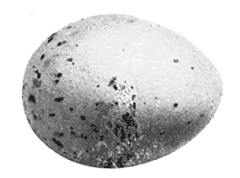
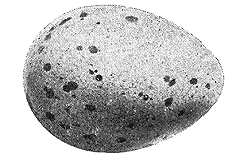
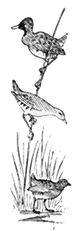
Page 134 Yellow Rail. Black Rail. 215. Yellow Rail. Coturnicops noveboracensis. Range.--Locally distributed in temperate North America, from New England and Nova Scotia, to California and British Columbia; south to the Gulf States in winter. Rich buff. This is a very handsome species, with plumage of glossy brown, yellowish buff, black and white; length seven inches. They are very shy and secretive, and are probably more common than generally supposed. Their nesting habits are the same as those of the preceding. Their eggs are of a rich buff color, speckled in the form of a wreath about the large end, with reddish brown. They are relatively narrower than those of other Rails. Size 1.10 × .80. Data.--Benson Co., North Dakota, June 4, 1901. Set of ten eggs collected by Rev. P. B. Peabody. This set is in the collection of Mr. John Lewis Childs. 216. Black Rail. Creciscus jamaicensis. Range.--Temperate North America, breeding from northern United States southward. Smallest of the rails; 5 inches in length. A dark slaty colored bird with white specks, and a patch of dark chestnut on the fore back. This diminutive species is very hard to find because of its retiring habits, but according to Mr. Brewster it may be located by the clicking sound of its song. Their nests are woven of strips of rushes or grasses, and are well "cupped" to receive the eggs. They are on the ground on the border of, or in, marshy places. Mr. Childs has a fine set of eight eggs, taken by Arthur T. Wayne, at Mt. Pleasant, S. C., June 10, 1903. The nest was located in an oat field. The eggs have a creamy white ground, and are specked all over with reddish brown. Size 1.03 × .75. 216.1. Farallon Rail. Creciscus coturniculus. Known only from a single specimen, which is slightly smaller than jamaicensis and without the white specks on the back.
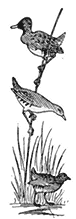
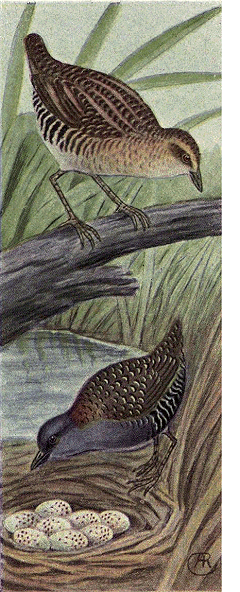
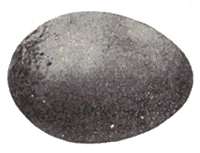
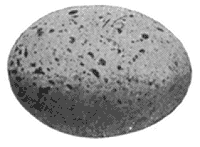
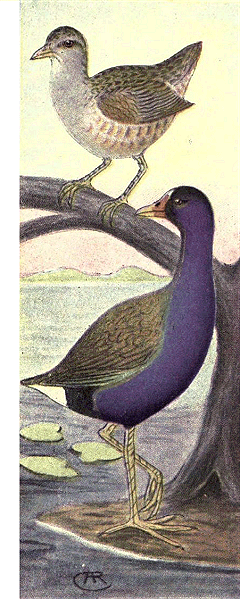
Page 135 Purple Gallinule. Corn Crake. 217. Corn Crake. Crex crex. This European Rail is casually found in Greenland and along the Atlantic coast of North America. It is the most abundant of European Rails and is found breeding in marshes, meadows and along streams. 218. Purple Gallinule. Ionornis martinicus. Range.--South Atlantic and Gulf States; casually north in eastern United States to Massachusetts and Ohio. Pale buff. A very handsome bird with purplish head, neck and under parts, and a greenish back. Like all the Gallinules and Coots, this species has a scaly crown plate. An abundant breeding species in the southern parts of its range. Its nests are made of rushes or grasses woven together and either attached to living rushes or placed in tufts of grass. They lay from six to ten eggs of a creamy or pale buff color sparingly blotched with chestnut. Size 1.60 × 1.15. Data.--Avery's Island, Louisiana, May 7, 1896. Ten eggs. Nest of dry rushes, woven to standing ones growing around an "alligator hole" in a marsh. Collector, E. A. McIlhenny.
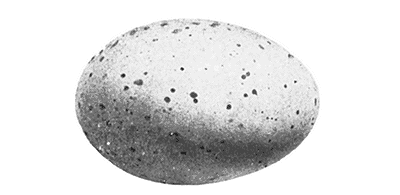
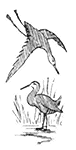
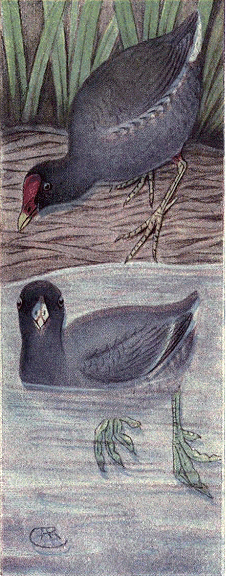
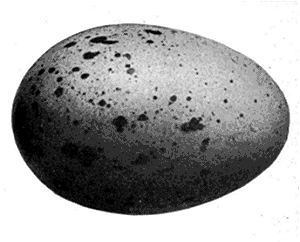
Page 136 Florida Gallinule. Coot. 219. Florida Gallinule. Gallinula galeata. Range.--Temperate North America, from New England, Manitoba and California, southward. A grayish colored bird of similar size to the last (13 inches long), with flanks streaked with white, and with the bill and crown plate reddish. They nest in colonies in marshes and swamps, building their nests like those of the Purple Gallinule. The eggs, too, are similar, but larger and slightly duller. Size 1.75 × 1.20. Pale buff. Data.--Montezuma marshes, Florida, June 6, 1894. Eleven eggs. Nest of dead flaggs, floating in two feet of water. Collector, Robert Warwick. 220. European Coot. Fulica atra. A European species very similar to the next, and only casually found in Greenland. Nesting the same as our species. 221. Coot. Fulica americana. Range.--Whole of temperate North America, from the southern parts of the British Provinces, southward; very common in suitable localities throughout its range. Grayish. The Coot bears some resemblance to the Florida Gallinule, but is somewhat larger, its bill is white with a blackish band about the middle, and each toe has a scalloped web. They inhabit the same marshes and sloughs that are used by the Rails and Gallinules as nesting places, and they have the same retiring habits, skulking through the grass to avoid observation, rather than flying. Their nests are either floating piles of decayed vegetation, or are built of dead rushes in clumps of rushes on the banks. They generally build in large colonies. The eggs number from six to sixteen and have a grayish ground color, finely specked all over the surface with blackish. Size 1.80 × 1.30.
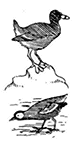
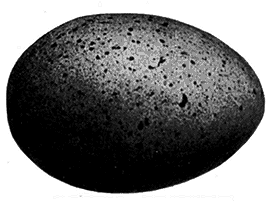

Page 137 SHORE BIRDS. Order IX. LIMICOLÆ PHALAROPES. Family PHALAROPODIDAE Red Phalarope. Northern Phalarope. Phalaropes are small Plover-like birds, but with lobate webbed feet, similar to those of the Grebes and Coots. 222. Red Phalarope. Phalaropus fulicarius. Range.--Northern Hemisphere, breeding in the far north, and migrating to the middle portions of the United States, chiefly on the coasts. Greenish buff. The Red Phalarope during the breeding season has the underparts wholly reddish brown; they are very rarely seen in the United States in this dress, however for it is early changed for a suit of plain gray and white. This species has a much stouter bill than the two following; it is about nine inches in length. All the Phalaropes are good swimmers, and this species, especially, is often found in large flocks off the coast, floating on the surface of the water; they feed largely upon small marine insects. Nests in hollows on the ground, lined with a few grasses. The eggs are three or four in number, generally of a greenish buff color, spotted and blotched with brown and blackish. Data.--Myvates, Iceland, June 19, 1897. Collector, C. Jefferys. 223. Northern Phalarope. Lobipes labatus. Range.--Northern Hemisphere, breeding in the northern parts of the British Provinces. This is the smallest of the Phalaropes, being about eight inches long; in summer it has a chestnut band across the breast and on the side of the neck. Greenish buff. Its habits and nesting habits vary but little from those of the Red Phalarope, although its distribution is a little more southerly, and it is not as exclusively maritime as the preceding species. It is found on both coasts of the United States, but more common on the Pacific side, during the fall and spring, when going to or returning from its winter quarters in the tropics. Their eggs cannot, with certainty, be distinguished from the preceding species.
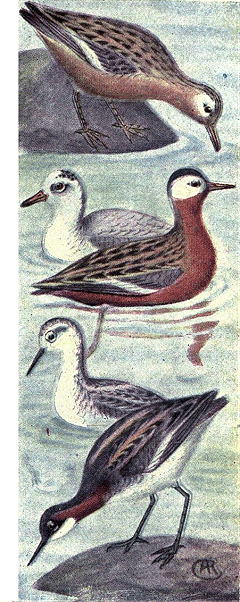
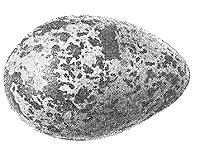
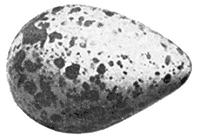
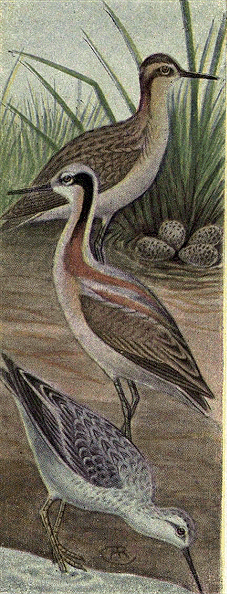
Page 138 Male, female, young. Wilson's Phalarope. 224. Wilson's Phalarope. Steganopus tricolor. Range.--Interior of temperate North America, breeding from the latitude of Iowa, northward, and wintering south of the United States. Brownish buff. This is the most handsome species of the family, being of a very graceful form, of a grayish and white color, with a broad stripe through the eye and down the neck, where it fades insensibly into a rich chestnut color. It is an exclusively American species and is rarely found near the coast. It builds its nest generally in a tuft of grass, the nests also being of grass. The eggs are of a brownish or greenish buff color, spotted and blotched with black and brown. Size 1.30 × .90. Data.--Larimore, N. D., May 30, 1897. Nest a shallow depression, scratched in the sand, under a tuft of grass on an island. Collector, T. F. Eastgate.
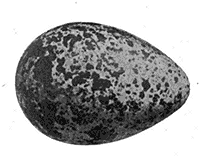
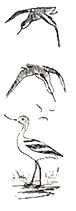
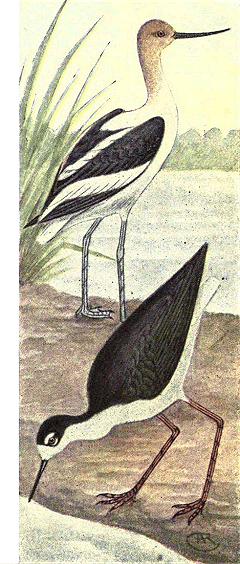
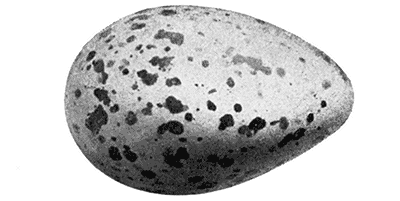
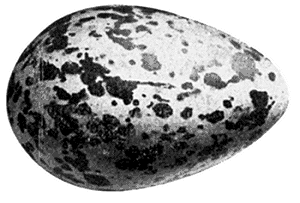
Page 139 AVOCETS and STILTS. Family RECURVIROSTRIDÆ American Avocet. Black-necked Stilt. 225. Avocet. Recurvirostra americana. Range.--Western North America, breeding north to Northwest Territory. Greenish buff. The Avocet can be known from any other bird by its up-curved bill, light plumage, webbed feet and large size (length about 17 inches). These waders are quite numerous in suitable localities throughout the west, constructing their nests in the grass, bordering marshy places. The nest is simply a lining of grass in a hollow in the ground. They lay three or four eggs of a dark greenish or brownish buff color, boldly marked with brown and black. Size 1.90 × 1.30. Data.--Rush Lake, Assiniboia. Four eggs laid in a depression in the sand, lined with dry weeds. Many birds nesting in the colony. 226. Black-necked Stilt. Himantopus mexicanus. Range.--Like the last, this species is rarely found east of the Mississippi, but is very abundant in the United States west of that river. Greenish buff. A black and white wader, with extremely long red legs; otherwise a gracefully formed bird. It breeds in large colonies anywhere in its range, making its nests of weeds and sometimes a few twigs, on the ground beside of, or in the marshes. Their eggs number three or four and are brownish or greenish buff with numerous markings of brownish black, these markings being somewhat lengthened and mostly running lengthwise of the shell. They nest during April in the southern parts of their range and through May and June in the northern. Size of eggs 1.80 × 1.25. Data.--Freshwater Lake, southern California, June 5, 1891. Four eggs laid on a mud flat near the water's edge; no nest. Collector, Evan Davis.
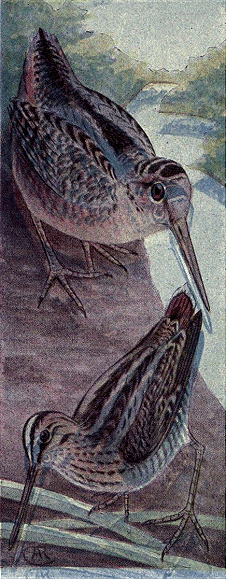
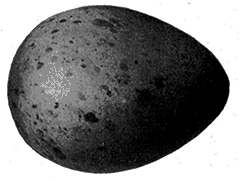
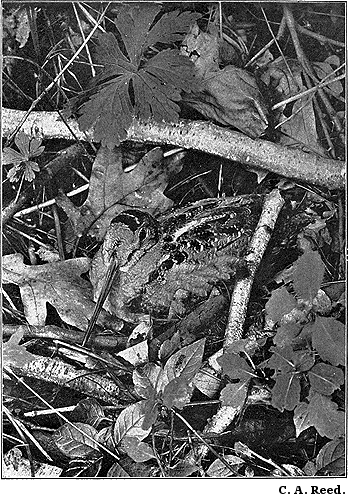
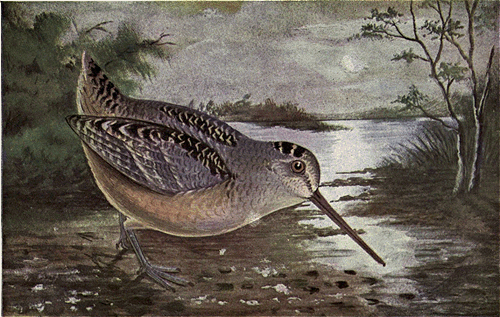
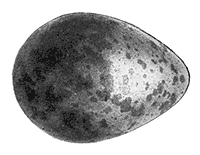
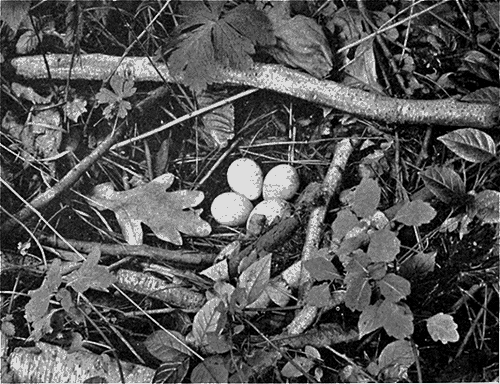
Page 140 SNIPES, SANDPIPERS, Family SCOLOPACIDÆ Members of this family are long-legged waders, of either large or small size, and found either about streams or ponds in the interior or along the coasts. They feed upon small shell fish, or insects which they get usually by probing in the soft mud. American Woodcock. Wilson's Snipe. 227. European Woodcock. Scolopax rusticola. This European bird is similar to the American Woodcock, but is larger and is barred beneath. Their habits are the same as those of our species. 228. Woodcock. Philohela minor. Range.--Eastern North America, north to the British Provinces, breeding throughout its range. Buffy gray. This is one of the most eagerly sought game birds of the east. Their flight is very rapid and erratic, and accompanied by a peculiar whistling sound made by the rapid motion of the wings; it requires a skillful marksman to bring them down. They frequent boggy places especially "runs" lined with alders, where they bore in the soft ground for worms and grubs. Their eggs are laid upon the bare ground among the leaves and sticks; they are of about the color of dead leaves, as is also the bird, making it quite difficult to discover their nests. They lay three or four eggs of a buffy color, with yellowish brown spots. Size 1.50 × 1.15. 229. European Snipe. Gallinago gallinago. A common species in Europe; of casual or accidental appearance in Greenland. The bird does not differ essentially from our Snipe and its habits are the same.

Page 141 WOODCOCK ON HER NEST.
Page 142
WOODCOCK.
Page 143 Wilson Snipe. Gallinago delicata. Range.--North America, breeding from northern United States northward; winters along the Gulf States and to California, and southward. Olive gray. Another favorite game bird, but one which requires skill to hunt successfully. Of about the same size as the Woodcock (11 inches long). This species, to a great extent frequents the same haunts used by Woodcock, but is especially fond of open marshy meadows, with winding brooks. Their nests are depressions in grassy banks, generally unlined; the three or four eggs have an olive gray color and are strongly marked with blackish brown. Size 1.50 × 1.10. Data.--Lake Winnipegosis, Manitoba, June 10, 1903. Nest in a hollow on a tuft of marsh grass, the four eggs having their points together. Collector, Walter Raine. 230.1. Greater Snipe. Gallinago media. A European species, only American as having accidentally occurred at Hudson Bay; similar in appearance to the preceding species. NEST AND EGGS OF WOODCOCK.
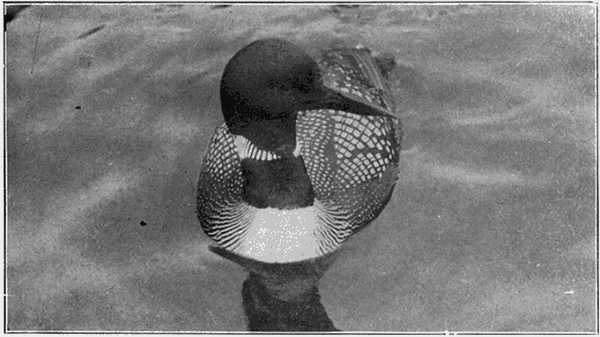
Page 144 Dowitcher. 231. Dowitcher. Macrorhamphus griseus. Range.--North America, most abundant in the eastern parts; breeds in the extreme north, and winters from the Gulf States to Northern South America. Greenish buff. This species is commonly known as "Red-breasted Snipe" in late spring and summer because of the rich, rusty red coloration of the underparts, and as "Gray-back" in winter because of its color at that season. They are very common along the Atlantic coast during the Spring migration; they can be easily identified by their very long bills, which are over two inches in length and nearly one quarter the length of the whole bird. They nest during June, placing their three or four eggs in a slight hollow, which may or may not be lined with dried grass or leaves. The eggs have a greenish or brownish buff color and are boldly marked with dark brown. They do not differ greatly from those of the Snipe. Data.--Mackenzie River, June 27, 1900. Four eggs in a hollow in the grass, lined with dead grass. Collector, Walter Raine. LOON.

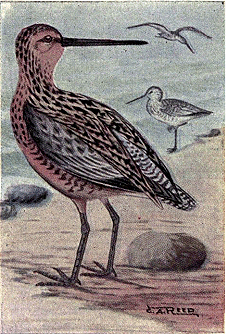
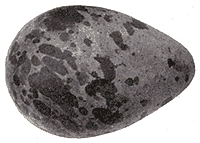
Page 145 Long-billed. 232. Long-billed Dowitcher. Macrorhamphus griseus scolopaceus. Range.--Whole of North America, but not common on the Atlantic coast; breeds in the Arctic regions and migrates chiefly through the central and western parts of the United States to Mexico. Greenish buff. This bird is practically the same as the last, but is a trifle larger and the bill averages about a half inch longer. They are very numerous in their breeding haunts, and, during their migrations, fly in large compact flocks. They are not very timid, and consequently fall an easy prey to the gunners. Their nesting habits and eggs are the same as the last species, except that the eggs may average a trifle larger. Size 1.75 × 1.15. Data.--Norton Is., Alaska, June, 1900. Nest a small hollow in the dry ground. Four eggs. Collector, Capt. H. H. Bodfish. 233. Stilt Sandpiper. Micropalama himantopus. Range.--North America, east of the Rocky Mountains; breeds in the Arctic regions and winters from the Gulf States southward. In the summer, these birds may be known by the reddish coloration of the underparts, which are numerously barred; they are smaller than the preceding, length about eight inches. Their nesting habits are the same as those of the majority of the members of the family. The three or four eggs are buffy or grayish, and are blotched and spotted with shades of brown. Size 1.40 × 1.00.
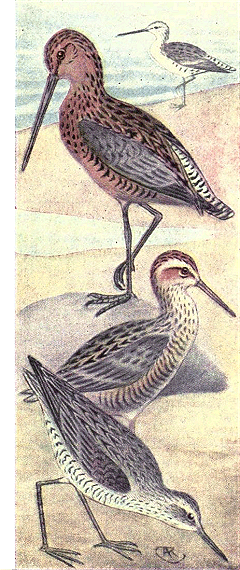
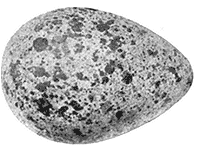
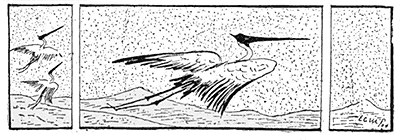
Page 146 Knot. Purple Sandpiper. 234. Knot. Tringa canutus. Range.--Arctic regions in summer; south through the United States, chiefly on the Atlantic coast, to South America. Of about the same size as the Dowitchers, length 10.5 inches, but with a much shorter bill. In summer the entire under parts are a uniform reddish chestnut color. They are known to breed in Arctic America, from Point Barrow and Hudson Bay, northward, but no authentic eggs are known, at present, to exist in collections. One taken from a bird by Lieut. Greely, was a pea green color, specked with brown; size 1.10 × 1.00. As it was not fully developed, it was probably correct neither as to size nor color. 235. Purple Sandpiper. Arquatella maritima maritima. Range.--Arctic regions, wintering south to the Middle States and the Great Lakes, but chiefly on the coast. Grayish buff. A grayish and blackish colored species, about nine inches long. It nests in northern Labrador, about Hudson Bay and in Iceland. Its eggs are a grayish buff color handsomely splashed with rich shades of brown and obscure markings of darker gray. Data.--Northern Iceland, June 7, 1897. Four eggs. Nest a hollow in the ground among grass and weeds and lined with a few grasses. Collector, C. Jefferys. 235a. Aleutian Sandpiper. Arguatella maritima couesi. Range.--Supposed to be a resident on the coast and islands of Alaska, from the Aleutians northward. A very similar species to the preceding; scarcely distinguishable. These Sandpipers, which are found in Alaska at all seasons of the year, breed during May and June. Their nesting habits are the same as those of the preceding bird and the eggs are indistinguishable. Size 1.40 × 1.00. Data.--Unalaska, Bering Sea, June 3, 1898. Nest containing four eggs, a depression in the moss, lined with grasses and bits of moss. The eggs were laid with their small ends together.
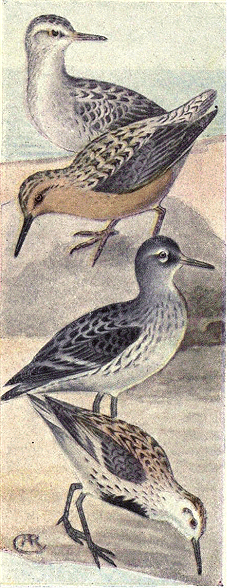
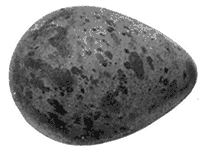
Page 147 Sharp-tailed Sandpiper. Pectoral Sandpiper. 237. Pribilof Sandpiper. Arquatella maritina ptilocnemis. Range.--Coast and islands of Bering Sea, south in winter to southern Alaska. This bird, which is ten inches in length, has the feathers of the upper parts edged with rusty, and the underparts light, with a distinguishing patch of black on the breast. Similar in appearance to the Red-backed Sandpiper, but not so reddish above, and the latter has the black patch on the belly. They breed commonly on the Pribilof and other islands in Bering Sea, nesting the same as other Sandpipers. Their four eggs are similar to those of the preceding, but average darker. Size 1.50 × 1.05. 238. Sharp-tailed Sandpiper. Pisobia aurita. Range.--An Asiatic species, quite abundant in Alaska in the summer; supposed to migrate south in winter, wholly on the Asiatic side of the Pacific. A similar bird, in appearance, to the following, but slightly smaller and with the breast more ruddy. Its nesting habits probably do not differ from those of the following Sandpiper. 239. Pectoral Sandpiper. Pisobia maculata. Range.--Whole of North America, breeding in the Arctic regions, and wintering south of the United States, most abundant in the eastern parts of the United States during migrations. This species is blackish brown above, with light brown edgings to the feathers, and white below, except the chest, which is brownish, streaked with black. A very peculiar species, having the power, during the mating season, of inflating the throat to a great extent, making a balloon-like appendage, nearly the size of the bird. They have more the habits of Snipe, than do most of the Sandpipers, frequenting grassy meadows or marshes, in preference to the seashore. Their nests are grass lined depressions, and the eggs are grayish or greenish buff, blotched with brown. Size 1.45 × 1.00. Data.--Cape Smythe, Alaska, June 1900. Four eggs in a hollow in the ground, lined with grass.
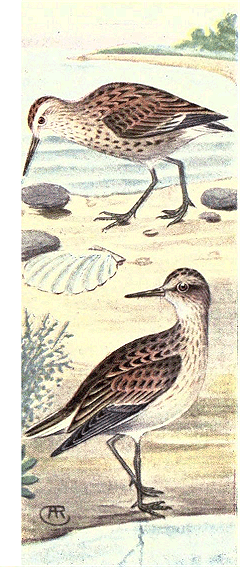
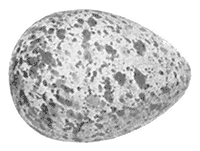
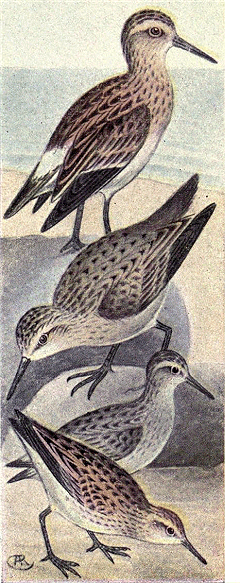
Page 148 White-rumped Sandpiper. Baird's Sandpiper. Least Sandpiper. 240. White-rumped Sandpiper. Pisobia fuscicollis. Range.--North America, breeding from Labrador and southern Greenland, northward and wintering from central to Southern South America; most common on the Atlantic coast. This species is 7.5 inches in length, and has white upper tail coverts; otherwise it is marked similarly to the preceding Sandpiper. Its nesting habits are the same as those of the majority of the family, and the three or four eggs that they lay cannot be distinguished from those of the following species. Size 1.30 × .90. These are one of the most common of the beach birds along the Atlantic coast during migrations; they are very often known as Bonaparte Sandpipers. 241. Baird's Sandpiper. Pisobia bairdi. Range.--North America, chiefly in the interior, breeding along the Arctic coast and about Hudson Bay, and wintering south of the United States. A very similar species to the preceding, but without the white rump. Their nests are hollows in the ground, generally concealed in a tuft of grass, and lined with grasses and a few leaves. They lay three or four eggs having a grayish colored ground, and marked with different shades of brown, and also with some faint markings of lilac. Size 1.30 × .90. Data.--Peel River, Arctic America, June 18, 1898. Four eggs, taken with the bird by an Indian. Eggs in a slight hollow on the river bank. 242. Least Sandpiper. Pisobia minutilla. Range.--North America, breeding from the southern parts of the British Provinces northward; winters from southern United States southward. Common in the interior and on both coasts. Grayish. This is the smallest of our Sandpipers, being under six inches in length. Except for size, they are similar in appearance to Baird's Sandpiper, only the back is browner. A very abundant species during migrations, being found on the seashore or in marshes, nearly always in company with other species of the family. Their nests are the same as other Sandpipers, and the eggs are grayish, thickly specked with brown. Size 1.15 × .80. Data.--Peel River, Arctic America, June 20, 1899. Nest simply a depression in the river bank, lined with grass.
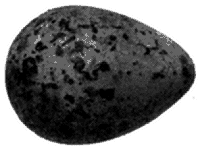
Page 149 Red-backed Sandpiper. Curlew Sandpiper. 242.1. Long-toed Stint. Pisobia damacensis. An Asiatic species accidentally found on the Alaskan shores. It is a very similar bird to the Least Sandpiper, and about the same size. As implied by its name, it has unusually long toes. 243. Dunlin. Pelidna alpina alpina. A very common Sandpiper in the British Isles and in Europe, but only casually occurring as a straggler along the Atlantic coast. Very similar to the next species, but a trifle smaller. The nest and eggs do not differ from the following. 243a. Red-backed Sandpiper. Pelidna alpina sakhalina. Greenish buff. Range.--Whole of North America, breeding from southern Greenland, Labrador, Hudson Bay and the Yukon, northward, wintering from the Gulf States southward. This handsome species is similar to the Pribilof Sandpiper, but is smaller (length 8 inches), the upperparts are more reddish, the breast more heavily streaked, and it has a black patch on the belly instead of on the breast as in ptilocnemis. Their nesting habits are similar to others of the family; they lay three or four eggs with a brownish or greenish buff color, heavily blotched and spotted with shades of brown and chestnut. Size 1.40 × 1.00. Data.--- Peel River, Arctic America, June 30, 1899. Nest a simple cavity in the ground, lined with a few grasses and three or four leaves. Collector, J. O. Stringer. 244. Curlew Sandpiper. Erolia ferruginea. Range.--A common Old World species, but regarded as rare in eastern North America and northern Alaska. A bird of slighter build, but similar coloration to the Knot; smaller (length eight inches) and with a slightly decurved bill. Until within recent years, eggs of these birds were rarely seen in collections, and I believe they have not yet been taken in this country, although a few pairs nest along our Arctic coast. Their eggs are very similar to those of the Red-backed Sandpiper, but average somewhat larger. Size 1.50 × 1.05. Data.--Kola, northern Lapland, June 15, 1898. Four eggs laid in a grass-lined hollow in the ground. Collector, J. Ramberg.
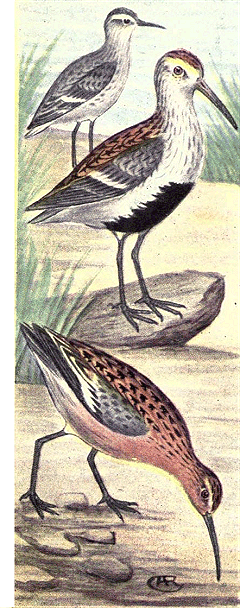
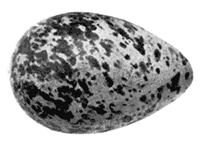
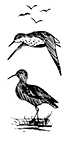
Page 150 Spoonbill Sandpiper. Semipalmated Sandpiper. 245. Spoonbill Sandpiper. Eurynorhynchus pygmeus. A very rare Asiatic species, which has been taken in Kotzebue Sound, Alaska. A very peculiar bird having the end of the bill broadened and flattened into a sort of spatula. Otherwise very similar to the Least Sandpiper, but with the breast and sides of neck ruddy in summer. About 75 specimens of this rare bird are known to exist. 246. Semipalmated Sandpiper. Ereunetes pusillus. Grayish. Range.--Whole of North America, but chiefly in the eastern and central parts, breeding about the ponds and streams of Labrador and Hudson Bay, and northward. These little Sandpipers are abundant during the migrations either in marshes or on beaches. They are most often found in company with other species, such as the Spotted and Least Sandpipers. Their appearance is very similar to that of the Least Sandpipers, but they are slightly larger and the feet are partially webbed. Their eggs have a greenish buff or grayish ground color and are spotted with brownish or blackish, sometimes, so heavily as to completely obscure the shell color. Size 1.20 × .80. Data.--Small island near Okak, Labrador, July 3, 1895. 2 eggs. Nest a hollow at the foot of a tuft of grass, lined with a few bits of grass and small leaves. Eggs unmistakable in this dark type.
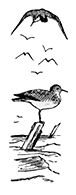
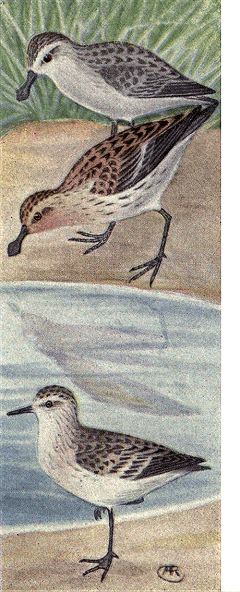
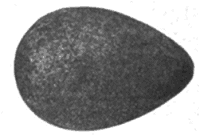
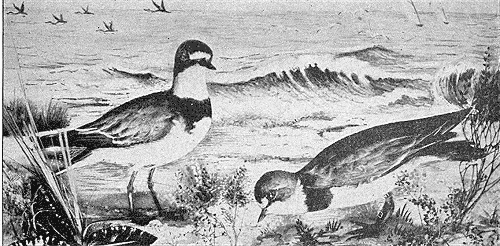
Page 151 Western Sandpiper. Sanderling. Marbled Godwit. 247. Western Sandpiper. Ereunetes mauri. Range.--Western North America, breeding in the Arctic regions and migrating through the United States, chiefly west of the Mississippi to the Gulf States and southward. Grayish buff. Scarcely to be distinguished from the preceding species, but the upper parts are said to be brighter and the bill, to average a trifle longer. The nesting habits and eggs are precisely the same as those of the Semipalmated variety. Data.--Cape Prince of Wales, Alaska, June 28, 1898. Four eggs. Nest a neatly rounded hollow, sunk into a mossy hummock in marshy ground. Collector, Joseph Grinnell. 248. Sanderling. Calidris leucophaea. Range.--Found in all parts of the northern hemisphere, breeding within the Arctic Circle and wintering in North America, from California and South Carolina southward. A handsome and abundant species, found during migrations by thousands on beaches and about large bodies of water in the interior. They are one of the lightest colored of the Sandpipers, either in winter or summer plumage. In summer the upper parts are a light rusty color and black, and the whole underparts are white. Owing to their extreme northerly distribution in summer, but few of their eggs have been taken. Their nesting habits are like those of the other Sandpipers. The three or four eggs are greenish buff in color, spotted and blotched with brown. Size 1.45 × .95. Data.--Peel River, Alaska, June 18, 1897. Three eggs in a depression on the ground. 249. Marbled Godwit. Limosa fedoa. Range.--North America, breeding, chiefly in the interior, from northern United States northward. Godwits are large Plovers with long slightly up-curved bills. This species is 19 inches in length, is of a nearly uniform ruddy color and is handsomely marbled above, and barred below with black. Their eggs are laid upon the ground in the vicinity of ponds or rivers; sometimes there is no lining and again a few straws or grasses may be twisted around the depression. Their eggs number three or four and have a ground color of grayish or greenish buff, sometimes quite dark, and are blotched with dark brown. Size 2.25 × 1.60. Data.--Devil's Lake, N. D., June 10, 1895. Four eggs laid on the ground in the middle of an unused road. Lined with a few grasses. Collector, W. F. Hill.
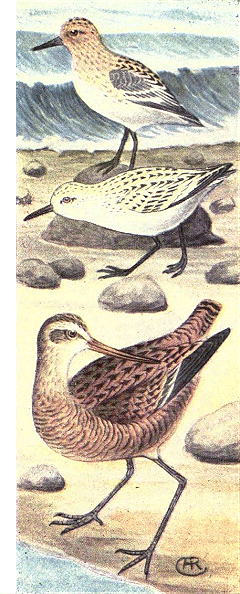
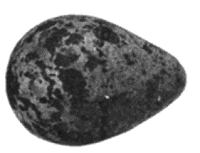
Page 152 Pacific Godwit. Hudsonian Godwit 250. Pacific Godwit. Limosa lapponica baueri. Range.--Coasts and islands of the Pacific Ocean on the Asiatic side, north in summer to Alaska. This species is more uniform and brighter ruddy beneath than the preceding, and the back is not marbled as strongly. Even in Alaska where it breeds, it is not a common species, and it only occurs elsewhere on the Pacific coast of America casually. The nesting habits are the same, but the eggs are somewhat darker than those of the preceding, but not as dark as those of the following species. Size 2.20 × 1.45. 251. Hudsonian Godwit. Limosa haemastica. Range.--North America, east of the Rocky Mountains, breeding in the Arctic regions and wintering south of the United States. Brownish. This species is apparently not as common or is more locally distributed during migrations than is the Marbled Godwit. They are more abundant in their breeding grounds and are occasionally seen in large flocks. They are smaller than the Marbled Godwit (length 18 inches) and are deep reddish brown below. They lay four eggs on the ground, in marshes or near ponds or streams, lining the hollow with weeds and dried leaves. The eggs have a dark brownish buff ground color and are blotched with brownish black. Size 2.20 × 1.40. Data.--Mackenzie River, Arctic America. Four eggs laid in a hollow in the ground. Collector, J. O. Stringer. 252. Black-tailed Godwit. Limosa limosa. A European and Asiatic species only casually occurring in Greenland. Very similar in appearance to our Hudsonian Godwit, which is frequently called by the name of this species. The nesting habits and the eggs are precisely like those of the American bird. 253. Green Shank. Glottis nebularia. A common bird in Europe and the British Isles, but only American as having been taken once in Florida. A very similar species to the following.
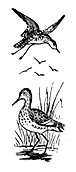
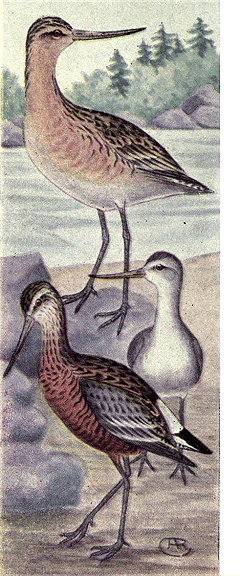
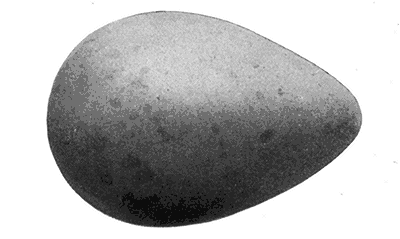
Page 153 Greater Yellow-legs. Yellow-legs. 254. Greater Yellow-legs. Totanus melanoleucus. Range.--Whole of North America, nesting in the British Provinces and rarely in the northern part of the Mississippi Valley. Grayish white. This and the next species are much sought by sportsmen during their migrations; they are commonly called "Tell-tale," the present species being the "Greater Tell-tale." They are blackish above, speckled with white, and below are white and, in summer, marked with arrowhead spots of black. The legs, as implied by the name of the bird, are yellow and long; length of bird, 14 inches. They nest most abundantly in localities remote from habitations, in the interior of Canada. The eggs are generally laid on the ground, near a marsh or on the bank of a stream, with little or no lining to the nest. They are grayish white, boldly splashed with several shades of brown, and with lilac. Size 1.65 × 1.25. Data.--Whale River, Labrador, June 10, 1902. Eggs laid on the ground in an open marsh. 255. Yellow-legs. Totanus flavipes. Buffy. Range.--North America, breeding chiefly in the interior and eastern parts of Canada, and rarely in the upper Mississippi Valley. This species is very similar to the preceding, but is smaller; length 10.5 inches. It is also called the "Lesser Tell-tale," a name applied because of their wariness, and because, when they fly, they warn all other species within hearing, of danger. Their eggs are laid on the ground, and in similar localities to the preceding. They are three or four in number, grayish or buffy in color, and are quite heavily blotched and spotted with rich brown and grayish or lilac. Size 1.60 × 1.20. Data.--Whale River, Labrador, June 14, 1902. Four eggs laid on the ground in a large marsh.
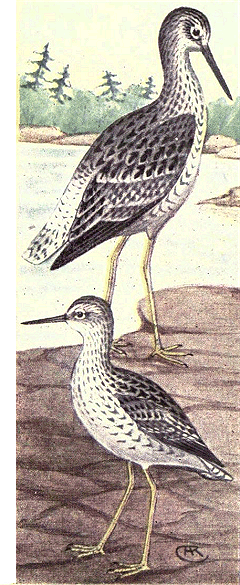
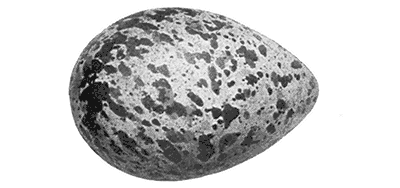
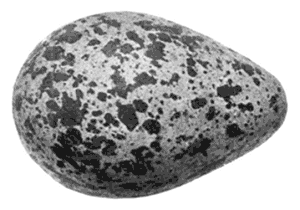
Page 154 Solitary Sandpiper. 256. Solitary Sandpiper. Helodromas solitarius solitarius. Range.--Eastern North America, breeding chiefly north of the United States boundary, but apt to be found nesting in any part of its range; winters south of the United States. Clay-colored. A bird with a greenish gray back, barred with white, and white below; length 8.5 inches. This species is one of the oddities among the waders. They are most always met with, singly or in pairs, and are very rarely seen, even in very small flocks. Their preference is for small ponds or streams in wet woods or open meadows, rather than marshes which are frequented by other species. They are occasionally seen during the nesting season, even in the southern parts of their range, and they probably breed there although their eggs are very rarely found. The eggs are clay-colored, spotted with brownish black. Data.--Simco Island, Kingston, Ontario, June 10, 1898. 5 eggs in a shallow depression on the ground, lined with a few grasses. NEST OF SPOTTED SANDPIPER.
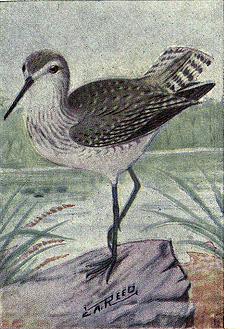
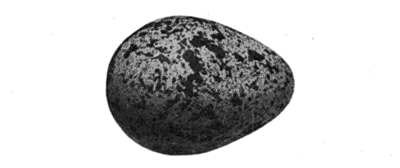
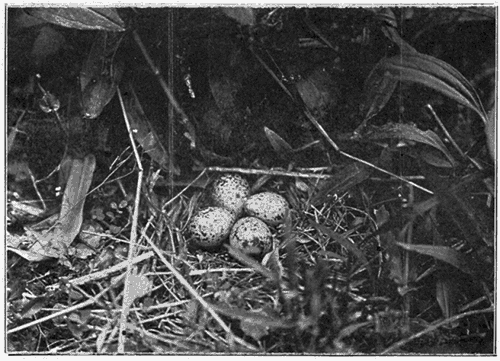
Page 155 Western Sandpiper. Willet. 256a. Western Solitary Sandpiper. Helodromas solitarius cinnamomeus. Range.--North America, west of the Plains; breeds in British Columbia and probably south of there, also. This bird is like the last, except that the spots on the back are buffy instead of white. Its nest and eggs will not differ in any respect from those of the eastern form. 257. Green Sandpiper. Helodromas acrophus. This species, which very closely resembles our Solitary Sandpiper, is common in the northern parts of the Old World. It has only accidentally strayed to our shores. 258. Willet. Catoptrophorus semipalmatus semipalmatus. Range.--Eastern United States, breeding north to the Middle States and occasionally straying to the Canadian border, especially in the Mississippi Valley. Buff. These large waders are among the most abundant of the marsh or beach birds. They breed in small companies in marshes, frequently in those which are covered with water at high tide, building a frail nest of grasses and weeds, where it will be barely out of reach of the highest water. The three or four eggs have a brownish, or sometimes greenish, buff ground color and are blotched with umber, and have fainter markings of lilac. Size 2.00 × 1.50. Data.--Sandy Bank, South Carolina, May 3, 1901. Nest on the ground, secreted in the high grass. Made of dead marsh grass, lined with finer grasses.
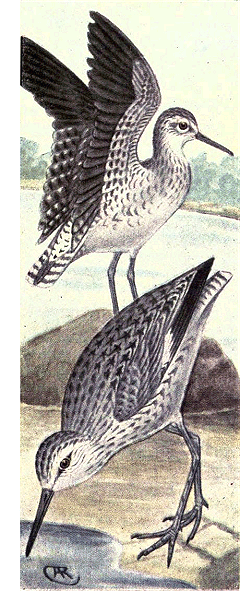
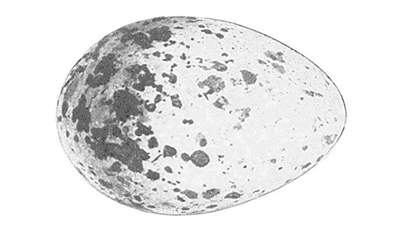
Page 156 Wandering Tattler. Ruff. Upland Plover. 258a. Western Willet. Catoptrophorus semipalmatus inornatus. Range.--Western North America, breeding north to Manitoba and British Columbia. Casually found on the South Atlantic coast during migrations. A larger and paler form of the preceding species; length 15.5 inches. The nesting habits are the same, and the eggs cannot be distinguished from those of the common Willet. Data.--Refugio, Texas, May 18, 1900. 4 eggs in a grass lined depression on the bay shore flat. Collector, J. W. Preston. 259. Wandering Tattler. Heteractitis incanus. Range.--Pacific coast of North America, breeding from British Columbia northward. This is a handsome species, uniform grayish above and white below, closely barred (in summer) with blackish. During the breeding season it is found on the rugged coasts and islands of Alaska, and casually south. It breeds in the marsh grass near the shores and along the banks of streams. 260. Ruff. Machetes pugnax. A common European species, occasionally found on the Atlantic coast of North America. It is a species remarkable for its pugnacity during the mating season; in size and appearance it is about like the Upland Plover, with the exception of the "ruff" which adorns the neck and breast of the male bird. 261. Upland Plover. Bartramia longicauda. Buff. Range.--North America, chiefly east of the Rocky Mountains, breeding from middle United States, northward. A handsome bird, 12 inches in length, generally known as the "Upland Plover," from its habit of frequenting dry side hills, where it feeds upon grasshoppers and worms. It is a favorite bird with many sportsmen. It builds a nest of grasses, on the ground in a tuft of grass in the middle of fields. The three or four eggs have a buff ground and are blotched with yellowish brown. Size 1.75 × 1.25. Data.--Stump Lake, N. D., June 10, 1897. Nest of grass, lined with wool, under a tuft of grass left by the mower. Collector, Alf. Eastgate.
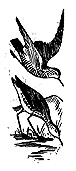
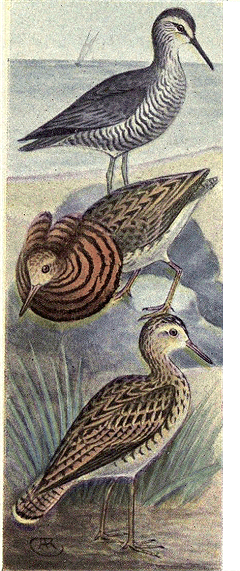
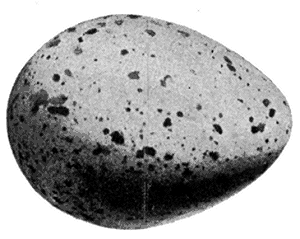
Page 157 NEST AND EGGS OF UPLAND PLOVER.
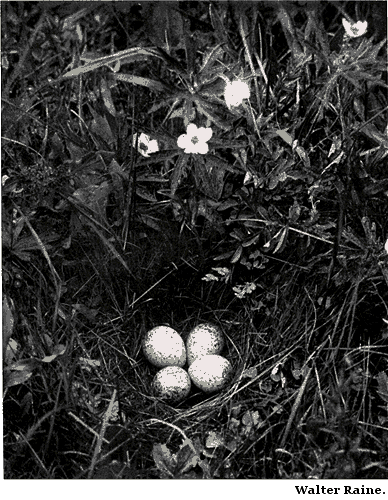
Page 158 Buff-breasted Sandpiper. Spotted Sandpiper. 262. Buff-breasted Sandpiper. Tryngites subruficollis. Range.--Interior of North America, breeding from the Hudson Bay region to the Arctic coast. Grayish white. A buffy colored species, with a peculiarly marbled back. Size 8.5 inches long. It is an upland species like the last. The nests are scantily lined depressions in the ground. The eggs have a grayish white ground and are boldly blotched with rich brown and chestnut with fainter markings of lilac. Size 1.45 × 1.05. Data.--Cape Smythe, Alaska, June, 1900. 4 eggs in a hollow in dry spot on a marsh. Collector, H. H. Bodfish. 263. Spotted Sandpiper. Actitis macularia. Range.--Whole of North America from Hudson Bay southward, breeding throughout its range. Buff. A small wader about 7.5 inches in length, with brownish gray upper parts, and white underparts thickly spotted with blackish, especially on the breast and flanks. This is the most abundant of all the shore birds, and its "peet-weet" is a familiar sound to every country boy. It has a peculiar habit of continually moving its tail up and down, when at rest on a stone or when running along the shore; from these characteristic actions it has received the very common names of "Teeter-tail" and "Tip-up." They build their nests on the ground near ponds, brooks or marshes, generally concealing it in a tuft of grass or weeds on the shore or in the high grass at the edge of the meadows. The eggs number from three to five and are of a grayish buff color, spotted and blotched with blackish brown. The young, like those of all the shore birds, are hatched covered with down, and run about as soon as born. They are anxiously attended by the parents and at the least sign of danger, conceal themselves beneath a tuft of grass or behind a small stone, where they remain perfectly motionless until called by the old birds. The adults frequently attempt to lead an enemy away from the young by feigning a broken wing, or lameness. Size of eggs 1.35 × .90. Data.--Parker County, Ind., May 22, 1901. Nest about six yards from bank of creek, among weeds on a sand bar; a hollow in the sand lined with weeds. Collector, Winfield S. Catlin.
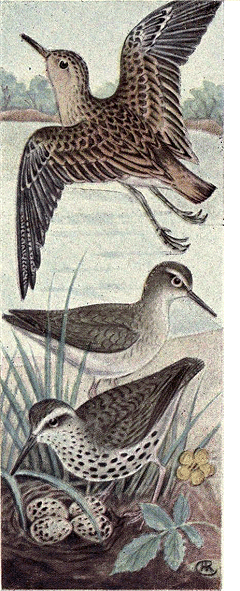
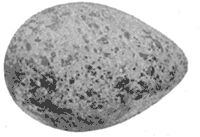
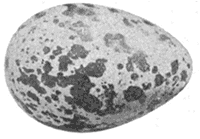
Page 159 Long-billed Curlew. Hudsonian Curlew. 264. Long-billed Curlew. Numenius americanus. Range.--Breeds in the South Atlantic states and northward in the interior to Manitoba and British Columbia. Greenish buff. This is the largest of the family of shore birds, having a length of about 24 inches. Its plumage is of a buffy color, much variegated above with black and brown; the bill is strongly curved downward and is from four to eight inches in length. Their nests are located on the ground in meadows or on the prairies, and three or four eggs are laid, of a buff or greenish buff color, covered with numerous spots of brownish black. Eggs of the common Curlew of Europe, have been very frequently used as belonging to this species, but the eggs of our species have a lighter and more greenish ground, and the spots are smaller and more numerous. Size, 2.50 × 1.80. 265. Hudsonian Curlew. Numenius hudsonicus. Range.--Whole of North America, breeding in the Arctic regions and wintering south of the United States. Brownish buff. This species is smaller (length 17 inches), darker, more grayish and has a shorter bill than the preceding species. It also has white median and lateral stripes on the top of the head. The nesting habits are the same as those of the Long-billed species; the three or four eggs have a brownish buff ground color and are blotched with blackish brown. Size 2.25 × 1.60. Data.--McKenzie River, Arctic America. Nest a pile of grass, moss and weeds on an island in the river.
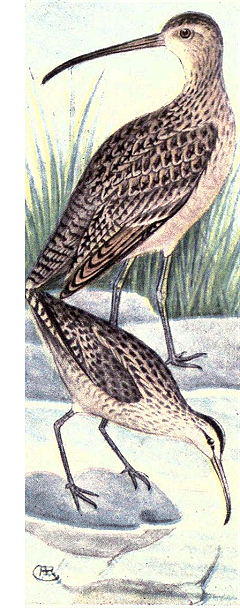
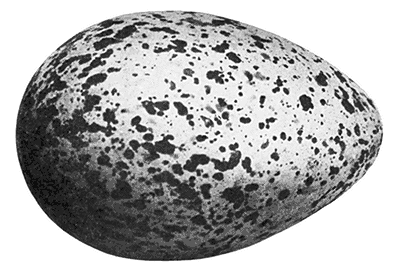
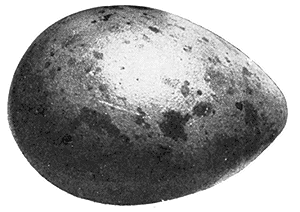
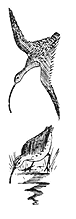
Page 160 Eskimo Curlew. 266. Eskimo Curlew. Numenius borealis. Range.--Eastern North America, breeding in the Arctic regions and wintering in South America; migrating through the eastern half of the United States, more abundantly in the interior than on the coast. A still smaller species than the last (length 14 inches) and very similar to it. A few years ago this was considered the most abundant of the curlews, but so persistently have they been hunted that they are now practically exterminated. They were the most unsuspicious of the shore birds, and would allow the near approach of the gunner, and the penalty may now be seen. Only a short while ago they were very often found, during migration, in company with other waders such as the Golden or Black-bellied Plovers. Their nests are simply hollows in the plains, lined with a few grasses, dried leaves, or moss. The three or four eggs are the same as the last for color but are smaller; size 2.00 × 1.45. 267. Whimbrel. Numenius phaeopus. A European species casually appearing in Greenland; very similar to the Hudsonian Curlew, but with the rump white. Olive brown. This species is known as the Jack Curlew in England and Scotland, where it is very abundant, and is a favorite game bird. It breeds in the northern parts of Europe and Asia, and in the extreme north of Scotland and on the Shetland Islands. The eggs are laid in hollows on the ground on higher parts of the marshes. The three or four eggs have an olive or greenish brown color and are blotched with dark brown. Size 2.30 × 1.60. Data.--Native, Iceland, May 29, 1900. Six eggs. Nest a depression in the ground, lined with dried grass. 268. Bristle-thighed Curlew. Numenius tahitiensis. Range.--Islands and coast on the Asiatic side of the Pacific; casually found in Alaska. A very peculiar species with many of the feathers on the flanks terminating in long bristles.