Volume 8 — LAW AND LANGUAGE
Reading edition
By Mr. M. J. FARRELLY, LL.D.
Barrister-at-Law; Advocate of the Supreme Court of Cape Colony
I.—THE ROMAN DUTCH LAW AND THE LAW OF ENGLAND
The Roman Dutch Law—the body of legal principles and enactments codified under the later Roman Empire by the Emperor Justinian, as modified by legislation of the States-General and decisions of the tribunals of Holland up to the end of the eighteenth century—the date of the British occupation of Cape Colony—constitutes the Common Law of all British South Africa from the Zambesi to the sea. Indeed its sway stretches farther north, if we include the province of Northern Rhodesia.
The recent annexation to the Empire of the territories of the two Boer Republics must necessarily have many effects not alone in the sphere of politics, but also in that of law. But no unsettling of the general principles of private law, regulating the rights and duties of the citizens in private relations, can be the result. The invariable practice of the Imperial Government—the only possible one to prevent inextricable confusion of personal status and property rights—has always been to enforce, as the unaltered law of the land, any system of European Law already in operation in territories annexed or ceded to the Empire, being already a portion of the dominion of any State of the European Family of Nations. In this respect the Imperial Government but follows the general practice of other European States: a practice so uniform that it may almost be regarded as a portion of the Law of Nations, of that custom of the European race which for a century we are accustomed to speak of as International Law. The committee of the Privy Council, which, as regards the Empire outside of Europe, may be viewed as the Imperial Court of Appeal, has therefore to adjudicate on systems of law more numerous than these that come before any other tribunal in the world. Not alone questions to be determined under the Common Law of England, but suits to be decided under that law, as modified by the legislation of the self-governing Colonies, come under the cognisance of that unique tribunal. From the Channel Islands, whose people boast that they were never conquered by England, are heard appeals, based on the Grand Coutumier de Normandie, unknown in France since the French Revolution. The French Law of Lower Canada, still administered under British authority, is lifeless and unknown in the Paris which gave it birth. Similarly the Roman Dutch Law of the United Provinces, now enforced in the former over-sea possessions of Holland, has long ago been swept away in Low Countries, surviving as the law of the land only in the British possessions, in South America, in Ceylon, and in South Africa. With one result, arresting the attention of the historical student, that in our own day British tribunals accept, as of the highest authority—in many matters most vitally affecting the status and property of British citizens from the Lion’s Head to the Line, the recorded opinions of a Pretorian prefect of the Roman Empire in York—the brightest of the five stars of the Loi des Citations.
The tribunals of the Empire constitute a museum of former systems of law, flourishing far from their parent springs. But every change is not necessarily progress. The marked liking of British colonists, born in the United Kingdom, for the Roman Law under whose sway they have passed is a very instructive phenomenon. Wisdom, they seem to think, did not die with the fashioners of that “codeless myriad of precedents, that wilderness of single instances” which, evolved according to imperturbable theory from the bosom of the English judiciary, is known as the Law of England.
This preference is the more impressive, seeing that on many vital matters, not mere abstractions of jurisprudence, the Roman Dutch Law differs from the English systemless system.
The personal status of all residents in the new British Colonies falls under rules quite different from the English rules as to capacity to enter into and to perform contracts, as to property rights, and as to family relations. Results of some importance may chiefly be expected from the fact that, since the annexation and the transformation of the Republics into British Colonies, the presumption in law that British immigrants intend to adopt a new domicile, and subject themselves and their property to a new legal system, must necessarily be stronger than when residence was being taken up in the territory, then foreign, of two Boer Republics. In the future, not alone, as hitherto, contracts of service and contracts as regards property, but the relationship, personal and as affecting property, of marriage and succession, will fall under the jurisdiction of a High Court administering primarily the Law of Rome. The Court will apply the Law of England to those latter conditions only in cases in which they consider that, in accordance with the principles of Private International Law, the English system is applicable—the presumption now being that, as a general rule, it is not applicable.
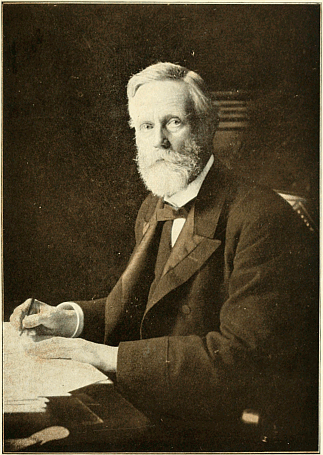
Photo: Russell, London.
RIGHT HON. SIR J. GORDON SPRIGG, K.C.M.G.,
Prime Minister of Cape Colony.
As regards the capacity of adults to enter into and be bound by contract, the most striking difference between the English and Roman Dutch systems is the survival, under the latter, of a modified form of the Roman Interdiction of the Prodigal. Under certain circumstances, on application of friends or relatives, such an order can issue. Again, contracts of service made out of South Africa are not binding unless entered into again before a public official in South Africa.
In respect to the tenure of property, more especially of property in land, the differences which exist are all in favour of Roman Dutch Law. An admirable system of registering titles to land, whether of ownership or mortgage, exists in South Africa, as on the Continent of Europe, where that most valuable legacy from the Roman Empire has remained unchanged in principle to our day. No tedious scrutiny of documents attesting title to land is necessary, as it is in England. The official register is sufficient proof of ownership. Transfer is rapid and inexpensive. Again, unavoidable calamity, amounting to a condition of impossibility of beneficial occupation, excuses from the necessity of payment of rent of land. Such excuse is not known to the Law of England.
Unlike the Law of England, but like the Law of Scotland, desertion by either party to a marriage furnishes ground for absolute divorce, with right of re-marriage. The system, flowing directly from the Roman Law, both in Scotland and South Africa, is understood to work satisfactorily, comparatively few divorces being sought for.
II.—THE MODERN LAW OF SOUTH AFRICA
Leaving the general principles of the law affecting personal status, family relations, and property rights, the difference between the Law of England and that of South Africa practically disappears as regards Europeans in social relations. In the whole field of Commercial Law, and in that of the Law of Crimes and Punishments, the Law of England has practically been adopted in all the States and Colonies. The origin of this state of the law is, of course, to be found in the fact that the Roman Law conceptions were out of harmony with modern commercial conditions and the competition of the World Market; and also that their code of Crimes and Punishments has become inappropriate to the later forms of European civilisation.
Several features of South African legislation require more special notice. The Transvaal Law may be taken as typical of that of the other States, and political and economical conditions make the law of the late Republics of most importance and interest to the British public. The most salient topics are those dealt with by the Law of Mines, the law as to the natives, and the Law of Universal Military Service.
The law as to minerals, including not alone gold and silver, but all precious metals and precious stones, is based on State ownership. It is expressly declared: “The right of mining for and disposal of all precious stones and precious metals belongs to the State.”
The State, however, does not undertake the work of mining, but grants, under certain conditions, that privilege to various classes in the community. The Government is authorised by law to proclaim a specified area to be public “diggings.” Thereupon, certain rights are reserved to the owner of the farm wherein the area is situated. These rights are in effect to select certain portions of the proclaimed area as mining “claims” belonging to the owner, and to mark off these portions. The remainder of the area is then open to appropriation by the public, the first comer having the first right. Shortly before the war of 1899, in consequence of scenes of disorder attending the marking off of these “claims” by the general public, steps were taken to introduce a system of assigning the mining areas by lot among the residents in each district.
The taxation of the mineral grounds was, and is, based on a dual system. The one is taxation, by means of levying a monthly due, called a “claim licence,” in the mere possession of a mining area, called a “claim,” whether or not the area is being developed. The other principle, superadded to the first, was that of taxing the profits of each mine. Before the war this latter tax amounted to five per cent.
In relation to gold mining, in one very important respect the Law of the Transvaal, like that of Cape Colony, is in striking opposition to the rules of civilised law all over the world. The famous I. D. B. (Illicit Diamond Buying) enactments passed to protect diamond mining in Kimberley have a parallel in the I. G. B. (Illicit Gold Buying) provisions of the Transvaal Law. It is incumbent on the possessor of rough diamonds to prove his innocence. Similarly, under the Gold Law of the Transvaal, “Any one who is found in possession of amalgam or unwrought gold, or uncut precious stones, and can give no proof that he obtained possession of the same in a lawful manner,” is punishable with fine and imprisonment. For a third offence, the amount of fine and imprisonment with hard labour is at the discretion of the Court, and forfeiture of the unwrought gold, or uncut precious stones, follows conviction.
It is true that in England, for instance, a similar exception is in force with reference to the possession of explosives, a measure intended to prevent Anarchist outrages. But the difference is very great between the two classes of cases. The manufacture and sale of explosives is not the staple industry of England, as the production of gold and diamonds is in South Africa. The chief occupation of the industrial population of England is not affected; the provision remains only one of some inconsiderable exceptions to the general rule, that every one is presumed innocent until he is proved guilty.
The law relating to natives, under which head are included all the coloured races, is equally strange to those familiar only with the Law of England. The so-called Pass Law provides that every native in districts or towns inhabited by Europeans—everywhere, in fact, except in the native villages—must be in possession of an official passport, showing he is registered in an official State registry. Other regulations limit the action of the native—the Curfew regulations, compelling Kaffirs in town districts to remain indoors after sunset. Municipal rules, prohibiting Kaffirs from walking on the footpath of the street, and special rules of the Criminal Law affect them. The lash is presented as the penalty for various offences. The death penalty is inflicted for Kaffir outrages on women of the European race. By the imposition of a Hut Tax, payable annually, the Kaffir is induced to labour; an occupation which, if left to himself, he prefers to leave to women.
The Law of Universal Military Service, applying to all Europeans who are burghers—a law of all the States of South Africa—furnishes another point of divergence from the Law of England. In the Transvaal all burghers over the age of sixteen and up to the age of sixty are under the military command of the elected Field Cornet of the district. In time of war the age begins at fourteen and has no fixed limit for ending. This, be it noted, is not a case of conscription; it is a levy en masse, taken as a normal condition of life. Burghers on commando are exempt from civil process, and are exempt from the obligation of paying claim licenses for the period they are on commando.
III.—RECENT BRITISH MODIFICATIONS
It is, of course, in the present stage of our information impossible to state fully the various modifications which have been introduced in the new Colonies since the British annexation two years ago.
Some changes worth noticing have, however, been published.
In Private Law, the chief change of which we have information appears to have been the abolition of the Orphan Chamber of Roman Dutch Law—a State department concerned with the administration of infants’ estates. The change, however, seems only to have been one of administration and title, the duties of the abolished Chamber being transferred to the Attorney-General’s Department.
As regards the Gold Law, an enactment by the late Republic of a war-tax on the gold output of from forty to fifty per cent. has been abolished. The British tax on the mines has been fixed by proclamation at ten per cent. on the profits of each mine. The system of claim licenses—taxation on the possession of mining areas—is continued.
Minor modifications of the details of the Native Pass Law have also been announced, including the restriction of the number of cases, and of the power of magistrates to sentence Kaffirs to the punishment of the lash.
The Law of Military Service appears to remain up to the present unmodified. Indeed, a recent decision in the newly established British High Court of the Transvaal has very rigidly construed a provision of the Gold Law, protecting burghers on commando from liability to pay license dues. The Court refuses to allow to Uitlanders the same privilege as that allowed to burghers in arms. The Uitlander, according to that decision, is liable to pay these arrears accruing during the war to the present British administration.
IV.—PRINCIPLES OF IMPERIAL POLICY—OBSTACLES IN THE WAY OF THEIR BEING CARRIED OUT
Before considering specific suggestions as to actual legislation required in the new Colonies, it is necessary to set clearly before us what are the objects to be aimed at by Imperial statesmen. Most of the errors of the past century of Imperial rule in South Africa are traceable to the fact that no steady and consistent policy has been adopted for any definite period. With every change of government in the United Kingdom the British policy in South Africa altered. As I have written elsewhere, it swung with bewildering inconsistency, according to whether an Imperialist or a Little Englander Government was in power, from an expansionist to a “retrenchment” policy. Alternately negrophilist and anti-Kaffir, alternately conciliatory to the Dutch and aggressively British. “Nothing more fixed than the certainty of Imperial change, unless, indeed, it were the cruelty of Imperial ingratitude.”
I shall take it, then, that consistency is the least we may expect as the result of the late war. The maintenance of the integrity of the world-wide Empire, plainly bound up with the retention of South Africa, involving the possession of the only secure sea-route to Australia and India; the upholding of the banner of European justice and humanity in Africa, the British portion of the mission of the European race the world over—to this end, the fusion of all strains of the European people in a new nationality to form a constituent part of the Empire—these I take to be the objects of Imperial statesmen in the United Kingdom and the Colonies, and of all loyal citizens of the Empire.
Now, these principles being fixed, we have next to consider what are the dangers threatening the successful carrying out of a policy based on these principles.
The first, and most formidable, danger is that arising from the existence in all the Colonies of South Africa of a Separatist party among the Boer section of the population, usually described as the Young Afrikander party. Its origin is due to many historic causes; among which not the least has been the unwise and vacillating policy of the Imperial Government. That party is by no means extinct as a result of the late war. No matter what professions are made in the Land of Diplomatists, it has to be reckoned with for our time and generation. It relies for the ultimate success of its policy of substituting a Boer-ruled independent State for British citizenship of the Empire on many causes. In the first place, the stubborn tenacity of the Boer people, and their slowness to abandon any long-held purpose. Again, on their military skill, their religious fanaticism, their conviction that they are the Lord’s elect, and that His sword will smite not in vain. Yet again, and most of all, on the enormous birth-rate among the Boers—families of twelve sons being not uncommon. Boer ignorance of the power and purpose of the Empire—of the real character of that federation of freemen—figures also in their calculations; and as well the barrier against fusion of the European strains kept up by the use of that patois of the Hollander tongue, the South African Taal. Lastly, their main reliance is on future inefficiency of the Imperial administration—marred by negrophilist British missionaries and English society nepotism and favouritism—on the see-saw of British party politics, and on the prospects of the Empire becoming involved in war with some great European Power.
The next danger is that arising from the presence on the goldfields of the Transvaal of vast agglomerations of cosmopolitan finance owning most of the mineral wealth of the State. On many points, the interest of these groups is not the same as those of the Imperial Government and those of the rank and file of the British settlers. Taxation of the mines for Imperial purposes, such as those of State-aided British immigration and State-constructed irrigation works, cannot be in the interest of the mining groups. The lowering of the wages of the white miners is clearly in their interest; while opposed to the prospects of welfare of British miners and British merchants in the towns, to those of the professional classes, and, above all, to the interests of British agricultural settlers, whose occupation cannot be profitable for many years to come unless their market is at their door. Mining profits remitted to Berlin and Paris, instead of going to the pockets of resident British miners, cannot benefit the British agricultural settler. Again, the truck system, by which employers supply goods to their workers (a system illegal in England), while it may increase the profits of the mining groups, would be destruction of the trade of the British dwellers in the towns. This aspect of the question is rendered more serious by the fact that practically all the press of South Africa is owned or controlled by the financiers of the mining groups.
Lastly, a danger which has existed for generations is that arising from the existence of a body of sentiment in the United Kingdom which, for want of a better word, is called negrophilism. This sentiment is usually voiced by British missionaries, and advocates an impossible black man and brother theory. Its effect on British legislation and administration in South Africa caused the first dissension of moment between Boers and British at the time of the abolition of negro slavery in 1836. The whole theory is felt by all Europeans of South African experience to be based on a flat contradiction of the facts of life and the teaching of the 250 years of European contact with the South African native—Bushman, Hottentot, or Kaffir. Allied with this is the colour-blindness of some Anglo-Indians, who favour the disastrous measure of flooding South Africa with Asiatics from India.
V.—LINES OF LEGISLATION TO CARRY OUT THE IMPERIAL POLICY
Having defined the Imperial policy in South Africa to be the maintenance of the integrity of that federation of freemen which is the British Empire, the upholding of the banner of European justice and humanity in the Dark Continent, and for the promotion of these ends the fusion of all strains of the European race in one community, let us now consider the general lines of State action requisite to carry out that policy.
All parties loyal to the Empire are agreed that the first requisite from the standpoint of the Imperial welfare is the promotion of the immigration of British agriculturists to South Africa. The enormous birth-rate of the Boer people will prevent any prospect of fusion between British and Boers—anything, in fact, but the swamping of the British element—unless this immigration be organised by the State. The life of the gold and diamond mines cannot last longer—so those qualified to speak are agreed—than a few generations. With the exhaustion of the mines, the British population, if confined to the towns, would inevitably disappear. Again, the Boers being essentially country folk, could never have that close association with the British necessary for the coalition of a united people, unless the British are settled as agriculturists. A most encouraging precedent of the success of State-organised immigration of British settlers on the land is to be found in the State-aided immigration of 1820 into the Eastern Province of Cape Colony.
Exactly as in Egypt and in India, agriculture, to be prosperous and to extend over large areas, is impossible in South Africa unless with the aid of State-constructed irrigation works. The water supply, both from rainfall and underground natural reservoirs, is ample; but engineering skill is required to enable these sources to be utilised all the year round. The recently published report of Mr. W. Willcocks shows what favourable prospects exist for the carrying out of a general system of State irrigation works.
One word of warning is necessary. The general impression, so sedulously created for many years past, of the unsuitability of South Africa as a sphere for British immigration, is, as Mr. Rudyard Kipling has pointed out, only a part of a political propaganda, intended to exclude British influence. It may be entirely ignored.
The next requisite of State action is the promotion, by legislation and administration, of the development of the present and future goldfields, and other mineral fields, in such manner as may tend to further the general ends of the Imperial policy as already described. The taxation of the mines should be so adjusted as to favour British immigration and the creation of a prosperous and loyal British community. The development of new fields should be encouraged; adequate sums should be raised for public objects; the minerals, expressly declared to be property of the State, should be primarily regarded as a fund for State purposes, not one for the creation of millionaires or the undue enriching of shareholders in Hamburg or Paris or Vienna. The welfare of the mass of British residents in the towns engaged in trade should be considered in legislation affecting the gold mines.
In view of the presence of an overwhelming majority of the subject Kaffir race, all Europeans should be trained to arms, on the model of the laws already in existence in the two new Colonies. From an Imperial, as distinguished from a European standpoint, this measure is equally necessary. The Boers are born soldiers: a nation in arms. No reliance on a professional army or professional police can afford any assurance of stability for the Imperial rule. The Boers would regard such a régime as merely one of transitory military domination.
An efficient system of education, from primary school to university, should be organised and carried out. In the new Colonies great progress has already been made in this direction, and a recently published address by Mr. W. Sargent, the Director of Education, shows that the principles to be kept in mind are clearly apprehended.
A sane and consistent policy with regard to the status of the Kaffir and other non-European people should be adopted and adhered to. The Boer position, that the Kaffir is not in justice entitled to equality, social or political, with Europeans, should be upheld, as that plainly sanctioned by European experience of two centuries and a half.
Efficiency should be insisted on as the test for appointment in the public service. Salaries on an adequate scale should be given, bearing in mind the standard of payment usually obtaining in gold-bearing districts. The obstacles in the way of making efficiency the test of appointment should be clearly understood, and as far as possible guarded against; the persistence of Young Afrikander Separatist ideals, and the readiness of the propagandists to accept office under the Imperial Government; the danger of undue weight being given to the influence of the great capitalists; the equal danger of the intrigue, favouritism, and nepotism of London society—of which so much was heard at the late Committee of Inquiry into the training of army officers—being brought to bear on appointments to office in the new Colonies.
The language question—that of the degree of recognition necessary or expedient of the Dutch language in the courts and public offices—is so important that it is better to consider it separately.
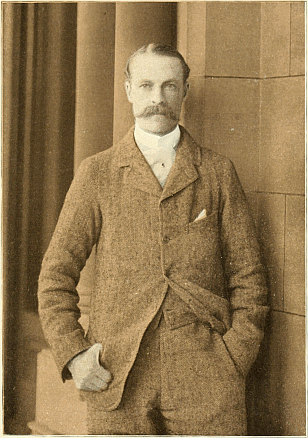
Photo: Russell, London.
HON. SIR ARTHUR LAWLEY, K.C.M.G.,
Lieutenant-Governor of the Transvaal.
VI.—THE LANGUAGE QUESTION
The question of the degree of recognition of the Dutch language in the new Colonies to be accorded by the new administration is one of the most difficult, and at the same time one of the most urgent and altogether inevitable, presented by the altered situation, the result of the late war. It is one of the cases where not to decide is to decide. Let us endeavour to understand the conditions of the problem, bearing steadily in mind the objects to be aimed at by the Imperial policy.
No responsible statesman in the United Kingdom or in the Colonies can desire to take any step other than conciliatory to Boer sentiment, provided the main object of creating a united and prosperous European community is obtained. Anything like a persecution of the Boer tongue or traditions would not only be unjust, but most unwise. At the same time, Imperial statesmen must remember that British-descended citizens of the Empire in South Africa hold that their sentiment and their opinion is not to be taken as a matter to be ignored. Now, Imperialist sentiment in South Africa is united as to the desirability of having only one official language, and of doing away with the dual language system introduced in Cape Colony twenty years ago.
Limiting any action of the Imperial Government, must necessarily be the conditions as to the recognition of Dutch agreed upon with the Boer generals as one of the terms of peace. These conditions were that the Dutch language is to be taught in the schools, in cases where the parents of the children desire it; and in the courts of law in cases where, in the opinion of the court, the ends of justice will be furthered by its use. The wish of the parents and the discretion of the law-courts are, therefore, to be arbiters. The peace terms, in this matter, seem wholly reasonable; but the main question of a dual language remains unaffected.
Let us first deal with the cause of much misapprehension in the United Kingdom in this matter. Here I will quote from an article of mine published some time before the peace agreement:—
“There is no question here of the suppression of the language of a people. The language of the Boer people of South Africa is a patois called the Taal, based on the seventeenth-century Hollander Dutch, with a mixture of many strange words, Kaffir and English, and with the omission of most grammatical inflexions. In that happy tongue you are permitted to say: ‘I is.’ It is needless to say there is no literature in this patois, as there is in the Hollander Dutch of this century. Now, it is only to Hollander Dutch that it is proposed to accord equal audience as an official language. The official recognition of Hollander Dutch dates from 1882 in the Cape Colony, and is a result of the political propaganda of the Afrikander Bond. It was openly announced and hailed as the ‘thin end of the wedge’ to prevent the fusion of the Boer and British strains of the European people, and to drive the British into the sea. It is almost as grotesque a misrepresentation to call this claim for the official recognition of Hollander Dutch a popular demand, as if, in regard to modern Italy, we were told that the peasants of Umbria or the Marches were hungering and thirsting for the recognition of Augustan Latin as entitled to equal audience with Italian in the courts and public offices of Italy.
“The veld Boer does not understand Hollander Dutch. He only hears the Hollander tongue, or, rather, the seventeenth-century predecessor of it, in the text from the seventeenth-century Dutch Bible read out in the churches on Sundays by the predikant, or in the hymns, once chanted by his forefathers of the Lowlands, who worsted Alva, persecutor of the Saints of the Lord.
“It will clear the air greatly if people at home will realise what is the force behind this Hollander Dutch language movement. It is the Young Afrikander party.
“For sixty years English was the sole official language in South Africa. The experiment of two official languages is one of only twenty years’ duration, and has not been crowned with any conspicuous success, unless racial cleavage, political and social, be counted as such.
“No other course can so speedily promote the fusion of all Europeans. Judging by the trend of events, the future among the European people belongs to one or two of the great languages. It is significant that, at the present moment of time, with a knowledge of English and French, one can travel the world. The fusion of European strains, so happily accomplished in the United States of America, is admittedly due to the determined enforcement of a single language as the sole official language of the Republic. Immigrants of all European nationalities learn to speak and write English—their children of the next generation become Americans. As a London Consul-General of the United States pointed out to me, the reunion of the European race, as a political measure on a vast scale, has been first accomplished in the American Commonwealth. Never since the pre-historic time of the root-origins of our language, never since the corporate unity of the Roman Empire, has there been so vast a breaking down of barriers between Europeans.
“The matter is one of political expediency, not of æsthetics. The unity of the European people is a greater historic fact and present reality than any of those brief heritages of common life for a few short centuries of one or other sections of the race, giving rise to the national tongues. Personally, one may sympathise with the scholar’s preference for a survival of Latin as the language of Europe, as it was during the Roman Empire, as it was during the Middle Ages, and as it would have remained but for the outburst of Nationalist particularism during the sixteenth century. One may lament, with a loyal European like Talleyrand, what that outburst has cost Europe; led by the ambition of the House of Capet in France, of the Tudor in England, and the princes of North Germany, plunderers of the Teutonic knights. No doubt it is true that thousands of millions of pounds and millions of lives have been wasted by that particularism—strange step-child of the unifying Renaissance. From the æsthetic side, it is vain to argue whether Keltic be a purer tongue, more passionately expressive, Spanish more majestic, or Italian liquid music. The sieve of the gods seems hitherto to let through, for the world of the European race, only two of the great tongues—French and English.”
In a word, for all æsthetic purposes, let the various harmonies of all the tongues of the European race continue to enrich the choir, enshrining memories of the past. But for the political field of action the trumpet of command and order should sound a note clear from its being single.
Any incidental inconvenience, such as must arise to the first generation of immigrants to the American Commonwealth, must only be treated as transitory, and, as far as possible, provided against. Very few Europeans who do not know English have business in the law-courts or public offices. In the years preceding the late war, only five out of every hundred cases in the Transvaal law-courts were between people not conversant with English. For this small minority, in all the public offices and the courts, competent interpreters can be provided.
VII.—LEGISLATIVE MEASURES
It may be well that I should add some suggestions as to the measures which I at present hold should be taken to put into force the general lines of legislation, already sketched out as suitable for the carrying out of the Imperial policy as already defined. But it should be understood that these suggestions are only intended as furnishing material for discussion. In the absence of fuller information as to future needs and emergencies, it would be unwise to finally advocate concrete measures. What is, in my mind, of importance is not any specific measure, but the principles of Imperial policy on which I have insisted. If it can be shown to me, in the future discussions on these matters, in which I hope to take part on my return to South Africa, that other measures are better suited to carry out the consistent policy I have defined, I shall be prepared to advocate such other measures.
In the first place, I think that in view of the wide divergence of opinion and interest, among the British residents quite as much as among the Boers, a consultative body, nominated by the High Commissioner, should be appointed to advise on any projected legislation. For some time, while the form of Crown Colony Government is continued, advice from such a body will be specially needful. Apart from the maintenance of law and order, the interests of the great mining groups, representation of shareholders resident in Europe is by no means necessarily the same as those of the rest of the British residents, or indeed those of the Imperial Government. Among such matters of divergence of interest may be enumerated the scale and method of taxation on the mines, no matter for what Imperial purpose—British immigration, State irrigation works, or university and general education. The maintenance of the present very high rate of wages of the European miners is another subject. British residents in the towns, shopkeepers, importers, professional men and their employees, are concerned in the maintenance of a high rate of wages for the miners, as the money is spent in the country, not in Paris or Berlin. Again, the introduction of the truck system, the supply of goods by the miners to their employees, European or Kaffir, while it would increase the profits of mining shareholders in Europe, would destroy the means of existence of the bulk of the British residents in the towns.
Amongst the Boers, there is almost as great divergence of interest between the wealthy farmers, desirous of keeping together their vast cattle ranches of 6000 acres, and the class of Bijwoners (tenants at will on an over-lord’s land), whose interest would be favoured by the dividing up of cattle ranches, and the encouragement of small farmers who would be agriculturists.
For this reason, a consultation body should be thoroughly representative of all classes.
Direct legislation favouring British immigration of agriculturists is plainly necessary, and as well the creation of State irrigation works. Such steps, it is reassuring to know, have already been taken. Personally, I am in favour of village ownership of agricultural lands being instituted, a system with which the Boers are already familiar, in connection with the cultivation of the lands owned by the towns.
To promote the prosperity of British residents in the towns, and as well to secure a market for agricultural produce, the truck system should be prohibited by law; and the compound system, under which the Kaffir workmen in mines are not only supplied with goods but confined to barracks called “compounds,” should also be prohibited. Neither system has hitherto been in force in the new Colonies.
As regards the Gold Law, the new British administration has established a tax of ten per cent. on the net profits of each mine, and has retained the previous system as well, of taxing the possession of mining areas. It will require some time to see how the present method of levy affects the growth of the British population. Personally, I have not been convinced by the arguments in favour of the “claim license” system: it is held by its opponents that it tends to throw all the mining areas into the possession of the great mining groups, the areas being forfeited to the State in times of depression by poorer men who are unable to continue to pay. Suggestions deserving consideration have been made as to the advisability of the State developing gold areas already in the possession of the State.
As regards the arrears of claim licenses accruing during the war against the expelled British inhabitants, I have strongly advocated in the London press their entire remission. The Boer burgher on commando is held to be exempted; it is difficult to see why the expelled British should not also be exempted.
Another measure which I have supported is that of the arming of all British civilians, for reasons already enumerated. An essential to the measure being successful, being loyally supported, is that, on the Boer model, the officers of the corps should be elected by their men. British colonists, with their traditions of liberty and independence, will never submit to being compulsorily placed on military service and subjected to the orders of officers whom they have not chosen.
No measure of greater political moment can be taken than the thorough organising of a system of education, from the university to the school. I am one of those who support the making of the Gold Reef city a great university centre.
As regards the Native Law, I advocate as little as possible alteration in the laws already in force. The Boer theory of the position of the Kaffir—as not an equal, but entitled to justice, under tutelage to a government directed by European ideals—is the sound one.[2]
Asiatic immigration in any form, whether of British Indians from India, or Chinese from Hong-Kong or elsewhere, would be a measure fraught with disaster to the future of European civilisation. With the exception of some employers of labour in Rhodesia and Natal, South African opinion—British, Boer, even Kaffir—is opposed to Asiatic immigration. Even the employers referred to only desire to encourage the importation of Asiatics as manual labourers, not as owners of the land or traders in the towns.