JOSÉ PEON Y CONTRERAS.
Reading edition
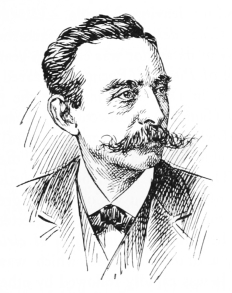
José Peon y Contreras was born at Merida, Yucatan, January 12, 1843, being son of Juan Bautista Peon and María del Pilar Contreras. Studying medicine in his native city, he received the degree of M.D., at the age of nineteen years. In 1863, he went to the City of Mexico and saying nothing of his earlier course, again went through the medical curriculum. By competition, he obtained an appointment in the Hospital de Jesus; in 1867, he was Director of the San Hipólito Hospital for the Insane; for several years he was in charge of public vaccination for the city.
Giving his leisure to letters, José Peon y Contreras soon gained high rank as a lyric poet and a dramatist. He had already entered the field of letters before leaving Merida. His first effort was La Cruz del Paredon, a fantastic legend, printed when its author was eighteen years of age. A volume of Poesias (Poems) appeared in 1868. In Mexico, in 1871 he printed, in the paper, El Domingo (Sunday) a collection of Romances historicos Mexicanos (Mexican Historical Romances), in which he dealt with Aztec themes and actors. These have merit, but are little known. The field of José Peon y Contreras’s greatest triumphs is the, in Mexico, much neglected drama. In 1876 he published his Hasta el cielo (Unto Heaven), a drama in prose, which was a great success. It was rapidly followed by others, mostly in verse. On May 7, 1876, La hija del Rey (The Daughter of the King) being presented, the writers of Mexico presented the author of the piece a gold pen and a Diploma of Honor signed by all. Agüeros says of José Peon y Contreras that he is to be compared with José Echegary. He is of “marvellous dramatic talent; profound knowledge of the human heart; his descriptions are paintings; his dialogue is natural, sound, and moral. His faults are claimed to be similarity of argument and absence of certain dramatic resources, showing lack of originality.”
In 1880, he published Romances dramaticos (Dramatic Romances), in which he presents fourteen brief, rapid sketches, each of them capable of expansion into a drama. In 1881 he published Trovas Columbinas (Columbian Metres), lyrical poems dealing with Columbus and his discovery. In 1883, a volume of poems, Ecos (Echoes) was published in New York. Two novels by our author Taide and Veleidosa, have been well received, the latter being, perhaps, the favorite.
José Peon y Contreras at one time represented Yucatan in the lower house of Congress; later, in 1875, he was Senator for the same State. He has recently been a Deputy for the State of Nuevo Léon.
HASTA EL CIELO!
The scene is laid in the City of Mexico; the time is the seventeenth century. The play is in three acts and is written in prose. The selections are from Act III. The action takes place at Sancho’s house. Sancho is the private secretary of the Viceroy; he is passing under an assumed name and is seeking vengeance against the Viceroy, who does not know his identity, for his father’s death and his mother’s dishonor. Blanca, supposed to be the Viceroy’s ward, is in reality his daughter; this Sancho knows and gains her love, with the intention of making her dishonor the Viceroy’s disgrace. To escape a hated suitor, Blanca, trusting to Sancho’s pretended love, has left her father’s house and taken refuge with Sancho. The Viceroy, distracted seeks her. Ultimately, the true love, which Sancho would give her, proves impossible.