Chapter IV
Reading edition
WILLIAM PERRY (“THE TIPTON SLASHER”) 1835–1857.
Although this ungainly specimen of a boxing athlete first saw the light, in the year 1819, in the town of “the Black Country” from which his nom de guerre was derived, he came to London and worked in its neighbourhood at an early age; for, in the year 1835, he was well known in the neighbourhood of Battersea Fields and Chelsea as a “lumping lad” who, despite the drawback of “a K leg,” could hit, stop, and use his “fives” with formidable effect. In November of that year, we read in a sporting paper:
“The admirers of milling in the military village of Chelsea, where the ‘saloon of arms’ of Alec Reid is a centre of attraction, were all alive on Tuesday, from the arrangement of a ‘field day’ to decide the best-man question between two pugilistic heroes of the locality. These were Barney Dogherty, a sprig from the Emerald Isle, and Bill Perry, a young navvy, whose displays with his digits, if not quite scientific, are determined and dangerous. Perry was backed by a sporting butcher, Dogherty by a circle of his enthusiastic countrymen. In weight the Emeralder had the advantage of nearly a stone. Each man was waited on by a member of the P.R., and the regulations of the Ring carried out.
“The fixture was Wimbledon Common, whither miscellaneous groups were seen wending their way at an early hour; but the police scouts were wide-awake, and on reaching the intended scene of action it was ‘no go,’ and the disappointed crew looked as blue as their enemies. A move became inevitable, and new ground was taken opposite the ‘Ship’ at Mortlake. Here the men set to, but after seven rounds, all in favour of Perry, the lobsters were again on the scent, and another retreat was made towards Barnes Common. Here also it would not do—the pursuers were on the heels of the ‘flying dustmen,’ and a helter-skelter sort of march 158 took place over Putney Bridge. Here a council of war was held, and it was at last agreed to march for Lechmere Common, close to the sporting grounds of the Baron de Berenger, in the King’s Road. Here all was right—a fresh ring was formed without interruption, and the sport was resumed and concluded.
“On squaring elbows there was a good deal of sparring, and Perry dodged left and right. After some heavy exchanges and a rally, Barney was down weak. The fight was prolonged for six rounds more, during which Perry had it all his own way, punishing Barney terrifically; still the poor fellow came up as game as a rhinoceros, and would not give in till his seconds, seeing he had not a chance, cried ‘enough,’ and his friends were all satisfied he had done his best to win.
“Dogherty turned out to be too stale for active operations; added to which he is slow and awkward in his style of setting to. Perry is a scientific hard hitter, but with such a man as Alec Reed, in his day, he would not have had a chance. Still, in the present state of the Fancy, he is not to be sneezed at. It was expected a second fight would have taken place between Middlesex Ben and the Winchester Pet, but the former was ‘shopped.’ Perry can be backed with anybody who may envy his honours, and the money will be ready at the ‘Lowndes Arms,’ King’s Road, on Tuesday evening, where Alec Reed gives sparring lectures for the benefit of the rising generation.”
Such is the account of “The Slasher’s” coup d’essai, after which he seems to have found no candidate for his favours for a twelvemonth, and to have worked his way towards his native place. Here his fame as a fistic practitioner was pretty generally acknowledged, and a party of Birmingham boxers, having among their number Ben Spilsbury (not Charley, who fought Johnny Broome), being in the town of Tipton exhibiting the art, young Perry put on the mufflers with that professional. Though the Tipton lad was not so clever as the Brum, he displayed such determination, and got so well “on” to his man, that an observation that, “if in earnest,” Mr. Ben would have to play second fiddle, led to an offer on the part of a Brum to post a “tenner” upon the experiment. “A friend to sport,” at the request of Perry, covered the two sovereigns deposited; and as the Christmas holidays were approaching, December 27th, 1836, was named as the day of battle. After taking some little liberties with the Tipton in the opening rounds, for which he occasionally caught a fearful right-handed visitation, and was rallied down, Spilsbury kept so completely à la 159 distance as to deprive the contest of all interest, and finally, at the end of the 19th round, “cut it,” leaving “The Slasher” in possession of the field and the stakes.
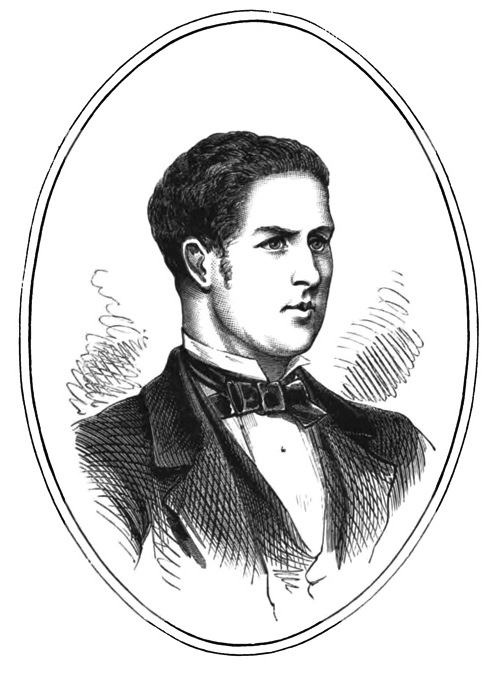
WILLIAM PERRY (“The Tipton Slasher”)
After this defeat of Spilsbury, it would appear that the sobriquet of “The Tipton Slasher” had become the accepted title of William Perry, for in a local (Staffordshire) paper we find him so described, as being matched for £25 a side against one Jem Scunner, who is described as the “Gornel Champion,” a six-foot specimen, weighing 13st. odd, and therefore a fair opponent in height and weight for our hero. The report is especially meagre, merely informing us that “the battle commenced on Tuesday (Nov. 22, 1837), near Gornel, but was not decided until the following day.” The betting at setting to was 6 and 7 to 4 on the Gornel man. After a few rounds, however, the Gornelites claimed the fight for their man on the ground of a “foul,” but the referee would not allow it, and Scunner, by the advice of his friends, would not go on. A rush to the ring was made, and the referee retired. It was asserted that Perry fell without a blow. After some wrangling, the referee ordered that the fight should be renewed on the next day, at Kingswood, near Wolverhampton. There both men showed at the time appointed, and lost no time in getting to work. During the first four or five rounds the Gornel man rushed at the Tipton like a wild bull, but Perry waited for him, shifted cleverly on his crooked leg, and delivered straight blows and upper-cuts with such slashing effect that the Gornelites were utterly paralysed. From this time Scunner betook himself to out-fighting; but here he took nothing by the change, except prolonging the fight. At the end of one hour the Gornel Champion, having been hit down or thrown in five or six successive rounds, was finally floored in the 31st round, and deaf to the call of time. Tass Parker, of West Bromwich, and Preston, of Birmingham, seconded Perry; Surrender Lane and George Gallant, of Birmingham, waited on Scunner. The match exciting much interest in the Potteries, Perry, with Parker, became the “lions” of the neighbourhood; the Fountain Inn, at Tipton, the Slasher’s headquarters, being crowded by the Fancy of the Midlands at their benefit on the ensuing Monday.
The defeat of Jem Scunner, who had an immense, though undeserved, local reputation, in a period when the dearth of good big ’uns was remarkable, spread the fame of the prowess of the Slasher so widely that he was fain to wield the shovel in laborious obscurity, instead of flourishing his ponderous mauleys in the 24 foot. In the interval, “the Deaf’un” had 160 returned from Yankeeland, and—despite his two successive defeats by Bendigo (Feb. 12, 1839) and by Nick Ward (Sept. 22, 1840)—owing to Bendigo’s accident, and Caunt’s announced absence in America, boldly claimed the Championship. Johnny Broome hereupon sought out the Slasher, and calling to his aid some patrons of the Rising Sun, he proposed a “trial by battle,” to settle the difference of opinion. Burke’s backers came to the scratch with their rhino, for a battle to come off in August, 1842, but at the fourth deposit Broome thought fit to absent himself upon the night of “posting the possibles” at Owen Swift’s, and the Slasher’s money down was confiscated to the extent of £15.
The Tipton, as we know, was a mere tool in this affair, as in other instances, of the over-cunning Johnny Broome, who, like most self-sufficient sharps, often “cut before the edge.” Johnny had other views of the “dark horse” which he flattered himself he had in his own stable, and, as he didn’t find the money, the poor Tipton suffered in reputation (as Johnny intended he should do) by this forfeit. The Editor of Bell’s Life, too honourable himself to suspect this double-dealing, observes: “Though Broome was certainly late, this insistance on forfeit seems very sharp practice; the more so as the same gentleman who backs Perry actually assisted Burke with his first deposit. The forfeit, however, has yet to be taken by Burke’s backers, as he has nothing to do with it beyond their approval, and we may yet find that the last and remaining deposits will be posted, and ‘the ball go on.’ We have since received a letter from the gentleman who put £4 of the first deposit down on behalf of Burke, when the match was made, stating that he will not consent to the forfeit being received, and expressing his desire that the match may proceed, as his only wish is to encourage the manly sports of the Ring.”
But Johnny was determined to be off with the match, as he had not found Brassey, of Bradford, so “tenderly led by the nose as asses are,” and he had now in view a grand coup de poing, to play off against the unquestionable “blaze of triumph” achieved by Ben Caunt in the circus and theatre line, by the introduction of what might be called the “illegitimate” drama in place of, and to the eclipse of, the exhibition of “legitimate” British boxing. In this fairly-planned vindication of the art from mere bulky pretenders, Johnny was certainly to be praised; but as his choice of a champion was “Hobson’s,” and limited to such an inferior tactician as the game, rough-and-ready Tipton Slasher—to oppose immense weight, superior length and activity, backed by a creditable reserve of 161 courage and self-possession, and moderate skill in sparring—the enterprise was certainly ill-judged. Of its progress and issue we shall now have to treat.
In the year 1842, a sensation was created by the return of Ben Caunt to England, bringing with him a seven-foot specimen of humanity, of the name of Charles Freeman. There can be little doubt, from subsequent events, that Ben brought over his gigantic protégé purely as a showman’s speculation; and that Freeman, with his immense length, strength, and bulk, had as little pretensions or inclination to boxing as any non-combative member of the Peace Society could desire. Ben, however, seeing how “big things” carried it in Yankeeland—the country of “big things,” of which he, himself, was certainly one—imported the “American Atlas” as his sparring opponent; and if he might infer future success from their first few nights at the Queen’s Theatre, in Liverpool, when not a seat was to be had in a few minutes from the opening of the doors, the Lancashire people, at any rate, were willing to patronise the show.
Freeman, during several months, not only exhibited at the Queen’s Theatre, Lyceum, Olympic, Adelphi, Victoria, and other theatres, halls and assembly rooms, where a great feature of the entertainments was a caricature of boxing by the giant and Big Ben, but the non-sporting papers were flooded with ridiculous paragraphs, several of them offensively setting forth the wonderful powers and prowess of the American gladiator, and in some instances asserting the “scare” produced among the English prize-fighters by the advent of the New World Goliath. We need hardly say that Freeman himself was entirely innocent of this silly braggadocio, which emanated from the Barnum managers of these performances, and the speculators who at this time degraded the character of the decadent Ring, and prostituted its true aim—the encouragement of courage and skill—to their own profit and plunder. Johnny Broome, then in the full tide of his prosperity, called a meeting at his house, the “Rising Sun,” Air Street, Piccadilly, where, after the reading of some of these “puff paragraphs” about “Championships of England and the World” (Ben Caunt modestly claiming the first, and liberally presenting his prodigious pal with the other), it was proposed to bring these pretensions to a practical test by a challenge for £100 a side from “a novice,” to be hereafter named by Broome. On the following week, at the adjourned meeting, Tom Spring presented himself, on the part of Caunt, and stated the latter to be ready to make a deposit for Freeman. Spring further said that Freeman had not 162 come to this country with any intention to fight; his pursuits were quite different; he, therefore, had challenged no man (this was so; but many of his placards contained a challenge to any and every man); nevertheless, he had determined not to refuse this challenge, and, therefore, his money was ready. Harry Broome, on the part of his brother Johnny, who was from home, covered the deposit, and the Thursday evening following was named for drawing up articles, at the “Castle,” for a further deposit, and for naming “the novice.” Freeman and Caunt were both present, and the crowd immense. The giant and his mentor, Ben Caunt, arrived late, owing to an accident on the rail near Weedon. Broome proposed to defer naming “the novice;” but this being insisted on, or a forfeit claimed, “William Perry, of Tipton,” was nominated as the “great unknown,” and the following articles “signed, sealed, and delivered”:—
“Articles of agreement entered into this 29th of September, 1842, at the Castle Tavern, Holborn, between Charles Freeman and William Perry of Tipton. The said Charles Freeman agrees to fight the said William Perry, a fair stand-up fight, in a four-and-twenty foot roped ring, half minute time, according to the New Rules, for £100 a side, on Tuesday, the 6th of December, half-way between Tipton and London. In pursuance of this agreement, £20 a side are now deposited in the hands of the stakeholder; a second deposit of £10 a side to be made on Thursday, the 6th of October, at Johnny Broome’s; a third deposit of £10 a side on Thursday, the 13th of October, at Johnny Walker’s; a fourth deposit of £10 a side on Thursday, the 20th of October, at Jem Burn’s; a fifth deposit of £10 a side on Thursday, the 27th of October, at Tom Spring’s; a sixth deposit of £10 a side on Thursday, the 3rd of November, at Johnny Broome’s; a seventh deposit of £10 a side on Thursday, the 10th of November, at Tom Spring’s; an eighth deposit of £10 a side on the 17th of November, also at Tom Spring’s; and the ninth and last deposit of £10 a side on Thursday, the 1st of December, at Johnny Broome’s. The said deposits to be made between the hours of 8 and 10 o’clock, p.m., or the party failing to forfeit the money down; a toss for choice of ground to take place on the night of the last deposit. The men to be in the ring between the hours of twelve and one o’clock, or the man absent to forfeit the whole of the stakes. Two umpires and a referee to be chosen on the ground, the decision of the latter in the event of dispute to be conclusive. In case of magisterial interference the referee, if chosen, to name the next time and place of meeting, or if the referee be not chosen then the stakeholder to name the next time and place 163 if possible on the same day; but the money not to be given up until fairly won or lost by a fight; the winner to pay for the ropes and stakes. Should any money be given for the privilege of the fight taking place in any particular locality, such money, if agreed to be accepted, to be equally divided between the men.
“(Signed) “Charles Freeman.
“John Broome (for W. Perry).”
Offers were made to take two to one on the Yankee, but nothing more than six to four could be obtained. The match excited extraordinary interest, and set all the Americans in town on the qui vive. They viewed the success of Freeman as a result already almost attained.
After a round of “appearances,” “benefits,” “soirées,” “entertainments,” &c. to which the well-advertised fact of being “matched” lent additional attractions, both men went into training, Freeman at Frank Key’s, the “Duke of York,” Gannick Corner, near Barnet, and the Slasher in the first place at our friend Jemmy Parsons’s, at Hampton, and subsequently at Ould Tom Owen’s, at Northfleet, Kent. A contemporary paper thus announces the coming event on the previous Saturday:—
“Freeman has been assiduously attended by his friend Ben Caunt, and has been ranging up hill and down dale like the celebrated giant Gog, in his ‘seven-league boots,’ with staff in hand and followed by ‘a tail,’ which, from the length of his fork, generally keeps a respectful distance in his rear. Although his nob has been roofed with a shallow tile, to diminish the appearance of his steeple-like proportions, he still has the appearance of a walking monument, to the no small alarm of the squirrels in Squire Byng’s park, into whose dormitories he occasionally casts a squint of recognition. By his good humour and playfulness of disposition he has won all hearts, and has been a welcome guest on whatever premises he has cast anchor in his walks, which have seldom been less than twenty or thirty miles a day. He has been extremely attentive to his training, and has been much reduced in flesh, while his muscular developments stand forth with additional symmetry. On his arrival in this country he carried some twenty-three stone ‘good meat,’ but we doubt whether on Tuesday he will much exceed eighteen stone. His drawers and fighting shoes have been built with a due regard to ease and elegance, and the latter have been seasonably aired by being lent to a cat and kittens as temporary nurseries. 164 He already sports his blue bird’s-eye fogle, and, without vaunt or unseemly bounce, seems to think his chances of success are planted on a good foundation.
“The Slasher has been under the care of Johnny Broome, whose brother is constantly with him, and was removed on Tuesday, for some reason not explained, from Hampton to Northfleet. We have not seen him, but he is described as in fine condition, and in high spirits. He will weigh, we hear, between thirteen and fourteen stone, stands six feet high, and is a well-proportioned, muscular fellow (always deducting the ‘baker-knee,’ which destroys the perpendicular of his pedestal). His flag of cream colour ground, with the union-jack in the centre, bearing the words ‘Old England,’ and the rose, the thistle, and the shamrock in the corner, the whole inclosed in a blue border, has been unfurled at Johnny Broome’s, and has found numerous supporters on the usual terms, ‘a sovereign or nothing.’ The betting within the last week has varied; in some places the Slasher has been taken for choice, in others Freeman has been the favourite at 5 to 4, at which price a good deal of business has been done. The final deposit was made at Johnny Broome’s, in Air Street, Piccadilly, on Thursday evening, in the presence of a goodly muster. Neither of the men was present. Betting was slack, 5 to 4 only being offered on Freeman; but after some breathing a ‘supposed green,’ offered 30 to 10 on the Giant, at which Johnny Broome snapped, as well as 20 to 10 immediately after from the same innocent, who said he had £50 to lay out and was satisfied with a small profit. This, however, did not advance Freeman much in the betting, for, after a good deal of ‘screwing,’ higher odds than 6 to 4, and this reluctantly, could not be obtained. In consequence of a private agreement between the backers of both men, the appointed toss for choice of ground did not take place.”
There had long been a complaint in the Fancy circles of the dearth of “great men;” if “great” be synonymous with “big,” then this was a “great fight.” How far it deserved that epithet the reader will shortly be able to decide. The Slasher had never been credited with scientific qualifications, and “the American Giant” was remarkable solely for his prodigious bulk and weight-lifting pretensions, never having fought a prize battle before. The match, we are inclined to think, arose rather from a desire to put the pretensions of “the Yankee critter” to the test than from any belief that a man could be found capable of successfully competing with such “a mountain of humanity;” the more especially as Ben Caunt, 165 the Champion of England, had signified that he and Freeman were sworn friends, and were, therefore, unlikely to come in hostile collision. Johnny Broome was consulted as to whether he could find a man willing to try his hand with the Giant, and he at once answered in the affirmative, experience having afforded him opportunities of estimating the game and muscular qualities of the Slasher, who was perfectly willing to make the experiment. It was under these circumstances the challenge was given and accepted. This was the position in which matters stood when the match was made, and in due course the men went into training, each taking every pains to improve his stamina and physical qualities. We may here remark that, in the opinion of competent judges, the mere fact of Freeman being so much taller and heavier than his opponent was not regarded as an argument in favour of his real superiority. In truth, we have seen, and over and over again been led to believe, that a man standing six feet high, and weighing between twelve and thirteen stone, with muscular power and activity in proportion, is the beau ideal of manly perfection; and that anything beyond this is mere surplusage, seldom, if ever, of any real advantage, as has been remarked of most of the giants who have been exhibited as objects of curiosity. We must admit, however, that for his size, we never saw a man so symmetrical in all respects as Freeman; there was nothing unwieldy or awkward in his appearance. In point of muscular development and strength, too, we are persuaded there was not his equal, and in point of activity and lightness, and springiness of action, he was not less to be admired; in fact, his early career was in the equestrian school, where, among other feats, he rode two horses at once, at the same time balancing a man with his arms above his head as he galloped round the circus, added to which he was renowned for the number of somersaults he could throw in succession. In lifting weights, too, on more occasions than one, he has raised fifteen cwt. from the ground. With all these appliances, however, there yet might be a want of animal courage and natural powers of enduring punishment and fatigue; and in the absence of any criterion upon which an opinion on these latter points could be formed, considerable doubts were entertained of the probable issue of his battle with the Slasher, who was known to possess fearless intrepidity, great bodily strength, some science, and sufficient height and weight to entitle himself to be ranked among the most dangerous of our modern millers. Hence the betting, which seldom exceeded 5 to 4 in favour of Freeman, did not prove him to have inspired any extraordinary confidence in the minds of 166 his friends, of whom, from his really unassuming conduct, civil deportment, and good temper, he had many.
We may here state that the wisdom of not ascribing too much merit to superior bulk derived confirmation from scientific calculations made by Mr. Hutchinson, a surgeon of eminence, who made some curious experiments by means of hydraulic and other instruments to ascertain the constitutional powers of human beings, founded on comparisons of the strength of their lungs, by respiration and inspiration, the state of their pulse, capacity of chest, height, weight, &c. Mr. Hutchinson submitted both Freeman and Perry to his tests, and the result of his observation was, that although Freeman’s admeasurement was extraordinary in every respect, yet, comparatively, when the dimensions of both men were taken into account, the balance of bodily power, strength, and endurance was in favour of Perry, who Mr. Hutchinson considered more calculated to sustain fatigue and punishment than his gigantic antagonist. Mr. Hutchinson, of course, admitted that the inference which he thus drew may be defeated by accidental or other causes; but looking to the mere animal qualities of the men, such was his conclusion. That his hypothesis was fairly tried cannot be asserted, for, as will be seen, both men left off, so far as we were capable of judging from the darkness which prevailed, pretty much on a par, whether as respects punishment or fatigue.
It will be borne in mind that at the making of the last deposit, the toss for choice of ground was dispensed with, Spring, on the part of Freeman, and Broome, on the part of Perry, having determined on the probable locality. It was felt desirable to preserve the secret as long as possible, and it was not till Monday that the direction was generally known, when a trip by the Eastern Counties Railway to the borders of Hertfordshire and Essex was announced, with an intimation that a simultaneous departure by the half-past nine o’clock train to Sawbridgeworth (about seven and twenty miles from London) would suit all purposes, and prevent any unnecessary bustle at the immediate scene of action. Notwithstanding the secrecy which had been observed, however, some few “go-carts” with their motley inmates were seen going down the road the night before, and thus a hint was given, of which the police took advantage; and hence, being on the alert, the attendance of a magistrate was obtained, and much trouble and inconvenience, as the sequel will show, were experienced. In the interim both men arrived in town at their respective head-quarters, Freeman at Tom Spring’s, and Perry at Johnny Broome’s, so as to 167 be ready for their morning start, and both houses were crowded to excess.
With the dawn all were in motion, and by eight o’clock the London terminus of the chosen railway was besieged by visitors. Many of these brought drags, which were placed upon the trucks, while others trusted to the “chapter of accidents,” which proved to have a very wide range, for the means of conveyance. Among the first arrivals were the Tipton Slasher and his friends, who thus took time by the forelock, so as to be near the point of rendezvous in due season. This division agreed to alight at Harlow station, as the train did not pull up at Sawbridgeworth, which was, however, but two miles further, within convenient toddling distance, and thither all proceeded. On reaching the fixture a damper was thrown on the prospects of the travellers. The superintendent of police was found at his post. He had received orders from London to prevent hostilities, and to this was added the fact that Mr. Phillips, a Hertfordshire magistrate, was in readiness to “keep the peace.” In this unpleasant dilemma all waited till the arrival of the half-past nine o’clock train, in which came Freeman, Tom Spring, Caunt, and a vast accession of the Fancy. Fortunately there was a carriage and four horses waiting the arrival of Freeman, and after a short deliberation it was resolved to move on to Hatfield Heath, about four miles further, in the county of Essex, and the “office” being given, away all went in that direction—the great proportion on their ten toes, for conveyances were out of the question—and the roads being heavy the pilgrimage was far from agreeable, especially to “the London particulars,” who were unprepared for such a journey. For this unexpected tax upon their patience there was no remedy, and on they went till the desired goal was reached. On the road there were some few mishaps, but still all were cheered on by hope. The Commissary lost no time in examining the intended field of battle, which he found swampy, and far from desirable; but there was no help for it, and he was about to form a ring when a fresh alarm was given. The Sawbridgeworth police superintendent and Mr. Phillips, the magistrate, once more presented their ill-omened countenances, and plainly declared their determination to prevent the fight taking place either in Essex or Hertfordshire This was a poser. A council of war was held—suggestions of all sorts were offered, and a great deal of time was lost. Cambridgeshire, the adjoining county, was deemed too distant to be reached in time, and more especially by the pedestrians; and at last it was determined to “try back,” and return towards London; Broxbourne, 168 on the borders of Middlesex and Essex, being agreed on as the point of re-assemblage.
This point settled, a general move took place towards the nearest stations—the toddlers to Sawbridgeworth, and the charioteers to Bishop Stortford, there to repack their nags and drags, while the beak and his co-partner, considering that a move had been made to get out of their bailiwick, also moved off. On reaching Bishop Stortford a fresh resolution was formed. “While the cat’s away the mice will play;” so, as the conservators of propriety were no longer present, it was urged that the ring might be formed in the place originally intended, half a mile from the Sawbridgeworth station, not far from the same field in which Turner beat Scroggins, in June, 1817, and scarcely more distant from the scene of Oliver’s conquest over Shelton, in 1820. No sooner said than done; and, in the absence of those who had promised to avoid the county of Hertford, at half-past two o’clock all agreed to drop down to the place from whence they came, with the exception of the Commissary, Freeman, and his friends, who took the main road in a carriage kindly yielded to them by the Right Rev. the Bishop of Bond Street, who also hospitably furnished their larders with a very welcome supply of roast fowls and other “combustibles,” of which their “inward men” stood beseechingly in need. In the interim the Slasher threw himself on a bed at Bishop Stortford, and all who had wisdom took some hasty refreshment. On again reaching Sawbridgeworth we were informed that the lists were formed, and a competent guide being found, all set out along the towing-path of the canal to a very eligible site, about half a mile off, on an elevated piece of ground admirably calculated for the purpose. The evening was now fast approaching, for it was nearly four o’clock, and it was hoped there would be still daylight sufficient to decide which was the better man. The privilege tickets were distributed, and in a short time everything was arranged for the commencement of hostilities.
All being in readiness, Freeman entered the ring in high spirits, attended by Caunt and King Dick, and was received with loud cheers. Rumours were now afloat that the Slasher did not mean to come, and sovereigns even were offered to be laid that there would be no fight. In the interim horsemen were sent off to Sawbridgeworth station to urge the approach of the missing man, who it was known had been left there in charge of Broome. Matters thus remained in doubt for some time, and great impatience began to be manifested, when it was announced, to the great joy of 169 the spectators, that the Slasher was coming—and come at last he did, amidst the encouraging shouts of his friends. He lost no time in entering the ring, and was immediately met with a friendly shake of the mauley by Freeman. The Slasher was attended by Ben Terry and a provincial friend named Tom Parker. No time was now lost in “trimming” the men for battle, and their superfluous “feathers” were quickly removed. Both appeared in high spirits and eager for business. Umpires and a referee having been chosen, the ring was cleared out, and the “privileged” dropped contentedly on the damp earth, with such preservatives to their sitting places as circumstances would permit; but it must be acknowledged that these were far from satisfactory, owing to the difficulties to which the Commissary had been exposed in the various transfers of his materiel.
On being stripped and placed in juxtaposition, the towering height of Freeman presented a most formidable aspect, while the muscular development of every limb, and the broad expanse of his chest and shoulders, gave him the appearance of herculean strength. His weight, without his clothes, we understood was but little above seventeen stone, for it was remarked that during the last week of his training he rather diminished than increased in bulk. Still, he was in high spirits, and moved about with elastic and graceful step. In the following July he would be 23 years of age. The Slasher also wore a cheerful smile on his mug, which betrayed the fact that he had already lost some of his head rails. From his hips up his bust displayed great muscular power, but being in-kneed, there was less of symmetry in his figure than in Freeman’s. On throwing himself into position, however, this was scarcely perceptible, and he may be described as a model of burly strength. He appeared to be, and said he was, in excellent condition, and, judging from his cheerful index, there was no want of self-confidence. His height six feet, his age twenty-three, and his weight 13st. 4lb.; but notwithstanding the fearful odds against him, he evidently regarded the coming struggle with gallant indifference. Of betting there was but little—5 to 3 was offered but not taken, and the only bet we heard laid was one of 6 to 4 on Freeman.
THE FIGHT.
Round 1.—Precisely at seven minutes after four o’clock the men were conducted to the scratch, their fogles having been first tied to the corner stake, and having shaken hand with great good humour, the seconds retired to their corners. The towering height and gigantic proportions of Freeman led all to suppose that he would endeavour to fight down his opponent; but, as will be seen, this anticipation was not fulfilled. The Slasher stood on the defensive and Freeman broke ground, hitting 170 out with his left; from this the Slasher retreated, when Freeman followed him quickly, popped in his left and right slightly, and the Slasher was down. Freeman laughing, and no mischief done.
2.—The Slasher again to the scratch, when Freeman led off left and right; the latter blow got well home, and dropped the Slasher. First knock-down blow for Freeman; but no damage done, as the Slasher received it when retreating.
3.—The Slasher made play, and tried his left on Freeman’s body, but was stopped. Freeman rushed to him, the Slasher retiring and hitting short and wild. Freeman popped in his left and right, caught the Slasher in his arms, and threw him with ease.
4.—The Slasher, on the defensive system, dodged a little, delivered his left on the ribs, in getting away he fell, and thus escaped Freeman’s return.
5.—Freeman hit out left and right, but the Slasher ducked his head and fell on his knees.
6.—The Slasher on the dodging system, stepped back; Freeman after him to the corner, where there was a wild rally, in which hits right and left were exchanged. The Slasher got within Freeman’s long arms, gave him a tidy smack with his right on the left eye, and got down. (First blood from Freeman’s brow, and the Tipton lads uproarious.)
7.—The Slasher, the first to fight, hit out left and right, but was stopped. Freeman slashed away left and right but without precision, and after some trifling deliveries the Slasher got down.
8.—The Slasher popped in his left on Freeman’s ribs, and got away; Freeman after him, when the Slasher closed. Freeman lifted him clean off the ground, but was unable to get his arm loose to fib, and after a short struggle the Slasher slipped from his grasp and got down.
9.—The Slasher again led off with his left at the body, and in getting away fell from accident or design. [Cries of “foul” and “foul” was claimed on the part of Freeman; but the referee did not feel himself justified in stopping the fight, and “time” was called.]
10.—The Slasher again tried the artful dodge, rushed in to hit with the left at the body; but Freeman seized him in his powerful feelers, held him up for a short time, and finding he could do nothing at in-fighting fell on him, but not so as to do him any mischief.
11.—The Slasher as lively as a grig popped in his left on Freeman’s arm and got away; Freeman followed, gave him one, two, left and right The Slasher broke from him, and delivered his right on his shoulder; then getting away, fell to avoid.
12.—The Slasher once more led off with his left, but was short. Freeman after him delivered left and right; the Slasher down.
13.—Freeman popped in his left, The Slasher retreated and fell.
14.—Freeman again planted his left slightly. The Slasher adhered to his retiring system. Freeman followed him to the ropes, and after a scrambling exchange of hits the Slasher got down. Freeman pointing at him derisively with his finger and laughing.
15.—Freeman hit left and right, and the Slasher rushed in and caught him round the body, to try for the fall; Freeman held him up completely off the ground by the neck, then chopped first with the left and then with the right; the Slasher hit up left and right, and caught Freeman on the mouth with his right; and after a short struggle was thrown, Freeman on him.
16.—The Slasher again tried his left at the body, but was short, the blow falling slightly on Freeman’s arm. Exchange of blows. Freeman with the left on the nob, and Slasher on the shoulder with the right, which sounded, but was of no effect. Slasher, in retreating, fell.
17.—Slasher came up on the defensive, but Freeman hit him down with his left.
18.—Slasher again popped his left at the body, but was hit down with a counter-hit from Freeman’s left. Freeman fell on him, and foul was claimed by Slasher’s party, but not acknowledged, as it was obvious the fall was accidental.
19.—Slasher hit Freeman on the shoulder with his right, and in return caught it left and right as he retreated. Slasher returned to the charge with his right, and fell.
20.—A wild exchange of blows, but not effective, and the Slasher slipped down in retreating.
21.—[Twenty-three minutes had now elapsed, no real damage done on either side, and both as fresh as when they commenced.] The Slasher popped in his left on the body, and stepped back; Freeman after him, hit left and right, and the Slasher fell.
22.—Freeman delivered left and right; the Slasher was short in his return, and again received two pops left and right, and fell.
23.—Freeman delivered left and right, and Slasher down.
24.—Freeman led off with his left. The Slasher popped in his left on the mark and tried to drop, but Freeman caught him round the neck and held him up some time, and then let him fall, tumbling over him. (Another claim of foul not allowed.)
25.—Freeman popped in his right on Slasher’s left eye; the Slasher countered on his shoulder, when Freeman caught him with his left, and the Slasher was down.
26.—Freeman again planted his left; and, on Slasher rushing in, caught him in his arms, held him for a second or two, and fell on him.
27.—Freeman popped in his left, and dropped his man with his right.
171
28.—The Slasher hit short with his left, and renewed the dodging system, playing round his man. Freeman tried to nail him, but he got away, hit out with his left at the body, and fell without a return. [Another claim of foul for Freeman, not admitted.]
29.—Slasher hit at the body with his left and broke away, Freeman after him, all for mischief, caught him on the hop, and hit him down with his right.
30.—The Slasher delivered his right on Freeman’s shoulder, broke away, and tried it with the left on the body, but was stopped. Freeman let go left and right, but the Slasher ducked his nob, escaped, and fell.
31.—The Slasher again in with his left on the ribs and away; Freeman after him, caught him on the pimple, and he fell.
32.—The Slasher hit short left and right, and was hit down with Freeman’s left.
33.—The Slasher pursued his left-handed game at the body, but, in getting away, was hit down with a touch from Freeman’s left.
34.—The Slasher missed left and right, caught it left and right, and was down.
35.—[It now became so dark that it was difficult to see what was doing in the ring, and the spectators came closer to the ropes. The partisans of the Slasher were extremely uproarious, and one of them especially was constantly interfering with the umpires, called “time” when it was not time, and was guilty of other most offensive and unfair conduct.] The Slasher, as usual, led off with his left at the body, but without effect, and in return was hit down.
36.—The Slasher hit short with his left, and was hit down by a counter from Freeman’s left as he was getting away.
37.—Slasher planted his favourite body blow with the left, but without producing any visible effect; Freeman did not seem to feel it, and he was again down.
38.—Trifling exchanges with the left, and the Slasher down.
39.—The Slasher rushed in to make another effort for the throw, but Freeman again seized him in his powerful grasp, fibbed, and fell with him, but not on him.
40, 41, 42, 43, 44.—Slasher down in every round, but apparently no mischief done, and as far as the glimpse of light left would permit, we could discover no distinct mark of punishment on either man.
45.—The Slasher delivered his left at the body and fell, as if from the force of his own blow. Freeman fell over him, but evidently with a desire to avoid falling on him. [Another appeal was made to the referee on the ground of the Slasher falling without a blow, but the referee declared it was impossible to form a correct opinion, and expressed a strong wish that the fight should either be drawn or adjourned, but to this neither party would accede.]
46, 47, and 48.—The Slasher down in each round, and Freeman manfully avoiding falling on him.
49.—The Slasher in with his left on the body, but as he attempted to retreat Freeman caught him in his arms, held him for some time, occasionally chopping, and at last fell forward on him, but too much over to produce any consequence.
50.—The Slasher showed some fatigue, but came up full of confidence. He delivered his left at the body, but did not get well home; Freeman caught him left and right, and he went down to avoid further mementoes.
To describe the remaining rounds would be an idle attempt, in fact it became so dark that the men were only visible from the light colour of their skins and drawers. The Slasher pursued his dodging, getting away, and falling system, occasionally making his left and right hits at the body and shoulder, and sometimes appearing to recoil from the effects of his own blows, but without producing any turn in his favour. Freeman hitting left and right, and now and then seizing his man, lifting him up, and flinging him down, but almost invariably avoiding falling on him; in one instance actually making an arch over his carcase, his head and legs on the ground, amidst the acclamations of the throng. In the last few rounds there was an evident attempt to draw Freeman into the Slasher’s corner, round which a desperate set of ruffians had collected, who, by the most offensive vociferations, endeavoured to intimidate and alarm him. He, however, kept his temper, and came up every round cool and collected, grumbling only at the Slasher not standing up to fight. In the 69th round the Slasher exclaimed, “I’ve got you now, old fellow!” but the words were scarcely out of his mouth when Freeman hit him down with his left. The darkness, combined with a fog, now became so intense that it was impossible to see what was doing from one side of the ring to the other. The referee declared his utter inability to form any judgment of the character of the fight, and, unable to get both umpires to agree on the expediency of putting an end to the battle, he jumped into the ring, and, getting between the men, declared he would not permit them to prolong the contest. At this moment both men were fresh and vigorous, and each seemed disinclined to leave his chance of victory in doubt, Slasher especially, who said he considered he was robbed of the fight, while Freeman laughed, and said, if they were permitted to proceed, the result would perhaps prove he was mistaken. The referee was, however, peremptory, and both men were taken from the ring after having fought seventy rounds in one hour and twenty-four minutes. They walked away as fresh as when they began, with a mutual desire that they might renew the combat the next day at twelve o’clock, at such place as the referee might appoint, to which the latter assented, as there did not appear to be anything in their appearance to justify a further delay in the gratification of their desires.
172
Remarks.—It is much to be regretted that this curious encounter was not brought to a more satisfactory conclusion, inasmuch as the merits of the men still remain undecided; and so evenly had their pretensions been balanced in the minds of their respective friends that each party declares, had time and circumstances permitted, their favourite must have been crowned with victory. How far these conclusions may be well or ill founded we will not pretend to say; but certainly we feel justified in giving to both men an equal proportion of praise, so far at least as their game qualities are concerned. It is true, we may be disposed to take exception to the “getting down” system which was adopted by the Slasher, but then it must be borne in mind he fought at fearful odds both as regards weight and length, and could never hope successfully to compete with such an antagonist unless by a degree of caution and cunning, which with a man of his own inches would have been unjustifiable and amounted to cowardice. There is no doubt that occasionally his dropping after delivering his blows had too much the appearance of being at variance with our notion of “a fair stand-up fight;” but then the ground was slippery, and he asserts that when he did fall it was from the recoil of his own blows or from his being unable to keep his feet in endeavouring to avoid the tremendous return which he had sufficient reason to expect. That this was provoking to Freeman we can well imagine; but, under all the circumstances, we do not think it detracts from the game qualities of the Slasher, who certainly came up from first to last undismayed, and with a manly determination to win if he could. Of his scientific qualifications we cannot say much. If he possessed any they were reserved for a future occasion. He never attempted to stop the blows which were showered on his canister, and throughout confined himself to attempts to disable Freeman by body blows from his left or round hits with his right. The former occasionally reached their destination with sounding effect, but we are inclined to believe they fell more frequently on Freeman’s arm, which was dropped to catch them, than upon his more vulnerable corpus. That some of them might have got home we are inclined to believe, but it was clear they did not produce any serious consequence, for on examining the Giant’s body subsequently we were surprised to find so few symptoms of forcible collision on his ribs, while we discovered sundry bruises on his fore and upper arm, which showed these had been exposed to heavy visitations, and no doubt stopped numerous kind intentions which, had they reached their destination, would have been far from agreeable. With the right the Slasher was unsuccessful, as it generally fell on Freeman’s left shoulder, and with the exception of the cut on the left eye, which gained first blood in the sixth round, this weapon did not produce much damage, for the only other punishment visible was a slight scratch and swelling on the under lip, which was produced by the upper cut in the fifteenth round. In his attempts to throw, the Slasher had not the most remote chance of success, for when the attempt was made Freeman lifted him completely off the ground and threw him as he pleased, occasionally going down with him, from overbalancing himself. Throughout the fight it struck us that the Slasher showed no symptoms of distress, except after the struggle in which he was suspended between heaven and earth for some time in Freeman’s grasp, and was then thrown, Freeman falling on him. With respect to Freeman, although a novice in the milling arena, it must be admitted that throughout he showed great coolness and presence of mind. He never lost his temper, and was only indignant that the Slasher would not stand up to receive his sledge-hammer compliments. It struck us, however, that with immense power he wanted judgment in its application. His left and right hits were straight and well directed, but he failed in countering with his left, for had he let fly at the same moment that the Slasher tried his left at the body, the consequences would no doubt have been serious. He too frequently suffered the Slasher to lead off and get away, so that in following, his blows did not tell with half the effect. Of this there was sufficient evidence in the little impression he made, there being no material damage discernible on the Slasher’s countenance beyond a slight cut on his left brow, and a few contusions which afterwards produced discolouration—a black eye included. We learn also that he received sundry raps on the head and neck, out of sight, which required the aid of leeches to allay inflammation. His left hand, too, was a good deal puffed. Freeman’s left thumb was also injured, and from the force of one blow was actually put out of joint; but the dislocation was reduced, and little harm arose from this. There is no doubt that many felt astonished, after witnessing so many apparently heavy deliveries followed by instant prostration, that more decisive consequences were not produced. It must be borne in mind, however, that Freeman hit against a yielding object, which of course offered little resistance, and fell from the slightest concussion. Had the Slasher hit with him, or stood firmly on his legs, the effect would have been different; and many of his hits were rather shoves or pokes, instead of coming well from the shoulder. The tumbling system of the Slasher cannot be pursued with impunity, and if it be clearly shown that he falls without a blow, there will be less hesitation in condemning him to defeat, as he must now perfectly understand the distinction between accident and design.
173
The sports thus most unsatisfactorily concluded, and the excitement which prevailed having subsided, those of the throng who remained to the last—for a great number had already taken their departure—began to speculate on the best mode of getting home. So intense was the darkness that it was almost impossible to distinguish your best friend, although close at your elbow; and the calls for Bill, Tom, and Harry resounded in all directions, with unsatisfactory responses of “Here; where are you?” and so forth. Then came inquiries as to the best mode of reaching the station. Some by guess, who thought they had marked the road they came, ventured to set out on their journey, and were soon heard floundering in the ditches or swamps into which they had wandered, and roaring lustily for relief. Others employed the yokels as guides, and thus they went, in connected chains, pursuing their devious paths. The Bishop of Bond Street, who had magnanimously resigned his carriage to Freeman, was foremost among the unfortunates, and went floundering on through mud and mire, but cheerfully submitting to all manner of casualties, till he reached the Sawbridgeworth station, where he was joined by hundreds of others, some of whom had got into the canal, others into dreary swamps, and all more or less miserable, but still happy in having escaped the perils to which they had been exposed. Complaints were loud and numerous; and verily some of our friends presented piteous specimens of human misery, with pretty certain prospects of future suffering from colds and other ills to which flesh is heir. A great number got off by the six o’clock train, but many had to remain for that which followed, and did not reach their destination till a late hour. There were but few carriages on the battle-field, and these were with difficulty piloted to the main road, and by that route either to the Harlow station or to the Metropolis. The Slasher with difficulty reached Sawbridgeworth, where he obtained requisite refreshment; and Freeman, equally fortunate, got to the Harlow station, and in a room of one of the attendants found “a good Samaritan,” who attended to all his wants. He was in good spirits, and but little the worse for wear. Caunt and Spring paid him every attention. The numerous assemblage here, half famished, had to send half a mile for the means of satisfying their appetites, and bread, cheese, and beer were in anxious requisition; to these a lucky contribution of a Yorkshire ham and sundry chickens, from the hamper of a swell drag, proved a most acceptable addition for a party of “the select.”
Before the departure of the train, the Slasher, accompanied by Johnny 174 Broome, arrived at the station, and the proposed renewal of the battle on the ensuing day, at twelve o’clock, was discussed. Broome foresaw the difficulty in which he would be placed to afford due information of the whereabouts to some of the Slasher’s backers who had gone to London, and who were more desirous than ever of witnessing the termination of the contest. At his request, to which Spring did not object, it was settled that a meeting should take place the next day at four o’clock, at the house of the referee, to arrange this important point. The Slasher was unusually bounceable, and asked Spring if he was disposed to add a hundred to the stakes. A reply in the affirmative was instantly given, but the challenge evaporated, and nothing more was done. The arrival of the up-train put an end to discussion. All were soon embarked, and away they were whisked to Shoreditch. Freeman arrived at the “Castle” about half-past nine, where an immense crowd greeted his return; and the Slasher, in the same way, could scarcely obtain ingress to the domicile of Johnny Broome of which he is, just now, the “Rising Sun.”
The next day Spring attended, at the time appointed, at the place of rendezvous, but Broome did not make his appearance till an hour after. In the interim, with a view to give each man sufficient time to resuscitate his energies, the referee appointed the following Thursday, between twelve and one o’clock, for the renewal of the combat; the “whereabouts” to be communicated to the backers of each in time to enable them to reach their destination without inconvenience. On the next morning both men went back to their training quarters to prepare for the coming struggle. An earlier day could not have been named without interfering with the arrangements for the mill between Maley and M’Grath, which was fixed for the ensuing Tuesday between London and Manchester.
On Wednesday evening Freeman left London in company with Caunt, Spring, and his trainer, and put up at “The Bull” at Royston, his movements being kept a profound secret. Broome, for some reason, would not take his man to Royston, but preferred travelling, with a few friends only, by an early Eastern Counties train to Bishop Stortford, and thence posting to Littlebury, Essex, the appointed place for meeting, though it was privately arranged that Cambridgeshire should be the locus in quo the affair was to be finished off. That quietness, and therefore secrecy, was pretty well observed, we may note that on Wednesday night there were only eight strangers in Royston, and five only in Littlebury, including Dick Curtis. The Commissary, and his assistant, Broome, having given the “office” for 175 Bishop Stortford, a goodly number of the London division came down by later trains, and the demand for drags, post-horses, or indeed anything on wheels or four legs, became astonishing. Broome, Slasher, and party arrived at Littlebury in a carriage with four posters in more than good time.
Meantime, Freeman and his friends remained quietly at Royston, and it was not until Thursday morning that the Commissary received a despatch, directing him to have the ring formed, before twelve o’clock, at Triplow Heath, Cambridgeshire, on the spot where Bungaree and Sambo Sutton last fought—eight miles from Littlebury and three from Royston—where, it was added, Freeman would be present at that hour. Word of these arrangements was to be sent to Broome. All this was strictly attended to, and the ring was accordingly formed without interruption. Thus all looked well; but just before twelve o’clock, up rode Mr. Metcalf, a neighbouring magistrate, who by “some chance” had got “a letter,” and who, quitting his “toast and ale,” thought it wise to interfere. He at once said the fight must not take place on that spot, and a courier was sent forward to apprise Freeman of the ominous interruption. Freeman had come in sight of the ring at the moment, and a general halt took place, a small cavalcade having been formed by a few of the right sort, who had posted by way of Ware and Buntingford to Royston, and a respectable troop of mounted yeomen. A consultation immediately took place, and Haydon Grange, within two miles of the spot, in the neighbouring county of Essex, over which Mr. Metcalf was said to have no jurisdiction, was selected. Thither the materiel was quickly transferred by the Commissary and his assistants, and by one o’clock all was again “in apple-pie order” on the top of a hill, and on a spot particularly eligible for the purpose. Care was taken to provide for the due direction of the Littlebury divison, and a gentleman provided with Spring’s stop-watch kindly remained on Triplow Heath to note the time of the Slasher’s arrival, to prevent any mistake as to the road he was to take. This gentleman remained till after one o’clock, but no Slasher appeared, although all those who had come by the same train trotted briskly forward to the new location. Other scouts were left, but it was nearly two o’clock before any tidings were heard of the absentee. The ring being perfect, all were impatiently deploring the loss of time, during which the fight might have been commenced, continued, and perhaps concluded. During this unfortunate lapse offers were again made to take 2 to 1 there would be “no fight,” and some who had passed Broome on the road reported that he had declared he did not intend to be in the ring till two 176 o’clock. Spring claimed forfeit, on the plea that the Slasher was not at the place first appointed between twelve and one, according to articles; but the referee refused to admit this claim, on the ground that the ropes and stakes had been removed, and Freeman had not thrown his castor within them. Had it been otherwise he would have had no hesitation in agreeing that the claim would have been well founded. At last the agreeable intelligence was received that Broome had arrived, and he entered the ring out of breath, asserting that he had been detained for the want of post-horses, but that he was at Triplow Heath at seven minutes before one—a statement which the gentleman who remained on the Heath to meet him positively denied. He then said that he had only been told the place of fighting on the morning before. Still the Slasher did not appear; and two o’clock having arrived, Spring said he would only give five minutes more, and should then consider Freeman was entitled to the money if the Slasher did not arrive. Within the time specified Slasher was brought slowly to the field of battle, having, according to Broome’s account, taken from seven minutes to one to five minutes after two to come very little more than two miles. Cheerfulness succeeded wrangling, and all looked well for the gratification of the throng, who had come far and near to witness the battle. Umpires were chosen, privilege tickets distributed, the ring effectually cleared out, and Freeman threw his tile into the arena—an example which all anticipated the Slasher was about to follow—when to the dismay of everybody, in marched Captain Robinson, the superintendent of police, who had ridden a steeplechase across the country, attended by an orderly. This authority emphatically announced that he had warrants for the apprehension of both men, and would not permit the peace to be broken, adding it was not wise to attempt such amusements in a county in which the character of the new police for vigilance was at stake; but worse than all, to secure obedience to his behest, he called upon Tom Spring and Tom Oliver, in the name of her most gracious Majesty, to assist him in the discharge of his duty! This was indeed a settler; and to watch the physiognomies of the two Toms on finding themselves thus suddenly metamorphosed into constables would have given food for speculation to the most astute student of Lavater. “Blow my dickey!” exclaimed the Commissary, “so I’m to act as a special, am I?” “This bangs Bannagher!” said Spring, looking as black with his right eye as if he had knocked it against Caunt’s fist. Parley, however, was out of the question, for Captain Robinson said his own reputation as well as his appointment 177 were at stake. A belief existing that Captain Robinson would be content with preserving the peace of his own county, Essex, a resolution was formed to try Cambridgeshire once more. “Bock agin, Sandy,” was the cry; and away went the pioneers of the Ring through the lower part of Royston, on the road towards Bedfordshire, where fresh ground was sought. But a new beak was started from his lair on the road, in the form of a Royston banker, who peremptorily said it should be “no go.” Some disposition arose to question this gentleman’s authority in Cambridgeshire; but all argument was at an end on the arrival of Captain Robinson with his assistants. He plainly told the assemblage that it was in vain for them to attempt getting the fight off in Hertfordshire, Essex, Cambridgeshire, or Bedfordshire, for he was empowered to act in all, and must stick by them till night if they remained. This was conclusive. “To the right about,” was the word, and away all returned to Royston. There was some talk of stopping all night, to fight the first thing in the morning, to which the Slasher said he was agreeable; but a gentle whisper having been given that if the belligerents stopped longer in that neighbourhood the warrants might be enforced against them, a general retreat was ordered, and away the Cockney division scampered—Broome, with the Slasher, back to Chesterford, from whence they had had their last relay of horses—and Spring, Freeman, and friends, by Buntingford to London. All were too late for the trains, and thus many remained on the road all night, while others did not reach “the village” till a late hour. Again were hundreds collected in front of Spring and Broome’s houses to know the result, among whom conflicting accounts were afloat till the authentic courier arrived and diffused fresh dissatisfaction.
The chances, changes, and fortunes of this incongruous match were thus sung in some contemporary verses, of sufficient merit to warrant their preservation.
THE UNFINISHED FIGHT OF THE AMERICAN GIANT AND THE TIPTON SLASHER.
Freeman, of giant frame! to thee a welcome warm we gave, When wafted to the British shores across the Atlantic wave; In harmony we saw thee move with gallant champion Caunt, As muscular as Hercules, and tall as John of Gaunt. We hail’d thee of thy countrymen the model and the flower, And modest was thy bearing, though possessed of giant power; Against thee Slander never dar’d her poisoned tongue to wag, And never was it thine to bounce, to bluster, or to brag. 178 You came not to our land the gauntlet down to fling. Here to no conquest you aspired within our battle ring, But ready to come forward still at Friendship’s special call, To take a fragrant pipe of weed and cordial cup withal. “But yet I love my native land, and scorn each action base, And never Craven act of mine a Freeman shall disgrace; Whoever dares me to the fight, by no proud threat’ning scar’d, Will find me anxious still for peace, and yet for war prepared!” “By Heavens!” cried Johnny Broome, “my pink, tho’ nothing you’re afraid of, I have a Novice in the Ring who’ll try what stuff you’re made of; Deposits shall be duly made, and matters go on snugly, And there you’ll meet a customer as rum as he is ugly. “One who professes bull-dog game I to the scratch will bring, Welcome to whom is punishment as flowers in early spring; One who in contest fierce and long, ‘Enough!’ has never cried, But rushes forward to his man, and will not be denied. “The same to him is Briton bold and Transatlantic foeman, With courage at the sticking-place like ancient Greek or Roman; Regardless still of body hits, or on the snout a smasher, Bill Perry is the trump I mean, the slaughtering Tipton Slasher!” “Bravo! bold Johnny,” Freeman cried, “then to your text be steady, Fixed be the time, as well as place, and Freeman’s tin is ready; Into condition get your friend as early as you can, And trust me I will do my best to floor your Tipton man.” The heroes trained as fine as stars, with gallantry untam’d, And in December’s dreary month the day of fight was nam’d; “Who heeds,” the Slasher cried, “dark days, cold blast, or storm? We’ll have sufficient work cut out to keep our systems warm. “Tho’ twixt the Giant and myself the difference is great, I care not for his stature high, I care not for his weight, Nor for his wondrous length of reach does Perry care a whit; And where so huge a carcase shows, the easier ’tis to hit.” Thus to Big Caunt the Giant cried, “My friend, ’tis time to trot, But bear me witness ere we start, this fight I courted not; My manly foe, I do not doubt, possesses thorough game. But if he falls ’tis he alone and Johnny Broome to blame. “Tho’ with your gallant countrymen peace was my only aim, Boston, New York, and Washington my prowess can proclaim, And never in my proud career white feather did I show; Nor ever cut a friend in need, nor shrunk before a foe.” December sixth in darkness broke, the dawn was chill and damp, And numerous Fancy toddlers betimes were on the tramp; Corinthian swells and commoners made simultaneous rush To Sawbridgeworth, in Hertfordshire, through muck, and mire, and slush. But how the beaks in wrath proclaim’d, amid the motley race, That no prize fight or milling match should then and there take place; And how the pugilists themselves looked very down and blank, While the spectators made a move both retrograde and flank— And how they managed after all to give the traps the slip, And hastening back to Sawbridgeworth prepared at once to strip; How seventy gallant rounds were fought ’till deepening shades of night With its extinguisher forbade the finish of the fight— And how the assembled multitude with sundry rueful shrugs, Homeward retraced their weary way with disappointed mugs; And how in Despond’s dismal slough a lot of worthies fell— Next week the bard of “London Life” will accurately tell. 179 But tho’ no victory was achieved by well intended thumps, Both men have proved undoubted game, and turn’d out genuine trumps; And all uninjur’d and unscath’d in Tuesday’s battle fray, Slasher and Freeman both survive to fight another day.
The referee having been called on to name the next time and place, the parties interested met at his house the next day (Friday). The Slasher was present, and expressed an anxious desire to have the fight over; he declared he had no wish to evade the meeting, and was quite ready to fight the following day (Saturday). To this Spring replied that as the Commissary had not yet returned to London with the ropes and stakes, and as his whereabouts might not be known in time, the proposal would not be accepted. The Tipton objected to a long delay, and as Bungaree the Australian and M’Ginty were to fight on the following Tuesday, it was suggested that both couples should be “asked out” at the same place and time. It was then found that the backers of Bungaree and his opponent had selected a locality where it would be most imprudent for such noticeable men as the Giant and Slasher to show themselves without certainty of interruption. The Bungaree division, however, proposed to alter their plans and effect an amalgamation, by jointly hiring two steamboats for the conveyance of the men and their friends to the field of battle—that the vessels should leave London Bridge on the Tuesday morning at eight o’clock, and proceeding down the river, pick up the “big’uns” at places appointed; and that, with the view of securing the absence of undesirable voyagers, two sets of tickets of contrasted colours should be issued by Spring and Broome only, no person to be admitted on board except those presenting the one for the downward the other the homeward voyage.
On the next day, Saturday, Freeman took a benefit, previously announced, at the Westminster Road Baths, the immense area of the “Mechanics’ Bath” being crowded to excess. That these affairs, of which there was too much at this period, were profitable speculations may be gathered from the fact that exclusive of free admission and tickets sold elsewhere, £178 was taken at the doors, although the performers were the humbler outsiders of the Ring, with the exception of Freeman (who showed, but did not set to, in view of the impending contest) and Caunt, whom Tom Spring kindly assisted by putting on the gloves with him. Although Big Ben showed some improvement, his style, as compared with the accomplished ex-champion of a long bygone day, could not fail to awaken unpleasant comparisons in the minds of such men as Mr. John Jackson, old Tom Cribb, and Thomas Belcher, all of whom were recognised at this gathering 180 Freeman, who stripped, had not a bruise upon his body, and except a little swelling of the lip and an injury of the right thumb, bore no marks of the recent encounter.
On Tuesday, December 20th, 1842, at 8 a.m., we embarked on board the “Father Thames” steamer at the Old Swan Pier, London Bridge, Freeman having been put on board from a row-boat half an hour previously, while the vessel lay in midstream, and privately ensconced in the after-cabin, his immense stature being rightly considered as placing him in great peril of arrest if exposed to the public gaze. At Blackwall the Slasher came on board, looking rough and hardy in the sou’wester and blue frieze of a river pilot. The other combatant couple, M’Ginty the Scotchman, and Bungaree the Australian, had quietly embarked at London Bridge. The company on board, about four hundred in number, was truly representative of the Ring patrons of the day. A Scotch marquis, two or three scions of the peerage, a sprinkling of military men, a veteran “salt,” sundry hunting and university men, doctors, barristers, with some sporting clubbists from “the sweet shady side of Pall Mall” and the dingy smoking snuggery of the now resplendent “Limmer’s,” formed the “upper-crust.” The Church, of course, was not represented, unless we may enumerate the Right Rev. the Bishop of Bond Street in that category. That facetious worthy was indeed prominent, and, with the forethought gained by long experience, had brought on board a capacious hamper, accompanied by a handsome basket of white willow, which, to the delight of the Corinthians, who formed “the excursionists” thus “personally conducted,” disclosed at an after period a wealth of game-pie, pigeon-pie, chickens, ham, tongue, salad, and the various comestibles for which Fortnum and Mason are renowned. That the white willow basket was a worthy auxiliary of the big hamper “goes without saying.” “Schnapps,” in several square-shouldered and short-necked bottles and flasks, cognac, sherry, and a battalion of silver and gold-necked champagne, came forth at intervals in such succession as made us think that the Bishop had really the supernatural gift boasted by Glendower, “I can call spirits from the vasty deep,” and that “they do come when I do call them.” But we are anticipating. The “old familiar faces” of Ned Painter, from Norwich, Tom Spring, Peter Crawley, Oliver, and Burn were on deck, together with Adams, Johnny Walker, Langham, Orme, Parker, Johnny Broome and his brother Harry, Tom Maley, Jemmy Shaw, &c., &c.; while the “sporting publican” division was represented by Owen Swift, Jem Cross, Jack Gardiner, Jemmy 181 Moore, “Stunning” Joe Banks, and a host of “hosts.” On her downward course the “Father Thames” was followed by several craft, and by the time she arrived at the Lower Hope Point, about six miles below Gravesend, there was quite a “mosquito fleet” in sight, not including a “tail” of Gravesend wherries which were permitted to hang on to her stern tow-rope.
When off Cliffe Marshes, the welcome sounds of “Ease her!” “Stop her!” “Easy astarn!” sounded from the bridge. All on deck were in a bustle of delight. The facetious Joe Banks, backed up by jolly Jem Burn, having, with impressive gravity, informed a group of listeners, the destination of the craft being as yet a secret, “that the swells below had arranged with the captain for a trip to the coast of France, as they were determined to have no more stoppages from beaks nor blues,” the horrid rumour ran from stem to stern; and not a few were sorely exercised in their minds as to how a limited knowledge of the French language, and a slender exchequer, would serve them in a trip to the Continent, much more bring them back again, should they miss the boat. Great, then, was the laughter at those who were beginning to believe in “the sell” when the paddles were backed, the chain-cable run out, and the smartest of the boatmen hooked their craft on to ropes hanging from the sponsons of the “Father Thames.” The ground was well chosen, under the lee of a high ridge of the river bank, in a level intersected by broad ditches, and approachable only by crossing a deep drain, bridged by a couple of stout scaffold planks, at each end of which was a cluster of ring-constables, who secured comparative safety to the single file of pilgrims, many of whom carried folding-seats from the steamer, forms, trestles, bundles of straw, baskets, and other conveniences, to say nothing of two enterprising Israelitish speculators, who, with dubious steps, staggered over the wooden bridge, amid the cheers and laughter of the admiring crowd, carrying a beer-barrel slung on a slight, springy pole. This bridge of Al Sirat passed, and “the land of promise” reached, the cheerful groups assembled round the outer rope, while the privilege-ticket holders, press-men, and officials, seated themselves on the stools aforesaid, or, with the best waterproof protection procurable, assumed recumbent positions on the damp and springy morass. The outer circle was soon after materially increased by a crowd of East Enders, conveyed by sundry steam-tugs, which, at a very low tariff, conveyed the multitude to the Kentish Champ de Mars.
And now the doughty champions hove in sight from a hovel where they had been ensconced. The American Ajax had for his armour-bearer Ben 182 Caunt, and for his page King Dick, who certainly, in this instance, carried in his little noddle the larger portion of the scientific knowledge of the trio. The Slasher loomed large, enveloped in a long white frieze coat, his head surmounted by an Indian fur cap, with a ferocious wild-cat mask as a vizor, which he wore upon his forehead over his own hard, grinning physiognomy. Ben Terry and Harry Broome were his henchmen. On stripping it was evident that Freeman had increased in bulk by a stone and a half—18 stone 12 lbs. being the result told by the weighing-chair that morning. His confidence, too, seemed to have increased in a corresponding degree. The Slasher, on stripping, looked thinner, and certainly paler than when he last peeled in Cambridgeshire; but he had lost none of that careless, “dare-devil” expression for which his countenance is remarkable. A Scotch sportsman, and backer of M’Ginty, having accepted the onerous and difficult position of referee, the first battle was brought to the arbitrament of attack and defence.
THE FIGHT.
Round 1.—At thirteen minutes after twelve precisely the men were conducted to the scratch, shook hands, and threw themselves into position, the towering height and great bulk of Freeman presenting the same fearful odds we have before described. The Slasher dodged round his man, waiting for an opening, but he found the Giant ready to hit with him, and he had already felt the weight of his feelers with sufficient force to have the prudence of keeping at a distance. The Slasher tried his left and right, but was out of distance. The Giant followed him in his pirouettes, and at last, getting closer, hit out left and right; the former passed over the Slasher’s head, but the latter caught him slightly on the nut, and the Slasher went down.
2.—The Slasher again cautious and à la distance. Freeman followed his dodging manœuvres, and at last rushed in to hit, but the Slasher in getting away fell without being struck, and got up laughing.
3.—The Slasher got near to his man and let out with his left at the nob, but did not get home. Trifling exchanges with the left, the Slasher retreating, Freeman at him left and right, just reaching him, when the Slasher tumbled down. No mischief done.
4.—After renewed dodging the Slasher made himself up for mischief, feinted once or twice, and then hit out with his left. This brought the men to a rally, in which favours were exchanged, and the Slasher catching it on the nozzle showed first blood. After some wild fighting, in which hits were exchanged, the Slasher was down.
5.—Slasher cautious and getting away from the Giant; he at last steadied himself, and counter-hits with the left were exchanged. The Giant followed up his man to the corner, but missed both left and right, and Slasher got down.
6.—Counter-hits with the left, but no sting in them. The Giant hit out well with his right, but the Slasher dodged and got away. The Slasher was short with his left and right, and again got away. He returned to the charge, and caught Freeman slightly on the body with his left. Freeman returned the compliment on the temple, but it was more of a shove than a blow. Slasher hit short with his left, ducked, and got away laughing. The Giant steadied himself, waited for the attack, stopped the Slasher’s left, and caught him a stinger on the left ear with his right. The Slasher scrambled down in a sort of rally.
7.—The Slasher planted his right on the Giant’s shoulder, and got away; the Giant after him, and after exchanging left and right out of distance, the Slasher got down.
8.—Pretty exchanges left and right, and flesh marks left. The Slasher tried at the body with his left, stooped, and got away. The Giant pursued him, hitting wildly left and right. He at last caught the Tipton in his arms and chopped him on his head several times with his right, but without administering any serious punishment. The Slasher slipped down to avoid further hitting.
9.—The Slasher tried his left, was short, and got away. The Giant followed him as he dodged round the ring, but his blows did not reach their destination. After a wild scrambling rally the Slasher got down. 183 There was a want of precision in Freeman’s deliveries which forbade the hope of execution.
10.—The Slasher dropped a heavy smack on the Giant’s ivories with his left, which, coming in contact with his teeth, inflicted a wound on his own finger, that bled profusely. He tried it again, but was short, as was the Giant in his attempt to return, and the Slasher fell on his knees.
11.—The Giant’s mouth showed the effect of the blow in the last round, his lips were swollen a little, and a tinge of blood was perceptible. The Slasher led off left and right; the former on the ribs, and the latter on the shoulder, and rushing in after a struggle, went down on his knees.
12.—The Slasher came up laughing, the Giant looking serious; counter-hits with the left. The Slasher dodged, and retreated towards the ropes; the Giant followed him impetuously, and missed his one two. The Slasher dropped, looked up, and laughed.
13.—The Slasher hit open handed, and retreated; he then tried to drop his left on the Giant’s dial, but his hand went over his shoulder; he then retreated, but finding the Giant rushing in for mischief, he dropped. [Cries of “foul,” but the umpires did not interfere.]
14.—The Slasher got home with his left, and dropped on the Giant’s jaw. The Giant returned the compliment on the cheek and ear, right and left, when the Slasher went down. It scarcely could be called a knock-down blow.
15.—The Slasher led off, and popped his left on the Giant’s mouth. The Giant after him, and caught him heavily with his right on the ear, which became seriously swollen. A rally, in which there were some heavy hits exchanged, and in the close the Slasher got down.
16.—The Slasher, as usual, commenced hitting out left and right, but did no execution, his blows being wide of their mark. Freeman to him left and right, but the deliveries were not effective. The Slasher down.
17.—Freeman popped a heavy smack with his right on the Slasher’s neck. The Slasher, stung, rushed in wildly. The Giant steadied himself, hit out well with his left, and the Slasher dropped.
18.—The Slasher made play left and right, was short, and went down. His second was observed rubbing his neck, and there was a little of the doldrum appearance in his phis.
19.—The Slasher hit short and only reached Freeman’s shoulder with his right. He then fought on the retreat to the corner, where he got down.
20.—The Slasher showed symptoms of blowing. He led off in his old wild way, evidently afraid of the return, and on the Giant lunging out right and left, he went down anyhow.
21.—Slasher short with his left, and caught it heavily from the Giant’s right on the ear; trifling exchanges, and the Slasher down.
22.—The Slasher again short in his deliveries. The Giant nailed him left and right, but not with much severity, then seized him in his arms and flung him down, walking contemptuously to his corner.
23, 24, 25, and 26.—Scrambling work, and Slasher down in every round.
27.—The injury to the Slasher’s left hand appeared to increase, but in this and the two following rounds no mischief was done, and he invariably dropped grinning.
28.—A wild blundering round, in which there was no precision on either side—the Slasher slipped down, but was up again and renewed the round. After a scrambling rally, the Slasher again got down, and slipped completely under the Giant’s fork, at whom he looked up and grinned.
29.—The Slasher hit short left and right, and threw himself down with a whop to avoid. Freeman laughed and shook his head, seeming to consider that it was intended to induce him to strike foul.
30.—The Slasher succeeded in planting a right-handed chopper on the Giant’s pimple, and got away. The Giant dashed after him, hitting left and right, and then endeavoured to seize him, but the Slasher slipped away and fell.
31, 32, 33, and 34.—The fighting wild and indecisive; in the last round, the Giant hit the Slasher down; but it struck us as rather a push than a blow.
35.—The Giant in left and right—the Slasher retreated—the Giant after him, but it was no go—he let fly right and left, and then went down. The ground now became extremely slippery for both men.
36.—Freeman led off, but was short and wild, and did not reach his man. Slasher popped in his right on the Giant’s shoulder, and in getting away went down.
37 and last.—Freeman ready, when the Slasher rushed to close quarters, struck him on the shoulder with his right, but, on the Giant attempting to return, he went down without a blow.
A call was made by the seconds of Freeman on the umpires, who disagreed, and on appealing to the referee he pronounced “foul;” and, no doubt, had a similar appeal been made to him before, he would have given a like decision.
The Giant was immediately proclaimed the winner, and was taken out of the ring after fighting thirty-nine minutes.
The Slasher came up again “fresh as paint,” and evidently but little injured by the contest. His left ear alone showed serious marks of punishment; it was much swollen and filled with coagulated blood. The finger of his left hand was likewise cut; but the contusions on his index were few and of trifling consequence. He seemed 184 anxious to renew the contest, and denied that he had fallen purposely. The judgment had been pronounced, however, and there was no recalling it.
Johnny Broome was evidently mortified, and offered to put down a score for the Slasher to fight Ben Caunt, “then and there.” Spring said such a proposition savoured too much of passion and folly, but said Caunt was prepared to fight the Slasher or any man in England for from £100 to £500, and the money was always ready at his house.
Remarks.—This was altogether an unsatisfactory contest. The match was unequal, and the difference in the size of the men, Freeman having already shown no lack of personal bravery, left no room for speculation on the issue. Everybody foresaw that the Giant must be triumphant, notwithstanding he fought badly. In fact he did not hit at points, and missed most of his well-intentioned but ill-directed blows from the shifty character of his opponent, as well as from his own wild and uncertain mode of delivery. He hits round with his right, as the Slasher’s ear testified, and his left-handed deliveries are more like pokes than punishing hits. That he is a game man we have no doubt, but he is unwieldy, and possesses too much of “the milk of human kindness” ever to become a “star” in the Ring, even if his equal could be found. We are inclined to think, however, that this will have been his last appearance in the P.R., and should recommend him to choose some more suitable occupation—although as a sparrer, from his great size, he will always be an object of curiosity. The Slasher is a mere rough, who must be beaten by a well-scienced man. That he would have shown to more advantage with a man of his own pretensions and size we have no doubt; but with Freeman he felt he could not hope to win, and therefore became reckless and careless—seeking only how to escape those visitations which, had he made a “fair stand-up fight,” must have ended in more serious punishment. As it was, both escaped with comparatively trifling injuries, and remained to witness the subsequent fight. The contusions on the Slasher’s ear were reduced by a surgeon who was on board the steamer, and after a little ablution he was himself again, repeating that his going down without a blow was the effect of accident, and not of design—an assertion the truth of which few who saw the performance were disposed to admit.
The ring being cleared, and M’Ginty, the Scotchman, having defeated Bungaree (John Gorrick), the Australian, after a game battle of one hour and forty-seven minutes, the voyagers possessed of “return tickets” re-embarked on “Father Thames;” οι πολλος betaking themselves to their tugs, row-boats, and ten toes, as necessity might compel. Although it was dark ere the boat passed Blackwall, all were safely landed by seven p.m. at “Old Swan,” highly gratified with the good order preserved by the ring-constables, and the perfect arrangements of the managers for this great day’s “outing.”
As a compliment and a help to Dick Curtis, who, on the Tuesday, assiduously seconded both the Giant and Bungaree, his benefit was fixed for the following Thursday, at the Westminster Baths, which were crowded to excess by all classes, from the Corinthian to the costermonger. The crowd assembled was scarcely less numerous than at the Giant’s benefit, and the spirit in favour of boxing certainly more apparent. We were gratified to recognise Mr. Jackson, Tom Cribb, Tom Belcher, Tom Spring, Jem Burn, and most of the old originals. Freeman, the Slasher, and Bungaree showed, but M’Ginty was non inventus. Freeman and the Slasher scarcely displayed a scratch; but Bungaree showed a few marks of chasing and hammering on the mug, and his left hand was in a sling, the sinews 185 of the knuckle having been divided. The setting-to was excellent and abundant, and included a long list of talented exhibitors. Among others, Johnny Broome and Johnny Hannan displayed great vigour and determination, and, after a matchless exhibition of talent, it would be difficult to say which “bore the bell.” Their exertions were rewarded by thunders of applause. Freeman and Caunt also elicited the warmest approbation, the Giant sparring with a freedom and ease that surprised many who were disinclined to believe in his improvement. The appearance of Tom Spring with the veteran Tom Belcher—who made his first appearance after a retirement of fourteen years from the sparring-schools—produced an enthusiastic sensation, and the set-to between these men afforded the greatest satisfaction. Belcher, by the beauty of his position, and quickness and neatness of his stops and hits, reminded us of what were indeed the palmy days of the Ring. Spring had the advantage in length and bulk of frame; still, the display was, upon the whole, a finished specimen of the science of self-defence. King Dick and Owen Swift, the retired champions of the light weights, wound up the sports, and were most favourably received.
Johnny Broome then mounted the stage, and announced that the Slasher would take a benefit in the same popular arena on Monday, January 2, at which Freeman and Caunt had kindly promised again to appear; and, by way of opening the New Tear, the Slasher would then be prepared to make a match with Caunt, at 13st. 4lb., for £100 a side. [This proposition had been previously made to Caunt, but he had declined.]
Tom Spring immediately mounted the stage, and said Johnny Broome well knew his challenge would not be accepted, as it was impossible for Caunt to reduce himself to the weight proposed. Caunt was ready to fight Slasher or any man in England, from £100 to £500, “catch weight;” but he (Tom Spring) knew too well the consequence of men reducing themselves below the natural standard to sanction such a proceeding. For himself, he could only say that he never fought 13st., and never barred weight, country, or colour, for he was satisfied 13st. was weight enough for anything living who meant fighting. He had stated Caunt’s terms, and if Slasher did not choose to accept them, there was no harm done.
Broome said he would not have made the proposition had not the Slasher told him that Caunt himself made the offer.
Thus ended this sensational burlesque on boxing. On the ensuing Tuesday the “Castle” was crowded to excess, on the occasion of the giving up of the stakes to the undoubted winner. Freeman, the Slasher, 186 Caunt, Johnny Broome, Bungaree, cum multis aliis, were present. The Stakeholder, in rendering his due to the victor, observed that he should refrain from offering any comments on the character of the fight, but at the same time give Freeman every credit for his unassuming conduct since his arrival in this country, as well as for his strict observance in the ring of those principles of fair play which formed the groundwork of the rules of British boxing. He had never offered a challenge, but being challenged he could not with honour decline the invitation, but at the same time he entered the arena without the most remote hostility towards his opponent. He had come to this country on a friendly speculation in conjunction with Caunt, and he (the Stakeholder) believed the match had been made on the part of the Slasher rather to try the value of the weight of metal which Freeman carried when placed in competition with the old English breed, than from any anticipation that so small a craft could compete successfully with a vessel of such magnitude. The issue had shown that “the Giant” was too much for “the pigmy,” but as the experiment had been fairly tried, there was no ground for censure on either side. After some further remarks on the necessity of union among professional boxers themselves, a strict adherence to honesty and fair play, and a due sense of the necessity of propriety in their general demeanour, he handed the “flimsies” to Freeman.
Freeman immediately rose, and dusting the cobwebs from the ceiling with his “thatch,” expressed his deep sense of the kind and hospitable manner in which he had been received in this country. He confessed he touched English ground with different anticipations, but he was glad of the opportunity of acknowledging that in England neither country nor colour made any difference, and that all were alike sure of fair play. He came in company with Caunt rather to see England than for any other purpose, and being a little in the “glove fancy,” he thought he might bring it to account to pay expenses. He never entertained the idea of fighting, but being challenged, in justice to the United States, of which he was a native, he felt that he could not do less than stand by his flag when its character for courage was at stake. He should have great pride when he returned to Yankeeland in expressing his grateful feelings for the favours he had received, which were those rather to be expected by a brother than a stranger.[19]