THE LION AT THE “ZOO.”
Reading edition
In the jungles, where the sun is so fierce at noonday that the black natives, themselves, cannot endure it, but hide in huts and caverns and in the shadows of rocks, dwelt this lion.
He did not mind heat, or storm, or the tireless hunters. He was braver and stronger than any other creature in that tropical wilderness, and his very appearance and the sound of his terrible roar had sent many a band of hunters flying back to their safe retreats.
He prowled about the fountains at night, and woe to any belated native or domestic animal that happened to be near; he would leap upon them, and kill them with one blow of his huge paw.
One day a bushman sighted a fine deer, and incautiously separated himself from his companions; the ardor of the pursuit led him into the pathless wilderness, and farther and farther from help, if he should need any.
Pausing a moment, he looked about him; he could not believe his eyes! He saw, not forty rods from him, this creature, regarding him! intense excitement flashing from his eyes, his tail swaying from side to side, and striking the ground with a heavy thud.
The bushman fled in wild terror, and with a bound the lion began the chase. No match, indeed, could any one man hope to be for such an enemy—no outrunning this fleet patrol of the forest; roaring and foaming he came up with the doomed hunter and struck him down and killed him.
The roaring over his success was something too terrible to hear. The other creatures of the forest fled to their dens and coverts, and the party of hunters, dimly locating the lion’s whereabouts, betook themselves to other grounds, not caring to encounter so formidable a foe. Little did they suspect the fate of their comrade, and they never knew of it until, a long time afterward, they found the remains of his hunting gear. The beast had torn him to pieces and devoured him.
The devastations of this scourge of the wilderness became so great in time, that he depopulated whole villages, and the superstitious natives, believing him to be a demon, became so stricken with fear that they would not attempt to hunt him, and thus rid the forest of him.
Some agents of a business firm in Holland, who negotiate for the purchase of these ferocious wild animals for menageries, secured, by promises of great help and large reward, a band of intrepid native hunters, to procure, if it were within the range of possibility, this famed lion, alive.
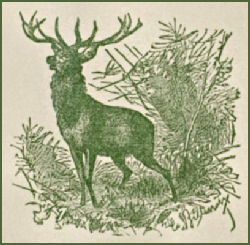
A BEAUTIFUL DEER.
White men joined in the hunt. Brave Englishmen and fearless Americans attached themselves to the party, and many were the hair-breadth escapes and critical situations that crowded upon their path.
On reaching the lion’s neighborhood, they took counsel as to the best way of coming upon him, not knowing just where his lair might be; but soon they were guided to him by a distant roaring. The advance hunters caught their first glimpse of him before he was aware of their presence. He had slain his prey—the pretty creature lay near the jungle lake, the sword grass and the poisonous marsh flowers flaunting their lush growth all about. The animal’s smooth coat was brown and glossy, and its black hoofs shone bright in the sunshine. The lion repeated the same expressions of gratified savagery he had indulged in when he had devoured the native. He strode about, lashing his tail and roaring.
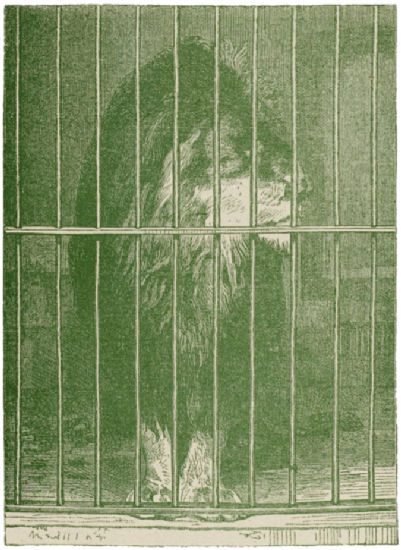
HE WAS FINALLY CAGED.
The fearful encounter began! Many of the natives were killed. One young English nobleman was thought to have received his death wound, when they came to close quarters. The creature was overcome by numbers and heroic bravery at last. He was maimed, disabled and secured, in the deft and expeditious way they have learned in dealing with these animals. He was finally caged, and the rejoicings of the natives knew no bounds; the exploit was celebrated with feasting, dancing and wild observances, the women and the children joining in the uncouth festivities.
He was removed by his foreign purchasers, and eventually secured by a City Park Commission, and was liberated to walk about a spacious cage, to delight the thousands who visit the menagerie, that affords so much instructive amusement. He usually lies down in one corner, and although he has lost much of his magnificent appearance, he is still worthy to be called the “Forest King.”
If you happen to be in his section when he gets hungry and calls for his dinner, you will be greatly astonished, if not frightened, at the sound of his voice. It is like nothing else in nature. It vibrates to the roof of the vast structure, and the windows rattle in their frames. He tramps about and lashes his tail against the bars and stamps his feet, and his keeper hurries to throw him his ration of raw meat. When he is satisfied, he lies down and purrs as good-naturedly as a pussy cat, and looks you in the eyes with an unwinking stare.
You and I most earnestly hope that he may never contrive to escape.