SMALL BEGINNINGS.
Reading edition
Did you ever think of how lowly was the start in life of many of our great men? Read the pages of history and you will find that fully seven out of ten of the great men were really poor. Bonaparte used to be a book agent, Gould was a surveyor, Franklin was a printer, Garfield worked on the tow path, Lincoln was a rail splitter, Grant was a tanner, Poe was always in financial distress; Crome, the great artist, used to pull hair from his cat’s tail to make his brushes; Astor came to New York with nothing as the foundation of his fortunes. The list is almost endless.
To us, there is much encouragement in these facts. By looking into the lives of such men we find the secret of success. Lincoln was a poor Illinois farmer, with no visionary dreams of his great future. He was poor and unlearned. Of the poverty he was not ashamed; of his lack of learning he was by no means satisfied. He resolved to gain knowledge. He studied, studied hard, and at a time in his life when other men felt they had passed the age of schooling. Of his work, we find he always tried to give an honest day’s labor; his motto was to do well everything he put his hands to. It was this trait of character that attracted the attention of his neighbors, and this it was that first started him on the road to great success.
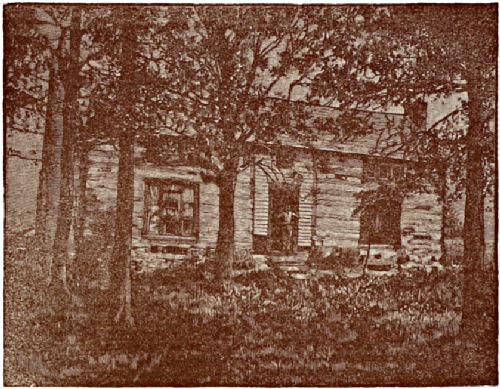
GRANT’S HOUSE, NEAR ST. LOUIS.
Look at the early days of Grant. There was no indication of unusual brightness in him. At West Point, where he was sent to military school, he did not stand at the head of his classes. He only seemed an earnest worker, with plenty of determination. Later, when he lived on his little Illinois farm, there was nothing about him that pointed him out as the future great general. It was only when the great civil war broke out that he had an opportunity to show the kind of a man he was. His only thought was to accomplish the task assigned him, be it ever so difficult. This naturally found him in the line of promotion, and step by step he climbed higher, earning by hard work every step he gained, until he reached the highest office in the land.
Take Edison, the inventor. He was only a tramp telegrapher, but he was not satisfied with being anything but the best, and many are the stories of speed he attained in sending or receiving messages. He was inquisitive—wanted to know more of the mysteries of the electricity that carried his messages. He began experimenting, and by close application to his studies, has astonished the world with his telephone, phonograph and other inventions.
Now, these great men are not merely the products of chance. Not at all. Study each of them and you will find they were workers, gaining by just such struggles as you and I can make. We may not reach such distinction as these have reached, but rest assured there is just as great a demand now as ever for good, earnest men, and earnest, successful men grow from painstaking boys. The boy who, as clerk in the counting-house, watches after the interests of his employers, will be the coming merchant; the young man on the farm who slights not the work assigned him, will own a farm of his own.
Let this lesson make an impression. The road to success may be rugged, but it is not so steep but that enough steps, if in the right direction, be they ever so short, will in time carry you a long way toward the top.