THE SEASIDE VISITOR'S VADE MECUM.
Reading edition
Question. Is it your intention to leave London at once to benefit by the ocean breezes on the English coast?
Answer. Certainly, with the bulk of my neighbours.
Q. Then the metropolis will become empty?
A. Practically, for only about three and a half millions out of the four millions will be left behind.
Q. What do you consider the remaining residuum?
A. From a West End point of view a negligible quantity.
Q. Do not some of the Eastenders visit the seaside?
A. Yes, at an earlier period in the year, when they pay rather more for their accommodation than their neighbours of the West.
Q. How can this be, if it be assumed that the East is poorer than the West?
A. The length of the visit is governed by the weight of the purse. Belgravia stays a couple of months at Eastbourne, while three days at Margate is enough for Shoreditch.
Q. Has a sojourn by the sea waves any disadvantages?
A. Several. In the first instance, lodgings are frequently expensive and uncomfortable. Then there is always a chance that the last lodgers may have occupied their rooms as convalescents. Lastly, it is not invariably the case that the climate agrees with himself and his family.
Q. And what becomes of the house in town?
A. If abandoned to a caretaker, the reception rooms may be used by her own family as best chambers, and if let to strangers, the furniture may be injured irretrievably.
Q. But surely in the last case there would be the certainty of pecuniary indemnity?
A. Cherished relics cannot be restored by their commonplace value in money.
Q. Then, taking one thing with another, the benefit of a visit to the seaside is questionable?
A. Assuredly; and an expression of heartfelt delight at the termination of the outing and the consequent return home is the customary finish to the, styled by courtesy, holiday.
Q. But has not the seaside visit a compensating advantage?
A. The seaside visit has a compensating advantage of overwhelming proportions, which completely swallows up and effaces all suggestions of discomfort—it is the fashion.
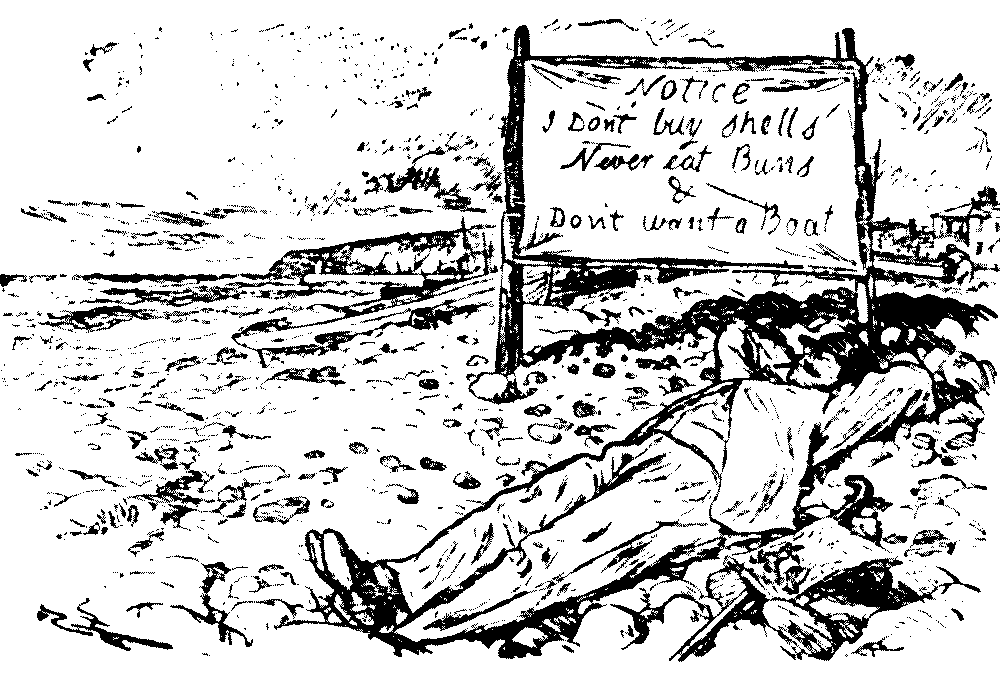
PARIS?
"Not if I know it! Give me a quiet month at the seaside, and leave me alone, please!"
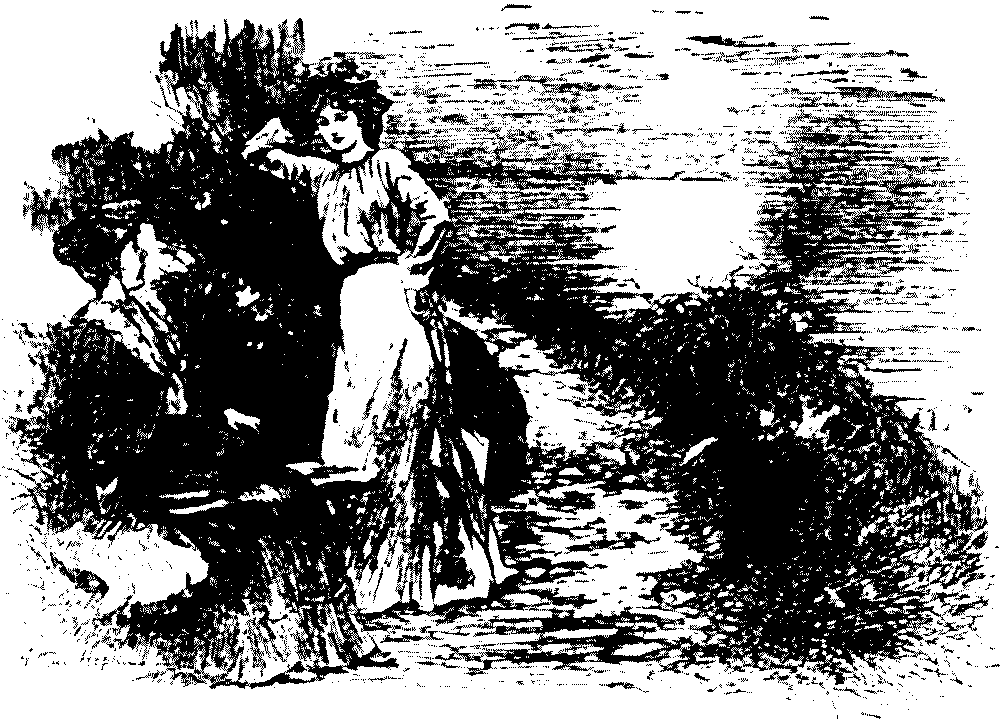
CONVERSATIONAL PITFALLS
Irene. "Do you remember Kitty Fowler?"
Her Friend. "No, I don't."
Irene. "Oh, you must remember Kitty. She was the plainest girl in Torquay. But I forgot—that was after you left!"
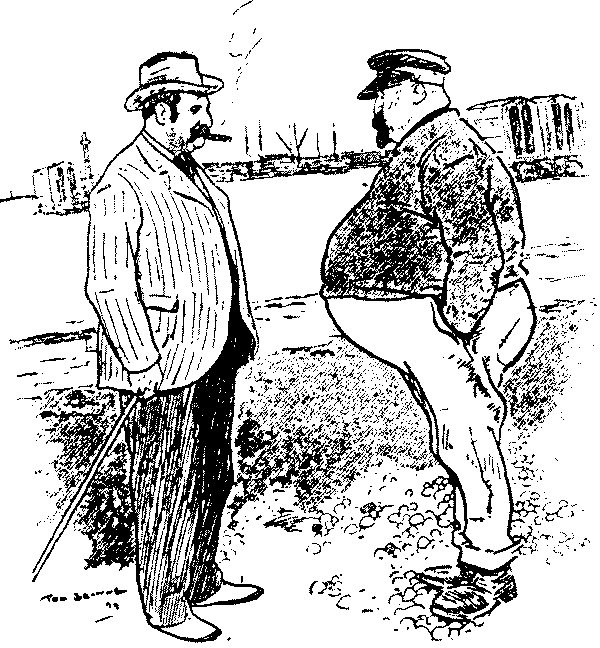
Visitor. "Have you ever seen the sea-serpent?"
Boatman. "No, sir. I'm a temperance man."
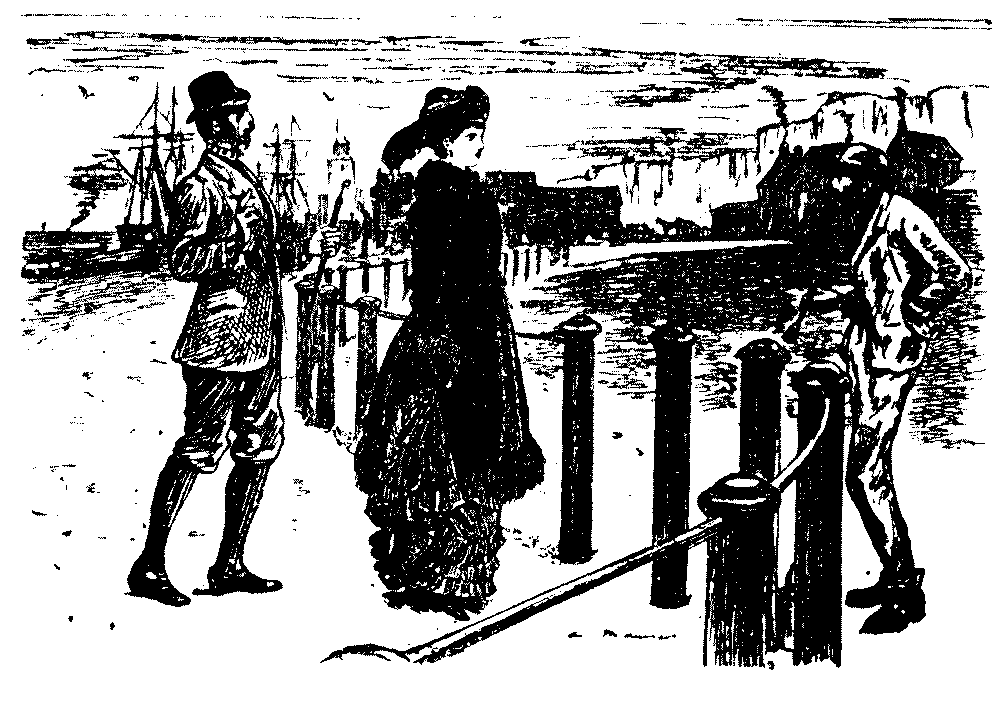
SEPARATE INTERESTS
Husband. "Hi! Maria! Take care of the paint!"
Painter. "It don't matter, ma'am. It'll all 'ave to be painted again!"
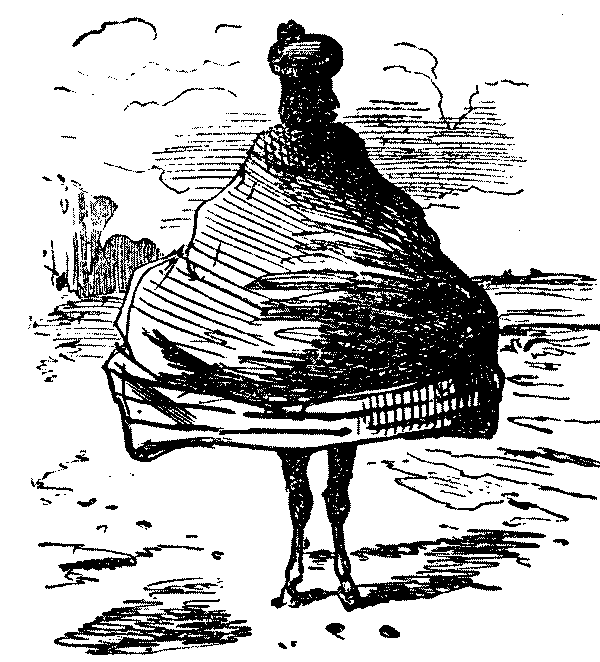
CAUTION TO YOUNG LADIES WHO RIDE IN CRINOLINE ON DONKEYS
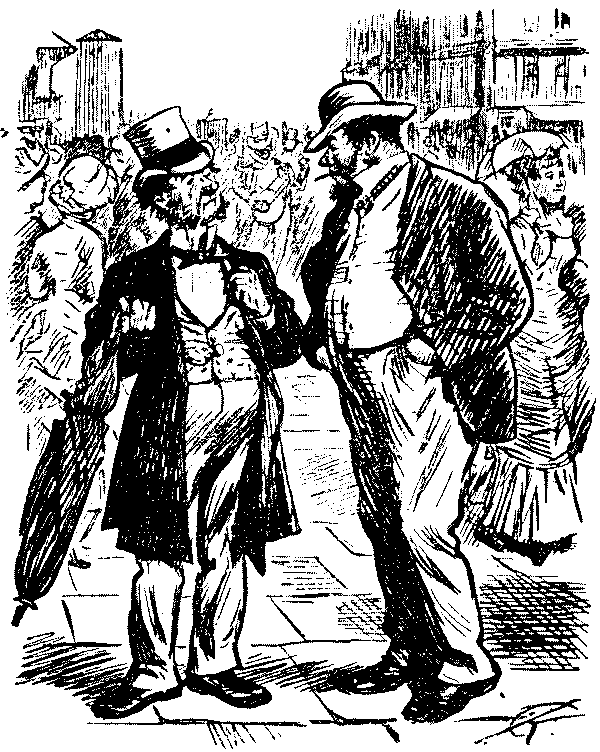
MARGATE
Chatty Visitor. "I like the place. I always come here. 'Worst of it is, it's a little too dressy!"
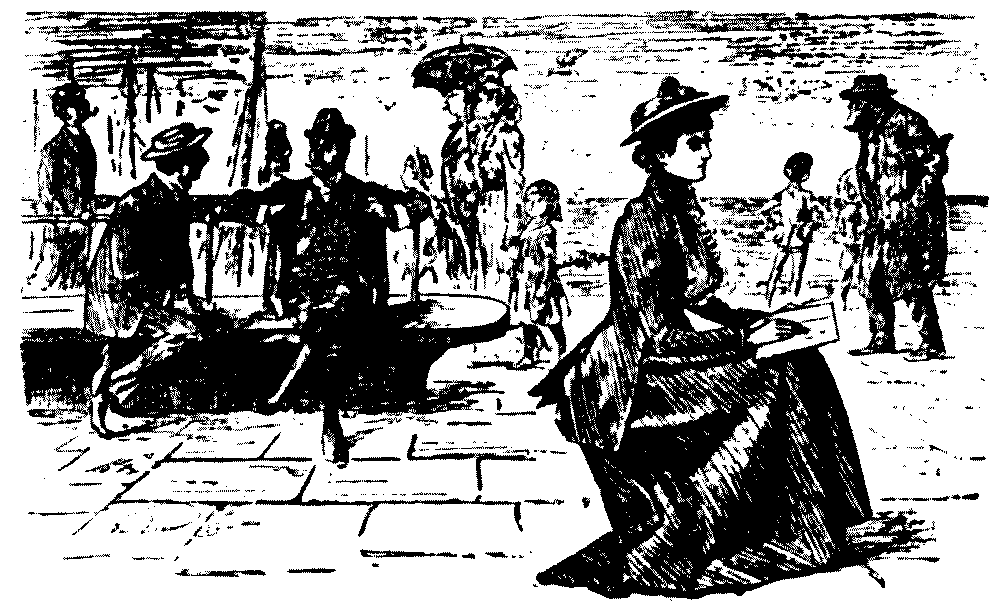
UNLUCKY COMPLIMENTS
Shy but Susceptible Youth. "Er—could you tell me who that young lady is—sketching?"
Affable Stranger. "She has the misfortune to be my wife!"
Shy but Susceptible One (desperately anxious to please, and losing all presence of mind). "Oh—the misfortune's entirely yours, I'm sure!"
Brilliant Suggestion (Overheard at the Seaside).—She. "So much nicer now that all the visitors have gone. Don't you think so?"
He. "Yes, by Jove! So jolly nice and quiet! Often wonder that everybody doesn't come now when there's nobody here, don't you know!"
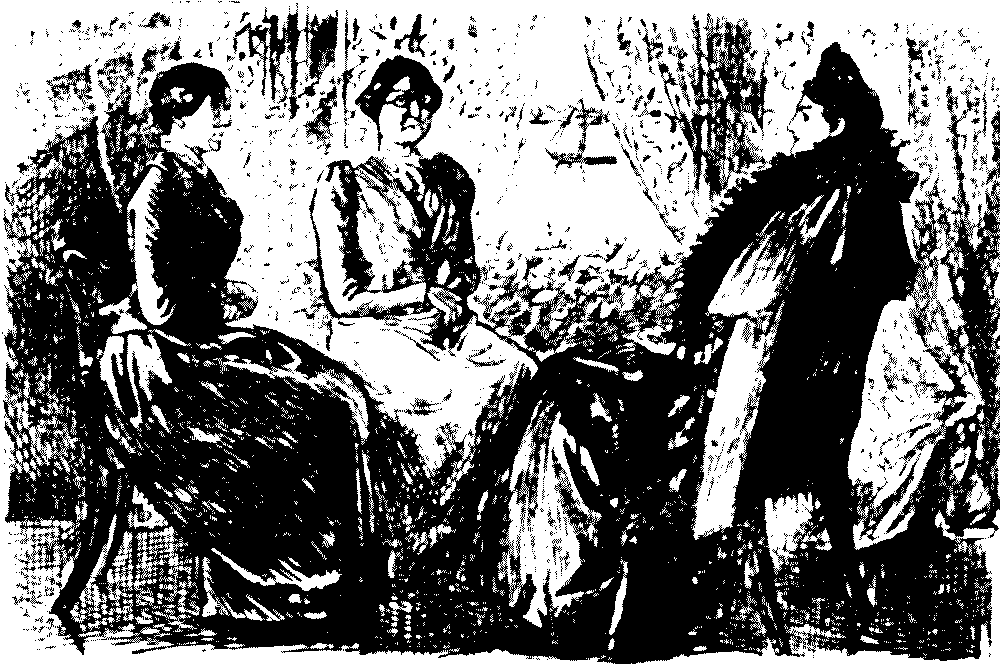
A NUISANCE.
Miss Priscilla. "Yes; it's a beautiful view. But tourists are in the habit of bathing on the opposite shore, and that's rather a drawback."
Fair Visitor. "Dear me! but at such a distance as that—surely——"
Miss Priscilla. "Ah, but with a telescope, you know!"