“HUMAN DOCUMENTS.”
Reading edition
Facing this pastel, in an opposite corner of the room, another little thing full of sadness catches my eye, despite the deepening twilight. It is a yellow-stained photograph hung on the wall in a simple, wooden frame. It is the young Prince Imperial, who was killed in Africa a dozen years ago, but is shown here as a mere child in knee breeches. An odd, but touching, fancy it was of the Empress Eugenie to place this souvenir of her son, the last of the Napoleons, in the very room where that other one was born, the giant who shook the earth....
How strange and startling it will be a century or two hence for our descendants to turn over the photographs of their ancestors!... The portraits left by our forefathers, expressive though they may be, whether painted or engraved, can never produce in us an impression equally vivid; but photographs are the very reflections of living beings, fixing their precise attitudes, their gestures, their most fleeting expressions. What a curious thing it will be, what an awe-inspiring thing for future generations to study our faces when we shall have fallen into the dead past!...—A fragment from Loti’s “Book of Pity and of Death.”
BIOGRAPHICAL NOTES.
Edward Everett Hale, clergyman and author, born in Boston in 1822, was graduated at Harvard in 1839. While a clergyman, he is perhaps best known to the world as a philanthropist and an author. He has written short stories, novels, juvenile books, works of travel, essays, biography, and history, besides giving much time to his pastoral duties, to preaching, lecturing, and the organization of charities. He founded the magazine “Old and New,” afterward merged in “Scribner’s” (now “The Century”). Two of his short stories, “My Double, and How He Undid Me,” and “The Man Without a Country,” are classics.
Henri Adolphe Stephan Opper, known to the world as M. de Blowitz, born at Blowitz, Bohemia, on December 28, 1825, migrated to France in 1848, and became engaged as professor of the German language and literature at the Lycée of Tours. Here he remained till 1860, when he left to fill, successively, similar posts at Limoges, Poictiers, and Marseilles. He married the daughter of a paymaster of the French Marine. It was not till 1871 that he became a naturalized Frenchman, and, after the French defeat by the Germans, he was a confidant and emissary of both Gambetta and Thiers. His entrance into journalism was as the collaborateur of Lawrence Oliphant, the special correspondent of the “London Times” at Versailles. On Oliphant’s retirement, M. de Blowitz was promoted by the editor of the “Times,” to fill his place. The subsequent career of the great correspondent has been identified with some of the most striking episodes in modern politics and journalism.
Daniel Vierge Urrabieta, born in Madrid, 1852, became a student of the Fine Arts Academy of Madrid in 1865. In 1869 he went to Paris and began his career of illustrator. In 1881 he was stricken by an attack of paralysis, which it was feared would be fatal. But for the last four or five years he has been growing steadily better in health, and has been able to resume his brilliant work. Although but little known to the public at large, he ranks among the most original and striking of modern artists, and is without doubt at the head of the illustrators.
Thomas Alva Edison, born at Alva, Ohio, February 11, 1847, had no schooling except the attrition of life. At the age of fifteen, having been taught telegraphy, he graduated from the life of a train newsboy into that of an operator, and, during several years of wandering, acquired extraordinary skill. The study of theory ran æquo pede with executive work. He quickly invented the automatic repeater to transfer messages from one to another wire. It is needless to touch upon his further achievements which have made his name famous in the whole civilized world.
EDWARD EVERETT HALE.
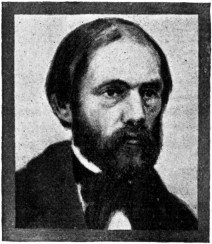
FROM AN OLD DAGUERREOTYPE.
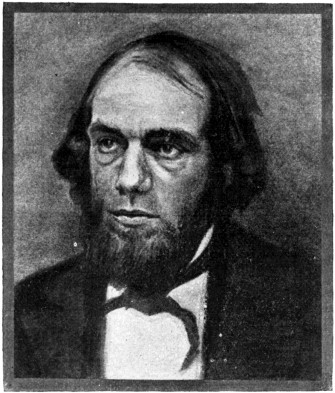
AGE 37. 1859.
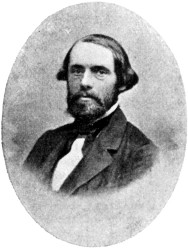
AGE 39. 1861.
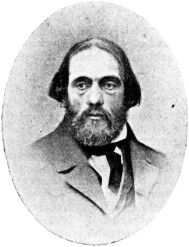
FROM AN UNDATED DAGUERREOTYPE TAKEN BEFORE 1855.
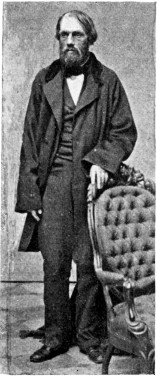
AGE 43. 1865.
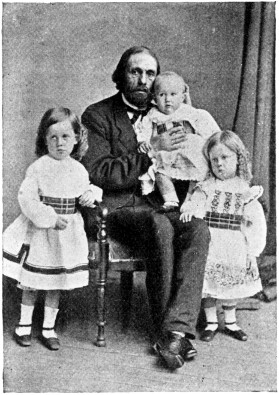
MR. HALE AND HIS CHILDREN IN 1869.
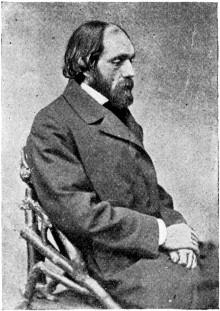
AGE 48. 1870.
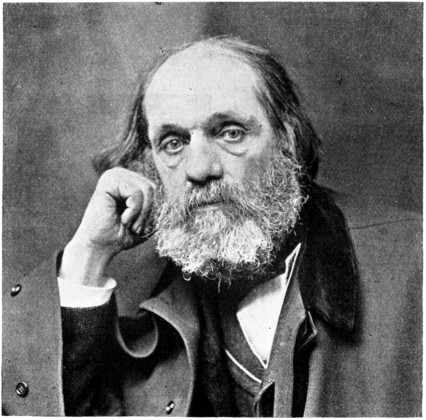
MR. HALE IN 1888.
M. DE BLOWITZ.
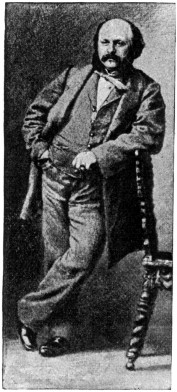
1866.
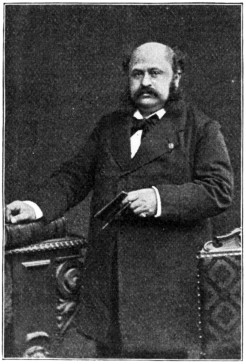
1875. PARIS.
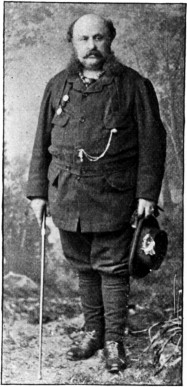
1884. CONSTANTINOPLE. TAKEN IN THE COSTUME IN WHICH HE INTERVIEWED THE SULTAN.
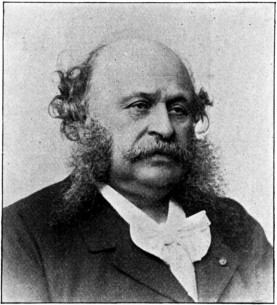
M. DE BLOWITZ AT THE PRESENT DAY.
DANIEL VIERGE URRABIETA.
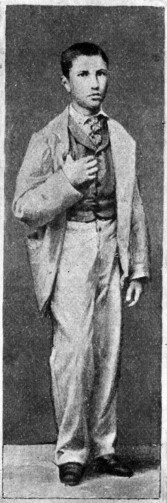
AGE 13. 1865.
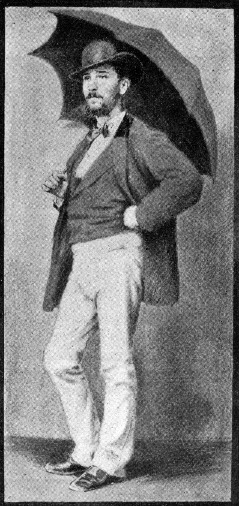
AGE 17. 1869. MADRID.
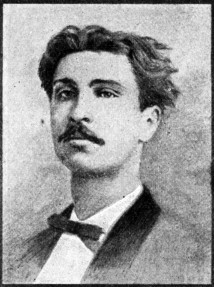
AGE 19. 1871. PARIS.
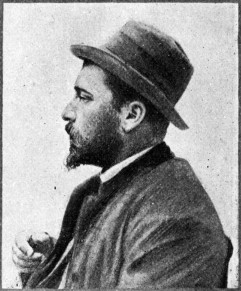
VIERGE IN 1890.
THOMAS ALVA EDISON.
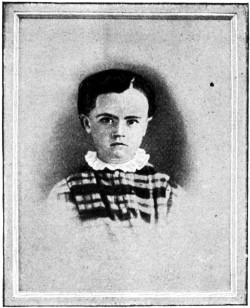
AGE 3. 1850.
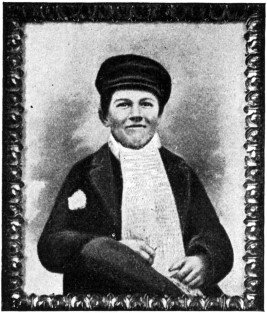
AGE 13. 1860.
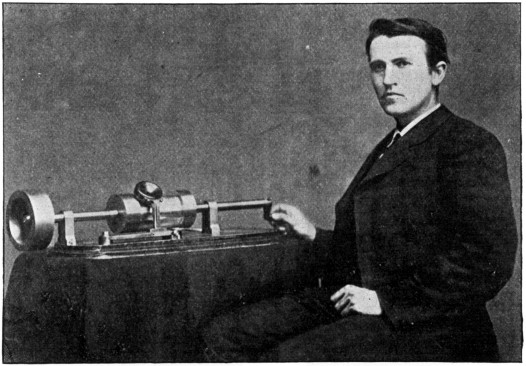
AGE 31. 1878. EDISON AND THE FIRST PHONOGRAPH.
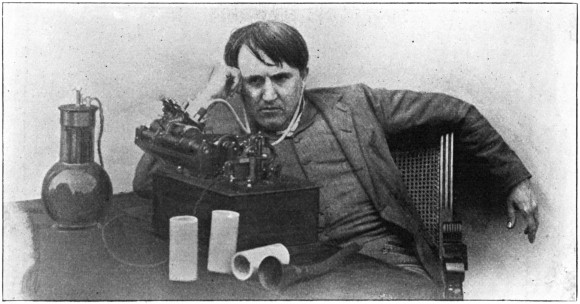
AGE 44. 1891. EDISON AND THE IMPROVED PHONOGRAPH.
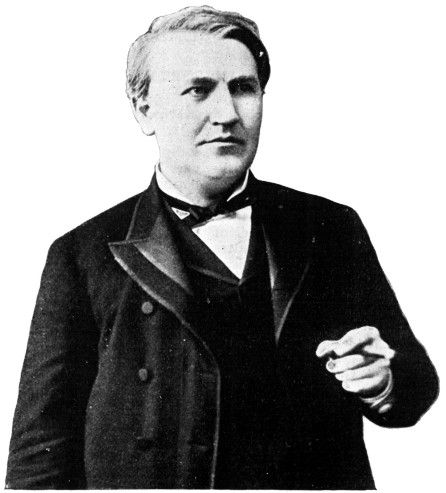
EDISON AT THE PRESENT DAY.