JAMES PARTON’S RULES OF BIOGRAPHY. PREFATORY NOTE.
Reading edition
The following letters were written in 1888 and 1889, by James Parton to the Honorable Alfred R. Conkling of New York City. In December, 1888, Mr. Conkling wrote to Mr. Parton, making him a formal offer to assist in the preparation of the “Life and Letters of Roscoe Conkling.” Mr. Parton generously declined to accept payment, but took a great interest in the work, and during the following year corresponded frequently with Mr. Conkling, advising upon specific points and setting forth the general principles of the art of biography.
We are indebted to Mr. Conkling for permission to print these letters, which are full of wise suggestion to the literary “recruit,” and of genuine human interest to all lovers of good reading. They give us glimpses of Mr. Parton, not only as a conscientious writer of biography who had acquired a rare mastery of his art, but also as a man of aggressive interest in public affairs, of broad mind, and a singularly wholesome nature.
Newburyport, Mass., Dec. 8, 1888.
Dear Sir: I am glad to learn from yours of yesterday that we are to have a biography of so interesting and marked a character as the lamented Roscoe Conkling, and I should esteem it a privilege to render any assistance toward it in my power.
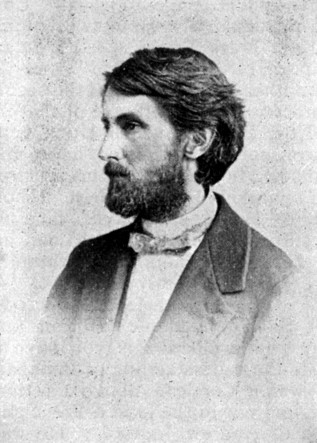
JAMES PARTON IN 1852, AT THIRTY YEARS OF AGE.
The great charm of all biography is the truth, told simply, directly, boldly, charitably.
But this is also the great difficulty. A human life is long. A human character is complicated. It is often inconsistent with itself, and it requires nice judgment to proportion it in such a way as to make the book really correspond with the man, and make the same impression upon the reader that the man did upon those who knew him best.
Your difficulty will be to present fairly his less favorable side; but upon this depends all the value, and much of the interest of the work.
My great rules are:
1, To know the subject thoroughly myself; 2, to index fully all the knowledge in existence relating to it; 3, to determine beforehand where I will be brief, where expand, and how much space I can afford to each part; 4, to work slowly and finish as I go; 5, to avoid eulogy and apology and let the facts have their natural weight; 6, to hold back nothing which the reader has a right to know.
I have generally had the great advantage of loving my subjects warmly, and I do not believe we can do justice to any human creature unless we love him. A true love enlightens, but not blinds, as we often see in the case of mothers who love their children better, and also know them better, than anybody else ever does.
With regard to New York, I am always going there, but never go; still, I may have to go soon, and I will go anyway if I can do anything important or valuable in the way you suggest—but not “professionally,” except as an old soldier helps a recruit.
Very truly yours,
James Parton.
Newburyport, Mass., Dec. 24, 1888.
Dear Sir: I have examined with much interest and pleasure your work upon Mexico, with a title so extravagantly modest as almost to efface the author. Let us accept our fate. It is our destiny to live in an age when all human distinctions are abolished, or about to be abolished, except the advertiser and his victim. Your work appears to me to be quite a model, and I wish I were going to be a tourist in Mexico that I might have the advantage of using it.
One word more with regard to your biography. In the case of a person like Mr. Conkling, whose vocation it was to express himself in words, and whose utterances were often most brilliant and powerful, I think you should make great and free use of his letters and speeches. Is not a volume of five hundred pages too small? Could you not make a work in two volumes, and get Mark Twain to sell it by subscription?
Another: I hope you feel the peculiar character and importance of that part of New York of which Utica is the central point. It does not figure much in books, but there are many strong and remarkable families there. I should like to see it elucidated. The first questions to be asked of a man are: Where, and of whom, was he born?
Very truly yours,
James Parton.
P. S.—For example: If you know fully what a Corsican is, you have the key to the understanding of Bonaparte. He was a Corsican above all things else, and not in the least a Frenchman.
So of Andrew Jackson: He was a Scotch-Irishman. Alexander Hamilton: a Scotch-Frenchman.
Newburyport, Mass., March 26, 1889.
My dear Sir: You can give a sufficiently “complete account” of an event without giving a long one. Now, the duel between two such persons as Burr and Hamilton may be long, because it can also be interesting. Readers are interested in the men, in the time, in the scene, and the whole affair is surcharged with human interest. In that Elmira trial, the chief interest will centre in your uncle’s tact and success. I should give enough of the trial to enable the reader to see and appreciate his part in the affair. My impression is: Do not expend many pages upon it, but pack the pages full of matter. You want all your room for other scenes in which he displayed his great power in a striking way.
Many qualities are desirable in a book, only one is necessary—to be interesting enough to be read. The art is, to be short where the interest is small, and long where the interest is great.
Your uncle’s speeches do not need much “comment.” Most speeches contain one passage which includes the whole.
I fear I shall not be able to visit New York this spring.
Very truly yours,
James Parton.
Newburyport, Mass., April 3, 1889.
My Dear Sir: As often as possible I would insert the bright things where they belong, as they seem to enliven the narrative. If you have an inconvenient surplus, or a number of things undated, you might make a chapter of them, or reserve them for the final chapter. It is a good rule, though only a rule, not to have breaks in the continuity, like the “Bagman’s Story” in “Pickwick.” Readers are apt to skip them, however good they may be in themselves. You have doubtless often done so. A good thing is twice good when it comes in just where it ought. The modern reader is very shy, and easily breaks away from you, if you only give him a pretext.
I merely send my impressions. You alone can really judge.
Very truly yours,
James Parton.
Newburyport, Mass., April 17, 1889.
My dear Sir: The description of your uncle’s oratory will be so sure to interest the reader, that it may come in almost anywhere, but best, perhaps, where you mention his first notable speech. Remember, too, that the author has, in his last chapter, not only a chance to “sum up,” but also an opportunity to slip in anything he may have omitted. An interesting thing it is always to know how a strong man grew old, what changes occurred in his manner, methods and character.
By all means, use the personal pronoun sparingly, and allude unfrequently to your relationship. It is not necessary wholly to avoid either. Deal with the reader honestly and openly. There may come moments when calling him “my uncle” would be fair, and in the best taste—but not often.
The ladies have the privilege of skipping. Make your late chapter about the law practice in New York very full and clear. It will very greatly interest everybody who will be likely to read the book. It is the intrinsic worth of a book that is to be considered before all things else.
I fear you are making the book too short. Mind: It cannot be what is called “popular.” It must appeal to the few. Ought it not to be two volumes at five dollars?
Very truly yours,
James Parton.
Think of Blaine’s book and its sale by subscription.
The difference between one volume published in the ordinary way, and two volumes by subscription, may be the difference between a profit of two thousand dollars and one of two hundred thousand dollars.
Blaine’s book, sold over the counter, might have gone to the length of five thousand copies. Sold by subscription, it made him rich.
On this point, however, Mr. Appleton’s opinion is worth ten of mine.
Newburyport, Mass., April 26, 1889.
My Dear Sir: The pamphlet has only just arrived.
So far as the comments are necessary to elucidate the text, and to explain why and how the text came to be uttered, they are justified—no farther. Your uncle was such a master of expression that almost anything placed in juxtaposition must suffer from the contrast.
Let him have the whole floor, I say, and just give the indispensable explanations. It would be impossible to enhance the effect of his characteristic passages. They need, like diamonds, a quiet setting.
Very truly yours,
James Parton.
Newburyport, Mass., June 4, 1889.
My dear Sir: I return your paper of questions. Give plenty of the “light matter” to which you refer, and I hope you will extract many passages that show your uncle’s horror of corruption. The pamphlets you were so good as to send me are valuable and interesting. I do not wonder at his great success before a jury. He was an awful man to have on the other side. Is there any one who could describe for you some of the noted scenes in which your uncle figured, but which you did not witness yourself? There may be available interviews in the newspapers. I remember hearing Thomas Nast talk about him very enthusiastically after returning from a visit to him in Washington. You could make a nice chapter about the Senate—its ways and occupations, traditions and tone—viewed merely as a club of gentlemen.
I am glad that Mark Twain is going to publish the book. Give all the pictures you dare.
Very truly yours,
James Parton.
Newburyport, Mass., Aug. 5, 1889.
Dear Sir: Would not those “undated anecdotes” come in well to illustrate and brighten your summing-up chapter? If not, then the plan you suggest might answer very well.
I am glad to hear that you are so near to the end of your labors, and that the work is to be published by the ever victorious firm of Mark Twain. If I have been able to render you the smallest service I am glad, and you are heartily welcome.
Very truly yours,
James Parton.
Newburyport, Mass., Dec. 28, 1889.
Dear Sir: Your solid volume reached me several days ago, and some time after, your letter of Dec. 20. I have now read the work pretty carefully, and shall no doubt often return to it. Considering the restraints you were under, as nephew and as Republican, you have executed your task well and given to the world the most pathetic of the tragedies resulting from the system of spoils. Never again, until that blighting curse of free institutions is destroyed, will a man of Roscoe Conkling’s genius, pride and purity remain long in the public service, if ever he enters it. He was the last of the Romans. My great regret is that he did not consecrate his whole existence to the reform of the civil service. I have such an acute sense of the shame, the cruelty and the childish folly of the present system that I sometimes feel as if we ought to stop all our other work and enter upon a universal crusade against it.
You must not expect the public to remain satisfied with the omissions and suppressions of your book. Sooner or later, somebody will supply them, and you might just as well have told the whole story.
I am glad to hear of the success of the book with the public.
Very truly yours,
James Parton.
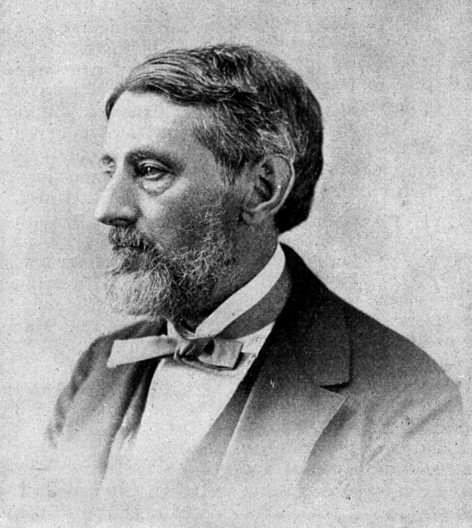
JAMES PARTON IN 1891.