GEORGE BRANDES
Mary Morison translation
IN SIX VOLUMES ILLUSTRATED
III THE REACTION IN FRANCE
THE MACMILLAN COMPANY
1906
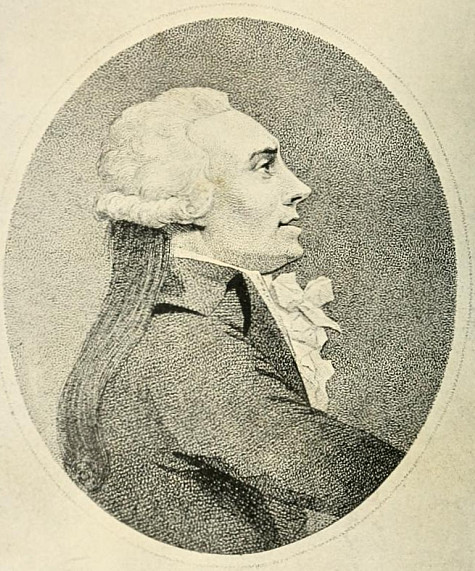
ROBESPIERRE
Hätt 'ich gezaudert zu werden, Bis man mir's Leben gegönnt. Ich wäre noch nicht auf Erden Wie Ihr begreifen könnt. Wenn Ihr seht, wie sie sich geberden. —GOETHE.
There is no philosophy possible where fear of consequences is a stronger principle than love of truth. —JOHN STUART MILL.
CONTENTS
INTRODUCTION
I.THE REVOLUTION
II.THE CONCORDAT
III.THE PRINCIPLE OF AUTHORITY
IV."LE GÉNIE DU CHRISTIANISME"
V.JOSEPH DE MAISTRE
VI.BONALD
VII.CHATEAUBRIAND
VIII.MADAME DE KRÜDENER
IX.LYRIC POETRY: LAMARTINE AND HUGO
X.LOVE IN THE LITERATURE OF THE PERIOD
XI.DISSOLUTION OF THE THEORETICAL PRINCIPLE OF AUTHORITY
XII.DISSOLUTION OF THE PRACTICAL PRINCIPLE OF AUTHORITY
XIII.CULMINATION AND COLLAPSE OF THE REACTION
XIV.CONCLUSION
LIST OF PORTRAITS ROBESPIERRE CHATEAUBRIAND JOSEPH DE MAISTRE BONALD LAMARTINE VICTOR HUGO LAMENNAIS
THE REACTION IN FRANCE
INTRODUCTION
A certain aggregation of personages, actions, emotions and moods, ideas and works, which make their appearance in France, find expression in the French language, and influence French society at the beginning of the nineteenth century, form in my eyes a naturally coherent group, from the fact that they all centre round one idea, namely, the re-establishment of a fallen power. This fallen power is the principle of authority.
By the principle of authority I understand the principle which assumes the life of the individual and of the nation to be based upon reverence for inherited tradition.
That power which is its essential quality, authority owes simply to its own existence, not to reason; it is a result of the involuntary or voluntary subjection of men's minds to existing conditions. Authority had originally only two instruments at its disposal, compulsion and fear, instruments which it will always retain and use; but at an early age it began to call forth such feelings as reverence and gratitude. Men were not ashamed of, did not suffer from, their dependence on authority, when they felt that they owed an obligation to it. The authority of the family, the authority of society, the authority of the state (long synonymous with the will of the despotic ruler) gradually asserted themselves, and supported themselves, one and all, upon a still higher authority, the authority of religion. In it the principle of authority reaches the absolute stage. The will of the Almighty becomes the supreme law, to which all must bow and which must be blindly obeyed.
The principle of authority has had a powerful educative influence on the human race; but its real mission is to make itself superfluous. At a comparatively low stage man submits to law because it emanates from authority; at a higher, because he recognises its reasonableness. Where authority is absolute it must, and as a matter of fact does, demand recognition as something mysterious and miraculous, and treat all criticism as rebellion and heresy.
It is its ratification by religion which makes authority absolute. Owing, however, to the manner in which Christianity had developed in Europe, the principle of authority had not as yet manifested itself in that continent in perfect purity. Christianity had (officially at least) proclaimed itself to be the religion of love, the religion of Christ. History shows that what the church in reality laid most weight on was belief in the dogmas of Christianity and in the duty of submission to supernatural authority—not love, but obedience was necessarily of supreme importance to it as well as to the state. So far, however, even the strictest of theologians, priests, and religious writers had employed the language of religious enthusiasm, had proclaimed the message of love along with the doctrines of the faith, and striven not merely to further the cause of authority, but also to win souls. It was not until a majority of the educated minds of many countries freed themselves from the yoke of authority in the domain of the supernatural, and consequently became critically disposed towards it in the political and social domains also, that the principle of authority in its purity and its barrenness began to be vindicated unemotionally, with arguments appealing most frequently to reason alone, but occasionally also to the imagination.
It is possible to champion the principle of authority in church and state, in society and in the family, nay, even in the domain of human knowledge, as the principle of knowledge and of wisdom. During the period of which I purpose describing the spiritual life it was so championed in all those domains, but at the time now referred to it was overthrown in them all.
In order to understand how it came to be resuscitated, proclaimed, developed, vindicated, established, and finally again overthrown, it is necessary that we should see how, and by virtue of what fundamental principles, it was annulled at the time of the Revolution.
It was not attacked at once in all the different domains; but it became evident that its existence in them all depended upon its existence in what was considered the highest, that of religion. For it was the church which, as authority, imparted authority in all the other spheres of life—to the "king by the grace of God," to marriage as a sacrament, &c. &c.
Therefore the principle of authority in general stood or fell with the authority of the church. When that was undermined, it drew all other authorities with it in its fall.
Not that the man who, in the eighteenth century, laboured more energetically and successfully than any other for the emancipation of the intellect from ecclesiasticism and dogma had foreseen such a result of his labour. Far from it! Voltaire desired no outward revolution. In his little tale, Le monde comme il va, the wise Babouc, who is at first utterly revolted by the depravity of the great city of Persepolis, gradually comes to see that the bad state of matters has its good sides; and, when the fate of the city hangs upon his report to the angel Ithuriel, he pronounces himself to be entirely opposed to its destruction. Even the angel does not in the end propose making any change in the customs of Persepolis, because, "though things are not good, they are certainly bearable." This train of thought can hardly be called revolutionary; and Voltaire is, at least at times, of the same opinion as Babouc. It was always to the sovereigns, not to the peoples, that he appealed to transform his ideas into actions, and he often declared that the cause of kings and of philosophers was one and the same. Hence when Holbach and his collaborators asserted that "hardly once in a thousand years was there to be found amongst these rulers by the grace of God, these representatives of the Deity, a man possessing the most ordinary sense of justice or compassion, or the commonest abilities and virtues," Voltaire could not control his wrath. His letters to the King of Prussia, too, contain violent outbursts of indignation at Le Système de la Nature. He did not recognise himself in these disciples and in these conclusions.
Nevertheless it is Voltaire who constitutes the destructive principle throughout the Revolution, just as it is Rousseau who is the rallying, uniting spirit. For Voltaire had destroyed the principle of authority by vindicating the liberty of thought of the individual, Rousseau had displaced and superseded it by the feeling of universal brotherhood and mutual dependence. What these two great men had planned the Revolution carried into effect; it was the executor of their wills; the thought of the individual became destructive action, and the feeling of mutual dependence, uniting organisation. From Voltaire came the wrath of the revolutionists, from Rousseau their enthusiasm.
I
THE REVOLUTION
Authority being originally, and in its essence, ecclesiastical and religious, an understanding of the successive developments in the position of the Revolution to church and religion is indispensable to a comprehension of the intellectual reaction which followed. For, as that reaction meant the re-establishment of the principle of authority, it naturally, as well as logically, began with the rehabilitation of the church.
The Revolution was in reality quite as much of a religious as of a political nature. Regarded from one standpoint, it was the practical result of the labours of the great free-thinking philosophers of the eighteenth century. It is to the Revolution of 1789 that we owe the greatest conquest wrested by the human intellect from prejudice and power—liberty of conscience, religious toleration. It is certainly not to the Christian church that humanity is indebted for this inestimable blessing, for the church opposed to the utmost every demand suggestive of it.
At the moment when the Revolution begins, all the preparations for the great encounter between the principle of authority on the one side and the principles of individuality and solidarity on the other are complete. All the leaders, all the knights and squires who are to fight in the great joust, are already at their posts, unknown to each other, unknown to the world, which is soon to ring with their names. They are men with very varied pedigrees and pasts. There are noblemen like Mirabeau, priests like Mauret, Fauchet, and Talleyrand, physicians like Marat, lawyers like Robespierre, poets, philosophers, orators, authors like M. J. Chénier, Condorcet, Danton, and Desmoulins—a whole host of men of talent and men of character. The church rallies all its forces for a desperate struggle, in which it is doomed to be worsted; the Revolution progresses, first hesitatingly, then threateningly, then irresistibly, finally in the intoxication of victory. With the summoning of the Estates the lists are opened; challenges are exchanged; and the great umpire, history, gives the signal for the fray.
As soon as the Estates are assembled the first and unanimous demand of the clergy is that "the Catholic, apostolic, and Roman religion" shall be recognised as the national religion, with the exclusive monopoly of public worship. And yet among the lower orders of the clergy were to be found many republicans; but of the liberty demanded by these, religious liberty did not form a part. The liberal-minded abbés might declaim against the Inquisition, and bestow on it such epithets as cannibal and tiger-like, but they were all opposed to toleration. The revolutionary abbé, Fauchet—he who, after the capture of the Bastille, blessed the tricoloured uniforms of the citizen soldiers, and made of the tricolour the national flag—now jeered at the idea of toleration, and prophesied general and complete demoralisation as its only possible result. He went so far as to maintain that those who belonged to no church ought not to have the right to marry, "since one could not consider such persons bound by their word."
When the Estates met as the National Assembly, the clergy were soon compelled to make concessions; but even when the feeling against them found expression, it always in the end assumed the mildest, most deferential form. When, for example, in February 1790, incensed by Garat's declaring consecration to the priesthood to be civic suicide, a number of priests, amongst them Abbé Maury and the Bishops of Nancy and Clermont, started up, accused Garat of blasphemy, and moved that the Catholic religion should be proclaimed as the national religion, the motion was rejected, but in such a manner as clearly evinced the timidity and hesitation of its opponents. It would, they declared, be an insult to religion, and to the feelings of the whole Assembly, to act as if there could be any doubt in such a matter. Men did not yet dare to say what they thought; and so an Assembly, the majority of which were free-thinkers, took part in church processions and attended Catholic public worship. Only two months later the motion that Catholicism should be proclaimed the state religion was again brought forward, this time after Maury's angry tirade against the proposal to secularise the property of the church. The proposer of the motion on this occasion was a priest, Dom Gerle, who afterwards, as a Jacobin, did his utmost to blot out the remembrance of his first public appearance. Mirabeau answered with a reference to a window in the Louvre which he could see from the place where he stood; "the very window," he shouted, "from which a French autocrat, who combined secular aims with the spiritual aims of religion, fired the shot which gave the signal for the massacre of St. Bartholomew." But once again the Assembly avoided the settling of the question by declaring that the majesty of religion and the reverence due to it forbade their making it the subject of debate. The Left with one accord refrained from voting and a protest was signed by 297 members, of whom 144 were ecclesiastics. Vacillation and self-contradiction were the order of the day.
The aristocracy, who a hundred years before had joyfully acclaimed Louis XIV's revocation of the Edict of Nantes, had been influenced to such an extent by the literature of the eighteenth century that, in their capacity as an Estate, they in a genuinely Voltairean spirit expressed themselves in favour of universal toleration; but they at the same time gave hesitating expression to the opinion that the Catholic church ought to be the national church. The Third Estate, the citizens, a considerable proportion of whom were Jansenists, and consequently in reality less liberal-minded, had expressed itself in a similarly evasive manner. But once the National Assembly was constituted, there was no longer any real uncertainty. As we all know, one of the first acts of that Assembly was the Declaration of the Rights of Man, and liberty of thought and speech in matters of religion was specified as one of these rights. Article 10 of the Declaration runs as follows: "No one may be harassed on account of his opinions, not even of his religious opinions, provided his expression of the same be not subversive of lawful order." The Pope replied by declaring this liberty to be "an unnatural and foolish right, subversive of reason" (sic). This was a sufficient indication of the relative positions of the two camps.
When toleration becomes the subject of debate in the Constituent Assembly we perceive the direction things are taking. One of the clauses in the first draught of the Declaration of the Rights of Man ran thus: "Public worship being a matter of public import, it is the prerogative of society to control it, to permit the rites of one church and forbid those of another." Upon this clause Mirabeau made a violent attack.
"It is not toleration that I champion," he said. "In the matter of religion, unrestricted liberty is in my eyes such a sacred right that the employment of the word toleration to express it savours to me of tyranny; for the very existence of an authority which has the power to tolerate, and, consequently, the power not to do so, is an infringement on freedom of thought." In a subsequent debate he went still farther. "A ruling religion has been spoken of. What is meant in this case by 'ruling'? I do not understand the word, and must request a definition of it. Does it mean a religion which suppresses other religions? Has not the Assembly interdicted the word suppression? Or does it mean the religion of the sovereign? The sovereign has not the right to rule over men's consciences or to direct their opinions. Or does it apply to the religion of the majority? Religion is a matter of opinion. This or that religion is the outcome of this or that opinion. An opinion is not formed by counting votes. Thought is a man's own, is independent, and cannot be restricted."
It is evident that men were beginning to have the courage of their opinions in religious matters.
I adduce another example of the rapidity with which, both in the Assembly and in society in general, they were advancing from a timid first apprehension to certainty of the great spiritual revolution which was taking place.
In October 1789 there stood at the bar of the National Assembly a deputation of curiously dressed men with oriental features. They were Jews from Alsace and Lorraine, who had been deputed by their fellow-believers to appeal for mercy.
"Most noble Assembly," they said, "we come in the name of the Eternal, who is the source of all justice and truth, in the name of God, who has given to all men the same rights and the same duties, in the name of humanity, which has been outraged for centuries by the infamous treatment to which the unfortunate descendants of the oldest of nations have been subjected in almost every country, to beseech you humbly to take our unhappy fate into consideration. Those Jews who are everywhere persecuted, everywhere humiliated, and yet are always submissive, never rebellious; those Jews who are despised and harassed by all nations, whereas they ought to be pitied and tolerated, cast themselves at your feet, and venture to hope that, even in the midst of the important tasks which engross you, you will not neglect and despise their complaint, but will listen compassionately to the timid protests which they venture to offer from the depth of degradation in which they are sunk.... May an improvement in our position, which we have hitherto desired in vain, and which we now tearfully implore, be your work, your benefaction!"
Clermont-Tonnerre warmly supported this petition. He was opposed by the audacious and callous Abbé Maury, who argued thus: "It is absurd to talk in our days of persecution and intolerance. The Jews are our brothers. But to make the Jews citizens would be equivalent to permitting Englishmen or Danes to become Frenchmen without any process of naturalisation, without ceasing to be Englishmen or Danes." He also dwelt upon the usurious proclivities of the Jews and the other vices attributed to them: "Not a man amongst them has ennobled his hands by guiding a plough or cultivating a plot of ground."
Considering that Jews were strictly prohibited by law from acquiring even the smallest piece of land, and that their position was such that when they entered a town they were liable to the same duty as was imposed on pigs, Maury's argument was easy of refutation. But hatred of the Jews was still so strong that no one contradicted him. It was feared that, if civic rights were conferred on the Jews, they would turn the whole of Alsace into a Jewish colony.
There was a general feeling of embarrassment. Only one member of the Assembly, a man who as yet had attracted no notice, Maximilien Robespierre, spoke in favour of the motion for granting the Jews equality. He declared their vices to be the consequence of the degraded position in which they had been kept.
But he was alone in supporting a measure which, significantly enough, classed Protestants, actors, and Jews together. The human rights of the Protestants and the actors were acknowledged, but, as Mirabeau recognised the impossibility of passing the clause of the motion which concerned the Jews, he adjourned the debate on this clause indefinitely. Two years passed. In 1791 the Jews once more appealed. But in what a changed tone! The humble prayer of the slave had become the peremptory demand of the man. The conclusion of the appeal runs as follows:—
"If there were one religion which incapacitated its followers from being citizens, whilst the followers of all other religions made good citizens, then these other religions would be the ruling religions; but there is no ruling religion, since all have equal rights. If the Jews are refused civic rights because they are Jews, they are punished for belonging by birth to a certain religion. In this case there is no religious liberty, seeing that loss of civic rights accompanies the liberty. This much is certain—in advancing men to religious liberty, the intention was that they should simultaneously be advanced to civic liberty; there is no half liberty, just as there is no half justice."
Two years spent in the atmosphere of the Revolution had given to these pariahs not only self-esteem but pride. This time the measure was passed without debate.
In the Constituent Assembly the animosity towards positive religion and its priests with which the "philosophers" had inoculated their age did not find vent in words; as yet it only expressed itself in deeds. All church property was proclaimed to be state property. Voltaire had impressed upon his disciples that it was their mission "to annihilate the infamous thing" (écraser l'infame). In the decisions of the Assembly faithful Catholics saw an attempt to carry out this injunction. It seemed to them as if all the powers of hell had been let loose upon the church of Christ, "as if the philosophers were bent upon exterminating the Christian religion, not only in France, but throughout Europe, nay, throughout the whole world." (Conjuration contre la religion catholique et les souverains, 1792.) In order to attain this result the "philosophers" had addressed themselves to the sovereigns of the great countries, to Frederick of Prussia, Catherine of Russia, and others; but it was from the French middle class that the blow came.
The priests, who, as the saying goes, have found what Archimedes sought, a fulcrum in another world from which to move this one, now began to stir up the spirit of fanaticism in the provinces. In the town of Arras a picture of the crucifixion was paraded in the streets, in which Maury and the royalists were represented standing on the right side of the cross, and the revolutionists on the left side, below the unrepentant thief. At Nîmes there was a regular riot when the news came that a Protestant, Saint-Étienne, had been elected President of the National Assembly.
The new ordering of the church's affairs was brought about by a coalition of the Voltairean and Jansenist members of the Assembly. The Jansenists had a religious hatred of earthly greatness, and, as fatalists, unquestioningly accepted the existence of human misery. Therefore it displeased them to see the church rich, and they took no account of the manner in which the poor benefited by its wealth. Moreover, the scandalous lives led by many of the high-placed ecclesiastics aroused their moral indignation. Everyone, for instance, knew that Bishop Jarante's mistress, Mademoiselle Guimard, distributed ecclesiastical promotion behind the scenes of the opera, that the Archbishop of Narbonne had a regular harem in one of his abbeys, and that the monks of the Abbey of Granselve had quarters for their ladies in a neighbouring village, where the tables were regularly spread for nightly revels.
If the revolutionists had been content with secularising church property, they could not well have been convicted of attacking religion. But they interfered in the church's internal arrangements and discipline, and even altered its ritual; and its dignitaries naturally proclaimed that the foundations of religion were shaken. Therefore the ordinary priest hardly ever dared take the oath of allegiance to the constitution. The small yearly payment received from the state by those who did so was likened to Judas Iscariot's blood-money, although in times past it had been considered just that bishops should own palaces and pleasure-grounds, and have luxuries of every kind at their disposal, while the lower orders of the clergy were positively starving.
As a result of the new order of things many riotous and many comic scenes were witnessed in the provinces. In one of Camille Desmoulins' newspaper articles we find an amusing description of the compulsory parting between a village curé and his charge. Coming out at the church door one Sunday after mass, Monsieur le Curé is surprised by the sight of a coach loaded with all his belongings. On the top sits Javotte, his housekeeper, to whom the schoolmaster, with tears in his eyes, is saying farewell. The curé is handed into the carriage amidst cries of: "Good-bye, good-bye, your Reverence!" and off he has to go, though he rages and storms as long as his church steeple is in sight. In other places, however, the priest was forced to take the oath with the bayonet at his breast; and in one instance a recalcitrant was shot dead in his pulpit. But if dissident priests were occasionally maltreated, the treatment meted out by these priests to their opponents was infinitely worse. They taught the peasants that the new constitution, which did not in reality interfere with religion at all, was a work of the devil. They impressed upon their congregations that it was a mortal sin to take the sacrament from the hands of a priest who had sworn allegiance to the government, that the children of parents who had been married by such priests were illegitimate, nay, that the curse of God rested on them. One priest who had taken the oath was stoned in his church, another was hanged from the chancel lamp. The churches which had been closed by order of the National Assembly were broken open again. In certain departments murderous bands of devotees, led by priests, marched about armed with guns and spears. The situation was worst in Brittany. When the Breton peasant who had gone many miles to hear mass said by a true, i.e. non-juring priest, on his return met a dozen or so of his neighbours coming out of his own church, where they had been comfortably attending the ministrations of the new government curé, he was so infuriated that he felt justified in committing any of the outrages to which the church incited him.
By the time the Legislative Assembly met, there were no longer any Estates. The nobles had emigrated, and the exiled ecclesiastical dignitaries were imploring assistance at foreign courts. The lower ranks of the clergy, inspired by anti-revolutionary fanaticism, were inflaming the ignorant multitude. The debates now held in the Assembly were very different in tone from those of the old days. Now the standing grievance against religion was the naïvely formulated one that it did not harmonise with the constitution, and that against the clergy, that their one aim was to recover their property. The lies and violence of the priests had stirred up a feeling of great bitterness against them. A few conciliatory voices were heard, such as that of André Chénier, who maintained that the priests did not trouble the state when the state did not interfere with them, or Talleyrand, who insisted that, as no form of religion was prescribed by law, neither should any be prohibited by law; but Voltairean indignation was long the order of the day.
These were the halcyon days of the Girondists, and the Girondists were the practical expression of the ideas of Voltaire.
In a public declaration drawn up by their famous leader, Vergniaud, we read: "The rebellious priests are preparing a revolt against the constitution; these insolent myrmidons of absolutism are supplicating all the sovereigns of Europe for money and soldiers wherewith to reconquer the sceptre of France." Roland, as Minister of the Interior, said: "Mutinous and hypocritical priests, concealing their plans and their passions under the sacred veil of religion, do not hesitate to excite fanaticism and to arm their misguided fellow-citizens with the sword of intolerance." When the proposal to banish the priests was under discussion, Vergniaud spoke, half jestingly, half seriously, of the iniquity of bringing evil upon other countries by sending them such a gift. "Generally speaking," he maintained, "nothing can be more immoral than that one country should send into another the criminals of whom it desires to be rid." But he comforts himself with the idea that in Italy they will be received as saints, and that "in this gift of living saints which we are sending him, the Pope will recognise a humble attempt to express our gratitude for all the arms, legs, and other relics of dead saints with which he has favoured our pious credulity during the centuries gone by."
"Yes," cries Isnard, the future President of the Convention, "let us send these plague-stricken creatures to the hospitals of Italy." And he adds that when a priest is depraved, he is never partly, but always wholly depraved, that to forgive crimes is the same as to commit them, that an end must be put to the existing state of matters, and that the enemies of the Revolution are themselves compelling the Revolution to crush them. From his lips issue for the first time the terrible words which were to be echoed and re-echoed times without number in days to come: "There is no need of proofs." That is to say, all priests accused were at once to be banished.
And when the fear was expressed that such proceedings would result in civil war, the noted Girondist, Guadet, a disciple of Holbach, reassured the Assembly with a speech containing the following assertion: "Every one knows that a priest is as cowardly as he is covetous, that he wields no weapons but those of superstition, and that, having fought nowhere but in the theological prize-ring, he is a nonentity on the field of battle." It was soon seen how mistaken, in this matter at least, Guadet and his sympathisers were, and what bold, enthusiastic leaders the priests made in the sanguinary civil war which ensued.
Things reached such a pitch that speakers actually began to excuse themselves when they were obliged to address the Assembly on church matters. François de Nantes (as spokesman of a committee, be it noted) declares: "Our one consolation in being obliged to take up your time with the discussion of church matters is the hope that the measures you will take will prevent the necessity of your ever hearing of them again." His whole speech is a tissue of audacities.
These sentiments were shared by high and low. One of Louis XVI.'s ministers, the insolent, high-handed Cahier de Gerville, said one day, on leaving the council chamber, to his colleague Molleville, who noted down the expression in his Memoirs: "I wish I had these damned vermin, the clergy of all lands, between my fingers, that I might squeeze them all to death at once." But the spirit of the Revolution found temperate, dignified expression in a letter from the Republic to the Pope, which a woman had been commissioned to write. It is addressed to "The Prince-Bishop in Rome." In the name of the Republic Madame Roland writes: "High-priest of the Roman church, sovereign of a state which is slipping out of your hands, know that the only possible way in which you can preserve state and church is by making a disinterested confession and proclamation of those gospel principles which breathe a spirit of the purest democracy, the tenderest humanity, and the most perfect equality—principles with which Christ's representatives have adorned themselves only for the purpose of supporting and increasing a sovereign power which is now falling to pieces from decrepitude. The age of ignorance is past."
But such language as this is quite out of keeping with what was generally spoken and written. The period of calm conviction was at an end, that of unbridled passions had begun. The passions followed in the track of the convictions. Hatred of Catholicism reached its climax; it broke out in one great flame all over France. Those were the golden days of the Clubs.
The Cordelier Club held its meetings in the chapel of a monastery. All the paintings, tapestries, and carvings were torn down; nothing but the skeleton of the church remained. The president's seat was in the chancel, where the rain blew in through the broken panes of the east window. His table was composed of joiners' benches; on it lay a row of red caps, and whoever wished to speak had to put on one of these. Behind him was a statue of Liberty with broken instruments of torture in her hands. Planks, fragments of stalls, of church benches, or of shattered images provided seats for a dirty, wild audience in ragged carmagnoles (as their jackets were called), shouldering spears, or sitting with their bare arms crossed. The orators spoke boldly and to the point; everything was called by its plainest name; an indecent word or audacious gesture roused applause. They were often interrupted by opponents, and at times by the screeching of small owls, which had been driven from their homes under the monastery roof, and now flew in and out through the broken windows seeking food. These were not to be silenced by the chairman's bell; they were sometimes shot, and fell fluttering and bleeding among the crowd. Among the speakers were Danton, Marat, and Camille Desmoulins—the amiable, witty Camille, whose moderation brought upon him the charge of hypocrisy, and who even before the tribunal of the Revolution spoke of the sans-culotte, Jesus. Camille had private reasons for his hatred of the priests. When, in December 1790, he wished to marry his beloved Lucile, without doubt one of the purest and most beautiful of the female characters of the Revolution, no priest would perform the ceremony because he had written in a newspaper article that the religion of Mahomet was as intelligible as the religion of Jesus. He was obliged to recant this assertion and to go to confession before he could be married. But now he made amends. In his newspaper, Le vieux Cordelier, he wrote: "The whole subject of priests and of religions is disposed of when it has been said that they resemble each other in all being equally absurd, and when it has been instanced that the Tatars eat the excrement of the Grand Lama as the greatest delicacy. There is no fool too foolish to be honoured as Jupiter's equal. The Mongolians worship a cow, which is the object of as many genuflexions as the god Apis.... We have not the right to be aggravated by such follies, we who in our simplicity have so long allowed ourselves to be persuaded that it is possible to swallow a god as one swallows an oyster." An influential paper which had a great circulation among the Cordeliers was Loustalot's Les Révolutions de Paris. One of its numbers, published during Lent 1792, contained the following tirade, apropos of the shows at the fair: "In the days when there was a ruling religion in France, the tonsured jugglers allowed no competition during Holy Week. They alone might give performances. Now there is free competition. When the ordinary conjurer shows himself upon his stage he is attired in a cloak and strange headgear, by which he is distinguished from the surrounding crowd; but as soon as the performance is over he takes off his costume. The priest wears his all day long, and performs his part off as well as on the stage.... When will they blush to play the rôle of the harlequins of humanity?" Henceforward the revolutionary nickname of the priests is "theophagi." In the month of April the same newspaper contains an article in which it is proposed to apply to priests the regulations instituted by Johanna of Naples for the control of women of ill-fame. "They ought to be shut up in a house where they can preach and pray as much as they choose for those who seek them there, but should be prohibited from going abroad, so that they may not infect the population." The wine of Voltaire has turned into vinegar, into poison.
A rival club of a very different type from the Cordeliers' was the Jacobins'. Its intellectual tendency was more serious and more pedantic. Its patron was Rousseau, as its rival's was Voltaire. The original programme of the Jacobins—love of equality, hatred of all established inequality—was derived purely from Rousseau; with it they managed to combine ambition, a cold, calculating, revolutionary spirit of persecution, and, underlying everything else, devotion to rule, that is to say, to the regulation of society according to Rousseau's principles.
To the student who observes historic phenomena from the literary point of view, nothing in the history of the Revolution is more striking than the distinct manner in which all its men of action and of words acknowledge the literature of the eighteenth century to be the mainspring of their actions and utterances. They seem to seek no other honour than that of transforming ready-made principles into action. At Mirabeau's grave it was told to his honour that he had said of the philosophers: "They have produced light; I will produce movement." And there is scarcely a paragraph in the Contrat Social which did not, during the course of the Revolution, reappear either in a law, or a public declaration, or a newspaper article, or a speech in the National Assembly, or in the very constitution of the Republic itself.
The most important of its theories—that power emanates from the people, that law is the expression of their will—is to be found literally reproduced in the Declaration of the Rights of Man. As soon as the idea of association occurs to the Jacobins they instantaneously trace it back to Rousseau, and employ all his phraseology. Abbé Fauchet writes, in an article in La Bouche de Fer: "Great Rousseau, of the candid mind and feeling heart! thou art one of the first to have understood the eternal laws of equity. Yes; every man has a right to the earth, has a right of property in what he requires for his support." And he goes on to maintain that the social contract is a contract between the man and his country. Saint-Just expresses himself in almost the same words in his speech demanding the death of Louis XVI.: "The social contract is a contract which the citizens conclude with one another, and not a contract with the government. Men have no responsibility in the matter of a contract into which they have not entered." But it is Robespierre who, as leader of the Jacobins, gives typical expression to their devotion to the principles of Rousseau. He was the first enemy of the Girondist rationalism; hence we find him, at the time when this rationalism was most distinctly proving its destructive tendency, declaring in a charge to the Jacobins that the Revolution is under the direction of God, is in fact His work. He felt impelled to give his revolutionary sentimentality this affected expression, which implied its relationship with what was called "natural religion."
It was not this feeling, but the spirit of contemptuous indignation awakened by Voltaire, which, towards the middle of the year 1792, became the dominant feeling in the Legislative Assembly and in France. In August the edict was passed which condemned all refractory priests to banishment to one of the colonies. Arrests of such priests took place every day. Then came the September slaughter. The imprisoned priests were the first to fall. Abbé Baruel writes: "These executioners did not all belong to the dregs of the people. A man shouted to the priests who were being murdered: 'Scoundrels, murderers, monsters, contemptible hypocrites! the day of vengeance has come at last. No longer shall you delude the people with your masses, your scrap of bread upon the altar!'" The fortitude displayed by most of the priests is worthy of all admiration. In the prison of the Carmelite Convent, 172 of them unhesitatingly elected to be shot rather than take the oath of allegiance to the constitution. It is touching to read the description of the composure of those who were locked into the church: "From time to time we sent some of our comrades up to the window in the tower, to look in what posture the unfortunate men who were being sacrificed in the courtyard were meeting their fate, so that we might know how to conduct ourselves when our turn came. They told us that those who stretched out their arms suffered longest, because the sword-blows slackened before they reached the head" (Jourgniac de Saint-Méard.) In all, 1480 human beings were butchered. The number is unquestionably an appalling one; but it is to be noted, as not without interest, that, according to Michelet's calculation, the number of men (and women) executed between the beginning and the end of the Revolution does not amount to a fortieth part of the number killed in the battle of the Moskwa alone.
The hatred which had found such ferocious expression in the Days of September had not cooled down when the Convention assembled. Let us see what the member of Convention writes, reads, and says on the subject of priests and religion. One of them, Lequinio by name, presents his colleagues with a book which he has written and dedicated to the Pope. Its title is Les Préjugés Détruits. In it we read: "Religion is a political chain invented for the purpose of fettering men; its only use has been to ensure the pleasures of a few individuals by holding all the others in check." The tirades against the priests in this book surpass in violence and indecency any yet published. Amongst its mildest affirmations concerning them is one perpetually made at this time, with all manner of variations: "When they are honest, they are stupid or mad; as a rule they are audacious impostors, veritable assassins of the human race." We must go to Kierkegaard's Öieblikket (The Moment) to find outbursts corresponding to this. Such is the literature of the day. And Lequinio is not to be regarded as an exception, though he carried his war with prejudice to the extent of inviting the public executioner to dine with him and his family for the purpose of overcoming the prejudice against that official. In Les Révolutions de Paris, the newspaper which the member of Convention perused before he went forth to take his part in the debates of the day, he read one morning in December 1792, apropos of the celebration of the midnight mass in Paris: "There is no particular harm in holding exhibitions of dancing marionettes or conjurers' tricks in the public streets in the light of day; it is quite permissible that children and nurses should be amused. But to meet in dark assembly halls at night for the purpose of singing hymns, lighting tapers, and burning incense in honour of an illegitimate child and an unfaithful wife is a scandal, an offence against public morality, which demands the attention of the police and strict repressive measures."[1] Previously quoted utterances have been aglow with exasperation, hatred, and scorn; but as yet they have not been ribald. They were the revengeful cries of that human reason which had been so long fettered and tortured. This language is scurrilous. And there is another change. Those who have hitherto been oppressed are betraying a marked inclination in their turn to play the part of oppressors.
Action followed swiftly upon resolve. "They proceeded," writes Mercier in Le nouveau Paris, "to the destruction of everything connected with the old worship, not with the frenzy of zealotry, but with an ironical contempt and uncontrolled mirth which could not but astound the onlooker." The churches were positively ravaged. One troop of its emissaries communicated to the Convention that they had "permitted 'brown Mary' (a certain miracle-working image) to retire, after all the hard work she had had in fooling the world for 1800 years." The altars were plundered for the benefit of the treasury of the Republic. Here is a fragment of a report: "There are no longer any priests in the Department of Nièvre. The altars have been despoiled of the piles of gold which ministered to priestly vanity. Thirty millions worth of valuable articles will be sent to Paris. Two carts laden with crucifixes, gold croziers, and two millions in gold coin, have already arrived at the Mint. Three times as much will immediately follow."
Sometimes the carts stopped at the door of the assembly hall of the Convention, and sacks full of gold and silver were piled up in the hall itself.
Another report is in the ironical style. "I have been unjustly accused of an onslaught on religion. The fact is that I asked most politely before I acted, and three or four hundred saints begged for permission to go to the Mint. The language employed on the occasion was something in this style: 'Ye who have been the tools of fanaticism, ye saints and holy ones of every description, show now that ye are patriots, and help your country by marching to the Mint!'"
In a third report the delegates congratulate themselves on the result of their "philosophic mission" in the Department of Gers. "Public feeling was ripe, and it was decided that the abolition of fanaticism should be solemnly celebrated on the last day of the third Decade. The whole population assembled in a rustic spot to hold the festival of brotherhood. After a Spartan meal they hurried into the town, tore down all the emblems of fanaticism, and trampled them under foot. A scavenger's cart drove up, bringing two miracle-working virgins and a variety of crucifixes and images of saints, to which, but a short time before, superstition had offered incense. All this ridiculous rubbish was piled upon a bonfire, on which already lay a collection of patents of nobility, and burned amidst the rejoicings of an enormous crowd. Round this philosophic pyre on which so many delusions were consumed the carmagnole was danced all night."
In a fourth report we read: "Sixty-four refractory priests were living in a house belonging to the people. I ordered them to be marched through the town to prison. The new kind of monster, which had not as yet been exhibited to the gaze of the public, produced an excellent effect. Shouts of 'Vive la République!' rose from the crowd that surrounded the herd. Have the goodness to let me know what I am to do with the five dozen animals whom I have held up to the ridicule of the multitude. I gave them actors as an escort."
The debates which preceded the proclamation of religious liberty on the 3rd Ventôse of the year III. were all in this same tone. However divided the Convention might be upon other questions, upon this there was absolute unanimity. Marked as is the difference in the nation's frame of mind during, and after, the Reign of Terror, there is no difference in its attitude towards Catholicism. When, as one result of the proclamation of religious liberty, a few churches had been reopened, the fact was announced by the weekly paper Le Décade Philosophique, under the heading "Theatres," in the following terms: "On the 18th and 25th of this month a comedy was played in several parts of Paris. The chief character, in an absurd costume, performed a variety of foolish antics, at which the spectators did not laugh. As we are not in the habit of criticising revived plays when they are neither useful nor instructive, we shall take no further notice of this one."
Mirabeau had said that men's first aim must be "to decatholicise" France. To all appearance this was being done. One Commune after another petitioned to be allowed to change its name, which was almost always that of some saint. Saint-Denis, for instance (whose headless patron never existed), was renamed Franciade. Most of the provinces followed the example of Paris. Nothing that could remind men of the "kingdom by the grace of God" was spared. In 1793 a venerable, white-bearded Alsatian, a member of the Committee of Public Safety, Ruhl by name, managed to get possession of the sacred, miracle-working ampulla containing the anointing oil which a dove had brought down from heaven on the occasion of the coronation of Clovis. Followed by a vast crowd, he bore it in triumph to the great square of Reims, where the magistrates and other public officials had already assembled round the statue of Louis XV. Here he delivered an oration against tyranny and tyrants, and wound up by throwing the sacred vessel at the head of Louis le Bien-aimé with such violence that it broke into a hundred pieces, and the sacred oil trickled once again down the cheeks of the Lord's Anointed.
Events such as these, and language such as the above quoted, show plainly enough how determinedly the Revolution was attacking the principle of authority. It was highly significant that patents of nobility were burned in the same bonfire with the images of the saints, and that disbelief in the sacred ampulla led to the flouting of royalty. From the moment when the authority of religion was overthrown, the magic power of authority in every domain was gone.
It was supplanted by the watchword: Liberty, Equality, and Fraternity. But this watchword contained at least two fundamental principles instead of one. Liberty as a fundamental principle may be regarded as emanating from Voltaire, fraternity from Rousseau. And equality and liberty did not combine well. When, not long before the Revolution, Saint-Martin, the mystic, proclaimed his mysterious doctrine of the Holy Trinity (Ternaire)—liberty, equality, and fraternity, which always had been, and always should be—he did not foresee the possibility of disunion, of conflict, between these principles. Voltaire says somewhere: "It was a wise provision that made of the Trinity one God; if there had been three they would have come to blows." In 1793 Saint-Martin's trinity revealed the contradictions which lay latent in it.
In the month of April the new Declaration of the Rights of Man which Robespierre had drawn up and persuaded the Jacobins to accept as their programme was published, and in the same month, whilst the violent dispute between Robespierre and Vergniaud was going on, there emanated from the opposite camp the plan of a constitution, evolved by Condorcet, Barrère, Thomas Paine, Pétion, Barbaroux, Sièyes, and others, and drawn up by Condorcet.
If we place these two documents side by side, we have before us in embryo the two ideas which in the future were to struggle for the mastery, namely, the idea of liberalism and the idea of socialism, the former derived from Voltaire, the latter from Rousseau. As the two programmes deal point by point with the same subjects, the difference strikes us here as it does nowhere else.
In the first years of the Revolution there had been no mention of socialism. Men aimed at freeing capital from unjust burdens, not at limiting its power. This is clearly shown by the fact that the first proof which the victorious bourgeoisie gave of their authority after the storming of the Bastille was the publication of a decree that the printers were to be held responsible for every book or pamphlet published by writers without known means of subsistence (sans existence connue). This regulation was published on the 24th of July 1789, exactly ten days after the capture of the Bastille. The bourgeoisie took care, as soon as they had mounted themselves, to draw the ladder up after them. Their first act, when they had won their own place by the aid of the pen, was to take the pen out of the hand of the classes below them.
The Convention, nourished on the ideas of Rousseau and Mably, comprehended that inequality within the citizen society was the worst enemy of political equality, and dreamed of producing equality by giving property to all. Condorcet wished to devote the funds at the disposal of the state, not to the abolishment of private property, but to the equalisation of any excessive disproportion in the distribution of worldly possessions. Right of succession was to be abolished, the means of education were to be made accessible to all, &c., &c. It was not till the owners of property began, after the fall of Robespierre, to resist the claims of those who owned nothing, that the attack on property as such was made. Babeuf's communistic conspiracy followed. The conspiracy was betrayed and defeated, drowned in the blood of the conspirators without a voice being raised in defence of the ideas which had inspired it. Socialism did no more than put out feelers at the time of the Revolution.
Whilst the Girondists' Declaration of the Rights of Man ensures first and foremost the rights of the individual—freedom of conscience and of thought (les franchises de la pensée was the expression in those days), the inviolability of the home, equality in sight of the law, the proportioning of punishment to crime—the Jacobins in every matter insist upon the responsibility of human beings for each other and the duty entailed by brotherhood.
The Girondists laid down the principle of non-interference. The Jacobins taught: The men of all countries are brothers, and the different nations ought to help each other to the best of their ability, like citizens of the same state. The nation which oppresses another nation declares itself the enemy of all. Those who make war upon any one nation in order to arrest the progress of liberty and abolish the rights of humanity ought to be assailed by all the others, not as ordinary enemies, but as insurrectionary murderers and robbers.
The Girondists opposed every tyranny in human shape, but they seldom tried to protect from the tyranny of circumstances. Their work was for the most part of a negative nature. The Jacobins perceived more clearly the uselessness of bestowing on the sick the right to be cured without curing them, the mockery in solemnly conferring on the lame the right to walk. Yet there was no essential difference between them. Condorcet the Girondist felt as strongly as any Jacobin that free competition was a lie when in the race one man was mounted on an excellent horse while the other had to run barefoot.
It was the feeling of duty to society (as defined by Rousseau) which led to Robespierre's significant intervention in the war between the Revolution and positive religion. Once the Revolution had broken into the churches axe in hand, it seemed as if the movement were irresistible. Men mounted on the frailest of scaffolding to scrape from the ceilings of churches portraits of popes concealed by century-old spiders' webs. Images of saints were torn from their niches, and fanaticism destroyed some of the finest works of Gothic art; the emissaries of the Revolution descended even into the vaults, and flashed their lanterns in the pale faces of the dead; fragments of broken-up altars were piled together "like shapeless stones in a quarry." The chairmen of the revolutionary committees wore velvet breeches made out of episcopal robes, and shirts cut out of choristers' surplices. In the end a few atheistic enthusiasts (Anacharsis Clootz, a man of German extraction, Chaumette, and Hébert) made their voices heard, and carried the mob with them in their iconoclastic fury.
Except on this occasion we hear as little of atheism during the Revolution as of socialism. Belief in God and immortality, the common creed of Voltaire and Rousseau, is the creed held unchanged by almost all the chosen leaders of the people. And this same belief pervades all the writings of the period. Thomas Paine's Age of Reason is a good example. Even such a recklessly disreputable poem as Parny's Guerre des Dieux inculcates the same doctrine, Camille Desmoulins writes in a letter: "Mon cher Manuel! Les rois sont mûrs, mais le bon Dieu ne l'est pas encore (notez que je dis le bon Dieu et non pas Dieu, ce qui est fort différent)." This is the standpoint of the age; its task was not to subject the conception of God to criticism, but to free it from the legendary encumbrances of the positive religions. The atheists in the National Assembly led the Revolution beyond its proper goal and instigated excesses which degraded it in the eyes of the contemporary generation.
Clootz succeeded in persuading a bishop, Gobel by name, to write a letter to the Convention, which began: "Citizens, representatives! I am a priest, that is to say, a quack. Hitherto I have been an honest quack; I have only deceived because I myself was deceived." It ended, of course, with the information that he had become converted to philosophy.
Chaumette, an enthusiast, who had procured the abolition of corporal punishment in educational institutions and of legally regulated prostitution, persuaded the Commune to consecrate the cathedral of Notre Dame to "the worship of Reason." Within the church was erected a temple with the inscription À la Philosophie, the porch of which was decorated with busts of the great philosophers. On the dedication day, when the door was thrown open, a young actress, Mademoiselle Candeille, representing Liberty, issued forth, and a hymn to Liberty, written by Marie-Joseph Chénier and set to music by Gossec, composer to the Republic, was sung in her honour. On another occasion Mademoiselle Maillard of the Opera, a stately and beautiful woman, chosen to represent the goddess of Reason, was carried shoulder-high out of the old cathedral in a chair decked with garlands of oak leaves and was escorted by trumpeters, a crowd of red-capped citizens, and a number of members of the Convention, to the assembly hall of that body, whose president solemnly impressed a kiss on her brow. But these ceremonies, innocent in themselves, were degraded by the ribald manner in which they were imitated by the mob. Women of bad character had themselves carried in triumphal processions as goddesses of Reason. Wild revels were held in churches; the church of Saint-Eustache was actually turned into a tavern. The relics of Saint Geneviève were burned, and such a bonfire of wooden images of saints, prayer-books, and Old and New Testaments was lit on the Place de la Grève that the flames rose to the second stories of the houses.
Clootz was elected president of the Jacobin Club. Hereupon Robespierre, as a good disciple of Rousseau, and with his eye on Europe, prevailed on the Convention to issue a public declaration that the French people acknowledged the existence of the Supreme Being; and he moreover persuaded the Jacobins to present a petition to the Convention, praying that assembly to do all that was in its power to restore belief in God and in the immortality of the soul. He denounced the iconoclasts as fanatics of the Catholic type, and atheism as aristocratic. When, in May 1794, he mounted the tribune to urge the Convention to celebrate a festival in honour of the Supreme Being, he proceeded, after saying a few enthusiastic words in praise of Rousseau, to make a deliberate attack on Christianity. "All men's imaginings disappear in presence of the truth, and all follies succumb to reason.... What have the priests to do with God? The position of priests to morality is the same as that of quacks to the science of medicine." Assuming, in the manner of his century, that religions are the inventions of their priests, he says: "The priests have made of God a fire-ball, a bull, a tree, a man, a king. The Supreme Being's true priest is nature, his temple the universe, his worship virtue." He goes on to show that priests have everywhere supported tyranny: "It is you who have said to kings: Ye are the representatives of God on earth; it is from Him ye hold your authority! And the kings in their turn have said to you: In very truth ye are God's messengers; let us divide the incense and the spoils!"
The result of these endeavours was the Convention's proclamation to all the nations of the earth that it countenanced free worship of God, and that it censured "the excesses of philosophy as strongly as the crimes of fanaticism." One paragraph of this proclamation runs: "Your rulers will tell you that the French nation has banished all religions and has ordained the worship of certain men instead of the worship of the Deity; they represent us to you as an idolatrous and insane people. They lie. The French people and its representatives favour liberty of worship of every kind." It was decided to celebrate a certain number of religious festivals—the festivals of liberty, of equality, of humanity, one in honour of the great men who in their day had been liberators, &c.,&c.
The first outcome of this decision was the famous festival in honour of the Supreme Being. There is something touchingly comic in the childishness of the whole proceeding. With a bouquet of flowers and ears of wheat in his hand, Robespierre, elected president for the day, led the assembled Convention through Paris to the Champ de Mars. On its march it was encircled by a tricoloured ribbon carried by children, youths, middle-aged and old men, decked according to their age with violets, myrtle, oak, or vine leaves. Every member of the Convention wore a tricoloured scarf and carried a bouquet of flowers, fruits, and ears of corn. When they had taken their places in the space reserved for them on the highest part of the plain, a ceremony was proceeded with, which, according to the testimony of eye-witnesses, was impressive, though somewhat theatrical. An invocation of the Most High was sung by thousands of voices. The young girls strewed flowers, the young men brandished their weapons and swore that they would save France and liberty. The rites concluded with a performance in the taste of the day. In a conspicuous position stood a group of monsters specially designed by the famous painter, David—impiety, selfishness, disunion, and ambition, evil things which were to be exterminated from the earth henceforth and for ever. Robespierre seized a torch and flung it at the monsters. As they had been drenched with turpentine they burned up at once, and in their place there appeared an incombustible statue of Wisdom. A curious irony of fate willed it that this statue should be completely blackened by the flames and smoke.
The festival in honour of the Supreme Being was an ingenuous expression of the piety of the eighteenth century. Robespierre was perfectly right in lamenting that Rousseau had not lived to see that day; it would have been a festival after his own heart. And so firmly were these religious ideas rooted in the minds of the legislators that they stood when Robespierre fell. The "citizen" religion instituted by the Convention was not of his evolving. Far from turning back after his death, men pressed eagerly onwards. The Republican calendar was introduced. As "the Christian era had been the era of lies, deception, and charlatanism." the Christian reckoning was abolished; time was reckoned from 1792, the week was superseded by the decade, and it was proposed to give to the various saints' days the names of agricultural implements and useful domestic animals.
Ere long regular liturgies and catechisms of the new religion were published. In one such book (Office des décadis en discours, hymnes et prières en usage dans les temples de la Raison) we read:—
"Liberty, thou supreme happiness of man upon earth, hallowed be thy name by all nations throughout the world! May thy joy-bringing kingdom come and put an end to the reign of tyrants! May thy holy worship take the place of the worship of those miserable idols whose altars thou hast overthrown!... I believe in a Supreme Being who has created men free and equal, who has formed them to love one another and not to hate one another, who desires to be honoured by the exhibition of virtue, not of fanaticism, and in whose eyes the noblest of worships is the worship of truth and reason. I believe in the approaching fall of all tyrants, in the regeneration of morality, the ever-increasing spread of all the virtues, and the eternal triumph of liberty."
Simultaneously, however, men confessed their faith in other and less innocent ways. The churches were dismantled to serve the purposes of the new religion. Practical reasons made the abolition of Sunday a vital question; ere long suspicion attached to every one who observed it—and in those days it was dangerous to be suspected. The violent attempts made during the rule of the Convention to prevent the observance of Sunday constituted a new species of tyranny, which, although more excusable than the tyranny it superseded, was no less barbarous and unreasonable.
Even under the Directory, when the first symptoms of a reactionary movement in the lower ranks of society were already perceptible, there were, as we are told by a writer of the day, members of Assembly who had nervous attacks if they as much as heard the word "priest"; and the work of destruction was carried on with avidity. "Every man," says Laurent, "who had a drop of revolutionary blood in his veins laboured with feverish enthusiasm at the destruction of Christianity." In official reports the faithful Catholics are described as "weak-minded." A proclamation of the Directory relating to the elections of the year VI. declares that it is necessary to erase from the lists "the unhappy fanatics, who are blinded by credulity, and who might take it into their heads to throw themselves once more at the feet of the priests."
The priests had continued to be the most terrible enemies of the Revolution. The bloody war in La Vendée was to a great extent their work. The horrors perpetrated during this struggle recall those of the Middle Ages. One priest who had sworn allegiance to the constitution was stoned to death by yelling women, and another was torn to pieces, also by women. Before the Republican President, Joubert, was killed, his hands were sawn off. In one town the Royalists buried their revolutionary enemies alive; when the Republican troops arrived they saw arms sticking up out of the ground, the hands clenching the turf.
The revolutionists were soon compelled to acknowledge that their proceedings had had the opposite effect to what they had wished and expected. Significantly enough, the envoys sent to La Vendée were the first to advise complete separation of church from state. In their opinion this was the only means of tranquillising men's minds and restoring the country to peace. As far back as the days of the Legislative Assembly it had been proposed by a priest that the state should cease to subsidise any religion. But men were too excited then to refrain from violent espousal of one side or the other. The revolutionists hoped, as they often said, "to put an end to all sectarianism" by the aid of universal education. They fondly imagined that the era of dogmas was past, that the time had come when, in the words of Jefferson, the American, the miraculous conception of Christ in the womb of a virgin was to be classed along with the miraculous conception of Minerva in the head of Jupiter. In a report drawn up under the Convention we read: "Soon men will only make acquaintance with these foolish dogmas, the offspring of fear and delusion, to despise them. Soon the religion of Socrates, Marcus Aurelius, and Cicero will be the religion of the world." And when, in her Memoirs, Madame Roland has occasion to use the word "catechism," she considers it necessary to explain it for the benefit of posterity. She writes: "So rapidly are things moving now that the readers of this passage will perhaps ask: What was that? I will tell them."
The men of the Revolution had failed to comprehend that the great body of the people, profoundly ignorant, and imbued with ideas and feelings which had been transmitted from generation to generation for centuries, were irresponsive to their appeals, terrified by their acts of violence, and prepared, from old habit, to give themselves over into the hands of the priests again, as soon as opportunity offered. In 1800, in a letter to Bonaparte, General Clarke writes: "Our religious revolution has been a failure. France has become Roman Catholic again. It would take thirty years' liberty of the press to destroy the spiritual power of the Bishop of Rome." He is mistaken only in his computation of thirty years. Three hundred would be more nearly the number required, and even this would only suffice if to liberty of the press were added good, free, and entirely secular education.
It was not the common people alone who had quietly remained faithful to the church. In the upper-class families in the provinces the mother, with her daughters, had generally remained Catholic, since the father, with the Frenchman's natural caution and distrust of free thought, almost invariably, whatever his private opinions might be, regarded religion as a beneficial restraint upon women. The ladies had always embroidered altar-cloths, patronised the priest, given him money for his poor parishioners, attended mass most regularly. Now the celebration of mass was forbidden. The industrious and phlegmatic French peasant, his wife, and his whole household had, until the Revolution came, been accustomed to look up to Monsieur le curé as a species of earthly providence, been accustomed to salute him reverently when he passed, and to ask his advice; he had baptized the children, and from his hands they had received their first sacrament; he had united Jacques to Fanchette in holy matrimony; he had administered the last sacraments to the old mother. No one read in the peasant's house; no one cultivated literature, or philosophy, or music. Every impulse of the soul that rose above the plough-share and the clods which it flung up took the direction of the church. Poor as it might be, it was a festal hall in comparison with the cottar's hovel—and it was a holy place; they knelt in it. Now the church was closed. Any one who has seen the peasants of France or Italy pray, seen the touching devotion which shines from eyes as earnest and as clear as a dog's, can understand what it meant to such people that there was no longer to be mass or priest. And Sunday too! The peasant is opposed to every change the utility of which is not at once apparent to him. Sunday to be done away with! Had any one ever heard the like? Could such an idea have occurred to any one except these gentlemen in Paris? Sunday, which had been kept holy for more than a thousand years—possibly since the creation of the world! God Himself had rested on the seventh day; but now the week was to have ten days, and to be called Décade, a word which conveyed no meaning. Was God, too, to be done away with?
Add to all this the effect upon the younger and as yet undepraved priests. Frayssinous, who, after the Restoration, became so famous as a Catholic vindicator of Christianity, tells how he himself and a friend, also a priest, continued to perform their sacred avocations during the Reign of Terror in spite of all the threats of banishment, and how, in order to prove and strengthen themselves, and familiarise themselves with the death which awaited them if they were discovered, they went in turn to watch the executions on the permanent scaffold of Rodez.
Think of young enthusiasts such as these, or the priests described in Lamartine's Jocelyn, meeting their flocks on Sunday mornings in underground caves, in cold, damp cellars, which might well call to mind the catacombs of the early Christians. The congregation talk of the trials of the church, comfort one another, hear a sermon, receive the holy sacrament, and go their way with tearful eyes and uplifted hearts. The great lady and the simple peasant woman have felt that they are members of one body, as they never felt it when the one occupied the best seat in church while the other sat on the bench at the door.
Even the confiscation of the property of the church turned out to be for the church's good. Many a priest who had been demoralised by good living suddenly found himself reduced to apostolic poverty. If deprivations only roused the wrath of many, they chastened others. The cause for which a man suffers becomes dear to him. The wavering, half-philosophic priest who (as we are told by Barante) was almost ashamed to confess his belief in the doctrines of Christianity, felt his self-esteem increase when the cause which he served was persecuted. In 1801 Bishop Lecoz writes: "The religion which our Saviour founded without the aid of wealth, He will maintain without its aid, which is unworthy of His acceptance. When he called His twelve apostles, to what did He call them? To the enjoyment of riches or of honour? No; to toil, to care, to suffering. If then we, the servants of Jesus Christ, now find ourselves almost in this apostolic condition, ought we to grumble? Nay, let us rather rejoice at this precious deprivation of the world's goods; let us thank the Lord, who has restored things to that old condition for which the most pious of His children have never ceased to long."
As the feeling of horror and shame produced by the Reign of Terror, when it was past, turned the thoughts of many Frenchmen once more in the direction of monarchy and the royal house, so the cruel persecution of religion awoke ardent sympathy for the church and its priests.
In Belgium (now incorporated with France), where there had been wholesale banishment of the clergy, insurrections had broken out all over the country. To quell them it had been necessary to burn numbers of villages and kill several thousand peasants. In France there was now not only one Vendée; every province had its own. In 1800 the royalist and church party had the upper hand almost everywhere in the country communes of the twelve western departments; they had 40,000 men under arms. Even the men whose interests bound them most closely to the new order of things, the men who had acquired the confiscated property of the church, were not happy in their new possessions. The land of the new owner had formerly belonged to the priest, the hospital, or the school. These had been plundered, and he had become rich through their impoverishment. The women of his household, his wife, his mother, were uneasy and often depressed, and when he himself was ill he felt the stings of an evil conscience; he trusted that the priest would grant him absolution at the last moment, but was tormented by the fear that he might not. (Taine, Le régime moderne, i. 134, &c.)
All this was a good preparation for the rehabilitation of religion. And we must not forget the intellectual force, the valuable ally, which the church gained by suddenly, as it were, finding itself able to appropriate the fundamental principle of the Revolution, and in its name win new supporters. The whole situation was altered from the day when the church, hostile to liberty up to the last possible moment, finally, vanquished by necessity, inscribed liberty on its banner. Oppressed, and feeling the need of liberty for itself, it now spoke in the name of liberty, and that so touchingly that all who heard the crocodile weep took it to be a defenceless creature. Liberal Catholicism—how the words jar!—came into being. The church wrested the best weapon of the Revolution out of its hands, and put it into those of her own adherents—only temporarily, of course, until she had reconquered her old power; then, alas for liberty! But in the meantime the Pope had suddenly become liberal—religious liberalism, they called it. When the order of the Jesuits was reconstructed, even the Jesuits declared that their desire was "good, true liberty."
How much honesty there was in this appeal to liberty was seen as soon as religion was in power again. When, in 1808, Napoleon demanded of the Pope that he should concede liberty of religion, the Pope replied: "Because such liberty is at variance with the law of the church, with the decrees of its councils, and with the Catholic religion, because, moreover, by reason of the terrible consequences it would entail, it is incompatible with the peace and happiness of nations, we have condemned it." Simple-minded Catholics, like Lamennais, who at a somewhat later period acted on the supposition that all this talk of liberty was intended to be taken literally, discovered how much it meant. But even after Lamennais had been disposed of by a papal bull in 1832, his disciple Montalembert, who renounced his master's theories and became the most vigorous champion of the church in the middle of this century, was permitted to go on preaching liberal Catholicism. It was not until 1873, when such Catholicism could no longer be turned to any possible use, that it was anathematised in one of the most virulent bulls on record. Only few of those who read the bull in the newspapers understood its full import.
The appeals in the name of liberty gained the church many supporters; and to the men of principle who, at the moment of the revulsion under the Consulate, were influenced by these appeals, and whose sympathy for the church was increased by the harsh treatment meted out to the Pope under the Empire, there were added on the restoration of the Bourbons the many whose religion is always that of their masters, all the approvers of Holberg's fox' moral: "Give no thought to religious matters; abide blindly by the prevailing belief!"
About the year 1800, however, though an occasional revolutionary excess was still not unheard of, France enjoyed complete religious liberty, guaranteed by law. To the persecution of priests under the Convention and the imperfect tolerance of the Directory had succeeded perfect legal security for all confessions; the priests had been relieved from the obnoxious oath, its place being taken by a simple promise to obey the law; and each priest was now supported by the voluntary contributions of his parishioners, the state abstaining from all interference. These contributions were naturally often small, and many a prelate looked back with longing to the flesh-pots of the old days, and to what Robespierre called the alliance between the sceptre and the censer. Bonaparte had the choice between fostering the germ of religious liberty and making a tool of religious tradition. He did not deliberate. The re-establishment of the church was an indispensable link in the chain of his policy.[2]
II
THE CONCORDAT
One night in the month of October 1801 the gates of Paris were secretly opened to admit a closed carriage with a military escort. What was concealed in that carnage? Was it a criminal? Was it contraband ware? There sat in it an old priest, Caprara by name, the Pope's envoy to General Bonaparte; and the contraband article thus smuggled into Paris in the darkness was the Concordat, the compact with Rome which re-established the Christian religion in France. It was considered rash to allow a priest coming on such an errand to make his entrance in daylight; the First Consul, with his usual sagacity and forethought, had arranged that he should arrive at night. It was not violence that was feared, only laughter. "They dared not," says Thiers, "put such temptation in the way of the mirth-loving population of Paris."[1]
The same difficulty recurred in April 1802, when, after countless attempts to come to an agreement, during the course of which it often seemed as if the negotiations were on the point of being finally broken off, things were so far settled that Napoleon could accord an official reception to the Cardinal-Legate. Ecclesiastical etiquette prescribes that a gold crucifix shall be borne in front of a papal legate, and the Cardinal demanded that on his way to the reception at the Tuileries this should be done by a mounted officer in a red uniform. On this occasion also the Government, as Thiers tells us, was afraid of the effect of such a spectacle on the population of Paris. A compromise was come to; it was agreed to do with the crucifix what had been done with the Cardinal himself six months previously, namely, drive it in a closed carriage.
At last, a week later, on Easter Sunday, April 18, 1802 (28th Germinal of the year X.), a copy of the Concordat was posted up early in the morning in all the streets of Paris, and the First Consul, after signing the Peace of Amiens in honour of the day, proceeded to Notre Dame, to hear the great Te Deum sung in celebration of the reinstitution of Christian worship, or, to use the official expression, the reconciliation of the Republic with Heaven. Programmes of the ceremonies had been distributed. The First Consul was attended by a numerous and distinguished suite. He had himself intimated to the wives of all the high officials that they were expected to appear in full dress. They accompanied Madame Bonaparte; he himself was surrounded by his staff, all his generals, and all the most important civil functionaries. The carriages which had belonged to the old court were taken into use again on this occasion. Bonaparte drove to church in the old royal state-coach, and with all the pomp of royalty. Salvoes of artillery proclaimed to the world this resurrection of the church from the dead and this first attempt at the revival of royal power and royal splendour. The route of the procession from the Tuileries to Notre Dame was lined by troops of the First Army Corps. The Archbishop of Paris received the First Consul at the church door and offered him holy water. He was then conducted under a canopy to the seat reserved for him. The Senate, the Legislative Assembly, and the Tribune occupied the places at the two sides of the altar. The church was soon full of uniforms, beautiful dresses, and liveries. Liveries, which had disappeared during the Revolution, reappeared along with cassocks. Behind the First Consul stood his generals, in gala uniform, "rather obedient than convinced," as Thiers remarks. They did their best to show what was really the case, namely, that they were there against their will, and that the whole ceremony was in their eyes a contemptible farce. Their behaviour was characterised by those who differed from them as "unseemly." That of the First Consul presented a marked contrast. Attired in his red consul's uniform, he stood motionless, with a severe, inscrutable countenance, serious and cold, displaying neither the indifference of the unwilling spectators nor the devotion of the faithful. On the hilt of his sword glittered the famous Regent diamond, which he had had set there for the occasion, as a sign that the symbols of majesty which had hitherto belonged to the crown now belonged to the sword. His demeanour showed plainly enough that this act of his was not an act of faith, but of will, and that he was determined his will should prevail.
On the morning of the day on which this famous Te Deum was sung, the Government organ, Le Moniteur, published by Bonaparte's express order a review of a book, the second edition of which was dedicated to him as the restorer of the church. The book was Chateaubriand's Génie du Christianisme. The review was written by Fontanes; it had appeared in the Mercure three days before, but was now, by Government orders, republished in the official organ. Le Génie du Christianisme was as much part of the programme of the day as the low-necked dresses and the liveries. The religious reaction in society and in literature may be dated almost from the same hour, from the same fête. In a letter from Joubert to Chateaubriand's friend, Madame de Beaumont, we come upon the remarkable words: "Our friend was created and brought into the world expressly for this occasion."
The planning and compassing of this same religious solemnity had cost Bonaparte an infinite amount of trouble. But of what avail was it that at every street corner men read that "the example of centuries, as well as reason, bade them appeal to the papal sovereign to reconcile opinions and customs"? Of what avail that the city was illuminated and a state concert given at the Tuileries in honour of the solemn occasion? The feeling inspired was dissatisfaction, a dissatisfaction as great as the joy inspired in its day by the festival in honour of the Supreme Being.
When Bonaparte, on his return from Notre Dame, turned in the Tuileries to one of his officers, General Delmas, and asked his opinion of the grand religious ceremony, that officer replied: "It was an excellent Capuchin carnival play (Capucinade); there was only one thing wanting—the million of people who have given their lives to break down what you are building up again." And in these words Delmas expressed the general feeling of Napoleon's officers. In November 1801 the exasperation of the army at the idea of a reconciliation with the church had made itself distinctly felt; men who were on such intimate terms with Bonaparte as Lannes and Augereau had plainly expressed their annoyance at the prospect of having to show their uniforms in a church; and it was a common remark among the soldiers that the French flags had never won so many laurels as now, when they were no longer consecrated. When the generals received a direct order to appear at Notre Dame they sent Augereau (in vain, we know) as their spokesman to the Tuileries to implore that they might be excused.
The army was the element in society which had remained most faithful to the fundamental ideas of the Revolution. When, under the Directory, the royalist reaction seemed on the point of victory, it was foiled because the Republican Government, weak and divided as it was, could rely upon the army. For in the army the true republican principle of equality had been maintained as it had been nowhere else. Before the Revolution, officer and private had been separated by a yawning chasm. The officer was originally the feudal lord, then the landowner, then the nobleman; and no private soldier, however greatly he distinguished himself, could make his way up into this higher caste. During the Revolution these relations had been turned upside down. In the first place there were, amongst the crowds who volunteered as private soldiers, many men of noble birth; and in the second place, the nobility had been deprived of their right to officer the army; the officers were chosen from the ranks. Moreover, the fatigues and hardships shared alike by all during the wars of the Republic had made officers and privates comrades. In spite of regimental discipline, the private soldier felt himself to be the brother-in-arms of his officer, whose equal he might any day become by his bravery and the fortunes of war.
A return to monarchical government would have been at once fatal to this new constitution of the army; and every mark of favour shown to the church was regarded as a presage or preliminary of such a return. Hence the army still spoke the old revolutionary language—was equally hostile to kings, nobles, and priests. It lived in apprehension of a restoration of the monarchy and of Catholicism, trusted in Bonaparte as the man who was to prevent this, and was prepared, in case of his defection, to appeal to another Jacobin general—Jourdan, Bernadotte, or Augereau—to arrange a counter coup d'état.
So bitter was the feeling in the army against the Catholic priesthood at the moment when the Concordat was signed, that secret meetings were held and a conspiracy was organised to annul this compact with the church. Many officers of rank, even distinguished generals, were mixed up in the affair. Moreau was in communication with the conspirators, although he never attended their meetings. At one of these meetings they went the length of resolving on the assassination of the First Consul. A certain Donnadieu offered to do the deed. But General Oudinot, who was present, informed Davoust of what was impending, and Donnadieu, who was arrested, confessed everything. The conspirators were dispersed; some were imprisoned, some banished, among the latter being General Monnier, who had commanded one of Desaix's brigades at Marengo.[2]
All this gives us a sufficiently clear idea of the state of opinion in the army. And the civil authorities were of the same mind. The plan of the Concordat had met with unanimous opposition. Talleyrand, as Minister of Foreign Affairs, had persistently advised against it. The Concordat struck at himself, as a former bishop, and with his political clearsightedness he foresaw its serious consequences for France. The Council of State received the First Consul's announcement that he had signed the compact with cold silence, and yet it was in this assembly that he had his most devoted adherents. Even Thiers, whose admiration for Bonaparte leads him to give an incomplete account of the episode of the Concordat, writes: "The members sat gloomy and dumb, as if they had seen one of the most beneficial achievements of the Revolution undone before their eyes. The icy silence was not broken. They dispersed without expressing an opinion, without saying a word."
The announcement met with even a worse reception in the Legislative Assembly. That body entered its protest against the re-establishment of the church by electing as its president Dupuis, the author of Origine des cultes, a book then much in repute, which explains Christianity as an astronomical myth (the work parodied in Monod's famous pamphlet on Napoleon as a sun-myth). Bonaparte, although he already felt himself possessed of almost unlimited power, dared not lay the Concordat alone before the Legislative Assembly; along with it he submitted to their approval the so-called Organic Laws, which aimed at establishing the relative independence of the French church. Knowing that they feared papal influence, he hoped by this means to secure their votes. But it was not until all its most energetic members had been expelled that the Assembly sanctioned the Concordat.
In the Tribune there was a regular revolt, and nothing less than a new breach of the constitution, namely, the reduction of the number of members of that Chamber to eighty, was required to overcome its opposition. To only three classes of men did the Concordat immediately give entire satisfaction. These were (1) the clergy, with the exception of those who had sworn allegiance to the Republican constitution and who were now dismissed; (2) the numerous possessors of church property, who had hitherto felt themselves insecure, but were now confirmed in their ownership; (3) the great, ignorant peasant class, who could neither read nor write, and who longed for their Sunday and their church pageantry.
Even in the circle of the First Consul's most intimate associates one attempt after another had been made to shake his resolve. The spirit of the eighteenth century was strong in the men whose great or rare gifts made them the most eminent of the day, and it was these men whom Bonaparte chose for his companions. They all belonged to the class of "moderate Revolutionists," and were all disciples of Voltaire. Men like the famous astronomer Laplace, like the mathematicians Lagrange and Monge, told Bonaparte every day that he was on the point of bringing disgrace on his reign and his century. His old companions-in-arms, says Thiers, though they knew how the nation honoured them, dreaded the ridicule which awaited them if they knelt before the altar. Even his own brothers, who associated with the most talented writers of the day, importuned him not to stake his enormous power on a step so utterly at variance with the spirit of the times.
These strong expressions, like the previously quoted words of Madame Roland, show how certain men were that Christianity was to be regarded as dead.
It was not religious conviction which induced a man with a mind like Bonaparte's to act, regardless of all considerations and representations, in opposition to the whole of thinking France. Many of his utterances prove that he himself shared the opinions of the men he was opposing, that he did homage to the so-called enlightened deism of the eighteenth century. Certain assertions made by Bonaparte to Monge have been quoted to prove that he was an orthodox believer. "My religion is a very simple one," he said. "I see this great, complex, magnificent universe, and say to myself that it cannot have been produced by chance, but must be the work of an unknown, almighty being, who is as superior to man as the universe is to our cleverest machines." But would not Voltaire have expressed himself exactly thus? Bonaparte continued: "But this truth is too concise, too brief, for man; he wants to know many secrets about himself and his future which the universe does not tell him. Here religion steps in, and tells each individual what he longs to know. The one religion undoubtedly denies what the other asserts. But I do not, like Volney, conclude from this that all religions are worthless, but rather that they are all good." This is the language of Lessing's Nathan. And quite in keeping with it is another assertion made to Monge: "In Egypt I was a Mahometan; I must be a Catholic in France. I do not believe in religions, but in the idea of a God."
Some years earlier, in a speech made before the Directory and all the public officials (December 1797), he had reckoned attachment to religion, along with attachment to monarchy and feudalism, among "the prejudices which the French people must overcome." When in Egypt, he had not scrupled to proclaim himself a Mussulman. His proclamation to the Arabian population contains this clause: "We, too, are good Mussulmans. Is it not we that have destroyed the power of the Pope, who commanded war upon Mussulmans?" Now he certainly (officially) called the same Pope "the holy Father" and (privately) "the good lamb"; nevertheless, when negotiations were being hindered by Romish intrigues, he wrote of him in his letters as "the old fox," and called the priests, or, to use his own word, la prêtraille "imbecile bunglers."
His behaviour during these same negotiations with Rome witnesses equally strongly to his political wiliness and his unorthodoxy. Cardinal Consalvi, before setting out on his journey to Paris in 1801, had been imprudent enough to write to a friend of the anxiety he felt in thus venturing into the very jaws of the lion, into the hot-bed of that Revolution which had very recently shown itself so terribly hostile to religion and its priests. Bonaparte owned a sort of Odin's raven, which repeated all such private confessions to him. This raven was at the post office where the Cardinal's letter was opened, and its master consequently prepared just such a reception as was likely to make an impression on the man to whose character the letter gave a clue. It was evening when Consalvi arrived in Paris, but his audience was already appointed for the next morning, so that he had neither time to recover from the fatigues of the journey nor to take counsel with the Pope's representatives. Early in the morning he was driven to the Tuileries and ushered into a small bare room which he took to be the anteroom of the First Consul's audience chamber. After he had waited here for some time, a small door was opened, and through it he passed, to his surprise, into a long suite of splendid apartments, where all the principal government officials, the Senate, the Legislative Assembly, the generals, and the staff were assembled. In the courtyard he could see several regiments drawn up for inspection. It was, as he himself wrote, the sudden transition from a hut to a palace. All the dazzling splendour and formidable signs of authority by which the consular dignity could be enhanced were here exhibited, and when, in the farthest room of the suite, the Cardinal at last entered the presence of the three Consuls, who sat surrounded by a splendid retinue, Bonaparte advanced to meet him and said curtly, in an imperious voice: "I know why you have come. You have five days for negotiation. If the treaty is not signed by that time, everything is at an end." Consalvi was undoubtedly perturbed for the moment, but he succeeded in gaining time, and with the subtlety and skill of Romish statecraft placed so many difficulties in Napoleon's way that the latter, in one of the stormy audiences which followed, shouted angrily and arrogantly: "If Henry VIII., who had not the twentieth part of my power, could change the religion of his country, how much easier is it for me to do it! I will change it, not in France alone, but throughout Europe. Rome will weep blood when it is too late."