Volume 12 — WILLIAM DRUMMOND OF HAWTHORNDEN
Reading edition
(1585-1649)

t seems to be the mission of many writers to illuminate contemporary literature and so to light the way for future students, rather than to make any vital contribution to the achievement of their time. Such writers reflect the culture of their own day and represent its ideals; and although their creative work may be slight, their loss to literature would be serious. Among these lesser men stands that sincere poet, Drummond of Hawthornden. In Scotland under the Stuarts, when the vital energy of the land was concentrated upon politics and theology, native literature was reduced to a mere reflection of the pre-Spenserian classicism of England. Into this waste of correct mediocrity entered the poetry of William Drummond, an avowed and enthusiastic follower of the Elizabethan school, a finished scholar, one of the typical Scottish gentlemen who were then making Scottish history. Courtier and trifler though he was, however, he showed himself so true a poet of nature that his felicities of phrase seem to anticipate the sensuous realism of Keats and his successors.
William Drummond
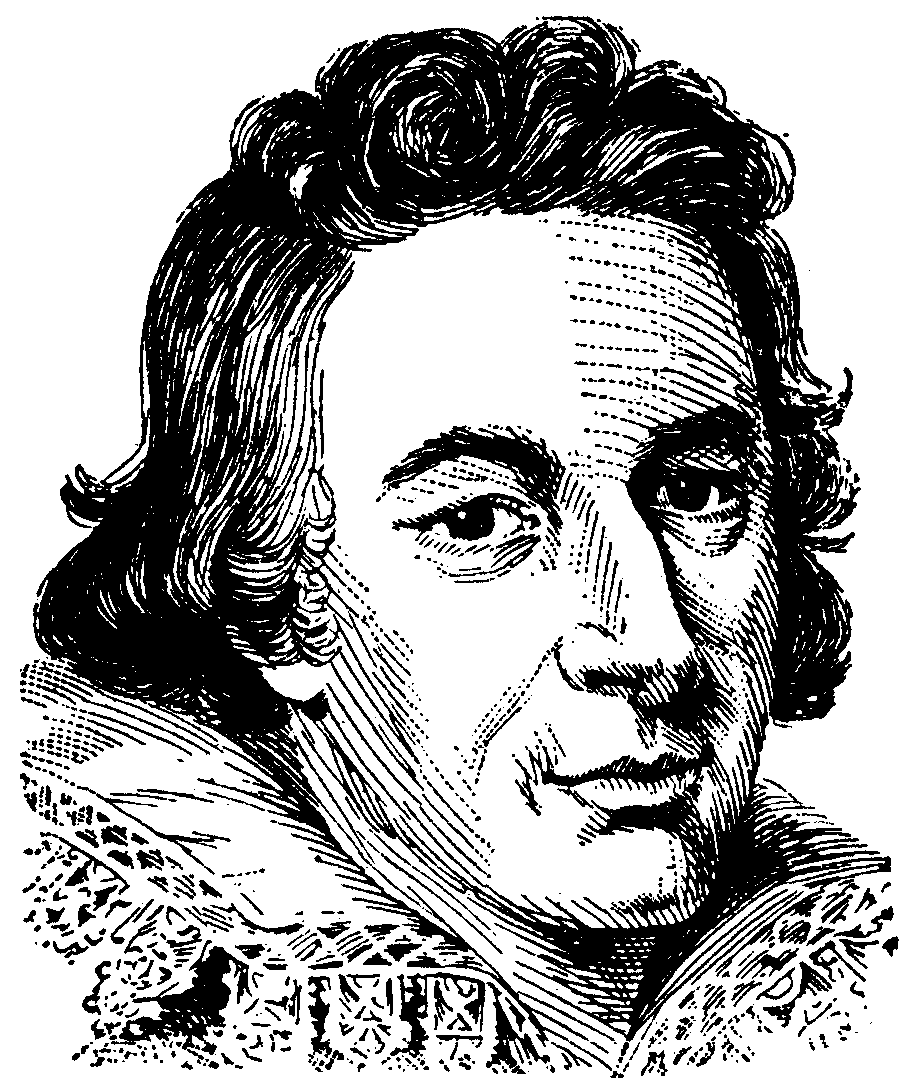
William Drummond, born in 1585, was a cadet of the historic house which in 1357 gave in marriage to King Robert III. the beautiful Annabella Drummond, who was destined to become the ancestress of the royal Stuarts of Scotland and England. In his own day the family, whose head was the Earl of Perth, was powerful in Scottish affairs, and the history of the clan Drummond would be largely a history of the events which led to the Protectorate. Throughout the storm and stress that preceded the civil war Drummond was a loyalist, though at one time he appeared to be identified with the Covenanters. His literary influence, which was considerable, was always thrown on the side of the King, while the term "Drummondism" was a popular synonym for the conservative policy. Throughout the struggle, however, Drummond seems to have been forced into activity by circumstances rather than by choice. He had the instincts of a recluse and a scholar. He delighted in the society of literary men, and he was much engrossed in philosophical speculations.
In spite of the difficulties of distance, he managed to keep abreast of the thought of literary London, the London of Drayton and Webster, of Beaumont, Fletcher, Massinger, and Ford. His chief satisfaction was to know that his own work was not unacceptable to this brilliant group, and one of the great pleasures of his life was a visit from Ben Jonson, who, making a walking tour to Scotland, found at Hawthornden that congenial hospitality in which his soul delighted. Of this famous visit, as of other important events, Drummond kept a record, in which he set down his guest's behavior, opinions, and confidential sayings. Warmly as he admired Jonson's genius, he found his personality oppressive, and intrusted his criticisms to his diary. When this was published, more than a century later, the gentle Scot was accused of bad taste, breach of confidence, and disloyalty to friendship. But his defense lies in the fact that the book was meant for no eyes but his own, and that the intimacy and candor of its revelations were intended to preserve his recollections of a memorable experience.
If his environment was not entirely favorable to literary excellences, it is yet very likely that Drummond developed the full measure of his gift. He expressed the spirit of the more imaginative generation which succeeded a hard and fettered predecessor, and it is for this that literature owes him its peculiar debt.
His career began in his twenty-ninth year with the publication of an elegy on the death of Henry, Prince of Wales, eldest son of James I. This poem, under the title 'Tears on the Death of Moeliades,' appeared in 1613, and reached a third edition within a twelvemonth. Its two hundred lines show the finished versification of the scholar, with much poetic grace. It was a product of the Spenserian school, and emphasized the fact that the representative literature of the land had abandoned the Scottish dialect for English forms. Drummond's second volume of poems commemorated the death of his wife and his love of her. It is in this work that the ultimate mood of the poet appears. Much beauty of form, a delightful sensitiveness to nature, a luxuriance of color, and a finely tempered thoughtfulness pervade the poems. His next production, celebrating the visit of James I. to his native land, was entitled 'Forth Feasting,' and represented the Forth and all its borders as rejoicing in the presence of their King. To the reader of to-day the panegyric sounds fulsome and the poetry stilted, and the once famous book has now merely an archaic interest.
Drummond's reputation is based upon the 'Poems,' and upon the Jeremy-Taylor-like 'Cypress Grove,' published in 1623 in connection with the religious verses called 'Flowers of Sion.' 'Cypress Grove' is an essay on death, akin in spirit to the religious temper of the Middle Ages, and in philosophic breadth to the diviner mood of Plato. Only a mind of a high order would have conceived so beautiful and lofty a meditation on the Final Mystery. This brief essay marks the utmost reach of Drummond's mind, and shows the strength of that serene spirituality, which could thus hold its way undisturbed by the sectarian bitterness that fixed a great gulf between England and Scotland. 'The History of the Five Jameses,' which Drummond was ten years in compiling and which was not published until six years after his death, added nothing to his reputation. It lacked alike the diligent minuteness of the chronicler and the broader view of the historian. Many minor papers on the state of religion and politics, chief of which is the political tract 'Irene,' show Drummond's aggressive interest in contemporary affairs. It is not generally known that this gentle scholar was also an inventor of military engines. In 1626 Charles I. engaged him to produce sixteen machines and "not a few inventions besides." The biographers have remained curiously ignorant of this phase of his activity, but the State papers show that the King named him "our faithful subject, William Drummond of Hawthornden." He died in 1649, his death being hastened, it was said, by his passion of grief over the martyrdom of King Charles.
SEXTAIN
The heaven doth not contain so many stars, So many leaves not prostrate lie in woods When autumn's old and Boreas sounds his wars, So many waves have not the ocean floods, As my rent mind hath torments all the night, And heart spends sighs when Phoebus brings the light. Why should I have been partner of the light, Who, crost in birth by bad aspéct of stars, Have never since had happy day or night? Why was not I a liver in the woods, Or citizen of Thetis's crystal floods, Than made a man, for love and fortune's wars? I look each day when death should end the wars, Uncivil wars, 'twixt sense and reason's light; My pains I count to mountains, meads, and floods, And of my sorrow partners make the stars; All desolate I haunt the fearful woods, When I should give myself to rest at night. With watchful eyes I ne'er behold the night, Mother of peace, but ah! to me of wars, And Cynthia, queen-like, shining through the woods, When straight those lamps come in my thought, whose light My judgment dazzled, passing brightest stars, And then mine eyes en-isle themselves with floods. Turn to their springs again first shall the floods, Clear shall the sun the sad and gloomy night, To dance about the pole cease shall the stars, The elements renew their ancient wars Shall first, and be deprived of place and light, E'er I find rest in city, fields, or woods. End these my days, indwellers of the woods, Take this my life, ye deep and raging floods; Sun, never rise to clear me with thy light, Horror and darkness, keep a lasting night; Consume me, care, with thy intestine wars, And stay your influence o'er me, bright stars! In vain the stars, indwellers of the woods, Care, horror, wars, I call, and raging floods, For all have sworn no night shall dim my sight.
MADRIGAL
This world a-hunting is, The prey poor man, the Nimrod fierce is Death; His speedy greyhounds are Lust, sickness, envy, care, Strife that ne'er falls amiss, With all those ills which haunt us while we breathe. Now if by chance we fly Of these the eager chase, Old age with stealing pace Casts up his nets, and there we panting die.
REASON AND FEELING
I know that all beneath the moon decays, And what by mortals in this world is brought, In Time's great periods shall return to naught; That fairest States have fatal nights and days. I know that all the Muse's heavenly lays, With toil of spirit, which are so dearly bought, As idle sounds, of few or none are sought,— That there is nothing lighter than vain praise. I know frail beauty like the purple flower, To which one morn oft birth and death affords; That love a jarring is of minds' accords, Where sense and will envassal Reason's power: Know what I list, all this cannot me move, But that, alas! I both must write and love.
DEGENERACY OF THE WORLD
What hapless hap had I for to be born In these unhappy times, and dying days Of this now doting World, when Good decays, Love's quite extinct, and Virtue's held a-scorn! When such are only prized, by wretched ways, Who with a golden fleece them can adorn; When avarice and lust are counted praise, And bravest minds live orphan-like forlorn! Why was not I born in that golden age When gold was not yet known? and those black arts. By which base worldlings vilely play their parts, With horrid acts staining Earth's stately stage? To have been then, O Heaven! 't had been my bliss; But bless me now, and take me soon from this.
THE BRIEFNESS OF LIFE
Look, how the flower which ling'ringly doth fade, The morning's darling late, the summer's queen, Spoiled of that juice which kept it fresh and green, As high as it did raise, bows low the head: Right so my life, contentment being dead, Or in their contraries but only seen, With swifter speed declines than erst it spread, And, blasted, scarce now shows what it hath been. As doth the pilgrim, therefore, whom the night By darkness would imprison on his way,— Think on thy home, my soul, and think aright, Of what's yet left thee of life's wasting day; Thy sun posts westward, passèd is thy morn, And twice it is not given thee to be born.
THE UNIVERSE
Of this fair volume which we World do name, If we the leaves and sheets could turn with care— Of Him who it corrects and did it frame We clear might read the art and wisdom rare, Find out his power, which wildest powers doth tame, His providence, extending everywhere, His justice, which proud rebels doth not spare, In every page and period of the same. But silly we, like foolish children, rest Well pleased with colored vellum, leaves of gold, Fair dangling ribands, leaving what is best; On the great Writer's sense ne'er taking hold; Or if by chance we stay our minds on aught, It is some picture on the margin wrought.
ON DEATH
From 'Cypress Grove'
Death is a piece of the order of this all, a part of the life of this world; for while the world is the world, some creatures must die and others take life. Eternal things are raised far above this orb of generation and corruption where the First Matter, like a still flowing and ebbing sea, with diverse waves but the same water, keepeth a restless and never tiring current; what is below in the universality of its kind doth not in itself abide.... If thou dost complain there shall be a time in the which thou shalt not be, why dost thou not too grieve that there was a time in which thou wast not, and so that thou art not as old as the enlivening planet of Time?... The excellent fabric of the universe itself shall one day suffer ruin, or change like ruin, and poor earthlings, thus to be handled, complain!