Volume 12 — JOHN DONNE
Reading edition
(1573-1631)

he memory of Dr. Donne must not, cannot die, as long as men speak English," wrote Izaak Walton, "whilst his conversation made him and others happy. His life ought to be the example of more than that age in which he died."
John Donne
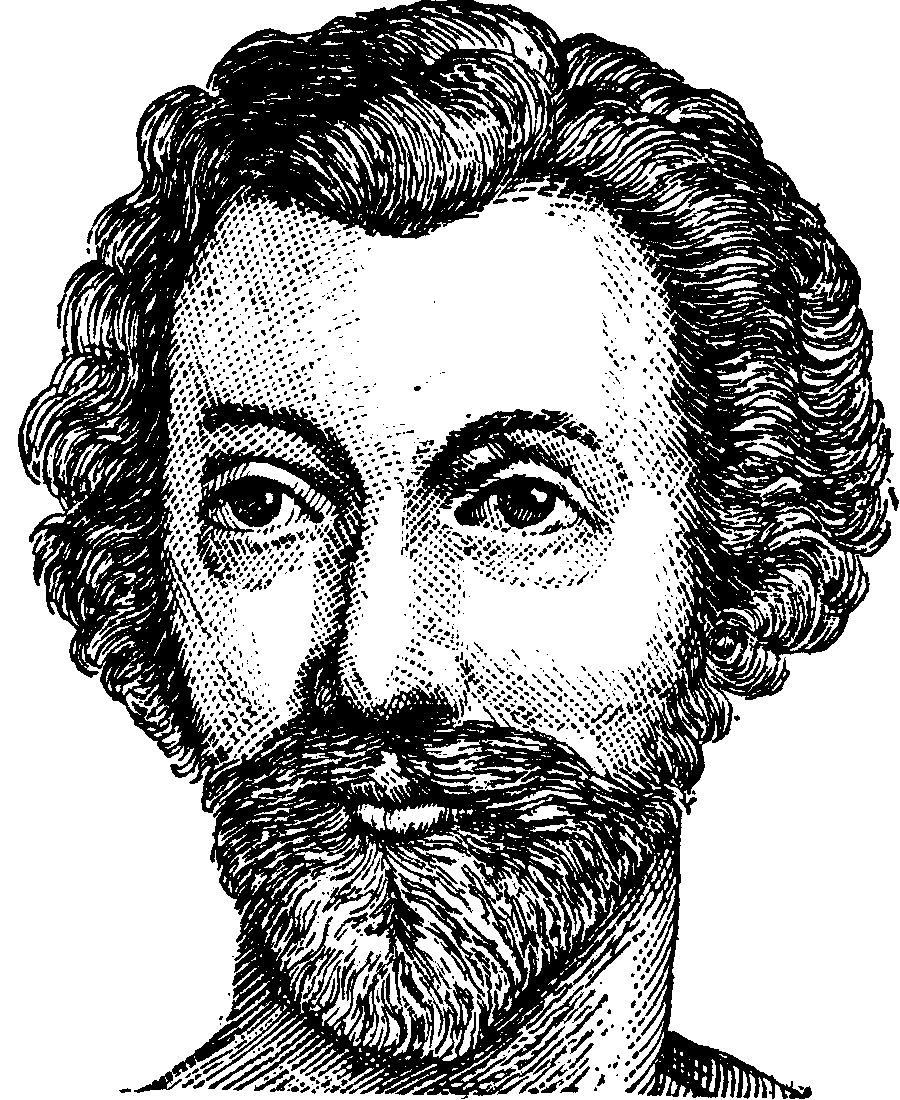
Born in 1573, all the influences of the age in which Donne lived nourished his large nature and genius. Shakespeare and Marlowe were nine years older than he; Chapman fourteen; Spenser, Lyly, and Richard Hooker each twenty; while Sir Philip Sidney counted one year less. Lodge and Puttenham were grown men, and Greene and Nash riotous boys. In the following year Ben Jonson "came forth to warm our ears," and soon after we have his future co-worker Inigo Jones. It was the time of a multitude of poets,—Drayton, the Fletchers, Beaumont, Wither, Herrick, Carew, Suckling, and others. Imagination was foremost, and was stimulated by vast discoveries. Debates upon ecclesiastical reform, led by Wyclif, Tyndal, Knox, Foxe, Sternhold, Hopkins, and others, had prepared the way; and the luminous literatures of Greece and Italy, but recently brought into England, had made men's spirits receptive and creative. It was a period of vast conceptions, when men discovered themselves and the world afresh.
Under such outward conditions Donne was born, in London, "of good and virtuous parents," says Walton, being descended on his mother's side from no less distinguished a personage than Sir Thomas More. In 1584, when he was eleven years old, with a good command both of French and Latin, he passed from the hands of tutors at home to Hare Hall, a much frequented college at Oxford. Here he formed a friendship with Henry Wotton, who, after the poet's death, collected the material from which Walton wrote his tender and sincere 'Life of Donne.'
After leaving Oxford he traveled for three years on the Continent, and on his return in 1592 became a member of Lincoln's Inn, with intent to study law; but his law never, says Walton, "served him for other use than an ornament and self-satisfaction." While a member of Lincoln's Inn he became one of the coterie of the poets of his youth. To this time are to be referred those of his 'Divine Poems' which show him a sincere Catholic. Stirred by the increasing differences between the Romanist and the Anglican denominations, Donne turned toward theological questions, and finally cast his lot with the new doctrines. His large nature, impetuously reacting from the asceticism to which he had been bred, turned to excess and overboldness in action, and an occasional coarseness of phrasing in his poems.
The first of his famous 'Satires' are dated 1593, and all were probably written before 1601. During this time also he squandered his father's legacy of £3000. In 1596, when the Earl of Essex defeated the Spanish navy and pillaged Cadiz, Donne, now one of the first poets of the time, was among his followers. "Not long after his return into England ... the Lord Ellesmere, the Keeper of the Great Seal,... taking notice of his learning, languages, and other abilities, and much affecting his person and behavior, took him to be his chief secretary, supposing and intending it to be an introduction to some weighty employment in the State;... and did always use him with much courtesy, appointing him a place at his own table." Here he met the niece of Lady Ellesmere,—the daughter of Sir George More, Lord Lieutenant of the Tower,—whom at Christmas, 1600, he married, despite the opposition of her father. Sir George, transported with wrath, obtained Donne's imprisonment; but the poet finally regained his liberty and his wife, Sir George in the end forgiving the young couple. "Mr. Donne's estate was the greatest part spent in many chargeable travels, books, and dear-bought experience, he [being] out of all employment that might yield a support for himself and wife." The depth and intensity of Donne's feeling for this beautiful and accomplished woman are manifested, says Mr. Norton, in all the poems known to be addressed to her, such as 'The Anniversary' and 'The Token.'
Of 'The Valediction Forbidding Mourning' Walton declares:—"I beg leave to tell that I have heard some critics, learned both in languages and poetry, say that none of the Greek or Latin poets did ever equal them;" while from Lowell's unpublished 'Lecture on Poetic Diction' Professor Norton quotes the opinion that "This poem is a truly sacred one, and fuller of the soul of poetry than a whole Alexandrian Library of common love verses."
During this period of writing for court favors, Donne wrote many of his sonnets and studied the civil and canon law. After the death of his patron Sir Francis in 1606, Donne divided his time between Mitcham, whither he had removed his family, and London, where he frequented distinguished and fashionable drawing-rooms. At this time he wrote his admirable epistles in verse, 'The Litany,' and funeral elegies on Lady Markham and Mistress Bulstrode; but those poems are merely "occasional," as he was not a poet by profession. At the request of King James he wrote the 'Pseudo-Martyr,' published in 1610. In 1611 appeared his funeral elegy 'An Anatomy of the World,' and one year later another of like texture, 'On the Progress of the Soul,' both poems being exalted and elaborate in thought and fancy.
The King, desiring Donne to enter into the ministry, denied all requests for secular preferment, and the unwilling poet deferred his decision for almost three years. All that time he studied textual divinity, Greek, and Hebrew. He was ordained about the beginning of 1615. The King made him his chaplain in ordinary, and promised other preferments. "Now," says Walton, "the English Church had gained a second St. Austin, for I think none was so like him before his conversion, none so like St. Ambrose after it; and if his youth had the infirmities of the one, his age had the excellences of the other, the learning and holiness of both."
In 1621 the King made him Dean of St. Paul's, and vicar of St. Dunstan in the West. By these and other ecclesiastical emoluments "he was enabled to become charitable to the poor and kind to his friends, and to make such provision for his children that they were not left scandalous, as relating to their or his profession or quality."
His first printed sermons appeared in 1622. The epigrammatic terseness and unexpected turns of imagination which characterize the poems, are found also in his discourses. Three years later, during a dangerous illness, he composed his 'Devotion.' He died on the 31st of March, 1631.
"Donne is full of salient verses," says Lowell in his 'Shakespeare Once More,' "that would take the rudest March winds of criticism with their beauty; of thoughts that first tease us like charades, and then delight us with the felicity of their solution." There are few in which an occasional loftiness is sustained throughout, but this occasional excellence is original, condensed, witty, showing a firm and strong mind, clear to a degree almost un-English. His poetry has somewhat of the stability of the Greeks, though it may lack their sweetness and art. His grossness was the heritage of his time. He is classed among the "metaphysical poets," of whom Dr. Johnson wrote:—"They were of very little care to clothe their notions with elegance of dress, and therefore miss the notice and the praise which are often gained by those who think less, but are more diligent to adorn their thoughts." It was in obedience to such a dictum, and to Dryden's suggestion, doubtless, that Pope and Parnell recast and re-versified the 'Satires.'
The first edition of Donne's poems appeared two years after his death. Several editions succeeded during the seventeenth century. In the more artificial eighteenth century his harsh and abrupt versification and remote theorems made him difficult to understand. The best editions are 'The Complete Poems of John Donne,' edited by Dr. Alexander Grosart (1872); and 'The Poems of John Donne,' from the text of the edition of 1633, edited by Charles Eliot Norton (1895), from whose work the citations in this volume are taken.
THE UNDERTAKING
I have done one braver thing Than all the Worthies did, And yet a braver thence doth spring, Which is, to keep that hid. It were but madness now t' impart The skill of specular stone, When he which can have learned the art To cut it, can find none. So, if I now should utter this, Others (because no more Such stuff to work upon there is) Would love but as before: But he who loveliness within Hath found, all outward loathes; For he who color loves, and skin, Loves but their oldest clothes. If, as I have, you also do Virtue attired in women see, And dare love that and say so too, And forget the He and She; And if this love, though placed so, From profane men you hide, Which will no faith on this bestow, Or, if they do, deride; Then you have done a braver thing Than all the Worthies did, And a braver thence will spring, Which is, to keep that hid.
A VALEDICTION FORBIDDING MOURNING
As virtuous men pass mildly away, And whisper to their souls to go, Whilst some of their sad friends do say, "The breath goes now," and some say "No"; So let us melt and make no noise, No tear-floods nor sigh-tempests move; 'Twere profanation of our joys To tell the laity our love. Moving of th' earth brings harms and fears; Men reckon what it did and meant; But trepidation of the spheres, Though greater far, is innocent. Dull sublunary lovers' love (Whose soul is sense) cannot admit Absence, because it doth remove Those things which elemented it. But we by a love so much refined That ourselves know not what it is, Inter-assurèd of the mind, Care less eyes, lips, hands to miss. Our two souls, therefore, which are one, Though I must go, endure not yet A breach, but an expansiòn, Like gold to airy thinness beat. If they be two, they are two so As stiff twin compasses are two; Thy soul, the fixt foot, makes no show To move, but doth if the other do, And though it in the centre sit, Yet when the other far doth roam, It leans and hearkens after it, And grows erect as that comes home. Such wilt thou be to me, who must, Like th' other foot, obliquely run; Thy firmness makes my circle just, And makes me end where I begun.
SONG
Go and catch a falling star, Get with child a mandrake root, Tell me where all past years are, Or who cleft the devil's foot, Teach me to hear mermaids singing, Or to keep off envy's stinging, And find What wind Serves to advance an honest mind. If thou be'st born to strange sights, Things invisible to see, Ride ten thousand days and nights, Till age snow white hairs on thee, Then, when thou return'st, wilt tell me All strange wonders that befell thee, And swear, Nowhere Lives a woman true and fair. If thou find'st one, let me know; Such a pilgrimage were sweet; Yet do not: I would not go, Though at next door we might meet; Though she were true when you met her, And last till you write your letter, Yet she Will be False, ere I come, to two or three.
LOVE'S GROWTH
I scarce believe my love to be so pure As I had thought it was, Because it doth endure Vicissitude and season as the grass; Methinks I lied all winter, when I swore My love was infinite, if spring make it more. But if this medicine love, which cures all sorrow With more, not only be no quintessence But mixed of all stuffs paining soul or sense, And of the sun his working vigor borrow, Love's not so pure and abstract as they use To say, which have no mistress but their muse, But as all else, being elemented too, Love sometimes would contemplate, sometimes do. And yet no greater, but more eminent, Love by the spring is grown; As in the firmament Stars by the sun are not enlarged, but shown, Gentle love-deeds, as blossoms on a bough, From love's awakened root do bud out now. If, as in water stirred, more circles be Produced by one, love such additions take, Thou, like so many spheres, but one heaven make, For they are all concentric unto thee; And though each spring do add to love new heat, As princes do in times of action get New taxes and remit them not in peace, No winter shall abate the spring's increase.
SONG
Sweetest Love, I do not go For weariness of thee, Nor in hope the world can show A fitter Love for me: But since that I Must die at last, 'tis best To use myself in jest Thus by feigned deaths to die. Yesternight the sun went hence, And yet is here to-day; He hath no desire nor sense, Nor half so short a way. Then fear not me, But believe that I shall make Speedier journeys, since I take More wings and spurs than he. Oh, how feeble is man's power, That, if good fortune fall, Cannot add another hour, Nor a lost hour recall! But come bad chance, And we join to it our strength, And we teach it art and length, Itself o'er us to advance. When thou sigh'st, thou sigh'st not wind, But sigh'st my soul away; When thou weep'st, unkindly kind, My life's blood doth decay. It cannot be That thou lov'st me as thou say'st, If in thine my life thou waste; Thou art the best of me. Let not thy divining heart Forethink me any ill; Destiny may take thy part, And may thy fears fulfill: But think that we Are but turned aside to sleep: They who one another keep Alive, ne'er parted be.