GERMAN DIRIGIBLES.
Reading edition
(Approximately 1000 m³=35,000 c. feet.)
Military.
Date. Name. Make. Type.Capacity in m³. Total H.P. Speed. m.p.h. (km.) Remarks.
1908 Z I Zeppelin 3b r. 12100 190 29 (46) as rebuilt
1910 Z II Zeppelin 9b r. 18000 345 35 (56) as rebuilt
L. S ISchütte Lanz 1 r. 20000 540 40 (62)
1912 Z III Zeppelin 12 r. 17800 450 49 (79)was Schwaben L. Z 10
L I Zeppelin 14 r. 22000 450 48 (77-1/2) Naval: 1 gun
1913 Z IV (Z I Ersatz) Zeppelin 15 r. 21000 450 48 (77-1/2) 4 guns
Building. L II Zeppelin 16 r. 21000 450 48 (77-1/2) Naval: bldg. 4 guns
S. L IISchütte Lanz 2 r. 26000 450 48 (77-1/2) Building
1908 P I Parseval 2 n.r. 3800 85 33-1/2 (54)
1911 P III Parseval 11 n.r. 11000 400 42-1/2 (67)
1912 M I Gross-Bas 2 s.r. 6000 150 28 (45) old 1908 rebuilt
M II Gross-Bas 3 s.r. 6000 150 28 (45) old 1909 rebuilt
M III Gross-Bas 4 s.r. 9000 300 42-1/2 (67) old 1910 rebuilt
1913 M IV Gross-Bas 5 s.r. 12000 400 44-1/2 (70) old 1911 rebuilt
P II ersatz Parseval 8 n.r. 8250 300 41 (66) Building
P IV Parseval 16 n.r. 10000 360 45 (72) Building
Private.[D]
Date. Name. Make. Type.Capacity in m³. Total H.P. Speed. m.p.h. (km.) Remarks.
1910 DEUTCHLAND 2 Zeppelin 6a r. 15000 345 36 (58) Deutschland Ersatz Delag
1912 V. LUISE Zeppelin 11 r. 17000 450 40 (62) Delag
HANSA Zeppelin 13 r. 17000 450 40 (62) Delag
1913 Bldg. SACHSEN Zeppelin 17 r. 21000 48 (77-1/2) Building. Delag
1908 P. L 1 Parseval 1 n.r. 3200 185 20 (32)
1910 STOLLWERCK Parseval 6 n.r. 9000 220 31 (50)
1911 P. L 9 Parseval 9 n.r. 2200 50 25 (40) Sporting[E]
R 2 Ruthenberg 2 n.r. 1700 Experimental
1912 SUCHARDSuchard reb'lt n.r. 6730 200 17 (28) to be rebuilt 1913
P. L XII Parseval 12 n.r. 8800 220 33-1/2 (54)
1913 P. L 10 Parseval 10 n.r. 2200 50 25 (40) Building: delayed
R 3 Ruthenberg 3 n.r. 2700 Building
Dirigible Sheds.
(See Note.)
Bickendorf bei Köln. Biesdorf bei Berlin. *Bitterfeld (Parseval Co.) Breslau. Cuxhaven. Düsseldorf (Delag) Frankfurt a/m. Friedrichshafen (Zeppelin Co.)
Gotha. Hamburg (Delag). *Johannisthal (L.V.G.) Kiel (private). Königsberg i/Pr. Leichlingen. Manzell (Zeppelin Co.) Metz. *München (private).
Oos bei Baden-Baden (Delag). Potsdam (Delag) Reinickendorf bei Berlin. Rheinau. Strassburg. Stuttgart. Thorn.
Note.—Unless otherwise stated the above are military sheds. All private ones capable of holding Zeppelins are subsidised. *=not large enough for Zeppelins.
Dirigible Pilots.
For M. dirigibles.
Geerdtz, Oblt. George, Hptm. v. Jena, Hptm. Kirchner, Oberltn.
Lohmuller, Hptm. Masius, Oberltn. v. Muller, Hptm. Nichisch v. Rosenegk, Oberltn.
Schlutter, Obltn. Sperling, Major. von Zech, Obltn.
Dirigible Pilots.
Z=Zeppelin. S=Schutte-Lanz. P=Parseval pilot.
(The number after each name is the Imperial Ae. C. certificate number.)
Z Abercron, H. v. Major (1) Z Bassus, K. v. (28) Z Bentheim, Kapt. Lt. a. D. v. (34) Z Blew (25) Clouth, R. (8) P Dinglinger, F. (2) Z Dorr, W. E. (21) Z Durr (9) Z Eckener, Dr. (10) P Forsbeck, Ob. Lt. A. D. (11) Z Glund, F. (23) Z Hacker, (12)
P Hackstetter, Reg. B. a. D. (13) Z Hanne, G. (32) Z Heinen, A. (22) Z Holzmann, Ob. Lt. A. (26) S Honold, R. (29) P Hormel, Kap. Lt. (14) P Jordens, W. (19) P Kehler, R. v. (6) P Kiefer, T. (5) Kleist, Hptm. a. D. v. (15) P, Z Krogh, Hptm. a. D. v. (16) Z Lange, K. (30)
Z Lau (17) Z Lempertz, E. (33) Z Mechlenburg, W. C. (35) Z Meyer, Ob. Lt. E. (27) P Parseval, A. v. (4) Z Stahl, K. (31) P Stelling, A. (3) Z Sticker, J. (24) P Thewaldt, C. H. (20) Z Zeppelin, Graf. v. (7) Z Zeppelin, Graf. F. v. junr. (18)
GERMAN MILITARY CLASS—GROSS-BASENACH. (Semi-rigid)
Up to date, these vessels have been designed by Major Gross and Oberingenieur Basenach.
The utmost secrecy is observed as to their details.
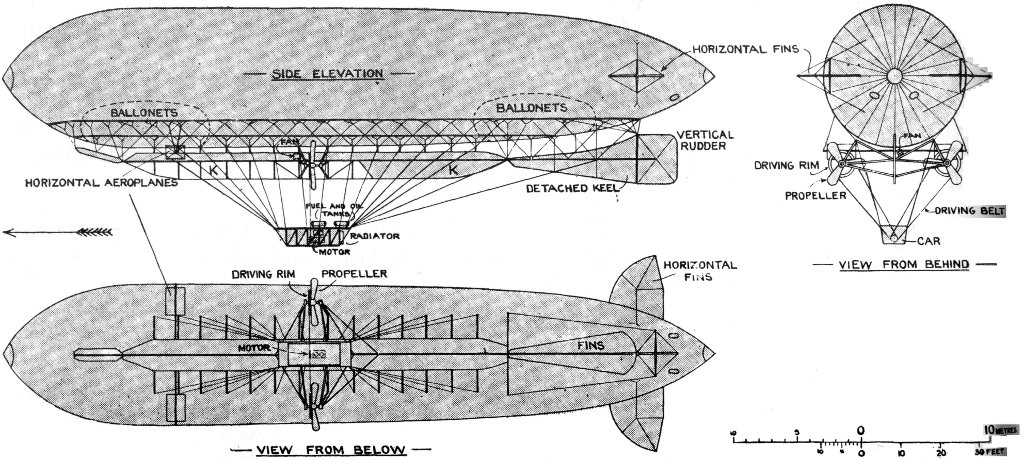
The system of employing 2 ballonets has been borrowed from the Parseval type, and presumably the Parseval system of working the automatic valves has also been adopted.
In all other features, these ships appear to resemble the French Lebaudy type, the shape of the hulls being rather better.
List of ships built, re-built and re-building of this type:—
1= Aeronautical Society.(1,800 m³) non-effective.
2(reconstructed) = M 1, Military.(6,000 m³)
3"= M 2, Military.(6,000 m³)
4"= M 3, Military.(9,000 m³)
5"= M 4, Military.(12,000 m³)
M I (re-built 1912), & M II (re-built 1912). Military.
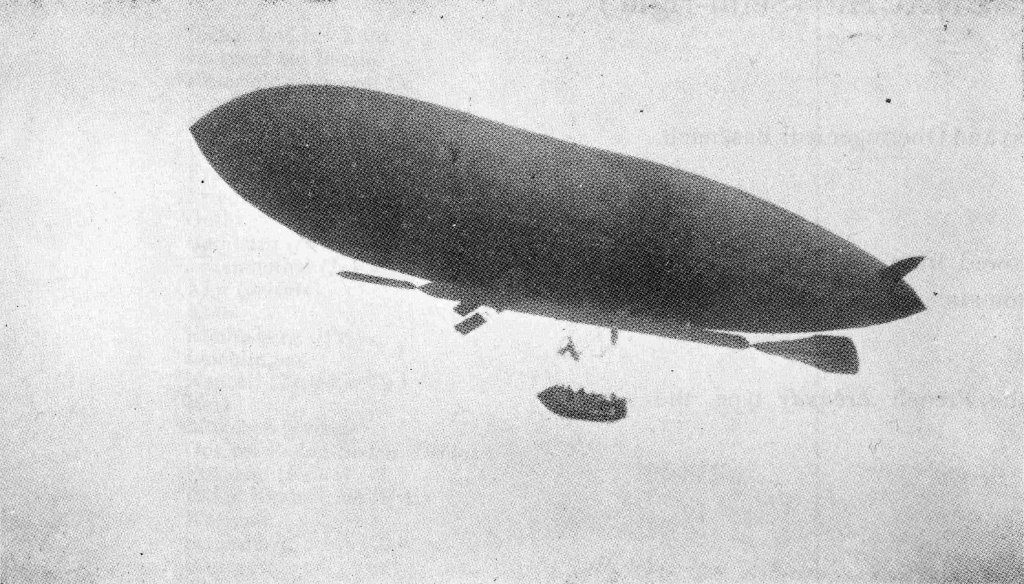
Length, 242¾ feet (74 m.) maximum diameter, 36 feet (11 m.) capacity, 212,000 c. feet (6,000 m³) total lift, 13,338 lbs. (6,050 kg.) about 6 tons
Useful lift.—2,756 lbs. (1,250 kgs.)=about 1¼ tons.
Gas bag.—Continental rubber cloth, diagonal thread. Tapering shape.
Ballonet.—One-fifth of total volume.
Motors.—2-75 h.p. Daimler. 2 propellers, with 3 aluminium blades.
Speed.—About 28 m.p.h. (45 km.).
Remarks.—M I was originally built in 1908, re-built and enlarged 1910 and again in 1912. M II built 1909, re-constructed 1912.
M III (re-built 1912). Military.
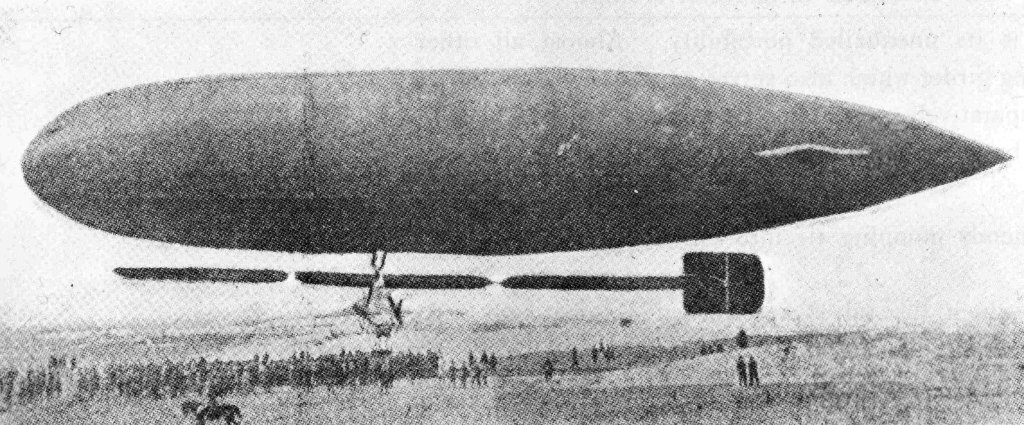
Length, 295¼ feet (90 m.) diameter, 39-1/3 feet (12 m.) volume, 317,800 c. feet (9,000 m³.)
Motors.—4 Körting of 75 h.p. each = 300 h.p. total.
Speed.—19 metres per second = 42 m.p.h. (68½ k.p.h.)
Propellers.—2, on outriggers from car, chain-driven.
Remarks.—Built 1910. Burned 13th September, 1911. Rebuilt 1912.
M IV (re-built 1913). Military.
Maximum length, 334¾ feet (102 m.) maximum diameter, 44½ feet (13.5 m.) volume, 423,800 c. feet (12,000 m³.)
Total lift.— lbs. ( kgs.) Useful lift, lbs. ( kgs.)
Gas bags.—Continental.
Motors.—2 Körting, 100 h.p. each = total 200 h.p.
Speed.—44½ m.p.h. (70½ k.p.h.)
Propellers.—4 (two for each motor.) Carried on outriggers projecting from the car.
Remarks.—Departs from previous practice in having two separate cars, each of which contains one motor. Originally built in 1911 of 7,500 m³. Re-built 1912-1913 to details as above.
PARSEVAL CLASS (Non-rigid).
Luftfahrzeug-Gesellschaft m.b.H, Berlin, W. 62.
When the "Motorluftschiff Studien Gesellschaft" was formed at the instigation of the German Emperor, a committee was formed to acquire an experimental airship of the most promising type. Major Von Parseval's first airship was selected, and since that time the above company has confined itself to improving this type, and to making exhaustive and costly researches, all of which have been embodied in successive ships.
The characteristic feature of every one of these craft is its unequalled portability. Almost all other so-called Non-rigid vessels distribute the load by means of a long girder which also serves as a car. This girder is awkward to pack up and transport. Parseval uses a comparatively small car, and distributes the weight by hanging it further below the balloon than usual, and also by using 2 ballonets which are placed one near each end of the gas bag.
These 2 ballonets enable the ship to be trimmed by merely pumping air into either at the expense of the other.
Another essential feature of the type is the system by which the valves are worked automatically. At the present time there is no other system of valve working so reliable as this.
A third essential feature of the class is the use of a swinging car, in such a manner that pitching, due to alterations of propeller thrust, is automatically checked by an alteration of the position of the centre of gravity.
A fourth feature is the use of limp propeller blades. A propeller of this type is very easily packed up.
The shape of these vessels is in accordance with the experiments of Professor Prandtl.
Ships of this class built or building (figures supplied by the Parseval Co.):—
EXPERIMENTAL PARSEVAL2,300 m³.
P. L. 1Kals. Ae. C3,200 m³.
MILITARY P I4,000 m³.
MILITARY P II6,600 m³.
P. L. 4Austrian Military2,300 m³.
P. L. 5Luftverkehrs Gesellschaft1,450 m³.
P. L. 6"9,000 m³.
P. L. 7Russian Army7,600 m³.
P. L. 8MILITARY P II Ersatz8,250 m³.
P. L. 9Luftverkehrs Gesellschaft2,200 m³.
P. L. 10Motorluftschiff Studien Gesellschaft2,200 m³.
MILITARY P III11,000 m³.
P. L. 12Luftverkehrs Gesellschaft8,800 m³.
P. L. 13Japanese Army8,500 m³.
P. L. 14Russian Army9,500 m³.
P. L. 15Italian Army10,000 m³.
P. L. 16MILITARY P IV, Prussian Army10,000 m³.
P. L. 17Italian Army10,000 m³.
P. L. 18British Navy8,800 m³.
(Of the above, the Experimental is no longer in existence, P. 2 is out of service, and P. L. 3 has been burned and destroyed).
PARSEVAL (P.L. 1). (1908.) (Belongs to the Kaiserl. Aero Club.) (Parseval class.)
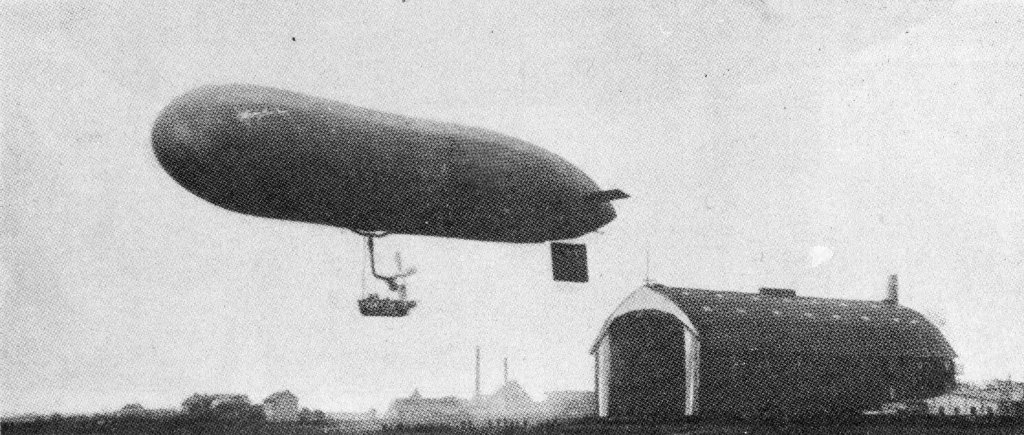
Length, 197 feet (60 m.) max. diam. 31 feet (9.4 m) capacity, 113,000 c. feet (3,200m³) lifting power, 7,800 lbs. (3,583 kgs.)
Gas bag.—Cylindrical, with semi-conical front. Of rubber-proofed material in longitudinal strips. Pressure in ballonets and gas bag, 30 mm. of water.
Motor.—One 85 h.p. Daimler.
Fuel.—700 lbs. (325 kg.) 88 gallons (400 litres)
Speed.—20 m.p.h. (32 k.p.h.)
Propeller.—One 4-bladed. Semi-rigid Parseval.
This vessel was somewhat altered on being bought by the Society. Her essential principle is that she can be taken to pieces in a few minutes, and carried in a truck. Her main feature is that she has a ballonet at each end. This is described in the case of type A (P.L. 2). This class rise with the forward ballonet empty, and inclined up by the bow. The propeller is similar to that of P.L. 2. The car also is mounted on wire runners. She was originally 4,000 m³. capacity. Built 1908. Station: Bitterfeld. The car is at present in Deutsches Museum, Munich.
PARSEVAL P.L. 2 = P. I. Military. (1908.)
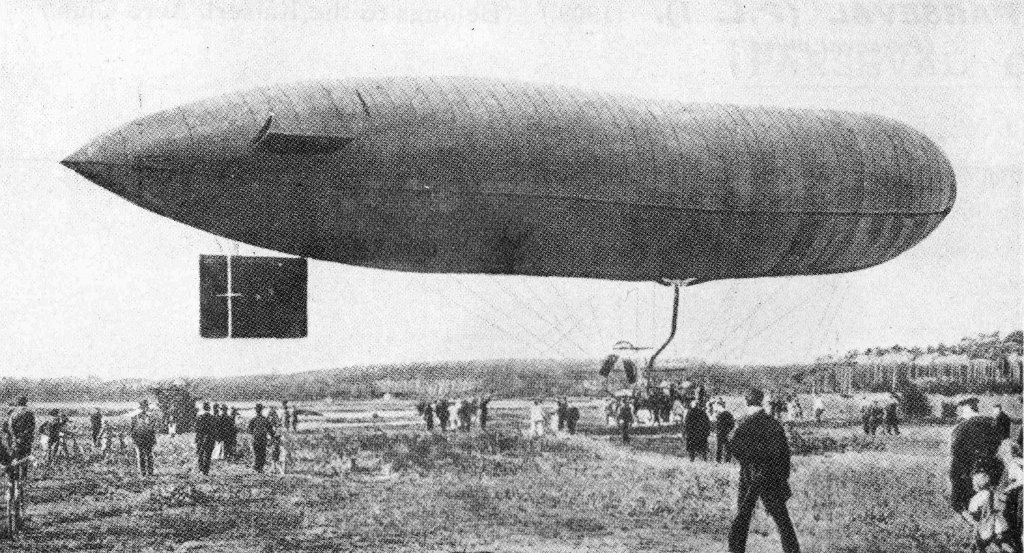
Built by the "Society for the Study of Motor Air Ships," and taken over by the German War Office.
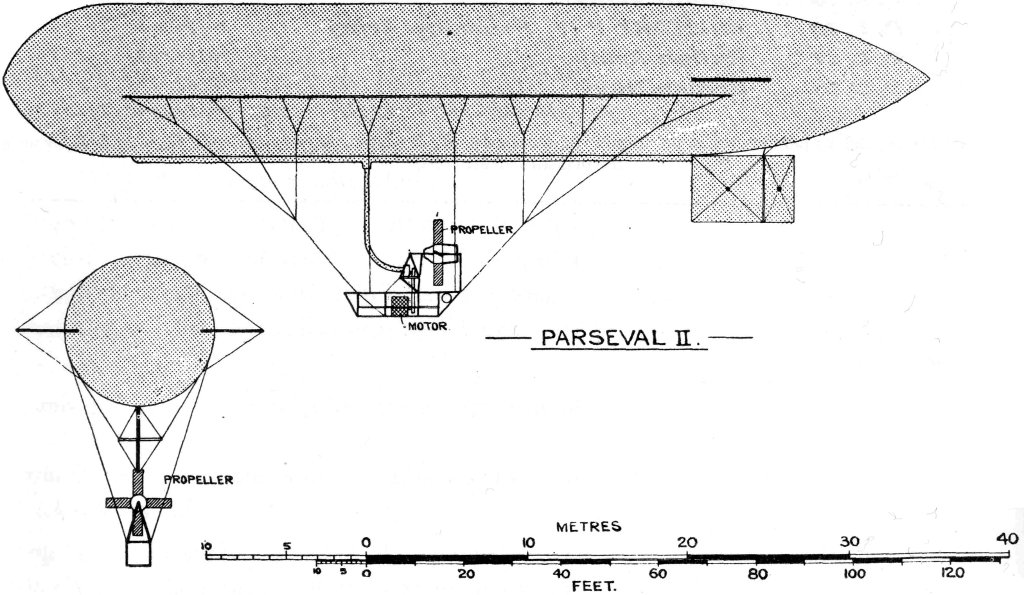
Length, 197 feet (60 m.) maximum diameter, 34 feet (10.40 m.) capacity, 111,270 cubic feet (4,000 cubic m.) lifting power, 9,200 lbs. (4,180 kgs.)
Gas bag.—Front end semi-ellipsoidal with semi-axes 15.4 feet (4.7 m.) and 11.8 feet (3.6 m.), from which it increases to its maximum diameter. This is maintained for about two-thirds of its length, when it begins to taper to a point at the stern. Made of 2 layers of transverse strips of rubber proofed material, crossing each other diagonally. Fitted with a tearing strip.
Ballonets.—One at each end, together amounting to about one-quarter of the total capacity. Owing to this disposition, the trim can be altered, and steering effected in the vertical plane by filling either more than the other. Pressure in the ballonets and gas bag, 20 mm. of water pressure.
Motor.—4-cylinder 85 h.p. Daimler placed at one side of the car to give more room. 1,000 to 1,200 r.p.m.
Propellers.—12-1/3 feet (3.75 m.) diameter, 250 to 300 r.p.m. 4-bladed, the blades being of peculiar construction. When stopped, the fabric of which they are made hangs down limply; when running, these flaps fly out under centrifugal force.
Speed.—27 miles per hour. 43 kilometers per hour.
Car.—Length, 22-1/3 feet (6.8 m.) Width 4.1 feet (1.22 m.) Made of nickel steel, U bars, screwed together so as to take the pieces rapidly. The sides are lattice girders. The whole is boat shaped and covered with canvas. Contains motor, chart table; trail rope 480 feet (146 m.) long, weighing 220 lbs. (100 kg.) Wheel for horizontal steering at the bow. 110 gal. (500 litre) cask of petrol on the girders at the after point. 41 feet (12½ m.) below the gas bag. It is capable of swinging horizontally on wires running over rollers. Whereas without this device a forward swing of the car would lift the nose to a possibly dangerous extent, the free motion of the car shifts the centre of the gravity forward and so preserves stability.
Steering.—In vertical plane, by altering the trim. In horizontal plane, by a rudder of 80.7 sq. feet (7½ m²) immediately behind the vertical plane. Two fixed horizontal planes are placed at the rear end of the gas bag above the central line.
PARSEVAL II.
Table of weights:—
Gas bag1,653lbs.
Cordage220.5 "
Trail rope220"
Car and motor529"
Fuel770"
Oil160"
Oil and fuel tanks, instruments, miscellaneous1,637"
Crew, passengers, ballast1,654"
Total6,834lbs.
Note.—This remarkably successful ship has performed a continuous flight of 11½ hours. She also remained at a height of 4,800 feet (1,500 m.) for 1 hour. She can be transported in 1 railway truck or 2 pair horse wagons, and be assembled and filled ready for ascent within 3 hours of arrival by train.
Built 1908. Station: Metz.
PARSEVAL P.L. 6. "Stollwerck." (1910.)
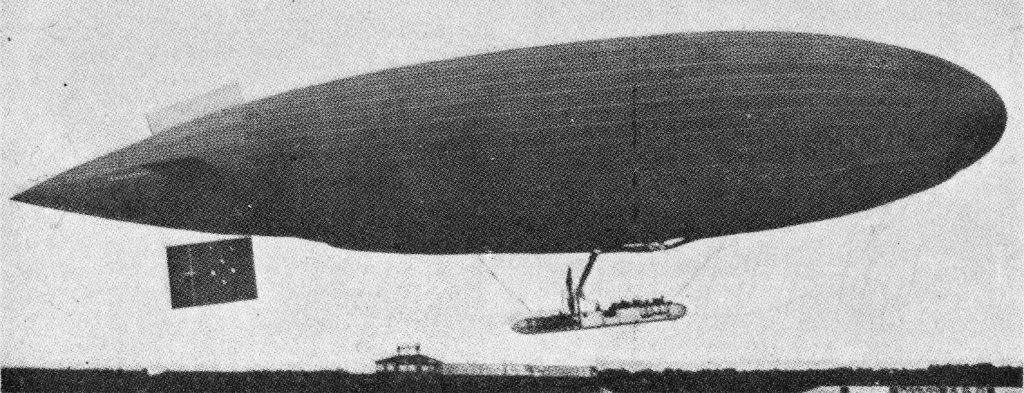
Length, 229¾ feet (70 m.) Diameter, 49¼ feet (15 m.) Volume, 318,000 c. feet (9,000 m³)
Gas bags.—Riedinger.
Motors.—2 N.A.G. of 110 h.p. each = 220 h.p.
Speed.—31 m.p.h. (50 k.p.h.)
Propellers.—Two 4-bladed. Semi-rigid material.
Remarks.—Station, Johannisthal.
PARSEVAL P.L. 8. = P II. Ersatz. Military. (1913.)
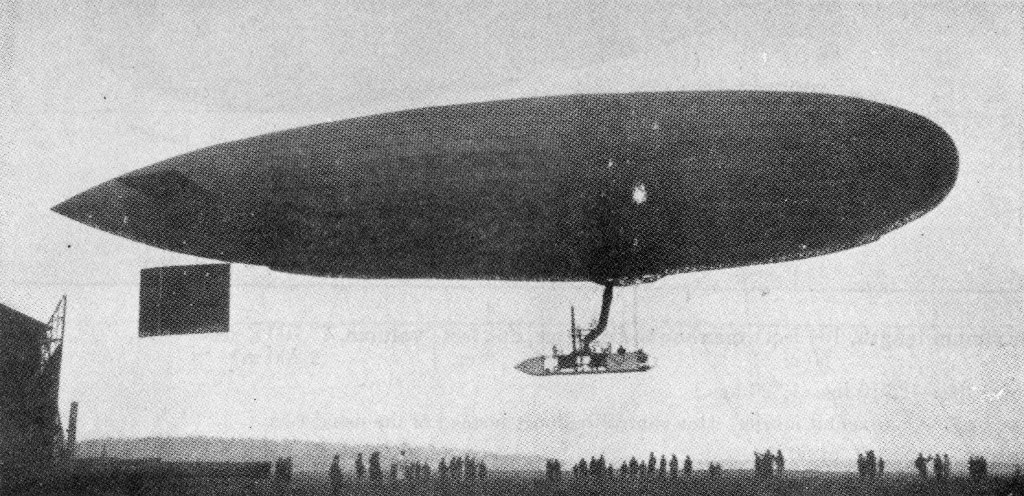
Maximum length, 252¾ feet (77 m.) maximum diameter, 50¾ feet (15.50 m.) volume, 290,000 c. feet (8,250 m³.)
Total lift.—5½ tons=12,125 lbs. (5,500 kgs.)
Gas bags.—2 ballonets, usual arrangement.
Motors.—300 h.p. made up of two 150 h.p. Daimler motors, placed one behind the other.
Speed.—41 m.p.h. (66 km.)
Propellers.—2 Parseval, 4-bladed, semi-rigid steel.
Steering.—As in others.
Remarks.—Station, Cologne, (Cöln).
PARSEVAL P.L. 9 (1910), & 10. (Building 1913.)
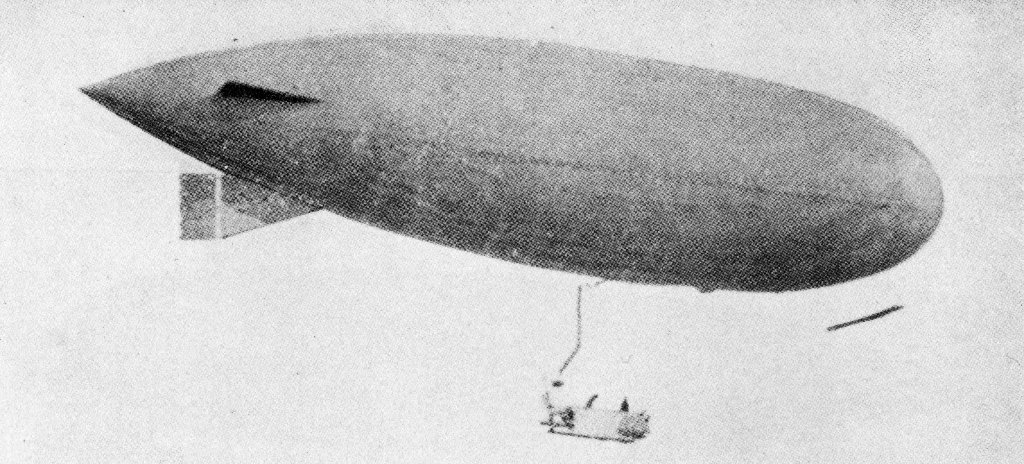
Maximum length, 164 feet (50 m.) maximum diameter, 26¼ feet (8 m.) volume, 77,700 c. feet (2,200 m³.)
Total lift.—2,910 lbs. (1,320 kgs.)
Gas bag.—Continental fabric. One central ballonet instead of the usual two.
Motors.—1 N.A.G. of 50 h.p.
Speed.—25 m.p.h. (40 k.p.h.)
Propellers.—One 2-bladed, wooden. Diameter, 9¾ feet (3 m.)
Steering.—Differs from other standard types, in that only one ballonet being fitted, an elevator is introduced under the bow.
Remarks.—Small ships for sporting purposes. A remarkably successful type of small dirigible. A small P.L. 5, burned 1912. P.L. 10 delayed owing to press of other work.
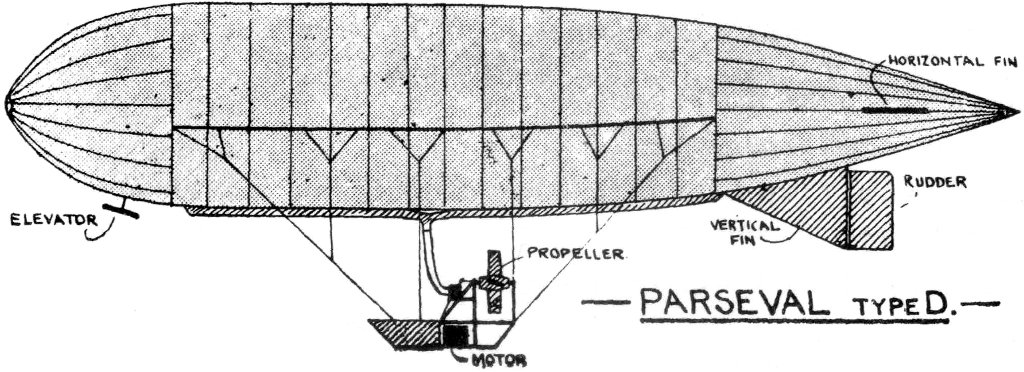
PARSEVAL TYPE D.
PARSEVAL P.L. 11. = P. III. Military. (1911.)
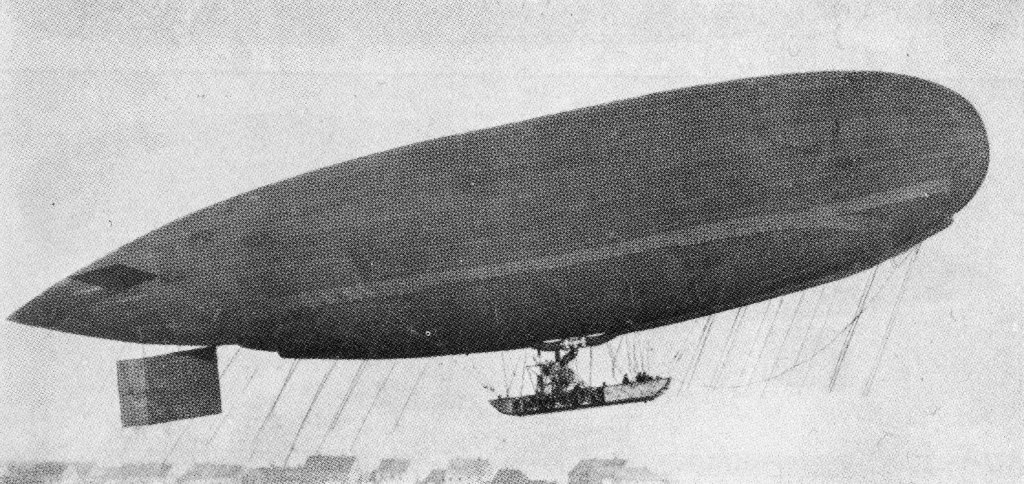
Maximum length, 272-1/3 feet (83 m.) maximum diameter, 53 feet (16.20 m.) volume, 388,450 c. feet (11,000 m³.)
Total lift.—
Gas bags.—
Motors.—2 Körting, each of 200 h.p.=400 total.
Speed.—42 m.p.h. (67 k.p.h.) (18.3 metres p. sec.)
Propellers.—Two 4-bladed Parseval.
Remarks.—Built 1911. Station, Koenigsberg.
PARSEVAL P.L. 12. "Charlotte." (1912.)
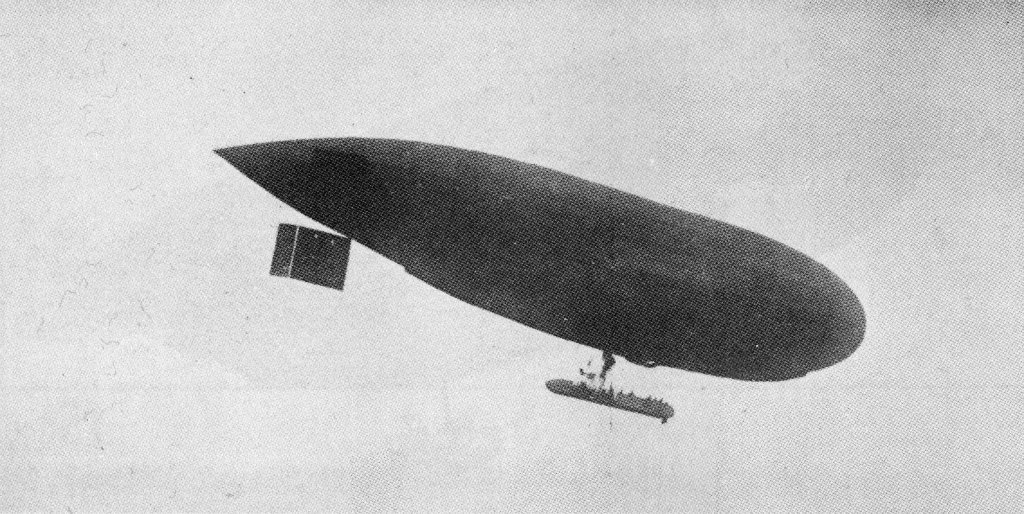
Maximum length, 259 feet (79 m.) maximum diameter, 49¾ feet (15.20 m.) volume, 300,750 c. feet (8,800 m³.)
Total lift.—
Gas bags.—
Motors.—2 N.A.G. of 110 h.p. each=220 total.
Speed.—33½ m.p.h.=54 k.p.h. (15 m. per sec.)
Propellers.—2 Parseval.
Steering.—Usual.
Remarks.—Built 1911. Station: Wanne.
PARSEVAL P.L. 16 = P. IV. Military. (1913.)
Completing.
Maximum length, 308½ feet (94 m.) maximum diameter, 51½ feet (15.50 m.) volume, 353,000 c. feet (10,000 m³.)
Gas bags.—Metzler.
Motors.—2 Maybach, of 180 each=360 h.p.
Speed.—45 m.p.h.=72 k.p.h. (20 m. per sec.)
Propellers.—Two 4-bladed, wooden (on trial).
Remarks.—For the Prussian Army. Station: Berlin.
RUTHENBERG II. (1911).
H. Ruthenberg, Lehderstrasse 16/19, Weissensee bei Berlin: also Luftfahrzeug-Ges, Ruthenberg, Krefeld.
Small ships on Parseval lines. Still existing, but stored away.
Maximum length, 151 feet (46 m.) diameter, 24¼ feet 7.40 (m.) volume, 60,000 c. feet (1,700 m³.)
Gas bags.—
Motor.—
Speed.—
Propellers.—2 Ruthenberg.
Remarks.—
RUTHENBERG III. (1913).
Building.
Length, feet (m.) diameter, feet (m.) volume, 95,000 c. feet (2,700 m³)
Gas bags.—
Motor.—
Speed.—
Propeller.—Ruthenberg.
Remarks.—
SUCHARD. Non-rigid (Trans-Atlantic). (Re-constructed 1912).
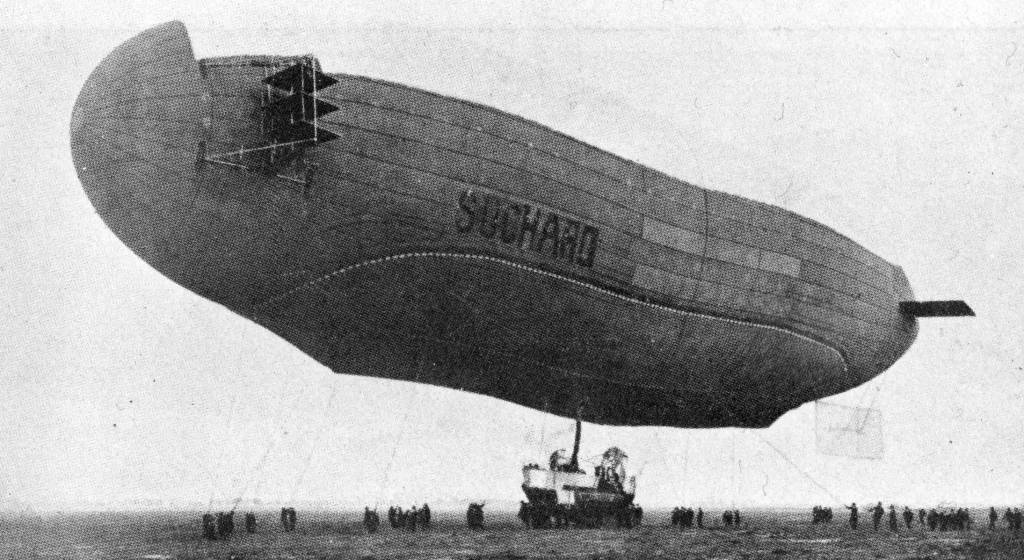
Maximum length, 198½ feet (60/5 m.) maximum diameter, 56¼ feet (17.11 m.) volume, 237,681 cubic feet (6,730 m³.)
Total weight.—About 2 tons (2,130 kgs.)
Gas bags.—Metzeler fabric. One ballonet.
Motors.—2 of 100 h.p. (one a N.A.G., the other an Escher). Placed one behind the other. A 4 h.p. motor carried for auxiliary purposes. Petrol carried, (1700 kil.) Oil, (300 kil.)
Speed.—17 m.p.h. (28 k.p.h).
Propellers.—Two 2-bladed Zeise. Diameter, 9¾ feet (3 m.) Chain driven.
Steering.—Elevation by moving weight slung on cable under body. Rudder aft.
Remarks.—Built March, 1911, with a view to crossing the Atlantic from the Canaries to the Antilles. Re-constructed 1912. Proposed further re-construction in 1913.
SCHÜTTE-LANZ 1. Military. S.L. I.
(1911.) H. Heinrich Lanz, Rheinau bei Mannheim.
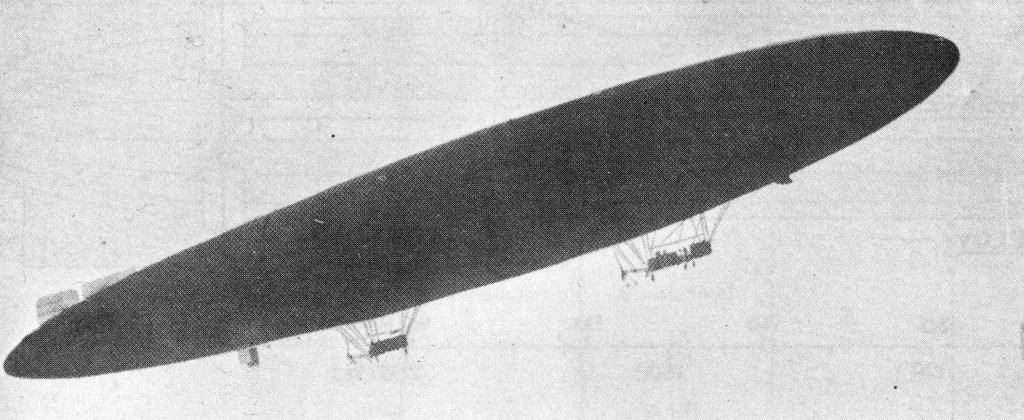
Maximum length, 426 feet (130 m.) maximum diameter, 60½ feet (18.40 m.) volume, 706,000 c. feet (20,000 m³.)
Total lift.—About 20 tons (20,000 kgs.) Useful lift.—About 5 tons (5,000 kgs.)
Gas bags.—These are of great strength and of unusual shapes, made to fit the interior, which is encumbered with cross stays. All but two of the bags are always full, and when the gas expands it flows into the remaining two, which are nearly empty at sea level, and full at 6500 feet (2,000 m.) A centrifugal pump is used for distributing the gas. There are 14 gas bags.
Motors.—2 Maybach of 270 h.p. each. The propellers are at the ends of the car, driven through 1 set of reduction gear. Speed.—38-43 m.p.h. About 59-64 k.p.h.
Propellers.—2 aft. Also 1 with its axis vertical.
Steering.—Vertical and horizontal rudders at both ends of the ship. Also see Propellers.
Remarks.—Two of these ships were under construction, and one was to be presented and one sold to the German government. The hull is built of special 3-ply wood made of Russian white fir; this wood is pressed into channel bars, angle bars, and all other requisite shapes. The strength of the hull is such that it can be supported at the ends without damage; its lightness is such that although the ship is nearly half as large again as Zeppelin II, yet the hull weighs about 3 tons less. Designed by Prof. Schütte.
In 1910, structural defects were found in Schütte I when the loads were applied. This has necessitated extensive alterations and much delay. In 1911 it was completed, and sold for £25,000 to the German Army.
SCHÜTTE-LANZ 2. Military. S.L. II. (1913.)
Building. Enlarged edition of above. 918,000 c. feet (26,000 m³.)]
ZEPPELIN type. Rigid.
Graf von Zeppelin, Friedrichshafen.
The features of this type are—A rigid framework of aluminium, a number of drum-shaped gas bags, and a thin outer cover.
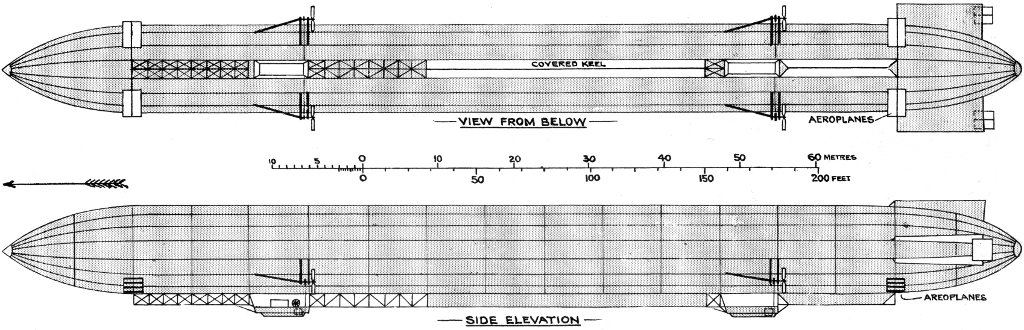
At the end of March, 1913, the total of Zeppelins, limit and building was 16, including one (number 18) for Austria. Of these several had come to grief in various ways, and the actual total at the date mentioned, was:—
8 effective = 4 Army (of which one Z4 was still on trials), 1 naval and 3 private.
3 completing or building = 1 naval, 1 private and 1 for Austria.
Others projected but not actually in hand.
All are on the lines of the above plan, differing only in minor details, such as the provision of a cabin amidships, etc., and in dimensions.
Details see the following pages.
Name Z I. Ersatz. DEUTSCHLAND. Z II. VICT. LUISE. Z III. (ex Schwaben) HANSA. L I. (Ersatz Z I.) Z IV. L II. SACHSEN.
Zeppelin No. 3b. 6a. 9b. 11. 12. 13. 14. 15. 16. 17.
Date 1908. 1910. 1911. 1912. 1912. 1912. 1912. 1913. 1913. 1913.
Service Army. "Delag." Army. "Delag." Army. "Delag." Navy. Army. Navy. "Delag."
Volume c. feet 424,000 682,000 635,000 667,000 629,000 660,000 776,000 742,000 742,000 742,000
(m³.) 12,000 19,000 18,000 18,700 17,800 18,700 22,000 21,000 21,000 21,000
Length feet (m.) 446 (136) 479 (136) 459 (140) 485-1/2 (148) 459 (140) 485-1/2 (148) 518 (158) 492 (150) 492 (150) 492 (150)
Diameter feet (m.) 38-1/2 (11.66) 46 (14) 46 (14) 46 (14) 46 (14) 46 (14) 47-1/2 (14.5) 47-1/2 (14.5) 47-1/2 (14.5) 47-1/2 (14.5)
Envelope Pegamoid ... ... ... ... ... ... ... ... ...
Gas Bags fabric Continental Continental ... ... Continental ... ... ... ... ...
number 17 16 16 18 16 18 ... 18 ... ...
Lift total tons 12-1/2 16-1/2 17 19 17 19 22 21 21 21
useful tons 3-1/2 5 4-1/2 ... 4-1/2 ... 6 ... ... ...
Motors h.p. 2--85 Daimler (= 170) 3--115 Daimler (= 345) 3--120 Maybach (= 360) 3--150 Maybach (= 450) 3--150 Maybach (= 450) 3--150 Maybach (= 450) 3--150 Maybach (= 450) 3--150 Maybach (= 450) (= 450)(= 450)
Propellers number 4 4 4 4 4 4 4 4 ... ...
blades 2 2 2 2 2 ... 2 forward, 4 aft 2 forward, 4 aft ... ...
diam feet (m.) ... 12 (3.60) ... ... ... ... ... ... ... ...
Max. Speed m.p.h. (km.) 29 (46) 36 (57.5) 35 (56) 40 (62) 49 (79) 40 (62) 48 (77) 48 (77) 48 (77) 48 (77)
Full speed endurance hrs. 15 20 20 40 25 40 35 ... ... ...
Complement ... ... ...8 crew, 25 passengers ... ... 21 ... ... ...
Station Metz Oos Cologne Wechselnd Cologne Weschselnd Hamburg ... Johannisthal Leipsig
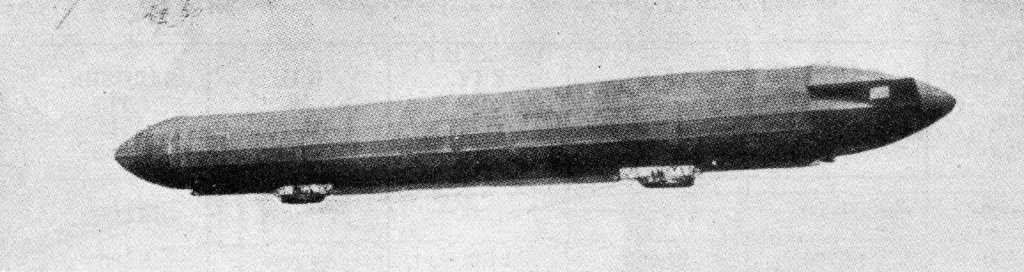
Z1 Military. (1908.) Obsolete. Shortly to be struck off list.
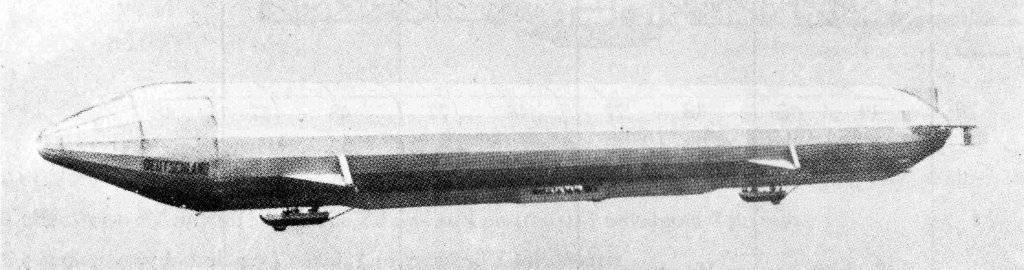
ERSATZ DEUTSCHLAND. (Private.) (1910.)
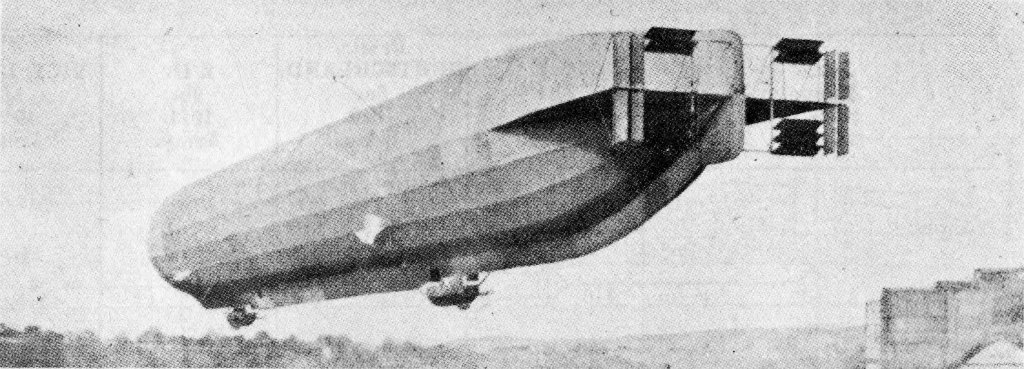
Z II. Military. (1911.)
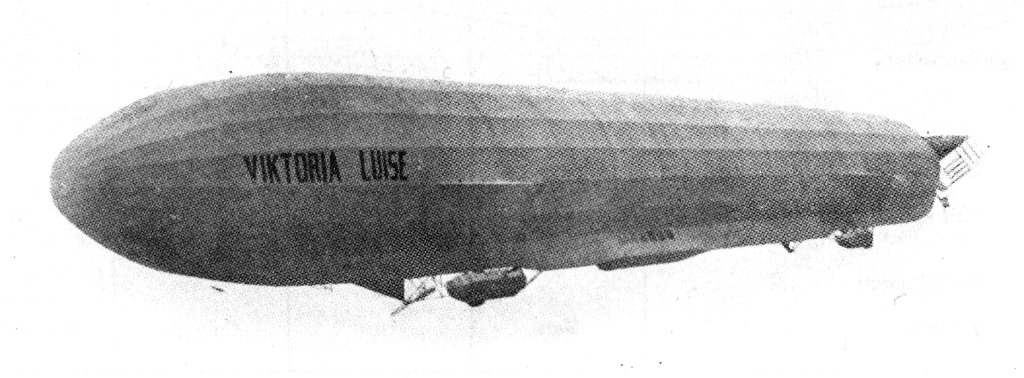
VIKTORIA LUISE. (Private.) (1912).
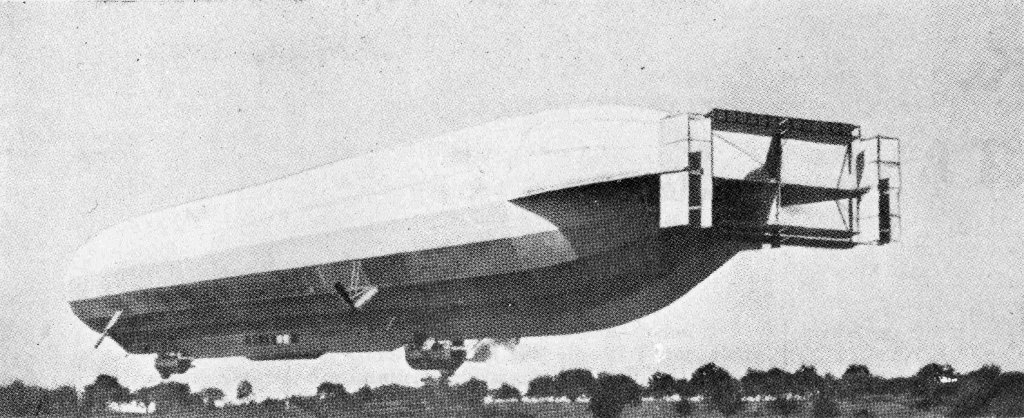
Z III. Military. (1912.)
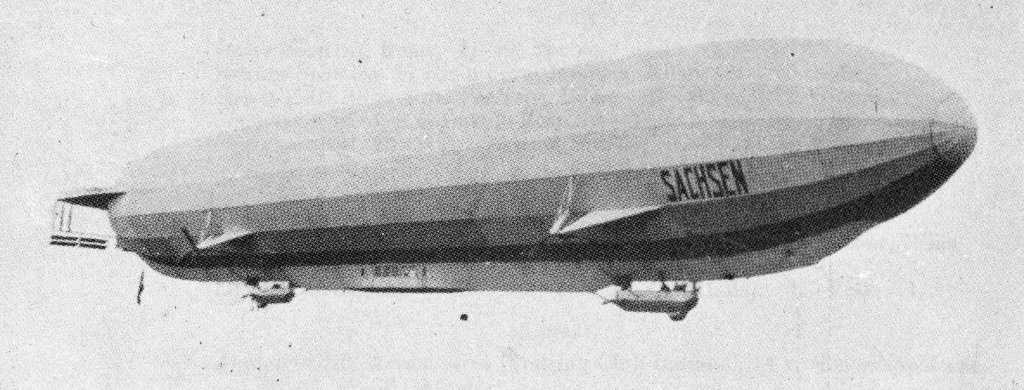
Zeppelin dirigible. Sachsen.

HANSA. (Private). (1912.)
No photo procurable. Generally resembles Z IV.
L I. Naval. (1912.) Armament: 1 gun on top.
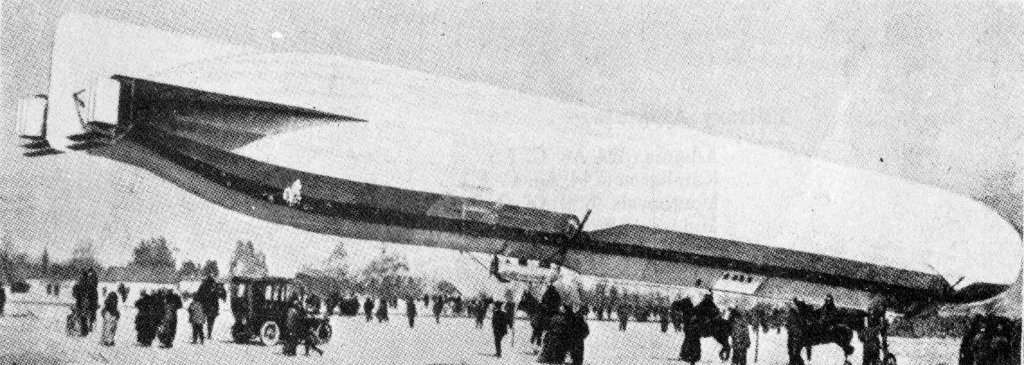
Photo. Deliius.
Z IV. Military. (1913). Armament: 1 gun on top, 1 in each gondola, 1 can be lowered from central cabin