Part 3 — INTRODUCTION TO PART III.
Reading edition
I.
Status and Structure of the Polyzoa.
The Polyzoa constitute a class in the third great division of the animal kingdom, the so-called Triploblastea. In this division are included also the worms, molluscs, insects, crustacea, spiders, vertebrates, etc.; for heterogeneous as its elements appear, all these animals may be considered to have essential features in common, in particular a body consisting primarily of three cellular layers. Most of them also possess a body cavity distinct from the alimentary canal. Some authors regard the position of the polyzoa as near that of the higher worms, but the group is an isolated one.
In considering the anatomy of simple forms of animal life such as the sponges it is necessary to pay attention mainly to individual cells, but in discussing more complicated forms our notice is first attracted to tissues and organs, for the cells of which these tissues and organs are composed have each a definite position, a definite structure, and a definite function. The most characteristic feature of the polyzoa, considered from this point of view, is the fact that most of their organs fall into one of two categories and are connected either with what is called the "zoœcium" or with what is known as the "polypide." The zoœcium is a cage in which the polypide is enclosed, but it is a living cage, differing from the shell of a snail or the tubes in which many worms encase themselves in being part of the animal itself. The polypide consists mainly of the organs connected directly and indirectly with nutrition and of part of the muscular system; its name is derived from the fact that it bears a superficial resemblance to a polyp such as Hydra.
The shape and structure of the zoœcium differs greatly in different groups of polyzoa. In its simplest form it is merely a cylindrical tube of living matter which secretes an outer horny or gelatinous covering. It is open at the end furthest from its base, at which it is attached either to another zoœcium or to some kind of supporting structure. Certain parts of the polypide can always be extruded from the aperture, which is known technically as the "orifice," or withdrawn through it into the zoœcium. When the polypide is retracted it draws in with it a portion of the zoœcium. The dead outer layer or ectocyst lines part of the portion thus invaginated and forms the walls of a cavity within the orifice. The base of this cavity consists in many forms of a transverse partition pierced in the middle by a circular hole and known as the "diaphragm." The diaphragm, however, does not constitute the limit of the invaginated portion of the zoœcium, for the living inner wall or endocyst is dragged in still further and forms a sheath round the retracted tentacles. When the tentacles are protruded they emerge through the hole in the diaphragm, carrying with them their sheath of endocyst. The invagination above the diaphragm, consisting of both endocyst and ectocyst, is then everted.
The tentacles are a characteristic feature of the polypide. Together with the base to which they are attached they are known as the "lophophore"; they surround the mouth, usually in a circle. They differ widely from the tentacles of Hydra in both structure and function, although they too serve as organs for the capture of prey; they are not highly contractile and are not provided with nettle-cells but are covered with cilia, which are in constant motion. When extruded they form a conspicuous calix-like crown to the zoœcium, but in the retracted condition they are closely pressed together and lie parallel to one another. They are capable individually of motion in all directions but, although they usually move in concert, they cannot as a rule seize objects between them.
The mouth is a hole situated in the midst of the tentacles. It leads directly into a funnel-shaped œsophagus, the upper part of which is lined with cilia and is sometimes distinguished as the "pharynx," while the lower part, the œsophagus proper, is a thin-walled tube that connects the pharynx with the stomach, which it enters on the dorsal side. The stomach is a bulky organ that differs markedly in form and structure in different groups of polyzoa. It is lined internally with glandular cells and the inner wall is sometimes thrown into folds or "rugæ." The part with which the œsophagus communicates is known as the "cardiac" portion, while the part whence the intestine originates is called the "pylorus" or "pyloric" portion. The intestine commences on the ventral side opposite the entrance of the œsophagus and nearly on a level with it, the bulk of the stomach depending between the two tubes. This part of the stomach is often produced into a blind tube, the fundus or cæcum. The alimentary canal may therefore be described as distinctly Y-shaped. The proximal part of the intestine is in some forms lined with cilia, and the tube as a whole is usually divided into two parts—the intestine proper, which is nearest the stomach, and the rectum, which opens by the anus not far from the mouth.
The nervous system consists of a central ganglion or brain, which is situated at the base of the tentacles on the side nearest the anus and gives out radiating nerves in all directions. Close to the brain and providing a communication between the cavity of the zoœcium and the cavity in which the tentacles are contained (or, in the case of an expanded polyp, the external world) is a ciliated tube known as the "intertentacular organ." Apparently it acts as a passage through which the genital products are expelled; but contradictory statements have been made regarding it, and perhaps it is present only at certain seasons or in certain conditions of the polypide.
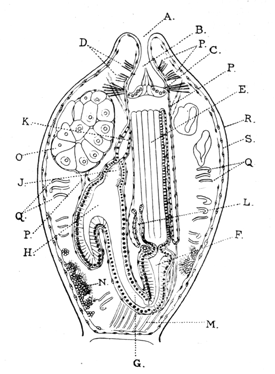
Fig. 30.—Vertical section through a polypide of Alcyonidium with the polypide retracted (after Prouho).
A=orifice; B=contracted collar; C=diaphragm; D=parieto-vaginal muscles; E=tentacles; F=pharynx; G=œsophagus; H=stomach; J=intestine; K=rectum; L=intertentacular organ; M=retractor muscle; N=testes; O=ovary; P=funiculus; Q=parietal muscles; R=ectocyst; S=endocyst.
The muscular system is often of a complicated nature, but three sets of muscles may be distinguished as being of peculiar importance, viz., (i) the retractor muscles, which are fixed to the base of the lophophore at one end and to the base of the zoœcium at the other, and by contracting pull the former back into the zoœcium; (ii) the parieto-vaginal muscles, which connect the upper part of the invaginated portion of the zoœcium with the main wall thereof; and (iii) the parietal muscles, which run round the inner wall of the zoœcium and compress the zoœcium as a whole. The parietal muscles are not developed in the Phylactolæmata, the most highly specialized group of freshwater polyzoa.
The cavity between the polypide and the zoœcium contains a reticulate tissue of cells known as the "funicular" tissue, and this tissue is usually concentrated to form a hollow strand or strands ("funiculi") that connect the outer wall of the alimentary canal with the endocyst.
This rapid sketch of the general anatomy of a simple polyzoon will be the best understood by comparing it with fig. 30, which represents, in a somewhat diagrammatic fashion, a vertical section through a single zoœcium and polypide of the order Ctenostomata, to which some of the freshwater species belong. The polypide is represented in a retracted condition in which the Y-shaped disposition of the alimentary canal is somewhat obscured.
In the great majority of cases the polyzoa form permanent colonies or polyparia, each of which consists of a number of individual zoœcia and polypides connected together by threads of living tissue. These colonies are formed by budding, not by independent individuals becoming associated together. In a few cases compound colonies are formed owing to the fact that separate simple colonies congregate and secrete a common investment; but in these cases there is no organic connection between the constituent colonies. It is only in the small subclass Entoprocta, the polypides and zoœcia of which are not nearly so distinct from one another as they are in other polyzoa (the Ectoprocta), that mature solitary individuals occur.
As representatives of both subclasses of polyzoa and of more than one order of Ectoprocta occur in fresh water, I have prefaced my description of the Indian species with a synopsis of the more conspicuous characters of the different groups (pp. 183-186).
Capture and Digestion of Food: Elimination of Waste Products.
The food of all polyzoa consists of minute living organisms, but its exact nature has been little studied as regards individual species and genera. In Victorella bengalensis it consists largely of diatoms, while the species of Hislopia and Arachnoidea possess an alimentary canal modified for the purpose of retaining flagellate organisms until they become encysted. Similar organisms form a large part of the food of the phylactolæmata.
Although the tentacles may be correctly described as organs used in capturing prey, they do not themselves seize it but waft it by means of the currents set up by their cilia to the mouth, into which it is swept by the currents produced by the cilia lining the pharynx. The tentacles are also able in some species to interlace themselves in order to prevent the escape of prey. Apparently they have the power of rejecting unsuitable food, for they may often be observed to bend backwards and forwards and thrust particles that have approached them away, and if the water contains anything of a noxious nature in solution the lophophore is immediately retracted, unless it has been completely paralysed. In the phylactolæmata the peculiar organ known as the epistome is capable of closing the mouth completely, and probably acts as an additional safeguard in preventing the ingestion of anything of an injurious nature.
In many genera and larger groups the food commonly passes down the pharynx into the stomach without interruption, although it is probable that in all species the œsophagus can be closed off from the stomach by a valve at its base. In some forms, however, a "gizzard" is interposed between the œsophagus and the stomach. This gizzard has not the same function in all cases, for whereas in some forms (e. g., in Bowerbankia) it is lined with horny projections and is a powerful crushing organ, in others (e. g., in Hislopia or Victorella) it acts as an antechamber in which food can be preserved without being crushed until it is required for digestion, or rough indigestible particles can be retained which would injure the delicate walls of the stomach.
Digestion takes place mainly in the stomach, the walls of which are of a glandular nature. The excreta are formed into oval masses in the rectum and are extruded from the anus in this condition.
Although the gross non-nutritious parts of the food are passed per anum, the waste products of the vital processes are not eliminated so easily, and a remarkable process known as the formation of brown bodies frequently takes place. This process cannot be described more clearly and succinctly than by quoting Dr. Harmer's description of it from pp. 471 and 472 of vol. ii. of the Cambridge Natural History, a volume to which I have been much indebted in the preparation of this introduction. The description is based very largely on Dr. Harmer's own observations[AW].
"The tentacles, alimentary canal, and nervous system break down, and the tentacles cease to be capable of being protruded. The degenerating organs become compacted into a rounded mass, known from its colour as the 'brown body.' This structure may readily be seen in a large proportion of the zoœcia of transparent species. In active parts of the colony of the body-wall next develops an internal bud-like structure, which rapidly acquires the form of a new polypide. This takes the place originally occupied by the old polypide, while the latter may either remain in the zoœcium in the permanent form of a 'brown body,' or pass to the exterior. In Flustra the young polypide-bud becomes connected with the 'brown body' by a funiculus. The apex of the blind pouch or 'cæcum' of the young stomach is guided by this strand to the 'brown body,' which it partially surrounds. The 'brown body' then breaks up, and its fragments pass into the cavity of the stomach, from which they reach the exterior by means of the anus."
Brown bodies are rarely if ever found in the phylactolæmata, in which the life of the colony is always short; but they are not uncommon in Hislopia and Victorella, although in the case of the former they may easily escape notice on account of the fact that they are much paler in colour than is usually the case. When they are found in a ctenostome the collar-like membrane characteristic of the suborder is extruded from the orifice (which then disappears) and remains as a conspicuous external addition to the zoœcium, the ectocyst of which, at any rate in Bowerbankia and Victorella, sometimes becomes thickened and dark in colour.
It is noteworthy that the colouring matter of the brown bodies is practically the only colouring matter found in the polypides of most polyzoa. Young polypides are practically colourless in almost all cases.
Reproduction: Budding.
Polyzoa reproduce their species in three ways—(i) by means of eggs, (ii) by budding, and (iii) by means of bodies developed asexually and capable of lying dormant in unfavourable conditions without losing their vitality.
Most, if not all species are hermaphrodite, eggs and spermatozoa being produced either simultaneously or in succession by each individual, or by certain individuals in each zoarium. The reproductive organs are borne on the inner surface of the endocyst, as a rule in a definite position, and often in connection with the funiculus or funiculi. It is doubtful to what extent eggs are habitually fertilized by spermatozoa of the individual that has borne them, but in some cases this is practically impossible and spermatozoa from other individuals must be introduced into the zoœcium.
Budding as a rule does not result in the formation of independent organisms, but is rather comparable to the proliferation that has become the normal method of growth in sponges, except of course that individuality is much more marked in the component parts of a polyzoon colony than it is in a sponge. In the genera described in this volume budding takes place by the outgrowth of a part of the body-wall and the formation therein of a new polypide, but the order in which the buds appear and their arrangement in reference to the parent zoœcium is different in the different groups. In the freshwater ctenostomes three buds are typically produced from each zoœcium, one at the anterior end and one at either side, the two latter being exactly opposite one another. The parent zoœcium in this formation arises from another zoœcium situated immediately behind it, so that each zoœcium, except at the extremities of the zoarium, is connected with four other zoœcia, the five together forming a cross. The two lateral buds are, however, frequently suppressed, or only one of them is developed, and a linear series of zoœcia with occasional lateral branches is formed instead of a series of crosses. In the phylactolæmata, on the other hand, the linear method of budding is the typical one, but granddaughter-buds are produced long before the daughter-buds are mature, so that the zoœcia are frequently pressed together, and lateral buds are produced irregularly. In Victorella additional adventitious buds are produced freely near the tip of the zoœcium.
Reproduction by spontaneous fission sometimes occurs, especially in the Lophopinæ, but the process differs from that which takes place when a Hydra divides into two, for there is no division of individual zoœcia or polypides but merely one of the whole zoarium.
The production of reproductive bodies analogous to the gemmules of sponges appears to be confined in the polyzoa to the species that inhabit fresh or brackish water, nor does it occur in all of these.
All the phylactolæmata produce, within their zoœcia, the bodies known as statoblasts. These bodies consist essentially of masses of cells containing abundant food-material and enclosed in a capsule with thick horny walls. In many cases the capsule is surrounded by a "swim-ring" composed of a mass of horny-walled chambers filled with air, which renders the statoblast extremely light and enables it to float on the surface of the water; while in some genera the margin of the swim-ring bears peculiar hooked processes, the function of which is obscure. The whole structure first becomes visible as a mass of cells (the origin of all of which is not the same) formed in connection with the funiculus, and the statoblast may be regarded as an internal bud. Its origin and development in different genera has been studied by several authors, notably by Oka[AX] in Pectinatella, and by Braem[AY] in Cristatella.
The external form of the statoblasts is very important in the classification of the phylactolæmata, to which these structures are confined. In all the genera that occur in India they are flattened and have an oval, circular, or approximately oval outline.
In temperate climates statoblasts are produced in great profusion at the approach of winter, but in India they occur, in most species, in greatest numbers at the approach of the hot weather.
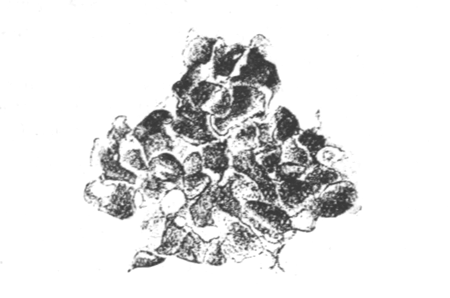
Fig. 31.—Part of the zoarium of Victorella bengalensis entirely transformed into resting buds, × 25. (From an aquarium in Calcutta.)
In the family Paludicellidæ (ctenostomata) external buds which resemble the statoblasts in many respects are produced at the approach of unfavourable climatic conditions, but no such buds are known in the family Hislopiidæ, the zoaria of which appear to be practically perennial. The buds consist of masses of cells formed at the points at which ordinary buds would naturally be produced, but packed with food-material and protected like statoblasts by a thick horny coat. It seems also that old zoœcia and polypides are sometimes transformed into buds of the kind (fig. 31), and it is possible that there is some connection between the formation of brown bodies and their production. Like the statoblasts of the phylactolæmata the resting buds of the Paludicellidæ are produced in Europe at the approach of winter, and in India at that of the hot weather.
Development.
(a) From the Egg.
Some polyzoa are oviparous, while in others a larva is formed within the zoœcium and does not escape until it has attained some complexity of structure. Both the ctenostomatous genera that are found in fresh water in India are oviparous, but whereas in Victorella the egg is small and appears to be extruded soon after its fertilization, in Hislopia it remains in the zoœcium for a considerable time, increases to a relatively large size, and in some unknown manner accumulates a considerable amount of food-material before escaping. Unfortunately the development is unknown in both genera.
In the phylactolæmata the life-history is much better known, having been studied by several authors, notably by Allman, by Kraepelin, and by Braem (1908). The egg is contained in a thin membrane, and while still enclosed in the zoœcium, forms by regular division a hollow sphere composed of similar cells. This sphere then assumes an ovoid form, becomes covered with cilia externally, and breaks its way through the egg-membrane into the cavity of the zoœcium. Inside the embryo, by a process analogous to budding, a polypide or a pair of polypides is formed. Meanwhile the embryo has become distinctly pear-shaped, the polypide or polypides being situated at its narrow end, in which a pore makes its appearance. The walls are hollow in the region occupied by the polypide, the cavity contained in them being bridged by slender threads of tissue. The larva thus composed makes its way out of the zoœcium, according to Kraepelin through the orifice of a degenerate bud formed for its reception, and swims about for a short time by means of the cilia with which it is covered. Its broad end then affixes itself to some solid object, the polypide is everted through the pore at the narrow end and the whole of that part of the larva which formerly enclosed it is turned completely inside out. A zoarium with its included polypides is finally produced from the young polypide by the rapid development of buds.
(b) From the Statoblast and Resting Buds.
There is little information available as regards the development of the young polyzoon in the resting buds of the freshwater ctenostomes. In Paludicella and Pottsiella the capsule of the bud splits longitudinally into two valves and the polypide emerges between them; but in Victorella bengalensis one of the projections on the margin of the bud appears to be transformed directly into the tip of a new zoœcium and the capsule is gradually absorbed.
Contradictory statements have been made as regards several important points in the development of the statoblast and it is probable that considerable differences exist in different species. The following facts appear to be of general application. The cellular contents of the capsule consist mainly of a mass of cells packed with food-material in a granular form, the whole enclosed in a delicate membrane formed of flat cells. When conditions become favourable for development a cavity appears near one end of the mass and the cells that form its walls assume a columnar form in vertical section. The cavity increases rapidly in size, and, as it does so, a young polypide is budded off from its walls. Another bud may then appear in a similar fashion, and the zoœcium of the first bud assumes its characteristic features. The capsule then splits longitudinally into two disk-like valves and the young polypide, in some cases already possessing a daughter bud, emerges in its zoœcium, adheres by its base to some external object and produces a new polyparium by budding. The two valves of the statoblast often remain attached to the zoarium that has emerged from between them until it attains considerable dimensions (see Plate IV, fig. 3 a).
What conditions favour development is a question that cannot yet be answered in a satisfactory manner. Statoblasts can lie dormant for months and even for years without losing their power of germinating, and it is known that in Europe they germinate more readily after being subjected to a low temperature. In tropical India this is, of course, an impossible condition, but perhaps an abnormally high temperature has the same effect. At any rate it is an established fact that whereas the gemmules of most species germinate in Europe in spring, in Bengal they germinate either at the beginning of the "rains" or at that of our mild Indian winter.
Movements.
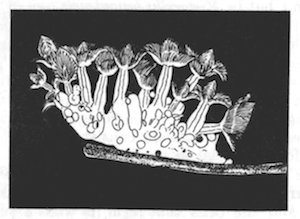
Fig. 32.—Zoarium of Lophopodella carteri moving along the stem of a water plant, × 4. (From Igatpuri Lake.)
In the vast majority of the polyzoa, marine as well as freshwater, movement is practically confined to the polypide, the external walls of the zoœcium being rigid, the zoœcia being closely linked together and the whole zoarium permanently fixed to some extraneous object. In a few freshwater species belonging to the genera Cristatella, Lophopus, Lophopodella and Pectinatella, the whole zoarium has the power of progression. This power is best developed in Cristatella, which glides along with considerable rapidity on a highly specialized "sole" provided with abundant mucus and representing all that remains of the ectocyst. It is by no means clear how the zoaria of the other genera move from one place to another, for the base is not modified, so far as can be seen, for the purpose, and the motion is extremely slow. It is probable, however, that progression is effected by alternate expansions and contractions of the base, and in Lophopodella (fig. 32), which moves rather less slowly than its allies, the anterior part of the base is raised at times from the surface along which it is moving. The whole zoarium can be released in this way and occasionally drops through the water, and is perhaps carried by currents from one place to another in so doing.
So far as the polypides are concerned, the most important movements are those which enable the lophophore and the adjacent parts to be extruded from and withdrawn into the zoœcium. The latter movement is executed by means of the retractor muscles, which by contracting drag the extruded parts back towards the posterior end of the endocyst, but it is not by any means certain how the extrusion of the lophophore is brought about. In most ctenostomes the action of the parietal muscles doubtless assists in squeezing it out when the retractor and parieto-vaginal muscles relax, but Oka states that protrusion can be effected in the phylactolæmata even after the zoœcium has been cut open. Possibly some hydrostatic action takes place, however, and allowance must always be made for the natural resilience of the inverted portion of the ectocyst.
Even when the polypide is retracted, muscular action does not cease, for frequent movements, in some cases apparently rhythmical, of the alimentary canal may be observed, and in Hislopia contraction of the gizzard takes place at irregular intervals.
When the lophophore is expanded, the tentacles in favourable circumstances remain almost still, except for the movements of their cilia; but if a particle of matter too large for the mouth to swallow or otherwise unsuitable is brought by the currents of the cilia towards it, individual tentacles can be bent down to wave it away and similar movements are often observed without apparent cause.
In the cheilostomes certain individuals of each zoarium are often profoundly modified in shape and function and exhibit almost constant rhythmical or convulsive movements, some ("avicularia") being shaped like a bird's beak and snapping together, others ("vibracula") being more or less thread-like and having a waving motion.
Distribution of the Freshwater Polyzoa.
Fifteen genera of freshwater Polyzoa are now recognized, one entoproctous and fourteen ectoproctous; five of the latter are ctenostomatous and nine phylactolæmatous. Of the fourteen ectoproctous genera seven are known to occur in India, viz., Victorella, Hislopia, Fredericella, Plumatella, Stolella, Lophopodella, and Pectinatella. Except Stolella, which is only known from northern India, these genera have an extremely wide geographical range; Victorella occurs in Europe, India, Africa, and Australia; Hislopia in India, Indo-China, China, and Siberia; Fredericella in Europe, N. America, Africa, India, and Australia; Plumatella in all geographical regions; Lophopodella in E. and S. Africa, India, and Japan; Pectinatella in Europe, N. America, Japan, and India.
Two genera, Paludicella and Lophopus, have been stated on insufficient grounds to occur in India. The former is known from Europe and N. America, and is said to have been found in Australia, while the latter is common in Europe and N. America and also occurs in Brazil.
Of the genera that have not been found in this country the most remarkable are Urnatella and Cristatella. The former is the only representative in fresh water of the Entoprocta and has only been found in N. America. Each individual is borne upon a segmented stalk the segments of which are enclosed in strong horny coverings and are believed to act as resting buds. Cristatella, which is common in Europe and N. America, is a phylactolæmatous genus of highly specialized structure. It possesses a creeping "sole" or organ of progression at the base of the zoarium.
The other phylactolæmatous genera that do not occur in India appear to be of limited distribution, for Australella is only known from N. S. Wales, and Stephanella from Japan. The ctenostomatous Arachnoidea has only been reported from Lake Tanganyika, and Pottsiella only from a single locality in N. America.
As regards the exotic distribution of the Indian species little need be said. The majority of the Plumatellæ are identical with European species, while the only species of Fredericella that has been discovered is closely allied to the European one. The Indian species of Lophopodella occurs also in E. Africa and Japan, while that of Pectinatella is apparently confined to India, Burma and Ceylon, but is closely allied to a Japanese form.
Polyzoa of Brackish Water.
With the exception of Victorella, which occurs more commonly in brackish than in fresh water and has been found in the sea, the genera that occur in fresh water are confined or practically confined to that medium; but certain marine ctenostomes and cheilostomes not uncommonly make their way, both in Europe and in India, into brackish water, and in the delta of the Ganges an entoproctous genus also does so. The ctenostomatous genera that are found occasionally in brackish water belong to two divisions of the suborder, the Vesicularina and the Alcyonellea. To the former division belongs Bowerbankia, a form of which (B. caudata subsp. bengalensis, p. 187) is often found in the Ganges delta with Victorella bengalensis. No species of Alcyonellea has, however, as yet been found in Indian brackish waters. The two Indian cheilostomes of brackish water belong to a genus (Membranipora) also found in similar situations in Europe. One of them (M. lacroixii[AZ]) is, indeed, identical with a European form that occurs in England both in the sea and in ditches of brackish water. I have found it in the Cochin backwaters, in ponds of brackish water at the south end of the Chilka Lake (Ganjam, Madras), on the shore at Puri in Orissa, and in the Mutlah River at Port Canning. The second species (M. bengalensis, Stoliczka) is peculiar to the delta of the Ganges[BA] and has not as yet been found in the open sea. The two species are easily recognized from one another, for whereas the lip of M. bengalensis (fig. 33) bears a pair of long forked spines, there are no such structures on that of M. lacroixii, the dorsal surface of which is remarkably transparent. M. lacroixii forms a flat zoarium, the only part visible to the naked eye being often the beaded margin of the zoœcia, which appears as a delicate reticulation on bricks, logs of wood, the stems of rushes and of hydroids, etc.; but the zoarium of M. bengalensis is as a rule distinctly foliaceous and has a peculiar silvery lustre.
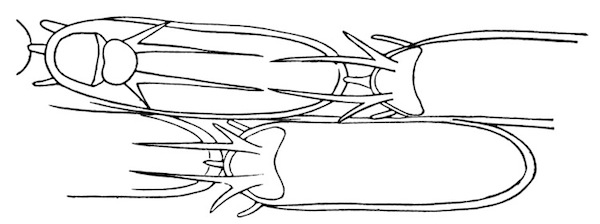
Fig. 33.—Outline of four zoœcia of Membranipora bengalensis, Stoliczka (from type specimen, after Thornely). In the left upper zoœcium the lip is shown open.
Loxosomatoides[BB] (fig. 34), the Indian entoproctous genus found in brackish water, has not as yet been obtained from the open sea, but has recently been introduced, apparently from a tidal creek, into isolated ponds of brackish water at Port Canning. It is easily recognized by the chitinous shield attached to the ventral (posterior) surface.
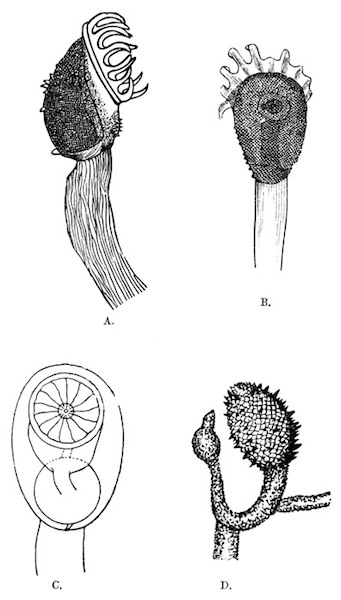
Fig. 34.—Loxosomatoides colonialis, Annandale.
A and B, a single individual of form A, as seen (A) in lateral, and (B) in ventral view; C, outline of a similar individual with the tentacles retracted, as seen from in front (dorsal view); D, ventral view of an individual and bud of form B. All the figures are from the type specimens and are multiplied by about 70.
II.
History of the Study of the Freshwater Polyzoa.
The naturalists of the eighteenth century were acquainted with more than one species of freshwater polyzoon, but they did not distinguish these species from the hydroids. Trembley discovered Cristatella, which he called "Polype à Panache," in 1741, and Linné described a species of Plumatella under the name Tubipora repens in 1758, while ten years later Pallas gave a much fuller description (under the name Tubularia fungosa) of the form now known as Plumatella fungosa or P. repens var. fungosa. Although Trembley, Baker, and other early writers on the fauna of fresh water published valuable biological notes, the first really important work of a comprehensive nature was that of Dumortier and van Beneden, published in 1848. All previous memoirs were, however, superseded by Allman's Monograph of the Fresh-Water Polyzoa, which was issued in 1857, and this memoir remains in certain respects the most satisfactory that has yet been produced. In 1885 Jullien published a revision of the phylactolæmata and freshwater ctenostomes which is unfortunately vitiated by some curious lapses in observation, but it is to Jullien that the recognition of the proper position of Hislopia is due. The next comprehensive monograph was that of Kraepelin, which appeared in two parts (1887 and 1892) in the Abhandlungen des Naturwiss. Vereins of Hamburg. In its detailed information and carefully executed histological plates this work is superior to any that preceded it or has since appeared, but the system of classification adopted is perhaps less liable to criticism than that followed by Braem in his "Untersuchungen," published in the Bibliotheca Zoologica in 1888.
During the second half of the nineteenth century and the first decade of the twentieth several authors wrote important works on the embryology and anatomy of the phylactolæmata, notably Kraepelin, Braem, and Oka; but as yet the ctenostomes of fresh water have received comparatively little attention from anything but a systematic point of view.
From all points of view both the phylactolæmata and the ctenostomes of Asia have been generally neglected, except in the case of the Japanese phylactolæmata, which have been studied by Oka. Although Carter made some important discoveries as regards the Indian forms, he did not devote to them the same attention as he did to the sponges. In the case of the only new genus he described he introduced a serious error into the study of the two groups by placing Hislopia among the cheilostomes, instead of in its true position as the type genus of a highly specialized family of ctenostomes.
For fuller details as to the history of the study of the freshwater Polyzoa the student may refer to Allman's and to Kraepelin's monographs. An excellent summary is given by Harmer in his chapter on the freshwater Polyzoa in vol. ii. of the Cambridge Natural History; and Loppens has recently (1908) published in the Annales de Biologie lacustre a concise survey of the systematic work that has recently been undertaken. Unfortunately he perpetuates Carter's error as regards the position of Hislopia.
Bibliography of the Freshwater Polyzoa.
A very full bibliography of the freshwater Polyzoa will be found in pt. i. of Kraepelin's "Die Deutschen Süsswasserbryozoen" (1887), while Loppens, in his survey of the known species (Ann. Biol. lacustre, ii, 1908), gives some recent references. The following list contains the titles of some of the more important works of reference, of memoirs on special points such as reproduction and of papers that have a special reference to Asiatic species. Only the last section is in any way complete.
(a) Works of Reference.
1847.Van Beneden, "Recherches sur les Bryozoaires fluviatiles de Belgique," Mém. Ac. Roy. Belgique, xxi.
1850.Dumortier and Van Beneden, "Histoire Naturelle des Polypes composés d'eau douce," 2^e partie, Mém. Ac. Roy. Bruxelles, xvi (complément).
1856.Allman, "A Monograph of the Fresh-Water Polyzoa" (London).
1866-1868.Hyatt, "Observations on Polyzoa, suborder Phylactolæmata," Comm. Essex Inst. iv, p. 197, v, p. 97.
1880.Hincks, "A History of the British Marine Polyzoa."
1885.Jullien, "Monographie des Bryozoaires d'eau douce," Bull. Soc. zool. France, x, p. 91.
1887 & 1892.Kraepelin, "Die deutschen Süsswasserbryozoen," Abhandl. Nat. Vereins Hamburg, x & xii.
1890.Braem, "Untersuchungen des Bryozoen des süssen Wassers," Bibl. Zool. ii, Heft 6 (Cassel).
1896.Harmer, Cambridge Natural History, ii, Polyzoa, chap. xviii.
1899.Korschelt and Heider, "Embryology of Invertebrates," vol. ii, chap. xvi. (English edition by Bernard and Woodward, 1899.)
1908.Loppens, "Les Bryozoaires d'eau douce," Ann. Biol. lacustre, iii. p. 141.
(b) Special Works on Embryology, etc.
1875.Nitsche, "Beiträge zur Kenntniss der Bryozoen," Zeitschr. f. wiss. Zool. xxv (supplement), p. 343.
1880.Reinhard, "Zur Kenntniss der Süsswasser-Bryozoen," Zool. Anz. iii, p. 208.
1888.Braem, "Untersuchungen über die Bryozoen des süssen Wassers," Zool. Anz. xi, pp. 503, 533.
1891.Oka, "Observations on Freshwater Polyzoa," J. Coll. Sci. Tokyo, iv, p. 89.
1906.Wilcox, "Locomotion in young colonies of Pectinatella magnifica," Biol. Bull. Wood's Hole, ii.
1908.Braem, "Die geschlechtliche Entwickelung von Fredericella sultana nebst Beobachtungen über die weitere Lebensgeschichte der Kolonien," Bibl. Zool. xx, Heft 52.
(c) Papers that refer specifically to Asiatic species.
1851.Leidy described Plumatella diffusa in Proc. Ac. Philad. v, p. 261 (1851).
1858.Carter, "Description of a Lacustrine Bryozoon allied to Flustra," Ann. Nat. Hist. (3) i, p. 169.
1859.Carter, "On the Identify in Structure and Composition of the so-called Seed-like Body of Spongilla with the Winter-egg of the Bryozoa: and the presence of Starch-granules in each," Ann. Nat. Hist. (3) iii, p. 331. (Statoblast of Lophopodella described and figured.)
1862.Mitchell, "Freshwater Polyzoa," Q. J. Micr. Sci. (new series) ii, p. 61. ("Lophopus" recorded from Madras.)
1866.Hyatt, "Observations on Polyzoa, suborder Phylactolæmata," Comm. Essex Inst. iv, p. 197. ("Pectinatella carteri" named.)
1869.Stoliczka, "On the Anatomy of Sagartia schilleriana and Membranipora bengalensis, a new coral and a bryozoon living in brackish water at Port Canning," J. As. Soc. Bengal, xxxviii, ii, p. 28.
1880.Jullien, "Description d'un nouveau genre de Bryozoaire Cheilostomien des eaux douces de la Chine et du Cambodge et de deux espèces nouvelles," Bull. Soc. zool. France, v, p. 77. ("Norodonia" described.)
1885.Jullien, "Monographie des Bryozoaires d'eau douce," Bull. Soc. zool. France, x, p. 91. (Hislopia assigned to the ctenostomes.)
1887.Kraepelin, "Die deutschen Süsswasserbryozoen," Abh. Ver. Hamburg, x. (Plumatella philippinensis.)
1891.Oka, "Observations on Freshwater Polyzoa," J. Coll. Sci. Tokyo, iv, p. 89.
1898.Meissner, "Die Moosthiere Ost-Afrikas," in Mobius's Deutsch-Ost-Afrika, iv. (Lophopodella carteri recorded from E. Africa.)
1901.Korotneff, "Faunistische Studien am Baikalsee," Biol. Centrbl. xxi, p. 305. ("Echinella" described.)
1904-1906.Rousselet, "On a new Freshwater Polyzoon from Rhodesia, Lophopodella thomasi, gen. et sp. nov.", J. Quekett Club (2) ix, p. 45. (Genus Lophopodella described.)
1906.Annandale, "Notes on the Freshwater Fauna of India. No. II. The Affinities of Hislopia," J. As. Soc. Bengal (new series) ii, p. 59.
1906.Kraepelin, "Eine Süsswasser-bryozoë (Plumatella) aus Java," Mitth. Mus. Hamburg, xxiii, p. 143.
1907.Annandale, "Notes on the Freshwater Fauna of India. No. XII. The Polyzoa occurring in Indian Fresh and Brackish Pools," J. As. Soc. Bengal (new series) iii, p. 83.
1907.Annandale, "Statoblasts from the surface of a Himalayan Pond," Rec. Ind. Mus. i, p. 177.
1907.Annandale, "The Fauna of Brackish Ponds at Port Canning, Lower Bengal: I.—Introduction and Preliminary Account of the Fauna," Rec. Ind. Mus. i, p. 35.
1907.Annandale, "The Fauna of Brackish Ponds at Port Canning, Lower Bengal: VI.—Observations on the Polyzoa, with further notes on the Ponds," Rec. Ind. Mus. i, p. 197.
1907.Annandale, "Further Note on a Polyzoon from the Himalayas," Rec. Ind. Mus. i, p. 145.
1907.Rousselet, "Zoological Results of the Third Tanganyika Expedition, conducted by Dr. W. A. Cunnington, 1904-1905.—Report on the Polyzoa," P. Z. Soc. London, i, p. 250. (Plumatella tanganyikæ.)
1907.Oka, "Eine dritte Art von Pectinatella (P. davenporti, n. sp.)," Zool. Anz. xxxi, p. 716.
1907.Apstein, "Das Plancton im Colombo-See auf Ceylon," Zool. Jahrb. (Syst.) xxv, p. 201. (Plumatella recorded.)
1907.Walton, "Notes on Hislopia lacustris, Carter," Rec. Ind. Mus. i, p. 177.
1907-1908.Oka, "Zur Kenntnis der Süsswasser-Bryozoenfauna von Japan," Annot. Zool. Japon, vi, p. 117.
1907-1908.Oka, "Ueber eine neue Gattung von Süsserwasserbryozoen," Annot. Zool. Japon, vi, p. 277.
1908.Annandale, "The Fauna of Brackish Ponds at Port Canning, Lower Bengal: VII.—Further Observations on the Polyzoa with the description of a new genus of Entoprocta," Rec. Ind. Mus. ii, p. 11.
1908.Annandale, "Corrections as to the Identity of Indian Phylactolæmata," Rec. Ind. Mus. ii, p. 110.
1908.Annandale, "Three Indian Phylactolæmata," Rec. Ind. Mus. ii, p. 169.
1908.Kirkpatrick, "Description of a new variety of Spongilla loricata, Weltner," Rec. Ind. Mus. ii, p. 97. (Hislopia recorded from Burma.)
1909.Annandale, "Preliminary Note on a new genus of Phylactolæmatous Polyzoa," Rec. Ind. Mus. iii, p. 279.
1909.Annandale, "A new species of Fredericella from Indian Lakes," Rec. Ind. Mus. iii. p. 373.
1909.Walton, "Large Colonies of Hislopia lacustris," Rec. Ind. Mus. iii, p. 295.
1910.Annandale, "Materials for a Revision of the Phylactolæmatous Polyzoa of India," Rec. Ind. Mus. v, p. 37.
1911.West and Annandale, "Descriptions of Three Species of Algæ associated with Indian Freshwater Polyzoa," J. As. Soc. Bengal (ined.).