VOLUME XVI SLICE VII Liquid Gases to Logar (continued 8)
Reading edition
Such was the written tradition on which Livy mainly relied. We have next to examine the manner in which he used it, and here we are met at the outset by the difficulty of determining with exactness what authorities he is following at any one time; for of the importance of full and accurate references he has no idea, and often for chapters together he gives us no clue at all. More often still he contents himself with such vague phrases as “they say,” “the story goes,” “some think,” or speaks in general terms of “ancient writers” or “my authorities.” Even where he mentions a writer by name, it is frequently clear that the writer named is not the one whose lead he is following at the moment, but that he is noticed incidentally as differing from Livy’s guide for the time being on some point of detail (compare the references to Piso in the first decade, i. 55, ii. 32, &c.). It is very rarely that Livy explicitly tells us whom he has selected as his chief source (e.g. Fabius xxii. 7; Polybius xxxiii. 10). By a careful analysis, however, of those portions of his work which admit of a comparison with the text of his acknowledged authorities (e.g. fourth and fifth decades, see H. Nissen, Untersuchungen, Berlin, 1863), and elsewhere by comparing his version with the known fragments of the various annalists, and with what we are told of their style and method of treatment, we are able to form a general idea of his plan of procedure. As to the first decade, it is generally agreed that in the first and second books, at any rate, he follows such older and simpler writers as Fabius Pictor and Calpurnius Piso (the only ones whom he there refers to by name), to whom, so far as the first book is concerned, Niebuhr (Lectures, p. 33) would add the poet Ennius. With the close of the second book or the opening of the third we come upon the first traces of the use of later authors. Valerius Antias3 is first quoted in iii. 5, and signs of his handiwork are visible here and there throughout the rest of the decade (vii. 36, ix. 27, x. 3-5). In the fourth book the principal authority is apparently Licinius Macer, and for the period following the sack of Rome by the Gauls Q. Claudius Quadrigarius, whose annals began at this point in the history. We have besides a single reference (vii. 3) to the antiquarian Cincius, and two (iv. 23, x. 9) to Q. Aelius Tubero, one of the last in the list of annalists. Passing to the third decade, we find ourselves at once confronted by a question which has been long and fully discussed—the relation between Livy and Polybius. Did Livy use Polybius at all, and, if so, to what extent?
It is conceded on all hands that Livy in this decade makes considerable use of other authorities than Polybius (e.g. Fabius xxii. 7; Caelius Antipater xxi. 38, 46, 47, xxii. 31, &c.), that he only once mentions Polybius (xxx. 45), and that, if he used him, he Polybius. did so to a much less extent than in the fourth and fifth decades, and in a very different manner. It is also agreed that we can detect in Livy’s account of the Hannibalic war two distinct elements, derived originally, the one from a Roman, the other from a non-Roman source. But from these generally accepted premises two opposite conclusions have been drawn. On the one hand, it is maintained (e.g. by Lachmann, C. Peter, H. Peter, Hist. Rom. Relliq.) that those parts of Livy’s narrative which point to a non-Roman authority (e.g. Hannibal’s movements prior to his invasion of Italy) are taken by Livy directly from Polybius, with occasional reference of course to other writers, and with the omission (as in the later decades) of all matters uninteresting to Livy or his Roman readers, and the addition of rhetorical touches and occasional comments. It is urged that Livy, who in the fourth and fifth decades shows himself so sensible of the great merits of Polybius, is not likely to have ignored him in the third, and that his more limited use of him in the latter case is fully accounted for by the closer connexion of the history with Rome and Roman affairs, and the comparative excellence of the available Roman authorities, and, lastly, that the points of agreement with Polybius, not only in matter but in expression, can only be explained on the theory that Livy is directly following the great Greek historian. On the other hand, it is maintained (especially by Schwegler, Nitzsch, and K. Böttcher) that the extent and nature of Livy’s agreement with Polybius in this part of his work point rather to the use by both of a common original authority. It is argued that Livy’s mode of using his authorities is tolerably uniform, and that his mode of using Polybius in particular is known with certainty from the later decades. Consequently the theory that he used Polybius in the third decade requires us to assume that in this one instance he departed widely, and without sufficient reason, from his usual course of procedure. Moreover, even in the passages where the agreement with Polybius is most apparent, there are so many discrepancies and divergencies in detail, and so many unaccountable omissions and additions, as to render it inconceivable that he had the text of Polybius before him. But all these are made intelligible if we suppose Livy to have been here following directly or indirectly the same original sources that were used by Polybius. The earliest of these original sources was probably Silenus, with whom may possibly be placed, for books xxi. xxii., Fabius Pictor. The latter Livy certainly used directly for some parts of the decade. The former he almost as certainly knew only at second hand, the intermediate authority being probably Caelius Antipater. This writer, who confined himself to a history of the Second Punic War, in seven books, is expressly referred to by Livy eleven times in the third decade; and in other passages where his name is not mentioned Livy can be shown to have followed him (e.g. xxii. 5, 49, 50, 51, xxiv. 9). In the latter books of the decade his chief authority is possibly Valerius Antias.
In the fourth and fifth decades the question of Livy’s authorities presents no great difficulties, and the conclusions arrived at by Nissen in his masterly Untersuchungen have met with general acceptance. These may be shortly stated as follows. In the portions of the history which deal with Greece and the East, Livy follows Polybius, and these portions are easily distinguishable from the rest by their superior clearness, accuracy and fulness. On the other hand, for the history of Italy and western Europe he falls back on Roman annalists, especially, it seems, on Claudius Quadrigarius and Valerius Antias—a most unfortunate choice—and from them too he takes the annalistic mould into which his matter is cast.
Livy’s general method of using these authorities was certainly not such as would be deemed satisfactory in a modern historian. He is indeed free from the grosser faults of deliberate injustice and falsification, and he resists that temptation Critical method. to invent, to which “the minds of authors are only too much inclined” (xxii. 7). Nor is he unconscious of the necessity for some kind of criticism. He distinguishes between rumour and the precise statements of recognized authorities (cf. xxi. 46, v. 21, vii. 6). The latter he reproduced in the main faithfully, but with a certain exercise of discretion. Where they disagreed, he calls attention to the fact, occasionally pronouncing in favour of one version rather than another (ii. 41, xxi. 46) though often on no adequate grounds, or attempting to reconcile and explain discrepancies (vi. 12, 38). Where he detects or suspects the insertion of fabulous matter he has no scruple in saying so. Gross exaggerations, such as those in which Valerius Antias indulged, he roundly denounces, and with equal plainness of speech he condemns the family vanity which had so constantly corrupted and distorted the truth. “I suppose,” he says (viii. 40), “that the record and memorial of these matters hath been depraved and corrupted by these funeral orations of praises, ... while every house and family draweth to it the honour and renown of noble exploits, martial feats and dignities by any untruth and lie, so it be colourable.” The legendary character of the earliest traditions he frankly admits. “Such things as are reported either before or at the foundation of the city, more beautiful and set out with poets’ fables than grounded upon pure and faithful records, I mean neither to aver nor disprove” (Praef.); and of the whole history previous to the sack of Rome by the Gauls (390 B.C.) he writes that it was obscure “both in regard of exceeding antiquity, and also for that in those days there were very few writings and monuments, the only faithful safeguard and true remembrancers of deeds past; and, besides, whatsoever was registered in the commentaries of the priests and in other public or private records, the same for the most part, when the city was burned, perished withal.” Further than this, however, Livy’s criticism does not go. Where his written authorities are not palpably inconsistent with each other or with probability he accepts and transcribes their record without any further inquiry, nor does he ever attempt to get behind this record in order to discover the original evidence on which it rested. His acceptance in any particular case of the version given by an annalist by no means implies that he has by careful inquiry satisfied himself of its truth. At the most it only presupposes a comparison with other versions, equally second-hand, but either less generally accepted or less in harmony with his own views of the situation; and in many cases the reasons he gives for his preference of one account over another are eminently unscientific. Livy’s history, then, rests on no foundation of original research or even of careful verification. It is a compilation, and even as such it leaves much to be desired. For we cannot credit Livy with having made such a preliminary survey of his authorities as would enable him to determine their relations to each other, and fuse their various narratives into a consistent whole. It is clear, on the contrary, that his circle of authorities for any one decade was a comparatively small one, that of these he selected one, and transcribed him with the necessary embellishments and other slight modifications until impelled by various reasons to drop him. He then, without warning, takes up another, whom he follows in the same way. The result is a curious mosaic, in which pieces of all colours and dates are found side by side, and in which even the great artistic skill displayed throughout fails to conceal the lack of internal unity. Thus many of Livy’s inconsistencies are due to his having pieced together two versions, each of which gave a differently coloured account of the same event. Mommsen (Rom. Forschungen, ii.) has clearly shown that this is what has happened in his relation of the legal proceedings against the elder Africanus in book xxxviii.; and in the story of the first secession, as he tells it, the older version which represented it as due to political and the later which explained it by economical grievances are found side by side. Similarly a change from one authority to another leads him not unfrequently to copy from the latter statements inconsistent with those he took from the former, to forget what he has previously said, or to treat as known a fact which has not been mentioned before (cf. ii. 1, xxxiv. 6, and Weissenborn’s Introduction, p. 37). In other cases where the same event has been placed by different annalists in different years, or where their versions of it varied, it reappears in Livy as two events. Thus the four campaigns against the Volsci (ii. 17 seq.) are, as Schwegler (R.G. i. 13) rightly says, simply variations of one single expedition. Other instances of such “doublettes” are the two single combats described in xxiii. 46 and xxv. 18, and the two battles at Baecula in Spain (xxvii. 18 and xxviii. 13). Without doubt, too, much of the chronological confusion observable throughout Livy is due to the fact that he follows now one now another authority, heedless of their differences on this head. Thus he vacillates between the Catonian and Varronian reckoning of the years of the city, and between the chronologies of Polybius and the Roman annalists.
To these defects in his method must be added the fact that he does not always succeed even in accurately reproducing the authority he is for the time following. In the case of Polybius, for instance, he allows himself great freedom in omitting what strikes him as irrelevant, or tedious, or uninteresting to his Roman readers, a process in which much valuable matter disappears. In other cases his desire to give a vividness and point to what he doubtless considered the rather bald and dry style of Polybius leads him into absurdities and inaccuracies. Thus by the treaty with Antiochus (188 B.C.) it was provided that the Greek communities of Asia Minor “shall settle their mutual differences by arbitration,” and so far Livy correctly transcribes Polybius, but he adds with a rhetorical flourish, “or, if both parties prefer it, by war” (xxxviii. 38). Elsewhere his blunders are apparently due to haste, or ignorance or sheer carelessness; thus, for instance, when Polybius speaks of the Aetolians assembling at their capital Thermon, Livy (xxxiii. 35) not only substitutes Thermopylae but gratuitously informs his readers that here the Pylaean assemblies were held. Thanks partly to carelessness, partly to mistranslation, he makes sad havoc (xxxv. 5 seq.) of Polybius’s account of the battle of Cynoscephalae. Finally, Livy cannot be altogether acquitted on the charge of having here and there modified Polybius in the interests of Rome.
Style.—Serious as these defects in Livy’s method appear if viewed in the light of modern criticism, it is probable that they were easily pardoned, if indeed they were ever discovered, by his contemporaries. For it was on the artistic rather than on the critical side of history that stress was almost universally laid in antiquity, and the thing that above all others was expected from the historian was not so much a scientific investigation and accurate exposition of the truth, as its skilful presentation in such a form as would charm and interest the reader. Tried by this standard, Livy deservedly won and held a place in the very first rank. Asinius Pollio sneered at his Patavinity, and the emperor Caligula denounced him as verbose, but with these exceptions the opinion of antiquity was unanimous in pronouncing him a consummate literary workman. The classical purity of his style, the eloquence of his speeches, the skill with which he depicted the play of emotion, and his masterly portraiture of great men, are all in turn warmly commended, and in our own day we question if any ancient historian is either more readable or more widely read. It is true that for us his artistic treatment of history is not without its drawbacks. The more trained historical sense of modern times is continually shocked by the obvious untruth of his colouring, especially in the earlier parts of his history, by the palpable unreality of many of the speeches, and by the naïveté with which he omits everything, however important, which he thinks will weary his readers. But in spite of all this we are forced to acknowledge that, as a master of what we may perhaps call “narrative history,” he has no superior in antiquity; for, inferior as he is to Thucydides, to Polybius, and even to Tacitus in philosophic power and breadth of view, he is at least their equal in the skill with which he tells his story. He is indeed the prince of chroniclers, and in this respect not unworthy to be classed even with Herodotus (Quintilian, x. 1. 101). Nor is anything more remarkable than the way in which Livy’s fine taste and sense of proportion, his true poetic feeling and genuine enthusiasm, saved him from the besetting faults of the mode of treatment which he adopted. The most superficial comparison of his account of the earliest days of Rome with that given by Dionysius shows from what depths of tediousness he was preserved by these qualities. Instead of the wearisome prolixity and the misplaced pedantry which make the latter almost unreadable, we find the old tales briefly and simply told. Their primitive beauty is not marred by any attempt to force them into an historical mould, or disguised beneath an accumulation of the insipid inventions of later times. At the same time they are not treated as mere tales for children, for Livy never forgets the dignity that belongs to them as the prelude to the great epic of Rome, and as consecrated by the faith of generations. Perhaps an even stronger proof of the skill which enabled Livy to avoid dangers which were fatal to weaker men is to be found in his speeches. We cannot indeed regard them, with the Speeches. ancients, as the best part of his history, for the majority of them are obviously unhistorical, and nearly all savour somewhat too much of the rhetorical schools to be perfectly agreeable to modern taste. To appreciate them we must take them for what they are, pieces of declamation, intended either to enliven the course of the narrative, to place vividly before the reader the feelings and aims of the chief actors, or more frequently still to enforce some lesson which the author himself has at heart. The substance, no doubt, of many of them Livy took from his authorities, but their form is his own, and, in throwing into them all his own eloquence and enthusiasm, he not only acted in conformity with the established traditions of his art, but found a welcome outlet for feelings and ideas which the fall of the republic had deprived of all other means of expression. To us, therefore, they are valuable not only for their eloquence, but still more as giving us our clearest insight into Livy’s own sentiments, his lofty sense of the greatness of Rome, his appreciation of Roman courage and firmness, and his reverence for the simple virtues of older times. But, freely as Livy uses this privilege of speechmaking, his correct taste keeps his rhetoric within reasonable limits. With a very few exceptions the speeches are dignified in tone, full of life and have at least a dramatic propriety, while of such incongruous and laboured absurdities as the speech which Dionysius puts into the mouth of Romulus, after the rape of the Sabine women, there are no instances in Livy.
But, if our estimate of the merits of his speeches is moderated by doubts as to his right to introduce them at all, no such scruples interfere with our admiration for the skill with which he has drawn the portraits of the great men who figure in his pages. We may indeed doubt whether in all cases they are drawn with perfect accuracy and impartiality, but of their life-like vigour and clearness there can be no question. With Livy this portrait-painting was a labour of love. “To all great men,” says Seneca, “he gave their due ungrudgingly,” but he is at his best in dealing with those who, like Q. Fabius Maximus, “the Delayer,” were in his eyes the most perfect types of the true Roman.
The general effect of Livy’s narrative is no doubt a little spoilt by the awkward arrangement, adopted from his authorities, which obliges him to group the events by years, and thus to disturb their natural relations and continuity. As the result his history has the appearance of being rather a series of brilliant pictures loosely strung together than a coherent narrative. But it is impossible not to admire the copious variety of thought and language, and the evenly flowing style which carried him safely through the dreariest periods of his history; and still more remarkable is the dramatic power he displays when some great crisis or thrilling episode stirs his blood, such as the sack of Rome by the Gauls, the battle by the Metaurus and the death of Hasdrubal.
In style and language Livy represents the best period of Latin prose writing. He has passed far beyond the bald and meagre diction of the early chroniclers. In his hands Latin acquired a flexibility and a richness of vocabulary unknown to it before. If he writes with less finish and a less perfect rhythm than his favourite model Cicero, he excels him in the varied structure of his periods, and their adaptation to the subject-matter. It is true that here and there the “creamy richness” of his style becomes verbosity, and that he occasionally draws too freely on his inexhaustible store of epithets, metaphors and turns of speech; but these faults, which did not escape the censure even of friendly critics like Quintilian, are comparatively rare in the extant parts of his work. From the tendency to use a poetic diction in prose, which was so conspicuous a fault in the writers of the silver age, Livy is not wholly free. In his earlier books especially there are numerous phrases and sentences which have an unmistakably poetic ring, recalling sometimes Ennius and more often his contemporary Virgil. But in Livy this poetic element is kept within bounds, and serves only to give warmth and vividness to the narrative. Similarly, though the influence of rhetoric upon his language, as well as upon his general treatment, is clearly perceptible, he has not the perverted love of antithesis, paradox and laboured word-painting which offends us in Tacitus; and, in spite of the Venetian richness of his colouring, and the copious flow of his words, he is on the whole wonderfully natural and simple.
These merits, not less than the high tone and easy grace of his narrative and the eloquence of his speeches, gave Livy a hold on Roman readers such as only Cicero and Virgil besides him ever obtained. His history formed the groundwork of nearly all that was afterwards written on the subject. Plutarch, writers on rhetoric like the elder Seneca, moralists like Valerius Maximus, went to Livy for their stock examples. Florus and Eutropius abridged him; Orosius extracted from him his proofs of the sinful blindness of the pagan world; and in every school Livy was firmly established as a text-book for the Roman youth.
Text.—The received text of the extant thirty-five books of Livy is taken from different sources, and no one of our MSS. contains them all. The MSS. of the first decade, some thirty in number, are with one exception derived, more or less directly, from a single archetype, viz., the recension made in the 4th century by the two Nicomachi, Flavianus and Dexter, and by Victorianus. This is proved in the case of the older MSS. by written subscriptions to that effect, and in the case of the rest by internal evidence. Of all these descendants of the Nicomachean recension, the oldest is the Codex Parisinus of the 10th century, and the best the Codex Mediceus or Florentinus of the 11th. An independent value attaches to the ancient palimpsest of Verona, of which the first complete account was given by Mommsen in Abhandl. der preussischen Akad. der Wissenschaften (1868). It contains the third, fourth, fifth and fragments of the sixth book, and, according to Mommsen, whose conclusions are accepted by Madvig (Emend. Livianae, 2nd ed., 1877, p. 37), it is derived, not from the Nicomachean recension, but from an older archetype common to both.
For the third decade our chief authority is the Codex Puteanus, an uncial MS. of the 5th century, now at Paris. For the fourth we have two leading MSS.—Codex Bambergensis, 11th century, and the slightly older Codex Moguntinus, now lost and only known through the Mainz edition of 1518-1519. What remains of the fifth decade depends on the 5th century Laurishamensis or Vindobonensis from the monastery of Lorsch, edited at Basel in 1531.
A bibliography of the various editions of Livy, or of all that has been written upon him, cannot be attempted here. The following may be consulted for purposes of reference; W. Engelmann, Scriptores Latini (8th ed., by E. Preuss, 1882); J. E. B. Mayor, Bibliographical Clue to Latin Literature (1875); Teuffel-Schwabe, History of Roman Literature (Eng. trans.), 256, 257; M. Schanz, Geschichte der römischen Litteratur. ii. 1 (2nd ed., 1899). The best editions of the complete text are those of W. Weissenborn (1858-1862, containing an introductory essay on Livy’s life and writings; new edition by M. Müller, 1902), and J. N. Madvig and J. L. Ussing (1863-1873). The only English translation of any merit is by Philemon Holland (1600).
(H. F. P.; X.)
1 For the fragments of an epitome discovered at Oxyrhynchus see J. S. Reid in Classical Review (July, 1904); E. Kornemann, Die neue Livius-Epitome aus Oxyrhynchus, with text and commentary (Leipzig, 1904); C. H. Moore, “The Oxyrhynchus Epitome of Livy in relation to Obsequens and Cassiodorus,” in American Journal of Philology (1904), 241.
2 The various rumours once current of complete copies of Livy in Constantinople, Chios and elsewhere, are noticed by B. G. Niebuhr, Lectures on the History of Rome from the first Punic War (ed. L. Schmitz, 1844), i. 65.
3 For Livy’s debt to Valerius Antias, see A. A. Howard in Harvard Studies in Classical Philology, xvii. (1906), pp. 161 sqq.

LIZARD (Lat. lacerta1), a name originally referred only to the small European species of four-legged reptiles, but now applied to a whole order (Lacertilia), which is represented by numerous species in all temperate and tropical regions. Lizards are reptiles which have a transverse external anal opening (instead of a longitudinal slit as in Crocodilians and tortoises) and which have the right and left halves of the mandibles connected by a sutural symphysis. The majority are distinguished from snakes by the possession of two pairs of limbs, of external ear-openings and movable eyelids, but since in not a few of the burrowing, snake-shaped lizards these characters give way entirely, it is well-nigh impossible to find a diagnosis which should be absolutely sufficient for the distinction between lizards and snakes. In such doubtful cases a number of characters have to be resorted to, and, while each of these may fail when taken singly, their combination decides the question. It is certain that the snakes have been evolved as a specialized branch from some Lacertilian stock, and that both “orders” are intimately related, but it is significant that it is only through the degraded members of the lizards that recent representatives of the two great groups seem to run into each other. Such critical characters are:—
Lizards. Snakes.
Limbs 2 pairs, 1 or 0. 0 or vestigial hind-limbs.
Ear-opening Usually present. Always absent.
Eyelids Mostly movable. No movable lids.
Tongue Often not retractile. Always bifid and retractile into itself.
Teeth Pleuro- or acrodont, not anchylosed. Acrodont, anchylosed.
Mandibles Mostly firmly united suturally. Never with suture, mostly ligamentous.
Columella cranii Mostly present. Absent.
Mostly with bony arches across
the temporal region. No bony arches.
Osteoderms common. No osteoderms.
The lizards and snakes are the two dominant reptilian orders which are still on the increase in species, though certainly not in size. As a moderate estimate, the number of recent species of lizards is about 1700. As a group they are cosmopolitan, their northern limit approaching that of the permanently frozen subsoil, while in the southern hemisphere the southern point of Patagonia forms the farthest limit. As we approach the tropics, the variety of forms and the number of individuals increase, the most specialized and developed forms, and also the most degraded, being found in the tropics. In the temperate regions they hibernate. The majority live on broken ground, with or without much vegetation; many are arboreal and many are true desert animals, while a few are more or less aquatic; one, the leguan of the Galapagos, Amblyrhynchus, even enters the sea. Some, like the majority of the geckos, are nocturnal. In adaptation to these varied surroundings they exhibit great variety in shape, size and structure. Most of these modifications are restricted to the skin, limbs, tail or tongue. Most lizards live on animal food, varying from tiny insects and worms to lizards, snakes, birds and mammals, while others prefer a mixed or an entirely vegetable diet. Accordingly, the teeth and the whole digestive tract are modified. But swiftness, the apparatus necessary for climbing, running and digging, the mechanism of the tongue, the muscles of the jaws (hence modifications of the cranial arches) stand also in correlation with the kind of food and with the way in which it has to be procured. Generally the teeth are conical or pointed, more rarely blunt, grooved or serrated. They are inserted either on the inner side of the margin of the jaws (pleurodonta) or on the edge of the bones (acrodonta). The tongue is generally beset with more or less scaly or velvety papillae and has always a well-marked posterior margin, while the anterior portion may or may not be more or less retractile into the posterior part.
In many lizards the muscles of the segments of the tail are so loosely connected and the vertebrae are so weak that the tail easily breaks off. The severed part retains its muscular irritability for a short time, wriggling as if it were a living creature. A lizard thus mutilated does not seem to be much affected, and the lost part is slowly reproduced. This faculty is of advantage to those lizards which lack other means of escape when pursued by some other animal, which is satisfied with capturing the detached member.
The motions of most lizards are executed with great but not enduring rapidity. With the exception of the chameleon, all drag their body over the ground, the limbs being wide apart, turned outwards and relatively to the bulk of the body generally weak. But the limbs show with regard to development great variation, and an uninterrupted transition from the most perfect condition of two pairs with five separate clawed toes to their total disappearance; yet even limbless lizards retain bony vestiges beneath the skin. The motions of these limbless lizards are similar to those of snakes, which they resemble in their elongate body.
The eggs are elliptical in shape, both poles being equal, and are covered with a shell which may be thin and leathery or hard and calcareous. The number of eggs laid is small in comparison with other reptiles, rarely exceeding a score, and some like the anolids and the geckos deposit only one or two. The parents leave the eggs to hatch where they are deposited, in sand or in mould. Many lizards, however, retain the eggs in the oviducts until the embryo is fully developed; these species then bring forth living young and are called ovo-viviparous by purists. Some lizards possess a considerable amount of intelligence; they play with each other, become very tame, and act deliberately according to circumstances. As a rule the Iguanids and Varans are as bright as the Agamas are dull. Many have the power of changing colour, a faculty which they share only with various frogs, toads and fishes. Lizards are not poisonous, with the single exception of Heloderma.
The Lacertilia, or lizards in the wider sense, fall easily into three natural groups: geckos (q.v.), chameleons (q.v.) and lizards.
I. Suborder, Geckones. Pleurodont lizards with well-developed limbs; without temporal bony arches; postthoracic ribs united across the abdomen. Tongue, thick and broad, slightly nicked anteriorly. With few exceptions they have amphicoelous vertebrae, the parietal bones remain separate and they have no eyelids, with very few exceptions.
1. Family, Geckonidae.—Amphicoelous; parietals separate; clavicles dilated and with a perforation near the ventral end. Cosmopolitan, although mainly tropical, with about 270 species (see Gecko).
Nearly all geckos are nocturnal and the pupil contracts into a vertical slit, except in a few diurnal kinds, e.g. Phelsuma of islands in the Indian Ocean, and Lygodactylus of Africa. Aelurosaurus of Borneo and Australia, and Ptenopus of South Africa, have upper and lower movable eyelids. Whilst the skin is mostly soft on the back, with little granular tubercles, scales (except on the belly) are absent, but they are present in Homopholis, in Geckolepis of Madagascar, and most fully developed in Teratoscincus scincus. This peculiar little inhabitant of the steppes and desert regions of Turkestan and Persia, by rubbing the imbricating scales upon each other, produces a shrill cricket-like noise, whilst sitting at night in front of its hole in the ground. Furthermore it is so thoroughly adapted to running upon the desert sand that its digits are devoid of adhesive lamellae. The same beautiful adaptation to the surroundings exists also in Ptenopus (with fringed toes) and Stenodactylus, which are likewise deserticolous. Aeluronyx of Madagascar and Seychelles has cat-like retractile claws. Naultinus elegans of New Zealand is said to be viviparous; the others lay but one rather large egg at a time. Many species have a feeble voice which resembles a repeated click of the tongue, and their name “gecko” is supposed to be an Indian imitation of the sound.
2. Family, Uroplatidae.—Amphicoelous; parietals separate; but the nasal bones are fused together, and the clavicles are not dilated. Genus Uroplates, with a few species, e.g. U. fimbriatus in Madagascar.
3. Family, Eublepharidae.—Procoelous; parietals united; eyelids functional; clavicles expanded as in the true geckos which they resemble in other respects. The few genera and species are undoubtedly a heterogeneous assembly, as indicated by their very scattered distribution, but they all agree in their decidedly handsome colour pattern, bands of dark brown to maroon upon a light ground. Eublepharis, with one species each in Panama, Mexico, Texas and California; two in India. Coleonyx elegans in forests of Central America and Mexico. Psilodactylus in West Africa.
II. Suborder, Chamaeleontes. Acrodont, Old World lizards, with laterally compressed body, prehensile tail and well developed limbs with the digits arranged in opposing, grasping bundles of two and three respectively. The chameleons (q.v.) have many structural peculiarities.
III. Suborder, Lacertae. Procoelous vertebrae; ventral portions of the clavicles not dilated; parietal bones fused into one.
The general appearance is too misleading for the classification of the Lacertae. E. D. Cope (Proc. Ac. Philad., 1864, pp. 224 et seq. and Proc. Amer. Ass. xix., 1871, p. 236, &c.) therefore relied upon more fundamental characters, notably the presence or absence of osteoderms, the formation of the skull, the teeth and the tongue. G. A. Boulenger (Ann. Nat. Hist. 5, xiv., 1884, p. 117, &c.) has further improved upon the then prevailing arrangements, and has elaborated a classification which, used by himself in the three volumes of the catalogue of lizards in the British Museum, is followed in the present article with slight alterations in the order of treatment of the families. In the following diagnoses of the families preference is given to such characters as are most easily ascertained.
The 17 “families” fall into 4 or 5 main groups. Presumably the presence of osteoderms and of complete cranial arches are more archaic than their absence, just as we conclude that limbless forms have been evolved from various groups possessed of fully developed limbs. Zonuridae and Anguidae assume a central position, with Agamidae and Iguanidae as two parallel families (not very different from each other) of highest development, one in the Old World, the other in America. Xenosaurus seems to be an offshoot intermediate between the Iguanidae and the Anguidae; a degraded form of latter is perhaps Aniella of California, whilst Heloderma and Lanthanotus are also specialized and isolated offshoots. A second group is formed by the few American Xantusiidae, the numerous American Tejidae, and the burrowing, degraded American and African Amphisbaenidae. A third group comprises the cosmopolitan Scincidae, the African and Malagasy Gerrhosauridae which in various features remind us of the Anguidae, and the African and Eurasian Lacertidae which are the highest members of this group. Anelytropidae and perhaps also Dibamidae may be degraded Scincoids. The Varanidae stand quite alone, in many respects the highest of all lizards, with some, quite superficial, Crocodilian resemblances. Lastly there are the few Pygopodidae of the Australian region, with still quite obscure relationship.
Family 1. Agamidae.—Acrodont; tongue broad and thick, not protractile; no osteoderms. Old World.
The agamas have always two pairs of well-developed limbs. The teeth are usually differentiated into incisors, canines and molars. The skin is devoid of ossifications, but large and numerous cutaneous spines are often present, especially on the head and on the tail. The family, comprising some 200 species, with about 30 genera, shows great diversity of form; the terrestrial members are mostly flat-bodied, the arboreal more laterally compressed and often with a very long tail. Most of them are insectivorous, but a few are almost entirely vegetable feeders. They are an exclusively Old World family; they are most numerous in Australia (except New Zealand) and the Indian and Malay countries; comparatively few live in Africa (none in Madagascar) and in the countries from Asia Minor to India.
The majority of the ground-agamas, and the most common species of the plains, deserts or rocky districts of Africa and Asia, belong to the genera Stellio and Agama. Their scales are mixed with larger prominent spines, which in some species are particularly developed on the tail, and disposed in whorls. Nearly all travellers in the north of Africa mention the Hardhón of the Arabs (Agama stellio), which is extremely common, and has drawn upon itself the hatred of the Mahommedans by its habit of nodding its head, which they interpret as a mockery of their own movements whilst engaged in prayer. In some of the Grecian islands they are still called korkordilos, just as they were in the time of Herodotus. Uromastix is one of the largest of ground-agamas, and likewise found in Africa and Asia. The body is uniformly covered with granular scales, whilst the short, strong tail is armed with powerful spines disposed in whorls. The Indian species (U. hardwicki) is mainly herbivorous; the African U. acanthinurus and U. spinipes, the Dab of the Arabs, take mixed food. Phrynocephalus is typical of the steppes and deserts of Asia. Ceratophora and Lyriocephalus scutatus, the latter remarkable for its chameleon-like appearance, are Ceylonese. Calotes, peculiar to Indian countries, comprises many species, e.g. C. ophiomachus, generally known as the “bloodsucker” on account of the red colour on the head and neck displayed during excitement. Draco (see Dragon) is Indo-Malayan. Physignathus is known from Australia to Cochin China.
Of the Australian agamas no other genus is so numerously represented and widely distributed as Grammatophora, the species of which grow to a length of from 8 to 18 in. Their scales are generally rough and spinous; but otherwise they possess no strikingly distinguishing peculiarity, unless the loose skin of their throat, which is transversely folded and capable of inflation, be regarded as such. On the other hand, two other Australian agamoids have attained some celebrity by their grotesque appearance, due to the extraordinary development of their integuments. One (fig. 1) is the frilled lizard (Chlamydosaurus kingi), which is restricted to Queensland and the north coast, and grows to a length of 3 ft., including the long tapering tail. It is provided with a frill-like fold of the skin round the neck, which, when erected, resembles a broad collar. This lizard when startled rises with the fore-legs off the ground and squats and runs on its hind-legs. The other lizard is one which most appropriately has been called Moloch horridus. It is covered with large and small spine-bearing tubercules; the head is small and the tail short. It is sluggish in its movements, and so harmless that its armature and (to a casual observer) repulsive appearance are its sole means of defence. It grows only to a length of 10 in., and is not uncommon in the flats of South and West Australia.
Family 2. Iguanidae.—Pleurodont; tongue broad and thick, not protractile; no osteoderms. America, Madagascar and Fiji Islands.
According to the very varied habits, their external appearance varies within wide limits, there being amongst the 300 species, with 50 genera, arboreal, terrestrial, burrowing and semi-aquatic forms, and even one semi-marine kind. All have well-developed limbs. In their general structure the Iguanidae closely resemble the Agamidae, from which they differ mainly by the pleurodont dentition. Most of them are insectivorous. Some, especially Anolis and Polychrus, can change colour to a remarkable extent. The family ranges all through the neotropical region, inclusive of the Galapagos and the Antilles, into the southern and western states of North America. Remarkable cases of discontinuous distribution are Chalarodon and Hoplodon in Madagascar, and Brachylophus fasciatus in the Fiji Islands. Conolophus subcristatus and Amblyrhynchus cristatus inhabit the Galapagos; the former feeds upon cactus and leaves, the latter is semi-marine, diving for the algae which grow below tide-marks. For Basiliscus see Basilisk; Iguana is dealt with under its own heading; allied is Metopoceros cornutus of Hayti. Polychrus, the “chameleon,” and Liolaemus are South American; Ctenosaura of Central America and Mexico resembles the agamoid Uromastix. Corythophanes and Laemanctus, with only a few species, are rare inhabitants of the tropical forests of Central America and Mexico. Sauromalus, Crotaphytus, Callisaurus, Holbrookia, Uma, Uta are typical Sonoran genera, some ranging from Oregon through Mexico. Allied is Sceloporus, with about 34 species, the most characteristic genus of Mexican lizards; only 4 species live in the United States, and only 3 or 4 are found south of the Isthmus of Tehuantepec and are restricted to Central America. The majority are humivagous, while others are truly arboreal, e.g. S. microlepidotus, a species which, moreover, has the greatest possible altitudinal range, from the hot country of southern Oaxaca to the upper tree-line of Citlaltepetl, about 13,500 ft. elevation; many species are viviparous. Phrynosoma, with about a dozen species, the “horned toads” of California to Texas, and through Mexico. Some of these comical-looking little creatures are viviparous, others deposit their eggs in the ground. They are well concealed by the colour of their upper parts, which in most cases agrees with the prevailing tone of their surroundings, mostly arid, stony or sandy localities; the large spikes on the head protect them from being swallowed by snakes. The enlarged spiny scales scattered over the back look as if it were sprinkled with the dried husks of seeds. They are entirely insectivorous, bask on the broiling hot sand and then can run fast enough; otherwise they are sluggish, dig themselves into the sand by a peculiar shuffling motion of the fringed edges of their flattened bodies, and when surprised they feign death. The statement, persistently repeated (O. P. Hay, Proc. U.S. Nat. Mus. xv., 1892, pp. 375-378), that some, e.g. P. blainvillei of California, have the power of squirting a blood-red fluid from the corner of the eye, still requires renewed investigation.
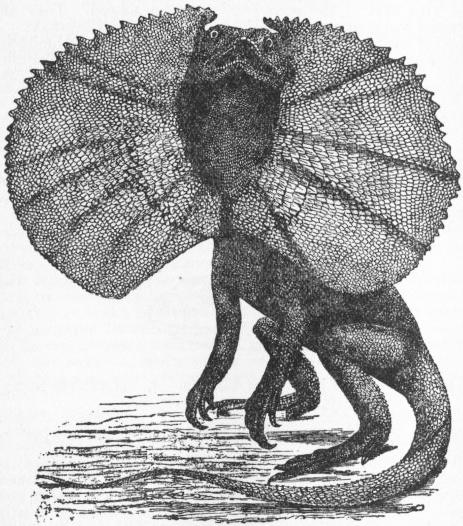
Fig. 1.—Frilled Lizard (Chlamydosaurus kingi).
The smallest lizards of this family belong to the genus Anolis, extremely numerous as regards species (more than 100) and individuals on bushes and trees of tropical America, and especially of the West Indies. They offer many points of analogy to the humming birds in their distribution, colours and even disposition. Hundreds may be seen on a bright day, disporting themselves on trees and fences, and entering houses. Like the iguanas, they (at least the males) are provided with a large, expansible dewlap at the throat, which is brilliantly coloured, and which they display on the slightest provocation. This appendage is merely a fold of the skin, ornamental and sexual; it has no cavity in its interior, and has no communication with the mouth or with the respiratory organs; it is supported by the posterior horns of the hyoid bone, and can be erected and spread at the will of the animal. The presence of such dewlaps in lizards is always a sign of an excitable temper. Many, e.g. A. carolinensis, the “chameleon,” can change colour to an extraordinary degree. They are much fed upon by birds and snakes, and have a fragile tail, easily reproduced. They bring forth only one large egg at a time, but probably breed several times during the season.
Family 3. Xenosauridae.—Pleurodont; solid teeth; anterior part of tongue slightly emarginate and retractile, and covered with flat papillae; no osteoderms. Mexico.
The only representative of this family is Xenosaurus grandis, recorded from the mountains of Orizaba, Cordoba and Oaxaca. The four-footed creature is less than 1 ft. in length; the body is depressed, covered above with minute granules and tubercles; a distinct fold of skin extends from the axilla to the groin, reminding of the similar fold of some Anguidae, to which this singular genus seems to be allied.
Family 4. Anguidae.—Pleurodont; teeth solid, sometimes (Ophiosaurus) grooved; anterior part of tongue emarginate and retractile into the posterior portion; osteoderms on the body, and especially on the head where they are roofing over the temporal fossa; entirely zoophagous and ovo-viviparous. America, Europe and India.
Gerrhonotus, 8 species, in mountainous countries, from British Columbia to Costa Rica; like Diploglossus s. Celestus of Mexico, the Antilles and Central America, with well-developed limbs, but with a lateral fold. Anguis fragilis and two species of Ophiosaurus are the only members of this family which are not American, and even the third species of Ophiosaurus, O. ventralis, lives in the United States. Ophiosaurus s. Pseudopus, the glass-snake, from Morocco and the Balkan peninsula to Burma and Fokien; also in the U.S.A., with the limbs reduced to a pair of tiny spikes near the vent, and a lateral fold along the snake-like body. Anguis, with its sole species fragilis, the slow-worm or blind-worm, is devoid of a lateral fold, and the limbs are entirely absent. Europe, Algeria and western Asia.
Family 5. Helodermatidae, with Heloderma of Arizona and Mexico, and Lanthanotus of Borneo.—The teeth of Heloderma are recurved, with slightly swollen bases, loosely attached to the inner edge of the jaws; each tooth is grooved, and those of the lower jaw are in close vicinity of the series of labial glands which secrete a poison; the only instance among lizards.2 Limbs well developed. Tongue resembling that of the Anguidae. The skin of the upper surface is granular, with many irregular bony tubercles which give it an ugly warty look. H. horridum in Mexico, and H. suspectum, the gila monster, in the hot and sandy lowlands of the Gila basin. The animal, which reaches a length of more than 2 ft., is blackish-brown and yellow or orange, and on the thick tail these “warning colours” are arranged in alternate rings. Small animals are probably paralyzed or killed by the bite, the poison being effective enough to produce severe symptoms even in man. The Zapotecs, who call the creature Talachini, and other tribes of Mexico have endowed it with fabulous properties and fear it more than the most poisonous snakes. Lanthanotus corneensis, of which only a few specimens are known, is apparently closely allied to Heloderma, although the teeth are not grooved, osteoderms are absent and probably also the poison glands.
Family 6. Aniellidae.—One genus, Aniella, with a few worm- or snake-shaped species in California, which seem to be degraded forms of Anguidae. The eyes and ears are concealed, the limbs are entirely absent, body and tail covered with soft, imbricating scales. The tongue is villose, smooth, bifid anteriorly. The few teeth are recurved, with swollen bases. The skull is much reduced. Total length of A. pulchra up to 8 in.
Family 7. Zonuridae.—Pleurodont; tongue short, villose, scarcely protractile, feebly nicked at the tip. With osteoderms at least upon the skull, where they roof in the temporal region. Africa and Madagascar.
Only 4 genera, with about 15 species. Zonurus of South Africa and Madagascar has the whole head, neck, back and tail covered with strong bony scales, the horny covering of which forms sharp spikes, especially on the tail. They defend themselves by jerking head and tail sidewards. Z. giganteus reaches 15 in. in length, and is, like the other members of the family, zoophagous. The other genera live in southern and in tropical Africa: Pseudocordylus, Platysaurus and Chamaesaura; the latter closely approaches the Anguidae by its snake-shaped body, very long tail and much reduced limbs, which in C. macrolepis are altogether absent.
Family 8. Xantusiidae.—Pleurodont; tongue very short and scaly; no osteoderms; supratemporal fossa roofed over by the cranial bones; eyes devoid of movable lids; tympanum exposed; femoral pores present; limbs and tail well developed. American.
Xantusia (so named after Xantus, a Hungarian collector), e.g. X. vigilis and a few other species from the desert tracts of Nevada and California to Lower California. Lepidophyma flavomaculatum, Central America; and Cricosaura typica in Cuba.
Family 9. Tejidae.—Teeth solid, almost acrodont; tongue long and narrow, deeply bifid, beset with papillae; no osteoderms; scales of the back very small or quite granular; limbs sometimes reduced. America.
This large, typically American family comprises more than 100 species which have been arranged in many genera. Some are entirely arboreal, dwellers in forests, while others, like Cnemidophorus and Ameiva, are strictly terrestrial, with great running powers; a few dwell below the surface and are transformed into almost limbless worm-shaped creatures. The family is essentially neotropical. Of its several dozen genera only two extend through and beyond Central America: Ameiva into the eastern and western Hot-lands of Mexico, Cnemidophorus (monographed by H. Gadow, Proc. Zool. Soc., 1906, pp. 277-375) through Mexico into the United States, where C. sexlineatus, the “swift,” has spread over most of the Union. Tupinambis teguixin, the “teju” of South America and the West Indies, is the largest member of the family; it reaches a length of a yard, most of which, however, belongs to the strong, whip-like tail. Teguixin is taken from the Aztec teco-ixin, i.e. rock-lizard, the vernacular name of Sceloporus torquatus which is one of the Iguanidae misspelt and misapplied. The tejus frequent forests and plantations and are carnivorous, eating anything they can overpower. They in turn are much hunted for the sake of their delicate flesh. They defend themselves not only with their powerful jaws and sharp claws, but also with lashing strokes of the long tail. They also use this whip for killing snakes which they are said to eat. Their long-oval, hard-shelled eggs are deposited in the ground. They retire into self-dug burrows. Cophias and Scolecosaurus have very much reduced limbs. In the genus Tejus the teeth of the adult become molar-like; and in Dracaena they are transformed into large, oval crushers, indicating strictly herbivorous habits, while most members of the family live upon animal food.
Family 10. Amphisbaenidae.—The body is covered with soft skin, forming numerous rings with mere vestiges of scales. Worm-shaped, without limbs, except Chirotes which has short, clawed fore-limbs. Eyes and ears concealed. Tongue slightly elongated, covered with scale-like papillae and bifurcating. Tail extremely short. Acrodont or pleurodont. America, Mediterranean countries, and Africa with the exception of Madagascar.
Chirotes canaliculatus, and two other species; Pacific side of Mexico and Lower California. With five, four or three claws on the stout little digging fore-limbs. These pink, worm-like creatures live in sandy, moist localities, burrowing little tunnels and never appearing on the surface. Amphisbaena (q.v.). Rhinëura of Florida, and also known from the Oligocene of South Dakota; Lepidosternum of South America; and Anops in America and Africa; Blanus cinereus, Mediterranean countries. Trogonophis, Pachycalamus and Agamodon of Africa are all acrodont; the other genera are pleurodont. In all about a dozen genera, with some 60, mostly tropical species.
Family 11. Scincidae.—Pleurodont. Tongue scaly, feebly nicked in front. Osteoderms on the head and body. Limbs often reduced. Cosmopolitan. The temporal region is covered over, as in the Lacertidae and Anguidae, with strongly developed dermal ossifications. Similar osteoderms underlie the scales of the body and tail. Femoral pores are absent.
All the skinks seem to be viviparous, and they prefer dry, sandy ground, in which they burrow and move quickly about in search of their animal food. This partly subterranean life is correlated with the frequent reduction of the limbs which, in closely allied forms, show every stage from fully developed, five-clawed limbs to complete absence. Some have functional fore-limbs but mere vestiges of hind-limbs; in others this condition is reversed. In some deserticolous kinds e.g. Ablepharus, the lower eyelid is transformed into a transparent cover which is fused with the rim of the reduced upper lid. The same applies to the limbless little Ophiopsiseps nasutus of Australia. This large family contains about 400 species, with numerous genera; the greatest diversity in numbers and forms occurs in the tropical parts of the Old World, especially in the Australian region, inclusive of many of the Pacific islands. New Zealand has at least 6 species of Lygosoma. America, notably South America, has comparatively very few skinks.
The skink, which has given the name to the whole family, is a small lizard (Scincus officinalis) of 6 or 8 in. in length, common in arid districts of North Africa and Syria. A peculiarly wedge-shaped snout, and toes provided with strong fringes, enable this animal to burrow rapidly in and under the sand of the desert. In former times large quantities of it were imported in a dry state into Europe for officinal purposes, the drug having the reputation of being efficacious in diseases of the skin and lungs; and even now it may be found in apothecaries’ shops in the south of Europe, country people regarding it as a powerful aphrodisiac for cattle.
Mabouia, with many species, in the whole of Africa, southern Asia and in tropical America. M. (Euprepes) vittata, the “poisson de sable” of Algeria, is semi-aquatic. Chalcides s. Seps, of the Mediterranean countries and south-western Asia, has a transparent disk on the lower eyelid which is movable; limbs very short or reduced to mere vestiges. Lygosoma circumtropical; Eumeces, also with many small species, in America, Africa and Asia. Cyclodus s. Tiliqua of Australia, Tasmania and Malay Islands, has stout lateral teeth with rounded-off crowns; C. gigas of the Moluccas and of New Guinea is the largest member of the family, reaching a length of nearly 2 ft.; the limbs are well developed, as in Trachysaurus rugosus of Australia, which is easily recognized by the large and rough scales and the short, broad, stump-like tail.
Family 12. Anelytropidae.—An artificial assembly of a few degraded Scincoids. The worm-shaped body is devoid of osteoderms. The tongue is short, covered with imbricating papillae and slightly nicked anteriorly. Teeth pleurodont. Anelytropsis papillosus, of which only three specimens are known, from the humus of forests in the state of Vera Cruz. Eyes concealed. Typhlosaurus and Feylinia in tropical Africa and Madagascar.
Family 13. Dibamidae.—Dibamus novae-Guineae of New Guinea, the Moluccas, Celebes and the Nicobar Islands. Tongue arrow-shaped, covered with curved papillae. The vermiform body is covered with cycloid imbricating scales, devoid of osteoderms. Limbs and even their arches are absent, excepting a pair of flaps which represent the hind-limbs in the males.
Family 14. Gerrhosauridae.—Pleurodont. Tongue long, with papillae, like that of the Lacertidae but only feebly nicked anteriorly. Osteoderms on the head and body, roofing over the temporal region. Femoral pores present, also mostly a lateral fold. Limbs sometimes reduced to small stumps. Tail long and brittle. The few genera and species of this family are restricted to Africa, south of the Sahara and Madagascar.
Gerrhosaurus, with lateral fold and complete limbs; Tetradactylus also with a fold, but with very variable limbs; Condylosaurus; all in Africa. Zonosaurus and Tracheloptychus in Madagascar.
Family 15. Lacertidae.—Pleurodont. Tongue long and bifid, with papillae or folds, with osteoderms on the head but not on the body. Limbs always well developed. Palaearctic and palaeotropical with the exception of Madagascar; not in the Australian region.
The Lacertidae or true lizards comprise about 20 genera, with some 100 species, most abundant in Africa; their northern limit coincides fairly with that of the permanently frozen subsoil. They all are terrestrial and zoophagous. The long, pointed tail is brittle.
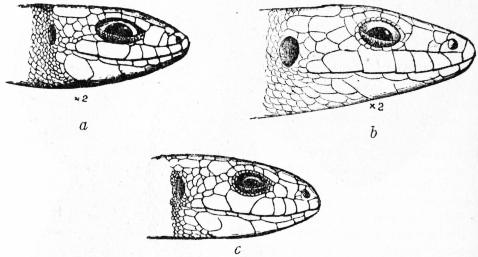
Fig. 2.—Heads of British Lizards. a, Lacerta vivipara; b, L. agilis; c, L. viridis.
Most of the European lizards with four well developed limbs belong to the genus Lacerta. Only three species occur in Great Britain (see fig. 2). The common lizard (Lacerta vivipara) frequents heaths and banks in England and Scotland, and is locally met with also in Ireland; it is viviparous. Much scarcer is the second species, the sand-lizard (Lacerta agilis), which is confined to some localities in the south of England, the New Forest and its vicinity; it does not appear to attain on English soil the same size as on the continent of Europe where it abounds, growing sometimes to a length of 9 in. Singularly, a snake (Coronella laevis), also common on the continent, and feeding principally on this lizard, has followed it across the British Channel, apparently existing in those localities only in which the sand-lizard has settled. This lizard is oviparous. The males differ by their brighter green ground colour from the females, which are brown, spotted with black. The third British species, the green lizard (Lacerta viridis), does not occur in England proper; it has found a congenial home in the island of Guernsey, but is there much less developed as regards size and beauty than on the continent. This species is larger than the two preceding; it is green, with minute blackish spots. In Germany and France one other species only (Lacerta muralis) appears; but in the south of Europe the species of Lacerta are much more numerous, the largest and finest, being L. ocellata, which grows to a length of 18 or 20 in., and is brilliantly green, ornamented with blue eye-like spots on the sides. Even the small island-rocks of the Mediterranean, sometimes only a few hundred yards in diameter, are occupied by peculiar races of lizards, which have attracted much attention from the fact that they have assumed under such isolated conditions a more or less dark, almost black, coloration. L. muralis, with its numerous varieties, has been monographed by G. A. Boulenger, Trans. Zool. Soc. xvii. (1905), pp. 351-422, pl. 22-29.
Other genera are Psammodromus and Acanthodactylus in south-western Europe and northern Africa. Cabrita in India, with transparent lower eyelids. Ophiops, likewise with transparent but united lids, from North Africa to India.
Family 16. Varanidae.—Pleurodont. Tongue very long, smooth and bifid. Osteoderms absent. Limbs always well developed. Old World.
This family contains only one genus, Varanus, with nearly 30 species, in Africa, Arabia and southern Asia, and Australia, but not in Madagascar. The generic term is derived from the Arabic Ouaran, which means lizard. Owing to a ridiculous muddle, this Arabic word has been taken to mean “warning” lizard, hence the Latin Monitor, one of the many synonyms of this genus, now often used as the vernacular. Many of the “monitors” are semi-aquatic, e.g. V. niloticus, and these have a laterally compressed tail; others inhabit dry sandy districts, e.g. V. scincus, the ouaran el ard of North Africa; others prefer wooded localities. V. salvator is the largest species, reaching a length of 7 ft.; it ranges from Nepal and southern China to Cape York; a smaller species, common in New Guinea and Australia, is V. gouldi. They all are predaceous, powerful creatures, with a partiality for eggs. Their own eggs are laid in hollow trees, or buried in the sand. The young are prettily spotted with white and black ocelli, but the coloration of the adult is mostly very plain.
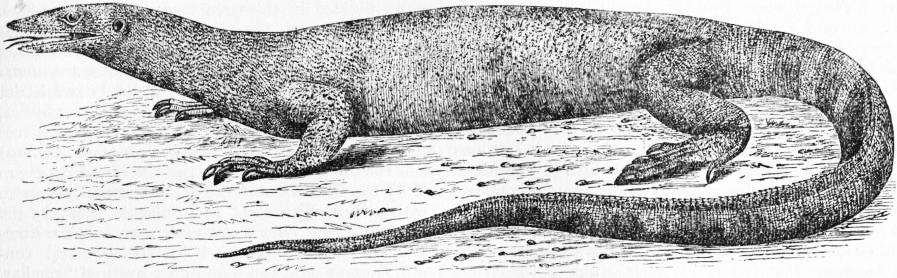
Fig. 3.—Monitor of the Nile (Varanus niloticus).
The following families are much degraded in conformity with their, in most cases, subterranean life. They are of doubtful relationships and contain each but a few species.
Family 17. Pygopodidae.—Pleurodont, snake-shaped, covered with roundish, imbricating scales. Tail long and brittle. Fore-limbs absent; hind-limbs transformed into a pair of scale-covered flaps. Tongue slightly forked. Eyes functional but devoid of movable lids. Australia, Tasmania and New Guinea.
Pygopus, e.g. P. lepidopus, about 2 ft. long, two-thirds belonging to the tail, distributed over the whole of Australia.
Lialis burtoni, of similar size and distribution, has the hind-limbs reduced to very small, narrow appendages. The members of this family seem to lead a snake-like life, not subterranean, and some are said to eat other lizards. L. jicari, from the Fly river, has a very snake-like appearance, with a long, pointed snout like certain tree-snakes, but with an easily visible ear-opening; their eyelids are reduced to a ring which is composed of two or three rows of small scales.
(H. F. G.)
1 For the etymology of this word, see Crocodile.
2 For anatomical detail and experiments, see R. W. Shufeldt, P. Z. S. (1890), p. 178; G. A. Boulenger, ibid. (1891), p. 109, and C. Stewart, ibid. (1891), p. 119.
LIZARD POINT, or The Lizard, the southernmost point of Great Britain, in Cornwall, England, in 49° 57′ 30″ N., 5° 12′ W. It is generally the first British land sighted by ships bound up the English Channel, and there are two lighthouses on it. The cliff scenery is magnificent, and attracts many visitors. The coast is fretted into several small bays, such as Housel and, most famous of all, Kynance Cove; caves pierce the cliffs at many points, and bold isolated rocks fringe the shore. The coloured veining of the serpentine rock is a remarkable feature. The Lion’s Den is a chasm formed by the falling in of a sea-cave in 1847; the Stags is a dangerous reef stretching southward from the point, and at Asparagus Island, Kynance Cove, is a natural funnel in which the air is compressed by the waves and causes a violent ejection of foam. The principal village is Lizard Town, 10½ m. from Helston, the nearest railway station.
LJUNGGREN, GUSTAF HÅKAN JORDAN (1823-1905), Swedish man of letters, was born at Lund on the 6th of March 1823. He was educated at Lund university, where he was professor of German (1850-1859), of aesthetics (1859-1889) and rector (1875-1885). He had been a member of the Swedish Academy for twenty years at the time of his death in September 1905. His most important work, Svenska vitterhetens häfder efter Gustav III.’s död (5 vols., Lund., 1873-1895), is a comprehensive study of Swedish literature in the 19th century. His other works include: Framställning af de förnämste estetiska systemerna (an exposition of the principal system of aesthetics; 2 vols., 1856-1860); Svenska dramat intill slutet af 17 århundradet (a history of the Swedish drama down to the end of the 17th century, Lund, 1864); an edition (1864) of the Epistlar of Bellman and Fredman, and a history of the Swedish Academy in the year of its centenary (1886).
His scattered writings were collected as Smärre Skrifter (3 vols., 1872-1881).
LLAMA, the Spanish modification of the Peruvian name of the larger of the two domesticated members of the camel-tribe indigenous to South America. The llama (Lama huanacus glama) is a domesticated derivative of the wild guanaco, which has been bred as a beast of burden. Chiefly found in southern Peru, it generally attains a larger size than the guanaco, and is usually white or spotted with brown or black, and sometimes altogether black. The following account by Augustin de Zarate was given in 1544:
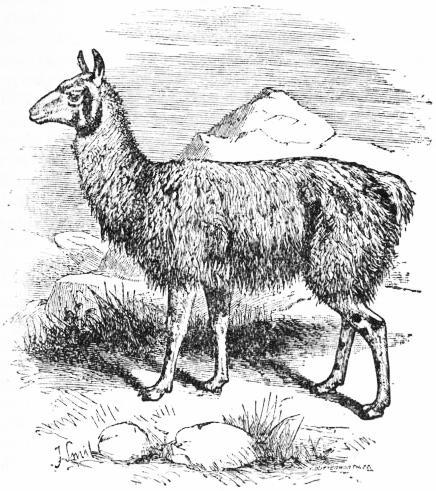
Llama.
“In places where there is no snow, the natives want water, and to supply this they fill the skins of sheep with water and make other living sheep carry them, for, it must be remarked, these sheep of Peru are large enough to serve as beasts of burden. They can carry about one hundred pounds or more, and the Spaniards used to ride them, and they would go four or five leagues a day. When they are weary they lie down upon the ground, and as there are no means of making them get up, either by beating or assisting them, the load must of necessity be taken off. When there is a man on one of them, if the beast is tired and urged to go on, he turns his head round, and discharges his saliva, which has an unpleasant odour, into the rider’s face. These animals are of great use and profit to their masters, for their wool is very good and fine, particularly that of the species called pacas, which have very long fleeces; and the expense of their food is trifling, as a handful of maize suffices them, and they can go four or five days without water. Their flesh is as good as that of the fat sheep of Castile. There are now public shambles for the sale of their flesh in all parts of Peru, which was not the case when the Spaniards came first; for when one Indian had killed a sheep his neighbours came and took what they wanted, and then another Indian killed a sheep in his turn.”
The disagreeable habit of spitting is common to all the group.
In a wide sense the term “llama” is used to designate all the South American Camelidae. (See Tylopoda.)
LLANBERIS, a town of Carnarvonshire, N. Wales, 8½ m. E. by S. of Carnarvon, by a branch of the London & North-Western railway. Pop. (1901) 3015. It is finely situated in a valley near the foot of Snowdon. The valley has two lakes, Llyn Peris and Llyn Padarn, of over 1 m. and 2 m. long respectively, about ¼ m. apart. From Padarn rises the Seint, called Rothell in its upper part. Dolbadarn Castle is a circular tower near the foot of Peris lake. Dolbadarn means the “Padarn meadow.” Several Welsh churches are dedicated to Padarn. In the castle Owen Goch (Owen the Red) was imprisoned from 1254 to 1277, by the last Llewelyn, whose brother Dafydd held it for some time against Edward I. During the time of Owen Glendower (temp. Henry IV. and Henry V.), the castle often changed hands. Near is Ceunantmawr waterfall. The Vaenol slate quarries are here, and hence is the easiest ascent of Snowdon, with a railway to the summit. From the road over the fine Llanberis pass towards Capel Curig, a turn to the right leads to Beddgelert, through Nant Gwynnant (“white” or “happy valley,” or “stream”), where Pembroke and Ieuan ap Robert (for the Lancastrians) had many skirmishes in the time of Edward IV. Gwynnant Lake is about 1 m. long, by ¼ m. broad, and below it is the smaller Llyn Dinas.
LLANDAFF, a city of Glamorganshire, Wales, on the Taff Vale railway, 149 m. from London. Pop. (1901) 5777. It is almost entirely within the parliamentary borough of Cardiff. It is nobly situated on the heights which slope towards the southern bank of the Taff. Formerly the see of Llandaff was looked upon as the oldest in the kingdom; but its origin is obscure, although the first two bishops, St Dubricius and St Teilo, certainly flourished during the latter half of the 6th century. By the 12th century, when Urban was bishop, the see had acquired great wealth (as may be seen from the Book of Llandaff, a collection of its records and land-grants compiled probably by Geoffrey of Monmouth), but after the reign of Henry VIII. Llandaff, largely through the alienations of its bishops and the depredations of the canons, became impoverished, and its cathedral was left for more than a century to decay. In the 18th century a new church, in debased Italian style, was planted amid the ruins. This was demolished and replaced (1844-1869) by the present restored cathedral, due chiefly to the energy of Dean Williams. The oldest remaining portion is the chancel arch, belonging to the Norman cathedral built by Bishop Urban and opened in 1120. Jasper Tudor, uncle of Henry VII., was the architect of the north-west tower, portions of which remain. The cathedral is also the parish church. The palace or castle built by Urban was destroyed, according to tradition, by Owen Glendower in 1404, and only a gateway with flanking towers and some fragments of wall remain. After this, Mathern near Chepstow became the episcopal residence until about 1690, when it fell into decay, leaving the diocese without a residence until Llandaff Court was acquired during Bishop Ollivant’s tenure of the see (1849-1882). For over 120 years the bishops had been non-resident. The ancient stone cross on the green (restored in 1897) is said to mark the spot on which Archbishop Baldwin, and his chaplain Giraldus Cambrensis, preached the Crusade in 1187. Money bequeathed by Thomas Howell, a merchant, who died in Spain in 1540, maintains an intermediate school for girls, managed by the Drapers’ Company, Howell’s trustees. There is an Anglican theological college, removed to Llandaff from Aberdare in 1907. The city is almost joined to Cardiff, owing to the expansion of that town.
Llandaff Court, already mentioned, was the ancient mansion of the Mathew family, from which Henry Matthews, 1st Viscount Llandaff (b. 1826), was descended. Another branch of this family formerly held the earldom of Llandaff in the Irish peerage. Henry Matthews, a barrister and Conservative M.P., whose father was a judge in Ceylon, was home secretary 1886-1892, and was created viscount in 1895.
LLANDEILO GROUP, in geology, the middle subdivision of the British Ordovician rocks. It was first described and named by Sir. R. I. Murchison from the neighbourhood of Llandeilo in Carmarthenshire. In the type area it consists of a series of slaty rocks, shales, calcareous flagstones and sandstones; the calcareous middle portion is sometimes termed the “Llandeilo limestone”; and in the upper portion volcanic rocks are intercalated. A remarkable feature in the history of the Llandeilo rocks in Britain, more especially in North Wales and Cumberland, was the outbreak of volcanic action; vast piles of Llandeilo lava and ashes form such hills as Cader Idris, and the Arenigs in Wales, and Helvellyn and Scafell in Westmorland and Cumberland. The series is also found at Builth and in Pembrokeshire. The average thickness in Wales is about 2000 ft. The group is usually divided in this area into three subdivisions. In the Corndon district of Shropshire the Middleton Series represents the Llandeilo group; it includes, in descending order, the Rorrington black shales, the Meadowtown limestones and flags, and the western grits and shales. In the Lake District the great volcanic series of Borrowdale, green slates and porphyries, 8000 to 9000 ft. in thickness, lies on this horizon; and in the Cross Fell area the Milburn beds of the Skiddaw slates (see Arenig) appear to be of the same age. In Scotland the Llandeilo group is represented by the Glenkiln shales, black shales and yellowish mudstones with radiolarian cherts and volcanic tuffs; by the Barr Series, including the Benan conglomerates, Stinchar limestone and Kirkland sandstones; and by the Glenapp conglomerates and Tappins mudstones and grits south of Stinchar. Graptolitic shales, similar to those of southern Scotland, are traceable into the north-east of Ireland.
The fossils of the Llandeilo group include numerous graptolites, Coenograptus gracilis being taken as the zonal fossil of the upper portion, Didymograptus Murchisoni of the lower. Other forms are Climacograptus Scharenbergi and Diplograptus foliaceus. Many trilobites are found in these rocks, e.g. Ogygia Buchi, Asaphus tyrannus, Calymene cambrensis, Cheirurus Sedgwickii. Among the brachiopods are Crania, Leptaena, Lingula, Strophomena; Cardiola and Modiolopsis occur among the Pelecypods; Euomphalus, Bellerophon, Murchisonia among the Gasteropods; Conularia and Hyolithes among the Pteropods; the Cephalopods are represented by Orthoceras and Cyrtoceras. The green roofing slates and plumbago (graphite) of the Lake District are obtained from this group of rocks, (see Ordovician).
LLANDILO, or Llandeilo Fawr, a market town and urban district of Carmarthenshire, Wales, picturesquely situated above the right bank of the river Towy. Pop. (1901) 1721. Llandilo is a station on the Mid-Wales section of the London & North-Western railway, and a terminus of the Llandilo-Llanelly branch line of the Great Western. The large parish church of St Teilo has a low embattled Perpendicular tower. Adjoining the town is the beautiful park of Lord Dynevor, which contains the ruined keep of Dinefawr Castle and the residence of the Rices (Lords Dynevor), erected early in the 17th century but modernized in 1858. Some of the loveliest scenery of South Wales lies within reach of Llandilo, which stands nearly in the centre of the Vale of Towy.
The name of Llandilo implies the town’s early foundation by St Teilo, the great Celtic missionary of the 6th century, the friend of St David and reputed founder of the see of Llandaff. The historical interest of the place centres in its proximity to the castle of Dinefawr, now commonly called Dynevor, which was originally erected by Rhodri Mawr or his son Cadell about the year 876 on the steep wooded slopes overhanging the Towy. From Prince Cadell’s days to the death of the Lord Rhys, last reigning prince of South Wales, in 1196, Dinefawr continued to be the recognized abode of South Welsh royalty. The castle ruins remain in the possession of the Rices, Lords Dynevor, heirs and descendants of Prince Cadell. At one period residence and park became known as New-town, a name now obsolete. Some personal relics of the celebrated Sir Rhys ap Thomas, K.G. (1451-1527), are preserved in the modern house. Dinefawr Castle and its estates were granted away by Henry VIII. on the execution for high treason of Sir Rhys’s grandson, Rhys ap Griffith, but were restored to the family under Queen Mary.
LLANDOVERY (Llan-ym-ddyffri), a market town and ancient municipal borough of Carmarthenshire, Wales, situated amid hills near the left bank of the Towy. Pop. (1901) 1809. Llandovery is a station on the Mid-Wales section of the London & North-Western railway. The old-fashioned town lies in the parish of Llandingat, and contains the two churches of Llandingat and Llanfair-ar-y-bryn. The slight remains of the castle stand on a hillock above the river Brân. The public school was founded here by Sir Thomas Phillips in 1847.
The place probably owes its Celtic name of Llan-ym-ddyffri (the church amid the waters) to the proximity of Llandingat church to the streams of the Towy, Brân and Gwydderig. On account of its commanding position at the head of the fertile vale of Towy, Llandovery was a strategic site of some importance in the middle ages. The castle erected here by the Normans early in the 12th century frequently changed owners during the course of the Anglo-Welsh wars before 1282. In 1485 the borough of Llandovery, or Llanymtheverye, was incorporated by a charter from Richard III., and this king’s privileges were subsequently confirmed by Henry VIII. in 1521, and by Elizabeth in 1590, the Tudor queen’s original charter being still extant and in the possession of the corporation, which is officially styled “the bailiff and burgesses of the borough of Llanymtheverye, otherwise Llandovery.” The bailiff likewise holds the office of recorder, but has neither duties nor emoluments. In the 17th century the vicarage of Llandingat was held by the celebrated Welsh poet and preacher, Rhys Prichard, commonly called “the vicar of Llandovery” (d. 1644). In the middle of the 19th century William Rees of Tonn published at Llandovery many important works dealing with early Welsh history and archaeology.
LLANDOVERY GROUP, in geology, the lowest division of the Silurian (Upper Silurian) in Britain. C. Lapworth in 1879 proposed the name Valentian (from the ancient north British province of Valentia) for this group. It includes in the type area the Tarannon Shales 1000-1500 ft., Upper Llandovery and May Hill Sandstone 800 ft., Lower Llandovery, 600-1500 ft.
The Lower Llandovery rocks consist of conglomerates, sandstones and slaty beds. At Llandovery they rest unconformably upon Ordovician rocks (Bala), but in many other places no unconformity is traceable. These rocks occur with a narrow crop in Pembrokeshire, which curves round through Llandovery, and in the Rhyader district they attain a considerable thickness. Northwards they thin out towards Bala Lake. They occur also in Cardiganshire and Carmarthenshire in many places where they have not been clearly separated from the associated Ordovician rocks.
There is a change in the fauna on leaving the Ordovician and entering the Llandovery. Among the graptolites the Diplograptidae begin to be replaced by the Monograptidae. Characteristic graptolite zones, in descending order, are:—Monograptus gregarius, Diplograptusvesiculosus, D. acuminatus. Common trilobites are:—Acidaspis, Encrinurus, Phacops, Proëtus; among the brachiopods are Orthis elegantula, O. testudinaria, Meristella crassa and Pentamerus (Stricklandinia) lens (Pentamerus is so characteristic that the Llandovery rocks are frequently described as the “Pentamerus beds”).
The Upper Llandovery, including the May Hill Sandstone of May Hill, Gloucestershire, is an arenaceous series generally conglomeratic at the base, with local lenticular developments of shelly limestone (Norbury, Hollies and Pentamerus limestones). It occurs with a narrow outcrop in Carmarthenshire at the base of the Silurian, disappearing beneath the Old Red Sandstone westward to reappear in Pembrokeshire; north-eastward the outcrop extends to the Longmynd, which the conglomerate wraps round. As it is followed along the crop it is found to rest unconformably upon the Lower Llandovery, Caradoc, Llandeilo, Cambrian and pre-Cambrian rocks. The fossils include the trilobites Phacops caudata, Encrinurus punctatus, Calymene Blumenbachii; the brachiopods Pentamerus oblongus, Orthis calligramma, Atrypa reticularis; the corals Favosites, Lindostroemia, &c.; and the zonal graptolites Rastrites maximus and Monograptus spinigerus and others (Monograptus Sedgwicki, M. Clingani, M. proteus, Diplograptus Hughesii).
The Tarannon shales, grey and blue slates, designated by A. Sedgwick the “paste rock,” is traceable from Conway into Carmarthenshire; in Cardiganshire, besides the slaty facies, gritty beds make their appearance; and in the neighbourhood of Builth soft dark shales. The group is poor in fossils with the exception of graptolites; of these Cyrtograptus grayae and Monograptus exiguus are zonal forms. The Tarannon group is represented by the Rhyader Pale Shales in Radnorshire; by the Browgill beds, with Monograptus crispus and M. turriculatus, in the Lake district; in the Moffat Silurian belt in south Scotland by a thick development, including the Hawick rocks and Ardwell beds, and the Queensberry group or Gala (Grieston shales, Buckholm grits and Abbotsford flags); in the Girvan area, by the Drumyork flags, Bargany group and Penkill group; and in Ireland by the Treveshilly shales of Strangford Lough, and the shales of Salterstown, Co. Louth.
The Upper and Lower Llandovery rocks are represented in descending order by the Pale shales, Graptolite shales, Grey slates and Corwen grit of Merionethshire and Denbighshire. In the Rhyader district the Caban group (Gafalt beds, shales and grits and Caban conglomerate), and the Gwastaden group (Gigrin mudstones, Ddol shales, Dyffryn flags, Cerig Gwynion grits) lie on this horizon; at Builth also there is a series of grits and shales. In the Lake district the lower part of the Stockdale shales (Skelgill beds) is of Llandovery age. In south Scotland in the central and southern belt of Silurian rocks, which extends across the country from Luce Bay to St Abb’s Head, the Birkhill shales, a highly crumpled series of graptolitic beds, represent the Llandovery horizon. In the Girvan area to the north their place is taken by the Camregan, Shaugh Hill and Mullock Hill groups. In Ireland the Llandovery rocks are represented by the Anascaul slates of the Dingle promontory, by the Owenduff and Gowlaun grits, Co. Galway, by the Upper Pomeroy beds, by the Uggool and Ballaghaderin beds, Co. Mayo, and by rocks of this age in Coalpit Bay and Slieve Felim Mountains.
Economic deposits in Llandovery rocks include slate pencils (Teesdale), building stone, flag-stone, road metal and lime. Lead ore occurs in Wales. (See Silurian.)
(J. A. H.)
LLANDRINDOD, or Llandrindod Wells, a market town, urban district and health-resort of Radnorshire, Wales, situated in a lofty and exposed district near the river Ithon, a tributary of the Wye. Pop. (1901) 1827. Llandrindod is a station on the Mid-Wales section of the London & North-Western railway. The town annually receives thousands of visitors, and lies within easy reach of the beautiful Wye Valley and the wild district of Radnor Forest. The saline, sulphur and chalybeate springs of Llandrindod have long been famous. According to a treatise published by a German physician, Dr Wessel Linden, in 1754, the saline springs at Ffynon-llwyn-y-gog (“the well in the cuckoos’ grove”) in the present parish of Llandrindod had acquired more than a local reputation as early as the year 1696. In the 18th century both saline and sulphur springs were largely patronized by numbers of visitors, and about 1749 a Mr Grosvenor built a hydropathic establishment near the old church, on a site now covered by a farm-house known as Llandrindod Hall.
LLANDUDNO, a seaside resort in the Arfon parliamentary division of Carnarvonshire, North Wales, in a detached portion of the county east of the Conwy, on a strip of sandy soil terminating in the massive limestone of Great Orme’s Head. Pop. of urban district (1901) 9279. The town is reached by the London & North-Western railway, and lies 227 m. N.W. of London. A village in 1850, Llandudno is to-day one of the most flourishing watering-places in North Wales. Sheltered by the Great Orme on the N.W. and by the Little Orme on the E., it faces a wide bay of the Irish Sea, and is backed by low sandhills. A Marine Drive encircles the Great Orme. The Little Orme has caverns and abounds in sea birds and rare plants. Close to the town are the Gloddaeth woods, open to visitors. On the Great Orme are old circular buildings, an ancient fortress, a “rocking-stone” (crŷd Tudno) and the 7th-century church of St Tudno, restored in 1885. Druidical and other British antiquities are numerous in the district. At Deganwy, or Diganwy, 2 m. from Llandudno, is a castle, Dinas Gonwy (Conwy fort), known to English historians as Gannoc, dating from the 11th or (according to the Welsh) earlier than the 9th century.
LLANELLY, a market town, urban district, and seaport of Carmarthenshire, Wales, situated on the north shore of the broad estuary of the river Loughor (Llwchwr), known as Burry river, which forms an inlet of Carmarthen Bay. Pop. (1901) 25,617. Llanelly is a station on the South Wales section of the Great Western railway. The town is wholly of modern appearance. The mother-church of St Elliw, or Elli (whence the town derives its name) has been practically rebuilt (1906), but it retains its 13th-century tower and other ancient features of the original fabric. Its situation on a broad estuary and its central position with regard to a neighbourhood rich in coal, iron and limestone, have combined to make Llanelly one of the many important industrial towns of South Wales. Anthracite and steam-coal from the collieries of the coast and along the Loughor Valley are exported from the extensive docks; and there are also large works for the smelting of copper and the manufacture of tin plates.
Llanelly, though an ancient parish and a borough by prescription under a portreeve and burgesses in the old lordship of Kidwelly, remained insignificant until the industrial development in South Wales during the 19th century. In 1810 the combined population of Llanelly, with its four subsidiary hamlets of Berwick, Glyn, Hencoed and Westowe, only amounted to 2972; in 1840 the inhabitants of the borough hamlet alone had risen to 4173. Llanelly is now the most populous town in Wales outside the confines of Glamorganshire. In 1832 Llanelly was added as a contributory borough to the Carmarthen parliamentary district.
LLANES, a seaport of northern Spain, in the province of Oviedo, on the river Carrocedo and the Bay of Biscay. Pop. (1900) 18,684. The streets are mostly narrow and irregular, and contain some curious old houses. The principal buildings are a fine Gothic church and an old Augustinian monastery, which has been converted into a school and meteorological station. In summer the fine climate, scenery and sea-bathing attract many visitors. Llanes is a second-class port for light-draught vessels; but the entrance is narrow, and rather difficult in rough weather. The trade is chiefly in agricultural produce, timber, butter and fish.
LLANGOLLEN, a picturesque market-town and summer resort of Denbighshire, N. Wales, in the Dee (Dyfrdwy) valley, on a branch of the Great Western Railway, 9 m. S.W. of Wrexham, 202½ m. from London by rail. Pop. of urban district (1901) 3303. The Dee is here crossed by a 14th-century bridge of four arches, “one of the seven wonders of Wales,” built by John Trevor, afterwards bishop of St Asaph (Llanelwy). The Anglican church of St Collen, Norman and Early English, has a monument in the churchyard to the “Ladies of Llangollen,” Lady Eleanor Butler and Hon. Sarah Ponsonby, of Plas Newydd, (1778 to 1829 and 1831 respectively). The house is now a museum. Castell Dinas Brân (the castle of the town of Brân; the mountain stream below is also called Brân), the ruins of a fortress on a high conical hill about 1 m. from the town, is supposedly British, of unknown date. “An old ruynous thinge,” as the Elizabethan poet Churchyard calls it even in the 16th century, it was inhabited, apparently, about 1390, by Myfanwy Fechan of the Tudor Trevor family and beloved by the bard Howel ab Einion Llygliw, whose ode to her is still extant. Valle Crucis Abbey (Llan Egwest) is a Cistercian ruin at the foot of Bronfawr hill, some 2 m. N.W. of Llangollen, founded about 1200 by Madoc ab Gruffydd Maelor, lord of Dinas Brân and grandson of Owen Gwynedd, prince of Wales. Llan Egwest, dissolved in 1535, was given by James I. to Lord Edward Wootton. In the meadow adjoining, still called Llwyn y Groes (“grove of the cross”), is “Eliseg’s Pillar.” Eliseg was father of Brochmael, prince of Powys, and his grandson, Concen or Congen, appears to have erected the pillar, which is now broken, with an illegible inscription; the modern inscription dates only from 1779. At Llangollen are linen and woollen manufactures, and near are collieries, lime and iron works. Brewing, malting and slate-quarrying are also carried on. Within the parish, an aqueduct carries the Ellesmere canal across the Dee.
LLANQUIHUE (pron. lan-kè-wa), a province of southern Chile bordering on the northern shores of the Gulf and Straits of Chacao, and extending from the Pacific to the Argentine frontier. The province of Valdivia lies N. and is separated from it in part by the Bueno river. Pop. (1895) 78,315. Area 45,515 sq. m. It is a region of forests, rivers and lakes, and the greater part is mountainous. The rainfall is excessive, the average at Puerto Montt being 104 in. a year, and the temperature is singularly uniform, the average for the summer being 58½°, of the winter 47½°, and of the year 53° F. There are several large lakes in the eastern part of the province—Puyehue, on the northern frontier, Rupanco, Llanquihue and Todos los Santos. Lake Llanquihue is the largest body of fresh water in Chile, having an extreme length from N. to S., or from Octai to Varas, of about 33 m., and extreme breadth of nearly the same. There is a regular steamship service on the lake between Octai and Varas, and its western shores are well settled. The volcanoes of Calbuco and Osorno rise from near its eastern shores, the latter to a height of 7382 ft. The outlet of the lake is through Maullin river, the lower course of which is navigable. The other large rivers of the province are the Bueno, which receives the waters of Lakes Puyehue and Rupanco, and the Puelo, which has its rise in a lake of the same name in the Argentine territory of Chubut. A short tortuous river of this vicinity, called the Petrohue, affords an outlet for the picturesque lake of Todos los Santos, and enters the Reloncavi Inlet near the Puelo. The southern coast of the province is indented by a number of inlets and bays affording good fishing, but the mouths of the rivers flowing into the Pacific are more or less obstructed by sand-bars. Apart from the lumber industry, which is the most important, the productions of Llanquihue include wheat, barley, potatoes and cattle. The white population is composed in great part of Germans, who have turned large areas of forest lands in the northern districts into productive wheat fields. The capital is Puerto Montt, on a nearly land-locked bay called the Reloncavi, designed to be the southern terminus of the longitudinal railway from Tacna, a distance of 2152 m. An important town in the northern part of the province is Osorno, on the Rahue river, which is chiefly inhabited by Germans. It exports wheat and other farm produce, leather, lumber and beer.
LLANTRISANT, a small town and a contributory parliamentary borough of Glamorganshire, Wales, picturesquely situated with a southern aspect, commanding a fine view of the vale of Glamorgan, in a pass on the mountain range which separates that vale from the valley of the Taff. The population of the parish in 1901 was 10,091 and of the contributory borough 2057. A branch of the Taff Vale railway running from Pontypridd to Cowbridge and Aberthaw has a station, Cross Inn, ½ m. below the town, while nearly 2 m. farther south it passes (near the village of Pontyclun) through Llantrisant station on the Great Western railway main line, which is 156¼ m. by rail from London and 11 m. N.W. from Cardiff. The castle, which according to G. T. Clark was “second only to Cardiff in military importance,” dates from the reign of Henry III. or Edward I. Of the original building nothing remains, and of a later building only a tall and slender fragment. It was the head of the lordship of Miskin, a great part of which was in the hands of native owners, until the last of them, Howel ap Meredith, was expelled by Richard de Clare (1229-1262). Since then it has always been in the hands of the lord of Glamorgan. It was in the near neighbourhood of the town that Edward II. was captured in 1327. In 1426 the then lord of Glamorgan, Richard, 5th earl of Warwick, granted to the residents a charter confirming grants made by his predecessors in 1346, 1397 and 1424. The corporation was abolished in 1883, and its property (including 284 acres of common land) is administered by a town trust under a scheme of the charity commissioners. The “freemen” of the borough, however, still hold a court leet in the town-hall. The market formerly held here has been discontinued, but there are four annual fairs. The church was dedicated to three saints (Illtyd, Gwyno and Tyfodwg), whence the name Llantrisant. Originally a Norman building, most of the present fabric belongs to the 15th century. There are numerous chapels. Welsh is still the predominant language. Oliver Cromwell’s forbears were natives of this parish, as also was Sir Leoline Jenkins, secretary of state under Charles II. There are tinplate works at Pontyclun and numerous collieries in the district.
LLANTWIT MAJOR (Welsh Llan-Illtyd-Fawr), a small market town in the southern parliamentary division of Glamorganshire, South Wales, about 1 m. from the Bristol Channel, with a station on the Barry railway, 5 m. S. of Cowbridge. Pop. (1901) 1113. About 1 m. N.N.W. of the town there were discovered in 1888 the remains of a large Roman villa within a square enclosure of about 8 acres, which has been identified as part of the site of a Roman settlement mentioned in Welsh writings as Caer Wrgan. The building seemed to have been the scene of a massacre, possibly the work of Irish pirates in the 5th century, as some forty-three human skeletons and the remains of three horses were found within its enclosure. Etymological reasoning have led some to suggest that the Roman station of Bovium was at Boverton, 1 m. E. of the town, but it is more likely to have been at Ewenny (2 m. S.E. of Bridgend) or perhaps at Cowbridge. On the sea coast are two camps, one known as Castle Ditches, commanding the entrance to the creek of Colhugh, once the port of Llantwit. In the time of Henry I. a small colony of Flemings settled in the district. The town and church derive their name from St Illtyd or Iltutus, styled the “knight,” a native of Brittany and a great-nephew of Germanus of Auxerre. Having come under the influence of St Cadoc, abbot of Llancarvan, 6 m. E.N.E. of Llantwit, Illtyd established at the latter place, about A.D. 520, a monastic college which became famous as a seat of learning. He attracted a number of scholars to him, especially from Brittany, including Samson, archbishop of Dol, Maglorius (Samson’s successor) and Paul de Leon, while his Welsh students included David, the patron saint of Wales, Gildas the historian, Paulinus and Teilo. The college continued to flourish for several centuries, sending forth a large number of missionaries until, early in the 12th century, its revenues were appropriated to the abbey of Tewkesbury by Fitzhamon, the first Norman lord of Glamorgan. A school seems, however, to have lingered on in the place until it lost all its emoluments in the reign of Henry VIII. The present church of St Illtyd is the result of a sequence of churches which have sprung from a pre-Norman edifice, almost entirely rebuilt and greatly extended in the 13th century and again partially rebuilt late in the 14th century. It consists of an “eastern” church which (according to Professor Freeman) belonged probably to the monks, and is the only part now used for worship, a western one used as a parochial church before the dissolution, but now disused, and still farther west of this a chantry with sacristan’s house, now in ruins. The western church consists of the nave of a once cruciform building, while in continuation of it was built the eastern church, consisting of chancel, nave (of great height and width but very short), aisles and an embattled western tower built over the junction of the two naves. A partial restoration was made in 1888, and a careful and more complete one in 1900-1905. In the church and churchyard are preserved some early monumental remains of the British church, dating from the 9th century, and some possibly from an earlier date. They include two cross-shafts and one cross with inscriptions in debased Latin (one being to the memory of St Illtyd) and two cylindrical pillars, most of them being decorated with interlaced work. There are some good specimens of domestic architecture of the 17th century. The town is situated in a fertile district and the inhabitants depend almost entirely on agriculture. Its weekly market is mainly resorted to for its stock sales. St Donats castle, 2 m. to the west, was for nearly seven centuries the home of the Stradling family.
As to the Roman remains, see the Athenaeum for October 20 (1888), and the Antiquary for August (1892). As to the church, see the Archaeologia Cambrensis, 3rd ser. iv. 31 (an article by Professor Freeman), 5th ser., v. 409 and xvii. 129, and 6th ser., iii. 56; A. C. Fryer, Llantwit-Major: a Fifth Century University (1893).
(D. Ll. T.)
LLANWRTYD WELLS, an urban district of Breconshire, south Wales, with a station on the central Wales section of the London & North Western railway, 231 m. from London. It is situated in the midst of wild mountain scenery on the river Irfon, a right-bank tributary of the Wye. The place is chiefly noted for its sulphur and chalybeate springs, the former being the strongest of the kind in Wales. The medicinal properties of the sulphur water were discovered, or perhaps rediscovered, in 1732 by a famous Welsh writer, the Rev. Theophilus Evans, then vicar of Llangammarch (to which living Llanwrtyd was a chapelry till 1871). Saline water is obtained daily in the season from Builth Wells. The Irfon is celebrated as a trout-stream. Out of the civil parish, which has an area of 10,785 acres and had in 1901 a population of 854, there was formed in 1907 the urban district, comprising 1611 acres, and with an estimated population at the date of formation of 812. Welsh is the predominant language of the district.