VOLUME V SLICE VII Cerargyrite to Charing Cross (continued 2)
Reading edition
Whalebone Whales.—Existing Cetacea are divisible into two sections, or suborders, the relationships of which are by no means clearly apparent. The first section is that of the whalebone whales, or Mystacoceti, in which no functional teeth are developed, although there are tooth-germs during foetal life. The palate is furnished with plates of baleen or whalebone; the skull is symmetrical; and the nasal bones form a roof to the nasal passages, which are directed upwards and forwards. The maxilla is produced in front of, but not over, the orbital process of the frontal. The lacrymal is small and distinct from the jugal. The tympanic is welded with the periotic, which is attached to the base of the skull by two strong diverging processes. The olfactory organ is distinctly developed. The two halves of the lower jaw are arched outwards, their anterior ends meeting at an angle, and connected by fibrous tissue without any symphysis. All the ribs at their upper extremity articulate only with the transverse processes of the vertebrae; their capitular processes when present not articulating directly with the bodies of the vertebrae. The sternum is composed of a single piece, and articulates only with a single pair of ribs; and there are no ossified sternal ribs. External openings of nostrils distinct from each other, longitudinal. A short conical caecum.
When in the foetal state these whales have numerous minute teeth lying in the dental groove of both upper and lower jaws. They are best developed about the middle of foetal life, after which they are absorbed, and no trace of them remains at the time of birth. The whalebone does not make its appearance until after birth; and consists of a series of flattened horny plates, between three and four hundred in number, on each side of the palate, with a bare interval along the middle line. The plates are placed transversely to the long axis of the palate, with short intervals between them. Each plate or blade is somewhat triangular in form, with the base attached to the palate and the apex hanging downwards. The outer edge of the blade is hard and smooth, but the inner edge and apex fray out into long bristly fibres, so that the roof of the whale’s mouth looks as if covered with hair, as described by Aristotle. At the inner edge of each principal blade are two or three much smaller or subsidiary blades. The principal blades are longest near the middle of the series, and gradually diminish towards the front and back of the mouth. The horny plates grow from a fibrous and vascular matrix, which covers the palatal surface of the maxillae, and sends out plate-like processes, one of which penetrates the base of each blade. Moreover, the free edges of these processes are covered with long vascular thread-like papillae, one of which forms the central axis of each of the hair-like fibres mainly composing the blade. A transverse section of fresh whalebone shows that it is made up of numbers of these soft vascular papillae, circular in outline, and surrounded by concentrically arranged epidermic cells, the whole bound together by other epidermic cells, that constitute the smooth (so-called “enamel”) surface of the blade, which, disintegrating at the free edge, allows the individual fibres to become loose and assume a hair-like appearance.
Whalebone really consists of modified papillae of the mucous membrane of the mouth, with an excessive and horny epithelial development. The blades are supported and bound together for a certain distance from their base, by a mass of less hardened epithelium, secreted by the surface of the palatal membrane or matrix of the whalebone in the intervals of the plate-like processes. This is the “gum” of the whalers. Whalebone varies much in colour in different species; in some it is almost jet black, in others slate colour, horn colour, yellow, or even creamy-white. In some descriptions the blades are variegated with longitudinal stripes of different hues. It differs also greatly in other respects, being short, thick, coarse, and stiff in some cases, and greatly elongated and highly elastic in those species in which it has attained its fullest development. Its function is to strain the water from the small marine molluscs, crustaceans, or fish upon which the whales subsist. In feeding, whales fill the immense mouth with water containing shoals of these small creatures, and then, on closing the jaws and raising the tongue, so as to diminish the cavity of the mouth, the water streams out through the narrow intervals between the hairy fringe of the whalebone blades, and escapes through the lips, leaving the living prey to be swallowed.
Although sometimes divided into two families, Balaenidae and Balaenopteridae, whalebone-whales are best included in a single family group under the former name. The typical members of this family are the so-called right-whales, forming the genus Balaena, in which there are no folds on the throat and chest, and no back-fin; while the cervical vertebrae are fused into a single mass. The flippers are short and broad, with five digits; the head is very large and the whalebone very long and narrow, highly elastic and black; while the scapula is high, with a distinct coracoid and coronoid process. This genus contains the well-known Greenland right-whale (B. mysticetus) of the Arctic seas, the whalebone and oil of which are so much valued in commerce, and also other whales, distinguished by having the head somewhat smaller in proportion to the body, with shorter whalebone and a larger number of vertebrae. These inhabit the temperate seas of both northern and southern hemispheres, and have been divided into species in accordance with their geographical distribution, such as B. biscayensis of the North Atlantic, B. japonica of the North Pacific, B. australis of the South Atlantic, and B. antipodarum and novae-zelandiae of the South Pacific; but the differences between them are so small that they may probably be regarded as races of a single species, the black whale (B. australis). On the head these whales carry a peculiar structure which is known to whalers as the “bonnet.” This is a large horny excrescence, worn into hollows like a much-denuded piece of limestone rock, growing probably in the neighbourhood of the blow-hole. More than one theory has been suggested to account for its presence. One suggestion is that it indicates the descent of whales from rhinoceros-like mammals; another that this species of whale is in the habit of rubbing against rocks in order to free itself from barnacles, and thus produces a kind of corn—although why on the nose alone is not stated. Dr W.G. Ridewood, however, considers that the structure is due to the fact that the horny layers which are produced all over the skin are not shed on this particular spot.
The pigmy whale (Neobalaena marginata) represents a genus agreeing with the right-whales in the absence of throat-flutings, and with the rorquals in the presence of a dorsal fin. The cervical vertebrae are united, and there are only 43 vertebrae altogether. The flippers are small, narrow, and with only four digits. The ribs remarkably expanded and flattened; the scapula low and broad, with completely developed acromion and coracoid processes. The whalebone is long, slender, elastic and white. The species which inhabits the South American, Australian and New Zealand seas is the smallest of the whalebone-whales, being not more than 20 ft. in length.
In contrast to the preceding is the great grey whale (Rachianectes glaucus) of the North Pacific, which combines the relatively small head, elongated shape, and narrow flippers of the fin-whales, with the smooth throat and absence of a back-fin distinctive of the right-whales. The whalebone is shorter and coarser than in any other species. In the skeleton the cervical vertebrae are free, and the first two ribs on each side expanded and united to form a large bony shield. In the humpback-whale (Megaptera longimana or boops) the head is of moderate size, the whalebone-plates are short and wide, and the cervical vertebrae free. The skin of the throat is fluted so as to form an expansible pouch; there is a low back-fin; and the flippers, which have four digits each, are extremely long, equalling about one-fourth the total length of the animal. The acromion and coracoid processes of the scapula are rudimentary. See Humpback-Whale.
The right-whales are built for cruising slowly about in search of the shoals of small floating invertebrates which form their food, and are consequently broad in beam, with a float-shaped body and immovable neck. The humpback is of somewhat similar build, but with a smaller head, and probably attains considerable speed owing to the length of its flippers. The finners, or rorquals (Balaenoptera), which prey largely on fish, are built entirely for speed, and are the ocean greyhounds of the group. Their bodies are consequently long and attenuated, and their necks are partially mobile; while they are furnished with capacious pouches for storing their food. They chiefly differ from the humpback by the smaller head, long and slender build, small, narrow, and pointed flippers, each containing four digits, and the large acromion and coracoid processes to the low and broad scapula. Rorquals are found in almost every sea. Among them are the most gigantic of all animals, B. sibbaldi, which attains the length of 80 ft., and the small B. rostrata, which does not exceed 30. There are certainly four distinct modifications of this genus, represented by the two just mentioned, and by B. musculus and B. borealis, all inhabitants of British seas, but the question whether almost identical forms found in the Indian, Southern and Pacific Oceans are to be regarded as specifically identical or as distinct awaits future researches, although some of these have already received distinct names. See Rorqual.
In the report on the zoology of the “Discovery” expedition, published in 1907 by the British Museum, E.A. Wilson describes a whale frequenting the fringe of the Antarctic ice which indicates a new generic type. Mainly black in colour, these whales measure about 20 or 30 ft. in length, and have a tall dorsal fin like that of a killer.
Toothed Whales.—-The second suborder is represented by the toothed whales, or Odontoceti, in which there is no whalebone, and teeth, generally numerous, though sometimes reduced to a single pair, and occasionally wanting, are normally developed. Unlike that of the whalebone-whales, the upper surface of the skull is more or less unsymmetrical. The nasal bones are in the form of nodules or flattened plates, applied closely to the frontals, and not forming any part of the roof to the nasal passage, which is directed upwards and backwards. The olfactory organ is rudimentary or absent. Hinder end of the maxilla expanded and covering the greater part of the orbital plate of the frontal bone. Lacrymal bone either inseparable from the jugal, or, if distinct, large, and forming part of the roof of the orbit. Tympanic bone not welded with the periotic, which is usually only attached to the rest of the skull by ligament. Two halves of the lower jaw nearly straight, expanded in height posteriorly, with a wide funnel-shaped aperture to the dental canal, and coming in contact in front by a flat surface of variable length, but constituting a symphysis. Several of the anterior ribs with well-developed capitular processes, which articulate with the bodies of the vertebrae. Sternum almost always composed of several pieces, placed one behind the other, with which several pairs of ribs are connected by well-developed cartilaginous or ossified sternal ribs. External respiratory aperture single, the two nostrils uniting before they reach the surface, usually in the form of a transverse sub-crescentic valvular aperture, situated on the top of the head. Flippers with five digits, though the first and fifth are usually little developed. No caecum, except in Platanista.
The first family, Physeteridae, is typified by the sperm-whale, and characterized by the absence of functional teeth in the upper jaw; the lower teeth being various, and often much reduced in number. Bones of the skull raised so as to form an elevated prominence or crest behind the nostrils. Pterygoid bones thick, produced backwards, meeting in the middle line, and not involuted to form the outer wall of the post-palatine air-sinuses, but simply hollowed on their outer side. Transverse processes of the arches of the dorsal vertebrae, to which the tubercles of the ribs are attached, ceasing abruptly near the end of the series, and replaced by processes on the body at a lower level, and serially homologous anteriorly with the heads of the ribs, and posteriorly with the transverse processes of the lumbar vertebrae. Costal cartilages not ossified.
The first group, or Physeterinae, includes the sperm-whale itself and is characterized by the presence of a full series of lower teeth, which are set in a groove in place of sockets, the groove being imperfectly divided by partial septa, and the teeth held in place by the strong, fibrous gum. No distinct lacrymal bone. Skull strikingly asymmetrical in the region of the nasal apertures, in consequence of the left opening greatly exceeding the right in size.
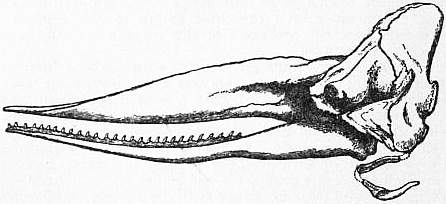
Fig. 2.—Skull of Sperm-Whale (Physeter macrocephalus).
In the sperm-whale (Physeter macrocephalus) the upper teeth are apparently of uncertain number, rudimentary and functionless, being embedded in the gum. Lower jaw with from 20 to 25 teeth on each side, stout, conical, recurved and pointed at the apex until they are worn, without enamel. Upper surface of the skull concave; its posterior and lateral edges raised into a very high and greatly compressed semicircular crest or wall (fig. 2). Zygomatic processes of jugal bones thick and massive. Muzzle greatly elongated, broad at the base, and gradually tapering to the apex. Lower jaw exceedingly long and narrow, the symphysis being more than half the length. Vertebrae: C 7, D 11, L 8, Ca 24; total 50. Atlas, or first vertebra, free; all the other cervical vertebrae united by their bodies and spines into a single mass. Eleventh pair of ribs rudimentary. Head about one-third the length of the body; very massive, high and truncated, and rather compressed in front; owing its huge size and form mainly to the accumulation of a mass of fatty tissue filling the large hollow on the upper surface of the skull and overlying the long muzzle. The single blow-hole is longitudinal, slightly S-shaped, and placed at the upper and anterior extremity of the head to the left side of the middle line. The opening of the mouth is on the under side of the head, considerably behind the end of the snout. Flippers short, broad and truncated. Dorsal fin represented by a low protuberance. See Sperm-Whale.

Fig. 3.—Bottle-nose (Hyperoödon rostratus). From a specimen taken off the coast of Scotland, 1882.
In the lesser or pigmy sperm-whale (Cogia breviceps) there may be a pair of rudimentary teeth in the upper jaw, while on each side of the lower jaw there are from 9 to 12 rather long, slender, pointed and curved teeth, with a coating of enamel. Upper surface of the skull concave, with thick, raised, posterior and lateral margins, massive and rounded at their anterior terminations above the orbits. Muzzle not longer than the cranial position of the skull, broad at the base, and rapidly tapering to the apex. Zygomatic process of the jugal rod-like. Lower jaw with symphysis less than half its length. Vertebrae: C 7, D 13 or 14, L and Ca 30; total 50 or 51. All the cervical vertebrae united by their bodies and arches. The head is about one-sixth of the length of the body, and obtusely pointed in front; the mouth small and placed far below the apex of the snout; the blow-hole crescentic, and placed obliquely on the crown of the head in advance of the eyes and to the left of the middle line; while the flippers are bluntly sickle-shaped, and the back-fin triangular. This species attains a length of from 9 to 13 ft.
A second subfamily is represented by the bottle-noses and beaked whales, and known as the Ziphiinae. In this group the lower teeth are rudimentary and concealed in the gum, except one, or rarely two, pairs which may be largely developed, especially in the male. There is a distinct lacrymal bone. Externally the mouth is produced into a slender rostrum or beak, from above which the rounded eminence formed by a cushion of fat resting on the cranium in front of the blow-hole rises somewhat abruptly. The blow-hole is single, crescentic and median, as in the Delphinidae. Flippers small, ovate, with five digits moderately well developed. A small obtuse dorsal fin situated considerably behind the middle of the back. Longitudinal grooves on each side of the skin of the throat, diverging posteriorly, and nearly meeting in front. In external characters and habits the whales of this group closely resemble each other. They appear to be almost exclusively feeders on cuttle-fishes, and occur either singly, in pairs, or in small herds. By their dental and osteological characters they are easily separated into four genera.
In the first of these, Hyperoödon, or bottle-nose, there is a small conical pointed tooth at the apex of each half of the lower jaw, concealed by the gum during life. Skull with the upper ends of the premaxillae rising suddenly behind the nostrils to the vertex and expanded laterally, their outer edges curving backwards and their anterior surfaces arching forwards and overhanging the nostrils; the right larger than the left. Nasal bones lying in the hollow between the upper extremities of the premaxillae, strongly concave in the middle line and in front; their outer edges, especially that of the right, expanded over the front of the inner border of the maxilla. Very high longitudinal crests on the maxillae at the base of the beak, extending backwards almost to the nostrils, approaching each other in the middle line above; sometimes compressed and sometimes so massive that their inner edges come almost in contact. Preorbital notch distinct, and mesethmoid cartilage slightly ossified. Vertebrae: C 7, D 9, L 10, Ca 19; total 45. All the cervical vertebrae united. Upper surface of the head in front of the blow-hole very prominent and rounded, rising abruptly from above the small, distinct snout. Two species are known. See Bottle-nose Whale.
The typical representative of the beaked whales is Ziphius cuvieri, in which there is a single conical tooth of moderate size on each side close to the anterior extremity of the lower jaw, directed forwards and upwards. Skull with the premaxillae immediately in front and at the sides of the nostrils expanded, hollowed, with elevated lateral margins, the posterior ends rising to the vertex and curving forwards, the right being considerably more developed than the left. The conjoint nasals form a pronounced symmetrical eminence at the top of the skull, projecting forwards over the nostrils, flat above, prominent and rounded in the middle line in front, and separated by a notch on each side from the premaxillae. Preorbital notch not distinct. Rostrum (seen from above) triangular, tapering from the base to the apex; upper and outer edges of maxillae at base of rostrum raised into low roughened tuberosities. Mesethmoid cartilage densely ossified in adult age, and coalescing with the surrounding bones of the rostrum. Vertebrae: C 7, D 10, L 10, Ca 22; total 49. The three anterior cervical vertebrae united, the rest free.
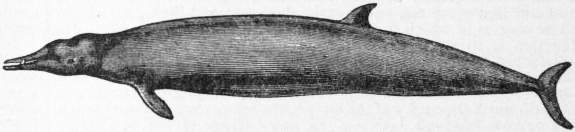
Fig. 4.—Sowerby’s Beaked Whale (Mesoplodon bidens).
In the numerous species of the allied genus Mesoplodon there is a much-compressed and pointed tooth in each half of the lower jaw, variously situated, but generally at some distance behind the apex; its point directed upwards, and often somewhat backwards, occasionally developed to a great size. In the skull the region round the nostrils is as in Hyperoödon, except that the nasals are narrow and more sunk between the upper ends of the premaxillae; like those of Hyperoödon, they are concave in the middle line in front and above. No maxillary tuberosities. Preorbital notch not very distinct. Rostrum long and narrow. Mesethmoid in the adult ossified in its entire length, and coalescing with the surrounding bones. Vertebrae: C 7, D 10, L 10 or 11, Ca 19 or 20; total 46 to 48. Two or three anterior cervicals united, the rest usually free.
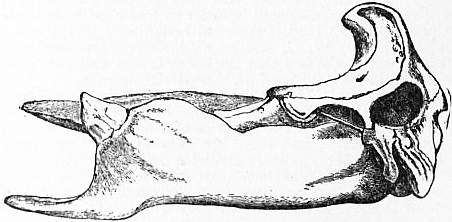
Fig. 5.—Skull of a Beaked Whale (Mesoplodon densirostris).
Though varying in form, the lower teeth of the different members of this genus agree in their essential structure, having a small and pointed enamel-covered crown, composed of dentine, which, instead of surmounting a root of the ordinary character, is raised upon a solid mass of osteo-dentine, the continuous growth of which greatly alters the form and general appearance of the tooth as age advances, as in the case of M. layardi, where the long, narrow, flat, strap-like teeth, curving inwards at their extremities, meet over the rostrum, and interfere with the movements of the jaw. In one species (M. grayi) a row of minute, conical, pointed teeth, like those of ordinary Dolphins, 17 to 19 in number, is present even in the adults, on each side of the middle part of the upper jaw, but embedded by their roots only in the gum, and not in bony sockets. This, with the frequent presence of rudimentary teeth in other species of this genus, indicates that the beaked whales are derived from ancestral forms with teeth of normal character in both jaws. The species are distributed in both northern and southern hemispheres, but most frequent in the latter. Among them are M. bidens, M. europaeas, M. densirostris, M. layardi, M. grayi and M. hectori; but there is still much to be learned with regard to their characters and distribution. This group was abundant in the Pliocene age, as attested by the frequency with which the imperishable long, cylindrical rostrum of the skull, of more than ivory denseness, is found among the rolled and waterworn animal remains which compose the “bone-bed” at the base of the Red Crag of Suffolk.
Finally, in Arnoux’s beaked whale (Berardius arnouxi), of New Zealand, which grows to a length of 30 ft., there are two moderate-sized, compressed, pointed teeth, on each side of the symphysis of the lower jaw, with their summits directed forwards, the anterior being the larger of the two and close to the front of the jaw. Upper ends of the premaxillae nearly symmetrical, moderately elevated, slightly expanded, and not curved forward over the nostrils. Nasals broad, massive and rounded, of nearly equal size, forming the vertex of the skull, flattened in front, most prominent in the middle line. Preorbital notch distinct. Rostrum long and narrow. Mesethmoid partially ossified. Small rough eminences on the outer edge of the upper surface of the maxillae at base of rostrum. Vertebrae: C 7, D 10, L 12, Ca 19; total 48. The three anterior cervicals welded, the rest free and well developed. Apparently this whale has the power of thrusting its teeth up and down, exposing them to view when attacked.
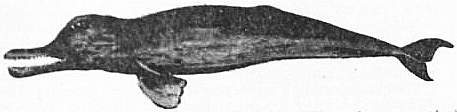
Fig. 6.—The Susu, or Ganges Dolphin (Platanista gangetica).
In a family by themselves—the Platinistidae—are placed three cetaceans which differ from the members of the preceding and the following groups in the mode of articulation of the ribs with the vertebrae, as the tubercular and capitular articulations, distinct at the commencement of the series, gradually blend together, as in most mammals. The cervical vertebrae are all free. The lacrymal bone is not distinct from the jugal. The jaws are long and narrow, with numerous teeth in both; the symphysis of the lower one exceeding half its length. Externally the head is divided from the body by a slightly constricted neck. Pectoral limbs broad and truncated. Dorsal fin small or obsolete. In habits these dolphins are fluviatile or estuarine. In the Indian susu, or Ganges dolphin (Platanista gangetica), the teeth number about 30⁄30 on each side, are set near together, are rather large, cylindrical, and sharp-pointed in the young, but in old animals acquire a large laterally compressed base, which in the posterior part of the series becomes irregularly divided into roots. As the conical enamel-covered crown wears away, the teeth of the young and old animals have a totally different appearance. The beak and tooth-bearing portion of the lower jaw are so narrow that the teeth of the two sides are almost in contact. Maxillae supporting large, incurved, compressed bony crests, which overarch the nostrils and base of the rostrum, and almost meet in the middle line above. Orbits very small and eyes rudimentary, without crystalline lens. Blow-hole longitudinal, linear. Vertebrae: C 7, D 11, L 8, Ca 25; total 51. A small caecum. No pelvic bones. Dorsal fin represented by a low ridge.
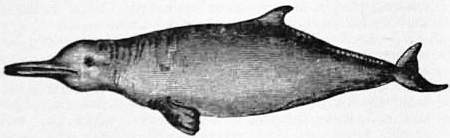
Fig. 7.—River Plate Dolphin (Stenodelphis blainvillei).
The second genus is represented by Inia geoffroyi, of the Amazon, in which the teeth vary from 26 to 33 pairs in each jaw; those at the posterior part with a distinct tubercle at the inner side of the base of the crown. Vertebrae: C 7, D 13, L 3, Ca 18; total 41. Transverse processes of lumbar vertebrae very broad. Sternum short and broad, and consisting of a single segment only. Dorsal fin a mere ridge. The long cylindrical rostrum externally furnished with scattered, stout and crisp hairs. The third type is Stenodelphis blainvillei, the River Plate dolphin, a small brown species (fig. 7), with from 50 to 60 pairs of teeth in each jaw, furnished with a cingulum at the base of the crown. Jaws very long and slender. Vertebrae: C 7, D 10, L 5, Ca 19; total 41. Transverse processes of the lumbar vertebrae extremely broad. Sternum elongated, composed of two segments, with four sternal ribs attached. Dorsal fin rather small, triangular, pointed. Blow-hole transverse. In several respects this species connects the two preceding ones with the Delphinidae (see Dolphin).

Fig. 8.—Upper surface of the Skull of male Narwhal (Monodon monoceros), with the whole of both teeth exposed by removal of the upper wall of their alveolar cavities.
The last family of existing cetaceans is the above-mentioned Delphinidae, which includes the true dolphins, porpoises, grampuses and their relatives. As a rule there are numerous teeth in both jaws; and the pterygoid bones of the skull are short, thin and involuted to form with a process of the palate bone the outer wall of the post-palatine air-sinus. Symphysis of lower jaw short, or moderate, never exceeding one-third the length of the jaw. Lacrymal bone not distinct from the jugal. Transverse processes of the dorsal vertebrae gradually transferred from the arches to the bodies of the vertebrae without any sudden break, and becoming posteriorly continuous serially with the transverse processes of the lumbar vertebrae. Anterior ribs attached to the transverse process by the tubercle, and to the body of the vertebra by the head; the latter attachment lost in the posterior ribs. Sternal ribs ossified. The blow-hole is transverse, crescentic, with the horns of the crescent pointing forwards.
First on the long list is the narwhal, Monodon monoceros, in which, apart from some irregular rudimentary teeth, the dentition is reduced to a single pair of teeth which lie horizontally in the maxilla, and in the female remain permanently concealed within the socket, so that this sex is practically toothless, while in the male (fig. 8), the right tooth usually remains similarly concealed while the left is immensely developed, attaining a length equal to more than half that of the entire animal, projecting horizontally from the head in the form of a cylindrical, or slightly tapering, pointed tusk, without enamel, and with the surface marked by spiral grooves and ridges, running in a sinistral direction. Vertebrae: C 7, D 11, L 6, Ca 26; total 50. Cervical region comparatively long, and all the vertebrae distinct, or with irregular unions towards the middle of the series, the atlas and axis being usually free. Flipper small, short and broad, with the second and third digits nearly equal, the fourth slightly shorter. No dorsal fin. See Narwhal.
Closely allied is the beluga or white-whale (Delphinapterus leucas), of the Arctic seas, in which, however, there are from eight to ten pairs of teeth in each jaw, occupying the anterior three-fourths of the rostrum and corresponding portion of the lower jaw, rather small, conical, and pointed when unworn, but usually become obliquely truncated, separated by intervals considerably wider than the diameter of the tooth, and implanted obliquely, the crowns inclining forwards especially in the upper jaw. Skull rather narrow and elongated, depressed. Premaxillae convex in front of the nostrils. Rostrum about equal in length to the cranial portion of the skull, triangular, broad at the base, and gradually contracting towards the apex, where it is somewhat curved downwards. Vertebrae: C 7, D 11, L 9, Ca 23; total 50. Cervical vertebrae free. Flippers broad, short and rounded, all the digits being tolerably well developed, except the first. Anterior part of head rounded; no distinct snout. No dorsal fin, but a low ridge in its place. See Beluga.
In all the remaining genera of Delphinidae the cervical region of the vertebral column is very short, and the first two, and usually more, of the vertebrae are firmly united. The common porpoise (Phocaena communis, or P. phocaena) is the typical representative of the first genus, in which the teeth vary from 18⁄18 to 25⁄25 , are small, and occupy nearly the whole length of the rostrum, with compressed, spade-shaped crowns, separated from the root by a constricted neck. Rostrum rather shorter than the cranium proper, broad at the base and tapering towards the apex. Premaxillae raised into tuberosities in front of the nostrils. The frontal bones form a somewhat square elevated protuberance in the middle line of the skull behind the nostrils, rising above the flattened nasals. Symphysis of lower jaw very short. Vertebrae: C 7, D 13, L 14, Ca 30; total 64. First to sixth cervical vertebrae and sometimes the seventh also, coalesced. Flippers of moderate size, oval, slightly sickle-shaped, with the second and third digits nearly equal in length, and the fourth and fifth well developed, but shorter. Head short, moderately rounded in front of the blow-hole. Dorsal fin near the middle of the back, triangular; its height considerably less than the length of the base; its anterior edge frequently furnished with one or more rows of conical horny tubercles.
The porpoise, which is so common in British waters and the Atlantic, seldom enters the Mediterranean, and apparently never resides there. There is, however, a porpoise in the Black Sea, which, according to Dr O. Abel, is entitled to rank as a distinct species, with the name of Phocaena relicta. This Black Sea porpoise is readily distinguished from the Atlantic species by the contour of the profile of the head, which, in place of forming a continuous curve from the muzzle to what represents the neck, has a marked prominence above the angle of the mouth, followed by an equally marked depression. The teeth are also different in form and number. The absence of porpoises from the Mediterranean is explained by Dr Abel on account of the greater saltness of that sea as compared with the ocean in general; his idea being that these cetaceans are near akin to fresh-water members of the group, and therefore unsuited to withstand an excessively saline medium. From the Taman Peninsula, on the north shore of the Black Sea, the same writer has described an extinct type of ancestral porpoise, under the name of Palaeophocaena andrussowi. Another species is the wholly black P. spinipennis, typically from South America. Black is also the hue of the Indian porpoise (Neophocaena phocaenoides), which wants a dorsal fin, and has eighteen pairs of teeth rather larger than those of the ordinary porpoise. (See Porpoise.)

Fig. 9.—Beluga or White-Whale (Delphinapterus leucas). From a specimen taken in the river St Lawrence and exhibited in London, 1877.
Next comes the Indo-Malay genus Orcella, in which the 12⁄12 to 14⁄14 , small, conical teeth are pointed, rather closely set, and occupy nearly the whole length of the rostrum. Skull sub-globular, high. Rostrum nearly equal in length to the cranial portion of the skull, tapering. Flippers of moderate size, not elongated, but somewhat pointed, with all the bones of the digits broader than long, except the first phalanges of the index and third fingers. Head globular in front. Dorsal fin rather small, placed behind the middle of the body. Two species, both of small size—O. brevirostris, from the Bay of Bengal, and O. fluminalis, from the Irrawaddy river, from 300 to 900 m. from the sea.
In the grampus, or killer, Orca gladiator (or O. orca) the teeth form about twenty pairs, above and below, occupying nearly the whole length of the rostrum, very large and stout, with conical recurved crowns and large roots, expanded laterally and flattened, or rather hollowed, on the anterior and posterior surfaces. Rostrum about equal in length to the cranial part of the skull, broad and flattened above, rounded in front; premaxillae broad and rather concave in front of the nostrils, contracted at the middle of the rostrum, and expanding again towards the apex. Vertebrae: C 7, D 11-12, L 10, Ca 23; total 51 or 52; bodies of the first and second and sometimes the third cervical vertebrae united; the rest free. Flippers very large, ovate, nearly as broad as long, with all the phalanges and metacarpals broader than long. General form of body robust. Face short and rounded. Dorsal fin near the middle of the back, very high and pointed. See Grampus.
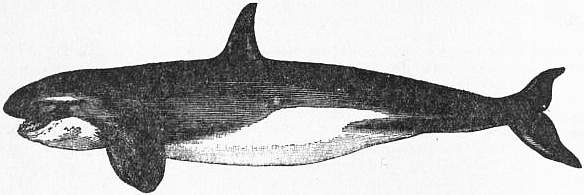
Fig. 10.—The Grampus or Killer (Orca gladiator).
The lesser killer or black killer, Pseudorca crassidens, has its 8-12⁄8-12 teeth confined to the anterior half of the rostrum and corresponding part of the lower jaw; they are small, conical, curved and sharp-pointed when unworn, but sometimes deciduous in old age. Skull broad and depressed; with the rostrum and cranial portions about equal in length. Upper surface of rostrum broad and flat. Premaxillae concave in front of the nostrils, as wide at the middle of the rostrum as at the base, and nearly or completely concealing the maxillae in the anterior half of this region. Vertebrae: C 7, D II, L 12-14, Ca 28-29; total 58 or 59. Bodies of the anterior five or six cervical vertebrae united. Length of the bodies of the lumbar and anterior caudal vertebrae about equal to their width. Flippers very long and narrow, with the second digit the longest, and having as many as 12 or 13 phalanges, the third shorter (with 9 phalanges), the first, fourth and fifth very short. Fore part of the head round, in consequence of the great development of a cushion of fat, placed on the rostrum of the skull in front of the blow-hole. Dorsal fin low and triangular, the length of its base considerably exceeding its vertical height.
Next comes the ca’ing whale, or black-fish (Globicephalus melas), with about ten pairs of upper and lower teeth. Cranial and dental characters generally like those of Orca, except that the roots of the teeth are cylindrical. Vertebrae: C 7, D 10, L 9, Ca 24; total 50; first to sixth or seventh cervical vertebrae united; bodies of the lumbar vertebrae distinguished from those of the preceding genera by being more elongated, the length being to the width as 3 to 2. Flippers of moderate size, narrow and pointed. Dorsal fin situated near the middle of the back, of moderate size, and sickle-shaped. Head in front of the blow-hole high, and compressed anteriorly, the snout truncated. See Ca’ing Whale.
Risso’s dolphin, Grampus griseus, represents another genus, characterized by the absence of teeth in the upper and the small number of these in the lower jaw (3 to 7 on each side, and confined to the region of the symphysis). Vertebrae: C 7, D 12, L 19, Ca 30; total 68. General external characters much as in Globicephalus, but the fore part of the head less rounded, and the flippers less elongated. G. griseus is about 13 ft. long, and remarkable for its great variability of colour. It has been found, though rarely, in the North Atlantic and Mediterranean.
The common dolphin (Delphinus delphis) is the typical representative of a large group of relatively small species, some of which are wholly marine, while others are more or less completely fluviatile. They are divided into a number of genera, such as Prodelphinus, Steno, Lagenorhynchus, Cephalorhynchus, Tursiops, &c., best distinguished from one another by the number and size of the teeth, the form and relations of the bones on the hinder part of the palate, the length of the beak and of the union of the two halves of the lower jaw, and the number of vertebrae. For the distinctive characters of these genera the reader may refer to one of the works mentioned below; and it must suffice to state that, collectively, all these dolphins are characterized by the following features. The teeth are numerous in both jaws, and more than 20⁄20 in number, occupying nearly the whole length of the rostrum, and small, close-set, conical, pointed and slightly curved. Rostrum more or less elongated, and pointed in front, usually considerably longer than the cranial portion of the skull. Vertebrae: C 7, D 12-14, L and Ca variable; total 51 to 90. Flippers of moderate size, narrow, pointed, somewhat sickle-shaped, with the first digit rudimentary, the second longest, third nearly equal, and the fourth and fifth extremely short. Externally the head shows a distinct beak or pointed snout, marked off from the antenasal fatty elevation by a V-shaped groove. Dorsal fin rather large, triangular or sickle-shaped, rarely wanting. A curiously marked brown and white species, perhaps referable to Lagenorhynchus is found on the fringe of the Antarctic ice (see report on the zoology of the “Discovery,” published in 1907 by the British Museum). See Dolphin.
Extinct Cetacea.
At present we are totally in the dark as to the origin of the whalebone-whales, not being even assured that they are derived from the same stock as the toothed whales. It is noteworthy, however, that some of the fossil representatives of the latter have nasal bones of a type recalling those of the former. Such fossil whalebone-whales as are known occur in Pliocene, and Miocene formations are either referable to existing genera, or to more or less nearly related extinct ones, such as Plesiocetus, Herpetocetus and Cetotherium.
The toothed whales, on the other hand, are very largely represented in a fossil state, reaching as low in the geological series as the upper Cretaceous. Many of these present much more generalized characters than their modern representatives, while others indicate apparently a transition towards the still more primitive zeuglodonts, which, as will be shown later, are themselves derived from the creodont Carnivora. In the Pliocene deposits of Belgium and England are preserved the teeth and other remains of a number of cetaceans, such as Physodon, Encetus, Dinoziphius, Hoplocetus, Balaenodon and Scaldicetus, more or less nearly related to the sperm-whale, but presenting several primitive characters. A complete skull of a member of this group from the Tertiary deposits of Patagonia, at first referred to Physodon, but subsequently to Scaldicetus, has a full series of enamelled teeth in the upper jaw; and it is probable that the same was the case in other forms. This entails either a modification of the definition of the Physeteridae as given above, or the creation of a separate family for these primitive sperm-whales. In other cases, however, as in the Miocene Prophyseter and Placoziphius, the anterior portion or the whole of the upper jaw had already become toothless; and these forms are regarded as indicating the descent of the sperm-whales from the under-mentioned Squalodon. The beaked whales, again, are believed to be independently descended from the latter type, Berardius being traced into the Miocene Mioziphius, Anoplonassa and Palaeoziphius, the last of which shows signs in its dentition of approximating to the complicated tooth-structure of the squalodonts.
Another line of descent from the latter, apparently culminating in the modern Platanistidae, is represented by the family Eurhinodelphidae, typified by the European Miocene Eurhinodelphis, but also including the contemporary Patagonian Argyrocetus and the nearly allied European Cyrtodelphis. All these were very long-beaked dolphins; and in Argyrocetus, at all events, the occipital condyles, instead of being closely pressed to the skull, are as prominent as in ordinary mammals, while the nasal bones, instead of forming mere rudimentary nodules, were squared and roofed over the hind part of the nasal chamber.
In the Miocene Squalodon, representing the family Squalodontidae, the dentition is differentiated into incisors, canines and cheek-teeth, the hinder ones of the latter series having double roots and compressed crowns carrying serrations on the hinder edge; generally the dental formula has been given as i. 3⁄3 , c. 1⁄1 , p. 4⁄4 , m. 7⁄7 , the single-rooted cheek-teeth being regarded as premolars and those with double roots as molars. Dr Abel is, however, of opinion that the formula is better represented as i. 3⁄3 , c. 1⁄1 , p. 8 or 9⁄9, m. 3⁄2 ; the teeth reckoned as molars corresponding to those of the creodont Carnivora. The single-rooted cheek-teeth are regarded as due, not to the division of double-rooted ones, but to the fusion of the two roots of teeth of the latter type. In Squalodon the nasal bones were of the modern nodular type, but in the Miocene Patagonian Prosqualodon they partially covered the nasal chamber.
At present there is a gap between the most primitive squalodonts and the Eocene zeuglodonts (Zeuglodontidae), which are regarded by Messrs Max Weber, O. Abel and C.W. Andrews as the direct forerunners of the modern-toothed whales, forming the suborder Archaeoceti. It is, however, right to mention that some authorities refuse to admit the relation of the Archaeoceti to the whales.
In the typical zeuglodonts the long and flat skull has large temporal fossae, a strong sagittal crest, a long beak formed mainly by the premaxillae (in place of the maxillae, as in modern whales), and long nasal bones covering over the nasal chamber, so that the nostrils opened about half-way down the beak. All the cervical vertebrae were free. Normally the dentition in the typical genus Zeuglodon (which is common to the Eocene of North America and Egypt) is i. 3⁄3 , c. 1⁄1 , p. 4⁄4 , m. 3⁄3 ; the cheek-teeth being two-rooted, with compressed pointed crowns, of which the fore-and-aft edges are coarsely serrated. In the Egyptian Zeuglodon osiris the number of the molars is, however, reduced to 2⁄3 , while some of the earlier cheek-teeth have become single-rooted, as in the squalodonts. The probable transitional form between the latter and the zeuglodonts is the small Microzeuglodon caucasicus described by the present writer, from the Caucasus. As regards the origin of the zeuglodonts themselves, remains discovered in the Eocene formations of Egypt indicate a practically complete transition, so far at least as dental characters are concerned, from these whale-like creatures to the creodont Carnivora. In the earliest type, Protocetus, the skull is practically that of a zeuglodont, the snout being in fact more elongated than in some of the earliest representatives of the latter, although the nostrils are placed nearer the tip. The incisors are unknown, but the cheek-teeth are essentially those of a creodont, none of them having acquired the serrated edges distinctive of the typical zeuglodonts; and the hinder premolars and molars retaining the three roots of the creodonts. In the somewhat later Prozeuglodon the skull is likewise essentially of the zeuglodont type, although the nostrils have shifted a little more backwards; as regards the cheek-teeth, which have acquired serrated crowns, the premolars at any rate retain the inner buttress supported by a distinct third root, so that they are precisely intermediate between Protocetus and Zeuglodon. Yet another connecting form is Eocetus, a very large animal from nearly the same horizon as Prozeuglodon; its skull approaching that of Zeuglodon as regards the backward position of the nostrils, although the cheek-teeth are of the creodont type, having inner, or third, roots. It is noteworthy that Zeuglodon apparently occurs in the same beds as these intermediate types.
It follows from the foregoing that if zeuglodonts are the ancestors of the true Cetacea—and the probability that they are so is very great—the latter are derived from primitive Carnivora, and not, as has been suggested, from herbivorous Ungulata. The idea that the zeuglodonts were provided with a bony armour does not appear to be supported by recent discoveries.
Authorities.—The above article is based on that by Sir W.H. Flower in the 9th edition of this work. See also W.H. Flower, “On the Characters and Divisions of the Family Delphinidae,” Proc. Zool. Soc. (London, 1883); F.W. True, “Review of the Family Delphinidae,” Proc. U.S. Museum, No. 36 (1889); R. Lydekker, “Cetacean Skulls from Patagonia,” Palaeontol. Argentina, vol. ii: An. Mus. La Plata (1893); W. Dames, “Über Zeuglodonten aus Ägypten,” Paläontol. Abhandlungen, vol. i. (1894); F.E. Beddard, A Book of Whales (London, 1900); O. Abel, “Untersuchungen über die fossilen Platanistiden des Wiener Beckens,” Denks. k. Akad. Wiss. Wien., vol. lxviii. (1899); “Les Dauphins longirostres du Bolérien,” Mém. musée d’hist. nat. belgique (1901 and 1902); “Die phylogenetische Entwickelung des Cetaceengebisses und die systematische Stellung der Physeteriden,” Verhandl. deutsch. zool. Gesellschaft (1905); E. Fraas, “Neue Zeuglodonten aus dem unteren Mittelocean vom Mokattam bei Cairo,” Geol. und paläontol. Abhandl. ser. 2, vol. vi. (1904); C.W. Andrews, “Descriptive Catalogue of the Tertiary Vertebrata of the Fayum” (British Museum, 1906).
(R. L.*)
CETHEGUS, the name of a Roman patrician family of the Cornelian gens. Like the younger Cato its members kept up the old Roman fashion of dispensing with the tunic and leaving the arms bare (Horace, Ars Poëtica, 50; Lucan, Pharsalia, ii. 543). Two individuals are of some importance:—
(1) Marcus Cornelius Cethegus, pontifex maximus and curule aedile, 213 B.C. In 211, as praetor, he had charge of Apulia; later, he was sent to Sicily, where he proved a successful administrator. In 209 he was censor, and in 204 consul. In 203 he was proconsul in Upper Italy, where, in conjunction with the praetor P. Quintilius Varus, he gained a hard-won victory over Mago, Hannibal’s brother, in Insubrian territory, and obliged him to leave Italy. He died in 196. He had a great reputation as an orator, and is characterized by Ennius as “the quintessence of persuasiveness” (suadae medulla). Horace (Ars Poët. 50; Epistles, ii. 2. 117) calls him an authority on the use of Latin words.
Livy xxv. 2, 41, xxvii. 11, xxix. 11, xxx. 18.
(2) Gaius Cornelius Cethegus, the boldest and most dangerous of Catiline’s associates. Like many other youthful profligates, he joined the conspiracy in the hope of getting his debts cancelled. When Catiline left Rome in 63 B.C., after Cicero’s first speech, Cethegus remained behind as leader of the conspirators with P. Lentulus Sura. He himself undertook to murder Cicero and other prominent men, but was hampered by the dilatoriness of Sura, whose age and rank entitled him to the chief consideration. The discovery of arms in Cethegus’s house, and of the letter which he had given to the ambassadors of the Allobroges, who had been invited to co-operate, led to his arrest. He was condemned to death, and executed, with Sura and others, on the night of the 5th of December.
Sallust, Catilina, 46-55; Cicero, In Cat. iii. 5-7; Appian, Bell. Civ. ii. 2-5; see Catiline.
CETINA, GUTIERRE DE (1518?-1572?), Spanish poet and soldier, was born at Seville shortly before 1520. He served under Charles V. in Italy and Germany, but retired from the army in 1545 to settle in Seville. Soon afterwards, however, he sailed for Mexico, where he resided for some ten years; he appears to have visited Seville in 1557, and to have returned to Mexico, where he died at some date previous to 1575. A follower of Boscan and Garcilaso de la Vega, a friend of Jerónimo de Urrea and Baltavar del Alcázar, Cetina adopted the doctrines of the Italian school and, under the name of Vandalio, wrote an extensive series of poems in the newly introduced metres; his sonnets are remarkable for elegance of form and sincerity of sentiment, his other productions being in great part adaptations from Petrarch, Ariosto and Ludovico Dolce. His patrons were Antonio de Leyva, prince of Ascoli, Hurtado de Mendoza, and Alva’s grandson, the duke de Sessa, but he seems to have profited little by their protection. His works have been well edited by Joaquín Hazañas y la Rúa in two volumes published at Seville (1895).
CETTE, a seaport of southern France in the department of Hérault, 18 m. S.W. of Montpellier by the Southern railway. Pop. (1906) 32,659. After Marseilles it is the principal commercial port on the south coast of France. The older part of Cette occupies the foot and slope of the Mont St Clair (the ancient Mons Setius), a hill 590 ft. in height, situated on a tongue of land that lies between the Mediterranean and the lagoon of Thau. This quarter with its wide streets and lofty stone buildings is bounded on the east by the Canal de Cette, which leads from the lagoon of Thau to the Old Basin and the outer harbour. Across the canal lie the newer quarters, which chiefly occupy two islands separated from each other by a wet dock and limited on the east by the Canal Maritime, parallel to the Canal de Cette. A lateral canal unites the northern ends of the two main canals. A breakwater running W.S.W. and E.N.E. protects the entrance to the harbour, which is one of the safest in France. The outer port and the Old Basin are enclosed by a mole to the south and by a jetty to the east. Behind the outer port lies an inner and more recent basin which communicates with the Canal Maritime. The entire area of the harbour, including the canals, is 111 acres with a quayage length of over 8000 yds. The public institutions of Cette include tribunals of commerce and of maritime commerce, councils of arbitration in commercial and fishing affairs, an exchange and chamber of commerce, a branch of the Bank of France and a large hospital. There are also a communal college, a naval school, and schools of music, commerce and industry, and navigation. Cette is much resorted to for sea-bathing. The town is connected with Lyons by the canal from the Rhone to Cette, and with Bordeaux by the Canal du Midi, and is a junction of the Southern and Paris-Lyon railways. The shipping trade is carried on with South America, the chief ports of the Mediterranean, and especially with Spain. The chief exports are wines and brandy, chemical products, skins and soap; the chief imports are wine, cereals, coal, timber, petroleum, sulphur, tar and chemical substances. In the five years 1901-1905 the average annual value of imports was £3,720,000 (£4,980,000 in years 1896-1900), of exports £1,427,000 (£1,237,000 in 1896-1900). More than 400 small craft are employed in the sardine, tunny, cod and other fisheries. Large quantities of shell-fish are obtained from the lagoon of Thau. There are factories for the pickling of sardines, for the manufacture of liqueurs and casks, and for the treatment of sulphur, phosphates, and nitrate of soda. The Schneider Company of Creusot also have metallurgical works at Cette, and the establishments for making wine give employment to thousands. The port of Cette was created in 1666 by the agency of Colbert, minister of Louis XIV., and according to the plans of Vauban; toward the end of the 17th century its development was aided by the opening of the Canal du Midi.
CETTIGNE (Servian, Tsetinye; also written Cettinje, Tzetinje, and Tsettinye), the capital of Montenegro; in a narrow plain deeply sunk in the heart of the limestone mountains, at a height of 2093 ft. above the sea. Pop. (1900) about 3200. The surrounding country is bare and stony, with carefully cultivated patches of rich red soil among the crevices of the rock. In winter it is often so deeply covered with snow as to be well-nigh inaccessible, while in spring and autumn it is frequently flooded by the waters of a small brook which becomes a torrent after rain or a thaw. Cettigne itself is little more than a walled village, consisting of a cluster of whitewashed cottages and some unadorned public buildings. These include a church; a fortified monastery which was founded in 1478, but so often burned and rebuilt as to seem quite modern, and which is visited by pilgrims to the tomb of Peter I. (1782-1830); residences for the archimandrite and the vladika or metropolitan of Cettigne; a palace built in 1863, which accommodates the ministries; the court of appeal, and a school modelled on the gymnasia of Germany and Austria; the newer palaces of the prince and his heir; foreign legations; barracks; a seminary for priests and teachers, established by the tsar Alexander II. (1855-1881), with a very successful girls’ school founded and endowed by the tsaritsa Marie; a library and reading-room; a theatre, a museum and a hospital. In an open space near the old palace stood the celebrated plane tree, beneath which Prince Nicholas gave audience to his subjects, and administered justice until the closing years of the 19th century. A zigzag highway, regarded as a triumph of engineering, winds through the mountain passes between Cettigne and the Austrian seaport of Cattaro; and other good roads give access to the richest parts of the interior. There is, however, little trade, though mineral waters are manufactured.
Cettigne owes its origin to Ivan the Black, who was forced, towards the end of the 15th century, to withdraw from Zhabliak, his former capital. It has often been taken and sacked by the Turks, but has seldom been occupied by them for long.
CETUS (“The Whale”), in astronomy, a constellation of the southern hemisphere, mentioned by Eudoxus (4th century B.C.) and Aratus (3rd century B.C.), and fabled by the Greeks to be the monster sent by Neptune to devour Andromeda, but which was slain by Perseus. Ptolemy catalogued 22 stars in this constellation; Tycho Brahe, 21; and Hevelius, 45. The most remarkable star of this constellation is o-(Mira) Ceti, a long-period variable, discovered by the German astronomer Fabricius; its magnitude varies between about 3 to 9, and its period is 331 days. τ-Ceti is an irregular variable, its extreme magnitudes being 5 and 7; γ-Ceti is a beautiful double star, consisting of a yellow star of magnitude 3 and a blue of magnitude 6.8; ν-Ceti is also a double star.
CETYWAYO ( ?-1884), king of the Zulus, was the eldest son of King Umpande or Panda, and a nephew of the two previous kings, Dingaan and Chaka. Cetywayo was a young man when in 1840 his father was placed on the throne by the aid of the Natal Boers; and three years later Natal became a British colony. Cetywayo had inherited much of the military talent of his uncle Chaka, the organizer of the Zulu military system, and chafed under his father’s peaceful policy towards his British and Boer neighbours. Suspecting Panda of favouring a younger son, Umbulazi, as his successor, Cetywayo made war on his brother, whom he defeated and slew at a great battle on the banks of the Tugela in December 1856. In the following year, at an assembly of the Zulus, it was resolved that Panda should retire from the management of the affairs of the nation, which were entrusted to Cetywayo, though the old chief kept the title of king. Cetywayo was, however, suspicious of the Natal government, which afforded protection to two of his brothers. The feeling of distrust was removed in 1861 by a visit from Mr (afterwards Sir) Theophilus Shepstone, secretary for native affairs in Natal, who induced Panda to proclaim Cetywayo publicly as the future king. Friendly relations were then maintained between the Zulus and Natal for many years. In 1872 Panda died, and Cetywayo was declared king, August 1873, in the presence of Shepstone, to whom he made solemn promises to live at peace with his neighbours and to govern his people more humanely. These promises were not kept. Not only were numbers of his own people wantonly slain (Cetywayo returning defiant messages to the governor of Natal when remonstrated with), and the military system of Chaka and Dingaan strengthened, but he had a feud with the Transvaal Boers as to the possession of the territory between the Buffalo and Pongola rivers, and encouraged the chief Sikukuni (Secocoeni) in his struggle against the Boers. This feud with the Boers was inherited by the British government on the annexation of the Transvaal in 1877. Cetywayo’s attitude became menacing; he allowed a minor chief to make raids into the Transvaal, and seized natives within the Natal border.
Sir Bartle Frere, who became high commissioner of South Africa in March 1877, found evidence which convinced him that the Kaffir revolt of that year on the eastern border of Cape Colony was part of a design or desire “for a general and simultaneous rising of Kaffirdom against white civilization”; and the Kaffirs undoubtedly looked to Cetywayo and the Zulus as the most redoubtable of their champions. In December 1878 Frere sent the Zulu king an ultimatum, which, while awarding him the territory he claimed from the Boers, required him to make reparation for the outrages committed within the British borders, to receive a British resident, to disband his regiments, and to allow his young men to marry without the necessity of having first “washed their spears.” Cetywayo, who had found a defender in Bishop Colenso, vouchsafed no reply, and Lord Chelmsford entered Zululand, at the head of 13,000 troops, on the 11th of January 1879 to enforce the British demands. The disaster of Isandhlwana and the defence of Rorke’s Drift signalized the commencement of the campaign, but on the 4th of July the Zulus were utterly routed at Ulundi. Cetywayo became a fugitive, but was captured on the 28th of August. His kingdom was divided among thirteen chiefs and he himself taken to Cape Town, whence he was brought to London in August 1882. He remained in England less than a month, during which time the government (the second Gladstone administration) announced that they had decided upon his restoration. To his great disappointment, however, restoration proved to refer only to a portion of his old kingdom. Even there one of his kinsmen and chief enemies, Usibepu, was allowed to retain the territory allotted to him in 1879. Cetywayo was reinstalled on the 29th of January 1883 by Shepstone, but his enemies, headed by Usibepu, attacked him within a week, and after a struggle of nearly a year’s duration he was defeated and his kraal destroyed. He then took refuge in the Native Reserve, where he died on the 8th of February 1884. For a quarter of a century he had been the most conspicuous native figure in South Africa, and had been the cause of long and bitter political controversy in Great Britain.
His son Dinizulu afterwards attempted to become king, was exiled (1889) to St Helena, permitted to return (1898), and granted the position of a chief. In December 1907 Dinizulu was imprisoned at Maritzburg, being suspected of complicity in the revolt which had occurred in Zululand the previous year. He was kept many months waiting trial, there being considerable friction between the colonial government and the British government over the incident. He was eventually brought to trial in November 1908 before a special court, his defence (to the cost of which the British government contributed £2000) being undertaken by Mr W.P. Schreiner. The trial was not concluded until March 1909. The charge of high treason was not proved, but Dinizulu was convicted of harbouring rebels and was sentenced to four years’ imprisonment.
The Life of Sir Bartle Frere, by John Martineau, vol. ii. chaps. 18 to 21, contains much information concerning Cetywayo.
CEUTA (Arabic Sebta), a Spanish military and convict station and seaport on the north coast of Morocco, in 35° 54′ N., 5° 18′ W. Pop. about 13,000. It is situated on a promontory connected with the mainland by a narrow isthmus. This promontory marks the south-eastern end of the straits of Gibraltar, which between Ceuta and Gibraltar have a width of 14 m. The promontory terminates in a bold headland, the Montagne des Singes, with seven distinct peaks. Of these the highest is the Monte del Hacko, the ancient Abyla, one of the “Pillars of Hercules,” which faces Gibraltar and rises 636 ft. above the sea. On the westernmost point—Almina, 476 ft. high—is a lighthouse with a light visible for 23 m. Ceuta consists of two quarters, the old town, covering the low ground of the isthmus, and the modern town, built on the hills forming the north and west faces of the peninsula. Between the old and new quarters and on the north side of the isthmus lies the port. The public buildings in the town, thoroughly Spanish in its character, are not striking: they include the cathedral (formerly a mosque), the governor’s palace, the town hall, barracks, and the convict prison in the old convent of San Francisco. Ceuta has been fortified seaward, the works being furnished with modern artillery intended to command the entrance to the Mediterranean. Landward are three lines of defence, the inner line stretching completely across the isthmus. These fortifications, which date from the time of the Portuguese occupation, have been partly modernized. The citadel, El Hacho, built on the neck of the isthmus, dates from the 15th century. The garrison consists of between 3000 and 4000 men, inclusive of a disciplinary corps of military convicts. Of the rest of the population about 2000 are civilian convicts; and there are colonies of Jews, negroes and Moors, the last including descendants of Moors transferred to Ceuta from Oran when Spain abandoned that city in 1796.
Ceuta occupies in part the site of a Carthaginian colony, which was succeeded by a Roman colony said to have been called Ad Septem Fratres and also Exilissa or Lissa Civitas. From the Romans the town passed to the Vandals and afterwards to Byzantium, the emperor Justinian restoring its fortifications in 535. In 618 the town, then known as Septon, fell into the hands of the Visigoths. It was the last stronghold in North Africa which held out against the Arabs. At that date (A.D. 711) the governor of the town was the Count Julian who, in revenge for the betrayal of his daughter by King Roderick of Toledo, invited the Arabs to cross the straits under Tarik and conquer Spain for Islam. By the Arabs the town was called Cibta or Sebta, hence the Spanish form Ceuta. From the date of its occupation by the Arabs the town had a stormy history, being repeatedly captured by rival Berber and Spanish-Moorish dynasties. It became nevertheless an important commercial and industrial city, being noted for its brass ware, its trade in ivory, gold and slaves. It is said to have been the first place in the West where a paper manufactory was established. In 1415 the town was captured by the Portuguese under John I., among those taking part in the attack being Prince Henry “the Navigator” and two of his brothers, who were knighted on the day following in the mosque (hastily dedicated as a Christian church). Ceuta passed to Spain in 1580 on the subjugation of Portugal by Philip II., and was definitely assigned to the Spanish crown by the treaty of Lisbon in 1688. The town has been several times unsuccessfully besieged by the Moors—one siege, under Mulai Ismail, lasting twenty-six years (1694-1720). In 1810, with the consent of Spain, it was occupied by British troops under General Sir J.F. Fraser. The town was restored to Spain by the British at the close of the Napoleonic Wars. As the result of the war between Spain and Morocco in 1860 the area of Spanish territory around the town was increased. The military governor of the town also commands the troops in the other Spanish stations on the coast of Morocco. For civil purposes Ceuta is attached to the province of Cadiz. It is a free port, but does little trade.
See de Prado, Recuerdos de Africa; historia de la plaza de Ceuta (Madrid, 1859-1860); Budgett Meakin, The Land of the Moors (London, 1901), chap, xix., where many works dealing with Spanish Morocco are cited.
CEVA, a town of Piedmont, Italy, in the province of Cuneo, 33 m. E. by rail from the town of Cuneo, 1270 ft. above sea-level. Pop. (1901) 2703. In the middle ages it was a strong fortress defending the confines of Piedmont towards Liguria, but the fortifications on the rock above the town were demolished in 1800 by the French, to whom it had been ceded in 1796. Its cheese (caseus cebanus) was famous in Roman times, but it does not seem ever to have been a Roman town. It lay on the road between Augusta Taurinorum and Vada Sabatia. A branch railway runs from Ceva through Garessio, with its marble quarries, to Ormea (2398 ft.), 22 m. to the south through the upper valley of the Tanaro, which in Roman times was under Albingaunum (Th. Mommsen in Corp. Inscr. Lat. v. (Berlin, 1877), p. 898). From Ormea a road runs south to (31 m.) Oneglia on the Ligurian coast.
CÉVENNES (Lat. Cebenna or Gebenna), a mountain range of southern France, forming the southern and eastern fringe of the central plateau and part of the watershed between the Atlantic and Mediterranean basins. It consists of a narrow ridge some 320 m. long, with numerous lofty plateaus and secondary ranges branching from it. The northern division of the range, which nowhere exceeds 3320 ft. in height, extends, under the name of the mountains of Charolais, Beaujolais and Lyonnais, from the Col de Longpendu (west of Chalon-sur-Saône) in a southerly direction to the Col de Gier. The central Cévennes, comprising the volcanic chain of Vivarais, incline south-east and extend as far as the Lozère group. The northern portion of this chain forms the Boutières range. Farther south it includes the Gerbier des Joncs (5089 ft.), the Mont de Mézenc (5755 ft.), the culminating point of the entire range, and the Tanargue group. South of the Mont Lozère, where the Pic Finiels reaches 5584 ft., lies that portion of the range to which the name Cévennes is most strictly applied. This region, now embraced in the departments of Lozère and Gard, stretches south to include the Aigoual and Espérou groups. Under various local names (the Garrigues, the mountains of Espinouse and Lacaune) and with numerous offshoots the range extends south-east and then east to the Montagne Noire, which runs parallel to the Canal du Midi and comes to an end some 25 m. east of Toulouse. In the south the Cévennes separate the cold and barren table-lands known as the Causses from the sunny region of Languedoc, where the olive, vine and mulberry flourish. Northwards the contrast between the two slopes is less striking.
The Cévennes proper are formed by a folded belt of Palaeozoic rocks which lies along the south-east border of the central plateau of France. Concealed in part by later deposits, this ancient mountain chain extends from Castelnaudary to the neighbourhood of Valence, where it sinks suddenly beneath the Tertiary and recent deposits of the valley of the Rhone. It is in the Montagne Noire rather than in the Cévennes proper that the structure of the chain has been most fully investigated. All the geological systems from the Cambrian to the Carboniferous are included in the folded belt, and J. Bergeron has shown that the gneiss and schist which form so much of the chain consist, in part at least, of metamorphosed Cambrian beds. The direction of the folds is about N. 60° E., and the structure is complicated by overthrusting on an extensive scale. The overthrust came from the south-east, and the Palaeozoic beds were crushed and crumpled against the ancient massif of the central plateau. The principal folding took place at the close of the Carboniferous period, and was contemporaneous with that of the old Hercynian chain of Belgium, &c. The Permian and later beds lie unconformably upon the denuded folds, and in the space between the Montagne Noire and the Cévennes proper the folded belt is buried beneath the horizontal Jurassic strata of the Causses. Although the chain was completed in Palaeozoic times, a second folding took place along its south-east margin at the close of the Eocene period. The Secondary and Tertiary beds of the Languedoc were crushed against the central plateau and were frequently overfolded. But by this time the ancient Palaeozoic chain had become a part of the unyielding massif, and the folding did not extend beyond its foot.
As the division between the basins of the Loire and the Garonne to the west and those of the Saône and Rhone to the east, the Cévennes send many affluents to those rivers. In the south the Orb, the Hérault and the Vidourle are independent rivers flowing to the Golfe du Lion; farther north, the Gard—formed by the union of several streams named Gardon—the Cèze and the Ardèche flow to the Rhone. The Vivarais mountains and the northern Cévennes approach the right banks of the Rhone and Saône closely, and on that side send their waters by way of short torrents to those rivers; on the west side the streams are tributaries of the Loire, which rises at the foot of Mont Mézenc. A short distance to the south on the same side are the sources of the Allier and Lot. The waters of the north-western slope of the southern Cévennes drain into the Tarn either directly or by way of the Aveyron, which rises in the outlying chain of the Lévezou, and, in the extreme south, the Agout. The Tarn itself rises on the southern slope of the Mont Lozère.
In the Lozère group and the southern Cévennes generally, good pasturage is found, and huge flocks spend the summer there. Silkworm-rearing and the cultivation of peaches, chestnuts and other fruits are also carried on. In the Vivarais cattle are reared, while on the slopes of the Beaujolais excellent wines are grown.
The chief historical event in the history of the Cévennes is the revolt of the Camisards in the early years of the 18th century (see Camisards).
CEYLON, a large island and British colony in the Indian Ocean, separated on the N.W. from India by the Gulf of Manaar and Palk Strait. It lies between 5° 55′ and 9° 51′ N. and between 79° 41′ and 81° 54′ E. Its extreme length from north to south is 271½ m.; its greatest width is 137½ m.; and its area amounts to 25,481 sq. m., or about five-sixths of that of Ireland. In its general outline the island resembles a pear, the apex of which points towards the north.
The coast is beset on the N.W. with numberless sandbanks, rocks and shoals, and may be said to be almost connected with India by the island of Rameswaram and Adam’s Bridge, a succession of bold rocks reaching almost Coast. across the gulf at its narrowest point. Between the island and the opposite coast there exist two open channels of varying depth and width, beset by rocks and shoals. One of these, the Manaar Passage, is only navigable by very small craft. The other, called the Paumben Passage, lying between Rameswaram and the mainland, has been deepened at considerable outlay, and is used by large vessels in passing from the Malabar to the Coromandel coast, which were formerly compelled in doing so to make the circuit of the island. The west and south coasts, which are uniformly low, are fringed their entire length by coco-nut trees, which grow to the water’s edge in great luxuriance, and give the island a most picturesque appearance. Along these shores there are numerous inlets and backwaters of the sea, some of which are available as harbours for small native craft. The east coast from Point de Galle to Trincomalee is of an entirely opposite character, wanting the ample vegetation of the other, and being at the same time of a bold precipitous character. The largest ships may freely approach this side of the island, provided they take care to avoid a few dangerous rocks, whose localities, however, are well known to navigators.
Seen from a distance at sea this “utmost Indian isle” of the old geographers wears a truly beautiful appearance. The remarkable elevation known as “Adam’s Peak,” the most prominent, though not the loftiest, of the hilly ranges of the interior, towers like a mountain monarch amongst an assemblage of picturesque hills, and is a sure landmark for the navigator when as yet the Colombo lighthouse is hidden from sight amid the green groves of palms that seem to be springing from the waters of the ocean. The low coast-line encircles the mountain zone of the interior on the east, south and west, forming a belt which extends inland to a varying distance of from 30 to 80 m.; but on the north the whole breadth of the island from Kalpitiya to Batticaloa is an almost unbroken plain, containing magnificent forests of great extent.
The mountain zone is towards the south of the island, and covers an area of about 4212 sq. m. The uplifting force seems to have been exerted from south-west to north-east, and although there is much confusion in many of the intersecting Mountains. ridges, and spurs of great size and extent are sent off in many directions, the lower ranges manifest a remarkable tendency to run in parallel ridges in a direction from south-east to north-west. Towards the north the offsets of the mountain system radiate to short distances and speedily sink to the level of the plain. Detached hills are rare; the most celebrated of these are Mihintale (anc. Missïaka), which overlooks the sacred city of Anuradhapura, and Sigiri. The latter is the only example in Ceylon of those solitary acclivities which form so remarkable a feature in the tableland of the Deccan—which, starting abruptly from the plain, with scarped and perpendicular sides, are frequently converted into strongholds accessible only by precipitous pathways or by steps hewn in the solid rock.
For a long period Adam’s Peak was supposed to be the highest mountain in Ceylon, but actual survey makes it only 7353 ft. above sea-level. This elevation is chiefly remarkable as the resort of pilgrims from all parts of the East. The hollow in the lofty rock that crowns the summit is said by the Brahmans to be the footstep of Siva, by the Buddhists of Buddha, by the Mahommedans of Adam, whilst the Portuguese Christians were divided between the conflicting claims of St Thomas and the eunuch of Candace, queen of Ethiopia. The footstep is covered by a handsome roof, and is guarded by the priests of a rich monastery half-way up the mountain, who maintain a shrine on the summit of the peak. The highest mountains in Ceylon are Pidurutalagala, 8296 ft. in altitude; Kirigalpota, 7836 ft.; and Totapelakanda, 7746 ft.
The summits of the highest ridges are clothed with verdure, and along their base, in the beautiful valleys which intersect them in every direction, the slopes were formerly covered with forests of gigantic and valuable trees, which, however, have disappeared under the axe of the planter, who felled and burnt the timber on all the finest slopes at an elevation of 2000 to 4500 ft., and converted the hillsides into highly cultivated coffee and afterwards tea estates.
The plain of Nuwara Eliya, the sanatorium of the island, is at an elevation of 6200 ft., and possesses many of the attributes of an alpine country. The climate of the Horton plains, at an elevation of 7000 ft., is still finer than that of Nuwara Eliya, but they are difficult of access, and are but little known to Europeans. The town of Kandy, in the Central Province, formerly the capital of the native sovereigns of the interior, is situated 1727 ft. above sea-level.
The island, though completely within the influence of oceanic evaporation, and possessing an elevated tableland of considerable extent, does not boast of any rivers of great volume. The rains which usher in each monsoon or change of Rivers. season are indeed heavy, and during their fall swell the streams to torrents and impetuous rivers. But when these cease the water-courses fall back to their original state, and there are few of the rivers which cannot generally be passed on horseback. The largest river, the Mahaweliganga, has a course of 206 m., draining about one-sixth of the area of the island before it reaches the sea at Trincomalee on the east coast. There are twelve other considerable rivers, running to the west, east and south, but none of these exceeds 90 m. in length. The rivers are not favourable for navigation, except near the sea, where they expand into backwaters, which were used by the Dutch for the construction of their system of canals all round the western and southern coasts. Steamers ply between Colombo and Negombo along this narrow canal and lake. A similar service on the Kaluganga did not prove a success. There are no inland lakes except the remains of magnificent artificial lakes in the north and east of the island, and the backwaters on the coast. The lakes which add to the beauty of Colombo, Kandy, Lake Gregory, Nuwara Eliya and Kurunegala are artificial or partly so. Giant’s Tank is said to have an area of 6380 acres, and Minneri and Kalawewa each exceed 4000 acres.
The magnificent basin of Trincomalee, situated on the east coast of Ceylon, is perhaps unsurpassed in extent, security and beauty by any haven in the world. The admiralty had a dockyard here which was closed in 1905.
Geology.—Ceylon may be said to have been for ages slowly rising from the sea, as appears from the terraces abounding in marine shells, which occur in situations far above high-water mark, and at some miles distance from the sea. A great portion of the north of the island may be regarded as the joint production of the coral polyps and the currents, which for the greater part of the year set impetuously towards the south; coming laden with alluvial matter collected along the coast of Coromandel, and meeting with obstacles south of Point Calimere, they have deposited their burdens on the coral reefs round Point Pedro; and these, raised above the sea-level and covered deeply by sand drifts, have formed the peninsula of Jaffna, and the plains that trend westward till they unite with the narrow causeway of Adam’s Bridge. Tertiary rocks are almost unknown. The great geological feature of the island is the profusion of gneiss, overlaid in many places in the interior by extensive beds of dolomitic limestone. This formation appears to be of great thickness; and when, as is not often the case, the under-surface of the gneiss series is exposed, it is invariably found resting on granite. Veins of pure quartz and felspar of considerable extent have been frequently met with in the gneiss; while in the elevated lands of the interior in the Galle districts may be seen copious deposits of disintegrated felspar, or kaolin, commonly known as porcelain clay. At various elevations the gneiss may be found intersected by veins of trap rock, upheaved whilst in a state of fusion subsequent to the consolidation of the former. In some localities on the seashore these veins assume the character of pitch-stone porphyry highly impregnated with iron. Hornblende and primitive greenstone are found in the vicinity of Adam’s Peak and in the Pussellava district. Laterite, known in Ceylon as kabuk, a product of disintegrated gneiss, exists in vast quantities in many parts, and is quarried for building purposes.
Climate.—The seasons in Ceylon differ very slightly from those prevailing along the coasts of the Indian peninsula. The two distinctive monsoons of the year are called, from the winds which accompany them, the south-west and the north-east. The former is very regular in its approach, and may be looked for along the south-west coast between the 10th and 20th of May; the latter reaches the north-east coast between the end of October and the middle of November. There is a striking contrast in the influence which the south-west monsoon exerts on the one side of the island and on the other. The clouds are driven against the lofty mountains that overhang the western and southern coasts, and their condensed vapours descend there in copious showers. But the rains do not reach the opposite side of the island: while the south-west is deluged, the east and north are sometimes exhausted with dryness; and it not unfrequently happens that different sides of the same mountain present at the same moment the opposite extreme of droughts and moisture. The influence of the north-east monsoon is more general. The mountains which face the north-east are lower and more remote from the sea than those on the south-west; the clouds are carried farther inland, and it rains simultaneously on both sides of the island.
The length of the day, owing to the proximity of the island to the equator, does not vary more than an hour at any season. The mean time of the rising of the sun’s centre at Colombo on February 1st is 6h 23m A.M., and of its setting 6h 5m P.M. On August 15th its rising is at 5h 45m A.M., and its setting at 6h 7m P.M. It is mid-day in Colombo when it is morning in England. Colombo is situated in 79° 50′ 45″ E., and the day is further advanced there than at Greenwich by 5h 19m 23s.
Flora.—The characteristics of the low-growing plants of Ceylon approach nearly to those of the coasts of southern India. The Rhizophoreae are numerous along the low muddy shores of salt lakes and stagnant pools; and the acacias are equally abundant. The list comprises Aegiceras fragrans, Epithinia malayana, Thespesia populnea, Feronia elephantum, Salvadora persica (the true mustard tree of Scripture), Eugenia bracteata, Elaeodendron Roxburghii, Cassia Fistula, Cassia Roxburghii, &c. The herbaceous plants of the low country belong mostly to the natural orders Compositae, Leguminosae, Rubiaceae, Scrophulariaceae and Euphorbiaceae.
Leaving the plains of the maritime country and ascending a height of 4000 ft. in the central districts, we find both herbage and trees assume an altered character. The foliage of the latter is larger and deeper coloured, and they attain a height unknown in the hot low country. The herbaceous vegetation is there made up of ferns, Cyrtandreae, Compositae, Scitamineae and Urticaceae. The dense masses of lofty forest at that altitude are interspersed with large open tracts of coarse wiry grass, called by the natives patanas, and of value to them as affording pasturage for their cattle.
Between the altitudes of 4000 and 8000 ft., many plants are to be met with partaking of European forms, yet blended with tropical characteristics. The guelder rose, St John’s wort, the Nepenthes distillatoria or pitcher plant, violets, geraniums, buttercups, sundews, ladies’ mantles and campanulas thrive by the side of Magnoliaceae, Ranunculaceae, Elaeocarpeae, &c. The most beautiful flowering shrub of this truly alpine region is the rhododendron, which in many instances grows to the height of 70 ft. It is met with in great abundance in the moist plains of the elevated land above Nuwara Eliya, flowering abundantly in June and July. There are two distinct varieties, one similar to the Nilgiri plant, having its leaves broad and cordate, and of a rusty colour on the under side; the other, peculiar to Ceylon, is found only in forests at the loftiest elevations; it has narrow rounded leaves, silvery on the under side, and grows to enormous heights, frequently measuring 3 ft. round the stem. At these altitudes English flowers, herbs and vegetables have been cultivated with perfect success, as also wheat, oats and barley. English fruit-trees grow, but rarely bear. Grapes are grown successfully in the north of the island. The vines were introduced by the Dutch, who overcame the difficulty of perpetual summer by exposing the roots, and thus giving the plants an artificial winter.
The timber trees indigenous to Ceylon are met with at every altitude from the sea-beach to the loftiest mountain peak. They vary much in their hardiness and durability, from the common cashew-nut tree, which when felled decays in a month, to the ebony and satinwood, which for many years resist the attacks of insects and climate. Many of the woods are valuable for furniture, and house and shipbuilding, and are capable of standing long exposure to weather. The most beautiful woods adapted to furniture work are the calamander, ebony, flowered satinwood, tamarind, nedun, dell, kadomberiya, kitul, coco-nut, &c.; the sack-yielding tree (Antiaris saccidora), for a long time confounded with the far-famed upas tree of Java (Antiaris toxicaria), grows in the Kurunegala district of the island. The Cocos nucifera, or coco-nut palm, is a native of the island, and may justly be considered the most valuable of its trees. It grows in vast abundance alone the entire sea-coast of the west and south sides of the island, and furnishes almost all that a Sinhalese villager requires. Its fruit, when green, supplies food and drink; when ripe, it yields oil. The juice of the unopened flower gives him toddy and arrack. The fibrous casing of the fruit when woven makes him ropes, nets, matting. The nut-shells form drinking-vessels, spoons, &c. The plaited leaves serve as plates and dishes, and as thatch for his cottage. The dried leaves are used as torches, the large leaf-stalks as garden fences. The trunk of the tree sawn up is employed for every possible purpose, from knife-handles to door-posts; hollowed out it forms a canoe or a coffin. There are four kinds of this palm—the common, the king, the dwarf and the Maldive. The Palmyra and Areca palms grow luxuriantly and abundantly, the former in the northern, the latter in the western and central districts. The one is valuable chiefly for its timber, of which large quantities are exported to the Indian coasts; the other supplies the betel-nut in common use amongst natives of the eastern tropics as a masticatory. The export trade in the latter to India and eastern ports is very considerable. Next in importance to the coco-nut palm among the indigenous products of Ceylon is the cinnamon plant, yielding the well-known spice of that name.
Fauna.—Foremost among the animals of Ceylon is the elephant, which, though far inferior to those of Africa and the Indian continent, is nevertheless of considerable value when tamed, on account of its strength, sagacity and docility. They are to be met with in greater or less numbers throughout most unfrequented parts of the interior. Occasionally they make inroads in herds upon the cultivated grounds and plantations, committing great damage. In order to protect these lands, and at the same time keep up the government stud of draught elephants, “kraals” or traps on a large scale are erected in the forests, into which the wild herds are driven; and once secured they are soon tamed and fit for service. The oxen are of small size, but hardy, and capable of drawing heavy loads. Buffaloes exist in great numbers throughout the interior, where they are employed in a half-tame state for ploughing rice-fields and treading out the corn. They feed upon any coarse grass, and can therefore be maintained on the village pasture-lands where oxen would not find support. Of deer, Ceylon possesses the spotted kind (Axis maculata), the muntjac (Stylocerus muntjac), a red deer (the Sambur of India), popularly called the Ceylon elk (Musa Aristotelis), and the small musk (Moschus minima). There are five species of monkeys, one the small rilawa (Macacus pileatus), and four known in Ceylon by the name of “wandaru” (Presbytes ursinus, P. Thersites, P. cephalopterus, P. Priamus), and the small quadrumanous animal, the loris (Loris gracilis), known as the “Ceylon sloth.” Of the Cheiroptera sixteen species have been identified; amongst them is the rousette or flying fox (Pteropus Edwardsii). Of the Carnivora the only one dangerous to man is the small black bear (Prochilus labiatus). The tiger is not known in Ceylon, but the true panther (Felis pardus) is common, as is the jackal (Canis aureus) and the mongoose or ichneumon (Herpestes vitticollis). Rats are numerous, as are the squirrel and the porcupine, and the pig-rat or bandicoot (Mus bandicota), while the scaly ant-eater (Manis pentedactyla), locally known by the Malay name of pangolin, is occasionally found. The dugong (Halicore dugong), is frequently seen on various points of the coast. A game preservation society and the judicious action of government have done much to prevent the wanton destruction of Ceylon deer, elephants, &c., by establishing a close season. It is estimated that there must be 5000 wild elephants in the Ceylon forests. A licence to shoot or capture and an export royalty are now levied by government.
Captain V. Legge includes 371 species of birds in Ceylon, and many of them have splendid plumage, but in this respect they are surpassed by the birds of South America and Northern India. The eagles are small and rare, but hawks and owls are numerous; among the latter is a remarkable brown species, the cry of which has earned for it the name of the “devil-bird.” The esculent swift, which furnishes in its edible nest the celebrated Chinese dainty, builds in caves in Ceylon. Crows of various species are numerous, and in the wilder parts pea-fowl are abundant. There are also to be mentioned king-fishers, sun-birds, several beautiful fly-catchers and snatchers, the golden oriole, parroquets and numerous pigeons, of which there are at least a dozen species. The Ceylon jungle-fowl (Gallus Lafayetti) is distinct from the Indian species. Ceylon is singularly rich in wading and water birds—ibises, storks, egrets, spoonbills and herons being frequently seen on the wet sands, while flamingoes line the beach in long files, and on the deeper waters inland are found teal and a countless variety of ducks and smaller fowl. Of the birds familiar to European sportsmen there are partridge, quail and snipe in abundance, and the woodcock has been seen.
The poisonous snakes of Ceylon are not numerous. Four species have been enumerated—the ticpolonga (Daboia elegans), the cobra di capello (Naja tripudians), the carawilla (Trigonocephalus hypnale), and the Trigonocephalus nigromarginatus, which is so rare that it has no popular name. The largest snake in Ceylon is the “boa,” or “anaconda” of Eastern story (Python reticulatus); it is from 20 to 30 ft. in length, and preys on hog-deer and other smaller animals. Crocodiles infest the rivers and estuaries, and the large fresh-water reservoirs which supply the rice-fields; there are two species (C. biporcatus and C. palustris). Of lizards the most noteworthy are the iguana, several bloodsuckers, the chameleon and the familiar geckoes, which are furnished with pads to each toe, by which they are enabled to ascend perpendicular walls and adhere to glass and ceilings.
Insects exist in great numbers. The leaf and stick insects are of great variety and beauty. Ceylon has four species of the ant-lion, renowned for the predaceous ingenuity of its larvae; and the white ants or termites, the ravages of which are most destructive, are at once ubiquitous and innumerable in every place where the climate is not too chilly or the soil too sandy for them to construct their domed dwellings. They make their way through walls and floors, and in a few hours destroy every vegetable substance within their reach. Of all the insect pests that beset an unseasoned European the most annoying are the mosquitoes. Ticks are also an intolerable nuisance; they are exceedingly minute, and burrow under the skin. In the lower ranges of the hill country land leeches are found in tormenting profusion. But insects and reptiles do not trouble European residents so much as in early years—at any rate in the towns, while in the higher planting districts there is almost complete exemption from their unwelcome attentions. Bungalows are more carefully built to resist white ants, drainage and cleanliness prevent mosquitoes and ticks from multiplying, while snakes and leeches avoid cultivated, occupied ground.
Of the fish in ordinary use for the table the finest is the seir, a species of scomber (Cybium guttatum). Mackerel, dories, carp, whitings, mullet (red and striped), soles and sardines are abundant. Sharks appear on all parts of the coast, and the huge saw fish (Pristis antiquorum) infests the eastern coast of the island, where it attains a length of 12 to 15 ft. There are also several fishes remarkable for the brilliancy of their colouring; e.g. the Red Sea perch (Holocentrum rubrum), of the deepest scarlet, and the great fire fish (Scorpaena miles), of a brilliant red. Some are purple, others yellow, and numbers with scales of a lustrous green are called “parrots” by the natives; of these one (Sparus Hardwickii) is called the “flower parrot,” from its exquisite colouring—irregular bands of blue, crimson and purple, green, yellow and grey, crossed by perpendicular stripes of black. The pearl fishery, as indicated below, is of great importance.
Population.—The total population of Ceylon in 1901, inclusive of military, shipping and 4914 prisoners of war, was 3,578,333, showing an increase of 18.8% in the decade. The population of Colombo was 158,228.
The population and area of the nine provinces was as follows:—
District. Population. Area in sq. m.
Western Province 925,342 1,432
Central Province 623,011 2,299½
Northern Province 341,985 3,363¼
Southern Province 566,925 2,146¼
Eastern Province 174,288 4,036½
North-Western Province 353,845 2,9967⁄8
North Central Province 79,110 4,002¼
Province of Uva 192,072 3,154½
Province of Sabaragamuwa 321,755 1,9011⁄8
3,578,333 25,332
The table of nationality gives the principal groups as follows:—
Europeans 9,509
Burghers and Eurasians 23,539
Low-country Sinhalese 1,458,320
Kandyan Sinhalese 872,487
Tamils 953,535
Moors (Mahommedan) 228,706
Malays 11,963
Veddahs (Aborigines) 3,971
Altogether there are representatives of some seventy races in Ceylon. The Veddahs, who run wild in the woods, are the aborigines of the island.
Language.—The language of nearly 70% of the population is Sinhalese, which is nearly allied to Pali (q.v.); of the remaining 30%, with the exception of Europeans, the language is Tamil. A corrupt form of Portuguese is spoken by some natives of European descent. The Veddahs, a small forest tribe, speak a distinct language, and the Rodiyas, an outcast tribe, possess a large vocabulary of their own. The Sinhalese possess several original poems of some merit, and an extensive and most interesting series of native chronicles, but their most valuable literature is written in Pali, though the greater portion of it has been translated into Sinhalese, and is best known to the people through these Sinhalese translations.
Religion.—The principal religions may be distributed as follows:—Christians, 349,239; Buddhists, 2,141,404; Hindus, 826,826; Mahommedans, 246,118. Of the Christians, 287,419 are Roman Catholics, and 61,820 are Protestants of various denominations; and of these Christians 319,001 are natives, and 30,238 Europeans. The Mahommedans are the descendants of Arabs (locally termed Moormen) and the Malays. The Tamils, both the inhabitants of the island and the immigrants from India, are Hindus, with the exception of 93,000 Christians. The Sinhalese, numbering 70% of the whole population, are, with the exception of 180,000 Christians, Buddhists. Ceylon may properly be called a Buddhist country, and it is here that Buddhism is found almost in its pristine purity. Ceylon was converted to Buddhism in the 3rd century B.C. by the great Augustine of Buddhism, Mahinda, son of the Indian king Asoka; and the extensive ruins throughout Ceylon, especially in the ancient cities of Anuradhapura and Polonnaruwa, bear witness to the sacrifices which kings and people joined in making to create lasting monuments of their faith. The Buddhist temples in the Kandyan country possess valuable lands, the greater portion of which is held by hereditary tenants on the tenure of service. These lands were given out with much care to provide for all that was necessary to maintain the temple and its connected monastery. Some tenants had to do the blacksmiths’ work, others the carpenters’, while another set of tenants had to cultivate the land reserved for supplying the monastery; others again had to attend at the festivals, and prepare decorations, and carry lamps and banners. In course of time difficulties arose; the English courts were averse to a system under which the rent of lands was paid by hereditary service, and a commission was issued by Sir Hercules Robinson (afterwards Lord Rosmead) when governor, to deal with the whole question, to define the services and to enable the tenants to commute these for a money payment. The result of the inquiry was to show that the services, except in a few instances, were not onerous, and that almost without an exception the tenants were willing to continue the system. The anomaly of an ecclesiastical establishment of Anglican and Presbyterian chaplains with a bishop of Colombo paid out of the general revenues has now been abolished in Ceylon, and only the bishop and two or three incumbents remain on the list for life, or till they retire on pension.