RECORDS OF LABOR AND MANUFACTURING ORDERS
Reading edition
LABOR RECORDS
1. The successful outcome of any project, in whatever field of endeavor, depends on the coöperation of labor. Labor is energy applied. The intelligence with which the energy is applied determines its productiveness. The unskilled laborer applies energy, in the form of his own strength, directly to the task before him. The skilled worker uses his skill to direct the energy of nature that has been applied to propel machines and appliances, which in turn have been created by the skillful manipulation of inanimate properties. Thus the combination of natural forces and the intelligent application of those forces, under the direction of a skilled man, result in the highest degree of productiveness.
In the employment of labor, there are two parties to be considered—the employer of labor and the seller of labor. The desire of the first is to secure the results of the labor at the lowest possible cost per unit of production rather than at the lowest cost per individual. The desire of the second is to secure the highest price for his labor, based on the unit of time rather than on the unit of production.
In the final analysis, the desires of the two are found not to be inconsistent, nor opposed to each other. The employer cares little what labor costs per unit of time, provided the cost per unit of production is kept down to the lowest point; the seller of labor cares not how many units of production result from his labor provided he is paid a satisfactory wage.
The ideal method of regulating the payment of wages is, therefore, one which will insure to the laborer a high wage under conditions resulting in a correspondingly high rate of production. To solve this problem, to evolve an ideal system, has long been the study of engineers. The studies of these men are bound to have a far-reaching effect. From the older method of an exclusive day wage to the modern systems that combine day wage and piece rates, is a long step. Investigations and experiments, now going on in all directions, are carrying the movement forward, and are destined to evolve an ideal system.
WAGE SYSTEMS
2. Wage systems, as applied to manufacturing industries, may be divided into the general classifications of day wage, piece rate, and premium systems. Besides these three, there are a number of systems, bearing the names of their originators, which are the result of a combination of certain features found in two or more of the three general methods. A study of modern wage systems necessarily involves a study of the distinguishing features of the three primary methods.
3. Day Wage. Of the three general plans on which labor is paid, the oldest and best known is the day-wage plan. It is the most widely used because best understood. The day-wage plan contemplates the payment of a stated wage for a stated unit of time. If all men performing the same task were equally skillful, or if the wage rate could be adjusted in conformity with the varying degrees of productiveness found in every body of workmen, the day-wage plan would be ideal. But neither of these conditions exists.
Workers are liable to insist on the application of the rule of organized labor, that all men performing similar tasks shall be paid the same wage. Since all men are not equally skillful, this results in certain inequalities. On the one hand, the wage rate is based on the lowest rate of production, which is unjust to the more skillful man, who either reduces his productiveness to the level of the least skillful, or transfers his energies to another field of endeavor. As an opposite extreme, the rate is based on the highest rate of production, which is manifestly unfair to the employer.
In actual practice, then, it is necessary, from the standpoint of the employer, to employ overseers to drive all workmen to a maximum rate of production, which, theoretically, means the elimination of all workers who are unable to attain the maximum. Again an injustice results, this time to the weaker man.
4. Piece Rate. The first plan evolved, in the search for a plan that would remedy the inequalities of the day-wage plan, was the piece-rate plan. The piece-rate plan contemplates the payment of a stated wage per unit of production, without consideration of the rate of production.
The argument was advanced that a uniform rate per unit of production would result in an equitable wage, because based on the productive skill of the individual. But the plan has failed in many cases to produce the desired results, for the reason that it does not take into consideration the factor of time.
In the establishment of a wage rate, the factor of time must be considered, or the rate will not be equitable as between employer and employe. The employer must furnish the shop, the tools, the power, the heat and light. The cost of these items does not necessarily vary in direct ratio with the increase or decrease in production. These expenses must be absorbed by the finished product, therefore, even under a piece-rate plan, the rate of production (the factor of time) has an actual bearing on the rate per unit.
From the standpoint of the employer, the rate per unit should be based on the productiveness of the individual, and should insure to the most skillful, a wage as high as, or slightly higher than, he would receive under the day-wage plan. This would, in theory, give to the less skillful man a wage exactly commensurate with his skill. But as workers become more and more skillful, and increase at the same time their productiveness and their earning capacity above normal, there is a tendency on the part of the employer to reduce the rate per unit to bring the aggregate wage back to normal. The result is that the worker, fearing a reduction in the rate, limits his production to the number of units that will insure an average wage.
Thus the system fails in its object. It does not reduce the cost of production to the lowest point. However, when piece rates are intelligently applied they are found very satisfactory in certain lines. But in all cases, the piece rate tends toward a uniform rate of production, and, while reducing the cost of superintendence, involves the expense of inspection. The latter, however, is not necessarily an added expense, for, as a rule, inspection is required regardless of the wage system in use.
5. Premium Systems. To obviate the difficulties found in both the day-wage and piece-rate plans, the premium or bonus system was evolved. This improved system of wages is intended to fulfill the following conditions:
1. A guaranteed rate per hour for each grade of work for a contract period.
2. An average earning power continuously higher than usual.
3. A lower cost per unit to the employer as wages automatically increase.
4. A supplemental earning power, or bonus, to the worker above the day wage, the bonus being based on efficiency.
The premium system is a combination of day wage and piece rate, involving the establishment of standard times for stated tasks. It is based on the theory that if, when a standard time has been fairly established, the worker performs a task in less than standard time, he is entitled to a bonus, or extra pay, for the time saved. The bonus is based on the wage rate paid for standard time.
For what part of the time saved the workman should be paid, depends on circumstances. It might be argued that the workman is entitled to full pay for all of the time saved, but other factors than the dexterity of the workman enter into the time saving. The employer supplies additional power, there is an extra cost for wear and tear on machinery, and an extra quality of material; all have a bearing on time saving. The employer is, therefore, entitled to a part of the saving.
The original premium system is known as the Halsey plan. There are, however, several well-known modifications of the plan, all based on efficiency, but each having certain distinguishing characteristics. No more clear presentation of the essential features of the best known premium systems has been made, than is found in a review by Mr. Carl Bender, published in the Engineering Magazine, from which the following is quoted:
HALSEY PREMIUM PLAN
To mitigate to some extent the evil workings of piece rates, Mr. F. Halsey invented the premium plan shown in Fig. 1.
The slant of the wage line may be at any angle from horizontal, straight piece rate, to coalescence with day rate line. This system possesses at least four valuable points:
1. It pays day rates if a longer time is taken than standard.
2. It is a very flexible system and can be adapted to different conditions.
3. It lessens but does not obviate the necessity of changing rates.
4. It lessens but does not wholly remove the inclination to limit output.
It is in one respect a step backward, since it substitutes uncertainty for definiteness as to wage costs. Nevertheless, the Halsey system was an admirable step in advance. Usually the worker is given either one-half or one-third the time he saves. Psychologically it is much better than piece rate, since most workers are more inclined to lessen their time than to increase the number of pieces turned out. A man will deliberately decide that he ought not to turn out more than five pieces a day, but he will not feel the same desire to avoid breaking his own record of two hours per piece.
Under the Halsey system, no limit is placed on a man's earning power per hour, and also a minimum piece rate of one-half or one-third the initial rate per piece is allowed, so that if a man worked on his own time, he would at least receive per piece one-half or one-third standard pay.
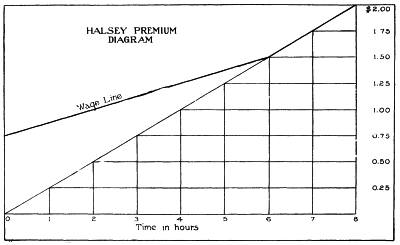
Fig. 1. Diagram of the Halsey Premium Wage System
TAYLOR SYSTEM
A fundamental departure was made by Mr. Fred W. Taylor, in his differential piece-rate system, a diagram of which is shown in Fig. 2. Mr. Taylor does not establish an initial time by guess or by assuming a more rapid gait than on day work, nor does he appropriate other unscientifically determined times. His method is to standardize all conditions in the shop, to make them as perfect and smoothly acting as circumstances will permit, and then to determine a reasonable minimum time in which the job can be done. As a result, Taylor's standard times are very much lower and also very much more carefully and accurately determined than any system hitherto considered. Mr. Taylor scorns the suggestion that by any chance the worker could earn excessive wages. Any wages that an unusually efficient worker can earn are legitimately his own. Assuming that under the Taylor system a worker should do four pieces in four hours, his wages for the time would be $1.00, but Mr. Taylor allows an increase of 20 per cent, 25 per cent, 30 per cent, or even more, according to the class of work, for ascertaining standard time. Let us assume 20 per cent increase. The worker then receives for four pieces in four hours, $1.20, a rate of $0.30 each. For less than four pieces the maximum hourly rate is $0.25, therefore $0.25 each. If the worker only delivers three pieces in four hours, his earnings are only $0.75, or $0.1875 per hour. Mr. Taylor's system awards, therefore, a heavy and increasing premium for high efficiency, a heavy penalty for low efficiency.
The method of standard time determination is so rigorous that the worker cannot figure on curtailing his output. He has to hustle to make wages even at the low piece rate, and if he succeeds in this, a very little extra effort will give him a higher piece rate.
The excellence of the system lies in the accuracy with which proper rates are predetermined. It is, however, somewhat inflexible and not so well adapted to work in which unforeseeable variations in time occur.
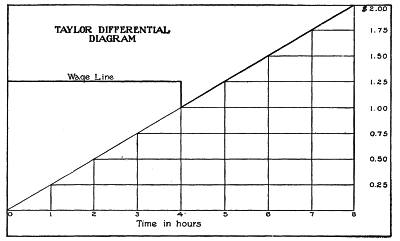
Fig. 2. Diagram of the Taylor Differential Wage System
THE GANTT BONUS SYSTEM
Mr. Gantt, a disciple of Mr. Taylor, introduced at the Bethlehem Steel Company a bonus plan, see Fig. 3.
As in Mr. Taylor's system, the proper time is most carefully and accurately predetermined. If the worker reaches the proper time, he is given a bonus of 25 per cent above normal wages for the time. If he does still better, he is given half of what he makes, as in the Halsey plan. If he does not reach standard time, he is paid only 75 per cent of normal wages for the excessive time, provided bonus earned permits the imposition of this fine. If he had bonus to his credit he would not be fined, however much he fell below standard.
This system has shown certain psychological disadvantages in practice:
1. The men have made it a point of semi-honor, among themselves, not to do better than standard times.
2. Although the actual fines for failing to reach standard times were insignificant, the men claimed that they were being robbed of thousands of dollars in this manner. Neither fall-downs nor ability to lessen standard time are always up to the man. It is therefore unfortunate when a favorable chance occurs to lessen time, that the worker deliberately holds back. It is also often unjust that he should be fined for what may not be his fault.
Actual experience with these different wage systems brings out the fact that psychology accounts for quite as much as any fair condition, and that a good wage system must not only be fair but must also hit the men right.
EMERSON EFFICIENCY SYSTEM
The most recent wage system is the Efficiency System, evolved and perfected in theory by Mr. H. Emerson and his assistants and practically applied by the officials in the shops of the Santa Fé Railway.
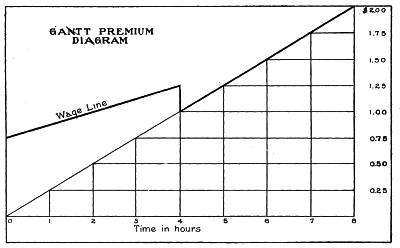
Fig. 3. Diagram of the Gantt Premium Wage System
This wage system superficially resembles the Halsey line, Fig. 4, but in theory and in fact differs radically from all previous wage systems, although it embodies much that was best in all of them. It retains the principle of day pay irrespective of performance. It retains in modified form the principle of a flat piece rate. Like the Halsey system, it pays more per piece for less competent work. Above all, it retains Mr. Taylor's and Mr. Gantt's principle of accurate and scientific shop organization, including standard times for every job and operation.
It pays a high premium above wage or piece rate for coöperation or assistant foremanship on the part of the worker, and finally, as part of regular and daily shop practice, it revises erroneous schedules whether they be too low or too high, and it makes this revision without lessening the earning power of the worker. In addition it substitutes for the costly, annoying, inaccurate time recording of each job, a general monthly efficiency record which covers the shop as a whole, each department, gang, foreman, worker and job, and, based on accurate study and efficiency, it predetermines, before work is begun, the absolute cost of every operation.
These results are facilitated by recognizing that the attainment of standard conditions as to all operations depends on four totally different elements:
(1) The shop itself must be highly organized and efficiently operated. This is a duty that devolves solely on the management, and for poor organization and operation the worker is not responsible.
(2) The character of the work itself, the quality of materials, etc., may vary greatly on the same job at different times. Neither manager nor worker is wholly responsible for this variation.
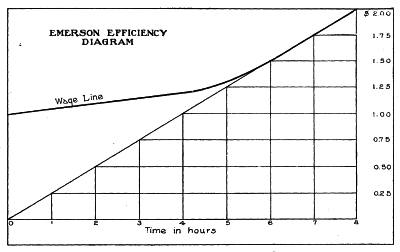
Fig. 4. Diagram of the Emerson Efficiency Wage System
(3) Assuming standard shop and work conditions, the worker himself can do much to coöperate with the management in making the other conditions as well as himself effective.
(4) Costs should be standardized for the shop on a basis of normal conditions and be adjusted in the counting room on the basis of the monthly efficiency factor.
(a) As an incident to high shop organization and efficient operation, the standard time required for every job should be scientifically ascertained.
(b) To eliminate accidental and unavoidable variations in material, etc., the worker is allowed to sum the standard time of all his jobs, gaining on some, losing on others, averaging closely even.
(c) For coöperating with the management in eliminating wastes, the worker is paid a 20 per cent bonus for the efficiency of 100 per cent, which means, that the time taken for all his jobs must be equal to the standard times allowed for all his jobs. If he takes 10 hours on a 1-hour job and 1 hour on a 10-hour job, his average remains 100 per cent.
(d) The same work is assumed to be done always in the same standard manner. Variations from standard are a general charge or credit to shop efficiency, not a specific variation in cost. A train passenger is not charged more because his train has been delayed by a snowstorm, or less because a fair wind and a clear track made the particular train run less costly than usual.
Under the efficiency system the worker is entitled to standard day rates, even if he is doing nothing. If, however, by reason of special individual effort or skill, he does his work faster, he is entitled, not to a part (one-third or one-half, as in the Halsey system), but he is entitled to be paid in full for all the time he saves. As he has not less coöperated with the management, he is, in addition, entitled to 20 per cent bonus for all the time he works.
Therefore, if a worker whose pay is $0.25 per hour delivers 300 hours of jobs in a month of 250 working hours, he receives:
1. 250 hours at $0.25 $62.50
2. 50 hours saved, at $0.25 12.50
3. 20 per cent on 250 hours' pay 12.50
——
Total $87.50
If, however, the worker does not so coöperate with the management as to make the shop operate at high efficiency, himself included, he does not receive as much extra pay, but a lessening amount until at 67 per cent and below he is paid day rate and no more.
The diagram shows plainly the efficiency wage line beginning at 6 hours, showing 20 per cent increase at 4 hours, standard time, and paying 4 hours time even if the work took no time at all—a condition that arises practically quite often, as when a worker runs two jobs at the same time, or when he does work on his own time.
While the diagram can be applied to a 4-hour job, the worker is not paid by the separate job, but is paid straight day wages and a bonus for his full-pay period efficiency. For each per cent of efficiency there is a corresponding increase in pay.
For 100 per cent efficiency the increase is 20 per cent, and for each 1 per cent increase in efficiency above an efficiency of 100 per cent, the pay also increases 1 per cent; therefore, for 120 per cent efficiency the pay is increased 40 per cent. Below 100 per cent the pay table runs as follows:
Efficiency Per Cent Additional Pay Per Cent
67 0 . 00
74 1 .
80 3 . 27
85 6 . 17
90 9 . 91
95 14 . 53
100 20 .
The system has other merits:
(1) It standardizes not only the work of each worker, but also of every foreman, every department, and of the shop as a whole.
(2) It therefore standardizes the shop cost of every job, whether it is done by a cheap apprentice in two hours, or a high priced mechanic in 10 hours. The average shop or department efficiency factor equalizes accidental variations.
(3) It separates absolutely all questions of wage rate from questions of output, shop conditions, or individual excellence.
(4) It fines the management heavily if shop conditions are not maintained so as to realize standard times.
(5) It puts no limit on the ambition or earning power of any man.
(6) Standard times are being constantly corrected. If the standard man cannot average 100 per cent on his schedules, it is evident that some of them are too short and ought to be lengthened. If on the other hand, a new machine tool is introduced, new schedules are drawn up for it, but the worker will not, on that account, make less than he did on the old schedule.
It is too much to expect that any system of paying wages will prevent an outbreak of selfish interests whether of employer or wage earner. There will, however, be a distinct gain if the nature of the disagreement can be made entirely distinct and plain. Clear thinking must precede clear acting, and this description of different wage systems may contribute towards clearer conceptions and more just practice.
To establish a modern wage system, standard times must be determined on a scientific basis, and the rate must not only be equitable as between employer and employe, but, as Mr. Bender has said, "it must hit the men right." Shop conditions must be right and every facility given the workmen to attain standard time or better, including teaching him how to do the work in standard time. The speeder or task setter employed under the day-wage plan must be superseded by the instructor, who, instead of selecting the most speedy worker and basing standard times on his operations, first determines as closely as possible what the time should be, and then teaches his men how to attain that time. Where stop-watch methods foster discontent and breed antagonism, instruction is followed by coöperation. The average man does not object to doing a task in a stated time when he is given the facilities for doing the work that will make that a reasonable time. Add to this the incentive of extra pay for equaling or bettering that time, and his coöperation is insured.
METHODS OF TIME KEEPING
6. Time keeping may be divided into two classes. The first class includes methods of recording the total time that the employe works during a pay-roll period. The second class includes methods of recording the results of the labor of each employe—the quantity produced, expressed in the units adopted by the trade in which he is employed.
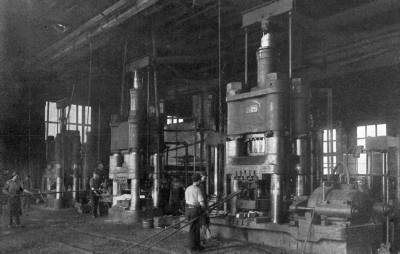
BATTERY OF HYDRAULIC PRESSES (3000 AND 4000 TONS CAPACITY) IN HEAVY FORGING SHOP OF THE J. G. BRILL COMPANY, PHILADELPHIA, PENNA.
Ordinarily, trading concerns require records of the first class only, the pay of the employe being based on the time spent, rather than on the quantity of his production. This is because of established custom and the difficulty of measuring his production. Primarily, the pay of the employe is based on his efficiency, but it is not always practical to attempt to reduce the results of that efficiency to standard units.
Manufacturers require records of both classes. Not only is it necessary to know how many hours each employe has worked, but the quantity of production must be known.
It is true that a manufacturing business requires the services of some employes whose productiveness is not readily expressed in standard units, in which cases the first method only can be used. These are the men who are necessary to the economical operation of a department or shop, or of the plant as a whole, but whose time cannot be charged to a particular job. Labor of this class is termed indirect or non-productive.
The labor of most employes in a manufacturing plant is applied directly to the production of specific articles, or to the completion of certain definite jobs. This makes it possible to reduce the results of their labor to definite units. Labor of this class is termed direct or productive.
Records of production, as well as records of time, are necessary for two reasons. First, when the piece rate or the more modern premium system is used, employes are paid according to the number of units produced. Second, to obtain accurate records of costs, it is necessary to have accurate records of production.
For the purpose of determining the amount of wages due the piece worker, time records are not needed; records of production supply the information required. But to determine the actual labor cost per unit, time records are needed even in the case of piece workers. Piece rates are based on continuous production at a uniform rate. A marked falling off in production means a perceptible increase in the cost per unit for overhead expense. For example, we will suppose that a manufacturer has $50,000.00 invested in machines operated by piece workers. One of the definite items of expense to be apportioned to the product of these machines is interest, at say five or six per cent. If production falls to one-half of the normal quantity, because one-half of the machines are idle, the amount of this one item of expense that must be borne by each unit of production is doubled. Or, we may have two workers operating identical machines on the same class of work, the production of one being twice that of the other. The overhead expense is the same for each employe and each machine, consequently the cost of the finished product is affected by the factor of time. The piece worker who fails to maintain the rate of production established as standard in his or her trade, is not a profitable worker.
7. Time-Keeping Systems. There are several systems or methods of time keeping in use. No one system is adapted for use under all conditions. Like all other classes of records, the time-keeping system must be selected with reference to the conditions under which it is to be operated. The system used in a factory, where all operatives are housed in one or more buildings, is not well adapted to the needs of a contractor whose men may be working on jobs located at points widely separated.
In this discussion, we will consider first the systems used to record the total time employed. This will be followed with descriptions of systems for obtaining records of production.
8. Time Book and Check Systems. Of the time-keeping systems that have been at some time considered standard, the oldest is the time book kept by the time-keeper. This system required the time-keeper to identify each man at work, and to record, opposite his name in the time book, the number of hours worked each day. Sometimes a special time-keeper was employed, or the foreman might keep the time book for his own men, the time books of all foremen being turned in for the purpose of making up the pay-roll. A system so dependent on the memory of one man never could become satisfactory.
With the object in view of doing away with the mistakes that were continually being made in the operation of the time-book system, the check system was introduced. This was probably the first attempt at automatic time recording.
Under the check system, each man is assigned a number and given a brass check on which his number is stamped. In entering the works the men are required to pass in front of the time-keeper's office and to hand in their checks. The time-keeper has, in his office, a large board with hooks numbered to correspond with the check numbers. As the checks are handed in they are hung in their proper places on this board. The checks on the board show what men are in the works, and from them the necessary entries are made in the time books.
When the men pass out at noon their checks are handed to them. Every man must pass out and take his check; otherwise he will not receive credit for the half-day's time.
The system does not prove entirely satisfactory for several reasons. It is not exact, for no accurate record of the time a man enters is possible. Usually the time-keeper's window is closed at starting time and opened fifteen minutes later to take care of the late arrivals. Thus the man who is one minute late pays the same penalty in lost time as the man who comes in fifteen minutes after the whistle blows. As a natural result, when a man finds that he cannot reach the works on time he takes the full fifteen minutes.
While the handing in of a check furnishes reasonable proof that the man has entered the works, it furnishes no proof that he is at his work. Many a man has turned in his check in the morning, left the works by another exit, returned a few minutes before noon, received his check and full pay for the half day.
In some manufacturing plants where the check system is still used, this difficulty has been overcome to a certain extent. The operation of the system is reversed, the men receiving their checks from the time-keeper as they enter the works. In the shops there are check boards on which the men hang their checks. These boards are hinged and provided with locks, the keys being carried by the foremen. Five minutes after starting time the boards are locked, and late arrivals are required to turn in their checks to the foreman who makes records of the time of arrival. Once during each working period, the time-keeper makes the rounds of the shops and takes the time records in his time book. At the quitting hour the boards are unlocked, the men take their checks as they pass out, and turn them in at the time-keeper's office.
9. Time Clocks. The modern system of time recording makes use of a time clock or mechanical recorder. Instead of trusting to the accuracy of a time-keeper, or depending on the workmen to keep records of their own time, the modern recorder automatically records the time of arrival and departure of every employe.
Mechanical time recorders, or time clocks, are of two general types, making two classes of records. One type records the time of one employe on a single card or sheet; the other makes a record of the time of several employes on the same sheet. For recording the total time of employes, both types are used, and certain advantages are claimed for each.
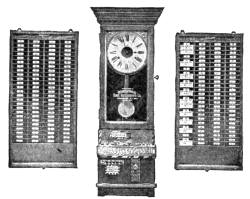
Fig. 5. Rochester Time Recorder, Manufactured by International Time Recording Co.
The records of the first type, most generally used, have a card for each employe on which a record is made of his time for an entire week or pay period. In operation, this system is very simple.
At each side of the clock is a card rack, as shown in Fig. 5. One of these is an "out" rack, the other an "in" rack. At the beginning of each week or pay period, cards are placed in the numbered pockets of the out rack, which is nearest the entrance—one card for each man. These cards bear the numbers or names of the men, or both if desired.
When the employe enters, he takes his card from the out rack, places it in the slot of the clock, makes an exact record of the time of arrival by moving a lever, and places the card in the proper numbered pocket in the in rack. When he leaves, the operation is repeated, this time the card being deposited in the out rack. In the meantime the recording device in the clock has been shifted so that it records the leaving time in the proper column on the card.
The form of record made by one of the best known clocks of this type is shown in Fig. 6. It will be noted that the recording device prints the letter representing the day of the week in front of each record—out or in. Another feature is the dash under the afternoon registrations; a glance shows whether the registration was made at, for instance, 6 o'clock in the morning or afternoon.
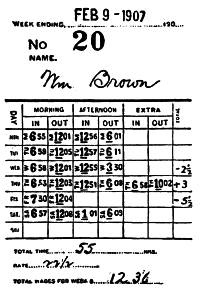
Fig. 6. Weekly Time Pay Card Used in the Rochester Recorder
This form requires an exceptionally small number of entries to figure the time for the week. In the outside column, at the right, is entered the time lost or the overtime for each day. At the end of the week, the net total of this column is added to or subtracted from the total hours representing a full week, which gives the total number of hours actually worked.
Clocks of the second type record the time of several employes on one sheet, the record being made for one day, or for any number of days up to a week. Like the card machine, the record shows the in and out time, both forenoon and afternoon.
A recorder of this type is illustrated by Fig. 7. To register the time of arrival or departure, the employe places a key, bearing his number, in the clock, and gives it one turn. A bell rings, indicating that the hour and minute of the day have been printed on the record inside the register.
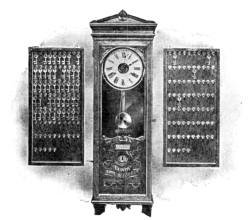
Fig. 7. The Bundy Time Recorder, Manufactured by International Time Recorder Co.
The form of record made by machines of this type is shown in Fig. 8. The records of all employes appear in numerical order on one sheet, with the various ins and outs in their proper columns. The record is inside the clock, under lock and key, and when removed can be used as a pay-roll sheet.
The fact that the complete record is on one sheet, is one of the advantages claimed for this type of recorders. On the other hand, an advantage is claimed for the card machine in the fact that the cards can be used for other purposes, such as for cost records.
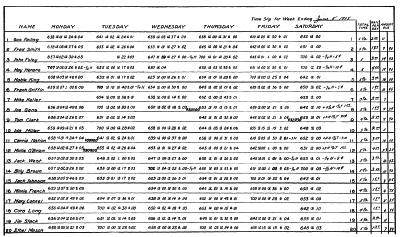
Fig. 8. Weekly Time Record as Made by the Dey Time Register
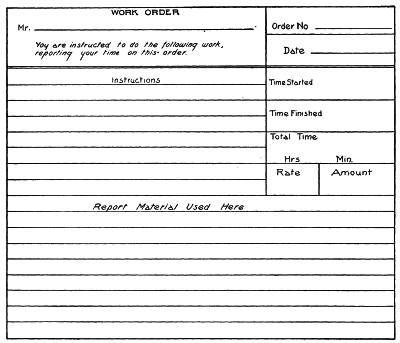
Fig. 9. Work Order with Time and Material Records
PRODUCTION TIME RECORDS
10. All records of time on individual jobs or operations may be termed production time records, since the ultimate object of keeping such records is to determine the cost of production. To the manufacturer, these records are fully as important as those showing the total time worked by each employe. Without such records, a satisfactory cost system is impossible.
When the importance of obtaining costs of production—knowing what it costs to manufacture a given article—began to receive consideration, systems for recording the time spent by the worker on each job were attempted. There being no other method available, the records were at first made on cards or slips by the employes themselves. In all essential features the same system is still largely used; nearly all cost systems require that the employe keep a record of the time worked on each job.
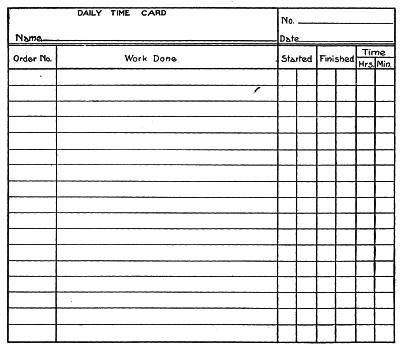
Fig. 10. Daily Record of the Time of One Man
11. Time Record on Work Orders. One method of keeping time on individual jobs is to make the record on the work order. When a job is assigned to a workman, a written order is issued to him. This order, Fig. 9, instructs him to do certain work and gives him authority to draw the necessary material, provided the material is not issued with the order. He is instructed to report his time on the order, and sometimes to report the material used.
This form can be used successfully only when one man does the entire job. It is used principally for repair jobs.
12. Daily Time Card. One of the methods of obtaining production time records is to use daily time cards. Each employe is supplied with cards, similar in form to Fig. 10, on which he is expected to record his time for an entire day.
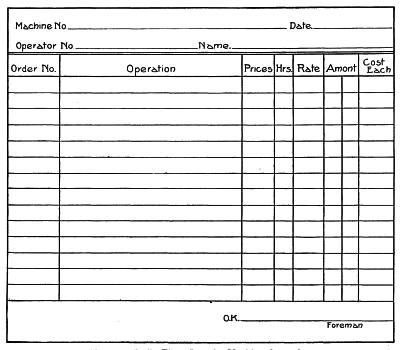
Fig. 11. Daily Time Card for Machine Operations
At the top, the card bears the name and number of the employe, and the date. Below the heading, a form is arranged for a record of the order numbers on which he is employed, a description of the work done (usually the name of the operation), the time of starting and finishing, and total time worked on each job.
In some classes of operations it is necessary, if accurate cost records are to be obtained, to keep a record of performance of the machine, as well as of the man. A form for a record of this kind, covering the operation for a day, is illustrated by Fig. 11. This form includes the number of the machine and a record of the number of pieces produced. Such a record is used for machine operations when a large number of similar pieces are operated on by a single machine. The time record is made when one order number is finished and a new one started. The form shown provides for an extension of rates and amounts, the extensions being made in the cost department.
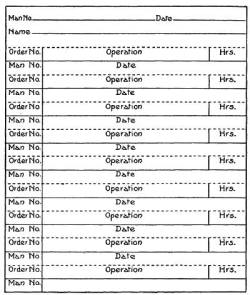
Fig. 12. Coupon Time Card for a Day's Operations
Fig. 12 is a card for recording a day's operations, arranged on somewhat different lines. This card is a series of perforated coupons, one for each job on which the employe works. When a job is finished, the record is made, the coupon detached and turned in. At the close of the day the top of the card, with all unused coupons attached, is turned in.
All of these forms for recording the time of an employe for an entire day are handed to the foreman, who turns them in to the cost department. Here, the time cards are compared with the clock records to find if all of the time for which an employe is paid has been accounted for. The time records for individual jobs are then transferred to the cost records. For the latter purpose, the coupons can be distributed by order numbers. This makes it convenient to retain all time coupons until the job is finished, when the amounts can be transferred to the cost records with a considerable saving of labor in the cost department.
There is one serious objection to any form of time card designed for a day's record. Too much depends upon the accuracy and clerical ability of the employe. The average factory or shop operative has had no experience in keeping records. He does not appreciate the importance of the time records he is expected to keep, and, naturally, becomes careless. Knowing that a record is expected, his card will show full time, but the distribution of that time to separate jobs is not accurate. Frequently, he waits until the close of the day and makes as close a guess as possible as to the time worked on each job. His failure to keep accurate records is not due to unwillingness, but to his lack of training in such work.
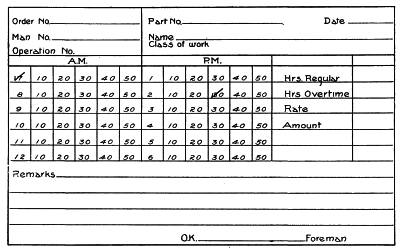
Fig. 13. Job Card with Time Chart
Exceptions are found, as a matter of course, and in some industries the general character of the operatives employed is such as to practically insure intelligent record keeping. As a rule, however, it is unwise to expect the factory employe to keep accurate records.
13. Job Time Cards. A method of time keeping which is an advance over the daily time card, is the use of a separate card for each job. With this method, accuracy of the records can be practically insured and the employe relieved of much of the clerical labor.
To attain satisfactory results, it is necessary to operate this system along somewhat different lines than that described for the daily time card system. Instead of issuing cards for the entire day, the workman should be given a new card with each new job on which he works, and not until he has completed the job last worked on. The time must be recorded and the card turned in to the foreman on completion of each job.
It is the duty of the foreman to keep his men supplied with work, and to have at all times a job ahead. The workmen, knowing that a record of his time on each job is kept and compared with the clock record, will naturally insist on having a new job card when each old one is turned in. If no job is ready, it will be necessary for the foreman to issue an idle or non-productive card—a condition which he will strive to avoid—all such time becoming a direct expense charge against his department.
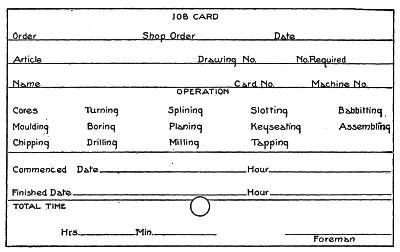
Fig. 14. Job Card Showing Names of Operations
To relieve the employe of clerical labor, a card, similar in form to Fig. 13, is used with quite satisfactory results. The special feature of this card is the provision made for obtaining a record of time. Below the heading there is a form representing the time of day, each hour being divided into ten minute periods, and the whole divided between forenoon and afternoon.
When a new job is started, the workman makes the record by checking the time in the proper space. On completion of the job, he makes a similar check mark in the space that indicates the finishing time. The exact time is computed in the cost department. To illustrate: Suppose a job is started at 7 A. M. and is done in 6½ hours. The time will be checked at 7 A. M. and again, if an hour is allowed for lunch, at 2:30 P. M. This really shows 7½ hours elapsed time, but in the cost department, the lunch hour will be allowed for, and the computed time will be correct.
Another form of job card, intended for use where jobs require more than one day, is shown in Fig. 14. With this card, it is intended that the starting and finishing time shall be entered in the ordinary way, and the name of the operation checked.
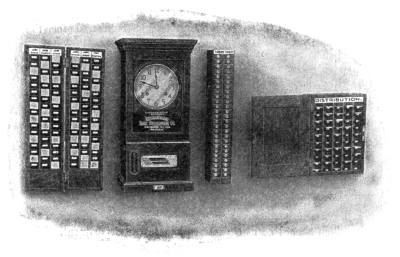
Fig. 15. Day Time Register for Production Time Records, Manufactured by International Time Recording Co.
14. Mechanical Time Recorders. For the same reasons that they are best for making records of total time, for pay-roll purposes, mechanical time recorders are best for obtaining production time records. Whether the responsibility of making the record rests on the workman or a clerk, it is always better to have the actual recording done automatically whenever it is possible to do so.
While the time recorders used for keeping total time are also used for obtaining production time records, there are certain advantages in using recorders of slightly different types. Manufacturers have made great progress and are now supplying machines which answer every requirement.
One type of recorder designed for production time records is shown in Fig. 15. This outfit includes, in addition to the recorder, a rack for jobs ahead and jobs started, a rack for finished jobs, and a distribution rack. The first rack contains pockets of the right size to hold time cards or tickets. These pockets are numbered to correspond with the men's numbers, two pockets being provided for each man, one for jobs ahead and one for jobs started. The rack for finished jobs is divided into compartments bearing the men's numbers, with slots through which the cards are inserted. The distribution rack is divided into compartments numbered for the different jobs.
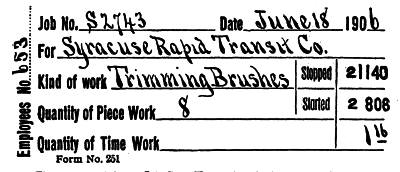
Fig. 16. Individual Job Card Used with the Day Time Register
The recorder and card racks are placed near the foreman's desk, which should be at a central point in the department. The foreman prepares cards for the different employes and places a card for the next job in the jobs ahead pocket. The workman, when starting to work, takes the card for the next job, records the starting time, and places the card in the jobs started pocket. When the job is finished he again records the time, on the same card, and places the card in the compartment bearing his number in the finished jobs rack. At night, if he has an unfinished job, he records the time, the same as for a finished job, and either turns in the card to the foreman or places it in a box kept for suspended jobs. The foreman then makes out new cards and places them in the jobs ahead rack, while the suspended card is placed in the finished jobs rack.
Every morning all cards of the previous day are taken from the finished jobs rack, the time recorded on each man's cards is computed and compared with the record of the total time recorder, and the cards distributed by job numbers in the distribution rack. This checks the job time with the pay-roll time, and permits of leaving the cards in the distribution rack until the entire job is finished. The cards are then taken to the cost department and the time records distributed on the cost sheet.
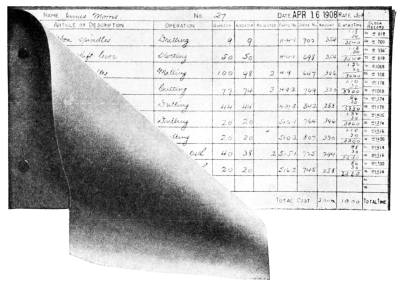
Fig. 17. Job Time Sheet Used with the Day Time Register
One form of card used with this type of recorder is shown in Fig. 16. One card is used for each job on which a man works. It will be noted that the time is recorded in decimals. Instead of the usual 12 hours, the recording wheel is divided into 24-hour periods, or if desired, into 23 hours, automatically eliminating the noon hour. The 23-hour wheel prints 12 at noon and again at one o'clock, 13 at two o'clock, etc. At 3:30 P. M., for instance, the clock would record 14.50, meaning 14½ hours. On the card illustrated, the record shows the job to have been started at 8.08 and finished at 11.40, the elapsed time being 3.32 hours.
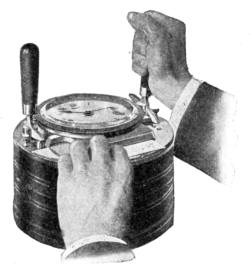
Fig. 18. The Calculagraph, Manufactured by the Calculagraph Company
A clock of similar type accommodates a sheet of any size, and provides for as many separate time records on the same sheet as may be desired. A sheet may record the time of a single employe for an entire day and show the exact time worked on each job. Or, in some industries, the card may be made for a job and arranged to accumulate the time of all employes working on the job. Fig. 17 shows how several time sheets of this class can be bound together, making a daily time and pay sheet for each employe. From this sheet the time is distributed to the cost sheets.
Still another type of time recorder, which offers certain distinct advantages, is shown in Fig. 18. This machine is used to obtain a time record for each employe on each separate job or operation.
The distinctive feature of this machine is that it records the elapsed time. When a man commences work on a new job, he places his card in the machine and by moving a lever registers the starting time. When the job is finished, he again places the card in the machine, this time moving a second lever, and registers the exact time that he has worked on the job. The advantage is apparent. With an ordinary time stamp printing the starting and finishing time, it is necessary for a clerk to mentally compute the elapsed time. With this machine the elapsed time is mechanically computed and printed, saving the time of the clerks and doing away with all possibility of clerical errors.
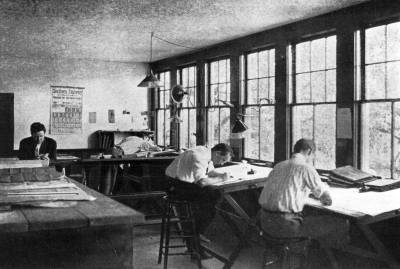
THE MECHANICAL DRAFTING DEPARTMENT AT THE PLANT OF THE GREEN FUEL ECONOMIZER COMPANY, MATTEAWAN, N. Y.
Fig. 19 illustrates the form of record made by this machine. The record shows that workman No. 38 commenced work on job No. 530 at 9:45 A. M., that he was employed on this job 2-8/10 hours, and that the operation was milling.
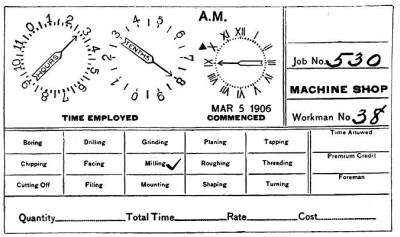
Fig. 19. Time Record Made by the Calculagraph
The machine is made to register either hours and minutes, or hours and tenths of hours. For cost-keeping purposes the latter is preferred for the reason that it is much easier to figure time at a given rate in tenths.
A form of card, without the record, is shown in Fig. 20. The card can be of any size desired, the only requirement being a blank space for the time record in the upper left-hand corner.
As with other recorders, one of these machines should be located at a central point in each department. It is advisable to provide a card rack with compartments bearing the employe's numbers, and to place cards for jobs ahead in these compartments. The cards for the day are first sorted by employe's numbers to verify the clock record, and then by job numbers for the use of the cost department.
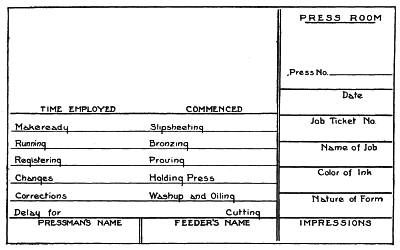
Fig. 20. Time Card Used with the Calculagraph
Another elapsed time recorder, which was placed on the market after the above was put in type, but before this book went to press, is shown in Fig. 21, the form of record being shown in Fig. 22.
The device is operated electrically, the impulses being furnished by a master clock. This may be located anywhere in the building, preferably in the office, as it will be less affected by vibration and dust. To the master clock is also fitted the 24-hour elimination or cut-out wheel described later. This clock transmits electric impulses each minute all through the building to the various elapsed time mechanisms. Thus all the machines are exactly the same time and cards may be registered in on one machine and out on any other and correct results obtained.
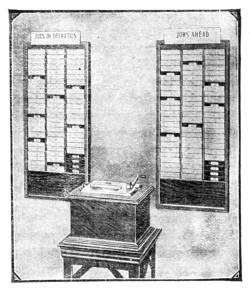
Fig. 21. Elapsed Time Recorder with Master Clock. Manufactured by International Time Recording Co.
The mechanism is about nine inches square and is enclosed in a dust proof iron case. It may be placed on a work bench, on a pedestal, or it may be sunk flush with the top of the bench or desk. The flat cover has two openings or slots for the insertion of the cards. One opening is marked "in" for the first record of a job, the other "out" for registering when the job is completed. There is also an aperture in the cover through which may be seen a series of indicating wheels showing exactly the time of day. There is only one handle to be operated and, therefore, no confusion can occur in the mind of the operator as to which handle to pull.
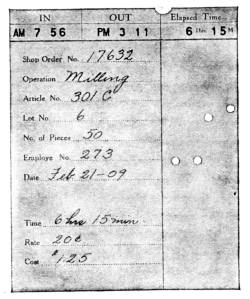
Fig. 22. Time Card Used with the International Elapsed Time Recorder
The cards used in the machine may be of any length desired but can only be of one width, 4¼ inches. In registering in, the card is placed in the front or starting slot, and the lever pulled over. This prints the starting time at the top of the card in the space to the left. At the same time four small holes are punched in the card which individualize the record. After a job is completed the card is placed in the rear or stopping slot, the lever pulled over once more, and the stopping time and actual elapsed time are both printed on the card by one pull of the handle, thus enabling anyone to compare the two records and prove the accuracy of the machine for every record.
One of the salient features connected with this device is its ability to compute only the actual time worked in the factory irrespective of the times of registration. That is to say, in a factory working ten hours a day from seven to twelve and one to six the elapsed time will only be computed during these hours. Any registrations made before seven o'clock will not begin to count elapsed time until that hour, and the computation of elapsed time automatically stops at noon to be resumed at exactly one o'clock, and then continues until quitting time at night, when again it stops automatically. The clock movement, however, does not stop, but always shows the correct time exactly the same as the master clock, and is entirely unaffected by the elimination of the non-working hours in figuring the elapsed time. The machine can also be set to record overtime at night if so desired.
In case work on a given job is not completed on the day it is begun, it is not necessary to ring out on the elapsed time machine until the job is completed as the machine computes up to 100 hours. A job beginning on Monday and running through the week until Saturday night, when it is finished, may be registered on one card, or even for a longer period up to 100 hours.
The elimination or cut-out wheel referred to as being a part of the master clock, is responsible for this wonderful piece of work. The wheel makes one revolution in twenty-four hours and is graduated in fifteen minute divisions for the purpose of setting the contact breakers. The contact breakers are bits of hard rubber which are fastened around the rim of the wheel, and may be moved about at the will of the custodian of the apparatus by simply loosening the set screw. These blocks are set on the starting and stopping time and when they pass the contact breakers the electrical circuit is broken, and the computing device started or stopped as the case may be.
15. Cumulative Time Records. In some factories and shops, the work is of such nature that economy results if the work order and the time record follows the job through all of the operations. For example, hosiery and underwear go through the factory in dozen lots; in a shoe factory a lot of shoes is kept together until every operation is finished; in a harness factory, a bridle goes through all operations on one work order; in a machine shop, one or more rough castings may pass through several operations in the process of converting them into finished parts.
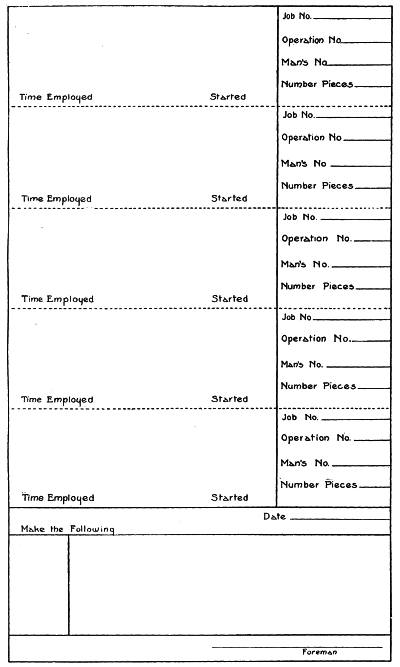
Fig. 23. Calculagraph Time Card with Coupons
When these conditions exist, it is practical to attach a time card to the work, and to accumulate the time of all employes for the entire job. At the same time, individual time records are obtained.
A form to be used with the mechanical time recorder, Fig. 18, is shown in Fig. 23. This form consists of the usual work order to which is attached a series of coupons, perforated for easy removal. Each coupon is of the right size to accommodate the time record, and particulars as to the order number, operation number, man's number, and number of pieces.
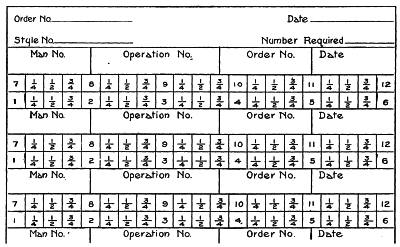
Fig. 24. Cumulative Job Time Card
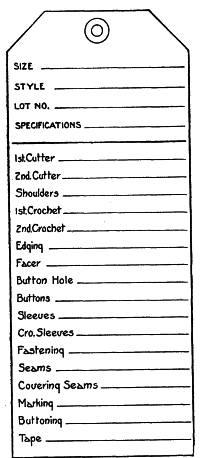
Fig. 25. Operations Tag Used in an Underwear Mill
The man who has the first operation enters his number and records his starting time on the first coupon. When the operation is finished, the time employed is recorded, the coupon is detached, and the job goes forward to the next operator. If the operation is not finished at the close of the day, the time record is made and the next coupon used by the same operator.
Each day, all of the detached coupons are sent to the cost department, where they serve several purposes. They are first sorted by employes' numbers, to compare the time reported with the clock record; then sorted by job numbers, to obtain time records for each job. From the coupons, all necessary information is obtained for a record of jobs in process, showing just where each job is at all times.
Another form for a cumulative, as well as an individual time record, is shown in Fig. 24. This card is for use where no time recorders are provided. Each employe records his time, and, when the last operation is finished, the card goes to the cost department. If desired, this card might be made with detachable coupons for the different operations.
PIECE-WORK RECORDS
16. Where piece-rate or premium wage systems are in effect, is it necessary to have accurate records of production, since the pay of the worker is governed by the number of units of production. It has already been stated, that to obtain the exact cost per unit of production, time records must be kept on piece work. It is not, however, absolutely necessary that the time be recorded for each separate job or unit of production. The necessary requirement is that the production records shall be so kept that they can be checked as to time—that the time required for a given number of units of production can be obtained, or that the units of production during a stated time can be definitely known.
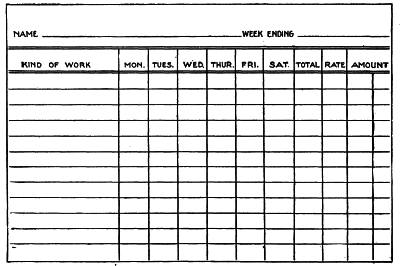
Fig. 26. Weekly Time Records for Piece Workers
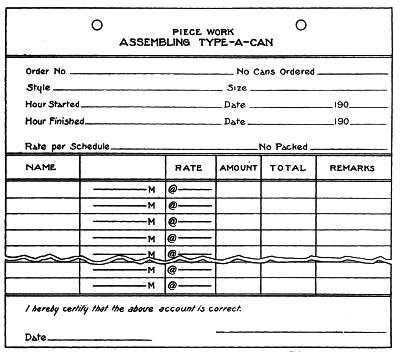
Fig. 27. Production Record of a Gang of Piece Workers
Piece rates are applied to many distinct classes of work, each of which necessitates a slightly different system of records. One of the industries in which piece rates are largely used, is the manufacture of garments of different classes. In this industry, each garment or lot of garments passes through several operations, each operation being performed by a different operator. Since practically all operations are on a piece-rate basis, it is necessary to obtain a record of the name or number of each operator.
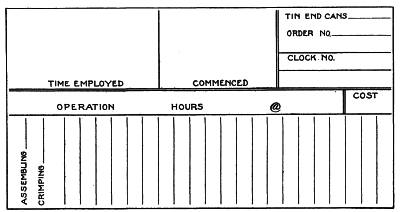
Fig. 28. Individual Time Record Card Used with the Calculagraph
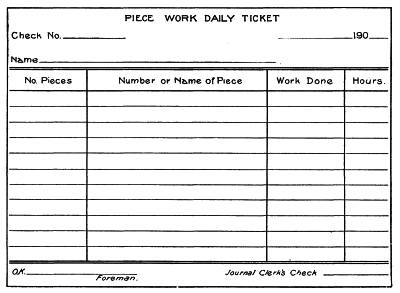
Fig. 29. Daily Record of Piece Work
A form for a record of operations in an underwear mill is shown in Fig. 25. This is in the form of a shipping tag with particulars of the order at the top, followed by a list of the operations. As fast as the goods are cut, they are tied in bundles of one dozen garments. The tag is then attached, the cutters' names or numbers are entered on the lines opposite their operations, and the bundle is delivered to a storeroom located conveniently to the machines.
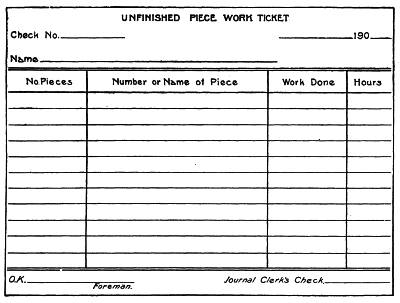
Fig. 30. Record of Unfinished Piece Work
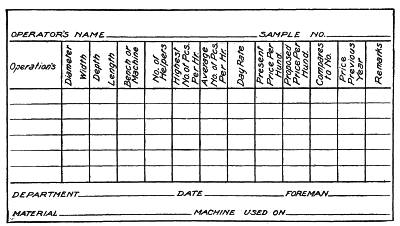
Fig. 31. Production Record for Determining Piece Rates
In the mill where this particular system is in operation, each operator delivers her work to the storeroom and receives more work as needed—always writing her name on the tag. When the work is received in the storeroom, a clerk records the last operation on the operator's time card, Fig. 26. One of these cards is used for each operator and accommodates the record of work for an entire week. Provision is made in the column at the left for a record of the kind of work, while the record of dozens finished each day is shown in the proper daily columns. At the end of the week, when extensions have been made, this card shows the amount of wages due, the different kinds of work done, and the quantities finished. In connection with this, the usual clock record of total time is kept, and a comparison of the piece work and clock records will show whether or not the operator is maintaining standard time on the different classes of work.
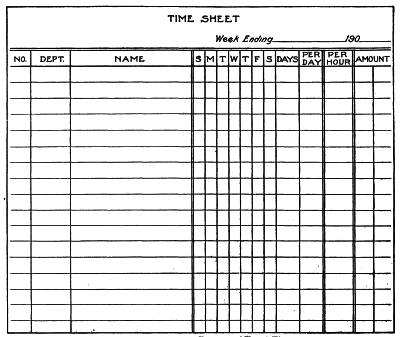
Fig. 32. Sheet for a Record of Total Time
In the manufacture of certain classes of cans, some of the operations are paid for on a piece-rate basis; but payment is made on the basis of the production of a crew. The operation of crimping tin ends on certain cans, requires a crimper and several helpers, the latter preparing the cans for the operation. For this operation, the pay of all members of the crew is based on the number of cans finished; that is, if the number finished by a crew consisting of one crimper and four helpers is 2,000, the crimper will be paid for that number, while the helpers will each be paid for 500. The form used for a record of production on this operation is shown in Fig. 27. This is the assembled record, the individual time records being made mechanically on a card, Fig. 28.
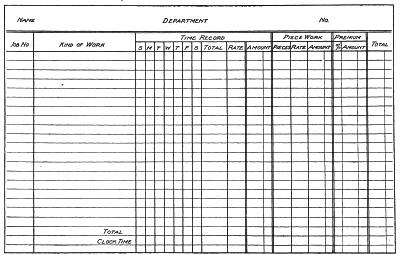
Fig. 33. Combined Piece Work and Time Record for Pay-Roll Purposes
On the operation above referred to, the speed of the helpers is limited to the speed of the machine, but if three helpers instead of four can do the work, the pay of each will be increased correspondingly. In the operations handled by crews, there is nothing to limit production. The result is that each member of the crew is obliged to maintain the pace set by the most speedy member, which reduces the cost of production and enables all members of the crew to earn a higher average wage.
A form of piece-work record, used in a factory where employes are expected to keep their own time, is shown in Fig. 29. This ticket is filled in by the employe, O. K.'d by the foreman after inspection of the work, and forwarded to the cost department. All unfinished piece work is reported on the form shown in Fig. 30. This report enables the cost department to determine the actual time of all piece-work operations.
Before piece rates can be established for new work, it is necessary to ascertain the average time required for the different operations. This necessitates a very accurate record of production of employes working on day wage rates, and the record must represent the average rate of production of all employes, rather than the rate maintained by a few of the most skillful. A form used in one factory for such a record is shown in Fig. 31. When new work is started, one of these cards is filled in for each employe assigned to the work, and a record kept of each operation. When the records have been kept for a sufficient length of time to obtain an average, the records of all employes for the same operation are combined and, on the average thus obtained, the piece rates are established.
PAYING EMPLOYES
17. The time records of all employes, no matter how kept, must be assembled for the purpose of making up the pay-roll. Special forms of time sheets or pay-roll records are designed to meet the requirements of different classes of business. Several such forms are shown in other papers in this series; others are illustrated herein.
A conventional form of time sheet is shown in Fig. 32. The names are grouped on this sheet by departments, and opposite each man's name is his number. The daily time records are kept for a period of one week, then totaled, and the amount of wages extended in the last column.
Fig. 33 shows a form of time sheet intended for a tabulation of both the clock record and job time. The bringing together of the total time records (as shown by the clock) and the production time records (as shown by the job time cards) is of very great importance in connection with any system of cost accounting. One must be checked against the other, for unless all of the time for which the employe is paid is accounted for in the cost records, cost figures will be incorrect.
If the two records do not agree, even though the employe is paid for the time shown by his clock record, the discrepancy should be adjusted. Theoretically, every minute of a man's time should be accounted for by his time cards and, when conditions permit, he should be paid only for the time so accounted for. This rule should not be so rigidly enforced, however, as to encourage a man in padding the time on individual jobs to reconcile the total for the day with his clock record; it is far better to have a few minutes unaccounted for. When a foreman fails to have work ready, he should give the workman an idle or indirect labor card, but the man should be impressed with the fact that accurate records are kept of his time on every job, and that all lost time must be either reported on an indirect labor card or left unreported.
The cost of time shown on indirect labor cards, and of all time unaccounted for, should be charged to the department under some such caption as Department Waste, never to the specific jobs on which the man has worked. Time wasted between jobs or on account of a breakdown or other unusual occurrence does not affect the legitimate time in which a particular job should be done. It is rather a legitimate charge against the efficiency of the department, and the aggregate of all such inefficiency charges should be applied as an added burden to all of the jobs in the department during the month.
Costs obtained, after adding this inefficiency burden, may be considered the actual costs for the month, but cannot be safely used as standard. Standard costs are the costs obtained under perfect conditions—when the department, shop, or plant is running full time at full capacity; when all of the time of every employe is accounted for by his job time cards; when there is no wasted time or unusual expense. While standard costs may not be attained—probably never will be—this should be the goal, to reach which, managers, engineers, superintendents, foremen, and workmen should strive constantly. As a matter of record, therefore, to show what obstacles must be overcome before the ideal is reached, the inefficiency burden should be added as a separate item after all other items of cost have been computed.
As an example of the effect of the application of this principle of considering efficiency in figuring costs, we will consider an imaginary case. We will suppose that, in a certain month, the pay-roll for direct or productive labor in our shop is $4,000; that 40 completed machines—identical in every respect—are produced; that every minute of the time of every productive employe is accounted for by his productive job cards. This gives a labor cost of $100 per machine. During the next month the same men are employed at the same cost—$4,000—but owing to an unusual breakdown, 2½% of the time of these men is wasted; they are idle while the breakdown is repaired, and but 39 machines are produced.
If the $4,000 wages paid is charged as direct or productive labor it gives a cost of $102.56 each—an increase in cost with nothing in the figures that shows the cause. If, however, an inefficiency charge of $100 (2½% of $4,000) or $2.56 per machine is added as a separate item, it is seen at once that here is an unusual item of expense. The amount ($2.56 per machine) is included in the final costs, but in the right place; there is no cause for confusion on account of an apparent, but not real, increase in the productive labor cost. If the cost of $100 per machine obtained during the preceding month is standard for productive labor, it still is the attainable standard; the fact of an unusual expense has in no way affected the legitimate cost of productive labor.
Another great advantage in presenting the labor cost statistics in this manner is that inefficiencies are shown in an understandable form. The fact that indirect labor is increased, say 2%, might occasion no comment; but if an inefficiency charge of even 1% is shown, it calls for immediate investigation.
The establishment of standard or efficiency labor costs means predetermined costs. This is a radical departure from established custom; on its face, contrary to recognized accounting practice; in results, wonderfully efficient. To determine standards in men, material, and machines is a function of the engineer; the recording of facts—the actual cost—is the function of the comptroller or accountant. The two must work together. Properly prepared accounts, showing actual costs with the items that make them segregated, show the engineer how far short of possible standards the plant is running—the extent of the inefficiency.
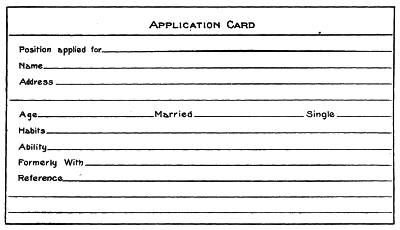
Fig. 34. Record Card for Applicants for Employment
RECORDS OF EMPLOYES
18. In connection with the different time records designed to record hours of service and units of production, there should be a personal record of employes; and the more intimately personal it can be made, the more valuable will the record become.
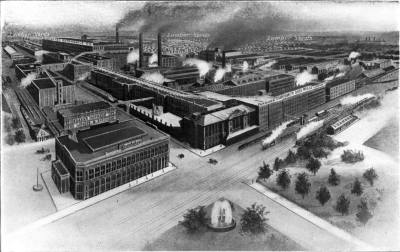
A BIRD'S-EYE VIEW OF THE PLANT OF STUDEBAKER BROS. MANUFACTURING CO., SOUTH BEND, IND.
Napoleon, it has been claimed, could call by name every man in his armies, but, however great value may have been placed on such a memory feat, the manager of the present-day great business organization, who can call by name each of his employes, is an exception.
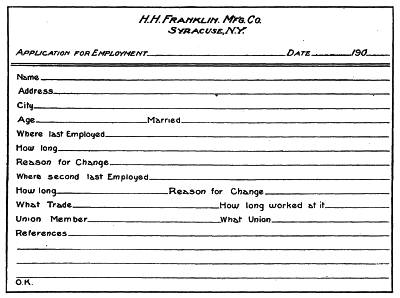
Fig. 35. Card for Record of Applicants
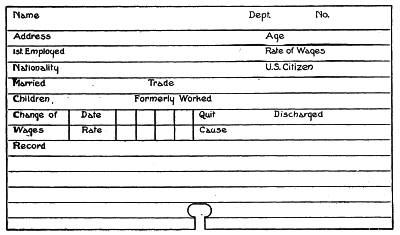
Fig. 36. Card for Record of Employes
It is not necessary that he should do so, for, as business is now specialized and departmentized, he needs to know only the results of the labor of those employes. By this is not meant that he should not take an interest in the personality of his organization; on the contrary, he should be very much interested, but he can be relieved from burdening his mind with details by means of simple records.
Somewhere in the office there should be as complete a personal record of each employe as is possible to obtain. This record should include applicants, employes, and past employes, and it should be the duty of some person or department to maintain the record. In the smaller establishments, employes' records should be in charge of the chief accountant, office manager, or superintendent; in larger establishments, the employment department will keep these records.
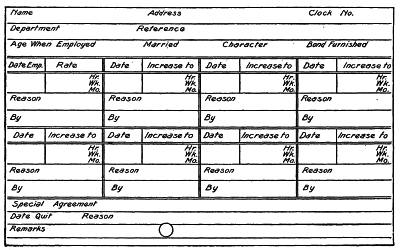
Fig. 37. Card Showing Complete Record of an Employe
19. Application Card. Fig. 34 shows a simple form of application card to be filled out for every applicant who is not hired immediately, but whose application receives favorable consideration. This card is headed with the name of the position applied for, or the trade of the applicant. Following this is the name and address, and such information about the applicant as may be considered of special value.
These cards are filed in a regulation card index drawer and indexed under the trade or position applied for. The index cards are headed with the names of the trades employed, the departments, or such other designations as may be best suited to the business. For instance, one index might be headed Machinists. Back of this index the cards of all applicants for positions as machinists will be filed in alphabetical order.
A form of application card which provides for more detailed information along certain lines is shown in Fig. 35. While this card is headed with the name of the employe, it is filed under the trade, as described for Fig. 34.
The value of these application records is apparent. When a man is needed, reference to this file will show who has applied and assist in getting a man quickly.
20. Employe's Card. One form of employe's card is illustrated by Fig. 36. This card is filed as soon as a man is engaged. At the head of the card is the name of the employe, the department to which he is assigned, and his clock number. Following this is the address and other essential information. Space is also provided for a record of changes in wages, including both dates and rates. At the bottom of the card, space is left for notes on the record of the employe, which can be continued on the back of the card. The final record on this card is the date the employe quits, or is discharged, with reasons.
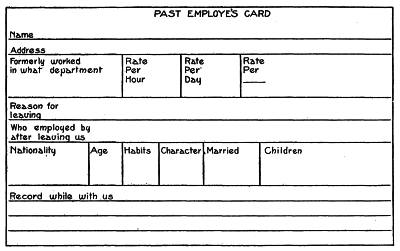
Fig. 38. Card Record of a Past Employe
Another form of employe's card is shown in Fig. 37. The special feature of this card is that, for each increase in wages, the reason and name of the person granting the increase is noted.
The cards of present employes are filed alphabetically by name. However, in very large establishments, it is advisable to subdivide them by departments and arrange the cards of all employes in the department in alphabetical order. It is seldom necessary to arrange the cards by trades for the reason that the names are, as a rule, so classified on the pay-roll records.
The employe's record proves valuable in many ways. If, for any reason, an employe is away from his work, and it is desired to communicate with him, the address is quickly found; in case of an accident, resulting in injury to the employe, the address is very convenient. Again, when a man is wanted for a position a little above that occupied by the average employe, it is best, if possible, to select a man from the present employes. Whether the position be that of a gang boss, a foreman, or the head of a department, a condensed record of past performance, supplementing the personal observations of his superiors, will be found of considerable assistance in selecting the right man. Many other advantages might be named, but those given should be sufficient to demonstrate the advisability of maintaining these records.
21. Past Employe's Card. In some respects, a record of past employes is as important as the record of applicants and present employes. When more men are needed, it is natural to suppose that past employes, whose services were satisfactory, will be specially desirable. On the contrary, a past employe who has been discharged, or whose work was unsatisfactory, is unlikely to be desirable.
Any record that will show who the past employes are, why they left, and their past record, will therefore be of value. Such a record is provided by the card illustrated in Fig. 38. When an employe leaves, for any reason, one of these cards is filled in and filed alphabetically. At the same time, the employe's card is transferred to another section of the file, and indexed under the name of the department, or the trade or class of employment.
These cards furnish a very complete record of employes, past, present, and future. If the number is small, all can be filed in one drawer, with separate indexes to segregate them into classes. Or a large cabinet, with one or more drawers for each class of records, may be required, but, in any event, the records are complete.
MANUFACTURING ORDERS
22. One of the principles that must be kept in mind when installing a system of any description is that provision must be made for recording every detail of the work intended to be cared for by the system. While this holds true in respect to the systems in every other department of a business, it is of special importance in the manufacturing branch. Accurate costs are out of the question unless every detail of the operations of the plant is properly recorded.
Experience has shown but one method that will insure accurate records, and that method is to manufacture all goods on definite orders and to charge all work not applied to a specific manufacturing order, to expense or operating accounts. The receipt of an order to manufacture before starting the work, is of the same importance to the superintendent as that the commercial department shall receive an order from the customer before shipping goods.
Few managers will accept verbal orders for the manufacture of expensive goods, without asking for a confirmation in writing. When those orders are transmitted to the manufacturing department, it is just as important that they shall be in writing.
Manufacturing orders are of two classes: general orders to the superintendent to manufacture a certain quantity of goods, and specific orders to shop foremen to do some part of the work. For convenience, these orders will be referred to in this discussion as Production orders and Shop orders.
23. Production Orders. The production order is the written instructions to the superintendent to manufacture certain goods. It is his authority to secure the necessary material, to employ the required number of men, and to convert that material and labor into the finished product. The production order may call for the manufacture of the quantity of goods of a certain type required to fill one or more customers' orders; the manufacture of a certain quantity of goods to be placed in stock, from which to fill future orders; the conversion of a definite quantity of raw material into finished products; or even the manufacture of an indefinite quantity of raw material into an equally indefinite quantity of the finished product, but within a definite period of time.
Usually the production orders of one factory will be confined to one class, though there are some exceptions. In the first class, we find shops manufacturing special machinery, jobbing foundries, and mills manufacturing underwear and hosiery. In the latter business the goods are sold in advance, from samples, and only the quantities or particular styles required to fill orders are manufactured.
The second class includes furniture factories, typewriter factories, the manufacture of tools, and numberless similar industries in which a stock of standard goods is manufactured for future sale.
An example of the third class is found in a harness factory. In this business, a certain number of sides of leather are issued to the cutting room to be cut. Since the leather is not uniform in weight or texture, it is not possible to cut an entire side of leather into pieces of the same size, or the same parts of a harness—as lines or traces. The cutter must use his best judgment, so cutting the leather that it will produce the largest possible volume of usable stock, with the least waste. The definite factor is the side of leather which is to be converted into an indefinite quantity of finished, or semi-finished product.
The last class is illustrated in the manufacture of salt. The brine—raw material—is pumped from the wells into storage tanks, from which it is drawn into evaporating pans or grainers. An order may be issued to make what is known as common fine salt in three of these evaporators. Evaporating processes are influenced by atmospheric conditions—the same heat will evaporate the brine much more rapidly one day than another. Also, the brine is of different degrees of strength—the same quantity does not always contain the same amount of salt. The only definite factor is time—an indefinite quantity of brine is converted, in a given time, into an indefinite quantity of salt and, it might be added, of an indefinite quality.
When all these conditions are considered, together with the fact that each manufacturer has his individual methods of conducting the business—methods probably different from those of his competitors in the same line—it will be seen that the variety of forms of production orders is almost without number. But the important thing is to have an order of some kind—to provide a record.
If there is one essential feature to be incorporated in the production order, it can be expressed in two words—definite instructions. The order should be made perfectly clear, leaving no room for doubt, as to what is desired. When No. 3 dining-room chairs are wanted, the order should state the fact very clearly, and not read chairs, leaving the superintendent to guess the style and size.
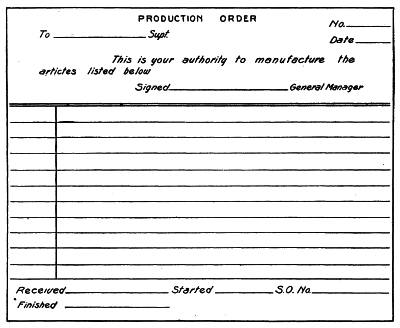
Fig. 39. Production Order to Superintendent
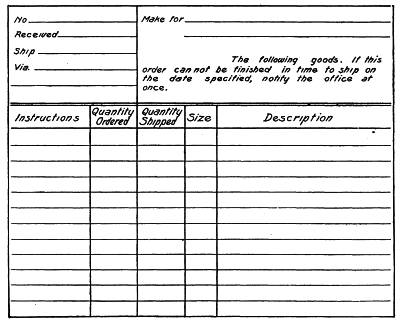
Fig. 40. Production Order Which is an Exact Copy of the Customer's Order
The form of the production order need not be complicated; indeed, a simple form will serve the purpose much better, an illustration of which is shown in Fig. 39. The heading of this order shows the number and date, with instructions to the superintendent to carry out the work as specified. The body of the order is blank, providing space for entering such details as may be necessary. The blank at the bottom, which is filled in by the superintendent's clerk, shows the date received, date started, the shop order number, and the date finished.
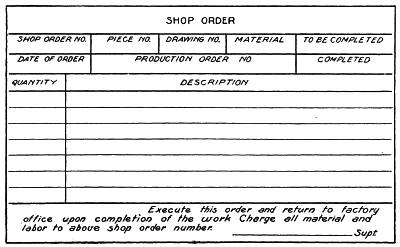
Fig. 41. Sub-production or Shop Order
This form is suitable for almost any kind of business or class of order. The production order should always be made in duplicate, a copy to be kept in the office. The office copy will be used to follow up the manufacturing order.
In many lines of business, goods are manufactured only as required to fill customers' orders. The order to manufacture should, in such cases, be an exact copy of the customer's order as entered. With the modern method of entering all orders in manifold—with a copy for each record required—one blank should be included for the factory, this becoming the production order. A form of this kind is shown in Fig. 40. This is an exact copy of the order as entered, the instructions in the heading taking the place of the name and address of the manufacturer. The particulars include the number, date received, and date to be shipped. The body of the order contains the necessary instructions; in the column at the extreme left—quantity ordered, quantity shipped, size, and description. This is one of a set of blanks that include the invoice, office copy, cost department copy, and copy for the shipping department.
24. Shop Orders. The shop order is the written instruction of the superintendent to the foreman to do certain work or to manufacture certain articles. The order may call for the manufacture of a certain article complete, or it may be for parts to be later assembled into a complete article. Shop orders are as varied in form as production orders.
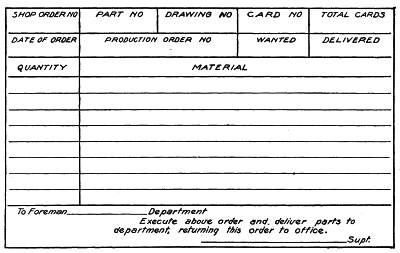
Fig. 42. Shop Order Showing Total Work Cards
When a superintendent desires to start work on a stated production order, he lays out the work and issues the necessary shop orders to the foremen of the different departments in which the work is to be done. A shop order is issued for each shop—usually these are exact copies. If work on an order requires work to be done in four shops, the four copies are made on the typewriter, at one writing, by means of carbon paper.
Fig. 41 shows a convenient form of shop order. This form includes the shop order number, piece number, drawing number, material, date to be completed, date of order, production order number on which the shop order applies, and the date completed. The body of the order is left blank for a description of the work and the necessary instructions. Explicit instructions must be given on every shop order—the order should leave nothing for granted.
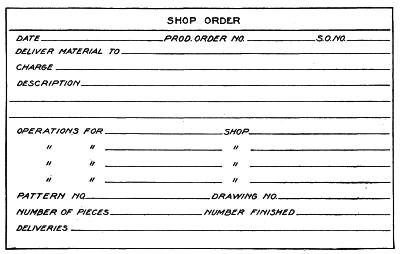
Fig. 43. Shop Order with Name of Shop
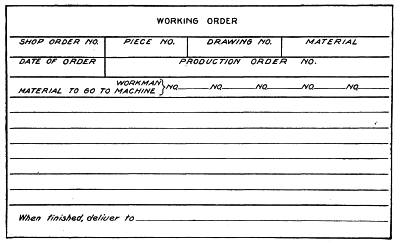
Fig. 44. Shop Order Showing Progress of the Work
The special feature of the shop order shown in Fig. 42 is the space for card number and total cards. When an order is made out, as many copies are made as there are shops or departments through which the work must pass. The number of the copies of the order is entered under the heading total cards—that is, if the work is to pass through four shops, the figure 4 is entered in the space provided for total cards. The copies are numbered in the order in which the work will be done—that is, the order for the shop that does the first work is given No. 1, the second shop No. 2, etc.
There are two special advantages in having the shop orders numbered. Each foreman knows, when he receives his order, how many operations are ahead of his own and how many follow, and can lay out his work accordingly. It does not always follow, however, that because one foreman receives order No. 3, two other operations must be completed before his own can be started. Each shop order may call for the manufacture of a different part, to be sent to the assembly shop, but if one of these parts is in stock, no order is issued. The foreman receiving order No. 2, when his number naturally would be 3, knows that one of the parts is in stock and that his operation must be hurried accordingly.
The employes in the cost department find the numbering system invaluable, for it enables them to tell how many operations there are on a job; also operations which have been completed. This information is of considerable assistance in tracing orders through the shop.
The shop order shown in Fig. 43 answers the same purpose as the form shown in Fig. 42. Instead of the system of numbering the order copies, the plan of inserting the names of all shops is followed. Following the name of each shop is the name of the operation to be performed. This also enables the shop foreman to so lay out his work that the order can be handled promptly when it reaches his shop.
25. Work Orders. The work order is the written instruction of the foreman to the workman to do certain work. As a rule, this order is made on the production time card, as shown in preceding pages. Sometimes, however, it is unnecessary to give more explicit directions than can be written on a small card, which makes it advisable to issue a special order.
In certain classes of work, also, it is advisable to use one work order for a job which is to pass through the hands of several men. Such a work order is shown in Fig. 44. This order shows the numbers of the men and machines to which the work is to go. Another class of work for which special orders should be issued is outside repair work—as plumbing, steam fitting, electrical repairs, etc.
26. Standing Orders. Manufacturing is fast developing into a system of producing standard parts to be assembled into complete machines and appliances. Every part that goes into a machine is made from a standard pattern and is interchangeable with the same part in every other machine of the same style made in the same shop. It is no longer necessary to design each machine, and each part required to fill an order—the parts are manufactured in large quantities and carried in stock till needed. An order from a customer may require the manufacture of one special part, the balance consisting of parts to be assembled.
The manufacture of parts as standard units is not an accounting problem, but the accounting department and the manufacturing departments must coöperate in maintaining proper records of the manufacture of those parts. The manufacture of one lot of standard units involves the same operations whenever the same unit is made. Adopting this principle to accounting, it is advisable to establish standards in respect to orders. Whenever the same standard part is needed, the order should be for the same quantity; this, of course, after a standard quantity has been established. When units and quantities have been standardized, order numbers should be made standard—whenever the same work is to be done the same order number should be used. If this plan is followed, orders are soon recognized by number—and the order number informs the foreman as to the work required.
Series of order numbers should be assigned for different classes of work. Numbers 1 to 100 might represent regular plant maintenance and repair orders; numbers 101 to 200, plant construction and special repair orders; numbers 201 to 400, the manufacture of special tools; numbers 401 to 1000, the manufacture of parts; numbers 1001 to 1500, assembling or production orders for complete machines. Shop orders can be distinguished by a second series of numbers starting at, say 5000.
Illustrating the above, the superintendent of a typewriter factory might receive order number 1007, meaning that he is to assemble 1000 No. 7 typewriters. His assembling order to the foreman would bear the same number. After the parts have been drawn from the parts storeroom, it may be found that the stock of certain parts is running low. Production orders are issued for parts, No. 417 being the number for frames for No. 7 machine. The shop orders may bear the numbers 5060-a, 5060-b, and 5060-c, a being the order for the foundry, b, the order for the machine shop, and c, the order for the finishing department.
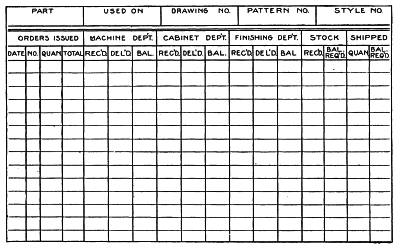
Fig. 45. Manufacturing Order Register, Showing Location of Work in the Shop
As to expense orders and construction orders, it is very necessary that the work to be charged against each order number be clearly specified. When the expenditure involved exceeds a certain amount, or where the work is of a special nature, a special order should be required. Explicit instructions for charging all expense items should be given to each foreman, preferably in printed form—or in typewritten form when the number of foremen is small. Many concerns issue printed instruction books containing the order numbers and specifications, with any rules that may be in force governing the conduct of employes, for general distribution among employes.
RECORDS OF MANUFACTURING ORDERS
27. An essential record in any system of cost or factory accounting, is a record of manufacturing orders. A system of records shouldbe maintained, which will show the exact number and nature of the orders issued to the shop or factory, and from which it will be possible to locate every order—to determine in what stage each order is, and to estimate closely the date of completion.
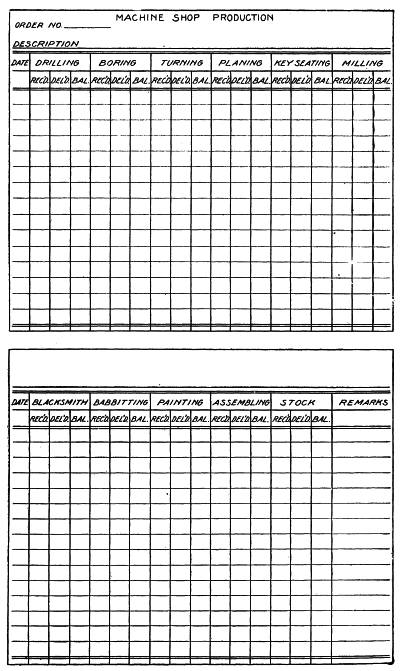
Fig. 46. Front and Reverse of Card Showing Total Production and Progress of Orders.
Such records are equal in importance to records of material, both raw and partly finished, in store at all times. Without them, it is impossible to obtain authentic information about work in process. Orders are certain to be side-tracked, and it is extremely difficult to estimate, with any degree of accuracy, delivery dates for either new or old orders.
The records should be so complete that it will be literally possible to run the business from the office—without calling foremen from the shops, who must return and investigate the condition of an order before an intelligent answer can be given. The manager who can conduct his business from the office is following modern ideas; he is far-seeing—not lucky—for this condition is the result of carefully made plans to insure records that will show him exactly what he wants to know.
Along the line of running the business from the office, Mr. F. E. Webner, in an article in the Engineering Magazine, cites an apt illustration. Two very large corporations with a common line of product were concerned. Each of these in turn was asked verbally by an executive officer of a concern which is a large user of the product, as to what delivery could be made on a stated quantity of goods. One concern used the long-distance telephone to a number of its plants; the other concern consulted records within its office and was able to give a decisive reply within half an hour, and to know just which of its works was best able to turn out the goods. The first concern had a number of superintendents on edge looking up data and could not give a positive answer short of two days.
As in every other department of a business, the expense of maintaining an adequate system of order records in the manufacturing departments is infinitesimal, when compared with the results obtained. A single contract lost for the lack of needed information may mean the loss of a valuable customer, the profit on whose business would pay the cost of an adequate system many times over.
28. Manufacturing Order Register. The form of the manufacturing order register necessarily depends on the nature of the business, the product, and the number of operations or departments through which an order must pass. It need not be complicated—simple forms always are to be preferred—the main thing is that all orders be so recorded as to be readily located.
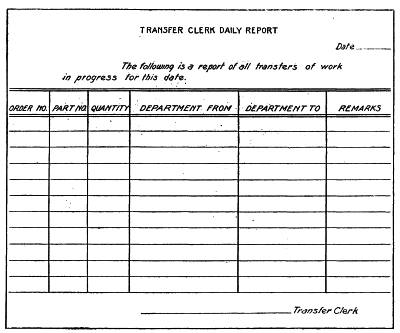
Fig. 47. Daily Report of the Transfer Clerk
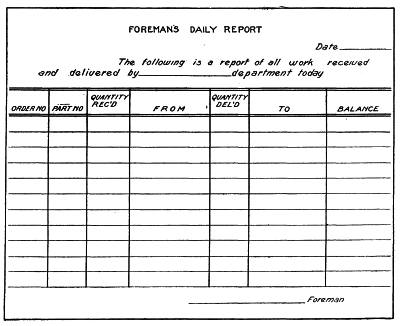
Fig. 48. Foreman's Daily Report of Shop Production
A simple and convenient form for a register of manufacturing orders is shown in Fig. 45. This should be in loose leaf, a sheet being used for each style or size of machine, part or piece manufactured. If, for instance, a typewriter is made in five styles, five sheets would be used—one for each style. Separate sheets would also be used for each part—as many sheets for each as there are sizes.
The sheets should be indexed under the names of the parts and those in each division arranged in the order of sizes. Supposing type bars to be made in ten sizes—numbers 191 to 200—the sheets would be filed in the order of these numbers. Should the industry be one in which orders are issued to assemble parts into complete machines, the sheets on which assembling orders are recorded should be filed with a separate index, but may be kept in the same binder. It is also advisable to use sheets of a different color for these orders.
The heading of this form, Fig. 45, shows the name of the part, the machine on which it is used, the drawing number, pattern number, and style or part number. Orders to manufacture are entered in the columns at the left of the body of the form, giving the date, order number, quantity ordered, and total ordered to date—that is, if 500 parts are ordered on the 10th and 300 on the 25th, the sum of the two, 800, would be entered in the total column. Following the order record columns are columns for the departments, the form illustrated being designed for a furniture business. Under the heading for each department, a daily record is made of the quantity received, quantity delivered to the next department or to stock, and balance in the department, the latter being in an uncompleted state. This form can be adapted to almost any class of manufacture by a proper arrangement of departmental columns.
In most all industries, it is practical to keep a continuous record of all manufacturing orders; sometimes it is best to keep a record for each order. A form of this class, designed for the use of a machine shop, is shown in Fig. 46. This form shows the progress of a single order through all of the departments. A card is used in this case, both sides being required to accommodate the number of operations, and they are indexed by order numbers.
29. Tracing the Order. The system of tracing orders through the shop or factory is very important and should be as nearly automatic in operation as possible. There may be many orders which need not necessarily be traced, but a system that will automatically keep the office informed on the progress of all orders, will pay for itself in the time saved in tracing a single order without proper records. To attempt to find the exact condition of work in progress without a tracing and recording system, is not alone expensive, but unsatisfactory in results; the degree of accuracy is measured by the ability of foreman to make accurate estimates. Practically, foremen should be best able to estimate the time required to complete a job, but their estimates will be found to vary greatly on similar jobs; time standards are more accurately determined by a comparison of the records of past performances.
When practical—and it has been found practical in many industries—a transfer office should be maintained in the works. This office should be in charge of a transfer clerk, who will record all transfers of work in progress from one department to another. Theoretically, all work should pass the transfer office. In the manufacture of small parts, this can be done without loss of time, provided the transfer office is centrally located. When heavy work is the rule, it is not practical to carry out this plan in detail, but such transfers should be conducted under the supervision of the transfer clerk.
The transfer clerk should maintain records of orders in progress, which will be duplicates of the office records, reporting all transfers to the office on the form shown in Fig. 47. This is a simple report form, giving order numbers, part numbers, quantities, and names of the departments between which transfers are made.