GENERAL EXPENSE AND COST SUMMARIES
Reading edition
EXPENSE DISTRIBUTION
1. In order to obtain a thorough understanding of a subject, and to gain a clear insight into the various questions involved, so that one may understand not only its underlying principle, but also its operation in detail, it is quite essential to know first, why a thing is done, and second, how to do it. While a general knowledge of a subject is always desirable, and to be commended, it is often found insufficient when put to the test. Special subjects require special consideration and study, especially when the how-to-do-it is involved.
On the subject under consideration this is particularly true, for it seems to be a common confession among those handling factory accounts, that while they know in a general way how their expense accounts should be treated, they seem to be in a maze when it comes to actually doing it. The "knowing how" is the best asset of a good accountant; and in these days when the subject of costs is of vital interest to the manufacturer, the up-to-date accountant has the opportunity to show his value. To make the necessary repairs to a touring car broken down on the country road may take but one dollar's worth of the repairer's actual time, but the "knowing how" may be worth ten dollars to him when rendering his bill, and usually is.
While it is realized that there are differences of opinion among accountants on some of the questions considered in the presentation of this subject, it is the intent of this article to present what is generally conceded by our leading accounting authorities as the best practice in a well-organized, up-to-date, industrial plant, and to so present the subject to the prospective student that he may fully understand and master the "why" and the "how" of this important question in factory accounting.
That the subject may be carefully considered in all its various phases, it will for convenience be developed under the following general divisions in the order in which they are naturally suggested:
(1) Basis of Expense Distribution. (2) Methods of Expense Distribution. (3) Percentage Method Exemplified.
BASIS OF EXPENSE DISTRIBUTION
2. True Cost—What Is It? Without trespassing on the general subject of cost accounts, it is quite essential to clearly establish at the very outset what constitutes true cost. It would be difficult to conceive of a manufacturer to-day who would simply take the value of wages paid and material used for a cost price, and to this amount add the usual percentage of profit he desires to make on his output, and sell at that price. It would be folly to attempt business on any such basis. No business can be conducted without expense, and yet, in the case just cited, the manufacturer has simply ignored it. Suppose the expense of conducting his business exceeds the percentage he added for profit, what then? He soon finds he has made a serious error in figuring his cost, and the item omitted is the cause of his business losses. His selling price was based on less than the true cost of his product and it is noted he has made no provision, in making up his cost price, for covering the expense of operating his factory, his offices, and general expense, including insurance and taxes. It is apparent then that this matter of expense has a very important bearing on the cost, in fact is a part of it, and must be carefully considered in making up the cost records. The factor of expense is frequently found to be greater than the direct labor cost itself, and a successful manufacturer must know how much expense his costs should absorb and how to figure it. The sales from his product must more than pay for the direct cost to manufacture and all the expenses of his factory besides, and if his sales are not sufficient to pay for both there is no profit. This expense, then, is an indirect charge to the cost of production, and must be included in it before the selling price can be established. Many a manufacturer has been ruined by not properly handling his manufacturing expense, and the necessity for its careful consideration cannot be emphasized too strongly.
Mr. Clinton E. Woods, one of our leading authorities in factory organization and accounting, very clearly states that expense and "overhead" charges must be absorbed into the cost of production as much as labor and material, by which operation expense is really converted into an asset.
True cost includes first, direct labor; second, material; and third, expense. The last item will admit of further subdivision and originates from two different sources: First, the expense of operating the work-shop or factory itself; and second, the general expense of offices and administration.
The cost of production, therefore, resolves itself into the following elements:
Direct labor —————————— $
Material
Factory expense
————
Factory cost
General expense
————
Manufacturing cost
3. Selling Expense. Selling expense, oftentimes spoken of as commercial expense, has no bearing on cost price. The correctness of this position is easily shown. Two manufacturers, competitors in the same line of production, both operating up-to-date plants with the finest equipment, may produce at the same cost. The expense necessary to market the product from one factory may be so excessive as to cause one concern to lose business to their competitors who can sell their output at less expense, while the actual cost to manufacture may be identical in both shops. Again, while one manufacturer, who can produce at a low cost but carries a heavy selling expense, may conduct his business at a loss, his next door rival in trade may not be able to manufacture as economically but can sell his product with less expense, and thereby carry on a profitable business. In the two instances cited, the key to the losses of one manufacturer and to the profits of the other is in the expense of selling, and not in the cost of production.
In a large plant with an elaborate, well-organized, and expensive sales division, where the dividing line between the commercial and production expense is clear cut, these two expense accounts should be kept entirely separate; the commercial being charged off to Loss and Gain direct, while the latter only should be merged into manufacturing cost.
In a small plant, where the selling division is conducted through the general office at an expense so small as not to affect the cost of administration over what would be necessary for manufacturing purposes only, or where there is difficulty in separating the selling from the manufacturing expense, the two are often combined as general expense and pro-rated as one account into production costs.
Theoretically, selling expense is not a charge to production, but the dividing line between this view and the practical one in most cases is a very fine one, and in the interest of simplification instead of elaboration, the commercial will be treated in this presentation of the subject as a part of the general expense, and will be considered in detail later.
4. Expense Based on Cost Price or Selling Price. Having shown that expense is of necessity an item which must enter into true cost, the question at once arises as to what it is related. Is the amount of expense to be borne by any article of production based on its cost or its selling price? While it is noted that some accountants claim the latter should be the basis for calculation, the consensus of opinion seems decidedly in favor of the cost price as the correct one, and there seems to be good argument for the stand thus taken:
(a) Inasmuch as the selling price cannot be established until the cost price has been ascertained, which is to include the expense, it is apparent that the expense must be calculated from data already in hand; either the direct labor or material cost. The selling price is established after, and contingent on, the cost price, not the reverse.
(b) Again, the selling price may vary according to the demands of trade; different prices to different classes of customers, as well as the wholesale and retail prices for the same article. In either case, the cost price is the same and is not influenced one way or the other by the selling price. The selling price may fluctuate while the cost price remains positive and stationary.
(c) While the selling price is theoretically based on cost, it is often fixed by the trade, or regulated to meet competition regardless of cost, and the expense accounts are found to continue about the same each month whether the selling price is high or low.
(d) In times of depression, or when business is slack, it is common practice to "mark down" the selling price and increase the amount of sales at a smaller percentage of profit.
(e) It is difficult to see wherein there would be any difference in the expense of manufacturing an article which sells at $110.00 over what it would be were the price but $100.00, yet there would be if the selling price were used as a basis.
Other reasons will suggest themselves, but these just referred to are quite sufficient to show that the selling price is too erratic and that expense will be found more reliable when figured at cost price, which method has, therefore, been adopted as the best practice.
5. Expense Based on Cost of Labor or Material. Having decided that expense should be reduced in some manner from the direct cost price rather than the selling price, it is remembered that we still have two items of cost to choose from: The labor cost and that of the material. There are those who maintain that the material cost is the correct starting point for calculations, but there are few manufacturers, if any, who do this.
An attempt has been made to use the combined total of labor cost and material, but this method is hardly worthy of serious consideration. The best practice points almost without argument to the labor cost as the true basis of expense; this is not only the logical conclusion but common sense:
(a) It is easy to see that the elements which go to make up the expense of operating a factory—foremen, sub-foremen, supervision, shop clerks, toolkeepers and grinders, helpers, the up-keep of tools and machines, lighting, etc.—are all closely related and largely dependent upon the number of men employed. Reduce the number employed and it will be seen at once that some of the above mentioned items of expense can be cut; less supervision is required and the wear and tear on tools and machinery is also reduced. It is difficult to see wherein any difference in cost of the material used would of itself cause any increase or decrease in the factory expense or even be influenced by it. It is quite contingent on the labor.
(b) That the cost of the material is not a reliable basis for calculating expense can be quite satisfactorily demonstrated. If the cost of an article is, say, labor $25.00, material $50.00, with expense to be figured at 50% on material, or $25.00, it is seen at once that the manufacturing cost would be:
Labor $25.00
Material 50.00
Expense 25.00
————
Cost $100.00
Suppose this article were duplicated under the same identical conditions and cost, using only this time material that cost $60.00. It is a fair proposition that the total cost would be but $10.00 more than in the first instance, or $110.00. But if the percentage is added on the material as before, it is found that the expense this time is $30.00, which would make the cost appear thus:
Labor $25.00
Material 60.00
Expense 30.00
————
Cost $115.00
It is now noted that the cost figures $15.00 more than in the first instance, while we are quite ready to admit it should be but $10.00, the only difference being in the cost of the material.
6. Conclusions. Having established the fact that the expense is a legitimate charge to the cost of production, we are now quite safe in laying down for our foundation the proposition that expense is contingent on, and should be figured from, the direct labor value of the cost price.
METHODS OF DISTRIBUTION
7. Time is continually bringing improvements; old methods once thought practical and satisfactory are replaced by more efficient ones to meet the exacting conditions of to-day. Examine a Practical Bookkeeping-Manufacturer's Edition of thirty or forty years ago and you will probably find nothing on this subject of expense distribution, while to-day it is one of the most important and most discussed of any in factory accounting in general, and cost accounting in particular. Since that time different methods of handling expense have been devised, some with more or less merit. It will be the intent of this section to consider at some length three of the most frequently used of these methods, endeavoring to find one which will, in the most equitable manner, distribute into production the operating expense of a factory with the least amount of detail and unnecessary figuring on the part of the accountant; and at the same time prove satisfactory from the manufacturer's standpoint.
8. The Man-Hour Rate Method. This method, once quite popular, is now but little used, and it is doubtful if it can be found in operation in many up-to-date plants at the present time. The name of the method suggests its intent, which was to distribute factory expense over the various production job orders according to the amount of time spent by the workmen at an hourly rate. This rate is easily calculated, and was established by dividing the total expense for any period by the total number of hours spent on productive work for the same period, reducing the rate of distribution to so much per hour. If 100 hours of labor were spent on a productive job, the cost of the wages paid the workman for this time was not considered, the expense to be borne by the job being figured at the hourly rate for the 100 hours. It will be seen that this is hardly an equitable arrangement, and to rectify a serious defect in the method, some adjustment must be made:
(a) The inability to fix a standard for the efficiency of the labor lays the man-hour rate open to criticism. Could this be done, this method would in many cases prove a very equitable way of distributing expense. It will, however, be seen at once that as it is, a skilled workman carries no more expense than an apprentice boy, and if both work on a productive job a full week, the expense in either case is the same regardless of the wages paid. This is hardly a fair proposition. Either the apprentice's time must be accepted as standard and the skilled workman considered twice as efficient in work-hours, or vice versâ. To do this would lead to endless complications, yet the quantity and quality of the output between these two classes of labor should be considered and adjusted in some way so that the injustice done the manufacturing cost may be corrected. But this is not an easy matter to regulate, and means extra work on the part of the cost clerks in recording the time spent on job work and adjusting these inequalities in the labor.
(b) The man-hour rate requires that the hours worked be carefully recorded and totaled, as well as the cost. Many concerns with heavy pay-rolls to be apportioned over a large number of job orders, ignore the footing of the long columns of hours and fractions, and use only the totals of labor cost, which are of course necessary for entry in the commercial books. It is obvious that in doing this an immense amount of clerical labor is saved. The man-hour method requires that both hours and labor cost should be recorded and totaled—a double operation and duplication of work, which, unless it can be simplified, should be avoided, as it means time and unnecessary expense.
9. Machine-Hour Rate Method. This machine-rate plan of distributing expense was designed to meet the needs of a shop where the product is largely the result of a machine or tool operation, rather than the labor of the mechanic himself. It somewhat resembles the man-hour plan in that the rate of distributing expense is reduced to an hourly rate for the time the machine is working on the job instead of the time of the operator. Each machine is intended to have its own rate.
The method of arriving at the machine rate is easily understood, and reduces itself to the item of depreciation on the original cost price of the machine with its shafting, belting, tools, and installation cost figured at, say, 5%, the power to operate machine at an estimated cost per horse-power, ordinary repairs, divided by the number of hours the machine is estimated to be in operation for the same period; this will give the hourly rate of cost to operate. Some mechanical engineers advocate including in the above cost, interest on the investment at 6%, also insurance and taxes; and by others, the value of the floor space occupied by the machine is also included; but in all these latter points referred to, engineers greatly differ in opinion, and it is generally decided by each manufacturer for himself according to his own ideas.
On the question of the value of machine rates there is probably more argument by mechanical engineers and accountants than on any question in factory accounting; in fact, engineers themselves are very far apart in their opinions and do not seem to agree among themselves. Accountants generally are inclined to take a somewhat different view of the situation from our mechanical friends. While it is admitted there is good argument for both positions, it is to be remembered that we are considering the question of machine rates as a means of distributing the expense account, and it seems to be the prevailing opinion among accountants that as such it is found wanting. While, theoretically, it is undoubtedly the correct solution of the problem, it is more often found in practice to be a case of a "distribution that does not distribute," and for this reason is not used by the very class of factories and machine works for which it was designed and intended to benefit.
Let us consider in detail a few of the objections that may be raised to the machine-rate method:
(a) It will be noticed there are other expenses in the shop than that of operating the machines and not covered at all by the machine expense. Machine rates are absolutely worthless for bench labor and the assembling room, for these two must also share in carrying the shop burden. Not to do so would be manifestly unfair. It is therefore necessary that a second distribution must be made entirely different in its calculation, to handle this undistributed expense not covered by the machine rates, which means two different operations for the same shop.
This necessitates two different time records to be kept, one card for each machine showing jobs worked on and hours idle, and another time card for the workman. Is is easy to appreciate that this double operation greatly increases the clerical work in the shop, besides two sets of entries by the cost clerks, and more detail for all concerned. If a method can be found which requires but one time record to be kept, this double process can be done away with and the duplication of work avoided.
(b) The principal factor in the calculation of the machine rate, in fact, the real key to a successful calculation, is in establishing a standard of work-hours for each machine. It is noted that the higher the standard, the lower will be the rate, and the lower the hours operated, the higher will be the rate; in other words, when the machine is idle in excess of the standard, the rate changes. In some shops where the output is a stable product, always in demand, and the machine in continuous operation, a good estimate may be made, but in most shops a machine is frequently idle on account of "no work" or "laid up" for repairs the same as is its operator. The practice in most shops is such that it is extremely difficult to estimate ahead what the work-hours of a machine will be, and it resolves itself generally into an intelligent guess with two estimators far apart in their estimates, yet a satisfactory distribution requires a standard which will work out in figures close to the actual facts.
Who can successfully estimate ahead for any time the activity of each machine in a large factory? Our factory engineers are at wide variance on this point. One authority says "full time," 300 days a year, is the proper basis for calculation. It would seem as if this were rather an unusual position to take; it apparently being his belief that the time idle would be offset by the time the machine was operated overtime, or else he expected the machinery once put in motion to neither shut down, nor break down. Either appears to be rather a dangerous assumption on which to base a careful calculation for rate of distribution.
Another engineer says 80% of a full day will be found to be the maximum, and further adds: "It will doubtless fall much below that figure." One naturally asks "How much lower?" There is quite a large field of figures to choose from between an 80% activity and a dead standstill for the machine.
It is quite unnecessary to attempt to demonstrate at length that the work-hour standard may be a very elastic figure, and it is often found that after distribution has been made, the results are very unsatisfactory and the machine rates used have proved "way off."
(c) Again, having settled on the work-hour standard, other adjustments appear necessary to equitably handle the machine rate question. For instance, two machines may be of the same book valuation and in cost of operation practically alike, yet one may be far more efficient than the other and possibly turn out two or three times as much work. This condition is constantly found in different shops, and whether or not the two machines should carry the same rate, and, if not, how this inequality shall be adjusted, forms a very interesting question for discussion.
(d) It is noted that the essentials in the calculation of machine rates are all based on estimates which may or may not prove correct; that positive book figures are lacking; and that the calculations are made on assumptions. One of the best professional opinions noted is that expressed by one of our leading accountants, who, commenting on the question of machine rates, observes that "it begins with estimating and is estimating all the way through." This appears to be rather severe criticism, yet one has but to give the subject careful consideration to note that it quite correctly sums up the situation in a few words.
As previously stated, the machine-rate method is without doubt theoretically correct, but, until the subject has been more thoroughly elucidated and worked out in all its details to fit shop conditions and furnish a satisfactory means of distributing expense, it is doubtful if it will be used to any great extent. This method certainly requires an elaboration of system and detail, with questionable results, and with many serious objections apparent; it seems pertinent, therefore, to ask the question "Is it worth while; cannot something better be devised?"
10. The Percent Method. A third plan of distribution, commonly referred to as the percentage method, differs from the two already outlined, in which the time employed was the basis of operation, in that the rate of distribution is a percentage on the direct labor cost of the product, which is, of course, commensurate with the amount of time expended. In the first division of our subject, it was shown that expense figured on direct labor would prove the most reliable.
This method is based on the principle that the production of each department of a plant should shoulder its own expense, and also a share of the general expense. In other words, the cost of the output from the Blacksmith Department, for instance, would be the total productive labor of the department, plus the material used, plus the operating expense of the department, plus its share of the general expense of the whole plant. It is only necessary, then, to establish the relation between the productive labor and the expense, and express the same in a percentage. It is immaterial how many departments or processes there may be in the factory; this relation should be found in each case, based on its own productive labor and expense, each department having its own percentage ascertained from its own actual conditions; no estimating about it. The expense, then, is figured on the labor cost. If, in the Blacksmith Department already referred to, it is found that the expense at which the department is operated is one-fourth of its total productive pay-roll for the same period, it is at once apparent that if to the labor cost of every productive job, 25% is added for shop expense, the total of these expense items added will equal the total expense of the department. In other words, the shop expense is split up and added to each job in proportion to the labor expended on it.
The general expense is handled the same way. If the total general expense is found to be one-third of the total productive labor in the plant, it is likewise apparent that, if to the labor of every productive job, 33⅓% is added to cover general expense, the sum total of these percentage items added will equal the total general expense of the plant.
Following, then, the formula outlined at the opening of our discussion under the heading of True Cost, the cost of a job done in the Blacksmith Department, on which the direct labor cost was $100.00, would appear on our records as follows:
Direct labor $100.00
Material 50.00
Factory expense at 25% 25.00
————
Factory cost 175.00
General expense 33⅓% 33.33
————
Manufacturing cost $208.33
This is the percentage method. While it is quite natural in anything of value and merit to look for its imperfections, this method is criticised by some accountants who point to flaws in its logic and method of computation; nevertheless, it stands to-day as the best solution of the vexed question of expense distribution that has yet been devised, for it not only has the approval of our best technical authorities, but that of the practical accountant as well. It commends itself to the intelligent judgment of the manufacturer, who is quick to realize its superiority, and it can be recommended for many reasons:
(a) It is based on actual figures, easily extracted from the regular books of account, and which are a true statement of fact; no guess-work or estimating about it. There is no better way to figure what is to be, than to use results of what can be conclusively demonstrated already has been.
(b) It can be used in any manufacturing plant, or in all the departments of the same plant, thereby insuring uniformity of method, which is always desired. No argument is necessary to convince that two methods in the same factory are undesirable when one can be found that is satisfactory.
(c) It accomplishes its purpose—it distributes. If it is found that factory conditions are changing, the percentages used may also be changed so as to increase the amount of expense distributed, or diminish it, as necessary.
(d) It requires less work for the cost accountant. The man-hour plan requires the hours worked to be recorded and footed in addition to the labor cost. The machine-rate plan requires not only two different calculations, as already shown, but also necessitates the adding of all the hours worked. The percentage plan requires only the labor cost in money value, and renders the recording and adding of long columns of hours entirely unnecessary, which, as can readily be seen, is an immense saving of labor. In a large plant with an elaborate system of job orders to be handled, the value of the percentage method, in doing away with this double calculation, will be appreciated immediately.
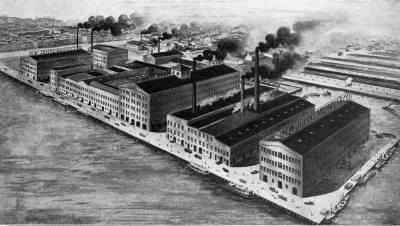
BROOKLYN, N. Y., PLANT OF THE H. W. JOHNS-MANVILLE CO.
(e) Figuring by percentages can be done rapidly, and in many instances it is but a mental calculation and almost instantaneous. Were hours recorded, the frequent use of fractions would render the process of figuring expense less rapid.
(f) It is an equitable means of distribution, for it is based on the direct labor cost, which is not only the most reliable element of cost to use as a basis, but which is one of the principal factors by which the amount of expense is influenced.
(g) It has the endorsement of our best factory accountants and auditors, and it is noted that where "systems" are being installed by factory organizers to-day, the percentage method is continually being adopted as the most satisfactory, for it brings the best results with the least machinery to operate.
PERCENTAGE METHOD EXEMPLIFIED
11. Before proceeding to show in detail the method to be pursued in arriving at the various percentages to be used in distributing expense by the percentage method, it may be well at the outset to clearly understand what constitutes productive labor and expense, or non-productive labor, for it is on the former that all calculations are based.
12. Productive Labor. The wages paid to the workmen for labor spent on productive work which is offered by the manufacturer for sale, and from which the business derives its regular revenue, is properly classed as productive labor. In other words, the amount of productive labor is commensurate with the productive output.
It is frequently asked whether labor spent on plant extensions or new equipment, when made for one's own use, may be considered productive labor and should carry its share of the expense in its distribution. Most assuredly, yes. If this same work were performed to be sold again in trade it would be considered productive labor and the expense would be added. The reverse is also true; if it were purchased from another manufacturer he would treat it as productive labor, and include expense in his cost and selling price, and the purchaser would have to pay for it, and would carry same in his ledger, in his plant or equipment accounts, and on his balance sheet as an asset. The only difference, if any, is in making new equipment himself, in which case it goes on his books at the cost price to him, thereby saving the manufacturer's profit he would have to pay if he purchased it. Is it, then, any less productive labor because a manufacturer prefers to make his plant extensions or new machinery, himself, instead of buying? It does not appear so; it certainly is productive labor.
13. Non-Productive Labor. All other labor, not distinctly productive as just outlined, must be classed as non-productive. This includes clerks and offices, foremen, assistants, watchmen, repairs and renewals, small tools, etc., and all the many expense men not working on product but necessary to keep the plant in repair and operation. Non-productive labor is a question of keeping the factory organization and management up to concert pitch, and is not regulated by the quantity of production.
Inter-department work in a plant often raises an interesting question. Shall labor expended by one department on repairs for another department receive credit for same as productive labor? The foreman of the department often claims that the repairs his men are doing for another department are just as much production, so far as he is concerned, as though his men were building a machine for sale, and should shoulder part of his expense. In a certain sense, all labor is productive, and from a selfish point of view, the foreman's argument is a fair one. But from the broader view of the manufacturer, all such inter-department repairs, or similar work, are a part of the operating expense of the plant, and are necessary for the up-keep of the equipment; they are not made for sale, as is a production order, and must be carried as expense—non-productive labor.
14. Expense and Production Cost Ledgers. Without digressing from our general subject, it may not be out of place at this point to call attention to a most convenient method of keeping cost records. Inasmuch as the cost of production must absorb the expense costs of manufacturing, it will be found advantageous to keep these two classes of accounts in separate binders, putting all the non-productive labor cost records in one binder, calling it Expense Ledger No. 1, and all the productive labor in Production Ledger No. 2. When the expense distribution is to be figured, it will be noted that all the entries will be made in Ledger No. 2, while Ledger No. 1 furnishes the amount and details of expense to be distributed.
15. Period for Comparisons. Having shown that our percentages of distribution are based on the relationship of total expenses to total of productive labor, the first step in our calculation is to draw off from our ledgers a statement of each for the same period as a basis for comparison.
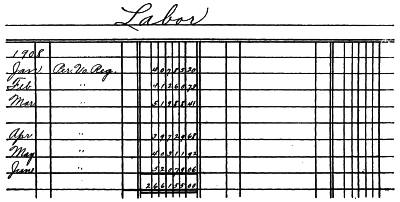
Fig. 1. Private Ledger Labor Account
Inasmuch as there is generally found to be some item of extraordinary expense that appears each month, comparisons made on conditions shown by one month's operations are apt to be found abnormal, while a comparison made on results of operations extending over six months or more will give an average nearer the true condition of the plant's activities than one made on results shown by a shorter period.
16. Pay-Rolls Dissected. For our first statement, let us examine the pay-rolls and find out what portion may be classed as non-productive labor and what as productive labor, both by departments and in totals, our examination of same to cover a period of six months as just suggested.
For the sake of illustration, let us take a plant with a weekly pay-roll of about $10,000. Ordinarily there will be four pay-rolls each month, but in order to provide for thirteen rolls quarterly, it will be necessary every third month to have the labor account cover five weeks instead of four. Turning to our Private Ledger, we find our labor account appears as shown in Fig. 1.
It is now seen at a glance that the total pay-roll for six months is $266,155.00. It is now necessary to know the split-up of the above figures into productive and non-productive labor by departments, and this is easily obtained. By reverting to the pay-sheets, can be found the total pay-rolls for each department during the above period, and from Ledger No. 1 can be found the portion of these same rolls that were classed as non-productive labor, and the balance will be found entered in Production Ledger No. 2, the sum total of which will in each case balance with the totals in the Private Ledger. Every dollar of labor is accounted for in either one or the other of the two cost ledgers. Having done this, the labor statement resolves itself into something like the following:
PAY-ROLL DISTRIBUTION
Jan. 1 to June 30, 1908
Non-Productive Labor Productive Labor Total Pay-Roll
Dept. A-Offices $9,828 00 $ 9,828 00
B-Store 2,180 00 2180 00
C-Power 4,524 00 4,524 00
D-Yard 9,316 00 9,316 00
E 9,971 00 104,409 00 114,380 00
F 7,082 00 31,429 00 38,511 00
G 1,749 00 5,528 00 7,277 00
H 2,488 00 10,659 00 13,147 00
I
J
K
Etc.
Totals 58,021 79 208,133 21 266,155 00
21 8% 78 2%
The above figures are all that are needed so far as the labor end of the comparison is concerned. In fact, the non-productive labor is not necessary and is shown here merely as a matter of interest, as are also the proportionate percentages of each division to the total pay-roll, for it will be remembered that the productive labor is the figure used in all costs on which the expense is calculated.
17. Departmental Expenses. Against the amount of productive labor for each department shown in the statement just made, place the total expenses for the same departments. This is readily found by again referring to the Private Ledger, where the amount of Operating Expense, Department E, for the same months the pay-rolls were tabulated, appears as in Fig. 2. The expenses of all the other departments should be similarly treated.
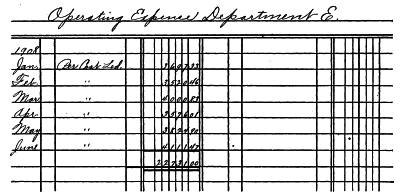
Fig. 2. Private Ledger Operating Expense Account
18. General Expense. The general expense of a plant, for the sake of convenience as well as information, is kept usually in considerable detail, different ledger accounts being opened to carry the various subdivisions of expense. The use of a General Expense Account in the ledger is not recommended, for its very name has the earmarks of a general dumping ground for all miscellaneous items, and is often found a convenient place to hide expense, trusting it will there be lost sight of and thereby escape observation.
The combined total of these various expense accounts is the total general expense, a part of which each productive job is to carry. As they now appear in the ledger as separate accounts, Executive, Office, Store, Power, Yard, Taxes, Insurance, Printing and Stationery, Telephone and Telegraph, Postage, etc., it will be seen that each account is in itself but a part of the amount to be distributed, and, to better show this combined total, these individual accounts should be closed out monthly and brought together in another account, called General Expense Distribution. This is done by journal entry.
Dr. Cr.
$10,293 28 General Expense Distribution
Executive Salaries
Insurance
Taxes
Depreciation
Freight
Express
Cartage
Printing and Stationery
Telephone and Telegraph
Traveling Expense
Postage
Legal
Water
Advertising
Etc.
Operating Expense Dept. A
" B
" C
" D $10,293 28
These accounts are now balanced out and combined in total in the Distribution Account. The Distribution Account is now examined to ascertain the total general expense for the same six months previously used, and the Private Ledger shows it to be $67,840.00, Fig. 3.
19. Power. While the cost of operating the power-house is unquestionably a legitimate charge to the operating expense of each department according to quantity used, it is noted that, by the journal entry just made, the cost of same is closed into General Expense Distribution.
In a plant operating a central power station with electrically driven machinery, the power used in each shop can be metered and accurately known, in which case, each shop can be charged with the amount actually used. To do this requires considerable extra expense, and although it is done in many works, most plants do not consider the expense worth the results, and are inclined to treat all power as general expense rather than departmental.
In a plant driven by shafting and belting, the power consumed cannot be registered or recorded, and the power required only estimated from tests made as often as desired. Although there may be a heavy draft on the power-house at certain times, when all the machinery is in operation, there are frequently times when but few machines are running and the power required is down, although there is no way of recording it.
It is, therefore, extremely difficult to arrive at the actual power used during a month, and for this reason most plants do not attempt its calculation, and are quite ready to charge its cost off as a whole to general expense. To departmentalize it, means extra expense with no benefit gained—except to engineering science.
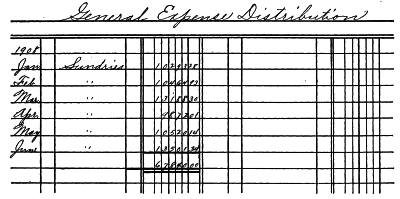
Fig. 3. Expense Distribution Account in Private Ledger
20. Productive Labor and Expense Compared. Having now dissected the pay-rolls and drawn off the departmental and general expense accounts, it is but a matter of bringing these two statements together to produce the final results. It will be remembered that all that is necessary to know is the rate between the two, therefore place them side by side, item for item, as already shown:
Productive Labor Expense % Expense to Prod. Labor
General $67,840 00 32.6
Department E $104,409 00 22,731 00 21.8
" F 31,429 00 5,419 00 17.3
" G 5,528 00 2,465 00 44.6
" H 10,659 00 3,174 00 29.8
" I
" J
Etc. 26.5
Total $208,133 24 $122,985 00 59.1
The percentage columns shown give us what may be considered a very close figure as to what are the actual factory conditions of operating expense and productive labor, and the relationship of the former to the latter. These results are all the more reliable because they are based on actual figures taken from the books of the company, thereby eliminating all estimating and the basing of important calculations on guesses and assumptions, which later generally prove to be far from the real facts in the case. The above results, gathered from six months' operation of the plant, are a fair statement of what the same expenses will be found to be in the long run, although if it is desired to go into the matter still deeper, the same tabulation may be made covering a year, with practically the same results.
What do the above figures show?
(a) That the total operating expenses of the plant are 59.1% of its productive labor, of which amount, 32.6%, is necessary to cover the general expenses, and 26.5%, the average for all shop operations.
(b) That the expense of operating the different productive departments vary according to conditions. That while Department E's expense is found to be 21.8% of its productive labor, that for Department F is found to be but 17.3%; each department having its own rate based on its own actual figures.
(c) Since, as already shown, each department must shoulder its own expense and its share of the general expense, it is seen from results just shown that for every dollar spent on productive work in Department E, 21.8 cents must be added to cover its own operating expense, and 32.6 cents as its share of the general plant expense, and that every dollar spent on production here cost $1.544. This has been covered in detail under heading, True Cost.
21. How to Use Percentages. Let us continue the use of the same figures. It is apparent that, if to the cost of each productive order worked on in Department E during the period of six months just considered—all of which is shown in detail in Production Ledger No. 2, the sum total of whose labor cost is $104,409.00—21.8% is added, the amount thus added will be $22,731.00 (the actual figure is a trifle more), which is just the amount of Department E's expense shown in the Private Ledger and found in detail in Expense Ledger No. 1.
Again, if to the cost of each productive order worked on by any and all departments in the plant during this same period—the sum total of whose labor cost is found to be $208,133.21 and which is shown in detail by the individual cost sheets in Production Ledger No. 2—32.6% is added, the amount thus added will be $67,840.00 (actual figure is a few dollars more), which is just the amount of total expense shown by the Distribution Account in the Private Ledger.
It is now a simple proposition. Having found our average ratio of expense to productive labor for each department, and also for general expense covering a period of six months' operations, we can begin to distribute the expenses of succeeding months on the same basis with the same results.
In closing up the Production Ledger at the end of each month preparatory to drawing off a monthly summary of all the totals therein to obtain the total cost of production for the month for entry through the journal into the Private Ledger, it is simply necessary to enter on each cost-sheet, in columns provided for that particular purpose, two items of expense, one for department expense and one for general expense. In the case of Department E, just cited, the expense for the department is to be calculated at 21.8%, and the general expense item at 32.6%.
22. Even Percentages May Be Used. In a large plant with an elaborate system of manufacturing job orders worked on daily with perhaps hundreds of cost-sheets on which an expense calculation must be made, the use of percentages with three figures may require more time in figuring than desirable, in which case an even percentage may be used. Instead of 21.8 for Department E use 22, and for general expense, instead of 32.6 use 33. This means that under usual conditions, more expense would be added to production than shown by the expense accounts, and the Private Ledger would show whether there had been an over-distribution or an under-distribution in each department's account after the distribution had been made. Turning to Private Ledger Account, Department E, while it is shown that, for January, the expense that should have been distributed, if done exactly, would have been $3,697.33 (had the productive labor for the same month been, say, $17,095.45), the amount added to production by using 22% would have been $3,761.00, an over-distribution of $63.67. To adjust this overdraft in figuring the next month, use 21%, the idea being to have the ledger accounts as nearly balanced out as possible. Should the general expense rate prove more than sufficient when 33% is used, reduce it or increase it to meet the fluctuations of the expense, with the thought always in mind to keep all balances as small as possible, and to make as nearly a perfect distribution as figures will permit.
It is suggested that where these percentages come close to 16⅔, 20, 25, 33⅓, etc., that these figures may be used to advantage. By so doing the expense calculations can be figured mentally and very rapidly, and generally without interfering with a satisfactory distribution. If, however, the overlap each month increases, these should be modified to bring closer results.
23. Journal Entry for Distribution. While it is not the intention in the consideration of this subject of Expense Distribution to depart therefrom into the general field of cost accounts and cost records, it is assumed that on whatever form of cost-sheet used, provision will be made for the proper recording of the three elements of cost: labor, material, and expense, the latter in two items. Inasmuch as only totals should be carried into the Private Ledger, it is only necessary for drawing off the amounts on the individual sheets in Production Ledger No. 2 to provide summary sheets with sufficient money columns to accommodate, among other credits, all items for each department's expense and also for general expense. This, when done and totaled, will give the total cost of production for the month, made up of the following items:
(a) Labor—amount of which should check total of productive labor shown by the dissection of the monthly pay-roll.
(b) Material—amount of which represents withdrawals from stores during month.
(c) Departmental Expense—each separate, representing the amount of expense actually distributed and thrown into production.
(d) General Expense—representing the total amount actually distributed and absorbed by production.
This done, our journal entry will be:
Debit Production. (This may be subdivided into as many accounts as desired.)
Credit Labor.
Material.
Expense Dept. E
" F
" G
" H
" I
Gen'l Exp. Distribution.
24. Expense Ledger. The totals from the Expense Ledger should also be drawn off in a similar manner, and the same items will appear as those shown in the Production Ledger, except that no expense will be added, for it will be remembered that the entries in the Expense Ledger constitute the very items which are transferred to the Production Ledger through the percentage added.
The journal entry for this ledger will be:
Debit Expense Dept. A
" B
" C
" D
" E
" Etc.
Credit Labor.
Material.
25. Results of Distribution. Having posted the journal, turn again to the Private Ledger and note what has taken place. It is found that the two items of labor posted have just balanced out the Labor Account, and every dollar of pay-roll has been accounted for somewhere, either into expense or into production. It it also found that all the debits in the shop-expense accounts have originated in Expense Ledger No. 1, and the credits have originated in the Production Ledger. The various subdivisions of general expense have been consolidated in one Distribution Account, which has also been disposed of through the Production Ledger. What once appeared as an expense cost has now been wiped out, absorbed by production and converted into an asset, just as Mr. Clinton E. Woods, previously quoted, states it should be. A glance at the trial balance reveals scarcely a trace of expense, the small undistributed balances only remaining.
26. Undistributed Balances. Under any method of distributing expense on a pro-rata basis, it is apparent there will be small balances left, representing either an over-distribution or an under-distribution, as already explained. These may be treated in either one of two ways. If the product manufactured has been practically completed during the year, and but little carried over into the next year to be finished, these balances can be charged off and become a part of the Loss and Gain account for the year in which they were created, and the new year begun with a "clean score."
If the product, however, consists of large contract work but partially finished when the year closes, the work on same continuing for some time into the new year, these balances may be also carried over to be worked out in succeeding monthly distributions as the work continues. When this latter method is chosen, of course it will be necessary that these balances be taken into consideration when preparing the Balance Sheet.
27. In Conclusion. While it is realized that the Percentage Method is not perfect in all its details, yet it is quite generally admitted to be the best means that has yet been devised for distributing expenses. A manufacturer using it may be assured that his costs thus figured are correctly shown, from the fact that this method is used and recommended by our highest technical authorities in accounting. From the practical side, it appeals to the manufacturer who is more interested in successful manufacturing than he is in the science of accounts, by the simplicity of the method and economy with which it is operated. The same amount of time spent in planning economies and devising means for cheapening the cost of production that is often spent in lengthy attempts at fine figuring, which, when finished, prove unsatisfactory, will be productive of far better results. Any method which eliminates the unnecessary and simplifies the essentials cannot help but prove attractive both to the successful manufacturer and the progressive accountant.
OPERATING EXPENSE STATEMENTS
28. To properly analyze detailed records, and to be able to extract therefrom the essentials and eliminate all items of minor importance, so that the exact situation and final conclusions can be expressed briefly and in an attractive manner, is an art in itself. A bookkeeper may be ever so well posted in up-to-date methods, and his books may show great care, and be models in appearance, yet when it comes to preparing an intelligent statement of any feature of the company's business, he may be sadly deficient. It does not necessarily follow that because he can do the one thing well, he can make a success of the other. Even as the pleasure naturally to be derived from a carefully prepared dinner may be completely wrecked by poor service, so can the intent of what would otherwise be an interesting tabulation of statistics be made meaningless by the presentation of a jumbled and carelessly arranged lot of figures.
It is as necessary to clearly show on paper the results of the factory operations as it is that they should be correctly recorded on the company's books. While the two operations are entirely distinct and separate, they are closely allied, and every progressive accountant should be interested in both.
The object of a statement is to convey to the reader certain information in an intelligent manner; if it does not do this, it might as well not have been written. This leads us at once to the question: "What constitutes a good statement?"
29. Lengthy Statements Undesirable. That we may have "too much of a good thing," and that even those things worthwhile may be overdone, is true in the matter of statements. The general tendency seems to be to elaborate rather than simplify, and to crowd into the tabulation a lot of figures representing details which are almost always passed over without examination, or are even hardly looked at. If the same amount of time is spent in studying such a statement that is spent in its preparation, it would not be altogether without value, but the fact remains that it seldom is thus considered.
The size of a company's statement is oftentimes all out of proportion to the size of the business; some of the smaller industries present reports of their operations so voluminous in size as to rival that of the United States Steel Corporation, or that prepared by the actuary of one of the mammoth insurance companies.
It should be remembered that a busy manager is more interested in economical management than in wholesale bookkeeping, and has but little use for a formidable array of figures, except in so far as they show general results. Such a statement, when presented to him, is usually tossed aside to be examined later, while if it were condensed and served up to him in a more attractive form, it would probably be eagerly examined and studied with interest. A multitude of figures is more apt to confuse than to enlighten the situation, is a waste of an accountant's time, and, being a source of displeasure to the employer, thereby defeats the very object for which it was made.
Detailed records should always be kept, and in such shape as to be immediately available when called for, but it is hardly necessary to incorporate them in a tabulation intended to show results. It will be well, in submitting figures to the manager, to always bear in mind an imaginary notice over his desk: "This is my busy day; be brief." It is safe to say that a good statement should contain as few figures as possible to intelligently show the desired result.
30. Tabulate the Essentials. The data for a good statement should be well chosen. A manufacturer wants results. He is in business for profit making, and wants to know the true condition of his shop operation and the expense, in a concise presentation of facts, and has but little use for comparisons beyond those necessary for showing him the result of his management. He is not often found to be a philanthropist, eager to load down his expense account so that his clerical assistants may use his time to pursue their studies in the science of accounting. He wants to know what his costs of production and the expense of operation are, and where they may be cut, and it is as much to an accountant's interest to show him this in a clear and self-explanatory statement as it is by an elaborate and dazzling array of statistics to show his own ability in handling figures.
A manufacturer will doubtless obtain just as much solid comfort and real pleasure in knowing that special tools recently made have enabled him to clip a few cents off the cost of one of the units of his product, and that economics in his shops have reduced his operating expenses 2% or 3%, as to be furnished the startling information that his Printing and Stationery account is .7148% of his General Expense, his Insurance, 6.2714%, Postage, .5218%, Telephone and Telegraph, .6538%, and so on down the list.
The illustration used is not an imaginary one either. Statements are occasionally seen wherein all the individual items of expense are thus figured and the percentages carried out four decimal places. Of what conceivable use can such figures be? The only imaginable excuse seems to be that the accountant hoped to lower these percentages in the next period—possibly the third and fourth figures in the decimal—by bringing pressure to bear on the telephone company and on the insurance underwriters sufficient to get the rates reduced, and by telling the mail boy he must use less postage stamps. Rather a peculiar method of cutting expenses, and it is quite safe to say that the same effort applied in other directions would be productive of far more satisfactory results. A good statement, then, should be clear, concise, and complete.
31. What the Statement Should Show. The two elements in a factory, in which the management is directly interested, are the productive output and the operating expense. The former should be pushed to the utmost limit, while the latter should be trimmed at every point possible; and it is readily seen that the point of greatest efficiency is reached when the plant is producing at its full capacity. A factory with a complete organization is operated at a heavy expense when running at but 50% of its full capacity. These two elements, output and operating expense, are so closely related that a change in one immediately affects the other, and the relationship between the two, which is expressed in a percentage, is either raised or lowered according to the character of the change.
(a) If the operating expense remains stationary and the production increases, or
(b) If the operating expense is lowered and the production remains unchanged, or
(c) If the output increases at a greater rate than the expense increases, or
(d) If the output decreases at a lower rate than does the expense, then the percentage which expresses the ratio of expense to production is lowered, which means increased operating efficiency and a decrease in the cost of production.
On the other hand:
(a) If the operating expense remains stationary and the production decreases, or
(b) If the operating expenses are on the increase while the production remains unchanged, or
(c) If the operating expenses increase faster than the production increases, or
(d) If the operating expense decreases at a less rate than does the productive output, then these tell-tale percentages automatically increase also, which the manager is quick to note, and mean a falling-off in the economy with which the plant is being operated, for increased expense means increased cost of production.
This means, then, in order to be in complete control of his plant, a manager must have production costs and operating expense well in hand, for these two factors are the keys to successful management. It is up to the accountant to show the manager, in figures, the facts as to the true conditions in the shops, and the statement presented to him monthly must be sufficiently explicit to show him at short notice what the expense of operating each department of his plant has been, and what the items were that made it up.
32. Comparative Figures. It is quite unnecessary to demonstrate the value of comparative statements, for this is generally admitted without argument. They portray at once whether what now is, shows an improvement or a falling short over what has been; in fact the degree of success or failure in any line is gauged by comparison with results previously attained.
A statement showing operating conditions with those of a previous period cannot help being interesting as well as instructive; in fact it is from this source that a manager obtains the information which enables him to size up the changing conditions in his plant, and in case of loss in efficiency, shows him where the remedy should be applied.
If a comparison or test is made between the operating expense and productive output, covering a period of, say, six months or a year for each department or process in the plant, as well as for the general expense, the resulting percentages show what the factory conditions will average in the long run. Any departure or deviation from this average in any succeeding month, as shown by the operating statement, serves to indicate to the manager what he may expect as the results of the present period when actual figures are in hand and actual results known. If a falling off in efficiency is noted, opportunity is offered to make economies before it is too late, and for the balance of the period to make a better showing. While it is true that an extraordinary expense, such as a breakdown of machinery, may cause an unfavorable showing for a particular month, it is quite essential that this long run average should be closely followed, in order to show that the previous efficiency has again been maintained, or better still, improved upon.
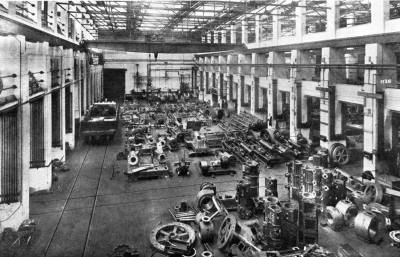
AIR-COMPRESSOR ERECTING ROOM, CLAREMONT, N. H., FACTORY, SULLIVAN MACHINERY CO.
A comparative statement shows at once any radical departure from normal conditions and accepted standards, and is, in reality, the manager's barometer of factory operating. The discovery that his operating expenses are increasing without a corresponding increase in the output, means that the storm signals are immediately raised, and there are likely to be squalls ahead in the department responsible for the increase, with an explanation in order from its foreman. The operating statement, then, should show up excessive operating expense, what it is, where it is, and what caused it.
33. Source of Data Used. Having now in mind what characteristics should be embodied in the tabulation, proceed to gather the necessary data for the statements.
Continue the original plan and make the Operating Expense Statement consistent with the Percentage Method, and extract the data for same from the cost records and books of account in a factory where this method is used.
34. Expense Manufacturing Departments. First prepare the shop operating expense statement for the manufacturing departments. If the cost records have been kept in two binders—one for operating expense in Expense Ledger No. 1, and the other for production in Production Ledger No. 2—the procedure is simple. The Private Ledger account for each department shows the total expense for each month posted in total, with all the details shown in Expense Ledger No. 1, to which now refer.
Inasmuch as everything is charged to some job number, both labor and material, it is simply a matter of drawing off the job totals, which will check the department total expense as shown in the Private Ledger. A convenient grouping of job numbers will be found of great assistance; say
Jobs 1-99. Standing expense orders. 100-999. Special expense orders.
Generally, Job 1 is used to cover miscellaneous expense costs not covered by other job numbers, and includes foremen, sub-foremen, clerks, tool-room men, helpers, watchman, small repairs, etc., both labor and material. In the matter of repairs, it will be noted that such charges originate from two different sources: those done by the department for itself, and those done for the department by another department, and frequently spoken of as inter-department work. By providing two cost-sheets for labor items on Job 1, one for direct labor charges, and the other for inter-department labor, the two items may be easily kept separate.
The material on Job 1 should also be kept in the same manner. The reason for this is apparent, as it shows up at once how much a foreman is charging to his department himself, and how much is being charged to him by other foremen on inter-department work.
Jobs 2, 3, 4, and so on down the list, can cover the various subdivisions of shop expense, such as new small tools, repairs to tools, repairs to machinery, and as many detailed items as may be considered desirable. If expensive repairs are to be made to one of the large machines, it is desirable to keep a separate cost of same by assigning a special job number for the work, say Job 100, rather than throw the cost into one of the standing orders, where it is lost. In fact, a limit of cost should be placed on all new tool-costs, or repairs chargeable to standing orders, so that these jobs may not be used as a dumping ground for extensive repairs, which a foreman may be inclined to conceal from the manager's notice, and for which a special permit should be given by the manager, and job number assigned, before such repairs are begun.
The productive labor of the department will be found in Production Ledger No. 2, the total of which, if added to the total of the non-productive labor found in Expense Ledger No. 1, will equal the total department pay-roll.
The resulting percentage of expense to productive labor expresses the ratio existing between the two, and is used as the basis for distributing the same expense over the various items of production. The question of distributing expense is only referred to here, having been discussed at length elsewhere. Inasmuch as it will be seen that this percentage will fluctuate somewhat each month, it will be well to show on our statement, the same percentage for the previous month for comparative purposes. The extent of the monthly fluctuation is the key to the situation, for these percentages sum up in one figure the actual results of shop management, toward the lowering of which the best energies of the manager are always directed.
For the sake of illustration, take a plant with a weekly pay-roll of about $10,000.00. Having drawn up a form in which the features already discussed have been provided for, extract from the Expense Ledger some imaginary figures. The expense accounts of the different producing departments in the plant will appear as shown in Fig. 4.
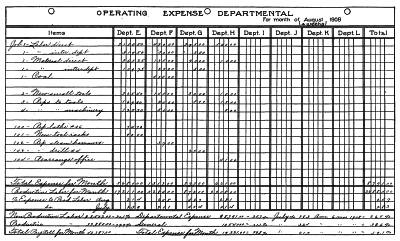
Fig. 4. Statement of Departmental Operating Expense
After studying the same a moment, what will the manager of the plant discover? Among other things he will see at once:
(a) The total expense of operating each department in the works, with the principal items which go to make it up.
(b) That the total productive labor was 79.9% of the total monthly pay-roll while the non-productive was 20.1%; that the former has been apportioned over the various departments and every dollar of same accounted for.
(c) The ratio of expense to productive labor for each department reduced to a percentage, the average of which for all the productive departments is 25.7%.
(d) From the comparative figures, that the August percentage showed an improvement in operating expenses in most of the productive departments over those for July and that they are a trifle lower than the average for the first six months of the year.
(e) That the operating percentage for Department F has jumped up 4.7%, which means that something is wrong in that department, and must be investigated.
(f) That for every dollar spent for productive labor, he must add 56.8 cents to cover operating expenses, of which amount, 25.7 cents covers the expense of operating the shops and 31.1 cents covers the general expense of the plant.
The item of General Expense = 31.1% is not derived from any figures that appear in this statement, but is taken from the tabulation covering General Operating Expense presented later. It is desirable to have this appear here, as well as the Department average percentage, in order to show the total operating expense (56.8%) on the labor, bringing total plant results on one sheet.
35. General Expense Statement. This statement serves as the companion sheet to the one just shown for Departmental Expense, every operating expense appearing on either one of these two statements. It is drawn off in just the same manner as the Departmental statement, the total of the various expense accounts in the Private Ledger and the details of the four expense departments shown in Expense Ledger No. 1 checking the total General Expense Distribution account shown in the Private Ledger. It will be seen at once that the General Expenses of the plant may be reduced to the following general divisions:
Special Ledger Accounts:
Executive, Insurance, Taxes, Depreciation, Freight, Express, Cartage, Printing and Stationery, Telephone and Telegraph, Traveling, Postage, Legal, etc.
Department A—Offices: Clerks and supplies.
Department B—Storehouse: Clerks, laborers, and supplies.
Department C—Power House: Engineers, firemen, coal, etc.
Department D—Yard: Laborers, teams, and supplies.
Unclassified Expense: Not included in above.
The General Expense Distribution account referred to originates by closing monthly all the various ledger accounts listed above into one account. This brings all these scattered expense accounts together in one total, necessary not only for the purpose of distribution, but for convenience in ascertaining and handling general expense. The details can be readily taken from the individual accounts before thus closed, while Departments A, B, C, and D are carried in detail in the Expense Ledger. The total General Expense shown then by the statement will check the total shown by the Distribution account in the Private Ledger.
The form Fig. 5, will be found a very convenient and satisfactory exhibit. Detailed explanation is quite unnecessary; the tabulation explains itself and needs no assistance. The general conclusion arrived at is that the plant's general expense is found for the month of August to be 31.1% of the productive labor; in other words 31.1 cents must be added to every dollar of productive labor to cover its proportion of the general and administration expense of the plant. The same figures are also shown for comparative purposes for the previous month, and also for the first six months of the year; the manager can see at once exactly how the plant is running.
The same summary figures are placed at the bottom of this statement as were shown on the departmental statement, that each may show the final results of the other.
36. Statements for Foremen. It is often asked whether or not it is a good plan to furnish the foremen of the various departments any cost figures. In a good many shops, it is the rule to tell them nothing and to keep them in entire ignorance of their expense costs, the feeling being that in case of an unsatisfactory showing they will be inclined to doctor their expense returns by diverting them into production in order to make a more favorable showing.
While it is undoubtedly true that a foreman is frequently tempted to resort to such measures—not a very far-sighted policy to be sure, for it is bound to be shown up later—it would seem advisable to furnish him a copy of his operating expenses not only for his information but as an incentive to practice economies on his own initiative without waiting for a call from the manager. Most foremen are quick to see that it is for their own interests to do this and to make the best possible showing for their department. It also creates a good-natured rivalry among the various foremen, which tends towards good results in which both foremen and management share.
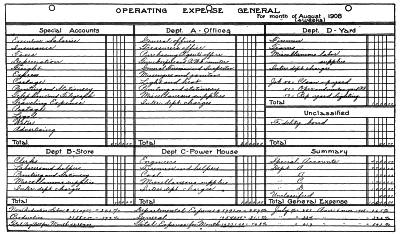
Fig. 5. Tabulation of General Operating Expense
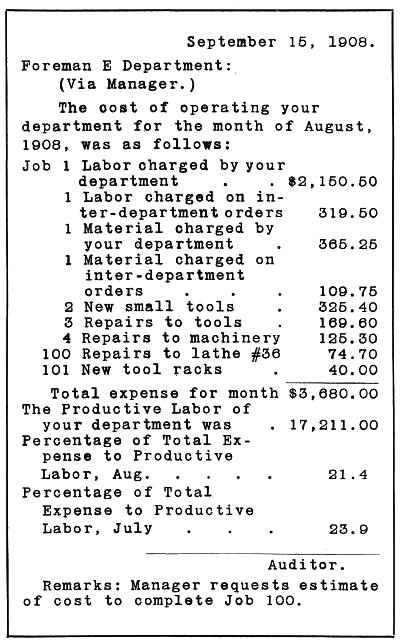
Fig. 6. Statement of Departmental Expense Made to Foremen
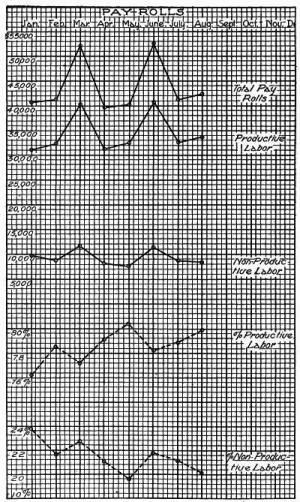
Fig. 7. Graphic Chart Showing Fluctuations in Labor Costs
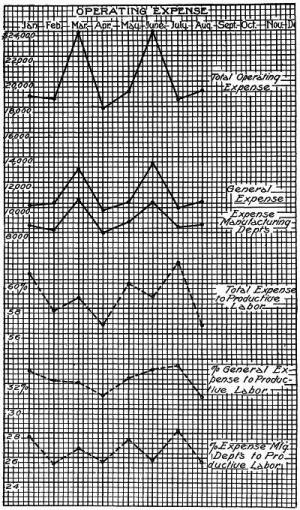
Fig. 8. Graphic Chart Showing Fluctuations in Operating Expense
The statement furnished the foreman is simply a copy of the expense of his department as shown on the Departmental Expense Statement, and may be made up substantially as shown on the form herewith presented, Fig. 6.
37. Charts. While the value of chart records is generally admitted, there will probably be no one in the plant who will appreciate this form of presenting figures more than the manager, who, from his mechanical training, will at once grasp the situation as thus presented. The general trend of operations for the whole period is immediately revealed at a mere glance, without any systematic study of the figures involved, and any unusual condition is detected at once.
To show the possibilities of thus arranging comparative statements, two charts, Figs. 7 and 8, are presented, on which are plotted the same results appearing on the tabulated statements already shown, or previously used for the purpose of illustration on Pages 31 and 34.
On one chart is shown the total pay-rolls with split-up of same into productive and non-productive labor, with the percentage of each on the total; the other shows the total expense, also subdivided into shop and general expense, with the resulting percentages of same on the productive labor as shown on the first chart.
38. In Conclusion. While there is no end to the number of statements that can be prepared and that can be elaborated almost indefinitely, it is well to continually bear in mind that the statement which best serves its purpose is the one which conveys the most information in the fewest figures; is not overloaded with unnecessary detail; whose tabulated data is well chosen, and whose make-up is sufficiently attractive to cause it to be read and studied, and not thrown into the waste basket.