STATUS OF MARINE BIRD POPULATIONS
Reading edition
Distribution and Status of Marine Birds Breeding Along the Coasts of the Chukchi and Bering Seas
by
James C. Bartonek[2]
U.S. Fish and Wildlife Service Fairbanks, Alaska
and
Spencer G. Sealy
University of Manitoba Winnipeg, Manitoba, Canada
Abstract
The Alaska coast fronting on the Chukchi and Bering seas, exclusive of the Aleutian Islands, supports seven complexes of marine bird colonies numbering more than 1 million birds each, nine colonies of 100,000 to almost 1 million birds, and many smaller colonies. Colonies are found on most headlands and islands and are dominated numerically by alcids and kittiwakes (Rissa sp.). Estuarine habitats (mainly the lowlands of northern Seward Peninsula, Yukon-Kuskokwim delta, and the north side of the Alaska Peninsula) are extremely important for breeding and migrating marine waterfowl, shorebirds, gulls (Larus sp.), and terns (Sterna sp.). Information on population size and distribution of breeding marine birds within this area is extensive for only a few of the more heavily hunted species of waterfowl. Except for the intensive and systematic censusing of a few colonies in this region, population data on cliff-, burrow-, and crevice-nesting birds are such that all but gross changes in numbers may go unnoticed, and if noticed they could not be measured.
Habitats for breeding marine birds are found along much of the 4,100-km coastline of Alaska that fronts on the Chukchi and Bering seas. Seasonal sea ice and an extensive outer continental shelf are dominant features that contribute to the productivity of these marine waters, which sustain populations of fishes, birds, and mammals that are of considerable and diverse values to man (Kelley and Hood 1974).
Our purpose in this paper is to describe the distribution, abundance, and relative status of some of the nearly 100 species of marine birds breeding within this region and the information base from which the descriptions are derived. Although the selection is admittedly arbitrary, we discuss mainly the colonial nesting species because they are generally in greater jeopardy from lost breeding habitat and from catastrophes than are the species that are widely dispersed or solitary in nesting. Because we believe matters affecting the conservation of marine birds will be geographically oriented, we discuss the status and distribution of breeding birds on that basis, rather than by the more traditional taxonomic approach. We use the terms "colony" and "colonies" somewhat loosely and interchangeably to include any aggregation of birds of the same or different species nesting in proximity to each other, even those on the same island or headland, although populations may be miles apart and occupy different kinds of habitats. The nature of this paper and the scale of our maps do not allow for detailed resolution of each colony's location (for the most part this information is not available), but rather facilitates a general impression of status.
Most place-names used by us are shown in Fig. 1; the others may be located by referring to Orth's (1967) gazetteer on Alaska.
Information Base
There is no adequate catalog of marine bird colonies and other avian habitats for the Bering-Chukchi region or for Alaska as a whole. King and Lensink (1971) described the waterfowl populations and major lowland habitats of the State and listed only a few of the many colonies of cliff-nesting birds. LeResche and Hinman (1973) identified a few additional colonies, provided fragmentary information on composition and abundance at some of these sites, and delineated areas of wetland habitats on maps in their statewide atlas on wildlife. General and occasionally site-specific information on the location, but rarely on population size and composition, of colonies can be gleaned from the 321 species accounts presented by Gabrielson and Lincoln (1959) and from the general works by Bent (1919, 1921, 1922, 1923, 1925, 1927, 1929), Dement'ev and Gladkov (1951), Dement'ev et al. (1951, 1952), Palmer (1962), Fisher (1952), Tuck (1960), and others. The birds on the Asiatic side of these waters, which are not treated in this paper, were described by Portenko (1973).
Information on the status of waterfowl in the region is generally more detailed than that for most other groups of birds because waterfowl have been the object of systematic surveys since the late 1940's as part of the continent-wide effort to manage populations for sport hunting. Because the emphasis of these surveys has been directed toward the species of ducks important to hunters in the "lower 48" States, data are not adequate to measure changes in populations for most sea ducks and marine geese nesting in this region. These surveys have, however, enabled biologists to delineate waterfowl habitats and make reasonable estimates of populations for some of the more abundant and conspicuous species (King and Lensink 1971; U.S. Fish and Wildlife Service [FWS] 1973c; U.S. National Park Service [NPS] 1973).
Chukchi Sea Coast
A disproportionate percentage of ornithological investigations in arctic Alaska have centered about Barrow, where ornithologists were attracted because of the propensity of vagrant birds to collect there and because of the above average facilities, conveniences, and transportation afforded first by the whaling station, then by the military, and later by a research laboratory. Recent petroleum development near Prudhoe Bay has resulted in a somewhat commensal eastward shift in ornithological studies.
Bailey (1948), Gabrielson and Lincoln (1959), and Pitelka (1974) reviewed much of the published information on arctic avifauna, including that of the Chukchi coast. Selkregg [1975] mapped various avian habitats, ascribed either relative or absolute values for the population size of certain groups of birds, and included a selected bibliography that did not entirely duplicate those provided by the other reviewers. Watson and Divoky (1975) described the avifauna of Alaska's Beaufort Sea coast, which is much the same as that of the Chukchi coast from Point Barrow south to Cape Lisburne (both coasts are of low relief).
Intensive studies near Barrow have done much to characterize the behavior, productivity, and ecological requirements of calidridine sandpipers (Pitelka 1959; Pitelka et al. 1974; Holmes 1970, 1971) and, to partly explain the cyclical relationships between jaegers (Stercorarius spp.) and their prey (e.g., Pitelka et al. 1955; Maher 1974). Quantitative estimates of certain bird populations at Cape Thompson (Swartz 1966; Williamson et al. 1966), Little Diomede (Kenyon and Brooks 1960), and on the coastal lowlands of the Seward Peninsula (King and Lensink 1971; U.S. NPS 1973), and for black guillemots (Cepphus grylle) throughout the region (Divoky et al. 1974) are among the best data on status of marine birds for any locality in Alaska. Grinnell (1900a) described the birds he observed in the Kotzebue Sound area.
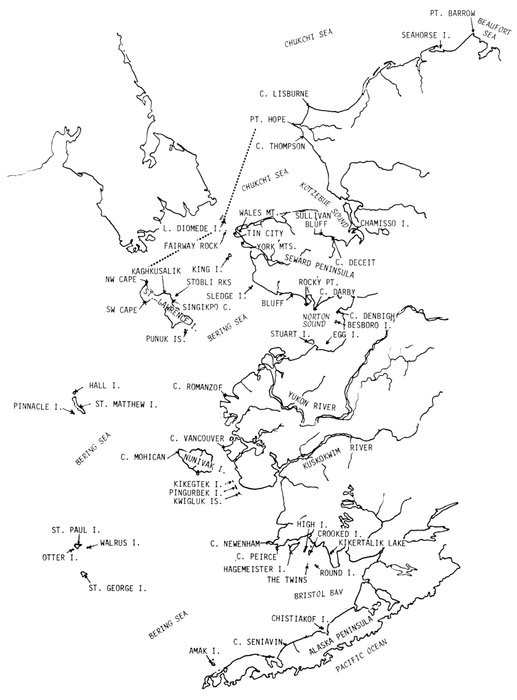
Fig. 1. Place-names in the region of the Chukchi and Bering seas.
Cursory aerial surveys conducted by J. C. Bartonek, J. G. King, and D. R. Cline (U.S. FWS 1973a; U.S. NPS 1973; this paper) in 1972 and 1973 provided information on the location and relative size of most, if not all, colonies of cliff-nesting marine birds between Point Barrow and the Bering Strait, including those at Cape Lisburne, at Motherhood Point, Nine-mile Point, Cape Deceit, Towalevic Point, Sullivan Bluff, all on the northern base of the Seward Peninsula, and at Fairway Rock. The relative size of populations of most species was probably underestimated because the burrow-and crevice-nesting species were largely unseen.
Bering Sea
Aside from work by Gabrielson and Lincoln (1959) and the early but understandably incomplete accounts by Nelson (1883, 1887) and Turner (1886), no comprehensive description of the avifauna of the Alaskan coast of the Bering Sea exists. Many studies adequately describe local avifauna, and some of them are exemplary assessments of the status of populations.
Most of the coastline suitable for cliff-nesting marine birds and most of the smaller nearshore islands from the Bering Strait south to the tip of the Alaska Peninsula were reconnoitered piecemeal from aircraft between 1970 and 1973 by J. C. Bartonek, J. G. King, D. R. Cline, C. D. Evans, and M. L. Plenert (U.S. FWS 1973a, 1973b; this paper). In late June 1973 Bartonek, Cline, and Plenert made brief reconnaissances on foot of King, Besboro, and Shaiak islands. Bartonek and J. G. Divoky, traveling by boat and occasionally on foot, reconnoitered colonies at Cape Seniavin, a portion of the Walrus Islands group, Shaiak Island, and the coastline from Cape Peirce around Cape Newenham to Security Cove (U.S. FWS 1973a, 1973b; this paper). Although these cursory surveys (especially those from aircraft) tended to identify nesting sites of cliff-nesting birds while missing sites used by burrow-and crevice-nesting species, information was obtained on the location and relative size of many previously unreported colonies.
The mainland and island colonies in Norton Sound have received little notice in the published literature. Bailey (1943, 1948), although working mainly at Little Diomede and in Arctic and Lopp lagoons on the north side of the Seward Peninsula, mentioned the birds at Wales Mountain and Tin City. Nelson (1883, 1887) traveled throughout the region studying the avifauna and the anthropology of Eskimos. Grinnell (1900b) at Nome, McGregor (1902) along the Koyuk River, Hersey (1917) and Turner (1886) near St. Michael, and Cade (1952) at Sledge Island provide fragmentary examples of the area's marine bird populations. Colonies at King, Besboro, Egg, and Sledge islands, near York Mountains, and at Bluff were described in proposals for new National Wildlife Refuges (U.S. FWS 1973a).
Sealy et al. (1971) reviewed the literature and discussed the various zoogeographic relationships among the avifauna of St. Lawrence Island. Fay and Cade (1959) estimated numbers and biomass of all birds on St. Lawrence Island but did not identify locations and sizes of particular populations; consequently, replication of their estimates is precluded. An exemplary study by Bédard (1969) identified the locations and sizes of all populations of crested auklets (Aethia cristatella), least auklets (A. pusilla), and parakeet auklets (Cyclorrhynchus psittacula) on the island. Sealy (1973) identified breeding sites of horned puffins (Fratercula corniculata) there and throughout the species' range. Thompson (1967) listed the birds observed at Northeast Cape and on nearby Punuk Islands.
Annotated accounts have been published on the breeding avifauna of St. Matthew, Hall, and Pinnacle islands by Elliott (1882), Hanna (1917), Bent (1919), and Gabrielson and Lincoln (1959). Klein (1959) presented quantitative data on the birds he observed incidental to his study of reindeer (Rangifer tarandus).
The avifauna of the Yukon-Kuskokwim delta, which is rich both in numbers and diversity, has been treated extensively in the literature. Nelson (1883, 1887), Turner (1886), Conover (1926), Brandt (1943), Gabrielson and Lincoln (1959), Williamson (1957), Kessel et al. (1964), Harris (1966), Dau (1972), and Holmes and Black (1973) all described the avifauna in the same general area of the delta, i.e., the eroding portion in the general vicinity of Hooper and Hazen bays. The avifauna of the aggrading portion of the Yukon delta and of the Kuskokwim's mouth have not been accorded similar attention. Populations of waterfowl nesting on the delta and their wintering affinities were described by King and Lensink (1971) and U.S. FWS (1973c).
Studies of particular species of marine birds on the delta (again, all in the general vicinity of Hooper and Hazen bays) were reported by Hansen and Nelson (1957) and Shepherd (1960) for black brant (Branta bernicla), by Headley (1967) and Eisenhauer and Kirkpatrick (1977) for emperor geese (Anser canagica), by Dau (1974) and Mickelson (1975) for spectacled eiders (Somateria fischeri), by Petersen (1976) for red-throated loons (Gavia stellata), and by Holmes (1970, 1971, 1972) for dunlins (Calidris alpina) and western sandpipers (C. mauri).
Birds of Nunivak Island were reported by Swarth (1934), but the importance of the island to marine birds was not put into proper perspective until the Nunivak National Wildlife Refuge was evaluated for designation as a wilderness area (U.S. FWS 1972).
The Pribilof Islands have served as a focal point for ornithological investigations of the Bering Sea in much the same way that Barrow has for the Arctic. The avifauna of the Pribilofs has been described by Coues (1874), Elliott (1882), Palmer (1899), Hanna (1918), Preble and McAtee (1923), Gabrielson and Lincoln (1959), Kenyon and Phillips (1965), and a host of others that mainly added new species to the record list. Although most of these ornithologists marveled at the numbers of birds, information is lacking from which most changes in populations can be noted. (An exception is the record of common and thick-billed murres, Uria aalge and U. lomvia, which formerly nested in such abundance on Walrus Island that annually several tons of eggs were gathered for consumption by residents of the islands [Palmer 1899], but were greatly reduced in numbers by the summer of 1973, when J. C. Bartonek, J. G. King, G. J. Divoky, and D. T. Montgomery observed only a few thousand murres on a small portion of the island. Most of the suitable nesting sites, especially the flat areas often used by common murres, were occupied by Steller's sea lions, Eumetopias jubata, which, apparently because of reduced hunting pressure, occupied the island and displaced the murres.)
For some unexplained reason the numerous and large marine bird colonies along the north side of Bristol Bay appear to have been largely overlooked until recent years (Bartonek and Gibson 1972). Gabrielson and Lincoln (1959) summarized the few observations by Osgood (1904) and Turner (1886) in this area, but obviously were unaware that, in aggregate, these colonies rival those of the Pribilofs. Dick and Dick (1971) made an exemplary study of marine birds and their numbers at Cape Peirce and on nearby Shaiak Island. Murie (1959) provided annotated remarks on marine birds of Amak Island, but not of nearby Sealion Rocks.
Status and Distribution
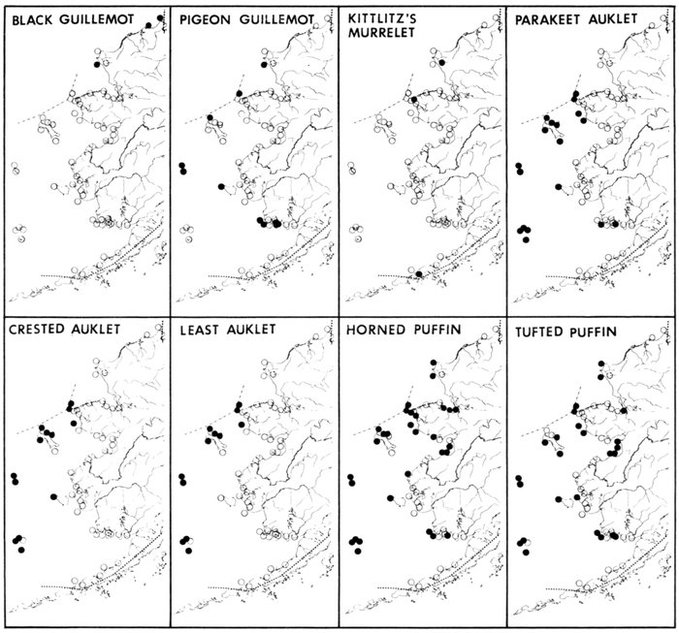
Seven groups of colonies of cliff-, burrow-, and crevice-nesting birds are found on the headlands and islands in the coastal region, each numbering more than 1 million birds; nine colonies range downward to 100,000 birds; and a host of others range downward to 1,000 birds (Fig. 2). Un-estimated numbers of other marine birds nest on the lowlands about Kotzebue Sound, the Yukon-Kuskokwim delta, and Bristol Bay, but are not shown in Fig. 2. The occurrence at colonies of 20 of the nearly 100 species of marine birds is shown in Fig. 3; their relative numbers at these sites are not shown because data are generally lacking.
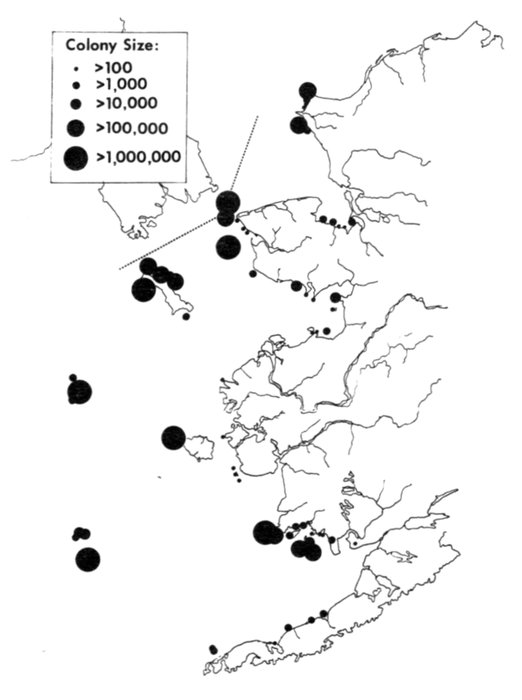
Fig. 2. Relative numbers of marine birds at colonies in different localities, without regard to species composition or breeding status.
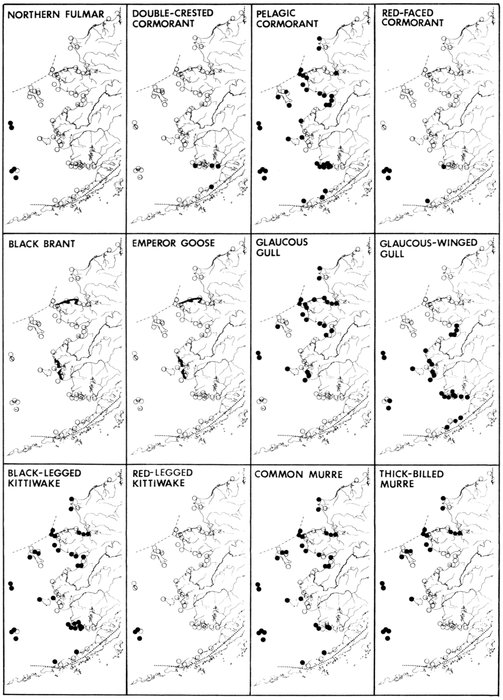
Fig. 3. Location of known breeding populations of some marine bird species without regard to size of population.
Chukchi Sea
The largest colonies of seabirds in the Chukchi Sea are those on Little Diomede Island, Cape Lisburne, Cape Thompson, and Fairway Rock. Smaller colonies are in Kotzebue Sound along the northern base of the Seward Peninsula. These colonies are largely dominated by thick-billed and common murres and black-legged kittiwakes (Rissa tridactyla) and on the islands in the Bering Strait also the crested, least, and parakeet auklets. Horned puffins, tufted puffins (Lunda cirrhata), pelagic cormorants (Phalacrocorax pelagicus), and glaucous gulls (Larus hyperboreus) make up the remaining majority. For the whole area there are probably fewer than a hundred birds each of black guillemots and pigeon guillemots (Cepphus columba) occupying colonies. Dovekies (Alle alle) are occasionally sighted in this area, but only as stragglers from their normal range.
Part of the mystery surrounding the nesting location of Kittlitz's murrelet (Brachyramphus brevirostris) was solved when Thompson et al. (1966) discovered a downy chick in the Kukpuk River drainage nearly 45 km by river from salt water. Other nesting sites of the Kittlitz's murrelets in this region were reported for Wales Mountain (Ford 1936; Bailey 1943, 1948) and the Cold Bay area (Bailey 1973) (Fig. 3).
Only the colonies at Cape Thompson have been censused systematically throughout a breeding season. During one of three years of varying census efforts, Swartz (1966) estimated that about 400,000 birds of nine species occupied the cliffs. Whereas the Cape Thompson colonies received considerable attention because of Swartz's efforts, the colonies that extend along nearly 35 km of headlands southward from, but mainly at, Cape Lisburne have received little if any attention by either early or recent ornithologists in the Arctic, even though they support perhaps twice the number of birds. Also perplexing is why Chamisso and Puffin islands with their several thousand nesting horned puffins and lesser numbers of other seabirds were designated as the Chamisso National Wildlife Refuge in the early 1900's when none of the many larger and more species-diverse colonies in the area received comparable recognition by and protection through refuge designation.
The lowlands on the north side of the Seward Peninsula produce fall flights of sea ducks that average 49,200 oldsquaws (Clangula hyemalis), 51,000 eiders (mostly common eiders, Somateria mollissima), and 26,700 scoters (mostly black scoters, Melanitta nigra) (King and Lensink 1971). Small populations of black brant and emperor geese breed in what outwardly appears to be excellent habitat, and King and Lensink (1971) speculated that subsistence hunting by local Eskimos is responsible for suppressing these populations.
Bering Sea
The largest concentration of nesting seabirds in the Bering Sea and perhaps in the entire North Pacific is that on St. George Island. Colonies that rank somewhere below that at St. George are along the coast from Cape Newenham to Cape Peirce, in the Walrus Islands (Round, High, Crooked, and Summit islands, The Twins, and Black Rock), at Cape Mohican on Nunivak Island, St. Matthew Island, Southwest Cape of St. Lawrence Island, and King Island.
The Pribilofs have the unique distinction of being the primary nesting site of red-legged kittiwakes (Rissa brevirostris). They are also interesting from the zoogeographic standpoint in that they are the northernmost stronghold of red-faced cormorants (Phalacrocorax urile); guillemots are conspicuous by their absence, and larid gulls are conspicuously scarce nesters.
St. Matthew Island and associated Hall and Pinnacle islands, and all but Walrus Island of the Pribilofs, are sites of nesting northern fulmars (Fulmarus glacialis). Nesting fork-tailed or Leach's storm-petrels (Oceanodroma furcata and O. leucorhoa) have been found nowhere in this region, although both are commonly observed at sea and both nest throughout the Aleutians.
Most colony sites identified in Fig. 2 are dominated by common or thick-billed murres (or both) and black-legged kittiwakes. Glaucous gulls (generally north of the Yukon-Kuskokwim delta), glaucous-winged gulls (Larus glaucescens) (generally to the south of the delta), and pelagic cormorants occupy almost every rocky prominence along the entire coast (most of these sites are not shown in Figs. 2 and 3). Double-crested cormorants (Phalacrocorax auritus) nest at a few island and inland locations in the Bristol Bay area. The small auklets are largely restricted to islands in the Bering Sea; the parakeet auklet is the only one occasionally found in mainland colonies.
The marine birds of the Yukon-Kuskokwim delta lowlands, although largely uncounted, in their aggregate probably exceed the numbers at any individual site identified in Fig. 2. This is not particularly surprising since the delta has nearly 70,000 km2 of habitat (King and Lensink 1971) in contrast to the generally small parcels of habitat occupied at the sea-cliff and island sites.
King and Lensink (1971) estimated that fall flights of sea ducks originating on the delta averaged 292,300 oldsquaws, 51,000 eiders (mostly common and spectacled eiders with lesser numbers of Steller's eiders, Polysticta stelleri), and 157,000 scoters (primarily black scoters). They also estimated that half of the 150,000 black brant and most of the 150,000 emperor geese in Alaska's fall flight originate there. Although no counts have been made, we believe that the delta's lowlands support easily more than half of Alaska's nesting dunlins, black turnstones (Arenaria melanocephala), rock sandpipers (Calidris ptilocnemis), western sandpipers, and substantial percentages of red phalaropes (Phalaropus fulicarius), northern phalaropes (Lobipes lobatus), and red-throated loons.
The north side of the Alaska Peninsula (including the wetlands, uplands, and estuaries) is perhaps more important to marine birds as a staging, feeding, and resting area than as a nesting habitat. The importance of Izembek Lagoon to black brant and emperor geese during fall and spring is a classic example. King and Lensink (1971) estimated that the fall flight of sea ducks originating from the Peninsula averages 53,400 oldsquaws, 1,700 eiders, and 74,400 scoters. Breeding geese are scarce throughout the area.
Conclusions and Recommendations
Most of the major breeding habitats of marine birds in the Chukchi and Bering seas are known, but imprecisely identified as to location and size. With few exceptions, the populations of birds using these habitats are described only by the subjective and ambiguous descriptors of abundance such as "abundant, common, occasional, and rare," which makes measurement of change impossible.
We recommend that first and foremost a catalog of habitats used by birds be developed to aid resource administrators, developers, and biologists (all of whom should be "conservationists") in identifying critical habitats. We believe that such a catalog would preclude many problems because birds and their habitats could be considered at the planning stage rather than only at the operational stage. Such a catalog would also be useful to students of ornithology who are seeking locations suitable for particular studies.
Nowhere in this region have studies of marine birds been of sufficient duration to enable changes in populations (from whatever cause) to be characterized. Since some species of marine bird are known not to breed before at least 3 or more years of age, meaningful information on survival and recruitment in populations cannot be obtained by studies of less than 10 years. We therefore recommend that long-term studies be initiated at as many places as possible, but at least at one site on the Yukon-Kuskokwim delta; at a mainland colony site that has predominantly murres, kittiwakes, puffins, and cormorants; and at an island site that also has small auklets. Although the nesting distribution of the Kittlitz's murrelet remains an enigma, we regard it less of a conservation issue and more of an ornithological challenge. Consideration of logistics and support facilities must, of course, be included in the site selection process. Most of the areas suggested for these studies also merit recognition and protection by being designated as a National Wildlife Refuge, a National Park or Monument, or a State Game Sanctuary.
References
Bailey, A. M. 1943. The birds of Cape Prince of Wales, Alaska. Proc. Colo. Mus. Nat. Hist. 18. 113 pp.
Bailey, A. M. 1948. Birds of arctic Alaska. Colo. Mus. Nat. Hist. Popular Ser. 8. 317 pp.
Bailey, E. P. 1973. Discovery of a Kittlitz's murrelet nest. Condor 75(4):457.
Bartonek, J. C., and D. D Gibson. 1972. Summer distribution of pelagic birds in Bristol Bay, Alaska. Condor 74(4):416-422.
Bédard, J. 1969. The nesting of the least, crested, and parakeet auklets around St. Lawrence Island, Alaska. Can. J. Zool. 47(5):1025-1050.
Bent, A. C. 1919. Life histories of North American diving birds. U.S. Natl. Mus. Bull. 107. 245 pp.
Bent, A. C. 1921. Life histories of North American gulls and terns. U.S. Natl. Mus. Bull. 113. 345 pp.
Bent, A. C. 1922. Life histories of North American petrels, pelicans, and their allies. U.S. Natl. Mus. Bull. 121. 343 pp.
Bent, A. C. 1923. Life histories of North American wild fowl. Part I. U.S. Natl. Mus. Bull. 126. 250 pp.
Bent, A. C. 1925. Life histories of North American wild fowl. Part II. U.S. Natl. Mus. Bull. 130. 311 pp.
Bent, A. C. 1927. Life histories of North American shore birds. Part I. U.S. Natl. Mus. Bull. 142. 359 pp.
Bent, A. C. 1929. Life histories of North American shore birds. Part II. U.S. Natl. Mus. Bull. 146. 340 pp.
Brandt, H. 1943. Alaska bird trails. Bird Research Foundation, Cleveland, Ohio. 464 pp.
Cade, T. J. 1952. Note on the birds of Sledge Island, Bering Sea, Alaska. Condor 52(1):51-54.
Conover, H. B. 1926. Game birds of the Hooper Bay region, Alaska. Auk 43(2):162-180, 43(3):308-318.
Coues, E. 1874. Ornithology of the Prybilov Islands. Pages 168-212 in H. W. Elliott, Report on the Prybilov Group, or Seal Islands of Alaska. U.S. Treasury Department, Washington, D.C.
Dau, C. 1972. Observations on the spring migration of birds at Old Kashunuk Village, Alaska. Univ. Alaska, Dep. Wildl. Fish., Fairbanks. 54 pp. (Unpublished report)
Dau, C. 1974. Nesting biology of the spectacled eider Somateria fischeri (Brandt) on the Yukon-Kuskokwim delta, Alaska. M. S. Thesis. Univ. of Alaska, Fairbanks. 72 pp.
Dement'ev, G. P., and N. A. Gladkov. 1951. Birds of the Soviet Union. Vol. 1. (Transl. from Russian.) Israel Progr. Sci. Transl., 1966. 705 pp.
Dement'ev, G. P., N. A. Gladkov, Yu. A. Isakov, N. N. Kartashev, S. V. Kirikov, A. V. Mikheev, and E. S. Prushenko. 1952. Birds of the Soviet Union. Vol. 4. (Transl. from Russian.) Israel Progr. Sci. Transl., 1967. 683 pp.
Dement'ev, G. P., N. A. Gladkov, and E. P. Spageburg. 1951. Birds of the Soviet Union. Vol. 2. (Transl. from Russian.) Israel Progr. Sci. Transl., 1968. 553 pp.
Dick, M. H., and L. S. Dick. 1971. The natural history of Cape Peirce and Nanvak Bay, Cape Newenham Natl. Wildl. Refuge, Alaska. U.S. Bureau Sport Fisheries and Wildlife, Bethel, Alaska. 78 pp.
Divoky, G. J., G. E. Watson, and J. C. Bartonek. 1974. Breeding of the black guillemot in northern Alaska. Condor 76(3):339-343.
Eisenhauer, D. I., and C. M. Kirkpatrick. 1977. Ecology of the emperor goose in Alaska. Wildl. Monogr. 57. 62 pp.
Elliott, H. W. 1882. Seal-islands of Alaska. U.S. Comm. Fish Fish. Spec. Bull. 176, Sect. IX, Monogr. A. 176 pp.
Fay, F. H., and T. J. Cade. 1959. An ecological analysis of the avifauna of St. Lawrence Island, Alaska. Univ. Calif. Publ. Zool. 63:73-150.
Fisher, J. 1952. The fulmar. N. M. N. Collins, London. 496 pp.
Ford, E. R. 1936. Kittlitz's murrelet breeding at Wales, Alaska. Auk 51:214-215.
Gabrielson, I. N., and F. C. Lincoln. 1959. The birds of Alaska. The Stackpole Co., Harrisburg, Pennsylvania, and Wildlife Management Institute of North America, Washington, D.C. 992 pp.
Grinnell, J. 1900a. Birds of the Kotzebue Sound region, Alaska. Pac. Coast Avifauna 1. 80 pp.
Grinnell, J. 1900b. Notes on some birds of Cape Nome, Alaska. Condor 2(5):112-115.
Hanna, G. D. 1917. The summer birds of the St. Matthew Island Bird Reservation. Auk 34(4):403-410.
Hanna, G. D. 1918. Check list of birds of the Pribilof Islands, Alaska, with names of persons first recording the species from the islands. Pages 105-107 in W. T. Bower, ed., Report of U.S. Commissioner of Fisheries. Bureau of Fisheries Document 872.
Hansen, H. A., and U. C. Nelson. 1957. Brant of the Bering Sea—migration and mortality. Trans. N. Am. Wildl. Nat. Resour. Conf. 22:237-256.
Harris, S. W. 1966. Summer birds of the lower Kashunuk River, Yukon-Kuskokwim delta, Alaska. Murrelet 47(3):57-65.
Headley, P. C. 1967. Waterfowl. Ecology of the emperor goose. Alaska Dep. Fish Game Small Furbearer Invest. 8:1-25.
Hersey, F. S. 1917. The present abundance of birds in the vicinity of Fort St. Michael, Alaska. Auk 34(2):147-159.
Holmes, R. T. 1970. Differences in population density, territoriality, and food supply of dunlin on arctic and subarctic tundra. Pages 303-319 in A. Watson, ed., Animal populations in relation to their food resources. Br. Ecol. Soc. Symp. 10.
Holmes, R. T. 1971. Density habitat and mating system of the western sandpiper (Calidris mauri). Oecologia 7(2):191-208.
Holmes, R. T. 1972. Ecological factors influencing the breeding season schedule of western sandpipers (Calidris mauri) in sub-arctic Alaska. Am. Midl. Nat. 87(2):472-491.
Holmes, R. T., and C. P. Black. 1973. Ecological distribution of birds in the Kolomak River-Askinuk Mountain region, Yukon-Kuskokwim delta, Alaska. Condor 75(2):150-163.
Kelley, E. J., and D. W. Hood, eds. 1974. PROBES: a prospectus on processes and resources of the Bering Sea shelf, 1975-1985. Univ. Alaska, Inst. Mar. Sci. Publ. Inf. Bull. 75-1. 71 pp.
Kenyon, K. W., and J. W. Brooks. 1960. Birds of Little Diomede Island, Alaska. Condor 62(6):457-463.
Kenyon, K. W., and R. E. Phillips. 1965. Birds from the Pribilof Islands and vicinity. Auk 82(4):624-635.
Kessel, B., H. K. Springer, and C. M. White. 1964. June birds of the Kolomak River, Yukon-Kuskokwim delta, Alaska. Murrelet 45(3):37-47.
King, J. G., and C. J. Lensink. 1971. An evaluation of Alaskan habitat for migratory birds. U.S. Bur. Sport Fish. Wildl., Washington, D.C. 46 pp. (Unpublished administrative report)
Klein, D. R. 1959. Saint Matthew Island reindeer-range study. U.S. Fish Wildl. Serv., Spec. Sci. Rep.—Wildl. 43. 48 pp.
LeResche, R. E., and R. A. Hinman, eds. 1973. Alaska's wildlife and habitat. Alaska Department of Fish Game, Juneau. 144 pp. + 564 maps.
Maher, W. J. 1974. Ecology of pomarine, parasitic, and long-tailed jaegers in northern Alaska. Pac. Coast Avivauna 37. 148 pp.
McGregor, R. C. 1902. A list of birds collected in Norton Sound, Alaska. Condor 4(6):135-144.
Mickelson, P. G. 1975. Breeding biology of cackling geese and associated species on the Yukon-Kuskokwim delta, Alaska. Wildl. Monogr. 45. 35 pp.
Murie, O. J. 1959. Fauna of the Aleutian Islands and Alaska Peninsula. U.S. Fish Wildl. Serv., N. Am. Fauna 61:1-364.
Nelson, E. W. 1883. Birds of the Bering Sea and Arctic Ocean. Pages 44-120 in Cruise of the Revenue-steamer Corwin in Alaska and the N. W. Arctic Ocean. U.S. Treas. Dep. Doc. 429.
Nelson, E. W. 1887. Report on natural history collections made in Alaska between the years 1877 and 1881. U.S. Army, Signal Serv. Arct. Ser. Publ. 3. 337 pp.
Orth, D. J. 1967. Dictionary of Alaska place names. U.S. Geol. Surv. Prof. Pap. 567. 1084 pp.
Osgood, W. H. 1904. A biological reconnaissance of the base of the Alaska Peninsula. U.S. Dep. Agric., Div. Biol. Surv., N. Am. Fauna 24:9-86.
Palmer, R. S., ed. 1962. Handbook of North American birds. Vol. 1. Loons through flamingos. Yale Univ. Press, New Haven, Conn. 567 pp.
Palmer, W. 1899. The avifauna of the Pribilof Islands. Pages 355-431 in D. S. Jordan, ed. The fur seals and Fur Seal Islands of the North Pacific, Part III. U.S. Treasury Department, Commercial Fur-seal Investigations, Washington, D.C.
Petersen, M. R. 1976. Breeding biology of arctic and red-throated loons. M. S. Thesis. Univ. of California, Davis. 55 pp.
Pitelka, F. A. 1959. Numbers, breeding schedules, and territoriality in pectoral sandpipers of northern Alaska. Condor 61(4):233-264.
Pitelka, F. A. 1974. An avifaunal review for the Barrow region and North Slope of Alaska. Arct. Alp. Res. 6(2):161-184.
Pitelka, F. A., R. T. Holmes, and S. F. MacLean, Jr. 1974. Ecology and evolution of social organization in arctic sandpipers. Am. Zool. 14:185-204.
Pitelka, F. A., P. Q. Tomich, and G. W. Treichel. 1955. Ecological relations of jaegers and owls near Barrow, Alaska. Condor 57(1): 3-18.
Portenko, L. A. 1973. The birds of the Chukotsk Peninsula and Wrangel Island. Acad. Sci. S.S.S.R., Zool. Inst., Sci. Publishers, Leningrad. 2 vols. [In Russian.]
Preble, E. A., and W. L. McAtee. 1923. A biological survey of the Pribilof Islands, Alaska. Part I. Birds and mammals. U.S. Bur. Biol. Surv., N. Am. Fauna 46:1-128.
Sealy, S. G. 1973. Breeding biology of the horned puffin on St. Lawrence Island, Bering Sea, with zoogeographical notes on the North Pacific puffins. Pac. Sci. 27:99-119.
Sealy, S. G., F. H. Fay, J. Bédard, and M. D. F. Udvardy. 1971. New records and zoogeographical notes on the birds of St. Lawrence Island, Bering Sea. Condor 73(3):322-336.
Selkregg, L. L., ed. [1975]. Alaska regional profiles: Arctic region. Univ. Alaska, Arct. Environ. Inf. Data Cent., Anchorage. 218 pp.
Shepherd, P. E. K. 1960. Production and abundance of the black brant in Alaska. Alaska Dep. Fish Game, Game Div. Pittman-Robertson Proj. Rep. 2(8):58-77.
Swarth, H. S. 1934. Birds on Nunivak Island, Alaska. Pac. Coast Avifauna 22. 64 pp.
Swartz, L. G. 1966. Sea-cliff birds. Pages 611-678 in N. J. Wilimovsky and J. N. Wolfe, eds. Environment of the Cape Thompson region, Alaska. U.S. AEC, Div. Tech. Inf., Oak Ridge, Tennessee.
Thompson, C. F. 1967. Notes on the birds of the Northeast Cape of St. Lawrence Island and of the Punuk Islands, Alaska. Condor 69(4):411-419.
Thompson, M. C., J. Q. Hines, and F. S. L. Williamson. 1966. Discovery of the downy young of Kittlitz's murrelet. Auk 83(3):349-351.
Tuck, L. 1960. The murres. Can. Wildl. Serv. Ser. 1. 260 pp.
Turner, L. M. 1886. Contributions to the natural history of Alaska. U.S. Army, Signal Serv. Arct. Ser. Publ. 2. 226 pp.
U.S. Fish and Wildlife Service. 1972. Nunivak National Wildlife Refuge wilderness study report. Agency, Anchorage, Alaska. 200 pp.
U.S. Fish and Wildlife Service, Alaska Planning Group. 1973a. Proposed Alaska Coastal Refuges, Alaska. Agency Draft Environ. Statement 73-94. 247 pp. + appendixes.
U.S. Fish and Wildlife Service, Alaska Planning Group. 1973b. Proposed Togiak National Wildlife Refuge. Agency Draft Environ. Statement 73-100. 183 pp. + appendixes.
U.S. Fish and Wildlife Service, Alaska Planning Group. 1973c. Proposed Yukon Delta National Wildlife Refuge, Alaska. Agency Draft Environ. Statement 73-101. 205 pp. + appendixes.
U.S. National Park Service, Alaska Planning Group. 1973. Proposed Chukchi-Imuruk National Wildlands, Alaska. Agency Draft Environ. Statement 73-84. 306 pp. + appendixes.
Watson, G. E., and G. J. Divoky. 1975. Marine birds in the Beaufort Sea. Pages 681-695 in J. C. Reed and J. E. Sater, eds. The coast and shelf of the Beaufort Sea. Arctic Institute of North America, Washington, D.C.
Williamson, F. S. L. 1957. Ecological distribution of birds in the Napaskiak area of the Kuskokwim River delta, Alaska. Condor 59(5):317-338.
Williamson, F. S. L., M. C. Thompson, and J. Q. Hines. 1966. Avifaunal investigations. Pages 437-480 in N. J. Wilimovsky and J. N. Wolfe, eds. Environment of the Cape Thompson region, Alaska. U.S. AEC, Div. Tech. Inf., Oak Ridge, Tennessee. 1250 pp.
FOOTNOTES:
Breeding Distribution and Status of Marine Birds in the Aleutian Islands, Alaska
by Palmer C. Sekora[3]
U.S. Fish and Wildlife Service Kailua, Hawaii
G. Vernon Byrd[4]
U.S. Fish and Wildlife Service Adak, Alaska
and
Daniel D. Gibson
University of Alaska Fairbanks, Alaska
Abstract
Seabird population estimates are generally lacking for the 1,800-km-long Aleutian Islands. Only the locations of the larger colonies are known, and for these there are only imprecise estimates of colony sizes and often even of species composition. Changes in the status of several species and populations resulting from geologic and marine actions and from human intrusions are evident. Accounts are given for 25 species of marine birds breeding in these islands.
The 1,800-km-long chain of islands known as the Aleutians provides nesting habitat for various species of marine birds, including three species of Procellariiformes and three of cormorants (Phalacrocorax spp.), one species of gull (Larus glaucescens), both kittiwake species (Rissa spp.), two species of terns (Sterna spp.), and at least 13 species of alcids.
Seabird population estimates of known accuracy are lacking for this isolated area. Locations of larger colonies of breeding seabirds are known, however, and sufficient data are available to place colonies in broad size ranges. Published information on the breeding biology of marine birds is also lacking from the Aleutians, but some studies are under way. The distribution of nesting marine birds away from the nesting cliffs is totally unknown.
Introduced predators, primarily arctic foxes (Alopex lagopus), are now found on nearly every island. Breeding marine bird populations have suffered drastic reductions as a result. They have probably also changed because of natural habitat modifications caused by earthquakes, volcanic eruptions, tidal waves, and marine erosion.
The purpose of this paper is to summarize the known present distribution and status of breeding marine birds in the Aleutian Islands.
Description of the Aleutian Islands
The Aleutian Islands form an arc that separates the Bering Sea and the north Pacific Ocean (Fig. 1). The island chain extends from the tip of the Alaska Peninsula to within 483 km of the Commander Islands of Siberia. The chain contains more than 200 islands—the peaks of a submarine volcanic mountain range. Volcanic activity and earthquakes occur regularly.
Weather is characterized by perpetual overcast, dense summer fog, high-velocity winds, and mild temperatures with low annual and diurnal variations. The sea is ice-free year-round except in extremely cold winters, when the arctic ice pack may reach the extreme northern islands.
The Aleutians are treeless except for a few introduced, stunted spruces. Woody shrubs are restricted to the most northern islands on each end of the Chain. Mosses, lichens, club mosses, and heaths are common ground-cover plants, and taller grasses, sedges, and umbellifers constitute the overstory. Hulten (1960) provided a list of terrestrial plants found in the Aleutians. Amundsen and Clebsch (1971) discussed terrestrial plant ecology at Amchitka, central Aleutians. The marine plant communities around the islands are fairly diverse. Lebednik et al. (1971) described marine algal communities at Amchitka.
The easternmost Aleutian island, Unimak, has a mammalian fauna like that of the Alaska Peninsula, including brown bear (Ursus arctos), caribou (Rangifer tarandus), wolf (Canis lupus), and wolverine (Gulo gulo). West of Unimak, red foxes (Vulpes fulva) occurred historically as far as Umnak, and arctic foxes were apparently on Attu when the Russians came in 1741 (Murie 1959). Except for man and dog, no land mammals occurred between Umnak and Aggatu islands. Arctic foxes, introduced before 1930 for fur farming, still roam almost every island. Norway rats (Rattus norvegicus) were introduced on many islands when ships were wrecked or as a result of military activities during World War II.
Sea otters (Enhydra lutris) have repopulated most of the Aleutians after being nearly extirpated by 1900. Rookeries of Steller's sea lion (Eumetopias jubata) are scattered throughout the Aleutians during summer, and numerous harbor seals (Phoca vitulina) haul out on beaches and offshore rocks.
All five species of Pacific salmon (Oncorhynchus spp.) occur near the islands, and at least four of them (all but O. tshawytscha) spawn in Aleutian streams. Dolly Varden (Salvelinus malma) and three-spine sticklebacks (Gasterosteus aculeatus) are found nearly everywhere there is fresh water. The marine environment provides habitat used by at least 77 species of fish (Isakson et al. 1971). O'Clair and Chew (1971) furnished a recent reference to littoral macrofauna at Amchitka.
About 200 species of birds have been recorded in the Aleutians (Aleutian Islands National Wildlife Refuge, unpublished data). Many of these are windblown stragglers from both North America and Asia; only 59 species breed on the islands. Although seabirds make up less than half (26 species or 44%) of the breeding birds, they may compose more than 90% of the breeding avian biomass.
Ornithological Investigations in the Aleutians
Published ornithological information from the Aleutian Islands is relatively scarce. G. W. Steller, naturalist on Vitus Bering's 1741 expedition to Alaska, was the first person to record ornithological information in the islands (Stejneger 1936). More than a century passed before W. H. Dall (1873, 1874) published the next papers dealing with birds in the Aleutians. In 1878, the U.S. Army Signal Corps sent L. M. Turner to the Aleutians to set up weather stations at several locations. Turner kept notes on birds at various locations in the Aleutians and published two papers (1885, 1886) on his observations. Turner's data (1886) provided the first report based on extended and widespread observations in the area. E. W. Nelson, who replaced Turner, also provided data on birds (Nelson 1887).
In 1906, A. C. Bent came to the Aleutians specifically to look for birds, and he and Alexander Wetmore recorded birds throughout the island chain (Bent 1912). A. H. Clark (1910) provided a valuable record of his observations in the Near Islands. All these workers recorded birds in several locations, but none provided data on more than a very few seabird colonies.
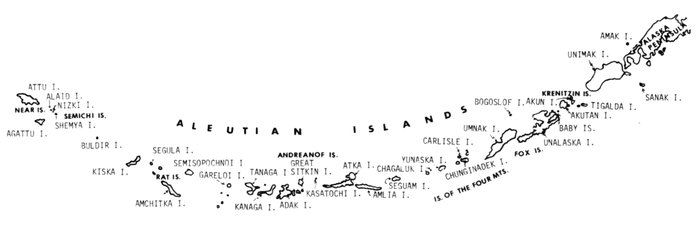
Fig. 1. The Aleutian Islands.
O. J. Murie, U.S. Biological Survey, made the most complete survey of the Aleutians (Murie 1959). He specifically recorded seabird colonies, spending parts of four summers in the area. Murie visited every large Aleutian island and most small ones. He recorded nearly every major colony of cliff-nesting or talus-nesting seabirds known in the Aleutians, but seldom gave sizes of colonies, and separate colonies on a particular island were often not differentiated.
World War II brought several ornithologists to the Aleutians. Cahn (1947), Sutton and Wilson (1946), Taber (1946), and Wilson (1948) provided accounts of birds observed at specific locations. After the war, Fish and Wildlife Service personnel—including I. N. Gabrielson (Gabrielson and Lincoln 1959), K. W. Kenyon (Kenyon 1961), and R. D. Jones (Refuge Narrative Reports 1949-1970)—recorded observations of breeding seabirds at several locations in the Aleutians. Investigations associated with Atomic Energy Commission nuclear testing at Amchitka Island provided the first ecological study of avifauna of an Aleutian island (White et al. 1977). Byrd et al. (1974) provided a list of birds at Adak.
In 1971, the Near Islands were surveyed by U.S. Fish and Wildlife personnel in a Cape Cod dory. In 1972, the Aleutian Islands National Wildlife Refuge obtained a vessel, the Aleutian Tern, which allowed visits to all parts of the island chain. That year, nearly every large island as far west as Buldir was visited, and seabird colonies were mapped. Every island has been visited at least once since 1972.
Methods
In estimating the current status of seabirds in the Aleutians, all available data were considered. Most of the information used, however, is from surveys conducted by the U.S. Fish and Wildlife Service (1970-75, unpublished data). Because these surveys only incidentally included Unimak, Akun, Akutan, Unalaska, and Umnak islands, data for these areas are almost totally lacking. Data for Bogoslof, Adak, Amchitka, Buldir, Agattu, Nizki, Alaid, and Attu are most accurate because fairly intensive investigations have been conducted there since 1970.
The available data are of unknown accuracy. The method used by most investigators who have surveyed areas in the Aleutians for seabird colonies has been to circle islands in a ship or small boat; when a colony was encountered, they simply estimated the number of birds they saw at the time. The accuracy of the estimates is affected by weather, distance from the colony, density of birds, ability and experience of the observer, and other variables. Estimates of kittiwakes and cormorants should be the most accurate, since nests were actually counted. Murres (Uria spp.) are readily visible on the cliffs, but the percentage of breeders on the cliffs at a particular time of day during a particular part of the breeding season is not known. Auklet numbers are perhaps hardest to estimate, since swirling "clouds" of birds are encountered.
Even when the estimates of birds seen are assumed to be accurate, data interpretation is complex. Lack of information on diurnal rhythms adds difficulty to data interpretation. Counts of burrow-nesting birds (e.g., puffins) have been inaccurately interpreted because of the lack of understanding of their nesting ecology. Gulls (Larus spp.), terns, and jaegers (Stercorarius spp.) are not well known since shore parties have seldom investigated island interiors. Nocturnal species (e.g., ancient murrelet, Synthliboramphus antiquus, and storm-petrels, Oceanodroma spp.) are perhaps the least known. Since only crude estimates of colony sizes are available, broad limits are used in this paper to describe known colonies.
Status and Distribution of Breeding Seabirds
Even from the sparse literature available, it is apparent that some seabird populations are now drastically different from those in the Aleutians around 1900. Changes in nesting habitat due to volcanic eruptions, tidal waves, marine erosion, and earthquakes have occurred for centuries, and colonial nesting bird populations have fluctuated accordingly. In addition, native Aleuts used marine birds and their eggs for food and their skins for clothing, but the Aleuts were so diminished in numbers by 1900 that they have had little recent effect on the bird populations.
From about 1900 to 1936, arctic foxes were introduced to most of the Aleutians for fur farming. The foxes lived on birds in summer, and some species (e.g., Aleutian Canada geese, Branta canadensis leucopareia) were wiped out wherever foxes were introduced. Ground-nesting and some burrow-nesting seabirds were also drastically reduced or extirpated on many islands.
During World War II the thousands of troops in the Aleutians brought dogs and cats to some of the islands as pets, and many of the animals were set free when the men departed. The military also accidentally introduced Norway rats to some of the islands. Their role in seabird population reductions is unknown.
Figures 2-15 (pages 40-46) present data on the distribution of populations of birds that have survived the foxes and other introduced predators. An annotated list of seabirds breeding in the Aleutians follows.
Annotated List of Species
Northern fulmar (Fulmarus glacialis)
Northern fulmars breed on only three islands: Buldir (200 pairs), Gareloi (1,500 pairs), and Chagulak (more than 100,000 pairs). Fulmars were apparently much more widespread formerly (Murie 1959; Turner 1886). Introduced foxes were probably involved in the decline.
Fork-tailed Storm-petrel and Leach's Storm-petrel (Oceanodroma furcata and O. leucorhoa)
The distribution of storm-petrels is poorly known due to their nocturnal behavior near the nesting colonies. The presence of birds has generally been noted by finding them aboard ships anchored near islands after darkness. Population estimates are not available for any colonies, so symbols used in Fig. 3 indicate probable numbers of breeding birds. In few cases have active burrows or crevices been discovered. Storm-petrels were formerly much more common. Murie (1959) and John L. Trapp (personal communication) found large numbers of storm-petrel remains in fox dens. Most present breeding colonies are probably confined to offshore islets and fox-free islands.
Double-crested Cormorant, Pelagic Cormorant, and Red-faced Cormorant (Phalacrocorax auritus, P. pelagicus, and P. urile)
Double-crested cormorants breed as far west as the Islands of Four Mountains. The colonies vary in size from a few to 25 pairs. Pelagic and red-faced cormorants nest from Amak to Attu on nearly every island. Relative abundance of the two in mixed colonies varies between areas as well as from year to year. Red-faced cormorants tend to nest in colonies mixed with kittiwakes and murres, but pure colonies also occur. Pelagic cormorants occupy isolated, small colonies, but they also nest with kittiwakes and murres and are often found with red-faced cormorants. By far the densest concentration of cormorants occurs in the Near Islands, especially at Attu, where an estimated 77,000 birds were seen in 1970. In the Aleutians as a whole, red-faced cormorants outnumber pelagic cormorants, and double-crested cormorants make up only a very small percentage of the breeding population.
Parasitic Jaeger (Stercorarius parasiticus)
The distribution of jaegers is poorly known because investigators have spent little time ashore on most islands. Murie (1959) found jaegers on a number of islands, and most of the data in Fig. 5 are his. Population estimates are available only for Amchitka (25 pairs; White et al. 1977) and Buldir (30-40 pairs; G. V. Byrd, unpublished data).
Glaucous-winged Gull (Larus glaucescens)
Glaucous-winged gulls no longer nest on islands where foxes occur except where islands in lakes are available. Most colonies are on offshore rocks or islets and range in size from a few pairs to over 200 pairs, and occasionally more. They are found throughout the Aleutians, but the largest known colonies are at Bogoslof (500 pairs) and Buldir (250 pairs).
Black-legged Kittiwake and Red-legged Kittiwake (Rissa tridactyla and R. brevirostris)
Black-legged kittiwakes breed locally in every major island group, usually mixed with murres and cormorants. The large colonies contain over 25,000 birds, but colonies of less than 50 pairs also occur. Red-legged kittiwakes breed only on Buldir and Bogoslof. They are remnants of a previously more widespread population.
Arctic Tern and Aleutian Tern (Sterna paradisaea and S. aleutica)
Terns breed locally in each island group. Both species occur at Attu, Amchitka, Adak, and Umnak, but only arctic terns are found at Nizki. Factors limiting distribution are unknown. Colonies vary in size from less than 10 pairs to 100 pairs.
Common Murre and Thick-billed Murre (Uria aalge and U. lomvia)
Like kittiwakes, murres are abundant locally. A pure colony of either species is almost unknown, although one species often makes up more than 90% of a colony. Common murres may have been reduced by foxes, since they tend to use sites with less slope than those used by thick-billed murres. At Bogoslof and the Baby islands, the birds use inland, gently sloping areas because there are no foxes. The presence of the lichen (Caloplaca spp.), which according to Tuck (1960) is indicative of bird roosts, on several extensive cliff areas suggests that either murres or kittiwakes, or both, formerly used areas they do not use now.
Pigeon Guillemot (Cepphus columba)
This species has been noted near almost every island that has been visited. Nesting under beach boulders and driftwood, the birds only occasionally are found in large concentrations (near Great Sitkin more than 4,000 birds were seen in 1971). Murie et al. (1937) summed up the distribution of pigeon guillemot accurately: "Each island has its meager quota of these birds, nesting unobtrusively among the rocks but never assembled in any really large groups." Estimates of populations may be extremely inaccurate because the diurnal rhythm of the pigeon guillemot is unknown.
Marbled Murrelet and Kittlitz's Murrelet (Brachyramphus marmoratus and B. brevirostris)
Nests of neither species have been located in the Aleutians, but nesting of both is suspected at Adak, Unalaska, and Unimak, where specimens of Kittlitz's with brood patches or eggs in the oviduct have been collected in nearshore waters. Courtship has been recorded in marbled murrelets (Byrd et al. 1974).
Ancient Murrelet (Synthliboramphus antiquus)
The distribution of this species is very poorly known, since it is nocturnal near nesting colonies. Murie (1959) wrote, "This is one of the species that undoubtedly has greatly declined in recent years, as a result of increase of the blue-fox industry." The leading of downy young to sea by the adults is a very noisy process and foxes could easily take large numbers. Also, these murrelets nest in fairly shallow burrows which foxes could dig out easily. Birds were recorded near islands in every group during surveys from 1972 to 1975, but workers seldom went ashore to determine if they were nesting. In Fig. 12, the only basis for designating most of the areas marked as colonies is the presence of birds during breeding season (15 May-1 July).
Cassin's Auklet (Ptychoramphus aleuticus)
This is another species that was more common before the fox was introduced. Cassin's auklet now seems to occur only locally, but these nocturnal birds are probably often overlooked. They are known only from Buldir, Umnak, and the vicinity of Oglodak.
Parakeet Auklet (Cyclorrhynchus psittacula)
This auklet, which nests under beach boulders, in burrows, and in rock crevices, seems to use a greater variety of breeding sites than do the other auklets. The largest known colony is at Chagulak, where an estimated 10,000 were seen in 1972. Smaller colonies are found as far west as Buldir.
Crested Auklet, Least Auklet, and Whiskered Auklet (Aethia cristatella, A. pusilla, and A. pygmaea)
Aethia nest primarily in rock crevices of talus slides. Such habitat occurs locally in each major island group except the Near Islands. Least auklets outnumber crested auklets in the Aleutians, and whiskered auklets are far less common than either. Estimates of populations are probably grossly inaccurate because of the difficulty both in estimating the number of birds in the milling flocks observed and in interpreting the estimates after they are obtained.
Horned Puffin and Tufted Puffin (Fratercula corniculata and Lunda cirrhata)
Horned puffins favor rock crevices in talus slides and cliff faces for nesting, whereas tufted puffins are primarily burrow nesters. The historical distribution of the two species was probably based on availability of nesting sites, so tufted puffins were more widespread and numerous. However, in areas where extensive talus slopes are available, horned puffins reached high densities. Predation by introduced foxes may have altered the distribution of tufted puffins, which now nest primarily on fox-free islets just offshore from the larger islands where foxes occur. The distribution of horned puffins may not have been altered significantly, since they are relatively free from fox predation in their rock crevices.
Recommendations
A complete survey of the Aleutian Islands has not been done. This should be done, by methods that will provide accurate population estimates. Life history information is needed on almost all species, and data should be gathered on selected populations to determine trends. Information on winter distribution should also be compiled. The effects of introduced predators should be evaluated quantitatively, and if control measures are needed, effective, humane methods should be devised and implemented.
Acknowledgments
The authors are grateful to the following Fish and Wildlife Service personnel who helped collect previously unpublished data used in this paper: E. P. Bailey, C. S. Craighead, C. P. Dau, M. H. Dick, G. J. Divoky, R. Martin, J. L. Trapp, G. W. Watson, and C. M. White. Most of the data were collected from the deck of the Aleutian Islands National Wildlife Refuge research vessel Aleutian Tern. Captain George Putney is acknowledged for his peerless seamanship and constant encouragement; he also contributed observations of birds.
The maps were adapted from a master supplied by Elaine Rhode, Public Affairs Office, U.S. Fish and Wildlife Service, Anchorage; she also suggested the use of squares to display data. C. M. White graciously made his in-press manuscript available. W. B. Emison, R. J. Gordon, and J. L. Trapp kindly made their field notes available, and Trapp helped compile data. Most of the funds for the surveys in 1971-75 were provided by the U.S. Fish and Wildlife Service.
References
Amundsen, C. C., and E. E. C. Clebsch. 1971. Dynamics of the terrestrial ecosystem vegetation of Amchitka Island, Alaska. Bioscience 21:619-623.
Bent, A. C. 1912. Notes on birds observed during a brief visit to the Aleutian Islands and Bering Sea in 1911. Smithsonian Misc. Coll. 56(2):1-29.
Byrd, G. V., D. D. Gibson, and D. L. Johnson. 1974. The birds of Adak Island, Alaska. Condor 76:288-300.
Cahn, A. R. 1947. Notes on the birds of the Dutch Harbor area of the Aleutian Islands. Condor 49:78-82.
Clark, A. H. 1910. The birds collected and observed during the cruise of the United States Fisheries steamer "Albatross" in the north Pacific Ocean and in the Bering, Okhotsk, Japan, and Eastern seas from April to December 1906. Proc. U.S. Natl. Mus. 38:25-74.
Dall, W. H. 1873. Notes on the avifauna of the Aleutian Islands, from Unalaska eastward. Proc. Calif. Acad. Sci. 5:25-35.
Dall, W. H. 1874. Notes on the avifauna of the Aleutian Islands, especially those west of Unalaska. Proc. Calif. Acad. Sci. 5:270-281.
Gabrielson, I. N., and F. C. Lincoln. 1959. The birds of Alaska. The Stackpole Co., Harrisburg, Penn., and Wildlife Management Institute, Washington, D.C. 922 pp.
Hulten, E. 1960. Flora of the Aleutian Islands. J. Kramer, Weinham/Bergstr., Sweden. 376 pp.
Isakson, J. S., C. A. Sinensted, and R. L. Burgner. 1971. Fish communities and food chains in the Amchitka area. Bioscience 21:666-670.
Jones, R. D. 1949-1970. Annual refuge narrative reports, Aleutian Islands N.W.R. Cold Bay, Alaska. (Unpublished administrative report.)
Kenyon, K. W. 1961. Birds of Amchitka Island, Alaska. Auk 78:305-326.
Lebednik, P. A., F. C. Weinmann, and R. E. Norris. 1971. Spatial and seasonal distributions of marine algal communities at Amchitka Island, Alaska. Bioscience 21:656-660.
Murie, O. J. 1959. Fauna of the Aleutian Islands and Alaska Peninsula. U.S. Fish Wildl. Serv., N. Am. Fauna 61. 364 pp.
Nelson, E. W. 1887. Report upon natural history collections made in Alaska between the years 1877 and 1881. U.S. Army, Signal Serv. Arct. Ser. Publ. 3. 337 pp.
O'Clair, C. E., and K. K. Chew. 1971. Transect studies of littoral macrofauna, Amchitka Island, Alaska. Bioscience 21:661-664.
Stejneger, L. 1936. George Wilhelm Steller—the pioneer of Alaska natural history. Harvard University Press, Cambridge, Mass. 623 pp.
Sutton, G. M., and R. S. Wilson. 1946. Notes on the winter birds of Attu. Condor 48:83-91.
Taber, R. D. 1946. The winter birds of Adak, Alaska. Condor 48:272-277.
Tuck, L. M. 1960. The murres. Ottawa. Canadian Wildlife Series 1. 260 pp.
Turner, L. M. 1885. Notes on the birds of the Near Islands, Alaska. Auk 2:154-159.
Turner, L. M. 1886. Contributions to the natural history of Alaska. U.S. Army, Signal Serv. Arct. Ser. Publ. 2. 226 pp.
White, C. M., F. S. L. Williamson, and W. B. Emison. 1977. Avifaunal investigations. Pages 227-260 in M. L. Merritt and R. G. Fuller, eds. Environments of Amchitka Island, Alaska. U.S. Energy Research and Development Association, Oak Ridge, Tenn. 682 pp.
Wilson, R. S. 1948. The summer bird life of Attu. Condor 50:124-129.
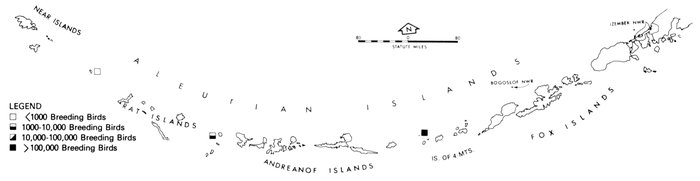
Fig. 2. Breeding distribution of northern fulmar.
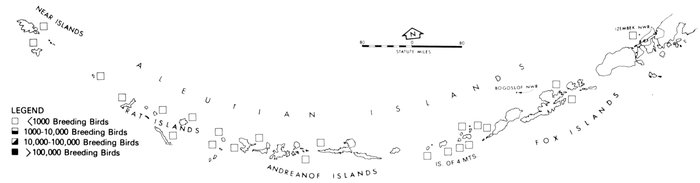
Fig. 3. Breeding distribution of storm-petrels.
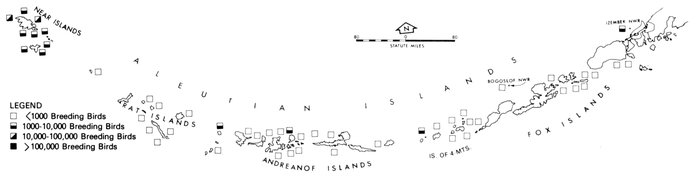
Fig. 4. Breeding distribution of cormorants.
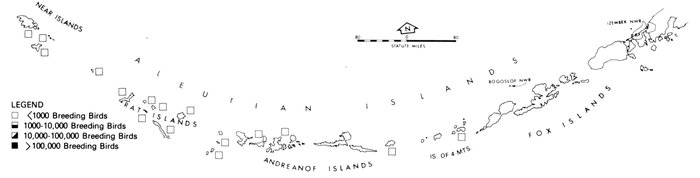
Fig. 5. Breeding distribution of parasitic jaeger.
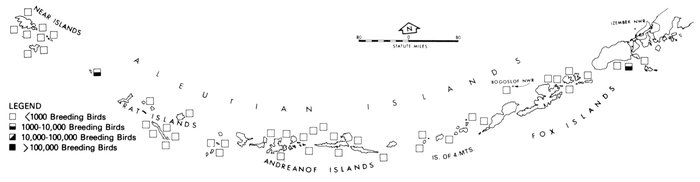
Fig. 6. Breeding distribution of glaucous-winged gull.
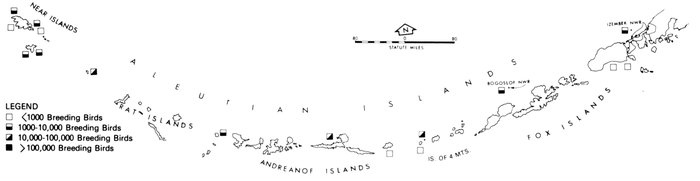
Fig. 7. Breeding distribution of kittiwakes.
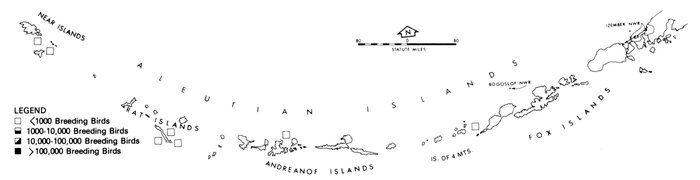
Fig. 8. Breeding distribution of terns.
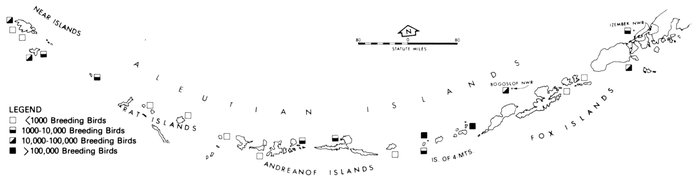
Fig. 9. Breeding distribution of murres.
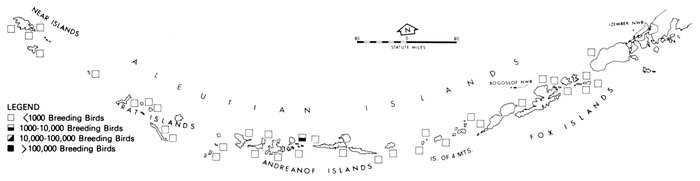
Fig. 10. Breeding distribution of pigeon guillemot.
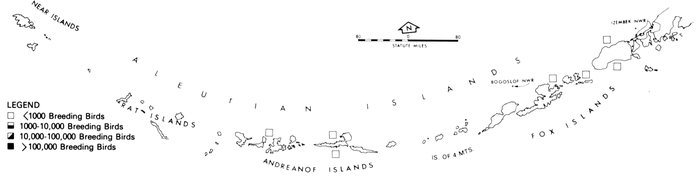
Fig. 11. Breeding distribution of marbled and Kittlitz's murrelet.
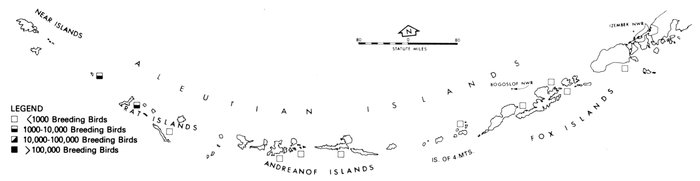
Fig. 12. Breeding distribution of ancient murrelet.
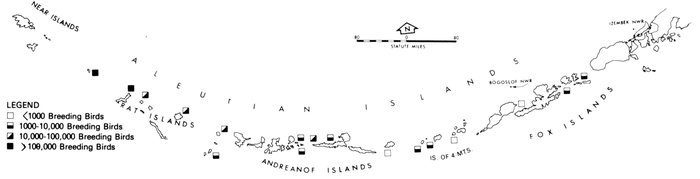
Fig. 13. Breeding distribution of auklets.
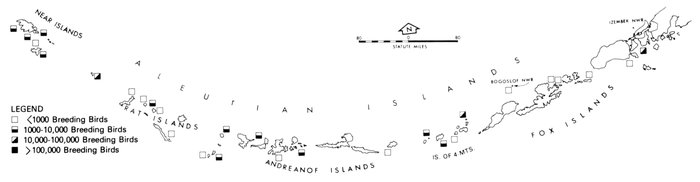
Fig. 14. Breeding distribution of horned puffin.
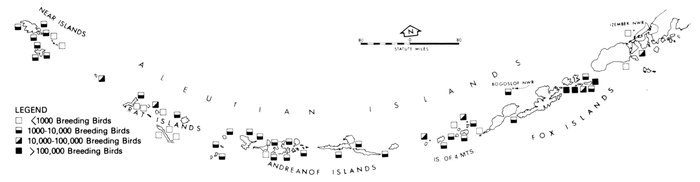
Fig. 15. Breeding distribution of tufted puffin.
FOOTNOTES:
The Historical Status of Nesting Seabirds of the Northern and Western Gulf of Alaska
by
LeRoy W. Sowl
U.S. Fish and Wildlife Service 1011 East Tudor Road Anchorage, Alaska 99507
Abstract
The history of ornithological field work in the Gulf of Alaska dates back to 20 July 1741 and Bering's discovery of Alaska. In spite of this long history, the record is fragmentary and often seemingly contradictory. The coming of the tanker terminal at Valdez and the pending development of oil and gas resources on the outer continental shelf threaten massive change for seabirds in the Gulf of Alaska. Often overlooked, however, is the fact that man has already effected a change in status for many of these birds. In this paper I examine the scanty, general record from the exploratory period, roughly 1741 to 1935, and the somewhat more comprehensive record of the reconnaissance period, 1936-74, and attempt to develop a basis for better understanding of the change in seabird status that has already taken place. This paper should be treated as a verbal model which can be improved as our knowledge of seabirds in the Gulf of Alaska is expanded.
From the perspective of history, 1970 should prove to have been a momentous year for Alaska and its seabirds. Two events, the construction of the Trans-Alaska Pipeline and the passage of the National Environmental Policy Act (NEPA) merged head on in 1970 with the decision that Section 2c of NEPA applied to the proposed pipeline. The systematic appraisal of potential environmental impacts required by Section 2c quickly exposed the inadequacy of the existing data base in many areas. With respect to seabirds in the Gulf of Alaska, it was apparent that there had never been any effort to develop a synthesis of the information accumulated over 230 years. The data gaps which were uncovered were appalling.
While the Trans-Alaska Pipeline impact statement had provided shock therapy, it was not the only influential event on the horizon. Two local disturbances had already preceded the pipeline. These were Project Chariot at Cape Thompson and the Amchitka Island test program. Now in quick succession the Wilderness Act and native land claims added new urgency to the need for solid resource information. More recently, the outer continental shelf minerals leasing program has made the quick development of base-line information even more essential.
All of the new activity in Alaska's coastal waters has the potential to affect seabirds in one way or another. We must remember, however, that man's activities have been affecting seabirds for a long time. We cannot accurately assess the effect of a tanker terminal at Valdez or offshore oil activity without first developing some understanding of the current status of seabirds in the context of the historical record.
Seabird work in Alaska can be divided roughly into three periods. The first is the early historical or exploratory period; it extended from Georg Steller's 1741 visit to Kayak Island to 1935. This was literally a period of exploration and the collection of information was dependent upon interest and opportunity. The second is the reconnaissance period; during this period investigators were dispatched to a particular area to gather general information for management application. This period begins with Murie's extensive investigations of the Alaska Peninsula and the Aleutian Islands; I see it extending from 1936 to 1975. In 1975 the need for data became so acute that it was necessary to enter the third period, one of intensive data gathering. Knowing where the big seabird colonies were located and knowing their general species composition was no longer adequate. The current intensive data-gathering effort in the waters over oil and gas leasing areas is a partial response to the recognition of this inadequacy.
In this paper I draw some tentative conclusions relative to the status of the 26 species of primary seabirds (Fisher and Lockley 1954) breeding in, or which may have bred in, the northern and western Gulf of Alaska area. This area extends from Cape Fairweather, 59°N 138°W, westerly along the coast to Ikatan Bay, 55°N 163°W, at the end of the Alaska Peninsula. These bird species tend to be colonial, but not exclusively so. Two birds which are primary seabirds, the mew gull (Larus canus) and Bonaparte's gull (L. philadelphia), have not been included because they tend to be more riverine than marine in habit. Several marine ducks have been excluded because they are secondary seabirds.
Information from the early exploratory period is summarized under the next section. The more detailed information from the reconnaissance period is discussed in the species accounts.
Summary of the Historical Record
The history of ornithological field work in the Gulf of Alaska goes back 235 years to 20 July 1741. On that day Bering's surgeon/naturalist, Georg W. Steller, spent a scant 10 h ashore on Kayak Island. He collected a single bird. This bird, later named for Steller, reminded him of a plate of the blue jay by Make Catesby, the colonial-era predecessor of Audubon, in Volume 1 of the Natural History of Carolina, Florida, and the Bahama Islands (Stejneger's annotated translation of Steller's journal in Golder 1925). Collection of the bird confirmed for Steller that the first Russian Expedition had reached America.
Steller was an accomplished naturalist, but his overbearing and superior manner had apparently sorely irritated Bering and his officers long before the expedition reached Kayak Island. The seamen made little effort to go ashore anywhere in Alaska and Steller was blocked from doing so as well. In addition to Kayak Island, he was able to go ashore only on Nagai Island, first with a water party on 30 August and again the next day. He noted that "all sorts of waterbirds in abundance were seen." These included two kinds of cormorants, auks, ducks, gulls, divers, pigeon guillemots (Cepphus columba), tufted puffins (Lunda cirrhata), and horned puffins (Fratercula corniculata).
Stejneger's comment on the identity of the cormorants is interesting because, based on his experience, he assumed them to be pelagic and double-crested cormorants (Phalacrocorax pelagicus and P. auritus). He gave no thought to red-faced cormorants (P. urile) which are now common there.
Steller noted on 6 September off Bird Island in the Shumagin Islands, that "when we were out to sea about half a mile we were especially astonished at the untold numbers of seabirds which we saw on the northern side of the island." These birds were listed as cormorants, auks, horned puffins, fulmars (Fulmarus glacialis), pigeon guillemots, black oystercatchers (Haematopus backmani), and a pied diver which Stejneger assumed was an ancient murrelet (Synthliboramphus antiquus).
On 15 September when Bering's vessel, the St. Peter, was south of Amukta Pass, Steller recorded observing "river gulls." The observation is not as interesting as Stejneger's comment (Golder 1925) concerning it. Stejneger stated that no true river gulls lived in the Aleutians and these must, therefore, have been another small gull with red feet. He thought they must have been the red-legged kittiwake (Rissa brevirostris), which "inhabits the Aleutian Islands from Bering Island to Sannak."
Thirty-seven years after Bering's voyage, Captain James Cook sailed into the Gulf of Alaska, arriving off Kayak Island on 11 May 1778. Cook was not accompanied by an able naturalist. His surgeon, William Anderson, did have some experience gained on earlier voyages in preparing skins and taking notes, but he had contracted tuberculosis and became so ill that even his notes ceased after 8 June, while the expedition was in Cook Inlet.
Cook was under orders to keep a careful record of everything he saw. One of the results was that he had birds collected even though he had no naturalist to do the work. Several birds were collected in Prince William Sound while Cook's vessels were at anchor in Port Etches. These included two marbled murrelets (Brachyramphus marmoratus—type specimens), a black oystercatcher, a surfbird (Aphriza virgata), a surf scoter (Melanitta perspicillata), and a red-breasted merganser (Mergus serrator—type specimen), along with several forest birds (Stresemann 1949).
The watch journals of Cook and his officers provide some additional information. Captain Charles Clerke (Beaglehole 1974) remarked in his log on the passage out of Prince William Sound through Montague Strait on 20 May that "it had almost become tautology to mention whales and seals and innumerable sea fowl that so confoundingly kept their distance."
Between the Trinity Islands and Chirikof Island on 18 June, Cook's men collected a single tufted puffin. Later Cook passed close to the Semidi Islands and the Shumagin Islands and directly through the Sandman Reefs. Beaglehole's version of this part of the voyage makes no mention of seabirds.
There is a gap of 87 years during which there is almost no hint of published material bearing on the status of seabirds in the Gulf of Alaska. In 1865 the Russo-American Telegraph Expedition touched this area. Dall and Bannister (1869) provide us with a few scraps garnered during that expedition, primarily by Bischoff. The glaucous-winged gull (Larus glaucescens) was described as the most common species from California northward. Bischoff's collections at Kodiak indicate that the horned and tufted puffins were collected with ease. He was able also to collect an Aleutian tern (Sterna aleutica—type specimen) along with an egg.
Dall (1873) noted in 1872 that the black-legged kittiwake (Rissa tridactyla) was common at Round Island and Delarof Harbor, Unga Island, in the Shumagins. The inference is that it was more common at these two places than elsewhere. The Arctic tern (Sterna paradisaea) was abundant in the Shumagin Islands and particularly at Range Island in Popoff Strait. Dall expressed the opinion that the horned puffin was very abundant in the Shumagins and appeared to fill the niche of the tufted puffin, which he did not see there. The only other bird which he thought to be very common was the pigeon guillemot. He did not note the common murre (Uria aalge) at all.
In 1908 the second of three Alexander Expeditions conducted field work in the Prince William Sound area. From Dixon (1908) and Grinnell (1910) we can derive some basis for assessing status in a very general way. The most common seabird noted was the marbled murrelet. Glaucous-winged gulls and black-legged kittiwakes were common; the glaucous-winged gull was the more common. Horned puffins were judged to be slightly more common than tufted puffins by both authors. The northern end of Montague Strait appears to have been the center of abundance for puffins. Dixon noted that on 16 July 1908 there were swarms of puffins in the channel along Green Island. Pigeon guillemots were common along the rocky coasts. Parakeet auklets (Cyclorrhyncus psittacula), common murres, and ancient murrelets were noted only in very small numbers.
After the Alexander Expeditions there was another doldrum in which little was done. During this lull in activity, a note by Townsend (1913) appeared which compared the numbers of crested auklets (Aethia cristatella) at Yukon Harbor, Big Koniuji Island, to the least auklets (A. pusilla) of St. George Island, stating that the crested auklets were more numerous. He sailed into the Yukon Harbor anchorage on the evening of 1 August and observed that crested auklets "were present in myriads. The surface of the water was covered with them, and the air was filled with them."
The formal record available to researchers is very shallow for this exploratory period. With a few exceptions it was compiled by non-scientists, primarily explorers and egg and skin collectors.
Current Status
Setting the Stage
This paper should be viewed as a conceptual model. While I attempted to be as objective as possible, subjectivity was unavoidable. Many of the tentative conclusions are based on very little data. Each improvement will make it a better management tool. Because of the space limitations, it is not possible to go into a detailed tracking of my reasoning for each species. In an attempt to overcome this handicap, I am including some examples of the sorts of reasoning that went into the process.
In 1973 I led a Fish and Wildlife Service (FWS) reconnaissance survey team that was delineating seabird colonies along the Alaska Peninsula. In the Shumagin Islands we entered or crossed Koniuji Strait twice (on 11 and 12 June) without even suspecting the presence of a horned puffin colony. A third passage through the strait (13 June) was not so uneventful. The water and the air were filled with horned puffins. This led to the discovery that the 430-m mountain on the southeastern corner of Big Koniuji was also covered with horned puffins, clear to its top. The minimum estimate of the birds that were visible was 140,000. Even this number of birds would make this the largest horned puffin colony ever discovered. David Spencer (personal communication) had noted similar swarms of horned puffins in this strait in 1956 while flying sea otter surveys in the area. In 1975 a field camp was established at Yukon Harbor, with study of this colony as one of the prime objectives of the investigators. As far as these investigators could tell no such large colony existed there, even though the nesting habitat was still there, unaltered. This sort of event, one of the banes and vagaries of estimating seabird numbers, is not rare.
In 1973, when FWS personnel delineated the colony on the southwestern end of Bird Island in the Shumagins, there were estimated to be 43,000 kittiwakes, 24,000 murres, and 6,000 cormorants present; no tufted puffins were seen about the colony. The last time (in 1970) one of the observers, Edgar Bailey, had visited the colony with Robert Jones, there was an extremely large colony of tufted puffins which Jones (E. Bailey, personal communication) estimated at more than 1 million birds. We made a particular effort to visit Jude Island, between the Shumagin Islands and the Pavlof Islands, because David Spencer (personal communication) had reported once having seen the air over the island filled with an extremely large number of tufted puffins. However, there were no puffins at this colony either.
Let us examine the facts in context. On 8 June we had visited High Island where we had attempted to collect puffin eggs for pesticide analysis, but had been able to find only one egg. Also, there were only 6,000 tufted puffins where George Putney, master/engineer of the Aleutian Tern, had seen much larger numbers in 1972. These two facts could easily be related to explain the current situation because it was still early in the breeding season. The horned puffin observations in Koniuji Strait (11-13 June) were in keeping with this conclusion also—an indication that these birds had not yet settled down to a full breeding effort. The erratic comings and goings of common puffins (Fratercula arctica) early in the season have been well documented (Lockley 1962). It is an easy step to extend this reasoning to the absence of birds at Bird Island on 11 June, even though fresh signs of the characteristic evidence of tufted puffin occupancy were missing. Jude Island provides a different clue, however. There were 3,000 pigeon guillemots, an unheard-of concentration, apparently occupying abandoned tufted puffin burrows on 15 June. Also, on 7 June we had made a very interesting observation that had no special significance at the time: murres on Spitz Island were occupying little parapets created by mashing down the mouths of puffin burrows which filled the slope above the cliff portion of their colony.
After looking at all of the observations cited above, I conclude that tufted puffins were greatly reduced in numbers on these sites in 1973 and that they had been absent from the burrows used by the murres and pigeon guillemots for more than the current breeding season. What causes these sorts of changes? I do not know.
One reason for year-to-year change may be local movements of colonies. Black-legged kittiwakes nest at several places in lower Orca Inlet, Prince William Sound. Counts made at these sites in 1972 and 1974 yielded almost identical totals but the numbers of birds varied between individual sites. This may be an indication that all of these sites are part of one large composite colony and that, at least in this colony and for this species, the birds shift at will.
The best record of population flux involving two species has been summarized by Peterson and Fisher (1955). In 1872 and 1873 the murres observed on Walrus Island in the Pribilofs were almost entirely common murres. In 1890 common and thick-billed murres (Uria lomvia) were evenly matched in number. By 1901 the colony was almost exclusively dominated by thick-billed murres. In 1911 and 1914 the few thick-billed murres present were almost lost among the then dominant common murres. In 1940 thick-billed murres dominated again. When Peterson and Fisher visited the island in 1953, the situation was again reversed and common murres had almost completely replaced the thick-billed murres. These changes are even more impressive because of the number of birds involved, between 1 and 2 million in 1953. There are more tenuous indications that somewhat the same thing may occur between two other congener pairs, the pelagic and red-faced cormorants and the black-legged and red-legged kittiwakes. The causative factor, or factors, is not readily apparent. One possibility is long-term climatic fluctuation.
Dement'ev and Gladkov (1966) provide an example of abrupt and massive change. Before 1876, the pelagic cormorant abounded on the Commander Islands. During the winter of 1876-77, the birds were decimated by an unknown epizootic disease. By spring only a few individuals remained alive. The record shows that by 1882 they were already becoming common again. Red-faced cormorants were apparently not reduced in number because Dement'ev and Gladkov (1966) state that they were common in "the second half of the last century and the beginning of this." Did they flourish only while the pelagic cormorants were reduced in number?
Bowles (1908) gives another indication of naturally induced population impact. He noted large numbers of dead seabirds on Washington beaches and the ocean "rather plentifully dotted with sick birds ..." He examined some birds and found "many hundreds" of tapeworms in every bird. His conclusion was that their intestines were so solidly packed with tapeworms that starvation was "an absolute certainty."
Some apparent disruptions are long term. In the Gulf of Alaska there is a hiatus in the distributions of a number of small seabirds that are active around their colonies only at night. Repeatedly, the northern Gulf of Alaska shows up as an area of reduced population, as a boundary between subspecies, or as a limit to a range. This same area has a noticeable lack of total darkness during a substantial portion of the breeding season.
The nocturnal habit no doubt evolved because it was advantageous to concentrate on the breeding grounds only under the cover of darkness, when diurnal predators were at a great disadvantage. Cody (1973) states that Cassin's auklet (Ptychoramphus aleuticus), which is strictly nocturnal around its colonies, avoids these colonies on brightly moonlit nights. He sees this as an apparent response to gull predation. At higher latitudes the small alcids have overcome this disadvantage by swamping predators through their sheer numbers. In the Gulf of Alaska I suspect that few of the small seabirds, except possibly the fork-tailed storm-petrel (Oceanodroma furcata), have ever achieved great enough numbers to offset the impact of extended daylight.
Past disruptions of seabird populations are both natural and man-induced; however, the documentary record is much too fragmentary to allow us to fully appreciate what has occurred or what the long-term effect has been. To give some perspective to the problems associated with assessing change and attempting to understand it, some of the indicators of natural and unnatural change and flux in seabird populations are reviewed here.
The flux in bird numbers can be related to the time of day, season of the year, and atmospheric conditions on a short-term basis. This sort of flux or apparent flux can easily be explained. The underlying cause of some of the longer term flux is not so easily arrived at. Murie (1959), Gabrielson and Lincoln (1959), and Sowl and Bartonek (1974) have noted some of the man-induced changes. These are also explored to some extent in the species accounts as they are found to apply.
I sometimes refer to a colony size class when discussing the existing data rather than to an actual population estimate. The size classes used are defined as follows:
Class I—less than 100 birds
Class II—100-1,000
Class III—1,000-10,000
Class IV—10,000-100,000
Class V—100,000-1,000,000
Class VI—more than 1,000,000
The Dictionary of Alaska Place Names (Orth 1967) is the reference for those who wish to locate some of the less obvious sites. The Coast Pilot, No. 9 (U.S. Department of Commerce 1964) is another useful reference.
Species Accounts
Northern Fulmar (Fulmarus glacialis)
Petrels of a number of species can be found in the Gulf of Alaska, some of them in great numbers. Only the northern fulmar breeds there.
The fulmar is common in the offshore waters of the northern Gulf of Alaska throughout most of the year (Isleib and Kessel 1973). Most authors, including Clark (1911), one of the earlier ones, who commented on the distribution of fulmars farther out in the Gulf, have considered them to be abundant. Nichols (1927) raised one of the few voices of apparent dissent; he noted that in 1926 he encountered the largest number of fulmars (about 800) on 11 July in Shelikof Strait after he had left the Gulf. During the summer, fulmars are very common seaward of Montague Island, particularly to the northeast of Patton Bay and in the approaches to Montague Strait. Data derived from FWS surveys in July and August 1972 showed an estimated 10,000 fulmars in a stretch of waters 19 km wide along the east side of Montague Island (Isleib and Kessel 1973).
Over the Portlock Banks and in Stevenson Entrance, fulmars sometimes concentrate in very large numbers, either by themselves or in company with sooty shearwaters (Puffinus griseus). In August 1973, FWS observers crossing Perenosa Bay saw large numbers of tube-nosed birds moving northeastward across the Bay. Although these appeared to be predominantly shearwaters, there were also many fulmars. There was a general movement of birds through Shuyak Strait from Shelikof Strait into the Gulf of Alaska. It was not determined whether the fulmars were moving with the shearwaters or on a regular feeding flight. Fulmars are often found close to Afognak Island in the area between Sea Lion Rocks and Sea Otter Island. Gabrielson and Lincoln (1959) reported seeing swarms of fulmars in Marmot Strait and around the small islands on the north side of Afognak in early August. Murie (1959) noted fulmars in Shelikof Strait and again around the Shumagin Islands. There is nothing in this record to indicate any change in their distribution at sea recently.
The Semidi Islands support the Gulf of Alaska's largest fulmar breeding population, a Class V colony (U.S. Bureau of Sport Fisheries and Wildlife 1973). Gabrielson and Lincoln (1959) considered it to be one of the four largest colonies in Alaska.
Gabrielson (1940) was told by Captain Sellevold of the marine vessel Brown Bear that he thought the birds nested on Sea Otter Island in Perenosa Bay. Gabrielson also learned that they probably nested on Sea Lion Rock at the head of Marmot Strait. In August 1973 I observed fulmars in close proximity to Sea Lion Rock. More recently, small numbers of apparently breeding fulmars have been found in the Barren Islands (L. W. Sowl, personal observation and Edgar Bailey, unpublished FWS report, Anchorage, Alaska). Although no other colonies are known or suspected, the evidence suggests the possible existence of some.
Peterson and Fisher (1955), on noting dark fulmars between St. Paul and St. George when only the light morph was present on any of the colonies in the Pribilofs, expressed no surprise. They offered the opinion that a round trip of 960 km to one of the dark morph colonies in the Aleutians just might be within the operating range of a fulmar on a 4-day vacation from nest-tending duties. Using this as a general yardstick, it appears that the rich foraging grounds over the Portlock Banks might also be within the range of breeding fulmars from the Semidis. The trip up Shelikof Strait and on to Portlock Bank by way of Shuyak Strait is only slightly longer than the one from Chagulak to St. Paul. The feeding grounds off Montague Island would require a 1,600-km round trip from the colonies in the Semidi Islands. Birds from the Barren Islands and any colonies around Shuyak Island could easily reach the Montague Island grounds, but why would they cross the Portlock Banks to do so?
Fulmar colonies may be found in the Chiswell Islands. It is also a possibility that the existence of colonies on islands along the north coast of Afognak Island will be verified and that others will be found in the vicinity of Shuyak Island. Gabrielson and Lincoln (1959) expressed the opinion that there is almost certainly a colony on Sutwik Island. If there is one, however, I did not see it on one quick trip around the island in 1973.
Gabrielson (1940) expressed surprise at the size of the Semidi Island breeding colony. Gabrielson and Lincoln (1959) considered 1911 to be the first time breeding fulmars were found in the Shumagins. They apparently based this on two eggs collected there that year and documented in a plate in Bent (1964). Other than Gabrielson's opinion, there is nothing to indicate a major change in fulmar status during this century. If there has been a change in status, it has probably been in the direction of increasing populations.
Fork-tailed Storm-petrel (Oceanodroma furcata)
The fork-tailed storm-petrel probably breeds throughout the Gulf of Alaska. It is abundant at sea during the summer in most offshore waters. Murie (1959) described it as the dominant petrel in the Bering Sea and the North Pacific.
In view of its wide distribution and apparent abundance very little is known about the fork-tailed storm-petrel's breeding colonies. Friedmann (1935) recorded specimens and eggs from Kodiak dating back to 1843. Murie (1959) noted them as nesting on Sanak Island and stated that they almost certainly nested in the Shumagins and on other islands along the Alaska Peninsula. David Roseneau (Isleib and Kessel 1973) found this storm-petrel "breeding by the 10,000's" on East Amatuli Island in the Barren Islands in June 1965. This was subsequently verified in 1974 by Edgar P. Bailey (unpublished report, FWS, Anchorage, Alaska).
On 2 July 1972, responding to a tip by James W. Brooks (personal communication), M. E. Isleib and I anchored at Fish Island in the Wooded Islands. We did not locate any storm-petrel burrows, but a steady flow of storm-petrels passed over the boat throughout the darkest part of the night. Surveys conducted at about that time provided an estimate of 19,000 fork-tailed storm-petrels in Prince William Sound, primarily in or close to Montague Strait, and in coastal waters on the east side of the Sound's outer islands. In this area Isleib (personal communication) has noted a general movement of fork-tailed storm-petrels westward around Montague Island and into Prince William Sound through Montague Strait each morning and a corresponding countermovement each evening. I conclude that in 1972 there was a Class IV colony in the Wooded Islands, numbering between 19,000 and 38,000 birds. Additional colonies will be discovered in a similar manner as more systematic searches are made.
No colonies were discovered during the 1973 reconnaissance survey of the islands south of Alaska Peninsula. Working primarily inshore, FWS investigators encountered very few storm-petrels during the day. On the night of 14 June, the FWS vessel, Aleutian Tern, responded to a Mayday call and was either in transit or participating in rescue operations from 2245 to 0420 h on the morning of 15 June. During this period numerous fork-tailed storm-petrels were encountered, particularly off Cape Wedge on Nagai Island. After we anchored in Eagle Harbor on Nagai, more storm-petrels were heard about the vessel.
At about this same date, National Marine Fisheries Service enforcement officers flying fisheries patrols observed storm-petrels in abundance south of the Shumagin Islands (James Branson, personal communication). These observations support the belief that there are probably substantial undiscovered colonies in the Shumagin Islands.
Fork-tailed storm-petrels are abundant summer residents in the northern Gulf of Alaska and the estimate by Isleib and Kessel (1973) is that populations using the waters off the North Gulf Coast probably number in the millions. Certainly the same estimate is valid for the rest of the Gulf area west of the Chugach Islands.
The status of these birds relative to their historical abundance cannot be derived from the existing information. There is strong suspicion that the introduction of fox on many of the islands in the area during the early part of this century probably caused a reduction in their numbers. Murie (1959) said that experience taught him that wings left from fox kills or remains of storm-petrels in fox droppings could be accepted as evidence of the presence of a colony. Gabrielson and Lincoln (1959) reported that E. P. Walker visited the Wooded Islands in 1922 searching for a storm-petrel colony that had been reported to exist there in 1918. He could not find it even though he searched diligently. This apparent disappearance was attributed to the introduction of fox.
There is another factor to consider, however. The limited number of specimens now available from the Gulf of Alaska indicates that separate subspecies occupy the eastern and western Gulf of Alaska. The accepted boundary is somewhere in the vicinity of Prince William Sound. This is an indication that there has been a hiatus in this area of rather long duration. I have speculated that this sort of break may be in some way related to the length of day and a period during the summer when there is little darkness to cover activities near the colony. Thoresen (1964) and Cody (1973) have both reported that western gulls (Larus occidentalis) assemble in Cassin's auklet colonies on moonlit nights to prey on arriving adults. It is likely that other nocturnal species would provoke the same sort of hunting tactic. A light-related predation factor implies that the predators rely on sight. Avian predators are indicated.
Leach's Storm-petrel (Oceanodroma leucorhoa)
Even less well understood than the breeding distribution of the fork-tailed storm-petrel is that of Leach's storm-petrel.
Bendire (1895) quotes notes from Chase Littlejohn, who found Leach's storm-petrel to be an abundant breeder on unspecified small islands near Sanak in 1894. It greatly outnumbered the fork-tailed storm-petrel. On his visit in 1937 Murie (1959) learned that all of the large colonies of seabirds that had once existed there were gone. He attributed this to overfishing and associated perturbation and to the introduction of fox. No systematic assessment of seabirds on Sanak has been attempted since Littlejohn's time.
No Leach's storm-petrel colonies have been encountered during reconnaissance surveys of the Gulf of Alaska. Small numbers have been reported from time to time and while it is very much less abundant than the fork-tailed storm-petrel, I expect that it will be found in small numbers at various places in the Gulf of Alaska when it becomes possible to make more thorough searches. It may occur in remote areas like the smaller islands scattered throughout the Sandman Reefs—possibly even in large numbers. On the basis of the Sanak record, we must assume that this storm-petrel has been greatly reduced in numbers, at least in the western portion of the Gulf.
Double-crested Cormorant (Phalacrocorax auritus)
The white-crested cormorant, the race of the double-crested cormorant residing in the Gulf of Alaska, is principally an inhabitant of the marine environment. This cormorant is a common, but apparently patchily distributed, resident throughout the northern and western Gulf of Alaska.
Gabrielson and Lincoln (1959) thought that it nested only from Kodiak Island westward into the Aleutians. However, it probably breeds from Yakutat Bay westward. Isleib and Kessel (1973) estimated the abundance of the double-crested cormorant along the North Gulf Coast as several thousands, about one-tenth as common as the pelagic cormorant. It is the third most abundant of the four cormorant species nesting in the area. It occurs as scattered inclusions in many colonies throughout the area, and at least in the Shumagin Islands, even occurs in some colonies by itself.
There are no data on which to base an estimate of any change in status. It probably is not much affected by many of the naturally occurring perturbations.
Brandt's Cormorant (Phalacrocorax penicillatus)
On 22 July 1972, 13 Brandt's cormorants (4 sitting on nests) were found at Seal Rocks in Hinchinbrook Entrance, Prince William Sound (Isleib and Kessel 1973). Two years later I positively identified two individuals in breeding plumage among a mixed group of cormorants in the Chiswell Islands west of Seward. Are these recent range extensions? Possibly, but I propose an alternative explanation.
Palmer (1962) showed the distribution of this cormorant as breeding north to Puget Sound and as a straggler north to Forrester Island, Alaska. This viewpoint is shared by the American Ornithologists' Union (1957), which regards the bird as casual as far north as Forrester Island, where this species was collected by Willet (1918).
Let us look at the other record, the one that is not supported by specimens. Bent (1964) thought of Brandt's cormorant as a breeding resident of Forrester Island. Gabrielson and Lincoln (1959) admonished bird observers to be on the lookout for this particular cormorant in the vicinity of Ketchikan and Prince of Wales Island. Brandt's cormorant also appears on the bird list for the Kodiak National Wildlife Refuge as an accidental visitor.
Early observers like Bent were explorers. They carefully examined and made notes on all the birds they saw because there was always a chance of a new discovery. It is also very probable that Bent paid particular attention to the cormorants when he was at a place like Forrester Island. He would have undoubtedly been very interested in trying to confirm the presence of the now extinct Palla's cormorant (P. perspiculatus), as he must have been aware of Schlegel's (1862-64) list of the birds in the Dresden Museum since Willet (1914) had recently referred to it. The staffs for the Kodiak and Aleutian Islands National Wildlife refuges have included some very careful observers, such as Frank Beals. These men would have noticed the difference if a new bird such as Brandt's cormorant was seen, verified the sighting visually, and then noted it in their field diaries. They would not have bothered to develop the type of proof needed for an undisputable record, but the bird would have appeared in the refuge bird list (as it does).
The outside coasts of the Alexander Archipelago, Kenai Peninsula, and the Islands of the Kodiak Archipelago impose some logistical requirements which discourage all but the most determined birders. Not many have been able to reach more than very limited segments of the entire coast. Given the vast distances involved, few of the FWS vessels passing through the area have had the time to thoroughly examine any cormorant colonies or roosts bird by bird. Even for those who pause, the ever present swells and the constant chop of the summer westerlies make positive identification difficult.
It is possible that Brandt's cormorant has been in the area in small numbers for a long time, either regularly or intermittently. It could have escaped observation because of the conditions described above. This species may be there as a relict, as a pioneer, or only because surplus birds are being pushed into marginal habitat by population pressures on their main range to the south.
Pelagic Cormorant (Phalacrocorax pelagicus)
The pelagic cormorant is the most abundant of the four cormorants residing in the Gulf of Alaska. It is found throughout coastal Alaska south of the Bering Strait and even in some colonies in the southern Chukchi Sea.
Cormorants have a certain invisibility which is brought about by their universal presence. This blindness appears to have affected everyone, even the earliest observers.
The earliest accounts provide a composite picture of the distribution and abundance of the pelagic cormorant which is very similar to that encountered today. In southeastern Alaska, beginning at the eastern edge of the area under discussion, the pelagic cormorant was pictured as the sole resident cormorant. However, we know from Willet's collection of a Brandt's cormorant at Forrester Island that this might not be quite true. From Yakutat Bay westward into the Aleutians this species coexisted with the double-crested cormorant. In the Western Aleutians there is some disagreement, but in general it appears to have been accepted that the red-faced cormorant occurred there along with pelagic and possibly double-crested cormorants. In the Bering Sea this species coexisted with the red-faced cormorant.
A number of recent authors (Gabrielson 1940, 1944; Murie 1959; and others) have considered the pelagic cormorant to be the most widely distributed and abundant of the four species found in Alaska. Since the modern picture fits, in a general way at least, it would be easy to conclude that the species enjoys an unchanged status. There is just a faint suggestion that this may not be true.
Dement'ev and Gladkov (1966) refer to a great die-off of pelagic cormorants referred to earlier, in the Commander Islands. Stejneger (1885) enlarges on this disaster. It is true that Stejneger visited these islands a relatively short time after the die-off, but he reported that even though the pelagic cormorants were increasing, "people having seen their former multitude think that there is no comparison between the past and the present." Murie (1959) thought that the pelagic cormorant, while numerous, was outnumbered by the red-faced cormorant in the Aleutians. More recently there has been the rapid eastward expansion of the red-faced cormorant. Although it is not possible to determine what the real status of the pelagic cormorant is relative to its past status, I conclude that during this century its status relative to that of the red-faced cormorant has declined.
Red-faced Cormorant (Phalacrocorax urile)
The red-faced cormorant, in spite of superficial similarities to the pelagic cormorant, just does not look the same to an experienced observer. However, it would have been possible for inexperienced observers in the days before modern optics to overlook the differences. The problem was further compounded by the "invisibility" of the ubiquitous cormorants referred to earlier. Apparent absences or blank spots in their range may not have been real.
Dement'ev and Gladkov (1966), reporting on the Russian record, stated that the red-faced cormorant was common in the Commander Islands during the last part of the 19th century and into the early part of the 20th. Older authors had also reported it from Kamchatka and the Kurile Islands. Now, according to Dement'ev and Gladkov, it is an uncommon breeder on Mednyi Island in the Commander Islands and occurs only as an autumn visitor to some of the southern Kurile Islands.
Turner (1885) reported that the double-crested cormorant was abundant in the Near Islands and that the pelagic cormorant was common, but makes no reference to the red-faced cormorant. One specimen of the latter in the Leningrad Academy of Science was taken at Attu on 16 September 1844 (Gabrielson and Lincoln 1959), which indicates that they were probably present during the period reported on by Turner and, therefore, relatively uncommon. Clark (1911) identified red-faced cormorants only a few times and in the Aleutians only once, near Agattu. Dall (1874) noted two red-faced cormorants collected at Amchitka but he (Dall 1873) apparently did not see any east of Unalaska.