Part 1 — DEPARTMENT OF HEALTH
Reading edition
(Thirteen items are here omitted)
Dairy Inspection Division of Inspections
1 Inspection No. ......... Time ......... A. P. M. Date ...... 190
2 All persons in the households of those engaged in producing or handling milk are ......... free from all infectious disease .........
3 Date and nature of last case on farm .........
4 A sample of the water supply on this farm taken for analysis ......... 190... and found to be .........
STABLE Perfect Allow
5 COW STABLE is ...... located on elevated ground with no stagnant water, hog pen, or privy within 100 feet 1 ...
6 FLOORS are ...... constructed of concrete or some nonabsorbent material 1 ...
7 Floors are ...... properly graded and water-tight 2 ...
8 DROPS are ...... constructed of concrete, stone, or some nonabsorbent material 2 ...
9 Drops are ...... water-tight 2 ...
10 FEEDING TROUGHS, platforms, or cribs are ... well lighted and clean 1 ...
11 CEILING is constructed of ...... and is ...... tight and dust proof 2 ...
12 Ceiling is ...... free from hanging straw, dirt, or cobwebs 1 ...
13 NUMBER OF WINDOWS ...... total square feet ... which is ...... sufficient 2 ...
14 Window panes are ...... washed and kept clean 1 ...
15 VENTILATION consists of ...... which is sufficient 3, fair 1, insufficient 0 3 ...
16 AIR SPACE is ...... cubic feet per cow which is ...... sufficient (600 and over—3) (500 to 600—2) (400 to 500—1) (under 400—0) 3 ...
17 INTERIOR of stable painted or whitewashed on ...... which is satisfactory 2, fair 1, never 0 2 ...
18 WALLS AND LEDGES are ...... free from dirt, dust, manure, or cobwebs 2 ...
19 FLOORS AND PREMISES are ...... free from dirt, rubbish, or decayed animal or vegetable matter 1 ...
20 COW BEDS are ...... clean 1 ...
21 LIVE STOCK, other than cows, are ...... excluded from rooms in which milch cows are kept 2 ...
22 There is ...... direct opening from barn into silo or grain pit 1 ...
23 BEDDING used is ...... clean, dry, and absorbent 1 ...
24 SEPARATE BUILDING is ...... provided for cows when sick 1 ...
25 Separate quarters are ...... provided for cows when calving 1 ...
26 MANURE is ...... removed daily to at least 200 feet from the barn ( ... ft.) 2 ...
27 Manure pile is ...... so located that the cows cannot get at it 1 ...
28 LIQUID MATTER is ...... absorbed and removed daily and ...... allowed to overflow and saturate ground under or around cow barn 2 ...
29 RUNNING WATER supply for washing stables is ...... located within building 1 ...
30 DAIRY RULES of the Department of Health are ...... posted 1 ...
COW YARD
31 COW YARD is ...... properly graded and drained 1 ...
32 Cow yard is ...... clean, dry, and free from manure 2 ...
COWS
33 COWS have ...... been examined by veterinarian ... Date ...... 190 Report was 3 ...
34 Cows have ...... been tested by tuberculin, and all tuberculous cows removed 5 ...
35 Cows are ...... all in good flesh and condition at time of inspection 2 ...
36 Cows are ...... all free from clinging manure and dirt. (No. dirty ... ) 4 ...
37 LONG HAIRS are ...... kept short on belly, flanks, udder, and tail 1 ...
38 UDDER AND TEATS of cows are ...... thoroughly cleaned before milking 2 ...
39 ALL FEED is ...... of good quality and all grain and coarse fodders are ...... free from dirt and mold 1 ...
40 DISTILLERY waste or any substance in a state of fermentation or putrefaction is ...... fed 1 ...
41 WATER SUPPLY for cows is ...... unpolluted and plentiful 2 ...
MILKERS AND MILKING
42 ATTENDANTS are ...... in good physical condition 1 ...
43 Special Milking Suits are ...... used 1 ...
44 Clothing of milkers is ...... clean 1 ...
45 Hands of milkers are ...... washed clean before milking 1 ...
46 MILKING is ...... done with dry hands 2 ...
47 FORE MILK or first few streams from each teat is ...... discarded 2 ...
48 Milk is strained at ...... and ...... in clean atmosphere 1 ...
49 Milk strainer is ...... clean 1 ...
50 MILK is ...... cooled to below 50° F. within two hours after milking and kept below 50° F. until delivered to the creamery ...... ° 2 ...
51 Milk from cows within 15 days before or 5 days after parturition is ...... discarded 1 ...
UTENSILS
52 MILK PAILS have ...... all seams soldered flush 1 ...
53 Milk pails are ...... of the small-mouthed design, top opening not exceeding 8 inches in diameter. Diameter ...... 2 ...
54 Milk pails are ...... rinsed with cold water immediately after using and washed clean with hot water and washing solution 2 ...
55 Drying racks are ...... provided to expose milk pails to the sun 1 ...
MILK HOUSE
56 MILK HOUSE is ...... located on elevated ground with no hog pen, manure pile, or privy within 100 feet 1 ...
57 Milk house has ...... direct communication with ...... building 1 ...
58 Milk house has ...... sufficient light and ventilation 1 ...
59 Floor is ...... properly graded and water-tight 1 ...
60 Milk house is ...... free from dirt, rubbish, and all material not used in the handling and storage of milk 1 ...
61 Milk house has ...... running or still supply of pure clean water 1 ...
62 Ice is ...... used for cooling milk and is cut from ... 1 ...
WATER
63 WATER SUPPLY for utensils is from a ...... located ...... feet deep and apparently is ...... pure, wholesome, and uncontaminated 5 ...
64 Is ...... protected against flood or surface drainage 2 ...
65 There is ...... privy or cesspool within 250 feet ( ... feet) of source of water supply 2 ...
66 There is ...... stable, barnyard, or pile of manure or other source of contamination within 200 feet ( ... feet) of source of water supply 1 ...
100
It is a great pity that we Americans have taken so long to learn that laws do not enforce themselves, that even good motives and good intentions in the best of officials do not insure good deeds. Thousands of lives are being lost every year, millions of days taken from industry and wasted by unnecessary sickness, millions of dollars spent on curing disease, the working life of the nation shortened, the hours of enjoyment curtailed, because we have not seen the great gap between health laws and health-law enforcement. In our municipal, state, and national politics we have made the same mistake of concentrating our attention upon the morals and pretensions of candidates and officials instead of judging government by what government does. Gains of men and progress of law are useful to mankind only when converted into deeds that make men freer in the enjoyment of health and earning power. In protecting health, as in reforming government, an ounce of efficient achievement is worth infinitely more than a moral explosion. One month of routine—unpicturesque, unexciting efficiency—will accomplish more than a scandal or catastrophe. Such routine is possible only when special machinery is constantly at work, comparing work done with work expected, health practice with health ideals. Where such machinery does not yet exist, volunteers, civic leagues, boys' brigades, etc., can easily prove the need for it by filling out an improvised score card for the school building, railroad station, business streets, "well-to-do" and poor resident streets, such as follows:
Table V
Score Card for Citizen Use
Perfect Allow
Schoolhouse
Well ventilated, 20; badly, 0-10 20 ...
Cleaned regularly, 20; irregularly, 0-10 20 ...
Feather duster prohibited, 10 10 ...
No dry sweeping, 10 10 ...
Has adequate play space, 10; inadequate, 0-5 10 ...
Has clean drinking water, 10 10 ...
Has clean outbuildings and toilet, 20: unclean, 0-10 20 ...
100
Church and Sunday School
Well ventilated, 20; badly, 0-10 20 ...
Heat evenly distributed, 20; unevenly, 0-10 20 ...
Cleaned regularly, 20; irregularly, 0-10 20 ...
Without carpets, 20 20 ...
Without plush seats, 20 20 ...
100
Streets
Sewerage underground, 20; surface, 0-10 20 ...
No pools neglected, 10 10 ...
No garbage piled up, 10 10 ...
Swept regularly, 20; irregularly, 0-10 20 ...
Sprinkled and flushed, 10 10 ...
Has baskets for refuse, 10 10 ...
All districts equally cleaned, 20; unequally, 0-10 20 ...
100
Until recently the most reliable test of health rights not enforced was the number of cases of preventable, communicable, contagious, infectious, transmissible diseases, such as smallpox, typhoid fever, yellow fever, scarlet fever, diphtheria, measles, whooping cough. By noticing streets and houses where these diseases occurred, students learned a century ago that the darker and more congested the street the greater the prevalence of fevers and the greater the chance that one attacked would die. The well-to-do remove from their houses and their streets the dirt, the decomposed garbage, and stagnant pools from which fevers seem to spring. It was because fevers and congestion go together that laws were made to protect the well-to-do, the comfortable, and the clean against the slum. It is true to-day that if you study your city and stick a pin in the map, street for street, where infection is known to exist, you will find the number steadily increase as you go from uncongested to congested streets and houses, from districts of high rent to districts of low rent. Because it is easier to learn the number of persons who have measles and diphtheria and smallpox than it is to learn the incomes and living conditions prejudicial to health, and because our laws grant protection against communicable diseases to a child in whatever district he may be born, the record of cases of communicable diseases has heretofore been the best test of health rights unenforced. Even in country schools it would make a good lesson in hygiene and civics to have the children keep a record of absences on account of transmissible disease, and then follow up the record with a search for conditions that gave the disease a good chance.
But to wait for contagion before taking action has been found an expensive way of learning where health protection is needed. Even when infected persons and physicians are prompt in reporting the presence of disease it is often found that conditions that produced the disease have been overlooked and neglected.
For example, smallpox comes very rarely to our cities to-day. Wherever boards of health are not worried by "children's diseases," as is often the case, and wait for some more fearful disease such as smallpox, there you will find that garbage in the streets, accumulated filth, surface sewers, congested houses, badly ventilated, unsanitary school buildings and churches are furnishing a soil to breed an epidemic in a surprisingly short time. Where, on the other hand, boards of health regard every communicable disease as a menace to health rights, you will find that health officials take certain steps in a certain order to remove the soil in which preventable diseases grow. These steps, worked out by the sanitarians of Europe and America after a century of experiment, are seen to be very simple and are applicable by the average layman and average physician to the simplest village or rural community. How many of these steps are taken by your city? by your county? by your state?
1. Notification of danger when it is first recognized.
2. Registration at a central office of facts as to each dangerous thing or person.
3. Examination of the seat of danger to discover its extent, its cost, and new seats of danger created by it.
4. Isolation of the dangerous thing or person.
5. Constant attention to prevent extension to other persons or things.
6. Destruction or removal of disease germs or other causes of danger.
7. Analysis and record, for future use, of lessons learned by experience.
8. Education of the public to understand its relation to danger checked or removed, its responsibility for preventing a recurrence of the same danger, and the importance of promptly recognizing and checking similar danger elsewhere.
With a chart showing what districts have the greatest number of children and adults suffering from measles, typhoid fever, scarlet fever, consumption, one can go within his own city or to a strange city and in a surprisingly short time locate the nuisances, the dangerous buildings, the open sewers, the cesspools, the houses without bathing facilities, the dark rooms, the narrow streets, the houses without play space and breathing space, the districts without parks, the polluted water sources, the unsanitary groceries and milk shops. In country districts a comparison of town with town as to the prevalence of infection will enable one easily to learn where slop water is thrown from the back stoop, whether the well, the barn, and the privy are near together.
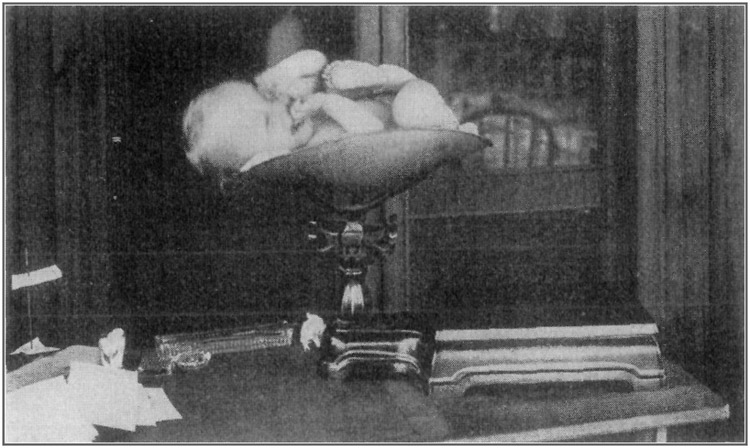
THE BABY, NOT THE LAW, IS THE TEST OF INFANT PROTECTION IN COUNTRY AND IN CITY
Testing health rights requires not only that there be a board of health keeping track of and publishing every case of infection, but it requires further that one community be compared with other communities of similar size, and that each community be compared with itself year for year. These comparisons have not been made and records do not exist in many states.