Part 4 — CHAPTER XXVIIToC
Reading edition
CHAPTER XXVIIToC
DEPARTMENTS OF SCHOOL HYGIENE
The term "school hygiene" generally suggests no other school than the public school. State laws say nothing about compulsory hygiene in military academies, ladies' seminaries, or other preparatory and finishing schools. Yet when one thinks of it, one must conclude that the right to health and to healthful school environment cannot equitably be confined to the children whose tuition is given at public expense. There is a better way to check "swollen" fortunes than by ruining the health of "fortune's children." The waste and danger of slow-minded, noticeably inefficient children are no less when parents are rich than when parents are poor. There is no justification for neglecting the health of children in parochial schools, in private schools for the well-to-do or rich, or in commercial schools for the ambitious youth of lower income strata. Nor has the commercial, parochial, private school, or college, any clearer right than the public school to injure or to fail to promote pupils' health. So far as school hygiene is advisable, so far as it is right to make hygiene compulsory, its personal and social benefits should be shared by children of school age without regard to income, and its laws should be enforced by all teachers, principals, and officers that have to do with school. In presenting a programme for school hygiene this chapter refers to the hygiene taught, the hygiene practiced, the hygiene not taught, and the hygiene not practiced in buildings and on grounds where children and youth are at school, whether these children are in kindergarten or high school, in reformatory or military academy, in charitable school, or in finishing and preparing center for society's juniors.
The question of the local, state, and national machinery by which proper standards of school hygiene shall be made effective will be taken up after we have considered individual steps in a comprehensive programme for school hygiene.
1. Thorough physical examination of all candidates for teachers' positions and periodic reëxamination of accepted teachers.
Teachers would be grateful to be told in time their own physical needs and the relations of their vitality to the vitality of their pupils. Are your teachers examined? Do they know the laws of health and the signs of child health? Are they permitted to continue in schoolrooms after tuberculosis is discovered? Are normal graduates given physical tests before being permitted to teach and before being permitted to give four years to preparation for teaching?
2. Thorough physical examination of every single child in every single school upon entering and periodically during school life.
We believe a vast number of things that "ain't so" about the health of country children as compared with city children, of private-school children as compared with public-school children. Where do we find more degenerate men, physically and morally, than in so-called "American settlements," where, for generations, children have had all outdoors to play in, except when in homes and schoolhouses that are seldom cleansed and seldom ventilated? Open mouths and closed minds clog the "little red schoolhouse"; there headaches do not suggest eye strain; there deafness and running ears are frankly attributed to scarlet fever which everybody must have with all the other "catching" diseases, the earlier the better; there colds begin in December and run until March, to the serious injury of attendance and promotion records; there bone tuberculosis is called "knee trouble" or "spine trouble in the family"; there boys like my little friend Fred count the bottles of cod-liver oil they take to cure adenoids that could be removed in two minutes.
The index to community life and community living conditions should be read in the country, not only for the country's sake, but also for the sake of the city whose milk and water, poisoned in the country, cause thousands of deaths annually, besides annual sick bills exceeding many times over the Russell Sage and Carnegie Foundations, which we rightly call munificent. Reading the index of private schools and colleges is important for their children and youth, but still more important for the community upon which unbridled passion, inability to work or to spend properly, inconsequential thinking, mediæval ideals of caste, etc., can inflict greater injuries than can typhoid fever or cholera.
The physical record of each child should be kept from date of entrance to date of leaving school, showing condition at successive examinations, absence because of illness, etc.
3. Thorough physical examination of children when leaving school, or when passing compulsory school age, as a condition to "working papers" and to "coming out."
To give working papers to children seriously handicapped by physical defects is to buy future industrial trouble, hospital and poorhouse bills. A boy with adenoids, a girl with eye trouble, should not be permitted to begin the fight for self-support without at least being clearly shown that the correction of these defects will increase their earning power. At present a schoolgirl with incipient tuberculosis, or predisposed to that disease, can get working papers, go to a hammock or tobacco factory, work long hours, breathe bushels of dust, deplete her vitality, spread tuberculosis among her co-workers and home associates, infect a tenement,—and all this without any help or advice or any protection from society until she is too sick to work and her physician notifies the health department that she is a danger center. We may disagree about society's right to control a child's act after the defects are discovered, but who will question society's duty to tell that child and her parents the truth about her physical needs before it accepts her labor or permits her to "enter society"?
4. Supervision by physicians of hygiene practiced in schoolrooms and on playgrounds.
Superintendent Maxwell, of New York City, and other educational leaders urge teachers to do their utmost to learn the physical conditions and home environment of the individual child, and to fit school treatment to the individual possibilities and handicaps. But experience proves conclusively that try as they will, teachers and principals have neither the special knowledge nor the time to acquire the special knowledge requisite to use the facts disclosed by the physical examination of school children. Physicians and nurses are needed, not so much for treating children, as for teaching children, parents, teachers, family and dispensary physicians.
Private schools have visiting physicians who may be consulted; they need physicians to supervise, with power to examine or to require certificates of examination. The Committee on the Physical Welfare of School Children found that when a visitor was detailed for that purpose it was easy to secure the coöperation of parents, teachers, family physicians, dispensaries, school boards, and charitable societies. The Hawthorne Club's school secretary has been similarly successful in Boston, as have those of Hartley House, Greenwich House, and the Public Education Association in New York.
5. Restriction of study hours at school and at home to limits compatible with health.
Whether the hours of study at school and at home are excessive cannot be learned from treatises on pedagogics or physiology. Because children differ in vitality as in ability to learn, the maximum limit for study hours should be determined by the individual child's physical condition. When the Japanese went to war with Russia the highest authority in the field was the army surgeon. To this fact was largely due the astonishingly small amount of sickness and the high fighting capacity and endurance of the Japanese, working under unfavorable conditions. No board of school superintendents or board of directors, no state superintendent of schools or college professor, has the right to compel or to allow study hours beyond the maximum compatible with the individual student's physical condition and endurance. The physician responsible for school hygiene should have an absolute veto upon any educational policy, method, or environment demonstrably detrimental to children's vitality.
6. Establishment of a "follow-up" plan to insure action by parents to correct physical defects and to attend to physical needs.
The advantages of getting things done over doing things have been repeatedly emphasized. In smaller cities and in rural districts it is particularly important for schools to get things done better by existing local agencies, such as churches, health and street-cleaning departments, hospitals, clinics, medical and sanitary societies, trade unions, young people's societies, and women's clubs. Where parents who have been followed up and taught, obstinately or ignorantly refuse to attend to their children's needs, the segregation of the physically defective or needy will encourage the coöperation of children themselves in persuading parents to act intelligently for the child's sake. No child wants to remain "queer" or "dopey" or behind his peers. The city superintendent of schools for New York City has asked for laws compelling parents to permit operations and punishing them for neglecting to take steps, within their power, to remove physical defects discovered at school.
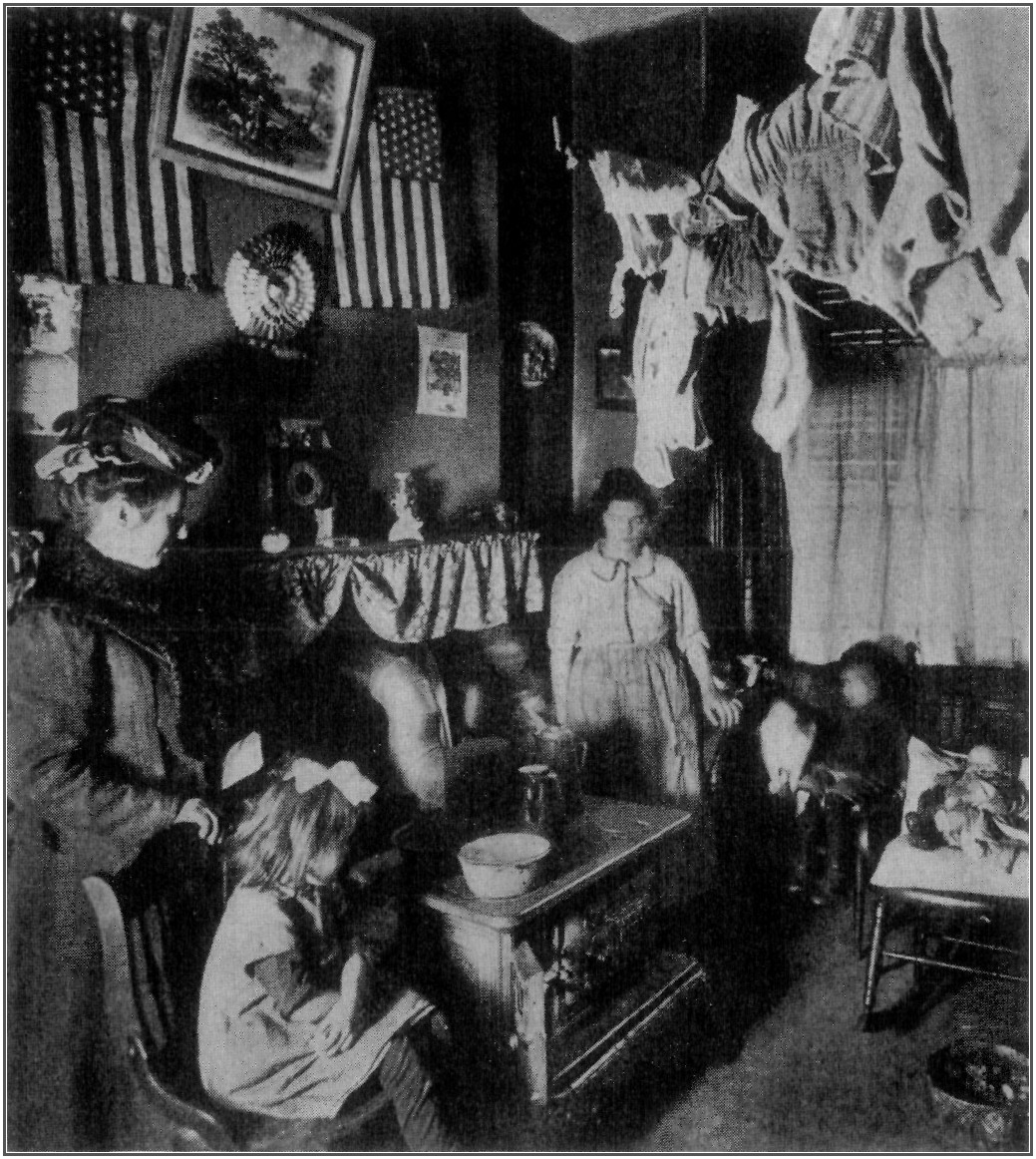
TEACHING A MOTHER TO CARE FOR ONE CHILD INSURES BETTER CARE FOR ALL HER CHILDREN
7. Physiological age should influence school classification and school curriculum. On this subject the studies of Dr. C. Ward Crampton, referred to in the chapter on Vitality Tests, are invaluable and as convincing as they are revolutionary. Scientists accept his proof that our present high school curriculum is ill adapted to a large proportion of children; the "physiologically too young" drop out; only the physiologically mature succeed. The two physiological ages should be given different work. Children whose bodies yearn for pictures, muscular and sense expression, should be given a chance in school for normal development. Analysis should wait for action. Organized play and physical training antedated physical examination in our schools. Like the curriculum they often disregard physiological age, doing harm instead of good. Facts as to physical condition and physiological development would enable us to utilize the momentum of these two to broaden school hygiene and to insure proper physical supervision. Only good would result from adopting Leipsic's plan of having school children examined without clothing, in the presence of parents if parents desire. Expensive? Not so expensive as high school "mortality" due to maladjusted curriculums that force the great majority of boys and girls to drop out before graduation and ruin the health of a large fraction of those who remain.
8. Construction of school building and of curriculum so that, when properly conducted, they shall neither produce nor aggravate physical defects.
When the state for its own protection compels a child to go to school, it pledges itself not to injure itself by injuring the child. Thousands of children are now being subjected to conditions in school far more injurious than the factory and shop conditions against which the national and state child labor committees have aroused universal indignation. Two illuminating studies of school buildings in New York City were made last year by the Committee on the Physical Welfare of School Children, and later by the Board of Education. Similar studies should be made of every schoolroom. Whereas our discussions of buildings and curriculum have hitherto proceeded largely from abstract principles of light, ventilation, heating, and pedagogics, these two reports deal with rooms, equipment, courses of study, and school habits as they are, with obvious detrimental effects on child victims. Numerous questions that it is practicable to answer are given in Chapter XIV.
What and when to build can be better determined after we have learned the what and the where of present equipment.
In passing it is worth while to note that in large cities teachers are frequently forced to choose between bad ventilation and street noises. From Boston comes the suggestion that we avoid noises and evils of congestion by building schoolhouses for city children on the outskirts in the midst of fields, transporting, and, if necessary, feeding children at public expense. While it is true that the public funds now spent in attempting to cure physical and moral ills would purchase ample country reservations, the practical next step seems to be to provide ample play space and breathing space within the city for every school building already erected, and without fail for all buildings to be erected hereafter.
9. Hygiene should be so taught that children will cultivate habits of health and see clearly the relation of health and vitality to present happiness and future efficiency. Social rather than personal, public rather than private, health needs emphasis. Children can be shown how their health affects their neighbor; why money spent for health boards is a better investment than money given to corrupt politicians; that the cost of accepting Thanksgiving turkey or a park picnic from a political leader who encourages inefficient government is sickness, misery, deficient schooling, lifelong handicap; that children and adults have health rights in school and factory, on street and playground, which the law will protect if only they know when these rights are infringed.
10. Central supervision of school hygiene. In private and public, boarding and day, country and city, reformatory and military, commercial and high schools, the index—physical welfare of school children—should be read and interpreted. Headquarters should learn whether or not physical examinations are made and whether harmful conditions are corrected. So far as public schools are concerned, "headquarters" means for cities the fact center that informs city superintendent or school board; for rural schools, it means the county superintendent's office. Whether city or county headquarters have the facts and act accordingly should be known by state superintendents. Whether state superintendents are demanding the facts and educating the county and city headquarters of their states should be known to the national commissioner of education and by him published for all the world. Some people think the state health board should be responsible, others the state educational authority. The important thing is to make some one officer responsible. Methods can be easily worked out if the need is conceded. Legislatures will gladly confer the powers necessary to reading the index of all public schools.
As for parochial and private schools, they may resent for a time public supervision of their hygiene teaching and practice. However, the case could be so presented that they would ask for it, because it would help not only their pupils and society but the schools themselves. No religious belief or private investment can afford to admit that it disregards child health; state supervision would require nothing more than evidence of adequate school hygiene.
11. Information gained at school regarding conditions prejudicial to community health should be published and made the basis of an aggressive campaign for the enforcement of sanitary laws. Ten thousand uses can be made of the information gained at school, ten thousand forces can be made to do educational work, but only a few kinds of work can be done effectively at school. Franklin Ford has said: "You can relate school to all life, but you cannot bring all life under the school roof." As Chapters XVI-XVIII make clear, to socialize the point of view of dispensaries and hospitals is more effective than to put clinics in school buildings. To do for or give to people who can help themselves is to give up and do up power of self-help.
Machinery that must some day exist for the execution of this programme will be approximately the following:
I. National Machinery
1. Clearing house for facts regarding school hygiene as taught and practiced in all schools under the Stars and Stripes; this to be a part of the National Bureau of Education.
2. Scientific research to be conducted by the National Bureau of Education or by the future National Board of Health.
II. State Machinery
1. Clearing house for facts regarding school hygiene taught and practiced in all schools within state limits; this to be maintained by the state educational authorities.
2. Agents to make special inquiries as to practice and teaching of school hygiene.
3. Agents to inspect and to instruct county superintendents, county physicians, teachers, normal schools, etc.
4. A bureau of experts—architect, sanitarian, teacher—whose approval must be obtained before any school building can be erected. (A plan which brought excellent results when applied by state boards to charitable institutions, hospitals for the insane, etc.)
5. Standard making by normal schools, state universities, hospitals, or other educational and correctional institutes under direct state management.
III. County Machinery
1. Clearing house for facts regarding school hygiene taught and practiced in all schools within county limits; this to be maintained by the county superintendent of schools.
2. Physician and nurse to organize inspection and instruction for rural schools, to give lessons and make demonstrations at county institutes, to show teachers how to interest physicians, dentists, health officers, and parents in the physical welfare of school children.
IV. Town and Township Machinery
1. Teachers intelligent as to physical needs, as to sanitation of buildings, etc.
2. An examining physician, to be salaried where the population justifies; elsewhere to work as a volunteer in coöperation with teacher and with county physician.
3. Physical history of each child from date of entrance to date of leaving school, to be kept up to date by teacher.
V. City Machinery
1. A division to be known as the Department of School Hygiene, headed by an officer who gives his entire time to that department.
2. A subcommittee of the Board of Education.
3. Clearing house for facts regarding school hygiene taught and practiced in all schools within city limits.
4. Specialists to examine applicants for teaching positions, and to reëxamine teachers to determine fitness for continuance, for promotion, and for special assignments.
5. A bureau for inspection and control of all hygiene of school buildings, old and new, with power to compel repairs or to reject plans that do not make adequate sanitary provision.
6. Similar supervision of curriculum and of study hours prescribed.
7. A bureau for the inspection and control of curriculum, required home study, exercise, physical training, etc., so far as relates to the health of pupils, and to the physical ability of children to be in certain grades or to be promoted. This will decide the duration of lessons, frequency of intermissions, sequence of subjects, time and method of recess throughout the various grades.
8. Supervision of indoor and outdoor playgrounds, roof gardens, indoor and outdoor gymnasiums, swimming pools, etc.
9. Supervision of instruction in school hygiene.
10. A staff of inspectors for communicable diseases of pupils and teachers, to be subject to the board of education or the board of health.
11. A staff of examiners adequate to examine all children and teachers at least once a year for defects of eye, ear, teeth, nose, throat, lungs, spine, bones, glands, etc., and for weight and height to be under the control of the board of education or the board of health. The expense would not be as great as the penalty paid for omitting such examination.
12. A staff of nurses to assist medical examiners to give children practical demonstrations in cleanliness, to teach mothers the care of children both at their homes and in mothers' meetings, to enlist the coöperation of family physician and neighborhood facilities, such as hospitals, dispensaries and relief agencies, magistrates' courts and probation officers,—all to be under the control of the board of education or the board of health.
Whether inspectors, examiners, and nurses shall be directed by the board of education or the board of health is a question that it is impossible to decide without knowledge of local conditions. So far as state and county organizations are concerned, it is clear that whatever the boards of health may do, it will be necessary for state and county superintendents of education to equip themselves with the machinery above recommended. In cities it is quite clear that a board of education should be responsible for all of the machinery suggested, excepting the three divisions that have to do with work hitherto considered as protection against transmissible diseases, namely, inspection, examination, district visiting. In Cleveland these are school duties. In New York they are duties of the health department. Boston has school nurses and health department physicians. The state law of Massachusetts provides that where health boards do not examine school children, school boards may spend money for the purpose.
As to inspection for transmissible diseases, it seems quite clear that health boards should not delegate their authority or responsibility to any other body, for they alone are accountable to their communities for protection against contagion. It is clear, too, that in the interest of community health, departments of health are justified in pointing out in advance of contagion those children most likely to become a menace. Similar grounds of public interest justify the health boards in sending nurses and physicians to the home as a means of getting things done.
Dr. Biggs feels that responsibility for the physical welfare of school children will strengthen health work in all cities, and, given proper interest on the part of school officials, should make possible universal coöperation in a constructive programme. On the other hand, he believes that division of responsibility between school and health boards will weaken both in their appeals for funds and for support of a constructive programme. I have heard principals and superintendents maintain also that the moral effect of a visit to the school by a representative of the health board vested with powers of that board was much greater than a visit by a representative of the school board. They further allege that a physician coming from the outside is more apt to see things that need correction and less apt to accept excuses than an inspector who feels that he belongs to the same working group as the school-teacher. Because the follow-up work in the homes incident to successful use of knowledge gained at school involves so many sanitary remedies, it is theoretically better organization to hold the health authority responsible.