THE 'LIVES' (continued 2)
Reading edition
Note.
Jean Louis Guez de Balzac (1594-1655).
[330]Monsieur de Balzac ended his dayes in a Cappucine's cell, and was munificent to them: vide Entretiens de monsieur de Balzac, printed above 20 yeares since.
Richard Bancroft (1544-1610).
In MS. Aubr. 6, fol. 119v, is this jotting:—
'Dr. Mat. Skinner. Resp. 'tis archbishop Bancroft's picture—quod N.B., and inscribe.'
This is probably to be interpreted as meaning—'Enquire whether the portrait,' in a certain place, 'is that of Dr. Matthew Skinner.' Finding that it is the portrait of Richard Bancroft, 'see that the name is inscribed on it,' for future identification.
John Barclay (1582-1621). Robert Barclay (1648-1690).
[331]Johannes Barclaius, Scoto-Britannus:—from Sam. Butler—was in England some time tempore regis Jacobi. He was then an old man, white beard; and wore a hatt and a feather, which gave some severe people offence.
Dr. John Pell tells me, that his last employment was Library-Keeper of the Vatican, and that he was there poysoned.
Memorandum:—this John Barclay haz a sonne[332], now (1688) an old man, and a learned quaker, who wrote a Systeme of the Quakers' Doctrine in Latine[333], dedicated to King Charles II, now <to> King James II; now translated by him into English, in.... The Quakers mightily value him. The booke is common.
Isaac Barrow (1630-1677).
[334]Isaac Barrow, D.D.—from his father, (who was borne Aprill 22, 1600, ½ a yeare older then King Charles 1st), May 17, 1682.
His father, Thomas Barrow, was the second son of Isaac Barrow of Spinney Abbey in the countie of Cambridge, esq., who was a Justice of the Peace there above fourtie yeares. The father of Thomas never designed him for a tradesman, but he was so severe to him <that> he could not endure to live with him and so came to London and was apprentice to a linnen-draper. He kept shop at the signe of the White-horse in Forster lane near St. Forster's church in St. Leonard's parish; and <his son[335]> was christened at St. John Zacharie's in Forster lane, for at that time St. Leonard's church was pulled downe to be re-edified. He was borne anno Dni 1630 in October[336] after King Charles IInd. Dr. Isaac Barrow had the exact day and hower of his father, which may be found amongst his papers. His father sett it downe in his English bible, a faire one, which they used at the king's chapell when he was in France and he could not get it again. His father travelled with the King, Charles 2nd, where ever he went; he was sealer to the Lord Chancellor beyond sea, and so when he came into England. Amongst Dr. Barrowe's papers it may be found. Dr. Tillotson has all his papers—quaere for it, and for the names of all writings both in print and MSS.
He went to schoole, first to Mr. Brookes at Charterhouse two yeares. His father gave to Mr. Brookes 4 li. per annum, wheras his pay was but 2 li., to be carefull of him; but Mr. Brokes was negligent of him, which the captain of the school acquainted his father (his kinsman) and sayd that he would not have him stay there any longer than he[337] did, for that he337[337] instructed him.
Afterwards to one Mr. Holbitch, about fower years, at Felton[338] in Essex; from whence he was admitted of Peterhouse College in Cambridge first, and went to schoole a yeare after. Then he was admitted of Trinity College in Cambridge at 13 yeares old.
Quaere whose daughter his mother was.
His mother was Anne, daughter of William Buggin of North Cray in Kent, esq. She died when her sonne Isaac was about fower yeares old.
Anno Domini ... he travelled, and returned, anno Domini....
He wrote.... What MSS.?—quaere Dr. Tillotson, and quaere Mr. Brabazon Aylmer, bookseller, nere Exchange Alley.
His humour when a boy and after:—merry and cheerfull and beloved where ever he came. His grandfather kept him till he was 7 years old: his father was faine to force him away, for there he would have been good for nothing there.
A good poet, English and Latin. He spake 8 severall languages.
[339]His father dealt in his trade to Ireland where he had a great losse, neer 1000 li.; upon which he wrote to Mr. Holbitch, a Puritan, to be pleased to take a little paines more than ordinary with him, because the times growing so bad, and such a losse then received, that he did not knowe how he might be able to provide for him, and so Mr. Holbitch tooke him away from the howse where he was boarded to his owne howse, and made him tutor to my lord viscount Fairfax, ward to the lord viscount Say and Seale, where he continued so long as my lord continued.
This viscount Fairfax[340] died a young man. This viscount Fairfax, being a schooleboy, maried a gentleman's daughter in the towne there, who had but a thousand pounds. So leaving the schoole, would needs have Mr. Isaac Barrow with him, and told him he would maintaine him. But the lord Say was so cruel to him that he would not allow anything that 'tis thought he dyed for want. The 1000 li. could not serve him long.
During this time old Mr. Thomas Barrow was shutt-up at Oxford and could not heare of his sonne. But young Isaac's master, Holbitch, found him out in London and courted him to come to his schoole and that he would make him his heire. But he did not care to goe to schoole again.
When my lord Fairfax faild and that he sawe he grew heavy upon him, he went to see one of his schoolfellowes, one Mr. Walpole, a Norfolke gent., who asked him 'What he would doe?' He replyed he 'knew not what to doe; he could not goe to his father at Oxford.' Mr. Walpole then told him 'I am goeing to Cambridge to Trinity College and I will maintaine you there'; and so he did for halfe a yeare till the surrender of Oxford; and then his father enquired after him and found him at Cambridge. And the very next day after old Mr. Barrow came to Cambridge, Mr. Walpole was leaving the University and (hearing nothing of Isaac's father) resolved to take Isaac along with him to his howse. His father then asked him what profession he would be of, a merchant or etc.? He begd of his father to lett him continue in the University. His father then asked what would maintain him. He told him 20 li. per annum: 'I warrant you,' sayd he, 'I will maintaine myselfe with it.' His father replyed 'I'le make a shift to allow you that.' So his father then went to his tutor and acquainted him of, etc. His tutor, Dr. Duport, told him that he would take nothing for his reading to him, for that he was likely to make a brave scholar, and he would helpe him to halfe a chamber for nothing. And the next newes his father heard of him was that he was chosen in to the howse.[341]Dr. Hill[342] was then master of the college. He mett Isaac[343] one day and layd his hand upon his head and sayd 'thou art a good boy; 'tis pitty that thou art a cavalier.'
He was a strong and a stowt man and feared not any man. He would fight with the butchers' boyes in St. Nicholas' shambles, and be hard enough for any of them.
He went to travell 3 or 4 yeares after the king was beheaded, upon the colledge account[344]. He was a candidate for the Greeke professor's place, and had the consent of the University but Oliver Cromwell putt in Dr. Widrington[345]; and then he travelled.
He was abroad 5 yeares[346], viz. in Italie, France, Germany, Constantinople.
As he went to Constantinople, two men of warre (Turkish shippes) attacqued the vessell wherin he was. In which engagement he shewed much valour in defending the vessell; which the men that were in that engagement often testifye, for he never told his father of it himselfe.
Upon his returne, he came in <a> ship to Venice, which was stowed with cotton-wooll, and as soon as ever they came on shore the ship fell on fire, and was utterly consumed, and not a man lost, but not any goods saved—a wonderfull preservation.
His personall valour—At Constantinople, being in company with the English merchants, there was a Rhadamontade that would fight with any man and bragged of his valour, and dared any man there to try him. So no man accepting his challenge, said Isaac (not then a divine), 'Why, if none els will try you I will'; and fell upon him and chastised him handsomely that he vaunted no more amongst them.
After he had been 3 years beyond sea, his correspondent dyed, so that he had no more supply; yet he was so well beloved that he never wanted.
At Constantinople he wayted on the consul Sir Thomas Bendish, who made him stay with him and kept him there a yeare and a halfe, whether he would or no.
At Constantinople, Mr. Dawes (afterwards Sir Jonathan Dawes, who dyed sherif of London), a Turkey merchant, desired Mr. Barrow to stay but such a time and he would returne with him, but when that time came he could not goe, some businesse stayd him. Mr. Barrow could stay no longer; so Mr. Dawes would have had Mr. Barrow have C[347] pistolles. 'No,' said Mr. Barrow, 'I know not whether I shall be able to pay you.' ''Tis no matter,' said Mr. Dawes. To be short, forced him to take fifty pistolls, which at his returne he payd him again.
[348]Memorandum, his pill (an opiate, possibly Matthews his pil), which he was wont to take in Turkey, which was wont to doe him good, but he tooke it preposterously at Mr. Wilson's, the sadler's, neer Suffolke-house, where he was wont to lye and where he dyed, and 'twas the cause of his death—quaere + de hoc there.
As he lay expiring[349] in the agonie of death, the standers-by could heare him say softly 'I have seen the glories of the world'—<from> Mr. Wilson.
I have heard Mr. Wilson say that when he was at study, was so intent at it that when the bed was made, or so, he heeded it not nor perceived it, was so totus in hoc; and would sometimes be goeing out without his hatt on.
He was by no meanes a spruce man[350], but most negligent in his dresse. As he was walking one day in St. James's parke, looking ..., his hatt up, his cloake halfe on and halfe off, a gent. came behind him and clapt him on the shoulder and sayd 'Well, goe thy wayes for the veriest scholar that ever I[351] mett with.'
He was a strong man but pale as the candle he studyed by.
His stature was....
The first booke he printed was Euclid's Elements in Latin, printed at Cambridge, impensis Gulielmi Nealand, bibliopolae, Anno Domini MDCLV.
Euclidis data succincte demonstrata, printed at Cambridge ex officina Joannis Field, impensis Gulielmi Nealand, bibliopolae, anno Domini 1657.
Euclid's Elements in English.
Euclid's Elements in Latin—in the last impressions of this is an appendix about the sphaere itselfe, it's segments and their surfaces, most admirably derived and demonstrated by the doctrine of infinite arithmetique and indivisibles.
[352]Lectiones XVIII Cantabrigiae in scholis publicis habitae in quibus opticorum phaenomenωn genuinae rationes investigantur ac exponuntur. Annexae sunt lectiones aliquot geometricae. Londini, prostant venales apud Johannem Dunmore et Octavianum Pulleyn. MDCLXIX.
Archimedes.
Apollonius.
Theodosius.
Now printing, 22 initiating lectures about mathematics[353], to which will be subjoined some lectures that he read about Archimedes, proving that he was an algebraist, and giving his owne thoughts by what method Archimedes came to fall on his theoremes.
Bookes writ by the learned Dr. Isaac Barrow and printed for Brabazon Aylmer at the Three Pidgeons over against the Royall Exchange in Cornhill:—
12 Sermons preached upon severall occasions; in 8vo, being the first volume.
10 Sermons against evil speaking; in 8vo, being the second volume.
8 Sermons of the love of God and our neighbour; in 8vo, being the third volume.
The duty and reward of bounty to the poor, in a sermon, much enlarged, preached at the Spittall upon Wednesday in Easter weeke anno Domini 1671, in 8vo.
A sermon upon the Passion of our blessed Saviour preached at Guildhall chapell on Good Fryday the 13th day of April 1677, in 8vo.
A learned treatise of the Pope's supremacy, to which is added a discourse concerning the unity of the church; in 4to.
The sayd discourse concerning the Unity of the Church is also printed alone in 8vo.
An exposition of the Lord's Prayer, of the Ten Commandments, of the doctrine of the Sacraments; in 8vo.
All the sayd books of the learned Dr. Isaac Barrow (except the sermon of bounty to the poor) are since the author's death published by Dr. Tillotson, deane of Canterbury.
'The true and lively effigies of Dr. Isaac Barrow' in a large print, ingraven from the life by the excellent artist D. Loggan; price, without frame, 6d.
[354]Thomas Barrow, (father of Isaac, S.T.D.) was brother to Isaac Barrow late lord bishop of St. Asaph, and sonne of Isaac Barrow of Spiney Abbey, who was sonne of Philip Barrow[355], who hath in print a method of Physick, and he had a brother Isaac Barrow, a Dr. of Physick, who was a benefactor to Trinity Colledge in Cambridge, and was there tutor to Robert Cecill that was earle of Salisbury and Lord Treasurer.
[356]Isaac Barrow, D.D., (<a> Cambridge <man>, borne in Essex), is buried in the south crosse aisle of Westminster Abbey with this inscription[357]:—
Isaacus Barrow
S.T.P. Regi Carolo IIº a sacris
Vir prope divinus et vere magnus si quid magna habent Pietas, probitas, fides, summa eruditio, par modestia, Mores sanctissimi undiquaque et suavissimi. Geometriae professor Londini Greshamensis, Graecae linguae et Matheseos apud Cantabrigienses suos, Cathedras omnes, ecclesiam, gentem ornavit. Collegium SS. Trinitatis praeses illustravit, Jactis bibliothecae vere regiae fundamentis auxit. Opes, honores, et universum vitae ambitum, Ad majora natus, non contempsit sed reliquit seculo. Deum quem a teneris coluit cum primis imitatus est, Paucissimis egendo, beneficiendo quam plurimis, Etiam posteris quibus vel mortuus concionari non desinit. Caetera et poene majora ex scriptis peti possunt. Abi lector et aemulare. Obiit IVto die Maii anno Domini MDCLXXVII aetatis suae XLVII. Monumentum hoc Amici posuere.
This epitaph was contrived by Dr. John Mapletoft and perfected by Dr. <Thomas> Gale.
He was the ... son of ... Barrow, <who> was a brewer at Lambith; a King's Scholar at Westminster.
Anno 1655 he printed at Cambridge Euclidis Elementorum libri XV breviter demonstrati.
Anno ..., he travelled; was at Constantinople; sawe part of Graece, Italie, France.
He was a good poet, of great modestie and humanity, careles of his dresse.
... Barrow (16..-168.).
[358]Dr. ... Barrow, M.D., secretary to the lord generall Monke in Scotland, and who wrote the life or history of the generall, was cosen-german to Thomas (father of Isaac, D.D.). He was a very good-humoured man. He much resembled and spake like Dr. Ezerel Tong. Obiit 2 yeares since: quaere ubi.
Thomas Batchcroft (15..-1670).
[359]Memorandum: in Sir Charles Scarborough's time (he was of Caius College) Dr. ... (the head of that house) would visit the boyes' chambers, and see what they were studying; and Charles Scarborough's genius let him to the mathematics, and he was wont to be reading of Clavius upon Euclid. The old Dr. had found in the title '... ..., e Societate Jesu,' and was much scandalized at it. Sayd he, 'By all meanes leave-off this author, and read Protestant mathematicall bookes.'
One sent this Doctor a pidgeon-pye from New-market or thereabout, and he askt the bearer whither 'twas hott, or cold? He did out-doe Dr. Kettle.
George Bate (1608-1668).
[360]Kingston super Thames; north aisle chap<el>.
Spe resurrectionis felicis heic juxta sita est Elizabetha conjux lectissima Georgii Bate, M.D., Car. 2 medici primarii, Qui cineres suos adjacere curavit ut qui unanimes convixerant quasi unicorpores condormientes una resurgant. Mortem obiit 17 Apr., 1667, aet. 46 ex hydro-pulmon., funesta Londini conflagratione acceleratam. Obiit ille 19 Apr., 1668 aetatis suae 60.
Francis Beaumont (1584-1616).
[361]Mr. Francis Beaumont was the son of Judge Beaumont[362]. There was a wonderfull consimility of phansey[XIX.] between him and Mr. John Fletcher, which caused that dearnesse of frendship between them.
I thinke they were both of Queen's College in Cambridge.
I have heard Dr. John Earles (since bishop of Sarum), who knew them, say that his maine businesse was to correct the overflowings[364] of Mr. Fletcher's witt.
They lived together on the Banke side, not far from the Play-house, both batchelors; lay together—from Sir James Hales, etc.; had one wench in the house between them, which they did so admire; the same cloathes and cloake, &c., betweene them.
He writt (amongst many other) an admirable elegie on the countesse of Rutland, which is printed with verses before Sir Thomas Overburie's Characters. John Earles, in his verses on him, speaking of them,
'A monument that will then lasting bee, When all her marble is more dust then shee.'
Ex registro:—he was buryed at the entrance of St. Benedict's chapell where <is> the earl of Middlesex' monument, in Westminster Abbey, March 9, 1615/6[XX.].
I searched, severall yeares since, in the Register-booke of St. Mary Overies, for the obiit of Mr. John Fletcher, which I sent to Mr. Anthony à Wood.
He hath a very good prefatory letter before Mr. Speght's edition of Sir Geofrey Chaucer's Workes printed by Adam Islip, 1602, London, where he haz judicious observations of his writing.
William Bedwell (15..-1632).
[365]... Bedwell, professor of ... at Gresham College, translated into English Pitisci Trigonometria. Published The turnament of Totnam. He was an Essex man—from his grand-niece.
William Beeston (16..-1682).
[366]Did I tell you that I have mett with old Mr ...[367] who knew all the old English poets, whose lives I am taking from him: his father was master of the ... play-house.
[368]The more to be admired, quaere—he was not a company keeper; lived in Shorditch; would not be debauched; and if invited to court, was in paine.
W. Shakespeare—quaere Mr. Beeston, who knowes most of him from Mr. Lacy. He lives in Shoreditch at Hoglane within 6 dores north of Folgate. Quaere etiam for Ben Jonson.
[369]Old Mr. Beeston, whom Mr. <John> Dreyden calles 'the chronicle of the stage,' died at his house in Bishopsgate street without, about Bartholomew-tyde, 1682. Mr. Shipey in Somerset-house hath his papers.
Richard Benese (14..-1546).
[370]I did see, many yeares since, in a countrey-man's house, a little booke in 8vo in English, called
Arsmetrie, or the Art of numbring:
printed in an old black letter about Henry VIII. The author's name I doe not remember—quaere in Duck lane.
The next old mathematicall booke in English that I have seen hath this title, viz:—
This booke sheweth the manner of measuring of all manner of land, as well of woodland as of lande in the felde, and comptinge the true nombre of acres of the same.
✠
Newlye invented and compiled by Syr Rycharde Benese, chanon of Marton Abbay besyde London.
¶ Printed in Southwarke in Saint Thomas hospital by me James Nicolson.
'Tis a quarto.
[371]This Sir Richard Benese was also author of a little booke, in 8vo, called....
: quaere Absolom Leech for it—'tis about physick.
Berkeley.
[372]Mris ... Barckley, sister of the late lord Fitz-Harding[373], was cosen german to Mr. Sydney Godolphin, and also his mistresse. He loved her exceedingly. After Mr. Godolphin's death she maried one Mr. Davys who I thinke is now[374] dead, and she lives at Twicknam—from Philip Packer, esq.
Willoughby Bertie, 3rd earl of Abingdon (1692-1760).
[375]<Willoughby> Bertie, filius primus Jacobi Bertie, 2ndi filii Jacobi, comitis de Abington, natus Westmonast. 28 die Novembris, 2h. P.M. 1692.—The child is yet living, notwithstanding the 8th house[376]: mend the figure, but the time is right.
[377]I know not how to retreive the fashion or shape of the old engine of the battering-ramme, but from the coate of the Bertyes, which is 'or, 3 battering rammes barrewise,' as in the margent, the timber is proper, the head azure, the hornes and ironworke gilded.
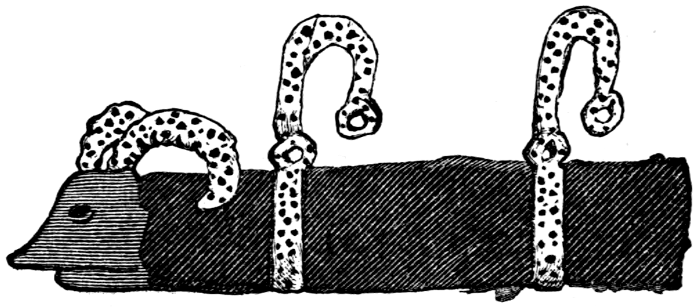
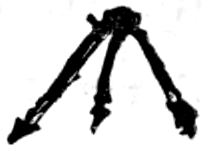
[378]Memorandum:—the battering ramme, the armes of Bertie, hung in equilibrio in an engine they call the triangles—from Mr. Nicolas Mercator: vide Bertie's coate in primo volumine[379]. See[380] the old glasse windowes in Aldersgate street—from Mr. <Edward> Bagshawe.
Henry Billingsley (15..-1606).
[381]Sir Henry Billingsley[AQ], knight.—On the north side of the chancell of St. Katharine Coleman church London at the upper end is this inscription, viz:—
Here lieth buried the body of Elizabeth, late the wife of Henry Billingsley, one of the Queene's majestie's customers of her port of London, who dyed the 29th day of July in the yeare of our Lord God 1577.
In obitum ejus.
Stat sua cuique dies atque ultima funeris hora Cum Deus hinc et mors invidiosa vocant; Nec tibi nec pietas tua vel forma, Elizabetha, Praesidium leto[382] ne trahereris erat. Occidis exactis ternis cum conjuge lustris, At septem vitae lustra fuere tuae. Fecerat et proles jam te numerosa parentem, Filiolae trinae, caetera turba mares. Undecimo partu cum mors accessit et una Matrem te et partum sustulit undecimum— Scilicet ex mundo, terrena ex fece, malisque, Sustulit; at superis reddidit atque Deo. Est testis sincera fides, testis tua virtus, Grata viro virtus, grata fidesque Deo. * * * * * * * Quem posuit tumulum tibi conjux charus, eodem In tumulo condi mortuus ipse petit.
<Vide> the Register book <of the church>.
Memorandum:—Billingsley (a village) is in the countie of Salop. 'Tis a Shropshire familie; but the village now is one Mr. Norton's.
This Sir Henry Billingsley was one of the learnedst citizens that London has bred. This was he that putt forth all Euclid's Elements in English with learned notes and preface of Mr. John Dee, and learned men say 'tis the best Euclid. He had been sheriff and Lord Mayor of the city of London. His howse was the faire howse in Fenchurch street where now Jacob Luce lives, a merchant, of of whom quaere +. Vide in Fuller's Worthies and Stowe's Survey. His Euclid was printed at London by John Day, 1570.
'The Translator to the Reader—Wherfore considering the want and lack of such good authors hitherto in our English tongue, lamenting also the negligence and lacke of zeale to their countrey in those of our nation to whom God hath given both knowledge and also abilitie to translate into our tongue and to publish abroad such good authors and bookes: Seeing moreover that many good witts, both of gentlemen and others of all degrees, much desirous and studious of these artes,—I have for their sakes with some chardge and great travaile faithfully translated into our vulgar tounge and set abroad in print this booke of Euclid wherunto I have added plaine declarations and examples, manifold additions, scholies, annotations, and inventions which I have gathered.'—He promises (here) some more translations and sayes that in religion he hath alreadie don, quaere.
Memorandum P. Ramus in his Scholia's sayes that the reason why mathematiques did most flourish in Germanie was that the best authors were rendred into their mother tongue, and that publique lectures of it were also read in their owne tongue—quod nota bene.
Memorandum when I was a boy, one Sir ... Billingsley had a very pleasant seate with a faire[383] oake-wood adjoyning to it, about a mile ½[384] east of Bristoll—quaere if[385], etc.
Vide de Sir Thomas Billingsley, pag. <44b>[386]; who was gentleman of the horse to Richard, earl of Dorset. He managed the great horse best of any man in England. He taught the Prince Elector and brothers to ride. Quaere if descended hence.
In those dayes[387] merchants travelled much abroad into Italie, Spaine, etc. Quaere Mr. Abraham Hill of what company he was. Probably good memorialls may be there found of his generous and publique spirit. Respondet:—He was of the Goldsmiths' Company, where is a good picture of him.
R. B., i.e. Robert[388] Billingsley, teaches Arithmetique and Mathematiques at ... in.... He hath printed a very pretty little booke of arithmetique and algebra, London (scilicet, <The> Idea of Arithmetic): was Sir Henry's great grandson—from Mr. Abraham Hill, Regiae Societatis Socius.
[389]In the table of benefactors in the church of St. Catherine Colman, viz.—
'1603 {Dame Elizabeth} Billingsley did will to the poor 1s. per {Sir Henry }
weeke for ever and 200li. which their heires etc. have not payd'—
The minister here, Mr. Dodson, sayes that it was not payd because the parish did not find-out in due time land to make a purchase of.
Many yeares since Mr. Abraham Hill, Regiae Societatis Socius, citizen, told me that Sir Henry Billingsley was of the Goldsmiths' Company, and that his picture was in Goldsmiths' Hall, which I went lately to see. No picture of him, and besides the clarke of the Company told me that he is sure he was never of that Company. But Mr. Hill tells me since that in Stowe's Survey you may see of what Company all the Lord Mayers were, which see[390] and tell me.
[391]Sir H. Billingsley—Mr. Leeke, mathematician, saith that he was of the company of goldsmiths, quaere. Quaere the clarke of the company: vide register booke. Vide Heralds' Office (Salop, and neer Bristowe). Vide Fuller's Worthyes where he mentions the Lord Mayers.
[392]Ex registro <of St. Catherine Coleman>:—Sir Henry Billingsley, knight, buried in the vault under his pewe in the church of St. Catherine Coleman, London, December the 18th, 1606. I find by the register that he had two more wives besides Elizabeth mentioned in the inscription; his second was the lady Trapps; third,....
Memorandum his house (which is a very faire one), which is neer the church, is still remayning untoucht by the fire. In the parlour windowe are scutchions of his family, which gett. There now lives Mr. Lucy[393], a great merchant.
He was sheriff of the citie of London anno Domini <1584>, reginae Elizabethae 26; he was Lord Mayor of the city of London anno Domini <1596>, reginae Elizabethae 38—Sir Thomas Skinner served one part and Sir Henry Billingsley the other:—Baker's Chronicle, reigne queen Elizabeth.
Sir Henry Billingsley, maried ... Lord Mayer | | +--------------------------+----------------------------+ | | | 1. Sir Henry Billingsley, 2. William Billingsley, m. ... 3. Thomas[396] of Sysam in | Glocestershire, | filius et haeres. +--------------+--------------+ | | 1. Henry Billingsley, m. ... 2. Thomas of Graye's Inne | | +-------+-------+ | | 1. Blanch 2. Elizabeth
[397]Sir Henry Billingsley<'s life is> already donne[398]. Friar Whitehead[AR], of Austin Friars (now Wadham College), did instruct him. He kept him at his house and there I thinke he dyed.
Notes.
Martin Billingsley.
[399]Mr. Martin Billingsley (captain <Edward> Shirburne knew him) was a writing master in London. He printed an excellent copie-booke (quaere if he descended from this[400]): vide his scutcheon[401] above his picture before his booke.
[402]Martin Billingsley, who made the copie booke, 1623, port.[403] ut in margine, '..., a cross between 4 lions rampant ..., 5 mullets ... on the cross.'
Richard Billingsley.
'An Idea of Arithmetick, at first designed for the use of the free-schoole at Thurlow in Suffolk, by R. B. schoolmaster there': stitch't 8vo, 3 sheetes, London, 'printed by J. Flesher, and are to be sold by W. Morden booke-seller in Cambridge, 1655.'
Thomas Billingsley (obiit 167..).
[406]Sir Thomas Billingsley was the best horseman in England, and out of England no man exceeded him.
He taught this[407] earle <of Dorset> and his 30 gentlemen to ride the great horse. He taught this[408] Prince Elector Palatine of the Rhine and his brothers.
He ended his dayes at the countesse of Thanet's (daughter and co-heire of Richard, earl of Dorset) ... 167-; dyed praying on his knees.
John Birkenhead (1615-1679).
[409]Sir John Birkenhead, knight, was borne at Nantwych[410] in Cheshire. His father was a sadler there, and he had a brother a sadler, a trooper in Sir Thomas Ashton's regiment, who was quartered at my father's, who told me so.
He went to Oxford university at ... old, and was first a servitor of Oriall colledge: vide Antiq. Oxon.[411] Mr. Gwin[412], minister of Wilton, was his contemporary there, who told me he wrote an excellent hand, and, in 163[7 or 8] when William Laud, archbishop of Canterbury, was last there, he had occasion to have some things well transcribed, and this Birkenhead was recommended to him, who performed[413] his businesse so well, that the archbishop recommended him to All Soules' college to be a fellow, and he was accordingly elected[414]. He was scholar enough, and a poet.
After Edgehill fight, when King Charles I first had his court at Oxford, he was pitched upon as one fitt to write the Newes, which Oxford Newes was called Mercurius Aulicus, which he writt wittily enough, till the surrender of the towne (which was June 24, 1646). He left a collection of all his Mercurius Aulicus's and all his other pamphletts, which his executors (Sir Richard Mason and Sir Muddiford Bramston) were ordered by the king to give to the Archbishop of Canterbury's library.
After the surrender of Oxford, he was putt out of his fellowship by the Visitors, and was faine to shift for himselfe as well as he could. Most part of his time he spent at London, where he mett with severall persons of quality that loved his company, and made much of him.
He went over into France, where he stayed some time, I thinke not long. He received grace there from the dutches of Newcastle, I remember he tolde me.
He gott many a fourty shillings (I beleeve) by pamphletts, such as that of 'Col. Pride,' and 'The Last Will and Testament of Philip earle of Pembroke,' &c.
At the restauration of his majestie he was made Master of the Facultees, and afterwards one of the Masters of Requests. He was exceedingly confident[415], witty, not very gratefull to his benefactors, would lye damnably. He was of midling stature, great goggli eies, not of a sweet aspect.
He was chosen a burghes of Parliament at Wilton in Wiltshire, anno Domini 166<1>, i.e. of the King's long parliament. Anno 167<9> upon the choosing of this Parliament[416], he went downe to be elected, and at Salisbury heard[417] how he was scorned and mocked at Wilton (whither he was goeing) and called Pensioner, etc.—
[Vendidit hic auro patriam, dominumque potentem Imposuit; leges fixit pretio atque refixit.
Virg. Aeneid, lib. vi. 621.
—This was Curio: vide Servium de hoc]—he went not to the borough where he intended to stand; but returned to London, and tooke it so to heart that he insensibly decayed and pined away; and so, December ...[XXI.], 1679, dyed at his lodgeings in Whitehall, and was buried Saturday, December 6, in St. Martyn's churchyard[XXII.] in-the-Fields, neer the church, according to his will and testament. His executors intend to sett up an inscription for him against the church wall.
He had the art of locall memory; and his topiques were the chambers, &c., in All Soules colledge (about 100), so that for 100 errands, &c., he would easily remember.
[419]He was created Dr. of LL.; had been with the king[420]. His library was sold to Sir Robert Atkins for 200 li. His MSS. (chiefly copies of records) for 900 li.
Henry Birkhead (1617-1696).
[421]My old acquaintance, Dr. Henry Birkhed, formerly fellow of your college[422] (but first was commoner of Trinity College Oxon) was an universally <belove>d man.
He had his schoole education under Mr. Farnary[423] and <was his> beloved disciple.
He died at the Bird-cage (at his sister's, Mris Knight, the famous singer) in St. James's parke, <on> Michaelmas-eve 1696, aged about 80.
He was borne in London <at the> Paul-head tavern (which his father kept) in Paule's chaine <in> St. Paul's church-yard anno 1617, baptized the 25 of September. John Gadbury haz his nativity from him.
I will aske his sister (Mris Knight) for a very ingeniose diatribe that he wrote on Martialis epigram. lib. <xi. 94. 8>,
jura, verpe, per Anchialum,
which he haz cleared beyond his master Farnaby, Scaliger, or any other. 'Scaliger,' he sayd, 'speakes the truth, but not the whole truth.' 'Tis pity it should be lost, and I would reposit it in the Museum.
I gave my Holyoke's dictionary to the Museum. Pray looke on the blank leaves at the end of it, and you will find a thundering copie of verses that he gave me, in the praise of this king[424] of France. Now he is dead, it may be look't-upon.
Richard Blackbourne (1652-17..?).
[425]Richard Blackburne, Londinensis, was of Trinity College, Cambridge, M.A. Tooke his M.D. degree at Leyden about 5 or 6 yeares since. He practises but little; studies much. A generall scholar, prodigious memorie, sound judgment; but 30 yeares old now.
John Blagrave (1550-1611).
In MS. Aubr. 8 (Aubrey's Lives of English Mathematicians), fol. 76, 'Mr. John Blagrave of Reding' is noted as a life to be written, and the coat is given in trick 'or, on a bend sable, 3 greaves argent.' In the Index (fol. 8) at the beginning of the same volume he is noted:—
'John Blagrave of Reding, vide his will, quaere Mr. Morden.'
Robert Blake (1599-1657).
[426]... Blake, admirall, was borne at ... in com. Somerset; was[427] of Albon-hall, in Oxford. He was there a young man of strong body, and good parts. He was an early riser and studyed well, but also tooke his robust pleasures of fishing, fowling, &c. He would steale swannes—from H. Norborne, B.D., his contemporary there[428].
He served in the House of Commons for....[429] Anno Domini <1649> he was made admirall. He did the greatest actions at sea that ever were done, viz.,....
... Blake obiit anno Domini <1657> and was buried in King Henry 7th's chapell; but upon the returne of the king, his body was taken up again and removed by Mr. Wells' occasion, and where it is now, I know not. Quaere Mr. Wells of Bridgewater.
Vide Diurnalls, and Rushworth's History; vide Anthony Wood's Hist. <et Antiq. Oxon.>.
Sir Henry Blount (1602-1682).
[430]Sir Henry Blount, Tittinghanger, natus Dec. 15, 1602, 9h P.M.
[433]Sir Henry Blount[AS], knight:—he was borne (I presume) at Tittinghanger in the countie of Hertford. It was heretofore the summer seate of the Lord Abbot of St. Alban's.
He was of Trinity College in Oxford[434], where was a great acquaintance[435] between him and Mr. Francis Potter. He stayed there about <four> yeares. From thence he went to Grayes Inne, where he stayd ... and then sold his chamber there to Mr. Thomas Bonham[AT] (the poet) and travelled—voyage into the Levant. May 7, 1634, he embarqued at Venice for Constantinople: vide his Voyage into the Levant, printed London 16—, in 4to. He returned....
He was pretty wild when young, especially addicted to common wenches. He was a 2d brother.
He was a gentleman pensioner to King Charles I, on whom he wayted (as it was his turne) to Yorke (when the King deserted the Parliament); was with him at Edge-hill fight; came with him to Oxford; and so returned to London; walkt[436] into Westminster hall with his sword by his side; the Parliamentarians all stared upon him as a Cavaleer, knowing that he had been with the King: was called before the House of Commons, where he remonstrated to them he did but his duty, and so they acquitted him.
In these dayes he dined most commonly at the Heycock's[437] ordinary, neer the Pallzgrave-head taverne, in the Strand, which was much frequented by Parliament-men and gallants. One time colonel Betridge being there (one[438] of the handsomest men about the towne) and bragged much how the woemen loved him; Sir H. Blount did lay a wager of ... with him that let them two goe together to a bordello; he only (without money) with his handsome person, and Sir Henry with a XXs. piece on his bald crowne, that the wenches should choose Sir Henry before Betridge; and Sir H. won the wager. E<dmund> W<yld>, esq., was one of the witnesses.
Memorandum:—there was about 164.. a pamphlet (writt by Henry Nevill, esq., ἀνονυμῶς) called The Parliament of Ladies, 3 or 4 sheets in 4to, wherin Sir Henry Blount was first to be called to the barre for spreading abroad that abominable and dangerous doctrine that it was far cheaper and safer to lye with common wenches[439] then with ladies of quality[440].
☞ His estate left him by his father was 500 li. per annum, which he sold to ... (quaere) for an annuitie of 1000 li. per annum in anno Domini 16..; and since his elder brother dyed.
Anno Domini 165<[*½]> he was made one of the comittee for regulating the lawes. He was severe against tythes, and for the abolishing them, and that every minister should have 100 li. per annum and no more.
Since he was ... year old he dranke nothing but water or coffee. 1647 or therabout, he maryed to Mris [Hester[d]] Wase, [daughter of Christopher Wase[441]], who dyed 1679; by whom he haz two sonnes, ingeniose young gentlemen. Charles Blount (his second son) hath writt Anima Mundi, 8vo, 167<9> (burnt by order of the bishop of London) and of Sacrifices, 8vo.
I remember twenty yeares since he inveighed much against sending youths to the universities—quaere if his sons there—because they learnt there to be debaucht; and that the learning that they learned there[442] they were to unlearne againe, as a man that is buttond or laced too hard, must unbutton before he can be at his ease. Drunkennesse he much exclaimed against, but he allowed wenching. When coffee first came-in he was a great upholder of it, and hath ever since been a constant frequenter of coffee houses, especially Mr. ... Farre at the Rainbowe by Inner Temple Gate, and lately John's coffee house in Fuller's rents.
☞ The first coffee house in London[XXIII.] was in St. Michael's Alley in Cornehill, opposite to the Church; which was sett up by one ... Bowman (coachman to Mr. Hodges, a Turkey merchant, who putt him upon it) in or about the yeare 1652. 'Twas about 4 yeares before any other was sett up, and that was by Mr. Far. Jonathan Paynter, opposite to St. Michael's Church, was the first apprentice to the trade, viz. to Bowman. Memorandum:—the Bagneo, in Newgate Street, was built and first opened in Decemb. 1679: built by ... (Turkish merchants).
He is a gentleman of a very clear judgement, great experience, much contemplation, not of very much reading, of great foresight into government. His conversation is admirable. When he was young, he was a great collector of bookes, as his sonne is now.
He was heretofore a great shammer, i.e. one that tells falsities not to doe any body any injury, but to impose on their understanding:—e.g. at Mr. Farre's; that at an inne (nameing the signe) in St. Alban's, the inkeeper had made a hogs-trough of a free-stone coffin; but the pigges, after that, grew leane, dancing and skipping, and would run up on the topps of the houses like goates. Two young gentlemen that heard Sir H. tell this sham so gravely, rode the next day to St. Alban's to enquire: comeing there, nobody had heard of any such thing, 'twas altogether false. The next night as soon as the<y> allighted, they came to the Rainbowe and found Sir H., looked louringly on him, and told him they wonderd he was not ashamed to tell such storys as, &c., 'Why, gentlemen,' (sayd Sir H.) 'have you been there to make enquiry?' 'Yea,' sayd they. 'Why truly, gentlemen,' sayd Sir H. 'I heard you tell strange things that I knew to be false. I would not have gonne over the threshold of the dore to have found you in a lye:' at which all the company laught at the two young gentlemen.
He was wont to say that he did not care to have his servants goe to church, for there servants infected one another to goe to the alehouse and learne debauchery; but he did bid them goe to see the executions at Tyburne, which worke more upon them then all the oratory in the sermons.
His motto over his printed picture is that which I have many yeares ago heard him speake of, viz.:—Loquendum est cum vulgo, sentiendum cum sapientibus.
He is now (1680) neer or altogether 80 yeares, his intellectualls good still, and body pretty strong.
This last weeke[443] of Sept. 1682, he was taken very ill at London, and his feet swelled; and removed to Tittinghanger.
Notes.
Edmund Bonner (1495-1569).
[444]Mr. Steevens[445], ... whom I mett lately accidentally, informed me thus:—that bishop Bonner was of Broadgates hall; that he came thither a poor boy, and was at first a skullion boy in the kitchin, afterwards became a servitor, and so by his industry raysed to what he was.
When he came to his greatnes, in acknowledgement from whence he had his rise, he gave[446] to the kitchin there a great brasse-pott, called Bonner's pott, which was taken away in the parliament time. He has shewed the pott to me, I remember. It was the biggest, perhaps, in Oxford: quaere the old cooke how much it contayned.
John Booker (1601/2-1667).
[447]John Booker, astrologer, natus Manchester, March 23, 1601, 20h 10´ P.M.
James Bovey (1622-16..).
James Bovey, esq., was the youngest son of Andrew Bovey, merchant, cash-keeper to Sir Peter Vanore, in London.
He was borne in the middle of Mincing Lane, in the parish of Saint Dunstan's in the East, London, anno 1622, May 7th, at six a clock in the morning. Went to schoole at Mercers Chapell, under Mr. Augur. At 9 sent into the Lowe Countreys; then returned, and perfected himselfe in the Latin and Greeke. <At> 14, travelled into France and Italie, Switzerland, Germany, and the Lowe Countreys. Returned into England at 19; then lived with one Hoste, a banquier, 8 yeares, was his cashier 8 or 9 yeares. Then traded for himselfe (27) till he was 31; then maried the only daughter of William de Vischer, a merchant; lived 18 yeares with her, then continued single. Left off trade at 32, and retired to a countrey life, by reason of his indisposition, the ayre of the citie not agreing with him. Then in these retirements he wrote Active[450] Philosophy, (a thing not donne before) wherin are enumerated all the Arts and Tricks practised in Negotiation, and how they were to be ballanced by counter-prudentiall rules.
Whilest he lived with Mr. Hoste, he kept the cash of the ambassadors of Spaine that were here; and of the farmers, called by them Assentistes, that did furnish the Spanish and Imperiall armies of the Low-Countreys and Germany; and also many other great cashes, as of Sir Theodore Mayern, etc.; his dealing being altogether in money-matters: by which meanes he became acquainted with the ministers of state both here and abroad.
When he was abroad, his chiefe employment was to observe the affaires of state and their judicatures, and to take the politique surveys in the countreys he travelled thorough, more especially in relation to trade. He speakes[451] the Low-Dutch, High-Dutch, French, Italian, Spanish and Lingua Franco, and Latin, besides his owne.
When he retired from businesse he studied the Lawe-Merchant, and admitted himselfe of the Inner Temple, London, about 1660. His judgment haz been taken in most of the great causes of his time in points concerning the Lawe-Merchant. As to his person he is about 5 foot high, slender[452], strait, haire exceeding black and curling at the end, a dark hazell[453] eie, of a midling size, but the most sprightly that I have beheld. Browes and beard of the colour as his haire. A person of great temperance, and deepe thoughts, and a working head, never idle. From[454] 14 he had a candle burning by him all night, with pen, inke, and paper, to write downe thoughts as they came into his head; that so he might not loose a thought. Was ever a great lover of Naturall Philosophie. His whole life has been perplex't in lawe-suites, (which haz made him expert in humane affaires), in which he alwaies over-came. He had many lawe-suites with powerfull adversaries; one lasted 18 yeares. Red-haired men never had any kindnesse for him. He used to say:—
In rufa pelle non est animus sine felle.
In all his travells he was never robbed.
He has one son, and one daughter who resembles him.
From 14 he began to take notice of all prudentiall rules as came in his way, and wrote them downe, and so continued till this day, Sept. 28, 1680, being now in his 59th yeare.
For his health he never had it very well, but indifferently, alwaies a weake stomach, which proceeded from the agitation of the braine. His dyet was alwayes fine diet: much chicken[455].
He wrote a Table of all the Exchanges in Europe.
[456]He hath writt (which is in his custodie, and which I have seen, and many of them read) these treatises, viz.
1. The Characters, or Index Rerum <etc.[457]>
[458]A Catalogue of the treatises written of Active Philosophy by James Bovey, of the Inner Temple, esquire, 1677.
The Characters, or Index Rerum: in 4 tomes.
The Introduction to Active Philosophy.
The Art of Building a Man: or Education.
The Art of Conversation.
The Art of Complyance.
The Art of Governing the Tongue.
The Art of Governing the Penn.
The Government of Action.
The Government of Resolution.
The Government of Reputation.
The Government of Power: in 2 tomes.
The Government of Servients.
The Government of Subserviency.
The Government of Friendshipp.
The Government of Enmities.
The Government of Law-suites.
The Art of Gaining Wealth.
The Art of Buying and Selling[459].
The Art of Preserving Wealth.
The Art of Expending Wealth.
The Government of Secresy.
The Government of Amor Conjugalis: in 2 tomes.
Of Amor Concupiscentiae.
The Government of Felicity.
The Lives of Atticus, Sejanus, Augustus.
The Causes of the Diseases of the Mind.
The Cures of the Mind, vizt. Passions, Diseases, Vices, Errours, Defects.
The Art of Discerning of Men.
The Art of Discerning a Man's selfe.
Religion from Reason: in 3 tomes.
The Life of Cum-fu-zu, soe farr wrote by J. B.
The Life of Mahomett, wrot by Sir Walter Raleigh's papers, with some small addition for methodizing the same.
[460]I have desired him to give these MSS. to the library of the Royal Society.
He made it his businesse[461] to advance the trade of England, and many men have printed his conceptions.
Note.
Richard Boyle, earl of Cork (1566-1643).
[462]Earl of Corke:—vide countesse of Warwick's funerall sermon, 2 or 3 shops[463] within Paul's churchyard.
[464]Earl of Corke[AV]—Thomas, earl of Strafford made him disgorge 1500 li. per annum, which he restored to the church—<from> Mr. ... Anderson.
Earl of Corke bought of captaine Horsey fourtie ploughlands in Ireland for fourtie pounds. (A. Ettrick assures me, 'I say againe fourtie ploughlands.')
The queen gave Lismore to Sir Walter Raleigh, and ... to Sir John Anderson, etc. to etc., eâ intentione to plant them, which they did not; and were not planted till since the last rebellion—quaere Mr. Anderson, who sayes that Ireland could not be secure till it was enough peopled with English.
My lady Petty sayes he had a wife or two before, and that he maried Mris. Fenton[AW] without her father's consent—(quaere Secretary Fenton's Christian name[AX]).
[465]... Boyle, the first earle of Corke:—the countesse of Thanet, his great-grand-daughter, daughter to this earle of Corke and Burlington, haz told me that her father has a booke in folio—thick—of her grandfather's writing, <giving> the place, day, and hour of birth, and by what steps, wayes, and degrees he came to his greatnes. Which she will doe her endeavour to gett me an extract of it, but it is in Ireland and (I thinke) must be kept there, and is an heir-loome to the family.
<Excerpts from Anthony Walker's Sermon.>
[466]Of Richard Boyle, first earl of Corke, and his seventh daughter, Mary, countess of Warwick.
'The Virtuous Woman found: Being a Sermon preached at Felsted, in Essex, at the Funerall of the most excellent and religious lady, the Right honourable MARY Countesse Dowager of Warwick. By Anthony Walker, D.D. rector of Fyfield, in the sayd countie. The 2d Edition corrected. Printed at London, for Nath. Ranew, at the King's Arms, in St. Paul's Church-yard, 1680.' (The Epistle dedicatory is dated May 27, 1678.)
Pag. 44.—'She was truly excellent and great in all respects: great in the honour of her birth, being born a lady and a virtuosa both; seventh daughter of that eminently honourable, Richard, the first earle of Cork; who being born a private gentleman, and younger brother of a younger brother, to no other heritage than is expressed in the device and motto, which his humble gratitude inscribed on all the palaces he built,
God's Providence, mine Inheritance;
by that Providence, and his diligent and wise industry, raised such an honour and estate, and left such a familie, as never any subject of these three kingdomes did, and that with so unspotted a reputation of integrity that the most invidious scrutiny could find no blott, though it winnowed all the methods of his rising most severely, which our good lady hath often told me with great content and satisfaction.
This noble lord, by his prudent and pious consort, no lesse an ornament and honour to their descendants than himself, was blessed with five sonnes, (of which he lived to see four lords and peeres of the kingdome of Ireland,[467] and a fifth, more than these titles speak, a soveraigne and peerlesse in a larger province,—that of universall nature, subdued and made obsequious to his inquisitive mind), and eight daughters. And that you may remark how all things were extraordinary in this great personage, it will, I hope, be neither unpleasant, nor impertinent, to add a short story I had from our lady's own mouth:—Master Boyl, after earle of Cork (who was then a widdower), came one morning to waite on Sir Jeofry Fenton, at that time a great officer[XXIV.] of state in that kingdome of Ireland, who being ingaged in business, and not knowing who it was who desired to speake with him, a while delayed him access; which time he spent pleasantly with his young daughter in her nurse's arms. But when Sir Jeoffry came, and saw whom he had made stay somewhat too long, he civilly excused it. But master Boyl replied, he had been very well entertayned; and spent his time much to his satisfaction, in courting his daughter, if he might obtaine the honour to be accepted for his son-in-lawe. At which Sir Jeoffry, smiling (to hear one who had been formerly married, move for a wife carried in arms, and under two years old,) asked him if he would stay for her? To which he frankly answered him he would, and Sir Jeoffry as generously promised him he should then have his consent. And they both kept their words honourably. And by this virtuous lady he had thirteen children, ten of which he lived to see honourably married, and died a grandfather by the youngest of them.
Nor did she derive less honour from the collateral, than the descending line, being sister by soul and genius, as well as bloud, to these great personages, whose illustrious, unspotted, and resplendent honour and virtue, and whose usefull learning and accurate pens, may attone and[468]expiate, as well as shame, the scandalous blemishes of a debauched, and the many impertinencies of a scribling, age:—
(1), Richard, the truly right honourable, loyal, wise, and virtuous, earl of Burlington and Cork, whose life is his fairest and most laudable character;
(2), the right honourable Roger earle of Orery, that great poet, great statesman, great soldier, and great every-thing which merits the name of great or good;
(3), Francis lord Shannon, whose Pocket Pistol, as he stiles his book, may make as wide breaches in the walls of the Capitol, as many canons;
(4), and that honourable and well known name Robert Boyl, esquier, that profound philosopher, accomplished humanist, and excellent divine, I had almost sayd lay-bishop, as one hath stiled Sir Henry Savil; whose works alone may make a librarie[XXV.].
The female branches also (if it be lawfull so to call them whose virtues were so masculine, souls knowing no difference of sex) by their honours and graces (by mutuall reflections) gave, and received lustre, to, and from, her:—
the eldest of which, the lady Alice, was married to the lord Baramore;
the second, the lady Sarah, to the lord Digby, of Ireland;
the third, the lady Laetitia, to the eldest son of the lord Goring, who died earle of Norwich;
the fourth, the lady Joan, to the earle of Kildare, not only primier earle of Ireland, but the ancientest house in Christendome of that degree, the present earle being the six and twentieth, or the seaven and twentieth, of lineal descent: and, as I have heard, it was that great antiquary King Charles the First his observation, that the three ancientest families of Europe for nobility, were the Veres in England, earls of Oxford, and the Fitz-Geralds in Ireland, earls of Kildare, and Momorancy in France: 'tis observable[469]that the present earle of Kildare is a mixture of blood of Fitz-Geralds and Veres;
the fifth, the lady Katharine, who was married to the lord viscount Ranelaugh[XXVI.], and mother to the present generous earle of Ranelaugh, of which family I could have added an eminent remark, I meet with in Fuller's "Worthies;" this lady's character is so signalized by her known merit among all persons of honour, that as I need not, so I dare not, attempt beyond this one word—she was our lady's Friend-Sister;
the sixth, the lady Dorothy Loftus;
the seaventh, (the number of perfection) which shutt-up and crown'd this noble train (for the eighth, the lady Margaret, died unmaried), was our excellent lady Mary, married to Charles, earle of Warwick; of whom, if I should use the language of my text, I should neither despair their pardon, nor fear the reproach of rudeness—Many daughters, all his daughters, did virtuously but thou—Prov. xxxi. 29, 30, 31.
----But shee[XXVII.] needed neither borrowed shades, nor reflexive lights, to set her off, being personally great in all naturall endowments and accomplishments of soul and body, wisdome, beautie, favour, and virtue;
great by her tongue, for never woman used one better, speaking so gracefully, promptly, discreetly, pertinently, holily, that I have often admired the edifying words that proceeded from her mouth;
great by her pen, as you may (ex pede Herculem) discover by that little[XXVIII.] tast of it the world hath been happy in, the hasty fruit of one or two interrupted houres after supper, which she professed to me, with a little regret, when she was surprised with it's sliding into the world without her knowledge, or allowance, and wholly beside her expectation;
great by being the greatest mistresse and promotress, not to say the foundress and inventress, of a new science—the art of obliging; in which she attain'd that sovereign perfection, that she reigned over all their hearts with whom she did converse;
great in her nobleness of living and hospitality;
great in the unparallelld sincerity of constant, faithfull, condescending friendship, and for that law of kindness which dwelt in her lips and heart;
great in her dexterity of management;
great in her quick apprehension of the difficulties of her affaires, and where the stress and pinch lay, to untie the knot, and loose and ease them;
great in the conquest of herselfe;
great in a thousand things beside, which the world admires as such: but she despised them all, and counted them but loss and dung in comparison of the feare of God, and the excellency of the knowledge of Christ Jesus.'
Notes.
Robert Boyle (1626/7-1691).
[470]Mr. Robert Boyle;—vide Oliver Hill's ..., where he is accused of grosse plagiarisme. Dr. <Robert> Wood went to schoole with him at Eaton Colledge.
[471]Mr. R. Boyle, when a boy at Eaton <was> verie sickly and pale—from Dr. <Robert> Wood, who was his schoole-fellow.
[472]The honourable Robert Boyle[AZ] esq., the <fifth> son of Richard Boyle, the first earle of Corke, was borne at Lismor[XXIX.] in the county of Corke, the <25> day of <January> anno <1626/7>.
He was nursed by an Irish nurse, after the Irish manner, wher they putt the child into a pendulous satchell (insted of a cradle), with a slitt for the child's head to peepe out.
He learn't his Latin.... Went to the university of Leyden. Travelled France, Italy, Switzerland. I have oftentimes heard him say that after he had seen the antiquities and architecture of Rome, he esteemed none[473] any where els.
He speakes Latin very well, and very readily, as most men I have mett with. I have heard him say that when he was young, he read over Cowper's dictionary: wherin I thinke he did very well, and I beleeve he is much beholding to him for his mastership of that language.
His father in his will, when he comes to the settlement and provision for his son Robert, thus,—
Item, to my son Robert, whom I beseech God to blesse with a particular blessing, I bequeath, &c.
Mr. R. H.[474], who has seen the rentall, sayes it was 3000 li. per annum: the greatst part is in Ireland. His father left him the mannor of Stalbridge in com. Dorset, where is a great freestone house; it was forfeited by the earle of Castlehaven.
He is very tall (about six foot high) and streight, very temperate, and vertuouse, and frugall: a batcheler; keepes a coach; sojournes with his sister, the lady Ranulagh. His greatest delight is chymistrey. He haz at his sister's a noble laboratory, and severall servants (prentices to him) to looke to it. He is charitable to ingeniose men that are in want, and foreigne chymists have had large proofe of his bountie, for he will not spare for cost to gett any rare secret. At his owne costs and chardges he gott translated and printed the New Testament in Arabique[BA], to send into the Mahometan countreys. He has not only a high renowne in England, but abroad; and when foreigners come to hither, 'tis one of their curiosities to make him a visit.
Notes.
William Brereton, 3rd baron, (1631-1680).
[475]William, lord Brereton, obiit March 17, 1680[476]; buried at St. Martin's-in-the-fields: scripsit Origines Moriens in Latin verse.
[477]William, lord Brereton[BB] of <Leighlin>:—this vertuous and learned lord (who was my most honoured and obligeing friend) was educated at Breda, by John Pell, D.D., then Math. Professor there of the Prince of Orange's 'ilustrious schoole.' Sir George Goring, earl of Norwich (who was my lord's grandfather), did send for him over, where the <Doctor> (then Mr. John Pell) tooke great care of him, and made him a very good Algebrist.
He hath wrote a poem called Origines Moriens, a MS.
Obiit March 17, 1679/80, London, and is buried at St Martin's church in the fields.
He was an excellent musitian, and also a good composer.
Note.
Edward Brerewood (1565-1613).
He was of Brasen-nose College in Oxon. My old cosen Whitney[BD], fellow there long since, told me, as I remember, that his father was a citizen of W<est> Chester; that (I have now forgot on what occasion, whether he had outrun the exhibition from his father, or what), but he was for some time in straightes in the College; that he went not out of the College gates in a good while, nor (I thinke) out of his chamber, but was in slip-shoes, and wore out his gowne and cloathes on the bord and benches of his chamber, but profited in knowledge wonderfully.
He writ his Logica, and ..., de meteoris, de ponderibus et nummis (which he dedicates to his countryman, Lord Chancellor Egerton, who was no doubt his patron).
He was astronomie professor at Gresham College, London, where he died anno 1613, and was buried in Great Saint Helen's chancell: so Hist. and Antiq. of Oxon., lib. 2. pag. 219 b.
'Tis pity I can pick-up no more of him.
Notes.
Arthur Brett (16..-1677).
<In MS. Aubr. 22 (Aubrey's Collection of Grammars) is a tract of 6 pp.
'A demonstration how the Latine tonge may be learn't'; Lond. 1669; 'by Arthur Bret, M.A. of Ch. Ch. in Oxford and of Westminster Schoole.'>
Henry Briggs (1556-1630/1).
[479]Henry Briggs was borne at ... (vide Anthony Wood's Oxon. Antiquit.: quaere his nephew who is beadle to Stationers' Hall; quaere Vaticinium Carolinum, an English poem).
He was first of St. John's College in Cambridge. Sir Henry Savill sent for him and made him his geometrie professor. He lived at Merton College in Oxon, where he made the dialls at the buttresses of the east end of the chapell with a bullet for the axis.
He travelled into Scotland to comune with the honourable ... lord Nepier[BE] of Marcheston about making the logarithmicall tables.
☞ Looking one time on the mappe of England he observed that the[480] two rivers, the Thames and that Avon which runnes to Bathe and so to Bristowe, were not far distant, scilicet, about 3 miles—vide the mappe. He sees 'twas but about 25 miles from Oxford; getts a horse and viewes it and found it to be a levell ground and[481] easie to be digged. Then he considered the chardge of cutting between them and the convenience of making a mariage between those rivers which would be of great consequence for cheape and safe carrying of goods between London and Bristow, and though the boates[482] goe slowly and with meanders, yet considering they goe day and night they would be at their journey's end almost as soon as the waggons, which often are overthrowne and liquours spilt and other goods broken. Not long after this he dyed and the civill warres brake-out. It happened by good luck that one Mr. Matthewes of Dorset had some acquaintance with this Mr.[483] Briggs and had heard him discourse of it. He was an honest simple man, and had runne out of his estate and this project did much run in his head. He would revive it (or els it had been lost and forgott) and went into the country to make an ill survey of it (which he printed) about anno ..., but with no great encouragement of the countrey or others. Upon the restauration of King Charles II he renewed his designe and applyed himselfe to the king and counsell. His majestie espoused it more (he told me) then any one els. In short, for want of management and his non-ability, it came to nothing, and he is now dead of old age. But Sir Jonas Moore ( ☞ an expert mathematician and a practicall man), being sent to survey the mannor of Dantesey in Wilts (which was forfeited to the crowne by Sir John Danvers his foolery), went to see these streames and distances. He told me the streames were too small unlesse in winter; but if some prince or the Parliament would rayse money to cutt through the hill by Wotton-Basset which is not very high, then there would be water enough and streames big enough. He computed the chardge, which I have forgott, but I thinke it was about 200,000 li.
Insert his letter to Dr. John Pell de logarithmis written anno Dni 1628.
Mr. William Oughtred calls him the English Archimedes in....
An epitaph on H. Briggs among H. Burched's poems[BF].
[484]Mr. Briggs—vide and quaere Dr. Whitchcot, behind St. Lawrence Church; he knew him.——Respondet quod non.
[485]Mr. Norwood to the reader, before his Trigonometrie:—'of the construction and divers applications of Logarithmes Mr. Brigs hath written a booke called Arithmetica Logarithmica, and since again began another excellent worke of like nature entituled Trigonometria Britannica. I have onely seen (in the hands of a friend of his) a printed copie of so much as he had done, namely the tables: but whilest he was in hand with the rest, he departed this life. It was writ in Latin.'
Notes.
Thomas Brightman (1562-1607).
<A Letter from Edward Gibson about Thomas Brightman[BG].>
[486]Hawnes, Dec. 21, <16>81. Sir,
Since you have desired and have been put into an expectation of receiving some information concerning Mr. Brightman, tho I have litle or nothing to serve you and your freind with, I send this to let you know that I find nothing of his arms; that upon the stone is engraven
'Here lyeth the body of Thomas Brightman, deceased, minister of this parish, who dyed Aug. 24, 1607.'
Over his head are these sad rimes (I hope they are Oxford, tho not much for the honour of it).—
Christ cals his churches candlestiks of old, Altho the candlesticks but the candles hold. The lights on them hee calleth angels pure, Not barely candles, for those must endure. Candles when burn't out are soon forgott, But ministers, as angels, must not rot. Sith God doth ministers so eternize, Let not us mortals give them lower prize. And specially to Brightman's recommendacion And bee entomed a light to th' revelation Wee must, wee ought, to make such saints last In whom wee know the times to come and past.
I am, Sir, Yours to serve you, Edw. Gibson.
Dr. Fuller, amongst his Worthies, hath something of Mr. Brightman.
[487]For Mr. John Aubrey: leave this at Mr. Hooke's lodging in Gresham College.
Note.
Alexander Brome (1620-1666).
[488]H. Brome assured me that his brother Alexander was in his accedence at 4 yeares old and a quarter[BH].
Note.
Christopher Brookes (16..-1665).
[489]Christopher Brookes, of Oxford, a mathematical instrument maker. He was sometime manciple of Wadham College: his widowe lived over against the Theatre.
This C. B. printed[490] 1649 an 8vo of about 2 sheetes, scil. 'A new quadrant of more natural easie and manifold performance than any other heretofore extant': but it was his father-in-lawe's[491] invention. I had it from his widow about 1665.
Elizabeth Broughton.
[492]In the Heralds' Office—Heref<ordshire>—
Edward Broughton, m. Isabell, daughter of of Kington, eldest | Rafe Beeston, of son, 1634 | Warwickshire. | Elizabeth.
<Arms[493]:—> 'argent, 2 bars gules, on a canton of the second a cross of the field, a martlet or for difference.'
Mris. Elizabeth Broughton was daughter of ... Broughton of ... in Herefordshire, an ancient family. Her father lived at the mannour-house at Canon-Peon. Whether she was borne there or no, I know not: but there she lost her mayden-head to a poor young fellow, then I beleeve handsome, but, in 1660, a pittifull poor old weaver, clarke of the parish. He had fine curled haire, but gray. Her father at length discoverd her inclinations and locked her up in the turret of the house, but she (like a ...) getts downe by a rope; and away she gott to London, and did sett-up for her selfe.
She was a most exquisite beautie, as finely shaped as nature could frame; and had a delicate witt. She was soon taken notice of at London, and her price was very deare—a second Thais. Richard, earle of Dorset, kept her (whether before or after Venetia[494], I know not, but I guesse before). At last she grew common and infamous and gott[495] the pox, of which she died.
I remember thus much of an old song of those dayes, which I have seen in a collection—'twas by way of litanie—viz.:—
From the watch at twelve a clock, And from Bess Broughton's buttond[496] smock, Libera nos, Domine.
In Ben Johnson's execrations against Vulcan, he concludes thus:—
Pox take thee, Vulcan! May Pandora's pox And all the ills that flew out of her box Light on thee. And if those plagues will not doe Thy wive's pox take thee, and Bess Broughton's too.
—In the first edition in 8vo her name is thus at length.
I see that there have been famous woemen before our times.
Vixêre fortes ante Agamemnona Multi, etc.
Horace, lib. 4, ode 9.
I doe remember her father (1646), neer 80, the handsomest shaped man that ever my eies beheld, a very wise man and of an admirable elocution. He was a committee-man in Herefordshire and Glocestershire. He was commissary to colonel Massey. He was of the Puritan party heretofore; had a great guift in praying, etc. His wife (I have heard my grandmother say, who was her neighbor) had as great parts as he. He was the first that used the improvement of land by soape-ashes when he lived at Bristowe, where they then threw it away.
William Brouncker, 2nd viscount (1620-1684).
[497]William, lord viscount Brouncker of Lions in Ireland: he lived in Oxford when 'twas a garrison for the King: but he was of no university, he told me. He addicted himselfe only to the study of the mathematicks, and was a very great artist in that learning.
His mother was an extraordinary great gamester, and playd all, gold play; she kept the box herselfe. Mr. ... Arundall (brother of the lord Wardour) made a song in characters of the nobility. Among others, I remember this,
Here's a health to my lady Brouncker and the best card in her hand, And a health to my lord her husband, with ne're a foot of land.
He was president of the Royall Society about 15 yeares[BI].
He was ... of the Navy office[BJ].
He dyed April the 5th, 1684; buried the 14th following in the vault which he caused to be made (8 foot long, 4 foot broad, and about 4 foot high) in the middle of the quire of Saint Katharine's, neer the Tower, of which convent he was governour. He gave a fine organ to this church a little before his death; and whereas it was a noble and large choire, he divided <it> in the middle with a good skreen (at his owne chardge), which haz spoiled <it>.
<A note written by him[BK].>
[498]Sir,
These are to give notice that on Friday next the thirtieth day of this instant November, 1677, being St. Andrew's day, the council and officers of the Royal Society are to be elected for the year ensuing. At which election your presence is expected in Gresham Colledge at nine of the clock in the forenoon precisely.
(For John Aubrey, esq.) Brouncker, P. R. S.
Notes.
William Browne (1591-1645).
[499]The earle of Carnarvon does not remember Mr. Brown[BL], and I ask't his lordship lately again if any of his servants doe: he assures me no.
Note.
Robert Burton (1576/7-1639/40).
[500]Memorandum. Mr. Robert Hooke of Gresham College told me that he lay in the chamber in Christ Church that was Mr. Burton's, of whom 'tis whispered that, non obstante all his astrologie and his booke of Melancholie, he ended his dayes in that chamber by hanging him selfe.
Thomas Bushell (1594-1674).
[501]Mr. Thomas Bushell was an ... shire man, borne ...: quaere Thomas Mariet, esq. [He[502] was borne at Marston in ... shire, neer him.]
He was one of the gentlemen that wayted on the Lord Chancellour Bacon. 'Twas the fashion in those dayes for gentlemen to have their suites of clothes garnished with buttons. My Lord Bacon was then in disgrace, and his man Bushell having more buttons then usuall on his cloake, etc., they sayd that his lord's breech made buttons and Bushell wore them—from whence he was called buttond Bushell.
He was only an English scholar, but had a good witt and a working and contemplative head. His lord much loved him.
His genius lay most towards naturall philosophy, and particularly towards the discovery, drayning, and improvement of the silver mines in Cardiganshire[503], etc.
He had the strangest bewitching way to drawe-in people (yea, discreet and wary men) into his projects that ever I heard of. His tongue was a chaine and drewe in so many to be bound for him and to be ingaged in his designes that he ruined a number. Mr. Goodyere of ... in Oxfordshire was undon by him among others; see[504] part iii. pag. 6 b.
He was master of the art of running in debt, and lived so long that his depts were forgott, so that they were the great-grandchildren of the creditors.
He wrote a stich't treatise of mines and improving of the adits to them and bellowes to drive-in wind, which Sir John Danvers, his acquaintance, had, and nayled it[BM] to his parlor-wall at Chelsey, with some scheme, and I beleeve is there yet: I sawe it there about 10 yeares since.
During the time of the civill warres, he lived in Lundy island.
Anno 1647 or 8, he came over into England; and when he landed at Chester, and had but one Spanish threepence (this I had then from ... of Great Tew, to whom he told it), and, sayd he, 'I[505] could have been contented to have begged a penny, like a poor man.' At that time he sayd he owed, I forgett whether it was 50 or sixty thousand pounds: but he was like Sir Kenelm Digby, if he had not 4d., wherever he came he would find respect and credit.
☞ Memorandum, after his master the lord chancellor dyed, he maried ..., and lived at Enston, Oxon; where having some land lyeing on the hanging of a hill faceing the south, at the foot wherof runnes a fine cleare stream which petrifies, and where is a pleasant solitude, he spake to his servant Jack[XXX.] Sydenham to gett a labourer to cleare some boscage which grew on the side of the hill, and also to dig[506] a cavity in the hill to sitt, and read or contemplate. The workman had not workt an hower before he discovers not only a rock, but a rock of an unusuall figure with pendants like icecles as at Wokey hole (Somerset), which was the occasion of making that delicate grotto and those fine walkes.
Here in fine weather he would walke all night. Jack Sydenham sang rarely: so did his other servant, Mr. Batty. They went very gent. in cloathes, and he loved them as his children.
He did not encumber him selfe with his wife, but here enjoyed himselfe thus in this paradise till the war brake out, and then retired to Lundy isle.
He had donne something (I have forgott what) that made him obnoxious to the Parliament or Oliver Cromwell, about 1650; would have been hangd if taken; printed severall letters to the Parliament, etc., dated from beyond sea, and all that time lay privately in his howse in Lambeth marsh where the[507] pointed pyramis is. In the garret there, is a long gallery, which he hung all with[508] black, and had some death's heads and bones painted. At the end where his couch was, was in an old Gothique nich (like an old monument) painted a skeleton incumbent[509] on a matt. At the other end where was his pallet-bed was an emaciated dead man stretched out. Here he had severall mortifying and divine motto's (he imitated his lord[510] as much as he could), and out of his windowes a very pleasant prospect. At night he walkt in the garden and orchard. Only Mr. Sydenham, and an old trusty woman, was privy to his being in England.
He dyed about 1676 or 1677—quaere where—he was 80 yeares of age. [He[511] dyed in Scotland yard neer Whitehall about 1675 or 1677; Mr. Beach the quaker can tell me exactly.]
His entertainment to Queen Henrietta Marie at Enston was in anno 163<6, 23 August>. Insert, i.e. sowe[512] my book (which J. S.[513] gave my grandfather Isaac Lyte) in this place ... Goodall[BN], of Ch. Ch. Oxon, composed[514] the musique; I remember the student of Ch. Ch. which sang the songs (<I> now forgett his name).
[515]Mr. Bushell had a daughter maried to a merchant ... in Bristowe.
He was a handsome proper gentleman when I sawe him at his house aforesayd at Lambith. He was about 70 but I should have not guessed him hardly 60. He had a perfect healthy constitution; fresh, ruddy face; hawke-nosed, and was temperate.
As he had the art of running in dept, so sometimes he was attacqued and throwen into prison; but he would extricate him selfe again straingely.
He[516] died about 3 yeares since (<from> Sir William Dugdale), i.e. about 1677; and was buried at....
Memorandum:—in the time of the civill warres his[517] hermitage over the rocks at Enston were hung with black-bayes; his bed had black curtaines, etc., but it had no bed-postes but hung by 4 cordes (covered with black-bayes) instead of bed postes. When the queen-mother came to Oxon to the king, she either brought (as I thinke) or somebody gave her an entire mummie from Egypt, a great raritie, which her majestie gave to Mr. Bushell, but I beleeve long ere this time the dampnesse of the place haz spoyled it with mouldinesse.
Memorandum:—the grotto[518] belowe lookes just south; so that when it artificially raineth, upon the turning of a cock, you are enterteined with a rainebowe. In a very little pond (no bigger then a basin) opposite to the rock, and hard by, stood (1643, Aug. 8) a Neptune, neatly cutt in wood, holding his trident in his hand, and ayming with it at a duck which perpetually turned round with him, and a spanniel swimming after her—which was very pretty, but long since spoyled. I heare that ... earl of Rochester, in whose possession it now is, doeth keepe it very well in order.
[519]Mr. Bushell was the greatest arts-master to runne in dept (perhaps) in the world. He died one hundred and twenty thousand pounds in dept. He had so delicate a way of making his projects alluring and feazible, profitable, that he drewe to his baites not only rich men of no designe, but also the craftiest knaves in the countrey, such who had cosened and undon others: e.g. Mr. Goodyeere, who undid Mr. Nicholas Mees's father, etc.
Vide Plea for Irish cattle.
Vide[520] φ p. 148, Bushell's rocks.
Quaere his servant John Sydenham for the collection of remarques of severall partes of England, by the said Mr. Bushell.
[521]Memorandum:—his ingeniose invention of aditus with bellowes to bring fresh aire into the mines: quaere Mr. Beech (quaker) if he hath his printed booke or where it may be had. He gave one to Sir John Danvers, which was nayled in the parlour to the wainscot: 'twas but about 8 sheetes.
Quaere Dr. Plott (<author of> Antiquities of Oxonshire) of the booke I gave him some yeares since of the songs and entertainment of Mr. Bushell to queen Henrietta Marie at his rocks. If he had it not, perhaps Anthony Wood had it. Mr. E<dmund> W<yld> sayes that he tap't the mountaine of Snowdon in ... in Wales, which was like to have drowned all the countrey; and they were like to knock him and his men in the head.
Mr. Thomas Bushell lay some time (perhaps yeares) at Capt. Norton's, in the gate at Scotland-yard, where he dyed seven yeares since (now, 1684), about 80 aetat. Buried in the little cloysters at Westminster Abbey: vide the Register. Somebody putt[522] B. B. upon the stone[XXXI.].—From Mr. Beech the quaker.
Notes.
Samuel Butler (1612/3-1680).
[523]Mr. Samuel Butler was[524] borne[XXXII.] at Pershore in Worcestershire, as we suppose: his brother lives there.
He went to schoole at Worcester—from Mr. Hill.
His father <was> a man but of slender fortune, and to breed him at schoole was as much education as he was able to reach to. When[525] but a boy he would make observations and reflections on every thing one sayd or did, and censure it to be either well or ill. He never was at the university, for the reason alledged.
He came when a young man to be a servant to the countesse of Kent, whom he served severall yeares. Here, besides his study, he employed his time much in painting and drawing, and also in musique. He was thinking once to have made painting his profession—from Dr. Duke. His love to and skill in painting made a great friendship between him and Mr. Samuel Cowper (the prince of limners of this age).
He then studyed the Common Lawes of England, but did not practise. He maried a good jointuresse, the relict of ... Morgan, by which meanes he lives comfortably.
After the restauration of his majestie when the court at Ludlowe was againe sett-up, he was then the king's steward at the castle there.
He printed a witty Poeme called Hudibras, the first part anno 166.. which tooke extremely[526]; so that the king and Lord Chancellor Hyde[XXXIII.] would have him sent for, and accordingly he was sent for. They both promised him great matters, but to this day he haz got no employment, only the king gave him ... li.
He is of a middle stature, strong sett, high coloured, a head of sorrell haire, a severe and sound judgement: a good fellowe. He haz often sayd that way (e.g. Mr. Edmund Waller's) of quibling with sence will hereafter growe as much out of fashion and be as ridicule as quibling with words—quod N.B. He haz been much troubled with the gowt, and particularly 1679, he stirred not out of his chamber from October till Easter.
Obiit Anno {Domini 1680}. {circiter 70. }
He dyed of a consumption September 25; and buried 27, according to his appointment[527], in the churchyard of Convent Garden; scil. in the north part next the church at the east end. His feet touch the wall. His grave, 2 yards distant from the pillaster of the dore, (by his desire) 6 foot deepe.
About 25 of his old acquaintance at his funerall. I myself being one [of[528] the eldest, helped to carry[529] the pall with Tom Shadwell, at the foot, Sir Robert Thomas and Mr. Saunders, esq., at the head; Dr. Cole and Dr. Davenant, middle]. His coffin covered with black bayes;
S. B. 1680[530].
[531]Insert in vita Sam. Butler his verses of the Jesuites, not printed, which I gave to you[532] about 12 or 14.
[533]Hudibras unprinted.
No Jesuite ever took in hand, To plant a church in barren land; Or ever thought it worth his while A Swede or Russe to reconcile; For where there is not store of wealth, Souls are not worth the charge of health[534]. Spaine and[d] America had two designes To sell their[535] Ghospell for their mines; For had the Mexicans been poore, No Spaniard twice had landed on their shore. 'Twas gold the Catholick Religion planted, Which, had they wanted gold, they still had wanted.
He had made very sharp reflexions upon the court in his last part[536]:—
Did not the learned Glynne and Maynard To prove true subjects traytors straine hard?
[537]Mr. Saunders (the countesse of Kent's kinsman) sayd that Mr. John Selden much esteemed him for his partes, and would sometimes employ him to write letters for him beyond sea, and to translate for him. He was secretarie to the duke of Bucks, when he was Chancellor of Cambridge. He might have had preferments at first; but he would not accept any but very good ones, so at last he had none at all, and dyed in want.
He painted well and made it (sometime) his profession.
He wayted some yeares on the countess of Kent: she gave her gentlemen 20li. per annum a-piece. Mr. John Selden tooke notice of his partes and would many times make him write or translate for him.
Obiit sine prole.
[538]Samuel Butler writt my lord [John[539]] Rosse's Answer to [Robert[540]] the marquesse of Dorchester.
Memorandum:—satyricall witts disoblige whom they converse with, etc.; and consequently make to themselves many enemies and few friends; and this was his manner and case. He was of a leonine-coloured haire, sanguino-cholerique, middle sized, strong.
William Butler (1535-1617/8).
[541]...[542] Butler, physitian; he was of Clare-hall in Cambridge, never tooke the degree of Doctor, though he was the greatest physitian of his time.
The occasion of his being first taken notice of was thus[XXXIV.]:—About the comeing-in of[543] king James, there was a minister of ... (a few miles from Cambridge), that was to preach before his majestie at New-market. The parson heard that the king was a great scholar, and studyed so excessively that he could not sleep, so somebody gave him some opium, which had made him sleep his last, had not Dr. Butler[544] used this following remedy. He was sent for by the parson's wife. When he came and sawe the parson, and asked what they had donne, he told her that she was in danger to be hanged for killing her husband, and so in great choler left her. It was at that time when the cowes came into the backside to be milk't. He turnes back, and asked whose cowes those were. She sayd <her> husband's[545]. Sayd he, 'will you give one of these cowes to fetch your husband to life again?' That she would, with all her heart. He then causes one presently to be killed and opened, and the parson[XXXV.] to be taken out of his bed and putt into the cowes warme belly, which after some time brought him to life, or els he had infallibly dyed.
Memorandum:—there is a parallell storie to this in Machiavell's Florentiac History, where 'tis sayd that one of the Cosmo's being poysoned was putt into a mule's belly, sowed up, with a place only for his head to come out.
He was a humorist[547]. One time king James sent for him to New-market, and when he was gon halfe way <he> left the messenger and turned back; so then the messenger made him ride before him.
I thinke he was never maried. He lived in an apothecary's shop, in Cambridge, <John> Crane, to whom he left his estate; and he in gratitude erected the monument[548] for him, at his owne chardge, in the fashion[549] he used. He was not greedy of money, except choice pieces of gold or rarities.
He would many times (I have heard say) sitt among the boyes at St. Maries church in Cambridge ( ☞ and just so would the famous attorney-generall Noy, in Lincoln's Inne, who had many such froliques and humours).
I remember Mr. Wodenoth, of King's College, told me, that being sent for to ... ... he told him that his disease was not to be found in Galen or Hippocrates, but in Tullie's Epistles, Cum non sis ubi fueris, non est cur velis vivere.
I thinke he left his estate to the apothecarie. He gave to the chapell of Clare-hall, a bowle[550], for the communion, of gold (cost, I thinke, 2 or 300 li.), on which is engraved a pelican feeding her young with the bloud from her breast (an embleme of the passion of Christ), no motto, for the embleme explained it selfe.
He lies buried in the south side of St. Marie's chancell, in Cambridge, wher is a decent monument, with his body halfe way, and an inscription, which gett.
He was much addicted to his humours, and would suffer persons of quality to wayte sometimes some houres at his dore, with coaches, before he would recieve them. Once, on the rode from Cambridge to London, he tooke a fancy to a chamberlayn or tapster in his inne, and tooke him with him, and made him his favourite, by whom only accession was to be had to him, and thus enriched him. Dr. Gale[BO], of Paul's schoole, assures me that a French man came one time from London to Cambridge, purposely to see him, whom he made stay two howres for him in his gallery, and then he came out to him in an old blew gowne; the French gentleman makes him 2 or 3 very lowe bowes downe to the ground; Dr. Butler whippes his legge over his head, and away goes into his chamber, and did not speake with him.
He kept an old mayd whose name was Nell. Dr. Butler would many times goe to the taverne, but drinke by himselfe. About 9 or 10 at night old Nell comes for him with a candle and lanthorne, and sayes 'Come you home, you drunken beast.' By and by Nell would stumble; then her master calls her 'drunken beast'; and so they did drunken beast one another all the way till they came home.
[551]A serving man brought his master's water to doctor Butler, being then in his studie (with turn'd barres) but would not bee spoken with. After much fruitlesse importunity, the man told the doctor he was resolved he should see his master's water; he would not be turned away—threw it on the Dr's. head. This humour pleased the Dr. and he went to the gent. and cured him—<from> Mr. R. Hooke.
A gent. lying a-dyeing, sent his servant with a horse for the doctor. The horse being exceeding dry, ducks downe his head strongly into the water, and plucks downe the Dr. over his head, who was plunged in the water over head and eares. The Dr. was madded, and would returne home. The man swore he should not; drew his sword, and gave him ever and anon (when he would returne) a little prick, and so drove him before him—<from> Mr. ... Godfrey.
[552]Some instances of Dr. Butler's cures:—from Mr. James Bovey.—The Dr. lyeing at the Savoy in London, next the water side, where was a balcony look't into the Thames, a patient came to him that was grievously tormented with an ague. The Dr. orders a boate to be in readinesse under his windowe, and discoursed with the patient (a gentleman) in the balcony, when on a signall given, 2 or 3 lusty fellowes came behind the gentleman and threw him a matter of 20 feete into the Thames. This surprize absolutely cured him.
A gentleman with a red, ugly, pumpled face came to him for a cure. Said the Dr., 'I must hang you.' So presently he had a device made ready to hang him from a beame in the roome; and when he was e'en almost dead, he cutts the veines that fed these pumples, and lett-out the black ugly bloud, and cured him.
Another time one came to him for the cure of a cancer (or ulcer) in the bowells. Said the Dr., 'can ye——?' 'Yes,' said the patient. So the Dr. ordered a bason for him to——, and when he had so donne the Dr. commanded him to eate it up. This did the cure.
This inscription was sent to me by my learned and honoured friend, Dr. Henry More, of Cambridge.
Nunc positis novus exuviis
Gulielmus Butlerus, Clarensis Aulae quondam Socius, Medicorum omnium quos praesens aetas vidit facile princeps, hoc sub marmore secundum Christi adventum expectat, et monumentum hoc privata pietas statuit, quod debuit publica. Abi, viator, et ad tuos reversus, narra te vidisse locum in quo salus jacet.

LABOR

QUIES
Nil proh! marmor agis, Butlerum dum tegis, ullum Si splendore tuo nomen habere putas. Ille tibi monumentum est, tu diceris ab illo: Butleri vivis munere, marmor iners. Sic homines vivus, mira sic mortuus arte, Phoebo chare senex, vivere saxa facis. Butlero Herôum hoc posuere dolorque fidesque. Hei! quid agam, exclamas et palles, Lector? At unum Quod miseris superesse potest, locus hic monet: ora. Obiit CIƆIƆCXVII. Janua. XXIX. Aeta. suae LXXXIII.
[555]A scholar made this drolling epitaph:—
Here lies Mr. Butler who never was Doctor, Who dyed in the yeare that the Devill was Proctor[BP].
Memorandum:—There is now in use[556] in London a sort of ale called Dr. Butler's ale.
[557]Dr. Butler:—This inscription I recieved from Dr. Henry Moore of ... Cambridge. Quaere if his coat of arms is not there, and what? Quaere his coat of arms[558].
From Dr. H. More:—More's father was a very strong bodyed man. 'Twas forty stooles he gave his father; he had almost killed him. Told him he would be the better for't as long as he lived.
That he was chymical I know by this token that his mayd came running-in to him one time, like a slutt and a furie, with her haire about her eares, and cries[559], 'Butler! come and looke to your Devills yourselfe, and you will: the stills are all blowne up!' She tended them, and it seemes gave too great a heate. Old Dr. Ridgely[BQ] knew him, and I thinke was at that time[560] with him.—From this Dr. Ridgely his sonne.
[561]Dr. Butler of Cambridge:—<Arms:—> 'azure, three lozenges in fess between 3 covered cups or.—This is the coate of armes on his monument. By reason of time and the ill colours I cannot positively say whether the field is azure or vert, but I beleeve 'tis the former.'—This information I had from Mr. Vere Philips, fellow of King's College, Cambridge.
Notes.
Cecil Calvert, 2nd baron Baltimore (1606-1675).
[562]Cecil Calvert, lord Baltemore, absolute lord and proprietary of Maryland and Avalon in America, son to <George> Calvert (secretary of estate to king James), was gentleman-commoner of Trinity College, Oxon, contemporary with Mr. Francis Potter, B.D.
[563]Now if I would be rich, I could be a prince. I could goe into Maryland, which is one of the finest countrys of the world; same climate with France; between Virginia and New England. I can have all the favour of my lord Baltemore I could wish.—His brother is his lieutenant there; and a very good natured gentleman.—Plenty of all things: ground there is 2000 miles westwards.
I could be able I believe to carry a colony of rogues; another, of ingeniose artificers; and I doubt not one might make a shift to have 5 or 6 ingeniose companions, which is enough.
William Camden (1551-1623).
[564]Mr. William Camden, Clarencieux—vide Fuller's Holy State where is something of his life and birth, etc.: vide England's Worthies: quaere at the Heralds' Office when he was made Clarencieux.
Mr. Edward Bagshawe (who had been second schoole-master of Westminster schoole) haz told me that Mr. Camden had first his place and his lodgeings (which is the gate-house by the Queen's Scholars' chamber in Deanes-yard), and was after made the head schoole-master of that schoole, where he writt and taught Institutio Græcae Grammatices Compendiaria: in usum Regiae Scholae Westmonasteriensis, which is now the common Greeke grammar of England, but his name is not sett to it. Before, they learned the prolix Greeke Grammar of Cleonard.
He writt his Britannia first in a large 8º.
Annales reg. Elizabethae.
There is a little booke in 16mo. of his printed, viz.: A Collection of all the Inscriptions then on the Tombes in Westminster Abbey.
'Tis reported, that he had bad eies[565] (I guesse lippitude) which was a great inconvenience to an antiquary.
Mr. Nicholas Mercator has Stadius's Ephemerides, which had been one of Mr. Camden's; his name is there (I knowe his hand) and there are some notes by which I find he was astrologically given.
In his Britannia he haz a remarkable astrologicall observation, that when Saturn is in Capricornus a great plague is certainly in London. He had observed it all his time, and setts downe the like made by others before his time. Saturn was so posited in the great plague 1625, and also in the last great plague 1665. He likewise delivers that when an eclipse happens in ... that 'tis fatall to the towne of Shrewsbury, for....