THE LABOR QUESTION. WITH SPECIAL REFERENCE TO SOUTHERN CONDITIONS.
Reading edition
By Herman Justi.
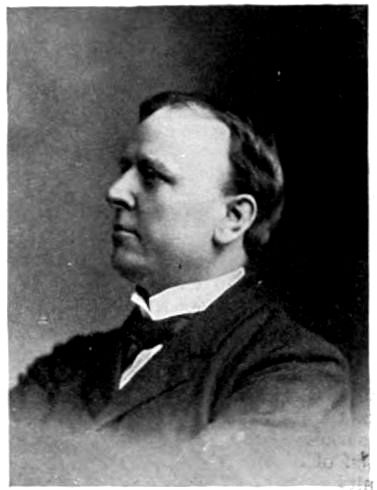
The writer of the following pages is one of the recognized authorities of the country on labor questions. Born in Kentucky about fifty-three years ago, he has been in his time merchant, manufacturer, banker, editor, traveler and sociologist. He lived in Tennessee for fifteen years and since 1898 has been in Chicago. As commissioner of the Illinois Coal Operators’ Association he has dealt with the perplexing problems of labor face to face, and thus has been obliged to test theory in the crucible of practice. Although a representative, in a sense, of capital, he is the friend of organized labor and is so recognized by its leaders.
Mr. Justi has contributed to the current discussions of economic topics many valuable papers which have been printed in the leading periodicals of the country and it is therefore felt that the following paper, treating a question new to the South, but none the less, of prime and growing importance, will be read with deep interest.—Ed.
In almost every discussion of the labor problem practically the only class of labor taken into consideration is that known as common labor—by which term is meant the labor that is grouped into large bodies. That labor which is known in the North, East and West as common labor is similarly known in the South. Mill, mine and factory hands, workers on streets and highways, employes in railway depots and on wharves are everywhere, for want of a better term, designated as common labor. In this discussion no notice need be taken of highly skilled laborers who can be safely classified among the crafts, and who are seldom found in considerable groups. The craftsmen can take care of themselves and need no union to protect them. They are treated, not like a commodity that can be easily replaced by substitutes from an emigrant ship, but like intelligent human agents, who must be handled with care and respect.
In considering the general subject of labor with special reference to the South, the question of labor in itself, while important, is not complicated with so many difficulties as confront us in the North; and yet the difficulties are many, and some of them, unless intelligently dealt with, may become serious.
For instance, the loss of the black man as a laborer at the South might prove a serious embarrassment, or the loss by the black man of confidence in and respect for the white man’s authority, might necessitate an admixture, by immigration, of races and nationalities which would push the black laborer to the wall, and should be avoided if it is possible to avoid it. To no one is this a matter of so much importance as to the black man.
The labor problem at the North would be infinitely simpler if there were fewer nationalities, all of them speaking and understanding the English tongue. This statement does not imply that those speaking foreign tongues are necessarily inferior in character or intellect to the English speaking laborer, but the troubles arise rather because the non-English speaking laborers are the victims of deception by unscrupulous interpreters who purposely misrepresent what is said to them for their benefit, or what is said by them to their employers.
The fact that the black man speaks a language understood by the white man is a point in his favor, and that is also a reason why he should continue to be the most desirable common laborer obtainable. The negro at the North is discriminated against in all labor organizations as well as in every relation of life, but in the South he still has a fair chance to market his labor, if he will avail himself of it and will realize his opportunity. So far the very abundance of cheap common labor in the South has hindered the growth of the labor union there and has in many instances defeated its purposes when established. The want of ambition, which makes the negro content with low wages and inferior conditions of living, is sometimes found in common labor at the North, but it is by no means so general as among the black race in the South. Particularly is this the case in the cities, to which the negroes have flocked in great numbers, denuding the plantations of needed help while, in the cities, holding down the wages of common labor,—the only labor in which the negro competition has yet been apparent. The employers of labor in the South should do everything in their power to make of the black man all that it is possible to make of him as a laborer; but, as he has his limitations and as the black man will at times leave the South and so leave an opening for new white labor, the South must use her energies to educate this newly acquired immigrant labor up to American standards—and no work that it can do will bring greater returns than teaching the non-English laborer the language of his newly adopted home.
The very fact that union or organized labor is not strong in the South, when compared with the average sections of the North, gives the employer class in the South an opportunity which they may and should utilize in preparing for that time when the contests incident to organization are sure to come. And in this preparation they want to bear in mind the undeniable truth that the quality of the laborer is generally determined by the quality of the employer. In considering the capacity of any body of laborers we are unfailingly considering the capacity and intelligence of the employers in directing their employes. Employer and employe alike have splendid opportunities opening to them in the South, opportunities in many respects unrivalled; and it is of the highest importance that they make a right beginning and understand each other at the start. The union will indubitably grow, and the employer should welcome it if it presents itself as a business body seeking the highest wages compatible with commercial or competitive conditions in return for the best services of which the labor offered is capable.
But in the South labor must come with reason in its request. It need not be servile, but it must be respectful, for it is still, as it has always been, characteristic of the people of the South that they will brook no interference with their individual liberty. The North does not, and never did, understand the strength of this underlying principle of Southern manhood. It is a principle so strong that it does not disappear in a single generation.
A notable instance of this was seen in a recent dispute over the mining scale in Franklin County, Illinois. The southern part of Illinois was settled by Southerners, mainly by Tennesseans and Kentuckians, who poured into that rich country for a few years before the war and for a few years afterwards. There are whole communities now dominated by Southern thought and principles. When the miners’ union was seeking to establish itself in Franklin County, these farmers, either of Southern birth or of Southern ancestry, having heard that the representatives of the miners, whom they described as agitators, were undertaking to interfere with the individual rights of their sons to work without dictation from any one, offered their services to the newly established companies. The newly established companies, however, politely declined the proffered assistance, preferring peaceable adjustment. But the tendered services would have been given just as willingly as they were tendered.
What is needed in the North is also needed in the South; namely, wise and well informed teachers who are able to illumine the great problem of labor to the masses, in order that they may distinguish between anarchy or socialism on the one hand and the accepted political principles of our country on the other. But there is one thing to be truly said about the South that will always commend itself to employers contemplating a change of base or the establishment of themselves for the first time—and it will commend itself to labor whether organized or unorganized—and that is the doctrines of the socialist have found no encouragement there. Such doctrines cannot thrive in the South any more than tropical plants can survive in the polar regions. Labor leaders should rejoice—in fact wise, educated, far-seeing labor leaders do rejoice—that this spirit prevails in the South, for only so can they hold their own against the radical, trouble-making element in their own ranks.
Thinking too much of established institutions and guarding them too zealously may at times be a disadvantage, but as a general thing that community is most law-abiding and most conservative in maintaining the rights and privileges of all where due reverence is cherished for old established institutions; and yet the wisest conservatism is that which steadily, no matter how slowly, prepares itself for changes that are inevitable. Labor conditions in the South cannot endure as they now exist, unless the South is to lose all that she has gained since the overthrow of slavery, and is to stand and view the triumphal march of the country without participating in it.
The South should not seek to rest under present conditions for they cannot continue. If the present labor of the South becomes educated and then improves, it will organize. And if it does not improve, new labor will come in either already organized or to organize immediately on its arrival. I know this view will be contested by many able employers, but, believing it to be true, I deem it best to say it. It is a great deal better to make yourself strong so that you may trust in your strength when the certain change comes than to rely upon the fairness of the other side—and this is equally true of the employer and the employe.
Experience has taught the South much on the question of labor, but so far as a thorough understanding of the matter goes, the South is barely at the threshold. The first and greatest thing that the South has to realize, which as yet is not realized there at all, is this: In the South as elsewhere, it will be found that cheap labor is the most expensive. To secure good results is the desired end of all industry and the experience of older industrial communities has taught that the best results are, have been, and will ever be obtained by the employment of the best labor. The best labor is and will always be that labor which receives the highest wages and which is most nearly satisfied with surrounding conditions. We can therefore set ourselves no more important task, no more sacred duty, than that of finding the most nearly perfect system under which the highest wages can be paid in return for the most efficient service. And, aside from the justice of this course, aside from the material benefit to the employer, there is no investment that brings its returns so quickly to the community at large, as money paid for good labor. Money so paid is at once spent for the necessities of life, for all the comforts that can be afforded by the family receiving it, and so is circulated almost automatically.
Labor organizations have made small headway in the South for other reasons than the preponderance of negro cheap labor; the first to be stated being the advantages of climate and of cheap living possessed by the Southern worker. The winters are short, the summers long. Outdoor vocations can be pursued in comparative comfort almost the entire year. Fuel bills are smaller, the cost of clothing less, and the cheapness of land opens the way for the workman of even moderate means to possess his own home, if frugal and industrious. He can be his own landlord on easier terms than in the North. But on the other hand, while the climatic and other conditions favor the workman of the South, it must also be remembered that the housing of workmen in the sparsely settled communities or in mining camps is not as good as in the North where legislation and the agitation of the labor leaders have brought about greatly improved conditions.
In the cities of the North the conditions and surroundings of the workmen are even more noticeably superior to those of the workmen in Southern cities. The comforts of such flats as workingmen occupy in the large cities of the North, notably in Chicago, are practically, if not altogether, unknown in the South, where conveniences are fewer. This very custom of living without comforts and conveniences has operated to keep wages down and consequently to offer a check to the spread of unionism. The homes of many skilled Northern workmen belonging to the union would be a revelation to the workman in the South equally skilled but not a member of any labor organization, and receiving less pay for his services.
The organization of labor in the South has also proceeded more slowly as compared with the North because of the more rapid growth and development of the North. It is a fact at once apparent that cities where the unions are strong are the cities that are growing most rapidly. Another cause is the scarcity of manufacturing interests in the South and the consequent small demand for skilled workmen, who are therefore not in the South in sufficient number to organize effectively against the mass of unskilled and partly skilled labor. The lack of numerous large manufacturing enterprises, and of enormous mercantile interests, also causes a lack of sharpness in competition and has made employes less ready or able to exact the utmost that could be paid them in wages.
The difficulties of organizing labor in the South are such as always mark the initial efforts at organization. The union men are out of the Alabama mines, just at this time, for instance, and new men have their places. The new men are being trained to their work, and are receiving practically, if not exactly, the wages asked for by the union. As the number of these skilled workmen increases, the necessity of organization will become more apparent to them all, and the larger the number of men trained for the work, the more effective the union will become. The union wins victories for others oftentimes where it is itself nominally defeated.
The question is asked, and with propriety, of the leaders of organized labor, why it is, if organized labor offers or promises the best workmen, that employers constantly resist its encroachment and turn it out and replace it with unorganized labor if they can. There are several reasons why this is so. It is not, as the labor leader frequently answers, because the employer is short-sighted and imagines that when he can get cheap labor he is making money, although it is at times due to the want of discernment and enlightenment on the part of the employer. The objection made to organized labor by its very best friends among the employers is the short-sighted policy of the organization in winking at or permitting the well-known tyranny of the unions, and also that air of proprietorship which petty labor leaders so often assume.
I have never denied the right of labor to organize, nor can I deny the necessity for labor to organize; and, in the very nature of things, it seems to me that it is best that capital deal with labor as a unit. But at the same time I have, in pursuing my duties in adjusting labor disputes, been brought in contact with labor leaders here and there whose insolence and arrogance, whose absurd claim of being labor’s unselfish and only friend,—made me wish the whole world of organized laborers and their leaders at the bottom of the sea. More than one true friend of organized labor has been lost to a worthy and noble cause for no other reason than that they have been grossly offended and outraged by unworthy representatives of labor organizations.
While the slow growth of the union in the South is no doubt a discouragement to labor organizations, it is a benefit to labor in the long run. It is also at the same time an advantage to capital that labor is being slowly organized. Looking to the future it is an advantage both to capital and labor that the growth of the labor organization does not go too far in advance of the education of the laboring classes and that the employer class may, if it has an eye to its own interest, organize in order successfully and intelligently to treat with organized labor when it has become a force to be dealt with in the South.
Experience proves that even the most thoroughly organized labor unions are not all-powerful when the employers stand together, and the paramount importance of organization among the employers has been repeatedly demonstrated. When this organization of the employers shall have been effected, inquiry into cause and effect, careful study of the labor problem, will quickly show the great advantage and profitableness of dealing fairly with labor. It will show that, if the employers are loyal to each other, and if they have an organization in which all of its members have confidence, they, whether dealing with organized or unorganized labor, are certain to obtain their approximate rights. The many labor tangles in which the country has at times been involved were due far more to the disorganized condition of the employer class than to the cohesiveness and power of the labor class. Whenever the labor class has become needlessly strong and where it practices tyranny and oppression, there the employer class will be found to have neglected its duty to itself.
Another result of the study of conditions will be that the employer class will decide to be fair in dealing with labor, because in the long run it will bring the largest dividends. This cannot be accomplished by dealing with unorganized labor, where the employers have the whole matter practically under their own control, and thinking only of immediate returns, will, consciously or unconsciously, take advantage of the worker. Dealing with organized labor is not only more satisfactory, but it is more profitable in its ultimate results.
The question of individual rights has had a large part in Southern labor troubles. It was a question of the employer’s right to manage his property for himself in his own way that defeated an almost universal strike of the Nashville Street Railway employes two or three years ago. The union was formed and made its demands. The management declined to recognize the union or to grant the demands, and successfully resisted the resulting strike. But the management, I am informed, gave careful examination to the facts thus brought to their attention and has voluntarily advanced wages and improved conditions to a point far beyond what was formulated in the union’s demands. There is no union of the street railway’s employes now at Nashville, and so long as the present intelligent and progressive policy is pursued there will be none and there will be none needed. Indeed, the only excuse for labor to organize is that the policy of the employer has too often been unintelligent, unprogressive and not in sympathy with the reasonable rights and needs of labor.
But the organization of labor and the advancement of wages will do more than any other one thing to lend confidence to those who are looking to the South as a field for investment. The Northern capitalist and investor cannot be made to believe that labor as good and efficient as Northern labor will remain unorganized and render its service for one-third or one-half of what the Northern workman receives. Nor does the Southern worker have the same incentive to the high efficiency reached by the Northern workman. One of the most serious mistakes made by many Southern communities in presenting to the Northern investor the advantages at the South is that they put emphasis on the fact that skilled and unskilled labor is “cheap.” Cheap labor that is at the same time efficient is an unknown thing in the North, and Northern men who are familiar with the labor question will not believe that it exists in the South. “If it were as efficient, it would be as well paid,” they say. The proffer of “cheap” labor has done much to retard the industrial development of the Southern states. It is now the universal cry among the employers of the North, particularly among those who oppose organized labor, that they are willing to pay and do pay the highest wages anywhere obtainable and that they are willing to afford and do afford to their employees the most favorable working conditions.
The question of child labor is one which must be determined by humane principles, and yet it is a question on which much fanaticism has been expended and much maudlin sentiment indulged. The child develops earlier in the South, where the average boy of fourteen is as mature as the average boy of sixteen in the North. It is a cause for gratification, a fact to the credit of the South, that recent child labor laws have removed from mills and mines and factories a vast army of child laborers who properly belonged in the nursery or at school. It was the South’s shame that they were ever permitted there under conditions once existing, and still existing to a degree.
But, while believing that the question of child labor should be closely studied and the interest of the child guarded, I know that this is not always accomplished in the case of boys by making it an offense punishable by fine and imprisonment to keep boys of thirteen and fourteen years at work, particularly since in certain classes of society they have no idea of continuing at school after they reach that age. Anything is better than idleness. It is a thousand to one better for a boy of twelve to be at work in mine, factory or mill than to be allowed to remain unemployed and unoccupied. If he is to be forced out of employment, then provision must be made to force him into school. The attention that has been drawn to child labor in the South comes about not so much by the efforts of philanthropists, not so much by the work of earnest students, as by that class of employers in New England who formerly employed children of tender years, but who were forced to desist as the result of legislation, and who for this reason, and not from any high motives, directed attention to child labor in the cotton mills of the South. I do not mean to justify what is injurious to the children, but in considering this whole question trade or competitive conditions cannot be wholly ignored. We know that the advocates of child labor laws are often selfishly influenced and that they aim to reduce the army of workers in the hope thereby to monopolize labor as far as possible. It is often for the same selfish reason that the hours of labor are restricted.
Much of the opposition to child labor has undoubtedly been removed by the course of mill owners in the South, such as the Eagle and Phœnix mills at Columbus, Ga., the Unity Cotton Mills at Lagrange, Ga., and mills in Guilford County, N. C., and Pelzer, S. C. In these the children are required to spend a certain portion of their time in schools ranging from kindergartens to industrial training schools, which are supported mainly,—and in many cases altogether,—by the cotton mills themselves. The press and pulpit unite in saying that in those mills many of the children have much better facilities for improvement than they had before their parents left the farms and brought them to the mills.
The South suffers from poorly paid labor, and continues to suffer despite the fact that conditions are such as make it possible for her to pay higher prices without injuriously affecting any of her industries. As the wealth of the world increases the individual wants more and greater conveniences, and more and more grows the demand for excellence rather than cheapness to be the chief consideration. The era of cheapness is on the decline; the product of mill and factory, of shop and lathe and hand, must be better to-day to be satisfying than at any time in the world’s history. While excellence is sought the more, cheapness is laughed at and passed by.
The Southern states are in an enviable position to-day. The South ought to produce nearly all it consumes, and those things it can economically produce for its own consumption it should certainly be able to sell in Mexican and South American markets in successful competition with the rest of the world. How successfully this can be done will depend upon the ability of the South to produce the best goods for the least money, and it can only do this provided its labor is the best. But its labor cannot be the best unless it is paid the highest wages and is afforded the most satisfactory conditions under which the workmen can perform their services, and under which they and their families can live.
When labor is once organized on business lines and is a fair competitor of unorganized labor, it will not only be the successful competitor but will furnish the best labor obtainable. Nowhere has organized labor under such conditions so fine an opportunity or so fair a chance as in the South. But as I said before, the South is the stronghold of individual rights. The workman must respect the individual rights of the employer and the employer in return will respect the individual rights of the workman.
It is not only skilled, law-abiding laborers that are necessary to the South’s industrial success, but it is first of all necessary that employers be enlightened and abreast of the times in order that they may see clearly what their rivals are doing and what the markets of the world require. And chiefly employers must be just, wise and humane in order that they may enjoy the confidence and respect of their men.
It is indisputable that wherever there are employers who are wise and humane, working in harmony with laborers who are skilled, frugal and law-abiding, the community where the combination is found has a sure guaranty of numerical growth and of substantial material prosperity. Growth in population is gratifying to most citizens, notably so when accompanied with industrial growth as well, but substantial and lasting prosperity has too often been sacrificed in the eager desire of one community to herald to the world a larger population than its rival possessed. Increased numbers and wealth—if they bring in their train an unnatural increase in vice and crime, as we too often find to be the case,—are infinitely worse than if there were no growth. Southerners sometimes lament that the South does not grow fast enough, yet that it makes haste slowly is the South’s good fortune, since the criminal classes have not increased with the population as at the North. The Southern people, conservative always, should be in nothing so conservative as in the determination that this shall still be true; that while it is increasing in population and wealth the South shall also accomplish the more difficult and important duty of diminishing the percentage of vice and crime.
46