Chapter XXX · THE ŚRATAPARṆA CAVE, OR CAVE OF THE FIRST COUNCIL. LEGENDS. SUICIDE OF A BHIKSHU.
James Legge translation
[Chinese]
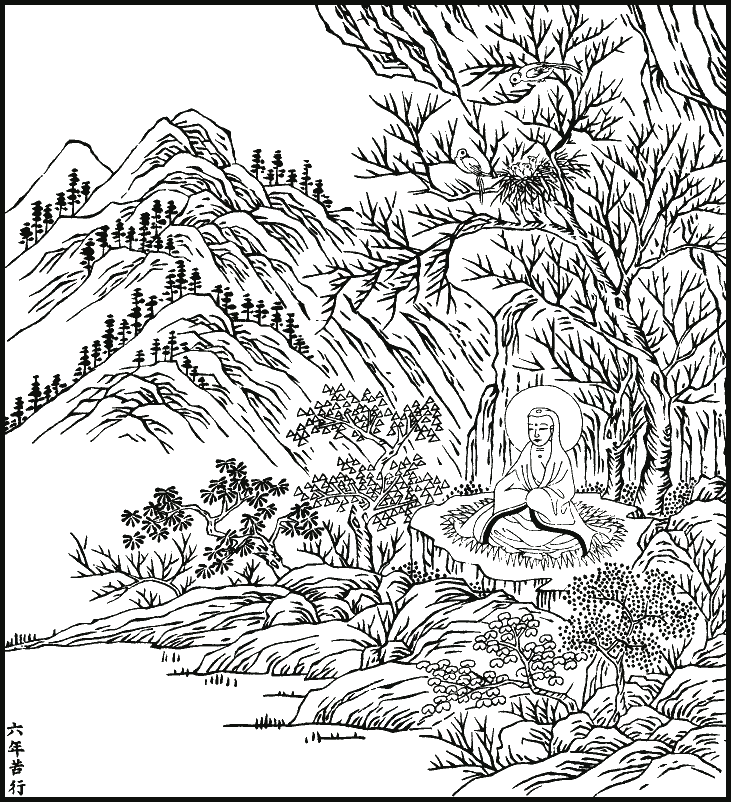
IV. BUDDHA IN SOLITUDE AND ENDURING AUSTERITIES.
Notes in this chapter
Note 1 · Karaṇḍa Veṇuvana; a park presented to Buddha by king Bimbisâra, who also built a vihâra in it. See the account of the transaction in M. B., Note 2 · The language here is rather contemptuous, as if our author had no sympathy with any other mode of disposing of the dead, but by his own BuddNote 3 · The Chinese characters used for the name of this cavern serve also to name the pippala (peepul) tree, the ficus religiosa. They make us thinNote 4 · A very great place in the annals of Buddhism. The Council in the Śrataparṇa cave did not come together fortuitously, but appears to have beeNote 5 · So in the text, evidently for pari-nirvâṇa.Note 6 · Instead of ‘high’ seats, the Chinese texts have ‘vacant.’ The character for ‘prepared’ denotes ‘spread;’—they were carpeted; perhaps, both cNote 7 · Did they not contrive to let him in, with some cachinnation, even in so august an assembly, that so important a member should have been shutNote 8 · ‘The life of this body’ would, I think, fairly express the idea of the bhikshu.Note 9 · See the account of Buddha’s preaching in chapter xviii.Note 10 · The sentiment of this clause is not easily caught.Note 11 · See E. M., p. 152:—‘Buddha made a law forbidding the monks to commit suicide. He prohibited any one from discoursing on the miseries of lifeNote 12 · Beal says:—‘Evil desire; hatred; ignorance.’Note 13 · See chap. xx, note 10.Note 14 · The Anâgâmin belong to the third degree of Buddhistic saintship, the third class of Âryas (chap. xx, note 10), who are no more liable to be Note 15 · Our author expresses no opinion of his own on the act of this bhikshu. Must it not have been a good act, when it was attended, in the very aNote 16 · Out from the old city, after walking over 300 paces, on the west of the road, (the travellers) found the Karaṇḍa Bamboo garden,1 where the (Note 17 · North of the vihâra two or three le there was the Śmaśânam, which name means in Chinese ‘the field of graves into which the dead are thrown.Note 18 · As they kept along the mountain on the south, and went west for 300 paces, they found a dwelling among the rocks, named the Pippala cave,3 iNote 19 · Going on still to the west for five or six le, on the north of the hill, in the shade, they found the cavern called Śrataparṇa,4 the place wNote 20 · Along (the sides of) the hill, there are also a very great many cells among the rocks, where the various Arhans sat and meditated. As you le