Chapter XXIV · WHERE BUDDHA FINALLY RENOUNCED THE WORLD, AND WHERE HE DIED.
James Legge translation
[Chinese]
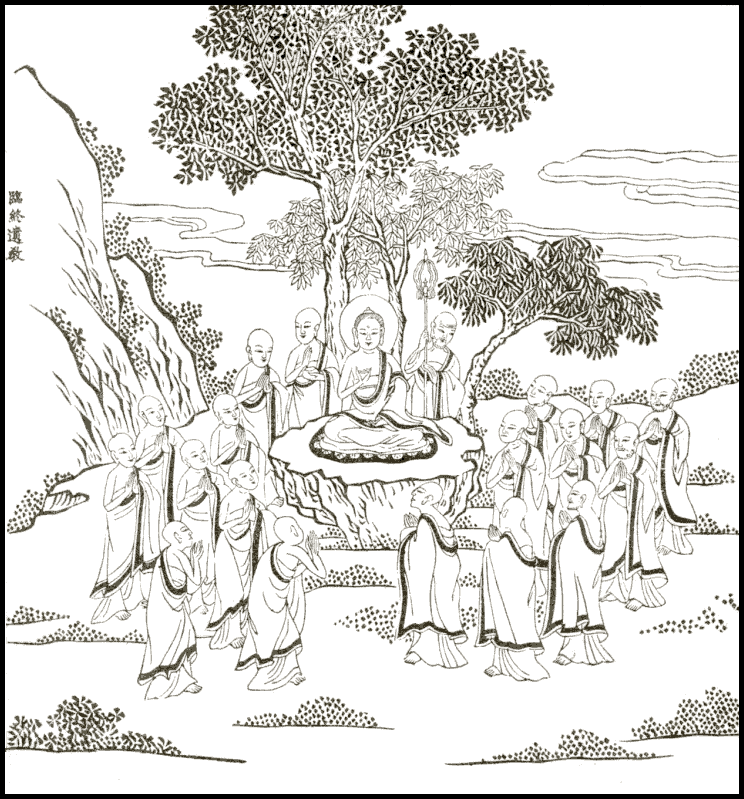
VII. BUDDHA’S DYING INSTRUCTIONS.
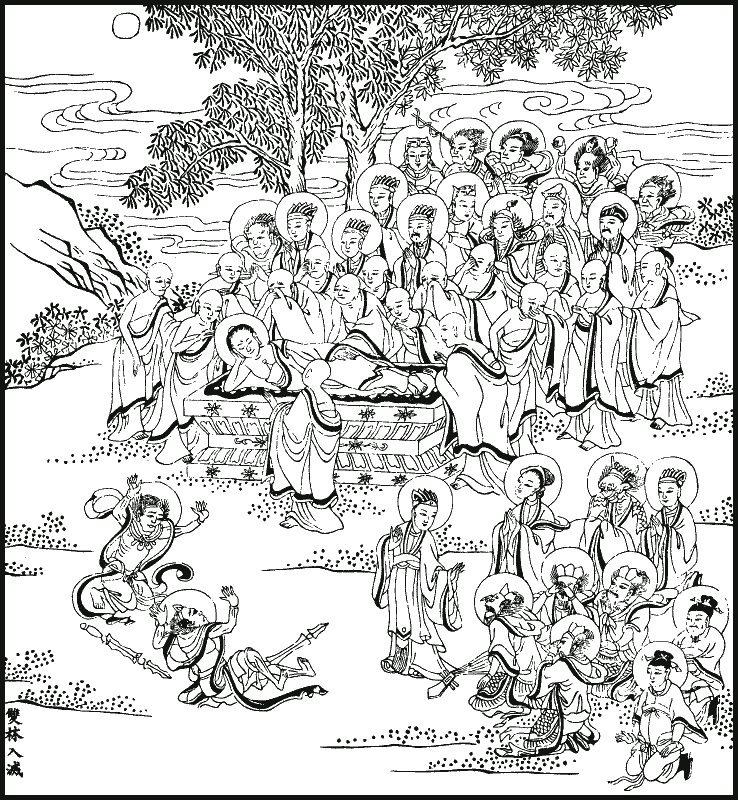
VIII. BUDDHA’S DEATH.
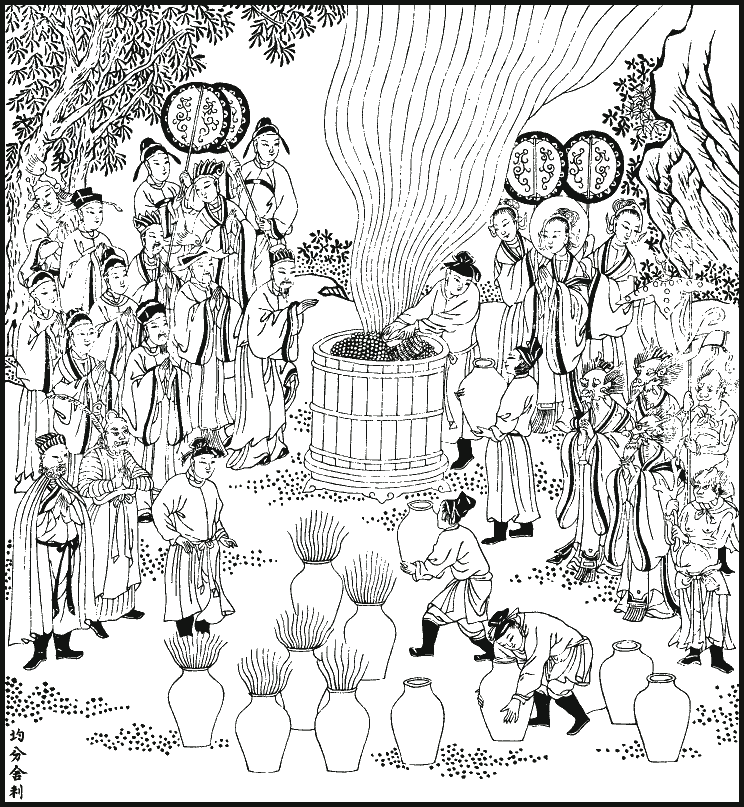
IX. DIVISION OF BUDDHA’S RELICS.
In the city the inhabitants are few and far between, comprising only the families belonging to the (different) societies of monks.
Notes in this chapter
Note 1 · This was on the night when Śâkyamuni finally left his palace and family to fulfil the course to which he felt that he was called. Chaṇḍaka, Note 2 · Beal and Giles call this the ‘Ashes’ tope. I also would have preferred to call it so; but the Chinese character is 炭, not 灰. Rémusat has ‘laNote 3 · In Pâli Kusinârâ. It got its name from the Kuśa grass (the poa cynosuroides); and its ruins are still extant, near Kusiah, 180 N.W. from PatNote 4 · The Śâla tree, the Shorea robusta, which yields the famous teak wood.Note 5 · Confounded, according to Eitel, even by Hsüan-chwang, with the Hiraṇyavatî, which flows past the city on the south.Note 6 · A Brahmân of Benâres, said to have been 120 years old, who came to learn from Buddha the very night he died. Ânanda would have repulsed him;Note 7 · Thus treating the dead Buddha as if he had been a Chakravartti king. Hardy’s M. B., p. 347, says:—‘For the place of cremation, the princes (Note 8 · The name Vajrapâṇi is explained as ‘he who holds in his hand the diamond club (or pestle = sceptre),’ which is one of the many names of IndrNote 9 · Of Kuśanagara, Pâvâ, Vaiśâlî, and other kingdoms. Kings, princes, brahmâns,—each wanted the whole relic; but they agreed to an eightfold divNote 10 · These ‘strong heroes’ were the chiefs of Vaiśâlî, a kingdom and city, with an oligarchical constitution. They embraced Buddhism early, and wNote 11 · East from here four yojanas, there is the place where the heir-apparent sent back Chaṇḍaka, with his white horse;1 and there also a tope wasNote 12 · Four yojanas to the east from this, (the travellers) came to the Charcoal tope,2 where there is also a monastery.Note 13 · Going on twelve yojanas, still to the east, they came to the city of Kuśanagara,3 on the north of which, between two trees,4 on the bank of Note 14 · Going from this to the south-east for twelve yojanas, they came to the place where the Lichchhavis10 wished to follow Buddha to (the place o