Chapter IV · ARMED DIVISION (continued 2)
Reading edition
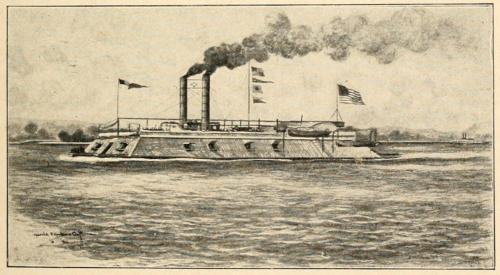
THE DE KALB, TYPE OF IRON-CLAD USED ON THE MISSISSIPPI RIVER
General Grant, with that grim thoroughness which all men presently saw in him when once he was afoot, pressed forward, beyond the forts on the Tennessee and the Cumberland, to strike at Corinth, a railway centre in northern Mississippi. It was his principle to be moving always, forcing the fighting. He knew the men against whom he acted, he thought; most of them had been his comrades in Mexico. He thought he knew what mistakes they would make. But they checked him very sharply whenever he blundered or exposed himself without force enough to crush them. On a Sunday morning, the 6th of April, a confederate force under General Albert Sidney Johnston fell upon his regiments by Shiloh church with an onset which could not be withstood, and only the confusion of their rushing victory and a steadfast regiment here and there to stem the tide saved his force from being caught in a corner between river and creek, his base at Pittsburgh Landing from being taken. But Johnston had been mortally wounded. A wound had severed an artery; he had ignored it and led a desperate charge in person; and had gone from the field to die. The next day brought Grant reinforcements which gave him commanding numbers, and he moved forward again, forcing General Beauregard, now in command in Johnston’s stead, to retire before him. The federal army advanced upon Corinth at its leisure, one hundred thousand strong, under General Halleck, commander-in-chief in the West. A slow siege was drawn about the place, and on the 30th of May, when everything was ready for the final assault, Beauregard abandoned it, deeming it untenable. The abandonment of Corinth, added to the possession of the forts on the Tennessee and the Cumberland, gave the federal commanders control of the railways which led to Memphis on the river upon either flank, and it became impracticable for the confederate forces to hold the Mississippi anywhere above Vicksburg. On June 5th Fort Pillow was abandoned; and on the 6th the federal gunboats, by desperate fighting, broke the defences of Memphis. The river was open down to Vicksburg.
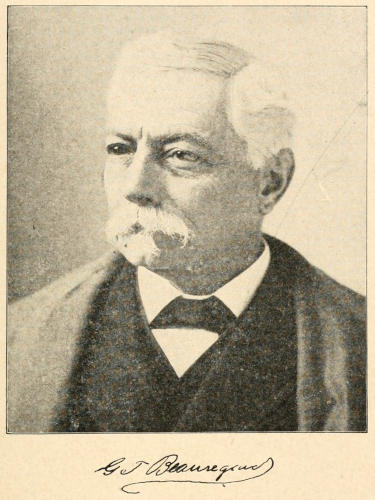
PIERRE GUSTAVE TOUTANT BEAUREGARD
Meanwhile, a fleet operating from the sea below had gained control of the lower reaches of the river also, and Vicksburg was accessible by the federal forces from the south. On the 18th of April Commodore Farragut, who, as spring approached, had been sent to the Gulf to see what could be done to render the blockade effective at New Orleans, had opened fire on the forts which guarded the main outlets of the river. His fire proving of slow effect, he determined to attempt the passage of the river without taking them, and on the 24th ran past them. The next day he took possession of the city, which had been evacuated upon his approach. The forts, thus isolated, were given up, and General Butler was put in possession of New Orleans, with the troops which had been waiting, ineffective till Farragut came, on Ship Island. When the year was out the confederate power touched the Mississippi nowhere but at Port Hudson and at Vicksburg, standing high upon its bluffs, a tangle of marsh and stream drawn about it everywhere but at the south and east, where the confederate armies were most easily handled to maintain it. Grant, still striking southward, attempted the formidable place before the year closed, seconded by General Sherman moving south from Memphis on the river. Each struck in turn; but each failed. The place remained to be taken.
In the East, meanwhile, in Virginia, where the fighting beat back and forth between the two capitals, fortune showed another face. There the federal commanders were outgeneralled and beaten. All the winter through, since the first fighting at Manassas, General McClellan, fresh from his successes in West Virginia, had been making ready an “Army of the Potomac” to move against the confederate capital. When spring came he showed himself in force on the old battle ground of the Revolution, taking his troops by water to Fortress Monroe and striking thence, against Joseph E. Johnston, up the peninsula which lay between the York and the James rivers. By dint of a month’s siege he took Yorktown (May 4th). Following Johnston’s retreat, he attacked him at Williamsburg and sought to prevent his crossing the Chickahominy, but could not. Johnston, in his turn, himself across the river, attacked a part of McClellan’s force which had crossed at Fair Oaks, before the rest could cross to their assistance, and two days’ hard fighting barely saved the federal commander a disastrous loss. General Johnston having been wounded in the conflict, General Robert E. Lee took his place, a man whose quality of genius the Army of the Potomac was to learn until it had had its fill.
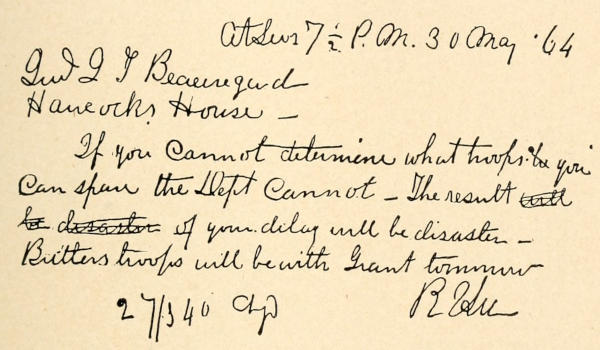
A CALL FOR REINFORCEMENTS
He was son to famous Lighthorse Harry Lee of the old days of the Revolution, but showed little of the dashing soldier in his person and bearing. He showed, rather, the modesty and unaffected gentle breeding of the old southern training; seemed never to stand for show but always for quiet principle, making those who dealt with him feel that he was a Christian as well as a gentleman, and felt the compulsion of nothing so much as the dictates of duty and honor. But, for all he was so simple and modest, he handled men under arms in such fashion as presently made him the foremost soldier of his time. He was already distinguished. Since a lad he had served in the armies of the United States, loving the Union and serving it in the spirit he had taken from his father. The men who had served with him knew his genius; Mr. Lincoln had offered him the command of the army which was to act against the South. But he had declined the command, and, seeing how all things were turning in the home of his youth, had exchanged his federal commission for one held of Virginia for the coming struggle. He did not believe in secession; he utterly rejected the view of the constitution which so many of his neighbors had taken from Mr. Calhoun; it was revolution, in his view, nothing less, to break away from the government Washington and Madison and Hamilton had set up: they would have constructed no such rope of sand as the politicians about him told him it was meant to be. But he was of the breeding of the South: the breeding men in the North found it so hard to comprehend. Virginia was his home; there all his love and allegiance had their intimate rootage. If she seceded he must go with her; if armies were sent against her he must defend her. He explained it so, very frankly, before Virginia had acted, to General Blair, who brought him Mr. Lincoln’s offer of the command of an army of attack. “I told him,” he said, “as candidly and courteously as I could, that though opposed to secession and deprecating war, I could take no part in an invasion of the Southern States.” It was this quiet man, of clear principle, with a sentiment for his own people which was for him a thing as strong and imperative as principle, who now found himself in chief command against the army he might have led.
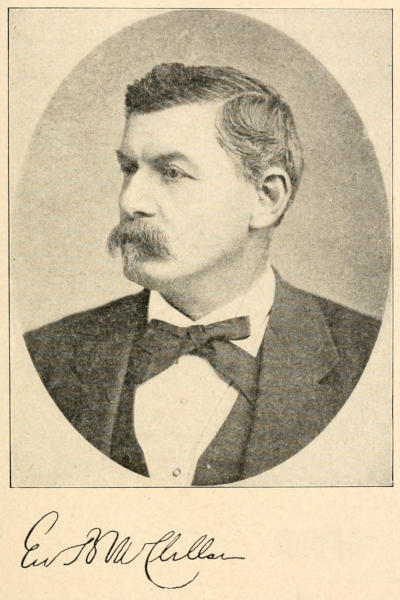
GEORGE BRINTON McCLELLAN
McClellan had expected to be joined by reinforcements under General McDowell; but the military genius of another confederate commander prevented that. Thomas J. Jackson had shown his quality in part at Manassas. There he had held his men unshaken against charge after charge of the federal regiments, and had been dubbed “Stonewall” Jackson from that day. Now he showed gifts of another kind. He was oddly compounded of Covenanter and strategist; showed in all things a steadfastness, a stiffness of character and principle which seemed strangely contrasted with the audacity and sudden dash with which he moved when in the field. In fact the two things were united with singular harmony in the man: the iron character and the instant purpose: the will that operated like an impulse but which achieved its end with the precision of a thing calculated and long foreseen,—the almost instinctive energy of a mind that never doubted or turned aside. Hard-set principle and bold initiative were things to be looked for in combination in men of his Scots-Irish blood. By a series of sudden marches and surprises such as his opponents presently learned to expect but could never foresee or make themselves safe against, he cleared the Shenandoah valley of federal troops, seemed to threaten Washington itself, and kept McDowell where he was, to guard the seat of government. Then, as suddenly, he turned about and carried his forces by rail to General Lee, to assist against McClellan. For seven memorable days the two beat McClellan’s army back until Richmond was safe and the federal forces once more on their farther base at the James.
Mr. Lincoln tried a change of commanders. General McClellan was removed, and General Pope was brought, fresh from his exploits on the Mississippi at New Madrid and Island Number Ten, to take his place. The theatre of operations was shifted northward to the courses of the Rappahannock, that the full bulk of the federal armies might be interposed between General Jackson and the city of Washington. But Pope fared worse than McClellan. By a forced march through the mountains, Jackson turned his flank and defeated General Banks at the western end of his line at Cedar Mountain (August 9th). On the 29th of August Pope’s own command was attacked at Grovetown, and the next day routed at Manassas, by Lee and Jackson combined. A confederate force despatched westward on the federal flank captured Harper’s Ferry, with its arsenal and its supplies and eleven thousand federal troops; and Lee crossed the upper Potomac into Maryland and confronted his opponents once more, at Antietam. There, on the 17th of September, battle was joined again, McClellan once more in command,—but without decisive result. Lee was checked and foiled, that was all. He found himself obliged, nevertheless, to recross the Potomac and withdraw towards his base of operations.
The success was not enough to satisfy the authorities at Washington. Once more they took the command of the unhappy Army of the Potomac from McClellan, to bestow it, by way of further experiment, upon General Burnside, who immediately proved himself the wrong man for the task. On the 13th of December he threw himself upon the confederate forces intrenched on Fredericksburg Heights, and was repulsed with great loss. It was the last action in the East until spring should come again. The federal commanders could show no progress made in that quarter.
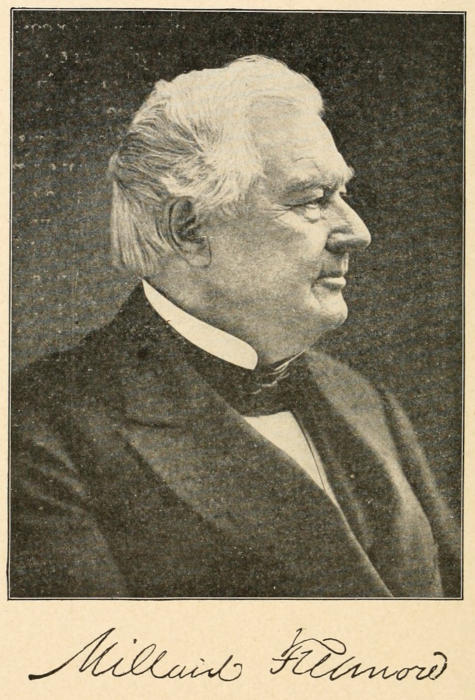
MILLARD FILLMORE
Opinion shifted uneasily, the while, the nation through. The unexpected scope and magnitude of the war, its slow and sullen movement, its anxious strain of varying fortune, its manifest upheaval of the very foundations of the government, turned men’s hopes and fears now this way now that, threw their judgments all abroad, brought panic gusts of disquietude and dismay which lasted a long season through before any steady winds of purpose found their breath and their settled quarter. For eighteen months Mr. Lincoln had waited upon opinion, with a patience which deeply irritated all who wished radical action taken. He knew the hazards of the time as well as any man: feared that at almost any moment news might come of the recognition of the southern Confederacy by the old governments abroad; knew how important success was to hold opinion at home no less than to check interference from without; was keenly conscious how the failures of the Army of the Potomac offset and neutralized the successes of the federal arms in the West; and realized to the full how awkward it was, whether for the government of opinion at home or over sea, to have no policy more handsome than that of conquest and subjugation. It was necessary to put the South at a moral disadvantage by transforming the contest from a war waged against States fighting for their independence into a war against States fighting for the maintenance and extension of slavery, by making some open move for emancipation as the real motive of the struggle. Once make the war a struggle against slavery, and the world, it might be hoped, would see it a moral war, not a political; and the sympathy of nations would begin to run for the North, not for the South. But Mr. Lincoln knew also that the thoughts of the people changed more slowly than the thoughts of politicians; that the mass of men, who must fill the ranks of the armies and vote at the polls in the elections, quitted their old ways of thinking stiffly and with reluctance. He waited for their purpose to harden. He had come into office declaring that the party he led had no intention whatever to molest slavery in the States which had already established it; and he knew that he must wait for the people at his back to change their temper under the strain of the fighting before he openly turned about to accept a revolution and seek emancipation as the object of the war.
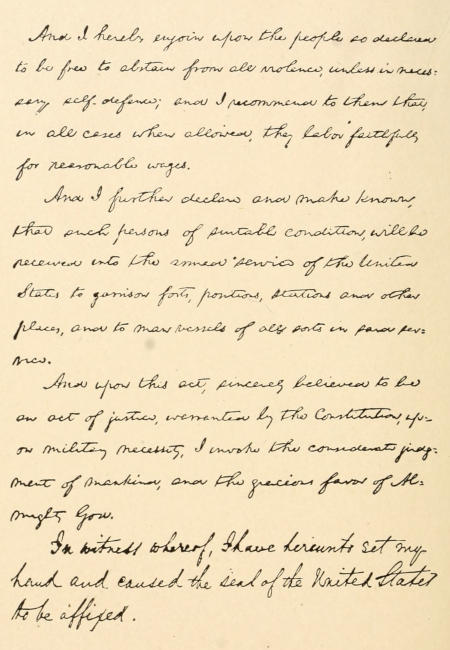
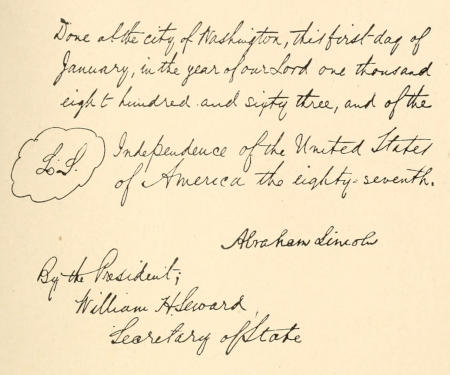
By midsummer, 1862, he was convinced that opinion was ready. He waited only for some show of victory by the Army of the Potomac to put the new, aggressive policy he contemplated in countenance. The check given Lee at Antietam served the purpose, in lieu of something better; and on the 22d of September he issued a proclamation which gave formal notice that unless the southern States returned within a hundred days to their allegiance to the Union he would declare the slaves within their limits free. On the 1st of January, 1863, accordingly, he put forth a definitive proclamation of emancipation. It was an act which bound no one except commanders in the field. The President had no authority to alter or abolish the laws of the southern States, in open secession though they were. He could do nothing more in actual execution of the proclamation than command federal officers in the field to set free the negroes who fell into their hands, and keep their freedom secure within the territory actually occupied or controlled by their troops. That he could do as an act of war, under his authority as commander-in-chief. Some of the federal commanders had already ventured to set the negroes free in the districts they occupied, but Mr. Lincoln had rebuked them and annulled their acts till he should be ready. The proclamation, when it came, was no law, but only his deliberate declaration of policy, for himself and for his party; and changed, as he had meant that it should change, the whole air of the struggle, and of politics as well.
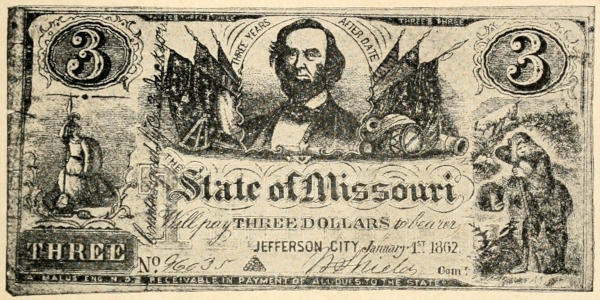
FACSIMILE OF WAR SCRIP ISSUED BY THE CONFEDERATE LEGISLATURE OF MISSOURI
For a moment opinion seemed to swing back, as if he had gone too far and too fast. The autumn elections, which followed the preliminary proclamation of September, showed in some quarters a marked uneasiness that he should have made so sharp a revolution in the avowed purposes of the party and the government he led; and a number of Republicans in the less steadfast constituencies lost their seats in the House of Representatives to Democrats. But opinion set steadily forward again with the President before the winter was out, and the reverses of the autumn elections did not slacken the action of Congress or daunt its leaders. Their radical measures matched with what they believed to be the real temper of the country in the face of a crisis which seemed to increase in magnitude and gravity with every campaign of the contending armies. In December, 1862, they did not hesitate to sanction the division of Virginia into two distinct States by admitting the western counties of Virginia to representation in Congress as the State of West Virginia. The forty western counties of the Old Dominion, which lay beyond the Blue Ridge, had not sympathized with secession or a war for the maintenance of slavery. Northern troops under McClellan had got control of them at the very outset of hostilities, because of the friendliness of their people and the weak hold of the confederate commanders upon the region. The antagonisms between the people of the eastern and western counties,—the people beyond the mountains and the people within the Shenandoah valley and by tide-water,—were an old story. The mountains separated them in commercial interest; life ran differently on the one side and the other; the settlers beyond the mountains said that too little heed was paid to their affairs at Richmond,—or too much, by way of restriction. When the State went out of the Union, therefore, they deemed it a good time to make their separate interests known. A revolutionary state government was established, for which they asked admission into the Union. The constitution of the United States forbade the division of any State without its own consent, but the Republican leaders in Congress were ready to accept the theory that the provisional government set up in western Virginia, inasmuch as it was loyal to the Union, was the only legitimate government of Virginia, and could itself authorize the division of the State. West Virginia was, accordingly, in due form admitted to the Union,—without too curious an examination of the constitutional law of the case.
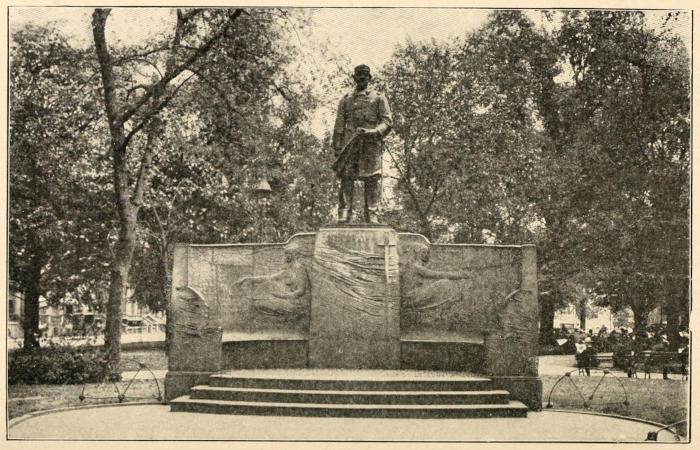
STATUE OF FARRAGUT IN MADISON SQUARE, NEW YORK CITY
The houses were in a radical temper. In March, 1863, the President was authorized to suspend the operation of the writ of habeas corpus in cases of persons suspected of disaffection towards the United States; and a Draft Act became law which substituted compulsory for voluntary military service upon a scale which showed a new system and purpose in the prosecution of the war. The operation of the writ of habeas corpus had already been frequently suspended. Mr. Lincoln had not hesitated since his first call for volunteers in April, 1861, to proclaim martial law wherever it seemed to him necessary or serviceable to proclaim it. Congress now gave him explicit authority to set aside the rights of individuals wherever it seemed necessary to do so in order to safeguard the Union. The Draft Act meant that Congress realized at last the magnitude and the almost desperate difficulty of the war it had embarked upon. In carrying it into execution the government learned something more of the temper of the people. Intense excitement everywhere accompanied the progress of the conscription. In some places it was forcibly resisted, not so much because of the deep unpopularity of the thing itself as because it seemed to be enforced with gross partisan partiality. Democratic counties, it began in some parts of the country to appear, were much more heavily drawn upon than those whose votes had been cast in the elections for the party in power. The excitement culminated more sharply and ominously in New York than anywhere else; and in the city of New York very serious outbreaks occurred,—savage “draft riots” which were to linger in the recollection many a long year like an ugly nightmare. For four whole days of that memorable summer (July 13-16, 1863) the town was practically at the mercy of mobs which surged in its streets almost at will, and defied the government to put the obnoxious act into execution. It was executed, none the less, in the end. Inequalities in its enforcement as between locality and locality were corrected, but its essential rigor was not abated.
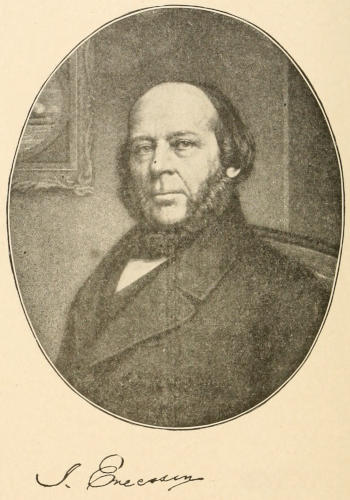
JOHN ERICSSON
If the war was to be successfully prosecuted, there must be created, as Congress and the President saw, not only vast armies, but also huge fleets to close the southern ports. When Mr. Lincoln proclaimed the southern ports blockaded, in April, 1861, there were but forty-two vessels of war in commission. The southern coasts were full three thousand miles long. So early as August, 1861, Fort Hatteras, in North Carolina, had been taken by a federal force, and early in November Port Royal in South Carolina; Fortress Monroe, within the capes of the Chesapeake, remained in possession of the federal authorities from the first, and federal fleets could lie in Hampton Roads; Key West, in the Florida Keys, and Fort Pickens, by Pensacola, within the Gulf, had not fallen into the hands of the Confederacy; but nowhere else on the long reaches of the interminable coast was there any other harbor of refuge or rendezvous for the scant blockading force, until Fort Pulaski, which guarded the approaches to Savannah, was taken (April, 1862) and Farragut occupied New Orleans, at the spreading mouths of the Mississippi. For a little while the southerners had seemed quicker than the North in putting their power on the sea. Early in 1862 they sent out of Norfolk against the fleet which lay in Hampton Roads an iron-clad ram, improvised out of a sunken frigate, which for a memorable twenty-four hours seemed likely to sweep the whole anchorage of its transports and men-of-war. Only the timely arrival of an armored craft of another pattern out of New York saved the fleet from annihilation. The confederates had given their ram, the Virginia, sides which sloped like a roof, and had cased them in railway iron. The strange craft brought from New York to meet her had been devised by John Ericsson, a Swedish engineer who had sought his fortune in England at twenty-three and come to America at thirty-six (1839); the man who, more than any other, had made the use of the screw propeller practicable in navigation. The low, flat body of his Monitor rose but a foot or two above the level of the water. She carried her battery within an iron martello tower so constructed as to revolve, as if upon a pivot, so that her fire might be delivered in any direction. On the 9th of March the two novel craft made trial of each other, and the Virginia was worsted. Her shot made no impression on the turret in which the Monitor carried her guns or on the iron-sheathed deck about it, and the low iron hull of her antagonist afforded no target.
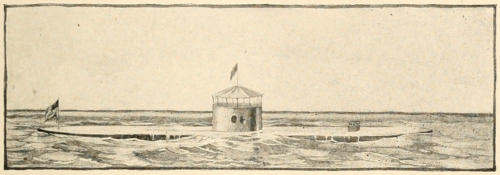
THE MONITOR
A new age of naval construction began the day of that extraordinary duel. Henceforth, as the world saw, vessels of war must be built and clad with iron upon the principles taught by John Ericsson and the confederate naval constructors at the Norfolk navy yard. But the revolution could not be wrought in a moment. The federal authorities promptly made plans to construct some sixty vessels of the Monitor type; but they bought and built craft of every other sort, the while, to make good their investment of the long coast. Before the close of 1861 two hundred and twenty-six vessels were in commission; one hundred and sixty-three were added in 1862, one hundred and sixty-one in 1863,—over and above all lost, captured, wrecked, or burned:—steamers armored and unarmored, side-wheel and screw; sailing vessels great and small; craft of any kind that could carry guns or be made in any way to serve in the difficult blockade. Confederate privateers and cruisers, fitted out for the most part in foreign ports, stole in and out of the blockaded harbors and ranged the seas with a singular audacity, like the revolutionary craft of the old days of the war for Independence; captured merchantmen almost at will, until the losses they inflicted counted up into the millions; almost swept the sea for a time of all commerce under the federal flag. But one by one they were trapped and taken. Even fleet-footed steamers presently found it impossible to run the blockade of the southern ports. The coast lights were out; the blockading fleets lay with no sign set the night through. The best pilots in the southern waters were likely to throw their craft away by a rush in the dark; and in the daytime it was madness to attempt the passage amidst the crowding men-of-war.
A third year of fighting brought no radical change of fortune in the fields where the armies moved. Still the federal commanders stormed their way southward in the West; still they were beaten and foiled in Virginia. After Fredericksburg, General Hooker had taken Burnside’s place in command of the Army of the Potomac; and Hooker in his turn had made a movement upon Richmond. On the second and third days of May, 1863, he tried conclusions with Lee and Jackson at Chancellorsville, and was utterly defeated. But the fighting, though it gave them victory, cost the confederates the life of Stonewall Jackson. He was shot, by tragical mistake, by his own pickets, as he returned from a reconnaissance. The loss was as irreparable as the loss of Albert Sidney Johnston at Shiloh church. They could have spared an army better than either of these men of genius.
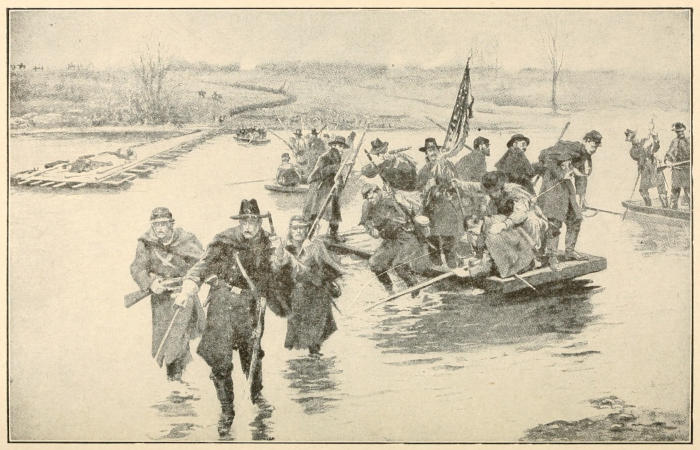
BATTLE OF FREDERICKSBURG. VOLUNTEERS CROSSING THE RIVER
Following up his advantage, Lee moved forward into Pennsylvania, upon the aggressive; met Meade at Gettysburg; and was repulsed, with heavy loss. He threw his men across long open spaces against the federal troops strongly posted and intrenched. For three days, the first three days of July, he beat doggedly upon them. The second day he drove their lines partly in and took a part of their position; but the third day the lost ground was recovered and he was driven back, his army almost decimated, to seek his base again in Virginia. Had he succeeded, no man can say what radical sweep of reaction there might have been at the North, in the face of his successful invasion, or what decisive advantage he might have won. But he failed; and the tide of war seemed to all the nation to turn.
Almost on that very day, moreover, Vicksburg yielded to the siege of General Grant. The defence of the place had been stubborn, prolonged, heroic, almost successful. Every plan of direct attack had failed. General Grant found it necessary to sweep round about the town upon every side, clear the country back of it of troops and all means of succor, and take Jackson, the capital of the State, forty miles away, in order to command all approaches. He sat down at last in patient siege, and forced the garrison of the place to surrender to him, half starved, on the 4th of July. On the 9th Port Hudson, below, yielded to the same necessity and was surrendered to General Banks. The Confederacy was broken in half. Louisiana and Texas were cut off. Throughout its entire length the Mississippi was in the hands of the federal power.
Grant turned from his hard-earned success at Vicksburg to take charge of the federal army shut up in Chattanooga. Upon the evacuation of Corinth, Mississippi, in May of the preceding year, General Braxton Bragg had taken thirty-five thousand confederate troops east to Chattanooga, and had struck northward thence into Kentucky. But General Buell had met him in a decisive action at Perryville, October 8, 1862, and had compelled him to retire again to his base. General Van Dorn, meanwhile, had sought to take Corinth again, and had given General Rosecrans two days of desperate fighting to prevent it (October 3-4, 1862). Finding it impossible to extend their operations, the confederate commanders drew back upon the central strongholds of Tennessee and Georgia. Just as the year 1862 passed away and the year 1863 came in (December 31st to January 2d) Rosecrans and Bragg grappled in three days’ desperate fighting around Murfreesboro. Bragg attacked with a spirit, dash, and stubborn ardor which no troops but troops of the same race with his own could have withstood; but Rosecrans’ men held their ground, or, having lost it, regained it, and Bragg withdrew. The new year saw him forced back step by step, the summer through, by the successful movements of the federal forces at his front, until autumn came and even Chattanooga had to be abandoned. Then (September 19 and 20, 1863) he made final stand against Rosecrans at Chickamauga and inflicted upon him a defeat which nothing but the extraordinary coolness and firmness of General Thomas, who commanded the left federal wing, prevented from becoming the most overwhelming federal disaster of the war.
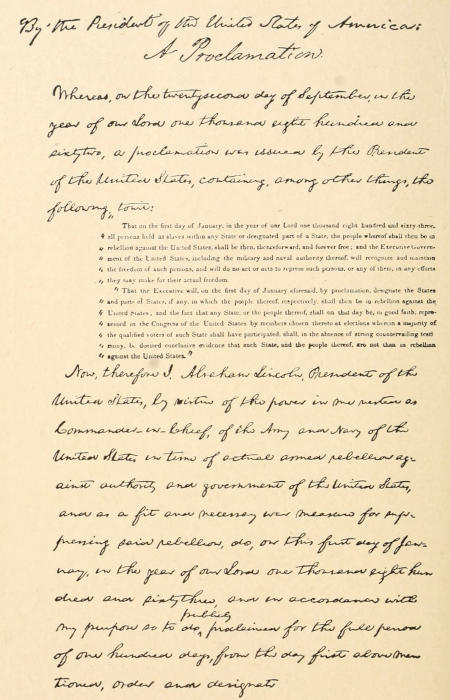
FACSIMILE OF THE FINAL EMANCIPATION PROCLAMATION OF JAN. 1, 1863
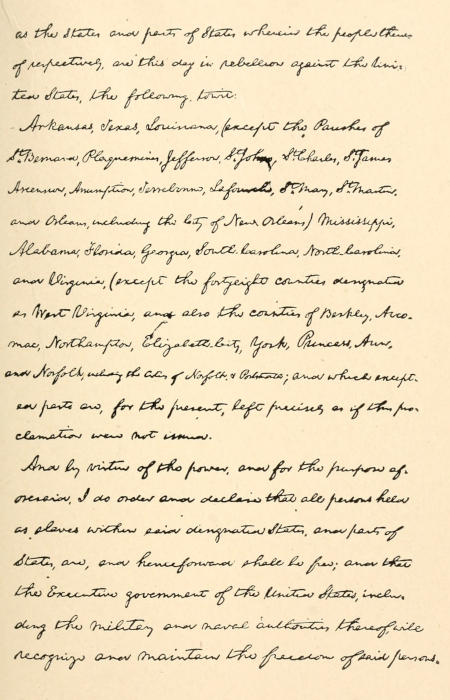
Bragg advanced, shut Rosecrans up in Chattanooga, and drew his force about the place to take it. General Grant came from Vicksburg to save it. The town lay with a sweeping amphitheatre of hills about it. Upon these coigns of vantage General Bragg had disposed his army: at the one end of the long semicircle abrupt Lookout Mountain, at the other steep Missionary Ridge, both alike, it might well seem, impossible of assault. Grant attempted and took them, nevertheless (November 24th and 25th). Sherman was sent to take Missionary Ridge, Hooker to take Lookout Mountain: the four greatest commanders of the northern armies directed the battle or moved upon the field,—Grant, Thomas, Sherman, Sheridan. Their men circled and climbed the steep ridges of the hills in a drifting fog; regiments of volunteers threw themselves with splendid recklessness upon the centre of Bragg’s position, to hold him off from concentrating his force against Sherman on his left, and, before they could be stopped, took the heights where his guns were. The siege was raised; the confederate army fell back on Dalton. Grant had attacked when Bragg was weakened by the absence of a part of his force sent under Longstreet to meet Burnside in eastern Tennessee. Missionary Ridge and Lookout Mountain being lost, and Bragg dislodged, Longstreet did not return, but crossed the mountains and joined Lee in Virginia.
Then came the winter’s pause of arms. No man who looked about him could fail to see that, despite Lee’s victorious movement in the East against the Army of the Potomac, the whole aspect of the war had changed. A girdle of arms had been drawn about the South, and her means alike of aggression and of defence were being slowly choked within her. On the one side of her were armies which grew with every campaign, while her own diminished; on the other, increasing fleets which closed every port from Hampton Roads to Galveston. Though it had taken two years to build and muster ships enough to make the blockade a thing of fact, it was now at last a stern reality. The South knew herself face to face with bankruptcy. Her exports were her only source of wealth; only her cotton could command the money of the world; and her cotton was locked useless within her ports. With closed ports she was ruined. A successful blockade runner here and there could bring no compensation for her throttled trade.
Her levies, too, drew, not upon an increasing, but upon a diminishing population. The confederate government resorted to draft acts, as the government at Washington did, when volunteers lagged or were not to be had; but it had no such population to draw upon. There were but five and a half million white people in all the seceded States when the war came; in the North twenty-two millions. As the southern armies grew, business offices, courts, counting houses, plantations were emptied, and only women and boys were left to direct the work which was to sustain the government and feed the armies. The federal government, knowing its advantage, refused to exchange prisoners; and for every man lost or taken the South had to find another from its thinning ranks for the fighting line.
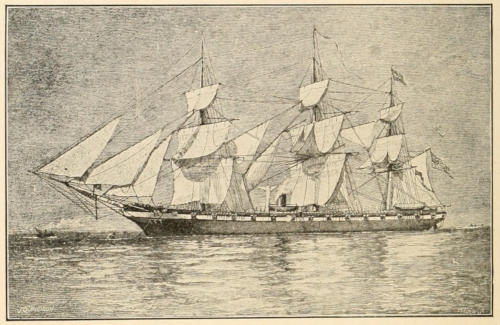
THE HARTFORD, FARRAGUT’S FLAG-SHIP
It was a singular and noteworthy thing, the while, how little the quiet labor of the negroes was disturbed by the troubles of the time and the absence of their masters. No rumor of the emancipation proclamation seemed to reach the southern country-sides. No sign of the revolution that was at hand showed itself upon the surface of southern life. Gentlewomen presided still with unquestioned authority upon the secluded plantations,—their husbands, brothers, sons, men and youths alike, gone to the front. Great gangs of cheery negroes worked in the fields, planted and reaped and garnered and did their lonely mistresses’ bidding in all things without restlessness, with quiet industry, with show of faithful affection even. No distemper touched them; no breath of violence or revolt stirred amongst them. There was, it seemed, no wrong they fretted under or wished to see righted. The smiling fields not yet trodden by the feet of armies still produced their golden harvests of grain under the hands of the willing slaves, and the armies were fed.
But the quiet tillage of her fields was all that remained of the old life of the South. Her trade was dead for lack of markets; her business offices were empty; the flower of her population was drawn into her armies; her resources were sapped and could not be renewed. The North, on the contrary, increased in wealth and population alike the long struggle through, despite the hundreds of millions poured out in money and the hundreds of thousands of men sent to the slaughter of the field of battle. In the South there was presently nothing to tax, and the confederate government was at its wits’ ends where to get money. In the North taxes yielded whatever Congress demanded. New direct taxes were imposed; still heavier duties were laid on imports; and, though many grumbled, all paid, and most were abundantly able to pay; for trade and industry were not checked.
Congress even succeeded at last in devising a banking system which should relieve the strain upon the Treasury and at the same time serve the business interests of the country,—a system which solved the difficulties which had stood unsolved ever since General Jackson destroyed the Bank of the United States and Mr. Van Buren set up the Independent Treasury. Twenty-five years before, New York had erected, in its “free banking” act of 1838, the model for the system which the federal government now tardily adopted. By that act New York had abandoned the old and vicious practice of granting special charters to individual banking companies, and had thrown banking privileges open to any group of responsible persons who would comply with the requirements set forth in the new law. Chief among these requirements was the deposit of recognized securities with the state government by every bank of issue to the full value of its circulating notes, in order that their payment might in any case be made good. In an Act of February 25, 1863, Congress made provision for a similar system of national banks; and by an Act of June 4, 1864, perfected the system and put the new law on a permanent footing by a thorough revision. The Act created a new bureau of the Treasury, under a Comptroller of the Currency, to superintend and secure the enforcement of its provisions. The Comptroller was authorized to permit the free establishment, for a term of not more than twenty years, of banking associations consisting of not fewer than five persons and having a capital of not less than one hundred thousand dollars; and in small places associations having even a smaller capital. Such associations were required to deposit with the Treasury Department bonds of the United States of the value of at least one-third of their capital; in return for which there should be issued to them from the Treasury circulating notes representing an amount equal to ninety per cent. of the market value of their bonds, but never exceeding ninety per cent. of their par value. The total issue of currency to be made under the Act was limited to three hundred millions; and that amount, it was provided, should be apportioned among the States in proportion to their population and banking capital. The immediate object of the Act as a government measure was to create a market for the bonds of the United States and quicken the processes of borrowing upon which the government was in large part obliged to depend for the support of the war. It served the convenience of the country, however, hardly less than it helped the government; and what was primarily intended as a measure of public finance became the prop of private business. An Act of the following year (March 3, 1865) put a tax of ten per cent. on the circulation of all state banks, and forced them, if they would continue banks of issue, to qualify under the federal law.
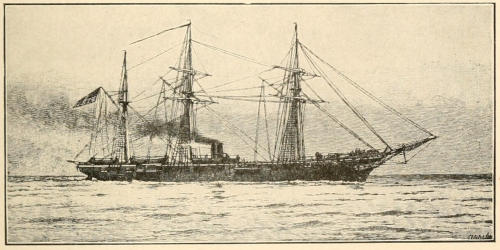
UNITED STATES SLOOP OF WAR KEARSARGE
The fourth year of fighting was the last. The crushing weight of the North told more and more; and the South tottered to collapse. By the spring of 1864 the federal armies were ready for their final movements, the confederate armies freshened, recruited, posted as best they might be for their last stand and defence. The final reallotments of federal commanders had been made. General Grant had become commander-in-chief and had taken personal command of the Army of the Potomac against Lee. General Sherman, upon whom Grant had learned to depend at Vicksburg and Chattanooga, was in command in the West. In May, Grant, with Meade, moved forward from the Potomac into the broad “Wilderness” of wood and thick undergrowth that stretched south of Fredericksburg and the Rappahannock to the York River, forcing Lee to make a slow retreat before him. The retreat was slow indeed. Lee operated upon shorter lines than his enemy, and behind intrenchments. He had scarcely seventy thousand men, and knew not where to get more; Grant had one hundred and twenty thousand, and could have as many more as he needed. By the first of November Grant had lost eighty thousand,—more than Lee had had to face him with at the outset; but his ranks were still full. Lee outplayed him in the great game of war, but could not stand before the ceaseless movement of his accumulating force. For sixteen days of almost continuous fighting he held Grant in hand, his slow withdrawal southward like the manœuvres of a long battle rather than like a retreat; and at the end, when he found a place to his mind, at Cold Harbor, on the 2d of June, made stand and repulsed the federal attack along his entire front.
But he was too heavily outnumbered. General Grant was not like the other men who had commanded the Army of the Potomac. No defeat stopped him or so much as gave breathing time. He filled his ranks and moved forward, whether in the face of victory or in the face of defeat, determined “to hammer continuously until by mere attrition,” if in no other way, the stubborn army at his front should be worn to a weakness that must bring him his triumph. It became a mere question of who could stand the heaviest losses. Six thousand Union soldiers had fallen at Cold Harbor in a single hour; but their places were not long vacant. Flank movements, now upon this hand now upon that, rendered each position of Lee’s army in turn untenable; and he was obliged at last to concentrate upon Petersburg and Richmond. There direct attack availed the federal commanders little. They were forced to sit down about Petersburg in a nine months’ formal siege.
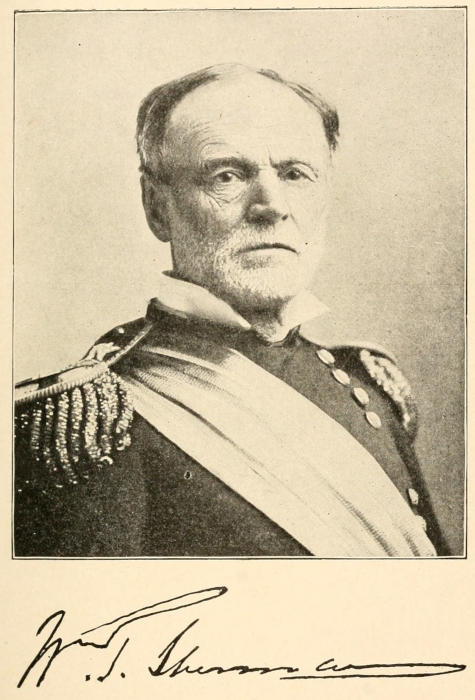
WILLIAM TECUMSEH SHERMAN
Meanwhile General Sherman had driven Johnston in like fashion, with like difficulty and stubborn fighting, back through northern Georgia upon Atlanta; and would have had infinite slow labor to the last had not Mr. Davis, displeased that Johnston did not beat the overwhelming army at his front, removed him from the confederate command,—the one man available who could make inferior numbers formidable against such an opponent,—and so made the task of the invading army easy. Johnston out of his way, Sherman cut Atlanta’s communications to the southward, forced the evacuation of the place without serious difficulty, and, leaving Johnston’s successor, General Hood, to face Thomas at the north, whither he was forced to turn, himself pushed on to the cities of the coast. At Franklin, Tennessee, November 30th, Hood threw himself, in his impetuous fashion, on Thomas’s advance force of eighteen thousand men, and was checked. At Nashville, on the 15th of December, Thomas himself attacked, and so utterly routed him that his army was never again brought together as an effective force. Sherman, confident that Thomas could take care of Hood at his rear, moved steadily on to Savannah and took it (December). Before he left Savannah, Wilmington, North Carolina, and the formidable batteries at Fort Fisher had been taken by naval and military forces co-operating on the coast: and when he left Savannah and advanced into Carolina his movement forced the evacuation of Charleston. Mobile had been taken by Farragut and land forces operating with him early in August. Not a port of consequence remained to the Confederacy; and the very fields that had fed the southern people were swept bare. Sherman’s men had left little enough in their track. They had devoted themselves to destruction and the stripping of the land they crossed with a thoroughness and a care for details hardly to be matched in the annals of modern warfare. The old heats of civil war, dreaded since the world began, had been blown very hot as year was added to year in the bitter struggle, and each soldier played the marauder very heartily. What the South had not spent or war consumed he stripped her of as he could. What he did not need or want he destroyed.
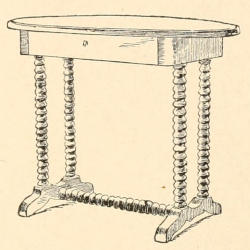
TABLE USED AT THE SURRENDER AT APPOMATTOX COURT HOUSE
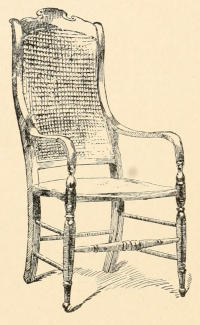
CHAIR USED AT THE SURRENDER AT APPOMATTOX COURT HOUSE
By spring, as Sherman swept slowly northward through the Carolinas for a final junction with Grant in Virginia, the inevitable had been accepted, and the war was over. Lee had not had the strength to prevent the federal lines from being drawn completely around him. By the first days of April he had found Richmond untenable and had withdrawn towards Danville, hoping to effect a junction with Johnston, now once more in command of the decimated force that was facing Sherman coming north; but everywhere he was cut off, entangled, outnumbered; and on April 9th he surrendered to General Grant at Appomattox Court House. On the 26th Johnston surrendered to Sherman; and the end had come. The most honorable terms were granted. Both men and officers were to be released on parole. They were to keep their horses, “because they would need them for the spring ploughing and farm work,” General Grant said, in his simple fashion. The horses were not the property of the confederate government, the federal commander was surprised and touched to learn, but of the men who rode them,—like almost everything else they had or used. The final arrangements were made almost as if by a conference between friends, both commanders quieted and solemnized by thoughts of the great matter they were bringing to a close. Another course had been pressed upon General Lee, by some of his own officers, and even suggested by the President of the Confederacy. It had been proposed that he should disperse his army, to gather it again in small fighting squads at every point of vantage and make the conquest of the South impossible through the quick and ceaseless operations of guerrilla bands moving broadcast over the whole face of the various country. But he had refused with a sort of solemn anger. “You must remember we are a Christian people,” he said. “For us, as a Christian people, there is now but one course to pursue. We must accept the situation; these men must go home and plant a crop; and we must proceed to build up our country on a new basis.” The way of duty was plain to him.
And then, at the end, when the terrible days were over and a healing time of peace at hand in which passion might run cool again and men remember their common ties of citizenship and fraternity, a deeply tragical thing happened, as if to fill the cup of sectional bitterness to the brim and mark forever the fatal distemper of civil strife. On the evening of the 14th of April, 1865, five days after General Lee’s surrender at Appomattox, ere Johnston had yielded to Sherman, Mr. Lincoln was shot in his box at Ford’s Theatre in Washington, and the next day lay dead. The assassin had been John Wilkes Booth, the distinguished actor, half crazed by blind enthusiasm and poignant regret for the lost southern cause.
Mr. Lincoln had but a short month before entered upon his second term as President. The election had been held while General Grant was drawing his lines closer and closer about Petersburg and Richmond, while Sherman was sweeping southward from Atlanta to the coast of Georgia, while the struggle culminated which the last election had brought on. Passion had stirred in it as in the contest of arms itself,—not the ordinary ardor of parties arrayed against one another by sharp differences of principle, but the deeply excited passion which days of revolution and supreme crisis must always breed. The war had not run its extraordinary course without touching the very government itself with revolution. The constitution had been framed with no thought to provide for such days as these, when States were breaking away from the Union and the government was struggling for life itself; and with the unlooked for exigency had come unlooked for and arbitrary acts of power. The whole authority of the nation had seemed of a sudden to be concentrated in the Executive, without restraint of law. Citizens suspected of sympathy with the southern Confederacy had been arrested and thrown into prison, deported even, upon orders which were no better than lettres de cachet. Many an undoubted principle of the constitution had seemed as if for the time suspended, in order that the executive and military power might move supreme, to meet a supreme necessity. Mr. Lincoln had acted oftentimes with the authority almost of a dictator, and had permitted his Secretaries, particularly the Secretary of War, a license of power greater even than he would himself have used. Individual rights had seemed for a time suspended.
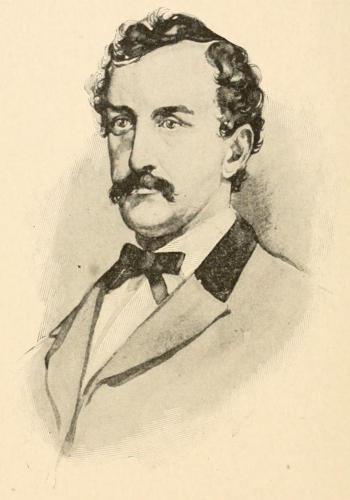
JOHN WILKES BOOTH
The men who knew the President and were near him saw no permanent danger in all this, for they knew the singular nature of the man, detected not a movement of personal ambition in his exercise of power, felt with what kindliness of judgment and with what sober motives of public service he acted, and looked confidently to see all things restored as of course to their old poise and balance when the storm of war had passed. But men who were not near him could not so see him. Even politicians of his own party thought him unsafe. Many plain people everywhere thought him more,—thought him capable of hopelessly marring the government and permanently weakening the foundations of individual liberty in the very act of saving the Union from overthrow. Fortunately rank and file had caught the spirit of the war, and the spirit of the man. Moreover, in his own homely phrase, it was no time, as every thoughtful man perceived, to risk swapping horses in the midst of the stream; and he received the electoral votes of every State that took part in the election except New Jersey, Delaware, and Kentucky.
There had seemed for a brief while, nevertheless, not a little danger of his defeat, and he had been nominated for his second term by a convention not gathered from the Republican ranks merely but made up to represent all men, of whatever party allegiance hitherto, who deemed him the nation’s indispensable instrument and servant at that time of crisis. As a consequence of the composite make-up of the convention, Mr. Andrew Johnson, a Union man but a Democrat, of Tennessee, had been nominated for the Vice Presidency, as if to mark and emphasize the co-operation of groups and sections which the time had called forth. Mr. Lincoln’s death made Mr. Johnson President. The first tasks of peace were to be hardly less difficult and perplexing than the tasks of war had been, and the party which had triumphed was left without executive leadership at their very threshold.
The chief general authorities for the years covered by this chapter are the fifth and sixth volumes of Schouler; the fourth volume of Bryant and Gay; Alexander Johnston’s History of American Politics and articles in Lalor’s Cyclopaedia of Political Science, Political Economy, and United States History, especially the articles Secession, Dred Scott Case, Rebellion, and Confederate States; Larned’s History for Ready Reference; the second, third, and fourth volumes of James Ford Rhodes’s History of the United States from the Compromise of 1850; the sixth and seventh volumes of von Holst’s Constitutional and Political History of the United States; and Nicolay and Hay’s Abraham Lincoln: A History.
Among special treatises, dealing with particular interests or aspects of the war and its policies, the following are important and representative of a vast number of books: Horace Greeley’s American Conflict; Henry Wilson’s Rise and Fall of the Slave Power in America; Edward A. Pollard’s Lost Cause; Joseph Hodgson’s Cradle of the Confederacy; Edward McPherson’s Political History of the Rebellion; Frederick Law Olmsted’s Cotton Kingdom; Jesse Macy’s Political Parties in the United States, 1846-1861; William H. Seward’s Diplomatic History of the Civil War; James M. Callahan’s The Diplomatic History of the Southern Confederacy; John C. Ropes’s Story of the Civil War; William A. Dunning’s Essays on the Civil War and Reconstruction; James Spence’s The American Union; H. C. Fletcher’s History of the American War; George Lunt’s Origin of the Late War; Frederic Bancroft’s The Final Efforts at Compromise in the sixth volume of the Political Science Quarterly; J. D. B. DeBow’s Industrial Resources of the Southern and Western States; T. S. Goodwin’s Natural History of Secession; Joel Parker’s Personal Liberty Laws; Marion G. McDougall’s Fugitive Slaves; Leverett W. Spring’s Kansas and Nathaniel S. Shaler’s Kentucky in the American Commonwealth Series; F. W. Taussig’s Tariff History of the United States; and A. S. Bolles’s Financial History of the United States.
Among the important biographies, whether for weight of narrative or for side aspects of the great struggle, are George Ticknor Curtis’s Life of James Buchanan; John T. Morse’s Abraham Lincoln in the American Statesmen Series; Henry J. Raymond’s Life of Lincoln; F. W. Seward’s Seward at Washington; Edward L. Pierce’s Memoir and Letters of Charles Sumner; Lyon G. Tyler’s Letters and Times of the Tylers; Pleasant A. Stovall’s Life of Robert Toombs; Charles Francis Adams, Jr.’s Charles Francis Adams in the American Statesmen Series; William P. Trent’s Life of W. G. Simms; A. M. Williams’s Sam Houston and the War of Independence in Texas; Susan D. Smedes’s Memorials of a Southern Planter; Alfred T. Mahan’s David Farragut; Henry A. White’s Robert E. Lee and the Southern Confederacy; Robert M. Hughes’s General Johnston; Frederic Bancroft’s Life of William H. Seward; and Albert Bushnell Hart’s Salmon P. Chase in the American Statesmen Series.
The military history of the war and the discussion of slavery which necessarily went along with it may be found set forth in Theodore A. Dodge’s Bird’s-Eye View of Our Civil War; Comte de Paris’s Military History of the Civil War in America; John W. Draper’s History of the Civil War; The Century Company’s Battles and Leaders of the Civil War; Heros von Borcke’s Memoirs of the Confederate War for Independence; Lieutenant Colonel G. F. R. Henderson’s Stonewall Jackson and the American Civil War; Mary Tremain’s Slavery in the District of Columbia, in the Publications of the Historical Seminary of the University of Nebraska; Richard Hildreth’s Despotism in America; Samuel Seabury’s American Slavery Justified; Robert L. Dabney’s Defence of Virginia and the South; Thomas R. R. Cobb’s Inquiry into the Law of Slavery; H. Sherman’s Slavery in the United States; William H. Chambers’s American Slavery; Daniel R. Goodwin’s Southern Slavery in its Present Aspects; John Henry Hopkins’s Views of Slavery; James Williams’s The South Vindicated; A. T. Bledsoe’s Is Davis a Traitor?; John C. Hurd’s Law of Freedom and Bondage and Theory of Our National Existence; and P. C. Centz’s Republic of Republics.
Some of the sources for the period may be found in The Congressional Globe, the official documents of the government, notably the Official Records of the Rebellion; the contemporary newspapers; Appleton’s Annual Cyclopaedia, especially under the titles Congress of the United States, Congress, Confederate, Confederate States, United States, Army, and Navy; Horace Greeley’s History of the Great Rebellion; Alexander H. Stephens’s Constitutional View of the War Between the States; O. H. Brownson’s American Republic; Thurlow Weed’s Autobiography; G. T. Curtis’s Correspondence of John Lothrop Motley; Hugh McCullough’s Men and Measures of Half a Century; John Sherman’s Recollections of Forty Years in House, Senate, and Cabinet; The Sherman Letters; Ben. Perley Poore’s Perley’s Reminiscences; Henry A. Wise’s Seven Decades of the Union; S. S. Cox’s Three Decades of Federal Legislation; J. H. Gilmer’s Southern Politics; William H. Seward’s Autobiography; James Buchanan’s Buchanan’s Administration; Frederick Law Olmsted’s Journey in the Seaboard Slave States, Texas Journey, and Back Country; Hinton R. Helper’s The Impending Crisis; Mrs. Coleman Chapman’s Life of John J. Crittenden; E. D. Keyes’s Fifty Years’ Observation of Men and Events; L. E. Chittenden’s Reports and Debates of the Conference Convention; the third volume of Alexander Johnston’s Representative American Orations; George Cary Eggleston’s A Rebel’s Recollections; Reuben Davis’s Recollections of Mississippi and Mississippians; Jones’s A Rebel War Clerk’s Diary; Ulysses S. Grant’s Personal Memoirs; William T. Sherman’s Memoirs; A. G. Riddle’s Recollections of War Time; Dabney H. Maury’s Recollections of a Virginian in the Mexican, Indian, and Civil Wars; Judith W. McGuire’s Diary of a Southern Refugee During the War; Herndon’s Life of Lincoln; L. E. Chittenden’s Recollections of Lincoln and His Administration; James S. Pike’s First Blows of the Civil War; A. T. Porter’s Led On Step by Step; Jefferson Davis’s Rise and Fall of the Confederate Government; Nehemiah Adams’s South Side View of Slavery; William Harper’s The Pro-Slavery Argument; the Papers of the Southern Historical Society; James Stuart’s Three Years in North America; Frederick Douglass’s Life and Times, Written by Himself; Solomon Northrop’s Twelve Years a Slave; the case of Dred Scott vs. Sanford, reported in the 19th volume of Howard’s Reports; and the case of Texas vs. White, the leading decision of the Supreme Court with regard to the right of secession, reported in 7th Wallace’s Reports.