Chapter II · THE BANK AND THE TREASURY
Reading edition
Again in 1832, as in 1828, it had been a man rather than a party that had won the presidential election. The real issue of the contest had been the re-election or rejection of General Jackson, upon his record as President and political leader. Although he took the result as a verdict against South Carolina, as a verdict against every one who withstood his authority either as man or as President, the nullification issue had not been made a test of doctrine or policy by either party. It was passed by, as if politicians wished to ignore it. So far as it was a contest concerning policy at all, and not a mere attack of the conservative forces of the country upon General Jackson himself as a radical and the author or spokesman of all revolutionary error, the contest centred upon the question of the Bank. It was the President’s hostility to the United States Bank that was the Opposition’s chief item of indictment against him. They attacked him also, it is true, for his unfriendly attitude towards the protective system and for his unwillingness to allow liberal outlays to be made for internal improvements. But he had in fact been more tractable than they had expected in those matters. He had really suffered Congress to go its own way in adjusting the tariff, and had yielded now and again to its ardor for spending money out of the federal treasury for the improvement of harbors and for the prosecution of other public works which promised to result in a general benefit to commerce. Only on the question of the Bank had he stood stubborn and forced the fighting.
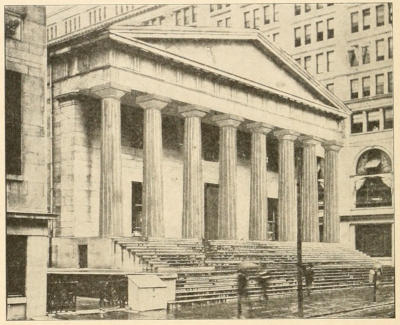
THE OLD UNITED STATES BANK, NOW THE CUSTOM HOUSE, PHILADELPHIA
The charter of the Bank was not to run out until 1836. It had not been necessary or wise to force the question of its renewal to an issue in 1832, to be confused with the question of General Jackson’s popularity and personal prestige. The conservatives in Congress had been betrayed into a grave tactical blunder, because they shut their eyes to the real signs of the times. They did not yet know the rules of prudence in a day of personal politics; did not understand the subtle elements of the play; did not know the opinion of the country or comprehend the drift of affairs.
The Bank of the United States had been first created in 1791, and the question of the right of Congress to establish it had been duly fought out then, as it were at the very founding of the government. Both Congress and the Executive had accepted the conclusions of Mr. Hamilton in the matter, and rejected the conclusions of Mr. Jefferson. Mr. Jefferson’s party had allowed the charter of the Bank to lapse in 1811, when their day of power came, professing themselves opposed to it on principle; but in 1816, finding the exigencies of finance powerful solvents of their scruples, they had changed their minds and had given it another twenty-year charter. Three years later the Supreme Court of the United States (McCulloch vs. Maryland, 1819) confirmed the reasoning of Mr. Hamilton with regard to its constitutionality in a formal decision, and set the views of every scholarly lawyer in the country once for all at rest on the matter.
But General Jackson had come in “to simplify and purify the workings of the government, and to carry it back to the times of Mr. Jefferson,—to promote its economy and efficiency, and to maintain the rights of the people and of the States in its administration”; and from the outset, with something of the instinct of the communities in which he had been bred, he looked upon the Bank as an enemy of constitutional and democratic government. His attack upon it, begun in his first inaugural address, had been continued in every annual message he sent to Congress. He had begun by plainly intimating a doubt as to the legality of its institution, the Supreme Court to the contrary notwithstanding; and had asserted that it had failed to establish a stable currency. He next pronounced it an “un-American monopoly.” Finally he expressed serious misgivings as to the soundness of its management. At each mention of it his warmth sensibly increased; his hostility became more open and aggressive. The purpose apparently grew upon him to destroy it. He forced it to meet him, as challenger, and fight for its life in the open field of politics. Influences were at work upon him which were only by degrees disclosed to his opponents.
The constitution of the Bank unquestionably placed it very near the government itself. Its capital stock was $35,000,000, and of this the federal treasury held nearly one-third by direct subscription ($11,000,000); five of its twenty-five directors were appointed by the President of the United States; it was the depository of the public funds and enjoyed the use of them without interest; it was empowered to issue circulating notes to the full par value of its capital stock; and its notes were made receivable by the United States as cash for all debts. Congress pledged itself to create no other bank while the charter stood. In return, the Bank had paid the federal government a million and a half dollars for its franchise, and undertook to negotiate the loans of the government without charge or commission. Its notes it was obliged by law to redeem in specie on demand. Although a private corporation and carefully planned upon conservative and prudent principles, it was unquestionably the ruling force in the money market, and took its power from its connection with the government. Undoubtedly, too, it had been intended to play this dominating part and was by design a political institution. It had been Mr. Hamilton’s object, in setting up the first Bank of the United States, to bring the money transactions of the country under a central control, to check the experimental banking operations of the States, and to draw the capitalists of the country and the greater organizers of industry to the active support of the federal government upon grounds of interest. The second Bank, now under fire from the Executive, had been given the same constitution and function.
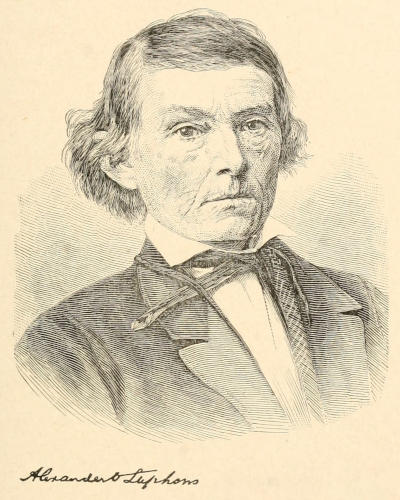
ALEXANDER H. STEPHENS
The supporters of the Bank were in a measure justified in claiming that it was for such a purpose that the very government itself had been set up. Nothing had more obviously threatened quick and overwhelming disaster to the country in the days of the Revolution and the Confederation than the reckless financial operations of the States, their unlimited issues of irredeemable paper, their piled up promises and meagre means of redeeming them; and the constitution of the Union had been framed almost as much to avert ruin from that quarter as to create a real government, clear up the relationships of the States to one another, and steady their political action. It absolutely forbade the States to issue bills of credit, did not give the federal government itself power to do so, and was meant practically to prohibit the use of any currency which was not at least based directly upon gold and silver. But the courts had opened new flood-gates. They had ruled that, although the States themselves could not legally issue bills of credit, they could incorporate private banks authorized to issue notes at pleasure, with or without proper security for their redemption,—could even themselves invest public moneys in the stock of such banks and become virtual partners in the irresponsible business. Gold and silver were hard to get, came within reach of eager borrowers only in the most niggardly quantities, and could be had only for securities in hand. The adventures of growth and industry in a new country where everything was making and to be made demanded easy credit, to be had for the asking, and abundant money; and had only promises and hopes to offer for security. Banks of issue sprang up everywhere that there was expectation and sanguine confidence; and every possible vagary attended their operations. No man could tell a day’s journey from the bank whose paper he carried whether it would be accepted and serve him as money or not. Only a great commanding bank, everywhere known, whose notes really and always represented gold could supply paper worth its face value in all places or keep exchanges from chaos.
Such an agency of adjustment and control the Bank of the United States had proved itself to be. It had not only served its purpose as a fiscal agent of the government, to the satisfaction of the Treasury, but had also steadied and facilitated every legitimate business transaction and rid the money market of its worst dangers. But many of the men to whom General Jackson was accustomed to listen believed, or affected to believe, that it had done much more: that its power was used to serve a party and to keep men who were no friends of the people or of popular rights in a position to manage and corrupt the whole politics of the nation. They reasoned out of experience. The state banks were everywhere notoriously tainted with political partisanship,—were almost everywhere familiar, recognized engines of party supremacy. No one who was not of the political majority in the State could get a banking charter from a state legislature; no one was absolutely sure of credit or indulgence at a state bank except those who were of the party of its directors. It had come to be looked upon as a matter of course that banks should be used as parts of the machinery of political control. General Jackson and his partisans could not believe that the great Bank of the United States was free from a similar taint. It had certainly been established by men of the party which they were now trying in all things to supplant, the men who had turned away from General Jackson and followed Mr. Clay. It was part of the old, suspected, aristocratic order which the new democracy had come in to set aside, and everything that it did was subjected to suspicion.
The Bank had branches throughout the country, at points of convenience where business centred. Friends of General Jackson complained that men openly opposed to them in every party interest were appointed officers of these branches, even in States which had cast their votes for General Jackson and the new régime; that loans were refused and collections insisted on in a way which was offensive to the partisans of the Administration; and that money was used in the elections against them. They were particularly indignant that Mr. Jeremiah Mason, an incorrigible Federalist, had been made president of the branch bank at Portsmouth, in New Hampshire, and had shown himself disinclined, as they had expected, to afford friends of General Jackson any unusual indulgence or accommodation in matters of business. Concrete cases fixed General Jackson’s convictions in such matters as no argument upon the merits could fix them. Here was a very tangible example of what he had been led to suspect. The story came straight from friends whom he trusted,—from Mr. Levi Woodbury and Mr. Isaac Hill, the two men who had been chiefly instrumental, he had reason to believe, in winning New Hampshire over from the Federalist to the Jackson interest. Mr. Hill was editor of the New Hampshire Patriot, and had an editor’s inside view of the politics he had had so large a share in shaping. He was also one of the officers of a bank at Concord which was operated under a charter from the State, and had a state banker’s knowledge of what the branches of the Bank of the United States could do to dominate credit and control exchanges. Mr. Woodbury had been chosen a senator of the United States in 1825, and had from the first been received into the intimate counsels of the new President. Mr. Hill had left his bank and his paper in New Hampshire to put himself at the service of the Administration in Washington, and had become, as everybody knew, a member of the “Kitchen Cabinet.” When such men told him of the influence of the Bank in New Hampshire, the President could but believe them. Mr. Kendall brought him the same report of its influence in Kentucky. It had undoubtedly, he said, spent money there to secure the success of Mr. Clay and the defeat of General Jackson.
It seemed a significant thing that Jeremiah Mason should have been chosen for president of the branch bank at Portsmouth. He was unquestionably the political opponent whom the Jackson leaders in New Hampshire most feared, and had most reason to fear. His character gave him a very noble eminence; his extraordinary abilities as a debater and his exact knowledge as a lawyer gave him an instant hold upon every thoughtful audience. All the country knew how formidable Mr. Webster was in debate, and Mr. Webster ascribed no small part of his own power to the lessons he had learned when pitted against Mr. Mason at the bar.
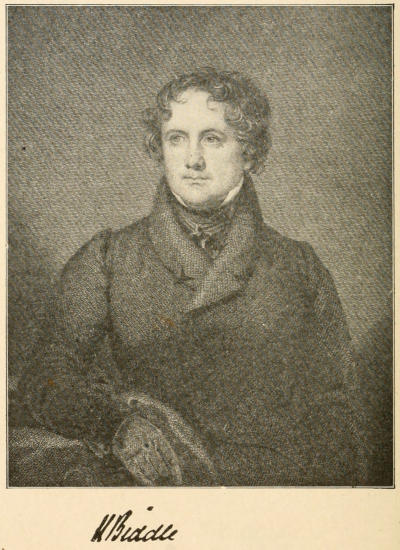
NICHOLAS BIDDLE
The President had no mind to let the case go unnoticed. Mr. Ingham, the Secretary of the Treasury, brought it to the attention of Mr. Biddle, the President of the Bank of the United States (1829), in a letter in which he frankly took it for granted that Mr. Mason had been appointed because of his hostility to General Jackson; plainly intimated that the whole object of the Bank’s establishment and management had been to strengthen “the arm of wealth” in order to “counterpoise the influence of extended suffrage in the disposition of public affairs”; and urged that the Bank clear itself of the suspicion by drawing its officers and appointees from both political parties without discrimination. Mr. Biddle replied with natural indignation. It was easy to refute the charges made. In the particular case of the branch bank at Portsmouth the well known character of Mr. Mason made them ridiculous. It could be shown conclusively enough that, whatever party the officers of the Bank happened to be chosen from, its affairs were conducted in accordance with sound principles of business, and with no view to either giving or withholding favors upon political grounds. Mr. Biddle found no difficulty in framing a reply which should have convinced all candid men upon the main points at issue.
He made a grave tactical blunder, none the less, in the tone and method of his defence. He knew the temper and susceptibilities of the men he was dealing with and the temper of opinion in the country as little as Mr. Clay did and the men who stood with Mr. Clay against the President in Congress. The warmth of Mr. Biddle’s reply to the Secretary, however natural, was most impolitic; and he did not content himself with refutation, but went on to utter what seemed little less than a defiance. He reminded Mr. Ingham that the Bank of the United States, whatever its business connections with the federal government, was a private corporation, accountable to no one but its own directors for the conduct of its affairs. Mr. Ingham responded with a pointed threat. He reminded Mr. Biddle, in his turn, that the law by which the Bank was incorporated authorized the Secretary of the Treasury to withdraw the deposits of the United States when he deemed good cause for the withdrawal to exist.
Mr. Ingham retired from the Treasury upon the reconstruction of the cabinet which followed the President’s breach with Mr. Calhoun, and Mr. Louis McLane, of Delaware, took his place (August 8, 1831), a man of better balance and more liberal spirit, trained in the older school of politics. In December, 1831, his report to Congress ran strongly and unmistakably in the Bank’s favor, and it began to look as if the temper of the Administration had already cooled and altered in the needless quarrel, which was of its own making. But the friends of the Bank were not wise enough to let the matter drop. Its charter was safe at least until 1836, and General Jackson, they might have hoped, would learn the Bank’s value by experience, should he remain President until then. But Mr. Clay advised that application be made at once for a renewal of the charter, while the houses certainly held a majority favorable to it; and the advice was imprudently taken. The matter was pressed at once, and in the summer of 1832 (June-July), during the session which immediately preceded the presidential election, a bill renewing the charter passed the Senate by a vote of 28 to 20, and the House by a vote of 109 to 76. It was a direct challenge, and General Jackson of course met it with a veto, delivered point-blank and without hesitation. The Bank’s majorities in the houses were not large enough to pass the bill over the veto; and Clay men and Jackson men alike turned to the country for its verdict.
The folly of staking the fortunes of the Bank against the popularity of General Jackson at the polls was quickly enough demonstrated. It was much easier for the mass of men who now held the votes of the country to believe the Bank a dangerous and corrupt monopoly than to understand the arguments of statesmen who argued of its services to the government and to commerce. They recognized General Jackson as a man of their own instincts, and deemed those instincts a sure enough guide in politics. Statesmen might approve of the Bank, but the people thought of it only to suspect it, and preferred General Jackson to all the statesmen the Bank could muster to its standards. A second time they chose General Jackson President. He interpreted their votes to mean a deliberate verdict against the Bank,—a command to destroy it; and its fate was sealed. The President proceeded with characteristic promptness and directness. He first turned to Congress (December, 1832), the very Congress which had passed the vetoed bill, and asked for an investigation, to ascertain whether it was still safe to leave the deposits of the government with the Bank, in view of its mismanagement and probable insolvency. No one but General Jackson and a handful of politicians about him seriously questioned the good management of the Bank or for a moment doubted its solvency, even then, with its charter evidently doomed; and the House very emphatically declared that in its opinion the deposits were safe. General Jackson, accordingly, determined to act without Congress and on his own responsibility. He resolved that the Bank should no longer be given the custody of the public funds.
The statute under which the Bank was incorporated conferred the power to act in that matter, not upon the President, but upon the Secretary of the Treasury. The President therefore wrought his will upon the Treasury Department. Mr. McLane, whom he knew to be favorable to the Bank, he transferred from the secretaryship of the Treasury to the secretaryship of State, appointing Mr. Edward Livingston, then Secretary of State, minister to France, and putting Mr. William J. Duane, of Pennsylvania, who was known to be an opponent of the Bank, in charge of the Treasury Department. Mr. Duane showed unexpected scruples, and declined, out of a mere sense of duty, to make way for the execution of the President’s radical plan. He was dismissed, therefore, within four months of his appointment, and the Treasury was put into the hands of Mr. Roger B. Taney, of Maryland, the Attorney General, whose views the President knew to be his own (September 23, 1833). An order from Mr. Taney forthwith directed (September 26) that the revenues thereafter accruing should be deposited, not with the Bank of the United States, but with certain state banks selected by the Secretary for the purpose, and that the balance of the government in the Bank of the United States, then nearly ten millions, should be drawn upon for the government’s expenses until exhausted. The thing was done at infinite hazard of financial panic. The Bank was obliged to curtail its loans very sharply and at once, in order to bear the drain, which was to be offset by no replenishment; there was immediate distress in the money market, a sudden flutter of credit; and only the sound condition of business at the moment prevented crisis and disaster.
The President spoke of the matter in his annual message with his usual intrepid frankness: took the whole responsibility for what had been done upon himself, and justified it. No one whose opinion was of any weight in such a matter had approved of the removal of the deposits; his own cabinet had been opposed to it, as both unwise and of doubtful legality, and had united with Mr. Duane in trying to turn him from his purpose; but he had gone his way without pause, hesitation, or excitement, like a man convinced and confident. He believed that the Bank had gone into politics to prevent his re-election, in 1832 if never before. Its directors admitted that large sums had been spent out of its funds for pamphlets, for speeches, for every legitimate means of agitation in the campaign, which it knew to be a struggle for its life; and the President, who, with Mr. Clay as ally for the nonce, had forced it thus to meet him in the field of party action, now declared that the issue had come to this, “whether the people of the United States were to govern through representatives chosen by their unbiassed suffrages, or whether the power and money of a great corporation were to be secretly exerted to influence their judgment and control their decisions.” He made no scruple of the law in the case, deeming law meant for the service of the country.
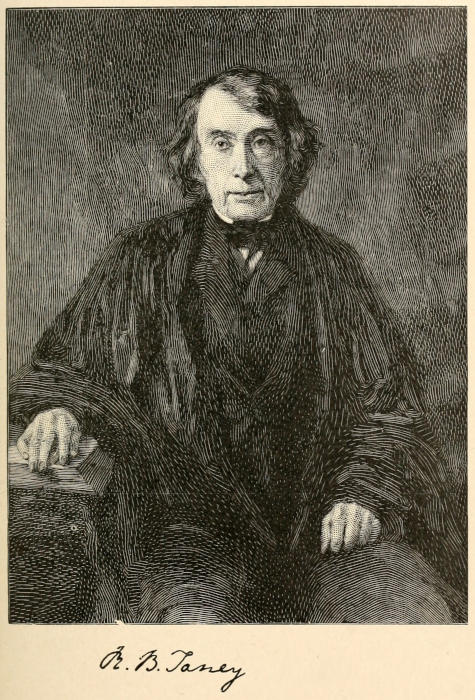
ROGER B. TANEY
The new House of Representatives, elected in the autumn of 1832, was now controlled by his friends, and supported him. The Senate, on the contrary, still stood against him, led, as before, by Mr. Clay, Mr. Webster, and Mr. Calhoun; and spread upon its minutes a public and formal censure, in which it earnestly condemned both the dismissal of Mr. Duane and the removal of the deposits. General Jackson replied in an equally formal protest, which ran hot and imperious. It spoke his whole theory of constitutional obligation: his resolution to be bound by neither court nor senate, nor any precedent whatever, but only by his own conviction of duty as a representative of the people under the constitution. The contest was ended. The Bank of the United States quietly made ready for the expiration of its charter, and when it came (1836) accepted in its stead a charter from the State of Pennsylvania.
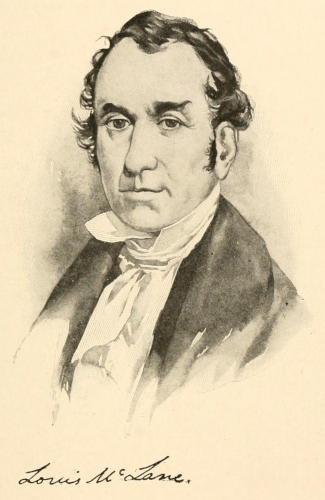
LOUIS McLANE
But the effect of what the President had done had by no means passed or spent itself. General Jackson had said that the Bank of the United States did not give the country a stable currency. The country had an opportunity to see for itself what service it had rendered when its check was withdrawn. It was no sooner discredited than the old inflation of bank issues came again, with wider range and play of destructive force than ever. The “pet banks,” as they were promptly dubbed, to which the deposits of the government had been transferred, were selected upon party principles,—were one and all “Democratic” banks in the South and West, whose directors were of the President’s party. Their number was fixed by no law or principle, and began from the outset to be added to from time to time, as this, that, or the other influence of interest or persuasion obtained the patronage of the government for banks not at first favored with a place on the list. State banks saw their day come again. State legislatures multiplied banking charters without safeguard or limit. Every bank sought the government’s favors; but none was discouraged because it did not obtain them. All banks were banks of issue. Those that did not have the government’s money to lend loaned their own abundant notes. Paper money seemed to pour of a sudden from every town and hamlet, and speculation began to heap risk upon risk to make use of it. The real money centres of the country had little part or lot in the business. Enterprise ran freest where chiefly compounded of hope,—where the resources of the country, though unmistakably rich with every promise of abundant profit, were as yet undeveloped, awaiting the slow processes of industry. The bubble of credit glistened resplendent with all the hues of the round globe, until General Jackson himself, in his rough honesty, pricked it.
The first strain and flurry came by reason of the mere superabundance of the national revenues. Business had been sound and prosperous until this new policy which upset the Bank came to disturb it, and the government had shared the profits of the merchant and the manufacturer. By the close of the year 1835 it was entirely free from debt. The revenues which filled its coffers could not be reduced: they came chiefly from the tariff duties as fixed by the compromise Act of 1833, and that was a pledge of peace between parties which no man cared to alter. Rather than keep surplus piling upon surplus, accordingly, Congress ordered (June, 1836) that on and after the first of the following January all surplus funds over and above five millions should be distributed, quarter by quarter, among the several States, as loans without interest which Congress might at its pleasure recall. Not a few of the pet banks found themselves considerably embarrassed to meet the drafts upon them by which the quarterly distributions were made; but the States found speculative schemes to put the money into quite as readily as individuals did; the movement of business was not disturbed; and before the year was out there were no more such disbursements to be feared. Only three quarterly payments were made,—a total of twenty-eight million dollars. After that there was no surplus to distribute. General Jackson had pricked the bubble.
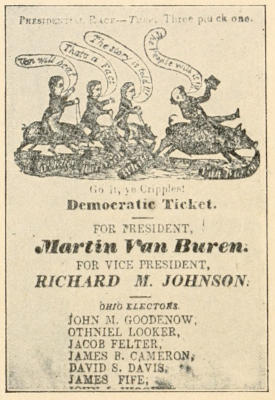
ELECTORAL TICKET OF 1836
The President had a very sturdy and imperative sense of right and honesty in all money matters. He believed gold and silver to be “the true constitutional currency” of the country, he said. He demanded of the pet banks that they should keep specie enough to cover at least a third of their circulation, and that they should issue no notes of a lower value than twenty dollars. He increased the output of the mints and tried by every means to force coin into circulation. He had no idea of letting the country try again the fatal experiment of an irredeemable paper currency, if he could prevent it; and when he saw the fever rising in spite of him he tried a remedy as drastic and wilful as his destruction of the Bank of the United States. Speculation and hopeful enterprise had had an extraordinary effect upon the sale of the public lands. In 1834 the government had received less than five millions from that source. In 1835 the sum sprang up to more than fourteen millions, and in 1836 to nearly twenty-five millions; and the money poured in, not, of course, in gold and silver, but in the depreciated currency of innumerable unknown banks. The Treasury was forbidden by statute to receive any notes but those of specie paying banks; but things had by that time already come to such a pass that no man could certainly or safely distinguish the banks which really kept a specie reserve from those which only pretended to do so. On July 11, 1836, accordingly, by the President’s command, a circular issued from the Treasury directing the land agents of the government to accept nothing but gold or silver in payment for public lands. Again, as in the case of the Bank, the President’s advisers drew back and disapproved; but again he assumed the full authority and responsibility of his sovereign office, and delivered his blow without hesitation or misgiving.
The effect was to shatter the whole fabric of credit. But the consequences did not disclose themselves at once. General Jackson had retired from public life and Mr. Van Buren had succeeded him in the presidency (March, 1837) before the inevitable day of disaster and collapse had visibly come. The imperious old man must have looked back with not a little satisfaction upon the long series of personal triumphs he had won, against trained statesmen and old parties intrenched against him. Even in diplomacy his energy and prompt initiative had won him successes denied to his predecessors. He had sent Mr. McLane to England to say that all our restrictions upon the carrying trade of England would be repealed if England would remove those which she had put upon the carrying trade of the United States in the West Indies; and the ports which had been shut in the faces of Mr. Gallatin and Mr. Adams were opened to him, Congress promptly fulfilling his promise with regard to the action of the United States (May 29, 1830). He pressed upon the new government of Louis Philippe in France, and upon the other governments as well which had been at fault in the matter, the claims of the United States for depredations unlawfully committed upon American commerce during the Napoleonic wars; and the claims were recognized and paid. He moved straight and openly upon every object he desired, and his very directness seemed to add dignity and scope to the government over which he presided. He had created a party and put subtle revolution into affairs by sheer force of individual quality, and left his great place and office before either he or the men who loved and followed him were aware what mischief he had unwittingly done,—how the whole framework of settled politics had been shaken and loosened at every joint by his wilful supremacy.
General Jackson had obliged his followers to accept Mr. Van Buren as his successor in the presidency: they were dominated by his will in this as in all things. The convention which nominated Mr. Van Buren had met a full year and a half before the election (May, 1835), while the power of the indomitable President was at its mid-term vigor; had been irregularly made up, its ranks crowded with men who held office under the President; and signs of faction and revolt had not been wanting. The country had chosen lukewarmly, too, the man whom the party had named perfunctorily. His majority in the electoral college had been but 47, as against General Jackson’s majority of 152 four years before; his popular majority only 26,000, as against General Jackson’s 157,000. The opposition had lacked unity and organization; hardly constituted a party at all; consisted, rather, of various groups of several shades of opinion; and put several candidates into the field: General William Henry Harrison, of Ohio, Mr. Webster, and Judge Hugh L. White, of Tennessee, for whom Tennessee voted, General Jackson notwithstanding. But, rank and file, the Democrats had stood by Mr. Van Buren. In him they acknowledged their debt and allegiance to General Jackson.
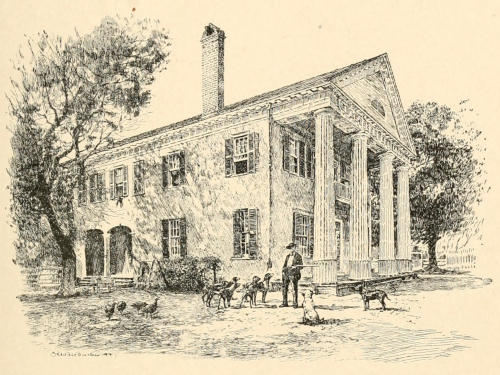
A NORTH CAROLINA MANSION OF THE OLD STYLE
Not a little strength of character underlay Mr. Van Buren’s bland exterior, his conciliating manners, his air of sweet accommodation. He was also, in his way, a consummate master of men. He mastered them by insight, by intimate and friendly counsel, and by knowing the end he sought. But he did not rule or dominate by force of will. That slender little gentleman, always courteous, always placid, always ready to listen, and wait to have his way, could not hold or rule the imagination as the rugged veteran did who had preceded him, tall, gaunt, sad-faced, majestic, carrying fire, gracious and grim by turns. The country regarded its new, soft-spoken President much as an audience would regard a bland, mellow-voiced, facile player brought on as understudy to some intense tragedian; was slow to take him seriously, slow to be convinced that he had an individuality and a power of his own. He seemed tacitly to promise in everything that he said that at every point of policy his administration should be but a continuation of what his predecessor had begun; and men looked on with curiosity rather than with sympathy, were more ready to criticise than to applaud.
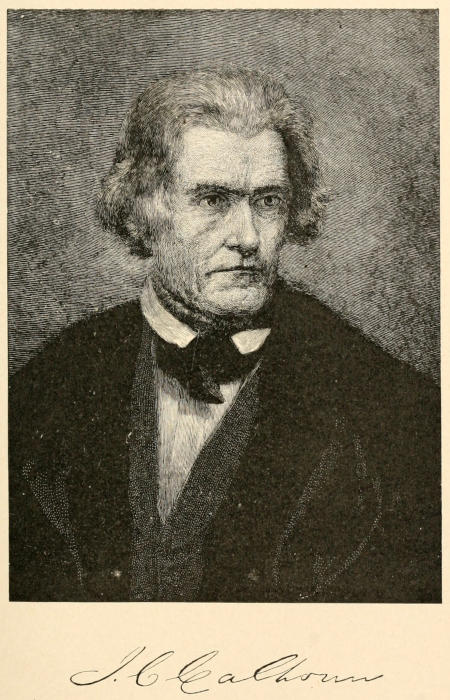
JOHN CALDWELL CALHOUN
While Jackson reigned he had seemed rather the maker than the representative of policy, and the Democratic party had been with difficulty discernible behind his stalwart figure, standing always at the front of the stage. Now at last it entered the play, as itself an independent and originative force in affairs, the President merely one of its leaders. The revolution wrought in political action by the coming in of General Jackson had fairly shaken parties asunder. Throughout his administration they had sought rather than obtained a new order and cohesion. The “National Republicans,” who had stood with Mr. Adams and Mr. Clay, had been even when at their strongest something less than a national party. Adherents had come and gone while the fighting thickened about General Jackson in Senate and House. When Mr. Van Buren became President they were still, if separately distinguishable at all, only the chief group among many groups combined in opposition. The Democrats were at last a veritable party; Mr. Clay’s friends were only part of a party. Not until 1834 did the grouped Opposition of which they formed the centre acquire a party name, or begin to arrange the definite concerts of party action. By the summer of 1834 they were coming to be spoken of very generally as “Whigs.” National Republicans; Anti-Masons; men who thought that South Carolina had been too harshly dealt with, to the detriment of constitutional state rights; men who condemned Jackson’s high-handed way in the matter of the deposits, “the immolation of Duane and the subserviency of Taney”; all who were startled to see how of a sudden a President had made himself as it were the master of the government, drew slowly together, and a great party was created. Insensibly, when power came to it, and the heartening breath of success, it reproduced the principles and spirit of the Federalists: their liberal way of interpreting the constitutional powers of the government, their confident enterprise in pushing forward to new programmes of action and putting the government at the front of the nation at every step of its progress, their belief in constructive statesmanship and the efficacy of legislation in the development and determination of the country’s life. But for the present it was merely a party of opposition, set over against the Democrats, who were in charge of the government and yet did nothing: did nothing, apparently, upon principle. General Jackson had in fact carried the government back to the principles of Mr. Jefferson, as his friends had said that he would: had squared its action with those principles more perfectly a great deal than Mr. Jefferson himself had done. His intense and aggressive activity in affairs had obscured the fact while his personal power lasted; but he had spent his telling energy upon clearing the field of what his predecessors had constructed,—not upon making but upon setting aside; and he left a party behind him which had imbibed his spirit: which desired no new era of Federalistic policy; which wished to see the field kept clear of unnecessary laws and fostered institutions, of great corporations created for the use of the government and favored enterprises subsidized in the interest of a class; which desired to see authority used, not to patronize or foster, but only to give the government the necessary force and to administer it with a wise and honest moderation, while all things went their natural course, unpetted and unhampered.
It faced a crisis with principles negative and opposed to action, and yet faced it undaunted, advocating only a safe withdrawal of the government from the field of danger. Within two months after Mr. Van Buren’s inauguration General Jackson’s “specie circular” had done its work. A sharp financial crisis racked the business of the country from end to end, and brought with it a panic stubborn and hopeless, which seemed for months together as if it had come to stay. It had been strain enough that the money market had had to accommodate itself to the preparations of the Bank of the United States for the winding up of its business, and to the distribution of the surplus among the States. There had been a rapid increase, besides, in the volume of imports since 1832, and considerable sums of specie had had to be sent out of the country to meet the balances of international trade. The specie circular had come with cruel opportuneness. Bankers and borrowers alike had been reckless; credit was already out of breath. When the great sums of paper that had gone west for the purchase of lands from the government came suddenly back by the hundreds of thousands for redemption there was instant collapse and panic. Most of the banks had no specie and were utterly unprepared to redeem their notes; those that had specie could afford no relief,—had themselves too little to take care of their own notes. There was a universal suspension of specie payments, and credit was dead at a stroke. There had been signs enough of what was about to happen before the end came. A feverish rise in prices had preceded it. The price of flour, which had been but five dollars in 1834, had shot up to eleven dollars per barrel during those first uneasy months of 1837; the price of corn had risen from fifty-three cents per bushel to a dollar and fifteen cents; and in February and March there had been bread riots in New York.
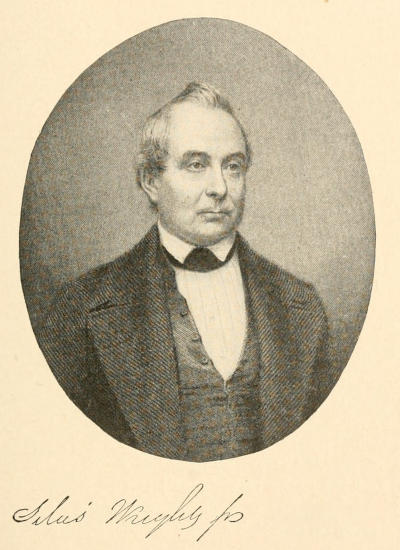
SILAS WRIGHT, JR.
On May 15th the President issued a call for an extra session of Congress, to be convened on the first Monday of September. He had, it turned out, nothing to propose except that the interests of the government should be looked to. The pet banks had gone down with the rest, and it was necessary that the government should secure its revenues. Mr. Van Buren had no thought of receding from the policy of the specie circular; on the contrary, he had himself, amidst the very signs of acute and increasing distress, issued a similar order with regard to the transactions of the Post Office. He stood stubbornly for specie payments, banks or no banks, and had aggressive spokesmen at his back in Congress: notably Mr. Wright and Mr. Benton in the Senate. Mr. Silas Wright, of New York, was the President’s close friend, in politics and out of it; had been bred in the same school of politicians; had the same astuteness in policy, and was yet, like Mr. Van Buren himself, steadfast in the maintenance of such principles as he saw and believed in. He was of the school of those who fought for party success and studied the subtle art of party management. He was no student of principles—a politician of the new day, rather; but honest and ready to act upon conviction. He believed, as all Democrats of the new cast did, that the offices of the government belonged to the majority, as “the spoils of victory”; but he avowed the belief with no touch of cynicism,—with the naturalness, rather, and unaffected candor with which a man avows principles he sees no need to be ashamed of; and he could, with equal naturalness and honesty, now bring forth out of his singular assortment of motives, as politician and yet as statesman too, a stern faith in the honesty and necessity of “hard money.” Mr. Benton was no partisan of the administration: he was too intense an egotist to be any President’s personal adherent or spokesman. But he, almost alone amongst public men of experience, had encouraged General Jackson to put forth the specie order; and he was now ready to give the administration his hearty support in the maintenance, so far as the government was concerned, of specie payments.
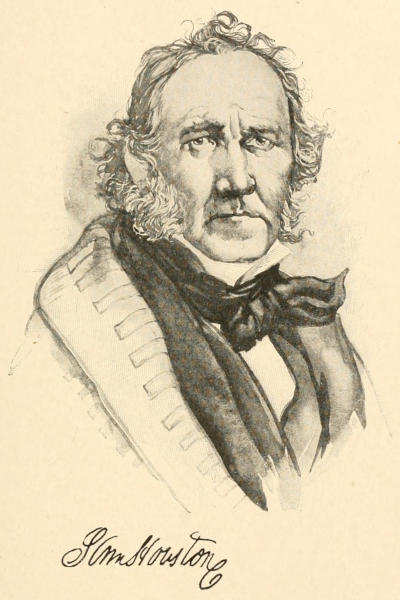
SAM HOUSTON
The President and his spokesmen had nothing to propose for the relief of business. He believed, as Mr. Calhoun did, that palliatives would only prolong the unavoidable misery of readjustment and the return to sound methods of business, the substitution of real for fictitious values and of production for speculation, and that, bad as they were, things would right themselves more quickly and more wholesomely without the intervention of legislation than by means of it. His plan was, to cut once for all the connection of the government with the banks, and provide for the custody, handling, and disbursement of the revenues by the Treasury alone. For three years, through two Congresses, he fought doggedly for his purpose; and won at last in midsummer, 1840. Then he got exactly what he wanted. An “Independent Treasury Act,” signed July 4, 1840, provided that the Treasury of the United States should itself supply vaults and places of deposit for the revenues, at Washington and at other cities appointed for their receipt; that all federal officers charged with their receipt, safe keeping, or disbursement should be put under proper and sufficient bonds for their careful and honest use and custody; and that all payments thereafter made either to or by the United States should be made in gold or silver only. It had not been possible to bring the first Congress of Mr. Van Buren’s term to accept this scheme. Twice adopted by the Senate, now at last Democratic, it had been twice rejected by the House, where a section of the Democratic majority united with the Whigs to defeat it. Meanwhile the President had been obliged to do without law what he wished Congress to authorize by law. The banks of deposit had suspended payment; there was nothing to be done but to direct the agents of the Treasury to keep and account for as best they could the moneys which came into their hands.
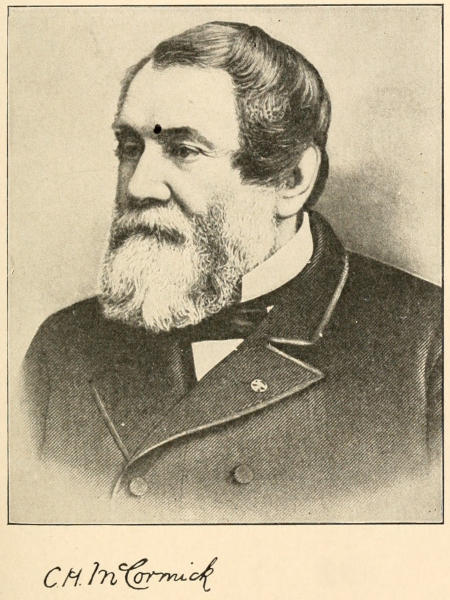
CYRUS HALL MCCORMICK
Meanwhile, too, the country went staggering and bewildered through its season of bitter ruin. There had been nothing like it before in all the history of business in America. Utter collapse and despair came, soon or late, upon every sort of undertaking the year through. Radically unsound banking laws in the States had been at the bottom of all that had happened to bring disaster on; and yet no one could reasonably wonder at the hopes and schemes which had bred that swift and fatal fever of speculation. Abounding wealth unquestionably awaited the enterprise and industry which should develop the rich valleys of the West, plant productive communities there, and unite East and West by road and river; and means of quick development had at last been found which promised fulfilment of every dream within a single lifetime,—it might be within a single decade,—who could tell? It seemed as if, in this very decade of Jackson’s reign and the new democracy, the world had hit upon ways of almost instant increase of wealth and power, where resources were at hand, virgin and inexhaustible. It was then that railways began to be built and steam boats put upon the rivers; and the great spaces of the continent began to seem no longer insuperable obstacles to the growth men had dreamed of and strained after ever since the landing at Jamestown. Robert Fulton had put a successful steam boat on the Hudson as long ago as 1807; but until now steam craft had seemed hardly more than novel conveniences, to be experimented with. Now at last they began to be built in numbers sufficient to quicken and facilitate enterprise and settlement. Railways seemed to spring suddenly into existence, to serve the same end. In 1830 there were but twenty-three miles of rail in the country: a short road here and there for cars drawn by horses. But presently steam was brought into use for the propulsion of cars also; and within five years (1835) no less than thirty million dollars had been invested in railroads. Before the crisis of 1837 came more than fourteen hundred miles of railways had been constructed; and by the time Mr. Van Buren went out of office (1841) there were more than three thousand, the crisis notwithstanding.
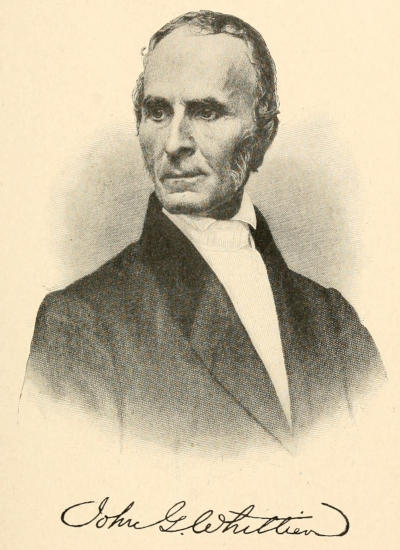
JOHN GREENLEAF WHITTIER
Invention seemed to awake on every hand, and was not a whit daunted by the state of the money market. In 1834 Cyrus Hall McCormick had invented a reaper, to be drawn by horses, which once for all solved and simplified the problem how the great plains and wide valleys of the West were to be brought under cultivation by a sparse pioneer population, where hands were few. In 1836 means were found by which the great anthracite coal beds of the country could be used in the production of steam and in the manufacture of iron. Along with the utilization of the new fuel came the invention of the screw propeller. By 1838 the invention had been fairly perfected, and it had become reasonably certain that steam craft upon the ocean would draw the continents of the world together as steam craft upon the rivers and locomotives upon the railways were uniting East and West in America. In 1839 James Nasmyth, at Manchester, invented the steam-hammer whose use was presently to increase so enormously the power and resources of the iron forges from which the new machinery of conquest and manufacture was pouring forth.
Here were the instruments of industry and of real production upon which imagination dwelt and speculation based its hopes. Real wealth was being created apace, and nothing was too extravagant to hope for. More eager movements of population went with hope and enterprise, and a very ferment of social and economic change. With the growth of manufacturing industries came concentration also. Towns began to grow into cities. Enterprise took on a new magnitude, individual initiative was a little daunted, and corporations began to be multiplied. Finding themselves massed in the new undertakings, finding their employers, not individuals, but groups of men using their combined capital upon a large scale, workmen and mechanics began to draw together into protective organizations; and new murmurs against “capital, banks, and monopolies” disturbed the peace alike of philanthropists and of politicians. The rural nation which had chosen General Jackson to be its leader began to be transformed even while he reigned:—most of all in the East, where industry was chiefly seated, but in the West also, where men of every section met, and moved with quickened pace towards new objects and new developments till then not dreamed of. New ambitions stirred everywhere, and men’s very manners were changed with the new haste and energy that swept them on.
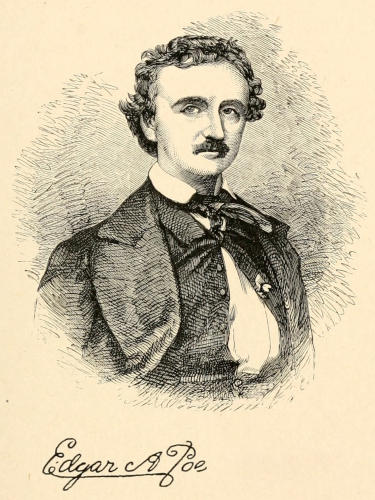
EDGAR ALLAN POE
Men’s minds and consciences were stirred, also, by the pungent airs of the new age. Not in America only, but throughout the whole European world also of which she was an outlying settlement, the attention of thinking men was set upon new thoughts in that day of change. The year 1830 had seen political and social revolution sweep to and fro, hardly to be checked, upon the troubled European stage. England had managed, as always, to be beforehand with revolution, but only by making many a radical change in her laws. Between 1828 and 1836 she repealed the Corporation and Test Acts, removed many of the political disabilities of Roman Catholics, reformed representation in Parliament, abolished slavery in her colonies, bettered her system of poor relief, framed a liberal code for the reconstitution of municipal corporations, and abolished tithes. In the United States there was none of these things except slavery to be cleared away. State and federal constitutions alike had been purged from the first of all that could clog or embarrass progress. American philanthropists, too, had been beforehand with the rest of the world in many a work of humanity and mercy. The fame of America’s reformed penitentiary system had crossed the seas; and in 1831 Alexis de Tocqueville and Auguste Beaumont had come to the United States to report upon the system for the information of their government. It was that visit which gave us de Tocqueville’s inimitable Democracy in America.
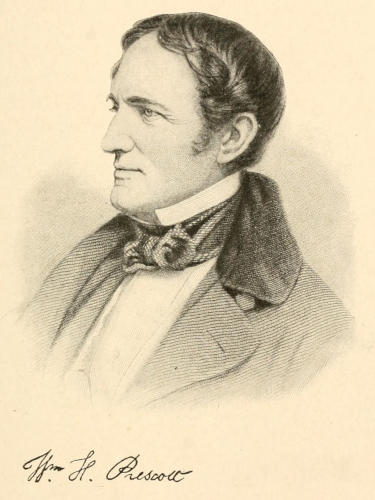
WILLIAM H. PRESCOTT
The abolition of slavery in the British empire in 1833 brought poignantly home to some men in the United States the one matter in which America was behind all the world. It was in 1833 that the American Anti-Slavery Society was formed, at Philadelphia. Not many connected themselves with it. Slavery was rooted deep in the whole economy of the South; the constitution of the Union itself was founded upon arrangements which took the permanence of slavery for granted; and no man who was not of hot crusading temper felt inclined to give any countenance to a movement which might, if pushed far enough, shake the very foundations of the government. But the few who gave themselves to the agitation were of crusading temper. Here and there throughout the country, moreover, there were bodies of men, like the Quakers, whose principles had time out of mind been of this tenor, and who became at once their natural allies. Petitions began to pour into Congress praying that it would abolish slavery in the District of Columbia, prohibit the slave trade there, and break up the slave trade between the States. John Quincy Adams had entered the House of Representatives in 1831, only two years after he left the White House, as a representative of the Anti-Masons and Whigs of his home. A sturdy and striking figure he made, with all the dignity and all the contentious strength of his sixty-four years upon him; and it surprised no one, least of all his constituents at home, that he championed what he pleased, without respect of parties. It was he who presented the petitions against slavery and stood mettlesome and unalarmed amidst the wordy battles they brought on.
It was a deeply hazardous and ominous thing to join issue thus, though it were only upon a petition here and there, with regard to this central matter of the whole South’s life. The South still stood unchanged. No revolution of industry, no breath of speculation, no plotting or building of railways, no steam craft at her ports or on her rivers touched or altered her fixed order of society. Some of the first railways built were built in the South. Her merchants felt the impulse and saw the outlook of the time as others did. But no power from without, no alteration of the world beyond her borders, could change her economic and social order so long as slavery lasted. There was no aristocracy in the South of the kind men commonly think of when they use the word. There was a ruling race and a subject race; there were rich men and poor among the race that ruled; there went with wealth a certain ease and expansiveness of living, a good deal of quiet leisure, an old-fashioned grace and punctiliousness of manner which gave to those who cultivated it an air of exclusiveness and elevation. Young men were apt to be arrogant and to have their fling in the world of pleasure, and old men showed sometimes a lofty pride of birth and position. But there was little display. Wealth did not in that agricultural region mean abundant money, but only full store-houses, a well stocked stable, an unstinted table, plain comfort, and open-handed hospitality. In politics the ruling race were as democratic as men of their kind anywhere. All white men had an equal footing of privilege there and an equal freedom, though offices fell as often to men of position whom fortune had put at the front as to men who had made their way up from the ranks and men who added ambition and initiative to ability.
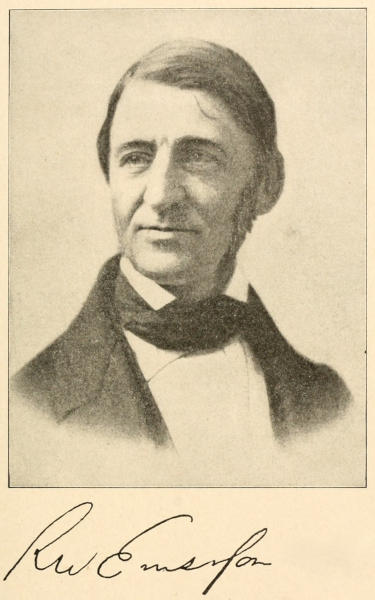
RALPH WALDO EMERSON
Mississippi and Alabama were still new States upon a frontier, and grew rapidly in population. Georgia, too, added slowly to her population from decade to decade, adding also to her industries and profiting as she could by the new forces of the age. But Virginia and the Carolinas grew scarcely at all. And so the South stood apart, potent and alive and yet immobile. Though she provoked attack, she was intrenched against it.
It was singular how the signs multiplied of change and a new age coming in. A whole generation of new writers came suddenly into prominence during those first years of railways and steam craft (1828-1841): Hawthorne, Poe, Whittier, Longfellow, Emerson, Lowell, Holmes, Prescott, Bancroft; Mr. Justice Story and Mr. Justice Kent; Henry Wheaton, Francis Lieber, Henry C. Carey; John James Audubon and Asa Gray,—men of letters, law writers, publicists, economists, men of science. Poe and Audubon were of the South; the rest were of the North, where leisure was coming with increase of wealth, stimulation of thought with increase of action. “You are a new era, my man, in your huge country,” wrote Carlyle to Emerson. In the South writers still bent all their thoughts upon statesmanship and the control of public policy; read old books and maintained an elder taste; made cultivation a thing of quiet moments or of the delights of conversation, and carried it forth into the open arena only as an instrument of power.
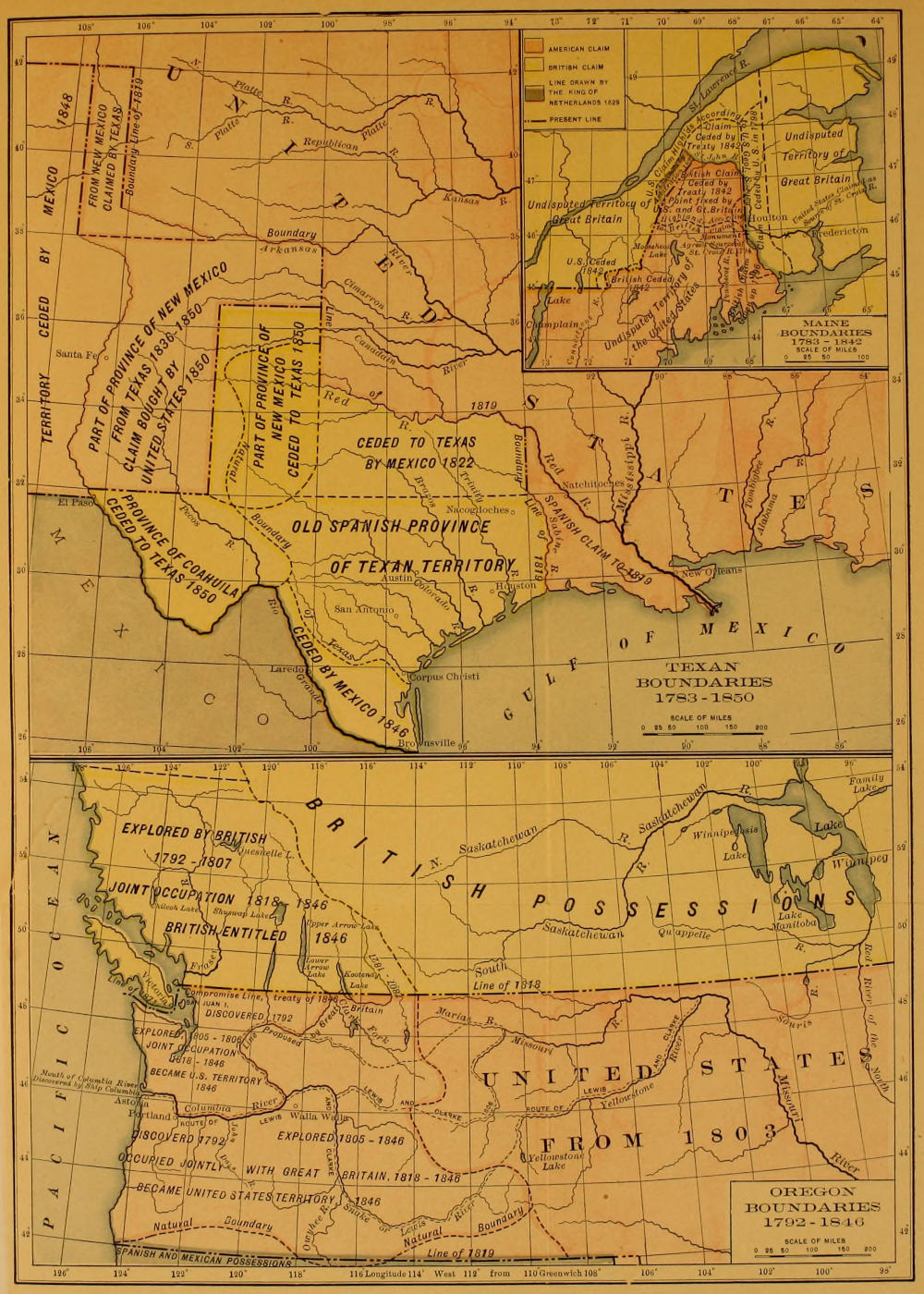
TERRITORIAL CONTROVERSIES OF THE UNITED STATES, SETTLED BETWEEN 1783-1850
BORMAY & CO., N. Y.
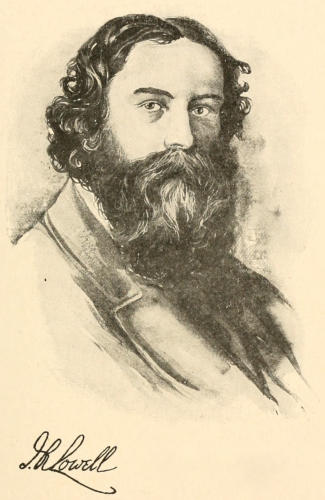
JAMES RUSSELL LOWELL
Every change seemed sensibly to increase the sweep and ascendency of pure democracy and visibly to enhance the power of the general opinion. By the close of General Jackson’s presidency there was no longer any property qualification anywhere required in the North for the exercise of the suffrage except in Connecticut and New Jersey, or anywhere in the West except in Ohio. The people’s day had come; the people’s eyes were upon everything, and were used in a temper of criticism and mastery. Newspapers of a new type sprang up, like the Sun and the Herald, every number of which gave old gentlemen in New York a shock, which pried into everything and told everything, whether it concerned private individuals or public events. The upturning General Jackson had brought upon the government was beginning to come also upon society.
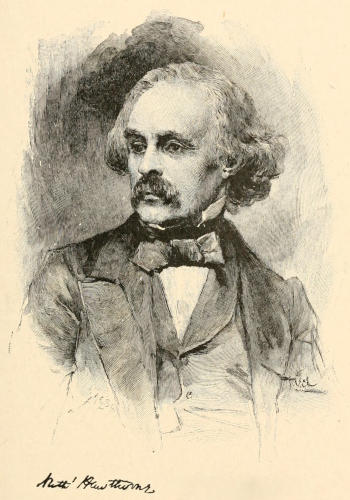
NATHANIEL HAWTHORNE
How serious the upturning had been in the administration of the government the country learned while Mr. Van Buren was President; and the discredit for what General Jackson had done fell upon him. The men whom General Jackson had put out of office had too often carried away with them the business methods of their Departments. The men who had succeeded them, always new and raw at their tasks, were too often incompetent also, and sometimes showed the cunning and dishonesty of men who seek the “spoils of office” for their own aggrandizement. It was Mr. Van Buren’s misfortune that no discovery was made of the jobbery and misfeasance that had crept into the Departments until he became President. The “spoils” system, moreover, was commonly believed to have been the bad invention of his own school of politicians in New York. He attempted no concealments; no one was shielded or excused when discovery was made; but he got no credit for that. Everything that came to light was but confirmation added to the conviction of the country that both he and his party had best be got rid of. The Whigs were eager to give legislative assistance to the country in its efforts to rally from the collapse of 1837; the Democrats offered nothing but the Independent Treasury,—were very fine and steadfast in their determination to take nothing but “sound” money into the Treasury, but offered no suggestion as to where the sound money was to come from, or how business was again to be founded on it.
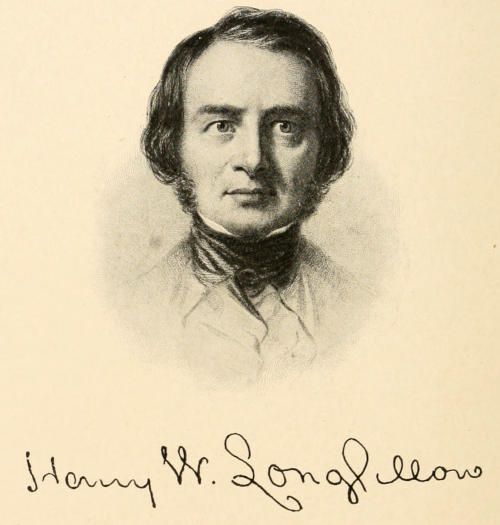
HENRY W. LONGFELLOW
The States were left to work that problem out for themselves, if legislation were needed; and a very wholesome change began. The legislatures of the States set themselves at last to require real securities of the banks of issue which they chartered, New York leading the way; and by slow degrees credit was re-established, panic shaken off. But the Democrats gained nothing by the circumstance as a national party. They seemed to have lost initiative when they lost General Jackson.
Mr. Van Buren had handled such diplomatic matters as fell to his management with prudence and good judgment. A final reckoning with the Seminole Indians of Florida had been brought to a successful close while he governed, and a serious boundary dispute with Great Britain had been accommodated, notwithstanding very distracting complications which had arisen out of attempts on the part of lawless men in the United States to assist insurgents who were openly in arms against the English crown in Canada. But only the irritating details of these matters were talked about. Nothing large or masterful filled the eye or stirred the general sympathy either in the President or in the men who spoke and acted for him in Congress; and the whole country turned to the Whigs for a change.
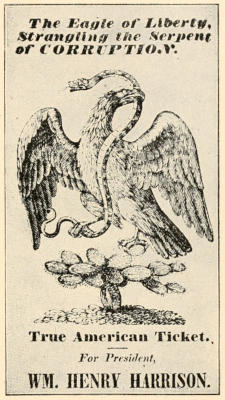
PRESIDENTIAL TICKET, 1840
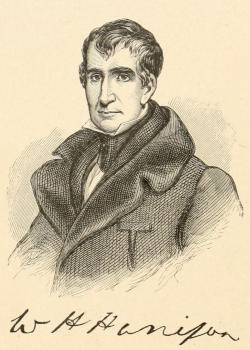
WILLIAM HENRY HARRISON
The Democrats nominated Mr. Van Buren for a second term and avowed all their negative principles in a candid platform. The Whigs, now at last welded into something like a united and aggressive party, nominated General Harrison, for whom most of them had voted four years before, for President, and for Vice President Mr. John Tyler, of Virginia. They made no declaration of principles whatever, but proposed only to oust the Democrats. The country was willing. General Harrison was the hero of a well remembered battle in which the redoubtable Tippecanoe, the “Prophet” of the Indians who hung upon the northwestern frontiers, had been routed, in 1811, and the western country quieted and made safe. He had himself been dubbed “Tippecanoe,” and men everywhere were ready to shout very lustily for “Tippecanoe and Tyler too.” The Democrats had no enthusiasm with which to match this for the old soldier and honorable gentleman of the elder type whom their opponents had chosen as their candidate; had only their dimmed record to speak of; and lost overwhelmingly. General Harrison, it is true, got but forty-six thousand votes more than Mr. Van Buren received out of a total of nearly two and a half millions; but, though his margins were slender, counting by voters, he won in the electoral college by a majority of one hundred and seventy-four out of a total of two hundred and ninety-four (234-60). The Whigs saw their day dawn at last, and the Jacksonian régime was over.
The authorities and sources for the events of this chapter are the same as those named under Chapter II. The following special authorities should, however, be added: the second volume of Albert S. Bolles’s Financial History of the United States; Richard Hildreth’s Banks, Banking, and Paper Currency; William G. Sumner’s History of American Currency; Edward G. Bourne’s Surplus Revenue of 1837; Goddard’s Bank of the United States; C. F. Dunbar’s Laws Relating to Finance; Shosuke Sato’s Land Question in the fourth volume of the Johns Hopkins Studies in Historical and Political Science; and Samuel Tyler’s Life of Roger B. Taney.