CHATS TO AND ABOUT CABBIES.
Reading edition
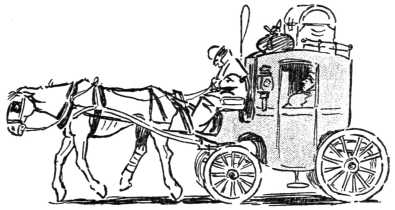
"Prepared to go the pace according to the fare they expected at the end of the journey."
I have had many rides in the cabs of Newport, and have always found the cabbies very good drivers, prepared to go the pace according to the fare they expected at the end of the journey.
Cabmen's Dinner, Newport, November 8th, 1889.
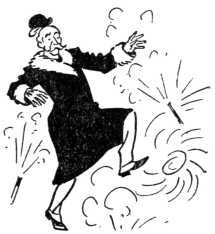
"You try to blow me up on my way to Tredegar House."
I wish you had chosen some other Patron Saint than Guy Fawkes, for Guy Fawkes tried to blow up the House of Lords, and on each anniversary you try to blow me up on my way to Tredegar House. Some persons may think that one Conservative Peer more or less does not matter, but I prefer that the experiment of blowing up should be tried upon the body of a Radical Peer.
Cabmen's Dinner, Newport, Nov 5th, 1896.
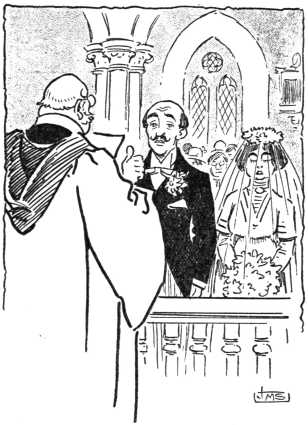
"Look here, cut it short guv'nor! I've got the cab by the hour."
There are very odd traditions about cabmen, and I am certain that sometimes they are not deserved. I have been told it is something of a tradition that it is the pride of a cabman to be able to whistle louder, to hit his horse harder, and to tell a bigger lie than anybody else. I believe that to be absolutely untrue, though some of you may know better than I do. One of you is supposed to have nearly upset a wedding. That was a dreadful thing to do. The bride and bridegroom were both at the Altar and just about to have the knot tied nicely. The clergyman began to deliver his address, but the bridegroom appeared to be in a great hurry, and said to the clergyman, "Look here, cut it short, guv'nor! I've got the cab by the hour." That was rather natural on the part of the bridegroom but the clergyman became very angry, and very nearly threw up the case....
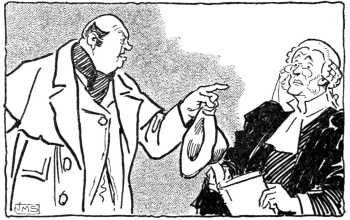
"Look here, Mr. Huddleston, I call you a thief, a blackguard, a scoundrel, and a villain."
Cabmen are limited in the language they may use. Judge Huddleston, when a barrister, was defending a client against a cabman, who had been using very bad language. The advocacy of Huddleston won the case. The next day the cabman called upon him and said: "Look here, Mr. Huddleston, you told me yesterday that I must not call people so and so. What are your charges for telling me what I can call anyone without getting into trouble?" Mr. Huddleston named his fee, cabby paid the money, and inquired what names he might call a man with impunity. Mr. Huddleston referred to his law books, and replied: "This is what you may call a man without being had up for libel or defamation of character. You may call him a villain, a scoundrel, a blackguard, and a thief, always supposing you don't accuse him of having stolen anything." The cabby took up his hat and said: "Look here, Mr. Huddleston, I call you a thief, a blackguard, a scoundrel and a villain; not that I mean to say you ever stole anything. Good morning." So you know now exactly what you can call a man if you do not like the fare he gives you. At the same time, I do not believe you would say such things.
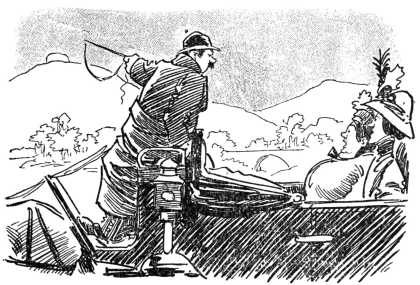
"That's where Lord Tredegar buried his charger; he made that mound himself."
Then, again, a cabman is always supposed to be a driving encyclopedia. When Newport cabmen are driving along Caerleon Road or Chepstow Road, credulous individuals ask them the name of every house and place they pass, what it means and what it is. Strangers want to know, and you must tell them something. There is an extraordinary tradition about a cabman driving along a road, when a lady fare asked him what "that mountain was with the tump on the top." "But what is the tump for?" persisted the lady. "Oh, that's where Lord Tredegar buried his charger; he made that mound himself," was the reply. Such stories are very interesting and amusing, but they spoil history, and that is why I think we are indebted to cabmen for the extraordinary traditions that go about the country.
Cabmen's Dinner, Newport, November 5th, 1898.
Cabmen have traditionally bad characters, and are supposed to possess a vocabulary which is not taught in the Intermediate Schools. They are also supposed to have a special method of calculating distances and coin. All those ideas are exploded like nursery rhymes, such as "Whittington and his Cat." Cabmen are well looked after. There is the Excise Officer and the Cruelty to Animals Society, and, if these are not enough, there is the Watch Committee.
Cabmen's Dinner, Newport, November 6th, 1899.
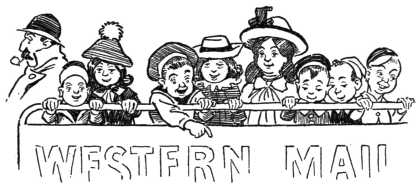
But the top of a 'bus Is the place for us To see the coves go by."
You have to compete with tramcars, motor cars, and all kinds of horrible conveyances. Having been interested in nursery rhymes since I was very young, I have been looking through some children's books during the last few days to see what is provided for the children of these days, and I came across the following lines in a book for children:—
The hansom takes you quickest, The growler keeps you dry, But the top of the 'bus Is the place for us To see the coves go by.
I advise you not to give that little book to your children, as it will induce them to ride on the top of a 'bus instead of taking a cab.
Cabmen's Dinner, Newport, November 8th, 1902.
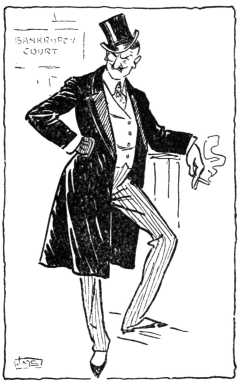
"Fast women and slow horses."
I have never been able to find out exactly why the cabmen's dinner is fixed for Guy Fawkes' Day. I have looked up Guy Fawkes' pedigree, and I cannot find that he ever drove a growler or even a hansom cab. Then I thought it might have something to do with Inkerman Day, which is all upset nowadays, as you know. Inkerman was always called a soldiers' battle, because it was so foggy that the generals could not see what they were doing. I have an idea that it must have been a cabmen's battle, and that it was cabmen who fought at Inkerman or commanded at Inkerman. Speaking of cabmen, I think that they are like Lord Rosebery's Dukes—poor, but honest. This is not an epoch-making dinner; it is not even a record dinner. "Epoch-making" and "record-making" are terms which are frequently used now-a-days, and I wish people would give them a rest for a time. I remember a young gentleman who came into a fortune and very soon got through it because his company was very indifferent, he being very fond of racecourses and other iniquities of that sort. He went through the Bankruptcy Court, and when asked how he accounted for getting rid of his fortune so quickly, he replied, "Fast women and slow horses." Now I think cabmen would probably make a profit out of fast women and slow horses. One of you will take a very fine lady to Caerleon Racecourse next week, and, having a slow horse, will take two hours to do the journey, and charge a two hours' price. But I always like this society for one particular reason, namely, it has no small societies belonging to it. There is no Cabmen's Football Club to write and ask you for a subscription. So far as I know, there is no cabmen's band, or other small institutions of which we have so many in every other circle of society. There is no cabmen's congress, and no cabmen's conferences and that is a great merit in the society, because I know that when I have done one thing, I have done all that I shall be required to do.
Cabmen's Dinner, November 5th, 1909.