Part 3 — GLOSSARY.
Reading edition
Á boca de jarro—At short range.
Abolága—Spanish gorse.
Aficionado—An amateur, enthusiast.
Alcornoque—Cork-oak.
Alforjas—Holsters, saddle-bags.
Almuerzo—Breakfast, tiffin.
Alparagatas—Hempen-soled sandals.
Anafe—A charcoal cooking-stove.
Arenál—Sand-waste, desert.
Armajo—Samphire.
Arramago—Charlock.
Arroyo—Stream, watercourse.
Bandada—A flock, or pack.
Bandolerismo—Brigandage.
Barbon, barbudo—Bearded.
Barranco—A low cliff.
Barrio—Quarter of a town, suburb.
Batida—A beat, or drive for game.
Bebidero—A drinking-place.
Boracha—A wine-skin.
Borrico—A donkey.
Busné—A gentile—i.e., not a gypsy.
Cabestro, or cabreste—Decoy, stalking horse.
Cama—Bed, lair of wild beast.
Camino—Road.
Campo, campiña—Country, cultivated land.
Cancho—Crag, precipice.
Cántaro—Water-jar.
Carabinero—Carbineer, exciseman.
Carbonero—Charcoal-burner.
Casuela—Stewing-pan, also the stew.
Catre—Tressle-bed, camp-bed.
Cazador—Shooter, sportsman.
Caza mayor—menor—Large, and small game.
Cédula de vecindad—Certificate of identity.
Cencerro—Cattle-bell.
Cerrones—Panniers, mule-packs.
Chambonada—Bungle.
Chapárro—An evergreen oak.
Choza—Peasant's cot or hut.
Cicada—Cricket.
Cochino—Pig.
Contrabandista—Smuggler.
Corral—enclosure; belt of forest or jungle.
Coto—Game-preserve.
Cuadrilla—Troop, gang.
Dehesa—Grazing ground, sheep-walk.
Despoblado—Desert, waste.
Dicho—Declaration, troth.
Dormidero—Sleeping-place.
Echando la rueda—"Making a wheel"—i.e., describing a circle.
Encierro—Driving in bulls to the ring.
Entrada—Entry, immigration.
Era—Threshing-ground.
Errate—"Black blood" (gypsy).
Escopeta—Musket, gun.
Espada—Sword; a matador.
Falucha—Felucca-rigged boat.
Faja—Waistband.
Fango—Mud.
Funda—Saddle-sling for gun.
Garganta—Mountain-gully.
Garrocha—Long wooden lance.
Gazpacho—A dish of bread, vegetables, oil, vinegar, &c., a salad.
Guiso—Stew.
Huerta—Orchard, garden.
Jaca—Riding horse, pony.
Junco, juncale—Reed, reed-bed.
Ladron en grande—Robber on a large scale.
Lancha—Small boat, punt.
Lidia, lidiador—Fight, fighter (of bulls).
Macho—Male.
Majo—Dandy, gallant.
Malagueña—Couplet, topical song.
Mancha—Thicket, jungle.
Manchon—Fallow.
Mano negra—"Black Hand," a secret society.
Manta—Cloak, saddle-rug.
Marisma—Marsh land.
Monteria—Mountain-shooting campaign.
Mosca—Fly.
Nata—Cream.
Navaja—Clasp-knife.
Novio-a—Sweetheart.
Ojéo—Drive (for game).
Olivár—Olive-grove.
Olla—Earthen cooking-pot, stew.
Pajaráco—Large bird, vulture.
Pajaréra—Breeding-place of birds.
Parador—Inn, resting-place.
Patero—Duck-shooter.
Patio—Courtyard of house.
Pinal—Pine forest.
Piorno—A species of broom.
Podenco—Hunting-dog (of lurcher type).
Poniente—West wind.
Posada—Village inn, lodging-house.
Puchero—Earthen pan for cooking.
Pueblo—cito—Village, hamlet.
Puesto—Post, ambush.
Querencia—Haunt.
Rastro—Trail, spoor.
Reclamo—Decoy, call-bird.
Retamo—A species of broom.
Rincon—Corner.
Rodéo—"Rounding-up" of cattle.
Sartén—Frying-pan.
Sequestrador—Bandit who holds to ransom.
Serrano—Mountaineer.
Suerté—(1) Luck; (2) the modes of attack or "passes" in the bull-fight.
Tentadero—Trial (of young bulls).
Tirador—Gunner.
Toréo—Art of bull-fighting.
Toril—Lair of bull, adjoining bull-ring.
Toro bravo—Fighting bull.
Tunante—Cunning rogue.
Vega—Open plain.
Venta—Wine-shop.
Vereda—Bridle-path.
Zincali—Gypsy.
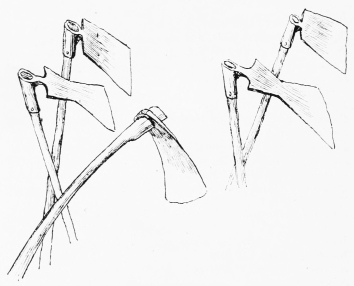
SPANISH SPADES.