THE TRIAL. (continued 6)
Reading edition
Could you form an opinion whether it could be detected under these circumstances on the coats of the stomach?—Not knowing the dose administered and the powers of absorption, I cannot say with absolute certainty it would be detected, but I should think it in the highest degree probable if a moderate dose had been administered.
Could you form any opinion from the fact that death had taken place after one paroxysm, and in an hour and a half after the ingestion of the poison, whether it was a considerable or an inconsiderable dose?—I cannot give a decided opinion.
Lord Campbell—I cannot allow this gentleman to leave the box without expressing my high approbation of the manner in which he has given his evidence.
R. Partridge
Mr. Richard Partridge, examined by Mr. Grove—I have been for many years in practice as a surgeon, and am Professor of Anatomy at King’s College. I have heard the evidence as to the symptoms of Mr. Cook and as to the post-mortem examination. In my opinion it is most important in a case of convulsion that the spinal cord should be examined after death. The gritty granules that were found would be likely to cause inflammation of the arachnoid membrane, which would be discoverable if the spinal cord had been examined shortly after death. If examined nine weeks after it is not likely it would be discovered. Although I have not seen such a case, there are cases on record that such inflammation, if it existed, would be capable of producing tetaniform convulsions. The medical term for such inflammation of the arachnoid is arachnitis, or inflammation of the membrane. That disorder produces convulsions and death. I should not say universally; sometimes it does not result in death. I could not form any positive judgment as to the cause of death in Mr. Cook’s case. I have heard the evidence as to the state of contraction after death. No inference at all can be formed of the degree of contraction, or the kind of contraction, that I heard described. If I find the back curved and the body resting on its back and feet after death, I should infer that he died of that form of tetanus which convulses the muscles of the back. Various degrees and varieties of rigidity occur after a natural death. The clenching of the hands or the semi-bending of the feet are not uncommon in cases of ordinary death.
Cross-examined by the Attorney-General—The granules from which arachnitis might have proceeded were, I understand, situated in the inner surface of the fibrous investment of the cord. They are occasionally found in these parts; not commonly. They are signs. Arachnitis, producing convulsions, has never come under my personal observation, nor has it satisfactorily come under my observation without producing convulsions. It is a very rare disease.
Are you enabled to state from the recorded cases the course of the symptoms of the disease?—No.
Do not you know it to be a disease of considerable duration?—The cases have varied in duration; commonly days at the shortest. Arachnitis is accompanied with paralysis if they live.
Would it, considering the connection that there is between the spinal cord and the brain, affect the brain by sympathy, or otherwise, prior to death?—No.
In these cases, where granules have produced arachnitis, do you happen to know whether the granules have been considerable in point of size?—It has varied in different cases.
Suppose them to be very small and minute?—I should think there would be less likelihood of their producing inflammation.
Suppose an examination at a longer interval than nine days after death failed to detect the inflammation of the arachnoid, that the spinal cord and its integuments had not undergone any decomposition, and that the appearance was perfectly healthy, should you be warranted in inferring there was inflammation?—I should not conclude there was inflammation. Prior to decomposition I should not.
The examination was made by four medical men; are you of opinion that they would be competent judges as to decomposition?—[The question was objected to.]
Does arachnitis not sometimes extend to a matter of months, even where it extends to death?—It might go on for months.
Does it not affect the patient by a series of convulsions at recurring intervals?—That varies.
Did you ever know, or hear of, or read of a case in which the patient died after a single convulsion of arachnitis?—Not a single one.
What would be the concomitant symptoms; would it affect the rest of the patient or affect the general health?—I cannot say.
R. Partridge
Do you believe that a man could have twenty-four hours of complete repose?—No.
In the interval between the convulsions could he be quite well?—No; he would have pain and uneasiness according to the situation of the muscles convulsed, the back usually.
You have heard the symptoms, and I presume you have heard from the midnight of Monday till Tuesday Mr. Cook had complete repose. I now ask you if, in the face of the Court and of the profession, you will undertake to say that Mr. Cook’s death proceeded from arachnitis?—I should think not. The majority of the symptoms do not show arachnitis.
You have mentioned that there were one or two of the appearances after death in Cook’s case which would be common to other cases, the semi-closing of the hand. Did you ever know, except in a case of tetanus, the hand so completely clenched as to require force to take the fingers away from the hand?—No, I do not.
Have you ever known the feet to be so distorted as to be described by a medical man as assuming the form of a club foot?—Never.
Did you hear the description given by Mr. Jones that when this man died the body was bowed so that, if he had turned it from its side upon its back, it would have rested on its head and on its heels?—I did.
Have you any doubt that that indicates death from tetanus?—Not from some form of tetanic symptoms. I am only acquainted by reading and hearsay with the symptoms that accompany death from tetanus resulting from the administration of strychnia.
From your knowledge of the subject, having attended to the symptoms described by Mr. Jones from the moment the paroxysm set in of which Mr. Cook died, and the symptoms and appearances attending his death, does it appear that these symptoms are consistent with death by strychnia?—Some are consistent and some are inconsistent. The long interval which occurred after the taking of the poison is inconsistent.
What I am asking you is, whether these symptoms on the Tuesday night, from the time the man was taken with the paroxysms of convulsions of the muscles of the trunk, of the legs, of the arms—the bending of the body into a bow—the difficulty of respiration—are consistent with what you know of death by strychnia?—Quite.
Do you agree that the symptoms in tetanus come on gradually and progressive; that, although they are intermitted, the disease is never wholly remitted?—I do.
What is the shortest period in which you have ever known the disease of traumatic tetanus run its course to death?—Never under three or four days.
R. Partridge
Suppose a case could be described as of shorter duration, such as a day or a few hours, would your medical experience lead you to infer that the premonitory symptoms had very likely been neglected?—I should consider that probable.
Bearing in mind the distinction between traumatic and idiopathic tetanus and a case such as has been here described, have you ever seen such a death as this was with the symptoms mentioned proceed from natural causes?—No.
Re-examined by Mr. Grove—What are the other symptoms which you consider inconsistent with strychnia?—The sickness manifested before the attack came on; the beating of the bed clothes with the arms, want of sensitiveness to external impression, and the sudden cessation of the convulsions, and apparent complete recovery.
You mentioned previously the time that occurred between the ingestion of the poison and the paroxysm coming on. What inference do you deduce from that?—That it is inconsistent with strychnia.
As to the mode in which it came on without premonitory symptoms, do you consider that is inconsistent with strychnia?—There was apparently an absence of the usual condition that is described.
You stated that the bent form indicated some tetaniform symptom. Did that answer apply to natural tetaniform as well as to tetaniform convulsions caused by strychnia?—Yes. The bent form of the feet indicated tetanic spasm. That would be the case whether it was a tetaniform spasm with poison or without poison.
By Lord Campbell—And the other symptoms of rigidity?—It is rather a question of degree.
They would be more violent if from poison?—No doubt.
You have stated in the cases of tetanus you have seen there was no intermission. Do you know, from your reading, that the intermission of the disease is a frequent thing?—I know it occurs, but it is not frequent.
As to decomposition of the spine. Do you think it could remain for nine weeks undecomposed?—I do not.
The Attorney-General—I have one question which I would put (this gentleman spoke as to vomiting), whether, if the stomach had been brought by any other cause into a state of irritation, would he think those causes inconsistent?
Lord Campbell—I intended to put the question myself.
Witness—I should think it not inconsistent.
John Gay
Mr. John Gay, examined by Mr. Gray—I am a Fellow of the Royal College of Surgeons, and have been for eighteen years a surgeon of the Royal Free Hospital. In the year 1843 I had under my care in the hospital a case of tetanus in a boy eight years old. He was brought in on the 28th of July. The accident occurred a week before. I saw him on the 28th of July. He could not open his mouth at that time. He complained of great pain and stiffness about the neck. During the first three days I saw him he had unusually severe paroxysms.
By Lord Campbell—During the first night of his admission he started up convulsed, and spasmodically closed his jaw. During the following night he was a good deal convulsed at times. The abdominal muscles, as well as the muscles of the neck and back, had become rigid during the night. The muscles of the face were also in a state of great contraction. On the following day I found the muscles remained in the same state. In the morning of that day, at two o’clock, on visiting him I found there was much rigidity of the muscles, especially those of the abdomen and back. The following morning the muscular rigidity had gone. He opened his mouth as usual, and was able to talk. The lad appeared to be thoroughly relieved. He had no return of the spasms till the following day. At that time he asked the nurse to change his linen, and she was lifting him up in bed to do so when violent convulsions of the arms and face came on, and he died in a few minutes.
Examination resumed—About thirty hours elapsed from the time the convulsions of which he died came on and the last preceding convulsions. The last paroxysm before he died lasted a few minutes. Before it came on the rigidity which I have described had been completely relieved. At the time he was convulsed the nurse was lifting him up to put on his linen.
By Lord Campbell—The second day I gave him small doses of tartar emetic to produce vomiting, but without effect. I repeated them in larger doses of 2 grains, but without effect. I did not repeat the dose after the third day.
Cross-examined by the Attorney-General—What was the accident?—A large stone had fallen on the middle of the left foot and had completely smashed it. The wound had become very unhealthy. When I first saw it it had portions of bone and cartilage adhering to the surface. I amputated the toe. When the boy was brought in his mother said he could not open his mouth so wide as usual. When I saw him his mouth was almost closed up.
On 29th July he slept but little during the night, and during sleep started up convulsed and spasmodically closed the jaw. The jaw remained closed until the 1st of August. It was closed when I administered tartar emetic to him. In all these cases so trifling a remedy as the tarter emetic is easily given.
John Gay
By Lord Campbell—The tongue seems to retain its powers?—Yes. The case is recorded in the Lancet.
Cross-examination resumed—After the 29th of July did the convulsions continue throughout the 30th and part of the 31st?—The convulsions came on during the night, and they appear to have remitted during the day, except a muscular rigidity. The tetanus did remain.
But were there no spasms during the daytime?—I believe not.
In the daytime, although there were no convulsions, were the muscles of the body, of the chest, and of the abdominal back and neck all rigid?—Yes. That continued throughout the two days I administered tartar emetic. The rigidity of the muscles and of the stomach would go far to prevent sickness.
You have no doubt that your tartar emetic would have produced its effect but for the rigidity of the muscles?—I suppose it would have done so.
When did the symptoms begin to abate?—On the 1st of August, on the fourth day, and they gradually subsided. They appeared to have subsided during the night. I saw the child during the middle of the day, and I found that they had subsided, and in fact had entirely gone off. I thought he was going to get well.
You told us the woman set him up in bed for the purpose of changing his linen. Would that in any way have brought the toe, that part that had been attacked, into any friction with some parts of the bed?—It must have done so. But I do not think the simple irritation of the toe at that part would have any effect.
But there not having been, in your judgment, nervous irritation set up from the original seat of the disease, can you account in any way for the nervous or muscular disease of tetanus?—If the cause had not entirely gone the symptoms were brought back by the act of sitting up in bed. My impression is there must be some action about the spinal cord as the immediate cause of the symptoms.
Action set up in the spinal cord by irritation of the nerves in the immediate site of the laceration or wound?—Quite so.
May it not be reasonable to infer that any irritation of the part originally injured, exciting or irritating the nerve or the nerves connected with the part, may support its action over the whole system, and so produce convulsion?—I had removed the end of the diseased part, so I cannot conceive that the same cause could exist.
John Gay
If you imagine you feel yourself justified in saying that the irritation of the spinal cord once set up continues, why should you infer that the irritation of the nerve may not also continue?—There must be some peculiar irritation of the nerve to give rise to the affection of the spinal cord from which tetanus arises. There appear to be some particular circumstances which produce it.
You have no doubt the state of the toe was the original cause of the convulsions?—I have not.
And that death took place by something or other distinct from the first cause?—Yes.
Re-examined by Mr. Gray—I think you told my friend that, with regard to the convulsions which end in death, you thought they arose from some irritation set up in the spinal cord?—I did, from that and other causes.
May the causes of such irritation be very various in different cases? May the cause of the irritation in the spinal cord which would end in tetaniform be very various?—I think so.
Suppose in one you have a death accompanied with tetaniform symptoms and opisthotonos, and the various symptoms of a tetanic character; in the absence of any knowledge of the case—of the cause you state, probably the irritation of the spinal cord—do you think it is possible to ascribe them to any particular cause?—I think it would be extremely difficult to do so.
Will you give me the proposition you lay down?—In the event of a given set of symptoms, tetanic symptoms I should say, being proposed, it would be extremely difficult, if not impossible, without some other evidence, or collateral evidence, to assign it to any given disease.
Lord Campbell—Or cause?—Or cause.
W. M‘Donnell
Dr. William M‘Donnell, examined by Mr. Kenealy—I am a licentiate of the College of Surgeons of Edinburgh, and have been in practice for about eight years. I have had practical as well as theoretical knowledge of idiopathic and traumatic tetanus. Tetanus will proceed from very slight causes. Almost any internal disorder or alteration of the internal secretions will produce idiopathic tetanus. Exposure to cold or damp would produce it. Mental excitement would be a probable cause.
By Lord Campbell—Mental excitement would be the proximate cause of tetanus. The presence of gritty particles or granules in any part connected with the nervous structure, in either the spine or the brain, might produce tetanic convulsions. I have seen small deposits or tubercles in the brain, the only assignable cause for death terminating in convulsions.
W. M‘Donnell
Examination resumed—In addition to those slight causes, I believe that tetanic convulsions arise from causes as yet quite undiscoverable by science. I have had many post-mortem examinations of patients who have died of tetanus, and no trace of any disease whatever could be discovered beyond the congestion or vascularity of some of the vessels surrounding the nerves. Though tetanus is not easily discoverable, strychnia is easily discoverable by scientific men. I had a case of idiopathic tetanus—a female, Catherine Watson. I was fortunate enough to restore her, and she is here. (Dr. M‘Donnell read his notes of the case of Catherine Watson.) In her case lockjaw set in about the middle of the attack. She was able to speak. In acute idiopathic tetanus, ending fatally, trismus is generally a later symptom. I had a case of tetanus which ended fatally, a man named Copeland. It must have been idiopathic, as there was no external cause. Death took place in somewhat less than half an hour. I cannot say precisely. He was dead before I could reach the house.
By Lord Campbell—Do you know what the cause of the disease was?—Yes. I examined the patient carefully, and made inquiry as to the symptoms.
Examination resumed—I have made a number of experiments on animals with reference to strychnia poison. I have found the muscles of the brain highly congested, the sinuses gorged with blood, and in one case hæmorrhage from the nostrils. That would indicate a very high state of congestion. I have found extravasation of the blood in some cases, likewise in the brain. I have cut through the substance of the brain and found numerous red points. I have found the lungs of these animals either collapsed or congested. The heart has been invariably filled in the right side with blood, and very often on the left. The liver has been congested, the kidneys normal generally, the spleen in its ordinary condition. I have found the vessels of the stomach on the outer surface congested, and on the mucous or inner surface highly vascular. In the spinal cord I have found the vessels of the membranes congested, and also red points seen on cutting it through, not invariably, but sometimes. I have experimented in many cases for the discovery of strychnia. You may discover the smallest dose that will kill the animal. If you kill an animal with a grain of strychnia you may discover traces of it.
What do you mean by a trace of it?—Evidence of its appearance.
Does that mean an imponderable quantity?—It may.
Do you mean by traces to convey the idea that you can discover the smallest quantity?—That will kill.
What is the smallest quantity you can discover?—The fifty-thousandth part of a grain.
Have you actually experimented so as to discover that quantity?—Yes.
W. M‘Donnell
You have heard a theory propounded in the course of this inquiry by Dr. Taylor—I mean the destruction by the supposed decomposition of strychnia—to your knowledge has any scientific man of eminence ever propounded that theory at all?—I never heard of it until mentioned in this Court. In my opinion there are no well-grounded reasons for that theory. I have proved that that theory is false by numerous experiments. I have taken the blood of an animal poisoned with 2 grains of strychnia, about the least quantity which would kill an animal, and have injected it into the abdominal cavities of some animals, and have destroyed them, with the symptoms and post-mortem appearances of strychnia. It should not make it any more difficult to detect if the strychnia is administered in the form of pills. If the pills were hard, and not readily solved, you would find it much easier, because you might find some remains of the pill. I do not agree with Dr. Taylor’s opinion about the fallacy of colour tests. I believe a colour test is a reliable mode of ascertaining strychnia. I agree with Mr. Herepath that it is found in urine that has been ejected. I have found it invariably.
Does it first pass into the blood and then into that watery excretion?—Part of it may be drawn off by that means. It is not true that strychnia can be confounded with pyroxanthine. In these animals which I have killed with strychnia I have generally observed an increased flow of saliva; that was a very marked symptom. The animals were very susceptible to touch. A stamp of the foot, a slight touch, or a breath, or a sharp word, would drive them into tetanic convulsions. We recognised them by the straightened condition of the muscles.
Supposing that a dose of strychnia sufficient to kill a man were administered to him, do you think he could bear to have his neck rubbed?—I think it would be very likely to throw him into convulsions before the paroxysm came on.
By Lord Campbell—As soon as the poison is taken into his system?—No. It requires a certain time. You must have the first symptoms of poison developed. It would be after the first symptoms.
W. M‘Donnell
Examination resumed—What would be the effect of a man pulling a bell violently if he was poisoned by strychnia?—I think it would be extremely probable, if the dose had been sufficient, to destroy life, provided the symptoms had made their appearance. I quite agree with Mr. Herepath that, if a sufficient dose to poison has been administered, it can and ought to be discovered. I have heard the medical evidence that was given in this case and the evidence as to the symptoms. The symptoms I attach very little importance to as the means of diagnosis, as you may have the same symptoms developed from many different causes. There is one principal reason I have, which is this—a dose of strychnia sufficient to destroy life in one paroxysm would hardly require an hour and a half or two hours. The cause of death was from convulsions, epileptic convulsions with tetanic symptoms.
Does the interval of repose from the Monday night to the Tuesday at all operate on your judgment in coming to that conclusion?—If my opinion that it was of an epileptic character were correct, it would.
It is your opinion that if that were of an epileptic character—then what follows?—The intermission from the Monday night would be considered important, as epilepsy seizures very often recur about the same hours, as I have seen them.
Assuming that a man was in such an excitable state of mind that he was silent for two or three minutes after his horse winning a race, that he exposed himself to cold and damp, that he excited his brain by drinking, and he was attacked by violent vomiting, and after his death gritty granules were found in the neighbourhood of his spine, could not, in the present instance, such a death as it was arise from these causes?—Any of these causes might aggravate or hurry it.
You say any one of those causes?—Might cause it.
Cross-examined by the Attorney-General—I am a general practitioner at Garnkirk, near Glasgow, general surgeon to the ironworks, and parochial medical officer. I have had personal experience of two cases of idiopathic tetanus—this one I have recorded and another.
What you have been telling us about mental excitement, sensual excitement, is not within your own observation?—This case might have arisen from those causes.
Have you any reason to think it did?—I have no reason to do so.
Then do not tell us what it might have done. Now, in the case of Catherine Wilson?—I saw her about half-past ten at night. She had been ill very nearly an hour before I saw her. She had convulsions. She had gone about her usual duties up to the evening. She felt a slight lassitude previous to that time. It was only by close pressing that she could call it to mind. The lockjaw, I think, came on in an hour or two; I could not be positive.
In the other case, of Mr. Copeland?—It was a young child between three and four months old.
Was that the person of the name of Copeland?—Yes.
What was the matter with the child?—I saw it in good health half an hour before the attack came on. It had an attack of convulsions and opisthotonos. I rode away from the house, and they supposed I had not gone a couple of miles when it died.
W. M‘Donnell
It was seized with a fit?—Apparently a spasm, which I consider to be of the tetaniform character. I had seen the child half an hour before. There was nothing the matter with it then. It was in bed, I believe, with the mother, who was laid up. I did not see its face. I saw it lying in bed, but did not examine it. I judged it to be asleep.
With regard to the animals that you experimented on with strychnia, when did you begin with them?—I began this series of experiments for this case in January.
Had you ever made any before?—Yes; I think eight or ten years ago. The dose by which I killed the animals was from 1¾ to 2 grains. The animals experimented upon were dogs, cats, rabbits, and fowls. These experiments will relate to dogs. A grain is the smallest dose I administered. In four cases I used a grain, in five 1½ grains, in one, I think, 1¼ grains, and in two 2 grains.
You never tried them with half a grain?—Yes, I did; I did not mention it before. I gave half a grain for the purpose of ascertaining the least dose that would kill.
Did you try if you could detect it afterwards?—How could I try before I killed the dog?
Do you mean on your oath you do not understand my question? Show me one instance where you have given half a grain?—I did not make a note, because it did not kill. I have never destroyed a dog with half a grain; I tried it, and it did not answer.
Now let us come to your symptoms. You say you have always found the brain highly congested?—By the stoppage of the circulation in the system.
Have you not found in some cases that the brain was not congested?—No; I think in every case there were more or less congestion.
Is that greater in proportion to the length of the paroxysm?—No; it is greatest where the animal was young and in a full state of health.
Have you ever seen any case of traumatic tetanus?—I think two in my own practice, but I have seen a few others in hospital.
Have you ever seen a case of strychnia in the human subject?—No, I have not.
I understand you to say that, in your opinion, this was a case of epilepsy with tetanic complications?—As far as I can judge from hearing the evidence in Court.
What does epilepsy proceed from?—Nobody can answer that question.
You have no theory upon the subject?—I have not exactly arrived at any distinct theory, not quite as distinct as strychnia or tetanus. I have seen one case of death from epilepsy. The patient was not conscious when he died.
Can you find me any case in which consciousness has preceded death?—I cannot recollect.
W. M‘Donnell
You have studied on purpose for these cases?—No; I am pretty well up in most branches.
Being so universally proficient in the science of your profession, do you know of any single recorded case of consciousness at the time of death?—I do not from my own knowledge. I have heard what Sir Benjamin Brodie said on this subject.
You mean deliberately to state that you believe this to have been from epilepsy?—I do state so.
Without being able to refer to any cause whatever as producing the disease?—When I have told you before that deaths often take place in idiopathic tetanus without leaving any trace behind, I think I may say——
That is idiopathic tetanus?—They are all of the same class. I think all forms of convulsions arise from a decomposition of the blood, and, if a person has probably an incipient tendency to disease of the brain, that it always may be affected, and that the decomposition of the blood might set up the diseased action.
Do I understand you that mental excitement had anything to do with this?—I do not say it had. I said it might have caused it.
Do you find any excitement in this case?—I find at Shrewsbury he was excited, and wherever you have excitement you have a consequent depression.
Do you find he was depressed?—When you find a man in bed sick, he must be depressed.
I was speaking of the depression consequent on these symptoms. Where do you find any symptom of illness until he begins to vomit?—If I have much excitement, if I am up all night, it upsets me the next day, and I generally vomit the food I take. Cook was overjoyed at winning his race.
And you think he vomited in consequence?—He might.
Do you mean to swear that you think the excitement of the three minutes on the course on the Tuesday accounts for the vomiting?—I do not mean to say anything of the kind.
Do you find any excitement or depression from that time till the time he died?—There is nothing reported that I can recollect just now.
On the contrary, do you not recollect that the man, when he was not vomiting, on that very night, was joking and laughing; was that sufficient to make him vomit?—That may well be where a man is subject to bilious fits.
We are talking of excitement—of epilepsy with tetanic complications; I want to know on what you can put your hand in the way of excitement or depression which will account for the remarkable symptoms?—I have told you that almost any one of them is sufficient.
W. M‘Donnell
Where is there one which you say might have occasioned death?—These white spots in the stomach might have caused death by an inflammatory condition of the stomach.
But there was no inflammation of the stomach, was there?—I have given you my opinion.
If there had been any, would not the gentlemen who examined it have seen it?—If those white spots were present you would have had inflammation.
They say there was none?—I do not believe them.
Sensual excitement is a cause of epilepsy with tetanic complications; is that what you say?—Yes, it might be.
Do you find a tittle of evidence of any such excitement?—I think so—the syphilitic spots. There was no doubt about it.
Do you mean to say that you attribute this to some excitement at some anterior period long before?—I am not called upon to say that. I take my opinion from what was seen.
Supposing the man had any such excitement a week before, do you mean that is sufficient?—Yes; we have instances on record of convulsions in the very act you allude to.
Have you any instance a fortnight afterwards?—It is quite within the range of possibility.
Would epilepsy, with tetanic complications, set in from that cause? Do you mean to stand there, as a serious man of science, and tell me that?—Yes, the results of sensual excitement—chancre in one of them, and syphilitic sore throat.
Did you ever hear or know of such a thing as chancre or any other form of syphilis producing epilepsy?—Not epilepsy, but tetanus. You are forgetting the tetanic complications.
If I understand it rightly, it stands thus: the sensual excitement produces the epilepsy, and the chancre produces tetanic complications?—You are quite mistaken. I say the results of a sensual excitement.
You have just now said that your reason for thinking and referring it to epilepsy was that, amongst other things, an hour or an hour and a half intervened between the taking of the poison and the appearance of the first symptoms. Do you mean that in your reading you have not met with cases quite as long as that when the death has arisen from strychnia?—I cannot recollect where death has followed.
Would the fact of morphia having been given for an hour or two previously in any way touch your opinion with regard to poison?—No; I have seen opium bring on convulsions very nearly the same.
Will opium bring on convulsions?—Yes, but a different form of convulsions from epilepsy.
Because opium brings on convulsions, you assume in this case that morphia accelerated the disease?—Drawing the inference, I should say it might.
W. M‘Donnell
Suppose not a case of epilepsy, but of strychnia; what would be the action of morphia? How would it attack the disease?—In some cases it stimulates. It is exceedingly apt to cause congestion of the brain.
In which disease does it cause excitement?—It depends on the idiosyncrasy, on the habit of body, if I might use a common term.
Having taken it on the Saturday and Sunday night, and having been free from nervous excitement on the Sunday and Monday, what would you assume judging from the result?—If it were opium, yet it is only presumed to be opium, it appears to have soothed him.
And why, when the man was tranquil on the Sunday and Monday, did you, after that, venture to say that these pills irritated him?—I do not mean to say they did.
Re-examined by Mr. Serjeant Shee—You stated that, though you had seen no case of epileptic convulsions with tetanic complications, your reading informed you that there had been, and you mentioned Dr. Mason Goode?—Yes. He is a well-known author on the subject of convulsions. There is a class of convulsions called epileptic—not, strictly speaking, epilepsy—though they resemble it in some of its features. Epilepsy, properly so called, is sudden in its attacks. The patient falls down at once with a shriek. Within my knowledge, the disease constantly occurs at night and in bed.
Are the convulsions which the authors do not class as properly epilepsy, but as convulsions of an epileptic character, sometimes attended with premonitory symptoms?—Sometimes the patient is thrown into tetanic and tetaniform convulsions. Pending the struggle or the convulsions, actual epilepsy may come on in this way, and the patient die. In epilepsy and in convulsions of an epileptic character, a patient may have suffered in the night and be well the next morning, and as well the next day as if he had had no fit at all, more especially where adults are seized for the first time. When an adult is seized for the first time it is in my experience that several fits follow each other during a short period.
If it were true that Cook’s mind appeared distressed and irritable the afternoon before he died, would you infer from that, considering the former excitement and elation, he was in a state of depression or not?—Yes.
What would you infer from what happened in the middle of the Sunday night, supposing it were true that he represented himself to be mad for ten minutes, and it was occasioned by a quarrel in the streets?—That he had been seized with some sudden cramp or spasm.
W. M‘Donnell
Supposing there was no such cramp, and that he meant to tell the truth, would you refer what he said to any nervous and mental excitement?—Yes, decidedly.
With regard to the spots on the stomach, which you mentioned when my friend was examining you, you stated you differed from some gentlemen of your profession?—Yes.
The Attorney-General—He said he did not believe them?—I did not. I did not believe that inflammation could be absent and these spots present.
Re-examination resumed—Have you known any serious consequence of a convulsive character reasonably imputed to spots of that description?—I have. There was a case about twenty years ago. It was published. I saw a case myself, about eighteen months ago. I examined the body after death. It was a case of fever, I thought. I did not know what the spots were, and consulted all the authors who had treated on the mucous structure of the stomach, and could find no account of it but in one which I have here, an essay by Dr. Sproshoid, a medical man practising in Edinburgh, but now deceased.
J. N. Bainbridge
Dr. John Nathan Bainbridge, examined by Mr. Grove—I am a doctor of medicine and medical officer to the St. Martin’s Workhouse. I have had considerable experience of convulsive disorders. They admit of a very great variety of symptoms. There are causes of them varying from what are called chronic diseases to rigid opisthotonos. Hysterical convulsions are very frequently accompanied with opisthotonos; convulsions of the muscles of the back and of the limbs. The different cases vary very much as to the frequency of the recurrences, and as to the muscles attacked. Periodicity is very common, that is, occurring at the same hour, the same day, and at an interval of a year. I have known this very common at shorter periods, such as twelve or twenty-four hours. These disorders run so imperceptibly one into the other that it is almost impossible for the most experienced medical man to decide where one kind of convulsion terminates and the other begins. Epileptic attacks are frequently accompanied with tetanic complications, or tetanic spasms.
Cross-examined by the Attorney-General—Do hysterical convulsions ever end in death without being attended by these tetanic symptoms?—Very rarely indeed. I have known one case within the last three months.
Can you undertake to say that that was not a death by apoplexy?—No. The symptoms were somewhat of the same character, but more of the character of epilepsy. It would be very difficult for any man to define the difference in some instances between hysteria and epilepsy.
J. N. Bainbridge
In fact, had not the man been subject to these fits for a long series of years, and at last he died in one of them?—Yes, he had.
In attacks of this nature is there in the fits a loss of consciousness?—Sometimes. I have seen several cases in which there has been, and in others they can almost understand anything you say to them, not perfectly perhaps, but you may rouse them.
Have you ever known an instance in which a man was able to speak when the paroxysm has set in?—They will scream, and recollect what we have said to them. I never knew any of them, in the actual violence of the paroxysm, ask to have their position changed. Epilepsy, when it is very bad, is sometimes attended with opisthotonos.
When the convulsions are so violent that opisthotonos is produced, have you ever known patients conscious?—Partly conscious. If they were asked subsequently they would recollect what had occurred. I have seen cases of traumatic tetanus. As far as I have observed the patient always retains his consciousness. I have frequently known epilepsy end in death, and also hysteria with tetanic complications end in death.
Because you tell me you have known of hysteria ending in death, I wish you to inform me what in your opinion is the distinction between them?—The less consciousness more especially found in epilepsy, and the sudden falling down.
Did you ever know a case of death in epilepsy where consciousness was not destroyed before death?—No, I do not know one.
Mr. Serjeant Shee—I think it is an assumption that Mr. Cook was conscious between the last shriek and his death.
E. A. Steady
Mr. Edward Austin Steady, examined by Mr. Gray—I am a member of the Royal College of Surgeons, and am in practice as a surgeon at Chatham. In June, 1854, I attended a person for trismus and pleurosthotonos, the head depending on one side, and not backwards as is the case in opisthotonos. Convulsions came on in paroxysms. The first attack continued for a fortnight. She had trismus all the time. For twelve months there were remissions of the pleurosthotonos. She appeared to get better to a certain extent, and walked about, but the tendons of one knee were contracted. About twelve months after she was again seized. The seizure continued about a week.
Did you ascertain the cause which had brought about this disease?—It was detailed to me as excitement. A passion, I believe, brought it on. I believe she had had some quarrel with her husband. I discovered no other cause.
E. A. Steady
Cross-examined by Mr. James—I do not know how long before I was called in she had this quarrel. I learned that during the quarrel she had had a blow given her on her side by her husband. I observed the setting in of the lockjaw at that time. I saw her in March, 1855, when she was under my care for about a week. The locking of the jaw continued the whole week. She has never got thoroughly well. She has tetanic extensions of the limbs in any case of excitement. In my opinion the disease is in action in her system at the present time.
G. Robinson
Dr. George Robinson, examined by Mr. Kenealy—I am a Licentiate of the Royal College of Physicians and Fellow of the Royal Medical Chirurgical Society of London, and physician to the Newcastle-on-Tyne Dispensary and Fever Hospital. I have devoted considerable attention to pathology, and have published essays on it. I have practised as a physician for ten years. From the symptoms I have heard described my opinion is that Mr. Cook died from tetanic convulsions, by which I mean, not the disease of tetanus, but convulsions similar to those witnessed in tetanus. Convulsions of that kind occasionally assume the nature of epilepsy. I know of no department of pathology which is more obscure than that of convulsive diseases. I have been present at post-mortem examinations of persons who died from convulsive diseases. I have sometimes seen no morbid appearance whatever, and in other cases the morbid appearances which were visible were common to a variety of diseases. Convulsive diseases undoubtedly depend very much on the state of the nerves. They are all connected with disorders of the nervous action. The brain has great influence in producing convulsive diseases, but the spinal cord has a greater influence. The presence of gritty granules in the neighbourhood of the spinal cord would be likely to produce convulsive diseases. There is such a disease as spinal epilepsy, which is accompanied by strong convulsions, which might resemble in a great degree those described in the present case. Periodicity would belong to convulsions arising from spinal epilepsy. I should think from the evidence I have heard that Mr. Cook’s mode of life would predispose him to epilepsy.
Cross-examined by the Attorney-General—In all cases of epilepsy there are violent convulsions. I cannot tell you how many I have seen assume a tetanic character; perhaps twenty.
Has it gone as far as opisthotonos?—Not the extreme opisthotonos of tetanus. The whole body has been straightened out and the head thrown back. I heard Mr. Jones describe Mr. Cook’s symptoms, that the body was so bowed that he could not raise it, so bowed that it would lean upon its heels and the back of its head if it had been turned over.
G. Robinson
Have you ever seen anything in epilepsy approaching to these symptoms?—I have never seen anything approaching to it. I have never seen a body so stiffened that it would rest on the head and heels.
Is that symptom peculiar to tetanus?—You may have convulsions of the same character occurring from other causes—tetanic convulsions from the operation of various poisons.
Keep to natural diseases. Did you ever know these symptoms of opisthotonos, in that shape or to that extent, arise from anything but tetanus?—Not within my own experience. I have read of epilepsy being accompanied with tetanic convulsions. Epilepsy, when it assumes that marked character, is accompanied with unconsciousness. I have read in a case of Dr. Marshall Hall’s that sometimes unconsciousness is not present. He does not mention whether death took place in this case or not. That would make all the difference.
You said that gritty granules would be likely to produce convulsive diseases. What extent of development, in your judgment, must such granules reach to produce an action in the spinal marrow?—I should say there is no relation between the size of the granules and the extent of the effect produced.
Would you expect when they began to get to the size that they would have any effect on the nervous system—that they would begin to show their effect more or less gradually?—No, in epilepsy I have myself observed several granules in the membrane of the brain; and any disturbing cause in the system, I think, would be likely to produce convulsions. I believe that the granules in this case were very likely to irritate the spinal cord, and an attack might very likely come on at once in a fit of epilepsy. There would be pain during the continuance of the violent spasms of the patient, not necessarily pain merely from the spasms. These granules might or might not produce arachnitis.
You would expect to find inflammation in that case?—Not necessarily. Irritation, not inflammation. Granules of that description do not often exist in healthy spines. In the dissections of epilepsy in the large hospitals, these small granules have been found very frequently. The granules, in my opinion, would be likely to produce epilepsy. In my experience I have never known epilepsy unaccompanied by unconsciousness, nor have I known epilepsy producing the marked symptoms of tetanic character which occur in Mr. Cook’s case.
G. Robinson
Do you feel yourself warranted in giving an opinion that these granules caused epilepsy in this case?—I think I might have done so. If I put aside the hypothesis of poisoning by strychnia I would. Several of the symptoms described by Mr. Jones, the severe paroxysm, the stiffening of the body, the convulsions of all the muscles of the trunk and limbs, and the complete opisthotonos, are also common to other convulsions. The symptoms are certainly consistent with death by strychnia.
They are the symptoms that you would expect after strychnia?—I think there would have been some slight premonitory symptoms. If I had no other cause to which I could ascribe the death I would ascribe it to epilepsy.
But in this case you admit some of the symptoms are inconsistent with your experience of epilepsy?—Yes.
Re-examined by Mr. Serjeant Shee—They are consistent with the possibility of epilepsy. They are consistent with convulsions of an epileptic form ending in death, though perhaps not actually amounting to epilepsy.
Supposing it to have been actual epilepsy, at what period of the last attack should you say the epilepsy commenced?—When Mr. Cook sat up in bed and cried out. I should imagine that would be the sense of suffocation which would be the premonitory symptoms.
After the final shriek, and throwing himself back in his bed, is there any symptom from which you would infer consciousness after that moment?—Except that he swallowed some pills.
The Attorney-General—Allow me to remind you he asked them to turn him over.
By Mr. Serjeant Shee—Would you consider that a body which immediately, or within ten minutes after death, when it is quite warm, lay perfectly straight, the hands extended, resting on its heels and its back and its head, was in a state of opisthotonos?—Not if it rested on its back. In my judgment it might be that the body might assume, without actual rigidity, the bow-like shape and appearance which has been spoken of, and yet, when turned over, lie flat in the bed, resting on the head, back, and heels.
B. W. Richardson
Dr. Benjamin Ward Richardson, examined by Mr. Serjeant Shee—I practise in London, and I am a licentiate of the Faculty of Physicians and Surgeons in Glasgow and a member of the College of Physicians in London. I have never seen a case of idiopathic or traumatic tetanus, but I have seen a considerable number of deaths by convulsions, and I have known these cases, when they have ended in death, sometimes assume tetaniform appearances without being, strictly speaking, tetanus. The patient, if conscious, generally desires to sit up. I have known persons to die from a disease called angina pectoris. The symptoms of the disease, when it is fatal, resemble closely the symptoms of the paroxysms in which Mr. Cook died. It is classed amongst the convulsive or spasmodic diseases, and has no distinctive feature in post-mortem examination.
B. W. Richardson
Will you state what symptoms you particularly refer to?—I could not do better than describe a case which I myself saw. A child, ten years of age, was under my care in November, 1850. I supposed she had suffered from scarlet fever. She had a slight feverish attack. She recovered so far that my visits ceased on 20th November. I left her merry in the morning, and at half-past ten I was called to see her dying. She was supported upright at her own request. The face was pale; the whole of the face and arms rigid, the fingers clenched, the respiratory muscles completely fixed and rigid, and, with all, complained of an intense agony and restlessness such as I had never witnessed. There was perfect consciousness. The child knew me, and explained her intense agony; eagerly took from my hands some brandy and water from a spoon. I then left to get some chloroform for the purpose of producing relaxation by chloroform vapour. On returning, I found the head was thrown back. I could detect no respiration. The eyes remained fixed open, and the body just resembling a fit. She was dead. I did not observe whether the rigor-mortis came on at its usual time or later. I made a post-mortem examination the following day. Unfortunately I left the body in the arms of the sister, and, of course, it was laid out afterwards. At the post-mortem examination I observed that the brain was slightly congested; a portion of the upper part of the spinal cord seemed normal and healthy, the lungs were collapsed, the heart was in such a state of firm spasms and so empty that I remarked it might have been rinsed out, it was so perfectly clean and free from blood. There were no appearances of functional disturbances except a slight effusion of serum in one pleural cavity, I believe the right side. The other part of the spinal cord was in a normal state. They told me the child was unusually well and merry at supper; that she then went to bed with her sister, and in lying down suddenly jumped up and said, “I am going to die,” and begged her sister to rub her.
Cross-examined by the Attorney-General—This case accords with all the descriptions of angina pectoris by the best authors—Latham, Watson, Boyeau, Pratt, and Sir Everett Holme.
What is the true nature and cause of angina pectoris?—It has been laid down as disease of the valves of the heart. There have been many cases in which there has been no discovered cause.
Are the symptoms of angina pectoris not those that would be produced by taking strychnia?—Not exactly. In angina pectoris the patient requests to be rubbed to give relief.
Did you hear the Leeds case?—Assuming that that was a case of strychnia, I must say that the two forms are so strictly analogous that there would be great difficulty in detecting angina from strychnia, with this difference, that angina is paroxysmal, it comes and goes, and strychnia would not be so likely to do that. You would not expect it for many months.
B. W. Richardson
But in this case you are speaking as if it ended in the first paroxysm?—Yes.
How then can you be justified, in cases where you discover no abnormal conditions of the heart or its arteries, in setting down the death to angina?—Precisely as if I saw the symptoms of epilepsy I should accept them as such.
Supposing the disease was referable to two causes, in the absence of all evidence, what is your reason for setting it down to one in preference to the other?—I quite admit that if I had known as much of the nature of strychnia as I do now I should have gone on to make analysis.
Is the disease of angina pectoris attended with painful symptoms before it terminates in death?—Most painful. The paroxysms terminating in death may run on for more than eight minutes. It comes on suddenly. It does not always kill at the first attack. It generally spreads itself over a certain period of time.
You said that the head was somewhat bent back. Was that opisthotonos?—There was rigidity, not amounting to opisthotonos, but still very marked. The neck was so stiffly bent back that if the body had been laid down, and the lower limbs, which I did not see, had been the same, I have no doubt the body would be resting on its head and heels.
You say in epileptic convulsions you have seen the hands clenched firmly till death. Did you ever see them so long after death?—I have seen them firmly clenched, not in epilepsy only.
In what cases have you seen them firmly clenched after death?—In cases where there has been violent convulsion. I saw them once from hæmorrhage.
In other cases have you?—I can only say, in a general sense, I have seen the hands clenched over and over again, and have paid no attention to it. My belief, from seeing people die, is that the clenching of the hands is, in many cases, mere matter of accident.
Re-examined by Mr. Serjeant Shee—Have you known cases personally or from your reading where patients recover from angina pectoris, and whether within a short time afterwards they sometimes have another attack?—They do, sometimes in so short an interval as twenty-four hours.
During the interval between the two attacks what is the condition of the patient?—Perfectly healthy, to all appearance.
Are the symptoms described in the evidence more like the symptoms of angina pectoris or strychnia poison?—I should certainly say angina pectoris.
You had no reason to suspect poison of any kind in that case, either before or now?—Not the slightest.
Dr. Wrightson
Dr. Wrightson, recalled, examined by Mr. Serjeant Shee—In your opinion, when the strychnia poison is absorbed into the system, does it become diffused by the circulation of the blood through the system, or does it collect in the tissues?—I should think it is diffused throughout the entire system by circulation if it be wholly absorbed, and it would depend on the rapidity with which death takes place after complete absorption, and on the quickness of circulation.
Cross-examined by the Attorney-General—Would the absorption be more complete if a longer time were given for the process between the administration and the death?—Certainly, it would be.
Is that supposing a minimum dose given sufficient to destroy life; if a long interval elapses between the taking of the poison and the death, the more complete the absorption the less the chance of finding it in the stomach?—Cæteris paribus that would be so.
By Mr. Serjeant Shee—Would you have a very good chance of finding it in the kidneys and spleen and in the blood?—Yes.
C. Watson
Catherine Watson, examined by Mr. Grove—I live at Garnkirk, in Scotland. Last October I was affected with a fit. I had no wound nor injury on my body before. I had taken no poison.
Cross-examined by the Attorney-General—I was not ill during the day. I was in low spirits, but not in pain. A few minutes before eleven at night I took a pain in the stomach, then two cramps in my arms, then I was very ill. I have never had cramps like this before nor since.
The Court then adjourned.
Tenth Day, Saturday, 24th May, 1856. The Court met at ten o’clock.
O. Pemberton
Mr. Oliver Pemberton, examined by Mr. Serjeant Shee—I am Lecturer in Anatomy at Queen’s College, Birmingham, and surgeon to the General Hospital at Birmingham. I was present at the examination of the body of the late Mr. Cook after it had been exhumed in January or February. I observed the condition of the spinal cord. In my judgment it was not in a condition to enable one to state with confidence in what state it had been immediately after death. The upper part, where the brain had been separated, was green in colour from the effects of decomposition. The remaining portion, though fairly preserved for a body buried two months, was so soft as not to enable me to form any opinion as to its state immediately after death.
Cross-examined by the Attorney-General—I did not see the body till the day after the bony canal had been opened, which, to a certain extent, would expose the interior substance of the cord to the atmosphere. So far as I recollect, it was still covered with a very hard, dense membrane. Mr. Bolton, the professor at Queen’s College, was also present on Palmer’s behalf.
Mr. Serjeant Shee—My lord, this closes the medical testimony.
H. Matthews
Henry Matthews, examined by Mr. Grove—I am an inspector of police at Euston Station. I was there on 19th November last. The two o’clock afternoon train is the last that stops at Rugeley. The express for Stafford leaves at five, and is due at Stafford at 8.42. On 19th November it arrived at 8.45. From Stafford to Rugeley it is nineteen miles by railway. I do not know how far by road. After the two o’clock train to Rugeley, the quickest way to get there is by the five o’clock to Stafford, and then by road.
Joseph Foster
Joseph Foster, examined by Mr. Gray—I have known the late John Parsons Cook for many years, and, from what I saw of him, he was of weak health and constitution. I have been with him when he has had a bilious attack and sick headache.
Cross-examined by Mr. James—He hunted regularly about three days a week. He was a member of the Welford Cricket Club, but I have not seen him playing for three or four years.
George Myatt
George Myatt, examined by Mr. Grove—I am a saddler at Rugeley. I was at Shrewsbury races, and saw Palmer and Cook at the Raven Hotel there on the Wednesday evening of the race week. It was about twelve at night, and Cook seemed the worse of liquor. We had some brandy and water together. Cook drank most of his, and remarked that it was not good, and thought there was something in it. Cook proposed having some more, but Palmer told him to finish what he had first. Cook then drank his up. We all then went to bed. I slept in the same room as Palmer. The brandy we had was brought in a decanter and poured out. I did not leave the room from the time Palmer and Cook came in till we went to bed. Had anything been put in the brandy and water I should have seen it. As far as I can remember, when Palmer and I went to our bedroom we left Cook in the sitting room. I locked our door, and Palmer never left the bedroom during the night. In the morning Palmer asked me to call Mr. Cook, which I did. Cook then told me how ill he had been during the night. He said he had been obliged to send for a doctor, and asked me what was put in the brandy and water. I told him I did not know that anything was put in. He then asked me to send Palmer to him, which I did. After Palmer and I had finished our breakfast, I next saw Cook, who came into the sitting room and had his breakfast. That night the three of us had dinner at the Raven, and left for Rugeley about six o’clock. We went by express from Shrewsbury to Stafford. Palmer took the three tickets and paid. We took a fly from Stafford, there being no train. In the fly from Stafford to Rugeley Palmer was sick, and vomited through the window. They could not account for it, unless it was cooking in some brass utensil, or the water. I heard other people speak about being ill at Rugeley, and they could not account for it. It is 9 miles by the road from Stafford to Rugeley.
George Myatt
Cross-examined by Mr. James—I have known the prisoner all my life, and he deals with me for his saddlery at his racing stables. I am not in the habit of going to racing meetings with him, although I attend them myself. He paid my expenses at Shrewsbury races, but never at any other race meeting. About four or five weeks ago I went with Mr. Smith to Stafford gaol, and was with Palmer for about two hours. I have now and then stood in half a sovereign or a sovereign with Palmer when betting on his horses. On the Wednesday night in which I saw Palmer and Cook I dined at home at Rugeley, and reached Shrewsbury between eight and nine. I went straight from the station to the Raven Hotel, and up to Palmer’s room, where I saw Cook. Palmer was out, and I went to the town for about an hour, and returned to Palmer’s room. He was not in; I waited about two hours, when he came in with Cook, about twelve o’clock. Cook was drunk, but not very drunk. The decanter of brandy and the tumblers were brought in directly. The water, I think, was on the table. I do not remember Mrs. Brooks calling, or Palmer being called out of the room to speak to her. I remember Mr. Fisher coming in. I will swear that Palmer did not at any time that evening take out a glass of brandy and water and leave the room. He never left the room from the time I joined him till we went to bed. When Cook drank his brandy and water he made a remark to the effect that it was not good, and that there was something in it. I will swear that he did not say, “It burns my throat dreadfully,” or anything to that effect. The brandy and water was then given to some one to taste. I think there were but four people in the room when Cook drank the brandy and water. Palmer sipped from the glass Cook had drank from, and said he could not taste anything the matter. He held the glass to Mr. Fisher. I do not remember whether Fisher said, “It is no good giving me the glass, it is empty.” I will not swear he did not. Palmer and I went to bed about half an hour after, and left Cook in the room. That I will swear. The first I heard of Cook being ill during the night was when he told me of it next morning.
John Sargent
John Sargent, examined by Mr. Serjeant Shee—I frequently attend race meetings, and knew Mr. Cook intimately. I was with him at Liverpool on the week previous to the Shrewsbury meeting. We slept in adjoining rooms, and in the morning he called my attention to the state of his throat and mouth. The back part of his tongue was in a complete state of ulcer. I said I was surprised that he could eat and drink in the state his mouth was in. He said he had been in that state for weeks and months, and took no notice of it now. He had frequently before then shown me his throat when it was in that state. On one occasion, when he took a ginger nut with cayenne by mistake, he told me that it nearly killed him. Before Shrewsbury races Cook was very poor. He owed me £25, and paid £10 on account, saying he had not sufficient to pay his expenses at Liverpool. Cook and Palmer were in the habit of betting for each other on particular horses. I have heard Cook apply to Palmer to supply him with a lotion called blackwash. This is a mercurial lotion of calomel and lime water.
Cross-examined by Mr. James—He applied for it at the latter end of last year. Having seen the state of his throat, I was surprised at his eating and drinking so well.
J. Smith
Jeremiah Smith, examined by Mr. Serjeant Shee—I am an attorney at Rugeley, and knew the late Mr. Cook. I saw him at ten o’clock on Friday morning, 16th November, 1855. He was having breakfast in bed—a cup of tea with a wineglassful of brandy in it. I dined with him and Mr. Palmer about two o’clock. We had a beefsteak and some champagne. After dinner we had three bottles of port wine, of which Cook drank his share. We rose from the table between five and six, and Cook and I went to my house, and then to the Albion Hotel, which is next door, and had a brandy and water each. Cook left me there between seven and eight. He said he felt cold. During that day I asked Cook for £50 he was due me. He gave me £5, and when he took the note out of his case I said, “You can pay me the whole £50.” He said, “No; there is only £41 10s. due to you.” Then he said he had given Mr. Palmer money, and he would pay me the remainder when he returned from Tattersall’s on Monday after the settling. On the Saturday night following I slept in the same room with him, as he was not well. We went to bed about twelve o’clock. In the early part of the night he got some toast and water, and he was sick. I saw him using a night-chair in the room. He tried to vomit, but I do not know whether he did so or not. After that I slept until Mr. Palmer and Mr. Bamford came in the morning to see him. He said, “I am rather better this morning. I slept from about two or three o’clock, after the confounded concert was gone.” Mr. Bamford said, “I will send you some more medicine.” I then got up and left the house. I know Mrs. Palmer, the mother of the prisoner. She asked me to see her on Monday evening, and, in consequence of that, I went about two o’clock to see if I could find Palmer, but could not. About ten minutes past ten I saw him in a car coming from the direction of Stafford. I asked him, “Have you seen Mr. Cook to-day?” He said, “No; we had better just run up and see.” We went up, and Cook told Palmer he was late, and that he had taken the medicine. We only stayed two or three minutes. Cook said he had taken some pills Mr. Bamford had sent him. He also said he had been up that day, and Palmer said he ought not to have been up. Palmer and I then went to his mother’s house, about 400 or 500 yards. We stayed about half an hour, and then left for Palmer’s house. I left him at his house and went home. On the Saturday I asked Cook to dine with me, but he did not. He said he was not well. I got for him a boiled leg of mutton and some broth from the Albion, which was taken to him by Ann Rowley, a charwoman. In the May before his death I borrowed £100 from Mrs. Palmer and £100 from William Palmer for Cook. I also negotiated a £500 loan through Mr. Pratt. I know that Palmer and Cook were jointly interested in one horse, “Pyrrhine,” and that they were in the habit of betting very frequently for each other. Shortly before Mr. Cook’s death I had seen Mr. Thirlby, Palmer’s assistant, dress Cook’s throat with caustic. I have seen this four or five times, chiefly before Shrewsbury races. I know Mr. Cook’s signature. [Some papers were handed to witness.] Here are two notes, instructions for the £500. One is signed “J. P. Cook” and the other “J. Parsons Cook.” I saw that signed. Some weeks before Mr. Cook’s death he was served with a writ. [The following letter was read:—]
My dear Sir,—I have been in a devil of a fix about the bill, but have at last settled it at the cost of three guineas, for the damned discounter had issued a writ against me, and I am very much disgusted at it.
John Parsons.
I destroyed the envelope in which that was contained. [Another letter was read, dated 25th June, 1855—]
Dear Jimmy,—I should like to have the bill renewed for two months more. Can it be done? Let me know by return; 4 Victoria Street, Holborn Bridge. I have scratched “Polestar” for the Northamptonshire and Wolverhampton Stakes. I shall be down on Friday and Saturday. In haste.—J. Parsons Cook. Fred tells me “Bolton” or “Arabus” will win the Northumberland Plate.
J. P. Cook.
I saw that “J. P. Cook” written. [The following paper was read:—]
“Polestar,” three years; “Sirius,” two years, by way of mortgage, to secure £500, advanced on a bill of exchange, dated 29th August, 1855, payable three months after date.
These were the instructions to prepare the mortgage.
J. Smith
Cross-examined by the Attorney-General—I am the Mr. Smith that took Mr. Myatt to Stafford gaol. I have been employed a good deal by Mr. Palmer as his attorney. I do not recollect that he applied to me in December, 1854, to attest a proposal on the life of his brother Walter for £13,000 at the Solicitors and General office. Nor do I recollect that I was applied to by Palmer to attest a proposal for £13,000 to the Prince of Wales office on his brother Walter’s life. I knew that Walter Palmer had been a bankrupt six years before, but not that he was in great distress for money. I believe he had an allowance from his mother. I do not recollect that I was called upon to attest another proposal in the Universal office for £13,000 upon the life of Walter Palmer. If I could see any document or any letter to remind me of the circumstance I would not deny it. [An assignment of this policy by Walter Palmer to William Palmer was handed to witness. He was asked if he received £5 for attesting the assignment, and answered he might have, he did not recollect.] This is very like my signature. It is a good imitation. I have some doubt that it is not my handwriting. That is Walter Palmer’s signature, and the attestation, “signed, sealed, and delivered,” is in Mr. Pratt’s handwriting. I got the document from Mr. Palmer. I still do not think that what bears to be my signature is in my handwriting. In October, 1855, I applied to the Midland Counties office to be appointed their agent. Bates and Palmer came together to my office with a prospectus, and asked me if there was any agent in Rugeley. I said I never heard of one. They asked me to write and get an appointment, as they wanted to raise money. I did so. The reason I became an agent was to get an insurance effected upon Bates’ life for £10,000. Bates at that time was the superintendent of William Palmer’s stud and stables. After this I went to the widow of Walter Palmer to get her to give up her claim upon the policy of her husband. She refused. This document, the signature to which I doubt whether it is my handwriting or not, is signed by Walter Palmer. I do not know that he got nothing for the assignment. I understood he got a house furnished for him. I do not recollect being applied to by William Palmer in December, 1854, to attest a proposal on his brother’s life for £13,000 in the Solicitors and General office. I have no doubt I might. The body of the document [handed to witness] is in the handwriting of William Palmer. The signature is mine. I may have signed it blank. I do not remember getting £5 for attesting the execution of that deed of assignment by Walter Palmer to his brother. [The witness gave similar answers to questions put as to his attestation of proposals for policies of £13,000 on Walter Palmer’s life in two other offices.] With reference to that £200 which I got for Mr. Cook, £100 from Mrs. Palmer and the other £100 from William Palmer, Cook gave £10 for the accommodation to William Palmer. William Palmer was the drawer of the bill and Cook the acceptor. He received £100 less £10 in cash. When the bill was given I handed it over to Mr. Palmer. What he did with it I do not know. I do not know if he discounted with Mr. Pratt. I have never seen the bill since. Palmer was not short of money at this time, as he lent £100 to Cook. I do not know that he wanted some money to make up the sum of £500 payable to Mr. Sargent.
Proof closed.
Attorney-General’s Address to Jury.
Attorney-General
Mr. Attorney-General—May it please your lordships—Gentlemen of the jury, the case for the prosecution and the case for the defence are now before you; and it becomes my duty to address to you such observations upon the whole of the materials, upon which your judgment is to be founded, as suggest themselves to my mind. I have a solemn and an important duty to perform. I wish that I could have answered the appeal made to me the other day by my learned friend, Mr. Serjeant Shee, and have felt that I was satisfied with the case that he submitted to you on the part of the defence. But, standing here as the instrument of public justice, I feel that I should be wanting in the duty that I have to perform if I did not ask at your hands for a verdict of guilty against the accused. I approach the consideration of the case in what, I hope, I may term a spirit of fairness, of moderation, and of truth. My business is to convince you, if I can, by facts and legitimate argument, of the prisoner’s guilt. If I cannot establish it to your satisfaction, no man will rejoice more than I shall in the verdict that you will pronounce of not guilty.
Gentlemen, in the vast mass of materials which the evidence in this case has brought before you, two main questions present themselves prominently for your consideration—- did the deceased man, into whose death we are now inquiring, die a natural death, or was he taken off by the foul means of poison? And if the latter proposition be sanctioned by your approbation, then comes the important—if possible the still more important—question of whether the prisoner at the bar was the author of his death? I will proceed at once without further observation to the discussion of those questions, taking them in the order in which I have proposed them. Did John Parsons Cook die by poison? I assert and maintain the affirmative of that proposition. The case which is submitted to you on behalf of the Crown is this, that having been first practised upon by antimony, he was at last killed by strychnia; and the proposition which I have to establish is that the death of the deceased was occasioned by that poison. The first question, with a view of seeing what is the conclusion at which we shall arrive upon that point, is, what was the immediate and proximate cause of his death? The witnesses for the prosecution have told you one and all that he died, in their judgment, of tetanus, which signifies a spasmodic convulsive action of the muscles of the body. Can there be any doubt that that opinion is correct? Of course, it does not follow that because he died from tetanus it must be tetanus from strychnia; that is a matter for after consideration; but inasmuch as strychnia produces death by
Attorney-General
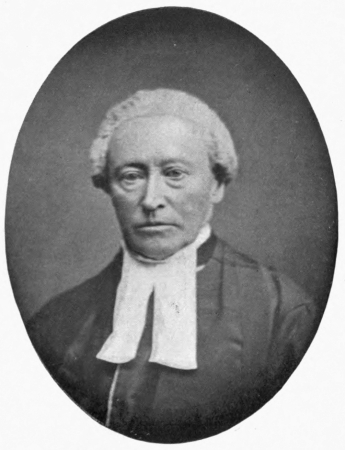
Sir Alexander Cockburn.
tetanus, we must see, in the first place, whether it admits of any doubt that he did die of tetanus. I have listened with attention to every form in which that disease has been brought under your consideration, whether by the positive evidence of witnesses, or by reference to the works of scientific authors; and I assert deliberately that no case either of a human subject, or of any animal, has been brought under your notice in which the symptoms of tetanus have been so marked as they are in this case; from the moment the paroxysm came on, of which this unhappy man died, the symptoms were of the most marked and of the most striking character. Every muscle, says the medical man who was present at the time, of his body was convulsed; he expressed the most intense dread of suffocation; he entreated them to lift him up lest he should be suffocated, and when they stooped to raise him every muscle of his body, from the crown of his head to the sole of his foot, was so stiffened that the flexibility of the trunk and limbs was gone, so that they could have raised him as you would raise a dead corpse or a lifeless log. It was found to be impossible, and the man prayed to be turned over in order to escape from the sense of the imminent risk of suffocation; they turned him over, and in the midst of doing so a fearful paroxysm, one mighty spasm, seems to have seized upon his heart, to have pressed from it the life blood, so that in a moment vitality ebbed, and the man was dead before them; when dead, the body exhibited the most marked symptoms of this most fearful disease; it was bowed from head to foot, and it would have rested, if it had been so placed, says the witness, upon the back of the head and the heels; the hands were clenched with a grasp which it required power to overcome, and the feet were curved till they assumed the appearance of a natural malformation. It is impossible to conceive symptoms more striking of tetanus; nor is it possible to conceive evidence more dishonest than that which has attempted to represent it as any other than as a case of tetanus.
Attorney-General
Well, then, if it was a case of tetanus, as to which I will not waste your time with any further observations, was it a case of tetanus from strychnia? I will confine myself for the moment to the exhibition of the symptoms as they have been described by the witnesses. Tetanus may proceed from natural causes as well as from the administration of poison. While the symptoms last they are the same, but in the course of the symptoms before the disease reaches its consummation in the death of the patient the distinction between the two is marked by characteristics which will enable any one conversant with the subject to distinguish between the two. We have been told upon the highest authority that the distinctions are these—Natural tetanus is a disease not of minutes, not even of hours, but of days. It takes, say several of the witnesses, from three to four days, and will extend to a period of even three weeks, before the patient is destroyed. Upon that point we have the most abundant and conclusive evidence. We have the evidence of gentlemen who have made it their especial study, like Mr. Curling and Dr. Todd. We have the evidence of one of the most eminent practitioners who ever adorned that profession or any other, I mean Sir Benjamin Brodie. We have the evidence of Mr. Gordon, who for twenty-eight years was surgeon to the Bristol Hospital; we have the evidence of Mr. Daniel, who saw twenty-five or thirty of these cases of natural tetanus; we have the evidence of a gentleman who practised for twenty-five years in India, where, owing to the particular character of the climate, those cases are infinitely more frequent than they present themselves here, and he gives exactly the same description of the course of symptoms through which this disease runs. Idiopathic or traumatic tetanus are therefore, upon the evidence, out of the question; but traumatic tetanus is out of the question for a very different reason. Traumatic tetanus is tetanus brought on by lesion of some part of the body. What is there in this particular case to show that there was lesion in any part of the body at all? We have had the most singular representations upon the subject of Mr. Cook’s health made by the witnesses who have come here on behalf of the defence, and who appear to have come into that box with the determination as far as possible to misconceive every fact which they could pervert to their purpose. We call before you for the purpose of showing what Cook’s health was an eminent physician who had had him under his care. It seems that in the spring of 1855 Cook, having found certain small spots manifest themselves in one or two parts of his body, and having something of ulcers under his tongue, or in his throat, conceived that he was labouring under symptoms of a particular character, and he addressed himself to Dr. Savage, who found the course of medicine he had been pursuing, founded upon this belief, was, in his judgment, an erroneous one; he altered it altogether; he enjoined the discontinuance of mercury, and was obeyed in his injunction; and the result was that the deceased, who was suffering, not from disease, but from the treatment, rapidly grew well. Nevertheless, lest there should be the possibility of mistake, Dr. Savage made him come to him from time to time that he might see that things were going on right, and he sees, long before the summer had advanced, the very unsatisfactory symptoms had entirely gone, and that there was nothing about him except that affection of the throat to which sometimes people are subject, some abnormal condition of one of the tonsils, but in other respects the man was better than he had been, and might be said to be perfectly convalescent. On the very day he left London to go into the country about a fortnight before the races, his stepfather accompanied him to the station, and congratulated him upon his healthy and vigorous appearance, and the young man, in the consciousness of the possession of health, struck his breast, and said he was well, and he felt so.
Attorney-General
Well, he goes to Shrewsbury, and shortly afterwards came those matters to which I shall have to call your attention presently, more particularly that ended in his death. I want to know upon what part of this evidence there is the slightest pretence for saying that this man had any affection about him from which traumatic tetanus could ensue. It is said at some former time he had exhibited his throat to some of the witnesses who were called, and that he had applied to Palmer for some mercurial wash to apply to his throat, or some of those ulcers. The precise period of it is not fixed, but it is perfectly clear that though he had at one time adopted that course, under the recommendation of Dr. Savage, he had got rid of it; and there is not the slightest pretence for saying that this man was suffering under a syphilitic affection of any kind; nevertheless that fact was distinctly and unequivocally negatived by a man of the highest authority—a medical gentleman of eminence—under whose treatment the man got so rapidly well. That fact is assumed by the witnesses for the defence as the ground upon which to suggest that there was traumatic tetanus in this case. It is a pretence, gentlemen, which has not the shadow of a foundation, and which I should be shrinking from my duty if I did not denounce as altogether unworthy of your attention. There was nothing about the man, according to the statement of all those who were competent to give you an opinion, which would warrant for a single moment the supposition that there was anything in any part of the man’s body which could justify the notion of traumatic tetanus; even if there were, the character which his symptoms assumed when the tetanus set in is utterly incompatible, according to the evidence of all the witnesses, with a case of traumatic tetanus. One or two cases of traumatic tetanus have been adduced in evidence on the part of the defence. We had the case of a man who was brought to the London Hospital in the evening, and who died the same night. Yes, but what were the facts of that case? The facts are that he had had before he was brought in repeated paroxysms; that he felt premonitory symptoms early in the morning; he was suffering from ulcers of a most aggravated description; and that the symptoms had run their course, rapidly it is true, but still the disease was not a matter of minutes, but a matter of hours. There is no other case that I am aware of. There is the case of the boy who was brought in, if it be necessary to allude to it. But there again we have the disease existing for some time before it ends in death. It is a matter there again of hours, and not of minutes, and not a single paroxysm like this was observed. But it is then suggested that this may have been a case of idiopathic tetanus. Idiopathic tetanus proceeding from what? They say that Mr. Cook was a man of delicate constitution—subject to excitement—that he had something the matter with his chest—that in addition to having something the matter with his chest, he had this diseased condition of the throat—and, putting all these things together, they say that the man, if he took cold, might get idiopathic tetanus. We are launched into a sea of speculation and of possibilities. Mr. Nunneley, who comes forward here for the purpose of inducing you to believe that there was anything like idiopathic tetanus, goes through a bead-roll of the supposed infirmities of Mr. Cook and talks about his excitability—talks about his delicacy of chest—talks about the affection of his throat—goes through those various heads, and says that those things may have predisposed him to idiopathic tetanus if he took cold. What evidence is there that he ever did take cold? Not the slightest in the world. The man, from the beginning to the end of the symptoms, was never treated for cold by anybody, or ever complained that he had taken cold. I cannot help saying, to me it seems that it is a scandal upon a learned, a distinguished, and a liberal profession, that men should come forward and put forward such speculations as these, perverting the facts, and drawing from them sophistical and unwarranted conclusions with the view of deceiving a jury. I have the greatest respect for science—no man can have more; but I cannot repress my indignation and abhorrence when I see it thus perverted and prostituted to the purposes of a particular cause in a Court of justice. Do not talk to me about excitement, as Mr. Nunneley did the other day, being the occasion of idiopathic tetanus. You remember the sorts of excitement he spoke of. They are unworthy of your notice, and they were topics discreditable to be put forward by a witness as worthy of the attention of sensible men constituting such a tribunal as you are.
Attorney-General
But suppose for a single moment that excitement of this kind could produce any such effect or influence, where is the excitement manifested by Cook as leading to this supposed disease? They say that the man, when his mare won at Shrewsbury, was full of excitement; and well he might be—his fortunes depended upon the result of that race; and I do not deny for a few minutes he was overpowered by the emotions that the joy of the moment excited in his breast. But that subsided, and we have no further trace of it from that time to the moment of his death. The man passed the rest of the day with his friends in ordinary conversation and in ordinary enjoyment. No trace of emotion was left about him. He is taken ill; he goes to Rugeley; he is taken ill there again; is there the slightest symptom of excitement about the man, or, on the other hand, of depression? Not the slightest in the world. When he is ill, like most other people, he is low; but as soon as he gets a little better he is cheerful and happy; he admits his friends, and he converses with them; the very night of his death, so far from any excitement, his conversation is full of cheerfulness and mirth—he is laughing and happy, little thinking, poor wretch, of the fate that was impending over him. He is cheerful and happy, talking of the future, not in the language of excitement on the one hand, or of depression on the other. What pretence is there for this idle story of excitement and depression? Not the slightest shadow of foundation in the world. But if there were—if those things were capable of producing that form of tetanus which goes by the term “idiopathic,” the character of the disease is so essentially different that it is impossible to mistake the two. What are the cases which they attempt to set up against it? They have brought you the case of Mary Watson, which a gentleman came all the way from Scotland to tell us about. The girl had been ill all day. She was taken with cramps in the night, probably originating in the stomach, extending to all other parts of her body. She gets well in a very short time, and goes about her business. Is that case to be compared for a single instant to the death agony of that wretched man, and the paroxysm that destroyed him? Those are the sort of cases with which they attempt to meet such symptoms as those which are spoken to by the witnesses as accompanying the decease of Mr. Cook.
Attorney-General
Gentlemen, I venture, upon the evidence, to assert boldly that the cases of idiopathic tetanus and traumatic, or what I may call natural tetanus, are marked by clear and distinct characteristics, distinguishing them from the tetanus produced by strychnia; and I say that the tetanus which accompanied Mr. Cook’s death is not referable to either of those forms of tetanus. You have upon that point the evidence of witnesses of the highest competency and of the most unquestionable integrity; and upon their evidence I am quite satisfied you can come to no other conclusion but that this was not a case either of idiopathic or of traumatic tetanus. But, then, they say it may have been something else; and various attempts have been made to set up different causes as capable of producing this tetanic disease. And, first, we have the theory of general convulsions; and Mr. Nunneley, having gone through the bead-roll of the supposed infirmities of Mr. Cook, says, “Oh, this may have been a case of general convulsions. I have known general convulsions to assume a tetanic character.” “Well, but pause a moment, Mr. Nunneley, have you ever seen one single case in which death arising from general convulsions, accompanied with tetanic symptoms, has not ended in the unconsciousness of the patient before death!—No, I never knew such a case—not one. But in some book or other, I am told that there is some such case reported”; and he cites, not for that purpose, I think, but he cites, with reference to general convulsions being sometimes accompanied with tetanic symptoms, and ending in death, a very eminent author of the present day. I mean Dr. Copland. Dr. Copland is living, and Dr. Copland might have been called. The author of the book, I apprehend, would stand before you as a higher authority than a man who merely quotes the book as the foundation of his knowledge. Dr. Copland might have been called. Dr. Copland was not called, notwithstanding the challenge which I threw out. Why? Because it is infinitely better in such a case to call together from the east and from the west practitioners of more or less obscurity, instead of bringing to bear upon the subject the light of science which is treasured up in the breasts of the eminent practitioners with whom this great city abounds. Dr. Copland is not called; but I say, as regards general convulsions, the distinction is plain, that where they destroy the patient they destroy consciousness; and here it is unquestionably the fact, that to the last moment of Mr. Cook’s existence, until his burst heart ceased to beat, his consciousness remained.
Attorney-General
But then comes another supposed condition from which death in this form may be said to have resulted, and that is the case which was intended to be set up by a very eminent practitioner, I mean Mr. Partridge. It seems that in the post-mortem examination of Mr. Cook, when the spinal marrow was investigated, certain granules were found, and this is seized upon. It is said, “Oh, those granules may have occasioned tetanic convulsions similar to those which were found in Mr. Cook’s case,” and a very eminent gentleman is called to give his opinion upon that subject. I admit him to be not only a man of great eminence, but a man of the highest honour and the most perfect veracity. I allude to Mr. Partridge. I must distinguish between him and other of my learned friend’s witnesses. Some there were who would not be induced, for any consideration in the world, to swerve from what they believed to be the truth. Mr. Partridge is called here to prove that this was a case of what he called arachnitis—inflammation of the arachnoid in consequence of the granules, or some other abnormal condition. I asked him the symptoms which he would find in such a case. I called his attention to what evidently had not been done before, namely, the symptoms of Mr. Cook’s case; and I asked him, in simple, straightforward terms, whether, looking at those symptoms, he would pledge his opinion, in the face of the medical world and the Court, that this was a case of arachnitis, and he candidly admitted that he would not assert that this was in his opinion a case of arachnitis.