THE TRIAL. (continued 3)
Reading edition
Are the symptoms more or less severe in India than in this climate?—I do not see there is any difference; when once set up, the symptoms of tetanus are the same.
John Jackson
In all your experience, did you ever know a case in which the disease ran its course and ended in death in the space of twenty minutes or half an hour?—I have never seen it.
[The rest of this day, after Dr. Jackson’s evidence, was occupied with taking evidence that there was nothing in Palmer’s papers to show joint transactions between him and Cook; as to Pratt’s and Padwick’s accounts; as to Palmer’s pecuniary position generally; as to the forgery of his mother’s name, and the forgery of an endorsement on a cheque for £375 of Cook’s name, by which he passed into his own account that sum which was intended for Cook.]
The Court then adjourned.
Mr. Serjeant Shee.
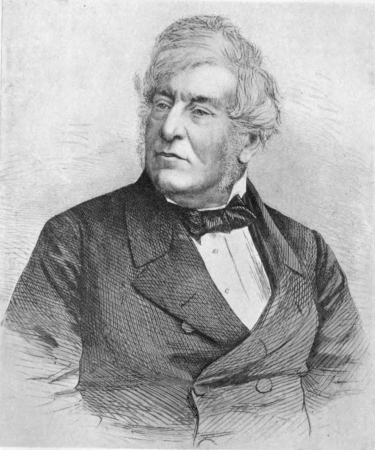
Seventh Day, Wednesday, 21st May, 1856. The Court met at ten o’clock.
Speech for the Defence.
Serjeant Shee
Mr. Serjeant Shee—May it please your lordships, gentlemen of the jury—I should pity the man who could rise to perform the task which it is now my duty to attempt unoppressed by an overwhelming sense of diffidence and of apprehension. Once only before has it fallen to my lot to defend a fellow-creature upon trial for his life; it is a position, even if the effort should last but for a day, of a nature to disturb the coolest temperament and try the strongest nerves; how much more so when, during six long days, in the eye of my unhappy client, I have been standing between him and the scaffold; conscious that the least error of judgment on my part might consign him to a murderer’s doom, and that through the whole time I have had to breast a storm of public prejudice such as has never before imperilled the calm administration of justice! Gentlemen, it is useless for me to conceal what you know perfectly well, what your utmost endeavours cannot wholly have effaced from your recollection, that for six long months, under the sanction and upon the authority of science, an opinion has universally prevailed that the voice of the blood of John Parsons Cook was crying up unto us from the ground, and that that cry was met by the whole population under an impression and conviction of the prisoner’s guilt in a delirium of horror and indignation by another cry of “blood for blood”! You cannot have failed to have entered upon the discharge of the duties, which you have, as I have observed, most conscientiously endeavoured to perform, without having been to a great extent influenced by that cry; you could not know that it would be your duty to sit in that box to pass between the Crown and the prisoner; you may with perfect propriety, understanding that the facts had been ascertained before a coroner’s jury, and reading such evidence as was there taken, have formed an opinion upon the question of the guilt or innocence of the prisoner; but you cannot but know that whatever that opinion may have been it is your duty to discard it, at least until you have heard the evidence on both sides.
Serjeant Shee
Gentlemen, the very circumstances under which we meet in this case are of a character to excite mingled feelings of encouragement and alarm. Those whose duty it is to watch over the safety of the Queen’s subjects felt so much apprehension lest the course of justice should be disturbed by the popular prejudice which had been excited against the prisoner, so much alarmed that an unjust verdict might in the midst of that popular prejudice pass against him, that a resolution was taken, not only by the Queen’s Government and the Legislature, upon the motion of the noble and learned judge, who presides here, in the House of Lords, that an Act of Parliament should be passed to prevent the possibility of the ordinary forms of law being, in the case of William Palmer, made the instrument of popular vengeance. The Crown, under the advice of its responsible Ministers, resolved also that this prosecution should not be left in private hands, but that its own law officer, my learned friend the Attorney-General, should take upon himself the responsibility of conducting it properly, at once sternly in his duty to the public and fairly to the prisoner at the bar; and my learned friend, when that duty was entrusted to him, did what I must say will, in my opinion, for ever redound to his honour—he insisted that in a case in which so much prejudice had been excited all the evidence which it was intended on the part of the Crown to press against the prisoner should, as soon as he received it, be communicated to the prisoner’s counsel; everything, I must say and tell my unhappy client, everything which the constituted authorities of this land, everything which the Legislature and the law officers of the Crown could do to secure a fair and impartial trial in this case, has been done, and the whole responsibility, if unhappily injustice should on either side be done, now weighs with terrible pressure upon my lord and upon you.
Serjeant Shee
Gentlemen, one great misfortune has befallen the accused—a most able man who had been selected by him as his counsel many weeks ago has been, unfortunately, by illness prevented from discharging that duty to him. I have endeavoured, to the utmost of my ability, to supply his place; I cannot deny that I am awed—that I am moved—by the task I have undertaken; but the circumstances to which I have already adverted, the national effort, so to speak, through the Government of the country, to ensure a fair trial is a great cause of encouragement, and I am not dismayed. I have this further cause for not being altogether overcome by the duty which I have of defending the prisoner and of discussing the mass of evidence which has been laid before you, that though, of course, like everybody else, I knew generally and loosely, very loosely indeed, the history of these transactions at Rugeley, I had formed, when the papers came into my hands, no opinion upon them, no opinion upon the guilt or the innocence of the prisoner at the bar, and my mind was perfectly free to form what I trust will be declared by you a right judgment in this case. I commence his defence, I say it in all sincerity, with an entire conviction of his innocence. I believe that there never was a truer word pronounced than the words which he pronounced when he said “Not guilty” to this charge. If I fail in establishing that to your satisfaction I shall be under a great misgiving that my failure was more attributable to my own ability to do justice to this case than to any weakness in the case itself; and I will give you this proof of the sincerity with which I declare upon this evidence my conviction of his innocence, that I will meet the case of the prosecution foot to foot at every stage. I will grapple with every difficulty which has been suggested by my able friend the Attorney-General. You shall see that I avoid no point because I fail to approach it, and if you find that I do thus deal fairly with you from the beginning, and it is my duty to do so, I hope I may be sure, indeed I know I may be sure, of a willing and considerate attention to an address which must, I fear, be long, but in which there shall be no observations, no tone, and no topic of discussion which do not properly belong to the case.
Gentlemen, the case which the Crown undertakes to establish against the prisoner at the bar, and to support by entirely circumstantial evidence, is, or may be, shortly stated thus. They say that the prisoner having in the second week in November made up his mind that it was his interest to get rid of John Parsons Cook, deliberately prepared his body for deadly poison by the slower poison of antimony, and afterwards despatched him by the deadly poison of strychnia. No jury will convict a man of the crime thus imputed to the prisoner, unless in the first place it be made clear that he had some motive for its commission, some strong reason for desiring the death of Cook; unless, in the second place, the symptoms of the deceased before death, and the appearance presented by his body after death, were consistent with the theory of death by strychnia poison, and inconsistent with the theory of death from other and natural causes; unless, thirdly, the circumstantial evidence against him is such as to be inexplicable upon the supposition of his innocence. Now, it is under these three heads that I intend to discuss the evidence that you have heard; and it must be plain to you that if I adhere to that order and method of treating the vast amount of proof which has been laid before you, I must exhaust the whole argument, and leave myself no chance without immediate detection of evading any difficulty in the defence.
Serjeant Shee
Before, however, I proceed to grapple in these close quarters with the case of the Crown, as made by the Attorney-General, allow me, that you may at once see the whole scope of the address with which I have to trouble you, to claim its proper place in the discussion for a fact which, though by no means concealed from you by the Attorney-General, yet appeared to me in that address by which he at once seized upon your judgment to have been thrown too much into the shade, the fact that strychnia was not found in the body of John Parsons Cook. If he died from the poison of strychnia, he died within two hours of the administration to him of a very strong dose of it—he died within a quarter of an hour or twenty minutes of the effects of that dose being visible in the convulsions of his body; the post-mortem examination took place within six days of his death—there is not the least reason to suppose that between the time of the ingestion of the poison, if poison was taken, and the paroxysm in which he died, there was any dilution of it in the stomach, or any ejection of it by vomiting. Never, therefore, were circumstances more favourable; unless the science of chemical analysis is altogether a failure for detection of the poison of strychnia, never was there a case in which it ought to have been so easy to produce it. Now, the fact is, and it is beyond all question, that it was not found. Whatever we may think of Dr. Alfred Taylor, of his judgment, and of his discretion, we have no reason to doubt that he is a skilful analytical chemist—we have not the least reason to suppose, we know the contrary, that he and Dr. Rees, who assisted him, did not do all that the science of chemical analysis could enable man to do to detect the poison of strychnia. They had distinct information from the executor and near relative of the deceased, either personally or through his solicitor, that he, for some cause or other, had reason to suspect the poison of strychnia; they undertook the examination of the stomach, which, I think, upon the whole evidence, without adverting to that part of it now in detail, you will be satisfied was not in an unfavourable condition for a sufficiently accurate analysis, with the expectation that if strychnia had been taken it would be found, and without any doubt as to the efficiency of their tests to detect it; and yet in their letter of the 4th of December they say, “We do not find strychnia, prussic acid, or any trace of opium; from the contents of the stomach having been drained away it is impossible to say whether any strychnia had or had not been given just before death, but it is quite possible for tartar emetic to destroy life, if given in repeated doses; and, as far as we can at present form an opinion, in the absence of any natural cause of death, the deceased may have died from the effects of antimony in this or some other form.” Having afterwards attended the inquest, and heard the evidence of Elizabeth Mills and Mr. Jones, of Lutterworth, and the evidence of a person of the name of Roberts, who spoke to the purchase of strychnia poison by Palmer on the morning of the Tuesday, Dr. Taylor came to the conclusion that the pills which were administered to Cook on the Monday and Tuesday night contained strychnia, and that Mr. Cook was poisoned by it; and he came to that conclusion, though he had expressed an opinion in writing that he might—and these are his very words—have been poisoned by antimony, of which some trace was found by him in the body, while no trace was found of strychnia.
Serjeant Shee
Gentlemen, I am not about to discuss that part of the case in detail, but I call your attention to it for the purpose of claiming for it its proper place in this discussion, and that you may know at the commencement of my address what the whole course of my argument will be, and not be under the impression that, because I do not under the three heads to which I have directed your attention advert particularly to that head. I intend to pass it over. I tell you exactly what the case for the defence will be, as to the point that strychnia was not found in Mr. Cook’s body. Let me state it as fairly as I can—the gentlemen who have come to the conclusion that strychnia may have been there, though they did not find it, have arrived at that conclusion by experiments of a very partial kind indeed; they contend that the poison of strychnia is of that nature, that when once it has done its fatal work, and become absorbed into the system, it ceases to be the thing which it was when it was taken into the system; it becomes decomposed, its elements separated from each other, and therefore no longer capable of responding to the tests which, according to them, would certainly detect the poison of undecomposed strychnia; that is their case. They account for the fact that it was not found, and for their still retaining the belief that it destroyed Mr. Cook, by that hypothesis. Now, it is only a hypothesis; there is no foundation for it in experiment; it is not supported by the evidence of any eminent toxicologist but themselves—it is due to them to say, and to Dr. Taylor in particular to say, because it will be quite out of my power to speak of Dr. Christison through any part of this discussion except with the respect and consideration which is due to a man of eminent acquirements and of the highest character; it is due to Dr. Taylor to say that he does propound that theory in his book, but he propounds it as a theory of his own; he does not vouch, as I remember, any eminent toxicologist in support of it; and when we recollect that his knowledge on the matter consists—good, humane man!—in having poisoned five rabbits twenty-five years ago, and five since this question of the guilt or innocence of Palmer arose, his opinion, I think, unsupported by the opinions of others, cannot have much weight with you; however, what I have to say now upon that point is, that I will call before you many gentlemen of the highest eminence in their profession, analytical chemists, to state to you their utter renunciation of that theory. I will call before you Mr. Nunneley, a Fellow of the Royal College of Surgeons, and Professor of Surgery at the Leeds School of Medicine, who attended that case of strychnia poison that took place at Leeds, and to which we have agreed that no reference shall be made by name. I will call before you Dr. Williams, Professor of Materia Medica at the Royal College of Surgeons in Ireland, and surgeon for eighteen years to the City of Dublin Hospital, who will tell you that he also entirely rejects that theory, and believes that it has no foundation in experiment or authority. I will call before you Dr. Letheby, one of the ablest and most distinguished among the men of science in this great city, Professor of Chemistry and Toxicology in the Medical College of the London Hospital, and medical officer of health of the city of London, who also rejects that theory as a heresy unworthy of the belief of scientific men. I will call before you Dr. Nicholas Parker, of the College of Physicians, a physician of the London Hospital and Professor of Medicine to that institution, who concurs with Dr. Letheby in his opinion; Dr. Robinson, also of the Royal College of Physicians; Mr. Rogers, Professor of Chemistry to St. George’s School; and lastly, I will call before you probably the most eminent chemical analyst in this country, Mr. William Herapath, of Bristol, who totally rejects the theory as utterly unworthy of credence—all of these gentlemen contending, and ready to depose to it on their oaths, that not only if half a grain, or the fiftieth part of a grain, but I believe they will go on to say that if five, or ten, or twenty times less than that quantity had entered into the human frame at all, it could be and must be detected by tests which are unerring. They will tell you this, not as the result of a day’s cruelty for ever regretted on five rabbits, but upon a large and tried experience upon the inferior animals, made and created, as you know they were, for the benefit of mankind; upon a very extensive experience in many cases, as to many of them, of the effects of strychnia on the human system. And not to detain you on this part of the case, to which I only now advert, not intending to press it on you later at any length, that you may see what the nature of the defence in point of medical testimony will be, I will satisfy you by evidence which I think must control your judgment, that the only safe conclusion at which you can arrive is that strychnia not having been found in Cook’s body, under the circumstances of this case never could have been there. You will find that they all agree in this opinion, that no degree of putrefaction or fermentation in the human system could in their judgment so decompose the poison of strychnia as that it should no longer possess those qualities which in its undecomposed state cause it to respond to the tests which are used for its detection.
Serjeant Shee
Having said so much I will now apply myself to what, in my judgment, is an equally important, if not more important, question in this case, one which I approach with no diffidence whatever except the distrust which I have, under the circumstances in which I speak, of myself, and which, if it were possible for me to write what I think upon it and then to read it to you, I do not entertain the smallest doubt that you must be convinced of the innocence of this man—the question whether, in the second week of November, 1855, he had a motive for the commission of this murder, some strong reason for desiring that Cook should die. I never will believe that, unless it be made clear to you that it was the interest of William Palmer, or that he thought it was his interest, to destroy Cook—I never will believe, till I hear your verdict pronounced, that a jury can come to the conclusion of his guilt. And it seems to me, upon the evidence which has been laid before you, abundantly clear that it not only was not the interest of William Palmer that Cook should die, but that his death was the very worst calamity that could befall him, and that he could not possibly be ignorant that it must be immediately followed by his own ruin. That it was followed by his immediate ruin we know. We know that at the time when he is said to have commenced to plot the death of Cook he was in a condition of the greatest embarrassment. It was an embarrassment which, in its extreme intensity, had come but recently upon him, an embarrassment, too, in some degree mitigated by the circumstance that the person upon whom these bills, which have been stated to you to be forgeries, purported to be drawn was his own mother, a lady of a very large fortune, and with whom he was on the most affectionate terms. Still, he was in a condition unquestionably of great embarrassment. My learned friend has raised the hypothesis of his having a wish to destroy Cook upon the ground of this embarrassment. My learned friend stated to you that the case of the Crown against the prisoner was this, that, “being in desperate circumstances, with ruin, disgrace, and punishment staring him in the face, he took advantage of his intimacy with Cook, when Cook had been the winner of a considerable sum of money, to destroy him and get possession of his money.” That is the theory of the Crown. Now, let us test it as a matter of business, relieving, if possible, our minds from the anxiety we must all feel when the fate of a fellow-creature is at stake, as if it was a case in a private room for the decision of an arbitrator. It is my misfortune not to be able at times to speak otherwise than earnestly, but let us look at it as a matter of business and scrutinise it in every corner. Was it his interest that in the second week in November, 1855, Mr. Cook should be killed by a railway accident? If it was not, we have no motive to ascribe to it. If it was not, and more, if the contrary was clearly his interest, no sensible man would believe that he deliberately plotted and committed the murder. A long correspondence has been put in, the material parts of which letters will, in a subsequent stage of the case, be called to your attention. There is evidently a great deal in it that does not touch the point in the case, but the learned judge, before the end of the case, will direct your mind to a correct appreciation of the contents. I watched them with an anxiety which no words can express. Having had the advantage, for which I shall ever honour my learned friend, of reading the correspondence beforehand, I found the history, as told by the correspondence, filled up by the vivâ voce testimony which was afterwards given. I was aware, at least I firmly believed, that in that correspondence the innocence of the prisoner lay concealed; and I think that I shall be able to show you that it is demonstrative of this proposition that he not only had no motive to kill Cook, but that the death of Cook was the very worst kind of thing that could happen for him. I shall not apologise to you, you would think it very inopportune to do so, for going into the details of this matter. Allow me, confining myself, as it is my duty, to the evidence in the cause, to call your attention to the position in which these two men stood to each other. They had been intimate as racing friends for two or three years; they had had a great many transactions together; they were jointly interested in at least one racehorse which was training at the stables of Saunders at Hednesford; they generally stayed together at the same hotel; they were seen together on almost all the racecourses in the kingdom, and were known to be connected in betting transactions, and adventurers upon the same horses at the same races. It is in evidence that just before Cook’s death he said, in the presence of his friend Jones, addressing Palmer, “Palmer, we have lost a great deal of money upon races this year.” And though it is impossible, Cook being dead, and the mouth of the prisoner sealed, and transactions of this character not being recorded in regular books as the transactions in a merchant’s counting-house are, to give you in the fulness of evidence the actual state of their relations to each other, yet it is abundantly clear, and I will make it more clear to you presently, that they were very closely connected. When, in the month of May, 1855, money was wanted either by Mr. Cook or Palmer, Palmer applied to Pratt for it. He wanted, I think, £200 to make up a sum for the payment of a debt, he having, I think, a balance of £190 in the hands of Pratt. Mr. Pratt would not lend it him without security, and he proposed the security of his friend John Parsons Cook, a gentleman of respectability and a man of substance.
Serjeant Shee
Now, what the exact state of the affairs of John Parsons Cook at that time was I do not know. Such a fortune as he had might be thrown down in a week by the course of life that he was leading. A young man who is reckless as to the mode in which he employs his fortune, and who has only £13,000, may, if he likes, for a year or two pass before the world as a man of much more considerable means; it is not everybody who will go to Doctors’ Commons to ascertain what the exact amount of property he derived from his grandfather was. He was Mr. Cook, of Lutterworth, a gentleman who had a stud of racehorses, who lived expensively, and was known to have inherited a fortune; he was a person whose friendship was at that time probably, and probably continued to be, a matter of considerable convenience to Palmer. You recollect, gentlemen, I am not defending Palmer against the crime of forgery. I am not defending him against the reckless improvidence of obtaining money at the enormous discounts at which he obtained it. The question is, whether he is guilty of murder. Palmer and Cook were then so circumstanced as early as the month of May, 1855. They had had another transaction previously to the date of November, 1855, which I will not advert to now, because it was taken second in the case of my learned friend the Attorney-General; but let us see what their position was in the second week of November, 1855. Respecting that, we have the evidence of Pratt, and from the correspondence which he explained to us there can be no doubt upon our minds. Amongst a mass of bills, amounting altogether to £11,500, which had been repeatedly renewed, there were two bills for £2000 each, which became due in the last week in October; and there was another bill, or two other bills, amounting to £1500 which had become due some time before, but which were held over, as they say, from month to month, Palmer, who was liable upon them, paying for the advantage of having them held over at the end of every month, at what they call interest of about 60 per cent. These three bills, or sums of £2000, £2000, and £1500 were the embarrassments which were pressing upon him in the second week of November; and, be it observed, though pressing upon him, they were pressed upon him by a man, who, no doubt, would have been glad to have got the principal, but who would also upon anything approaching to security have been very well pleased with the interest. How can capital, if it be secure, be better employed than at 40 or 60 per cent. per annum? As long as there was a vestige of good security, Mr. Pratt or Mr. Pratt’s clients desired nothing better than that Palmer should continue to hold the money.
Serjeant Shee
Now, in that state of things, on the 27th of October, Palmer, in answer to an urgent demand upon him for money on the ground of the security becoming doubtful, came up to London, and Pratt insisted that, in respect of one of those bills of £2000 which had just become due, as Palmer could not pay it, he should pay instalments upon it in addition to the enormous interest which he charged; and it was agreed at that interview of the 22nd of October that £250 should be paid down, £250 paid on the 31st of October, and that as soon after as possible a further sum of £300 should be paid, making in the whole a payment on account of that bill of £800 to quiet Pratt, or, as Pratt said, to quiet his clients, and induce them to let the bill stand over. On the 9th of November that £300 was paid, and, when paid, a letter was written, which I beg your particular attention to, and you will see how closely and strongly it bears on the point to which I am now entreating your most anxious consideration; a letter of the 13th of November, that is the day when “Polestar” won the race, written by Pratt to Palmer, as follows:—“Dear Sir,—Curiously enough, I find that the great point of the office is, that your brother had delirium tremens more than once, say, three or four times before his life was accepted, and that actually their medical man, Dr. Hastings, reported against the life, as well as Dr. Wardell. I think I shall be able to get a copy of the proposal through a friend.” Palmer did not know what the proposal was, and therefore probably it had been made by his brother. “The opinions of several secretaries of insurance offices are that the company have not a leg to stand upon, and from the mere fact of the enormous premium, it is plain that the policy was effected on an extra rate of premium on account of the true statement of the condition of health of the assured. The enormous premium will go a great way to give us a verdict.” I do not like to read only one passage from a letter, lest by chance I should mislead, therefore I have read that portion of it; but now attend to this—“I count most positively on seeing you on Saturday; do for both our sakes try to make up the amount to £1000, for without it I shall be unable to renew the £1500 due on the 9th.” What does that mean? Pratt told us yesterday the three sums of £300, £250, and £250, and some other small amount, making up the sum of £800, were instalments payable on the bill overdue, and upon which Pratt had threatened to issue writs against Palmer’s mother, and Palmer had gone almost down on his knees to beg him not to do so; he said, “For God’s sake, do not think of writs.” Now, that £800 being paid, Pratt said, “I shall only credit you for £600; I must take £200 for the interest.” In his letter of the 13th of November he says, “Do for both our sakes try and make up the amount to a thousand”—that is, make the £800 up to a thousand pounds—“for without it I shall be unable to renew the £1500. I must have a larger instalment, or else I cannot keep this bill afloat for you.” He said so, whether it was true or not does not matter in this case; that was the representation which he made, and the duress which he put on Palmer; and, in truth, it meant this—Make it up to a thousand, give me £200 more, or the writ shall be served on your mother. He does not say so, but he said something to the same effect before, and it was a representation that he could not satisfy the people whom he said he represented without that additional sum. Observe, that letter is written on the 13th of November, and Palmer gets it at Rugeley when he arrives on that evening from the race at which “Polestar” won. Palmer, who was at the races the first day, went away in the evening, and went to Rugeley; when he gets to Rugeley, early in the morning of the 14th, the next day probably, he gets this letter of Pratt’s pressing on him the necessity of paying a further sum of £200. What does he do? See if it is possible to doubt that at that time Cook’s life was of the utmost value to him. He instantly returns to Shrewsbury; he sees Cook. They say he dosed him. We will see how probable that is presently. He gets there on the Wednesday; he sees Cook. Cook goes to bed in a state which I will not at present describe; he gets up much more sensible than he went to bed; goes upon the racecourse, and comes home with Palmer to Rugeley on the next day, Thursday; he goes to bed when he gets to Rugeley; he gets up still ill and uncomfortable, but able to go out, and he dines with Palmer that day, Friday.
Serjeant Shee
Now, I beg your attention to this letter. On that day, the 16th, Palmer writes thus to Pratt—“I am obliged to come to Tattersall’s on Monday to the settling, so that I shall not call and see you before Monday, but a friend of mine will call and leave you £200 to-morrow, and I will give you the remainder on Monday.” That is written on the 16th, the day they dine together at Palmer’s house. Now, you recollect that the person who ordinarily settled Cook’s accounts in racing transactions was a person of the name of Fisher, the wine merchant, in Shoe Lane. He was called as the first witness on this trial. That very day Cook writes to Fisher as follows:—“It is of very great importance to both Palmer and myself that a sum of £500 should be paid to a Mr. Pratt, of 5 Queen Street, Mayfair, to-morrow without fail; £300 has been sent up to-night, and if you would be kind enough to pay the other £200 to-morrow on the receipt of this, you will greatly oblige me, and I will give it to you on Monday at Tattersall’s.” Then there is a postscript which I will read, but make no comment upon it now—“I am much better.” What is the fair inference from these two letters? I submit to you that the inference is that at that date Cook was making himself very useful to Palmer. Pratt was pressing him for an additional sum of £200 when he had need of all his money, and Palmer having communicated his difficulty to Mr. Cook, Cook at once comes forward and writes to his agent to pay that £200. And the letter shows more—you may have forgotten that letter, but it was read in the first hour after the speech of my learned friend the Attorney-General; you may have forgotten it, but I read it to you word for word—the passage, “£300 has been sent up to-night,” shows that Cook knew all about it, and probably had an interest in Palmer’s transactions with Mr. Pratt; it was inserted merely for the purpose of putting a good face upon it to Mr. Pratt, as a man does who, not having a farthing of the sum that he wants to pay, will pretend that he has to pay more, in order to represent that he has got a portion of what he wants to pay, and he says, “Will you lend me a little more; I am not entirely dependent upon you for the sum that I have to pay”; or it means that on that day £300, which had come to their hands in some way or other, was by Cook made applicable to the convenience of Palmer—one of those things it means; whichever way you take it, it proves to demonstration that Palmer and Cook were playing into each other’s hands in respect of that heavy incumbrance upon Palmer; and that Palmer could rely upon Cook as a fast friend in any such little difficulty as that; and though his difficulties sound large when we talk of £11,500, the difficulty of the day was nothing like that, because in the spendthrift, reckless way in which they were living, putting on bills from month to month, and paying what sounds an enormous interest per annum, the actual outlay on the day was not always so considerable. I submit to you that letter shows that on the 16th of November, when they say he was poisoning Cook, Cook was behaving to him in the most friendly way, was acquainted with his circumstances, willing to assist in the relief of his embarrassments, and actually to devote a portion of his earnings to the purposes of Palmer. It is perfectly plain, but I will make it plainer if you will attend to me for a moment longer. You will remember that part of the case of my learned friend is this. He says that he intended to defraud Cook; that Palmer having left Cook ill in bed at Rugeley, ran up to town on the Monday, intending to despatch him on the Monday night or the Tuesday; that he ran up to town, went, not to Fisher, who was the agent of Cook, but to Herring, who was his own agent, and told Herring that he was authorised by Cook to settle his Shrewsbury transactions at Tattersall’s, thereby getting command over Cook’s winnings; that he applied them to his own purposes, and, having done so, determined to put Cook out of the way. That is their case. We had the evidence of Fisher on the first day. Fisher is evidently a shrewd, intelligent man; no friend of Palmer’s. He gave, I do not mean to say improperly, I did not wish to throw imputations, but he gave a twist to the dosing at Shrewsbury against Palmer. On the Monday, as on the Tuesday, Cook, though generally indisposed, was during great part of the day quite well, according to the evidence; on the Monday he saw his trainer, Saunders, he saw his two jockeys; he got up and was shaved; he was comfortable the whole day, and the theory is that he was comfortable because Palmer was not there to dose him—you will see how grossly absurd it is presently. He was well on the Monday, quite well on the Tuesday; now, if Palmer had gone up to London, representing that he would do Cook’s business for him through Cook’s own agent, Fisher, Palmer might be perfectly certain if that was done on the Monday Fisher would write to Cook on that night to say that the thing was done and made straight; Herring, you see, does do it the moment the thing is settled between Palmer and Herring; Herring represents Palmer as saying, “You must write me word about some part of the transactions”; he says, “No, I shall write Mr. Cook word at Rugeley.” Do not you think Fisher would have done the same? and if Cook had not known that Palmer intended not to go to Fisher but to Herring, do you not think Cook would have been surprised on the Tuesday morning at not hearing that he had seen Palmer, and that the transactions were settled? Could Palmer, as a man of business, have relied upon Cook’s not being alarmed at Fisher’s not doing it? We had the evidence of Fisher, who says, “On the 17th of November, at Cook’s request, I paid £200 to Mr. Pratt; his account in the ordinary course would have been settled at Tattersall’s on Monday, the 19th. I advanced the £200 to pay Pratt; I knew that Cook had won at Shrewsbury, and I should have been entitled to have deducted that £200 from his winnings if I had settled his account at Tattersall’s; I did not settle the account.” That explains the whole transaction. Cook and Palmer understood each other perfectly well; it was the interest of both of them that Palmer should be relieved from the difficulty of the pressure of Pratt, and accordingly Cook said, “As to the settlement, it shall not go through Fisher; we will have the £200 from Fisher; it shall not be paid to him on Monday; I will let Palmer go up and settle the whole thing through Herring.” And that is what was done; and accordingly Fisher has never been paid since.
Serjeant Shee
Now, there is a letter to which I will call your attention, of the 19th November, 1855, from Palmer to Pratt—“Dear Sir,—You will place the £50 I have just paid you, and the £450 you will receive from Mr. Herring, together £500, and the £200 you received on Saturday,” that is, the £200 that Fisher paid to Pratt at the express request of Cook “towards payment of my mother’s acceptance for £2000, due 25th October, making paid to this day the sum of £1300.” Can you doubt when you take all that together—the dining together on the Friday—Cook writing that letter to Fisher, saying it was of the greatest importance to him as well as to Palmer that the £200 should be paid in order to pacify Pratt, can you doubt that on that day Cook was a most convenient friend to Palmer, and that he could not by any possibility do without him. But it does not end there. Cook died on the Wednesday morning early, the 21st; if we want to know what effect that death had on Palmer, and what interest he had in it, Palmer’s mouth being sealed, we must get it from Pratt. Nobody else that we know knows anything about it; Cook is gone. On the 22nd November, the day after the death—and I am sure you will make some allowance for a day having elapsed after the death of Cook before he wrote—Palmer writes thus to Pratt—“Ever since I saw you I have been fully engaged with Cook and not able to leave him.” Now, unless he murdered him, that is the truest sentence that ever was expressed. He watched the bedside of his friend; he was with him night and day; he attended him as a brother; he called his friends around him; he did all that the most affectionate solicitude could do for a friend that was ill, unless he was plotting his death—“And I am sorry to say after all he died this day, so that you had better write to Saunders; but mind, I must have ‘Polestar’ if it can be so arranged; and should any one call upon you to know what moneys Cook ever had from you do not answer the question.” Then he says, “I sat up two full nights with Cook.” That he sat up the whole of the night may not be true, but he was ready to be called if Cook should be ill; and Elizabeth Mills says after the first serious paroxysm, when she went to bed, she left Palmer in the arm-chair, sleeping by the man whom they say he intended to murder. No! murderers do not sleep by their victims in that way. What is the answer? I read it to you in order that you may see what ruin Cook’s death brought upon Palmer. The answer of Pratt is—and you will see how much it increased the difficulties of Palmer—“I have your note, and am greatly disappointed at the non-receipt of the money as promised, and at the vague assurance as to any money. I can understand that your being detained by the illness of your friend has been the cause of your not sending up the amount.” Attend to this paragraph—“The death of Mr. Cook will now compel you to look about as to the payment of the bill for £500, due the 2nd of December. I have written Saunders informing him of my claim, and requesting to know by return what claim he had for keep and training”; so that the very first effect of Cook’s death was, in Pratt’s opinion, who knew all about it, to saddle Palmer alone with the sum of £500. He says, “The death of Cook will now compel you to look about as to the payment of the bill for £500 on the 2nd of December.” We will investigate the transaction out of which that bill arose, and you will see, I venture to say, that I can satisfy you conclusively that the transaction out of which that bill arose was a transaction for Cook’s accommodation, for which Palmer had lent his name to accommodate Cook, and for which upon Cook’s death Palmer became primarily and alone responsible. It will be for you to judge, if I prove that to you, whether it suited Palmer at that moment to stand before the holder of that £500 bill—some client of Pratt’s—as the only man liable upon it, and whether there was the same chance, supposing it had been for his own accommodation, of putting it on, as they call it, after Cook’s death, as there might have been before. But let me be fair to the prosecution, and state to you now the view that the Attorney-General takes of that £500 transaction. As I told you, I mean to meet his case foot to foot, and to show, and I hope to show him, that there is nothing in it; that if he, as the law officer of the Crown, had had the option of taking up this case or not, he would not have taken it up; that the Crown never would have appeared upon it, but because the universal feeling of the country was such as to render it impossible that the case should not be tried after the verdict of wilful murder obtained on Dr. Taylor’s evidence; and because the Crown, having seen the absolute necessity of its being tried, felt that it would abandon the duty of protecting every one of the Queen’s subjects if it did not take care that a man with so much prejudice against him, that man leading the life that Palmer led, and disgraced by forgeries to a large amount, as it is said, and a gambler by profession, should not have a fair trial. There was no other way of securing a fair trial for this man, as the Attorney-General at once saw—there was no possibility of his being saved but by giving the counsel who defended him all the information that my friend had himself. We will see what his view is. My learned friend states it upon his instruction in this way. He is bound, as I told you in the beginning, in prosecuting this case to prosecute it strenuously; he is bound to put the facts together according to his instructions in such a way that, if they will and ought to establish guilt, it is brought home. Prosecutions must be conducted in that way, or the guilty would escape in nine cases out of ten. And therefore my friend, upon the view of the evidence—a comparatively superficial one—thinks that this is the theory upon which it appears probable that Palmer plotted the death of Mr. Cook. I will read to you from my friend’s speech, with reference to the £500 bill transaction; and, as I understand it, it is the greatest mistake that was ever committed, and would not stand for a moment but for the popular prejudice against Palmer. I think I can satisfy you that is so—“Pratt still declining to advance the money”—that is the £1000 which Palmer wanted him to advance—“Pratt proposed an assignment by Cook of two racehorses, one called ‘Polestar,’ which won the Shrewsbury race, and another called ‘Syrius.’ That assignment was afterwards executed by Mr. Cook in favour of Pratt, and Cook was entitled to the money raised on that security, which realised £375 in cash and a wine warrant.” They twist it in this way, that Palmer, having forged the endorsement of Cook, and being afraid of detection, put Mr. Cook out of the way. That is the view they take of that case. I think I can satisfy you it is impossible that that can be the correct view. It cannot, by any possibility, as it seems to me. It is for you to judge. We know exactly what took place; we had it from Pratt yesterday. What took place was this. Palmer applied for the loan of £1000; Pratt said, “I can’t let you have it.” Palmer said, “Will you discount a bill for £500?” Pratt said, “Not without security.” Palmer said, “What security will you take; it is for the accommodation of Mr. Cook? I have undertaken to get the enclosed bill cashed for Mr. Cook; you had a £200 bill of his.” He reminds him that he had been paid a £200 bill, and he says, “He is a very good and responsible man; will you do it, and I will put my name to the bill?” So that it was represented to Pratt as a transaction for the accommodation of Cook; and Pratt’s answer is, “If Mr. Cook chooses to give me his security I have no objection, but he must execute a bill of sale of his two racehorses, ‘Polestar’ and ‘Syrius,’ and he must execute a power of attorney, and signature to it must be attested by some solicitor in the country, so that I may be quite sure that it is really a valid security; and upon those terms, if you will get all that done, and Mr. Cook will submit to all that, I will give him £375 in money, £65 wine warrant, charging him £10 for expenses, and £50 for discount”—making up the sum of £500; that is what Pratt is willing to do. There is no doubt at all, you know, that Cook attached the highest value to “Polestar”; he was not going to execute a bill of sale with a power of attorney to enable the mortgagee or assignee to enforce it at once; he was not going to do that, and not get any money for doing it; he knew the value of “Polestar” and “Syrius”; “Polestar” was probably backed for the engagements on which he won the money at Shrewsbury. My friend says he never received that £375; it is in the last degree improbable that he never received that money; I put it to you as men of sense that he must have received it; do you think that he remained after executing the bill of sale on the 6th of September the whole time from that day to his death without writing to Pratt—“Why, you have the bill of sale of my two horses, and I have not got any money upon them”? Is it credible, can you believe Cook, who was as much in want of money as Palmer; do you think he would throw away his property in that way, and let Pratt obtain from him a bill of sale and get no money upon it? It is incredible; the only pretence for setting it up is this, it is a perfectly fatal one that will not stand before sensible men for a minute. Along with the cheque for £375 he sent £315 to Palmer for his own purposes; but my friend says Palmer, having got this cheque for £375 payable to order, fraudulently appropriated it to himself; forged the name of Cook upon the back of it, and kept Cook in ignorance of the transaction. Is it credible, that during three whole months Cook, who knew that he had executed a bill of sale of his two racehorses, and I will show you was in want of money, should have allowed it to remain so? Is it not much more probable that the signature of Cook was put on there with his full knowledge? It is not suggested that there was any attempt at imitating his handwriting. Is it not more probable that Cook, who wanted the ready money, and who would probably be put to inconvenience if he did not get the ready money, but only the means of getting it two days later—that Palmer should let him have the £315 cash which was sent up, and Palmer take the cheque? I will show you there is reason for believing that to be the case; I will put it to you, in the first place, whether it is probable he would be silent for three months. Palmer writes, “I will thank you to let me have the £315 by return of post if possible; if not, send it to me by Monday night’s post to the post office, Doncaster. I now return you Mr. Cook’s paper, and he wants the money on Saturday if he can have it; I have not promised it for Saturday, so please to enclose it with mine in cash in a registered letter, and he must pay for its being registered.” So that you see Palmer wanted it to be sent like his own, and Cook wanted it to be sent in cash. “Do not let it be later than Monday night’s post.” Pratt writes acknowledging the receipt of the document, saying he will send him his money to Doncaster, and endeavour to let Cook have his money at the same time. On the 10th of September Palmer writes to Pratt that he must send him for Mr. Cook £385 instead of £375 and the wine warrant, so that he can hand it to him with the £385. Accordingly, here is an intimation that Cook, who wanted the money on the very day, was inconvenienced by only getting a cheque on London which he could not immediately change, and therefore Palmer gave him the money and took the cheque. It is remarkable, when we look at the banking account of Palmer at Rugeley, the £375 is paid in by somebody to Palmer’s account, but the £315 is not paid into Palmer’s account at all; that is the only sum paid in on that day, so that I put it to you upon these facts, Pratt saying in a letter which accompanies the money, “I am obliged to send a cheque for Mr. Cook, for I have not received the money, which I shall do no doubt to-morrow”; so that not being able to send cash to the full amount he is obliged to do that which did not suit Cook; he sent him a cheque which he could not cash on the day he got it; he is obliged to send it to London unless he could find some friend down there, and that delays him for a whole day. I submit to you as the true version of the transaction that the bill was accepted for Cook’s accommodation; Cook gave as security for it the two horses, “Polestar” and “Syrius”; Cook never complained to Pratt during the rest of his life that he had not received the money upon it. It appears in the correspondence that Cook wanted the ready money, and that he wanted it on Saturday, and it would be probably inconvenient if he had got it a bit later than Monday; though Palmer would not promise to get it sooner than Tuesday. What says Palmer in his letter, which is not written for the purpose of this case, but written at the date of this transaction, that he, Palmer, would let Cook have the cash that was sent, and he himself take the cheque with Cook’s authority, and put Cook’s name on the back of it; and how else can you account for the silence of Cook, for the fact that the £375 is paid into the account of Palmer at Rugeley, and no trace of the other large sum of £315? That is well worthy your consideration. You cannot account by any reasonable mode for the fact that the security given for that £500 was Cook’s horses, and Cook remaining quiet about it for three months after he had executed a regular bill of sale, except the supposition that it was for Cook’s accommodation, and Cook got the best part of the money; and, if so, Palmer’s name being on the bill, what is the effect of Cook’s death? Gentlemen, what Pratt, who knew all about it, says is, “The death of Cook makes you liable for that sum of £500 due on the 2nd December.” I submit to you, on the second ground of motive, which my learned friend suggested, the case has altogether failed, and that it is perfectly clear that at the date of Cook’s death Pratt was of opinion that the death of Cook threw a further liability on Palmer of £500; he tells him so in that letter. How could it be his interest to kill him? We already find the difficulties which Cook’s death brings upon Palmer; the bill of £500, the danger of the loss of “Polestar,” which he wanted very much to have, and which Pratt would, of course, unless Palmer paid the £500, send to the hammer, and realise so shortly; we find that inquiries were at once apprehended on the part of Cook’s friends as to the money Pratt had paid to Palmer out of those two bill transactions, and the value which Mr. Cook had received for any endorsement which he had given.
Serjeant Shee
Just see another transaction of that date; it is not quite so clear, as it strikes me, but yet it makes it to my mind exceedingly improbable that Palmer should have desired the death of Cook. Exceedingly improbable! Mr. Wetherby told us to-day that though frequently stakes won at a race were sent up by the clerk of the course to the winner’s bankers within a week, it was not always so, and it would not be a matter of complaint if it was not. On the 20th of November, the day before Cook dies, and on which he was perfectly comfortable and happy, enjoying the society of his friend Mr. Jones, with whom he was on terms of the greatest intimacy, and to whom he could confide any troubles that he had, and who appears to be a gentleman in every way respectable and intelligent—on that day Cook was well, and Mr. Jones was with him, and there is no doubt that on that day, according to the evidence of Mr. Wetherby, he did sign and give this cheque for £350. If Palmer killed him that night, and by any chance the £350 should not have been sent up by Mr. Frail, so as to be there on the next morning, he (Mr. Wetherby) would not pay that cheque, and would never pay it after notice of Cook’s death, though the money should come up. He never did pay it. The end of that transaction was this, that Mr. Frail did not send it up, but made a claim upon Cook in respect of it. Cook’s executors disputed that, and Cook’s executors finally recovered the money, but they did not send it up to Mr. Wetherby. I do not put it as strong as the other case, because Palmer might think that the money would be there; but he also might think that it would not be there. It is not at all likely that, having got the cheque for £350 from Cook, he would run the risk of losing that money by destroying him in the night, Cook’s friends being there, and sure to institute an immediate inquiry into his affairs. Is that probable? I submit to you it is not. It is not likely that Palmer could have got a cheque for £350, or Cook should have given it to him, which should not be payable until the next day, when there might be no funds to meet it; and with that uncertainty, is it likely that Palmer should destroy Cook. That, therefore, is in the last degree improbable. It does not end there—what they have said on the other side is, you know, that he got this cheque fraudulently—he got possession of this money, and then, lest Cook should detect it, he destroyed him. It is not at all probable that that would answer his purpose. The moment the breath was out of Cook’s body his friends would surround the corpse. He might be perfectly certain that Mr. Jones would go to Mr. Stevens, that Stevens and Bradford, his brother-in-law, would be down, and that a post-mortem examination would take place, and instead of settling with Pratt as to this £500 bill and the £350 cheque, he would have to settle with hard men of business, men who cared nothing for him, looked upon him as a blackleg, and would care neither for his feeling, his interest, nor anything, but would let him go to ruin which way he liked, not stirring a finger to save him. Do you think that was probable? I submit to you not. It does not end there. We know from Herring that at that very time Herring held one bill for £500 on which Cook’s name was.
The Attorney-General—I do not think there is any proof of that.
Mr. Serjeant Shee—Whether it be so or not as to the £500, he had three £200 bills, one of which, I think, was drawn by Cook and accepted by Palmer, and the other two drawn by Palmer and accepted by Cook, or the other way.
The Attorney-General—You are quite right as to the £500.
Serjeant Shee
Mr. Serjeant Shee—And another bill of £500, which my friend stated and gave proof was not his mother’s signature. So that there was a bill for £500 not in her handwriting to which Cook was a party, for all of which Cook either in whole or in part, unless he rushed upon his own ruin, must provide; in respect of which, for the accommodation of Palmer or not, Palmer could go to Cook and say, “Now, Cook, it is true enough all these bills are for my accommodation, but what is the use of your making a fuss about that? If I cannot pay, you must, or your stud will be sold up; had you not better give your name to some more bills and make it easy?” If he put Cook to death that was gone. Again, in addition to the £500 bill, for which the bill of sale on “Syrius” and “Polestar” was given, the bill for £500 held by Herring was a forgery, according to their case, which there would be no excuse for not meeting; a £500 bill in the hands of a man who wants the money is not so easily put on; that £500 bill would very soon find its way to his mother. It would not have suited Palmer that his mother should know—his mother was a woman of large fortune, a respectable person I am told—she disliked his gambling propensities though she liked her son; neither did the excellent and most honourable man his brother, before me, who stands by him now, but who was estranged from him simply because he disapproved of his gambling, neither would he have given to him any countenance. If Palmer was pressed to pay that £500, and Cook was dead, there was nothing to save him from the exposure. Nothing! If you doubt what I say is the truth, look through the whole of the case—find me in any portion of this most voluminous evidence the slightest trace that there was a man in the world who would lend his name to Palmer to enable him to get money. Is not the fact that he forged, if he did forge, the name of his mother conclusive that he had no other resource? Is there the least trace of evidence that he had any other resource than the good nature, the easiness, perhaps the folly, of Cook, who could have renewed these bills for him—the three £200 bills and the £500—and put them on as they say? And was it not quite certain that if Cook, the acceptor of them, dropped, the claim would come upon Cook’s executors, and then the executors would ascertain all about it and sell him up? When you come to think of it, is it credible that the man under those circumstances should desire to bring not merely the creditors and executors of Cook—who might be supposed, though Mr. Stevens is not one of that class, to have some pity for Cook’s friend—but men of business, down upon him, who have no right to have any pity? A man dies, his affairs are put into the hands of solicitors; they have a plain duty to perform, they cannot be compassionate, they must be just; they must see the rights of their clients the executors established in due course of law, and compromise and arrangement with them is wholly out of the question. Can you find in any part of this case a single living person who was willing to have done for Palmer what Cook had been doing for him for two or three years? Does it appear that there was one? Does it appear that Cook was a close-fisted fellow, and did not care to do Palmer a turn? When Palmer needed the £200, which the harpy wanted from him, Cook at once wrote and said it is a matter of great importance to him as well as Palmer that this £200 should be paid; and he even risked the displeasure of Fisher in doing it. Then, again, Cook was in his senses perfectly on the Tuesday. He cannot have been very rich at that time. He gave him the cheque for £350. How is it possible to conceive that under those circumstances Palmer should have an interest in the death of Cook, and yet what is the theory of the Crown? That Palmer was convinced that he could settle his affairs as to Cook better with Mr. Stevens than he could with Cook himself—settle these word-of-honour transactions; these things, half of which would not bear inquiry in any way as reasonable business transactions, with a shrewd and probably a penurious man—deliberately thought that it would answer his purpose better to come in contact with his executor, Mr. Stevens, whom Mr. Jones might rush up to town and bring down with him. I submit to you with confidence, though what I say may be inconsistent with the views generally entertained by the public—the public, however, have never had an opportunity of looking at all these letters—but it seems to me as clear as anything can be, that it was the manifest interest of Palmer that Cook should live. But, in addition to its being his interest that he should live, was it safe for him that he should die? Palmer was a man who added to a shrewd knowledge of the world a knowledge of his profession, and, among other things, a knowledge of chemistry. Palmer knew perfectly well, and he had studied his profession sufficiently when he was a young man to know perfectly well, that, if strychnia was administered, it would in all probability throw the victim into horrible convulsions in a very short time, and in a way so striking as to be the talk of a small neighbourhood like Rugeley for a month or two, which would be time enough to alarm everybody, and to provoke inquiries into the circumstances of the death, which must certainly end, or in all probability end, if he was guilty, in his conviction. If that was so, was he so circumstanced at that time as to make it safe for him to run the risk of such suspicions? His brother, Walter Palmer, had died in the month of August, and his only hope, unless his mother forgave him or recognised those acceptances, his only hope of extrication from his difficulties was the getting the amount due by the Prince of Wales Insurance Company to him as the assignee of the policy on Walter Palmer’s life; that was his only chance. He had a chance that way, and it is plain that it was so good a chance, as I will show you presently, that he refused an offer of return of premium from the company; it does not appear what the amount was—and Pratt, who was his attorney, believed the chance to be so good that he had actually got the discounts of these large sums of money upon it, and had resolved, under the directions of Palmer, to put it in suit. It was really the only unpledged property he had, and how was he situated respecting it? It is plain from the letters which were put in yesterday, and it is further plain from a piece of evidence to which you will, I am sure, find it worth your while to pay great attention. We had Mr. Deane called yesterday, who is the attorney to the Prince of Wales insurance office; and for some time—though it had ceased just at that time—but for some time previously to this month of November, the insurance company, which, I believe, is not a very old insurance company, were annoyed at being called upon to pay so large a sum, and they determined to do all they could to resist it. They accordingly sent down Inspector Field to Stafford and his man Simpson to make inquiries, which he could not do without talking and insinuating suspicions and raising a cloud of doubt and conjecture about Palmer, and this had been going on for some considerable time. Now, observe the evidence of Deane, and you will see if it is not so. He says, “The name of my firm is Chubb, Deane & Chubb. I had been to Rugeley some time previously to the inquest. I know Field, the detective officer; we were solicitors to the Prince of Wales insurance office; it was in our employment that Field went to Rugeley; he was at Rugeley only a part of one day; he was at Stafford for three or four days altogether; he did not see the prisoner Palmer; this visit had been preceded by that of another officer named Simpson. Simpson went from Stafford to Rugeley with myself and Field; he told me he had seen Palmer; I think he went into Staffordshire in the first week in October.” Then my learned friend asked him what they went down for; he said that they went down to make inquiries as to the habits of life of Mr. Walter Palmer, of whose death the Prince of Wales insurance office had shortly before received notice; so that you see just before the death of Cook Palmer knew himself to be an object of suspicion, but he acted as if he thought it was the most unfounded and unwarrantable suspicion, putting the policy of insurance into the hands of an attorney to enforce payment of it, and the office meeting the claim by insinuations and inquiries which were of a nature to destroy his character and to bring around his head the suspicion of another murder.
Serjeant Shee
Gentlemen, that that was so I will show you by the letters which were put in yesterday. You see that the pressure by Pratt upon Palmer to meet the two £1000 bills never took place until the office disputed the payment of that policy. All went as smooth as possible so long as Pratt held what he believed to be a good security, the policy upon Walter Palmer’s life, who was dead; but when they began to dispute it, then you will find that Pratt writes to Palmer and tells him the situation of things is quite changed; he could manage the bills very well while that policy was undisputed; but now it is disputed that quite alters the state of things; he says, as he had somewhat anticipated, he finds they can do nothing till the 24th, that is nothing towards compelling the office to pay, because insurance offices generally take three months to pay; and then, stating some other circumstances, he says, “This you will observe quite alters the arrangement, and I therefore must request you to make preparations for meeting the two bills due at the end of this month”; that was where the difficulty was, that was where the pinch was. Then, he says, he shall not flag in his exertions, and so on, and he refers to the circumstances connected with the dispute; Mr. Pratt says—“You, Palmer, know whether they have any ground to dispute that policy upon your brother’s life; you are enforcing it, and if you have no right to do it it is at your peril.” That is what it means, and then he goes on to say, “We must try and make them pay”—that was the position in which Pratt, who was acting for him, stood as to this Prince of Wales insurance office. He says, “In any event, bear in mind that you must be prepared to cover your mother’s acceptances for the £4000 due at the end of the month”; there was the pinch, the office would not pay, the £4000 was becoming due, the holder of the bills saw he was without security, and if anything occurred to increase the suspicions of the insurance office, which was very reluctant to pay, the £13,000 was lost for ever, lost beyond hope. Gentlemen, that £13,000 is sure to be paid unless that man is convicted of murder; and that has a great deal to do with the clamour and alarm which have been excited. So sure as that man is saved, and saved I believe he will be, that £13,000 is paid; there is no defence, no pretence for a defence—the letters of the office make that plain; they took an enormous premium—knowing that the man was only thirty, they took a premium for a man of fifty.
Mr. Attorney-General—That is not in evidence; do you mean to prove that?
Mr. Serjeant Shee—I do not know whether I can show that to be the actual premium, but the letters which were put in show that the premium was enormous; and I say that as sure as he is saved that £13,000 is good for him, and will pay all his creditors.
Now, observe the position in which he was at the moment—all the correspondence turns upon that. This correspondence saves the prisoner, if there is common sense in man.
Serjeant Shee
Now, observe, there is another letter from Pratt containing this passage, “I have your note, acknowledging receipt by your mother of the £2000 acceptance, due the 2nd of October; why not let her acknowledge it herself? You must really not fail to come up at once, if it be for the purpose of arranging for the payment of the two bills at the end of the month; remember I can make no terms for their renewal, and they must be paid. I will, of course, hold the policy for as much as it is worth,” and so on. At this time Simpson and Field were making inquiries how a young man of thirty had died, who had had delirium tremens three times, as their own physician, Dr. Hastings, and Mr. Wardell had informed them. Then in a postscript he says he “casts no doubt upon the capability of the company to pay, but that in the nature of things, with so large an amount in question, it is not surprising that, if they think they have grounds for resisting, they should temporise by delay.” Does not that show that at that date at least, the 6th of October, suspicions were hanging in menacing meteors about Palmer’s head, which would come down with irresistible momentum and crush him upon suspicion of a sudden death by murder? Do you believe that a man who wrote what the effects of strychnia were in his manual would risk such a scene as a deathbed by strychnia, in the presence of the dearest and best friend of Cook—a man whom he could not influence, a medical man, who liked him and loved him well enough when he knew he was ill to sleep with him in the same room that he might be ready to attend to him in case he wanted assistance during the night? Is that common sense; are you going to endorse such a theory as that upon the suggestion of Dr. Alfred Taylor about the effects that strychnia produced upon his five rabbits? Impossible, perfectly impossible! as I submit to you. But to proceed—I will prove to you, most clearly, the position in which he was. On the other side of the letter of the 10th of October Mr. Pratt writes, “Copy of solicitors’ reply”; that is, the solicitors to the Prince of Wales insurance office. He says, “I may add that I hear the office have been making inquiries in every direction.” To be sure, Field was employed; he is not now in the police, but he is employed as a detective officer; he was at Stafford, and was at Rugeley, and was making inquiries in all directions; inquiries could be made at Stafford as well as Rugeley, and all that had taken place at Rugeley just as easily ascertained there as at Rugeley itself; whatever had taken place there would be known. He says they have been making inquiries in all directions. It is plain, then, that he knew that suspicions were then rife, or that they were endeavouring to create suspicions, against him about the policy on the life of Walter Palmer. Here is the very letter which the company wrote in answer to the claim, dated 8th of October, 1855; it is from Messrs. Chubb, Deane & Chubb, the solicitors to the office, addressed to Thomas Pratt, Esq., acknowledging the application; and shortly afterwards Messrs. Chubb send a reply to the application—there is no date to it, but it is enclosed in a letter of the 18th of October from Pratt to Palmer. After apologising for not answering the letter of the 16th instant, owing to the absence of Mr. Deane, they refer to the “local investigation having been made, and decline to pay the claim upon the ground that the facts disclosed in the course of the inquiry are such as fully to warrant them in doing so.” These are letters which my learned friend thought it right to put in yesterday; they are evidence for the Crown, and what is the inference from them? Judge, if you please, from some of the letters to Pratt, and the one which I read first from Pratt to Palmer. Palmer determined that the policy should be paid; he took the advice of Sir Fitzroy Kelly. I see here it is said, “The case will be laid before Kelly to-morrow.” This letter came just before the end of the long vacation; the time to take proceedings had only just commenced, in any event, because the three months had only just expired. But so sure as anything happened by foul play to Cook, he had no more chance of getting the £13,000 than £130,000 from the Prince of Wales insurance office—none whatever. That was the only means he had at that time of extricating himself from those incumbrances.
Serjeant Shee
Gentlemen, I have detained you a long time upon this, but not, I trust, too long, if the view I have submitted be one worthy of your consideration. I infer from all this that Palmer had no interest whatever to put Cook to death; that it was contrary to his interest in a pecuniary point of view, and brought claims upon him, some of them small, others of a larger amount, of which he might have shared the liability with Cook, if not have thrown it entirely upon Cook; that it forced an immediate settlement of the affairs of Cook, not with Cook himself, who was an easy man—it is plain he was—and probably their solicitors, and that therefore in a pecuniary sense he had every motive of interest to desire that Cook should live; and further, he had no chance of getting a ready payment from these documents—but with hard and exacting executors of the £13,000, no chance of the sudden death of Cook passing without suspicion and inquiry, and therefore he could not think it safe for him that he should die.
I cannot, I think, be so much mistaken as that a considerable portion of these observations is not well worthy your attention. I humbly contend that the suggested motive altogether fails; and I conclude that head of the observations which I have to address to you by saying that I submit respectfully to you, to the Court, and to my learned friends that that portion of this case has failed. It could not be the interest of Palmer that Cook should die.
I now proceed to the next head, and it is impossible in dealing with this evidence to observe altogether the order of date. I must group the facts as well as I can in order to deal with the whole of the evidence. The question is whether the symptoms of Cook before his death and the appearance presented by his body after death were consistent with the theory of his having died by strychnia poison, and inconsistent with the theory of his having died from other and natural causes. It is under this head, gentlemen, that I shall discuss, I hope not at undue length, the medical evidence in this cause, and present to you such observations as occur to me upon the witnesses who have been called to support the view which the Crown takes of the effect of that medical evidence.
Serjeant Shee
For this purpose let us briefly, in a sentence or two, run over the facts. Cook died on Wednesday morning, the 21st of November, at one o’clock, in violent convulsions; he died in the presence of Mr. Jones. It was no sooner light than Jones posted up to town to see Cook’s stepfather and executor, Mr. Stevens, who came down, and was introduced to Palmer. Palmer took him up to the corpse, and uncovered the corpse to the thighs—brave man he must have been, if he was a murderer, to do that—uncovered the corpse to the thighs before him. Stevens observed the body, and wondered he could have died, he looked so calm, so composed, so well, so little emaciated; he observed, indeed, some slight rigidity about the muscles. I refer to his deposition. I am not sure whether Stevens’ deposition was read—but it is evidence supplied to us. He took his hand, and wondered that he should have died; his suspicions were immediately aroused. He dined that day at Rugeley, and asked Palmer to dinner with him, and questioned him about the betting-book; got angry that it was not produced, dissembled with Palmer, cross-examined him, went up to town, met him afterwards at the station at Euston Square, afterwards at Rugby, afterwards at Wolverton, again at Rugeley, and at last threw off the mask, and, addressing him in a tone to which I shall call your attention presently, gave Palmer clearly to understand that he suspected him, and intended to probe the whole matter to the very core. He resolved upon a post-mortem examination, and a post-mortem examination took place. The appearances which were presented at the death of Cook were such as might have been expected by those who had been acquainted with his course of life and his general health, his pursuits—it is a pity to say anything hard of him—his vices—I will not say more than this—his vices, and the company, the drinking, idle, racing company which he kept. His father had died at the age of thirty, his mother about the same age, a year or two after she had married Mr. Stevens; his brother was delicate, his sister was delicate; he was believed by his physicians to have something of a pulmonary complaint, and, when his body was opened, his lungs were found to be emphysematous, that is, their air vessels were distended with air. On further inquiry, for I take both the examinations together, it was found that for a length of time he had been troubled with a very ugly sore throat—a sore throat bad enough to render it necessary that it should be constantly touched with caustic, as well as his tongue; he would not have been able to swallow without it. The tonsils of his throat were at the very time he left for Shrewsbury races, though much better than they had been, sore and inflamed—one of them was very nearly gone, the other was very much reduced in size; and he knew so much better about himself and the cause of it all probably than his medical adviser, that he very much preferred mercury to any other specific for his complaint. He had, besides that, traces about his person which have been so often referred to, the result of disease, that they need not be more particularly mentioned than they have been already, as to the extent of which and the character of which some little doubt exists; but they did not come by an ordinary and chaste mode of life, you may depend upon it; and altogether, as far as it went, he seems to have been about as loose a young man as one is in the habit of meeting, without being utterly lost to all sense of honour and propriety, which I do not mean to suggest that he was.
Serjeant Shee
His body was opened; the soreness of his tongue was manifest; I rather collect that it was not actually sore at the time of his death—yet that there were what they call follicles, and symptoms, if not recent, at least not very ancient, of actual ulcers; the inside of his mouth, too, had been ulcerated, or the skin taken off by some sort of soreness attributed to decayed teeth. We all of us probably have decayed teeth; but that does not happen to us which happened to him—it was sore on both sides. The sores about his mouth he thought himself were syphilitic, and could not be persuaded by the very respectable gentleman, Dr. Savage, to attend readily to his advice. He thought he was not weak enough, I think he said fool enough, to take quack medicines; but weak enough to take the advice of any medical quack who had assurance enough to give advice to him, believing that the best thing for his complaint was mercury; and he was apprehensive, I believe, that what are the worst symptoms of that disease for which mercury is given, namely, spots upon the body, would make their appearance, and that possibly (I believe such things do happen) some day or other he would find on the morning of a race his face covered with large copper-coloured blotches, which would plainly show what life he had been leading. That was the sort of man he was. Many such a man has reformed and become a good and respectable member of society. I should be sorry to say anything unduly harsh upon a man who is gone; but the state of his health is a material subject for our inquiry here. It is plain that he had in his own opinion been affected by virulent syphilis, and that that had not corrected his habits, for he had become recently diseased. The medical men who attended him before concurred in this opinion; and when his body was opened, in addition to all those plainer symptoms of illness to the eye, on the second post-mortem examination, there was between the delicate membrane which covers the spinal marrow, and which is called the arachnoid, I believe—I think I am right—there was pressing upon the arachnoid, and embedded to some extent in the next covering, not so delicate, though still delicate, called the dura mater, granules, as given in evidence, of such an extent as I will satisfy you by men competent to inform you would, if his body had been opened in the dead-house of any hospital in this metropolis, have been said and determined to be the cause of his death.
Such was the condition of Cook, only partially discovered on the post-mortem examination which took place at the desire of the executor, Mr. Stevens. That examination was not conducted with that entirety, so to speak—with that thorough determination to investigate the whole matter—that afterwards was thought to be necessary.
Serjeant Shee
Dr. Taylor attends the coroner’s inquest, which is held in consequence, I presume, of his letter. I do not know whether that is so or not, but in consequence of suspicions entertained, and probably in consequence of the letter which he sent in answer to Mr. Stevens’ inquiries, and he hears the evidence of Jones, and of Mills, and of Roberts, and of others; but I call your attention to the evidence of those three witnesses, because I think, in fairness to Dr. Taylor, it must be presumed that they principally influenced his opinion. Now, then, I say that upon the loose evidence of chambermaids, and waitresses, and housekeepers, against the opinion of the medical man who attended Cook in his last illness, or, at any rate, with no encouragement, as I will satisfy you presently (for there is an observation to be made upon that)—with no encouragement from the medical man, Mr. Jones, the surgeon at Lutterworth, who was of an age and character, having seen the whole illness, to form an opinion upon the matter—Dr. Taylor, having heard the evidence of Elizabeth Mills, and the evidence of Mr. Jones, and of Roberts, came at once boldly to the conclusion that his notion that antimony was the cause of death was a mistake; and he had the incredible imprudence—an imprudence which has led to all this dreadful excitement—an imprudence which has rendered it necessary that this inquiry should take place in this form and in this place, if at all—to state upon his oath before that jury that he believed that the pills which were administered to Cook on the Monday and Tuesday night contained strychnia, and that Cook was poisoned by it.
Serjeant Shee
Allow me for a moment to ask your attention to what the real character of that opinion was. That opinion as delivered was irrevocable. By it Taylor’s reputation was staked against Palmer’s life. Instantly followed by the verdict of wilful murder it flew upon the wings of the Press into every house in the United Kingdom. It became known that, according to the opinion of a man whose whole life had been devoted to science, a gentleman of personal character perfectly unimpeachable, a man who stood well with his friends in the medical profession—that on his opinion, not conjectural, not delivered, as an opinion of the kind might properly be delivered, in a private room, to persons on whose discretion reliance was placed, but delivered upon oath in a public room, in the public inn of a little village where everything that took place was known—and he must have known, I cannot but think, that suspicions had been, as I say, and as I think you will be satisfied unduly, excited about the death of Walter Palmer—that, according to his opinion, Cook’s death had been caused by strychnia. “In fact,” said Dr. Taylor, “though I find no trace of strychnia, and though there is nothing to induce me to believe that there is strychnia in the body, except the suggestion that on the Tuesday Palmer bought it off Roberts” (which would not account in any way, supposing the mere purchase of strychnia could account for anything, for the paroxysm on Monday night), “yet, having heard that evidence, knowing that I have failed to discover the presence of strychnia, I will undertake upon my oath to say, and on my credit publish to the whole world, that the pills which were given to him on Monday and Tuesday night contained strychnia, and that he died from that poison.” Observe what it amounts to. It ascertains, not upon scientific, or well-informed, or consistent testimony, but upon testimony ill-informed, of the humblest class, the least fitted to detail accurately the symptoms of such a disease as it is imputed to be, on evidence not consistent with itself, as respects the evidence of Elizabeth Mills in all particulars, or with the evidence of a much better informed person, Mr. Jones, or with the opinion of Mr. Jones—it ascertains, and pronounces positively, that the disease of which Cook died was not simply convulsions of a tetanic form, however violent—not convulsions with many features of tetanus, but that it was actual tetanus, and that description of it which could only be caused by one poison, and that poison strychnia. That is the evidence—he lays that down as a proposition on which he is perfectly satisfied to rest, and on that the verdict goes.
Serjeant Shee
Gentlemen, let me ask you in what position we are placed for the safety of our lives and families if, upon such evidence as this, upon suspicions so excited and so sanctioned by hasty opinions of medical men, we are liable every time a sudden death takes place in a family to be put upon our trials on suspicion of foul play to those with whom we live? In the cases which are usually discussed in this Court, witnesses are called to give evidence respecting processes and means of arriving at truth with a knowledge of the facts in question, with the operation of which processes the prosecuting counsel, the judge, and the jurors are as well acquainted as the witnesses themselves. The witnesses come to speak to facts, a great portion of which are within the ordinary knowledge and appreciation of mankind; but if science is admitted to dogmatise in our Courts—science not exact in its nature—science not successful, but baffled even by its own tests—science bearing upon its forehead the motto that “a little learning is a dangerous thing”—if that is to be introduced to state processes of arriving at truth, conclusive to its satisfaction, but which we cannot follow, and opinions respecting the cause of death which those processes have not discovered, judges and jurors will have an amount of responsibility thrown upon them too great for human nature to bear. This gentleman, Dr. Taylor, if he had found the poison by his own tests, after long experience of their efficacy, would have been a very good witness to have proved unquestionably that strychnia was there; but not having found it, not having seen the patient, and knowing nothing about him but what Elizabeth Mills told him, and what he heard from Mr. Jones, who did not agree with him, or who gave no evidence agreeing with him—with no better means of information than that he thinks himself justified, upon his oath in a public Court, to say that the pills administered by the medical man (of course, he did not mean to impute any misconduct to Mr. Bamford) contained strychnia, that murder was committed, and Cook poisoned by it. If he is allowed to say that, what family and what medical practitioner is safe? Gentlemen, I beg to ask you on what ground does he say that? Not on any peculiar knowledge, for he has not any knowledge as to the effects of strychnia more than any of us—myself, if you please; for when we come thoroughly to look into it he does not appear, of his own knowledge, to have seen a single case of strychnia in the human subject; and yet he has been daring enough, knowing that the consequences would be disastrous to this man—knowing perfectly well that all the world, or, at all events, the great majority of the world, would take for granted that a medical man in his position would not give a hasty opinion—he has the incredible courage to declare, on his oath, that the pills that were given, as far as he knew, by Dr. Bamford, contained strychnia, and that Cook was poisoned by them!