THE TRIAL
Reading edition
——— WEDNESDAY, 27th AUGUST, 1788. The Court met at Nine o’clock. ——— Judges Present—
THE LORD JUSTICE-CLERK (Lord Braxfield). LORD HAILES. LORD ESKGROVE. LORD STONEFIELD. LORD SWINTON.
——— Counsel for the Crown— The Lord Advocate (Ilay Campbell). The Solicitor-General (Robert Dundas). William Tait and James Wolfe Murray, Esqs., Advocates-Depute. Agent— Mr. Robert Dundas, Clerk to the Signet. ——— Counsel for the Pannel William Brodie— The Dean of Faculty (Hon. Henry Erskine). Alexander Wight and Charles Hay, Esqs., Advocates. Agents— Mr. Robert Donaldson, W.S., and Mr. Alexander Paterson, Writer, Edinburgh. ——— Counsel for the Pannel George Smith— John Clerk and Robert Hamilton, Esqs., Advocates. Agent— Mr. Æneas Morrison, Writer, Edinburgh.
CURIA JUSTICIARIA S. D. N. Regis, Tenta in Nova Sessionis domo de Edinburgh, Vicesimo Septimo die Augusti millesimo septingentesimo Octogesimo octavo, Per Honorabiles Viros; Robertum M‘Queen de Braxfield, Dominum Justiciarium Clericum; Dominum Davidem Dalrymple de Hailes, Baronetum; Davidem Rae de Eskgrove; Joannem Campbell de Stonefield; et Joannem Swinton de Swinton, Dominos Commissionarios Justiciariae dict. S. D. N. Regis.
Curia Legitime Affirmata.
INTRAN. William Brodie, sometime Wright and Cabinetmaker in Edinburgh, and George Smith, sometime Grocer there, both prisoners in the Tolbooth of Edinburgh,
Pannels.
INDICTED and ACCUSED at the instance of Ilay Campbell, Esq., His Majesty’s Advocate for His Majesty’s Interest, for the Crime of Theft attended with House-breaking, in manner mentioned in the Criminal Indictment raised against them thereanent, bearing as follows:—
WILLIAM BRODIE, sometime Wright and Cabinetmaker in Edinburgh, and GEORGE SMITH, sometime Grocer there, both prisoners in the Tolbooth of Edinburgh, You are indicted and accused at the instance of Ilay Campbell, Esq., His Majesty’s Advocate, for His Majesty’s interest: THAT ALBEIT, by the laws of this, and of every well-governed realm, THEFT, more especially when attended with house-breaking, and when committed by breaking into a house used or kept as an Excise Office, or other public office, under cloud of night, and from thence abstracting and stealing money, is a crime of an heinous nature, and severely punishable: YET TRUE IT IS, AND OF VERITY, That You, the said William Brodie, and George Smith, are both, and each, or one or other of You, guilty actors, or art and part, of the said crime, aggravated as aforesaid: IN SO FAR AS, upon the night of the 5th day of March, last, in this present year of our Lord 1788, or upon one or other of the days or nights of that month, or of February immediately preceding, or of April immediately following, You, the said William Brodie, and George Smith, did, by means of false keys, or other instruments, wickedly and feloniously break into the house in which the General Excise Office for Scotland was then kept, in Chessels’s buildings, on the south side of the High-street of Canongate of Edinburgh, within the royalty or liberties of the city of Edinburgh, and county of Edinburgh, and did thence feloniously abstract and steal money, to the amount of Sixteen pounds Sterling, or thereby, consisting partly of Bank-notes, and partly of silver and halfpence. And You, the said George Smith, having been afterwards apprehended, and brought before Archibald Cockburn, Esq., Sheriff-depute of the county of Edinburgh, did, in his presence, emit three several declarations; the first of date the 8th day of March, the second of date the 10th day of March, and the third of date the 19th day of March, all in this present year of our Lord 1788: And having afterwards been brought before John Stewart, Esq., Sheriff-substitute of the said county, You did, in his presence, emit a fourth declaration, of date the 17th day of July, likewise in this present year 1788: The first of which declarations was signed by the said Archibald Cockburn, the second and third by you, the said George Smith, and the said Archibald Cockburn, and the fourth by you, the said George Smith, and the said John Stewart. AND FURTHER, You, the said William Brodie, having, in the month of March last, when the said George Smith was committed to prison, left Edinburgh, and fled from this country; and having afterwards been brought back, and taken into custody, did, upon the 17th day of July, in this present year 1788, in presence of the said Archibald Cockburn, Esq., emit a declaration, which was signed by you, the said William Brodie, and the said Archibald Cockburn; the whole of which declarations, together with a letter written by You, the said William Brodie, and signed John Dixon, dated at Flushing, Tuesday, 8th April, 1788, twelve o’clock forenoon, and addressed to Mr. Matthew Sheriff, upholsterer, Edinburgh; another letter, or two letters, on one sheet of paper, written by You the said William Brodie, and signed with your initials, dated Thursday, 10th April, 1788, and addressed to Mr. Michael Henderson, Grass-market, stabler, Edinburgh; an unsigned scroll, or copy of a letter, in the hand-writing of You, the said William Brodie, marked No. 1. without date or address; another unsigned scroll, or copy of a letter, in the hand-writing of You, the said William Brodie, marked No. 2. without date or address; an account, or state, in the hand-writing of You, the said William Brodie, entitled, “A state of my affairs, as near as I can make out at present from memory, having no other assistance”; a letter, dated London, 1st May, 1788, signed Lee, Strachan, and Co. and addressed to Mess. Eml. Walker and Co., merchants, Philadelphia; a gold watch, with a chain, seal, and key; a chest, or trunk, containing various articles; a five-pound bank-note; an iron coulter of a plough; two iron wedges; an iron crow; a pair of curling irons or toupee tongs; a spur; a dark lanthorn; a pair of pistols; several false keys and pick-locks; and two spring-saws; are all to be used in evidence against You the said William Brodie and George Smith; and, for that purpose, will be lodged in the hands of the clerk of the High Court of Justiciary, before which You are to be tried, in order that You may have an opportunity of seeing the same: AT LEAST, time and place foresaid, the said house in which the General Excise Office for Scotland was then kept as aforesaid, was feloniously broke and entered into, and a sum of money feloniously and theftuously taken and stolen therefrom as aforesaid; and You the said William Brodie, and George Smith, above complained upon, are both, and each, or one or other of You, guilty thereof, actor or actors, or art and part. ALL WHICH, or part thereof, being found proven by the verdict of an assize, before the Lord Justice-General, Lord Justice-Clerk, and Lords Commissioners of Justiciary, You, the said William Brodie, and George Smith, OUGHT to be punished with the pains of law, to deter others from committing the like crimes in all time coming.
ILAY CAMPBELL.
List of Witnesses to be Adduced in the Trial for the Prosecutor.
1. John Brown alias Humphry Moore, sometime residing in Edinburgh, present prisoner in the Tolbooth of Canongate of Edinburgh.
2. Andrew Ainslie, sometime shoemaker, present prisoner in the Tolbooth of Canongate of Edinburgh.
3. Mary Hubbart or Hubburt, spouse of the said George Smith.
4. Grahame Campbell, sometime servant to the said George Smith.
5. Alexander Thomson, accountant of Excise in Edinburgh.
6. Peter M‘Farlane, clerk in the office of the cashier of Excise there.
7. Adam Pearson, assistant secretary of Excise in Edinburgh.
8. Janet Baxter, servant to the said Adam Pearson.
9. William M‘Kay, porter in the Canongate of Edinburgh.
10. John Duncan, doorkeeper to the Excise Office, Edinburgh.
11. Laurence Dundas, housekeeper of the said Excise Office.
12. Margaret Black, late servant to the said Laurence Dundas.
13. Margaret Bain, late servant to the said Laurence Dundas.
14. James Bonar, deputy-solicitor of the Excise, Edinburgh.
15. Robert Smith, wright in Edinburgh, late foreman to the said William Brodie.
16. Isobel Gilmour, spouse of John Gilmour, ropemaker in West Bow, Edinburgh.
17. Daniel M‘Lean, waiter to William Drysdale, innkeeper in the New Town of Edinburgh.
18. Patrick Taylor, smith in Edinburgh.
19. Charles M‘Leod, apprentice to the said Patrick Taylor.
20. Jacobina Pearson, spouse of Hugh Macpherson, shoemaker in Duddingston, near Edinburgh.
21. John Kinnear, servant to the Earl of Abercorn at Duddingston.
22. Robert Tait, servant to the Earl of Abercorn there.
23. Isobel Wilson, spouse of Adam Robertson, wright in Duddingston.
24. John Clerk, book-keeper to William Drysdale, innkeeper in the New Town of Edinburgh.
25. David Robertson, merchant in Edinburgh.
26. John Geddes, tobacconist in Mid-Calder and county of Edinburgh.
27. Margaret Tweddle alias Geddes, spouse to the said John Geddes.
28. James Laing, writer in Edinburgh.
29. John M‘Leish, clerk to Mr. Hugh Buchan, City Chamberlain of Edinburgh.
30. George Williamson, messenger-at-arms in Edinburgh.
31. William Middleton, indweller in Edinburgh.
32. James Murray, sheriff-officer there.
33. Alexander Williamson, sheriff-officer there.
34. James Fraser, sheriff-officer there.
35. Archibald Cockburn, Esq., Sheriff-depute of the county of Edinburgh.
36. John Stewart, Sheriff-Substitute of the said county.
37. William Scott, Procurator-Fiscal of the county of Edinburgh.
38. William Augustus Wishart, clerk to the said William Scott.
39. Joseph Mack, writer in the Sheriff-Clerk’s Office, Edinburgh.
40. Alexander Fraser, grocer and change-keeper in the New Town, Edinburgh.
41. Laurence Blair, servant to Mr. Charles Hope, advocate.
42. Thomas Longlands, solicitor-at-law in London.
Ilay Campbell.
List of Assize.
1. Andrew Bonar, banker in Edinburgh.
2. Alexander Houston, banker there.
3. Robert Forrester, banker there.
4. Robert Allan, banker there.
5. Henry Jamieson, banker there.
6. John Hay, banker there.
7. William Creech, bookseller there.
8. James Carfrae, merchant there.
9. William Gillespie, merchant there.
10. William Simpson, banker there.
11. George Kinnear, banker there.
12. John Black, merchant there.
13. Francis Blair, merchant there.
14. Elphingston Balfour, bookseller there.
15. Peter Forrester, merchant there.
16. John Thomson, insurance-broker there.
17. Thomas Elder, merchant there.
18. Edward Innes, confectioner there.
19. John Balfour, merchant there.
20. William Fettes, merchant there.
21. John Milne, founder there.
22. Dunbar Pringle, tanner there.
23. Peter Robertson, goldsmith there.
24. Thomas Campbell, merchant there.
25. William Turnbull, merchant there.
26. Alexander Brown, merchant there.
27. Charles Cowan, merchant there.
28. David Paterson, insurance-broker there.
29. Francis Sharp, merchant there.
30. James Donaldson, printer there.
31. John Hutton, stationer there.
32. John Balfour, papermaker there.
33. Robert Young, upholsterer there.
34. John Learmonth, junior, tanner there.
35. Thomas Cleghorn, coachmaker there.
36. Thomas Hutcheson, merchant there.
37. James Craig, corn merchant there.
38. Alexander Bruce, merchant there.
39. Benjamin Yule, baker there.
40. William Smellie, printer there.
41. Orlando Hart, shoemaker there.
42. James Ranken, merchant there.
43. William Young, baker there.
44. William Brown, grocer there.
45. Alexander Weir, painter there.
Rob. M‘Queen. Dav. Dalrymple. Dav. Rae.
List of Witnesses To Be Adduced in Exculpation Of William Brodie.
1. Robert Smith, wright in Edinburgh, late foreman to the said William Brodie.
2. George M‘Intosh, also wright, and late journeyman to the said William Brodie.
3. John Niel, also wright, and late journeyman to the said William Brodie.
4. Arthur Giles, wright in Edinburgh.
5. William Watson, wright in Canongate.
6. William Retson, or Reston, nailer, Portsburgh.
7. James Cargill, ironmonger, Edinburgh.
8. Alexander Miller, ironmonger there.
9. George Burton, ironmonger there.
10. James Goldie, ironmonger there.
11. Daniel MacLean, waiter to William Drysdale, vintner in Edinburgh.
12. George Lees, coachmaker there.
13. Alexander Fergusson, dyer there.
14. Patrick Taylor, smith there.
15. Charles MacLeod, apprentice to Patrick Taylor.
16. Agnes Finlay, spouse to Michael Henderson, stabler, Grassmarket.
17. Alexander MacKay, inner turnkey in the Tolbooth of Edinburgh.
18. James Reid, indweller in Edinburgh, and present prisoner in the Tolbooth.
19. Alexander Brodie, baker, Nether Bow.
20. James Murray, sheriff-officer.
21. Helen Alison, spouse to William Wallace, mason, Libberton’s Wynd.
22. Jane Watt, residenter there.
23. Peggy Giles, servant to—Grahame, publican at Mutton-hole, near Edinburgh.
24. Matthew Sheriff, upholsterer in Edinburgh.
Under protestation to add and eik.
Alexander Wight, for the pannel.
The diet having been called “at the instance of Ilay Campbell, Esquire, His Majesty’s Advocate, for His Majesty’s interest, against William Brodie, sometime wright and cabinetmaker in Edinburgh, and George Smith, sometime grocer there,” the Lord Justice-Clerk desired the pannels to attend to the indictment then to be read.
Mr. Norris, Depute-Clerk of Court, then read aloud the indictment, after which,
The pannels having been asked to stand up,
The Lord Justice-clerk—William Brodie, you have heard the indictment raised against you by His Majesty’s Advocate—are you guilty of the crime therein charged, or not guilty?
William Brodie—My Lord, I am not guilty.
The Lord Justice-clerk—George Smith, you have heard the indictment raised against you by His Majesty’s Advocate for His Majesty’s interest—are you guilty of the crime therein charged, or not guilty?
George Smith—Not guilty, my Lord.
The Lord Justice-Clerk then asked the counsel for the pannels if they had any objection why the said indictment should not be remitted to the knowledge of the assize.
Mr. Charles Hay—My Lords, I appear as counsel for William Brodie, the prisoner at the bar. I do not observe anything in this indictment upon which I can found an objection to the relevancy of it, and therefore I will at present confine myself to a simple denial of the charge against Mr. Brodie, and your Lordships will fall to pronounce the usual interlocutor on the relevancy, in which the prisoner will be allowed a proof of all facts and circumstances tending to his exculpation.
The Solicitor-General—My Lords, I desire to know the nature and tendency of the exculpatory evidence proposed to be adduced, in order that, in the course of leading the proof upon the part of the prosecutor, we may be prepared to meet it.
The Lord Justice-Clerk—It is not sufficient for the prisoner to deny the charge if he intends to prove any facts in exculpation; it is but fair to the public prosecutor and to the gentlemen of the jury that these should now be mentioned that they may have them in their view in the course of the trial.
The Dean of Faculty—My Lords, I likewise appear as counsel for William Brodie, the prisoner at the bar. I admit that it is fair to mention the facts which are to be insisted on in his defence; and therefore, adhering to the general denial of the crime charged, we undertake to prove that Mr. Brodie went, before eight o’clock of that night in which the Excise Office is said to have been broken into, to the house of Janet Watt, a person residing in Libberton’s Wynd, with whom he had a particular connection, and that he remained in that house from the said hour until about nine o’clock the next morning. This will be instructed by the woman herself and by other unexceptionable witnesses.
Mr. Robert Hamilton—My Lords, I appear as counsel for the prisoner George Smith. No objection appears to me upon the relevancy of the indictment, and the prisoner rests his defence upon a general denial of the facts charged, having no exculpatory proof to offer.
The Court then pronounced the following interlocutor:—
The Lord Justice-Clerk and Lords Commissioners of Justiciary, having considered the criminal indictment raised and pursued at the instance of Ilay Campbell, Esq., His Majesty’s Advocate, for His Majesty’s interest, against the said William Brodie and George Smith, pannels, they find the indictment relevant to infer the pains of law, but allow the pannels and each of them to prove all facts and circumstances that may tend to exculpate them or alleviate their guilt, and remit the pannels with the indictment as found relevant to the knowledge of an assize.
Robert M‘Queen, I.P.D.
The Court were proceeding to select fifteen from amongst the forty-five gentlemen summoned as jurymen, when it was discovered that some of the witnesses had not come forward. In about half-an-hour they all arrived. The Lord Advocate then moved the Court to inflict some fine on those witnesses by whom the delay had been occasioned; but it being found upon inquiry that the hour of cause, but no particular hour, was specified in the citations given them, his Lordship, in respect that the hour of cause was understood to mean ten o’clock, withdrew his motion, and the Lord Justice-Clerk, to prevent similar delays, gave directions that in time coming the citations given to jurymen and witnesses should bear a specified hour at which their attendance is to be required.
Out of the above forty-five jurymen the following fifteen persons were named to pass upon the assize of the pannels; and the pannels being asked if they had any objections why they should not pass upon this assize, and no objections being made on the contrary, they were all lawfully sworn in by the following oath, five at a time:—
You swear by Almighty God, and as you shall answer to God at the great day of judgment, that you will truth say, and no truth conceal, so far as you are to pass upon this assize.
1. Robert Forrester, banker. 2. Robert Allan, banker. 3. Henry Jamieson, banker. 4. John Hay, banker. 5. William Creech, bookseller. 6. James Carfrae, merchant. 7. John Kinnear, banker. 8. William Fettes, merchant. 9. John Milne, founder. 10. Dunbar Pringle, tanner. 11. Thomas Campbell, merchant. 12. Francis Sharp, merchant. 13. James Donaldson, printer. 14. John Hutton, stationer. 15. Thomas Cleghorn, coachmaker.
The jury being impanelled and furnished with pen, ink, and paper, and copies of the indictment being laid before them, the Court ordered the counsel for the prosecutor to proceed to the evidence.
At this stage, before the evidence was led,
Mr. Wight—My Lords, I likewise attend your Lordships on the part of Mr. Brodie, and although there does not appear upon the face of this indictment any sufficient ground for an objection to the relevancy of it, yet there are some particulars of which I consider it my duty to take notice; and, in order to save time and trouble to the Court, I propose to do it now rather than hereafter.
The law of this country has been very careful to give unhappy men in the situation of the prisoners every opportunity of preparing for their trials; they are allowed fifteen days after being served with their indictments; they are furnished with a list of the witnesses’ names and designations who are to be adduced against them; and the declarations, writings, and articles to be used in evidence in the course of the trial are particularly specified. The present indictment, though not irrelevant, is perhaps laid in the most vague and general manner I have ever seen. Here there are certain letters and declarations founded on, and other articles, such as a gold watch with a chain, and seal, and key, a chest or trunk containing various articles, a five-pound bank-note, an iron coulter of a plough, &c. These are mentioned in so vague a manner as not to distinguish them from other articles of the same kind, consequently in such a manner as not to give the pannels proper opportunity of preparing for their defence. This is the more inexcusable that all of these articles admitted of a more accurate description.
[Here Mr. Wight was interrupted by the Court.]
The Lord Justice-Clerk—Mr. Wight, these objections are out of place; they ought to be stated when the articles you mention come to be produced by the prosecutor.
The Dean of Faculty—It is no doubt true that the objection to each of these articles falls properly to be stated when they are founded upon by my Lord Advocate; but it was thought proper and respectful to the Court to state the general objection at this stage of the business in order to save time.
The Solicitor-General—My Lords, I wish that Mr. Wight may be allowed to proceed.
The Lord Justice-Clerk—Mr. Wight, go on.
Mr. Wight—I say, my Lords, that the articles mentioned in the indictment admitted of a more accurate description than that which my Lord Advocate has given them. The maker’s name and number of the watch might have been mentioned, the device on the seal, too, ought to have been specified, also the number of the note and by whom it was issued; and as to the chest or trunk, which is only described by saying that it contained sundry articles, there is no particular description of it, or of any of the articles it contained. It is not said that it is a hair trunk, or the size or shape of it, or any other
The Solicitor-General (Robert Dundas). (After Kay.)
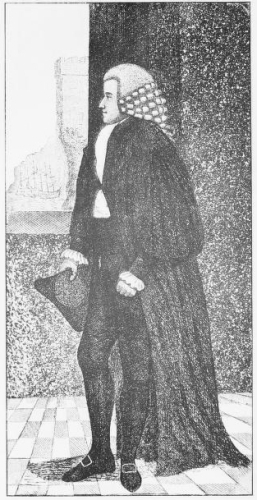
mark condescended upon, whereby it could be distinguished. It might have been mentioned what sort of a trunk it was, whether made of fir, of oak, or of ash; to whom it belonged, and where and in whose possession it was found.
To show your Lordships that this is no immaterial objection, I must beg leave to mention a circumstance that occurred in the present case. Some days ago, Mr. Brodie’s agent went to the Justiciary Office to examine the articles founded on in the indictment; and upon inquiring for the trunk, he was shown a black trunk, a trunk different from the one now to be used in evidence. Thereafter the counsel for the Crown discovered they had committed a mistake; they were so much misled by this want of description that they had sent the trunk referred to, or meant to be referred, in the libel to the prison to Mr. Brodie, and had lodged a wrong trunk with the Clerk of Court. They did not discover this mistake till yesterday morning, and they then applied to the Sheriff for a warrant to recover the trunk, which is now in Court, out of the possession of Mr. Brodie, and which was only lodged in the Justiciary Office yesterday.
Although I have thrown out this general objection, I do not mean to plead it to the effect of setting aside the libel altogether; yet, when the prosecutor attempts to apply his evidence to these articles, I reserve to myself the liberty of making special objections to each article, as it shall be referred to.
The Solicitor-General—My Lords, I will not take up the time of the Court in making any answer to the objection stated, as to the manner in which the watch and the other articles are described in the indictment, as I have no hesitation to say that it does not deserve one. All these articles, as well as the other articles libelled on, have been for weeks past lying in the hands of the Clerks of Court, where the counsel and agents for the pannels have had full opportunity of examining and taking from them whatever description they might think proper.
As to the story of the trunk, it is shortly this: there were two trunks the property of Mr. Brodie; and one of them, containing linens and other articles, was, from motives of humanity, allowed to remain in his possession. This was the trunk referred to in the indictment; the other was, however, sent by mistake to the Justiciary Office, but as soon as the error was discovered, Mr. Brodie was applied to to deliver up the proper trunk. This he refused to do, and therefore it became necessary to apply to the Sheriff, who granted a warrant; in consequence of which it was recovered from the prisoner and lodged in the Justiciary Office. This is the plain state of the fact, and, having laid it before your Lordships, I do not consider it necessary to add one word more to the subject.
The Lord Advocate—My Lords, if it had been intended to charge the prisoners with stealing the watch, or any of the other articles, a more accurate description might have been necessary, but here there is no such intention—the crime of which the prisoners are accused is breaking into the Excise Office.
From the nature of the thing, my Lords, as well as from the tenor of the indictment, it must be evident to every one that it is only meant to produce these articles in evidence, to refer to them when the witnesses are examined. It may be necessary, for example, to prove that certain letters were found in the chest, and to whom the chest belonged; it is no matter of what form the chest is, and not of the smallest consequence whether it is identified or not; nay, more, my Lords, there was no necessity for producing it at all. If every nail of a trunk or every trinket of a watch, or other articles which it might be necessary to found upon in trials of this kind, were to be so particularly described as Mr. Wight has contended for, it would swell indictments to a very inconvenient and unnecessary length.
The objection that the proper trunk was not produced in sufficient time to give the prisoner an opportunity of examining it is certainly a very uncommon one, when it is considered that it was allowed to remain in his own possession until yesterday; and with regard to the watch, all the use I mean to make of it is to identify some letters from Mr. Brodie, which are sealed with the seal appended to it.
The Dean of Faculty—My Lords, what may be the consequence to the prisoners at the bar of your Lordships repelling the present objection I do not know. The gentlemen on the other side of the table have taken care to lay their indictment in such a manner as to leave the counsel for the prisoners altogether in the dark as to the nature of the proof they mean to lead and the manner in which these articles are to be used in evidence; but, my Lords, sure I am of this, that the decision of the present question is of the greatest importance to the law of this country. I am not surprised that the Solicitor-General should say that he will make no answer to the objection, because I am convinced that it admits of none.
It is no light matter the framing of an indictment; the specification of the proofs by which it is to be supported is of the utmost consequence. I am persuaded, my Lords, that I would have no difficulty to satisfy your Lordships, from the nature of the thing itself, that this objection is well founded. But I resort to better evidence. I appeal to the Books of Adjournal on your Lordships’ table, and I call upon the counsel for the Crown to point out one single instance recorded in them where articles have been founded on in an indictment and produced in evidence without being specially described. Having so respectable an authority as the uniform practice of your Lordships and your predecessors to support the objection now stated, you will think well before you introduce an innovation that may be attended with the most dangerous consequences.
We are told that some of the articles in question are of no consequence; if so, why are they here? I will not enter into the question whether the trunk was really produced in the Justiciary Office in proper time or not, as all the indictment says is, that “it will be produced.”
My Lords, there are two kinds of articles produced in criminal trials, first the corpora delicti, to prove that the crime was actually committed; and, secondly, articles from which the leading circumstances are to be inferred. The Lord Advocate admits that the first of these must be particularly described, but denies the necessity of describing the second. This is a distinction not known in the law of this country, and directly contrary to the established forms of criminal procedure. What would be the consequence were it recognised? Suppose, for instance, that a person breaks into a house and leaves his hat behind him; nothing could establish his guilt more clearly than to prove that this hat was his. But although this is only a leading circumstance, would it be enough to say that a hat was to be produced in evidence, without specifying where it was found, or any circumstances attending it, so as to give the accused an opportunity of proving that it belonged to another, and not to him?
I will appeal, my Lords, to the practice of the public prosecutor himself, to show that no such distinction exists. A declaration is an article used in evidence as well as a gold watch, yet his Lordship does not think it sufficient to say “a declaration,” without specifying any other circumstances, such as before whom, and of what date, it was emitted. On the contrary, there are several declarations referred to in this indictment, and they are all particularly described. It is the duty of the public prosecutor to specify every particular, and to say what is meant to be proved by each article, or in what manner it has been used in the commission of the crime charged. In the case of Gordon, the sheep-stealer, a man for whom I was counsel at this bar several years ago, and who still languishes in prison, notwithstanding his having received His Majesty’s pardon[1]—your Lordships refused to allow an article to be produced in evidence which had not been libelled on: and the articles objected to might as well not have been libelled on at all, as in the general and vague manner in which they are mentioned in the indictment.
My Lords, there is another circumstance to which I beg to draw your Lordships’ particular attention. It is our good fortune to live under a mild Government; to live in days when there is no danger to be apprehended from the conduct of the public prosecutor; but worse times may arrive, and it is for your Lordships to reflect upon what use might then be made of the present practice if your Lordships were to allow it to be now introduced. The public prosecutor may, for example, libel upon a watch, and the Clerk of Court may show one watch in the Justiciary Office to the prisoner’s counsel or agent, and against the day of trial may produce another in Court. The principal reason why articles such as the present are mentioned in the indictment is that the prisoner may be certain that these articles, and these articles alone, are to be used in evidence against him; and it is clear that this certainty must be withdrawn from the prisoner if a vague description is permitted to be given of them, because, as I have already mentioned, others may be substituted in their place. If an article of evidence be not particularly described so as to prevent the possibility of doubt with regard to the identity of it, the dearest rights of mankind might be endangered and at the mercy of corrupt men, and no one could say how fatal the consequences might be.
The Lord Advocate—My Lords, I admit the justice of what the Dean of Faculty has stated if such an objection as the present were made to the description of the corpora delicti. If the prisoners were charged with having stolen the watch or trunk mentioned in the indictment, the description there given of them would not be sufficient; but, as they are not the corpora delicti, and are only referred to as circumstances of evidence, I contend that the description is sufficient; but, rather than detain the Court longer with an objection of this kind, I will give up the trunk altogether, as I do not suppose that I shall stand in need of it; I, however, submit the matter to the Court.
The Lord Justice-Clerk—Your Lordships have heard the objection and answers on this point. What is your opinion?
Lord Hailes—My Lords, there is no objection made to the production of the different papers founded on in the indictment, and I do not perceive that there is any force in the objection as to the gold watch; because, although the pannel’s counsel cannot know, from the manner in which it is described in the indictment, what is meant to be proved by it, neither do they know what is intended to be proved by the different witnesses who are cited.
The objection with regard to the trunk appears to me to be much more strong; and I confess that I never saw any article so vaguely stated in an indictment as it is in the present case, viz., “a trunk containing various articles.” It is no good answer to the objection that the proper trunk was not timeously produced, that it was allowed to remain in Brodie’s possession, because that article is founded on in the libel against Smith as well as against him. I am therefore inclined to sustain the objection as to the trunk, but no further.
Lord Eskgrove—My Lords, I am not disposed to abridge in the smallest degree the security of the subjects of this country, although the law is here more attentive to the safety of persons accused than in any other country whatever. Here the pannel must not only be furnished with the names and designations of the witnesses, but he must also be made acquainted with every document and article to be used in evidence against him.
In the present case there are a number of writings, and likewise a variety of articles, founded on in the indictment; there is no objection to the production of the papers, but it is objected on the part of the pannel that the other articles are not particularly described. I do not think, my Lords, that this objection is much aided by the argument founded on the declarations and other parts of the libel being more particularly described than these articles.
The Dean of Faculty has referred your Lordships to the Books of Adjournal, from which he says that it appears to have been the practice to describe such articles more minutely; but I have no doubt that a perusal of these books would furnish many instances where articles have been described as loosely as they are said to be in the present libel; and, my Lords, as the pannel’s counsel have neither produced, nor offered to produce, any decision of this Court finding libels irrelevant from the articles referred to in them being thus described, I am bound to hold the objection to be of no force.
My Lords, I can see no injury that will be sustained by the prisoners by the repelling of the present objection; all the articles were lodged in the hands of the Clerk of Court, and their agent and counsel had an opportunity of examining them. The trunk is no doubt vaguely described, but that appears to me not to be material, because it will not be sufficient for a witness to say that he found papers or other articles in a trunk; he must say that he found them in the trunk shown to him in Court, otherwise his evidence in that particular will be of no consequence. If the pannels should say that this is a different trunk, and that they never saw it before, I would listen to the objection; but as they cannot, and as I can figure no injury to the prisoners in repelling this objection, I am for over-ruling it.
Lord Stonefield—My Lords, I think the description in this case is sufficiently full; therefore I am for repelling the objection.
Lord Swinton—My Lords, the present objection is made in the wrong place; and I cannot so well judge of it in this general shape as I could have done had it been stated when the particular articles came to be used in evidence; but I must judge of it in the form in which it has been brought before the Court.
I think, my Lords, that it ought to be repelled for the reasons your Lordships have already heard, and because no injury can be done to the pannels from these articles not having been more particularly described, as they will have an opportunity of traversing the evidence that may be brought relating to them. There are many of the articles, such as two iron wedges, an iron crow, &c., that would not admit of a more particular description than has been given. Upon the whole, my Lords, I am for repelling the objection.
The Lord Justice-Clerk—My Lords, the present question is of great importance to the law of this country. I am one of those who are always for giving fair-play to pannels, and will never allow any advantage to be taken of them; but I am likewise for giving fair-play to evidence. It is frequently necessary, my Lords, that the testimony of witnesses should be elucidated by articles referred to being produced; but if the present objections were sustained, I am afraid it would strike against the admissibility of this kind of evidence altogether; because, let a public prosecutor describe such articles with the greatest attention, it still may be contended that they admitted of a more accurate description than the one given.
By the former state of our law the prosecutor was not allowed to prove anything that was not particularly specified in the libel; but the Act 153, Parliament 11th, James VI., was introduced to obviate this defect in our law, and by that Act the prosecutor is allowed to prove every circumstance to substantiate the charge, or in general art and part of the charge. It is very true, my Lords, that the humanity of public prosecutors of late years has induced them to be more special than they had any occasion to be, but surely they are not cut off from the generality allowed them by law, although such generality may have been deviated from through lenity in practice. Apply this to the present case. It is true that the Lord Advocate, as public prosecutor, has been induced to state particular circumstances, and to specify the articles to be founded on; yet that does not alter the law, nor deprive him of the generality which he is allowed by law. As the names of witnesses are given, without specifying what they are to say, in the same way it is only necessary to state that such articles are to be produced in evidence, but not necessary to specify a description of them; and it is the duty of the prisoner himself, or those who act for him, to survey them when lodged in the Justiciary Office. As there is no precise time against which articles to be founded on are required to be lodged in the Justiciary Office, there appears to be no undue delay in lodging this trunk. Had it been pled that it was not lodged debito tempore, and that the pannel had been injured thereby, then a delay of the trial must have taken place.
I remember it once happened on a circuit that the articles founded on in the libel were only lodged the very morning of the trial in the Clerk’s hands; but I then refused to allow them to be founded on, because the pannel had not a reasonable time to prepare himself against evidence that might arise from the production of these articles; but the present case is very different, and therefore, upon the whole, I am for repelling the objection.
Mr. John Clerk—My Lord Justice-Clerk, before the interlocutor is written out, I beg leave to make one objection in behalf of the pannel, George Smith.
The Lord Justice-Clerk—What! After the Court have delivered their opinions, it is not decent in you to propose to say anything, and I apprehend the prisoners are in no danger of suffering anything by your not being allowed to supply the defects of the Dean of Faculty.
Mr. John Clerk—My Lord, the Dean of Faculty has no authority to plead for my client.
The Dean of Faculty then moved the Court to allow the general objection to be entered upon record, and proposed to repeat it and refer to it as often as any of the particular articles came to be produced in evidence, which was accordingly agreed to, and the following interlocutor was pronounced repelling the objection:—
The Lord Justice-Clerk and Lords Commissioners of Justiciary having considered the foregoing debate, they repel the objection stated to producing and founding on the articles specified in the objection and mentioned in the indictment, and allow them to be adduced in the course of the trial.
Robt. M‘Queen, I.P.D.
The prosecutor, for proof of the indictment, then proceeded to adduce the following witnesses, who were all lawfully sworn, purged of malice and partial counsel, and emitted their depositions viva voce in presence of the Court and jury, without being reduced in writing, in terms of the late statute.
Evidence for Prosecution.
William Scott
1. William Scott, Procurator-Fiscal of the county of Edinburgh, called in and sworn.
Examined by Mr. Murray—Mr. Scott, you know the prisoners at the bar? Were you present when they emitted certain declarations before the Sheriff-depute of Edinburgh and his substitute?
Witness—I was.
Mr. Murray—Look at these declarations, and tell the Court and the gentlemen of the jury if they were emitted in your presence by the pannel, George Smith, freely and voluntarily.
Witness—They were; and the prisoner appeared to me at the time cool and recollected.
Mr. Murray—Look at this declaration. Was it emitted in your presence by the other pannel, William Brodie, freely and voluntarily, and he was cool and recollected?
Witness—It was emitted in my presence freely and voluntarily, and he was cool and recollected.
Mr. Murray—Do you know anything concerning a warrant that was applied for against William Brodie in the month of March last? If you do, tell the Court and the gentlemen of the jury what happened in consequence of it?
Witness—Upon the afternoon of Monday, the 10th of March last, I, as Procurator-Fiscal, gave in a petition in my own name to the Sheriff of Edinburgh, charging Mr. Brodie with breaking into the Excise Office, and praying for a warrant to apprehend him. A warrant was accordingly granted, and search diligently made for him that night, but he was not found, and I afterwards learned that he had gone off for London on the day preceding.
Cross-examined by Mr. John Clerk, for George Smith—Mr. Scott, you say you were present when George Smith emitted the declarations which have been shown you; did Smith, in the course of his different examinations, say anything more than is contained in these declarations?
Witness—I do not think he did; everything material was taken down. No compulsion or undue means was used to induce the prisoners to sign these declarations.
Joseph Mack
2. Joseph Mack, writer in the Sheriff-Clerk’s Office of Edinburgh, called in and sworn, and shown the declarations above mentioned.
Witness—These declarations were written by me, to the dictation of the Sheriff, and were emitted by the pannels freely and voluntarily, and the pannels appeared to me to be cool and recollected when emitting them.
Cross-examined by Mr. John Clerk—Was everything which Smith declared when examined taken down?
Witness—Everything that was material. With regard to the robbery of Bruce’s shop—[Here the Court stopped the witness, as that was a matter which was not before them.]
The Lord Justice-Clerk—Did he desire anything to be taken down that was not?
Witness—No.
Thomas Longlands
3. Thomas Longlands, solicitor-at-law in London, called in and sworn.
Examined by Mr. William Tait—Mr. Longlands, did you hear of William Brodie, the prisoner at the bar, having fled from this country in March last, and of his having been brought back? Tell the Court and the gentlemen of the jury what you know of the matter?
Witness—In the month of June or July last I was employed by the officers of the Crown for Scotland to take such steps as appeared to me to be proper for the discovery of Mr. Brodie. In consequence of this employment I called frequently at the Secretary of State’s Office, and had several conversations with Mr. Fraser, Under-Secretary in the office of Lord Carmarthen, and gave them the information I had received from Scotland. I likewise waited upon Sir Sampson Wright, of the Public Office, Bow Street, whose assistance I judged necessary to call in as to the proper measures to be pursued. As the information received gave reason to suspect that Mr. Brodie was at Flushing, Ostend, or some place in Holland, it was agreed upon to send a messenger immediately in search of him. Sir Sampson Wright recommended to me a Mr. Groves from his office as a proper person to send to the Continent in search of Mr. Brodie, and I accordingly despatched him with proper instructions. Mr. Groves traced Mr. Brodie to Ostend, and learned that he had been there upon the 4th of June, His Majesty’s birthday, and he was afterwards traced to Amsterdam, where he was apprehended, identified, and committed to prison. Upon proper application, he was delivered up to Mr. Groves, and was brought from thence to London by him. Immediately upon his arrival at London he was examined before Sir Sampson Wright, and committed to Tothilfields Bridewell; some time afterwards he was sent to this country. I was present at the examination of the person brought back from Amsterdam, and I know the prisoner at the bar to be him. There was a trunk containing linens and a variety of other articles, belonging to Mr. Brodie, brought with him from Amsterdam; and I received from Mr. Cartmeal, one of the persons who came along with him, two watches, twenty crowns, and some other articles, which he said were found upon Mr. Brodie; and the watch now upon the table I know to be one of them, having taken particular notice of the maker’s name and number. [The counsel for the pannels here repeated the objection against adducing the watch, as mentioned in the general objection and interlocutor before taken down.] There was likewise another trunk belonging to Mr. Brodie, which was sent over from Ostend by Sir John Potter, in consequence of a letter written to him in my presence by Mr. Groves, after Brodie’s return to London. This trunk, upon its being brought to London, was opened by Sir Sampson Wright in my presence, and in the course of examining the contents of it I discovered a wrapper with some papers, which I opened, and some of the papers appearing to me to be important, I transmitted them to the Lord Advocate. [Here the unsigned scrolls were shown to the witness.] Both Sir Sampson Wright and I put our initials to them, and I am sure that these are the same, as well from seeing my initials as from the strength of some of the expressions, which made a great impression upon me at the time. [The state of affairs and letters of credit were likewise shown to the witness.] I have seen these before; they came in a packet to Sir Sampson Wright from Mr. Rich, the English resident at Amsterdam, and Sir Sampson Wright delivered to me the letter in which they came with them inclosed.
Cross-examined by the Dean of Faculty—Mr. Longlands, have you any other cause of knowledge concerning the trunks and other articles being the property of Mr. Brodie, and the same which were brought from Ostend and Amsterdam, than the information of Sir Sampson Wright and Mr. Groves?
Witness—No other cause of knowledge than what I have already mentioned, namely, the letters accompanying the same, which I saw, and my being present when the trunks were opened.
John Geddes
4. John Geddes, tobacconist in Mid-Calder, called in and sworn.
Examined by the Solicitor-General—Were you lately in London? Do you know the prisoner? Tell the jury what you know about him?
Witness—I was in London in the month of March last, and my wife and I took our passage in the “Endeavour,” of Carron, Captain Dent, bound for Leith. We went on board on a Saturday, and the next day, Sunday, the vessel fell two or three miles down the river, and then we cast anchor at Blackwall. In the evening the master went on shore to get hands to man her, leaving me and my wife on board. About twelve at night a passenger, who appeared sickly, came on board, in company with Mr. Hamilton and Mr. Pinkerton, two of the owners of the vessel, and another gentleman I did not know. These gentlemen remained about half an hour, and then all went ashore, except the passenger, who remained on board. He was dressed in a blue great-coat, with a red collar, round wig, black vest, breeches, and boots. He was allotted a bed in the state-room, near the fire, as he was sick. The next morning the vessel set sail, but afterwards ran aground opposite to Tilbury Point, where she remained about eight or ten days, and we did not get clear of the Thames for a fortnight. During all that time the passenger remained on board, except one day that he, along with the master of the vessel and my wife and I, went on shore, and dined at a neighbouring village, and another day that he went ashore by himself to get a bottle of milk. For the first two or three days after the passenger came on board we called him “the gentleman,” as we did not know his name, but, upon my inquiring of him what his name was, he told me it was John Dixon.
The Solicitor-General—Would you know that person again?
Witness—I would.
The Solicitor-General—Look at the prisoners at the bar and say if you know either of them?
[Here the witness pointed out Mr. Brodie to be the same person that had called himself John Dixon.]—On getting out to sea Mr. Dixon delivered to the captain a letter from Mr. Hamilton or Mr. Pinkerton, but, although I desired him to let me read it, I did not see it. In consequence of this, the captain altered his course and steered for Holland, and the vessel, although bound for Leith, sailed to Flushing. I do not think she was driven there by contrary winds, as the wind was south-west, and fairer for Newcastle or Leith than for Holland. During the voyage, Mr. Dixon complained much of a sore throat. When we arrived at Flushing we cleaned ourselves and went ashore, and Mr. Dixon set off for Ostend in a skiff which he hired for that purpose. On shore, before he left, Mr. Dixon gave me a packet containing two letters, one of which had another within it, to carry to Scotland to be delivered in Edinburgh. One of the letters was directed to Mr. Michael Henderson, stabler in the Grassmarket, in which there was one inclosed to Mrs. Anne Grant, Cant’s Close, and the other to Mr. Matthew Sheriff, upholsterer in Edinburgh, signed and dated as mentioned in the indictment. We did no business at Flushing, and I am of opinion that the ship did not come there with that intention. After landing Mr. Dixon we sailed for Leith. When I arrived in Leith, from the accounts I heard about Brodie, I was convinced that Dixon and Brodie were the same person. Next day I went to Mid-Calder, and about three weeks afterwards was at Dalkeith, where I had occasion to see the newspapers, and the description of Brodie therein given confirmed me in the above suspicion. I then delivered the letters to Sheriff Cockburn. I had previously opened the packet and read them. [The witness was here shown the letters libelled on.] I know that these are the letters I received from the prisoner and delivered to the Sheriff.
The Solicitor-General—Did Brodie say that he had any business at Flushing?
Witness—He mentioned that he had business at Ostend, and Captain Dent said he was to wait till he returned, and that he supposed he belonged to the Carron Company; but when the wind came fair, Captain Dent said he would not wait for him, and the devil a bit of business he supposed he had.
Cross-examined by the Dean of Faculty—You have told us that you went ashore when you arrived at Flushing. Pray, sir, did you make any purchases there?
Witness—None, except a piece or two of nankeen for breeches to myself.
The Dean of Faculty—Did you purchase nothing else?
Witness—Nothing, except two or three handkerchiefs for my own use.
The Dean of Faculty—You will remember, sir, that you are upon your great oath, and that it is your duty to tell the whole truth.
Lord Hailes—My Lords, the witness should be informed that if he purchased any contraband goods he has nothing to fear from acknowledging that he did so.
The Lord Justice-Clerk—It is certainly very proper. [To witness]—John Geddes, if you made any purchases of contraband goods when you was at Flushing, it is your duty to inform the Court and the gentlemen of the jury that you did so, and you have nothing to fear from such an acknowledgment, because whatever you say here will be no evidence against you afterwards in the Court of Exchequer or elsewhere.
The Dean of Faculty—Did you purchase no lace, sir, when you was at Flushing?
Witness—A few yards.
The Dean of Faculty—Why, then, did you say that you purchased nothing except the nankeen and the handkerchiefs?
Witness—It was my wife and not me that purchased it.
The Dean of Faculty—Did you offer the lace for sale?
Witness—No; there is part of it about a cloak which my wife has here with her, and I believe part of it about her sister’s.
The Dean of Faculty—And what became of the rest of it? Remember, sir, you are upon your great oath.
Witness—That was it all, except a few yards I sold at Bathgate for twenty-two shillings.
The Dean of Faculty—Did you not say even now that you had offered none of it for sale?
Witness—I said that I offered none of it for sale in this place.
The Dean of Faculty—Did you purchase no tobacco in Flushing?
Witness—I did not, except a little for chewing.
The Dean of Faculty—Did you purchase any gin?
Witness—None, except a little for sea store.
The Dean of Faculty—Pray, sir, when did you open these letters you have told us of? Was it before or after you came to Leith?
Witness—It was after.
The Dean of Faculty—You told us, sir, that upon reading the newspapers you discovered that Dixon and Brodie were one and the same person. Pray, sir, when or where did you first read the newspapers?
Witness—At Dalkeith.
The Dean of Faculty—How long was that after your arrival?
Witness—Three weeks.
The Dean of Faculty—And pray, sir, what was the reason that in all that time you did not deliver these letters to the persons to whom they were directed?
Witness—I did not remember that I had such letters when I was in Edinburgh myself, and I afterwards wished my brother-in-law to deliver them.
The Dean of Faculty—Did you open the letters?
Witness—I did.
The Dean of Faculty—And what was your reason for doing so?
Witness—I opened them and delivered them to the Sheriff for the good of my country.
The Dean of Faculty—And would it not have been as much for the good of the country to have delivered them without opening them?
Witness—I just opened them, and that’s all; I can give no other reason.
The Dean of Faculty—Did you inform any person that you had such letters?
Witness—I did; I informed John Tweddle, my brother-in-law, who advised me to deliver them to the persons for whom they were intended. I afterwards showed them to a gentleman named Mr. Learmonth in Linlithgow, who wrote a letter by me to a gentleman of this place.[2] By him I was carried to Mr. Erskine, but he would give me no advice, and therefore I returned home to Mid-Calder. That same evening, or early next morning, Mr. Scott, Procurator-Fiscal, and Mr. Williamson, messenger, called upon me, and I accompanied them to Edinburgh and delivered the letters to the Sheriff.
The Dean of Faculty—My Lords, as the witness has mentioned his having called upon me, I beg leave to state to the Court what passed upon the occasion. He was brought to my house by a gentleman, and he showed me the letters. I informed him that I was counsel for Mr. Brodie; that he himself knew best the directions that he had received from the person who committed these letters to his charge; and that I could give him no other advice than this, that he ought to do in the matter that which his own conscience should point out to him as most proper.
The Lord Justice-Clerk—That was a very proper advice, and was just what I would have expected from the Dean of Faculty.
The Lord Advocate—My Lords, you will have observed that there were three letters from the prisoner delivered up. It was only judged necessary to libel on two of them; but if the prisoner thinks that the other letter, or any of his other papers in my possession, will be of the least service to him in supporting his defence, I have no objection to produce them.
Margaret Tweddle
5. Margaret Tweddle, spouse of the said John Geddes, called in and sworn.
Witness—I was in London with my husband in the month of March last, and went with him on board of a vessel bound for Leith. One night, when it was dark, a person, whom I now see a prisoner at the bar, and some others with him, came on board. The prisoner remained on board, but the others went ashore in about half-an-hour afterwards. I think the person had a wig on when he came on board, and he appeared to be in bad health. He passed by the name of John Dixon. The vessel sailed for the coast of Holland, and when she arrived there the prisoner went on shore. I saw my husband receive a packet of letters from Mr. Dixon; but I know nothing more of them. I never saw these letters afterwards.
Cross-examined by the Dean of Faculty—Did you or your husband make any purchases while in Flushing?
The Lord Justice-Clerk—Margaret, if you or your husband purchased any contraband goods when you were at Flushing you will inform the Court and the gentlemen of the jury that you did so, and you have nothing to fear from such an acknowledgment, because whatever you say here will be no evidence against you afterwards in the Court of Exchequer or elsewhere.
Witness—We purchased some pieces of nankeen, some handkerchiefs, and some yards of lace.
Robert Smith
6. Robert Smith, wright in Edinburgh, called in and sworn.
Witness—I was some time ago foreman to the pannel, Mr. Brodie, and I remember to have been sent for by him upon the Sunday morning, the 9th of March, at eight o’clock, after it was reported that the Excise Office had been broke into. The message was not particular, but such a one as I usually received from him when he wanted to give me orders about some work, as he frequently sent for me for that purpose, especially if he was going to the country. When I came to him he asked me if there were any news about the people who had broke into the Excise. I answered that I had been informed that George Smith was committed to prison, and that Brown had been sent into England in search of Inglis & Horner’s goods. I added that I hoped he, Mr. Brodie, had no concern in these depredations; but he returned to me no answer. The reason I asked this question was that I had often seen my master in their company, and knew him to be intimate with them. Mr. Brodie told me he was going out of town for a few days, and sent me a message for a waistcoat and pair of breeches; but before my return he was gone, and I did not see him again till after he was brought back to this country. On the Monday evening following, the 10th of March, a search was made for him, and several doors of his house were broken open, in virtue of a warrant from the Sheriff, as I was informed. [Here the witness was shown the two letters founded on in the indictment, and desired to say whether or not they were in the handwriting of Mr. Brodie.] I have seen the handwriting of Mr. Brodie, and I think the writing of these letters very like his, but I never saw Mr. Brodie subscribe with initials; and as I am no judge of writing, I cannot say whether I believe these letters to be written by Mr. Brodie or not. [Here the witness was shown the unsigned scrolls, and desired to say whether or not he believed they were in the handwriting of Mr. Brodie.] I never saw Mr. Brodie write so bad a hand as these letters are written in, nor after the manner in which they are written, and I do not think that they have been wrote by Mr. Brodie. [Here the state of affairs referred to in the indictment was shown to the witness.] I think this is very like the handwriting of Mr. Brodie, much more so than any of the others.
James Laing
7. James Laing, writer in Edinburgh, called in and sworn.
Witness—I am assistant clerk in the Council Chamber. I know Mr. Brodie, the prisoner at the bar. I have seen him write, and I am a little acquainted with his handwriting. [Here the two letters were shown to the witness.] The writing of these letters is very like Mr. Brodie’s handwriting. I think they have been wrote by him. [Here the unsigned scrolls were shown to the witness.] I think these are of Mr. Brodie’s handwriting too, though worse written. [State of affairs shown to the witness.] I think this also is written by Mr. Brodie.
John Macleish
8. John Macleish, clerk to Hugh Buchan, City Chamberlain of Edinburgh, called in and sworn.
Witness—I know Mr. Brodie, the prisoner at the bar, and have had some opportunity of knowing his handwriting. I have got receipts from him in the Chamberlain’s office, and have received cards from him. I have likewise seen him write in his own shop. [Here the witness was shown the two letters.] I think these letters are of his handwriting. [Shown the scrolls.] I never saw Mr. Brodie write in so crowded a way, or interline so much, but, notwithstanding, I think that these are of his handwriting. [State of affairs shown the witness.] I think that this also is of Mr. Brodie’s handwriting.
Cross-examined by the Dean of Faculty—How do you come to know Mr. Brodie’s writing so exactly?
Witness—From many accounts and receipts, of his writing, which I have in my custody belonging to the office.
John Duncan
9. John Duncan, door-keeper to the Excise Office, Edinburgh, called in and sworn.
Witness—I have been in that office for thirty-seven years. The doors of the Excise Office, when it was kept in the Canongate, were usually locked by me about eight o’clock at night, and I carried the key immediately thereafter to the housekeeper. A watch was set to guard it about ten o’clock, and the night watchman went away about five in the morning. I remember to have locked the door on Wednesday, the 5th of March last, about a quarter after eight o’clock in the evening, and I gave the key to one of Mr. Dundas, the housekeeper’s, maid-servants. The cashier’s room lay within the outer door, which I had locked, as before mentioned, and it had a double door.
Cross-examined by Mr. Clerk, for George Smith—Pray, sir, was the Excise Office kept in one or in two houses?
Witness—The Excise Office was kept in a large house; but there was likewise a small house fronting and adjoining the great one, in which Mr. Broughton’s office and the Register of Seizures were kept. There was no communication from the one to the other without going out to the open air, and the whole were in one court, inclosed by a parapet wall and iron rail.
William Mackay
10. William Mackay, porter in the Canongate of Edinburgh, called in and sworn.
Witness—I was employed as a watch to guard the Excise Office when it was kept in Chessels’s Buildings, and upon Wednesday, the 5th day of March last, I went to the office at the usual hour, which was a little before ten o’clock at night. I found one of the leaves of the outer door open, and the passage door and the door of the cashier’s room also open; and upon making this discovery I went to Mr. Dundas, the housekeeper’s, and inquired of the maid who had been last at the office, as the doors were open. The maid answered John Duncan, the last witness, had left it about a quarter after eight o’clock. Mr. Dundas’s son, hearing me make this inquiry, asked what was the matter. When I told him that the door was broke open, he said, “Then, something worse is done.” Immediately Mr. and Mrs. Dundas and the whole family went into the office with me and examined the cashier’s room; we found all the desks and presses broke open, and the coulter of a plough, and two iron wedges, lying in the room; and we likewise found a spur in the hall, with part of the leather of it torn. Mr. Dundas immediately sent me for Mr. Alexander Thomson, the accountant. I found Mr. Thomson, and he returned with me to the Excise Office. [Here the witness was shown the coulter of the plough, the two iron wedges, and the spur.] These are the same articles which I saw in the Excise Office. [The counsel for the pannels here repeated the objection against adducing the coulter and two wedges, as mentioned in the general objection and interlocutor before taken down.]
Alexander Thomson
11. Alexander Thomson, accountant of Excise, called in and sworn.
Witness—I remember that the Excise Office was broke into on Wednesday, the 5th of March last. When I left the office at the usual hour that night, about eight o’clock, I locked the door of the cashier’s room before I left, and carried the key away with me. I saw John Duncan, the door-keeper, in the hall as I came out. I left in two concealed drawers below the desk about £600 sterling, and in the desk itself £15 16s. 3½d., being two-thirds of the proceeds of a seizure sent from Greenock, to be divided amongst three people. About ten o’clock the same evening the office porter, or watchman, came to me and informed me that the Excise Office had been broken into. I immediately repaired to the office, and found Mr. Dundas, the housekeeper, and Mr. Pearson, the secretary, there; and, along with them, I examined the premises. The outer door and the passage door appeared to have been opened without violence, but the door of the cashier’s room seemed to have been forced with a lever or other instrument; the door of a small press in the room appeared likewise to have been forced open, and a few shillings, and some stamps for receipts that were in it, carried off. The key of my desk, which I usually kept in this place, had likewise been taken out, and the desk opened with it. The £15 odds, which I had left in the desk, were gone, and also a receipt for £7 18s. 2d., but the concealed drawers, in which the £600 was contained, were untouched. These drawers cannot be opened without first opening the desk, and the keyhole is concealed by a slip of wood, which might escape a slight observer. Accordingly it had remained untouched, although the key of it lay in the desk. Behind the door there was left the coulter of a plough and two iron wedges—[Here these articles were shown to the witness]—the same as these now on the table.
Cross-examined by Mr. John Clerk for George Smith—Pray, Mr. Thomson, was the Excise Office, when in the Canongate, kept in one house or in two houses?
Witness—It was kept in three houses, or in one large house, consisting of a front and two wings, and, besides this principal house, there was a small one fronting, and nearly adjoining to it, in which Mr. Broughton’s office, Mr. Dick’s office, and the Register of Seizures were kept.
Laurence Dundas
12. Laurence Dundas, housekeeper of the Excise Office, called in and sworn.
Witness—There was a practice, previous to the time when the Excise Office was broke into, of locking the door betwixt eight and nine o’clock at night, and lodging the key in my house, and of putting a watch upon it at ten o’clock. I remember that upon Wednesday, the 5th of March last, the door was locked at the usual hour, and the key left by John Duncan at my house. A little before ten o’clock that night, William Mackay, the porter employed to watch the office, came to my house and gave information that the office had been broke open. I immediately went to the office, and found the outer door, the passage door, and the door of the cashier’s room, all open. This last-mentioned door seemed to have been forced with some instrument. Within the room I found the coulter of a plough and two iron wedges, all of which I now observe upon the table. Every drawer in the room, except the money drawers, seemed to have been forced open. I immediately sent for Mr. Thomson, the accountant, and Mr. Pearson, the secretary, and both of them immediately came to the office. Mr. Thomson told me that he had about £17 in his desk, which he supposed was all gone, but he hoped that the money drawers were safe. The key of the money drawers was found amongst others lying in the desk.
Cross-examined by Mr. John Clerk, for George Smith—Mr. Dundas, was the Excise Office, when in Chessel’s Buildings, kept in one house or in two houses?
Witness—Principally in one house, but there was likewise another small house in which Mr. Broughton’s office, Mr. Dick’s office, and the Register of Seizures were kept; both houses were inclosed with an iron rail.
Janet Baxter
13. Janet Baxter, servant to Adam Pearson, assistant secretary of the Excise, called in and sworn.
Witness—I was out upon a message about eight o’clock at night on Wednesday, the 5th of March last, and, returning homewards, I met with an acquaintance, with whom I conversed for a little in the entry to Chessels’s Buildings, in which my master lived. I then went down the close, and on my way down I saw a man, dressed in a whitish great-coat and slouch hat, leaning over the rails at the entry to the court, and, judging him to be a light or suspicious person, I was afraid of him, and ran into my master’s house.
James Bonar
14. James Bonar, deputy-solicitor of Excise, Edinburgh, called in and sworn.
Witness—I recollect having occasion to call at the Excise Office upon Wednesday, the 5th of March last, about half-past eight in the evening, and as I thought it was probable that there might be still some person in the office, I went straight forward to the door without calling for the key, and finding the door on the latch, I opened it and went in. Just as I entered, a man, who appeared to be dressed in a black coat and cocked hat, stepped out. He seemed to be in a hurry, and I stepped aside to give way to him. He was a square-built man, and was rather taller than me. I took no suspicion, thinking it was some of the people belonging to the office, detained later than usual. I went upstairs to the solicitor’s office, and into the room in which I usually write. I remained there about ten minutes, came down again, and then went away. I saw no person either in the entry or the court as I came out.
Isobel Wilson
15. Isobel Wilson, spouse of Adam Robertson, wright in Duddingston, called in and sworn.
Examined by the Solicitor-General—Pray, madam, do you remember anything of two persons coming to your house in the month of March last?
Witness—I did not remember, at first, anything of the matter, but having afterwards seen John Brown [a succeeding witness] in the Sheriff-Clerk’s Office, he mentioned some circumstances which passed upon the occasion, which brought to my recollection that there were two persons in my house at the time you mentioned, and I think that Brown was one of them. They called for a bottle of porter, which they drank and paid for, but I do not recollect anything else that passed upon the occasion.
John Kinnear
16. John Kinnear, servant to the Earl of Abercorn at Duddingston, called in and sworn.
Witness—I recollect that the coulter of a plough with which I had been at work and two iron wedges were stolen from a field some time last spring, but whether in February or March I cannot say, only I recollect that there was then snow upon the ground. I loosed from work between two and three o’clock on the day on which the articles were stolen, and went to Edinburgh, and on my way thither, about four o’clock, I observed two men in blackish clothes standing upon the ploughed land by the plough to which the coulter belonged, and there was a black dog at some distance from them.[3] When I came to work next morning I found the coulter of the plough and the wedges had been taken away. [Here the coulter and the wedges referred to in the indictment were shown to the witness.] These are the coulter and wedges that were stolen from my plough.
Cross-examined by Mr. John Clerk, for George Smith—How do you come to know that?
Witness—I know this to be the same coulter, my attention being called to it from this circumstance particularly, that a short time before it was stolen it was sent to a smith, with instructions to sharpen it the whole length, that it might be fit for cutting the turf which was to be ploughed up. He did not observe these instructions, but returned it in the situation it is now in.
Grahame Campbell
17. Grahame Campbell, sometime servant to the pannel, George Smith, called in and sworn.
Witness—I was servant to the prisoner, George Smith, and I know the other prisoner, Mr. Brodie. I never heard of the Excise Office being broke until I was apprehended, along with my mistress and Andrew Ainslie, and committed to prison in the beginning of last spring. I have seen Mr. Brodie, and likewise Andrew Ainslie and John Brown, often in Mr. Smith’s house, and they were all very frequently there in company together. In particular I remember their being all there one night about the dusk of the evening, not long before I was apprehended, but as they were so frequently at my master’s house I cannot distinguish that night from any other, nor can I say at what hour they came, only I remember they were in a room above-stairs, and that Mr. Brodie passed through the shop and asked my mistress how she did to-night. Mr. Brodie was at this time in an old-fashioned black coat, and, to the best of my knowledge, I never saw him in the same dress before. I have seen him in other black clothes, but they were always of a newer fashion. My master, Smith, was upstairs with Brown and Ainslie, when Mr. Brodie came in and joined them. I do not know when they went out, as I was employed below-stairs in the back cellar; but I think they remained together a considerable time before they went out. I believe they all went out together, for when I went into the kitchen my mistress desired me to go upstairs to put the room in order and wipe down the table, which I did, and at that time all of them were gone. My master returned in something more than an hour, and said he had been seeing Mr. Maclean, who is Mr. Drysdale’s waiter. Mr. Ainslie had been in before him, but had gone out again, and Brown came in in quest of him, and also went out again. They both returned about ten or eleven o’clock, and Mr. Brodie then came back likewise. Mr. Brodie had on at this time the whitish clothes which he usually wore, and as he passed through the shop he again asked my mistress how she did to-night. I expressed my surprise to my mistress that Mr. Brodie should wear such a strange dress when he came in the first time in his old black clothes, and she answered that it was his frolick; but I took no notice to her afterwards of his having changed his dress. They all supped in the kitchen, except Mr. Brodie, who would not sit down, but walked up and down the room. Brown and Ainslie usually supped at my master’s. They remained together about two hours. Mr. Brodie went out first, and Mr. Brown and Mr. Ainslie soon thereafter, with an intention, as they first said, to go to bed. I think they said afterwards that they were going to play cards with Mr. Maclean. My master, George Smith, did not go out again that night.
Cross-examined by the Dean of Faculty, for Brodie—You have mentioned that Brown and Ainslie and the prisoners at the bar, when they first met, were a considerable while together. In what manner were they employed?
Witness—I was for the most part down below in the back cellar; but they had some bottles of porter together, and either a cold fowl or some herrings to eat.
The Dean of Faculty—You have said that Mr. Brodie and Brown and Ainslie were frequently in your master’s house. What did they do when together; did you ever see them play at any game—at cards or at dice?
Witness—I have often seen them play both at cards and at dice, sometimes in the kitchen and at others in the room above-stairs, but chiefly at dice, when Mr. Brodie was present.
The Lord Justice-Clerk—My Lord Advocate, is the witness now at liberty? I understand she has been detained in prison for some time past?
The Lord Advocate—There is no reason for detaining her any longer; she was only confined until her evidence should be given in this trial.
The Lord Justice-Clerk—Grahame Campbell, you are now at your liberty.
Mary Hubbart or Hubburt
18. Mary Hubbart or Hubburt was then called.
Mr. John Clerk, for Smith—My Lords, the witness now called is the wife of George Smith, the pannel at the bar, and therefore I object to her evidence being taken in this trial.
The Lord Advocate—My Lords, I certainly do not intend to examine this witness as to any particular that relates to the conduct of her husband, but I conceive that she is an unexceptionable witness against the other pannel, Mr. Brodie, and that I am entitled to examine her as to him, if I keep clear of any question that has a tendency to bring out the guilt of her husband.
Mr. John Clerk—My Lords, I desire your particular attention to this, that the two pannels are joined together in one indictment, that they are charged with being guilty of the same crime; and that they are in every respect in the same circumstances. I have no conception, my Lords, of any question tending to the crimination of Mr. Brodie that will not at the same time bring out the guilt of Mr. Smith.
The Lord Advocate—My Lords, that I may remove all apprehensions concerning the questions I mean to put, I shall only ask the witness whether Mr. Brodie was in her house on Wednesday, the 5th of March last; when he came there; and in what manner he was then dressed?
Lord Hailes—My Lords, it is clear that this woman cannot be examined as a witness against her husband; but at the same time, although her husband and Brodie are here tried upon one indictment, I see nothing to prevent my Lord Advocate from putting such questions to her as do not affect her own husband, but only the other pannel.
Lord Eskgrove—My Lords, I am of the opinion which has been delivered by my Lord Hailes.
Lord Stonefield—My Lords, I am of the same opinion.
Lord Swinton—My Lords, I agree with the opinion given.
The Lord Justice-Clerk—My Lords, there is no doubt that a wife cannot be received as a witness whether for or against her husband, and her situation is different by our law from that of all other near relations. If a son, for instance, is brought forward as a witness against his father, he may no doubt decline to bear testimony, and no Court of law can compel him to do so; but if he is willing to give his evidence it may be received. A wife, on the contrary, cannot be received as a witness, even though she be willing; a judge can pay no regard to what she says either for or against her husband; and, supposing she had no objection to give her testimony even to hang him, which might happen, it must be refused; therefore, my Lords, whatever this woman says that may infer guilt against her husband must be totally thrown out of consideration; nor will I suffer one single question to be put or her to say a single word from which his guilt can be inferred; and the jury are not to give any attention whatever to it, if it should happen that anything should drop to the prejudice of her husband.
Mr. John Clerk—My Lord Justice-Clerk—
The Lord Justice-Clerk—What! Mr. Clerk, would you insist on being heard after the Court have delivered their opinions? It is most indecent to attempt it.
Mr. John Clerk—I was heard, my Lord, on the general point of the admissibility of this witness, but not on the special objections which I have to the questions which my Lord Advocate proposes to put, and on which the Court have not delivered any opinion.
The Lord Justice-Clerk—Mr. Clerk, this is really intolerable.
The Dean of Faculty—My Lord, although as counsel for Mr. Brodie I am not entitled to be heard on this subject, I find myself called upon to interfere as Dean of Faculty. It is perhaps not strictly in order for Mr. Clerk to insist on being heard after your Lordships have delivered your opinions, but some indulgence ought to be shown to a young gentleman.
Lord Hailes—My Lord Justice-Clerk, though Mr. Clerk stated his objection generally, yet he did not enter into particulars, and I think he may be allowed now to state what particulars he meant to insist on.
The Lord Justice-Clerk—Mr. Clerk, we will hear what you have to say.
Mr. John Clerk—My Lord, I mean to offer a special objection to the interrogatory mentioned by my Lord Advocate, on which I have not yet been heard, nor do I understand that any opinion has been given respecting it by your Lordships. It is proposed to ask this woman what dress Mr. Brodie wore when in her husband’s house on the 5th of March last previous to the robbery of the Excise Office. I formerly observed, my Lords, that my client and Mr. Brodie are accused of the same crime, and are nearly in the same circumstances, and this is a question from the answer to which it may appear that Mr. Brodie was guilty of the robbery laid to his charge. But at the same time, my Lords, it will appear that Mr. Brodie was at the house of my client in a suspicious dress and in suspicious circumstances, and will it not be from thence concluded that my client was engaged with him in the very design which he at that time intended to put in execution? Such a presumption would likewise be most forcibly corroborated by their known intimacy, by their being frequently concerned in the same pursuits, and, above all, by the presence of the other two persons who are supposed to have committed this crime. I say, my Lords, on the supposition that Mr. Brodie is guilty, the circumstance of his dress is one of the strongest presumptions that can be figured against my client.
But, farther, my Lords, my client has an interest in preventing the conviction of Mr. Brodie; if his guilt is not proved an inference is afforded me of the innocence of my client, for Mr. Brodie being with my client so recently before the crime was committed presumes that they were employed in the same manner; and the suspicion against Mr. Brodie being groundless is an argument that the suspicion against my client is equally groundless. Now, my Lords, if this woman be examined her evidence may, though indirectly, tend to the crimination of her husband. And if the law does not allow the evidence of a wife to be taken against her husband, I cannot see that there is a good distinction between her evidence as taken directly and indirectly; and therefore, my Lords, I hope that your Lordships will sustain the objection.
The Lord Justice-Clerk—The Court will take care not to allow the witness to give any answer against her husband. But, as she is a good witness against Brodie, the Court cannot help it if, by establishing his guilt, a presumption thereby arises against Smith. I am therefore for repelling the objection.
The objection was repelled accordingly.
[The witness was then brought in.[4]]
Mr. Wight, for the pannel Brodie—My Lords, I must object to this witness upon another ground, and shall not take up the time of the Court any longer than simply to state the objection, which appears to me perfectly irresistible. The law of this country requires that the name and designation of every witness to be examined against the pannels should be intimated to them at least fifteen days before; but the name of the woman who now appears in Court is not to be found in the list of witnesses served upon the prisoner. There is indeed a “Mary Hubbart or Hubburt, wife of George Smith,” mentioned as a witness in the indictment, but the present is no such person; her name is perfectly different, being Mary Hibbutt, as appears by an extract of the parish register where she was born, which I now produce. The objection, therefore, of a misnomer applies in full force to this witness.
The Lord Advocate—This appears to me a very extraordinary and frivolous objection, for, even supposing the witness’s name is Hibbutt instead of Hubbart or Hubburt, still there could not possibly be any mistake as to the person, since she is designed the wife of George Smith, and it is not pretended that she is not the wife of that person. This woman emitted several declarations before the Sheriff; in some of them she is called Mary Hubbart and in others Mary Hubburt. At first she pretended she could not write, and the only declaration subscribed by her is signed Mary Smith; so that the prosecutors, who had no other opportunity of knowing her real name than from the declaration, were left altogether in the dark as to it. As the witness allowed herself to be called Hubbart or Hubburt in the declaration without challenge it is not competent for her now to deny it.
My Lords, it is of no sort of consequence in the present case that there has been a mistake of a letter or two in the witness’s name; it was perfectly unnecessary to have designed her in any other way than Mary Smith, wife to George Smith, and if that would have been sufficient, certainly an attempt
Lord Hailes. (After Kay.)
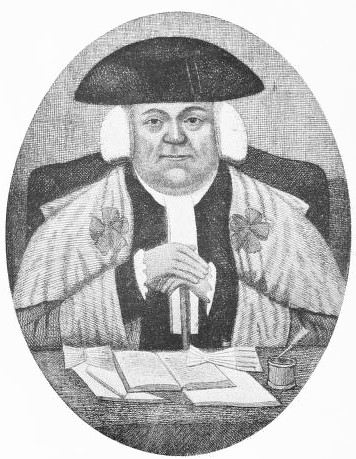
to be more particular cannot have the effect of injuring the pannel, and therefore can be no valid objection against this witness.
The Dean of Faculty—My Lords, I cannot help considering this as a question of the greatest consequence, for if this objection is not sustained, then the objection of misnomer cannot have any longer effect, for if the change of a letter or two, as insisted on by the Lord Advocate, does not afford that objection, there can be no such thing as a misnomer, since the whole difference betwixt names consists only in change of letters.
I am free to admit that if this witness had only been libelled Mary Smith, wife of George Smith, particularly as she had subscribed her name Mary Smith, then there could not have been stated any objection to her examination. But as she is particularised to be Mary Hubbart, it is a sufficient objection to me that the name of the woman now present is not Mary Hubbart, but Mary Hibbutt, a perfectly different name. There still may be a mistake of the person although she is designed wife to George Smith, for it may happen that Smith may have two wives. There is not a greater difference betwixt Erskine and Friskin, which last name is not uncommon in this country, than betwixt Hubbart and Hibbutt. It is all one under what name she is mentioned in the precognition, as that was not her doing; neither is it probable that she knew by what name she was there called. My Lords, there has not been a witness examined here this day that can know by what name he has been taken down by the Clerk.
The Lord Advocate—My Lords, I beg that the witness may be desired to write her name.
The Lord Justice-Clerk—Mary Hubburt, you will sign your name.
[The witness signed her name accordingly.]
The Dean of Faculty—My Lord, the witness has subscribed her name “Hibbutt.”
Lord Hailes—The name of Hobart is the name of the very respectable family of Buckinghamshire, in England, and I would have supposed that this woman’s name, since it so nearly resembles it, was the same, and would not have taken her own word to the contrary. Hibbutt, nevertheless, is perfectly different from Hubbart, and, however obscure it might be, still, as it is proved by the parish register to be the name of the person now called, I consider myself obliged to give weight to the misnomer.
The Dean of Faculty—I beg pardon for interrupting the Court, but I am just informed that this point has been decided by Lord Eskgrove and Lord Stonefield at the Glasgow Circuit, where a misnomer of “James Roberton” instead of “James Robertson” was sustained. There, there was only the want of a letter, whereas there is certainly a much greater difference betwixt the names here in question.
Lord Eskgrove—As to the case mentioned by the Dean of Faculty, Robertson and Roberton are two perfectly distinct names. In the case before your Lordships there can be no doubt that if this woman had only been libelled as wife to George Smith, without her maiden name, there could have been no question whatever. It is the universal custom in England that the maiden name sinks into that of the husband’s, but my great difficulty is, in this case, that the public prosecutor, in giving this witness a further description than was necessary, has totally mistaken her name, I do not think that there is any force in her being called Hubbart in the precognition for the same reason given by the Dean.
[Here his Lordship was interrupted by the Lord Advocate.]
The Lord Advocate—My Lords, the circumstances which I meant to prove by the witness are so immaterial that I will give the Court no further trouble with the matter. I agree to pass from this witness.
Lord Eskgrove—I am very happy I am relieved from deciding it, as I was going to deliver an opinion for sustaining the objection.
The Lord Justice-Clerk—Mary Hibbutt, you are at liberty to go where you please.
Daniel Maclean
19. Daniel Maclean, waiter to William Drysdale, innkeeper in the New Town, called in and sworn.
Witness—On the night of Wednesday, the 5th of March, on which the Excise Office was broken into, I was in company with John Brown and Andrew Ainslie in the house of one Fraser in the New Town from about half-past nine to eleven o’clock at night; we drank some punch together, and there was one Price and some others in company with us. I remember to have received a five-pound bank-note from the prisoner, George Smith, on the next night after the Excise Office was broken into, in order to purchase a ticket in the mail-coach for his wife to Newcastle. The note was battered on the back. I carried it to John Clerk, Mr. Drysdale’s book-keeper, but he could not change it, and therefore I applied to Mr. Drysdale himself, and then carried back the change of the note, after deducting the price of the ticket, to Mr. Smith.
John Clerk
20. John Clerk, book-keeper to the before-mentioned William Drysdale, called in and sworn.
Witness—I remember that Daniel Maclean, Mr. Drysdale’s waiter, came to me the next night after the Excise Office was broken into for a ticket in the mail-coach to Newcastle for some person, and offered a five-pound bank-note in payment. I had not change myself, and therefore desired him to apply to Mr. Drysdale. He laid the bank-note upon the table, but I did not then look at it. Mr. Drysdale changed the note. On the Monday following I received it from Mr. Drysdale, with directions to carry it to the Sheriff-Clerk’s Office, which I did.
David Robertson
21. David Robertson, merchant in Edinburgh, called in and sworn.
Witness—I am a hardware merchant. I remember that Mr. Brodie, the prisoner at the bar, purchased a spring saw from me about eight or nine months ago. [Here one of the saws libelled on was shown to the witness.] This saw bears my shop mark, and it was such a one that I sold to Mr. Brodie. [The counsel for the pannels here repeated the objection against adducing the two spring saws, as mentioned in the general objection and interlocutor before taken down.] I have sold the same kind of saws to different persons. Cabinetmakers sometimes make use of such saws in the way of their business, but Mr. Brodie told me that the one he purchased was for cutting off the natural spurs of game-cocks. Some time afterwards another person, whom I do not know, came to my shop and purchased another spring saw; he asked for such a one as Mr. Brodie had bought. [Here the other saw was shown to the witness.] This saw also bears my shop mark, and it was such a one that I sold to the person I have already mentioned.
William Middleton
22. William Middleton, indweller in Edinburgh, called in and sworn.
Witness—I am in the employment of the Sheriff-Clerk’s Office. I have been acquainted with John Brown alias Humphry Moore for some time past, and I remember the robbing of the Excise Office. Brown came to me upon Friday, the 7th of March last, about eleven o’clock at night, and informed me that he wanted to make some discoveries concerning that robbery and the other late robberies which had been committed in this place. I desired him not to give me any information, but to keep his mind to himself, and I would take him to a person to whom he might communicate whatever he had to say. Accordingly I conducted him that same night to Mr. Scott, the Procurator-Fiscal, and afterwards, at his own desire, to the bottom of Salisbury Crags, where Brown pointed out a place in which we found a number of false keys under a large stone. These we brought to town with us to the Procurator-Fiscal’s house. The next day I was sent into England along with Brown in search of the goods belonging to Messrs. Inglis & Horner, silk mercers, which had been stolen from their shop; and Mr. Frier, a partner of that house, accompanied us.