HUMOROUS POEMS. (continued 2)
Reading edition
EPITAPH FOR THE TOMBSTONE ERECTED OVER THE MARQUIS OF ANGLESEA'S LEG, LOST AT WATERLOO. Here rests, and let no saucy knave Presume to sneer and laugh, To learn that moldering in the grave Is laid a British Calf. For he who writes these lines is sure, That those who read the whole Will find such laugh was premature, For here, too, lies a sole. And here five little ones repose, Twin born with other five, Unheeded by their brother toes, Who all are now alive. A leg and foot to speak more plain, Rests here of one commanding; Who though his wits he might retain, Lost half his understanding. And when the guns, with thunder fraught, Poured bullets thick as hail, Could only in this way be taught To give the foe leg-bail. And now in England, just as gay As in the battle brave, Goes to a rout, review, or play, With one foot in the grave. Fortune in vain here showed her spite, For he will still be found, Should England's sons engage in fight, Resolved to stand his ground. But Fortune's pardon I must beg; She meant not to disarm, For when she lopped the hero's leg, She did not seek his harm. And but indulged a harmless whim; Since he could walk with one, She saw two legs were lost on him, Who never meant to run. GEORGE CANNING.
RUDOLPH THE HEADSMAN. FROM "THIS IS IT." Rudolph, professor of the headsman's trade, Alike was famous for his arm and blade. One day a prisoner Justice had to kill Knelt at the block to test the artist's skill. Bare-armed, swart-visaged, gaunt, and shaggy-browed, Rudolph the headsman rose above the crowd. His falchion lightened with a sudden gleam, As the pike's armor flashes in the stream. He sheathed his blade; he turned as if to go; The victim knelt, still waiting for the blow. "Why strikest not? Perform thy murderous act," The prisoner said. (His voice was slightly cracked.) "Friend, I have struck," the artist straight replied; "Wait but one moment, and yourself decide." He held his snuff-box,—"Now then, if you please!" The prisoner sniffed, and, with a crashing sneeze, Off his head tumbled, bowled along the floor, Bounced down the steps;—the prisoner said no more. OLIVER WENDELL HOLMES.
SONG OF ONE ELEVEN YEARS IN PRISON Whene'er with haggard eyes I view This dungeon that I 'm rotting in, I think of those companions true Who studied with me at the U— niversity of Gottingen, niversity of Gottingen. [Weeps and pulls out a blue kerchief, with which he wipes his eyes; gazing tenderly at it, he proceeds:] Sweet kerchief, checked with heavenly blue, Which once my love sat knotting in— Alas, Matilda then was true! At least I thought so at the U— niversity of Gottingen, niversity of Gottingen. [At the repetition of this line he clanks his chains in cadence.] Barbs! barbs! alas! how swift you flew, Her neat post-wagon trotting in! Ye bore Matilda from my view; Folorn I languished at the U— niversity of Gottingen, niversity of Gottingen. This faded form! this pallid hue! This blood my veins is clotting in! My years are many—they were few When first I entered at the U— niversity of Gottingen, niversity of Gottingen. There first for thee my passion grew, Sweet, sweet Matilda Pottingen! Thou wert the daughter of my tu- tor, law-professor at the U— niversity of Gottingen, niversity of Gottingen. Sun, moon, and thou, vain world, adieu, That kings and priests are plotting in; Here doomed to starve on water gru- el, never shall I see the U— niversity of Gottingen, niversity of Gottingen. [During the last stanza he dashes his head repeatedly against the walls of his prison, and finally so hard as to produce a visible contusion. He then throws himself on the floor in an agony. The curtain drops, the music still continuingto play till it is wholly fallen.] GEORGE CANNING.
LITTLE BILLEE. There were three sailors of Bristol City Who took a boat and went to sea, But first with beef and captain's biscuits And pickled pork they loaded she. There was gorging Jack, and guzzling Jimmy, And the youngster he was little Billee; Now when they'd got as far as the Equator, They'd nothing left but one split pea. Says gorging Jack to guzzling Jimmy, "I am extremely hungaree." To gorging Jack says guzzling Jimmy, "We've nothing left, us must eat we." Says gorging Jack to guzzling Jimmy, "With one another we shouldn't agree! There's little Bill, he's young and tender, We're old and tough, so let's eat he." "O Billy! we're going to kill and eat you, So undo the button of your chemie." When Bill received this information, He used his pocket-handkerchie. "First let me say my catechism Which my poor mother taught to me." "Make haste! make haste!" says guzzling Jimmy, While Jack pulled out his snickersnee. Billy went up to the main-top-gallant mast, And down he fell on his bended knee, He scarce had come to the Twelfth Commandment When up he jumps—"There's land I see! "Jerusalem and Madagascar And North and South Amerikee, There's the British flag a-riding at anchor, With Admiral Napier, K. C. B." So when they got aboard of the Admiral's, He hanged fat Jack and flogged Jimmee, But as for little Bill he made him The Captain of a Seventy-three. WILLIAM MAKEPEACE THACKERAY.
CAPTAIN REECE. [5] Of all the ships upon the blue, No ship contained a better crew Than that of worthy Captain Reece, Commanding of The Mantelpiece. He was adored by all his men, For worthy Captain Reece, R. N., Did all that lay within him to Promote the comfort of his crew. If ever they were dull or sad, Their captain danced to them like mad, Or told, to make the time pass by, Droll legends of his infancy. A feather-bed had every man, Warm slippers and hot-water can, Brown windsor from the captain's store, A valet, too, to every four. Did they with thirst in summer burn, Lo, seltzogenes at every turn, And on all very sultry days Cream ices handed round on trays. Then currant wine and ginger pops Stood handily on all the "tops:" And, also, with amusement rife, A "Zoetrope, or Wheel of Life." New volumes came across the sea From Mister Mudie's libraree; The Times and Saturday Review Beguiled the leisure of the crew. Kind-hearted Captain Reece. R. N., Was quite devoted to his men; In point of fact, good Captain Reece Beatified The Mantelpiece. One summer eve, at half past ten, He said (addressing all his men), "Come, tell me, please, what I can do, To please and gratify my crew. "By any reasonable plan I'll make you happy if I can; My own convenience count as nil; It is my duty, and I will." Then up and answered William Lee (The kind captain's coxswain he, A nervous, shy, low-spoken man); He cleared his throat and thus began: "You have a daughter, Captain Reece, Ten female cousins and a niece, A ma, if what I'm told is true, Six sisters, and an aunt or two. "Now, somehow, sir, it seems to me, More friendly-like we all should be, If you united of 'em to Unmarried members of the crew. "If you'd ameliorate our life, Let each select from them a wife; And as for nervous me, old pal, Give me your own enchanting gal!" Good Captain Reece, that worthy man, Debated on his coxswain's plan: "I quite agree," he said, "O Bill; It is my duty, and I will. "My daughter, that enchanting gurl, Has just been promised to an earl, And all my other familee To peers of various degree. "But what are dukes and viscounts to The happiness of all my crew? The word I gave you I'll fulfil; It is my duty, and I will. "As you desire it shall befall, I 'll settle thousands on you all, And I shall be, despite my hoard, The only bachelor on board." The boatswain of The Mantelpiece, He blushed and spoke to Captain Reece: "I beg your honor's leave," he said, "If you would wish to go and wed. "I have a widowed mother who Would be the very thing for you— She long has loved you from afar, She washes for you, Captain R." The captain saw the dame that day— Addressed her in his playful way— "And did it want a wedding-ring? It was a tempting ickle sing! "Well, well, the chaplain I will seek, We'll all be married this day week At yonder church upon the hill; It is my duty, and I will!" The sisters, cousins, aunts, and niece, And widowed ma of Captain Reece, Attended there as they were bid; It was their duty, and they did. WILLIAM SCHWENCK GILBERT.
THE YARN OF THE "NANCY BELL." FROM "THE BAB BALLADS." 'T was on the shores that round our coast From Deal to Ramsgate span, That I found alone, on a piece of stone, An elderly naval man. His hair was weedy, his beard was long, And weedy and long was he; And I heard this wight on the shore recite, In a singular minor key:— "O, I am a cook and a captain bold, And the mate of the Nancy brig, And a bo'sun tight, and a midshipmite, And the crew of the captain's gig." And he shook his fist and he tore his hair, Till I really felt afraid, For I couldn't help thinking the man had been drinking, And so I simply said:— "O elderly man, it 's little I know Of the duties of men of the sea, And I'll eat my hand if I understand How you can possibly be "At once a cook and a captain bold, And the mate of the Nancy brig, And a bo'sun tight, and a midshipmite, And the crew of the captain's gig!" Then he gave a hitch to his trousers, which Is a trick all seamen larn, And having got rid of a thumping quid He spun this painful yarn:— "'T was in the good ship Nancy Bell That we sailed to the Indian sea, And there on a reef we come to grief, Which has often occurred to me. "And pretty nigh all o' the crew was drowned (There was seventy-seven o' soul); And only ten of the Nancy's men Said 'Here' to the muster-roll. "There was me, and the cook, and the captain bold, And the mate of the Nancy brig, And the bo'sun tight, and a midshipmite, And the crew of the captain's gig. "For a month we 'd neither wittles nor drink, Till a-hungry we did feel, So we drawed a lot, and accordin', shot The captain for our meal. "The next lot fell to the Nancy's mate, And a delicate dish he made; Then our appetite with the midshipmite We seven survivors stayed. "And then we murdered the bo'sun tight, And he much resembled pig; Then we wittled free, did the cook and me, On the crew of the captain's gig. "Then only the cook and me was left, And the delicate question, 'Which Of us two goes to the kettle?' arose, And we argued it out as sich. "For I loved that cook as a brother, I did, And the cook he worshipped me; But we 'd both be blowed if we 'd either be stowed In the other chap's hold, you see. "I 'll be eat if you dines off me,' says Tom. 'Yes, that,' says I, 'you 'll be. I 'm boiled if I die, my friend,' quoth I; And 'Exactly so,' quoth he. "Says he: 'Dear James, to murder me Were a foolish thing to do, For don't you see that you can't cook me, While I can—and will—cook you!' "So he boils the water, and takes the salt And the pepper in portions true (Which he never forgot), and some chopped shalot, And some sage and parsley too. "'Come here,' says he, with a proper pride, Which his smiling features tell; "'T will soothing be if I let you see How extremely nice you 'll smell." "And he stirred it round, and round, and round, And he sniffed at the foaming froth; When I ups with his heels, and smothers his squeals In the scum of the boiling broth. "And I eat that cook in a week or less, And as I eating be The last of his chops, why I almost drops, For a wessel in sight I see. ———— "And I never larf, and I never smile, And I never lark nor play; But I sit and croak, and a single joke I have—which is to say: "O, I am a cook and a captain bold And the mate of the Nancy brig, And a bo'sun tight, and a midshipmite, And the crew of the captain's gig!" WILLIAM SCHWENCK GILBERT.
THE ART OF BOOK-KEEPING. How hard, when those who do not wish To lend, thus lose, their books, Are snared by anglers—folks that fish With literary hooks— Who call and take some favorite tome, But never read it through; They thus complete their set at home By making one at you. I, of my "Spenser" quite bereft, Last winter sore was shaken; Of "Lamb" I 've but a quarter left, Nor could I save my "Bacon"; And then I saw my "Crabbe" at last, Like Hamlet, backward go, And, as the tide was ebbing fast, Of course I lost my "Rowe." My "Mallet" served to knock me down, Which makes me thus a talker, And once, when I was out of town, My "Johnson" proved a "Walker." While studying o'er the fire one day My "Hobbes" amidst the smoke, They bore my "Colman" clean away, And carried off my "Coke." They picked my "Locke," to me far more Than Bramah's patent worth, And now my losses I deplore, Without a "Home" on earth. If once a book you let them lift, Another they conceal, For though I caught them stealing "Swift," As swiftly went my "Steele." "Hope" is not now upon my shelf, Where late he stood elated, But, what is strange, my "Pope" himself Is excommunicated. My little "Suckling" in the grave Is sunk to swell the ravage, And what was Crusoe's fate to save, 'T was mine to lose—a "Savage." Even "Glover's" works I cannot put My frozen hands upon, Though ever since I lost my "Foote" My "Bunyan" has been gone. My "Hoyle" with "Cotton" went oppressed, My "Taylor," too, must fail, To save my "Goldsmith" from arrest, In vain I offered "Bayle." I "Prior" sought, but could not see The "Hood" so late in front, And when I turned to hunt for "Lee," O, where was my "Leigh Hunt"? I tried to laugh, old Care to tickle, Yet could not "Tickell" touch, And then, alack! I missed my "Mickle," And surely mickle's much. 'T is quite enough my griefs to feed, My sorrows to excuse, To think I cannot read my "Reid," Nor even use my "Hughes." My classics would not quiet lie,— A thing so fondly hoped; Like Dr. Primrose, I may cry, My "Livy" has eloped. My life is ebbing fast away; I suffer from these shocks; And though I fixed a lock on "Gray," There's gray upon my locks. I 'm far from "Young," am growing pale, I see my "Butler" fly, And when they ask about my ail, 'T is "Burton" I reply. They still have made me slight returns, And thus my griefs divide; For O, they cured me of my "Burns," And eased my "Akenside." But all I think I shall not say, Nor let my anger burn, For, as they never found me "Gay," They have not left me "Sterne." THOMAS HOOD.
ADDRESS TO THE TOOTHACHE. My curse upon thy venomed stang, That shoots my tortured gums alang; An' through my lugs gies mony a twang, Wi' gnawing vengeance! Tearing my nerves wi' bitter pang, Like racking engines. When fevers burn, or ague freezes, Rheumatics gnaw, or cholic squeezes; Our neighbor's sympathy may ease us, Wi' pitying moan; But thee,—thou hell o' a' diseases, Aye mocks our groan. Adown my beard the slavers trickle; I throw the wee stools o'er the mickle, As round the fire the giglets keckle To see me loup; While, raving mad, I wish a heckle Were in their doup. O' a' the numerous human dools, Ill har'sts, daft bargains, cutty-stools, Or worthy friends raked i' the mools, Sad sight to see! The tricks o' knaves or fash o' fools, Thou bear'st the gree. Where'er that place be priests ca' hell, Whence a' the tones o' mis'ry yell, And rankèd plagues their numbers tell, In dreadfu' raw, Thou, Toothache, surely bear'st the bell, Among them a'; O thou grim mischief-making chiel, And surely mickle 's much. Till daft mankind aft dance a reel In gore a shoe-thick!— Gie a' the faes o' Scotland's weal A fowmond's Toothache! ROBERT BURNS.
TO THE TERRESTRIAL GLOBE. BY A MISERABLE WRETCH. Roll on, thou ball, roll on! Through pathless realms of space Roll on! What though I 'm in a sorry case? What though I cannot meet my bills? What though I suffer toothache's ills? What though I swallow countless pills? Never you mind! Roll on! Roll on, thou ball, roll on! Through seas of inky air Roll on! It 's true I 've got no shirts to wear, It 's true my butcher's bill is due, It 's true my prospects all look blue,— But don't let that unsettle you! Never you mind! Roll on! [It rolls on. WILLIAM SCHWENCK GILBERT.
THE NOSE AND THE EYES. Between Nose and Eyes a strange contest arose; The spectacles set them, unhappily, wrong; The point in dispute was, as all the world knows, To whom the said spectacles ought to belong. So Tongue was the lawyer, and argued the cause, With a great deal of skill, and a wig full of learning, While chief baron Ear sat to balance the laws,— So famed for his talent in nicely discerning. "In behalf of the Nose, it will quickly appear (And your lordship," he said, "will undoubtedly find) That the Nose has the spectacles always to wear, Which amounts to possession, time out of mind." Then, holding the spectacles up to the court, "Your lordship observes, they are made with a straddle. As wide as the ridge of the Nose is; in short, Designed to sit close to it, just like a saddle. "Again, would your lordship a moment suppose ('T is a case that has happened, and may happen again) That the visage or countenance had not a Nose, Pray, who would, or who could, wear spectacles then? "On the whole, it appears, and my argument shows, With a reasoning the court will never condemn, That the spectacles, plainly, were made for the Nose, And the Nose was, as plainly, intended for them." Then shifting his side (as a lawyer knows how), He pleaded again in behalf of the Eyes: But what were his arguments, few people know, For the court did not think them equally wise. So his lordship decreed, with a grave, solemn tone, Decisive and clear, without one if or but, That whenever the Nose put his spectacles on, By daylight or candlelight,—Eyes should be shut. WILLIAM COWPER.
THE VOWELS: AN ENIGMA. We are little airy creatures, All of different voice and features; One of us in glass is set, One of us you 'll find in jet, T'other you may see in tin, And the fourth a box within; If the fifth you should pursue, It can never fly from you. JONATHAN SWIFT.
ALNWICK CASTLE. Home of the Percys' high-born race, Home of their beautiful and brave, Alike their birth and burial place, Their cradle and their grave! Still sternly o'er the castle gate Their house's Lion stands in state, As in his proud departed hours; And warriors frown in stone on high, And feudal banners "flout the sky" Above his princely towers. A gentle hill its side inclines, Lovely in England's fadeless green, To meet the quiet stream which winds Through this romantic scene As silently and sweetly still As when, at evening, on that hill, While summer's wind blew soft and low, Seated by gallant Hotspur's side, His Katherine was a happy bride, A thousand years ago. I wandered through the lofty halls Trod by the Percys of old fame, And traced upon the chapel walls Each high, heroic name, From him who once his standard set Where now, o'er mosque and minaret, Glitter the Sultan's crescent moons, To him who, when a younger son, Fought for King George at Lexington, A major of dragoons. That last half-stanza,—it has dashed From my warm lips the sparkling cup; The light that o'er my eyebeam flashed, The power that bore my spirit up Above this bank-note world, is gone; And Alnwick's but a market town, And this, alas! its market day, And beasts and borderers throng the way; Oxen and bleating lambs in lots, Northumbrian boors and plaided Scots, Men in the coal and cattle line; From Teviot's bard and hero land, From royal Berwick's beach of sand, From Wooller, Morpeth, Hexham, and Newcastle-upon-Tyne. These are not the romantic times So beautiful in Spenser's rhymes, So dazzling to the dreaming boy; Ours are the days of fact, not fable, Of knights, but not of the round table, Of Bailie Jarvie, not Rob Roy; 'T is what "Our President," Monroe, Has called "the era of good feeling;" The Highlander, the bitterest foe To modern laws, has felt their blow, Consented to be taxed, and vote, And put on pantaloons and coat, And leave off cattle-stealing: Lord Stafford mines for coal and salt, The Duke of Norfolk deals in malt, The Douglas in red herrings; And noble name and cultured land, Palace, and park, and vassal band, Are powerless to the notes of hand Of Rothschilds or the Barings. The age of bargaining, said Burke, Has come: to-day the turbaned Turk (Sleep, Richard of the lion heart! Sleep on, nor from your cerements start) Is England's friend and fast ally; The Moslem tramples on the Greek, And on the Cross and altar-stone, And Christendom looks tamely on, And hears the Christian maiden shriek, And sees the Christian father die; And not a sabre-blow is given For Greece and fame, for faith and heaven, By Europe's craven chivalry. You'll ask if yet the Percy lives In the armed pomp of feudal state. The present representatives Of Hotspur and his "gentle Kate," Are some half-dozen serving-men In the drab coat of William Penn; A chambermaid, whose lip and eye, And cheek, and brown hair, bright and curling, Spoke nature's aristocracy; And one, half groom, half seneschal, Who bowed me through court, bower, and hall, From donjon keep to turret wall, For ten-and-six-pence sterling. FITZ-GREENE HALLECK.
THE LATEST DECALOGUE. Thou shalt have one God only: who Would be at the expense of two? No graven images may be Worshipped, save in the currency. Swear not at all; since for thy curse Thine enemy is none the worse. At church on Sunday to attend Will serve to keep the world thy friend: Honor thy parents; that is, all From whom advancement may befall. Thou shalt not kill; but need'st not strive Officiously to keep alive. Adultery it is not fit Or safe (for woman) to commit. Thou shalt not steal: an empty feat, When 't is as lucrative to cheat. Bear not false witness: let the lie Have time on its own wings to fly. Thou shalt not covet; but tradition Approves all forms of competition. ARTHUR HUGH CLOUGH.
THE NEW CHURCH ORGAN They've got a bran new organ, Sue, For all their fuss and search; They 've done just as they said they 'd do, And fetched it into church. They 're bound the critter shall be seen, And on the preacher's right, They 've hoisted up their new machine In everybody's sight. They 've got a chorister and choir, Ag'in my voice and vote; For it was never my desire To praise the Lord by note! I've been a sister good an' true, For five an' thirty year; I've done what seemed my part to do, An' prayed my duty clear; I've sung the hymns both slow and quick, Just as the preacher read; And twice, when Deacon Tubbs was sick, I took the fork an' led! An' now, their bold, new-fangled ways Is comin' all about; And I, right in my latter days, Am fairly crowded out! To-day, the preacher, good old dear, With tears all in his eyes, Read—"I can read my title clear To mansions in the skies."— I al'ays liked that blessèd hymn— I s'pose I al'ays will; It somehow gratifies my whim, In good old Ortonville; But when that choir got up to sing, I couldn't catch a word; They sung the most dog-gonedest thing A body ever heard! Some worldly chaps was standin' near, An' when I see them grin, I bid farewell to every fear, And boldly waded in. I thought I 'd chase the tune along, An' tried with all my might; But though my voice is good an' strong, I couldn't steer it right. When they was high, then I was low, An' also contra'wise; And I too fast, or they too slow, To "mansions in the skies." An' after every verse, you know, They played a little tune; I didn't understand, an' so I started in too soon. I pitched it purty middlin' high, And fetched a lusty tone, But O, alas! I found that I Was singin' there alone! They laughed a little, I am told; But I had done my best; And not a wave of trouble rolled Across my peaceful breast. And Sister Brown,—I could but look,— She sits right front of me; She never was no singin' book, An' never went to be; But then she al'ays tried to do The best she could, she said; She understood the time, right through, An' kep' it with her head; But when she tried this mornin', O, I had to laugh, or cough! It kep' her head a bobbin' so, It e'en a'most come off! An' Deacon Tubbs,—he all broke down, As one might well suppose; He took one look at Sister Brown, And meekly scratched his nose. He looked his hymn-book through and through, And laid it on the seat, And then a pensive sigh he drew, And looked completely beat. An' when they took another bout, He didn't even rise; But drawed his red bandanner out, An' wiped his weepin' eyes. I've been a sister, good an' true, For five an' thirty year; I've done what seemed my part to do, An' prayed my duty clear; But death will stop my voice, I know, For he is on my track; And some day, I 'll to meetin' go, And nevermore come back. And when the folks get up to sing— Whene'er that time shall be— I do not want no patent thing A squealin' over me! WILL CARLETON.
TONIS AD RESTO MARE. Air: "O Mary, heave a sigh for me." O mare æva si forme; Forme ure tonitru; Iambicum as amandum, Olet Hymen promptu; Mihi is vetas an ne se, As humano erebi; Olet mecum marito te, Or eta beta pi. Alas, plano more meretrix, Mi ardor vel uno; Inferiam ure artis base, Tolerat me urebo. Ah me ve ara silicet, Vi laudu vimin thus? Hiatus as arandum sex— Illuc Ionicus. Heu sed heu vix en imago, My missis mare sta; O cantu redit in mihi Hibernas arida? A veri vafer heri si, Mihi resolves indu: Totius olet Hymen cum— Accepta tonitru. JONATHAN SWIFT.
THE IRISHMAN AND THE LADY. There was a lady lived at Leith, A lady very stylish, man; And yet, in spite of all her teeth, She fell in love with an Irishman— A nasty, ugly Irishman, A wild, tremendous Irishman, A tearing, swearing, thumping, bumping, ranting, roaring Irishman. His face was no ways beautiful, For with small-pox 't was scarred across; And the shoulders of the ugly dog Were almost double a yard across. Oh, the lump of an Irishman, The whiskey-devouring Irishman, The great he-rogue with his wonderful brogue— the fighting, rioting Irishman. One of his eyes was bottle-green, And the other eye was out, my dear; And the calves of his wicked-looking legs Were more than two feet about, my dear. Oh, the great big Irishman, The rattling, battling Irishman— The stamping, ramping, swaggering, staggering, leathering swash of an Irishman. He took so much of Lundy-foot That he used to snort and snuffle—O! And in shape and size the fellow's neck Was as bad as the neck of a buffalo. Oh, the horrible Irishman, The thundering, blundering Irishman— The slashing, dashing, smashing, lashing, thrashing, hashing Irishman. His name was a terrible name, indeed, Being Timothy Thady Mulligan; And whenever he emptied his tumbler of punch He'd not rest till he filled it full again. The boozing, bruising Irishman, The 'toxicated Irishman— The whiskey, frisky, rummy, gummy, brandy, no dandy Irishman. This was the lad the lady loved, Like all the girls of quality; And he broke the skulls of the men of Leith, Just by the way of jollity. Oh, the leathering Irishman, The barbarous, savage Irishman— The hearts of the maids, and the gentlemen's heads, were bothered I'm sure by this Irishman. WILLIAM MAGINN.
THE RECRUIT. Sez Corporal Madden to Private McFadden: "Bedad, yer a bad 'un! Now turn out yer toes! Yer belt is unhookit, Yer cap is on crookit, Ye may not be dhrunk, But, be jabers, ye look it! Wan—two! Wan—two! Ye monkey-faced divil, I'll jolly ye through! Wan—two!— Time! Mark! Ye march like the aigle in Cintheral Parrk!" Sez Corporal Madden to Private McFadden: "A saint it ud sadden To dhrill such a mug! Eyes front!—ye baboon, ye!— Chin up!—ye gossoon, ye! Ye've jaws like a goat— Halt! ye leather-lipped loon, ye! Wan—two! Wan—two! Ye whiskered orang-outang, I'll fix you! Wan—two!— Time! Mark! Ye've eyes like a bat!—can ye see in the dark?" Sez Corporal Madden to Private McFadden: "Yer figger wants padd'n'— Sure, man, ye've no shape! Behind ye yer shoulders Stick out like two bowlders; Yer shins is as thin As a pair of pen-holders! Wan—two! Wan—two! Yer belly belongs on yer back, ye Jew! Wan—two!— Time! Mark! I'm dhry as a dog—I can't shpake but I bark!" Sez Corporal Madden to Private McFadden: "Me heart it ud gladden To blacken yer eye. Ye're gettin' too bold, ye Compel me to scold ye,— 'Tis halt! that I say,— Will ye heed what I told ye? Wan—two! Wan—two! Be jabers, I'm dhryer than Brian Boru! Wan—two!— Time! Mark! What's wur-ruk for chickens is sport for the lark!" Sez Corporal Madden to Private McFadden: "I'll not stay a gadd'n Wid dagoes like you! I'll travel no farther, I'm dyin' for—wather;— Come on, if ye like,— Can ye loan me a quather? Ya-as, you, What,—two? And ye'll pay the potheen? Ye're a daisy! Whurroo! You'll do! Whist! Mark! The Rigiment's flatthered to own ye, me spark!" ROBERT WILLIAM CHAMBERS.
RITTER HUGO. Der noble Ritter Hugo Von Schwillensanfenstein Rode out mit shpeer und helmet, Und he coom to de panks of de Rhine. Und oop dere rose a meermaid, Vot hadn't got nodings on, Und she say, "O, Ritter Hugo, Vare you goes mit yourself alone?" Und he says, "I ride in de creen-wood, Mit helmet and mit shpeer, Till I cooms into ein Gasthaus, Und dere I drinks some peer." Und den outshpoke de maiden, Vot hadn't got nodings on, "I ton't dink mooch of beebles Dat goes mit demselfs alone. "You'd petter come down in de wasser, Vare dere's heaps of dings to see, Und hafe a shplendid dinner, Und trafel along mit me. "Dare you sees de fish a schwimmin, Und you catches dem efery one." So sang dis wasser maiden, Vot hadn't got nodings on. "Dare is drunks all full mit money, In ships dat vent down of old; Und you helpsh yourself, by dunder! To shimmerin crowns of gold. "Shoost look at dese shpoons und vatches! Shoost look at dese diamond rings! Come down und fill your bockets, Und I'll kiss you like eferydings! "Vot you vantsh mit your schnapps und your lager? Coom down into der Rhine! Dere ish pottles der Kaiser Charlemagne, Vonce filled mit gold-red vine!" Dat fetched him,—he shtood all shpell-pound, She pulled his coat-tails down, She drawed him under de wasser, Dis maid mit nodings on. CHARLES GODFREY LELAND.
HANS BREITMANN'S PARTY. Hans Breitmann gife a barty, Dey had biano-blayin; I felled in lofe mit a Merican frau, Her name was Madilda Yane. She had haar as prown ash a pretzel, Her eyes vas himmel-plue, Und ven dey looket indo mine, Dey shplit mine heart in two. Hans Breitmann gife a barty, I vent dere you'll pe pound. I valtzet mit Madilda Yane Und vent shpinnen round und round. De pootiest Frauelein in de house, She vayed 'pout dwo hoondred pound, Und efery dime she gife a shoomp She make de vindows sound. Hans Breitmann gife a barty; I dells you it cost him dear. Dey rolled in more as sefen kecks Of foost-rate Lager Beer. Und venefer dey knocks de shpicket in De Deutschers gifes a cheer. I dinks dat so vine a barty Nefer coom to a het dis year. Hans Breitmann gife a barty; Dere all vas Souse und Brouse. Ven de sooper comed in, de gompany Did make demselfs to house; Dey ate das Brot und Gensy broost, De Bratwurst und Braten vine, Und vash der Abendessen down Mit four parrels of Neckarwein. Hans Breitmann gife a barty; We all cot troonk ash bigs. I poot mine mout to a parrel of bier, Und emptied it oop mit a schwigs. Und denn I gissed Madilda Yane Und she shlog me on de kop, Und de gompany fited mit daple-lecks Dill de coonshtable made oos shtop. Hans Breitmann gife a barty— Where ish dat barty now? Where ish de lofely golden cloud Dat float on de moundain's prow? Where ish de himmelstrahlende Stern— De shtar of de shpirit's light? All goned afay mit de Lager Beer— Afay in de Ewigkeit! CHARLES GODFREY LELAND.
LEEDLE YAWCOB STRAUSS. I haf von funny leedle poy, Vot gomes schust to mine knee; Der queerest chap, der createst rogue, As efer you dit see. He runs und schumps und schmashes dings In all barts off der house; But vot off dot? he vas mine son, Mine leedle Yawcob Strauss. He get der measles und der mumbs, Und efferyding dot's oudt; He sbills mine glass off lager-bier, Poots snoof indo mine kraut; He fills mine pipe mit Limberg cheese— Dot vas der roughest chouse; I'd take dot from no oder poy But little Yawcob Strauss. He dakes der milk-ban for a dhrum Und cuts mine cane in two To make der schticks to beat it mit— Mine cracious! dot vas drue. I dinks mine hed vas schplit abart, He kicks oup sooch a touse; But neffer mind—der poys vas few Like dot young Yawcob Strauss. He ask me questions sooch as dose: Who baints mine nose so red? Who vas it cuts dot schmoodth blace oudt Vrom der hair upon mine hed? Und vhere der plaze goes vrom der lamp Vene'er der glim I douse; How gan I all dose dings eggsblain To dot schmall Yawcob Strauss? I somedimes dink I shall go vild Mit sooch a grazy poy, Und vish vonce more I gould haf rest, Und beaceful dimes enshoy; But ven he vas ashleep in ped, So guiet as a mouse, I brays der Lord, "Dake anydings, But leaf dot Yawcob Strauss." CHARLES FOLLEN ADAMS.
DOT LONG-HANDLED DIPPER. Der boet may sing off "Der Oldt Oaken Bookit," Und in schveetest langvitch its virtues may tell; Und how, ven a poy, he mit eggsdasy dook it, Vhen dripping mit coolness it rose vrom der vell. I don'd take some schtock in dot manner off trinking! It vas too mooch like horses und cattle, I dink. Dhere vas more sadisfactions, in my vay of dinking, Mit dot long-handled dipper dot hangs by der sink. "How schveet from der green mossy brim to receive it"— Dot vould soundt pooty goot—eef it only vas drue— Der vater schbills ofer, you petter pelieve it! Und runs down your schleeve and schlops into your shoe. Dhen down on your nose comes dot oldt iron handle, Und makes your eyes vater so gvick as a vink. I dells you dot bookit don'd hold a candle To dot long-handled dipper dot hangs py der sink. How nice it musd been in der rough vinter veddher, Vhen it settles righdt down to a cold, freezing rain, To haf dot rope coom oup so light as a feddher, Und findt dot der bookit vas proke off der chain. Dhen down in der vell mit a pole you go fishing, Vhile indo your back cooms an oldt-fashioned kink; I pet you mine life all der time you vas vishing For dot long-handled dipper dot hangs by der sink. How handy it vas schust to turn on der faucet, Vhere der vater flows down vrom der schpring on der hill! I schust vas der schap dot vill alvays indorse it, Oxsbecially nighds vhen der veddher vas chill. Vhen Pfeiffer's oldt vell mit der schnow vas all cofered, Und he vades droo der schnow drift to get him a trink, I schlips vrom der hearth vhere der schiltren vas hofered, To dot long-handled dipper dot hangs by der sink. Dhen gife oup der bookits und pails to der horses; Off mikerobes und tadpoles schust gif dhem dheir fill! Gife me dot pure vater dot all der time courses Droo dhose pipes dot run down vrom der schpring on der hill. Und eef der goot dings of dis vorld I gets rich in, Und frendts all aroundt me dheir glasses schall clink, I schtill vill rememper dot oldt coundtry kitchen, Und dot long-handled dipper dot hangs by der sink. CHARLES FOLLEN ADAMS.
THE JACKDAW OF RHEIMS. The Jackdaw sat on the Cardinal's chair! Bishop and abbot and prior were there; Many a monk, and many a friar, Many a knight, and many a squire, With a great many more of lesser degree,— In sooth, a goodly company; And they served the Lord Primate on bended knee. Never, I ween, Was a prouder seen, Read of in books, or dreamt of in dreams, Than the Cardinal Lord Archbishop of Rheims! In and out, Through the motley rout, That little Jackdaw kept hopping about: Here and there, Like a dog in a fair, Over comfits and cates, And dishes and plates, Cowl and cope, and rochet and pall, Mitre and crosier, he hopped upon all. With a saucy air, He perched on the chair Where, in state, the great Lord Cardinal sat, In the great Lord Cardinal's great red hat; And he peered in the face Of his Lordship's Grace, With a satisfied look, as if he would say, "We two are the greatest folks here to-day!" And the priests, with awe, As such freaks they saw, Said, "The Devil must be in that Little Jackdaw!" The feast was over, the board was cleared, The flawns and the custards had all disappeared, And six little Singing-boys,—dear little souls In nice clean faces, and nice white stoles,— Came, in order due, Two by two, Marching that grand refectory through! A nice little boy held a golden ewer, Embossed and filled with water, as pure As any that flows between Rheims and Namur. Which a nice little boy stood ready to catch In a fine golden hand-basin made to match. Two nice little boys, rather more grown, Carried lavender-water and eau-de-Cologne; And a nice little boy had a nice cake of soap, Worthy of washing the hands of the Pope! One little boy more A napkin bore, Of the best white diaper, fringed with pink, And a cardinal's hat marked in "permanent ink." The great Lord Cardinal turns at the sight Of these nice little boys dressed all in white; From his finger he draws His costly turquoise: And, not thinking at all about little Jackdaws, Deposits it straight By the side of his plate, While the nice little boys on his Eminence wait: Till, when nobody's dreaming of any such thing, That little Jackdaw hops off with the ring! ———— There's a cry and a shout, And a deuce of a rout, And nobody seems to know what they're about, But the monks have their pockets all turned inside out; The friars are kneeling, And hunting and feeling The carpet, the floor, and the walls, and the ceiling. The Cardinal drew Off each plum-colored shoe, And left his red stockings exposed to the view; He peeps, and he feels In the toes and the heels. They turn up the dishes,—they turn up the plates,— They take up the poker and poke out the grates, —They turn up the rugs, They examine the mugs; But, no!—no such thing,— They can't find the ring! And the Abbot declared that "when nobody twigged it, Some rascal or other had popped in and prigged it!" The Cardinal rose with a dignified look, He called for his candle, his bell, and his book! In holy anger and pious grief He solemnly cursed that rascally thief! He cursed him at board, he cursed him in bed; From the sole of his foot to the crown of his head; He cursed him in sleeping, that every night He should dream of the Devil, and wake in a fright. He cursed him in eating, he cursed him in drinking, He cursed him in coughing, in sneezing, in winking; He cursed him in sitting, in standing, in lying; He cursed him in walking, in riding, in flying; He cursed him living, he cursed him dying!— Never was heard such a terrible curse! But what gave rise To no little surprise, Nobody seemed one penny the worse! The day was gone, The night came on, The monks and the friars they searched till dawn; When the sacristan saw, On crumpled claw, Come limping a poor little lame Jackdaw! No longer gay, As on yesterday; His feathers all seemed to be turned the wrong way;— His pinions drooped,—he could hardly stand,— His head was as bald as the palm of your hand; His eye so dim, So wasted each limb, That, heedless of grammar, they all cried,"That's him!— That's the scamp that has done this scandalous thing, That's the thief that has got my Lord Cardinal's Ring!" The poor little Jackdaw, When the monks he saw, Feebly gave vent to the ghost of a caw; And turned his bald head as much as to say, "Pray be so good as to walk this way!" Slower and slower He limped on before, Till they came to the back of the belfry-door, Where the first thing they saw, Midst the sticks and the straw, Was the RING, in the nest of that little Jackdaw! Then the great Lord Cardinal called for his book, And off that terrible curse he took: The mute expression Served in lieu of confession, And, being thus coupled with full restitution, The Jackdaw got plenary absolution! —When those words were heard, That poor little bird Was so changed in a moment, 't was really absurd: He grew sleek and fat; In addition to that, A fresh crop of feathers came thick as a mat! His tail waggled more Even than before; But no longer it wagged with an impudent air, No longer he perched on the Cardinal's chair: He hopped now about With a gait devout; At Matins, at Vespers, he never was out; And, so far from any more pilfering deeds, He always seemed telling the Confessor's beads. If any one lied, or if any one swore, Or slumbered in prayer-time and happened to snore, That good Jackdaw Would give a great "Caw!" As much as to say, "Don't do so any more!" While many remarked, as his manners they saw, That they "never had known such a pious Jackdaw!" He long lived the pride Of that country side, And at last in the odor of sanctity died; When, as words were too faint His merits to paint, The Conclave determined to make him a Saint. And on newly made Saints and Popes, as you know, It is the custom of Rome new names to bestow, So they canonized him by the name of Jem Crow! RICHARD HARRIS BARHAM. (Thomas Ingoldsby, Esq.)
AMERICA. FROM "A FABLE FOR CRITICS". There are truths you Americans need to be told, And it never'll refute them to swagger and scold; John Bull, looking o'er the Atlantic, in choler, At your aptness for trade, says you worship the dollar; But to scorn i-dollar-try's what very few do, And John goes to that church as often as you do. No matter what John says, don't try to outcrow him, 'Tis enough to go quietly on and outgrow him; Like most fathers, Bull hates to see Number One Displacing himself in the mind of his son, And detests the same faults in himself he'd neglected When he sees them again in his child's glass reflected; To love one another you're too like by half, If he is a bull, you're a pretty stout calf, And tear your own pasture for naught but to show What a nice pair of horns you're beginning to grow. There are one or two things I should just like to hint, For you don't often get the truth told you in print; The most of you (this is what strikes all beholders) Have a mental and physical stoop in the shoulders; Though you ought to be free as the winds and the waves, You've the gait and the manner of runaway slaves; Though you brag of your New World, you don't half believe in it; And as much of the Old as is possible weave in it; Your goddess of freedom, a tight, buxom girl, With lips like a cherry and teeth like a pearl, With eyes bold as Herë's, and hair floating free, And full of the sun as the spray of the sea, Who can sing at a husking or romp at a shearing, Who can trip through the forests alone without fearing, Who can drive home the cows with a song through the grass, Keeps glancing aside into Europe's cracked glass, Hides her red hands in gloves, pinches up her lithe waist, And makes herself wretched with transmarine taste; She loses her fresh country charm when she takes Any mirror except her own rivers and lakes. JAMES RUSSELL LOWELL.
WHAT MR. ROBINSON THINKS. [6] FROM "THE BIGLOW PAPERS," NO. III. Guvener B. is a sensible man; He stays to his home an' looks arter his folks; He draws his furrer ez straight ez he can, An' into nobody's tater-patch pokes;— But John P. Robinson he Sez he wunt vote for Guvener B. My! ain't it terrible? Wut shall we du? We can't never choose him o' course,—thet's flat; Guess we shall hev to come round, (don't you?) An' go in fer thunder an' guns, an' all that; Fer John P. Robinson he Sez he wunt vote for Guvener B. Gineral C. is a dreffle smart man: He's ben on all sides thet give places or pelf; But consistency still wuz a part of his plan,— He's ben true to one party,—an' thet is himself;— So John P. Robinson he Sez he shall vote for Gineral C. Gineral C, has gone in fer the war; He don't vally principle more'n an old cud; Wut did God make us raytional creeturs fer, But glory an' gunpowder, plunder an' blood? So John P. Robinson he Sez he shall vote for Gineral C. We were gittin' on nicely up here to our village, With good old idees o' wut's right an' wut ain't. We kind o' thought Christ went agin war an' pillage, An' thet eppylets worn't the best mark of a saint; But John P. Robinson he Sez this kind o' thing 's an exploded idee. The side of our country must ollers be took, An' President Polk, you know, he is our country; An' the angel thet writes all our sins in a book Puts the debit to him, an' to us the per contry; An' John P. Robinson he Sez this is his view o' the thing to a T. Parson Wilbur he calls all these argimunts lies; Sez they're nothin' on airth but jest fee, faw, fum: And thet all this big talk of our destinies Is half ov it ign'ance, an' t' other half rum; But John P. Robinson he Sez it ain't no sech thing; an', of course, so must we. Parson Wilbur sez he never heerd in his life Thet th' Apostles rigged out in their swallertail coats, An' marched round in front of a drum an' a fife, To git some on 'em office, an' some on 'em votes; But John P. Robinson he Sez they didn't know everythin' down in Judee. Wal, it's a marcy we've gut folks to tell us The rights an' the wrongs o' these matters, I vow,— God sends country lawyers, an' other wise fellers, To drive the world's team wen it gits in a slough; Fer John P. Robinson he Sez the world'll go right, ef he hollers out Gee! JAMES RUSSELL LOWELL.
SWELL'S SOLILOQUY. I don't appwove this hawid waw; Those dweadful bannahs hawt my eyes; And guns and dwums are such a baw,— Why don't the pawties compwamise? Of cawce, the twoilet has its chawms; But why must all the vulgah cwowd Pawsist in spawting unifawms, In cullahs so extwemely loud? And then the ladies, pwecious deahs!— I mawk the change on ev'wy bwow; Bai Jove! I weally have my feahs They wathah like the hawid wow! To heah the chawming cweatures talk, Like patwons of the bloody wing, Of waw and all its dawty wawk,— It doesn't seem a pwappah thing! I called at Mrs. Gweene's last night, To see her niece, Miss Mawy Hertz, And found her making—cwushing sight!— The weddest kind of flannel shirts! Of cawce, I wose, and sought the daw, With fawyah flashing from my eyes! I can't appwove this hawid waw;— Why don't the pawties compwamise? ANONYMOUS.
THE COMPLIMENT. Arrayed in snow-white pants and vest, And other raiment fair to view, I stood before my sweetheart Sue— The charming creature I love best. "Tell me and does my costume suit?" I asked that apple of my eye— And then the charmer made reply, "Oh, yes, you do look awful cute!" Although I frequently had heard My sweetheart vent her pleasure so, I must confess I did not know The meaning of that favorite word. But presently at window side We stood and watched the passing throng, And soon a donkey passed along With ears like wings extended wide. And gazing at the doleful brute My sweetheart gave a merry cry— I quote her language with a sigh— "O Charlie, ain't he awful cute?" EUGENE FIELD.
THE NANTUCKET SKIPPER. Many a long, long year ago, Nantucket skippers had a plan Of finding out, though "lying low," How near New York their schooners ran. They greased the lead before it fell, And then by sounding through the night, Knowing the soil that stuck so well, They always guessed their reckoning right. A skipper gray, whose eyes were dim, Could tell, by tasting, just the spot, And so below he'd "douse the glim,"— After, of course, his "something hot." Snug in his berth at eight o'clock, This ancient skipper might be found; No matter how his craft would rock, He slept,—for skippers' naps are sound. The watch on deck would now and then Run down and wake him, with the lead; He'd up, and taste, and tell the men How many miles they went ahead. One night 'twas Jotham Marden's watch, A curious wag,—the pedler's son; And so he mused, (the wanton wretch!) "To-night I'll have a grain of fun. "We're all a set of stupid fools, To think the skipper knows, by tasting, What ground he's on; Nantucket schools Don't teach such stuff, with all their basting!" And so he took the well-greased lead, And rubbed it o'er a box of earth That stood on deck,—a parsnip-bed,— And then he sought the skipper's berth. "Where are we now, sir? Please to taste." The skipper yawned, put out his tongue, Opened his eyes in wondrous haste, And then upon the floor he sprung! The skipper stormed, and tore his hair, Hauled on his boots, and roared to Marden, "Nantucket's sunk, and here we are Right over old Marm Hackett's garden!" JAMES THOMAS FIELDS.
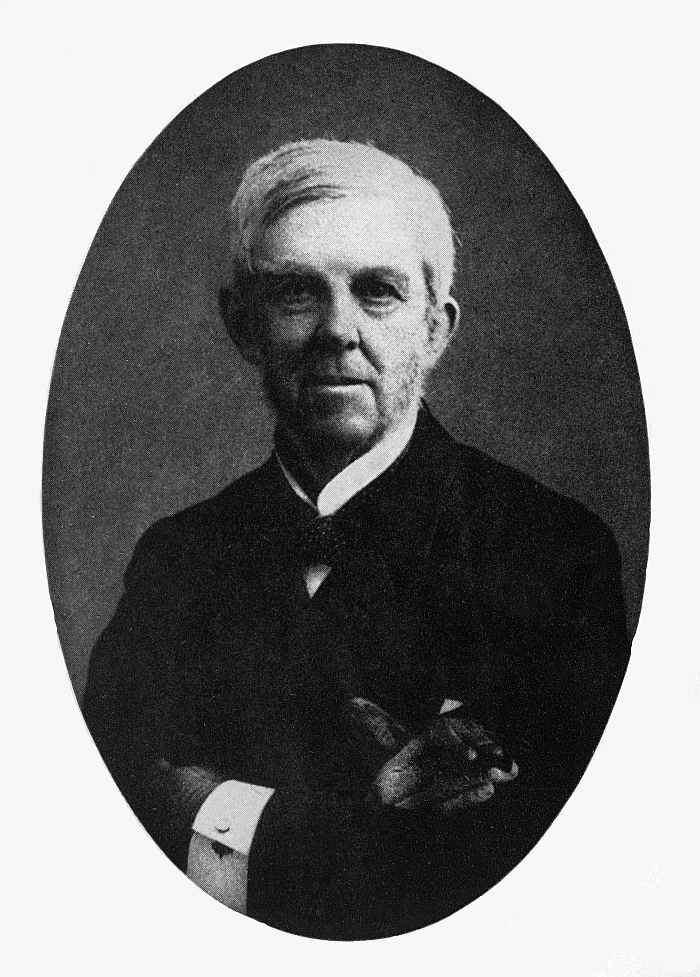
OLIVER WENDELL HOLMES.
After a photogravure from life-photograph.
THE ONE-HOSS SHAY; OR, THE DEACON'S MASTERPIECE. A LOGICAL STORY. Have you heard of the wonderful one-hoss shay, That was built in such a logical way It ran a hundred years to a day, And then of a sudden, it—ah, but stay, I'll tell you what happened without delay, Scaring the parson into fits, Frightening people out of their wits,— Have you ever heard of that, I say? Seventeen hundred and fifty-five. Georgius Secundus was then alive,— Snuffy old drone from the German hive. That was the year when Lisbon-town Saw the earth open and gulp her down, And Braddock's army was done so brown, Left without a scalp to its crown. It was on the terrible Earthquake-day That the deacon finished the one-hoss shay. Now in the building of chaises, I tell you what, There is always somewhere a weakest spot,— In hub, tire, felloe, in spring or thill, In panel, or crossbar, or floor, or sill, In screw, bolt, thoroughbrace,—lurking still, Find it somewhere you must and will,— Above or below, or within or without,— And that's the reason, beyond a doubt, A chaise breaks down, but doesn't wear out. But the Deacon swore (as Deacons do, With an "I dew vum," or an "I tell yeou,") He would build one shay to beat the taown 'n' the keounty 'n' all the kentry raoun'; It should be so built that it couldn't break daown; —"Fur," said the Deacon, "'t's mighty plain Thut the weakes' place mus' stan' the strain; 'n' the way t' fix it, uz I maintain, Is only jest T' make that place uz strong uz the rest." So the Deacon inquired of the village folk Where he could find the strongest oak, That couldn't be split nor bent nor broke,— That was for spokes and door and sills; He sent for lancewood to make the thills; The crossbars were ash, from the straightest trees; The panels of whitewood, that cuts like cheese, But lasts like iron for things like these; The hubs of logs from the "Settler's ellum,"— Last of its timber,—they couldn't sell 'em, Never an axe had seen their chips, And the wedges flew from between their lips, Their blunt ends frizzled like celery-tips; Step and prop-iron, bolt and screw, Spring, tire, axle, and linchpin too, Steel of the finest, bright and blue; Thoroughbrace bison-skin, thick and wide; Boot, top, dasher, from tough old hide Found in the pit when the tanner died. That was the way he "put her through." "There!" said the Deacon, "naow she'll dew!" Do! I tell you, I rather guess She was a wonder, and nothing less! Colts grew horses, beards turned gray, Deacon and deaconess dropped away, Children and grandchildren,—where were they? But there stood the stout old one-hoss shay As fresh as on Lisbon-earthquake-day! Eighteen hundred;—it came and found The Deacon's masterpiece strong and sound. Eighteen hundred increased by ten;— "Hahnsum kerridge" they called it then. Eighteen hundred and twenty came;— Running as usual; much the same. Thirty and forty at last arrive, And then came fifty, and FIFTY-FIVE. Little of all we value here Wakes on the morn of its hundredth year Without both feeling and looking queer. In fact, there's nothing that keeps its youth, So far as I know, but a tree and truth. (This is a moral that runs at large; Take it.—You're welcome.—No extra charge.) First of November,—the Earthquake-day.— There are traces of age in the one-hoss shay, A general flavor of mild decay, But nothing local as one may say. There couldn't be,—for the Deacon's art Had made it so like in every part That there wasn't a chance for one to start, For the wheels were just as strong as the thills, And the floor was just as strong as the sills, And the panels just as strong as the floor, And the whippletree neither less nor more, And the back-crossbar as strong as the fore, And spring and axle and hub encore. And yet, as a whole, it is past a doubt In another hour it will be worn out! First of November, 'Fifty-five! This morning the parson takes a drive. Now, small boys, get out of the way! Here comes the wonderful one-hoss shay, Drawn by a rat-tailed, ewe-necked bay. "Huddup!" said the parson.—Off went they. The parson was working his Sunday's text,— Had got to fifthly, and stopped perplexed At what the—Moses—was coming next. All at once the horse stood still, Close by the meetin'-house on the hill. —First a shiver and then a thrill, Then something decidedly like a spill,— And the parson was sitting upon a rock, At half past nine by the meetin'-house clock,— Just the hour of the Earthquake shock! —What do you think the parson found, When he got up and stared around? The poor old chaise in a heap or mound, As if it had been to the mill and ground! You see, of course, if you're not a dunce, How it went to pieces all at once,— All at once, and nothing first,— Just as bubbles do when they burst. End of the wonderful one-hoss shay. Logic is logic. That's all I say. OLIVER WENDELL HOLMES.
GRIGGSBY'S STATION. Pap's got his patent right, and rich as all creation; But where's the peace and comfort that we all had before? Le's go a-visitin' back to Griggsby's Station— Back where we ust to be so happy and so pore! The likes of us a-livin' here! It's just a mortal pity To see us in this great big house, with cyarpets on the stairs, And the pump right in the kitchen! And the city! city! city!— And nothin' but the city all around us ever' wheres! Climb clean above the roof and look from the steeple, And never see a robin, nor a beech or ellum tree! And right here in ear-shot of at least a thousan' people, And none that neighbors with us, or we want to go and see! Le's go a-visitin' back to Griggsby's Station— Back where the latch-string's a-hangin' from the door, And ever' neighbor 'round the place is dear as a relation— Back where we ust to be so happy and so pore! I want to see the Wiggenses, the whole kit and bilin' A-drivin' up from Shallor Ford to stay the Sunday through; And I want to see 'em hitchin' at their son-in-law's and pilin' Out there at 'Lizy Ellen's like they ust to do! I want to see the piece-quilts the Jones girls is makin'; And I want to pester Laury 'bout their freckled hired hand, And joke her 'bout the widower she come purt' nigh a-takin', Till her pap got his pension 'lowed in time to save his land. Le's go a-visitin' back to Griggsby's station— Back where they's nothin' aggervatin' anymore; Shet away safe in the woods around the old location— Back where we ust to be so happy and so pore! I want to see Marindy and he'p her with her sewin', And hear her talk so lovin' of her man that's dead and gone, And stand up with Emanuel to show me how he's growin', And smile as I have saw her 'fore she put her mournin' on. And I want to see the Samples, on the old lower eighty— Where John our oldest boy, he was tuk and buried—for His own sake and Katy's—and I want to cry with Katy As she reads all his letters over, writ from The War. What's all this grand life and high situation, And nary pink nor hollyhawk bloomin' at the door?— Le's go a-visitin' back to Griggsby's Station— Back where we ust to be so happy and so pore! JAMES WHITCOMB RILEY.
HE'D HAD NO SHOW. Joe Beall 'ud set upon a keg Down to the groc'ry store, an' throw One leg right over t'other leg An' swear he'd never had no show, "O, no," said Joe, "Hain't hed no show," Then shift his quid to t'other jaw, An' chaw, an' chaw, an' chaw, an' chaw. He said he got no start in life, Didn't get no money from his dad, The washin' took in by his wife Earned all the funds he ever had. "O, no," said Joe, "Hain't hed no show," An' then he'd look up at the clock An' talk, an' talk, an' talk, an' talk. "I've waited twenty year—let's see— Yes, twenty-four, an' never struck, Altho, I've sot roun' patiently, The fust tarnation streak er luck. O, no," said Joe, "Hain't hed no show," Then stuck like mucilage to the spot, An' sot, an' sot, an' sot, an' sot. "I've come down regerlar every day For twenty years to Piper's store. I've sot here in a patient way, Say, hain't I, Piper?" Piper swore. "I tell ye, Joe, Yer hain't no show; Yer too dern patient"—ther hull raft Jest laffed, an' laffed, an' laffed, an' laffed. SAM WALTER FOSS.
THE MYSTIFIED QUAKER IN NEW YORK. Respected Wife: By these few lines my whereabouts thee'll learn: Moreover, I impart to thee my serious concern. The language of this people is a riddle unto me; For words with them are figments of a reckless mockery. For instance, as I left the cars, a youth with smutty face Said, "Shine?" "Nay I'll not shine," I said, "except with inward grace." "What's inward grace?" said this young Turk; "A liquid or a paste? Hi, daddy, how does the old thing work?" I then said to a jehu, whose breath suggested gin, "Friend, can thee take me to a reputable inn?" But this man's gross irrelevance I shall not soon forget; Instead of simply Yea or Nay, he gruffly said, "You bet!" "Nay, nay, I will not bet," I said, "for that would be a sin. Why dost not answer plainly? can thee take me to an inn? Thy vehicle is doubtless made to carry folks about in; Why then prevaricate?" Said he, "Aha! well now, you're shoutin'!" "I did not shout," I said, "my friend; surely my speech is mild: But thine (I grieve to say it) with falsehood is defiled. Thee ought to be admonished to rid thy heart of guile." "Look here, my lovely moke," said he, "you sling on too much style." "I've had these plain drab garments twenty years or more," said I; "And when thee says I 'sling on style' thee tells a wilful lie." With that he pranced about as tho' a bee were in his bonnet, And with hostile demonstrations inquired if I was "on it." "On what? Till thee explain, I cannot tell," I said; But he swore that something was "too thin," moreover it was "played." But all his antics were surpassed in wild absurdity By threats, profanely emphasized, to "put a head" on me. "No son of Belial," I said, "that miracle can do." With that he fell upon me with blows and curses too; But failed to work that miracle, if such was his design; Instead of putting on a head, he strove to smite off mine. Thee knows that I profess the peaceful precepts of our sect, But this man's acts worked on me to a curious effect; And when he knocked my broad-brim off, and said, "How's that for high!" It roused the Adam in me, and I smote him hip and thigh. This was a signal for the crowd, for calumny broke loose; They said I'd "snatched him bald-headed," and likewise "cooked his goose." But yet I do affirm, that I had not pulled his hair; Nor had I cooked his poultry, for he had no poultry there. They called me "bully boy," though I have seen full three-score year; And they said that I was "lightning when I got upon my ear." And when I asked if lightning climbed its ear, and dressed in drab, "You know how 'tis yourself," said one insolent young blab. So I left them in disgust: plain-spoken men like me With such perverters of our tongue can have no unity. ANONYMOUS.
TO THE "SEXTANT". O Sextant of the meetin house, wich sweeps And dusts, or is supposed to! and makes fires, And lites the gass, and sumtimes leaves a screw loose, in wich case it smells orful, worse than lamp ile; And wrings the Bel and toles it when men dyes, to the grief of survivin pardners, and sweeps paths And for the servusses gets $100 per annum, Wich them that thinks deer, let 'em try it; Gettin up before starlite in all wethers and Kindlin fires when the wether is as cold As zero, and like as not green wood for kindlin, i wouldn't be hired to do it for no sum. But O Sextant! there are 1 kermoddity Wich's more than gold, wich doant cost nothin, Worth more than anything except the sole of man! i mean pewer Are, Sextant, i mean pewer are! O it is plenty out of doors, so plenty it doant no What on airth to dew with itself, but flys about Scatterin leaves and bloin off men's hatts! in short, it's jest as "fre as are" out dores, But O Sextant, in our church its scarce as buty, Scarce as bank bills, when agints begs for mischuns, Wich some say is purty offten (taint nothin to me, wat I give aint nothin to nobody) but O Sextant U shet 500 men, wimmin, and children, Speshally the latter, up in a tite place, And every 1 on em brethes in and out, and out and in, Say 50 times a minnit, or 1 million and a half breths an our. Now how long will a church ful of are last at that rate, I ask you—say 15 minits—and then wats to be did? Why then they must brethe it all over agin, And then agin, and so on till each has took it down At least 10 times, and let it up agin, and wats more The same individoal don't have the priviledge of brethin his own are, and no ones else, Each one must take whatever comes to him. O Sextant, doant you no our lungs is bellusses, To blo the fier of life, and keep it from goin out; and how can bellusses blo without wind And aint wind are? i put it to your conschens. Are is the same to us as milk to babies, Or water is to fish, or pendlums to clox, Or roots and airbs unto an injun doctor, Or little pills unto an omepath, Or boys to gurls. Are is for us to brethe, What signifies who preaches if i cant brethe? Wats Pol? Wats Pollus to sinners who are ded? Ded for want of breth, why Sextant, when we dy Its only coz we can't brethe no more, thats all. And now O Sextant, let me beg of you To let a little are into our church. (Pewer are is sertain proper for the pews) And do it weak days, and Sundays tew, It aint much trouble, only make a hole And the are will come of itself; (It luvs to come in where it can git warm) And O how it will rouze the people up, And sperrit up the preacher, and stop garps, And yawns and figgits, as effectooal As wind on the dry boans the Profit tells of. ARABELLA M. WILLSON.
JIM BLUDSO OF THE PRAIRIE BELLE. PIKE COUNTY BALLADS. Wall, no! I can't tell whar he lives, Becase he don't live, you see; Leastways, he's got out of the habit Of livin' like you and me. Whar have you been for the last three year That you haven't heard folks tell How Jimmy Bludso passed in his checks The night of the Prairie Belle? He weren't no saint,—them engineers Is all pretty much alike,— One wife in Natchez-under-the-Hill And another one here, in Pike; A keerless man in his talk was Jim, And an awkward hand in a row, But he never flunked, and he never lied,— I reckon he never knowed how. And this was all the religion he had,— To treat his engine well; Never be passed on the river; To mind the pilot's bell; And if ever the Prairie Belle took fire,— A thousand times he swore He 'd hold her nozzle agin the bank Till the last soul got ashore. All boats has their day on the Mississip, And her day come at last,— The Movastar was a better boat, But the Belle she wouldn't be passed. And so she come tearin' along that night— The oldest craft on the line— With a nigger squat on her safety-valve, And her furnace crammed, rosin and pine. The fire bust out as she clared the bar, And burnt a hole in the night, And quick as a flash she turned, and made For that willer-bank on the right. There was runnin' and cursin', but Jim yelled out, Over all the infernal roar, "I'll hold her nozzle agin the bank Till the last galoot 's ashore." Through the hot, black breath of the burnin' boat Jim Bludso's voice was heard, And they all had trust in his cussedness, And knowed he would keep his word. And, sure 's you're born, they all got off Afore the smokestacks fell,— And Bludso's ghost went up alone In the smoke of the Prairie Belle. He weren't no saint,—but at jedgment I'd run my chance with Jim, 'Longside of some pious gentlemen That wouldn't shook hands with him. He seen his duty, a dead-sure thing,— And went for it thar and then; And Christ ain't a going to be too hard On a man that died for men. JOHN HAY.
TO THE PLIOCENE SKULL. A GEOLOGICAL ADDRESS..
"A human skull has been found in California, in the pliocene formation. This skull is the remnant, not only of the earliest pioneer of this State, but the oldest known human being.... The skull was found in a shaft one hundred and fifty feet deep, two miles from Angel's, in Calaveras County, by a miner named James Matson, who gave it to Mr. Scribner, a merchant, and he gave it to Dr. Jones, who sent it to the State Geological Survey.... The published volume of the State Survey on the Geology of California states that man existed contemporaneously with the mastodon, but this fossil proves that he was here before the mastodon was known to exist."—Daily Paper.
"Speak, O man, less recent! Fragmentary fossil! Primal pioneer of pliocene formation, Hid in lowest drifts below the earliest stratum Of Volcanic tufa! "Older than the beasts, the oldest Palæotherium; Older than the trees, the oldest Cryptogamia; Older than the hills, those infantile eruptions Of earth's epidermis! "Eo—Mio—Plio—whatsoe'er the 'cene' was That those vacant sockets filled with awe and wonder,— Whether shores Devonian or Silurian beaches,— Tell us thy strange story! "Or has the Professor slightly antedated By some thousand years thy advent on this planet, Giving thee an air that's somewhat better fitted For cold-blooded creatures? "Wert thou true spectator of that mighty forest, When above thy head the stately Sigillaria Reared its columned trunks in that remote and distant Carboniferous epoch? "Tell us of that scene,—the dim and watery woodland, Songless, silent, hushed, with never bird or insect, Veiled with spreading fronds and screened with tall club-mosses, Lycopodiacea— "When beside thee walked the solemn Plesiosaurus, And around thee crept the festive Ichthyosaurus, While from time to time above thee flew and circled Cheerful Pterodactyls. "Tell us of thy food,—those half-marine refections, Crinoids on the shell, and Brachipods au naturel,— Cuttle-fish to which the pieuvre of Victor Hugo Seems a periwinkle. "Speak, thou awful vestige of the earth's creation,— Solitary fragment of remains organic! Tell the wondrous secrets of thy past existence,— Speak! thou oldest primate!" Even as I gazed, a thrill of the maxilla And a lateral movement of the condyloid process, With post-pliocene sounds of healthy mastication, Ground the teeth together; And from that imperfect dental exhibition, Stained with expressed juices of the weed Nicotian, Came these hollow accents, blent with softer murmurs Of expectoration: "Which my name is Bowers, and my crust was busted Falling down a shaft, in Calaveras County, But I'd take it kindly if you'd send the pieces Home to old Missouri!" BRET HARTE.
LITTLE BREECHES. A PIKE COUNTY VIEW. OF SPECIAL PROVIDENCE.. I don't go much on religion, I never ain't had no show; But I've got a middlin' tight grip, sir, On the handful o' things I know. I don't pan out on the prophets And free-will, and that sort o' thing,— But believe in God and the angels, Ever sence one night last spring. I come into town with some turnips, And my little Gabe come along,— No four-year-old in the county Could beat him for pretty and strong, Peart and chipper and sassy, Always ready to swear and fight,— And I'd learnt him ter chaw terbacker, Jest to keep his milk-teeth white. The snow come down like a blanket As I passed by Taggart's store; I went in for a jug of molasses And left the team at the door. They scared at something and started,— I heard one little squall, And hell-to-split over the prairie Went team, Little Breeches and all. Hell-to-split over the prairie! I was almost froze with skeer; But we rousted up some torches, And sarched for 'em far and near. At last we struck hosses and wagon, Snowed under a soft white mound, Upsot, dead beat,—but of little Gabe No hide nor hair was found. And here all hope soured on me Of my fellow-critter's aid,— I jest flopped down on my marrow-bones, Crotch-deep in the snow, and prayed. ———— By this, the torches was played out, And me and Isrul Parr Went off for some wood to a sheepfold That he said was somewhar thar. We found it at last, and a little shed Where they shut up the lambs at night. We looked in, and seen them huddled thar, So warm and sleepy and white; And THAR sot Little Breeches and chirped, As pert as ever you see, "I want a chaw of terbacker, And that's what's the matter of me." How did he git thar? Angels. He could never have walked in that storm. They just scooped down and toted him To whar it was safe and warm. And I think that saving a little child, And bringing him to his own, Is a derned sight better business Than loafing around the Throne. JOHN HAY.
JIM Say there! P'r'aps Some on you chaps Might know Jim Wild? Well,—no offence: Thar ain't no sense In gettin' riled! Jim was my chum Up on the Bar: That's why I come Down from up thar, Lookin' for Jim. Thank ye, sir! you Ain't of that crew,— Blest if you are! Money?—Not much: That ain't my kind; I an't no such. Rum?—I don't mind, Seein' it's you. Well, this yer Jim, Did you know him?— Jess 'bout your size; Same kind of eyes?— Well, that is strange: Why, it's two year Since he come here, Sick, for a change. Well, here's to us; Eh? The deuce you say! Dead?— That little cuss? What makes you star,— You over thar? Can't a man drop 's glass in yer shop But you must rar'? It wouldn't take Derned much to break You and your bar. Dead! Poor—little—Jim! —Why, there was me, Jones, and Bob Lee, Harry and Ben,— No-account men: Then to take him! Well, thar—Good-bye,— No more, sir,—I— Eh? What's that you say?— Why, dern it!—sho!— No? Yes! By Jo! Sold! Sold! Why you limb, You ornery, Derned old Long-leggèd Jim! BRET HARTE.
BANTY TIM.
[Remarks of Sergeant Tilmon Joy to the White Man's Committee of Spunky Point, Illinois.]
I reckon I git your drift, gents— You 'low the boy sha'n't stay; This is a white man's country: You're Dimocrats, you say: And whereas, and seein', and wherefore, The times bein' all out o' jint, The nigger has got to mosey From the limits o' Spunky P'int! Let's reason the thing a minute; I'm an old-fashioned Dimocrat, too, Though I laid my politics out o' the way For to keep till the war was through. But I come back here allowin' To vote as I used to do, Though it gravels me like the devil to train Along o' sich fools as you. Now dog my cats if I kin see In all the light of the day, What you've got to do with the question Ef Tim shall go or stay. And furder than that I give notice, Ef one of you tetches the boy, He kin check his trunks to a warmer clime Than he'll find in Illanoy. Why, blame your hearts, jist hear me! You know that ungodly day When our left struck Vicksburg Heights, how ripped And torn and tattered we lay. When the rest retreated, I stayed behind, Fur reasons sufficient to me,— With a rib caved in, and a leg on a strike, I sprawled on that cursed glacee. Lord! how the hot sun went for us, And broiled and blistered and burned! How the rebel bullets whizzed round us When a cuss in his death-grip turned! Till along toward dusk I seen a thing I couldn't believe for a spell: That nigger—that Tim—was a-crawlin' to me Through that fire-proof, gilt-edged hell! The rebels seen him as quick as me, And the bullets buzzed like bees; But he jumped for me, and shouldered me, Though a shot brought him once to his knees; But he staggered up, and packed me off, With a dozen stumbles and falls, Till safe in our lines he drapped us both, His black hide riddled with balls. So, my gentle gazelles, thar's my answer, And here stays Banty Tim: He trumped Death's ace for me that day, And I 'm not goin' back on him! You may rezoloot till the cows come home, But ef one of you tetches the boy, He 'll wrastle his hash to-night in hell, Or my name's not Tilmon Joy! JOHN HAY.
DOW'S FLAT. 1856. Dow's flat. That's its name. And I reckon that you Are a stranger? The same? Well, I thought it was true, For thar isn't a man on the river as can't spot the place at first view. It was called after Dow,— Which the same was an ass; And as to the how Thet the thing kem to pass,— Just tie up your hoss to that buckeye, and sit ye down here in the grass. You see this yer Dow Hed the worst kind of luck; He slipped up somehow On each thing thet he struck. Why, ef he'd straddled thet fence-rail the derned thing 'ed get up and buck. He mined on the bar Till he couldn't pay rates; He was smashed by a car When he tunnelled with Bates; And right on top of his trouble kem his wife and five kids from the States. It was rough,—mighty rough; But the boys they stood by, And they brought him the stuff For a house, on the sly; And the old woman,—well, she did washing, and took on when no one was nigh. But this yer luck of Dow's Was so powerful mean That the spring near his house Dried right up on the green; And he sunk forty feet down for water, but nary a drop to be seen. Then the bar petered out, And the boys wouldn't stay; And the chills got about, And his wife fell away; But Dow, in his well, kept a peggin' in his usual ridikilous way. One day,—it was June,— And a year ago, jest,— This Dow kem at noon To his work like the rest, With a shovel and pick on his shoulder, and a derringer hid in his breast. He goes to the well, And he stands on the brink, And stops for a spell Jest to listen and think: For the sun in his eyes, (jest like this, sir!) you see, kinder made the cuss blink. His two ragged gals In the gulch were at play, And a gownd that was Sal's Kinder flapped on a bay: Not much for a man to be leavin', but his all,— as I've heer'd the folks say. And—that's a peart hoss Thet you've got—ain't it now? What might be her cost? Eh? Oh!—Well then, Dow— Let's see,—well, that forty-foot grave wasn't his, sir, that day, anyhow. For a blow of his pick Sorter caved in the side, And he looked and turned sick, Then he trembled and cried. For you see the dern cuss had struck—"Water?" —beg your parding, young man, there you lied! It was gold,—in the quartz, And it ran all alike; And I reckon five oughts Was the worth of that strike; And that house with coopilow's his'n,—which the same isn't bad for a Pike. Thet's why it's Dow's Flat; And the thing of it is That he kinder got that Through sheer contrairiness: For 't was water the derned cuss was seekin', and his luck made him certain to miss. Thet's so. Thar's your way To the left of yon tree; But—a—look h'yur, say, Won't you come up to tea? No? Well, then the next time you're passin'; and ask after Dow,—and thet's me. BRET HARTE.
THE SOCIETY UPON THE STANISLAUS. I reside at Table Mountain, and my name is Truthful James: I am not up to small deceit or any sinful games; And I'll tell in simple language what I know about the row That broke up our Society upon the Stanislow. But first I would remark, that 'tis not a proper plan For any scientific gent to whale his fellow-man; And, if a member don't agree with his peculiar whim, To lay for that same member for to "put a head" on him. Now, nothing could be finer, or more beautiful to see, Than the first six months' proceedings of that same society; Till Brown of Calaveras brought a lot of fossil bones That he found within a tunnel near the tenement of Jones. Then Brown he read a paper, and he reconstructed there, From those same bones, an animal that was extremely rare; And Jones then asked the Chair for a suspension of the rules, Till he could prove that those same bones was one of his lost mules. Then Brown he smiled a bitter smile, and said he was at fault; It seemed he had been trespassing on Jones's family vault; He was a most sarcastic man this quiet Mr. Brown, And on several occasions he had cleaned out the town. Now I hold it is not decent for a scientific gent To say another is an ass,—at least, to all intent; Nor should the individual who happens to be meant Reply by heaving rocks at him to any great extent. Then Abner Dean of Angel's raised a point of order, when A chunk of old red sandstone took him in the abdomen; And he smiled a kind of sickly smile, and curled upon the floor, And the subsequent proceedings interested him no more. For in less time than I write it, every member did engage In a warfare with the remnants of a palæozoic age; And the way they heaved those fossils in their anger was a sin, Till the skull of an old mammoth caved the head of Thompson in. And this is all I have to say of these improper games, For I live at Table Mountain and my name is Truthful James, And I've told in simple language what I know about the row That broke up our Society upon the Stanislow. BRET HARTE.
PLAIN LANGUAGE FROM TRUTHFUL JAMES. POPULARLY KNOWN AS "THE HEATHEN CHINEE." Which I wish to remark— And my language is plain— That for ways that are dark And for tricks that are vain, The heathen Chinee is peculiar: Which the same I would rise to explain. Ah Sin was his name; And I shall not deny In regard to the same What that name might imply; But his smile it was pensive and childlike, As I frequent remarked to Bill Nye.
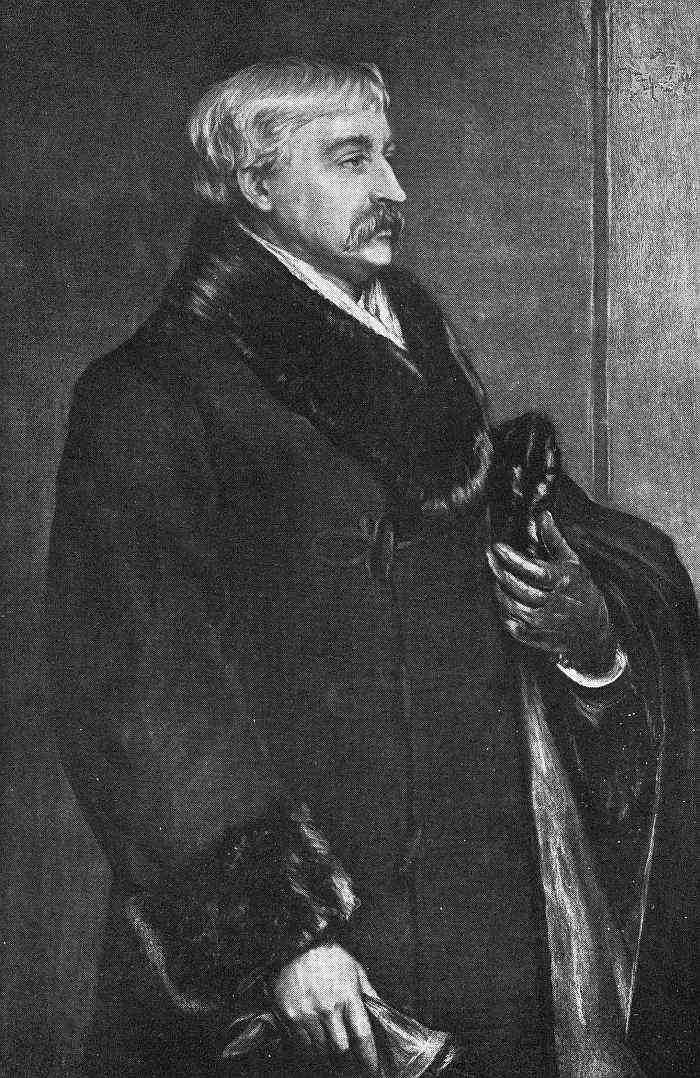
BRET HARTE.
From a photogravure after the original portrait by J. Pettie.
It was August the third, And quite soft was the skies, Which it might be inferred That Ah Sin was likewise; Yet he played it that day upon William And me in a way I despise. Which we had a small game, And Ah Sin took a hand: It was euchre. The same He did not understand, But he smiled, as he sat by the table, With the smile that was childlike and bland. Yet the cards they were stocked In a way that I grieve, And my feelings were shocked At the state of Nye's sleeve, Which was stuffed full of aces and bowers, And the same with intent to deceive. But the hands that were played By that heathen Chinee, And the points that he made, Were quite frightful to see,— Till at last he put down a right bower, Which the same Nye had dealt unto me. Then I looked up at Nye, And he gazed upon me; And he rose with a sigh, And said, "Can this be? We are ruined by Chinese cheap labor,"— And he went for that heathen Chinee. In the scene that ensued I did not take a hand, But the floor it was strewed, Like the leaves on the strand, With the cards that Ah Sin had been hiding In the game "he did not understand." In his sleeves, which were long, He had twenty-four jacks,— Which was coming it strong, Yet I state but the facts. And we found on his nails, which were taper,— What is frequent in tapers,—that's wax. Which is why I remark, And my language is plain, That for ways that are dark, And for tricks that are vain, The heathen Chinee is peculiar,— Which the same I am free to maintain. BRET HARTE.
A PLANTATION DITTY. De gray owl sing fum de chimbly top: "Who—who—is—you-oo?" En I say: "Good Lawd, hit's des po' me, En I ain't quite ready fer de Jasper Sea; I'm po' en sinful, en you 'lowed I'd be; Oh, wait, good Lawd, 'twell ter-morror!" De gray owl sing fum de cypress tree: "Who—who—is—you-oo?" En I say: "Good Lawd, ef you look you'll see Hit ain't nobody but des po' me, En I like ter stay 'twell my time is free; Oh, wait, good Lawd, 'twell ter-morror!" FRANK LEBBY STANTON.
DE FUST BANJO. Go 'way, fiddle! folks is tired o' hearin' you a-squawkin'. Keep silence fur yo' betters!—don't you hear de banjo talkin'? About de 'possum's tail she's gwine to lecter—ladies, listen!— About de ha'r whut isn't dar, an' why de ha'r is missin': "Dar's gwine to be a' oberflow," said Noah, lookin' solemn— Fur Noah tuk the "Herald," an' he read de ribber column— An' so he sot his hands to wuk a-cl'arin' timber-patches, An' lowed he's gwine to build a boat to beat the steamah Natchez. Ol' Noah kep' a-nailin' an' a-chippin' an' a-sawin'; An' all de wicked neighbors kep' a-laughin' an' a-pshawin'; But Noah didn't min' 'em, knowin' whut wuz gwine to happen: An' forty days an' forty nights de rain it kep' a-drappin'. Now, Noah had done cotched a lot ob ebry sort o' beas'es— Ob all de shows a-trabbelin', it beat 'em all to pieces! He had a Morgan colt an' sebral head o' Jarsey cattle— An' druv 'em 'board de Ark as soon 's he heered de thunder rattle. Den sech anoder fall ob rain!—it come so awful hebby, De ribber riz immejitly, an' busted troo de lebbee; De people all wuz drowned out—'cep' Noah an' de critters, An' men he'd hired to work de boat—an' one to mix de bitters. De Ark she kep' a-sailin' an' a-sailin' an' a-sailin'; De lion got his dander up, an' like to bruk de palin'; De sarpints hissed; de painters yelled; tell, whut wid all de fussin', You c'u'dn't hardly heah de mate a-bossin' 'roun' an' cussin'. Now Ham, de only nigger whut wuz runnin' on de packet, Got lonesome in de barber-shop, an' c'u'dn't stan' de racket; An' so, fur to amuse he-se'f, he steamed some wood an' bent it, An' soon he had a banjo made—de fust dat wuz invented. He wet de ledder, stretched it on; made bridge an' screws an' aprin; An' fitted in a proper neck—'t wuz berry long an' tap'rin'; He tuk some tin an' twisted him a thimble fur to ring it; An' den de mighty question riz: how wuz he gwine to string it? De 'possum had as fine a tail as dis dat I's a-singin'; De ha'rs so long an' thick an' strong,—des fit fur banjo-stringin'; Dat nigger shaved 'em off as short as washday-dinner graces; An' sorted ob 'em by de size, f'om little E's to basses. He strung her, tuned her, struck a jig,—'t wuz "Nebber min' de wedder,"— She soun' like forty-lebben bands a-playin' all togedder; Some went to pattin'; some to dancin': Noah called de figgers; An' Ham he sot an' knocked de tune, de happiest ob niggers! Now, sence dat time—it's mighty strange—der 's not de slightes' showin' Ob any ha'r at all upon de 'possum's tail a-growin'; An' curi's, too, dat nigger's ways: his people nebber los' 'em— Fur whar you finds de nigger—dar's de banjo an' an' de 'possum! IRWIN RUSSELL.
PERILS OF THINKING. A centipede was happy quite, Until a frog in fun Said, "Pray, which leg comes after which?" This raised her mind to such a pitch, She lay distracted in the ditch Considering how to run. ANONYMOUS.
NEBUCHADNEZZAR. You, Nebuchadnezzah, whoa, sah! Whar is you tryin' to go, sah? I'd hab you fur to know, sah, I's a-holdin' ob de lines. You better stop dat prancin', You's paw'ful fond ob dancin', But I'll bet my yeah's advancin' Dat I'll cure you ob yo' shines. Look heah, mule! Better min' out; Fus' t'ing you know you'll fin' out How quick I'll wear dis line out On your ugly, stubbo'n back. You needn't try to steal up; An' lif' dat precious heel up; You's got to plough dis fiel' up, You has, sah, fur a fac'. Dar, dat's de way to do it; He's comin' right down to it; Jes watch him ploughin' troo it! Dis nigger ain't no fool. Some folks dey would 'a' beat him; Now, dat would only heat him— I know just how to treat him: You mus' reason wid a mule. He minds me like a nigger. If he wuz only bigger He'd fotch a mighty figger, He would, I tell you! Yes, sah! See how he keeps a-clickin'! He's as gentle as a chicken, And nebber thinks o' kickin'— Whoa dar! Nebuchadnezzah! Is this heah me, or not me? Or is de debbil got me? Wuz dat a cannon shot me? Hab I laid heah more 'n a week? Dat mule do kick amazin'! De beast was sp'iled in raisin'; But now I spect he's grazin' On de oder side de creek. IRWIN RUSSELL.
A LIFE'S LOVE. I loved him in my dawning years— Far years, divinely dim; My blithest smiles, my saddest tears, Were evermore for him. My dreaming when the day began, The latest thought I had, Was still some little loving plan To make my darling glad. They deemed he lacked the conquering wiles, That other children wear; To me his face, in frowns or smiles, Was never aught but fair. They said that self was all his goal, He knew no thought beyond; To me, I know, no living soul Was half so true and fond. In love's eclipse, in friendship's dearth, In grief and feud and bale, My heart has learnt the sacred worth Of one that cannot fail; And come what must, and come what may. Nor power, nor praise, nor pelf, Shall lure my faith from thee to stray. My sweet, my own—Myself. ANONYMOUS.
DARWIN. There was an ape in the days that were earlier; Centuries passed, and his hair grew curlier; Centuries more gave a thumb to his wrist, Then he was a Man and a Positivist. MORTIMER COLLINS.
ODE FOR A SOCIAL MEETING. WITH SLIGHT ALTERATIONS BY A TEETOTALLER. Come! fill a fresh bumper,—for why should we go logwood While the nectar still reddens our cups as they flow? decoction Pour out the rich juices still bright with the sun, dye-stuff Till o'er the brimmed crystal the rubies shall run. half-ripened apples The purple-globed clusters their life-dews have bled; taste sugar of lead How sweet is the breath of the fragrance they shed! rank-poisons wines!!! For summer's last roses lie hid in the wines stable-boys smoking long-nines That were garnered by maidens who laughed through the vines. scowl howl scoff sneer Then a smile, and a glass, and a toast, and a cheer, strychnine and whiskey, and ratsbane and beer For all the good wine, and we 've some of it here! In cellar, in pantry, in attic, in hall, Down, down with the tyrant that masters us all! Long live the gay servant that laughs for us all! OLIVER WENDELL HOLMES.
HOLLOW HOSPITALITY. FROM "SATIRES" BOOK III. SAT. 3. The courteous citizen bade me to his feast With hollow words, and overly [7] request: "Come, will ye dine with me this holiday?" I yielded, though he hoped I would say nay: For I had maidened it, as many use; Loath for to grant, but loather to refuse. "Alack, sir, I were loath—another day,— I should but trouble you;—pardon me, if you may." No pardon should I need; for, to depart He gives me leave, and thanks too, in his heart. Two words for money, Darbyshirian wise: (That's one too many) is a naughty guise. Who looks for double biddings to a feast, May dine at home for an importune guest. I went, then saw, and found the great expense; The face and fashions of our citizens. Oh, Cleopatrical! what wanteth there For curious cost, and wondrous choice of cheer? Beef, that erst Hercules held for finest fare; Pork, for the fat Bœotian, or the hare For Martial; fish for the Venetian; Goose-liver for the licorous Roman; Th' Athenian's goat; quail, Iolaus' cheer; The hen for Esculape, and the Parthian deer; Grapes for Arcesilas, figs for Pluto's mouth, And chestnuts fair for Amarillis' tooth. Hadst thou such cheer? wert thou ever there before? Never,—I thought so: nor come there no more. Come there no more; for so meant all that cost: Never hence take me for thy second host. For whom he means to make an often guest, One dish shall serve; and welcome make the rest. DR. JOSEPH HALL.